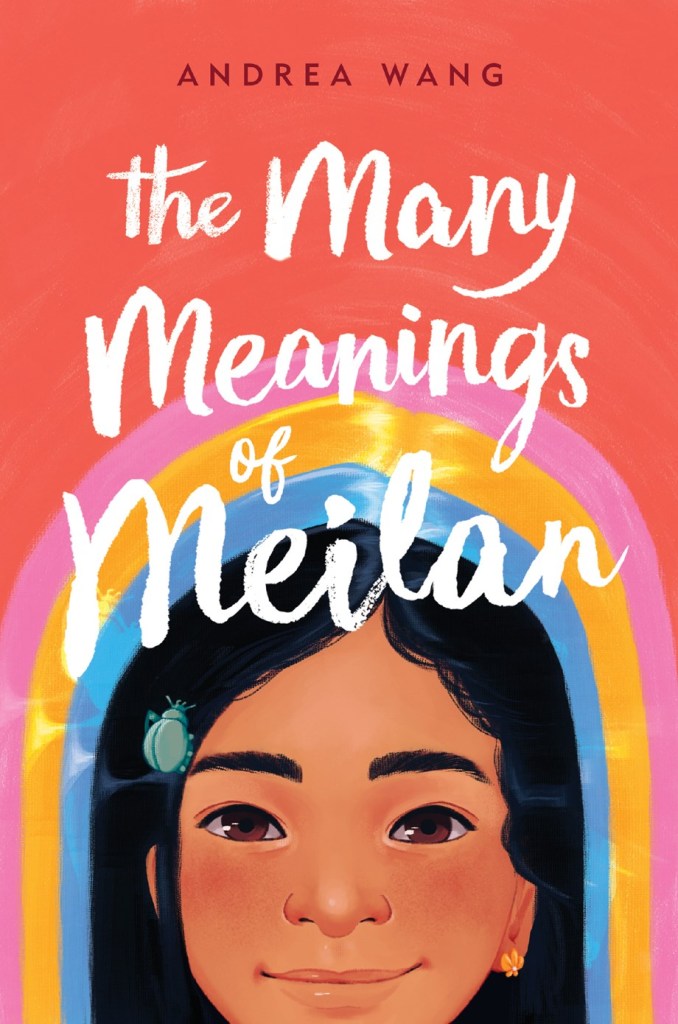
I’ve just finished reading the really well written “The Many Meanings of Meilan” by Andrea Wang. Having spent 16 of the last 20 years in Hong Kong, Singapore and China it was a reminder of so much of my time there and the discoveries of the language, literature, poetry and idiom.
There’s a lot happening in this book, but what I enjoyed most is the idea of naming and meaning and the ambiguity of sound and meaning in the homonyms of the Chinese language. I loved how she wrapped herself in the different meanings of “Lan” depending on the character, so as to adjust herself to the interpretations of herself of others around her, while discovering who she really was and claiming herself.
It also reminded me of the first time I came across the 塞翁失馬 (sai weng shi ma) chengyu – enjoy.
From November 2009
Today a story. Here is the famous story which is commonly interpreted as saying that “every cloud has a silver lining” This is the version from YellowBridge. Certainly in my own life in the long run this parable has proven to be true. But as impulsive as I am emotionally I don’t always recognise it at the time!
“A man who lived on the northern frontier of China was skilled in interpreting events. One day for no reason, his horse ran away to the nomads across the border. Everyone tried to console him, but his father said, “What makes you so sure this isn’t a blessing?” Some months later his horse returned, bringing a splendid nomad stallion. Everyone congratulated him, but his father said, “What makes you so sure this isn’t a disaster?” Their household was richer by a fine horse, which the son loved to ride. One day he fell and broke his hip. Everyone tried to console him, but his father said, “What makes you so sure this isn’t a blessing?”
A year later the nomads came in force across the border, and every able-bodied man took his bow and went into battle. The Chinese frontiersmen lost nine of every ten men. Only because the son was lame did father and son survive to take care of each other. Truly, blessing turns to disaster, and disaster to blessing: the changes have no end, nor can the mystery be fathomed.
塞翁失馬 (sai weng shi ma), the title of this story, is actually a commonly used Chinese idiom or chengyu . It literally translates as “Old Sai loses a horse”. Old Sai is the wise man in the fable. The expression is used to remind others to take life in stride because things aren’t really as good (or bad) as they seem. Certainly seems like a wise advice for a society that lives only for the present.”
I am thinking a LOT about AI. My participation in thinking and reading as a factor of my actual usage would be something in the realm of 1 million to 1 at the moment. Save for some tedious bits and pieces like analysing surveys and the occasional laziness in making very short book summaries (which I then have to correct extensively anyway) I’m just not feeling the joy. Please do not construe in any way that I am therefore “feeling the fear”. No. I’m just spending a lot of time exploring and thinking about it. And what it means. And in particular what it means for the current generation of students / young people.
I started blogging in 2003, and blogged about losing my identity as a person while I spent time being a SAHM, holding the threads of my existence together through bringing up children internationally, nuturing bilingual and multi-cultural beings. I then deleted that blog as it had become too personal, too well known and I had become too identifiable and my children had become adolescents and had a right to their own privacy and thoughts and being. Then I started studying to become an educator and librarian and spent four years in academic pursuit, where for many of my courses, blogging was a course requirement. It was a really good thing to make reflections on learning via blogs a course requirement. At WAB (my previous school) elementary students also blogged and I think there can be nothing as wonderful as seeing the thoughts, words and intellectual development of young people developing and maturing and growing over time. Nothing makes better writers than doing a lot of writing. And through writing, one does tend to become a better writer and find your “writers voice”.
Last week our school shut Grammarly off for students. It’s a tool that has always personally irritated me, as I still grew up with the luxury of uninterrupted schooling where we went to school for our lessons, did all our sports and activities after school at school, had no internet, and government controlled TV that only came in after I turned 12. It was a plain vanilla, no frills government school and there wasn’t even enough money for an arts programme. Yes, huge deficits in my education but I did get grammar. The old fashioned way. Swings and roundabouts.
What did Grammarly do? Well, the new update allows students to highlight a paragraph and request Grammarly to rephrase or improve their writing three times a day for free using AI. And teachers were being given work that didn’t reflect the thoughts, intents, abilities or voice of their students. Teachers care. They care deeply that tools can be used to aid the students that need it the most. They also care that tools don’t get in the way of intellectual and skill development. Writing well takes a LOT of practice and also a LOT of reading and if there are any short cuts I’m not aware of them.
The word of the year in 2023 was “Enshittification“, a termed coined by Cory Doctrow and explains the process of platforms first being good for their users, then abusing the users so businesses can make money off the users, then abusing the businesses go get a piece of the pie and then dying. It is the first two parts of the equation that are of most interest to me viz a viz education and AI.
“Being good for their users” needs a modifier – “appearing to be good for their users”. In his long form article Andrew Nikiforuk touches on “whole foods are being replaced by ultra-processed stuff” which was exactly the analogy I was thinking of while reading NYTimes wellness challenge of this week – the article talking about “Are ultraprocessed foods really that delicious?” and asking readers to compare an ultraprocessed product to its natural equivalent. Unfortunately for many young people when they compare their complex pubescent self to what media is telling them is “the real thing” they feel like they come up short, not the artificial reality. One of the disturbing trends with young people is their anxiety and obsession with being perfect (and not just academic – look at the beauty / makeup thing – talk about a distraction) – some of which is parent / adult driven through a failure to understand or recognise that young people are not hatched with perfect writing, grammar, thought, and research skills. That is the whole point of being at school. We’re seeing a bunch of ultra-processed writing and assignments and research at the moment and I’m not sure that it’s leading to better learning.
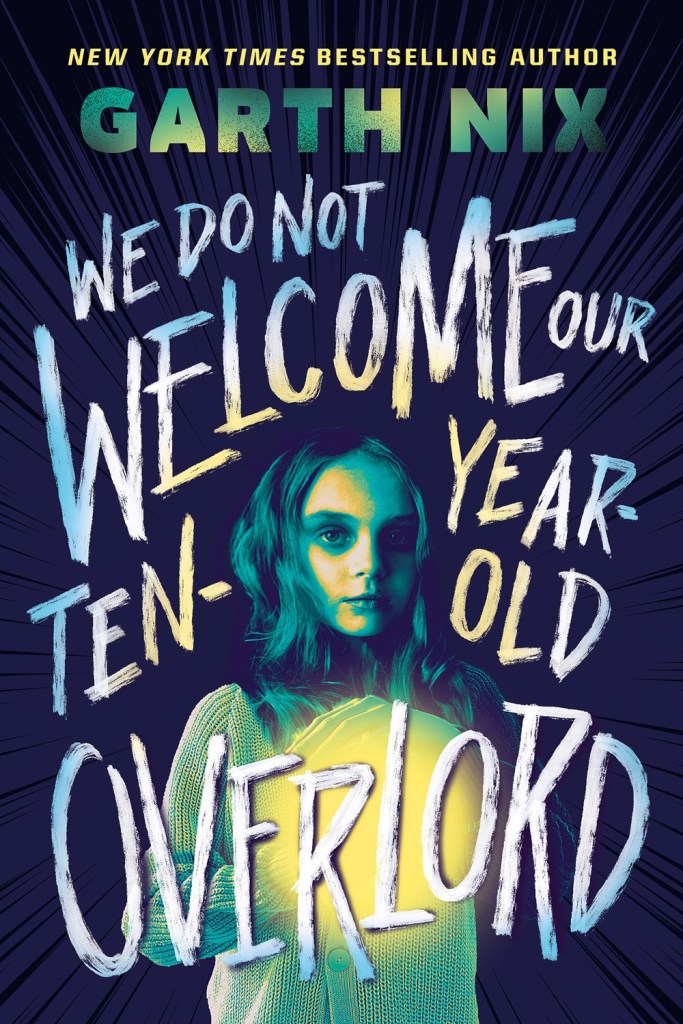
I’m currently reading “We do not welcome our 10-year-old Overlord by Garth Nix” – it’s a great middle grade version of this process of something external to humanity trying to take over under the auspices of “being good and doing good”. What I see, even with the most simple of all tools – a spelling check – is that students will type without any attention to spelling or capitalisation and expect the computer to mop up after them. And the next time the word / phrase is used they will continue to use it incorrectly and have auto-correct sort it out. The question then is whether there is any learning happening. And the meta question whether that learning needs to occur or not? Do we enter dangerous territory when we start deciding which students need to know things or not, develop skills in certain areas or not? We do not know what we don’t know and they definitely don’t. It would be way to easy to decide that perhaps some students don’t need to develop a writing voice and that it’s all so hard for them that it’s OK for AI or other tools to just take care of writing and editing what that tool thinks it is that the student is trying to express. Can you see where this is going? Because if we are not exposed to many ideas and thoughts and schools of thought and philosophies and histories how can we have enough information and knowledge under our belts to know what it is that we want to express? How can we know what OUR thoughts and feelings are when we’re in a feedback loop echo-chamber?
Back a little to the blogging thing – if students reflect on blogs that are open to the community it is so much easier to see what is normal and appropriate for each age group. Now we have writing that is largely hidden except to the teacher and their peers if they do comparative grading, and perhaps the adults in the lives of some of the students who will judge it by their adult standards AND whatever tools that are on student computers that again will transform the writing to some external adult standard. I’m also fascinated with, within the context of the apparent need for grading and scoring the work of students how granularity has decreased to the absurd point of students getting a score out of 4 for their efforts. Really? While packing up my life yet again for the move from China to Dubai I came across my old school reports. Everything was graded from 0-100 and there was plenty of room to improve from say a 69 to a 75 or an 89 to a 95 and no one ever ever ever got 100%. There was nuance. A lot of nuance. In the IB system scoring is to 8 and now in the American system it’s to 4. Talk about a blunt tool with which to sculpt learning!
I was just listening to Maggie Appleton (whose writings, as a cultural anthropologist turned Tech person on AI I really appreciate – particularly this one on the dark forest and generative AI) on the HanselMinutes podcast and I love her ideas about using AI for rubberducking – not just for IT debugging but for debugging your ideas and thoughts – although as she says it’s not really built for that as it’s more inclined to “yes AND” than to be a critical partner. I’m so long in the tooth that I remember when blogging was the medium for rubberducking your thoughts and every post got good handfuls of thoughtful comments by real people who would challenge or corroborate on your thinking. I made a lot of IRL friends off the back of blogging back in the day!
I’m fascinated about what other people think about student writing and student voice in writing as opposed to all that is being written about adult voice being taken over by AI – it is terrible, but how fortunate we have been to be allowed to develop a voice in the first place. Are we denying that to this generation of potential writers? Here is a link to one article in Writer’s Digest – of interest are all the other related articles at the bottom including some on maintaining voice as a comedian.
About to start our second week of school, and after the first 3 days of teacher planning week I’d just like to make a quick shout-out to some people who make a librarian’s heart very happy!
The new teacher, overloaded with moving continents with a family who came into the library and borrowed 4 books to be reading what her students are reading
The teachers who took it on blind faith and my raving that the Global Readaloud is something they should “sacrifice” class time for and agreed to participate for the first time this year.
The outdoor teacher who came to me to discuss what books and short stories we had that would be suitable to take on camp for reading aloud
My staff who worked like trojans to get the library looking wonderful for the start of the year – including cataloging piles of books that arrived during the summer “because the students would like to see something new”
The HOD who spoke up during a meeting to support the idea of reading aloud for at least 10 minutes before the start of all and any lessons (including the ones where teachers said “even in my (XXX) subject?”
People like Buffy Hamilton and Pernille Ripp who blog continuously and consistently about making reading and writing work in the Middle / High School classroom. Including admitting with humility when things don’t work.
People on twitter who engage in conversations about why students post-primary have stopped reading and how to re-ignite the passion for reading.
Departments and teams who think it’s not only necessary but normal to include the librarian in planning units.
Fellow librarians who are keeping in touch over long distances to brain storm how we’re going to make this a great year of engagement for our students and fellow faculty.
Happy Monday morning everyone – hope you all have a great week and a great year of sharing and reading.
I threw down the gauntlet to my mentor, Katie Day last night. She who taught me all I know about being a teacher librarian in the weeks and months that I sat by her side while doing my MIS and part of my M.Ed before I was thrust into the world of a library of my own. I was mentioning how I was a little shocked and disappointed at the standard of writing of Masters’ level students, and she mentioned that in her current position she was seeing more student writing and had decided to give that a focus this school year. I have a mentor group for the first time this year, and I want to try to emulate a wonderful teacher in my previous position, Christene, who used back and forth journalling with her G6 class as a way of getting to know them deeper, while developing their writing and depth of thought – particularly over what they were reading.
Now Katie is a phenomenal librarian – probably one of the best in the Asian international school network. She suffers from one immense flaw generally – the fact that she doesn’t market herself, and currently, she’s gone silent and no longer stimulates and challenges the rest of our thinking frequently enough through her blog. This is where a biblical reference is most apt – that of hiding your light under a bushel. Like most newbies to a profession, I’m still greedy for knowledge and advancing my skills and look to thought-leadership in the field to advance my own understanding. So, the blogging challenge is on – at least a blog a week between now and Christmas.
In our first week at school, we were asked to do a Strengths Finder test – I’ve done one previously, but this was a different one. I found it a little repetitive as it kept bringing up the same questions differently phrased – I know, internal validity and all that. And then was a little surprised – bearing in mind the results of a previous such test – when the top strength spat out at me was “writing”. I immediately wanted to reject this, as actually I do precious little writing in my job. And it sounded such a stagnant non-sexy non-innovative type of thing that I felt undervalued me as a thinking, teaching, doing, researching, active professional.
As a librarian I read a prolific amount, a lot of it mediocre if I have to be honest, and I’ve always said that you’d never find me writing a book, in response to everyone who asks. I know enough authors to know that besides anything, it’s a poorly paid mugs’ game where you spend a disproportionate amount of time trying to get out there and promote the book rather than write – plus the financial returns are so poor that you inevitably need a second or third career to sustain your writing. So I don’t actually see myself as a writer. But then I realised, that I’ve been blogging now for 15 years, and that actually I have a need to write my experience. And I’m forever encouraging students and fellow professionals to do the same.
So here goes everyone – if you still have a blog out there – dust it off, start writing, or continue writing! Post your URL’s in the comments so we can follow and comment on each other’s posts.
Classroom libraries vs. school libraries, teacher superstars marginalising teacher librarians – or is it our fault?
This post was first going to go one way and then through holiday laziness in posting, it has taken a kind of dual direction as I have more time for self-reflection and research.
The first offensive was launched by KC Boyd (2018) in her post “Easy Like Sunday Morning: School Libraries vs Classroom Libraries” where she reflects on Chicago School System and the impact on literacy of shifting from school libraries to (only) classroom libraries (hint – it wasn’t favourable). She refers to Ariel Sack’s post on the importance (and diminishing) role of school librarians who asks “Can this project be done by an individual teacher? Yes. But it’s something different when one person with a vision and the time to implement it leads it consistently for the entire school, every year” (Sacks, 2018). I’d argue there is another factor – one very rarely meets a librarian who doesn’t read (I have however met library assistants without any interest in books or reading); but the Peter Effect is well documented in teachers (Applegate & Applegate, 2004; Binks-Cantrell, Washburn, Joshi, & Hougen, 2012; Turner, Applegate, & Applegate, 2009) with studies in various places around the world documenting aliteracy in teachers / pre-service teachers – “Findings revealed that 54.3% of 195 teacher candidates were classified as unenthusiastic about reading and only 25.2% of teacher candidates reported unqualified enjoyment of reading.” (Binks-Cantrell et al., 2012, p. 526), and the picture appears to be getting worse rather than better (Skaar, Elvebakk, & Nilssen, 2018).
This is something easy to lose sight of when twitter, YouTube, Facebook, blogposts and podcasts are dominated by literacy superstars like Pernille Ripp, Colby Sharp, Mr. Schu, Jennifer Gonzalez, Angela Watson etc. But for every one of them, even a small imitation of them, there are likely to be three or more other teachers who are either not enthusiastic about reading, or, who actually don’t deign to read the types of books their students do – something I know my librarian mentor Katie Day, (successfully) worked very hard on with the teachers at UWCSEA-East when she was there. Based on my own experience I have encountered whole grades where not one teacher has been actively and passionately engaged in books and reading, and where this is apparently not seen as an issue (except when it is reflected in their students’ testing scores – but then the solution has been to work on the students rather than the teachers).
Regie Routman in her article “On the level with levelled books” (Routman, 2018), makes some valid arguments for free voluntary reading, and the choice of a selection of relevant and developmentally appropriate books for classroom libraries, but only makes oblique reference to public libraries and with no mention of school libraries or librarians – not even in a nostalgic or wishful manner. Relying on teachers who care and the intervention of a literacy expert is not a long term solution!
Colby Sharp, boasting a 3,000 book classroom library, ordered in a numbered system unfamiliar to any librarian I asked, talks about book checkout and is quick to dismiss the scanning system a librarian assisted him in setting up as “too much trouble”… (Sharp, 2018)
To which Day responded on FB “as long as he is on top of what all his students are reading, then, yes, it could work. But it’s not scaleable — and he doesn’t mention inventory checks — so at the end of the year you know which books might need to be replaced. With 3,000 books, it might be good for his students (other students? other teachers?) to be able to search and discover what books he has in his class library… Just sayin’… And LibraryThing’s TinyCat is definitely an option he might consider — to be able to see his collection online, whether he uses their circulation system or not.”
And then I found out what his library looked like – with a self-invented number system – ok so Dewey doesn’t do it for everyone, but those random numbers? (Sharp, 2017). I love the idea and potential of classroom libraries – I baulk at the cost, duplication of effort, waste of resources, money and time, lack of discoverability, lack of meaningful data and often stagnant nature of them. I have seen money wasted on thoughtless last minute purchasing without any clear strategy, collection management or development. I’ve seen classroom libraries with books that would better be relegated to pulping or, redistributed to older or younger students. I’d be the first to admit that often no one knows students better than their class-teacher, but just as we shouldn’t have to choose between classroom libraries and school libraries, so too the burden of creating dynamic exciting collections needn’t be the domain of only the class teacher or the librarian – together we definitely are better. Dialogue, collaboration, debate, relative expertise – all these things make us stronger as a learning community.
I started out being a little annoyed at the lack of mention of (school) librarians, but then reading the FB question of a librarian, (who shall remain nameless) challenging whether she should be expected to find a selection of books on a specific theme for a teacher because “she’d already shown the teacher how to find book in the system” and the responses I wondered how much of it was our own fault? We should be falling over ourselves to help teachers, parents, administrators, everyone in the community with lists and suggestions and books and resources they didn’t even to know to ask about. We should be anticipating and proactive. Not whining on FB as to where the limits of our job lie. I love the fact that this is one of the careers where you can pretty much be without boundary and limitless in what you can do – all in the interest of teaching and learning.
Spending a bit of time on Twitter I saw what was going on with Project Lit – something started in an English Classroom that is going viral (Riddell, 2018), (and what an excellent book collection they’ve created!) and I thought, darn it – we’re missing so many tricks here. Why aren’t teacher librarians initiating things like this, or the GRA? Why aren’t we leveraging our knowledge and experience in more ways than just fretting about our increasing marginalization and extinction? Why aren’t we taking more leadership and visibility in these arguments and discussions?
We aren’t part of these discussions and we’re not top of mind to any of the people who are getting attention. Whose problem is that? Do these “superstars” have a blind spot to anything NIH (not invented here), monstrous egos, or are we / have we become just so marginal to the whole reading / literacy scene that we don’t even merit a mention unless prompted (as the Sack article intimated)?
On FB again, another librarian spoke of her school that has gone from a thriving library system with two libraries run by two qualified librarians that’s been whittled down and compromised to one remaining librarian and was wondering what the moral of the story was – I commented “frog in a pot that slowly comes to boil”.
The problem with being a passive Anura is that no one else is going to turn the gas off and you don’t want to be left alone when the party is no longer in the kitchen – with apologies to Joan Lewie (WiggyOfStHelens2008, 2008).
References
Applegate, A. J., & Applegate, M. D. (2004). The Peter Effect: Reading habits and attitudes of preservice teachers. The Reading Teacher, 57(6), 554–563.
Binks-Cantrell, E., Washburn, E. K., Joshi, R. M., & Hougen, M. (2012). Peter Effect in the Preparation of Reading Teachers. Scientific Studies of Reading, 16(6), 526–536. https://doi.org/10.1080/10888438.2011.601434
Skaar, H., Elvebakk, L., & Nilssen, J. H. (2018). Literature in decline? Differences in pre-service and in-service primary school teachers’ reading experiences. Teaching and Teacher Education, 69, 312–323. https://doi.org/10.1016/j.tate.2017.10.019
Turner, J. D., Applegate, A. J., & Applegate, M. D. (2009). Teachers as literacy leaders. The Reading Teacher, 63(3), 254–256.
And it’s not the usual stuff about being poor misunderstood under-utilized bits of the school / community. No, the frustration goes much much further. It’s about how information, knowledge, books, data, well just about anything is NOT being tagged and catalogued and made generally searchable, available.
What prompted this? Well my inbox. I subscribe to a few blog sites that are, well let’s say prolific is an understatement. One is the NerdyBookClub and the other is Global Literature in Libraries Initiative and the last is Gathering Books. And do you know what is terribly frustrating – I get behind on the reading. Terribly behind. And I know there are all sorts of ways of IFTTTing your inbox, but what I’d prefer is that theses consortia of writers (because no one human can be so prolific, so usually the blogs are written by teams) would just tag their posts, and make the tags obvious at the TOP of the blog, so that I know whether to read it now or leave it for later or just delete it.
Let’s take some examples that I’ve been reading today in a desperate attempt to tame my inbox:
GLLI: French Graphic Novels in translation – not categorised and no tags. If I’d been writing that post it would have had the tags of: French, Translation, Graphic Novels, Middle Grade at the very least. Then I’d immediately know that it’s worth a read, because I need to increase the diversity of my collection, so some French books in translation are relevant. My students love GN’s so that would have caught my interest but NOT if the tag included YA, since right now I’m in K-6
NBC:A look at expository literature: again, the only tag is the author and their twitter tag. Not enough. I needed to know that they were talking about: picture books, nonfiction, mentor texts,and that it included a booklist.
Gathering Books:Fears etc. again a fabulous site with resources, but the layout and curation makes my head spin and spin and spin. It’s really hard to find stuff, there are so much great reviews going on, but then sometimes it’s poetry, sometimes it’s other stuff. The posts are allocated to categories, but don’t seem to be tagged, so if I wanted to see all the book reviews on grief, or death, or migration for example I wouldn’t be able to do so.
And then the HUGE question of where all this goes? And it’s a really big question. Because we all know the problems of finding great and diverse literature. Of finding authors with a unique voice who are new and interesting and not part of the publishing machinery. Ones that aren’t institutionalised onto the same old same old top 10 lists.But why do we keep going back to those lists? Because it’s so easy.
Where are all these fabulous blogs curating their book lists? Where are the catalogues? Are they on Goodreads with a proliferation of shelves or on LibraryThings with 100s of tags and collections? Where are the links and the connections and the overlaps? Even the ones working together (like NBC) seem to be working on their own.Their site has a store selling mugs for heavens’ sake. The list on the side is a list of their bloggers, not of the books / categories / shelves. Even the Nerdies – their awards page, is an unlinked list of books that is not tagged or categories in any way… where are the librarians? This is not a criticism of what they’re doing – they’re doing some fabulous things – it’s about how they’re doing it, and how much easier it could be for their readers / followers!
Ok, I’ll admit it right up front. I’m in a bad mood. I’ve had a tough week, with 2 days of staying at school until 8pm (with a 7am start so that I get all my thinking work in before the crush of students and teachers and action). I’ve been waking at 4am with ideas and thoughts swirling around my mind. I’ve done nothing on my assignments. I’ve not done what I needed to do on the new and unexpected expectation of the voice-thread, and I’m tired of the digital education hype. Very tired of it in fact.
I was over at Kathryn’s blog, and she started a post saying:
“We need, first, to take charge of our own learning, and next, help others take charge of their own learning. We need to move beyond the idea that an education is something that is provided for us, and toward the idea that an education is something that we create for ourselves. It is time, in other words, that we change our attitude toward learning and the educational system in general”(Downes, 2010, para 16).
And then (unintended consequences I’m sure), I got even madder. Because I’m not feeling in charge of my own learning. I’m still feeling powerless and I’m still feeling that I’m not being a digital scholar. I’ve had one experience of co-writing a paper with other researchers and it was definitely not the whole scholarly conversation thing. It was more a case of cobbling each of our own bits of the research and thought together and then doing some good editing to make it somewhat seamless seeming. Maybe because none of us are really scholars, digital or otherwise. We’re teachers, or lecturers, or administrators, with full time jobs, way out of the ivory tower. Maybe because the pace of production has to beat to a drum of at a tempo someone else’s metronome. Maybe because only quantity and superficiality and perpetual beta is the order of the day. I cannot precisely put my finger on the itch – but I suspect it’s a sandfly bite. One that only gets worse the more you touch it. You’re better off pretending it isn’t there. Smiling and distracting yourself. Because the minute you scratch it, it will be awful and the pain will last longer, far longer than the momentary relief of the scratch. And the outcome will be far worse than if you just grin and bear it.
How would I design an assessment this course? I’d say, pick a topic, any topic, any burning issue you’re really really passionate about and you really want to pursue further in this course, design an assessment or assessments for yourself on that topic or topics. Decide if you want to do it on your own or with a classmate or in a group. Decide what digital medium / media you’re going to use. Adapt a marking rubric template to fit your assessment. Broadcast your question as widely as possible. Start a conversation about your topic somewhere on social media. Create a twitter storm. Kill a current holy cow. Go against the goose-stepping flow. Engage a segment of the education community – either in the traditional hug fest or having them flame you down. But DO something.
Blog. Blog every week. Blog a lot and don’t blog alone. Blog collaboratively. Blog in sequence and/or in parallel with someone else or somebodies else. Blog in a network of like-minded or oppositional people who can create a debate, an argument a disagreement, an agreement but agree to disagree on at least a few key points. Don’t blog blah that repeats the established arguments. Respond to blogs. Where are the ‘suffragettes’ and ‘black panthers’ the ‘radicals’? Where are those who hate what you say but will die defending your right to say it? (A quote which has a fascinating history btw). Blogging should be part of the assessment. Or don’t blog – but offer an alternative to blogging that creates or enters an intellectual and scholarly (digital) conversation and defend your use of this alternative.
I’ve had the good fortune of starting this course during my vacation, which has allowed more reading and contemplation time than I’d usually have at the start of a course. As such, I’ve started reading the case studies of module 3, and would like to dwell a little on Using Blogging in Support of Teacher Professional Identity Development – A Case Study (Luehmann, 2008). Yes, the date of 2008 is about right, as is the period under review 2003-2006, since that was probably the hey-day of blogging.
I’ve written before about the unfortunate demise of blogging, and having read this article, I once again am reinvigorated to take up the keyboard and dust off my professional blog. I must admit to have neglected it somewhat in the space last year that was not occupied by formal study and therefore an externally imposed blogging regime.
Considering blogging as a learning tool, and the blogging and commenting community as part of ones’ PLN, the question then is what has replaced blogging? The obvious answers would be Facebook and Twitter. However I would suggest that they miss the target in a number of ways. As Luehmann (2008, p. 332) explains – “… blog provides the quintessential example of capitalizing on the potential of blogging for reflection and metacognition. She was especially strong at using specific stories from her personal and professional experience as catalysts for engaging in critical inquiries about more general issues …” I have to wonder however if anonymous blogging allows for better self-reflection and a questioning stance than public blogging – which is the currently “preferred mode” according to those in the know and those who write and think about these things – “claiming one’s name” and all that.
In contrast, my experience of FaceBook is substantial positive “impression management” (Krämer & Winter, 2008), intersperced with passing on pre-digested and edited pieces written by successful professionals. What it misses is the observable struggle and growth of the individual in getting from point novice to point successful professional – something that blogs did. As a learning network, the FB groups I am in, are excellent for asking quick questions and getting convergent answers – top graphic novels, best tools for citation, what to wear to a job interview, what questions to expect etc. And answers tend to converge if the network is big enough. It’s also great for moral outrage – what unforgivable ones’ boss or lecturer or client or political opponent did now… There is little sign of vulnerability or deep questioning.
Twitter. Hmm. Does anyone else get tired of the chest beating alpha-monkey behaviour of the twitterati or is it just me? Again it’s about triumph and trumpeting. It’s not about the daily confrontation of things you’d like to see different that you’re trying to change and the barriers that are erected along the way. And when something really interesting comes up – like a whole blow-up about twitter plagiarism by a professor (of course I can’t find a reference to this as it happened last year on twitter …) it is difficult to unravel the threads or work out who is referring to what or when and in which order. On the positive side, educators do appreciate the professional development opportunities of Twitter and Twitter Chats as a way to keep up with developments in the profession as well as the ability to connect with other educators globally (Carpenter & Krutka, 2015; Trust, Krutka, & Carpenter, 2016).
Like everyone on this course, I too read prolifically and from a variety of sources, including social media originated, popular press, journals, books etc. The most infuriating part of social media is the difficulty of finding something back days or months later if you haven’t carefully diigo’d it or saved it to Flipboard or Evernote or the like.
And finally what is great about blogging? Well it gives you writing experience. Lots of it. And the more you write and the more you get feedback on your writing, the better you get at it. And right now I can just feel how out of touch I am with writing after the last 4 months of not doing so! Onwards and upwards.
References:
Carpenter, J. P., & Krutka, D. G. (2015). Engagement through microblogging: educator professional development via Twitter. Professional Development in Education, 41(4), 707–728. http://doi.org/10.1080/19415257.2014.939294
Krämer, N. C., & Winter, S. (2008). Impression management 2.0: The relationship of self-esteem, extraversion, self-eficacy, and self-presentation within social networking sites. Journal of Media Psychology, 20(3), 106–116. http://doi.org/10.1027/1864-1105.20.3.106
Luehmann, A. L. (2008). Using blogging in support of teacher professional identity development: A case study. Journal of the Learning Sciences, 17(3), 287–337. http://doi.org/10.1080/10508400802192706
Trust, T., Krutka, D. G., & Carpenter, J. P. (2016). ‘Together we are better’: Professional learning networks for teachers. Computers & Education, 102, 15–34. http://doi.org/10.1016/j.compedu.2016.06.007
Following the release of the results of our first assignment, there has been some soul searching and discussion on how better results can be attained and what went wrong etc. I’ve seen this on various Facebook groups I’m a member of too. I’ve referred earlier to the whole privilege thing, and I’ll say it again. No one mentioned it, but of course some of us (myself included) had an unfair advantage. When I write “the whole privilege thing” and then so easily reference the exact article, it’s because I’ve read it, and stored it on Evernote, and can easily access it.
Sichuan peppers at dinner in Chengdu last night
Let me ‘fess up on where my starting line was when this course started. I’m not doing this to brag, but to give courage. I started at ground zero in August 2012 and I too had the shock of getting back grades from assignments and not only beginning to understand where I’d gone wrong. My starting line this time around:
* A collection of 3,350 academic, professional and lay articles on Evernote, to which I’ve added 269 articles since I started this course in this course’s notebook. I can only find 5 articles for my first course (in electronic form), because then I was still printing it all out. And I threw out all the printouts in my last house move. I don’t even have the course overview or modules. That’s how bad it all was. In fact it’s even worse. I naively thought that Interact was forever so I didn’t even save my marked assignments! So I don’t even have a hard copy of that. I cringe when I thought how stupid I was. How little I knew, how I bumbled through the first year. How scared I was to ask for help. How I didn’t even know who to ask for help.
* A Zotero library of 1,697 references to articles I’ve read (the difference with Evernote above is I only put articles in that I’ve used in assignments, and Evernote has a lot of my “life” in it, not just academic life). Most (but not all) of those references are “clean” i.e. I’ve sorted out the metadata and added the fields I need to make my referencing better. I also have the email of people at Zotero if I find it behaving strangely and not doing things the ‘correct’ APA way.
* I’ve passed 14 subjects at CSU. If I wasn’t starting to get the hang of things by now I’d have dropped out a while ago.
* I’ve discovered the APA blog, and experienced first hand their 24 hour or less (sometimes less than an hour) response time to queries if you can’t find the answer you need. I’m a regular at OWL Purdue (I even know what OWL means!). I also have just been through an exercise at work whereby I’ve been making reference posters for our students. There I had to make 6 posters each for APA, MLA and Chicago, which are the referencing styles we use. That sure was an education on referencing! Even after weeks of tweaking things and getting it ‘right’ after we put it out in the open (this link is the first version – so not all correct! first link is the latest version), we kept getting comments and corrections from people with more knowledge and experience – talk about crowd-sourcing!
* I’d been blogging privately since 2006 and had written 1,931 blog posts with nearly 200,000 page views by the time I stopped in 2013. When I started this course I’d done about 100 blog posts professionally. I also re-started blogging reluctantly, and totally intimidated by those older and wiser and more experienced than myself and then was forced to by my courses, and now find it a way of releasing pent up thoughts and organising my jumbled thoughts on what I’m reading and experiencing. The community is not the same as 9 years ago, I’m not getting the steady stream of comments and encouragement that I had in the past – so it is less motivating if one speaks of external motivation. But it is still a learning tool for me, and the more I write, the more I can write and the easier it becomes.
* I work with a terrific person. Katie Day (googleplus link) is the best boss a starting out TL could wish to have. She pushes me when I want to hold back, she challenges my naive and unformed and uniformed thoughts. She throws articles and books and websites and blogs and names at me when I get stuck. She takes me out of my comfort zone and encourages me and supports me when I have self-doubt. And most importantly she knows her S***. Whether it’s on the literature front, the technical front, the digital front, the teaching front, the working with teachers and students front.
* My family is supportive. We’ve just come back from a weekend in Chengdu – but we haven’t had many weekends off in the last 2.5 years, where I’ve not been tied to my laptop or iPad reading articles or writing assignments. And to be completely honest, the fact that I wasn’t this weekend is only because the wifi was so unbearably slow it was better to just give up and quit trying to study than to keep battling it. My 12 year old daughter reads through my assignments and picks out bad grammar and discusses where things don’t make sense. My husband reads through my assignments and tells me if I’m becoming too academic. Neither of them always know what on earth I’m writing about, but they do make me a better writer, since if I can’t write well enough for them to at least understand the gist of what I’m saying, I’m doing something wrong.My 11 year old son gives me hugs and moral support. And reminds me that everyone learns in their own way and at their own pace.
Of course my privilege didn’t start there. As Gee would point out, I had parents who spoke to me and read to me. I grew up in a bilingual environment. English is my mother tongue. I had a tertiary education. I am surrounded by intelligent people who read and write and discuss things.
While writing this I’m just humbled by what a long journey this learning thing is, and if anything each of us should have a handicap that we start with, like golf, to make it a little fairer and more equitable. But on the other hand, looking back I can say there is hope and it does get better. A lot better and a lot easier. I also both care a lot more and a lot less. That may sound strange. On the one hand I’ve become very passionate about learning (care more) but on the other I’m a lot less scared of making mistakes and putting myself out there (care less). All these processes take time. A lot of time. And while I may be a few metres past the starting line compared to some, I’m nowhere near others, and I can’t even see the finishing line. And that is life. And that is fine.
After a hiatus of over a month due to moving house, school holidays, visitors etc. I’m having to pick up on writing again. I’ve done a lot of reading in the interim – for my course and around my course and for an article I’m co-authoring for the IASL conference. I’m finding if I don’t put my thoughts down I tend to dream about them way too much. And believe me, dreaming about virtual networks, new literacies and various multi-player online games that I don’t play myself and only read about is no fun.
I did encounter an interesting blog post on the value of blogging as an academic (Not that I’d pretend to be an academic – even as the conceptualisation of what an academic is shifts). It is a really good article and I’d recommend you have a look at it. I agree completely with the points. When I write, I’m forced to think more deeply about what I’ve read. I have to link it to other things, I need to bring things together that were bouncing around at the edge of my consciousness into focus. I do miss the days when blogging was more social and posts would get many comments and communities would spring up around them. There is a bit of that going on, but not nearly as much as before. I think discourse has moved onto other social media platforms and I think that blogging as a pseudo academic tool may have flogged itself to death – if everyone is blogging, who is reading the blogs?
My son, the reluctant reader and even more reluctant writer has started reading Zoe Sugg’s Girl Online and is thinking about starting a blog. He already has an avid Instagram following from the days that he was passionate about photography, and I’m sure would blog in an equally competitive way (is this type of competition a social media thing or a boy thing or just a thing?). I said I’d support him and that it was probably a good idea, given that blogs were more traditionally a “girl” thing, and he’d probably find an audience in kids like him.
Writing, longer writing, beyond 140 characters or passing on liked posts on social media is something valuable, as it is transformational and productive, not just consumptive, which is the easy part of our digital world. And now my focus needs to shift to my assignment.








 Informative Flights - Musings of a Teacher Librarian