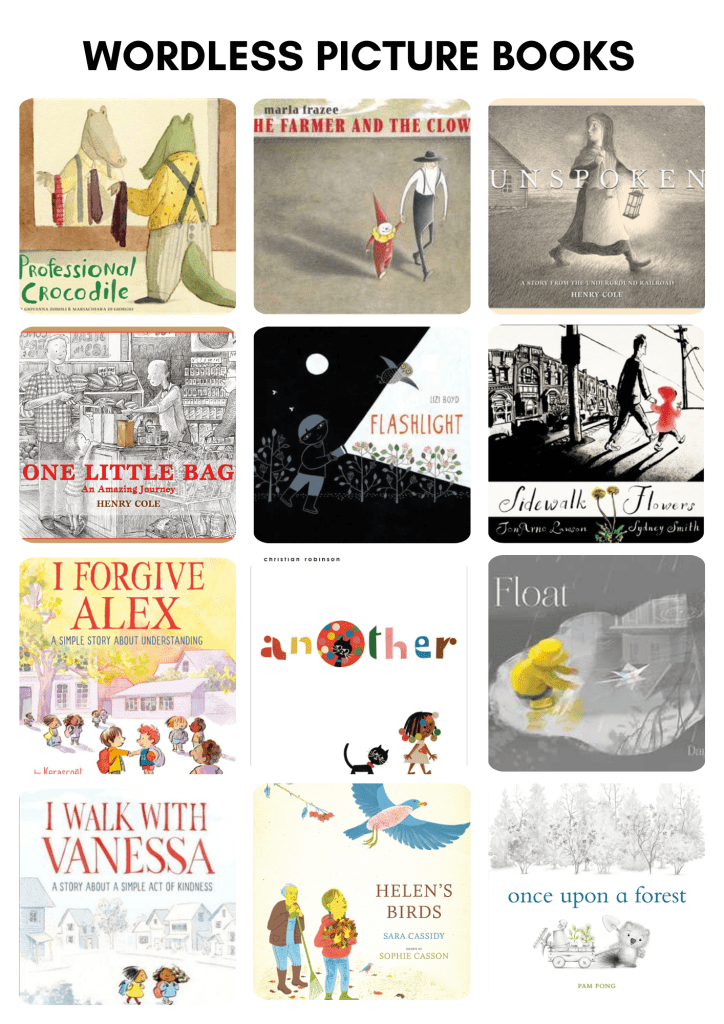
I’ve been meaning to do these posters forever (canva link) and not had the time. One of the things I like to have in our core collection is at least one picture book per grade. This week I’ve had all our G7 classes coming in to have a look at the books again as we move towards our Battle of the Core assembly and have our weekly quiz kahoots on the 75 books.
I was showing the group Mel Tregonning’s “Small Things” and one student latched onto it and was really interested in the concept of a wordless or silent picture book. He read it and then went on to this week’s display of wordless books and read a couple more.
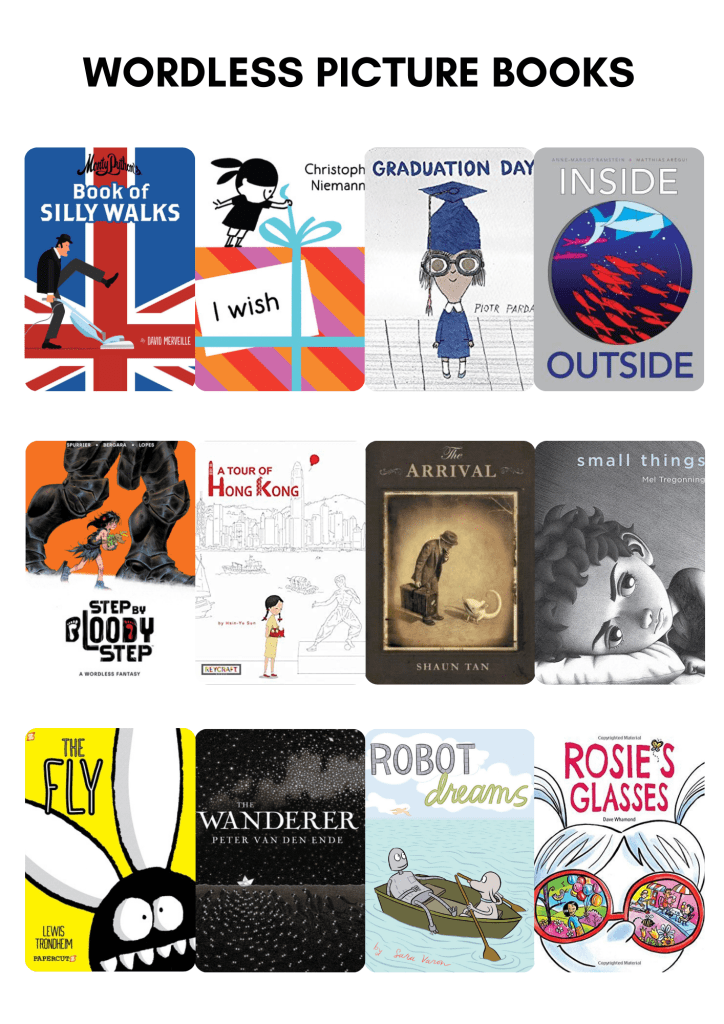
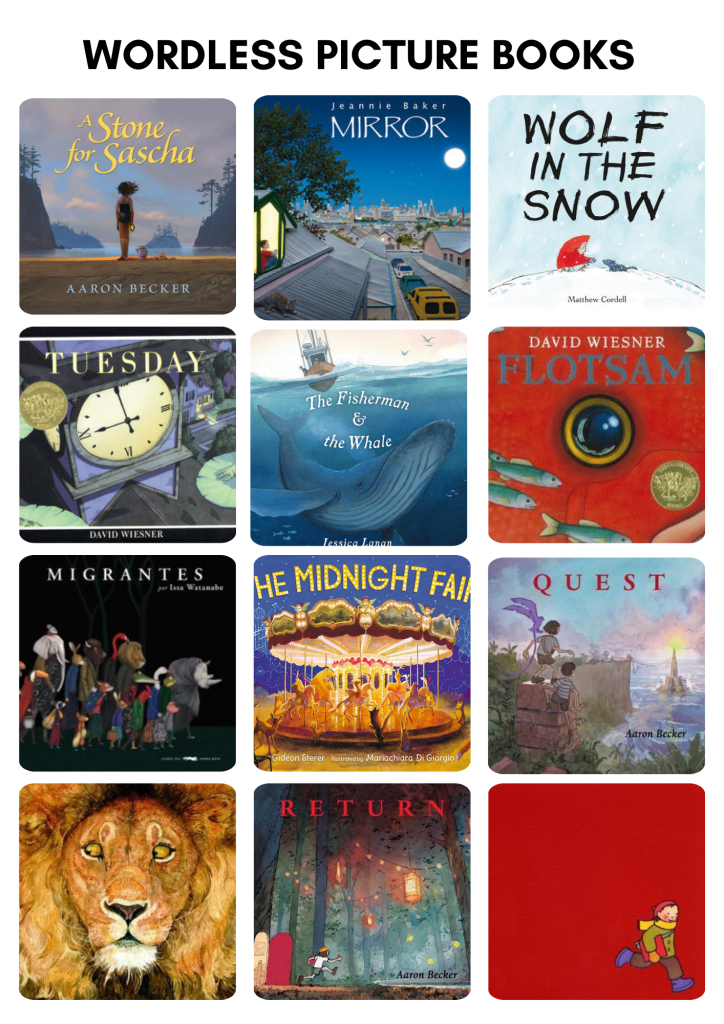
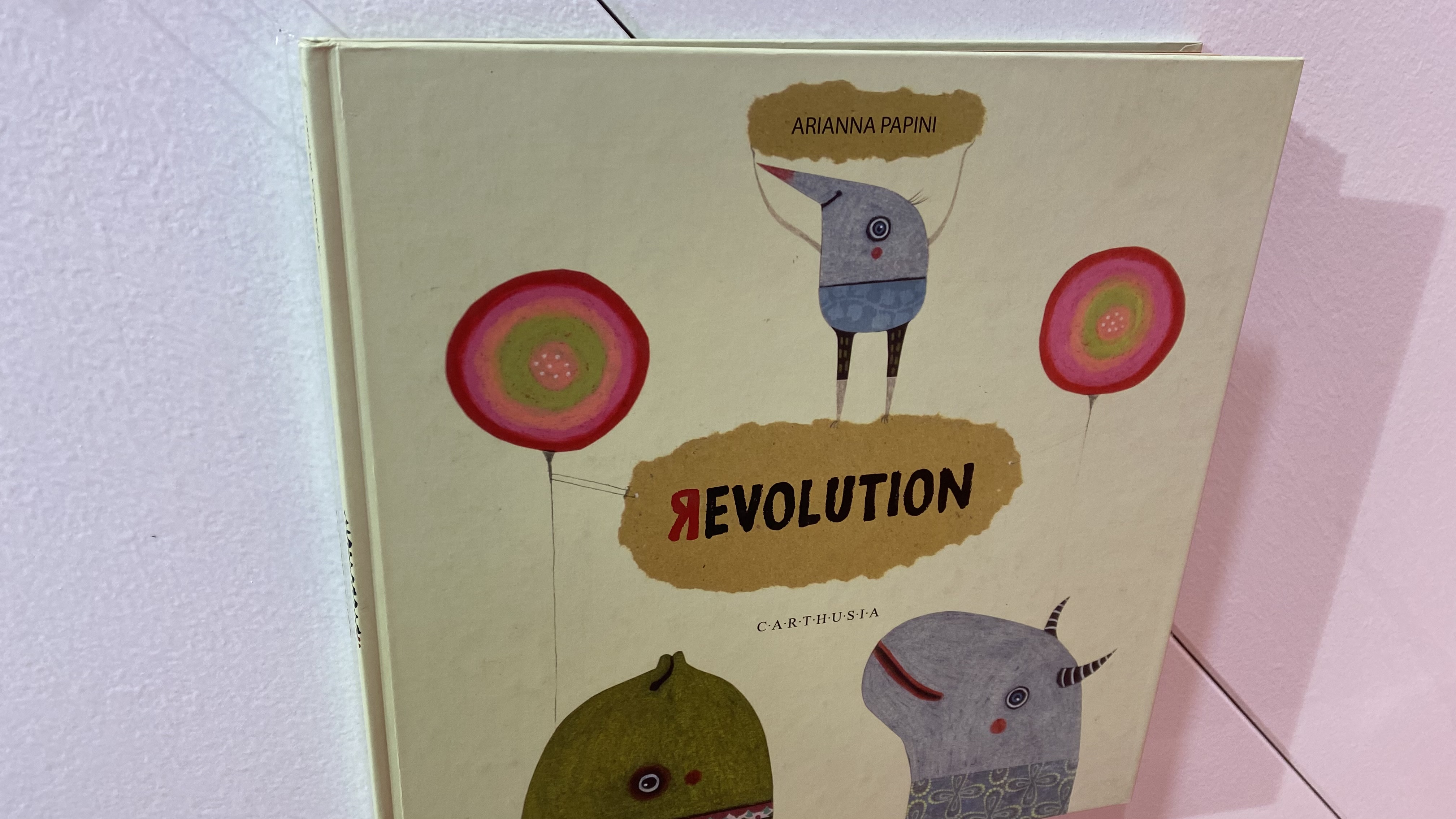
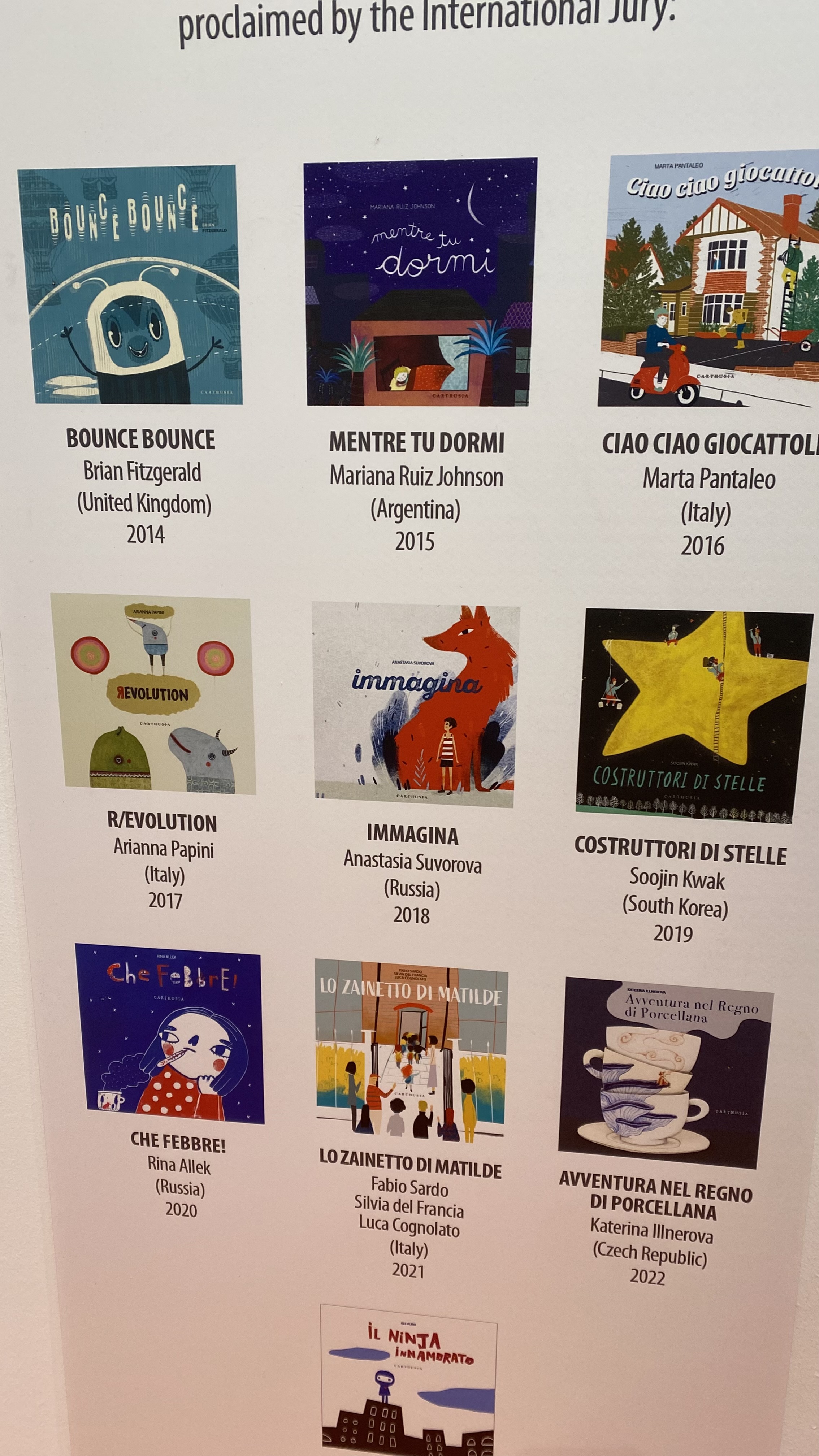
Wordless or silent books are an amazing resource to have in your collection. You can read more about IBBY’s Silent Book project. They provide excellent prompts for creative writing, for quiet contemplation and for vocabulary and sentence structure development for language learners.
The posters are of a few in our collection but there are many more to explore.
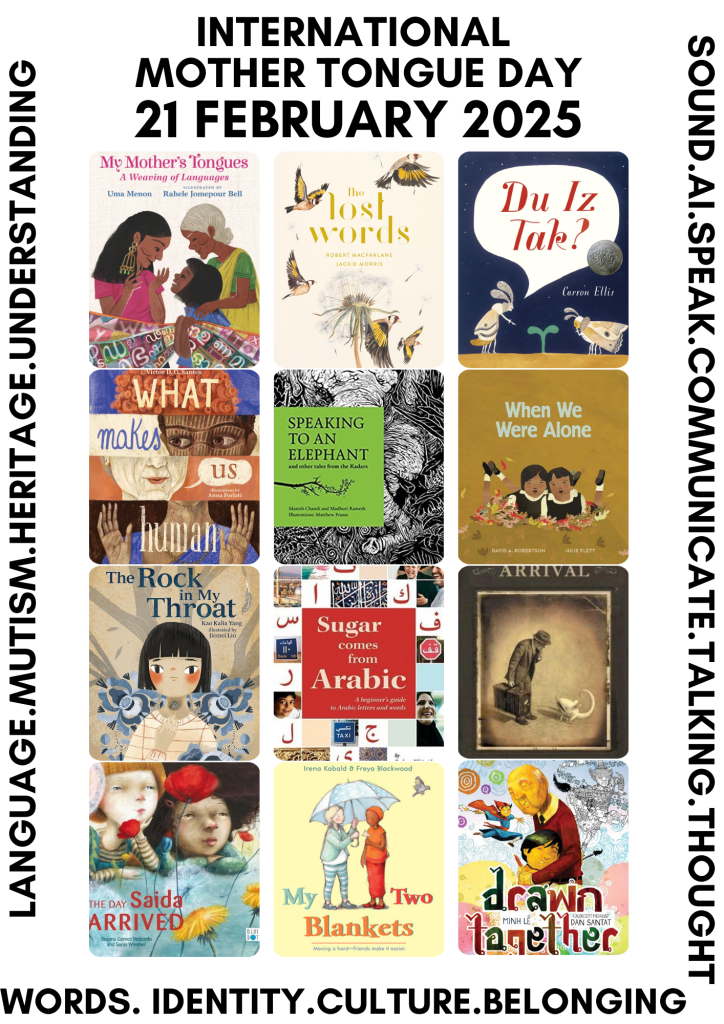
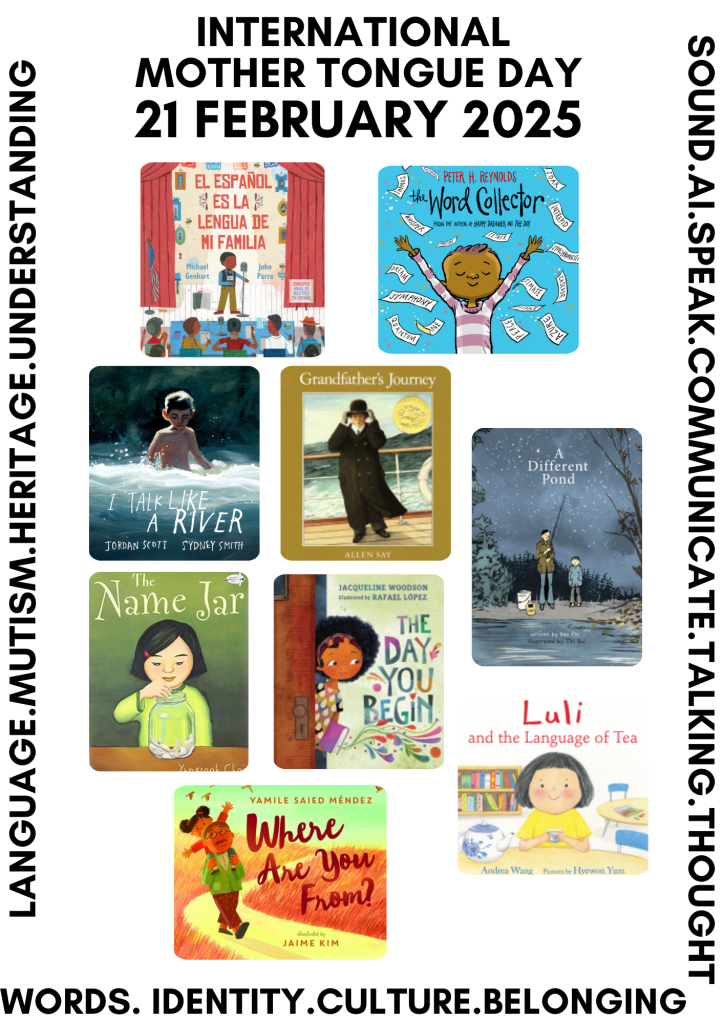
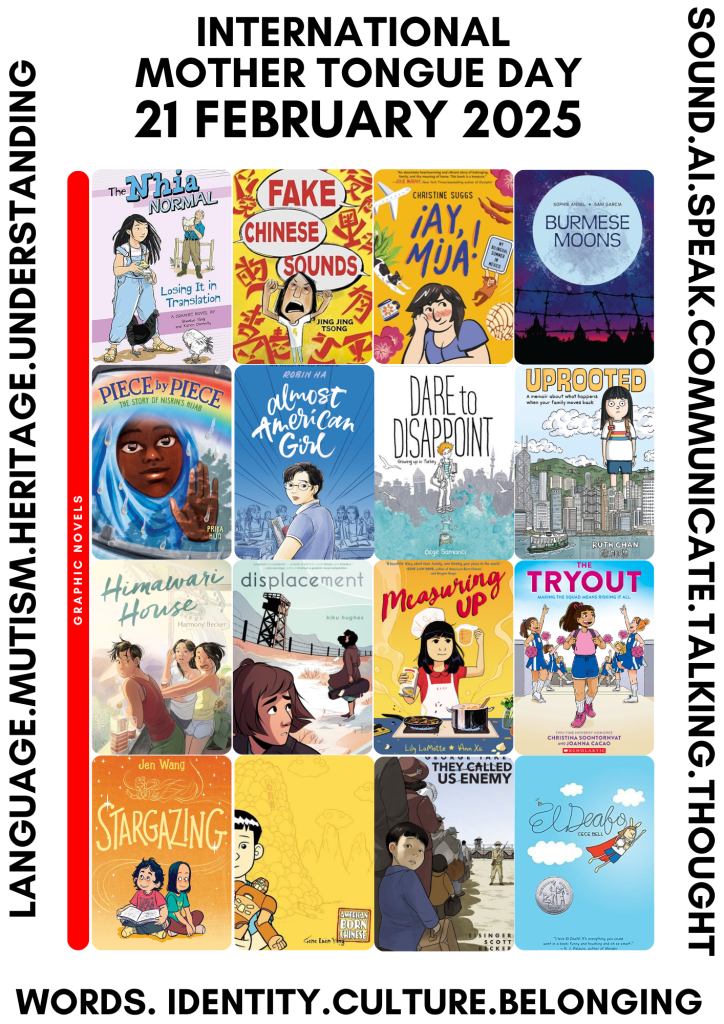
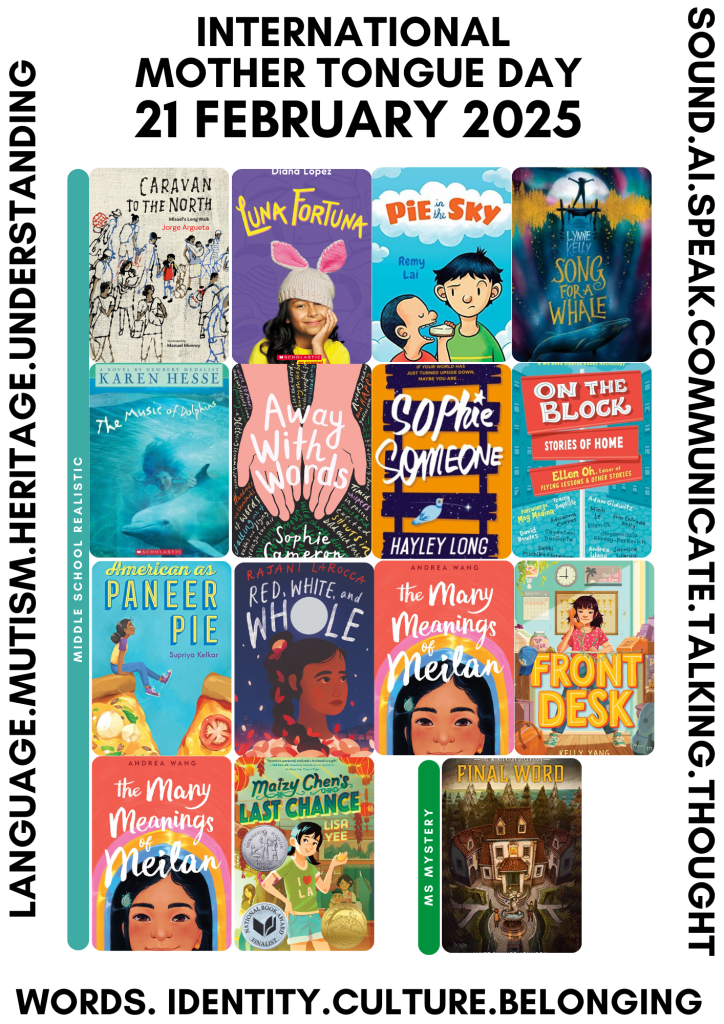
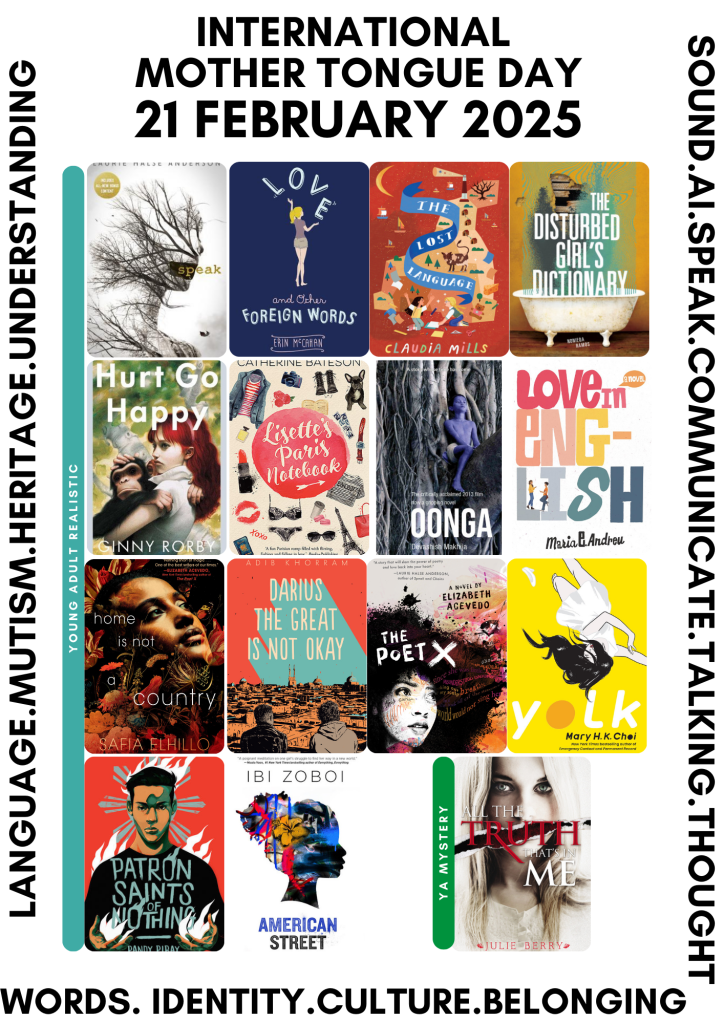
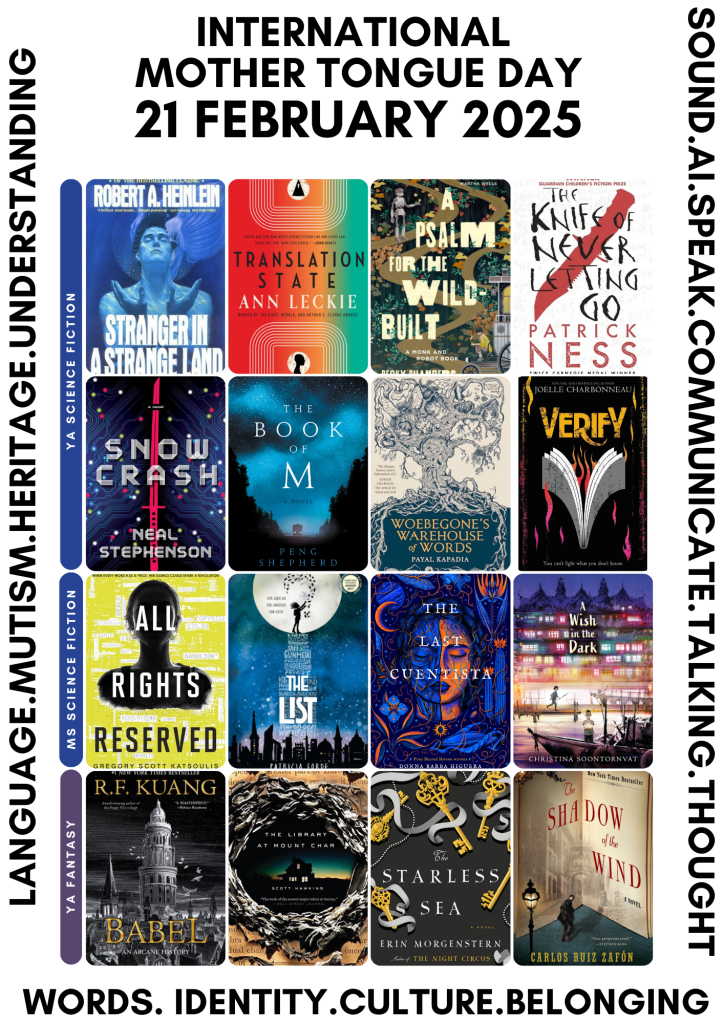
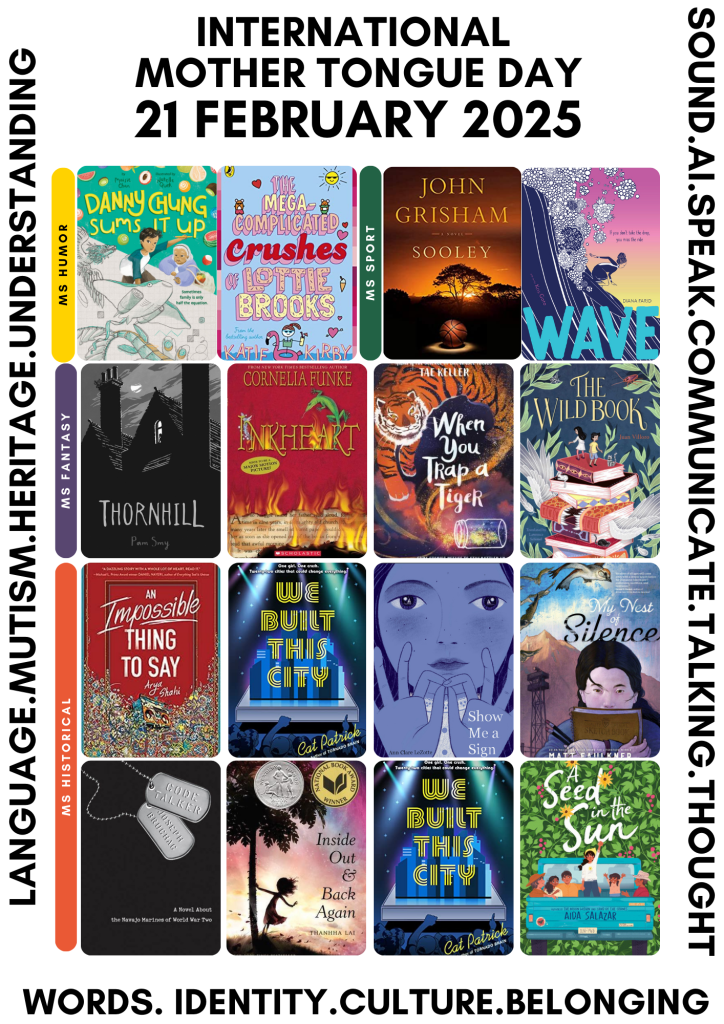
International Mother Tongue Day is next week Friday, but my students and I will be embarking on their annual Week Without Walls trip so I’m a week early with this post – hopefully it will be of some use to those of you planning on celebrating it in the library. I will be upfront about my objection to it being called Mother Tongue Day – as it denies all the families where the language of other significant family members are spoken at home. I prefer the term “home language”. This year is the silver jubilee of the event. Despite all efforts, languages are becoming extinct at an ever increasing rate, and unfortunately this doesn’t attract quite as much attention as pictures of cute or not so cute animal. Schools and other educational institutions are complicit in this – something I’ve been banging on about for years, the lack of multiple-lingual home and heritage language education I still see as a failure of imagination rather than a failure of resources in this day and age. Ok, off my soap box and back to the practical.
These lists started with a casual conversation with KD as to what I had planned for the day, as my passion for language is well known. Which led to a discussion on which books one would consider and then, as usual things got a little out of hand and now I have 9 pages of posters of books that feature language. Language in all its glorious and inglorious forms. Learning language, struggling with a language, speaking or not speaking. Sign language. Heritage language. Language and thought, language and power or control. Selective mutism. Denial of language, erasure and extinction of language.
As for what to do – if I were here, these are the things I would do.
Have big sheets of paper our where the community could write down the languages they speak / read / write. The languages they’re learning. The languages of their fathers, mothers, grandparents.
I’d have them make a language family tree. Have a poster with a QR code that led to this quirky test on Language.
As usual here is the link to the template / books used. In return I’d love some comments on the books you recognise and the link to language! And any displays or activities you’re planning. And of course if you have suggestions of books I’ve missed I’d appreciate you adding them in a comment.
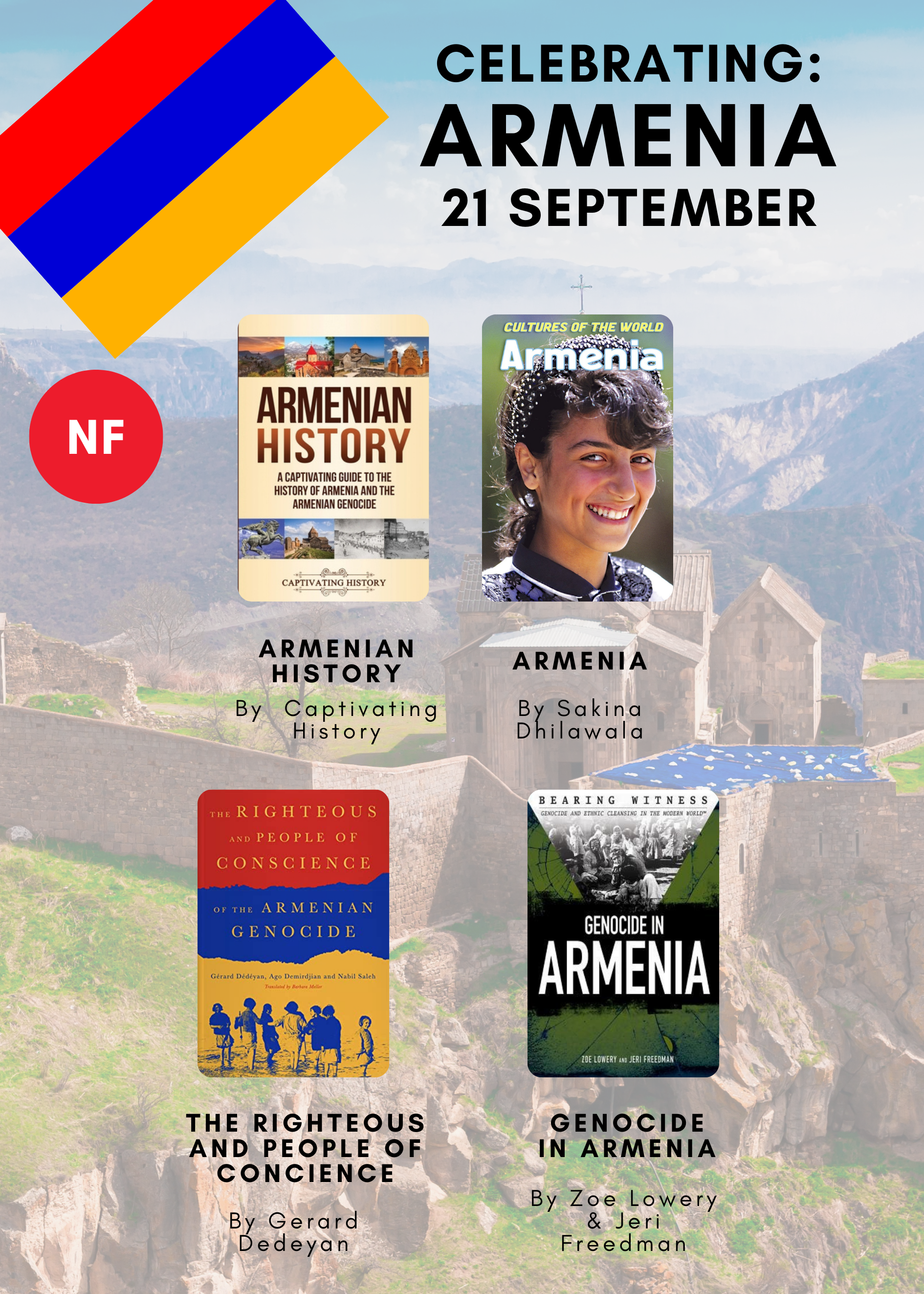
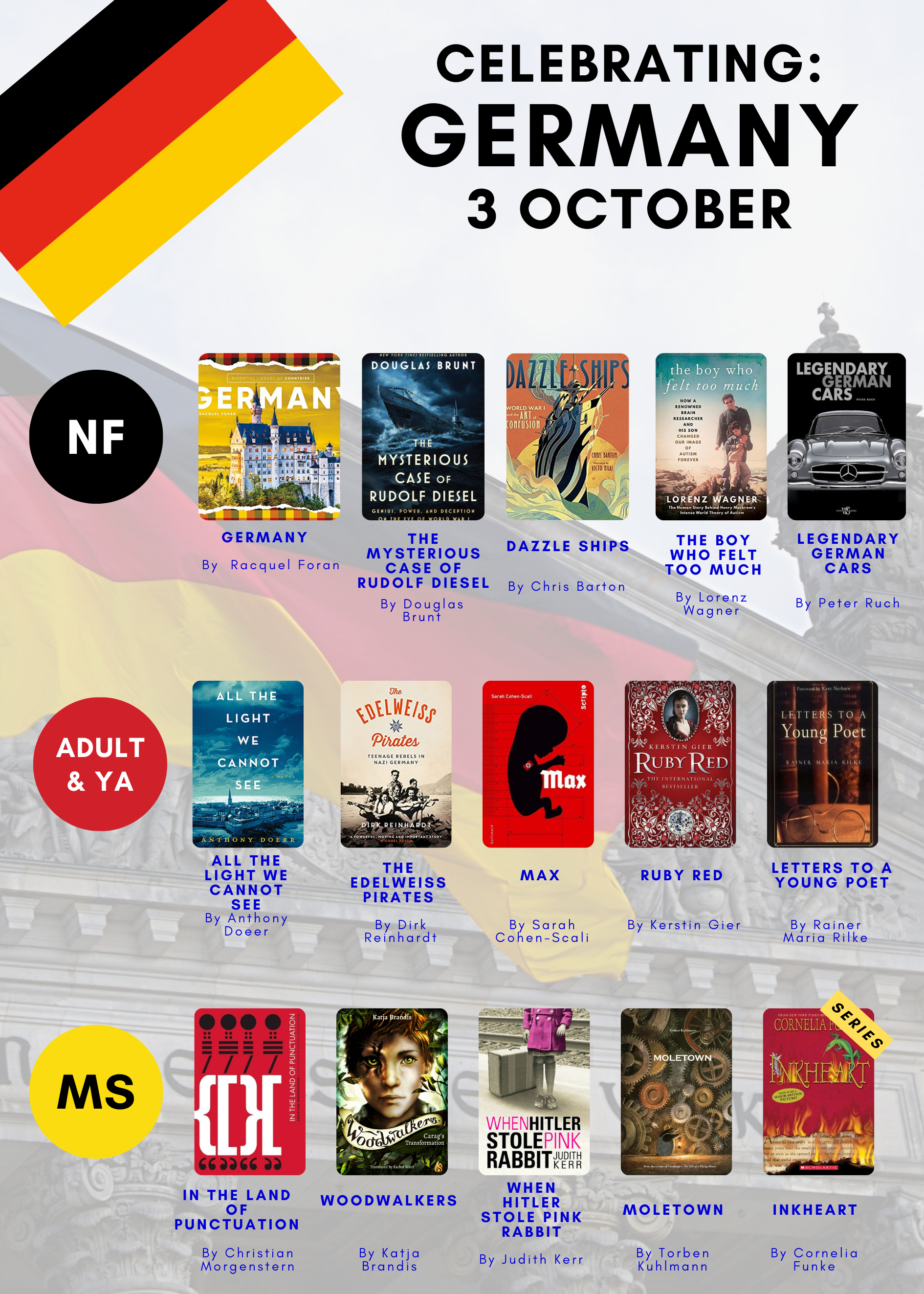
For a while now I’ve been wanting to highlight the curation of books related to the countries and cultures of our students, and finally this year I got around to creating posters “Celebrating xxx” which I post to our school bulletins for students and adults respectively. It’s been a bit of a chicken and egg project – knowing how many students we have from each country / culture – which in itself is truly not as simple a task as it may appear. We use the proxy of first, second and third passports, but as anyone who lives internationally knows, life is a tangle of multiple strands with immigration, migration, expatriation, languages, refugees, fleeing and arriving, births and marriages and transferences and identities. So in the last two years, using this list I’ve been scouring book lists, book catalogues, recommendations, book prizes to where we finally have, for most of the countries with more than 2 students, at least a couple of books besides a travel guide.
A couple of books. How easy that rolls of the tongue. But anyone with a conscience and an iota of empathy will know that that is another potential landmine. I have carried shame for my country of birth, South Africa, for decades, and still often have trouble admitting to its citizenship since I still feel the personal burden of all the wrongs committed by people of my race. It is right that a representative sampling of literature of my country includes reference, analysis and depictions of the pain and despair that apartheid has wrought. But that is not all we are as a nation and people.
I have not yet made the list for South Africa. But that was the dilemma I faced when curating the poster for Germany. A country with a 1000 years of literature beginning with the Nibelungenlied. Whose literature I studied in translation at UCT while ignoring my true passions suppressed doing a commerce degree. Yet looking at the books we have in the library, it appears that the war years, in particular the second world war, and specifically the war atrocities, is the primary lens through which our students form their Germanic world view. Again, it is right and proper that authors, beginning with people like Günter Grass, who, in his time was vilified for daring to address the near past, should shine a light on a terrible past. But that is not all by which they should be known. And more than anything students need to become aware of nuance. By the realisation that it is possible to hold two opposing views in one’s mind simultaneously. And if not through literature, how will they learn that? How sad is it too, that all the books we have about Armenia are about the genocide?
So far I have received nothing but gratitude from our community for both curating / purchasing these books and highlighting them as their national days come by. It is I who is filled with doubt and desire to be able to offer more. And despair that in many cases there isn’t more as countries are ravaged by war and poverty – at times literally with bombs and other times with the devastation of censorship, cultural and monetary poverty and lack of access to publishing and translation of the words that need to be heard by their people, its diaspora and the rest of the worlds children and young adults / adults. We deserve more than the “lonely planet” and “countries of the world” as nice as it is to at least have that.
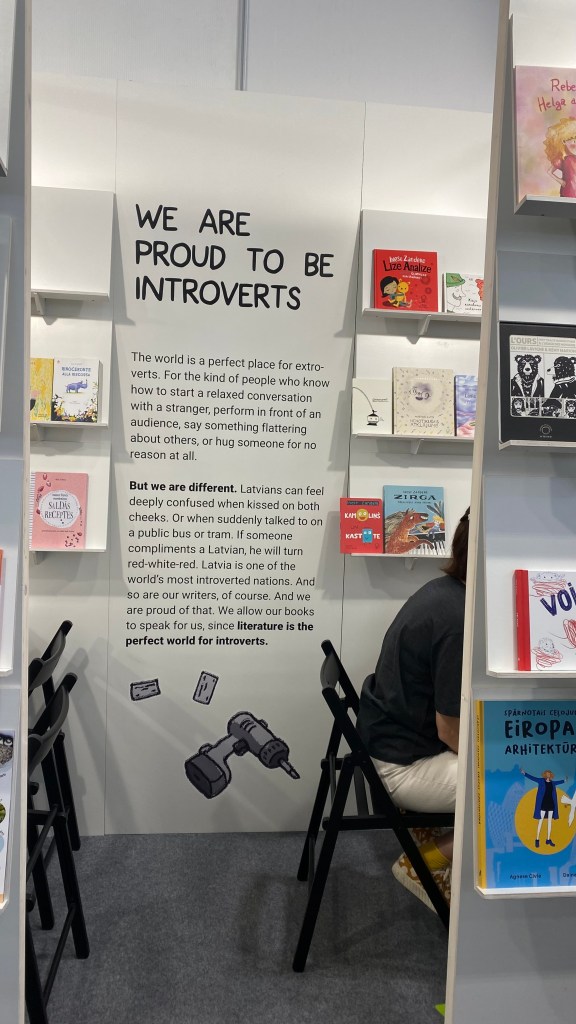
One of my book related highlights this year was being able to attend the Bologna Children’s Book Fair in April 2024. It’s been on my radar for years and the fact it took place during our school vacation and I could join a bunch of fellow librarians who were similarly disposed made it less of a “thing” to attend. For I am not fond of very large crowds in overwhelmingly big exhibition spaces (thank heavens for the Latvians who are proud to be introverts and celebrated that in their stand!) . Below are a few of my thoughts on the event.
The place of librarians
I’m not sure how to say this politely, but, like any other system, the publishing world for children is its very own special little ecosystem – this being the European version – I guess a kind of sub-species of the dominant USA version, where of course all the neighbours and relatives were free to join. Don’t get me wrong, I’m happy where-ever books and reading are celebrated, but I was quite fiercely put in my place during one of the sessions “PISA IN BOLOGNA. HOW TO FIGHT LOW READING SKILLS”. After the session – not during (I would not have dared) I asked the moderator Daan Beeke, Network Manager EURead, Stichting Lezen, how it could be that libraries and librarians were not mentioned once during the whole panel session and I was rebuked for thinking that this event was for anyone but publishers and marketers for the sales of books. Bam. And there I was thinking that us librarians were at the forefront of encouraging reading and fighting low reading skills. Or maybe could it be that there is a correlation between low reading skills and lack of support and funding for public and school libraries? Just maybe?
The place of the environment
I was extremely happy to see that “the environment” was featured prominently both in the exhibition spaces and on the event programme.
The events: “READING FOR A HEALTHY PLANET: INSPIRING CHILDREN’S BOOKS TO HELP ACHIEVE A SUSTAINABLE FUTURE” organised by the United Nations, and “UTILIZING STORYTELLING IN PRODUCT, MEDIA, PUBLISHING AND CONTENT TO CATALYSE SOCIAL AND ENVIRONMENTAL CHANGE” moderated by Helena Mansell-Stopher of Products of Change, and “SEA OF STORIES”
For 2024 the Special Category for the “BolognaRagazzi Award” was THE SEA. WINNER: Gianumberto Accinelli, Giulia Zaffaroni, Giù nel blu – Dalla superficie agli abissi: viaggio sottomarino sfogliabile. Nomos Edizioni, Italy, 2021 SPECIAL MENTIONS Antoine Guilloppé, Pleine Mer. Gautier-Languereau, France, 2018 Masakatsu Shimoda, 死んだかいぞく (The Dead Pirate). Poplar Publishing, Japan, 2020
One thing that super saddened me was that the whole event didn’t have the environment at the forefront as plastic bottles abounded and I didn’t notice any water fountains or water filling facilities – we brought our own bottles and of course the tap water from the bathrooms is 100% fine, but it would have been wonderful to see the events – in particular the ones on sustainability featuring reusable rather than plastic bottles.
The fair had two events around this topic: “ORIGINS: INDIGENOUS VOICES IN CHILDREN’S BOOKS” Moderator Dolores Prades, Founder, Director and editor, Istituto Emília, Brazil Panel Nat Cardozo, author and illustrator, Uruguay; Adolfo Córdova, author, Mexico; Jason Low, publisher and Co-owner, Lee & Low Books, USA; Aviaq Johnston, Inuk author, Canada; Victor D.O. Santos, linguist and children’s books author, Brazil/USA; David Unger, author and translator, Guatemala/USA; Eboni Waitere, Director, Huia Publishers, New Zealand.
The representative of The Indigenous Literacy Foundation (ILF) of Australia who won the prestigious Astrid Lindgren Memorial Award (ALMA) and is the 2024 ALMA Laureate, is a late inclusion on the panel and her discussion at 45.06 of the video below about the work they do, is worth listening to.
and “THE MOST PRECIOUS THING: VICTOR D.O. SANTOS IN CONVERSATION WITH VERA GHENO” – I wish the English publishers had retained “the most precious thing” as a title instead of “what makes us human” – just a personal quibble.
The place of dissent
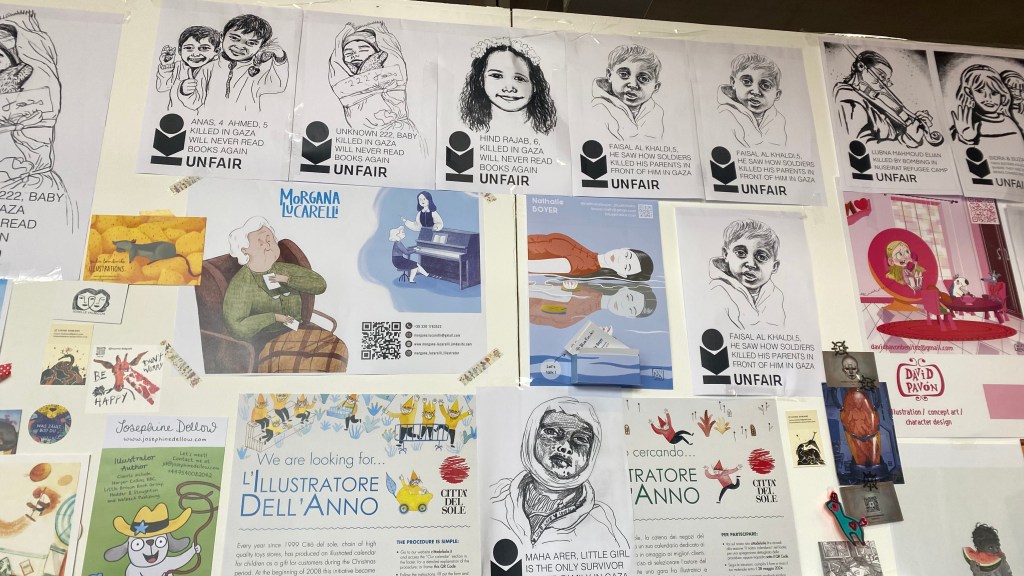
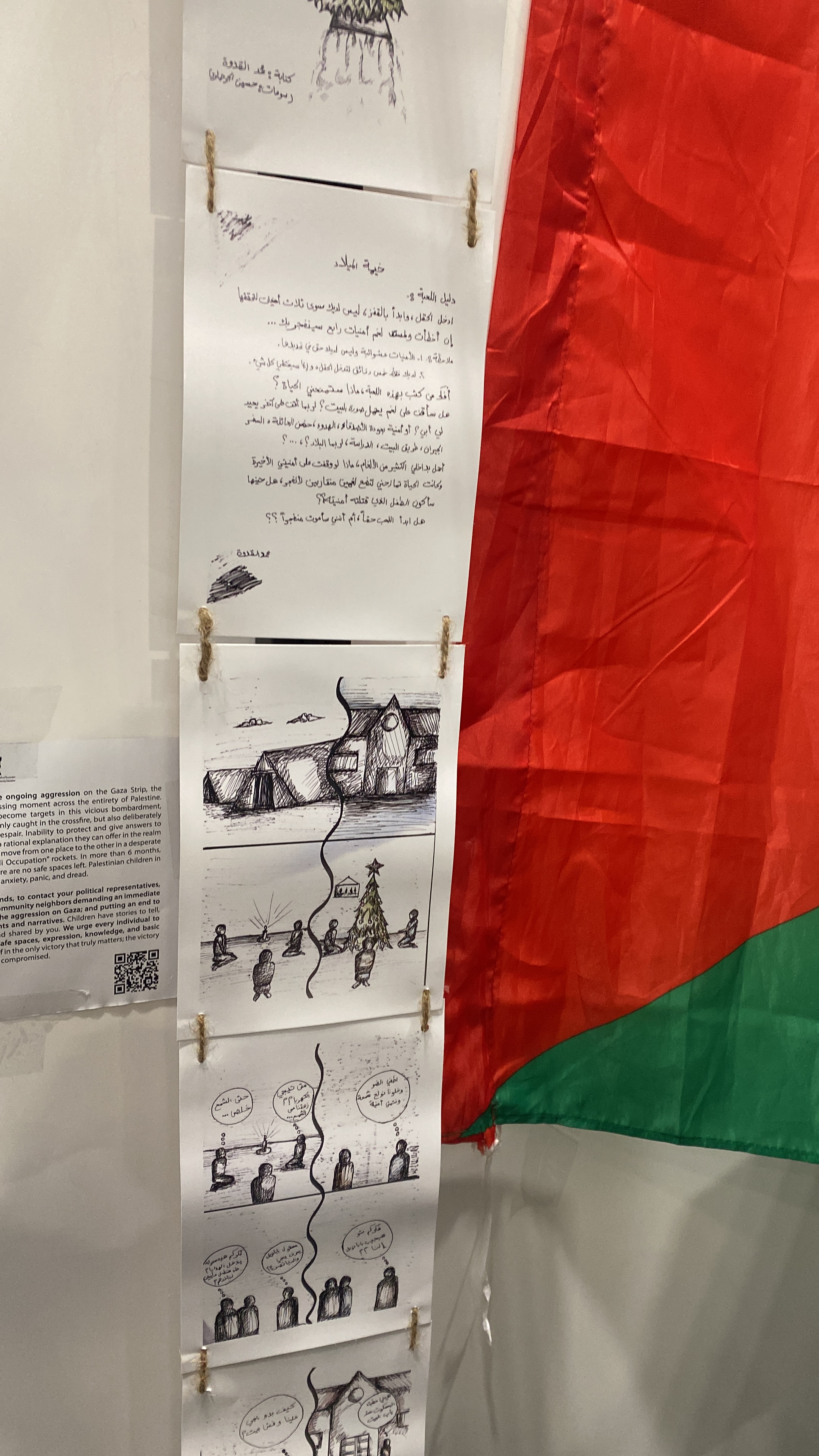
Following the issues around the 2023 LiBeraturpreis which was to be awarded to Adania Shibli, at the Frankfurt book fair last year, I was interested to see how and if dissent and awareness of geo-political issues would be handled in Bologna. There appeared to be a guerilla type of image bombing in the illustrator walls, some of which seemed to appear and disappear. Both Isreal and Palestine had representation.
It saddens me that while children are expected to live and die through wars, they have very little representation and “place” in children’s literature – yet – and what there is still focuses very heavily on the second world war experiences.
I find this type of header in the NYTimes to be quite disturbing “Teaching Young Children About War Without Frightening Them – Four new picture books tackle the subject in sensitive, reassuring ways.” I literally have no words about how insensitive that heading is.
I’ll write a whole separate blog on this some time – in the meantime please have a look at the lists created by Dr. Myra Bacsal on her Gathering Books Blog.
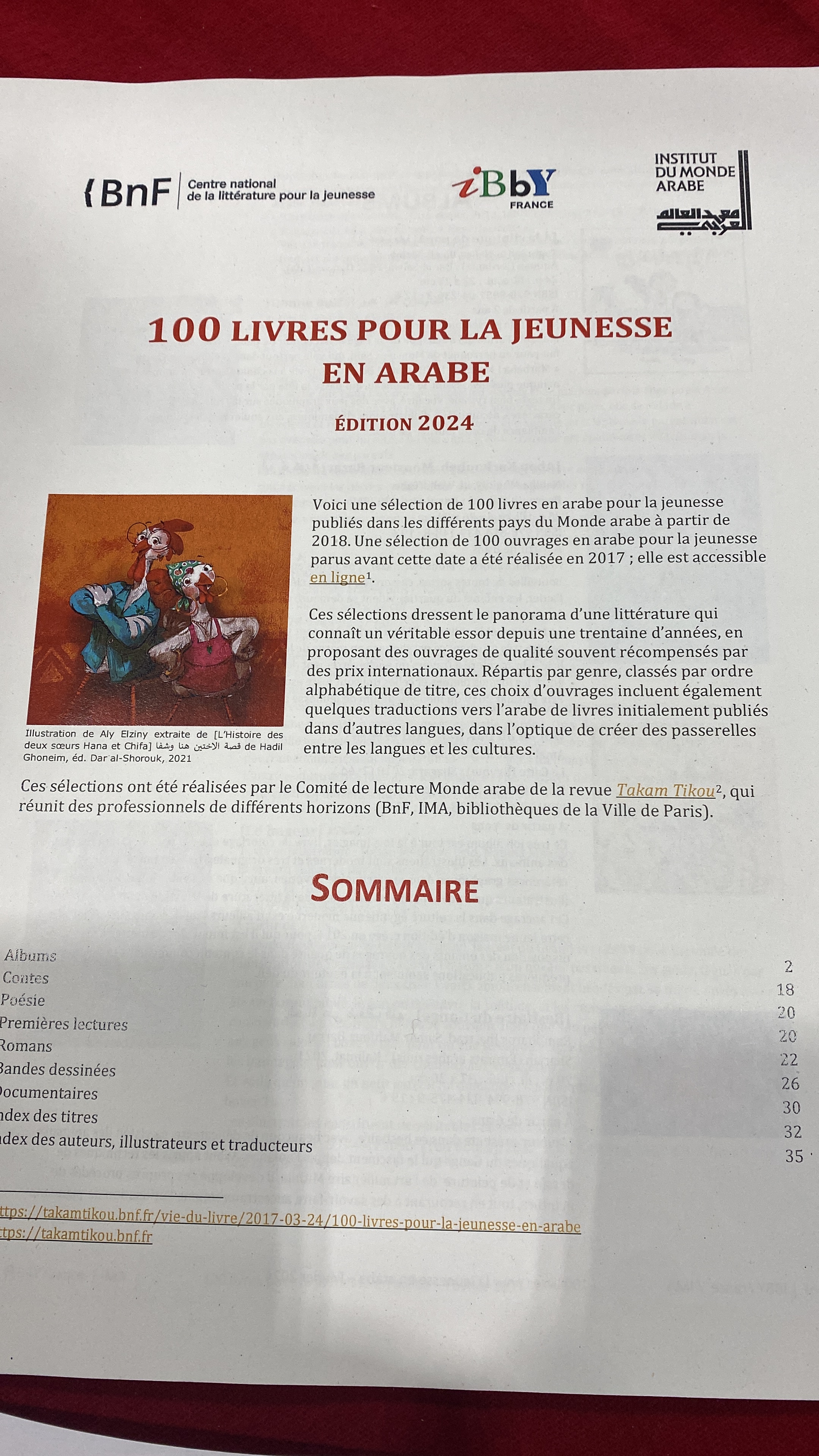
Given my own geo-location at the moment, I was interested to see that IBBY France has created a list of 100 books for young people in Arabic – here’s the link for the English version.
The place for silence
There is a special place in my heart and every library I’ve had the pleasure of working in for “wordless” or “silent” books, and the fair didn’t disappoint in that regard. Of course the highlight is the Silent Book Contest – Gianni De Conno Award and the exhibitions of the artwork around the award, as well as the previous years award winners. These are just the best books to have in your library for accessibility, thought provoking conversations and writing prompts.
Tomorrow marks 74 days since we saw our students face-to-face. Since we had the luxury of physical indoor and outdoor spaces. A library. Fields to play in. Classrooms. We’re at the point of the year now where we’ve started talking about assessments and report cards and student led conferences. Where there are fewer days left until the end of the school year (67 days) than we’ve been doing online learning. And everyone I speak to is so very tired. Students, parents, teachers.
If this becomes our new normal, even in some kind of hybrid online/off-line model as articles such as this from the Atlantic Get Used to It: This Lockdown Won’t Be the Last suggest that we may be moving between the two for a while to come, then we’re going to have to rethink online learning in a major way.
I listened to an interesting podcast with Sam Harris and Matt Mullenweg little over a week ago, on the New Future of Work wanted to blog on it but then had to do some more thinking and revisiting the points, but it was nearly a 2 hour podcast and I didn’t have the time to re-listen to it (even on my usual double speed), and there was no transcript – so the hack I employed was to open a word document and activate dictate, play the podcast in the background and use Microsoft’s pretty impressive assistive technologies help me. I can read way faster than I can listen which is why video-based education always annoys the heck out of me. Podcasts are ok as I can do them while walking, cleaning, cooking etc.
Levels of Online Work:
Getting back to the point. Mullenweg identified five levels of online working. And I think this is probably true of online learning. He also had a great little anecdote about the early days of radio drama in the 1920’s when people didn’t take advantage of the medium and tried to recreate plays including costume etc and then broadcast it. Online everything is a bit like that – we take the physical and try to recreate it but online, not fully adapting to the medium.
The levels are:
Level 1: Occasional at home work for example due to emergencies / illness using basic equipment like phones / internet
Level 2: Attempt to recreate the office environment at home without taking advantage of the medium – i.e. synchronous, mandated online hours, surveillance by company, little freedom and agency.
Level 3: Take more advantage of the medium – e.g. shared documents, real-time editing for example during meetings for clarification and shared understanding, better home equipment, companies investing in hiring people with really good written communication skills.
Level 4: Going asynchronous giving agency to people to design their day and productivity. Performance is judged on production / output not on how it’s produced. The baton is passed on over time zones. Decisions take longer but allow for longer and better contemplation, less power dynamics and give space for introverts and people for whom English is a second language.
Level 5: Nirvana with better work and more fun. Environment is designed around health including mental health and wellness. People operated at a higher level being “heroicly productive”. A sense of a world of “infinite abundance” and where there is a noticeable divergence between peers in terms of their deliverables/output. The biases of online environments such as dress / self-presentation / image disappear.
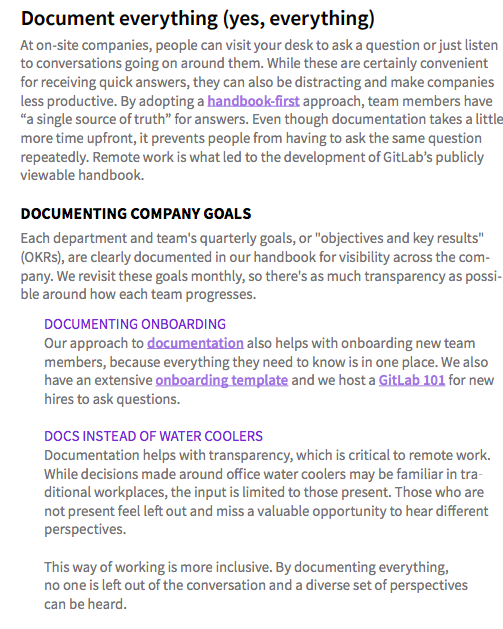
I really like some of their suggestions – including the one about documenting everything and having a single source of truth. Honestly that was one of the most time-consuming things I did initially and it remains tough to keep it updated and relevant, but our Middle School online learning guide (7,745 views) and the more detailed Teachers guide (5,476 views) remain the best time-investment I’ve made so far.
“sometimes I .. get under 5 emails per month, well and some months it might just be one or two basically all I get with email is like private HR stuff things that need to be one to one private communication everything else happens on these internal” (discussion boards / forums)
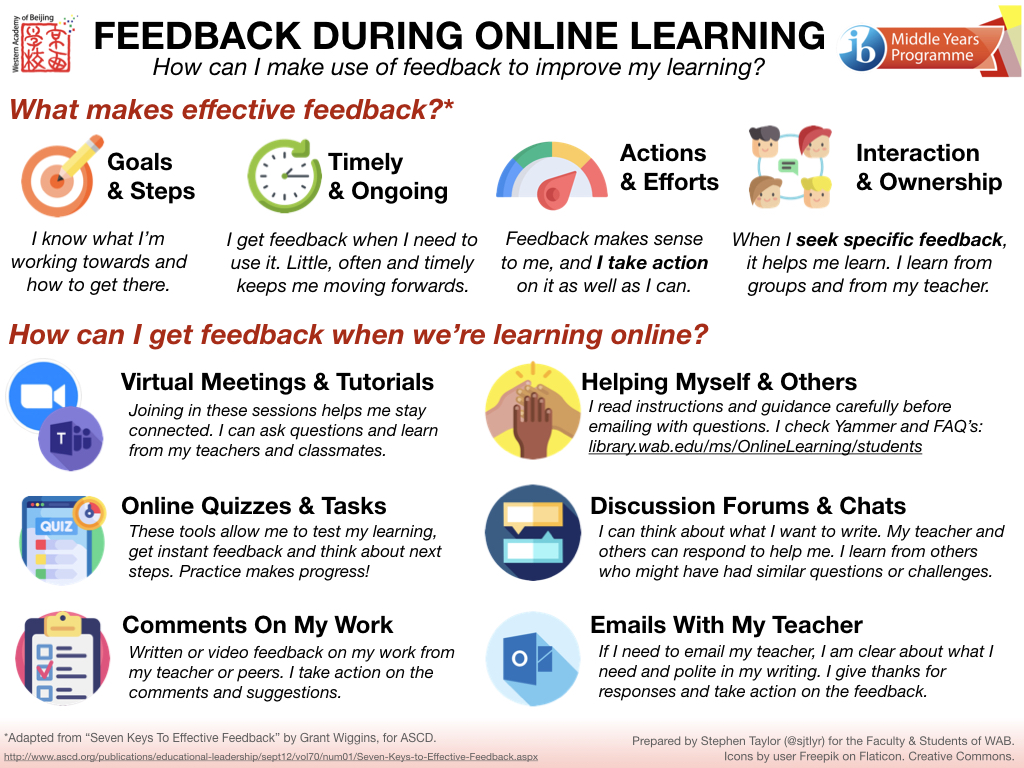
One of the most stressful parts of online learning I think for everyone has been the continual flow of single-purpose single-person emails all asking / saying the same thing. From the EdTech / IT side of things we’ve taken a load off with Libguides. I don’t get the feeling that’s happening so much in the various subjects. We’re not at Nirvana yet – or even close because there is still some pride in saying how many emails you have / have sent / how many hours you’ve been working. I had a really bad day on Friday. I’d been up late giving online PD to some educators in North America, followed by finishing off some points that had arisen from the PD plus internal stresses as our permission to stay is becoming an issue as we can’t return to China and my son and I were creating home-made application photos and filling in forms (in French – thank you Google translate) into the next morning. Then up early to do the first grocery shop in 3 weeks at 7.30am before the shops got busy. And then I was dead. I checked the most important emails and dealt with them – often just pointing people to our knowledge base. I left a bunch. And by the end of the day got “don’t worry I managed to solve it” from a few. The more robust our knowledge base can be, the easier this is going to become. I also need to make a huge investment in getting everything to ASK.wab.edu and then pointing to individual pages / boxes.
That’s going to take a huge investment not just in putting it all in “ask”, but also in getting our whole community to check there first as a habit.
Rethinking it all
But I diverge from the real point of this blog and that is the increasing realisation that perhaps we need to rethink teaching and learning. I attended a Zoom webinar with around 50 MYP educators last week, led by the indomitable Lenny Dutton and the consensus seemed to be converging around the fact that huge scaling down of the curriculum and content expectations was occurring – with 50% being the most common number suggested. (Side note, it also made me incredibly proud of the leadership, foresight and guidance of WAB as we’ve been asynchronous from the start). Perhaps it’s my A-type personality, or perhaps it was the question from my son “will all this result in the IB changing its exams next year to take account that we’re missing so much this year” that made me wonder what the heck we’re doing? Yes I’m not uncaring and I know all about Maslow vs. Bloom etc. I also know that there is less room for anxiety, worry and endless media scrolling when there’s useful and engaging work to be done.
I have to keep wondering if there is a different way, besides the asynchronous and slower pace to do this. My colleagues know I have two phrases of our greatest enemy in education that I repeat all the time “continual partial attention” and “switching costs“. I think education does particularly badly in helping students to find their flow or in adhering to Daniel Pinks’ tenants of motivation “autonomy, mastery and purpose”
I’m a veteran of (adult) distance learning, having done two back-to-back masters’ degrees remotely over four plus years. It was hard. Really hard. And it took a while (at least 3 subjects, lots of tears and feedback) before I managed to work out the best way to organise myself and my work flow and to find the balance between (part-time) work, full-time motherhood with a spouse who was on the road a lot and being a student.
The sweet spot for me was only two subjects per semester, and only working on one subject at a time each day.
Granted these were masters level subjects with an enormous course load and tons of academic reading to do. But then again I’m a highly literate adult, with hopefully more defined study skills and work habits. So if we’re asking students to do 8 or more subjects and teachers to be teaching 5 block – sometimes of different grades/subjects (middle school) is it any wonder we may be over-reaching? (The poor completion record of MOOCs is also something at the back of my mind).
As you know, I’ve also been grappling with that beast called Teams, and I’m trying to think out of the box and learn from all the questions and webinars and videos out there. One completely out of the box idea I had was perhaps we’re thinking of it the wrong way around – this is in particular to my thoughts about student agency, self-directed learning, portfolios and evidence of learning/mastery. What if instead of having class/subject teams, each STUDENT had a team they were owner of. They’d have channels for their various subjects, and they’d choose which two or three subjects they’d focus on at any time and when they’d do it. Subject groups would have department teams with all the teachers, the curriculum and curriculum content that then could be pushed down to students and mentors would help guide students in their choices. Instead of semesters, for this age group we’d probably have to look at shorter periods of time to ensure that the “forgetting” curve didn’t kick in – especially in continual practice type subjects (I’m in dire danger with my Chinese according to my memrise app, not to mention muscle loss on the fitness side of things).
What are you thinking?
In a conversation with a fellow educator last week, he said “Well WAB is just so far ahead in thinking about these things, we’re probably at least two or three years behind even putting theses discussions out in the open” and perhaps that is so with our Flow21 initiatives. I’m also wondering how far away we are from becoming a global rather than location based entity – for example some of our students were at one point enrolled in local schools where they were based and have now returned to the fold – what’s stopping us from enrolling other poorly served students into our programmes?
I’m thinking the IBO is also going to need to be far more proactive to fit the new reality. Personally I was not impressed with the timeline of action (exam cancellation and alternatives proposed) only coming after it was apparent that this wasn’t just a China problem. Value based leadership is essential in these times and that includes checking bias.
I do think the IBO focus on ATLs (Approaches to Learning), particularly communication would remain foremost – again from Mullenweg:
“and writing quality, clarity, and skill becomes more and more valuable I think in all organizations but the more distributed you are for sure. This is going to be a windfall for all the humanities degrees. Absolutely we screened for it very heavily in hiring process. Like I actually don’t care where you went to college or anything like that but we do a lot to screen for writing ability both in the how you apply how we interact will hire many many people without ever actually talking to them in real time or on voice we do it entirely through slack and tickets and other things because that’s how we work”
If we were to explode education what would it look like? Please comment.
One of the hidden advantages of learning Chinese is that I often catch myself pretending to learn and it gives me an acute insight and experience into the nature of real vs. faux learning. I’m doing a lot of “busy” work today on trying to get my document together for my ISTE certification (faux learning) so this will be brief.
Real learning literally makes your brain hurt. Sometimes I feel like my brain is creaking when I’m concentrating hard. It’s hard to keep up for very long and you tend to need physical breaks. Some of the things that I’d include in real learning is when you’re not just trying to remember characters but when you’re using them to make sentences – and incorporating previously learnt characters and sentence structure. That’s hard work. Memorising and reproducing a list of characters is easy. It’s also easy to use apps to go through lists of words and pick the right word / sound / character combination from 4 or 6 options. That’s my “pretend I’m learning Chinese in the taxi on the way to work” learning. Funnily enough if I do the same at home at my desk with a pen and paper, and look up the etymology of the words as I go along and write the sentence examples from my dictionary it’s coming closer to real learning. Similar actions but a twist that enhances.
Something similar happens when you’re practising music. Playing a piece through is great fun. But just focusing on one part that’s tricky and repeating that until it’s fluid, and even perhaps breaking it down into smaller and smaller bits – that’s real learning. Anton Nel in his DSS talk at WAB hinted at this. Others have also talked about it in the “10,000 hour debate” that morphs into the “deliberate practice” discussion.
Real learning takes place when you do the things that you like to avoid by doing other things – like fill in the blank sentences and worksheet versus reading an authentic text. I really do understand why so many students avoid reading a book. Because it’s hard work. Really really hard work. Especially in another language. You’re recognising characters, thinking about the meaning, flipping sentence around in mental gymnastics so it makes sense in your mother tongue grammatical structures. Looking words up. Looking pronunciation/pinyin up.
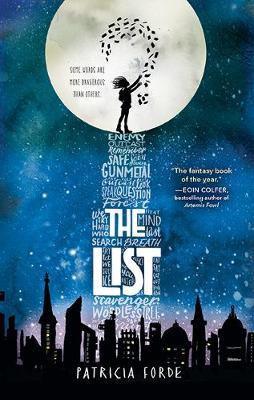
I’m reading “The List” with my group of early morning read-aloud students. It describes a dystopian world where one has only 500 words to use. When we started the book I joked with my crew that that was my Chinese language reality. I also recently finished “All Rights Reserved” where each spoken word and gesture is billed to you. Imagine how reality and potential is limited in these scenarios. Now have a look at this site – this is mind blowing and what a fabulous way of joining research, art, reality and literature by Dr Pip Thornton. Her piece NEWSPEAK shows the whole text of Orwell’s 1984 as a stock market ticker-tape, with the word prices fluctuating according to live data from Google Ads.
NEWSPEAK 2019 from Pip on Vimeo.
I’ve recently subscribed to “The Syllabus” of Evgeny Morozov – the best description of how this came about is in a Dutch podcast (with the worst cover art I’ve ever see outside a primary classroom). It is the epitome of going against the easy consumption of media and information through human and algorithmic curation of a weekly reading list within various fields. Which is how I stumbled on the whole art around the above discussion.
One of the fun things about the FOEN19 (Future of Education Now) was meeting up with two librarians who I greatly admire and in-between sessions geeking out with them. One of the great things (and possibly why I like them so much) is that they’re both keen students of Chinese, the three of us are all at various points of our Chinese journey.
There is of course the big “WHY” of learning a language – and besides a million other reasons it’s an excellent humbling experience that results in a lot of empathy for our EAL students.
The post below is almost literally taken from an email I’ve just composed on a few of the tools I’ve found useful in my journey.
1. Hacking chinese blog is definitely the best there is – they’ve got tons and tons in their archives and regularly do fun challenges. I’ve learnt so much from them about learning to learn etc.
2. Outlier Chinese– they’re newer on the scene. I did their Chinese Character Masterclass, It’s a tough one, I think it’s better to have a year or so of characters under your belt before you do it – or at least a couple of 100 characters, I think they say you should start with it. I found it hard to keep up with the course and then I’d binge on it and then lose momentum. In the end over the summer I put another thrust into finishing it. It’s good content but not very well presented and as a teacher (and design conscious person) I’d lay out things a lot differently.
There are a variety of these, some I like more than others. Many have been supplanted by apps but they’re still good to use. As you can see from the photos, some are old and some are out of print, but if you’re working at a school are almost certainly still floating around the Chinese Department or text book store. I’m sure there are other new books, most of these are still around from when I first started learning 10 years ago. Happy to hear of better alternatives.
Easy way to learn Chinese Characters – possibly my favourite, but you’ll have to get it second hand as I don’t think it’s in print anymore. It’s a workbook that builds things up very logically and possibly has been supplanted by other books since I used it – happy to hear about alternatives
Graded Chinese Reader – I’m on the 500 words one, I’m finding that that best way to read via the abridged short stories. I’ve tried other stuff including picture books, kids books, text books, but there’s nothing like authentic texts. There’s plenty of room for growth with 1000, 1500, 2000, 2500 and 3000 words.
Tuttle Learning Chinese Characters an nice visual way of learning uses various memory techniques to remember the tone and the structure of the character – of course the outlier folks would argue you shouldn’t be relying on this type of memorisation and that etymology is a better way. Worth looking at in conjunction with Outlier, to see what best suits your style.
Chinese Characters – starts easy and gets very complicated. Similar build up to “Easy way to learn Chinese Characters”
Rapid Literacy – this one literally does what it says. Great for a kick start to reading. There’s a CD you can listen to, plus the work book and it has you reading the most common characters in context in I think 10 lessons. It’s also great for listening practice.
On Learning Chinese is a more academic tome. It’s for people like me who really wanted to understand Chinese from a top down 10,000 feet perspective as well as from the daily character grind.
Teaching and Learning Chinese as a foreign language again for the nerds or the former language teachers. It’s really a worth while book because it gives you all the grammar you need plus all the stuff you need to know about interference of L1 (English in my case).
iMandarin is possibly my favourite Chinese language institute and this 900 Sentence book is an absolute gem. Just what it claims to be – the 900 most common sentences you need as a beginner. With a CD to keep listening and repeating. I think you need to be a student there to get the book.
Just for the LULZ – Chinese character fast finder – if you like dictionaries and browsing through books of words this is great. It’s a throwback to the days when you didn’t have electronic dictionaries and had to find words by counting strokes and knowing radicals; and Peng’s Chinese Radicals – available widely in Singapore – nice when you want to flip through and learn some stuff without trying too hard.
I spent 2 years full time study of chinese (2009-2010) and never got the tones. Then I found this recently and went through the drills and by the end I absolutely got it. Suddenly I could hear all the different tones…
Absolutely worth a couple of weeks work (it’s short and intensive but you need time between the paired drills)
Your school probably has a subscription to this via the Chinese Department – if not it’s pretty cheap and great for creating writing worksheets with stroke order, creating (manual) flashcards etc.
6. Apps
A lot of the books mentioned in (3) above have been supplanted by apps. But I still prefer books and writing by hand. But these are great for stolen moments in taxi’s or while waiting and because they’re smart and can do the spaced repetition thing for you.
Pleco – dictionary with lots of add ons – the flashcards and outlier dictionary are well worth it. The getting words into lists and importing and sharing lists can be a real pain, I have to go back to the instructions every time I change text books but once they’re set up you’re good to go for a while.
Memrise – good for spaced repetition. The Chinese 1 course is particularly good for colloquial Chinese but then it gets more grindy and by Chinese 3 it becomes long and boring (too many words before you go up a level). The first 500 character one also takes a LONG time. I wish creators of these apps would allow for smaller chunks and more levels – even adults like feeling like they’re accomplishing something. Some language institutes have made their own courses within Memrise – this can be a good and bad thing depending on the recordings and care they take (some are riddled with errors and loud / soft / irritating recordings).
Skritter – in two minds about this one. Works best on an iPad, it can be very picky about your writing and I actually prefer pen and paper so I’ve stopped using it as much as I used to. It’s also relatively expensive, and you sometimes need to do your lists on a laptop and then import them, but using a track pad on a laptop is clunky, so then and iPad is better, so I’m not getting what I need out of this app.
There are a gajillion apps out there and I’ve tried a lot of them but those are the three left on my phone now.
7. Podcasts
I’m a bit back and forwards on this one. I used to listen to some and then I got a bit tired of them, and stopped listening because I could only really get benefit if I was sitting and taking note, and not if it was just background stuff going on. Again I’d love some good recommendations. The only one that I found consistently good was Melnyks Chinese. It’s free to listen but you pay for the lesson pdfs.
8. Videos
When I was lazy and wanted to pretend that I was learning but was actually just passive, I used to watch a fun set of YouTube videos in a sitcom like setting called “Happy Chinese”
I was prompted to think about this again with the publication of the White Ravens 2019 list at the Frankfurt Book Fair. The issue of increasing diversity in an international school setting is a complex one, and something I’ve written about at length in the past.
In English
There’s the linguistic diversity bit – collections of books in “Languages other than English” (LOTE) (that post is getting a bit long in the tooth and probably needs updating) a more up to date article featuring Jeremy Willette can be found here. Though I do object to the phrase “mother tongue” the reality of many of our dual language students is that the language other than English medium at school could be that of either parent, but is often that of the father. So I prefer to refer to “home language”. In 2014/15 I went through somewhat an obsession on language, researching it to death, you can find some of the posts on that here. The one thing I would definitely add to this conversation is that unless the LOTE collection is updated regularly and championed by teachers and parents or a language based club, they often don’t earn back the investment in purchasing and the real-estate they occupy. So if you want to invest in a linguistically diverse collection you also have to invest in a mindset of pride in home language and a sense of ownership over the collection and its maintenance within that linguistic community.
The hardest part internationally is that issue of “not our diversity“ . If you have a moment, please read that post. Students who are in international education often defy the traditional (North American) definitions of diversity. They are not poor, black, hispanic, urban, immigrants. That is not to say that it’s unimportant for our students to be exposed to stories of all these groups of people and more. In fact their privilege demands that they access poverty, racism, immigration and need through the windows of literature. But those versions of diversity are not mirrors for them. With a great budget we have no shortage of windows. It’s the mirrors we lack.
And again, when we have these diverse books, we still need teachers and librarians and students and parents who will read them and champion them. Students who will dare to take a book with a cover of someone who doesn’t look like them and read it.
The thing with international students is their lack of homogeneity – something I encountered when looking at linguistic diversity. This table (from my 2015 research) speaks to some of the many variations. (Yes, in those days I also referred to MT /Mother Tongue). So one of the most important sources of mirrors for our students often is books in translation. Particularly for the “globetrotter” subsection of our students. Looking at the White Ravens list above doesn’t give me that much comfort I’m afraid. The issue I have is that most of the books in 2019 are BANA originated (Britain, Australia/NZ & North America) with the exception of one from the Philippines and one from India. 2018 was a bit better (one from Romania, India, Ghana and Korea). The list is unwieldy, you can’t search by age group. And you can’t get a print out.
Some more sources of inspiration include the various IBBY organisations. Including USBBY – even though the criteria for inclusion on the list is includes: Books that help American children see the world from other points of view; Books that provide a perspective or address a topic otherwise missing from children’s literature in the U.S; and Books that are accessible to American readers (where accessible can mean a multitude of things). Again, painfully it’s hard to get a simple list to down load – no I don’t want a pptx, or a bookmark, I just want a list to print out to buy from. And IBBY UK. Their latest publication: Children’s Literature in a Multiliterate World looks to be particularly interesting. One lives in hope.
One of the many things that concerns me with all of this, is the emphasis on picture books. Don’t get me wrong, I’m a HUGE fan of picture books. But the over-reliance on translating picture books? It just adds a PB to the five F’s (food, fashion, festivals, folklore, and flags) of pretending we’re oh-so-international and inclusive.
The Global Literature in Libraries Initiative is more cause for hope. Particularly as they reach out and co-opt people in-situ to aid with their uncovering of local treasures.
In this diversity quest, one is often more of a sleuth than anything else. For example needing to have a look at awards like the Astrid Lindgren Memorial Award and then looking at names of authors and illustrators and seeing if any of their works are translated and available. And how sad it is that many of those authors and illustrators don’t even have a web presence? Isn’t that one way in which IBBY could assist them? Just like publishers have a page on their site for each of their authors couldn’t these nominated people each have some kind of a presence. And many of the links don’t even work.
The “and available” thing. Holy hannah publishers. Get with the global world please. Honestly it’s hard enough just getting to know about Australian and New Zealand and Canadian books, not even to mention anything that is not from USA or Britain. What ever happened to the whole “print on demand” movement. I could possibly understand why it’s hard to find picture books, but middle grade / young adult / junior fiction? Surely that’s not an issue?
How are the rest of you doing with your diversity collection? What “sells” to your students what do you need to work on promoting? Do your teachers gravitate to them / read them or do they need to be pushed?
One regularly hears phrases bandied around schools such as “Every teacher is a language teacher”; or “Every class should start with 10 minutes of reading” and you’d be hard pressed to find a teacher who doesn’t agree in theory, that reading is a good thing. But then there is the “reality” of supposed too little time, too much pressure, too much content to cover and the theory of reading becomes such an abstract notion that there isn’t even a consideration of how it could be implemented.
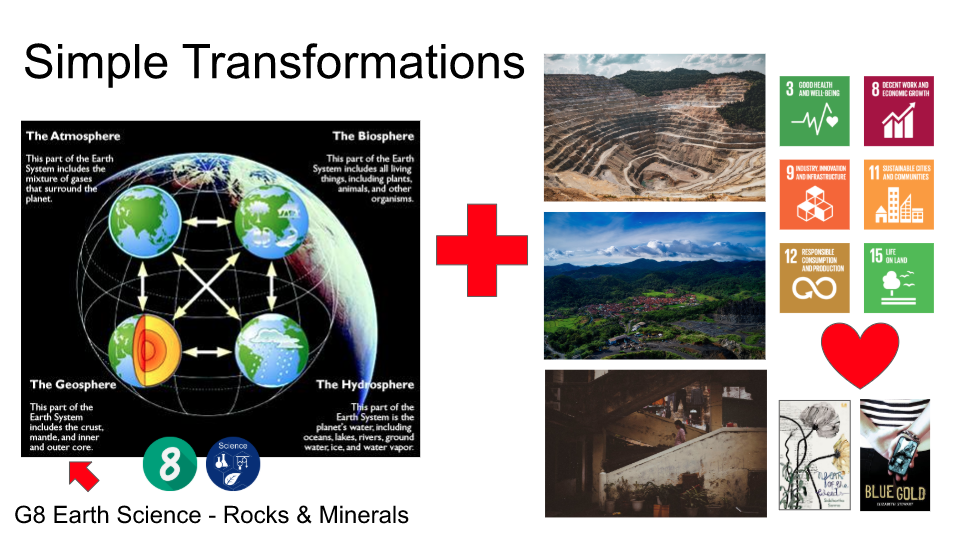
We’re on break now, and when we get back I was asked to present to our HODs for a few minutes on integrating reading into units in the middle school. I’ll probably just show this one slide:
I’d call it “content plus” – it’s from a G8 Earth Science unit that the Science team and I put together at the end of last year and they’re teaching now.
The idea is that you still have the science content as core to the unit – in this case Earth Science and learning about Sedimentary, igneous and metamorphic rocks and the minerals they contain and mining and the products of mining. But to that you add the environmental and human impact, and the lens of the SDGs (Sustainable Development Goals). And in order to help build empathy and understanding, add some literature.
Katie also had the brilliant idea, that she’s implemented in her school (and I’m going to be following quickly behind!), of getting good, relevant articles, stripping off the advertising etc (she uses Safari Reader View; I use Mercury Reader) putting them in binders and making them available in the library and classrooms – see slides 42-47).
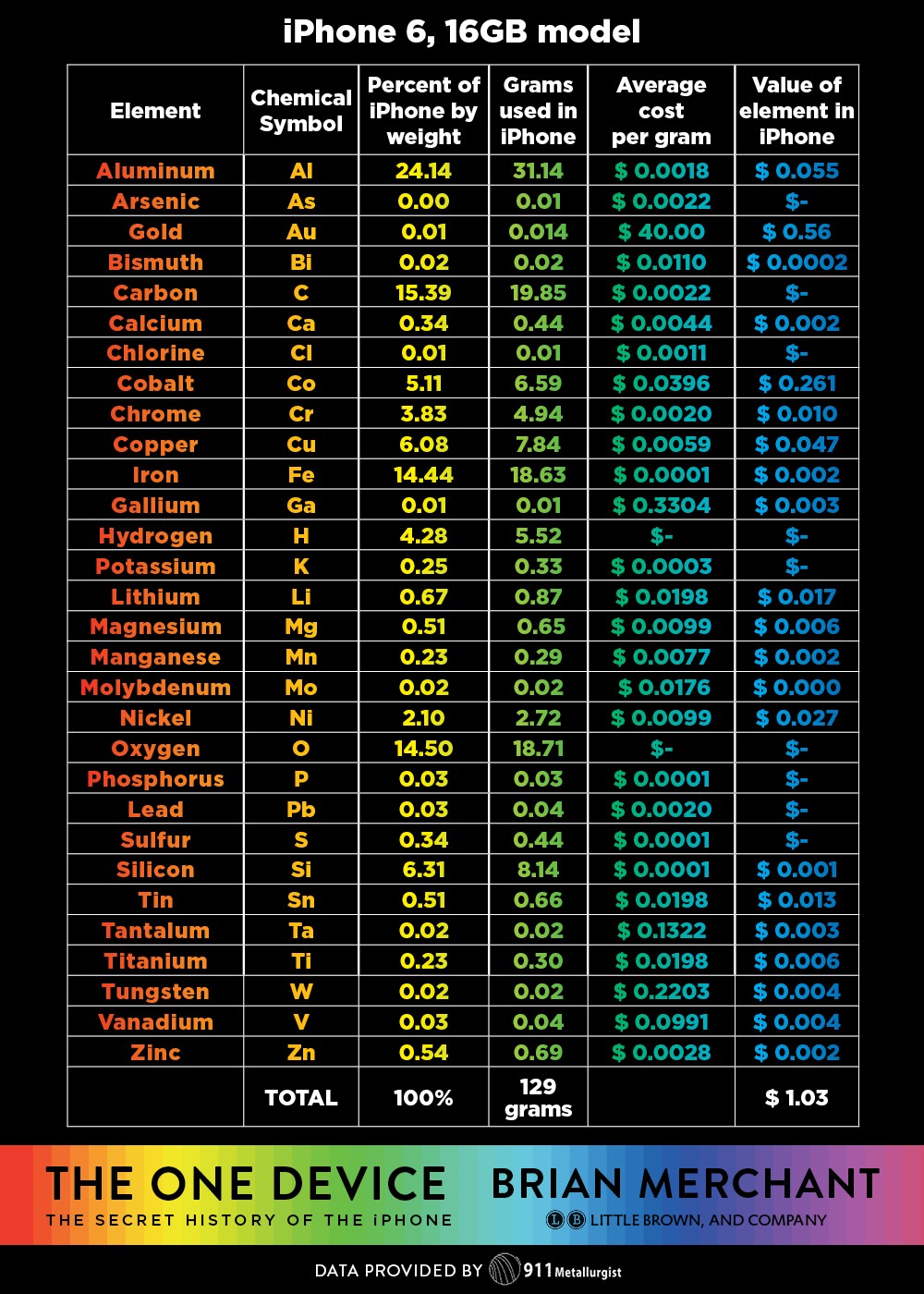
You can of course choose any minerals, but in this case to make it relevant to G8, we focused on the primary elements of an iPhone.
iPhone ingredients
Ideally, and this takes time, some of the science and or math units would be linked to Language & Literature or Individuals & Societies units allowing more time to explore literature.
In the mean time, one of the wonderful ways of adding literature into units is through picture books. In the guide we created for the Neev Festival, we made suggestions around groupings of the SDGs of the Neev shortlisted picture books plus lots of other books. It’s still a work in progress, but over time I’m hoping that for each and every global goal I have 10-20 picture books, (as well as 10-20 fiction books and 10-20 really good nonfiction books) that can easily and quickly be introduced to a class, thereby adding a very special element to learning, and truly making “every teacher a language teacher” and every teacher able to devote a tiny slice of their class to reading.
The phrase “life long learning” gets bandied around a lot, and today I’m going to write a little about just how much learning is involved in moving job, school section, country, and home.
I left a country that was easy to live in (Singapore) and I job that I loved and was comfortable with for a place (Beijing) that generally led people to shake their heads in puzzlement, even as they acknowledged that the school I was moving to was something special. Easy is not always good. I must admit I never really liked living in SG – it did not make my heart sing in the way that Hong Kong did. I never felt at home like I did in Hong Kong. And the only thing that kept me there for the last 3 years was a great job that kept me busy enough that the things that irritated me about SG didn’t bother me because I didn’t have time to be bothered.
Living Learning – my husband just announced he needs a haircut – what does that have to do with learning – well it’s just one of a myriad of daily / weekly / monthly things that one has to do in life where you have to relearn how it works and where to make it work. Of course the easy answer is – just pop into a barber or hairdresser – and that’s simple enough if you’re a no-nonsense type of short-back-and-sides-guy but just look in any Asian-expat forum for the pleas for hairdressers who understand curly / blonde / kinky / wavy hair and you’ll realise some things cannot be taken for granted. Like buying knives in Beijing. When you move here you need to surrender your passport to your employer for an extended period of time while all the visa work is sorted out. But no-one will sell you as much as a bread-knife without seeing your passport and registering it (history here – and I’ve learned something). We’ve moved into our house already and we’re in camping mode until our shipment arrives – so a few kitchen knives are kind of important – luckily we have nice colleagues with knives – presumably purchased prior to the ban!
Then there’s spatial learning. Orientating yourself in time and space, just like the PYP teaches. The Beijing public bus system is amazing. And cheap. For the equivalent of 20-50 cents you can go pretty far within your zone. Compared to 25x as much for a taxi (even if taxi’s are way cheaper here than elsewhere). So it’s a real good idea to learn how the system works. But it’s not that easy. I got a bit of a reputation of being the daring bus lady in our first few weeks, and this is the true story of why. My husband and I, newly married, moved to Sao Paulo, Brazil in 1995. When we arrived we had no money, nearly no furniture and only his job. And if anyone follows South American economic history – it was just after the Plano Real, which meant that everything was super-expensive as the country came out of hyper-inflation, but the balance between cost and value was still being established. So there I was, stuck in an apart-hotel, without the wherewithal to attend all those fancy expat lunches and coffee-mornings, no car and no money for taxis. Oh, and after a 2 week Portuguese crash course I spoke next to no Portuguese and in those days not many people spoke English. And add to that, no smart phone, in fact make that no phone at all, as there was a 6 month waiting list and a $5,000 installation fee to get a phone line installed in your home, and no internet. So I used to walk down the road and get on a bus and drive that bus the whole loop and work out where it went and of what use it would be to me. I figured I didn’t have anything more pressing to do with my time (except find a job quickly); and I didn’t have any money, so there was nothing to steal from me, so what-the-hell.
These days it’s so easy. High speed internet, a “maps” app that works in Beijing, even for public transport and in English. But still you need to learn some stuff. Like the Chinese name for your compound / complex. The nearest bus stop. What time they start and stop and the frequency. If you need to change over, which combinations are the fastest at which time of the day. Whether it’s better to take a bus or the Metro or walk. The short-cuts and back streets. And how to cross the road without being killed.
There are still things I want to know. And I’m not there yet. Like what app to use for buses in advance – there are some great subway apps, like Metro Beijing where you can put in your start and end points. Maps sort of works, there is a workaround where instead of a location you can look for “transport” and then “Bus Stops” and then click on the bus number and see its whole route. But that only finds the buses near to your location, which isn’t much good for advance planning. I also know you can get an app for your transport card, but I haven’t found it yet. There are some I’m sure, but only in Chinese. Which I’m still re-learning. I’ll do Chinese in a whole other dedicated post.
Work hygiene learning. I call it that based on Herzberg’s motivation theory, because it kind of makes sense and I don’t have a better way of describing it. It’s all the stuff besides the technical / knowledge bits of your job that you need to know to survive and thrive in your new environment. Now this is a pretty steep learning curve. Because every school has their own “untouchables”. I was asking a friend about a new person in another school and her conclusion was she had great ideas and enthusiasm but this wasn’t being appreciated. I sort of know the environment there and I can just see that happening. It’s a dynamic tension. You’re presumably hired to a job because they want your input, and in some circumstances for you to change things. But not too much or to soon. Or perhaps they do what a lot of change and quickly. But who do you ask? Who wants to tell you? There is this mutual dancing around things. Both my predecessor and myself to my successor deliberately didn’t say too much about the environment, because it is important to try and feel it out for yourself. And it’s also nice after a few weeks to be able to ask someone if your experience aligns with theirs – because it’s so hard to know if it’s “just you” or if there are other things at play.
Similarly in my mentor group (another “first” for me – having 12 students to nurture throughout the year), I’ve deliberately not looked at their records or files, as I want to take them as they are without history or labels and then move on from there.
Where to play. It’s not all about work, so our Newbie WeChat has been full of which restaurants are good to go to, where to have a massage, where the beer is cheap, nice parks to hang out in, bars and clubs for the night owls. This morning I was delighted to find the Beijing Greenway just minutes from our house with I think about 12km of walkway along the river through wooded areas with lush green and few people.
I’m seeing similar exploratory type posts on the facebook pages of friends who have also taken the plunge into the new and unknown. It’s easy to say it’s easier now we have the internet and facebook and smart phones and apps. But change and adaptation in reality is never easy because it has its own absorption rate. And even after moving around for the last 35 years, I’ll put my money on the fact that it will take at least a year. Because it always does. Except in Luxembourg where we only lived for 10 months!
If you’re new to this game, you may want to read up more on “culture shock“; the 5 stages of culture shock – honeymoon; culture shock; actual adjustment; isolation period; acceptance and integration, the W curve etc.
We were lucky to learn this all at the Royal Tropical Institute in Amsterdam prior to our moving to Brazil. And they also gave us one of the best tips ever – which was easy to implement in 1995 when flights were expensive and phone calls cost at least $5 per minute – and that was – not to have contact with home in the first 6 months. That’s pretty unbelievable in this day and age, but it probably helped with the move and integration.


















 As you know, I’ve also been







 Informative Flights - Musings of a Teacher Librarian
