Ha, ha, ha bonk

That’s me laughing my head off at my thoughts two weeks ago on this same blog. It’s also me laughing at this article about setting priorities and using the “Urgent / Important” matrix. 

urgent important matrix

So we’ve just finished our first week of online learning and I’ve learnt a heck of a lot. One of the main things being that the only way to get out of box 1 is by working roughly 20 hours a day non-stop so that you can set up systems and structures to move things into normal operational mode.

The problem is that while I’m answering urgent matters with students and teachers I’m not setting up the structures.

What I’ve managed to set up so far:

It’s basically a triage system, but unfortunately it’s hard for people in panic mode to absorb so much information, so a lot of the time we do need to do emergency surgery. I must say that Microsoft Teams has come out the hero here – besides a brief all systems down last week, it’s been pretty robust and reliable.

Now I’m going for a walk, the sun is shining and the moon is full. Everything else is shot. No blogging, no Chinese, little reading of anything substantial, basic diet and way too little sleep, no schedule.

How is everyone else doing?

——————————————————–

Matrix by The Startup on Medium
Photo by Tim Mossholder on Unsplash

How backed-up are you?

I honestly didn’t want to make this about tech, but here we go again.  Many of our staff and students are either stranded somewhere not wanting to come back or have decided wait things out somewhere.

So the questions about online learning start. Now let’s make it clear. Most people go into online learning voluntarily and well prepared. They sign up to an online learning course. They get instructions on how to use it. They have their technology with them and fully loaded. This is not the case currently.

People have called me paranoid. I’m as untidy on my laptop as I am in my life. Piles of files on my desk and on my desktop both home and work. In fact there are probably more files in my download folder than anywhere else. But one thing I’m careful with is weekly backups. And because I’ve had back-up discs fail on me, I have 5 x 2TB backup discs. Four where I’m living that I back up my laptop to on a revolving basis every Sunday, and one remotely in our Swiss flat. And they go into a fire/flood proof safe when we’re away. And I don’t trust my personal stuff on the cloud. Especially not photos.

It should be absolutely no problem for any member of our school community to get online and have access to their files from anywhere as most of our systems (Moodle, O365, Libguides, Oliver, databases, Overdrive etc) are cloud-based. Plus every student and teacher has access to OneDrive and teachers have access to Sharepoint.

Access doesn’t mean the same as usage

For all sorts of reasons some people don’t use OneDrive / Sharepoint or not consistently or not enough. Heck I’ve just told you I don’t put personal stuff on the cloud. But I do it for work – generally – possibly mainly because I believe I need to set a positive example. I could kick myself. In the last week of school before the CNY break we spent a lot of time creating closure tabs in our Moodle and setting up contingency plans for possible online learning. But like I always say “it’s not about systems, it’s about people”. Probably what we should have said to everyone is – take your laptops with you where-ever you go. Or if you don’t, make sure you’ve backup everything to OneDrive – now – let me help you.

Hindsight is 20-20. 

But in the meantime – as one of my friends said to me – “as long as you have books to read you’re ok.”

And I’m working through a huge list at the moment – see my Goodreads tab on the side, and the current book is “Animal Vegetable, Miracle” by Barbara Kingsolver.

animal.jpg

Featured image:
Photo by Soonios Pro from Pexels

Making your bed and other stuff

There literally is a book about the importance of making your bed each day. Personally I don’t put much store by that type of advice – particularly as it’s written by a male military type. But I do think it helps to have a reason to get out of bed in the first place. That’s way more important.

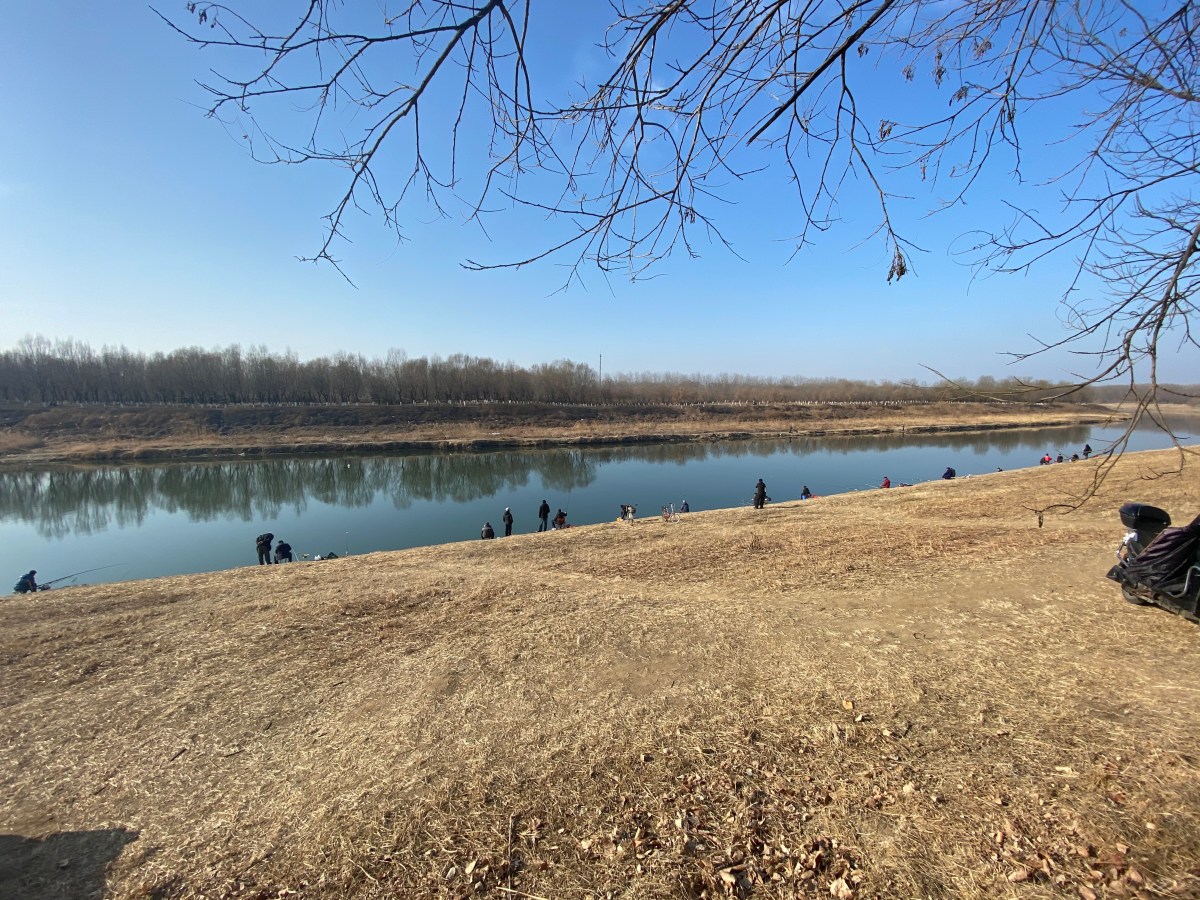
Luckily today the pollution had settled down to the red zone so I could go out for a walk along the river with my high duty pollution mask – the blue sky is deceptive – the AQI was still over 150 – but I was not the only one lured outside – the river bank was full of fishermen probably suffering from the same cabin fever as I was.

Our local grocery had luckily stocked up again and some delicious strawberries were available which I could take to my lunch date with some fellow librarians where we had a great book chat. That way I could tick off two things that I think are incredibly important for sanity in this period – time exercising and time with other people.

Now just like the war that would be over by Christmas, I’m wondering if this closure may last longer? I did a little SARS research last night and found out that Hong Kong schools were closed for 7 weeks. Depending when you start the clock ticking (from the start or end of the CNY break) that could take us to the end of March. That means an extended period of not only online teaching but also home-schooling. It also means different things depending on the age of your child(ren) / students.

Possibly the worst hit are our final year IB students – things are really tight between now and 23 May when they graduate. So while 2 weeks isn’t much in the grand scheme of things for most people, it results in a bit of a train smash for their mock exams, finalising projects, doing things that would have helped them create a portfolio if they’re applying to creative tertiary study etc. etc. For all the talk of online and blended learning there’s still a heck of a lot that requires physicality of self and material. And many related activities (sports fixtures, APEC drama etc. have also been cancelled).

Further down the food-chain I can assure you there are good reasons why most of us don’t homeschool – infanticide being one thing that comes to my mind. Beijing Kids had an article on this last year – but that was in a situation where you could do the socialising and gyms and sports facilities were open. Many families are hunkering down and some won’t let their children out of the house or receive guests (not moi).

My husband is still working in Nanjing, I cut my holiday there short on Sunday, so I’m getting the updates from there as well. It seems it has the facilities to take care of patients, and hotels have also been requested to be available for R&R of medical staff. According to him it’s pretty much a ghost town still and more and more areas are shut down. You can follow the live construction of the hospital in Wuhan as well.

Here our compounds multiple entries are shut down and everyone is flowing through one central gate where non-resident ID’s and temperatures can be checked.

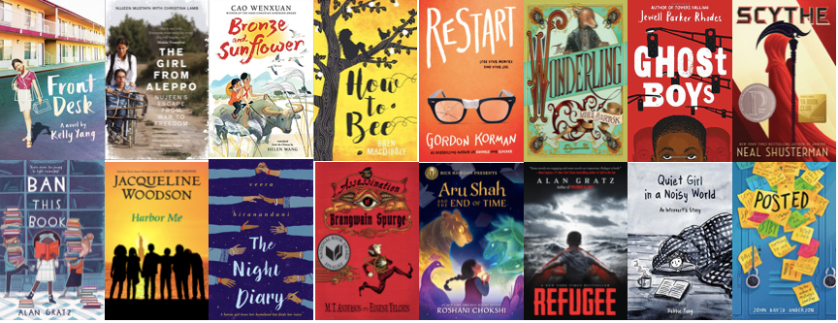
And now for some book suggestions. I’ll start with G7 as it is in the middle of middle school and we had a rather cool unit just before the break looking at young adult literature over time – “Changing Times Changing Voices“.  Students read either “Curious Incident of the Dog in the Nighttime” or “The Outsiders” (or both for some) and were encouraged to explore some of the Time 100 best Young Adult Books which we had on permanent display/borrowing plus the current and last year’s Kids’ Read 100 titles.  So – there you have a list of 300 books suitable for teens if you’re short of inspiration!

A side note on the Kid’s Read titles …. last night on twitter there was a post on reading challenges including “reading hard” with Book Riot’s “Read Harder Challenge” * I had a look through the challenge (well worth considering in this time) and realised that our chosen titles covered all the ground amply!


This page contains enriched content visible when JavaScript is enabled or by clicking here.

Kids Read 2020 books

* The Challenge – I have some ideas for these – what are yours?

  • Read a YA nonfiction book
  • Read a retelling of a classic of the canon, fairytale, or myth by an author of color
  • Read a mystery where the victim(s) is not a woman
  • Read a graphic memoir
  • Read a book about a natural disaster
  • Read a play by an author of color and/or queer author
  • Read a historical fiction novel not set in WWII
  • Read an audiobook of poetry
  • Read the LAST book in a series
  • Read a book that takes place in a rural setting
  • Read a debut novel by a queer author
  • Read a memoir by someone from a religious tradition (or lack of religious tradition) that is not your own
  • Read a food book about a cuisine you’ve never tried before
  • Read a romance starring a single parent
  • Read a book about climate change
  • Read a doorstopper (over 500 pages) published after 1950, written by a woman
  • Read a sci-fi/fantasy novella (under 120 pages)
  • Read a picture book with a human main character from a marginalized community
  • Read a book by or about a refugee
  • Read a middle grade book that doesn’t take place in the U.S. or the UK
  • Read a book with a main character or protagonist with a disability (fiction or non)
  • Read a horror book published by an indie press
  • Read an edition of a literary magazine (digital or physical)
  • Read a book in any genre by a Native, First Nations, or Indigenous author

Picture books as a panacea?

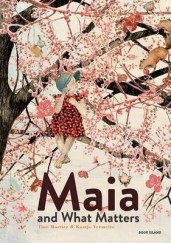
maia and what mattersI’ve always been a huge fan of picture books. I’m the librarian that will read “Maia and what Matters” to a group of Middle School teachers and struggle to continue through tears. I spend a reasonable chunk of my budget on picture books (or as some librarians like to refer to the “sophisticated picture books (SPB)” I’ve never see a book deal with anxiety with as much compassion and understanding as Mel Tregonning’s “Small Things”. I maintain a libguide for Social Emotional Learning (SEL) that relies heavily on the work of Dr. Myra Bacsal and her SEL booklists. 

So what is the problem? I’m worried that publishers are becoming complacent about plugging the gaps in information / knowledge / awareness of really big and worrisome things by having a picture book in that space. A case in point is my (and most librarians) quest to curate books related to the Sustainable Development Goals. And I’m afraid even the UN with it’s SDG book club plays into this.

It is easy enough to find a picture book about Wangari Maathai, about the plastic bags of Gambia. It is way harder to get a good (recent) nonfiction book geared at 11-14 year olds on deforestation or plastic bags for example. It seems the nonfiction publishing cycle is around 8-10 years (I found plenty from 2009-2011) between updates whereas the actual issues are accelerating faster.

Follow Your stuff

As mentioned in my previous blog – a big change has occurred in the presentation and design of nonfiction books, so it is important not only from an “up to date facts” point of view that we have these books, but also from an “enticing to read” point of view. When new books exist in a space (trees in this instance) they are truly fantastic. Like “Can you Hear the Trees Talking” by Peter Wohlleben – the young reader version of “The Hidden Life of Trees”. But that’s not really about deforestation, just a very positive reminder of why trees are so awesome and special and worth saving. Or Annick Press (one of my favourites) with Kevin Sylvester’s “Follow your Stuff” an exceptional book for the humanities tracing common items including T-shirts; Medications; Technology; books through geography, production, labour and economics.

The last thing I was looking for included something on sustainable cities and homes. The books in my collection were from 2007 and sorely needed updating. As is the case when a book is older than the students reading it. It’s a fascinating area. It’s something that most major cities in the world are pouring money and resources in. But you can find lofty tomes, heavy text books, coffee-table photo books and very little else. A fellow librarian pointed me to “No small Plans” which looks amazing, but very specific to Chicago, and not so easy to get to China.

Rebecca Sjonger has written a new series of books around the UN Sustainable Development Goals which combines goals and is an overview. I’d argue that’s a good beginning, but actually each goal merits a well researched, curated and presented book for each of the different levels of education. Our world in Crisis is another recent series that covers pollution, poverty, health & disease, civil war & genocide, immigration and terrorism in an age appropriate but informative way.

Our world in Crisis

So there is a huge amount of hope and great steps in the right direction. But if we want to keep middle graders curious and inquiring beyond the hook of picture books, we need to keep feeding them nonfiction of this high calibre in all and any direction they want to research further.

I want it to be that the picture books are the appetiser and a couple of Youtube videos are the amuse bouche but that excellent nonfiction books are the main course, supplemented by databases (for context) and news (for the latest updated information).

What are your favourite books to support understanding the SDGs in Middle School?

The unbearable everythingness of being new

This is a post I couldn’t write last year. Because I was new. I’ve just about spent half of my life being new in a country, city, job, school. A third of my life of newness ago I would have unabashedly blogged about the newness, heck, even 10 years ago I would have. Now its become more difficult. Because new never gets easier no matter how often you’re new. And now watching this year’s intake of “newbies” and witnessing the change of our Wechat group name to “twobies” there is still that pang of identification.

There are two opposing forces. The buddhist “where-ever you go, there you are” (title of a meditation book by Kabat-Zinn, source unknown) and the “immovable object vs. unstoppable force”. And every shade inbetween. I just love that video below especially the line about “passing through each other with no effect on each other at all”

That’s pretty meta. In the past year I’ve been through a range of emotions as I attempt do match my version of reality with the culture and situation of where I am. I still have all sorts of plans and dreams and ideals. And at the end of the first week back I see those reflected in those who are now new, as they grapple with trying to understand 100 moving parts all at once and to excavate what is “mission critical” as it relates to surviving and thriving in a new culture while choosing the right priorities that are going to make the most difference to the young bodies and minds we serve and still remaining emotionally intact.

There is this medical myth that you rejuvenate every cell in your body over the course of seven years. I wonder what the equivalent period is for organisations? I wonder what the optimal changeover period is? And I wonder how much change is like me painting my nails? Truth. Every year I think I’ll try and be more groomed. And go off and have my nails painted. And within hours realise that my life is not compatible with manicured nails, as bits get damaged and other bits flake off. If I’m lucky as least one nail will last more than 3 days. I think people who have been in organisations for a long time watch the painted nails come and go. And I think that truly for the brief time they endure in a dominant culture they make a real beautiful difference for the students that are in their classes. But that immovable object.

How do new people in existing organisations replenish? There’s that edu-celebrity stuff going around on twitter with the posters and wall quotes and door signs saying we need to say to students “You are enough. We’re happy you are here” I think we need to be saying that every day to the new cells in our organisation. To be welcoming and absorbing and helping them to be who they are and bring what they’ve brought. Perhaps something easier to do when you’re recently new than if you’ve been around 5, 10, 20 years when you’re orbiting around different planets.

Have a great year everyone, and when you’re not, most librarians have a box of tissues and a workroom or office where the door can shut while you let those tears of frustration flow. We don’t judge.

Something’s off

In the last few weeks I’ve had a few teachers (middle school level) come to me with assignments of students asking me how they could check if they’re plagiarised. At this level we only have access to Grammarly, not the supposedly more powerful Turnitin (prohibitively expensive).

I like that teachers’ have instincts and follow them. They know their students best, and know what they are capable of (or not). I also appreciate that they are now including me in their circle of “let’s have a closer look” at this, because I believe that we shouldn’t be out to catch students in a punitive way but we need to be able to catch them before they fall into a web of lies about research and academic work and help them onto a more constructive path.

Nature recently had an article on plagiarism checkers and their limitations. It took the stance of common sense too – knowing that “something’s off”. My fellow librarian John Royce, also writes about the limitations at the IB level.

One of the things that I’m suspecting, that hasn’t been addressed, after looking at a couple of our students “dodgy” submissions is that they may be taking things written in other languages and then putting it through google translate and then polishing it. It’s just the strange turns of phrase and way of putting things with a combination of sophisticated words and phrases combined with sentence structures that are not quite right.

Do you think that may be going on at your school / university? How would that ever be detected?

Does Activism require Power?

One of my most popular blog posts was “Advocacy is not enough we need power” and I still stand by that. Ironically enough in my new role I am teacher librarian slash Edtech integrator, and I like to joke with my colleagues who need anything from data to access to fixing an issue to equipment that “I have the power”. But some stuff fluttering around twitter recently has made me wonder about librarians and power and about power in general.

In particular I think something amazing is happening in university librarian land with the ending of negotiations with Elsevier by UC – and the person in the cape is a librarian! But here is the strange thing – @Jmmason is getting three likes (plus mine) and two retweets on his guide for transitioning journals to open access.

Is this a case of “if a tree falls in a forest”? Where are all the OA activist librarians? Where even are all the “whinging about costs” librarians?

I like to follow a wide variety of people and Chris Bourg is one of my “go to” activist librarians. We need so much more of this ilk. But then I wondered about whether activism could exist in a vacuum of power. At the same time I know that power can both be given or assumed.

Most librarian groups now seem to have migrated to Facebook. Which is ironical because if we were better librarians and better curators we would not base the existence of our professional learning networks on a platform where groups are closed, information gets lost and the same questions are repeated ad-infinitum (see rant here). And judging by the posts we’re pretty good at complaining and most of the complaints (I’m talking the K-12 sector) are about budgets, job loss (or more accurately position loss as in “an unqualified teacher will do the library next year), or lack of acknowledgement. These are not the bleatings of people with real or perceived power.

The question is who can become activists? On the one hand you have people like Bill and Melinda Gates (see their annual letter, and particularly the bit about data can be sexist) who have the power. On the other you have people with next to nothing to lose. And then there are all the rest of us status quo huggers.

I say “us” deliberately, because I’m complicit. I think of a few things that we need to get activist about – some in the cost sphere, some in the service sphere (FollettDestiny are you listening) where we need to get organised, we need to share cost and pricing data but we don’t. Is it time? Is it being contractually bound to silence? Is it not wanting to be the tall poppy? Definitely in the diverse and relevant resource sphere as international school librarians we need to be in a constant state of outrage. And then there is the whole literature / translation thing going on – or not. Thanks to GLLI it’s moving in the right direction – albeit slowly and again why don’t they have tens of thousands of followers?

So we are librarians, a marginalised group within a sector in most countries (and in particular in many parts of the mighty trend setting US or A) that is marginalised economically, is it strange that you don’t encounter many activist librarians?

No use me merely complaining – What would my suggestions be to become an activist librarian?

  • Uncompromising values and standards
  • Unite, collaborate, be present
  • Champion diversity

Uncompromising values and standards

This is both personal and global. If you’re a qualified librarian be amazing at what you do and if you’re mediocre work on becoming better. If you’re amazing become even better and make sure you’re sharing and mentoring other librarians – and not just in your local network – we need more mentoring programs for regions where library science is under-represented.

And let’s not start on the levels above – the funding for library positions in schools and for university library programs. Who gets admitted into the library programs – are they taking the best of the best? Or the ones who want to get out of teaching for an “easy ride”?

It’s a bit the Finland / Singapore argument (to dig up an old trope) – well paid professions attract professionals.

Unite, collaborate, be present

Unite here not just to complain but unite in action. Collaborate and if necessary collude on matters that matter for knowledge, deep education, and investigation. Be present in the discussions and arguments. If you are not the leader be the first or subsequent follower.

If you’re a librarian in an international school join IntlLead a platform run by and for librarians not affiliated to any organisation.

Find examples of activism in other fields / areas that you can learn from or latch onto or use as examples.

Champion Diversity

I’m not just talking about #WeNeedDiverseBooks (see Meting out Diversity?). We also need diverse knowledge. Is that an oxymoron? And we need to personally be critical about what passes as knowledge and pass that critical stance on to our students. AT ALL LEVELS – not just when they’re in High School or doing TOK. Our G5 students need to know the information they consume for their PYP Exhibition is biased and deficient and that they can and should be adding to this from their cultural or geographical or linguistic perspective. We need to help publish. We need to interrogate the authors we invite to our schools on what they are doing to mentor and encourage no-name-brand authors in our locale, theirs, where they are appropriating stories for their books or elsewhere (and not just those who can afford expensive workshops). We need to invite speakers who do not repeat what we think we know but who challenge our assumptions.

Knowledge is biased

Look at this. As librarians are we passing on our outrage to our students? Do we follow sites like @WhoseKnowledge and tell our students to check the origins of what they’re reading? And that they whole darn point of learning and research is to make your own contribution to the world of knowledge and end this microscopic world view?

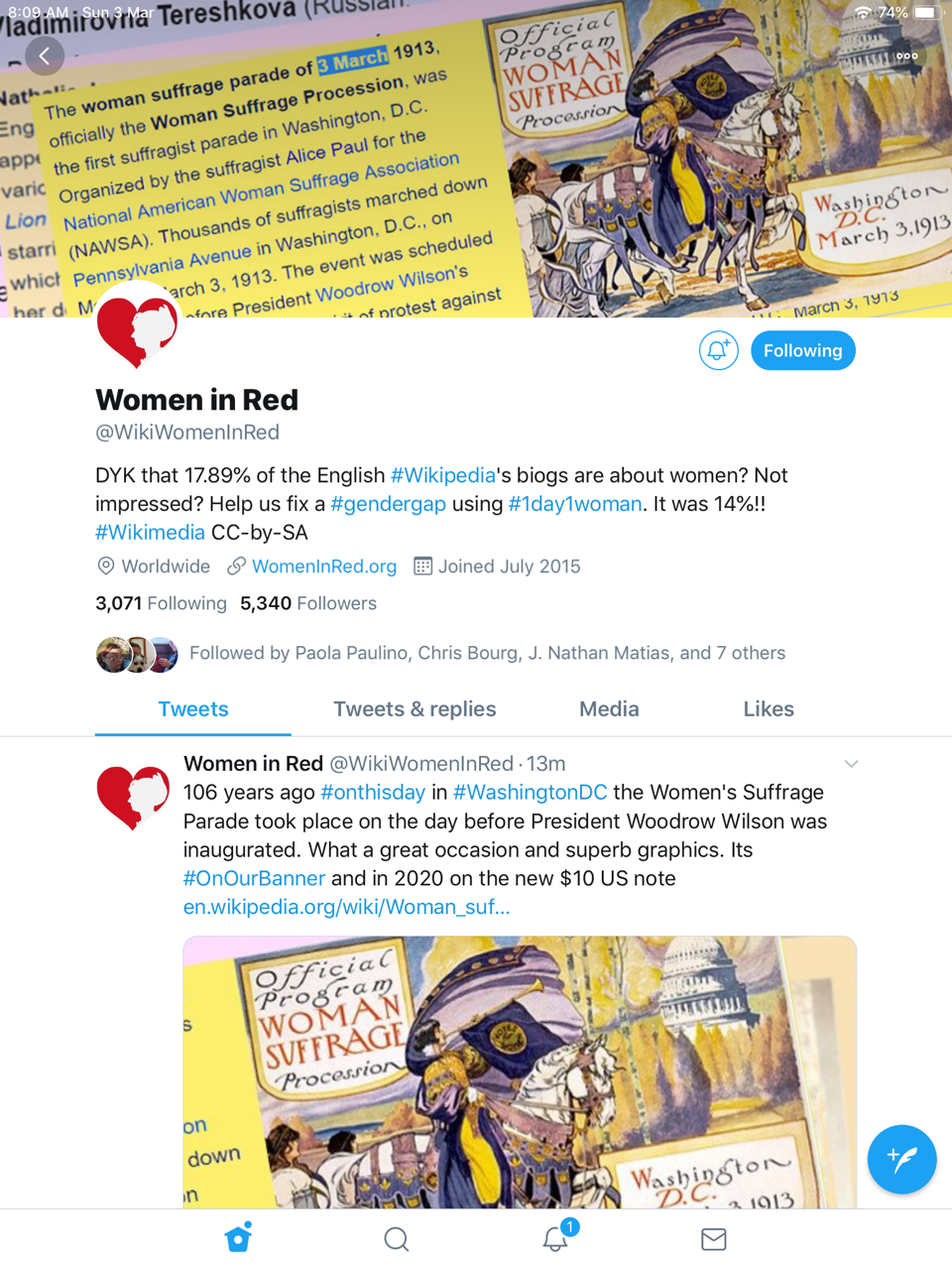
Here’s another one worth letting your students and fellow librarians know about – @WikiWomeninRed 

I don’t know how to end this. Just keep on being angry or outraged. And do something positive with that anger.

The other normal

We’re nearly 2 months into our Beijing experience and I was just pausing to think about how living elsewhere makes you question your sense of what is “normal” as you view a new context. Perhaps the first experience one has with this is when, as a child, you go for a sleepover at another child’s house. That is if sleepovers are normal. I remember my son in first or second grade once bringing a young classmate home on the bus who had never been on a sleepover, and so they decided that it would be a good idea for him to try it out at our house.  The poor frantic mother when her son didn’t get home, but we managed to iron it all out and said child was lent a pair of pyjamas and a new toothbrush was procured and sleepovers became a new normal for him too. In someone else’s home you experience different norms and conventions for communication, discipline, eating, sleeping and relationships.

A more extreme experience of this was when, as an 18 year old I left home to spend a year in the Netherlands as a rotary exchange student. Inter-cultural differences in the home became intra-cultural differences and at times it was hard to know what was due to different cultures and what was due to just different human relationships.

So too, when you change a country and a school and a division all at once, you’re thrown into a whole new situation and then that laborious process of sinking under and trying to swim upward begins. While seeing what is truly different, what just looks different, how it relates to what you already know, what you still need to learn, or find someone to explain to you.

That was my state of being on Friday. I’d begun to work out what I didn’t know. It may sound trivial, but it meant I could start to move forward on finding the people and resources I need to bridge those gaps.

I’m also starting to try to tease out what is middle-school culture, what is my-school culture and what is being-in-China culture. That’s going to take a while because our school is in a process of immense change, so that adds a layer of complexity to the process as it’s not a simple process of just asking around some trusted colleagues what the way is of doing things, as at times they’re grappling of the new way themselves.  The uncertainty of change can have an underestimated pernicious effect on relationships and communication as a group attempts to move to a new normal. It’s an interesting time.


Empathy vs. emulate

I’m kind of partaking in an online (twitter) book group reading “Reader, Come Home: The Reading Brain in a Digital World” by Maryanne Wolf. I say kind of, because I’m a couple of weeks behind the rest and not in the position to scramble to catch up. The latest letter considers the power of reading to engender empathy. And yes, I think any avid reader will concur that while reading one becomes immersed in the lives of others and are buffeted by the emotions and events of the book etc. and as a result hopefully develop more understanding if not empathy for the “type” projected in the book.

Lately I’ve been looking for something else – I get empathy and think it is a wonderful thing, but at the same time I fear it has a tinge of the abstract and dare I even say superiority about it? Or is it just that I’ve spent too much time around very empathetic but extremely privileged people? That sometimes the idea of empathy seems a little mired in superiority? I’m looking more for literature where I want to emulate the protagonist because of the way they are. Is it hope or inspiration I’m after? Am I becoming nostalgic for a youth of Heidi and Pollyanna and Anne of Green Gables, where an independent spirit or stubbornness were the worst flaws one encountered? Am I tired of grit and realistic messiness? Or is it a backlash of a world sullied by the likes of Potus 45? I’m of a certain age I guess where those were the aims of literature, – to make us better people. But if I google “Literature to make us better people” the results are all about empathy and theory of mind rather than emulation.  I want to be around people that I can aspire to be more like, and every now and then I want to read books where the hero is a hero, preferably a kind and compassionate one, without the backing of immense wealth, nor with the adversity of extreme poverty. Naturally there are any one of a thousand “self-help” books one could turn to, but why are these a category separate to literature? Because life is more complex than a “how to”?

This is not to say that I don’t think that I and my students should be reading widely and have access to life in all its gut and glory – Chris Crutcher is visiting our school next month and I’ve been following with interest his involvement in the discussion on “Light and Hope in YA literature” as a response to “the unbearable darkness of YA literature“.  I just wonder about literate voyeurism and whether it truly does create empathy or rather moral superiority, or allow for moral self-licensing?

Just a few 5am thoughts.

I wish I didn’t have to welcome you

I’m part of this club that I never want to be in the position to welcome others to, and yet yesterday afternoon I had to admit yet another member.

I don’t even know what to call it – I don’t want to name it – #metoo has connotations that I’d rather not introduce an 11 year old to, but maybe we need to.

The scenario. Last hours of the last day of a G6 camp. A young girl sitting to the side crying. As the nearest available woman I was asked to see what the problem was. She was really upset. Why? She’d had a great idea during one of the group activities that was ignored, but then wholeheartedly accepted when a boy reiterated the exact same idea minutes later. I affirmed her right to be upset, and angry and frustrated. And inside I’m thinking omg, how horrid that at the tender age of 11 she’s already being confronted with this. Or how admirable that she’s so aware – I think I was in my own private intellectual haze until at least university.

I told her there was a name for what had happened – sort of, and explained mansplaining. I told her there were other strong capable women out there who were ready to support girls like her and that I’d send her some articles. I told her that crying was unfortunately not the answer, nor was setting herself aside. I quickly taught her some calming breathing, and yesterday evening got in touch with a wonderful teacher at our school who runs a club for students around the themes of gender and identity. I spoke to a couple of teachers who had been at the stations where she’d been excelling in leadership – intellectual and physical and who totally “got” that what had happened was that she’d been taken down a peg or two by the wanna-be alpha males in the group. At 11. Yes. At the age of 11. It probably happens earlier, but perhaps the consciousness and self-righteousness and awareness of what has just happened doesn’t happen earlier (frontal lobe and all that?).

#weareallfeminists