I’ve recently become old enough to qualify for senior discounts in many countries, but I’m relatively (10-12 years) young in my profession as a teacher librarian. Believe me when I say bringing a beginner’s mind to a new area of endeavour is not a bad thing.
I’ve been a long time fan of Mike Caulfield and his SIFT model and an equally long antagonist of the short-handed way we tend to look at source credibility through tools like CRAAP – something that should have died around the birth of smart-phones. I also thought we vastly under-estimate our students when we use CRAAP instead of SIFT in teaching information literacy.
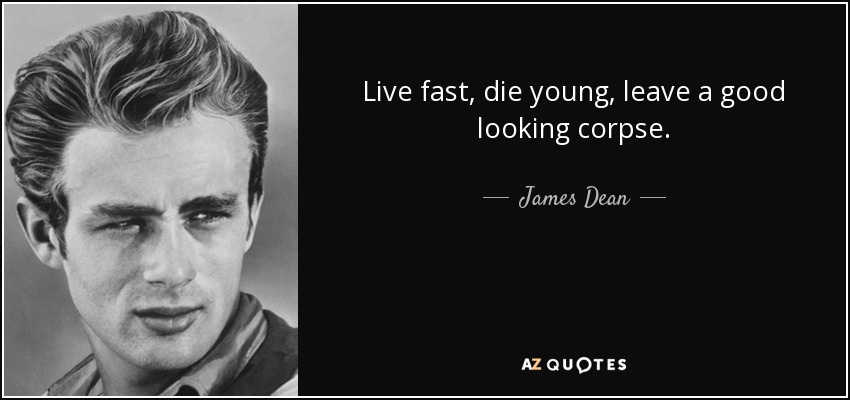
And why do I like Mike Caulfield? Because he evolves. I think a version of James Dean’s “Live fast and die young and leave a good looking corpse” is important in education – to the extent of “try new stuff, listen a lot and let 13 year olds tramp over the corpses of what doesn’t work”
Kids are really good at short cuts, short attention spans and disdain for anything older than themselves. Any teacher / librarian who has spent 5 minutes teaching research has probably spent 100% of that time trying to teach key words and unteach students typing what they want to find in a search bar. I just have to laugh at this post that I wrote nearly 10 years ago!
Well, hallelujah – the kids were right all along. In this brave new AI world we find ourselves in, a typical teenager is probably more likely to hit on the right AI generated search result than the typical adult – including librarians with all their years of training. Unless of course they’re in the dreaded database environment (I’ve ranted enough about those in the past and will continue to do so in the future).
Key words are out and context is in. Relevance is built into a natural language search and the real work starts with getting the machine to refine results through prompts including “academic” or “reputable medical” or “journal article” etc, telling it to make comparative tables and do the first reading for you.
The way traditional search works is it knows your keywords but has a difficult time guess your search intent or need…
Mike Caulfield – Look before you Leap
AI Allows You to Refine Source Relevance Before You Make the Jump, and That Changes Everything
So now I’m giving you something to read, hop out of this blog and have a look at Mike Caulfield’s two latest posts in substack. “Look before you leap: How AI changes source verification and how SIFT will respond” and “A SIFT Rebuild (in progress)“
But bigger than all that is the question of why we persisted so long in thinking of young people’s academic search as being “wrong” and forcing them into the “key word” funnel instead of shouting louder that the way that databases are set up are wrong – and keeping on paying huge amounts for the privilege of being screwed?
Yes I know the answer – kind of – is content that has not been AI generated. But the “publish or perish” academic environment coupled with the reluctance to go back and redo / prove or disprove research should give anyone pause. And if you want some very intelligent, largely irreverent background on this, please go to the “Everything Hertz” podcast .
Things that are going to have to change – Britannica, Google Scholar, Gale, Infobase, JStor, Proquest – just to mention the ones in the G6-12 environment. Take your sales and development people out of their offices and put them in some schools, libraries and classrooms and take note. Of the frustrations, of the tiny 12 point font you’re using, of the clumsy design, user experience and interfaces. And stop increasing your prices until you’ve done so and done something about it.




 types. When I say I can use, I REALLY can use. I know how to use templates, make an index, do auto-intext citation, add captions, make data tables, pivot tables, look ups, statistical analysis, import addresses into labels etc etc. And what I don’t know I know how to find out how to do, either online or because I know people who know their S*** around this type of stuff. People of my generation and younger. I also have an Education masters in knowledge networks and digital innovation and follow all sorts of trends and tools and try everything at least once. I can use basic HTML and CSS and find out how to do anything if I get stuck. I know how to learn and where to learn anything I need to know and I’m prepared to put in the time to do so. This is in a “just-in- time-and-immediate-application-and-use-basis”, rather than a “just-in-case – and-I’ll-forget it-tomorrow-and-probably-never-use-it-basis”. So can you tell my why I would bother wasting my time and money becoming GAFE (or anything else) diploma’ed when the equivalent is for me to go from driving a high powered sports car to getting a tricycle license? I feel the same way about this as I feel about people saying you don’t need libraries now you have google. Well actually I feel stronger about it. It seems like every single for profit educational technology app or company is now convincing educators that the way for them to be taken seriously is to “certify” themselves on their tools, something that involves a couple of hours of mind-numbingly boring and simple video tutorials and/or multiple choice tests with or without a cheapish fee and then to add a row of downloadable certs into their email signatures like so many degree mill qualifications on a quack’s wall. And then these are held in higher regard (it seems) than the double masters degrees it takes to be a librarian?? Not a game I’m prepared to be playing.
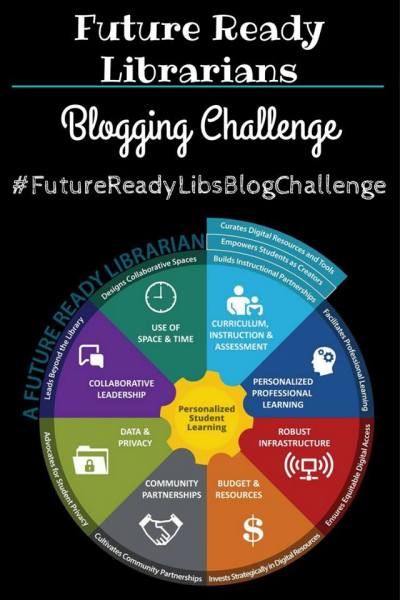 I think our school, as an IB PYP school is pretty future-ready in many aspects, in fact sometimes I think the cost of being “future ready” is that you occasionally need to go “back to basics” and check up on the 3 R’s and make sure you stay sober and self-critical.
 So, a few weeks into my new job I discovered we had an unused library guide subscription, and

 Informative Flights - Musings of a Teacher Librarian