
I’ll be the first to admit I’m an old boring Cassandra. It possibly / probably has to do with my age. Just to put things into context. Once upon a quarter century plus ago I was an auditor finishing up my articles. It was in the days when “calling” existed. Not the kind of cold-calling or call-centre type of calling, but when every single document that left the accounting firm’s doors would be read by one accountant to another (not secretarial staff, the actual articled clerks with three or four years university behind them) and checked to ensure there were no typos or spelling or number mistakes. This was the 1980’s just at the cusp of personal computers. It was tedious but important work, because the reputation of the firm and profession was at stake – or so we were told.
 A podcast episode that made a particularly profound impact on me was Freakanomics’ “In Praise of Maintenance” . Another favourite is Hidden Brain’s The Cassandra Curse which is particularly pertinent at the moment – with the fudging of Corona Virus numbers by a person who shall not be named in a country that should know better. A great book to read on Messengers and Messages is “Messengers” by Stephen Martin – valuable lessons on who gets listened to and why – spoiler – middle aged women are generally not listened to.
What does this have to do with online learning due to school closure in the time of Corona? That doesn’t quite trip off the tongue like “Love in the Time of cholera“… Well basically people are spending a lot of time exchanging tips on what tools to acquire and how to use them. All the tech giants and wanna-be’s are out there touting their wares and offering freebies (but what happens when everyone invests time and effort into content in them and we go back to having to pay???). Twitter and Facebook are awash with what tools to use for communication, teaching, feedback and learning. Padlets and Wakelets abound – that will all be redundant or fall into disuse or no longer be updated before you can blink your eye – because maintenance is well, boring. About one in 100 things I read are about sensible boring matters like setting up procedures, making sure systems are secure, robust and accurate.
And yet probably 99% of my time is spent documenting, testing, and fixing things that go wrong as people rush from the one new shiny thing to the other. It’s the boring maintenance stuff I’d recommend you spend some time on –
- is all student data up to date in your student information system – we’ve had some poor souls join school during closure!
- Are all students in the right classes / groups for every tool you’re using?
- Is there a central entry point that students/parents can find information and get the daily/weekly learning and ask questions / get answers and where attendance can be taken?
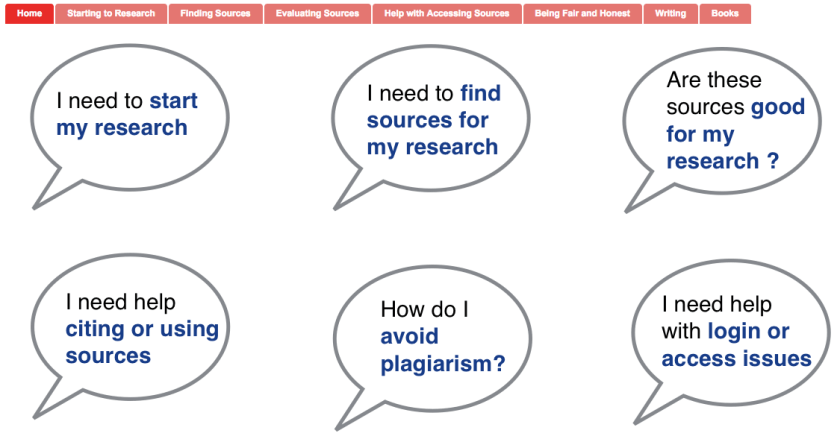
- Is there a place where information and knowledge management / FAQs can be accumulated for Teachers and Students (ours are in libguides)?
- Are expectations for Teachers and Students clear, unambiguous and enforced (if necessary)?
- Are there central calendars, preferably by grade where students and parents can check for online classes and meetings and assignment/assessment dates?
- Are the lines of communication for Edtech / IT support / curriculum support etc. clear and easily found and used.
- Are we working hard or are we working smart? Witness the overwhelming inboxes of some teachers who don’t make use of central forums for Q&A but still answer individual “same same” questions time after time.
A very valuable (but time consuming) exercise is to pick one student per grade and follow their “expected” path online checking from morning check-in, class to class, tool by tool and including the calendar to see that everything works as expected.
To parody the old saying of “an heir and a spare” – for each teaching and learning outcome you probably only need a pair of tools. One that is your trusty old steed that you preferably already were using before closure and everyone is familiar with (I nearly said “happy” there, but I deleted it, because hardly anyone is ever happy with the familiar old steed, they want the “next thing”) and you can use for 95% of things and the other is the one you have as a back up for when things collapse for one reason or another .
 I still like Alison Yang’s graphic that came out waaaay at the start of the closures – about a million years ago (actually only five weeks but it feels much longer). Since not all the tools she recommended were “China Friendly) I used it (with permission) as the basis for the summary of the tools we’re using – each link in the guide leads to a page of explanations and usage tips and recommendations.
There comes a time in online-learning when as a community you have to agree to say “no” more often than “yes” because there is only so much a community can absorb, process and use effectively. You also need to be able to focus on just one thing each week on the back-end and do it properly.
This week was my “week of the calendar”. One could possibly not think of anything more boring and less “sexy”. But I was floundering under the 100s of zoom and team meetings that were popping up everywhere, some clashing with each other, many invisible or rendered invisible by poor naming strategies. I think I’ll change this into a separate post to minimise a TW/DR problem in blogs.
Have a great week – and don’t forget the plumbing.
Addition: 18 March 2020 – this is getting a lot of attention so I thought I’d add the infographic I made yesterday – happy to improve it based on suggestions (please add as a comment in the comments)

Photo by Sharon McCutcheon on Unsplash



 Station 1: Laptop Maths
 types. When I say I can use, I REALLY can use. I know how to use templates, make an index, do auto-intext citation, add captions, make data tables, pivot tables, look ups, statistical analysis, import addresses into labels etc etc. And what I don’t know I know how to find out how to do, either online or because I know people who know their S*** around this type of stuff. People of my generation and younger. I also have an Education masters in knowledge networks and digital innovation and follow all sorts of trends and tools and try everything at least once. I can use basic HTML and CSS and find out how to do anything if I get stuck. I know how to learn and where to learn anything I need to know and I’m prepared to put in the time to do so. This is in a “just-in- time-and-immediate-application-and-use-basis”, rather than a “just-in-case – and-I’ll-forget it-tomorrow-and-probably-never-use-it-basis”. So can you tell my why I would bother wasting my time and money becoming GAFE (or anything else) diploma’ed when the equivalent is for me to go from driving a high powered sports car to getting a tricycle license? I feel the same way about this as I feel about people saying you don’t need libraries now you have google. Well actually I feel stronger about it. It seems like every single for profit educational technology app or company is now convincing educators that the way for them to be taken seriously is to “certify” themselves on their tools, something that involves a couple of hours of mind-numbingly boring and simple video tutorials and/or multiple choice tests with or without a cheapish fee and then to add a row of downloadable certs into their email signatures like so many degree mill qualifications on a quack’s wall. And then these are held in higher regard (it seems) than the double masters degrees it takes to be a librarian?? Not a game I’m prepared to be playing.

 Now I work really hard at trying to transform my library into one that is representative of my students. I love the fact that my one Bangladeshi student asks me every week if I have any new books about or set in Bangladesh. And that at the beginning of term she came to proudly tell me that she was no longer the one and only but had been joined by another family. And when I showed her our new book about Bangladesh she took time out of her library browsing time to show me all the things the book depicted that were special to her.


 Well done Annick Press (that does a lot of amazing things –
  it into has just loved it – depite the fact that it takes a while to get through. Why – I suspect that the range and diversity of the characters and settings is satisfying to my international audience. But it is also great storytelling. And then they go on to read all the other Pam Muñoz Ryan books, which is also an excellent outcome.




 Informative Flights - Musings of a Teacher Librarian