And it’s not the usual stuff about being poor misunderstood under-utilized bits of the school / community. No, the frustration goes much much further. It’s about how information, knowledge, books, data, well just about anything is NOT being tagged and catalogued and made generally searchable, available.
What prompted this? Well my inbox. I subscribe to a few blog sites that are, well let’s say prolific is an understatement. One is the NerdyBookClub and the other is Global Literature in Libraries Initiative and the last is Gathering Books. And do you know what is terribly frustrating – I get behind on the reading. Terribly behind. And I know there are all sorts of ways of IFTTTing your inbox, but what I’d prefer is that theses consortia of writers (because no one human can be so prolific, so usually the blogs are written by teams) would just tag their posts, and make the tags obvious at the TOP of the blog, so that I know whether to read it now or leave it for later or just delete it.
Let’s take some examples that I’ve been reading today in a desperate attempt to tame my inbox:
GLLI: French Graphic Novels in translation – not categorised and no tags. If I’d been writing that post it would have had the tags of: French, Translation, Graphic Novels, Middle Grade at the very least. Then I’d immediately know that it’s worth a read, because I need to increase the diversity of my collection, so some French books in translation are relevant. My students love GN’s so that would have caught my interest but NOT if the tag included YA, since right now I’m in K-6
NBC:A look at expository literature: again, the only tag is the author and their twitter tag. Not enough. I needed to know that they were talking about: picture books, nonfiction, mentor texts,and that it included a booklist.
Gathering Books:Fears etc. again a fabulous site with resources, but the layout and curation makes my head spin and spin and spin. It’s really hard to find stuff, there are so much great reviews going on, but then sometimes it’s poetry, sometimes it’s other stuff. The posts are allocated to categories, but don’t seem to be tagged, so if I wanted to see all the book reviews on grief, or death, or migration for example I wouldn’t be able to do so.
And then the HUGE question of where all this goes? And it’s a really big question. Because we all know the problems of finding great and diverse literature. Of finding authors with a unique voice who are new and interesting and not part of the publishing machinery. Ones that aren’t institutionalised onto the same old same old top 10 lists.But why do we keep going back to those lists? Because it’s so easy.
Where are all these fabulous blogs curating their book lists? Where are the catalogues? Are they on Goodreads with a proliferation of shelves or on LibraryThings with 100s of tags and collections? Where are the links and the connections and the overlaps? Even the ones working together (like NBC) seem to be working on their own.Their site has a store selling mugs for heavens’ sake. The list on the side is a list of their bloggers, not of the books / categories / shelves. Even the Nerdies – their awards page, is an unlinked list of books that is not tagged or categories in any way… where are the librarians? This is not a criticism of what they’re doing – they’re doing some fabulous things – it’s about how they’re doing it, and how much easier it could be for their readers / followers!
There’s been quite a to-do on librarian sites recently about the acquisition of RefMe, an academic citation tool by Chegg, a purveyor of online textbooks and tutors (and more). Before you click past this, let’s have a little look and think about this business model…
The citation engine issue
In the opinion of my peers – CiteThisForMe is an inferior product to its precursor RefMe. To be technical about this –
it doesn’t allow for importing .ris files from databases (a common standard)
you can’t create folders for citations
user interface is poor
numerous popup boxes for editing
no google SSO
no easy import function from existing products
it’s not terribly good or accurate
etc.
So far it seems one librarian wrote about the take-over with foreboding but again, more from a technical point of view. It’s just not a very good product. As he pointed out – none of the “quick and dirty” products are very good. For non pure-academic sites (i.e. paid databases) It boils down to whether some back-end programmer has bothered to capture much (if any) meta-data on author, date, title etc. And I’m afraid to say that’s exactly the type of site most of our students cut their researching teeth on. Think of it as the crack-cocaine of citation. You add a chrome extension, you go to a website / youtube video / online newspaper and click the extension and like magic your citation is generated. But not quite. At worst it’ll just pick up the URL, at best perhaps a title and author. And I’m afraid to say most teachers grading “research” are long happy that even that’s been included in a bibliography or works cited or reference list.
From boring citation to sexy ‘critical moments’
But actually none of that really matters. Well it does, sort of, eventually to the people who matter who care. What is somewhat more concerning is this.
The first time RefMe came into the (financial) news in a serious way was in 2015 when GEMs Education threw some money at it. Educational companies don’t throw money at citation tools unless there’s something in it for them:
But it isn’t just students who are showing an interest in the platform, RefME has received £2.7 million backing from GEMs Education, the largest private education company in the world. They want to encourage more schoolchildren to use the app, as pupils are now increasingly having to reference too.
‘We’ve identified 150-200 million kids around the world who cite,’ said Hatton.
The platform also does more than create references – RefME collects information about what people cite, making a map of the data. This means it can give you recommendations based on what other people who used that same citation went on to find, something Hatton calls ‘removing the search from research’.
Then the Chegg acquisition 2 years later, and one of the first things you see when you open their site is side by side in the news is the financial results and the tie in between this “academic” provider and a “global media agency”
Bait and switch tactics …
and when you read the terms and conditions you find out:
The Services may collect “Personal Information” (which is information that can be used to identify or contact a specific individual, such as your name and email address), account information (such as a password or other information that helps us confirm that it is you accessing your account) and demographic or other information (such as your school, gender, age or birthdate and zip code and information about your interests and preferences).
And you thought FaceBook was bad …
“When you submit, post, upload, embed, display, communicate, link to, email or otherwise distribute or publish any review, problem, suggestion, idea, solution, question, answer, class notes, course outline bibliographic and citation information comment, testimonial, feedback, message, image, video, text, profile data or other material (“User Content”) to Chegg, any Chegg employee or contractor, or a Chegg Website, you grant Chegg and our affiliates, licensees, distributors, agents, representatives and other entities or individuals authorized by Chegg, a non-exclusive, worldwide, perpetual, unlimited, irrevocable, royalty-free, fully sublicensable (through multiple tiers) and fully transferable right to exercise any and all copyright, trademark, publicity, and database rights you have in the content, in any media known now or in the future, and to make, use, reproduce, copy, display, publish, exhibit, distribute, modify, sell, offer for sale, create derivative works based upon and otherwise use the User Content.
Note that we may create, facilitate or display social advertisements, whereby your name, profile and photo may be used to advertise products and services to your network based on your use of the Services and your interactions with Chegg. You agree that Chegg may use your name and profile picture in connection with social ads to advertise products and services to your network based on your use of the Services and your interactions with Chegg and third parties through the Services.
You further agree that Chegg is free to use any ideas or concepts contained in any User Content for any purposes whatsoever, including, without limitation, developing, manufacturing and marketing products and services; and creating informational articles, without any payment of any kind to you. You authorize Chegg to publish your User Content in a searchable format that may be accessed by users of the Services and the Internet. To the fullest extent permitted by law, you waive any moral rights you may have in any User Content you submit, even if such User Content is altered or changed in a manner not agreeable to you.” (Privacy Policy)
Well actually FaceBook is bad – the worst possible place to put all that information exchange and community knowledge and knowhow, (I’m looking at you my lovely library networks on Facebook), but we kind of know it’s bad and we live with it for all kinds of reasons, and most of us (I hope) extract the useful stuff and put it elsewhere like Evernote or GoogleDrive or … (oops who owns it then!?).
“In the last 12 months, Imagine Easy’s bibliography and research tools powered about 240 million sessions and EasyBib alone saw more than 7 million unique users in March 2016, Chegg tells me. In total, all of these services together have helped students from mangling more than 1.4 billion bibliography entries.”
Bear in mind, nothing you do in their services is actually yours, not even the services you may have paid for:
Service Modifications
Chegg reserves the right, in our sole discretion, to make changes to or discontinue any of the Services at any time. Any description of the Services provided by Chegg is not a representation that the Services are working or will always work in that manner, as Chegg is continuously updating the Services, and these updates may not always be reflected in the Terms of Use.
Now this is one thing if you’re a Grade 5 student and with much blood sweat, tears and encouragement from your teachers, librarian and parents you’ve managed to come up with a bibliography of 3-5 items that say more that “wikipedia” or youtube.com. It’s quite another if you’re a serious researcher at say doctorate or post-doctorate level and have a few thousand articles referenced, with abstracts and perhaps attached documents or pdfs. Or if your 4,000 word extended essay is due in a few weeks time to finish off your IB, and the RefMe plug is pulled with practically no sensible communication from the company from the announcement at the end of January to about a week before the pulling of the plug on the 28th February (the Facebook trail of increasing panic and despair is awful – and that was just the librarians) – twitter showed some upset students but not as many as one would expect – perhaps the RefMe user base wasn’t that big or serious about social media – or they were too busy scrambling to migrate their data to an alternative platform.
So what is Chegg buying (by the way, the numbers are still relatively small potatoes in investment speak, but they’ve got ambition!)
If you have a look at last year’s financial report, this bit, where they refer to the acquisition of EasyBib is relevant:
With education representing a trillion-dollar opportunity in the U.S. alone, we believe that the number of students who will leverage online tools, use the services we have, and then benefit from new services that we plan to offer will increase dramatically over the next decade. That is why we continue to make strategic investments to take advantage of this growing opportunity. At the core of our success is reaching more students than anyone else, knowing more about them than anyone else, and leveraging that data to improve our products and services, acquire customers for less, and increase their customer satisfaction. That is the essence of what the Student Graph does, and we have been consistent in our product and business development strategies by investing in services that can both leverage and contribute to the Student Graph which accelerates our growth. That was the driving force behind our acquisition of Imagine Easy which has been one of the quickest and most successful integrations into the company. With 30 million annual unique visitors according to comScore, we continue to be confident that this acquisition is an enormous opportunity for students, for Chegg, and for our shareholders. There have been over 1.5 billion citations created to date with more than 400 million new ones added in 2016 alone. Already we are exceeding the expectations we have for the business and it is quickly becoming a core part of the Chegg Services platform.
The financial results are quite phenomenal actually – they’re making money, real money off a digital platform. They’ve got current students by the short and curlies and a pipeline of 200 million school kids to add to their existing user-base in the coming years. Lure them in with solving the citation hassle and then move them up the feeding chain to online textbook hire and tutors and test prep. As a former finance person I must say this is smart. I’m also wondering how much of their revenue is from selling their customer data on to media companies and all the social media / off-line entertainment type tie-ins?
So, that’s that for what’s going on in the otherwise boring old citation world… and now the next thing – online paraphrasing anyone? Soon all you’ll have to do is get into a university (another service offered by Chegg) and the just physically sit out (or party through) your 3 or 4 years while the digital tools take care of all the messy bits of assignments and hand ins.
(ps. if you want to know what I recommend for what it’s worth? NoodleTools for K-12 students, and Zotero thereafter. And no, I don’t get a commission from either of them, and yes I pay for both for the premium service).
I’ve been asked to be on a panel at the AFCC to chat about “Books Teachers Wish Authors Would Write” from a teacher / librarian perspective. So I put the question out on one of my teacher-librarian networks (an international one) and these were the responses I received:
World war 2 in Asia- novel for 8-10 year olds (NF / NNF)
big shortage of narrative nonfiction that is NOT about the holocaust, slavery, the American great depression or US civil rights. Also shortage of intra-Asia migration stories not Asia to Europe / north America (NF / NNF)
Third culture kids as main characters (CD)
More stories about our present/ early future stories that include digital tools and behaviour (D)
I’m looking for things like “lego ideas / lego play” but in small manageable books that kids can take out without breaking their backs / the book
nonfiction – updated human rights / millennial goals / NGOs / Poverty etc. for G4 level (9 year old) mixed format, good graphic design, mix of narrative and fact (NF)
Middle school nonfiction – life in different economic / political systems – communist, socialist, social democracy etc. with a world wide unbiased view of positives and negatives with personal stories and data (NNF)
Books on gaming or from the creators of games like Minecraft, Roblox, etc. (D)
Conflicts over resources around the world – case studies that are elementary friendly (NF)
The next “The Outsiders.” Something to appeal to the teens who fall in love with it in class, and are looking for something like it.
Decent Biographies that are at elementary aged level & middle school level without being dumbed down – with more Asian protagonists! (CD / NF)
Books purposely written for upper ES that has appropriate content and reading “level” (ELL)
More ES novels featuring multicultural characters that are not related to war or historical events (CD)
Books about world topics that are appropriate for kinder/g2 (NF)
Modern urban indigenous stories – universal experiences in all first nations people. (CD)
Easy read stories that are well written & not dumbed down for teens. – yes! especially for our ELL students! And that don’t portray just the…..dark side of life? I feel like when I was purchasing for xxx, the high interest/low level books all were about gang members/drug dealers in the US. (ELL)
Science fiction for Elementary kids. (SF)
Middle Grade fiction with a Korean protagonist (My Name Was Keoko style) (CD)
Books with culturally diverse characters. I still remember teaching a boy could Yousef who threw the book down in disgust and said ‘Why can’t they give them normal names?’……the character was called Joseph. Which really isn’t that out there, unless you’re an Arab boy. Then it’s just weird. (CD)
LGBT books for tweens (G)
Definitely more emigration/immigration stories that are intra-Asia. There are so many diaspora stories to be told that have nothing to do with Europe or North America. (NF / NNF)
Does anyone want war stories set in Asia – like Japanese invasion/ Korean War / American or Vietnam war with perspective from the non-western side – or is that too sensitive? (NF / NNF)
My teachers want more World War 1 fiction for grades 6-8 and social justice books for middle schoolers.(NF / NFF)
My middle school girls want more heroes that are NOT princesses. (G)
My boys want fiction that has video game elements like Minecraft stories.(D)
All of my high schoolers want “classics” with better covers.
what about this: teachers, school, parents do not compare my score with others, do not give me homework, I want to play. (C)
I’ve tried to code the answers as follows:
NF / NNF: narrative nonfiction – 10x
CD: cultural diversity – 6x
D: digital / gaming element – 3x
G: Gender related – 2x
ELL: hi lo / books for English Language Learners – 2x
SF: Science fiction – 1x
C: cultural issue – 1x
Looking at these I think that the theme is a general frustration with a lack of books with an Asian context. Particularly historical fiction / narrative nonfiction and culturally diverse characters. We all know that the USA dominates publishing, followed by the UK. Australia has some good stuff out but limits itself by its steep pricing, expensive shipping costs and insular publishing industry. China is a late entrant into children’s books and is making great inroads – but mainly in translation into Chinese. What is particularly commendable is that they are not just translating the (North) American staples but many of the brilliant and wonderful European offerings.
Then I did a similar exercise with the BWB (Blokes with Books) yesterday. I asked them to go in groups of 2-4 students and tell me what kind of book they were missing in their lives. Books they wish authors would write. They were amazing – a couple of groups even started writing the books they wish were written (a nice outcome given the fact that teachers are now complaining that we’ve got them reading but their writing is still poor).
Their suggestions could also be broadly grouped:
Two groups wanted Harry Potter extensions or back stories – one wanted the parallel books that focused on the other houses, not just Gryffindor Tower. Another group was fascinated by the horcruxes and wanted a book on that.
One group wanted an elaborate Pokemon book that inverted some of the characters with unexpected twists.
One group combined the ideas of the three group members into a fantasy / reality mixture involving video games and rugby with a wimpy gaming protagonist being forced to play rugby by an over-zealous parent and learning tricks and manouvers in video games that led him to dominate on the real life rugby pitch.
One group wanted (and started outlining the chapters) of a Roblox user manual.
Quite a few of them agreed they’d like fiction books with colour pictures inside
I’d like to add a note to the above list – the students are not yet familiar with fan fiction, and I’m not sure they’ve looked into the Harry Potter wikis. In a sense that makes me happy that they’re still at that wonderful age where this type of magical immersive reading stuff is to be found in books rather than online. They are aware that there are user forums on these games and chat rooms etc. BUT THEY WANT TO READ ABOUT IT IN A BOOK. This is a GOOD thing. Whenever they ask for books about Minecraft and Roblox and video games and I tell them we have some of the storybook series, the Minecraft “how to” and “surely you can just ask online” they say “but we want a book”. There are few Roblox books and they all seem to be eBook editions (publishing haste?). The Minecraft adventure books are not what they’re looking for – remember the colour pictures comment? They want more graphics! I think also as adults we see their online/offline selves as separate, whereas they don’t, and they want to see that new normal reflected in what they read. They’re all avid fantasy readers, and that I think is partially meeting their need for that online/offline fantasy/reality integration.
A caveat to all the comments (and a personal gripe) – above all children want a well written story. They don’t want to be preached to. They’re sophisticated and well- and globally read. And they can spot the fakes. As a teacher-librarian I get immensely frustrated by wanna-be and self-published authors who keep trying to foist their wares on me when it’s immediately apparent that they’re poorly written, even more badly illustrated, not edited and horribly and cheaply published. Writers need to read. They need to read a lot, they need to read widely. They need to research not just their topic but also who else has written about it, tangentially to it, similarly to it. If you want to self-publish, unless you’re a designer, pay someone to do your design for you. Unless you’re an author-illustrator find the best illustrator you can afford. And everyone, join a writing / critique group (like SCWBI) – honestly, other authors are not out to steal your ideas – they’re too busy working on their own passions. And when you think you’re done, get a good and critical editor. All authors need good editors, even great authors. Do yourself a favour and look at the interactive TS Eliot “The Wasteland” and see all the handwritten edits by Ezra Pound.
To come back to the forum and the original question that started all this:
“Creators can step into the shoes of a teacher for one hour and learn what makes a book a treasured find. From beautiful illustrations to didactic language, speakers discuss their views on relevant and useful books children need and love.”
What a huge question. Relevant is not always pedagogically useful. Useful for whom? Relevant to what? I’d like to end with the most relevant and useful and just plain wonderful book I’ve encountered this year – Stormy seas: stories of young boat refugees.
Well done Annick Press (that does a lot of amazing things – particularly in nonfiction) It has become the new gold standard to which I will hold all nonfiction. The elements that make it so special:
Great graphics – combination of good design elements with original primary source photos
Easy to navigate blocks of text
Personal stories
Historical facts
Timelines
Maps
It is not out yet (April 2017) and I got a preview copy through Netgalley (sign up if you’re a teacher / librarian), I showed it to a couple of classes from G3-G6 and all were clamouring for a copy afterwards – something unusual for nonfiction. And when I couldn’t give them I copy I managed to “sell” some of my otherwise untouched narrative nonfiction / historic fiction books on WW2 etc.
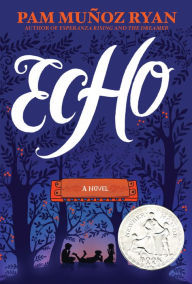
Another surprising (but not really because it’s so absolutely wonderful) hit has been Echo. It’s a huge book but every child and adult whose hand I’ve put it into has just loved it – depite the fact that it takes a while to get through. Why – I suspect that the range and diversity of the characters and settings is satisfying to my international audience. But it is also great storytelling. And then they go on to read all the other Pam Muñoz Ryan books, which is also an excellent outcome.
What would you like to see more of that is “relevant and useful”?
I’ve just spent the last 4 days at the #LKSW2017 where 80 librarians around the SE Asian region got together to learn and share (mainly teacher) librarian practise. I also hosted a Chinese lady from a school in China and gave a daily ride to another Canadian librarian working at a school in China. We had some great conversations.
The first workshop I attended was led by Brad Tyrell. He of the magnificent Libguides at Scotch College that induce envy in every other libguide – even if you know that there is a slew of very techie people behind the gloss. During the workshop he kept emphasizing that everything that they’ve done is on a creative commons basis, and in fact shared all the documentation and templates used to make the guides. He also explained that their staff’s job descriptions include an imperative to share what they’ve done – so everytime they’ve created a new library guide, they not only share it with staff and students internally, but they also have to post it on the listserv / social media of their local library association.
This is something I’m very comfortable with, and in fact have had many discussions with my lecturers at CSU about plagiarism and the sharing of academic output amongst students, where my (slightly controversial) view was that every academic assignment I’ve made is, and should be public, and that if students abuse it, or lecturers can’t be bothered to change the assignment, the system should take care of it… discussions documented here. My libguides are also open, and I encourage people to take what they need from them and to adapt them to their own situation – and in turn, I get inspiration and links and resources from the other community guides. What do we all want? A little acknowledgement and for it to be on a “I share so you don’t just take, but also share”.
Then there is the in-between state, I’d call it the TpT state (teachers pay teachers), where you’ve made something that’s taken so much work, it’s done in your spare time and has cost you time and effort and is of a quality that you feel you can sell it. Personally I don’t do this, I’m more on the open source side of things, but I have bought items from other teachers where I like what they’ve done and don’t think I could do a better job. For a rationale for this model, please read this.
And then the opposite extreme. Chatting to my two compatriots working in China, I was surprised to hear that neither their catalogues, nor their library guides were open. I was asking about sourcing Chinese books for our program in particular, and specifically nonfiction books for our UOIs. While they were helpful, and the actual answer is due to the predominance of text-books their is a less developed nonfiction publishing market at the primary level, none of their catalogs or resource lists were open. So unlike many other schools where I could take a look into their lists to find some good resources, this wouldn’t be possible. They explained that the Chinese private school market is very very competitive and this is all considered to be proprietary and competitive information.
Which of course leads to the question – are you being stupid or reducing your own competitiveness by sharing? I’d like to think not and that everyone is better off as a result of this and opening things up allows them to be improved upon. Provided of course that the person doing the adaptation and improving is similarly civic minded and pays the sharing forward – which isn’t always the case.
One of my favourite UOI (Units of inquiry) has started for my G3 students – in our library lesson last week I introduced the theme through reference to (a somewhat dated, but still very clear) video
Now one thing you can be certain about with students is that their responses will not be predictable. So too this time – what happened? They were cheering every-time their own flag appeared – irrespective whether it was to say that their nation was in the “top” for migration to or from – the subtlety of the relative positions totally escaped them.
At the point of the video where there is talk about how visa systems let people in or exclude them, I paused the video and mentioned the fact that actually all of them sitting there were migrants. Shocked silence for a few seconds followed by indignant cries of “but I’ve lived here all my life” or “but I was born here” or “my parents have lived here for 12 years”. I then asked how many of them were Singapore passport holders. In the 4 classes I had that afternoon, none. Yet they were all insistent on their rights not to be called migrants. I suspect they think of migrants as migrant workers in the sense of their helpers or construction workers. When we got to the “push” and “pull” factors I said perhaps they should go home and ask their parents what were the push and pull reasons for being in Singapore.
How protected a life our students lead. A large number of leaving parents have come to me at the end of last year to have their library records cleared and signed off and told tales of the employment pass holder being made redundant and a home leave Christmas holiday being turned into a “packing up in a hurry and going home to an uncertain future” holiday. Those children leave and the ones left behind have no idea of the realities, are shielded from the realities. I remember how few children could relate to Eve Buntings “Yard Sale” during the Global Read Aloud last year. They could only tell tales of moving to ever larger houses and getting more possessions rather than scaling down. The offspring of the 1%.
How much should our children know? How much should these sad, difficult and terrible things be made real and relevant to them instead of being images on screen or stories in books? And if we make it more real, do we build empathy or fear? I remember my daughter having weeks of nightmares after first learning about 9/11, combined with a trip to the coastal defense museum in HK and jets flying at the level of our apartment in HK. 5 year olds are not good with historical time perspective. Perhaps 8 year olds are not good with financial and living condition perspectives. Tough questions. Is this the right unit for Grade 3s?
Also only until 2010, but a brilliant piece of interactive mapping of migrant flows too and from countries.
As educators we are expected to present information in a neutral fashion. I can only hope that some of our students are able to take what we present and link the past to the present and the future given the current changes in global politics – particularly with relation to human migration.
After a flurry of research and completing my final paper for my M. Ed, one may think that it’s all over with the inquiry into reluctant readers, boys reading etc. etc. But it’s not. Far from it in fact. I’ve been a little distracted with the library renovation, a series of unfortunate events with library assistants having close encounters with pregnancy and injuries leading to somewhat more of a day to day burden on my shoulders etc. etc (it’s called “life” I keep reminding myself). But anyway, we carry on unabated with our BWB club (Blokes with Books) and you can come and hear me at the AFCC if you’d like to find out more!
Tim, the teacher leading the club and I had some conversations at the end of last year about how we needed to take things up a notch and really go deeper into the whole reading thing. The question of course is how do you make sure it’s still fun, that they still are committed, while deepening and expanding what they’re reading? We’re talking about 11/12 year old boys after all, and while my dry academic papers sound all unemotional and cool the truth is far from it. We have spats and have to have firm words about “it’s just a game” and “if you don’t quit fighting about the chairs / beanbags / who got the book first, you will have to stop coming for a while” etc. etc.
But something special has been happening in the two weeks since we’ve been back. Sometimes you just get so caught unawares that you’re not recording or documenting and now I feel I need to document it. Last week our counsellor (who’s joined our team) was sharing how he’d seen an interview with Jamie Oliver about the fact that he’d read his first book at age 38. The boys were actually incredulous. And then a couple started spontaneously sharing how before BWB club they’d never finished a book either, or if they did it was just a quick and easy book and how much more they’re reading now and how it takes practice and perseverance. Note – it also takes courage for a boy this age to come out and say these things to his peers.
This week we reflected on Obama’s reading list and how he’d said it helped calm and focus him in times of stress. And again, a couple of boys put their hands up and said how reading helped them calm down, when they were angry or upset.
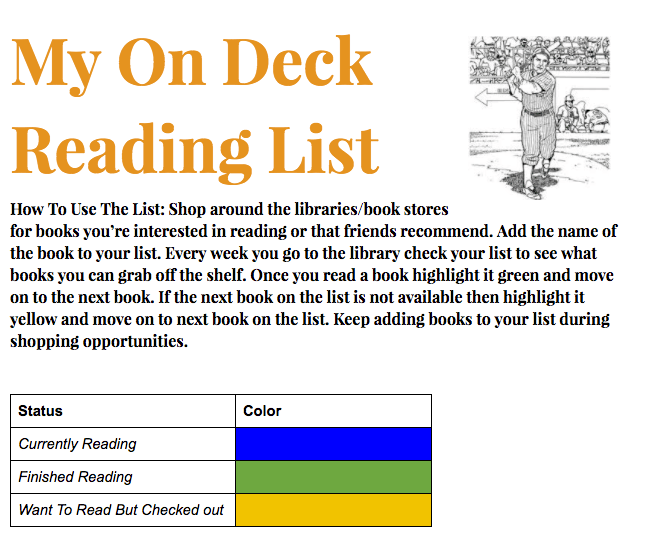
So, what’s new. Right now I’m trying to drill into every student at school the necessity of having a “what’s next” list – either a mental list or a physical list or a pile of books that are the “books in waiting”. And the great thing about a club like this is that we can try things out on them and see how effective they are.
This week we used Leigh Collazo’s Genre Personality test which you can purchase from TPT (a $5 well spent). My assistants and I spend quite a bit of time this week updating the bookmarks in order to make the book suggestions specific to our library. The boys did the quiz during the BWB session on Friday and they really enjoyed doing it. It was fun and light-hearted and we kept emphasizing that there was no right or wrong answer and it wasn’t scientific. After they’d tallied up I made a spreadsheet of the top 3 categories of each boy, and as we read out the descriptions there were cries of “yes, that’s exactly how I am” and “I agree” and “yes!” With their permission we then displayed the results. Most were evenly spread between A, (questioner); B (Escapist) and C (Innovator) with surprisingly few G’s (class clown) which is what I would have expected. Since that took up most of the hour we have with them – we didn’t get around to sharing the bookmarks, and
only introduced the “on deck” spreadsheet to help them keep track of their “what’s next” list – that’s next week’s work.
One of the advantages of being on a tight budget with constraints, as I’ve written about before, is that it forces one into being thrifty and eco-conscious. I just wanted to say a few words here about ways in which we managed to employ the 4R’s in our library renovation.
Library shelving is very very expensive. And there is a reason for this – it has to withstand a lot of wear and tear, be constantly shifted around and then
Bean Bags
there is the question of load bearing (something our designers didn’t always take into account). Bottom line, we basically had to make do with most of the shelving we already had, and reuse it. Not all of it was in great condition. So as part of the design brief we asked the contractor to refurbish the broken bits by re-lamination. Unfortunately this is not a very ‘sexy’ part of a renovation project, and we’re still chasing up on bits and pieces that need to be done! Most of it is looking pretty good though.
The green chairs were donated to us from our other campus, and the black shelving, and some other shelving that didn’t fit into the new design were donated by us to other classrooms and campus areas that needed it.
Other little things – our “fiction” etc. signs had a green border that looked out of place with the rebranding, so we just got some black electrical tape and taped over the green, so it looks black now. The non-glass doors got a new layer of paint, and larger glass pane windows.
The shelving above that used to hold picture books now is part of the junior section (I wanted more front facing space for our early chapter books to make them more enticing) so we inserted an extra shelf to each row to accommodate smaller books and the boxes in series. One of our trolleys got donated to the IT department and the oldest saddest one got a new lick of paint in the same grey colour of our doors (part of the new branding) and looks just great now! The red plastic baskets found a new home in a classroom and was replaced by a wicker basket while we wait for the drop box to be completed. All our weeded books went to the PTA for their second-hand sale. And our old VCR boxes are still in use as alphabet markers in smaller collections – like Chinese fiction.
At the end of the day, besides the old tile carpeting in fact, very little ended up in the scrap heap. In fact many people when they come in have to ask what is actually new, because while everything looks new and different and lighter, they still recognise bits and pieces from the past. I don’t think that’s a bad thing.
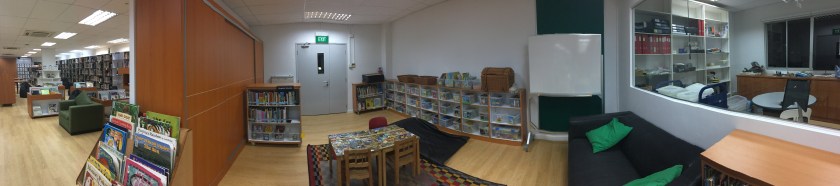
Well we’re getting close to completion (all the yellow stickers are things the contractor needs to work on and the pink ones, things we need to do!) on our library project (more links to the history here, here and here) and I’m feeling a little more relaxed. And even in the mood to discuss what has gone well (and what didn’t go so well / what I would have done differently will be the next post).
I’ve added 3 pano photos, from the front and back of the library and from our new “classroom” space.
View from frontView from backNew Classroom
Let me start and devote this blog post with what I’m happy with – a comment from one of my Facebook groups prompted me to start with this, because I’m beginning to realise I’m way too much of a glass 1/2 empty kind of person, and if I have anything in the way of resolutions this year it is to be more positive! I’ll put some before / during and after shots in so you can see the difference!
I’m loving:
That I was fully part of the design process – in fact I was the designer and I only have myself (or maybe budget constraints or misinterpretations) to blame for what didn’t work out. Plus my principal was immensely supportive all along the way, pretty much gave me free reign and was there when I needed her as a sounding board or to confirm a decision.
The wooden floors
Oh I hated our old carpeting. Despite the fact that it was only about 2 years old it was pretty dirty and yucky – we get a lot of kids through the library each week and kids ain’t (and shouldn’t be) clean beasts. And because they were floor tiles, they could replace them, which meant colour differences, and that picky kid fingers could lift them up so they had to be re-glued regularly.
Before
During
After
The extra display space
We librarians love to display and show case our collections. Whether it’s for a special event or to highlight new books, kindness week, a particular theme, whatever. I had no display space except for that which I’d artificially created by leaving shelves empty, and removing a computer from the dreaded pillar! In the new configuration I’ve been able to convert the pillar to a wonderful wrap around display space. I’ve also copied an idea from UWCSEA-East primary and added book ledges at the front door (they’re not perfect yet – too big and heavy on themselves but that’s another story).
Entrance Before
Entrance During – part of wall removed
After
Pillar before
Pillar after
Teaching spaces
I don’t have great pictures of before, or actually of after, so I’ll have to add these later. Basically my teaching space was a couch and a pulldown screen and a heavy very low flipboard I could drag out of my office when I needed to write anything, but couldn’t leave anywhere because there was no space for it! Now there is not just one, but two teaching spaces as we knocked down the wall between the library and the staff room and the staff room was divided into a classroom and workroom. Each has a projector with apple TV and each has a whiteboard space – the classroom a portable whiteboard and the main library will have two writeable glass sliding doors on either side of the projector screen on which to write. As a bonus, they’ve put blinds in front of all the windows that we can pull down so that the audience can also see what’s on the screen after 2pm!
Before (author visit)
New classroom projector installation
Front Desk
I have very conscientious and neat staff, but open cupboards and a lack of space and no book drop meant that the front desk always looked messy even if it was actually pretty organised. We went for a curved desk, for the show. I wasn’t 100% happy with that but it looks pretty good. I really like the design and the work surface (the top drawers are actually pull out work spaces) extra cupboard space and the fact that the cupboards have doors. I’ve very worried that the seating space is going to be very tight for three staff members, even if they’re all very petite. The compromise was I wanted the desk to be open on both sides because when (not if) there’s a “situation” on the library floor staff needs to be able to get to it very quickly.
White walls
Did I ever mention how much I hated the babypoop and maroon colour combination? Initially all I really really wanted was a paint-job and different seating furniture – but I got spoilt and got a whole new library! Having white walls and light floor makes the whole space so much lighter – even though we’ve blocked off the windows on one side.
Maroon wall
Babypoop wall colour
Nice and white and light
Collection flow
As the school has grown, so too had the collection. And choices I made last year on where to put what helped some parts of the collection (Fiction and Junior fiction) at a cost to others – nonfiction – where I split 000-399 and 400-999. Now each part of my collection has it’s own section and I have an entire wall of nonfiction 000-999. It’s impressive even if I say so myself. And it’s “overzichtelijk” a wonderful word for which the English translation is apparently “clear” but what it really means is that you can take everything in in one glance.
There is also enough space on each shelf that books are not crammed together and we can put out front facing book(s) at the end.
I also ordered signage from Merchandising Libraries, both for A-Z for each fiction collection and with words and pictures for the nonfiction section and “shelf talkers” for various sections.
Section dividers – full nonfiction shelf
Our old sections dividers
Split collection
Another good thing is behind the teaching space / projector sliding doors we can now put in all the “kit” boxes – the multiple copies for literature circles and communal reading. Our school is in an old building so we don’t have grade pods or communal areas so all these books are stored in the library, and were stored in my office. I didn’t like this because it meant they were out of sight and mind of teachers and students and the door was a bit of a barrier (especially in the beginning when they didn’t know me) for them to come and browse the books. Now the office space can be used for sorting UOI books (so they won’t be on the floor in front of the main desk anymore), and the books will be easily accessed by everyone.
Teachers’ resources are also all together at adult height!
Before
After
That’s all I have time for today. I’ll talk furniture and what could have gone better in the next post.
In my past “homeless” week I’ve had opportunity to offer PD to my fellow librarians & library staff and to some teachers, and also to go into classrooms for a longer period of time and help with research, and I’ve had time to find, curate and put resources onto our libguides, and I’m hot-desking in the coordinator’s office. Its’ been a very informative time.
What I’ve learnt:
Never make assumptions about a basic level of digital literacy – just because you’re comfortable with screenshots, copying and pasting, using short-cuts etc. your audience may not be. Often they only know the very specific applications and programs (and operating systems) that they need for their specific tasks in their job. You need to be very explicit and slow in explaining things.
Many many students do not know the difference between being in a browser window and typing in a URL (even a shortened one) and typing in a search term in a search box since the two have become ubiquitous to them – and Chrome as a Google product has played into that by allowing you to access either a search or an address from either. That’s something I never paused to think about, as a computer child of the 80’s they were very distinct things. This is philosophically interesting and I wonder if it impacts on understanding the nature of search and query? I see a considerable amount of blurring generally – and if one thinks of aspects of information literacy in terms of threshold concepts I’m wondering if all these developments, while apparently making things easier are actually making them more difficult?
My biggest learning is that I have a poor understanding of how, where, why and when students and teachers access information. I’ve gone for a (at least) three times redundancy concept in providing access to anything –
in the OLP (Online Learning Platfrom – both on the homeroom page AND on the library page)
on the front page of our OPAC
on our Library Guides
In initial library lessons we’ve also had students (and teachers and parents – in our library bytes sessions) bookmark the 3 primary sites – the catalog, the library guides and then library OLP page. But the issues with information seem to be more deep-seated than that. I suspect that there is still confusion about not even knowing why you’d want to access anything – a kind of informational existential issue.
I’m guessing about 10-15% of the students in a class are making full use of the resources we’re providing. Our school is probably not unique in this. I hear the same lament everywhere. There is the saying of “meet your customer where they are” (not where you want them to be) and I think we neither really always know where they are – or we suspect they’re just on google, nor are we able to meet them there. AND OUR VENDORS ARE NOT HELPING US! Let’s take our OPAC / Catalog as an example. Follett has finally woken up to the fact that google, and not our catalog or databases is the first place students look, so they’ve come up with a very nifty chrome extension that allows you to plug in your catalog (and webpath express) as the first search result – like below
But, it only works with iOS on desktops / laptops. And we’re an iPad school (not an android / chromebook school). So it doesn’t work on iPads. So far so useless actually.
Oh, but there is a Destiny Discover App for iPads… except all it does is try to update every time you access it, and it gets to 31% and then crashes. And you can only set age / Lexile / grade level limiters to books, not databases or online resources, so it’s even more overwhelming than good ole google.
So at our last inter-campus librarian meeting we decided to try and encourage entry and access to our paid resources by making them options on our UOI guide resources page – so we’ve semi-standardised our boxes to have Books (with a link to the catalog via Librarythingsforlibraries book display widget), Videos (since Youtube is the 2nd only to google as the “go to” place for student research) and Resources (including Britannica, Brainpop, Epic Books and other curated links).
The thought is, that they then don’t have to leave the page in order to go to a resource, they just click on the picture, and get to say Britannica, and once they’re there, the threshold is lower to then search for something from within there … we’ll see what the reality is. I’ve also explicitly told them this in their last research lesson. Now to follow up and see if the usage stats change.
So what now?
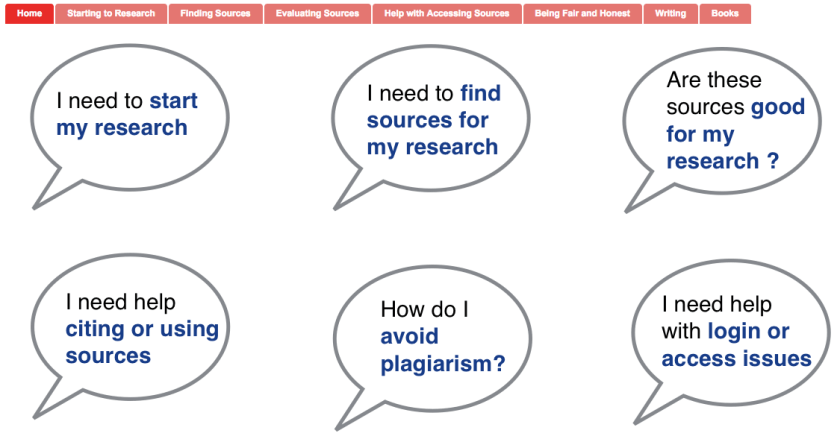
I think I need to move to a simpler and more intuitive layout – Following Katie Day’s layout for her research guide, perhaps making it student question related?
At a whole different level is the services and guides that happen at Scotch College ….
I think I need to sit down with teachers and students and really understand how they use information, how they look for it and where they expect to find it. Customer journey maps – something that I was thinking of as an alternative study avenue before I looked at our Blokes with Books club as my case study. Has anyone looked into that in the library context? I know people have looked at social media in library, but this is different – the physical and digital paths our patrons use to get information (or get frustrated by us). Any pointers?
Planning for a library expansion and renovation involves considerable time, thought and work on the “hardware” of the physical building. Including last week’s work of packing up the books and getting them put into storage. I’d blogged a little about how just prior to that we’d done a lot of weeding, and sorting out patron data on our system, as somehow the physical sorting out led to a drive for digital sort out and housekeeping.
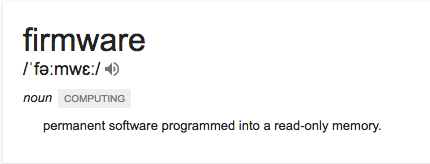
I’ve been promising for a while that I’ll talk a little about the “digital” side of the library, but first I’d like to talk about what I’d refer to as “Firmware”
A characteristic of most international schools is the transience of its students, and often teaching staff. Naturally this includes the library. In my current position I’m aware of the fact that I’m just one in a long line of librarians who have come and gone. I’m also extremely grateful to our permanent library staff, who keep things ticking over as teacher librarians come and go, each trying to put their mark on the physical and teaching environment. They have institutional knowledge. They know what has been tried and worked or failed, and a pretty good idea of why. I admire their unrelenting politeness and helpfulness as they cope with the latest “new broom” .
When you speak to other librarians, inevitably the conversation will come around to the fact that they’d like their staff to take more initiative, or upgrade their skills beyond shelving and circulation and basic queries. But that is harder to realise than one would think. There appears to be a reluctance that sometimes is hard to fathom. Some librarians have taken great initiatives in this direction – like the KL librarians under Robert George with their JAWs (Job Alike Workshop), and more recently the similar sessions initiated by Barb Reid in Singapore. The problem with any professional development at any level is that there needs to be a compelling reason to take the learning and put it into action as soon as possible. But invariably the day-to-day tasks take over and there just isn’t enough space between relentless shelving and picking books for the next (18) Units to get the practise …
However in the last month, we’ve had to challenge the “read-only” part of the definition to its limits, with one staff member on maternity leave and the other on hospitalisation leave, and as a result, that once in a blue moon occurrence – a “firmware update” has become the new norm. So suddenly business as usual hasn’t been usual, and everyone has had to do everything all the time, with a lot of compromise and cobbling things together as we go along. We haven’t had the luxury of designated tasks and roles, and suddenly we are all cataloguers, and weeders, and resource list creators.
I’d set aside a week for packing up the library. But I’d not calculated on the energy and enthusiasm of my staff and the maintenance staff, and the help of our Grade 5 students who made a “book train” from the library upstairs, so by the end of Tuesday we were pretty much done (and not dusted – boy oh boy, did we discover dirt and dust…). So I declared Wednesday to be systems and PD day, kept back 3 tables and chairs and we sat down and I taught everyone how to use Libguides. We probably only spent about two hours on learning the basics, and that’s really all that is needed, because with everything it’s not about the theory it’s about using it. Then back to some more boring stuff, getting images onto books in the collection.
And then more important, but still a little bit tedious – especially if you’re using Follett – checking through resource lists and updating visual search for all the UOIs. Oh gosh, I’m embarrassed to say how many links were old or incorrect.
Next up was making resource lists for all the books related to all the countries our students came from. For Uniting Nations day I had made a cursory start by grouping books into continents as it was a “quick and dirty” way of getting lists out there for our “read around the world” challenge. Now I wanted to dig deeper, so I took the list of all the student nationalities and we divided it up and started searching and added. We quickly saw the countries that were under-represented, or not even represented at all – books from / about Bulgaria anyone?
I also spent the better part of a day sorting out and adding books related to Social and Emotional Learning based on the handout of Dr. Myra Bacsal after her talk. It also entailed adding nearly US$2,000 worth of books to a “to purchase” list, as I realised that while we did have many of the books recommended, we were also lacking in a few – and particularly in more diverse and more recent books.
Our final day in the library, around rapidly diminishing furniture – including at one point our desks, was spent putting the libguide PD into practice, as the 3 of us sat with a list of all units, all guides made and guides to be made and started putting libguides together!
The previous day while my staff was helping their colleagues at our other campus, I’d been sitting with the librarians, helping them extend their knowledge of libguides, and us brainstorming ways of presenting physical and digital resources in the guides in such a way that it was easy to navigate and would ensure that students could benefit from knowing what books we had and also how to access other QUALITY resources (i.e. not just google) that we were paying for but were perhaps not being well utilized.
We decided on
having the central idea at the top in a floating box
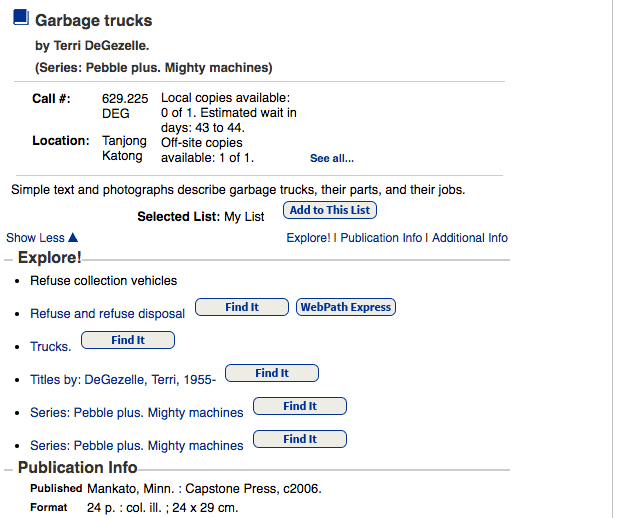
on the left – having a scrolling bookshelf of our unit books – using the Library Thing for Libraries book display unit. That way teachers and students could see all available books in a unit, even if they were distributed in a different classroom – and clicking on the link would take them to the book in the catalog – AND if they looked at the subject headings under Explore! would hopefully have a Webpath Express link to click on.
Putting some videos in the middle for our more visual / video liking students – also very handy for our ELL students with the paired speaking / images.
On the right having a tabbed box that could alternate between Brainpop (a staple in primary), Epic Books (easy to access and great free selection of nonfiction books for easy projection & assignment in class), Britannica (because Encyclopedia) and other links.
Of course nothing is simple – and even now as I look over the units, I see that some units have the UOI books around the central idea and inquiry in them and some have that plus what-ever literacy / math connection is being made (so more than half of the books are poetry for example). In the medium term all that needs to be straightened out and sorted out as well.
Also before you can add a scrolling list of books, you need a list of books … and to know how to get the books into Library things, and then into a book display widget – so I made a little screencast on how to do that!
The wonderful thing about all of this is the obvious enjoyment and pride that my staff got out of researching units and finding resources and adding them to a guide – they kept on saying “this is so interesting”, and “this is so creative”. Of course it is not a “quick” thing, I’d say on average a very basic guide at primary level that is reasonably complete will take around 3 to 4 hours. And then one just has to hope that the units don’t change every year!
All in all, and incredibly productive week, and also my staff finally “gets” the fact that my drive for automating student update and photo import etc. etc. is not to put them out of a job, but to free them up to do more interesting and meaningful work. After we talked about that, one staff member said “and now to automate the shelving!” amen to that!


 Well done Annick Press (that does a lot of amazing things –
  it into has just loved it – depite the fact that it takes a while to get through. Why – I suspect that the range and diversity of the characters and settings is satisfying to my international audience. But it is also great storytelling. And then they go on to read all the other Pam Muñoz Ryan books, which is also an excellent outcome.


 at’s new. Right now I’m trying to drill into every student at school the necessity of having a “what’s next” list – either a mental list or a physical list or a pile of books that are the “books in waiting”. And the great thing about a club like this is that we can try things out on them and see how effective they are.
 3 categories of each boy, and as we read out the descriptions there were cries of “yes, that’s exactly how I am” and “I agree” and “yes!” With their permission we then displayed the results. Most were evenly spread between A, (








 Informative Flights - Musings of a Teacher Librarian