School Year end 2025

We’ve been on summer break for just over a week now and I’m feeling sufficiently rested to sit down and write again.

Book returns

The end of the school year is always a busy time for librarians with the dual task of getting overdue books back and making sure that students have enough of the right books in their hands to entice them to do some reading over the summer. It really is a dichotomy – the students who most need to read more are the ones who have the hardest time keeping track of books – probably because they just borrow because they’re being told to do so and then promptly put the books somewhere never to be found again. And then of course when they become overdue it’s a fuss and bother and they are even less inclined to borrow.

Inventory

The big tasks include doing inventory – something we’ve turned more into a continual process so by the end of the year it’s more just following up on missing items – often they return – from students (or more often returned by nannies or parents) who consider going past the circulation desk as being optional. Unfortunately being in the middle east certain types of books also just disappear depending on the heat of current rhetoric – or in the case of this year actual bombing going on.

Core Collection

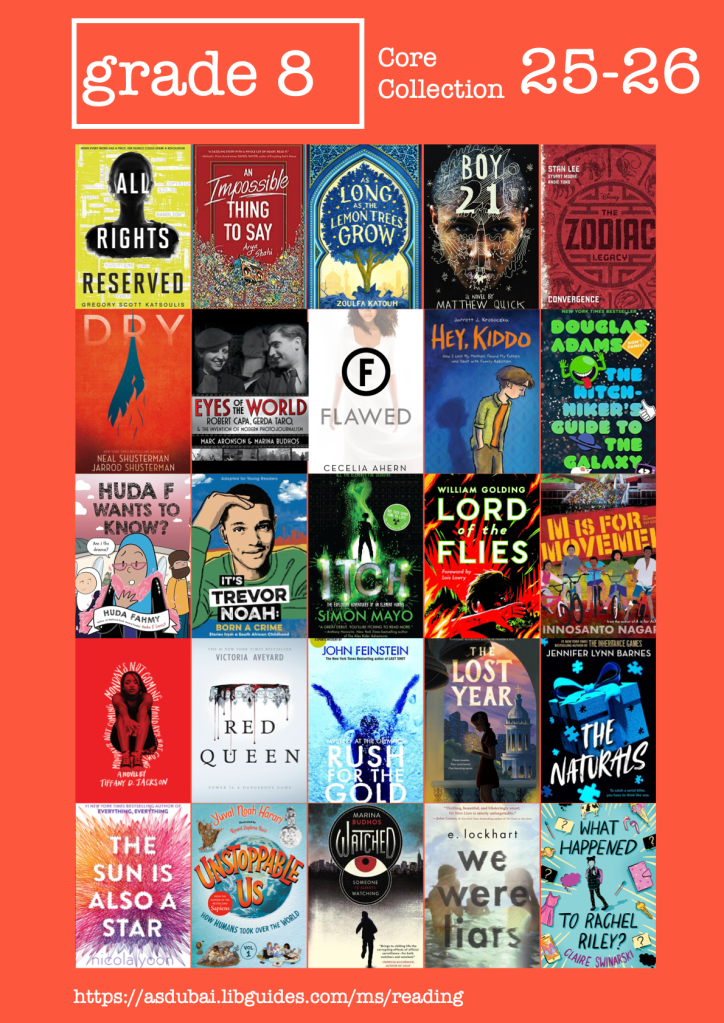
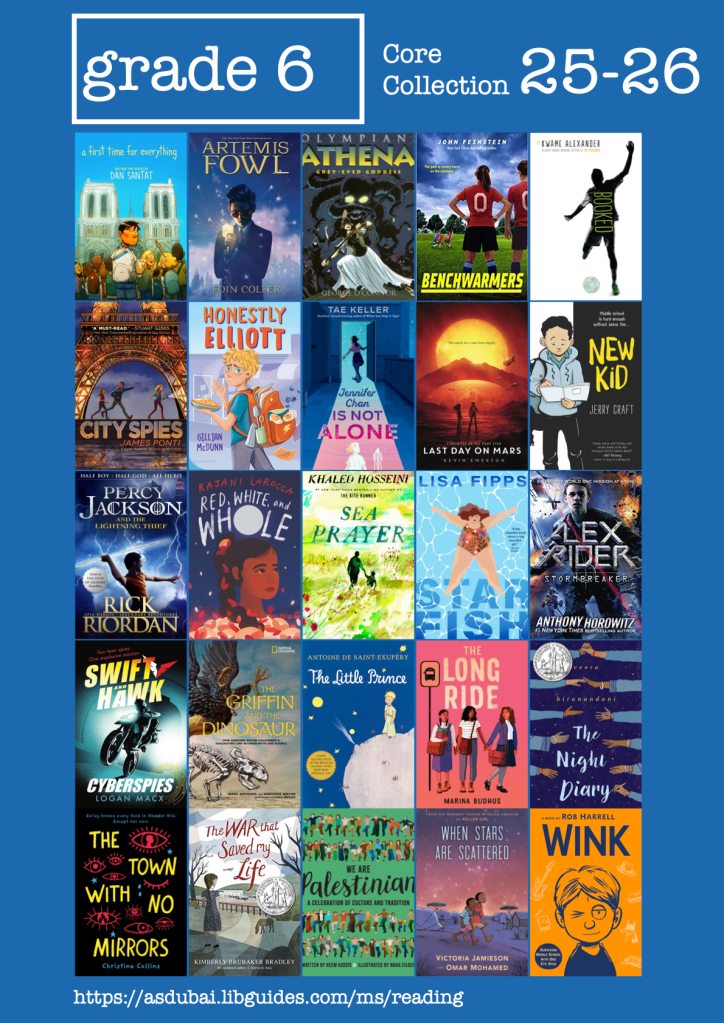
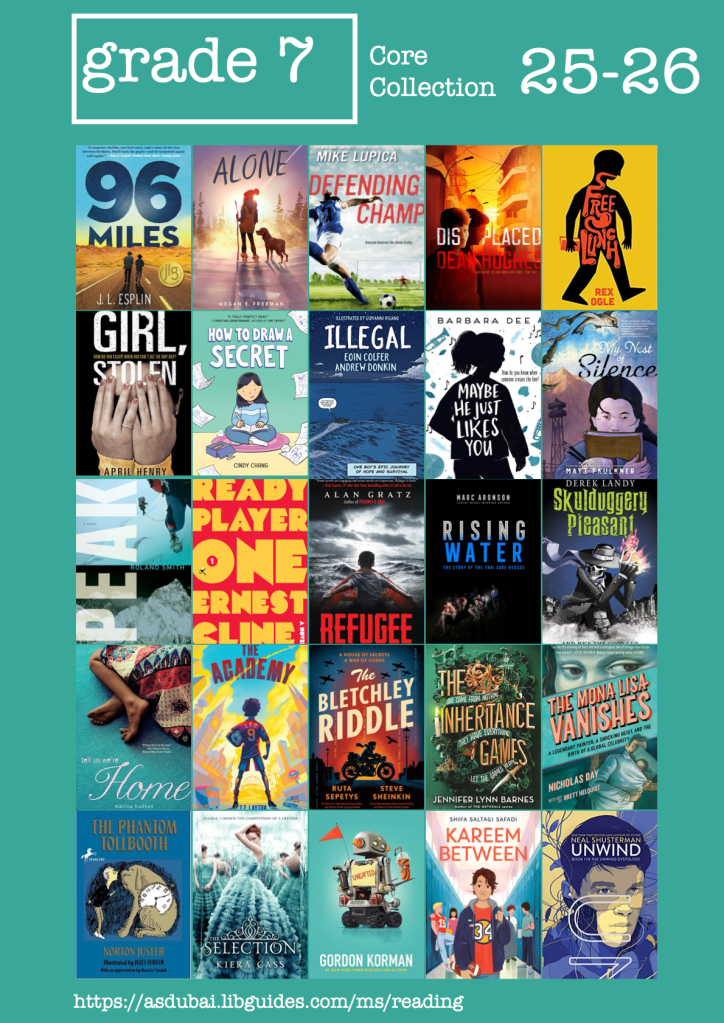
With our ELA (English Language Arts) department I’ve been very busy creating our new “Core Library Books” for the coming year (Grade 6; Grade 7; Grade 8)

And, continuing the tradition started last year, promoting them first with our middle school faculty. I’ll do a separate blog on the result of the core collection this year.

Summer reading

This also feeds into our Summer Reading Libguide which we try to promote as much as possible with students and parents. A few of the ELA classes had their students explore the guide and the various reading lists in detail and then make their own reading goals based on the lists and then email their parents with their reading plans and either borrow the books or request parents purchased them for the summer. I was also on hand with Sora Marketplace open to purchase the eBook or Audiobook for the students who wanted a digital copy. Our summer reading borrowing guideline is “as many books as you need and know you can take care of and return after the break

Annual Report

The most arduous task at the end of the year, and one which it seems many international school librarians have more or less given up on, is creating the annual report. I can see why people stop doing this. With declining borrowing / reading it can be quite a depressing exercise. It’s also remarkably difficult to get good data our of our systems. Follett Destiny is a dreadful platform to get good data from – in contrast with other systems. I was reading Rutger Bregman’s “Moral Ambition” (see video below) around the same time, and came across the concept of vanity metrics – basically just putting together data that makes you look good. With that at the back of my mind, putting the report together (Annual Report 2024-25) became this exercise in trying to show both that the situation with reading is not great while trying to show that as librarians and teachers we’re doing our darnest to turn the tide and hopefully all is not lost. And even when we lose in reading perhaps we’re making inroads in research. Much as I hated studying business / accounting and was glad to escape being financial person it did put me in good stead for being able to work with data.

I’m planning on doing a bit more blogging this break, so keep coming back! Comment on any topics you’d like to see covered.

Nonfiction in the middle

Mediating between curiosity and research, curriculum and pleasure By Nadine Bailey and Katie Day

In the summer of 2024 we asked International School Middle School librarians to tell us the story of nonfiction in their libraries. We wanted to know their ambitions, frustrations, organisation and display as well as their collection development and usage plans. All books recommended in this article can be found tagged in our LibraryThing Shelf (https://www.librarything.com/catalog/middleNF). 

Curriculum and Research

Educators and librarians who have been around for a while know and recognise the pendulum of ideas and practice that upend things first in one direction and then another. Nonfiction is one of those things where some of the momentum is now moving back to the practice of reading subject matter in physical form. Many librarians responded that in a post-covid learning environment both they and the teachers they work with were moving back to giving information in print form – mainly books where they were available, but also printing out articles from online sites such as Britannica and Newsela in order to encourage deep reading, avoid distractions and teach nonfiction reading skills that could be later transferred to online reading. 

Schools following the IBO (International Baccalaureate Organisation) programmes (PYP/MYP) had particular interest in “transdisciplinary” and cross curricula books that would offer broader perspectives on curriculum or unit themes. Many librarians were investing in books that would support inquiry into aspects of the United Nations SDGs (Sustainable Development Goals). There was also a keen interest to ensure that sufficient “local” (country where the school is located) and “diverse” (countries of students’ origins) content was available in the library.

Many librarians have quite heavily weeded their nonfiction sections and are now looking to re-stock them based on this renewed interest in physical books. But it appears that publishers are not necessarily aware of what is happening on the ground and are not always updating and bringing out new editions of popular texts. 

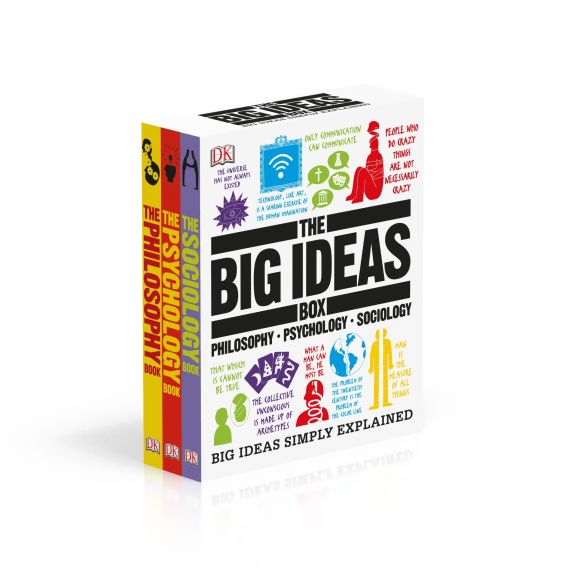
On the other hand, most respondents remarked on how much progress had been made in the last few years on the design, layout and illustrations in recent nonfiction texts. There was also a shoutout for the increase in different formats including “Oversize books” (see the books of “Big Picture Press – Welcome to the Museum”); Graphic and Manga imprints (series such HowToons; Cells at Work; and authors such as Don Brown and Jim Ottaviani); infographics (Infographic guides; ) Subject Summaries (The Big Fat Notebook series), Picture books (see this 2024 SLJ list) and Subject Overviews or introductions (DK Eyewitness, and DK Big Ideas).

Where curriculum and research is concerned, students can now often choose their favourite medium of access through a variety of formats.

Foster the flame of curiosity

Somewhere on the way to middle school, students amend their passions to fit in with their peers and ensure a sense of belonging. So out go the dinosaurs and big trucks to be replaced with their favourite sports personalities, music stars, books about their sports (soccer and basketball seem to be hits). Puberty hits this group hard and fast and strategic placement of sensitive materials can put paid to rumours and myths. It is also a time of self-absorption and worry about their physical and mental health – books on health and well being, relaxation, anxiety, meditation as well as psychology, are popular and an area of growth in most libraries. 

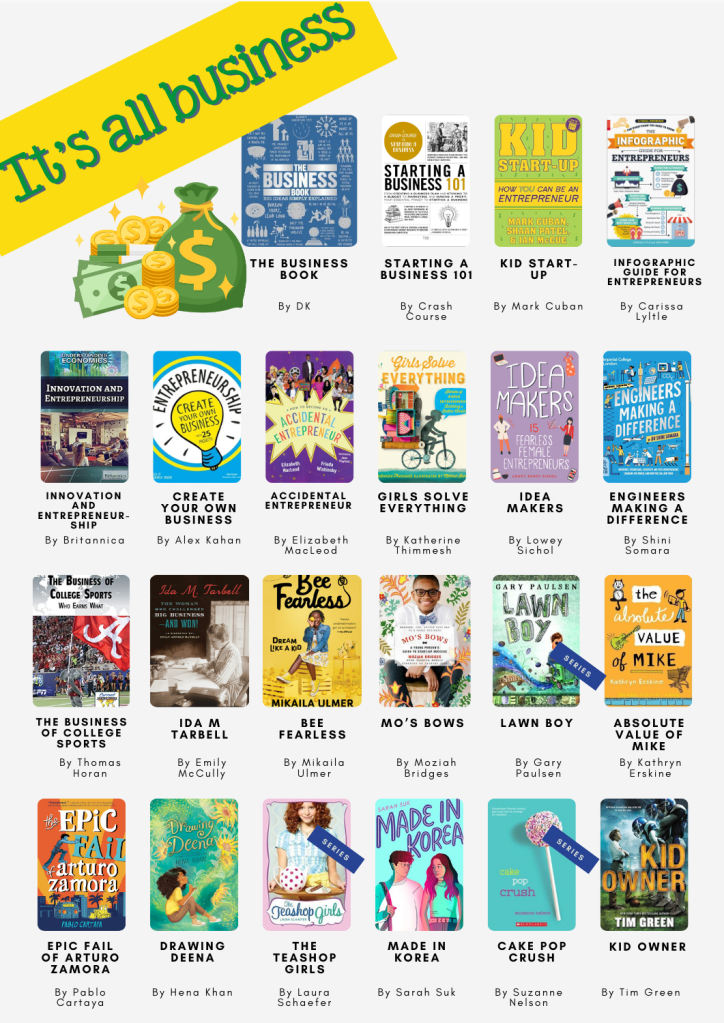
Given the demographics of our schools, students of this age are already taking a keen interest in finance, aspects of wealth and investment as well as entrepreneurship. They’re also interested in personally exploring hobbies and activities they may see online such as cooking, sewing and knitting or other crafts. 

History – particularly the world wars and more recent conflicts continue to fascinate and appal in equal measure – often mediated by historical fiction texts students may encounter in their literature studies or English classrooms and what they see on the news or social media. 

Shelving, organisation and display

In order to make nonfiction appealing and accessible, quite a few of our respondents mentioned they either had or were in the process of rethinking the way that nonfiction was shelved, organised and displayed in their libraries. There is a continuum from pure DDC (Dewey Decimal Classification) to a range of Book Shop or genrified models. Librarians were more interested in getting books seen and read than in a hypothetical need for their audience to be able to navigate a university library later. One of our respondents coined the lovely phrase of “emotional accessibility” in this respect. 

Of course most libraries have already taken the first step of putting “literature” or novels out of a straight Dewey 800 section into a fiction collection – genrified or or not. Other common “extractions” from the main Dewey structure include:

  • Taking Biographies, collective biographies and memoirs out of 910/920 and putting them in a separate section. Some libraries put collective biographies at the start of the section they pertain to (i.e. famous musicians go to 780).
  • Travel Books
  • Poetry
  • Drama and playscripts
  • Graphic Novels and Manga 
  • Narrative nonfiction
  • Myths, Legends and Fairytales
  • Parenting 
  • Well Being
  • Professional Development 
  • Sports 
  • Country specific collections
  • A specific nonfiction series that’s popular
Photo: American School of Dubai MSHS Sport Section

In the absence of permanently pulling out a section – many librarians make use of rotating “dynamic shelving” or temporary topical displays. The guideline here appears to be to follow the needs and interests of the community – teenagers want to be able to independently navigate the library without adult intervention that may be embarrassing. 

Related to that – signage and signposting was an area that nearly all librarians were investing in. Many mentioned significant weeding that had resulted in more space for forward facing displays and carving out sections of interest. 

Recommendations

To support the discovery of nonfiction titles for middle school, we’ve curated a shelf of 389 (and growing) books on Librarything that we consider to be worth investing in. It’s an ongoing labour of love, so not every book has been tagged at this point yet.

Examples of Some of the tagging we’ve employed are (not an exhaustive list):

  • Narrative nonfiction
  • Manga
  • Graphic
  • Topic_
    • WW2
    • Women
    • Science
    • Mathematics
    • Religion
    • History
    • Climate
    • SDGxx
    • Activism
    • Wellbeing
    • War
    • Technology
    • Sustainability
    • Sports
    • Space
    • Social Media
  • Geo_
    • Southeast Asia
    • China
    • USA
    • Europe
    • UK
    • Australia
  • Edition
    • Young Reader

Since such lists can quickly go out of date, we’d also like to generalise with some series, authors, titles and publishers that we recommend.

Great AUTHORS 

  • Marc Aronson
  • Don Brown
  • Marc Favreau
  • Candace Fleming
  • ​​Russell Freedman
  • Yuval Noah Harari
  • Deborah Hopkinson
  • Tanya Lloyd Kyi (Canadian)
  • Randall Munroe
  • Jim Ottaviani
  • Elizabeth Partridge
  • Gillian Richardson
  • Steve Sheinkin
  • Cory Silverberg (Puberty)
  • Dashka Slater
  • Tanya Lee Stone
  • Pamela S. Turner

Great PUBLISHERS

  • Annick Press (Canada)
  • DK (Eyewitness; Big Ideas; Children’s Timelines; How Things Work; How Stuff Works)
  • First Second (MacMillan)
  • National Geographic for Kids
  • Usborne (UK)
  • Crabtree Publishing Company
  • Flying Eye Books

Great SERIES

  • DK Eyewitness
  • DK Big Ideas
  • DK Children’s Timelines
  • DK How Things Work / How Stuff Works
  • From Playground to Pitch
  • HowToons
  • Hazardous Tales (Nathan Hale)
  • Little Histories 
  • World Citizen Comics
  • UN sustainable development goals

Great TITLES

There’s been a recent shift toward publishing a Young Adult version of popular nonfiction titles either simultaneously or shortly after the Adult version. These can be found by searching for “Young Readers” or “Young Reader’s edition” / “Young Reader’s Adaptation”.

Blogs and nonfiction websites

Nonfiction Book Awards

Pairing Nonfiction and Fiction

Last but not least, pairing a nonfiction book with a novel can enhance both texts.

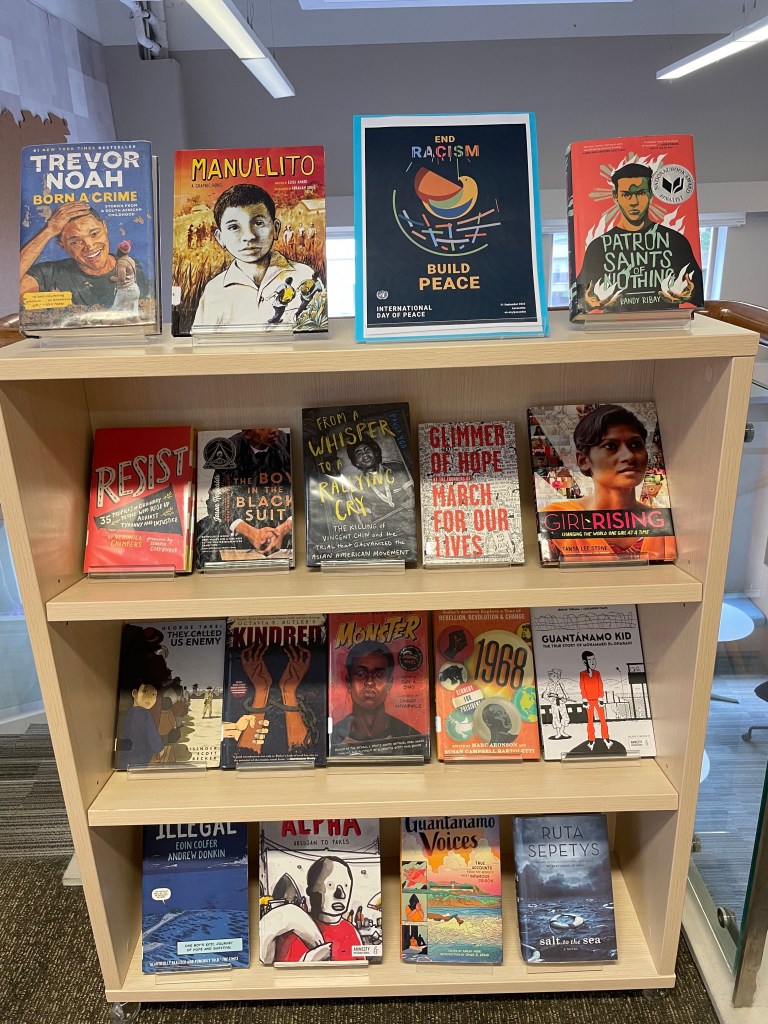
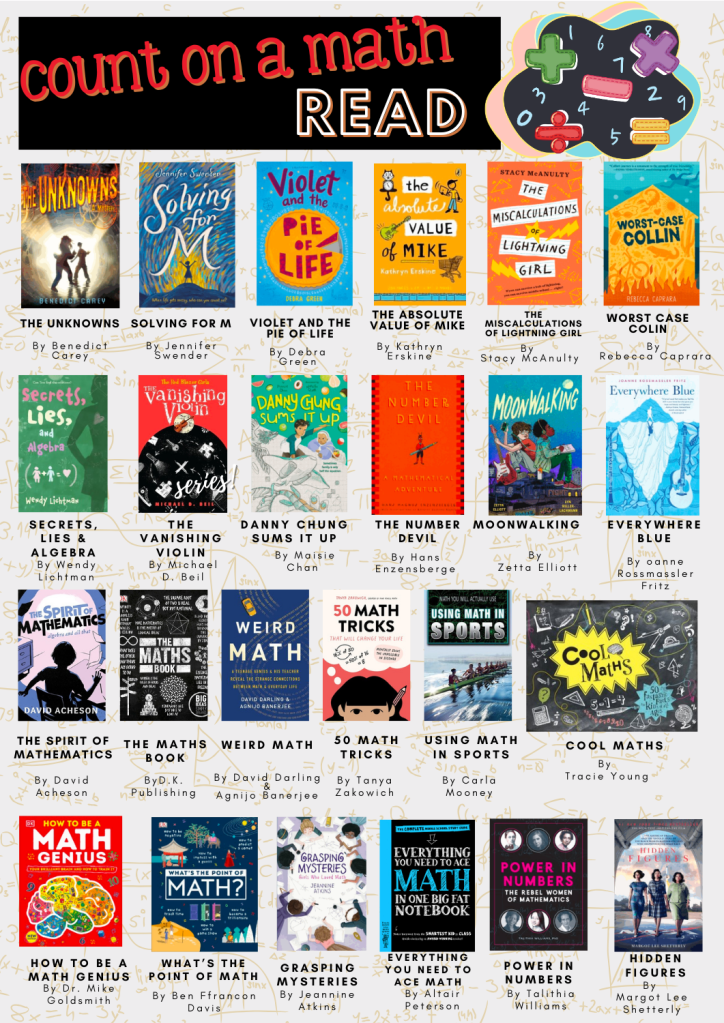
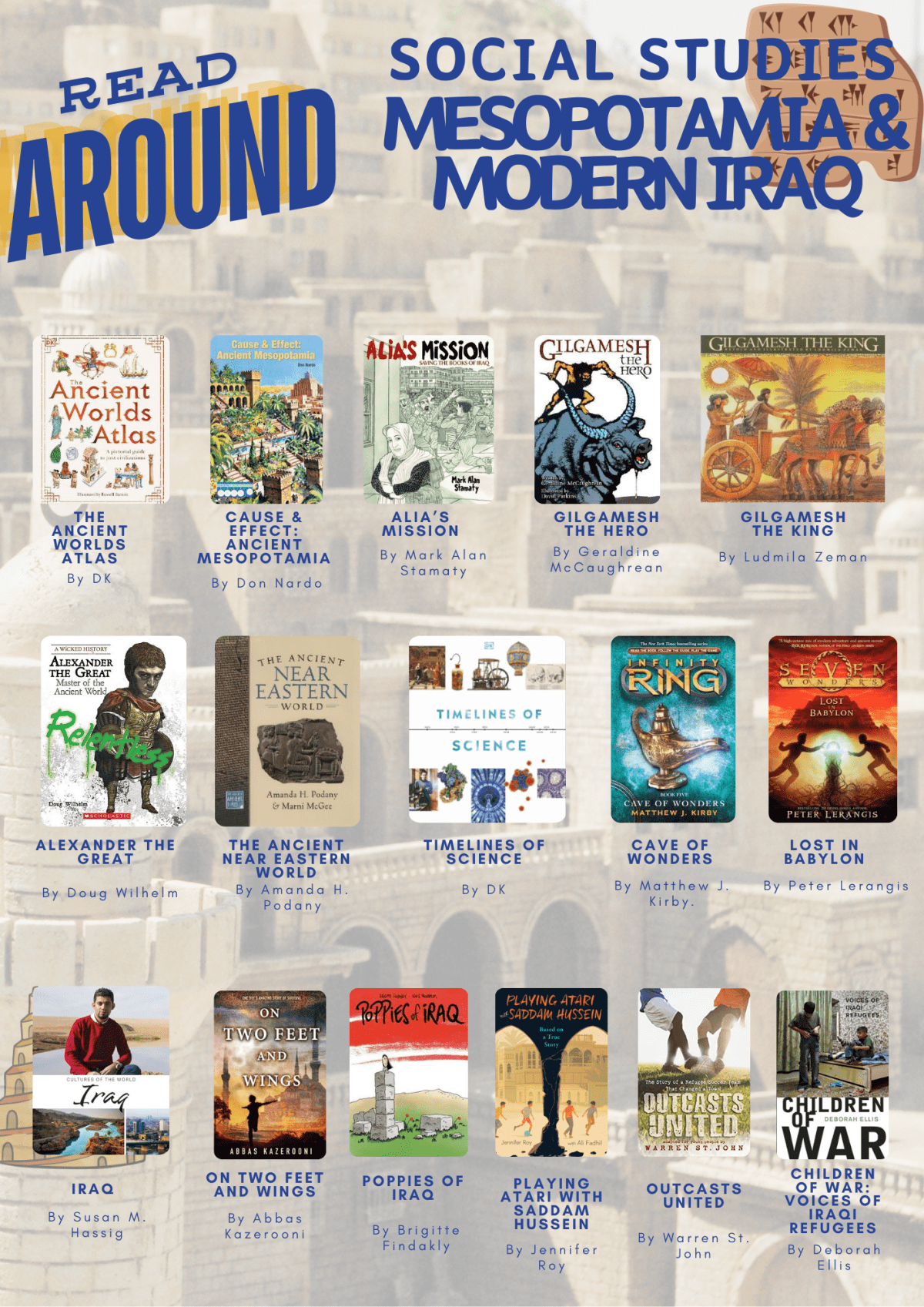
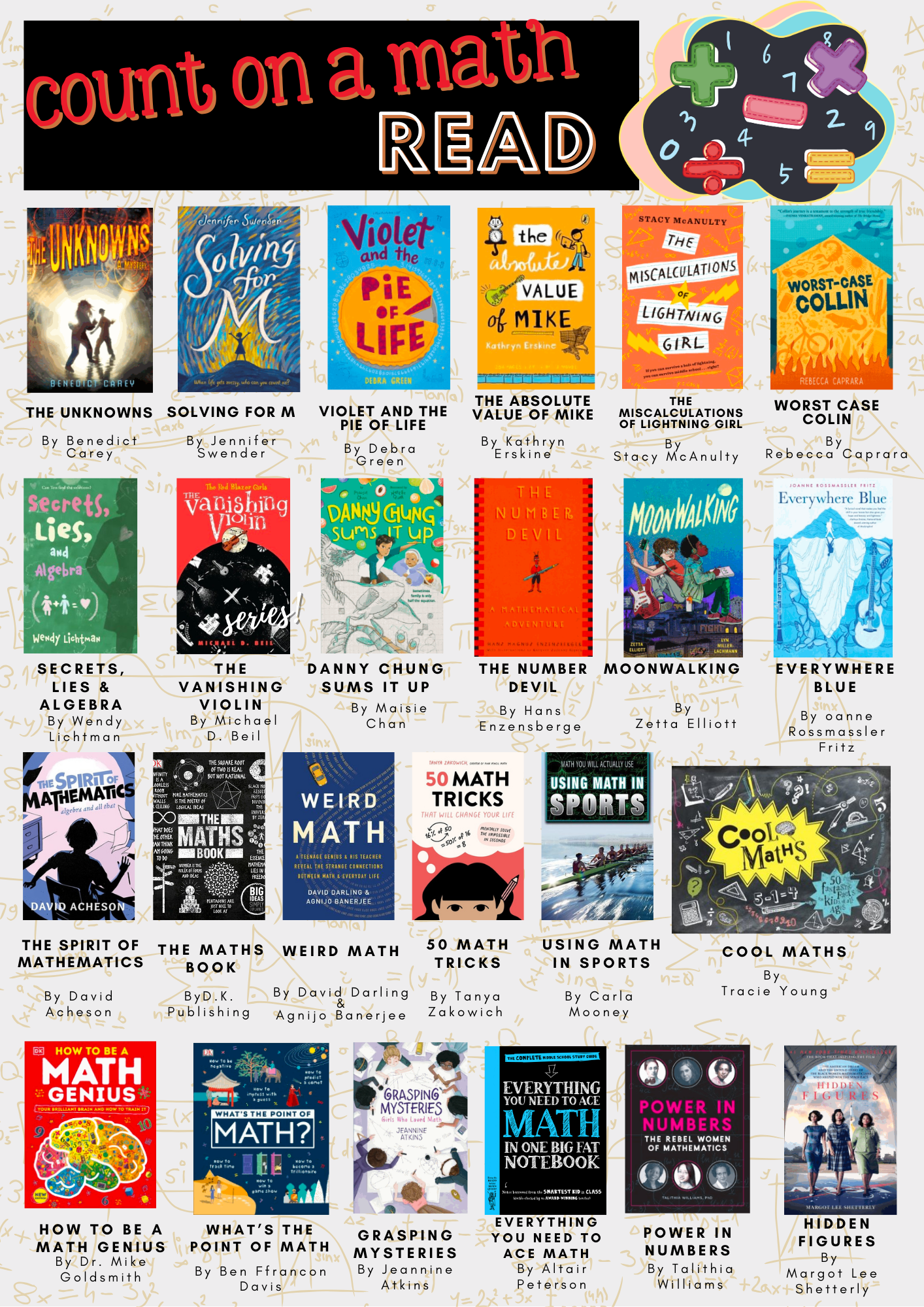
I initially started putting a fiction book on this libguide followed by suggestions of nonfiction, https://asdubai.libguides.com/ms/reading/nonfiction. I’ve now moved away from that somewhat and have started curating “Read Around the Curriculum” posters where either a curriculum topic is highlighted with fiction and nonfiction, or an “If you like / want to know more” poster is made of one of our book club fiction books with suggestions for finding out more about the context with other fiction/nonfiction books on the topic.

Katie Day and I would love to hear your suggestions for more nonfiction books, and perhaps we can expand the list to High School. Many of the books suggested in our list are suitable for High School and upper elementary as well.

Comments and suggestions much appreciated.

NOTE: Since the publication of this post we have been approached by commercial entities about using the list. While we cannot prevent the list from being used commercially this is our wish:

This list was created in order to freely help librarians all around the world. It was a labour of love which took a lot of our personal vacation time to create. If you are part of a commercial organization and you will be using the list commercially we would request that you attribute us and make a suitable donation in our names to “Biblioteca di Lampedusa” which serves refugees from around the world in their Silent Book initiative, https://www.facebook.com/BiblioLampedusa/ or the “IBBY Children in Crisis Fund”: https://www.ibby.org/awards-activities/ibby-children-in-crisis-fund.
Thanks. Nadine & Katie

Slow learning

My good intentions to blog more have come to naught, but here’s some of the stuff I’ve been busy thinking about / learning / pondering / contemplating.

Read Around:

One of the things I’ve noticed moving from PYP / elementary librarian to Middle School is the apparent lack of curiosity in the students coming into the library. I’m sure there are many developmental and sociological reasons for this – not the least the necessity to belong and be cool. This combined with my drive to help “sense-making” in the library for our students – where a plethora of books is wonderful from a curation point of view but hopeless from a choice POV (POV is a very important thing in middle school parlance at the moment) means I’m spending a lot of my spare time (haha, not much of that unfortunately) making “read around” posters that go into look books that are a non-digital physical way of signposting books and hopefully stimulating curiosity and interest beyond what’s going on in the curriculum.

It’s still in a pretty messy form, so I’m not quite yet ready to share my Canva templates, but here are a few examples.

Kind of related to that Katie Day and I are busy creating the “Essential Middle School Nonfiction book list” – a “best of” in our opinion of the books now available for Middle School Students – and tagging the books along a bunch of dimensions of format, topic, geo-location etc. That should be ready soonish.

Learning and AI

Again, with my partner-in-learning, Katie, we’re preparing a talk for educators and parents for the Neev Literature Festival (if you’re anywhere near Bangalore India, that’s the place to be next week – an amazing line up of authors and speakers).

I became somewhat interested in AI, Blockchain and learning and matters related in the summer of 2018 thanks mainly to an article by Jeremy Howard on learning Chinese since at that point I was still in China and actively learning Chinese and I’m always fascinated and very fond (in an intellectual sense) of people who were climbing that mountain with me – this is a more recent podcast featuring him on the subject. I’ve since moved on to learning French and German using Duolingo – which I’m still somewhat deeply sceptical about, but more or less sucked into a learning streak which I suspect is more algorithmically behaviourally induced than true learning. I remember moments learning chinese when I literally was feeling my brain creaking – something Duolingo hasn’t managed to re-create.

Where am I now? Well, AI has progressed a lot faster than my interest in it, if I am completely honest. I’m not sure if it’s a result of a fundamental distrust of whatever the “latest thing” is, or I’m joining Socrates and Plato on a distrust of a new technology – their view being “writing is a fundamentally representational activity. The act of writing only records ideas; it cannot generate them” and I’m with the AI camp saying “AI is a fundamentally regenerational activity; it can only regenerate ideas; it cannot generate them”. Actually I must say I disagree that writing only records ideas – through the process of writing and researching in order to write I do think I generate ideas … maybe not world-changing ones, but ideas nonetheless.

A few things I’ve been watching / reading that I think are of use have been:

  • Benjamin Riley’s “Resist the AI guidance you are being given” – it’s the AI equivalent of the very good Cult of Pedagogy podcast episode of “Is your lesson a Grecian Urn” and boy there are still a lot of Grecian Urn lessons going on nearly 10 years later!
  • Rory Sutherland’s “Are we too impatient to be intelligent” two quotes I particularly liked were “…a problem, I think, which bedevils many technologies and many behaviours. It starts as an option, then it becomes an obligation. We welcome the technology at first because it presents us with a choice. But then everybody else has to adopt the technology, and we suddenly realize we’re worse off than we were when we started.” and “there are things in life where the value is precisely in the inefficiency, in the time spent, in the pain endured, in the effort you have to invest.” – thinking about what he is saying resulted in the title of this blog.
  • Jay Caspian Kang’s “Does A.I. Really Encourage Cheating in Schools?” with this message “school isn’t about creating new scholarship or answering questions correctly—it’s about teaching proper work habits. A young person who takes the time to go into a library is more likely to develop the types of work habits that will allow him to find accompanying bits of information that might be useful in creating a novel, an algorithm, or a convincing argument. Setting aside the obvious offense of dishonesty, the problem with cheating isn’t so much that the student skips over the process of explaining what they learned—it’s that they deprive themselves of the time-consuming labor of actually having read the book, type out the sentences, and think through the prompt.”
  • Joshua Rothman’s “What Does It Really Mean to Learn?” – I really loved this article about Leslie Valiant’s book “The Importance of Being Educable” – our ability to learn over the long term. I started reading the book but think the article actually covers the most important points very well.
  • And then my favourite so far (and imminently practical) Dr. Barbara Oakley: Using Generative AI to strengthen and speed learning. As a side note I loved her books “Mindshift” and “Evil Genes” and this talk reminded me to read more of her.

I’ve also been reading around various academic papers in search of some kind of a framework within which to think about how to teach critical information literacy towards AI. There are a lot of very interesting “click-bait” titles, but so far not very much in the way of substance – so watch this space.

Slow learning

Finally when I don’t have much time left – the whole point of me writing today – you know how we’ve had the Slow Eating / Food Movement and Slow Travel / Tourism and Slow Fashion etc etc. There is apparently a slow education movement which seems to have had it’s hey-day around 2012-2014.

I’m wondering if it’s time for a renaissance. At least in the conversations I’m having with some educators we’re moving back to using nonfiction books for research, printing out articles from databases, using fewer resources more intensively and other such retro ideas. Faced with 22 students aged 10-12 learning about inventions in Mesopotamia I am resisting using the phrase “skim and scan” before they can actually read a paragraph, a page, a chapter and be able to tell what the main idea is and how that relates to what they already know and what they think they still need to find out.

It’s been a little while – but I’m going to direct you all to what I consider to be one of the best series of articles the NY Times has brought out – Errol Morris’ “The Anosognosic’s Dilemma: Something’s Wrong but You’ll Never Know What It Is” about the Dunning-Kruger effect “When people are incompetent in the strategies they adopt to achieve success and satisfaction, they suffer a dual burden: Not only do they reach erroneous conclusions and make unfortunate choices, but their incompetence robs them of the ability to realize it.” besides American (and other) politics, there are few places where this is more rampant than in middle school. It’s not our role as educators to point this out to our students, but rather to bring them to the point where we create the environment where they are nudged into making the right choices – at the very least around learning and to commence that journey of being able to glimpse the horizons of knowing what they don’t know.

Trust me I’m a …

I’ve had this vague feeling ever since I started in the middle school that I’m just not serving my population well on the research side of things. I’ve tried putting my finger on it in the past but the unease has been growing. It started with being dissatisfied with nonfiction and that we’re not doing enough to uncover what research really looks like. I’ve not blogged much this year – partly due to having a lot on my plate with moving schools and school section, but also by choice since there’s just been so much to process and I’m not sure if writing it would be the best option.

It’s now near the end of May and my unease has not abated. A few things are going much better – I’m slowing getting some more collaboration going between the library and the various subjects. Which in some ways leads to more soul searching on how to best serve our students. I think I’m beginning to better understand the problem, not that I’m any closer to a solution. danah boyd gave yet another amazing talk recently and here is the transcript: “Agnotology and Epistemological Fragmentation” – bigger words than I’m accustomed to blogging on, but please indulge me and read the link, as it’s a good, albeit scary read. In particular what struck me was her discussion of the “data void” because that is exactly the description for what I’m experiencing as a middle school librarian.

In primary life was relatively easy – students had their passions – dinosaurs and trucks and kittens and ocean life and their inquiries, the rainforest, energy, etc. and I had a plethora of resources, mainly print books that could explain things in a simple yet clear and age appropriate way.

My latest existential crisis is the result of a rather good collaboration with G8 Biology, where we’re trying to take some biological understanding of cells and make it relevant to your average 13/14 year old in the throes of puberty where everything is more interesting than cellular details. So the idea was to try and help them examine what’s going on at a cellular basis when they indulge in typical teen behaviour – eating, drinking, going to the spa, putting on sunscreen, using makeup, experimenting with alcohol or smoking/vaping, dyeing their hair etc. I’m gathering some basic background information in a Libguide so that they don’t get bogged down in a google blackhole.

But that pulls me into the rabbit hole instead as I try to find scientific information. With the teachers we’d already decided that any books we had were largely irrelevant content detailed and superceded by better online models and information. But what we needed now was good information tailored to the unit.

I started with what I thought would be something relatively simple – deodorants – nothing could be further from the truth. On the one hand you have Dr. Mercola, and his ilk, countless hysterical “health” bloggers; Huffington post and on the other, the 200 page report on the matter from the EU scientific commission. Then there was the Doctor in the Harvard review (via Credo) answering questions posed by her daughter and her daughter’s friends and her mother and neighbour. With some pretty definitive answers, but not a citation or reference to back up her views. I don’t think so. So I had to eliminate that as a potential source – Harvard or not, Doctor or not.

As boyd so perfectly puts it “One of the best ways to seed agnotology is to make sure that doubtful and conspiratorial content is easier to reach than scientific material. YouTube is the primary search engine for people under 25. It’s where high school and college students go to do research. Digital Public Library of America works with many phenomenal partners who are all working to curate and make available their archives. Yet, how much of that work is available on YouTube?

I had a similar problem when I was trying to find some nonfiction books on vaping and e-cigarettes – the books were merely adequate. In particular I was interested in at least one chapter, or even a page that dealt with the science of nicotine / of what’s going on in the lungs, the science. A few good images that didn’t just include pictures of the hardware of vaping! But there isn’t anything.

Where does that leave us as teachers and teacher librarians? Caulfield, who I highly respect for his work on information literacy, has come up with an alternative to CRAAP – SIFT

  • (S)TOP
  • (I)nvestigate the Source
  • (F)ind better coverage
  • (T)race claims, quotes, and media back to the original context

It makes sense, I liked it, but it sat a little uneasily with me, and after reading boyd, I understand why. What happens when you’re going through SIFT and you get to the F and find that there is no better coverage? This can be due to a number of reasons –

  • The gap between what is accessible at your level of understanding / education / language /
  • the preferred mode of access gap (see the comment on YouTube earlier)
  • the void between what I would call the “Goop press” (see this, and this) and science journals.
  • The chasm between what student friendly sources publish and what students are actually researching – anyone find anything really good on micro-plastics recently? – Not in any of the databases my school subscribes to…
  • The fact that even the most intelligent and well meaning teacher in my environment is loath to consider allowing students to use wikipedia (that will be a whole blog post on its own)

You will not achieve an informed public simply by making sure that high quality content is publicly available and presuming that credibility is enough while you wait for people to come find it. You have to understand the networked nature of the information war we’re in, actively be there when people are looking, and blanket the information ecosystem with the information people need to make informed decisions (boyd).

In the mean time, I’m encouraging my teachers and students to use Beers & Probst’s Notice and Note for Nonfiction. At the very least I’m hoping that using it will give them a sense of unease. Of uncertainty, of wondering if what they are reading can be believed, and if not that if not now, at some point they’ll continue to mull over the topic and eventually be able to research it further, and if necessary change their minds or opinions on what they learnt back when they were in G8.

Communicating across cultures

Communicating across cultures: cultural identity issues and the role of the multicultural, multilingual school library within the school community

Dr. Helen Boelens
School Library Researcher and Consultant, The Netherlands

John M. Cherek Jr. MSc
Project Manager, Zorgboerderij “De Kweektuin”, Mijdrecht, The Netherlands

Dr. Anthony Tilke
Head of Library Services & TOK Teacher, United World College of South-East Asia (Dover Campus), Singapore

Nadine Bailey
United World College of South East Asia (East Campus), Singapore

Abstract

The arrival of increasing numbers of refugees and immigrants has caused large increases in multicultural school populations.This interdisciplinary paper describes an ongoing study which began in 2012, discussing the role of the school library in multicultural, multilingual school communities and offering suggestions about how the school library could become a multicultural learning environment. It provides information to help school library staff to look closely at these issues and to provide help and useful suggestions to the entire school community. The prime objective is to help the school community to safely and constructively deal with the dynamics of a multi-cultural society, using the school library as a base.   Safe facilitation requires “trained” leaders from the school community. An e-learning program for school librarians is being adapted for this purpose.

Keywords: multi-culturalism, multi-lingualism, languages, cultural identity, global literacy.

Introduction

At the IASL Conference 2012, a paper discussed the role of the school library in multicultural, multilingual school communities and offered suggestions about how the school library could become a multicultural learning environment (Bloelens, van Dam and Tilke, 2012). Since 2012, various factors have affected multicultural school populations in many different types of primary and secondary schools in countries throughout the world.

Limitation of this study

This paper seeks to understand how learning experiences of multicultural, multilingual students can be accommodated in the school library. Boelens and Tilke (2015) recently described relevant trends and ideas which posits the role of the library in multicultural/lingual school communities from different areas of study: education and pedagogy, library and information science, psychology, sociology and anthropology, and linguistics.

Educational trends

Some international organisations have indicated educational trends. UNESCO’s statement on global education provides a set of objectives for international education until the year 2030. The Organisation for Economic Co-operation and Development (OECD) recommended that schools support both “the identifiable needs of today, and the uncertain demands of the future” (OECD, 2005); schools should provide an environment that will support and enhance the learning process, encourage innovation, foster positive human relationships – in short, be “a tool for learning”. The term “learning environment” suggests place and space: a school, a classroom, a library. However, in today’s interconnected and technology-driven world, a learning environment can be virtual, online, remote – it doesn’t have to be a physical place at all. Perhaps a better way to think of 21st century learning environments is as support systems that organize the conditions in which humans learn. How does this affect the school library?

Library and information Science trends

How do these changes in educational theories and expectations affect the school library? Commentators in North America have suggested that the library has now become part of the school learning commons (Canadian Library Association, 2014; Loertscher et al, 2011; Loertscher et al, 2008). Educuase (2011) considers that learning or information commons

has evolved from a combination library and computer lab into a full-service learning, research, and project space. … In response to course assignments, which have taken a creative and often collaborative turn … learning commons provides areas for group meetings, tools to support creative efforts, and on-staff specialists to provide help as needed. The strength of the learning commons lies in the relationships it supports, whether these are student-to-student, student-to-faculty, student-to-staff, student-to-equipment, or student-to-information (p. 1)

Can the needs of multicultural/lingual learners be specifically supported in a Learning Commons environment? Osborne (2014, p. 7) states that “more and more schools … are committing to provide physical spaces that align with, promote and encourage, a more modern vision for learning” and asks “how might the library act as a ‘third place’ to provide unique, compelling and engaging experiences for staff, students and community that aren’t offered elsewhere?” (p. 8)

Furthermore, librarians are co-teachers within multicultural/lingual school communities (Medaille and Shannon, 2014); co-teachers are “two equally-qualified individuals who may or may not have the same area of expertise jointly delivering instruction to a group of students” (Curry School of Education, 2012).

Racial, Cultural and Ethnicity issues (Psychology, Sociology, and Anthropology)

Key factors are:

  • Students cannot start learning until they feel safe, seen and valued;
  • Learning is diminished and/or does not occur without addressing equity and diversity topics;
  • Equity and diversity topics are intertwined with academic achievement.

This paper will also discuss subjects such as “diversity” and “difference” in multicultural situations within the school community and how these matters affect the school library, not only in developed countries, but also those which are located in emerging and developing countries (Boelens and Tilke, 2015, p. 2). Students from diverse cultural backgrounds, who differ from mainstream students in terms of ethnicity, socioeconomic status and primary language, are entering schools in growing numbers. The education which these students receive needs to address multicultural and intercultural issues. Intercultural education relates to culture, religion, cultural diversity and cultural heritage and respects the cultural identity of learners through the provision of culturally appropriate and responsive education, which focuses on key issues and interrelationships (UNESCO, 2006). It concerns the learning environment as a whole and impacts many different aspects of the educational processes, such as school life and decision making, teacher education and training, curricula, languages of instruction, teaching methods, student interactions and learning materials. (UNESCO, 2003a)

Language acquisition

Based on international research, practice and comment, Della Chiesa, Scott and Hinton (2012) identified strong connection between language and culture(s), looking for future benefits in human endeavour, partly as a result of recognizing that language acquisition and use does not develop in isolation from socio-cultural and indeed brain development.   International understanding is perceived as a desired social outcome of such interventions.

Features of language learning assist teachers of culturally and linguistically diverse students. Learners learn a language best when treated as individuals, experience authentic activities in communication in the target language and see teaching as relevant to their needs. Learning should be relevant to their needs and they benefit from seeing strong links between language and culture. They also benefit from having helpful feedback on their progress and where they can manage their own learning. (Vale, Scarino and McKay, 1991)

Background information

Demographic shifts, i.e. changes in the demo-linguistic situation, have taken place. Children from culturally and linguistically diverse backgrounds, including immigrant and refugee children, are entering schools all over the world; changing demographics will alter both school practices and policies (Center for Public Education, 2012). Features of experiences for students in various countries include:

Culturally and linguistically diverse students in Australia typically come from a wide range of language, socio-economic, cultural and religious backgrounds. Up to one-fifth of such students are newly arrived in Australia and with a language background other than English; even if some students are born in Australia, they may enter the school system with little or no English language. (Department of Education of Western Australia, 2011). Australian schools may experience large populations of immigrant and/or refugee students (Ho, 2011).

There were similar issues in Canada, where students did not have language skills in the main languages used for teaching and learning, though differences in educational performance reduced as students progressed through the school system (Statistics Canada, 2001).

The United Kingdom too experienced similar issues, where a focus on educating significant numbers of students who spoke English as an additional language (EAL) (British Council, 2014).

Looking at countries where English is not the main or major language of teaching and learning, the European Commission (2015) reported very similar issues for schools and for students, not least for asylum seekers.

The USA too has seen changing demographics in schools. Forty-seven percent of children younger than five belong to a racial or ethnic minority group, and “trends in immigration and birth rates indicate that soon there will be no majority racial or ethnic group in the United States” (Center for Public Education, 2012). Implications for such trends may include needs for qualified bilingual teachers, preschool programmes, concerns over drop-out rates from mainstream education, and other resource issues in schools.

Important identity issues in the context of the school community

This paper posits that the school library must be a safe space that welcomes all questions, perspectives and backgrounds. School libraries offer valuable resources (in both traditional and digital format), information, knowledge and insight. In a school context, a library space is one where students can explore their ideas and ask questions. Librarians provide specialised support within this domain and have a responsibility to support the growth of their students. Such healthy development of students can have a strong impact on self-esteem, academic performance and feelings of cohesion. In a multi-cultural school setting, issues of race, ethnicity and culture play a central role in the identity of the school and its students. Celebrating our differences is one way of acknowledging the diverse backgrounds of members of the school community, though such diversity can be overshadowed by a dominant culture and its narrative.

As professionals in education, it is our responsibility to develop competence in the areas that matter to our students, including our own understanding of race, culture and ethnicity, to ensure that young people receive targeted guidance and support they need in order to explore a healthy sense of self.

Identity

Central to identity formation is the “challenge of preserving one’s sense of personal continuity over time, of establishing a sense of sameness of oneself, despite the necessary changes that one must undergo in terms of redefining the self” (Harter, 1990). Adolescence is an important and formative period in life that influences many parts of identity development (sexual, racial, ethnic, gender, etc.). Identity development is a dynamic process that plays a central role in developing our relationship to the self, the other and our social environment. It is especially during adolescence that we play around with multiple identities, experiment with “the rules” and test the institutions around us. As a result of this process, parts of our identity are kept and nurtured, while others are briefly worn and discarded.

Much research about racial and ethnic identity development has focused on adolescent and college age individuals. (Helms (1990) in Phinney, 2007, p. 275) This makes sense because self-reflection is an important part of collecting data. It does not necessarily imply that younger children do not have the ability to reflect, but their process of reflection may be different. For example, younger children tend to describe themselves in a more simple, less sophisticated way, according to their perception of personality characteristics — “I am nice”/ “I like to make other people feel good”/ “I like to help people”. This is less about their relationship to things (toys, food) and more about their understanding of certain qualities (both good and bad). For example, “I am good at writing and bad at soccer”. This relates to ethnic identity development, when children become aware of good and bad qualities about their ethnic group. Understanding why society deems these certain qualities good or bad is perhaps one way to help prepare them for dealing with a multi-cultural environment with dominant ideas that are not their own. Ethnic identity has been studied largely with reference to one’s sense of belonging to an ethnic group, that is, a group defined by one’s cultural heritage, including values, traditions, and often language (Phinney 2007, p. 274). Finding interactive and “fun” ways to help children explore or even explain their understanding of these things is one role the school library can play; by facilitating access to information, librarians can guide students through relevant books, movies and other multimedia tools.

Adolescence is a developmental stage between childhood and adulthood when individuals experience biological, social and psychological change. According to psychoanalyst Erik Erikson (1968), ego identity versus role confusion. It is the psychosocial stage of personality development that adolescents encounter when faced with the question, “Who am I?”. A healthy resolution of this stage can lead to strong ego identity. Unhealthy resolution of this stage will contribute to role confusion. Role confusion challenges our ability to build connections and participate as members of society. Here, adolescents create and recreate meaning to provide themselves with a sense of connection. When a lack of connection exists, the ego struggles to build a foundation for fidelity, based on loyalty. If adolescents lack fidelity, they might encounter, in extreme cases, a future of social pathology, crime and prejudicial ideologies. These negative characteristics can manifest when the individual participates as an adult, for example, in religious, athletic, national, and military rites and ceremonies (Engler, 2014).

Racial, Cultural and Ethnic Identity

A healthy racial and ethnic identity can help youth establish a consistent view of themselves. Many aspects of adolescence are transient and changing. One day we love the color yellow and the next day it is the color red. Thus, by creating a permanent anchor from which to develop, we give our students a better chance at achieving positive outcomes; without these anchors, many young people may identify with a completely different culture which has nothing to do with “who they are”.

Identity issues and their importance in the school and the school library

The feeling of belonging is critical to every child’s well-being and helps him/her to fulfill his potential in many different areas of development: physical, social, emotional and cognitive (Welcoming Schools Childhood Education Program, 2015).

Cherek’s 2015 research is concerned with ways that students can develop a healthy racial and ethnic identity and improve their understanding and vocabulary around race and ethnicity, therefore contributing to increased cultural competence; this contributes to higher self-esteem and healthy development. By using these essential skills, students have the opportunity to take ownership over their ideas and are encouraged to examine the world around them — at home, school, work and in the media – thus preparing them to thrive in multicultural environments.

Essentially, children who feel good about themselves may be more successful, not only at school but in different aspects of their lives (Tough, 2012). Identity is not something that individuals automatically have. Identity develops over time, beginning in childhood, through a process of “reflection and observation” (Erikson 1968, p. 22) Important questions to ask about a child’s learning environment is does he/she see other teachers, parents or students in the school who represent his/her own culture or heritage? Who do these children identify with? Who do they see as a reflection of themselves, e.g. public figures?

Using these factors, the school library becomes a safe “public” space where a healthy and proactive sense of diversity encourages deep and meaningful conversations with all members of the school community about stereotypes such as discrimination and racism.

Involvement of the school library/ian in multicultural, multilingual education

Ultimately, the aim is that students, teachers and librarians are prepared to safely and constructively deal with the dynamics of a multi-cultural society. Safe facilitation requires “trained” leaders from the school community.

In larger schools with academic disciplinary silos, it may be difficult to create positive messages about mother tongue and cultural identity and pride across to members of the school community as a whole – school leaders, teachers, students and parents. The EAL (English as an Additional Language) teacher is most concerned about getting the students up to speed and may inadvertently give the wrong message. The teaching of the student’s (minority) language may not be part of the school language policy.

The Welcoming Schools Childhood Education Program (2015) suggests that children who are motivated and engaged in leaning are more committed to the school. By providing books, information and other resources, the library can “provide an important mirror for children to see themselves reflected in the world around them”. Here, library resources “also provide a window to the lives of others. … [and] students also find positive role models through literature”; benefits from such activities are best seen when coordinated in the school community. The library can provide a stable permanent base for the length of the student’s school career.

Research (Bedore and Peña, 2008) indicates that bilingualism can only be sustained if there is at least a 30% input in the less dominant language. If the less dominant language is not a language which is used and taught within the school community, then the library can provide access to relevant materials. This is an intellectual process of proving the benefit and a practical exercise of resource collection, curation, access, promotion and marketing.   These can be very simple, such as the creation of displays of books about diversity, multiculturalism and multilingualism and about national days of the countries which are represented by children at the school, and reflecting their cultures.

In any event, the school library is a helpful environment where students can reflect on these issues. It can highlight resources, or profile individuals relevent to various ethnic groups. This can be achieved by exploring literature authored by individuals from their ethnic own group or by reading about the history of their own ethnic group. Additionally, the library can give students the basic skills to find or locate this information.

Multicultural, multilingual school libraries

In 2012, Boelens, van Dam and Tilke focused on various aspects of multicultural and intercultural education, identifying a symbiotic relationship with school libraries. It reported on support needs for both children who were immigrants, i.e. those permanently moving from one country to another, as well as more geo-mobile children, known as Third Culture Kids or Global Nomads. Various relational features were identified: literacy, language, bilingual education, world languages.

Krashen and Bland (2014) have identified the need for second language learners to develop competencies in academic language acquisition. Before that, self-selected recreational reading habits were partly dependent on a varied, indeed wide, selection of reading matter. In itself, this reading matter did not provide access to academic language acquisition, but it prepared children to do so. This reading stamina also had an effective domain, in that it motivated students to become readers, and arguably gave them confidence. For some children who use school libraries in multicultural education environments, the digital age was not wholly relevant, as ebook use was associated with affluence. For children whose socio-economic experience is that of poverty, libraries represent the only stable source of access to reading materials, especially in developing and emerging countries. The provision, promotion and use of such reading materials is a feature of the work of (school) libraries/ians in these countries. These libraries/ians support students and teach them to to navigate abundant sources of information. Such skills and aptitudes are commonly known as information literacy skills. Sometimes, the prevalence of information literacy skills is perceived as being a main role of the school library/ian, however the teaching of these skills and the provision of reading materials need to be symbiotically linked.

Smallwood and Becnel (2012) identified various factors in successfully providing library services in multicultural settings – accessing and reaching the clientele; provision of appropriate materials; consideration of use of space; focusing services on linguistic and socio-economic needs; appropriate technology; professional development and awareness-raising amongst school librarians. Indeed, Welch (2011) promoted the idea of the library collection having an aim of influencing student behavior, in terms of increasing tolerance and sensitivity in a multicultural setting.

Whilst not substantially different from good practice elsewhere, the International Baccalaureate Organization (IBO or IB) has identified good practice in library support for multilingual learning environments (International Baccalaureate, 2012). Schools that offer IB programmes comprise state or government schools, semi-independent, independent and international schools. When a school adopts IB programmes, it needs to also take ownership of IB philosophy, including a holistic approach to language and international-mindedness (Singh and Qu, 2013). There is, therefore, a symbiotic link between language and intercultural education approaches in schools which may (or should) experience strong ESL (English as a Second Language) support (Carder, 2014), though the IB stance is that every teacher is a teacher of language (International Baccalaureate, 2011).

Therefore, the literature has identified a need to develop competencies in academic language proficiency and a resource/information role for (both public and school) libraries, especially for children, sometimes immigrants or refugees, who are affected by poverty. Therefore, libraries may be part of scaffolding strategies to support children who need language support, and which include resources and facilities (space). Thinking and planning for such library services and support needs to be holistic and wide-ranging (from facilities and plant to professional development), all based on an understanding of the needs and concerns of targeted client groups.

Focussing services on the needs of multicultural/ingual students

The librarian needs to establish the current and future users of the school and its library, and user demographics (i.e. how many students come from which minority or language group). Library collection and services should then be related to such information.

School libraries have roles related to literacy and reading, and teaching and learning of information literacy skills. To support this, resources – mainly physical – have been curated to serve a mainstream interpretation of students’ needs, often curricular, and in the dominant language (often English). This role could be broadened to meet the needs of the multicultural/lingual school community.

  • The library collection should contain books and information (in traditional and digital format) which reflect the diversity of the children in the school. The library exposes the entire school community to many different cultures and languages. This collection can help students to understand that while their families are unique, they share many common values, beliefs and traditions.
  • The collection should contain literature in the native language of students, and link to digital international children’s libraries and also digital libraries for children from relatively small indigenous groups. This could include online links to songs, poems and stories from many different cultures and in many different languages. It should also contain current information about student countries of origin. Parents could be asked to help the librarian with this task. (Smallwood and Becnel, 2012)

Using these guidelines, the school librarian can strengthen the collection, and then present this information in attractive ways to the entire school community, so that it becomes aware of the extent of their library’s resources.

Librarians can provide an enabling portal function for immigrant, refugee and Third Culture Kids. They may be hesitant to assume this role, perhaps due to mono-lingual experience or lack of expertise in the creation of digital personal learning environments (PLEs) or personal learning networks (PLNs).

The librarian may consider applying principles of information ecology to the school library. This multi-disciplinary emerging field offers a framework within which to analyse the relationships between organisations, information technology and information objects in a context whereby the human, information technology and social information environment is in harmony (Candela et al., 2007; Wang et al., 2015).

Steinerová (2011) and Candela et al., (2007) looked at features of digital libraries and suggested that librarians examine where value integration can take place between the library service, technology, scholarship and culture, adding value through new services or contributions to learning, user experience, research productivity, teaching or presenting and preserving cultural heritage. Applying these ideas to the school environment, constituents of the eco-system include teachers, teacher librarians, students administration, parents and custodial staff (Perrault, 2007). Elements of the system will co-exist but also compete and share, converge and diverge in a dynamic interactive, complex environment (García‐Marco, 2011). The role of the library is such that information ecology needs to be understood in order to support information-seeking behaviour and thereby discover zones of intervention and areas to leverage to optimise advance information-seeking, usage, creation and dissemination within that eco-system and beyond. In response, curriculum, content and subject delivery can be collaboratively reshaped and constructed according to changes in the environment or needs of students (O’Connell, 2014).

Different kinds of resources and adaptive technologies can optimally support students with special educational needs (Perrault, 2010, 2011; Perrault & Levesque, 2012). This type of thinking can be adapted to considering the needs of bi- and multi-lingual students who are part of the school’s information ecology, but have linguistic and cultural learning and informational needs. These can be seen as a potential zone of intervention for collaboration between the teacher, teacher librarian (TL), family and community.

Literature intended for school librarians generally discusses cultural diversity in materials and the building of a world literature collection in response to student diversity or as part of language and humanities curricula (Garrison, Forest, & Kimmel, 2014). Some schools build a “Languages other than English” (LOTE) collection. To do so, schools may try to recruit bilingual or minority TLs or ask for help from parents; schools can also provide training in competencies in multicultural education (Colbert-Lewis & Colbert-Lewis, 2013; Everhart, Mardis, & Johnston, 2010; Mestre, 2009).

The main educational and social issues within schools are to ensure students acquire the official language of instruction so that they can adapt to the new learning environment without loss of educational momentum, while maintaining and developing their mother tongue (Kim and Mizuishi, 2014). Carder (2007) and Cummins (2001; 2003) suggest that even though there is evidence that supports the maintenance of mother tongue (the most effective way of supporting such students), schools place most effort and resources on the official language of instruction of the school. Evidence now presented above suggests that by doing so, children may lose some of their own healthy cultural and ethnic identity.

School librarians may be aware of geographically dispersed personal learning networks (PLNs) in order to create a personal learning environment (PLE) using various technological tools (McElvaney & Berge, 2009; O’Connell, 2014), and could assist different individuals throughout the school community to make use of a PLE. For instance, the International Baccalaureate (IB) allows students the option of guided mother tongue self-study if the school does not teach that specific language. Figure 1 below describes a PLE of an IB self-taught language student.
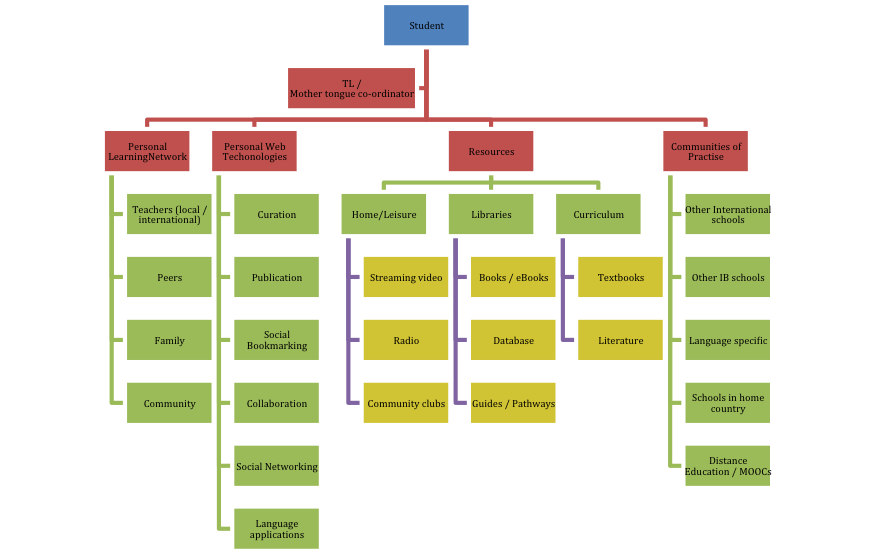
84ff0-pln2blanguage

Figure 1: PLE of an IB self-taught language student

A training program about multicultural/lingual issues for the school community

In 2015, Boelens and Cherek examined the possibility of creating a personal development training program for the entire school community, facilitated by the school library. This is an attempt to help teachers, school leaders, librarians and parents to better understand problems being confronted by the multicultural/lingual school community, especially immigrants and refugees. This program would be made available through the school’s electronic learning environment.

The first part is a 24-minute video that provides an open conversation about race and ethnicity between professionals and young people. Here, participants listen to different perspectives about race and ethnicity, and appreciate why these topics are important to both caregivers (teachers, social workers, child welfare professionals) and young people. Finally, with the help of a study guide, participants explore the possibility of integrating racial and ethnic identity development into daily practice.

The second part is an eLearning course that provides participants with necessary tools to develop a deeper understanding of issues related to racism and discrimination. The content is specifically designed so that professionals (adults, educators, caretakers) develop a vocabulary for discussing race and ethnicity with others who are interested in and concerned about these subjects. A constructive vocabulary is an essential tool when discussing identity development, as it enables participants to safely address issues of racism and discrimination. Finally, participants can further integrate this deepened knowledge into daily practice. This is an important part of the training because it prepares participants for a facilitated in-person learning event.

The third and final part of the curriculum is a two-day in-person learning event. In this face-to-face meeting, trained facilitator’s guide participants as they begin to incorporate their new skills into daily practice. The most effective and powerful events occur when both young people and professionals are present. The training is highly interactive and challenging. Participants are encouraged to openly discuss the impact of stereotypes and the social influences that affect their own racial and ethnic identity.

A similar training program is by The Welcoming Schools Childhood Education Program (2015), which provides a starter kit for a personal development training programme for members of the school community, relating to equity, school climate and academic achievement.

Tapping into the experiences and communities of practise (COP) of distance education, massive open online courses (MOOCs), school librarians could be trained to facilitate this training program through PLNs and PLEs, Training programs would be available at any time and in any geographic location providing internet access is available. Initially, a pilot program would be tested with one language group, and could later be extended to other groups.

This training program will help to establish a multicultural/lingual school community based not only on academic achievement but also on a healthy climate with regard tp racial, cultural and ethnicity issues. It will also contribute to a school´s goals of equity in teaching and will require the support and involvement of the entire school community. Since library staff will be facilitating this program, their reputation will be enhanced, and be perceived as integral members of the school community.

Conclusion

This paper has discussed a developing role for the school library in the multicultural/lingual school community in 2015. It promotes a training program for the entire school community which will be facilitated by the librarian. Because of their involvement in the school´s learning commons, the librarian is already involved in interdisciplinary activities related to the multicultural/lingual nature of the entire school.

While all aspects of identity development are valuable, one area that is often ignored, especially when talking about young people who are detached from their culture, is racial and ethnic identity. Along with ever-changing realities of society, demographics and politics, the impact of race and ethnicity have never been more important.

With an increasing number of migrant and immigrant students, the acute reality of living in multiple worlds becomes more apparent. Social norms and values become entangled. Home life, school life and street life compete for attention. Without proper guidance and support, alienation that occurs when individuals feel split between dissonant forces results in a confused sense of “Who am I?”. Addressing these issues in an educational setting means that we as educators have the power to create “safe spaces” for our captive student audience. Thus, students can be prepared to effectively deal with the realities of a multi-cultural society while at the same time developing a healthy sense of racial and ethnic identity.

As a result of the proposed training program, students at the school will learn more about `who they are`, especially those who come from an immigrant or refugee background. With the support of the entire school staff, they will some to terms with their own cultural identity and ethnicity in their new school and in their new place of residence, and have positive feelings, with an expected corollary that their academic achievement will increase.

References

Bedore, L. M. and Peña, E. D. (2008). ‘Assessment of Bilingual Children for Identification of Language Impairment: Current Findings and Implications for Practice’, International Journal of Bilingual Education and Bilingualism, 11(1), 1–29. doi: 10.2167/beb392.0.

Boelens,H. van Dam, H. and Tilke, A. (2012). School Libraries across cultures. Presented during the Research Forum of the 2012 IASL (International Association of School Librarianship) in Qatar.

Boelens, H. and Tilke, A. (2015). The role of school libraries in our multicultural, multilingual society. Submitted for publication to the CLELE (Children’s Literature in English Language Education) Journal, in March, 2015. Not yet published. Munster, Germany: CLELE.

Boelens, H. and Cherek, J. (2015). Education 2030 (EU), and Onderwijs 2032 and Excellent Education in the Netherlands: a vision of the role of the multicultural, multilingual school library within these concepts. To be presented during the IASL (International Association of School Librarianship) 2015 Conference in Maastricht.

British Council. (2014). How can UK schools support young children learning English? Retrieved from http://www.britishcouncil.org/blog/how-uk-schools-support-young-learners-english.

Canadian Library Association (2014). Leading Learning: Standards of Practice for School Library Learning Commons in Canada. Ottawa, On., Canada: Canadian Library Association. Retrieved from http://clatoolbox.ca/casl/slic/llsop.html

Candela, L., Castlli, D., Pagano, P., Thano, C., Ioannielis, Y., Koutrika, G., Ross, S., Schek, H-J., and Schuldt, H. (2007). Setting the Foundations of Digital Libraries: The DELOS Manifesto. D-Lib Magazine, 13 (3-4). Retrieved from http://dialnet.unirioja.es/ejemplar/157227

Carder, M. (2007). Bilingualism in international schools: a model for enriching language education. Clevedon, UK: Multilingual Matters.

Carder, M. (2014). Tracing the path of ESL provision in international schools over the last four decades. Part 1. International Schools Journal, 34 (1), 85-96.

Center for Public Education. (2012). The United States of education: The changing demographics of the United States and their schools. Retrieved from http://www.centerforpubliceducation.org/You-May-Also-Be-Interested-In-landing-page-level/Organizing-a-School-YMABI/The-United-States-of-education-The-changing-demographics-of-the-United-States-and-their-schools.html

Colbert-Lewis, D., & Colbert-Lewis, S. (2013). The Role of Teacher-Librarians in Encouraging Library Use by Multicultural Patrons. In C. Smallwood & K. Becnel (Eds.), Library services for multicultural patrons: strategies to encourage library use (pp. 73–81). Lanham, MA: The Scarecrow Press.

Cummins, J. (2001). Bilingual Children’s Mother Tongue: Why Is It Important for Education? Retrieved from http://iteachilearn.org/cummins/mother.htm

Cummins, J. (2003). Putting Language Proficiency in Its Place: Responding to Critiques of the Conversational – Academic Language Distinction. Retrieved from http://iteachilearn.org/cummins/converacademlangdisti.html

Curry School of Education, (2012). Co-teaching defined. Retrieved from http://faculty.virginia.edu/coteaching/definition.html

Della Chiesa, B., Scott, J., and Hinton, C. (2012). Language in a global world: learning for better cultural understanding. Paris: OECD Publishing.

Department of Education, Western Australia (2011). Gifted and talented: Developing the talents of gifted children. Retrieved from http://www.det.wa.edu.au/curriculumsupport/giftedandtalented/detcms/navigation/identification-provision-inclusivity-monitoring-and-assessment/inclusivity/culturally-and-linguistically-diverse-background/

Educause Learning Initiative (2011). Seven things you should know about the Modern Learning Commons. Retrieved from https://net.educause.edu/ir/library/pdf/eli7071.pdf

Engler, B. (2013). Personality theories : An introduction. 9th ed. London: Cengage Learning.

Erikson, E. (1968). Identity: Youth and crisis.New York: Norton.

European Commission, Eurostat. (2015). Retrieved from http://ec.europa.eu/eurostat/help/support

Everhart, N., Mardis, M. A., & Johnston, M. P. (2010). Diversity Challenge Resilience: School Libraries in Action. In Proceedings of the 12th Biennial School Library Association of Queensland. Brisbane, Australia: IASL.

Garcia-Marco, F- J. (2011). “Libraries in the digital ecology: reflections and trends”, The Electronic Library, 29(1), 105–120.

Garrison, K. L., Forest, D. E., & Kimmel, S. C. (2014). Curation in Translation: Promoting Global Citizenship through Literature. School Libraries Worldwide, 20(1), 70–96.

Harter, S. (1990). Self and identity development. In S. S. Feldman & G. R. Elliott (Eds.), At the threshold: The developing adolescent (pp. 352–387). Cambridge, MA: Harvard University Press.

Harter, S. (2012). The construction of the self : developmental and sociocultural foundations. 2nd ed. New York, N.Y.: Guilford Press.

Helms, J. (1990). Black and White racial identity: Theory, research, and practice.New York: Greenwood Press.

Ho, C. (2011). “My School” and others: Segregation and white flight. Australian Review of Public Affairs, 10(1). Retrieved from http://www.australianreview.net/digest/2011/05/ho.html

Horsley, A. (2011b). Acquiring languages. In G. Walker (Ed.), The changing face of international education: challenges for the IB (pp. 54-69). Cardiff, UK: International Baccalaureate Organization.

International Baccalaureate. (2011). Language and learning in IB programmes. Cardiff, UK: International Baccalaureate Organization.

International Baccalaureate. (2012). An IB educator’s story about the role of librarians in multilingual learning communities. International Baccalaureate Organization. Retrieved from http://www.isgr.se/nn13/pdf/Roleoflibrarians.pdf

Kim, M., & Mizuishi, K. (2014, December 10). Language and Cultural Differences and Barriers in an International School Setting – Personal Experiences and Reflections [Presentation]. UWCSEA-East.

Krashen, S., & Bland, M. (2014) Compelling comprehensive input, academic language and school libraries. Children’s Literature in English Language Education (CLELE) Journal, 2(2). Retrieved 8 March 2015 from http://clelejournal.org/article-1-2/

Loertscher, D et al. (2008). The New Learning Commons: Where Learners Win! Salt Lake City, UT: Hi Willow Research and Publishing.

Loertscher, D et al. (2011). The New Learning Commons: Where Learners Win! 2nd ed. Salt Lake City, UT: Hi Willow Research and Publishing.

McElvaney, J., & Berge, Z. (2009). Weaving a Personal Web: Using online technologies to create customized, connected, and dynamic learning environments. Canadian Journal of Learning and Technology, 35(2). Retrieved from http://www.cjlt.ca/index.php/cjlt/article/viewArticle/524/257

Medaille, A. and Shannon, A. (2014). Co-Teaching Relationships among Librarians and Other Information Professionals. Collaborative Librarianship, 6(4).

Mestre, L. (2009). Culturally responsive instruction for teacher-librarians. Teacher Librarian, 36(3), 8–12.

O’Connell, J. (2014). Researcher’s Perspective: Is Teacher Librarianship in Crisis in Digital Environments? An Australian Perspective. School Libraries Worldwide, 20(1), 1–19.

OECD, (2005) Design. As cited in Pink, Daniel. (2005). A Whole New Mind. New York: Riverhead. Organisation for Economic Co-operation and Development. (2001). Designs for Learning. Paris: OECD.

Osborne, M. (2014). Modern learning environments and libraries. Collected, SLANZA Magazine, 12.   Wellington, New Zealand: The School Library Association of New Zealand Aotearoa Te Puna Whare Mātauranga a Kura (SLANZA). Retrieved from http://www.slanza.org.nz/uploads/9/7/5/5/9755821/collected_june_2014.pdf

Perrault, A. M. (2007). The School as an Information Ecology: A Framework for Studying Changes in Information Use. School Libraries Worldwide, 13(2), 49–62. Retrieved from http://ezproxy.csu.edu.au/login?url=http://search.ebscohost.com/login.aspx?direct=true&db=ehh&AN=28746579&site=ehost-live

Perrault, A. M. (2010). Reaching All Learners: Understanding and Leveraging Points of Intersection for School Librarians and Special Education Teachers. School Library Media Research, 13, 1–10. Retrieved from http://ezproxy.csu.edu.au/login?url=http://search.ebscohost.com/login.aspx?direct=true&db=ehh&AN=67740987&site=ehost-live

Perrault, A. M. (2011). Rethinking School Libraries: Beyond Access to Empowerment. Knowledge Quest, 39(3), 6–7. Retrieved from http://ezproxy.csu.edu.au/login?url=http://search.ebscohost.com/login.aspx?direct=true&db=ehh&AN=58621336&site=ehost-live

Perrault, A. M., & Levesque, A. M. (2012). Caring for all students. Knowledge Quest, 40(5), 16–17. Retrieved from http://ezproxy.csu.edu.au/login?url=http://search.ebscohost.com/login.aspx?direct=true&db=ehh&AN=82564002&site=ehost-live

Phinney, J., and Ong, A. (2007). Conceptualization and Measurement of Ethnic Identity: Current Status and Future Direction. Journal of Counseling Psychology, 54(3) 271–281.

Singh, M. and Qi, J. (2013). 21st century international mindedness: An exploratory study of its conceptualisation and assessment. South Penrith: Centre for Educational Research, School of Education, University of Western Sydney. Retrieved from http://www.ibo.org/contentassets/ 2470e1b3d2dc4b8281649bc45b52a00f/singhqiibreport27julyfinalversion.pdf.

Smallwood, C., and Becnel, K. (2012). Library services for multicultural patrons: strategies to encourage library use. Lanham, Maryland: Scarecrow Press.

Statistics Canada (2001) School Performance of Children of Immigrants in Canada 1994-98, Statistics Canada catalogue number 11F0019MIE2001178. Retrieved from http://www5.statcan.gc.ca/olc-cel/olc.action?objId=11F0019M2001178&objType=46&lang=en&limit=0

Steinerová, J. (2011). Slovak Republic: Information Ecology of Digital Libraries. Uncommon Culture, 2(1), 150–157. Retrieved from http://pear.accc.uic.edu/ojs/index.php/UC/article/view/4081

The Welcoming Schools Childhood Education Programs (2015). Actions You Can Take as a Librarian. Retrieved from http://www.welcomingschools.org/pages/steps-you-can-take-as-a-librarian

Tough, P. M. (2012). How Children Succeed: Grit, Curiosity, and the Hidden Power of Character. United States: Tantor Media.

UNESCO. (2003). Education in a Multilingual World, UNESCO Education Position Paper. Paris: UNESCO. Retrieved from http://unesdoc.unesco.org/images/0012/001297/129728e.pdf

UNESCO, (2006). UNESCO Guidelines on Intercultural Education, Paris: UNESCO. Retrieved from  http://unesdoc.unesco.org/images/0014/001478/147878e.pdf

Vale, D., Scarino, A. and McKay, P. (1991). Pocket ALL: A user’s guide to the teaching of languages and ESL. Carlton, Vic. : Curriculum Corp.

Wang, X., Guo, Y., Yang, M., Chen, Y., & Zhang, W. (2015). Information ecology research: past, present, and future. Information Technology and Management, 1–13. http://doi.org/10.1007/s10799-015-0219-3

Welch, R. (2011). Multiculturalism in school libraries. Warrensburg: University of Central Missouri.

Biographical notes

Helen Boelens (PhD) was awarded a Ph.D. degree by Middlesex University, School of Arts and Education in 2010. She now focuses her work on the development of and assistance to hundreds of thousands of school libraries in developing countries. She is the former co-ordinator of the Research SIG of the IASL (International Association of School Librarianship). She is also one of the founders of the ENSIL Foundation (Stitching ENSIL).

John Martin Cherek Jr. (MSc) received a Master’s in Political Science from the University of Amsterdam in 2009. His thesis examined the post-reintegration needs of former child soldiers in Sierra Leone. Before moving to Amsterdam to study at the UvA, John worked Casey Family Programs. As the largest operating foundation the U.S.A dedicated to improving outcomes for children in foster care, John developed programs related to life skills education, identity development and child welfare policy. Originally from the United States, John holds a degree in Psychology from Seattle University (2004). He works primarily with vulnerable populations and specializes in education, mental health and youth & child development.

Anthony Tilke (PhD) has spent nearly 20 years in the international school sector, in Asia and Europe. His doctoral thesis (from Charles Sturt University, Australia) focused on the impact of an international school library on the International Baccalaureate (IB) Diploma Programme, and which subsequently fed into his book about the Diploma and the school library/ian. A common feature of his work is supporting mother tongue programmes in schools, and he has contributed to an IB document “An IB educator’s story about the role of librarians in multilingual learning communities”.

Nadine Bailey (M Phil, MBA, MIS) has lived and worked internationally for 20 years, in Africa, South America, Europe and Asia. Her area of interest lies in language and identity particularly related to students educated in a third culture environment. In an increasingly digitised educational environment she argues that librarians play an important curation and leadership role in guiding and enabling students to create personal learning networks in and for their mother tongue language. In that way libraries are both a safe physical and virtual space.
Are we there yet? No … and this is why – an appeal to database owners and academic libraries

I’m about to write another assignment.  This must be about my 40th serious assignment of over 1,500 words requiring academic research, looking for good peer-reviewed studies, reading through 1,000’s of pages to try and distill exactly what is being said, whether it is of relevance (directly or tangentially), and once I’m finished that to pause and think and think and think and try to come up with some new insights, some different ways of applying the theory, some critiques that go beyond the obvious.

As I’ve written before, (unfair advantage, / how I used to write) the true work isn’t in the procuring of the articles, it’s in discerning their relevance, it’s in rejection rather than reading.

So why am I, Anno Domino / Common Era  2015 STILL spending so much time on the library database doing silly work. Honestly, those who lead academic libraries and who run academic databases please tell me why this isn’t easier, faster, more streamlined?  Is it me? Am I doing something fundamentally wrong?

Yes I know how far we’ve come and how much easier this is than 10-15-20 years ago. Yes I also studied in the days of micro-fiche where you didn’t even bother finding articles because it just went into the box of “too hard”.  But we do have the tools now and we have progressed further so there should be no excuse as to why the “stupid” work is taking up so much of my time.

Right now I’m looking for good literature on “Classroom Libraries” as opposed to “libraries” in the use of space and resources.  I put in a federated search. At the same time, I search Google Scholar.  I open tabs of dozens of potential articles, reject many, decide to proceed with some.

As you all know by now I’m a huge fan of Evernote.  I put my entire life, but particularly my academic life into Evernote.  And as I stuff it full of articles, I also at the same time put the citations straight into Zotero, (my citation manager of choice – yes I know there are other new ones like RefMe that everyone is raving about, but Zotero has served me well and they’re very responsive to comments and suggestions).  But WHY oh WHY is it still such a pain to get an article in a PDF format, a citation into a RIS format and both tucked up securely into the bedding of choice?

Time for some pictures … follow the captions for what I’m trying to say

Screen Shot 2015-09-20 at 11.46.32 am
Primo Search – CSU Libraries

Let the GAMES BEGIN!


Screen Shot 2015-09-20 at 11.20.22 am
Google Scholar (with the addition of the CSU library link)

Google Scholar (with the addition of the CSU library link) makes things much easier – I confess I’d rather click on a dubious link than the library link because it will take me straight to the article / pdf. It does make citation a bit more of a pain without the citation tools, but at least I can accept or discard it more quickly. On the other hand – there are way too few limiters for Google Scholar … as a distance learner, I don’t usually want books that I cannot access or where no eBook is available


Screen Shot 2015-09-20 at 11.20.34 amThe open tabs in my browser once I get searching for articles … and that’s on a slow day

Screen Shot 2015-09-20 at 11.21.21 am

delivery.ris? out? blah blah, how about downloading me some meaningful names?

Screen Shot 2015-09-20 at 11.19.52 am
When I click on an article, if I’m lucky I get something nice and neat and tidy like this

But it’s only after a year or so of using databases that I built up experience in knowing which would get me the article most efficiently and with the least number of clicks and doubts

Screen Shot 2015-09-20 at 11.20.03 am
If I’m not so lucky I get this –

Did you see all those tabs open on my browser – I don’t even have any idea what on earth is article was, so I just stab for my favourite database and hope for the best. If it goes wrong and I need to do an advanced search … expletive time

 Screen Shot 2015-09-20 at 11.20.52 am

So I ask you nicely for the pdf. But then it just opens in a new browser window and I STILL have to click “print” and then “print to pdf” and then if I’m lucky it will retain the title or author as file name, and if not it will be “out/pdf” or “23489038” or “gobblydy gook got you there” or even worse “something.html”.

Screen Shot 2015-09-20 at 11.22.07 am

The extra steps in getting a pdf onto your desktop and then into Evernote, don’t press “SAVE” because then you get an HTML file which is pretty useless!

Screen Shot 2015-09-20 at 11.20.59 am

Such a short life, so many choices. And so many of them don’t actually provide what you think’s on offer. Cite? Sounds good – no that just means you copy and paste the citation into your document. Which makes it “dumb” data – You actually need “export” and then you need to click through a couple of times until you get the RIS file in your downloads

Screen Shot 2015-09-20 at 11.21.08 am

Riddle me, Riddle me Rhy,
which of these options should I try?

Screen Shot 2015-09-20 at 11.21.36 am

Zotero – Yes I do want to import, otherwise I wouldn’t have clicked on the RIS file in the first place – why make a one click step into a 2 click process. (But don’t fret too much you’re not the worst of the redundant click club)

Files waiting for transfer

Phew … A subselection of files, tabbed and colour-coded waiting to be put into the correct notebook in Evernote.

Screen Shot 2015-09-20 at 12.28.01 pm Just drag and drop and then the real work starts – roughly an hour or so for 10-15 articles and their citations … if you don’t get sidetracked by writing a blog post on the whole process!

NOW … If I ran the circus …

Let’s be completely impractical and totally utopian. See the top photo in the top left column?  I’d add two buttons to each entry:

* One click *.pdf download (with tagging allowed)
* One click *.ris download

because you see, as long as I can get the article, I don’t give a &*^*&^ (insert expletive of choice) which database it comes from. Just give the me the pdf.  With a sensible name like the title. And believe me, I don’t have the time or patiences or hard-drive to keep articles that are of no use for me, so I read the abstract and  delete.

Another circus I’d like to run – those learning modules.  I’ve been around the block a bit, and I’ve seen inside libraries.  A certain academic library that shall not be named in a town that shall not be named has a whole department dedicated to copying articles for coursework for their students who then get a bundle. Hard copies. Trees dying.

At CSU we judiciously just add links to the articles in primo, which the student then has to click on and go through the whole rigamarole highlighted above. Oh for heaven sake, just stop the pretence and put the articles into subject reserve in pdf form.  Who are we kidding that this is meaningful work or adding to knowledge? And then the links that don’t work, and instead of everyone going off and sleuthing how to find the article and thereby actually learning something, there is just a host of complaints on the boards that the article isn’t there.  Finding coursework articles that have been pre-selected by a lecturer does not a good student make. And we’re foolish to pretend it is so.  The success is in the seeking out of related material from other fields and dimensions that may not be thought of, in finding links and relationships, and then seeking those articles and selection and casting aside and applying that to the task at hand or real life that is the mark of the better student.

So now I’ll get back to the boring work.  And just as an aside mention – the databases that do it half ok?  ScienceDirect I always like – clean and easy and good with recommendations on related articles.  Proquest isn’t bad, and I like their little sidebar extras like seeing how many articles in which years / decades so you can see the rise and fall of fads.  EBSCO and JSTOR you’re ugly and clunky and too-many clicky and I avoid you as much as possible.

And here’s an open invitation – if all this is my own  stupid fault because I have nary a clue what I’m doing, please comment and tell me so and let all of us know a better way.

Why can’t a library?

Be more like a store (with apologies to Frederick Loewe & Alan Jay Lerner)?

And if it were a store, what kind of store would it be? Please don’t say bookstore, because even though we apparently love them, they’re dying and going out of business. Except for those that evolve beyond books, earn the respect of customers, get into their communities, incorporate new ideas such as subscription services, “reading spas”, bibliotherapy, cafes, events and festivals with authors and celebrities (Butler, 2014).

The bookstore

Yet many libraries are adopting the bookstore model, by genre-fying their collection, ensuring that titles are front facing, having multiple copies of popular books (Day, 2013; Kindschy, 2015).

Even as many libraries have a huge online presence which they work hard at making visible to their clients through a wide variety of means including signage, display, print-outs, screens, bookmarks, social media etc. people like David Weinberger, are still implying that libraries are missing a trick while Gopnik laments “By atomizing our experience to the point of alienation—or, at best, by creating substitutes for common experience (“you might also like…” lists, Twitter exchanges instead of face-to-face conversations)—we lose the common thread of civil life” (Gopnik, 2015).

The fashion store

A few months ago, I had the most horrendous shopping experience – my son insisted that I accompanied him to an A&F store. Only after reading this article do I “get” why it was so awful.  The whole point of the loud music and low lights is to keep the wrinkly parentals OUT of the store, not to entice them in. There are those who lament that as libraries become more inclusive, more multifunctional hybrid spaces they are going the same way – keeping out the very people who have the need for scholarly quiet space (Miller, 2013; West, 2013).


On the other end of the spectrum, one has the Burberry model (Bath, 2014; Davis, 2014; Williams, 2014). Where there is seamless integration between the online and offline experience, which may go some of the way in addressing Weinberger’s concerns. What we are looking for is the omnichannel “an experience that takes consumers from their current channel of choice and seamlessly chaperones them within an uninterrupted brand experience through digital and physical worlds without the customer being consciously aware or concerned about where one channel started and the other finished” (Bath, 2014, para. 8).

The Grocery Store / kitchen

Joyce Valenza also uses a store metaphor “We need to stop thinking of the library as a grocery store a place to get stuff and start thinking of it as a kitchen a place to make stuff” (cited in Johnson, 2013). Further in the same article, referring to the mission of libraries, Johnson states “The library’s resources have changed, but not its mission: teaching people to effectively access information to meet their needs. The emphasis has shifted from teaching learners how to find and organize information to teaching them how to evaluate and use information” (2013, p. 85)
Strolling through Ikea yesterday on a mission to have a look at the design elements for a different assignment, I suddenly realised it had many elements and features that could be incorporated into a library.

Ikea

A couple of things work in the Ikea model:

  • It’s practically impossible to leave without buying something
  • Your route is determined by the store layout
  • Clear signage and explanations
  • The incorporation of demo-rooms and demo-apartments shows you how you can use what the store can offer – visualizing and envisaging
  • A price point where decision making is easy (Carlyle, 2015)
  • Few of the products are “ready to use” without customer engagement (assembly)
  • Trends of users and society are researched and analyzed (IKEA, 2012)
  • Extreme users can hack the basics and go beyond to create to meet their own needs – and share their experience / learning with others (IKEAHackers.net, 2014; Mars, 2014; McGauley, 2015).


One of the things that struck me yesterday was that in addition to the traditional layout idea of “bedroom, living room, kitchen, bathroom” the signage in the demo-apartments referred to “solutions” as in “kitchen solutions, media solutions and sleeping solutions”, which is somewhat contradictory to the trends identified in the report by IKEA, that indicated a move towards hybrid functional spaces defined more by whether people wanted solitude or company than by their traditional function (IKEA, 2012).


IMG_0438
Full demo-apartment

IMG_0432
Floor plan

IMG_0434
Solution spaces configuration 1

IMG_0433
Solution spaces configuration 2

IMG_0439
Clear signage and explanations

IMG_0457
Instructions for self-packaging

But I like the idea of “solution” spaces. Especially for a library. It fits in a bit with the “campfire / watering hole / cave” ideas of Thornburg (2007) but I don’t think that goes far enough in providing users solutions for their learning needs. Yes it does allow for a variation in pace and intensity and communal versus individual effort, and facilitates knowledge gathering through listening, collaboration or research but are these solution spaces? I’d argue they aren’t. That’s not to say we haven’t by accident or design created solution spaces in the library. Thinking to the user needs in the secondary library where I worked:

  • Finding books to read for pleasure at the right interest / ability level
  • Hanging out with friends in an air-conditioned space (we live in the tropics!)
  • Having a “third space” that wasn’t home or classroom
  • Playing games (on-line and physical)
  • Lounging around reading dip-in dip-out books such as comics, graphic novels and poetry
  • Mother tongue resources
  • Resources – physical and online for school units or assignments
  • Resources – physical and online for personal questions or interests
  • Information literacy / literacy assistance for completing assignments to a high standard including academic honesty and scholarly value added.
  • ? more that I’ve not thought of at the moment.


With respect to the library space, I think we met most of the needs in a satisficing way given the constraints of space, resources and person-power. But I’d argue that if we were to combine the concepts of the omnichannel with solution spaces after careful observation and involvement of our users we could go so much further. Perhaps our library guides should have “hacking your grade 7 middle ages assignment” or “hacking citations”? Perhaps we should have a research zone where online and offline is seamlessly integrated with signage and demo-products?


These thoughts are in their infancy for me, somewhat half-formed and not “quite there” and I’d appreciate further comments and ideas and examples of where you’ve done this.

 References:

Bath, O. (2014, May 16). The Burberry model: why blending online and offline boosts success [Web Log]. Retrieved August 2, 2015, from http://wallblog.co.uk/2014/05/16/the-burberry-model-why-blending-online-and-offline-boosts-success/

Butler, S. (2014, February 21). Independent bookshops in decline as buying habits change [Newspaper]. Retrieved July 26, 2015, from http://www.theguardian.com/books/2014/feb/21/independent-bookshops-campaign

Carlyle, R. (2015, May 1). The secret of Ikea’s success [Newspaper]. Retrieved August 2, 2015, from http://www.express.co.uk/life-style/life/560828/Ikea-history-Swedish-furniture-design

Davis, S. (2014, March 27). Burberry’s Blurred Lines: The Integrated Customer Experience [Newspaper]. Retrieved August 2, 2015, from http://www.forbes.com/sites/scottdavis/2014/03/27/burberrys-blurred-lines-the-integrated-customer-experience/

Day, K. (2013, November). Liberate your book cupboards and create a more true “bookstore” model in your school library? [Web Log]. Retrieved July 26, 2015, from http://www.thelibrarianedge.com/libedge/2013/11/liberate-your-book-cupboards-and-create.html

Gopnik, A. (2015, June 12). When a Bookstore Closes, an Argument Ends – The New Yorker [Newspaper]. Retrieved July 26, 2015, from http://www.newyorker.com/news/daily-comment/when-a-bookstore-closes-an-argument-ends

IKEA. (2012). What goes on behind closed doors – Life at home in the UK (p. 23). United Kingdom. Retrieved from http://www.ikea.com/ms/en_GB/img/site_images/about_ikea/PDF/What%20goes%20on%20behind%20closed%20doors_Report_Spreads.pdf

IKEAHackers.net. (2014). IKEA Hackers – Clever ideas and hacks for your IKEA. Retrieved August 2, 2015, from http://www.ikeahackers.net/

Johnson, D. (2013). Power Up! The New School Library. Educational Leadership, 71(2), 84–85. Retrieved from http://www.ascd.org/publications/educational-leadership/oct13/vol71/num02/The-New-School-Library.aspx

Kindschy, H. E. (2015, January 13). Time to Ditch Dewey? Shelving Systems that Make Sense to Students (Learning Commons Model, Part 4) [Web Log]. Retrieved July 26, 2015, from http://www.clcd.com/blog/?p=186

Mars, R. (2014, August 19). Hacking IKEA [Podcast]. Retrieved August 2, 2015, from http://99percentinvisible.org/episode/hacking-ikea/

McGauley, J. (2015, February 19). Easy IKEA Hacks For Your Apartment – Best DIY Projects [Web Log]. Retrieved August 2, 2015, from http://www.supercompressor.com/home/easy-ikea-hacks-for-your-apartment-best-diy-projects

Miller, L. (2013, January 31). Bring back shushing librarians [Newspaper]. Retrieved August 2, 2015, from http://www.salon.com/2013/01/31/bring_back_shushing_librarians/

Thornburg, D. (2007, October). Campfires in cyberspace: Primordial metaphors for learning in the 21st Century. TCPD. Retrieved from http://tcpd.org/Thornburg/Handouts/Campfires.pdf

West, P. (2013, November 20). Libraries: a plea from a silence seeker [Newspaper]. Retrieved August 2, 2015, from http://www.spiked-online.com/newsite/article/libraries_a_plea_from_a_silence_seeker/14317#.Vb2l6JOqqko

Williams, G. (2014, March 19). Why the online/offline split no longer matters [Newspaper]. Retrieved August 2, 2015, from http://www.wired.co.uk/magazine/archive/2014/03/features/ecommerce-is-history

Literacy is not enough: Why we need to teach information literacy

Some weeks are just like hitting the jackpot in terms of the news and media world shouting out “yes, this is necessary” – although of course they don’t phrase it that way, and they certainly wouldn’t invoke libraries, librarians and information literacy in their communal hand wringing. But they should.

The first was the retraction of an article in Science. (Retraction watch – who knew that it even existed? And now I know it’s going to be on my reading list from time to time! They’re on twitter @RetractionWatch so that makes it easier – makes me think of “This idea must die” which is also on my reading list after hearing this talk).

Jesse Singal has written an excellent article – “The Case of the Amazing Gay-Marriage Data” – it really is worth reading the whole thing because it covers so many aspects of the world of academic publishing, how it can go badly wrong, and just how unlikely it is that it is found out and even if it’s found out, how hard it is to be a whistleblower.

The second, was about chocolate, and how unfortunately it doesn’t help in weight loss and in fact we’d all just been had as it was a bunch of science writers playing with journalists and our gullibility and lack of information literacy.  Here is John Bohannon, the culprit (?) ‘fessing up: “I Fooled Millions Into Thinking Chocolate Helps Weight Loss. Here’s How” and Rachel Ehrenberg’s indignant retort on behalf of journalists “Attempt to shame journalists with chocolate study is shameful
Obviously (one hopes) this is going to have repercussions in tertiary education and in journalism. But what can we learn from it in the K-12 environment?
Well a good place to start would probably be to introduce students to the concept of cognitive bias (and to do it WAY before they’re doing TOK at IB level).  Here is a great little article by George Dvorsky on the twelve most common cognitive biases. Let’s get everyone thinking – a little assignment for my readers – post in the comments what cognitive biases were present in each case! Just as we teach our G4’s about marketing tricks of the trade, I’m sure this can be presented in a way that is accessible and easy to understand and relate to their own lives. 
I’m also thinking about how we could expand the math curriculum to replace a fear of numbers and statistics with a healthy dose of scepticism and what questions to ask and how to dig behind the “headline” numbers. I sometimes wonder why it is that we don’t challenge our students more about their own data.  Thinking back to the exhibition presentations of our Grade 5’s – yes they did a great job, and it was amazing what they pulled together and the confidence with which they could present. But who was looking at the data? Each group had a mentor, who could (should?) challenge when things don’t add up, when what they’re saying and what they can back it up with doesn’t match. When things just don’t make common logical sense.   Now this is a tricky thing. A very tricky thing. We don’t like confrontation, and we’re not really good at it either.  Now look back at the first article.  If the co-author had applied a little common sense and said “hey, if you’ve sampled 100,000 people, how did you get the $1m budget? (simple multiplication / extrapolation)” 
… how about Brookman? Things don’t make sense to him, and what’s everyone saying? “don’t rock the boat”  And our students. Yes we want to created a safe learning environment where mistakes can be made.  BUT and this is a big BUT, we also want to be able to call them on their mistakes, give them a chance to correct them and build the resilience of being able to cope appropriately with (constructive) criticism AND the idea that this research thing is serious, and can and will be up to challenge, AND make them think more critically about how they interpret and use other’s research.  I was not a part of the whole process and I know our digital literacy coaches and librarian were involved, I’m wondering if the math coach was also involved or not?  And in a school without a math coach – who would be doing this?  How many teachers at any level feel comfortable and confident enough around numbers and the “math” side of research to assume this role?  I’d argue all should be, and if not that’s some PD that needs to be done as a priority. Because in the future and in the now, numbers are being used all around us, and the big big thing is “big data” and if we don’t know how to look at numbers and to ask the right kinds of questions we are going to be manipulated into making the wrong assumptions, making the wrong choices. This stuff is important. (See my favourite math blogger Mathbabe on this).
All of us are literate in the sense of reading and writing. And some of us are critical readers of literature, we can analyse and comment and dissect. And then we get into the realm of being information literate, on the basic level, the whole model thing of finding a question, finding information, interpreting and using it, reflecting etc.  And then only can we get to the point of understanding who is writing something and why and then really understanding the socio-cultural / political and meta-cognitive things that are going on behind information. And if we don’t start with the basics and make sure it’s embedded in everything we do, how will we ever get there?

Whose search history would you like to see?

FastCo had an interesting post yesterday about how you can download your browsing history on google (Twitter also lets you download your tweeting history) and how you could then see what marketeers and google knows about you.  I don’t think that’s nearly as interesting as the potential if you could see the browsing history of really interesting people. Or people who are making an impact on thought or research in a particular field…. read more

Role of the TL trends and more assignment

I’m in the process of complete immersion and drowning in information, data points, ideas, readings literature, to do my latest assignments. I’ve been trying mind mapping – does that make any sense? It does to me it’s life the universe and everything of TLship.  The issue is to translate that into 2500 words, no more no less appropriately referenced.

TL


I also have other stuff. Lots and lots of other stuff.  Way too much stuff. Like the matrix I made of all the issues around being a TL. Beautifully referenced even.

Issue Implication Response
Demographic shift to students with more linguistic and cultural diversity (Australian Bureau of Statistics, 2013; “Canadian Demographics at a Glance: Some facts about the demographic and ethnocultural composition of the population,” n.d.; Center for Public Education, 2012; Ho, 2011) Issues around equity and access to learning and resources (Mestre, 2009)Teaching strategies to address strengths and needs of students (Australian School Library Association, 2014) Resources, staffing and collections necessary to reflect diversity of students and scaffold to language of instruction (Center for Public Education, 2012) 
CCSS and other centrally determined standards and assessment (Dow, 2013; Lewis & Loertscher, 2014) 

Emphasis on testing / learning outcomes (Weaver, 2010)

Need strategies and deep understanding of standardsProvide teacher support & student instruction


TL should show how their existence enhances testing / learning outcomes


10 initiatives to put library at center of learning (Lewis & Loertscher, 2014)Content and inquiry skills support opportunities by TL (Todd, 2012)

Examine ways to integrate resources / tools in teacher in learning

Extend textbook

Teach IL – retrieval / search terms

Tap into discussion at national and professional level

Librarian as co-teacher with curriculum overview

Show importance of reading to academic success

Focus on learner needs


Budgetary constraints coupled with under-estimating value of TL (Weaver, 2010) 


Return on Investment (ROI) for TL needs to be evident (Gillespie & Hughes, 2014)

Staffing shifted to teachers, aides, or librarians rather than teacher librarians 

Accountability and evidence based practice


Reconsider time and priority managementMaximize opportunity for adding value

Outsource / terminate or streamline activities not focused on learner needs

Provide qualitative and quantitative evidence of impact

Only librarian at a school (Valenza, 2011)  Cannot fulfil all aspects of role / spread thin across school Mastery of publishing platforms to enhance website and web-based path-finders

And how about the current and future trends?  All there.

Trend Implication TL response
Shift to inquiry based learning / project based learning / resource based learning (Boss & Krauss, 2007) Curriculum resourcing needs to be more sophisticatedLearning not limited by time or space Guide process with teachersCreate guides / pathways

Integrate technology

Networks for meaningful collaboration

Technology integration in classrooms; BYOD; 1:1 programs (Everhart, Mardis, & Johnston, 2010; Johnston, 2012; Lagarde & Johnson, 2014) 


Part of collection is digital (particularly non-fiction)

Physical space (Lagarde & Johnson, 2014)

LT’s need to have knowledge, skills and strategies to assume leadershipIssues with DRM (digital rights management), academic honesty, intellectual property,

Ethical and plagiarism issues due to ease of copying

Information literacy becomes more important

Use of space in library changes – fewer stacks more collaborative spaces; change in balance from “consumption” to “creation”


Lead / teach teachers and students, be positive role model / expertUnderstand DRM and IP

Ensure digital collection is visible

Teach searching internet  & databases

Teaching and coaching academic honesty

Rethink collection and space

Shift to flexible teaching, meeting, collaborating and presentation space (Hay & Todd, 2010)

Rethink promotion and display

Think also about psychological space – not just physical (Todd, 2012)


5 Trends (International society for technology in Education)

  • Big data
  • Augmented reality
  • Semantic Web
  • BYOD
  • Transmedia story telling (Marcoux, 2014)
Easy to be overwhelmed hard to discern what is effective / fits learning needs / goals Know what is trending and what the implication is for teaching / learning / information literacyBe discerning, what is valuable / effective for learning

Network / make connections

Deconstruct technology

Access to all and any information (Marcoux, 2014) Possibility of students using irrelevant / incorrect or unsafe information Information literacy instruction, separate, embedded in curriculum, learning themes, at every opportunity
Inter-textuality, transmediation and semiotics (Schmit, 2013) 

Post literate society (Todd, 2012)


Gutenberg parenthesis (Pettitt, Donaldson, & Paradis, 2010)


Shift from Information literacy to meta-literacy (O’Connell, 2012b)

Shift from text to other sign symbols (audio, spatial, visual, gestural, linguistic) 

Change in type and media of collections


Adapt (information) literacy teaching


Literacy and text definition expanded to “architecture, art, dance, drama, mathematics, kinaesthetic, play, technology, and so forth,” (Schmit, 2013, p. 44), transmediation in curriculum and lesson planning, use of technology, digital storytelling.
Distance Learning / MOOC (Massive Open Online Courses)/ Professional learning communities (PLC) / Professional Learning Networks (PLN) and Communities of practice (COP) (Lagarde & Johnson, 2014) Learning no longer bounded by time, space and location

And all useless. Totally totally useless.  I just can’t find a structure. I can’t find a thread, meaning, a theme, something to tie it all together. Something wonderful and powerful and amazing.  It is too much. It’s probably enough for a dozen blog posts and 4 articles.

I know. Simplify. Stick to one or two things. Let the rest go.  But I don’t have any clarity yet…


References:


Australian Bureau of Statistics. (2013). Australian Social Trends, April 2013. Retrieved December 14, 2014, from http://www.abs.gov.au/AUSSTATS/abs@.nsf/Lookup/4102.0Main+Features30April+2013

Australian School Library Association. (2014, January). Evidence Guide for Teacher Librarians in the Highly Accomplished Career Stage. Australian School Library Association.

Boss, S., & Krauss, J. (2007). Mapping the Journey – Seeing the Big Picture. In Reinventing Project Based Learning: Your Field Guide to Real-World Projects in the Digital Age (pp. 11–24). Eugene, OR: International Society for Technology in Education. Retrieved from http://www.iste.org/images/excerpts/REINVT-excerpt.pdf

Canadian Demographics at a Glance: Some facts about the demographic and ethnocultural composition of the population. (n.d.). Retrieved December 14, 2014, from http://www.statcan.gc.ca/pub/91-003-x/2007001/4129904-eng.htm

Center for Public Education. (2012, May). The United States of education: The changing demographics of the United States and their schools. Retrieved December 14, 2014, from http://www.centerforpubliceducation.org/You-May-Also-Be-Interested-In-landing-page-level/Organizing-a-School-YMABI/The-United-States-of-education-The-changing-demographics-of-the-United-States-and-their-schools.html

Dow, M. J. (2013). Meeting Needs: Effective Use of First Principles of Instruction. School Library Monthly, 29(8), 8–10. Retrieved from http://ezproxy.csu.edu.au/login?url=http://search.ebscohost.com/login.aspx?direct=true&db=iih&AN=87773552&site=ehost-live

Everhart, N., Mardis, M. A., & Johnston, M. P. (2010). Diversity Challenge Resilience: School Libraries in Action. In Proceedings of the 12th Biennial School Library Association of Queensland. Brisbane, Australia: IASL.

Gillespie, A., & Hughes, H. (2014). Snapshots of teacher librarians as evidence-based practitioners [online]. Access, 28(3), 26–40. Retrieved from http://search.informit.com.au.ezproxy.csu.edu.au/documentSummary;dn=589128468876375;res=IELAPA

Hay, L., & Todd, R. (2010). School libraries 21C : the conversation begins. Scan, 29(1), 30–42. Retrieved from http://search.informit.com.au.ezproxy.csu.edu.au/fullText;dn=183676;res=AEIPT

Ho, C. (2011). “My School” and others: Segregation and white flight. Australian Review of Public Affairs, 10(1). Retrieved from http://www.australianreview.net/digest/2011/05/ho.html

Johnston, M. P. (2012). School Librarians as Technology Integration Leaders: Enablers and Barriers to Leadership Enactment. School Library Research, 15, 1–33. Retrieved from http://ezproxy.csu.edu.au/login?url=http://search.ebscohost.com/login.aspx?direct=true&db=ehh&AN=82442509&site=ehost-live

Lagarde, J., & Johnson, D. (2014). Why Do I Still Need a Library When I Have One in My Pocket? The Teacher Librarian’s Role in 1:1/BYOD Learning Environments. Teacher Librarian, 41(5), 40–44. Retrieved from http://search.proquest.com/docview/1548230103?accountid=10344

Lewis, K. R., & Loertscher, D. V. (2014). The Possible Is Now: The CCSS Moves Librarians to the Center of Teaching and Learning. Teacher Librarian, 41(3), 48–52,67. Retrieved from http://search.proquest.com/docview/1504428059?accountid=10344

Marcoux, E. “Betty.” (2014). When Winning Doesn’t Mean Getting Everything. Teacher Librarian, 41(4), 61–63. Retrieved from http://search.proquest.com/docview/1523915729?accountid=10344

Mestre, L. (2009). Culturally responsive instruction for teacher-librarians. Teacher Librarian, 36(3), 8–12. Retrieved from http://go.galegroup.com.ezproxy.csu.edu.au/ps/i.do?id=GALE%7CA195325714&v=2.1&u=csu_au&it=r&p=EAIM&sw=w&asid=fc46665000eaf30a53c320a0b77bc226

O’Connell, J. (2012). Learning without frontiers: School libraries and meta-literacy in action. Access, 26(1), 4–7. Retrieved from http://search.proquest.com/docview/934355007?accountid=10344

Pettitt, T., Donaldson, P., & Paradis, J. (2010, April 1). The Gutenberg Parenthesis: oral tradition and digital technologies. Retrieved August 29, 2014, from http://web.mit.edu/comm-forum/forums/gutenberg_parenthesis.html

Schmit, K. M. (2013). Making the Connection: Transmediation and Children’s Literature in Library Settings. New Review of Children’s Literature and Librarianship, 19(1), 33–46. doi:10.1080/13614541.2013.752667

Todd, R. J. (2012). Visibility, Core Standards, and the Power of the Story: Creating a Visible Future for School Libraries. Teacher Librarian, 39(6), 8–14. Retrieved from http://web.b.ebscohost.com.ezproxy.csu.edu.au/ehost/detail/detail?sid=db2eaed5-c51c-48a2-adf5-8caa9a624d24%40sessionmgr113&vid=0&hid=115&bdata=JnNpdGU9ZWhvc3QtbGl2ZQ%3d%3d

Valenza, J. (2011). Fully Loaded: Outfitting a Teacher Librarian for the 21st Century. Here’s What It Takes. School Library Journal, 57(1), 36–38. Retrieved from http://search.proquest.com/docview/881456147?accountid=10344

Weaver, A. (2010). Teacher librarians: polymaths or dinosaurs? Access, 24(1), 18–19. Retrieved from http://search.proquest.com/docview/219618343?accountid=10344