Language and Learning in the Digital Age by James Paul Gee and Elisabeth R. Hayes, Routledge, New York, USA, 2011, 168 pp., US $29.95, ISBN: 978-0-203-83091-8 (ebk)
The idea that language has a profound effect on learning is gaining traction in the world of education – particularly as schools and tertiary institutions grapple with literacy, learning and related socio-psychological issues in an increasingly diverse cultural and linguistic student population. The contribution of James Paul Gee in this field is substantial, particularly through his work in literacy, socio- and psycho- linguistics and discourse analysis. In this book he partners up with fellow Arizona State University professor, educator Elisabeth Hayes in a grand tour de force around the themes of language, linguistics, learning and literacy and their related institutions and power structures condensing the history and understanding of millennia, culminating at the digital age, into a volume that makes conceptual and intuitive sense to both the professional and lay reader. The emphasis is on how language and learning are transformed by literacy in all its manifestations, and how they in turn transform the societies in which they are embedded.
The book consists of 14 chapters that are roughly grouped to provide an overview on language, literacy, relationships and institutions; followed by a discussion on schools and learning and finally observations and examples of digital spaces and the language usage and learning that occurs in those spaces. The concluding chapters look towards the future of language and learning within “digital social formations” (Gee & Hayes, 2011, p. 125) and summarise the “perils and possibilities” (Gee & Hayes, 2011, p. 139) of the digital age.
One of the problems with reviewing any book with “digital” in the title is speed of change in this sphere. The first criterion to judge such a work is its longevity and applicability over time and space, including universality, generalizability and scalability. In order to achieve this, it should contextualise events, trends and personal observations within a conceptual or theoretical framework. Although this framework would not necessarily be neutral, it would be reasonable to expect limited bias or value judgements. Since it is pitched to educators and the lay reader, it should inform in non-specialist language. One would expect to be left with actionable and scalable possibilities to transfer the concepts into practice. Finally such a text should function as a springboard for further investigation and research in a quest to expand knowledge or solve real world problems.
In the first six chapters the reader is introduced to basics of oral and written language as a cognitive, material and social construct with the development of language and literacy from an oral vernacular form to the current digital “post literacy” or “new literacy” and its impact on knowledge and understanding as it evolves from embodied and context situated to higher abstraction. Digital literacy is explained in the context of a system of “powering up” which commenced with the “powering up” from oral to written literacy, increasing the thought, learning and knowledge potentialities of individuals and communities. The nature and characteristics of language as formal, informal, social, informational, bonding and distancing is elucidated in the context of human and cultural interaction. This provides an intellectual backdrop to the subsequent discussion on how relationships and identities have changed as a result of first literacy and then digital affordances. While the response of institutions to literacy has been expounded on as a response to the necessity for authoritative and trustworthy interpretation of text, the response to digital literacy is still unfolding. The introduction is given in an authoritative yet non-technical jargon-free manner with the expertise of the authors in the field apparent.
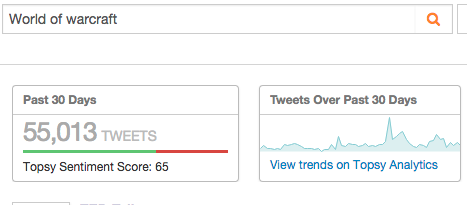
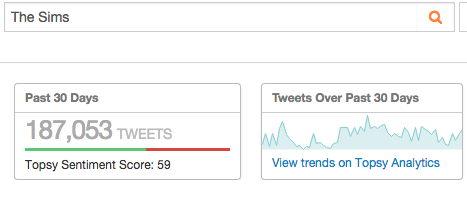
On the one hand, Language and Learning in the Digital Age takes a very long view of the role of language on learning, explaining the transition from an oral to a literate and finally digital age in a fascinating analysis covering linguistics, history, philosophy, sociology and psychology. One forms an understanding of the digital age as something significant and important in history, yet part of a longer continuum. On the other hand, through the use of specific examples and extensive explanations, of gaming (The Sims and World of Warcraft) and “passionate affinity spaces” (care of cats), in chapters eight to ten, it unfortunately detracts and interrupts the flow thereby dating the work and undermining its longevity. Certainly the conceptualisation of these trends and contextualising them as part of a bigger movement is where the value of the work lies, however it would have been enhanced by more reference to other researchers in the fields of gaming (Kim, 2000; McGonigal, 2011) and affinity spaces (Gillmor, 2006; Wenger, Trayner, & de Laat, 2011) and less specific detail.
Chapter 7, on schools, gave the reader a real sense of the paradigm shift that is occurring in education. Within the context of educational institutions having the power of organisation, standardising, vetting and credentialing and where uniform language and knowledge production is expected (Gee & Hayes, 2011, Chapter 11), one can understand the reluctance to relinquish or share ownership and control over either the educational process or knowledge itself. However, Gee and Hayes’ discussion appears to be limited to the North American context, and describe a specific sub-culture of student-gamers, raising questions as to the generalizability and universality of their claims. Although online gaming appeals to this demographic, part of gaming’s defining features include a compelling goal, rules, motivating feedback system and voluntary participation (McGonigal, 2011, p. 21). Were gaming to be integrated into the schooling context the latter defining feature may be compromised. A further question is whether the solutions and examples they offer are mainstream or marginal – i.e. do they have a broad enough base to be effective – what proportion of students in a school are gaming and at what participatory level? This is something that Hughes (2009, 2010) covers in her work on belonging and identity congruence, and the book pre-dates the Minecraft phenomenon (Mulholland, 2014). Similar doubt can be raised with respect to “passionate affinity spaces”. In addition there has been some recent criticism of the current obsession with students discovering their passion and its potential harm in forcing children to commit too soon to one area at the cost of broad exploration (Heffernan, 2015).
Gee and Hayes highlight the dual disconnect between traditional schooling – with its emphasis on individual performance and assessment – and student interest; and societal / workplace needs for participation, collaboration and self-motivated learning. Digital affordances allow the emergence of “shape shifting portfolio people” (Gee & Hayes, 2011, p. 105) whose economic security is to be found in their skills, achievements and experiences which keep changing in response to market needs as they embrace life long learning and the accumulation of 21st century skills, including technology know-how, collaboration, innovation and system and design thinking.
One of the strengths of the book is its open discussion of the “perils” of the digital age. These include questions of equity, the homogenisation of communities, a weakened concept of citizenship, polarisation, the effects of information overflow, attention and multi-tasking issues. Part of the equity crisis is attributable to the digital divide, but the authors also correctly point out language and literacy divides between families from different socio-economic classes or parenting models of “cultivation” versus “natural growth” (Gee & Hayes, 2011, p. 105) that are technology neutral but language loaded. There is a call of “how can we cultivate all our children, in and out of school, while at the same time widening our ideas of success” (Gee & Hayes, 2011, p. 106) without any attempts at an answer.
Although language is a dominant theme of this book, little attention is given to the trend of an increasing cultural and linguistic diversity in secondary and tertiary students in most OECD countries. Internationally mobile tertiary students doubled in the first decade of 2000 to nearly 4.5 million in 2011 (OECD, 2013), while the immigrant / migrant population at school level is around 20% in many countries (Australian Bureau of Statistics, 2013; “Canadian Demographics at a Glance: Some facts about the demographic and ethnocultural composition of the population,” n.d.; Center for Public Education, 2012). There is a brief discussion on learning to read in a second language (Gee & Hayes, 2011, Chapter 7) when oral ability may have been compromised, but that vastly understates the extend of the problem and the necessity for some theory or guidance as to how to cope with this demographic and linguistic shift.
Valid questions are raised around the questions of citizenship, the private and public self and spheres and communities formed by common interest and socio-economic status. In this, the authors are still referring to national or physical citizenship, while subsequent conversations have broadened to the concept of digital citizenship (Boudrye, 2014; Missingham, 2009; Moreillon, 2013; Waters, 2012; Way, 2013) which is hinted at, but not yet in the scope of this work.
In a recent review of their online HBX CORe program, Harvard Business school echoed the advantages of online collaboration in helping overcome (in particular gender) biases and behaviours of traditional classrooms (Anand, Hammond, & Narayanan, 2015). But while the authors celebrate the affordance of the digital sphere in allowing spaces to be gender, race or class neutral or disguised, depending on the assumed identity of the participant (Gee & Hayes, 2011, pp. 36, 89, 130), the darker sides of disguise and anonymity such as cyberbullying (“Cyberbullying Statistics,” 2013), Munchausen by internet (Feldman, 2012), and identity theft and fraud (“ID Theft & Fraud,” 2015) are not touched on. Nor are other aspects of cyber-security such as privacy, or cyber-heroism / journalism such as the wiki-leaks episodes, which exploded in 2010 and remain relevant in the context of institutions, expertise, and citizen access to information and knowledge but were probably too late to include in the book.
This leads to a sly observation on the choice of the authors to write a book. Even though the book is available as an eBook there is a surprising absence of any of the visual or digital affordances the authors refer to in their work. There are no illustrations or diagrams and the only nod to the digital universe are a few hyperlinks in the reference section of the eBook. Aside from the 163 citations to be found on Google Scholar, no social media community has grown around the book. Neither Hayes nor Gee are active on Twitter, the academic blog of Gee doesn’t allow comment (Gee, 2014) and both that and his private blog (Gee, 2013) have been inactive for a while. This serves to subtly underline that the digital age is on the cusp of significant change that can be researched and written about, but that few educational institutions and their high priests are ready to make the plunge and embrace the affordances personally – in this field, except perhaps for people like Weinberger (2014) and Downes (2012) and then only up to a point. But there will be more in the future.
There are good reasons why book reviews are written shortly after publication, and not just to enhance sales. Books are not (yet) meta-objects that change and evolve in response to changing events, theories, circumstances and analysis. For that, authors write subsequent books, as Gee has in fact done. Post-hoc critique with hindsight is easy, and despite this the authors have achieved the most important goal of a written manuscript – to provoke reaction, thought and further investigation so as to expand knowledge on a topic and stimulate a quest for answers to the questions that are provoked or unanswered as the reader attempts to contextualise the work in the light of what has followed after the authors laid down their pens.
References
Anand, B., Hammond, J., & Narayanan, V. (2015, April 14). What Harvard Business School Has Learned About Online Collaboration From HBX. Retrieved April 19, 2015, from https://hbr.org/2015/04/what-harvard-business-school-has-learned-about-online-collaboration-from-hbx
Australian Bureau of Statistics. (2013). Australian Social Trends, April 2013. Retrieved December 14, 2014, from http://www.abs.gov.au/AUSSTATS/abs@.nsf/Lookup/4102.0Main+Features30April+2013
Boudrye, J. (2014, January 13). So, Who’s Teaching Children About Digital Citizenship? Retrieved May 15, 2014, from http://www.aplatformforgood.org/teachers/blog/entry/so-whos-teaching-children-about-digital-citizenship
Canadian Demographics at a Glance: Some facts about the demographic and ethnocultural composition of the population. (n.d.). Retrieved December 14, 2014, from http://www.statcan.gc.ca/pub/91-003-x/2007001/4129904-eng.htm
Center for Public Education. (2012, May). The United States of education: The changing demographics of the United States and their schools. Retrieved December 14, 2014, from http://www.centerforpubliceducation.org/You-May-Also-Be-Interested-In-landing-page-level/Organizing-a-School-YMABI/The-United-States-of-education-The-changing-demographics-of-the-United-States-and-their-schools.html
Cyberbullying Statistics. (2013). Retrieved April 18, 2015, from http://www.internetsafety101.org/cyberbullyingstatistics.htm
Downes, S. (2012). My eBooks [Web Log]. Retrieved April 19, 2015, from http://www.downes.ca/me/mybooks.htm
Feldman, M. D. (2012, October 19). Munchausen by Internet can be bad for your health forum. Retrieved April 18, 2015, from http://www.theguardian.com/commentisfree/2012/oct/19/munchausen-by-internet-health-support-sites
Gee, J. P. (2013, April 22). The Bare Ruined Tower – An Informal Blog [Web Log]. Retrieved April 18, 2015, from https://jamespaulgee.wordpress.com/
Gee, J. P. (2014, March 31). James Paul Gee. Retrieved April 18, 2015, from http://www.jamespaulgee.com/
Gee, J. P., & Hayes, E. (2011). Language and learning in the digital age (1st ed). New York, NY: Routledge.
Gillmor, D. (2006). We the media: grassroots journalism by the people, for the people (Pbk. ed). Beijing ; Sebastopol, CA: O’Reilly.
Heffernan, L. (2015, April 8). Our Push for “Passion,” and Why It Harms Kids. Retrieved April 16, 2015, from http://parenting.blogs.nytimes.com/2015/04/08/our-push-for-passion-and-why-it-harms-kids/?_r=0
Hughes, G. (2009). Social software: new opportunities for challenging social inequalities in learning? Learning, Media and Technology, 34(4), 291–305. http://doi.org/10.1080/17439880903338580
Hughes, G. (2010). Identity and belonging in social learning groups: the importance of distinguishing social, operational and knowledge-related identity congruence. British Educational Research Journal, 36(1), 47–63. Retrieved from http://ezproxy.csu.edu.au/login?url=http://search.ebscohost.com/login.aspx?direct=true&db=pbh&AN=47587303&site=ehost-live
ID Theft & Fraud. (2015). Retrieved April 18, 2015, from https://www.staysafeonline.org/stay-safe-online/protect-your-personal-information/id-theft-and-fraud
Kim, A. J. (2000). Community building on the Web. Berkeley, CA: Peachpit Press.
McGonigal, J. (2011). Reality is broken: why games make us better and how they can change the world. London: Jonathan Cape.
Missingham, R. (2009). Encouraging the digital economy and digital citizenship. Special Issue on the ALIA Public Libraries Summit 2009, 58(4), 386. Retrieved from http://www.alia.org.au/publishing/alj/58/ALJ_Nov2009_Vol_58_N4_web.pdf#page=47
Moreillon, J. (2013). Leadership: Teaching Digital Citizenship. School Library Monthly, 30(1), 26–27. Retrieved from http://www.schoollibrarymonthly.com/articles/pdf/QRv30n1p26.pdf
Mulholland, A. (2014, September 15). Minecraft: Why are kids, and educators, so crazy for it? Retrieved April 18, 2015, from http://www.ctvnews.ca/lifestyle/minecraft-why-are-kids-and-educators-so-crazy-for-it-1.2006975
OECD. (2013). How is international student mobility shaping up? (Education Indicators in Focus). OECD.
Waters, J. K. (2012, September 4). Turning Students into Good Digital Citizens. Retrieved January 2, 2015, from http://thejournal.com/Articles/2012/04/09/Rethinking-digital-citizenship.aspx
Way, J. (2013). Digital citizenship. Retrieved December 7, 2014, from http://www2.curriculum.edu.au/scis/connections/issue_85_2013/feature_article/digital_citizenship.html
Weinberger, D. (2014). David Weinberger. Retrieved April 19, 2015, from http://cyber.law.harvard.edu/people/dweinberger
Wenger, E., Trayner, B., & de Laat, M. (2011). Promoting and assessing value creation in communities and networks: a conceptual framework (No. 18). Netherlands: Ruud de Moor Centrum.



 Informative Flights - Musings of a Teacher Librarian