Educational advice – from Facebook?

I subscribe to way too many Facebook groups. I need to stop it actually, they’ve become like women’s magazines. But worse. You keep seeing the same things come up over and over again, but instead of ignoring them you can actually have a say, which is giving yourself the delusion of helpfulness, but actually the smartest person in the room of Facebook groups is not the room itself, to misquote David Weinberger.

Some of the smartest people I know don’t do Facebook and when they do, they’re lurkers not participators. So I guess that’s making me stupid. I just can’t help myself because the fact that someone may actually genuinely want an accurate answer AND follow up is illusionary enough to put up with the ignorance of echo-chambers and the chance that you may learn something.

No where is worse than education groups, and within those groups nothing is worse than questions and answers about bilingualism and language. Except perhaps dinner parties between parents of children of roughly the same age that are excruciating examples of passive aggressive one-upmanship.  Right now the sum of my parenting advice can be summed up as:

  • It’s hard to kill a baby (i.e. CTFD)
  • Regularity, sleep and reading (and don’t be too poor)
  • Avoid dinner parties with other parents unless their children are at least 10 years older than yours
  • Pick two languages and give them all you’ve got

It’s the last point I’d like to write about today. On one of the groups the following was posted:

2yr old (born NOV 2015) who is trilingual (if you can even say this about a 2yr old). German mum, French dad, English spoken with nanny and language between parents. I’m looking for kindergarten options from around next summer … have no idea where to start.
No preference towards public/private or towards any language even though I’m wondering if adding mandarin might be a bit confusing given that there are already the other 3. What do you think? Focus is more on play/social activities rather than academics

This is a pretty typical question and the answers were also pretty typical – a combination of shouting out school names that have either French or German, alternating with saying that children can easily learn any amount of languages (the number 12 was even suggested), compared with humblebrags about how “fluent” their 5 year old was in any number of languages.

I must admit to entering the fray and suggesting that they chose the language of the school based on their future plans if known – i.e. go back to a French / German speaking environment or continue in the international sphere, and based on who would be at home to support the homework and reading. And to choose 2 languages and do them properly.  There are language experts who can help people on this. There are books and research papers written on this.  And don’t ask parents of young children – they know not what they say. Don’t even talk to educators in primary schools.  speak to parents with teenagers, preferably at the point where they have to choose their IB language. Talk to teenagers, and talk to teachers of IB languages.

Being bilingual is NOT just speaking a language. It is reading and writing. Being literate. And that takes formal lesson time, time spent reading and writing AT grade level. There are so many barriers to that. I’m now talking general international schools, of course there are exceptions / bilingual schools. If you’re lucky you’ll get 40 minutes a day in the language at school.  Probably in that language as a SECOND language, i.e. language learning may just be a combination of groundhog day (learning the same things year after year) and/or teaching to the lowest common denominator.  So you’re going to have to supplement at home. Either by classes in the afternoon / weekends, online or with a tutor. Besides having to read to and with your child in that language. And dedicate at least part of your holidays to immersion in that language environment.  As one expert who recently visited our school said “language is not buy one, get one free”. My personal statement is always “you don’t learn a language by breathing the same air as others who speak it”. Bottom line is it takes planning, time and money.

As I write (Saturday afternoon) my husband is in my son’s room reading in Dutch with him. He’s 14. He has in-school after hours Dutch classes for 3 hours a week plus out-of-school additional tutoring for about 2 hours a week / fortnight depending on his needs. According to his Dutch teacher there are many students who cannot enter the program as the level of their “literate” Dutch is too low.  And many of the students in the program are doing Dutch at a much lower level than their chronological age.  We took action when he was 9 and started intensive work on his Dutch after he was failing at Chinese. It’s been expensive and time-consuming but he’s on track for a bilingual diploma plus he can communicate with his Dutch family and if necessary could student there in Dutch at university level.

My daughter thrived in the bilingual English-Chinese environment in Hong Kong, hated the only alternative of Chinese second language at her primary school, Had me nagging her to continue reading and writing chinese in her spare time with a tutor until middle school, got into the native stream for middle school / iGCSE where she’s the only caucasian / non-Chinese-heritage child left in a class of about 8 students only.  This is only because she’s an exceptionally diligent child and kept up her reading and writing. She bemoans the low expectations and standards at school. Most of the students in her class are only doing Chinese on the insistence of their parents. She may do first language IB and has been recommended for it, but has lost motivation.

All of my French friends who have had children come up the system internationally have, to their regret, children doing French second language.

If you’re interested in reading more on this topic, I’ve read, thought and written reams about it. 


The second shift

Last night my daughter asked me about citations for her Geography project. Now let it be made clear, my children, while lovely human beings, are in the “potted plant” phase of adolescence. So this was pretty rare. It’s also rare for them to acknowledge my knowledge or specialisation either.  But despite her multi-big-$$ education in a big name school (not where I’m at), and the fact that she’s highly motivated and organised, good research habits have not been instilled in her. Her references consisted of a couple of URLs and the in-text citations were random with “I KNOW mum sigh” when I raised my eyebrows. I asked what referencing style she had to use – “we can chose”. So I suggested APA – because I love it more than MLA8 and because Geography as a humanities subject is probably better suited to it long term.

I then had to teach her a few of the research habits that have served me well through two back-to-back masters degrees. This stuff is not brain science. If anything it’s like washing dishes and putting them in the cupboard. We re-activated her Evernote account that she’d opened for one enthusiastic teacher some time in the last 6 years. We then clipped all the articles into a Geography file in Evernote and tagged them with the project name. Next up was getting her citations into Zotero, the tool I prefer for upper secondary.

(After the whole debacle about RefMe / EasyBib etc. I’m committed to one tool, not following the latest trend, which inevitably seems to be about who is trying to monetise education and learning.  For primary and Middle School, it’s Noodletools)

There are many things I like about Zotero. The fact that it’s amazingly accurate in its citations and the really really good customer support being the main ones, but also the intelligence and diligence of the user-base can’t be denied. I was pleased to see that in their latest update – getting set up and integrated into Word has been made a whole lot easier. Yes, good old fashioned Word. GoogleDocs have their place but when one moves from being a child, you need to be more sophisticated and demanding in your needs and GoogleDocs doesn’t cut it.

So then I had her put the references in, via the Chrome extension (download the extension), make sure she had the right citation type, put in the missing data. Showed her OWL Purdue for APA, bookmark it, showed her the APA style blog site which has more relevant Q&A type things – like how to cite Google Maps).

And then the magic could happen – click on the end of the sentence, open Zotero in Word, put in the in text citation, click at the end of the document and have all the references upload.  Two hours. But hopefully that will be a lifetime of research “washing up” as you go along rather than crisis at the end.

Then I asked her what the style guide was for her assessment. Again, nothing.  Really teachers, please just get in the habit of telling them what you want things to look like. Line spacing, headings, margins, citation style etc. It really will set them up for University where this type of thing is so important. Stupidly important maybe, but professors can and do deduct plenty of marks for not getting it right.


#fakenews – symptom or disease?

Last week I attended a “#Call to Action: Fake News, Misinformation and Post-Truth” held by the SMU libraries in  Singapore. Library network groups are full of requests for student appropriate examples of fake news. Most librarians have a stock list starting from the spaghetti harvest (1957) / tree octopus (1988). And we’ve unfortunately become over excited that #fakenews will be the saviour of librarianship. Because yay – we’re good at research, we’re good at teaching and applying the C.R.A.A.P / E.S.C.A.P.E tests, we’re about literacy, we’ve got all these captive young minds in front of us.

But between the insightful comments of very intelligent people like Eugene Tan and Gulcin Cribb at this seminar, where one had to conclude that the usual antidotes – trying to outcrowd “fake” news with “good /solid” news, padding news consumption with self-imposed digital/information literacy filters like the above mentioned CRAAP/ESCAPE tests or attempting to regulate it, will only work selectively or not at all.

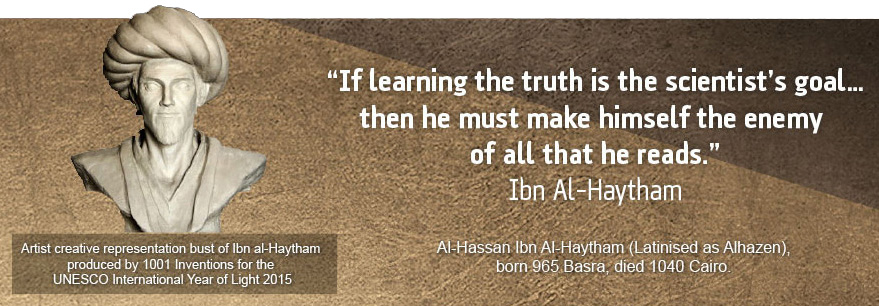
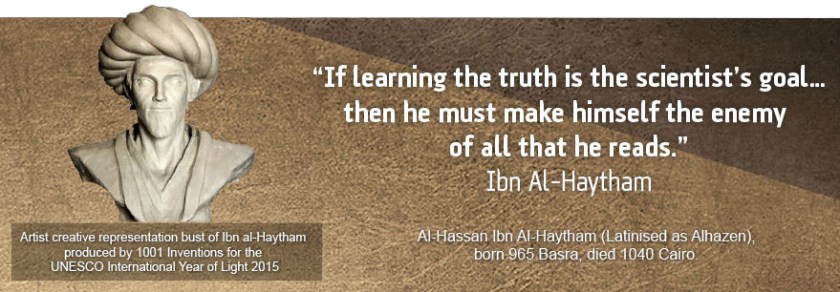
haythamcom_02a
Best quote of the seminar – indeed there is nothing new under the sun

Caulfield in his blog has been hammering on about being able to distinguish between fake and real images, sourcing quotes,  but his latest post was one that threw the switch for me, on digital polarization on pinterest. (An aside, I gave up on pinterest because I can’t be bothered to log in every time I need to go past the first page and I prefer Evernote as a curation tool anyway). If you do nothing else in the fake news landscape ever, just watch this video he made.

And that, combined with the very disturbing article by James Bridle on Kid’s YouTube, following all the work that MathBabe, Cathy O’Neil, has been doing on web algorithms, and watching YouTube with my teenage son who is innately simultaneously curious about all sorts of scary (to mom) teenage stuff, combined with a reluctance to research beyond YouTube and Infographics* has made me really think about the way we’re approaching this conversation.

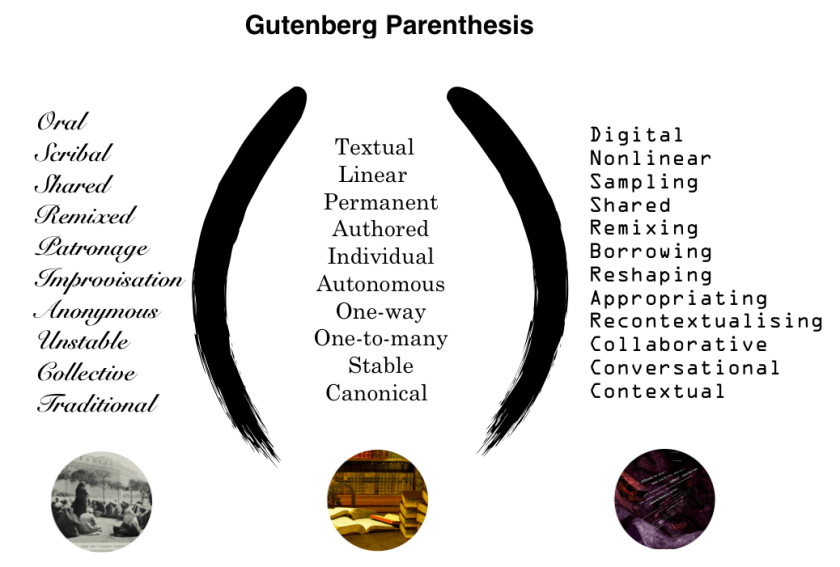
Let’s follow this thing upstream. Bear with me as I bring a couple of concepts that I think are related into this. A few things that have a lot to do with some human traits. The need to tell and listen to stories, The difficulty and recency of reading. The concept of the Gutenberg parenthesis. And last but not least, modern capitalism and/or the seven deadly sins (a concept I needed to explain to my kids the other night).

gutenberg parenthesis

So where does that veritable soup land one? Well, exactly where Mike Caulfield found himself as he clicked along in Pinterest, and like Alice in Wonderland found himself in a different universe to the one he started out in.  Pinterest is perhaps one of more extreme examples of algorithms at work. But the same is going on in Twitter (I was browsing through some UX stuff this morning and my feed and suggested people to follow changed suit in a matter of minutes) and Facebook and Instagram.

We have to face that honesty and a quest for truth doesn’t give one a monopoly on creating world class videos and infographics. That is the realm of those with a big enough budget to do it professionally. And that is how people like their information. So is the cure an infographic cold war, where every side builds up their arsenal of clickbait and point form iconic bite-sized digests? Or do we demand that algorithms are audited? Do we stop being curious and resist what we think is the “road less travelled” and the urge to click down paths that are actually carefully manipulated to pre-purchased outcomes?

So #fakenews is just a symptom. And by trying to treat the symptoms are going to get us nowhere. But unfortunately the disease is being human, and their is no vaccine against that. Except consciousness. Extreme consciousness. And consciousness takes time, and time is what technology is robbing us of. The irony.

————————————————-

* Shoot me – I’m human. That saying about cobblers and shoes? He came home the other day and told me his English teacher said reading was important for vocabulary and a whole host of things and that “just 20 minutes a day would make a difference” 

Advocacy is not enough we need power

Librarians are big on advocacy. Big on helping their peers when they’re not being heard in their communities or schools to build their “advocacy toolkit”. Most librarian courses include at least one module in one course on advocacy. Some academic librarians have built their careers on advocacy. But I’d like to cry foul. This has been going on for long enough.

Looking at advocacy it has a couple of tenants:

“Five Advocacy Tips
At the basic level advocacy is building relationships. The goal is to become a valuable resource for policymakers. No matter who the audience is, you should keep in mind the following:
1. Be confident.
2. Frame your message to answer the question, “So what?”
3. Plan and practice your message.
4. Present a clear and compelling message; less is more.
5. Offer yourself as an expert resource and provide examples from your community; stories are more compelling than statistics” (Advocacy toolkit).

I’d like to posit that the whole concept of advocacy is wrong. It is not advocacy that we need but a seat at the table. But the problem is that no one is going to shift over and make a place for people who are nicely, confidently giving compelling messages from experts. If anything after all these years of advocacy the situation has become worse rather than better. This is global, in all the countries that used to be bastions of (school / public) libraries and librarianship: the UK ; USA; Australia, and Canada.

I’d like to suggest that the decline in school libraries and school librarians is inversely correlated with the rise in EdTech or Digital Tech or Digital Literacy teams and resources. Those same UK schools claiming poverty when it comes to libraries have 900m to spend on edtech? And what I’m noticing is that the heads of these subsections do have a seat at the table, a link on the webpages and a say at every conceivable moment.  And I’m wondering, not saying this is a fact, just wondering out loud, whether it has anything to do with the fact that so many of those leading this corner of the education landscape are male as are most of the leadership in schools?  And while I’m a huge prosumer of tech and use it extensively in my teaching and learning, I’m suspecting it’s not really helping our students’ literacy – even their digital literacy ($129b pound investment by 2020 for students to have “basic” digital literacy and no one’s saying the numbers don’t add up?).

There have been two little discussions on the various librarian network groups I’m on that relate to these questions.

The first was about the merits of becoming Google Educator certified. It’s a push at most schools and apparently something sought after by  recruiters. I’m flabbergasted. Google is so frigging smart. And we’re being conned. And no one is crying foul. I grew up with computers as they burst into the scene in the early 80’s. I could use every iteration of word processing, presentation and spreadsheet tools from the very first most basic google librarytypes. When I say I can use, I REALLY can use. I know how to use templates, make an index, do auto-intext citation, add captions, make data tables, pivot tables, look ups, statistical analysis, import addresses into labels etc etc. And what I don’t know I know how to find out how to do, either online or because I know people who know their S*** around this type of stuff. People of my generation and younger. I also have an Education masters in knowledge networks and digital innovation and follow all sorts of trends and tools and try everything at least once.  I can use basic HTML and CSS and find out how to do anything if I get stuck. I know how to learn and where to learn anything I need to know and I’m prepared to put in the time to do so. This is in a “just-in- time-and-immediate-application-and-use-basis”, rather than a “just-in-case – and-I’ll-forget it-tomorrow-and-probably-never-use-it-basis”. So can you tell my why I would bother wasting my time and money becoming GAFE (or anything else) diploma’ed when the equivalent is for me to go from driving a high powered sports car to getting a tricycle license? I feel the same way about this as I feel about people saying you don’t need libraries now you have google. Well actually I feel stronger about it. It seems like every single for profit educational technology app or company is now convincing educators that the way for them to be taken seriously is to “certify” themselves on their tools, something that involves a couple of hours of mind-numbingly boring and simple video tutorials and/or multiple choice tests with or without a cheapish fee and then to add a row of downloadable certs into their email signatures like so many degree mill qualifications on a quack’s wall. And then these are held in higher regard (it seems) than the double masters degrees it takes to be a librarian??  Not a game I’m prepared to be playing.

Then next question was about an upcoming education conference – I’m not going to name names but it’s a biggie, and  one of my fellow (male) librarians managed to convince the organisers to include a library strand. Bravo for him – he’s obviously got a voice that’s being heard and this is a huge step forward. BUT, as he and I discussed off-line, privately, when I mentioned the word “echo-chamber” we’ll all be sitting at the wrong table. A nice table. An interesting table, a stimulating table, a worthwhile, practical, intelligent table with some wonderful people (librarians really are super people, I wish I’d discovered them a lot earlier), but the wrong table. And even if our “strand” is open to others, we’re in direct timetable competition with some pretty heavy hitters who are in other very enticing and compelling strands that just beg to be explored. Strands that I as a librarian with an M.Ed have covered in my degree with some of these hard hitting thought shapers. But I’ll not be at those tables, because I’ll be in the librarian strand, where we all agree, and where I can guarantee there will be some mutual hand wringing on budgets, staffing, literacy and advocacy issues. And I can almost certainly also guarantee that none of the librarian strand events will be attended by a single education powerbroker who is not a librarian (please prove me wrong – someone – anyone?).

So I’d say we don’t need advocacy we need power. And to get power we need to be political. And librarians, like language teachers are not very good at politics. We don’t like being unpopular, we want to be accepted and needed, but I would argue we no longer can ethically rely on advocacy, children’s literate lives are at stake, we have to enter the fray.

(I’ll add a personal disclaimer here, I work on a campus where my (female) leadership team is incredibly supportive of the library, invites me to leadership meetings and where I do have a seat on (some) tables. I also was highly flattered when one of the teachers rose up to bat for me last week on a visibility issue. But I’m aware that I’m probably in a minority, which is why I wrote this post).

Whole new generation – Postcards

This year I’ve managed to encourage many of my Grade 3-6 teachers to take part in the Global Read Aloud. I’ll save my comments on the good and bad of that for another post. This year for the first time, we’re also taking part in the postcard exchange.  Basically you put your school / class name and address onto a spreadsheet and promise to send everyone else on the list a postcard in exchange for receiving postcards from them.

So far so simple. Except the logistics. Dashing off to the post office to queue up for 60 international postage stamps. Gosh, that’s pricy, there goes bits of my budget. Convincing teachers to let their kids use a huge chunk of their library lesson to write postcards. Dredging out a tutorial to remind myself how to do a mail merge from a google sheets list. Oh gosh, yes, the data on the excel sheet has to be redone so it’s the right format. Purchase labels in the right size. Fiddle around with printing. Convince one teacher to buy a bunch of postcards and convince marketing to give us the balance in school cards. That was all the backend stuff.

And then it was hilarious. Do you know that most 10 year olds have never written a postcard? Ever. Or received one. Do you know that most 10 year olds have never ever licked a stamp? Don’t know where to write the address / write the message. And if it wasn’t for the picture of where to put the stamp they’d not know where to put it.  So who is buying postcards, and will they soon go the way of CD’s and DVD’s and all that physical stuff in our lives?


No excuses: Facebook

Continuing in my series of “no excuses” rants, I’m moving onto a biggie. Facebook. Except my rant isn’t so much against FB – everyone has done a better and more eloquent version of it in one form or another from one viewpoint or another. It’s more a rant against us librarians as consumers of FB (and yes this will be posted on FB – no irony?)

I’m writing this today in response to Philip Williams posting Alexandra Samuel’s “Can we build a better Facebook”  on Twitter, and following the links in the article to Beth Kanter’s article on the “Perils of Fake News” . You see I do agree Fake News is an issue. And I do see the valiant efforts of fellow librarians and concerned critical skeptical intelligent people putting the “fake” stamp on some of the rubbish twirling around. As I put in a comment, my concern with FB is that it is just like the stupid women’s magazines I eschewed from an early age.

The problem is even worse than you describe for reasons even beyond fake news and privacy and selling data. Basically FB is a useless tool that even information professionals like librarians have flocked to because of critical mass. But while it caters to our short term, immediate gratification needs it is terrible as a curation tool, unlike the relics of the past, the various internet groups which are still publicly searchable but went defunct around the rise of FB.
So now you have the “magazine cycle” in FB. Someone asks a question, gets 500 likes, 54 responses (the last 42 invariably just repeat what the first 12 said) and then gets buried. And then in a few days / months / quarters the same question comes up again. We don’t build knowledge. We don’t even build information.

I have a FB habit that consists of scrolling in the morning and evening, posting some of my shareable resources such as the PYP booklists, MLA8 posters , my blog posts and share any library worthy news. I ask questions about teacher-librarian practice, about books or booklists. But at the same time I am immensely frustrated by it. For these reasons.

Filing and searching

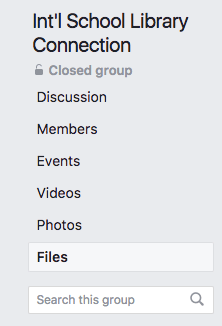
The same questions keep popping up regularly. Of course, because life has a cycle. But there is also a combination of laziness and the complete uselessness of the search Screen Shot 2017-10-21 at 10.39.16 AMfunction in FB. Many questions begin with the preamble “I know I saw X somewhere but I can’t for the life of me find it” On the left is one of the groups I’m a member of – it has 1,318 members. There are some great conversations that occur there. I went to check out “files” section – the one place where a semi-permanent record of anything could be kept. In the last 10 months exactly 20 files have been posted. That’s actually good – the “The School Librarian’s Workshop” 5,879 members and only 14 files since 2014!

So let’s take one of those things that regularly pop up – “Academic Honesty”. If I search the

Screen Shot 2017-10-21 at 10.45.22 AMgroup, I have quite a few options (honestly I think most people don’t even bother searching before asking a question – but that’s a whole different psycho-existential matter – like do we need to ask a question in order to “exist” / “be heard” in a group?). But the one option that would make a REAL difference in turning FB into a more useful tool for curation and knowledge building doesn’t exist – there is no option to search the files. So don’t we look at the files (no way of telling if they’re looked at) because they’re not searchable from the main menu (or in fact at all, so that’s a REAL disincentive to use them / add a lot of files to them) or because we don’t think to add to the files so we don’t use the files?

Whatever happened to databases?

Back in 1997 when I was doing my MBA I did a course on Knowledge Management (KM). It was to be “the” subject of the future. Actually it was more about how to extract employee knowhow and customer intelligence and make it accessible so as to make any given employee under the executive suite dispensable and therefore resistant as heck to it. During my MIS in 2015, I enrolled for the librarian version of KM, thinking I’d make it my major so I could then go in either direction, KM/corporate or librarianship. And found that in 18 years it hadn’t really moved much at all. Nothing new under the sun.  What has changed in the years that I’ve been on a computer, is that some type of database software used to be pretty standard issue with say the Microsoft suite etc. and now it’s not. I find that interesting in the same way I find it interesting that children’s fascination with space seems to have declined somewhat in proportion to the diminished ability to see the night sky due to pollution. And phobia for insects and dirt increasing in relation to the amount of time spent indoors and under protection of parents and iPads, along with a frightful decline in insects and birds.  Yes, tools like Excel have become way more sophisticated and can take on many of the functions that older databases used to. But we’re not using Excel really to its full extent are we? Most people can’t even make their way around the basic google “sheets” tool.

Book lists

Again it’s a search and curate problem. We have this “hive mind”, we have vested and interested and willing people. We don’t have the tools. Take an easy little book list challenge. I won’t ask you to find a middle grade book by an Austrian author translated into English in the last 4 years. Let’s just take something really easy like a book about bullying. So where are all the usual suspect places we can look?

  • Google search – 803,000 results, most in the form of “# books about bullying”.
  • Goodreads – search function 5,521 books, list search 63 lists – some with some VERY interesting descriptions.
  • Amazon – gives me 22,266 books, that I can narrow down to 942 if I chose age 6-8 and hardcover. I cannot however restrict it to published in the last 2 years, only the last 90 days
  • Bookdepository (which is just Amazon really, but a very different selection) – 5,889 down to 122 with 6-8 and hardcover.
  • I could (theoretically, but how many of us do this?) search some other libraries catalogs… but how do we know their protocols / subject set up?

But the more important question is what can I do with these lists? And the unfortunate answer is you can scroll through them, print them out, vote on them or add a book (goodreads), visually compare them. But you can’t import them into a database or spreadsheet. You can’t click on them to create a new list by combining parts of different lists. Librarians spend a LOT of time with booklists. Too much time if you really think about it. It really should be easier.

LibraryThings is much better in many respects. It’s partially open, and partially you need a subscription (like for the very useful TagMash tool). You can upload your holdings, so that means you can easily see which books you already have. But how often in the last year or so has someone referred you to LibraryThings when you’ve asked for a book list recommendation? How often have you used it (if at all)? But now, I get a tagmash list and again WHAT CAN I DO WITH IT? Nothing. I can’t add that tag to the 119 books I have (of which only 60 were tagged with bullying), I can’t add any books I like the sound of to a “to buy” list centrally – I’d have to click on each individually. I can’t easily share the list.


Why does all this matter?

Well one of the things that is important to me is the whole diversity question. But as mentioned in my last blog, diversity looks very different in different contexts. Putting on my librarian hat I want to help great initiatives like GLLI.  I want to make sure that my collection reflects my students. I want to have lists readily available and extractable (hence my database rant), so that when people say my school is 80% American born Chinese, or 50% Vietnamese, or 70% Thai or 80% of mixed parentage, or give me a Bulgarian book translated into English suitable for 6-8 year olds published in the last 4 years, the lists can be reconfigured and re-sorted and spit out the goodies. And can be added to and updated. I’m tired of stagnant static lists.

Likewise, if I have a folder of the academic honesty policies of about 20 schools that I used when our librarians were involved in setting up our school’s new policy – it should be easily and readily available to everyone who comes after me trying to do the same thing. But I’d prefer that the easily and readily available platform is NOT FB. Is NOT in a closed group.

Resist

So yes, resist FB, but not just because of Fake News etc. Resist it because it’s a useless platform that we’ve invested way to much time and energy into. Because we should be spending the time thinking about what we really need and creating it. Because we should be pressuring platforms that more closely meet our needs to improve their products.

How to get free PD

5968774554Quite a few schools in our network have cut-back on funding for professional development and have either started limiting the time off or financial support for PD. This is extremely disappointing, as PD can be the lifeblood of educators, and dare I say, particularly for teacher-librarians with their often solitary status within a school.  There is however a vast range of ways to get “free” PD in that it will only cost you your own personal time. Here are a few suggestions for things I’ve tried out.

Teach meets

Founded by one of my lecturers in designing spaces for learning, Ewan McIntosh, Just about every major city in the world holds TeachMeets. Basically they’re gatherings for teachers where very brief (5-10 minute) presentations are given on a variety of topics, preceded and followed by some social chitchat and networking. Usually the topics are very practical, actionable “hacks” or ways of solving common teaching questions. In Singapore they’re run by 21stC learning and seem to tend towards the geeky/techie side of things.

Another form of this, for PYP educators is the PYP Connect events. These are run by the Singapore Malaysia PYP network, and consist of longer workshop events hosted by one or another PYP school. Ask your PYP coordinator about the next one in November 2017.

Pros: You get out of your space, meet educators from different specialisations and different schools.

Cons: They’re only a few times a year, and if you can’t attend that’s it.

Read a book (or a blog)

Yup, this can be really really simple. The only tricky bit would be which book to read and finding the time to do so. Basically you need to find your reading tribe. People who share your educational and life philosophy and who are readers and find out what books are shaping their thinking. My criteria for this type of book is one where a chapter can be read and absorbed in the 15-20 minutes between getting into be and my eyes falling shut from exhaustion.  At the moment I’m really pleased I found Kylene Beers and Robert Probst’s books

36094448154though an ex-colleague. I started by reading Reading Nonfiction and I’m currently on Disrupting Thinking and both books have given plenty of food for thought and initiative for me to reflect on my teaching and literacy practices. They’re just the right balance of practical and thoughtful.
More powerful than just reading a book, is reading with someone or a group of people so that you can share ideas and more importantly, put those ideas into practice. At our school we’ve started running professional book clubs, started by our principal last year when we set up our ODC (Outdoor discover centre) with “Dirty Teaching” . This year we’re running around eight different groups, each with their own focus, based around a book of note. The group I’m in is doing “Making Thinking Visible” and we have (surprise, surprise) a particular focus on using picture books.

There are plenty of lists of books to read. A word of caution – of course the books on the list reflect the culture of the country / organisation from whence the list is coming. Here are a few: The Guardian (British / Commonwealth focus); Fractus Learning (what I’d call aspirational / holiday read books – not much to put into practice immediately); We are Teachers (USA – more focused on the whole child / success).  Funnily / ironically enough there doesn’t seem to be an up to date list for teacher-librarians – the last one was a Goodreads one from 2012, which was pretty meh. Maybe because we’re reading all the time? Maybe it’s time to make one! (Suggestions in comments below).

I know blogging is so 2013, but I still do it, and I still subscribe to a few good blogs such as HapgoodSLJ blog network, Stephen Downes, Global Literature in Libraries, Gathering Books, and Mrs. ReaderPants. Here is a list of the supposed top 50 librarian blogs  (Somewhat USA focused, many not recently updated and nope, I’m not on it)

Pros: You can do it any time / any place. Most books are quickly actionable. A lot of books are now available as audiobooks – so you can multi-task – listen and do exercise etc. (but I need to stop and write notes!)

Cons: You need to dedicate a regular time to reading so that you don’t lose the thread. If you want to join a group, you need to structure it so that you can meet regularly.

Listen to a PodCast

There are so many excellent PodCasts out there – both educational and for general edification. I’m constantly torn between listening to podcasts and to listening to audiobooks. And the best thing is – it really helps your general knowledge, so you and awe your students from time to time!

Some of my favourites for education: The Cult of Pedagogy; Truth for Teachers; 10 minute teacher podcast. 

Unfortunately, again teacher librarians are not out there on the podcast scene much, and some of the initial podcasts are not kept up, but to make up for it, there are lots of good book podcasts. My favourite is All the Wonders, because they often feature diverse books and KidLit Radio. The SLJ has The Yarn (which I haven’t listened to but will). Here is another list from The Guardian.

General edification podcasts: 99% Invisible; The Allusionist; The Infinite Monkey Cage; You are Not so Smart; Stuff Mom Never Told You; TED radio hour; RadioLab; Invisibilia; Hidden Brain; Freakonomics; Sources and Methods; and my current favourite In Our Time.

Pros: Anytime, anywhere, keep up with amazing knowledge and information

Cons: So many to choose from. Easy to get behind and iTunes new format for podcasts is AWFUL.

Librarian Groups

Here in Singapore we are most fortune in having the ISLN with regular meetings and access to PD. Besides our quarterly meetings we have regular meet ups on a social basis, and pretty much all our libraries are open for job shadowing and visits. When I was still in training and working part-time, I regularly asked librarians if I could come and spend a day with them, and even now I’m working full time, if my holidays are different to that of my colleagues I’ll often ask if I can come and spend a morning or afternoon with someone, just trailing them with lots of conversations and questions and seeing best practice. Likewise, I encourage my library assistants to spend a day at other libraries from time to time, chatting to the library assistants and picking up some tips and tricks. Likewise, while on holiday, it’s easy to invite yourself to a fellow teacher librarian’s library to have a look around and chat. I’ve recently been to Taipei and popped into TAS’s lovely libraries for a few hours.

Pros: Convenient, local, low barrier

Cons: some librarians do operate in remote areas, or places with vast distances between the libraries making this more difficult.

Webinars

Actually the idea for this post occurred as I signed myself up for a webinar with SLJ. Added to this one could put short courses on YouTube (how I intend to master photoshop, Adobe Illustrator and Adobe InDesign this vacation)

Pros: Most webinars are free, almost all of them have both a live and “after the event” viewing option – ideal if you’re not on American Time.

Cons: The “free” sometimes comes at a cost of at least some of the time being devoted to someone or another trying to sell you their product, but if you already have the product, it can deepen your understanding of how to best use it.

MOOCs

While MOOCs seem to have lost their lustre, they’re still incredibly good for learning stuff. It’s just that the format is so limiting. But be that as it may, you can audit most course free of charge with a small fee to be “qualified”. Over the summer my daughter and I did the exceptionally good 8 week course “Humanity and Nature in Chinese Thought” an introduction to Chinese Philosophy. It has nothing to do with librarianship but everything to do with life and living in a multi-cultural and therefore multi-philosophical environment. I’m currently enrolled in Making Sense of the News: News Literacy Lessons for Digital Citizens; also through HKU, and I’ve done Jo Boaler’s How to Learn Math. No I’m not a math teacher, but I am a math human with math learning students and children. 

Pros: Some excellent content; self-paced; you can watch the videos at 1.5/2x speed. Huge variety of offering by some exceptional teachers.

Cons: Video based learning is not my favourite medium. Some courses are only open for a limited time frame. The hype hasn’t quite been realised with the format. Time.

Skype and GoogleHangout

I’ve done this a couple of times in the last few months. During the vacation, I saw an awesome Libguide and I was determined to update my school’s libguides. So I emailed the librarian, and next thing we were having a google hangout and she was screensharing with me showing how she’d done it all!

Then last week I was worrying that I wasn’t using MackinVIA properly, and again reached out to someone who screenshared her set up. I’ve done some libguide training to a fellow librarian who was sitting next to me, while screensharing to another librarian remotely.

Twitter

Great for reaching out to people and keeping up with trends of what is going on. But hard for searching and following threads when you enter part way through is horrid.

Facebook

I put this last because it is truly terrible. The possible worst place in the world to put up information and exchange knowledge. It gets boring and repetitive as the same questions come up time and again. It’s awful for searching, it can be mindless and stupid – why on earth once a question has been asked do people persist on answering it again with the same information?? But the various librarian groups I’m in, are very useful, albeit that I need to keep / store the links immediately to Evernote.

Facebook groups I’ve joined include: Int’l School librarian Connection; SLATT; Global ReadAloud (only really active around the GRA activities in October/November); Future Ready Librarians (tends to be FollettDestiny dominated – the irony Follett and Future!); ISTE librarian Group (not very technological – too much talk about book lists);  ALATT (ALA think tank – great for if you are ever mired in self-pity – there are about 30,000 other librarians in way worse a situation than you could ever imagine – ignore the cat photos and memes and sit back and enjoy the political rants on all sides of the US spectrum).

Pros: Amusing, informative, occasional good advice / links; pretty display pictures

Cons: Frustrating format, hard to save; hard to search, huge time suck.

Meting out diversity

The whole diversity thing bothers me. Has for some time. We seem to love the optics of diversity, but not so much the reality.  And so we mete out our diversity in acceptable chunks at acceptable moments. And in doing so we can fool ourselves – most of the time. We also mete out our encounters with diversity such that they don’t necessarily have to touch us in ways that are meaningful. We thereby send clear messages to all our students, diverse and – well what is the word not for diverse – dominant? Oh, begin to define dominant in an international school and don’t bother looking at the nationalities of the students, or pictures of them. You

meteprobably need only to look at a handful of people. Those in leadership. And chances are they’ll all be white male of a certain age, background and education, with a judicious sprinkling of women.


Before anyone gets excited about that, think about the following reported encounter by prospective parents in an ethnically mixed marriage. The primary school I’m at is wonderfully diverse in the composition of the teacher body. On entering a classroom with a caucasian teacher, one of the parents exclaimed “at last, a proper English teacher” (for the record, she wasn’t English, but obviously appearance counts). When at the Neev festival in Bangalore, I remarked to my friend how gorgeous and natural she looked in her salwar kameez and asked her why I hadn’t seen her wearing one at school in Singapore while working for a big name, self-proclaimed “diverse” school. She looked at me aghast and said there was no way it would have been possible outside of the UN celebrations and that all staff was expected to dress professionally and adopt the school values and world view irrespective of their personal beliefs or experience. Now this is a school that prides itself on the fact that they have a uniform but don’t police the interpretation of its manifestation. Where I attended a lecture today, and saw every possible variation in student “teen dress expression” but not so in the teaching body.

DiversityInChildrensBooks2015_f

So we get to the mundane part of throwing some books in the library that reflect the culture, language and backgrounds of our students. Can we even do that without breaking through the cultural myopia? I still have to keep thinking back to this experience when I realised that truly we are up against so much, and putting books in the library is a bandaid on the wound of an amputee. If we struggle even conceptually with putting textbooks from different countries whose educational philosophy we “disagree” with (how dare we?), what happens with literature, that is so much more subversive?


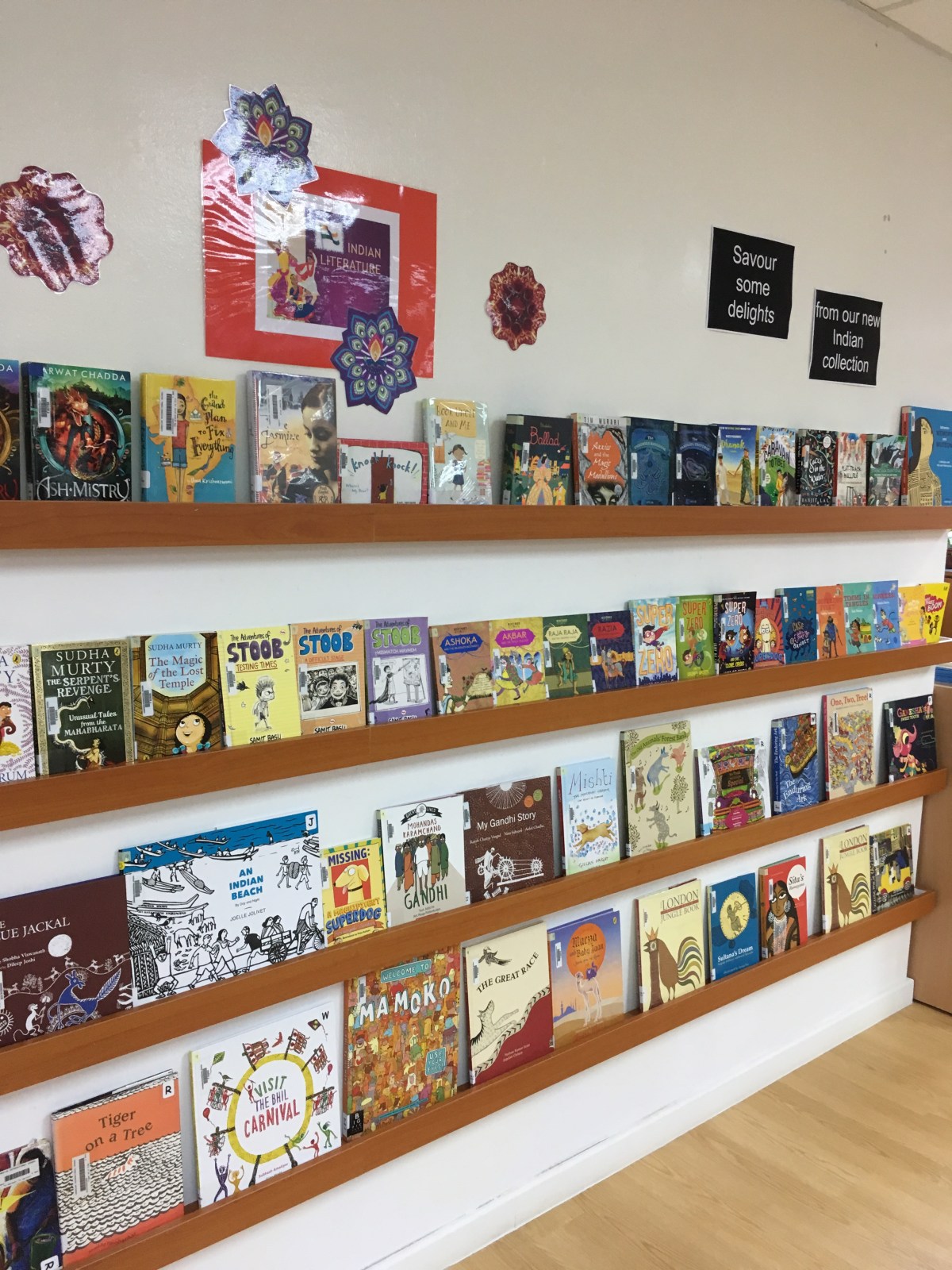
I recently purchased around 100 books written and/or illustrated by Indian authors. It was hard work “selling them” to my students. Even the Indian students. Especially the Indian students. I used the above infographic to explain to students how skewed their world view is.  And the worst of it all, is this in itself is a North American view. Let’s not even talk about the fact that most of the 73.3% white characters and 12.5% animal, truck etc. characters are male. By the end of the week, after discussions about being open-minded and balanced and being a risk-taker, most of my books were borrowed.

A few of my students exclaimed they “loved” one or another of the authors. Some parents expressed surprise that I had so many books, and amazement that I’d used my 30kg luggage allowance to lug back books. Now Indian books are possibly one of the lowest barrier “diverse” books an international school could add to their collection. Quite simply because English is a common language. No translation is required. There is a thriving publishing industry. A huge diaspora. Many schools have 25-30% of their student body from the Indian subcontinent. And yet, until a month ago I probably had fewer than 10 “Indian” books in my collection. Most of them picture books from Tara Books.  Little to nothing in Junior fiction and a few Ash Mistry books in fiction. And now? I have the books. Students have borrowed them once. Will they go back into the shelves along with the Diwali books only to make a reappearance next year this time when it’s acceptable to celebrate and embrace Indian culture?

Any literature on language and culture will quickly point to dominant / aspirational and socio-economic preferred language and culture. As a South African who spent most of her life mired in shame, unable and unwilling to admit to my heritage, I truly “get” the ambivalence (while remaining astounded by continued British bluster – particularly here in Asia).

And that is the problem with every article ever written about diversity. We lament the absence of the optic. We gloss over some of the “hardware” issues (authors, illustrators, translators), we may even get to structural problems (publishing houses, editors, market sizes). But we neglect to think about how the structure of our education and schools will support those tender shoots, will allow our communities to claim not just their heritage, but current philosophies. We close down libraries, we limit budgets, we operate in echo chambers, we fail to make library education affordable and accessible to local staff. We concentrate our online efforts to gadgets and gizmos instead of access, community and understanding.

What do I do in our library / school?

Of course the five f’s: food, fashion, famous people, festivals, and flags. Mea culpa here. I have books about (just about) every nation in our school, and scramble each year to make sure there’s at least one book by the time Uniting Nations comes around.

I buy all the books suitable for my elementary school from the USBBY list – cognisant of the fact that it is the US – i.e. pre-digested for USA sensibilities.

I follow blogs of avid supporters of diverse literature such as Dr. Myra Bacsal’s “Gathering Books” and Rachel Hildebrandt ‘s Global Literature in Libraries (seriously, I’m one of only 200 odd people following this AWESOME Blog??  – they also have a facebook page btw if that’s more your thing).  Who give exposure to people like Avery Fischer Udagawa with her new list for 2017 of 100 more works translated for kids, following Marcia Lynx Qualey’s 2016 100 Great Translated Children’s Books from Around the World.

Following what’s being published via the Bologna book fair. Reading reports such as those created by Wischenbart.

And then I devote part of my budget to buy the books, and make sure they’re slotted into resource lists for our units of inquiry, and read them aloud, and “sell” them to teachers and my PYP coordinators.

Put out google alerts for diverse books, join FB groups of librarians around the world. Ask, ask, ask, in the community, parents, librarians, teachers, students.

Write about it. Write about it again, and again.

What more can we do?

Hard stuff. Advocacy. Fostering a sense of national / cultural pride in all our students – not just those from the dominant / desirable communities. Conversations with teachers and administrators. Looking at what our students are writing about – who are the characters in their writing? Ignoring the deluge of books from BANA countries. Being tireless. Fighting even with institutions doing brilliant work like “Global Readaloud” about the choice of their books that are NOT global. Even when all of this is very very tiring and makes you seem like a harpy.

The Indian Books

Hopefully this scrolling widget will work – here are the books I purchased (plus a few we already had in our collection), if not you can see them in my catalog here or on my library guide here (look for the Indian Flag).


Of all the wonderful books I bought, I’d particularly like to highlight: “between MEMORY and MUSEUMIMG_6373IMG_6374” – a dialogue with folk and tribal artists, edited by Arun and Gita Wolf. Anyone teaching PYP, TOK or just anything about anything should get this book for the wonderful analysis and illustration of what museum and tradition and symbols mean.

Celebrating the joy of reading

Last weekend I had the privilege of being invited to join the first children’s literature festival in India, hosted by Neev Academy in Bangalore.  What a fabulous weekend it was.

IMG_6326

One of my constant concerns as a librarian here in Singapore in an international school is that I don’t feel that my collection reflects the many rich and varied cultures and identities that my students have. So I must admit (selfishly) one of the first things that crossed my mind when I was invited was YAY, I don’t have to wait until ECISlibrary2018 to go on an Indian book buying spree for my library!

When I arrived on Thursday evening, I met up with Maya Thiagarajan, author of “Beyond the Tiger Mom“, friend, ex-colleague and fabulous once-a-month book-club member. Getting together is always so exciting as we have a million-and-one things to chat about, and her move to Chennai has created a huge gap for me, but is a wonderful thing for India as she can share her knowledge, experience and expertise with schools there. We brainstormed together for a presentation we were doing for parents and the public on “grow to read and read to grow” and then she gave me her perspectives as a classroom teacher on my workshop for teachers and administrators on Classroom libraries. Then we decided to do the workshop together instead of separately as it would add a multi-perspective to it!

On Friday, the first thing that struck me as I entered the school, besides the warm welcome, was the wonderful posters and signage and set up.

The Friday was set aside for celebrating storytelling, books and literature with children. I must say I was really happy to see the emphasis on storytelling, since it is the basis of everything. In fact, when I was asked to run a workshop for 5 year olds, that’s the first thing I thought of – using a wordless book as a prompt to encourage students to tell a story.

My session used the wordless books “Chalk” and “The Typewriter” by Bill Thomson to introduce the basic elements of a story – build up to a problem and a solution. First I told them they’d been tricked and I wasn’t going to read a story to them, but they were going to read to me (groans all around) and then they proceeded to do so, with “Chalk” lured by the images! We then spoke a little about the problem and solution and I said I had another book where something similar was going on and they could read it to me as well. I then projected “The Typewriter” (as I didn’t have a hardcopy) and we went through the same procedure, adding more prediction in this time.  Then they went off to tables we’d set up with plain black goodie bags and cut out gold moons and stars to make their own “magic chalk” bag. They came back to the carpet and were told they were going to make their own story without words with magic chalk. We brainstormed some ideas of what kind of problems could happen and what their solutions would be. Such wonderful ideas, ranging from torrential rainstorms and flooding, to a meteorite crashing into earth, sharks attacking a mermaid, ghosts coming into the a house and scaring people etc.! We also chatted about how you would (in the case of the ghost story) show that time had passed and the ghost left and they came up with having a moon in some of the pictures with the ghost and a sun when the ghost fled. What was great was that some then said they wanted to do it in “teams”.  Off they then went, armed with A1 black paper, folded into 6 panels and unfolded to de-mark scenes and lots of coloured chalk.  As they were drawing I wandered the class with their teachers talking to them about the stories as they unfolded.  90 minutes without a break was barely enough to have everything finished and they proudly left with their magic bags and story creations.

The rest of the day flew by, popping in and out of classes and storytelling sessions, followed by the teacher workshop on classroom libraries.  I’d somehow misheard that it was for 15/16 teachers… actually it was for 50-60 teachers – their whole staff!  Maya and I had already (luckily, as that’s our philosophy) decided to take the tack that the existence or not of a classroom library was merely one part of creating a culture and eco-system of reading in a school. The session was lively and interactive.  That’s  one of the things I grew to really appreciate about what is going on a Neev academy – the vision of creating an alternative to traditional teaching and learning in their school, using the frameworks of the IB system and the encouragement of pleasure reading.  As a non-international school they shine out as a beacon for local students.

Saturday’s sessions were opened to the wider community and public with a rousing speech by visionary Neev Academy founder Kavita Gupta Sabharwal. 

Maya had the honour of being on a panel with Dr. Shyam Bhat and Sudha Murty and all three spoke of the importance of reading and storytelling, emotionally, from a neuro-science and educational point of view.  My panel on “trends vs. traditions” co-hosted with Jane DeSouza with Ankit Chadha;  Timeri Murari; Sohini Mitra and Reena Puri looked at the threats and potential of globalisation and the digital era on traditional storytelling, publishing and writing.

Then in-between another book buying spree at Lightroom Bookstore (who had a pop-up store at the festival). What a fabulous bookseller – I really really love independent bookstores with knowledgeable founders and staff who delight in the books as much as I do. Ones where you just have to start describing the book whose name you’ve forgotten and it’s suddenly in your hands! I had chance to meet up with the lovely librarians at both Neev Academy and Stonehill International School and we did what librarians do best – geek out on what our favourite resources were, what our websites included, how we resource our respective curricula and darn, there just wasn’t enough time so we have to continue our conversations online and through librarian facebook groups.

I then caught the tail end of  a lively discussion “Should we fear the Dark?” that explored dark themes in children’s literature – luckily I shared a taxi with Paro Anand afterwards so we could continue the conversation together afterwards. I love fearless authors!

Maya and I shared the closing session of the day, focusing on how to hook children on reading and keep them reading with some great audience participation, and before we knew it, it was all over!

A great weekend, incredibly well organised and curated, buzzing with ideas and thought stimulation, discovering new books and authors. My biggest regret was the inability to clone myself so that I could join all the sessions simultaneously. Well done to Neev Academy and Kavita.

(PS Here is a selection of the book loot – invited our Singapore librarian network librarians around to have a look last week!