Plastic Purgatory

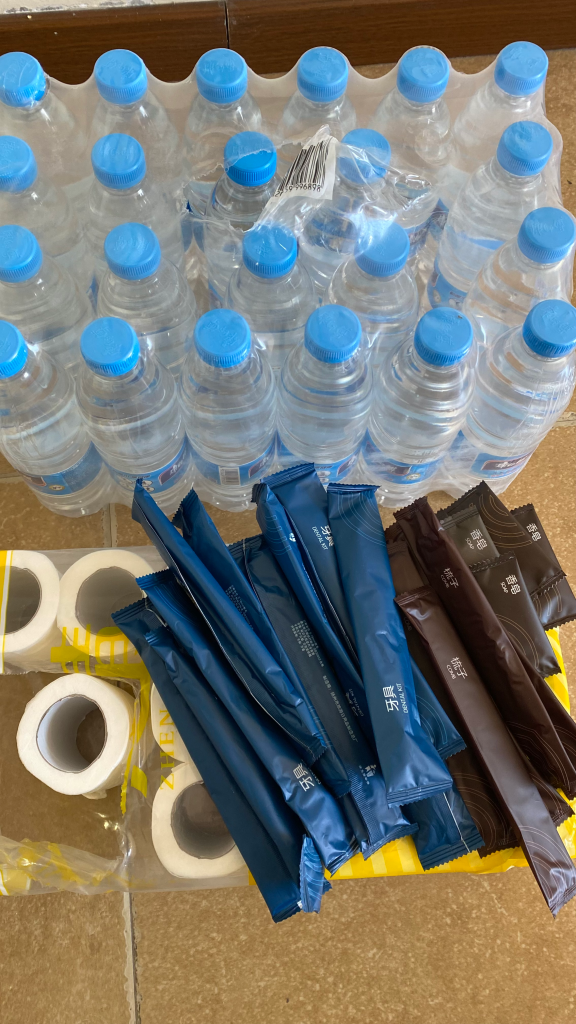
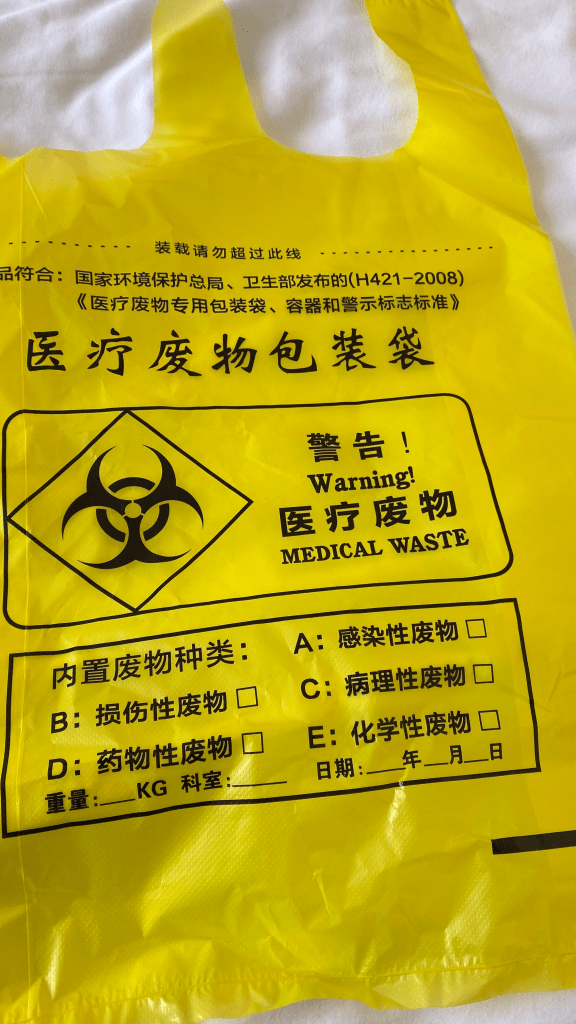
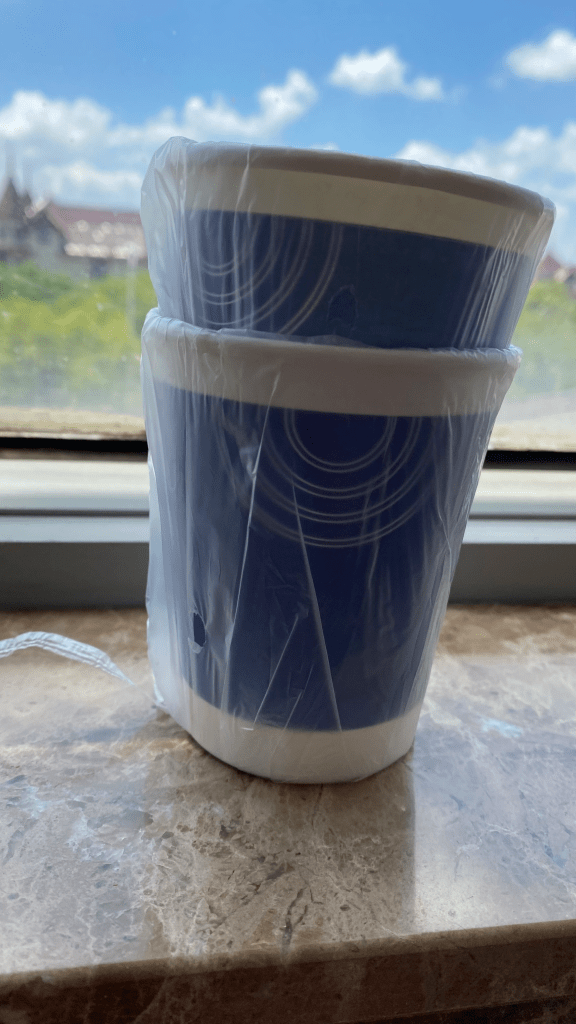
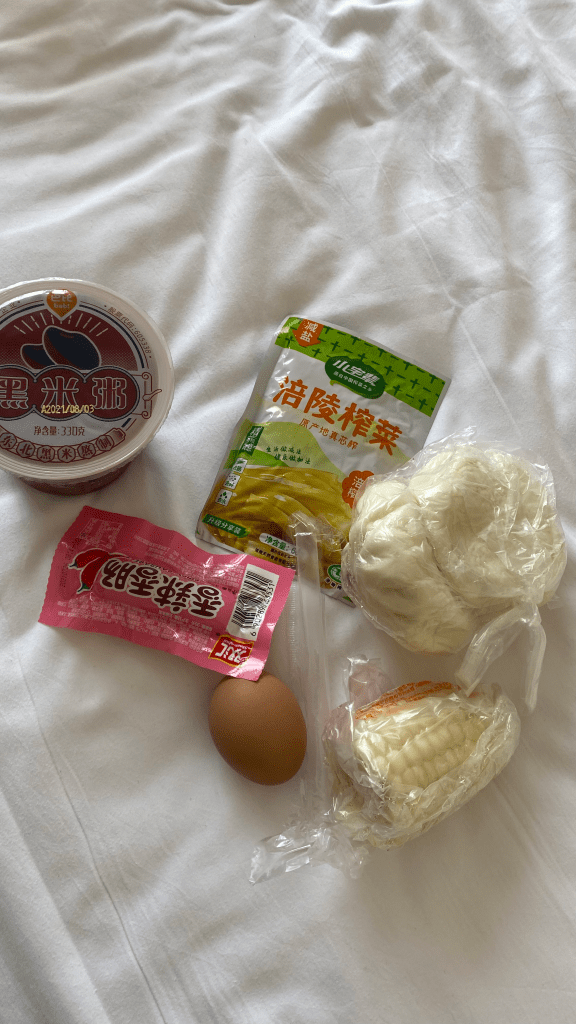
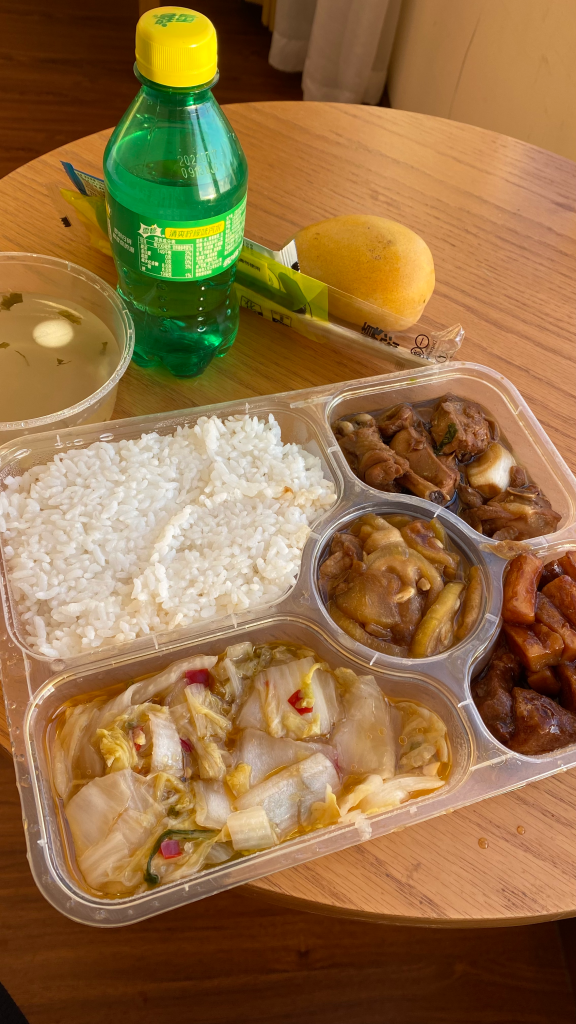
Quite a few of my readers have commented on the amount of plastic involved in my quarantine journey/meals. Absolutely – and you just saw the plastic involved with meals. It’s actually far worse.

The worst of it is that the only choices I can exercise in this is to cut the meal plastic by 2/3 by having one meal a day, by using my reusable washable cutlery instead of the daily packs and by only putting out my waste when the yellow bag is full instead of daily. I fear however that anything I don’t use will still be scrapped as “potentially infected” rather than re-used.

Not only quarantine

As this article Increased plastic pollution due to COVID-19 pandemic: Challenges and recommendations
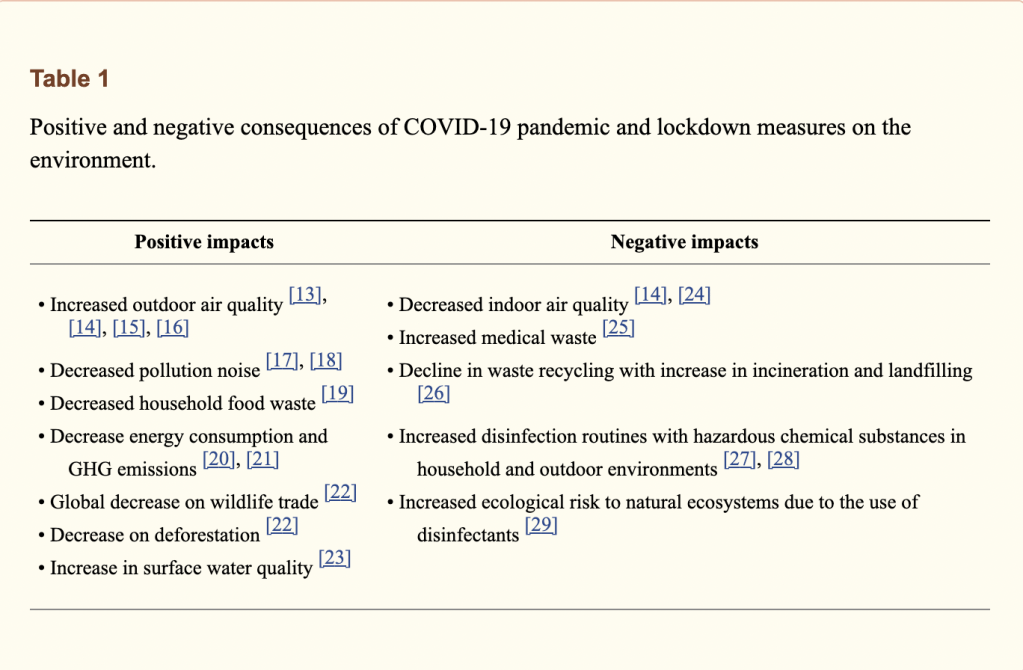
by Silva, Prata, Walker, Duarte, Ouyang,Barcelò, and Rocha-Santos (2021) doesn’t even mention the waste in quarantine hotels – perhaps because it’s European based where the concept is not a reality yet. And the general waste generated is phenomenal. While they are careful to weigh up the positive and negative impacts of the pandemic they also warn “While the positive impacts of COVID-19 in the environment are resulting from a “postponed” anthropogenic activity that soon will entail after the pandemic scenario; the negative short-term effects (that are mostly related with plastic use, consumption and waste mismanagement as discussed below) will shortly add-up to the current environmental issues, aggravating their impact in the natural ecosystems and compromising potential mitigation/remediation measures.”

Image from: Increased plastic pollution due to COVID-19 pandemic: Challenges and recommendations
by Silva, Prata, Walker, Duarte, Ouyang,Barcelò, and Rocha-Santos (2021)

As Wired Magazine explains in their article – it’s not just the creation of extra plastic waste that’s the problem – it’s also the decline in recycling. I must admit I also get really annoyed at the articles that keep on pointing out that China is no longer prepared to act as the world’s garbage recycling center as if that’s not a good thing – heaven knows they have enough on their hands with the waste generated here without having any culpability in the rest of the world’s waste.

Medical Waste

According to this article “China has witnessed an accumulated 142,000 tonnes of medical wastes with the national medical waste treatment capacity increasing from 4902.8 tonnes/day before the SARS-CoV-2 outbreak to the current 6022 tonnes/day.” COVID pollution: impact of COVID-19 pandemic on global plastic waste footprint
Benson,Bassey and Palanisami (Feb 2021). And of course all the waste coming out of my room – the uneaten food, the plastic containers, my tissues and paper is all treated as medical waste because I’m assumed contaminated unless proven otherwise.

Problem rather than solution focused

The annoying part of it all is that there is a lot focused on the problem, but not much on the solution to this – we’re well past the 18 month mark and it looks like covid-19 is going to be part of the landscape for a very long time. The World Economic Forum’s Jacob Duer (President and CEO, Alliance to End Plastic Waste)just reiterates all the issues and then says: “As the global economy restarts, aid agencies, development banks, and NGOs should invest in building effective waste-management systems. Beyond helping to keep plastic waste out of our oceans, such systems can provide decent jobs and improved livelihoods, resulting in stronger, more sustainable economies in the long term.” I don’t see much on the ending of waste when the talk is just about investment in waste-management systems.

Tomorrow the second of the 7 covid tests I’ll be having on this leg of the journey – not sure what will happen when I get back to Beijing since things are locking down and it looks like I have another 21 days of (hopefully home not hotel) quarantine / isolation etc.

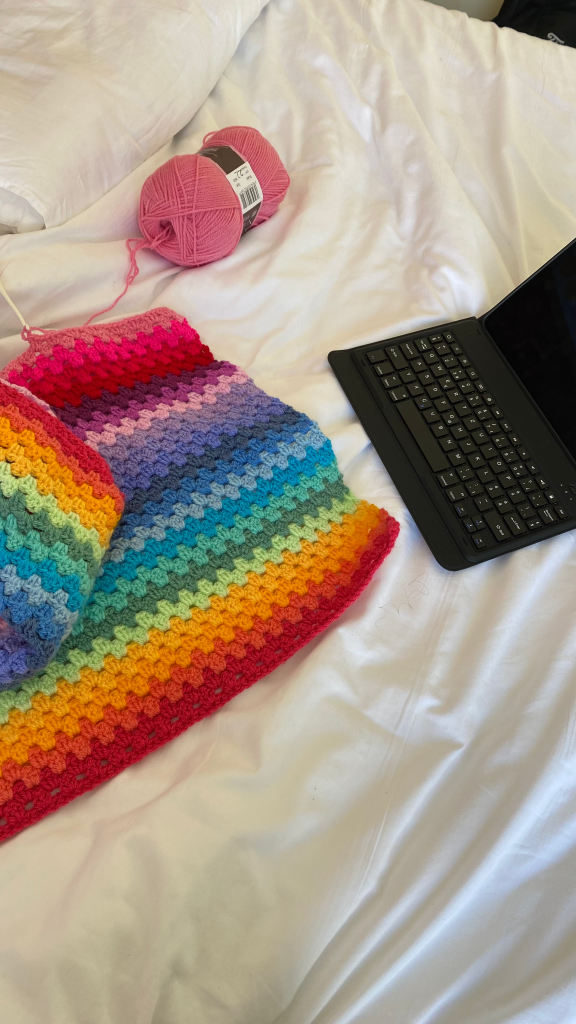
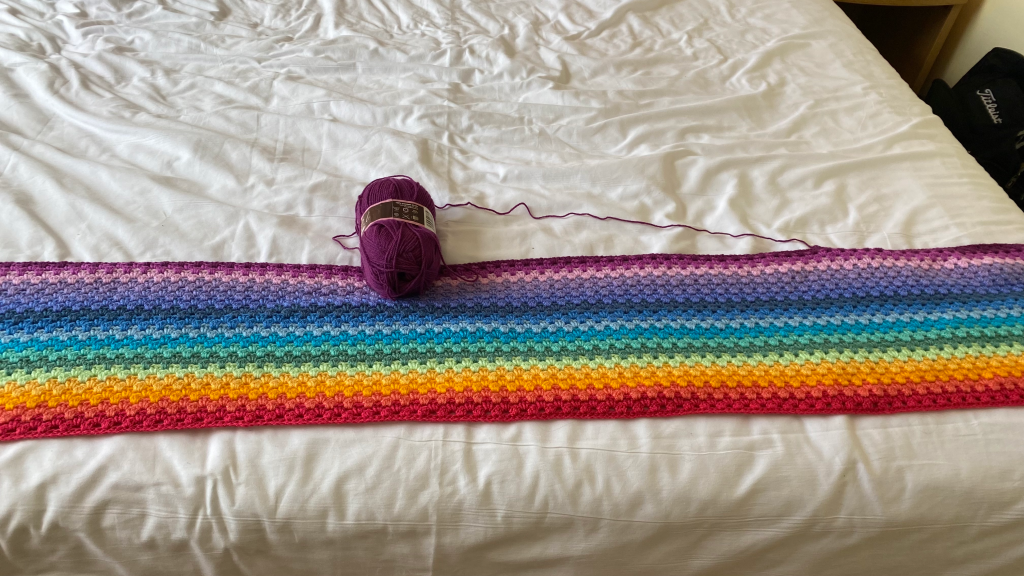
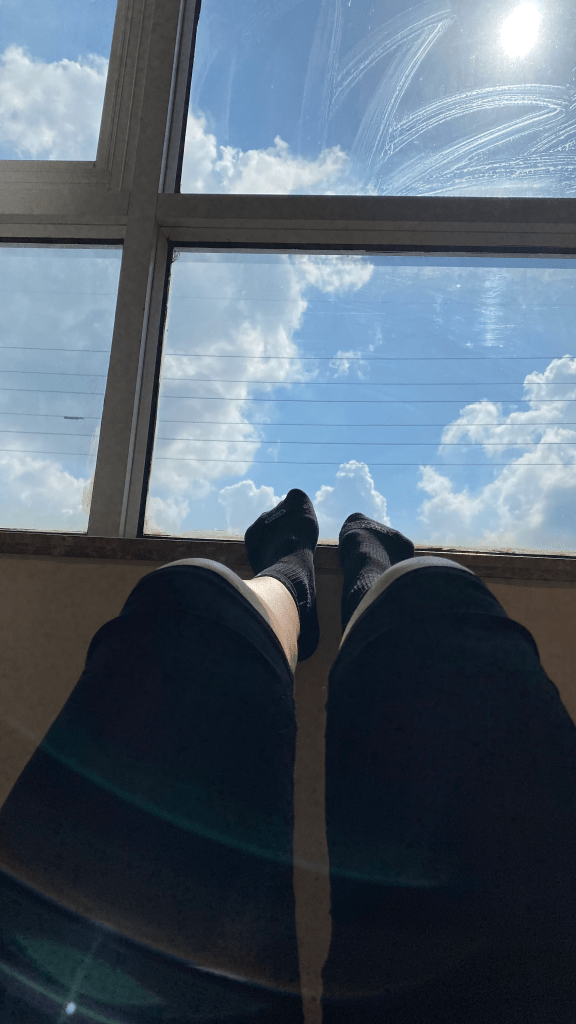
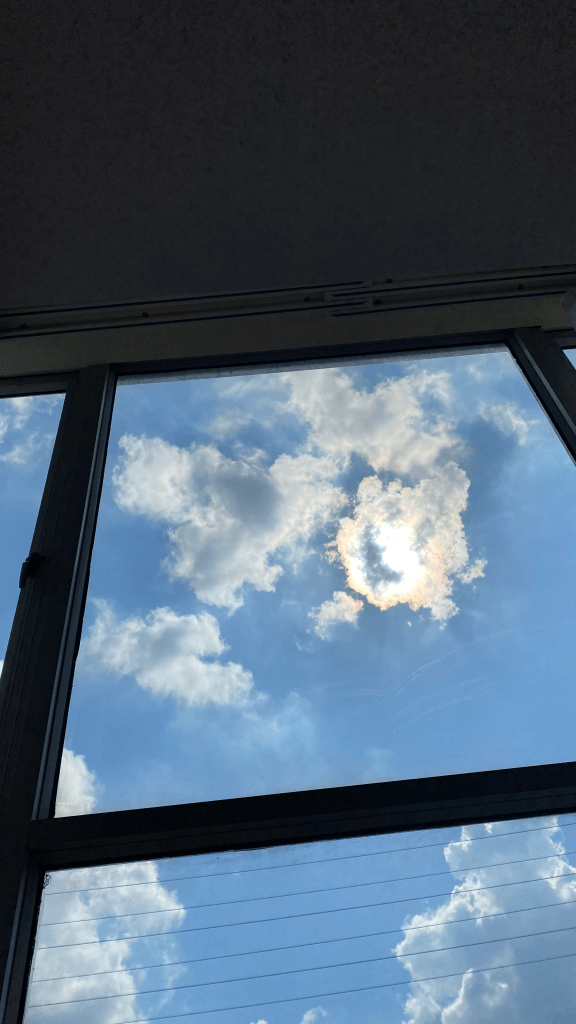
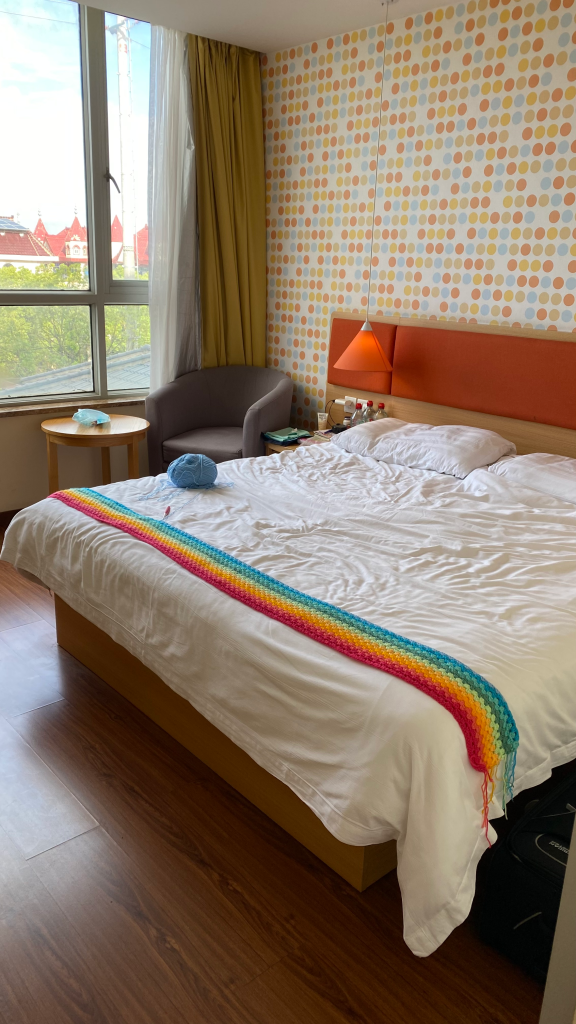
To end this rather depressing post – a picture of my crochet progress, me vitamin D bathing on my towel at the window where the sun is streaming in and the cloud that looks like it has a silver lining – please don’t tell me it won’t work through glass!

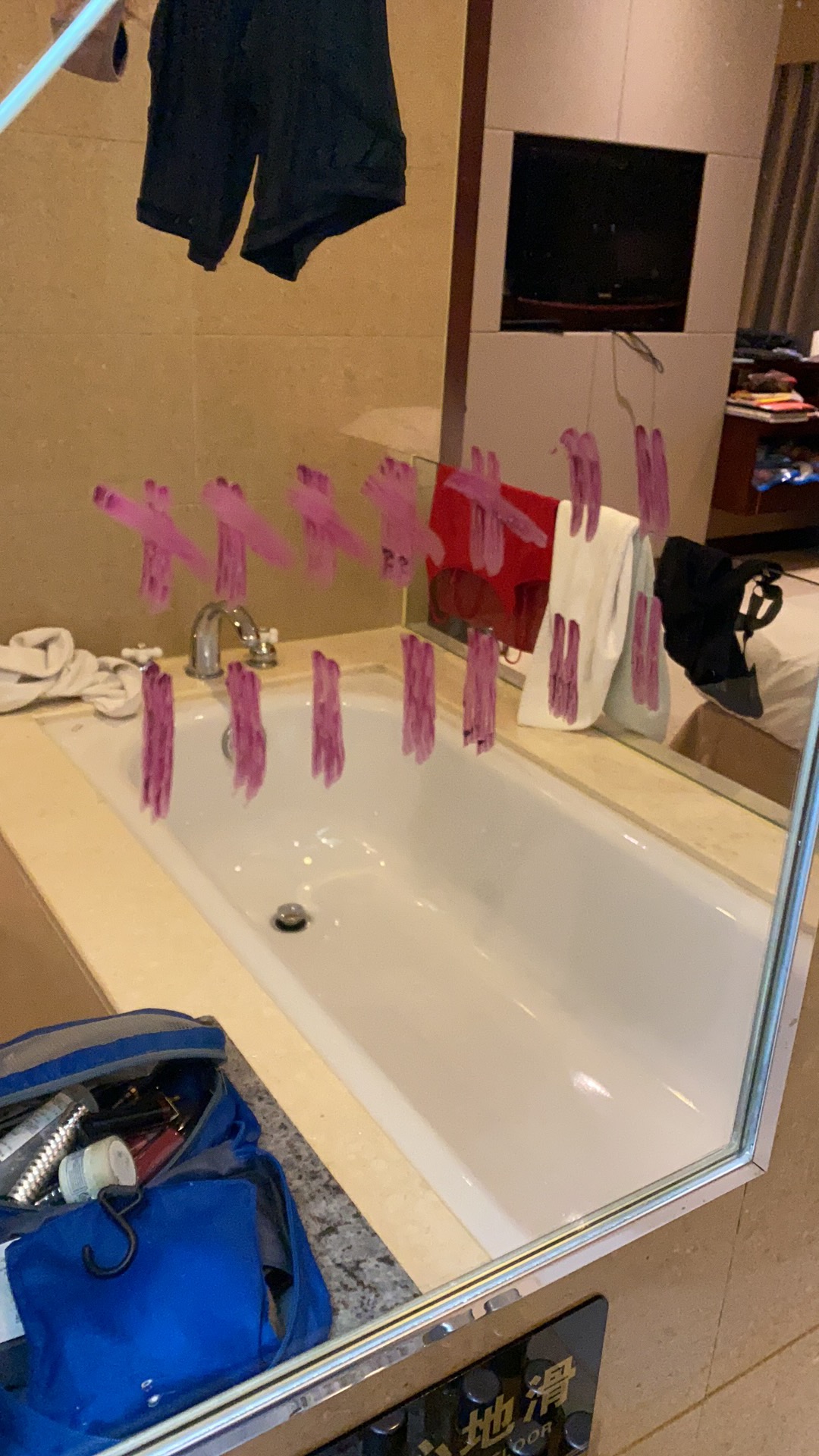
The suck line – choice or tatty towels?

D2. One of the things that has made coming back a little easier have been the many lovely positive messages from my colleagues. I wasn’t sure what to write about today yet, when someone sent me this:

“hope you are all settled in QT hotel. Is there a lot of restrictions? I hope you get good internet, good food, soft bed, enough towel, tile floor, AC, mini fridge, allowances to order in coffee/food and gentle nose swab”

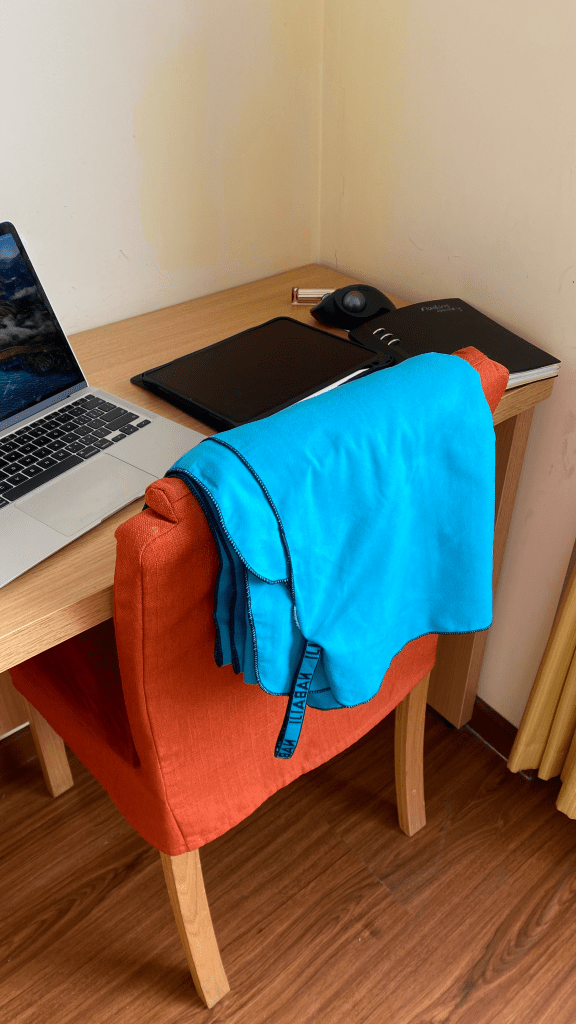
I then rolled out of bed groggily (jet lag meant I’d been up from 4.30am to 2.30am) and went for a shower and contemplated my tatty towel. And had to think of another quote:

“A towel, is about the most massively useful thing an interstellar hitchhiker can have. Partly it has great practical value. You can wrap it around you for warmth as you bound across the cold moons of Jaglan Beta; you can lie on it on the brilliant marble-sanded beaches of Santraginus V, inhaling the heady sea vapors; you can sleep under it beneath the stars which shine so redly on the desert world of Kakrafoon; use it to sail a miniraft down the slow heavy River Moth; wet it for use in hand-to-hand-combat; wrap it round your head to ward off noxious fumes or avoid the gaze of the Ravenous Bugblatter Beast of Traal (such a mind-boggingly stupid animal, it assumes that if you can’t see it, it can’t see you); you can wave your towel in emergencies as a distress signal, and of course dry yourself off with it if it still seems to be clean enough.”

Douglas Adams, The Hitchhiker’s Guide to the Galaxy

And thinking back to the 100s of messages in my quarantine group, I wondered where exactly the suck-line lies? Personally I don’t think it’s towels. Of my colleague’s list I actually can only tick off two, maybe three items (the food is a bit hit and miss), and I must admit a small twinge of envy seeing another colleague’s quarantine digs photos, but I don’t feel so badly off. There are people who have no internet or aircon and dirty rooms and (in their view) inedible food.

It’s not even the worst accommodation I’ve stayed in. My husband and I, newly married, with an antenuptial contract that included a stereo and bicycle and steel desk as our assets going into the marriage had just moved to São Paulo, Brazil. We went off in one of the notorious Brazilian night buses to attend a wedding of a friend in Canoinhas. After the wedding we had one more night before returning, but since I’d not yet found a job, and my husband hadn’t had his first salary yet, we only had enough money for either dinner or a flea-bag hotel. We should have taken the dinner. We literally were up all night fighting off the fleas, hearing the other bugs gnawing at the bed posts and being startled by the strange noises on the corridor.

The other very memorable accommodation in terms of discomfort was the 10 day silent retreat I did in Thailand where I slept on a stone slab for 10 nights, and had surrendered all electronic media, all reading and writing materials and had a straw mat to and a single sheet to cover me. It poured with rain for 9 of the 10 days and I don’t think I had a dry item of clothing or anything by the end of it. But it was my choice to do this and I gained more than I had to (temporarily) give up.

And then again there are the more than double digits in moves we’ve done over the years. So I thought the suck line probably is choice rather than towels.

I’ve read just enough (or maybe too much) pop psychology and self-help and seen enough TED-talks to understand that (at least in Western culture) we have the illusion of choice and the illusion that it makes the difference. Knowing my readers, most of you will know about the tyranny of choice – basically (apparently) paraplegics and lottery winners return to baseline happiness a year after the event, and once we make a choice not much can induce us to change our minds.

So I think what galls most people about quarantine in China vs other places is not the fact of it but the lack of choice and control over where we land up – we like lotteries, but only when we choose to play.

I’ll end off with some pictures of yesterday’s meals. I looked at all 3, like last year, so that I could decide which to stick with – being semi-sedentary means that’s way too much food, so I’ll opt for one and cancel the rest, at the moment the winner seems to be lunch. There’s nothing wrong with the food – perhaps a little over-reliance on meat – I pity the vegetarians as even the vegetable bits have meat. But we have to remember that China very recently didn’t have the luxury of meat at every meal let alone every month, so I’m sure it makes most of my fellow-quarantine guest happy to see it in these quantities.

Channeling my inner PollyAnna / stoic

Today marks the first day of my 14+7 quarantine in Shanghai before I can return to Beijing. Unlike last year’s 4 star hotel, I didn’t strike lucky on the hotel jackpot this time, so I’m just focusing on what is good:

  • the room is clean
  • no carpet (so no icky marks, hairs and other debris)
  • nice view
  • Airconditioning
  • kettle (and I brought tea)
  • wifi works
  • I have electricity
  • nice shower with good stream and hot water
  • no food orders (I need to lose some broken ankle induced weight)
  • I brought my new crochet rainbow blanket project – so I’ll have plenty of time to do that
  • my neighbour wakes up at 4.30am and has a very loud voice so I get an early start to the day
  • I have noise cancelling headphones (Chopin ballads are very soothing right now)
  • I don’t need to wear shoes for 2 weeks
  • I don’t need to wear a mask for 2 weeks except for my testing on days 1, 4, 7, 14
  • I have more than enough to read and enough work

With Beijing now at 7 cases (out of a population of 20.8 million people – so please don’t be concerned about me living there), I may need to do a further 7 days of home quarantine before returning to work.

So you arrive at the airport, go through your first set of covid tests and forms and checks, pick up your luggage and then get herded into holding pens. They take your passport and fill in your details and once the holding pen has a bus-load full of people you get put on a bus for a magical mystery bus ride that ends up at a random hotel.

If you’re going into quarantine any time soon, a few things I’d suggest packing include Vitamin D (no sunlight for 14 days); your own plate, bowl, knife, fork, spoon, mug, lots of tea, extension cord, nice toiletries/shampoo etc, noise cancelling headphones & earplugs; perhaps food depending on how fond you are of Chinese quarantine “cuisine” – this time I just brought some anchovies in tins (helps the flavour of bland white rice) and bag of quinoa and “risotto de céréales” that I can “cook” in hot water.

Now I’m off to make my to-do list for the day – thanks to noisy neighbour I’ve unpacked and sorted everything and given the room a good wipe down with disinfectant wipes.

Learning but not yet

So I got fired up about learning Javascript and then I had to do some very practical stuff in HTML/CSS that took way longer than I thought it would with considerable troubleshooting. So that’s been parked.

Even as a teacher, when I do stuff I’m learning about learning. Like the fact that when I originally wrote that blog post about customisation of libguides at my previous school, I’d spent a lot of time in that summer getting acquainted with the ins and outs of bootstrap/HTML/CSS. And because I was using it a lot it seemed quite easy. And then with a hiatus of nearly 5 years, I’d forgotten so much I had to almost re-learn it all again. It’s a little bit like my journey with learning Chinese, and forgetting Chinese and relearning Chinese, and taking a break and having to start learning it all over again. The dilettante model of learning and doing is not necessarily super efficient – Adam Smith definitely had a point on comparative advantage.

And one of the big lessons? I spent quite a bit of time doing some fancy bootstrapping for the landing page and then looked back at the guides I’d made at my previous school and realised that there is no point if there is no one to maintain and sustain it (maintenance is a big thing in my thinking – see this post from last year which was one of the most read posts I’ve written). So I reverted to something more standardised – I also believe that constraints are an important thing in creativity.

So, I’ve relearnt some HTML/CSS and managed to make a good-enough header/nav bar and footer that functions, and I’ve re-discovered the nice geeky hideout that is the Springshare lounge with their very supportive community. And I know a lot more about what I don’t know … which is a lot.

And maybe when I need a career change I’ll do some more programming and stuff … I once thought I should become an editor because I have the uncanny ability to glance at pages of text and see the one spelling, punctuation or grammar error, and working through all of this I’m developing an eye for glancing through code … very infant stuff still, but maybe something worth developing.

============

Photo by Joshua Sortino on Unsplash

Yay for learning!

Yes it’s been a while. A literal slump in life and learning and librarianship. Including a fractured ankle, surgery and being laid up for a month (2 more weeks to go), just as the worst 3 months of pollution in Beijing drew to a close.

But I’m feeling more energised (amazing what waking up only a few times a night can do vs. not being able to sleep at all) and have started a great new project on revamping our libguides – which has led to the fact that I need to learn me some Javascript – which weirdly has me excited enough to be excited about learning again. Not a lot, not at programmer level, but just enough to do some fancy things like in this AMAZING skills guide from York University. So really I have to thank York University and their amazing librarian Steph Jesper and Springshare for getting me out of the slump.

More after I’ve actually achieved something.

Photo by Ferenc Almasi on Unsplash

Maths and beyond

A few weeks ago one Friday, just before our WEIRD (WAB Extended Independent Reading Day) there was a sudden surge in interest in maths books from our G8 students. Unfortunately a little further questioning revealed that it wasn’t so much math books on demand as some kind of math text very specifically on quadratic equations as the students had a test in the next block but couldn’t spend the WEIRD block cramming / practising spreadsheets but had to in fact borrow and read a book.

The only book that really sufficed unfortunately was Everything you need to Ace Maths. While this type of book is a necessary part of a middle school library collection (we are after all there to meet the needs of our students), it got me thinking about the other wonderful books we have in our collection that were summarily rejected by the students.

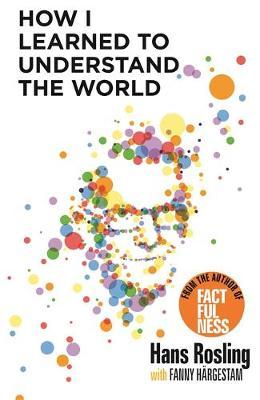
For a while one of my favourite has been Giorgia Lupi and Stefanie Posavec’s “Dear Data“. While not considered to be a traditional “Math” book it can help both teachers and students to change their pre-conceived ideas of how data can be represented. A book like this is particularly valuable in encouraging students who see themselves as more artistic and creative to seeing that one of the important parts of numbers is making the information contained in them visible visually. A point well made by Hans Rosling in his memoir “How I learned to understand the world” – a very enjoyable read by the late author of “Factfulness”.

Recently a most wonderful book landed on my desk. Actually the book that motivated me to write this post at all. Power in Numbers by Talithia Williams – it was an order from before the winter break that I’d made to expand the biographies available for our Grade 6 Unlikely Hero unit. Until now “Hidden Figures” (mainly as a result of the movie by the same name) was the main exposure our students had to the idea of women mathematicians. This type of combined biography is so exciting because it finally gives these women the exposure they deserve. And what I mean by deserve is in a big well designed hardcover glossy full colour book. It’s a trend started by “Goodnight stories for rebel girls” but goes far beyond both in form and content. The women are put in context both of the age within which they lived and the mathematics that they pursued. It’s a book that I was reluctant to let go of to be catalogued and one that I had to immediately share with the math teacher who shares my passion for books! For more from the author see her TED talk below.

Asian parents set a very high stake by their children’s abilities in maths. Our students at all ages are often exposed to acceleration in their arithmetic and math skills whether by Kumon or Abacus or other means. As my colleague is at pains to keep explaining, speed and the ability to use equations and “tricks” don’t always equate to true longevity in maths. One series of mystery books I enjoy exposing this age group to is “Red Blazer Girls” – where the boarding school based heroines use maths to solve mysteries. Often the kids with the so called “math smarts” struggle applying their skills to word / problem / real life based situations.

A few other books that I’ve added to our collection recently include “The Wonder Book of Geometry” , “How not to be Wrong” by Jordan Ellenberg, “Maths in Bite Sized Chunks” , “How to Bake PI“. Continuing in the line of trying to encourage creativity in Maths, there is the Mathematical Origami book and for historical context “Great Breakthroughs in Mathematics” and “17 Equations that changed the World” . Finally something for the sports mad – the Full STEAM in sports series such as “Full STEAM Basketball”

One of the Maths Teacher resource books that have been a hit recently is Peter Liljedah‘s “Building Thinking Classrooms in Mathematics. One of the benefits of social media includes being able to reach out to and engage with the authors of these books.

To end up this post, here is our Mathematics resource Library guide – happy to get more ideas of resources and the Maths books recommendations on a great website I was just introduced to today – Fivebooks.com! Worth some exploration as experts share their favourite top five books in various aspects of mathematics.

(Header Photo by Roman Mager on Unsplash)

To Blog or not to blog?

Today is clear up day… that inevitable day near the end of a vacation when I try to set up my bujo (Bullet Journal for the uninitiated – it’s great – even some of my library staff have adopted my bujo habit and it’s one of the books on our WAB-Reads list this year); sort out my desk; my overflowing to-do list (as in delete anything that I’m not likely to get to and reassess if I or anyone else cares); back up all my files and photos and peripherals like phone and watch and ipad (it’s done weekly anyway but this is an extra) and try to yet again tackle my burgeoning email inboxes.

And that’s where the crisis of whether to blog or not comes in. I’m forcing myself to delete my subscriptions to newsletters and blogs and update etc. because if I’m honest I just don’t get around to reading them, and then I wonder if this blog is creating similar angst in my (limited) readers. The things I need to write and reflect on are probably not really suitable for public consumption without getting me into trouble of one type or another, and I’ve lost the capacity for handwriting in a journal and I certainly wouldn’t do both.

A brief hiatus turned into nearly 6 months and I had to find my password to log back in – how sad is that.

I fear part of the reluctance to blog is that it was always a showcase for my work as a librarian and now that job is being (over)shared and encroached upon with my role as a tech-integrator. I feel like I’ve lost a lot of library-mojo, coupled with missing my Singapore ISLN network, and being in a library that is more of a passage-way than a destination.

I spent 6 weeks in the classroom after schools restarted before our teachers were all back as I was one of the first to re-enter after the covid visa stop. It gave me a great appreciation for what teachers do, and understanding of why the library may not always be at the top of their list of things to do each day. It was a great way of getting to know some students better, since I’m no longer in a school / school section where weekly/regular trips to the library is normal.

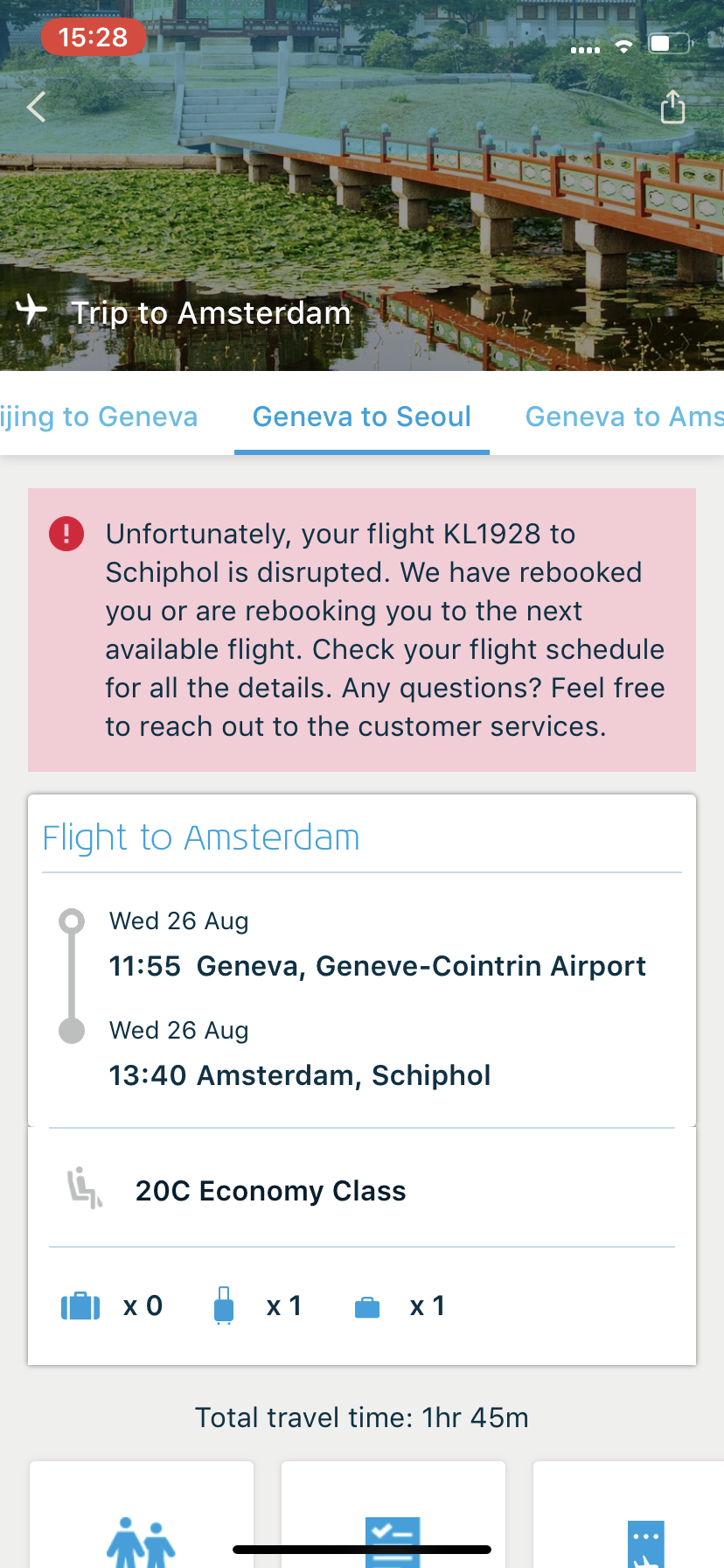
I must also admit that part of my hiatus was that I didn’t feel I had a right to say much in these months of Covid-19. I am still of a very privileged minority. Yes, my son and I were separated from my husband and daughter for 8 months. But as soon as I got my PU letter from China, the Chinese embassy in Bern were absolutely amazingly helpful in getting us through the hoops for a new visa. Yes, our ticket was cancelled and changed and I nearly had a heart-attack when they wouldn’t let us board as we had a “ghost” flight due to the typhoon in Korea on the way back, but we got back safely. Yes, we had to quarantine for two weeks in Shanghai, but our hotel was relatively decent, allowed for deliveries from outside and the staff were lovely. Yes, we wear masks all day every-day, but we’re back at school and the kids are all fine. They really are. Most of them happy even, despite being middle school teenagers.

I was chatting to a friend last night who is in education in the UK and her daughter is also a teacher. Hesitantly she asked me if I thought that we sometimes make it worse for our students with our emphasis on mental health and constant revisiting of things. It’s a good question. Personally I feel that when we got back being reminded of our “trauma” both made me feel guilty (too much work and not enough sleep had been my main trauma) and also took time away from me getting the things done that I needed to do to move on and make things better for myself and my students. It was like a scab that was successfully healing and closing a wound was continually being picked at and ripped off. She said she felt the same, but didn’t think she could say as much to most people around her. That is not to under-estimate the great work being done with people who need help. But too much reflection and not moving forward may not be what we need.

Life here in Beijing has been good, the occasional pollution days excepted. People are sensible and cautious. We’ve had some good hikes, walks, runs. Parties have been cancelled or limited to fewer people spontaneously not because anyone has insisted on it. We had a few extra cases (2) in the neighbourhood and 2 million people (including us) were tested in 24 hours, free of charge, with the results back in 24 hours.

Hiking on the wall

Even just putting these thoughts into words has been good – because it makes for some actionable points. So maybe this blog will remain for my professional growth for now. I have a lot to be thankful for in the past year.

And here’s my book overview for the year.

Hiatus

I’m not blogging and it’s for a reason. I’m still trying to clear out the detritus of a rather busy and stressful year. Most of it spent online. Part of that is to seriously consider each and every subscription that is creating a digital deluge in my inboxes. It’s disheartening as I unsubscribe or delete or just archive things that are great, well written, well thought out but where I just don’t have time to read.

So then I had a crisis of confidence that I’m just one more thing creating other people the same problem, and that’s had me reluctant to write.

I’ve cleared about 700 items from my personal email, and have another 260 to go. Professionally it’s worse with about 900 items unread – many of them emails to myself of things to follow up on, curate, add to libguides, etc. etc.  And that’s even after spending time every weekend culling at least a 100 emails at a time – AND it’s better since I’ve moved most of my communications with colleagues to microsoft teams.

Right – to make this worth your read – here is a link to the Summer Guide that I created with Stephen Taylor. It’s a reminder to our families of the many and rich resources we have and the fact that they continue to be available over the summer.

Summer guide

I have a list of things I want to blog about when I’ve cleared my mind and other clutter in my life, until then – a happy restful summer.

Online learning is not new shiny things

I’ll be the first to admit I’m an old boring Cassandra. It possibly / probably has to do with my age. Just to put things into context. Once upon a quarter century plus ago I was an auditor finishing up my articles. It was in the days when “calling” existed. Not the kind of cold-calling or call-centre type of calling, but when every single document that left the accounting firm’s doors would be read by one accountant to another (not secretarial staff, the actual articled clerks with three or four years university behind them) and checked to ensure there were no typos or spelling or number mistakes. This was the 1980’s just at the cusp of personal computers. It was tedious but important work, because the reputation of the firm and profession was at stake – or so we were told.

messengersA podcast episode that made a particularly profound impact on me was Freakanomics’ “In Praise of Maintenance” . Another favourite is Hidden Brain’s The Cassandra Curse which is particularly pertinent at the moment – with the fudging of Corona Virus numbers by a person who shall not be named in a country that should know better. A great book to read on Messengers and Messages is “Messengers” by Stephen Martin – valuable lessons on who gets listened to and why – spoiler – middle aged women are generally not listened to.

What does this have to do with online learning due to school closure in the time of Corona? That doesn’t quite trip off the tongue like “Love in the Time of cholera“… Well basically people are spending a lot of time exchanging tips on what tools to acquire and how to use them. All the tech giants and wanna-be’s are out there touting their wares and offering freebies (but what happens when everyone invests time and effort into content in them and we go back to having to pay???). Twitter and Facebook are awash with what tools to use for communication, teaching, feedback and learning. Padlets and Wakelets abound – that will all be redundant or fall into disuse or no longer be updated before you can blink your eye – because maintenance is well, boring. About one in 100 things I read are about sensible boring matters like setting up procedures, making sure systems are secure, robust and accurate.

And yet probably 99% of my time is spent documenting, testing, and fixing things that go wrong as people rush from the one new shiny thing to the other. It’s the boring maintenance stuff I’d recommend you spend some time on –

  • is all student data up to date in your student information system – we’ve had some poor souls join school during closure!
  • Are all students in the right classes / groups for every tool you’re using?
  • Is there a central entry point that students/parents can find information and get the daily/weekly learning and ask questions / get answers and where attendance can be taken?
  • Is there a place where information and knowledge management / FAQs can be accumulated for Teachers and Students (ours are in libguides)?
  • Are expectations for Teachers and Students clear, unambiguous and enforced (if necessary)?
  • Are there central calendars, preferably by grade where students and parents can check for online classes and meetings and assignment/assessment dates?
  • Are the lines of communication for Edtech / IT support / curriculum support etc. clear and easily found and used.
  • Are we working hard or are we working smart? Witness the overwhelming inboxes of some teachers who don’t make use of central forums for Q&A but still answer individual “same same” questions time after time.

A very valuable (but time consuming) exercise is to pick one student per grade and follow their “expected” path online checking from morning check-in, class to class, tool by tool and including the calendar to see that everything works as expected.

To parody the old saying of “an heir and a spare” – for each teaching and learning outcome you probably only need a pair of tools. One that is your trusty old steed that you preferably already were using before closure and everyone is familiar with (I nearly said “happy” there, but I deleted it, because hardly anyone is ever happy with the familiar old steed, they want the “next thing”) and you can use for 95% of things and the other is the one you have as a back up for when things collapse for one reason or another .

OREO online learning I still like Alison Yang’s graphic that came out waaaay at the start of the closures – about a million years ago (actually only five weeks but it feels much longer). Since not all the tools she recommended were “China Friendly) I used it (with permission) as the basis for the summary of the tools we’re using – each link in the guide leads to a page of explanations and usage tips and recommendations.

There comes a time in online-learning when as a community you have to agree to say “no” more often than “yes” because there is only so much a community can absorb, process and use effectively. You also need to be able to focus on just one thing each week on the back-end and do it properly.

This week was my “week of the calendar”. One could possibly not think of anything more boring and less “sexy”. But I was floundering under the 100s of zoom and team meetings that were popping up everywhere, some clashing with each other, many invisible or rendered invisible by poor naming strategies. I think I’ll change this into a separate post to minimise a TW/DR problem in blogs.

Have a great week – and don’t forget the plumbing.

Addition: 18 March 2020 – this is getting a lot of attention so I thought I’d add the infographic I made yesterday – happy to improve it based on suggestions (please add as a comment in the comments)

EdTech this and this


Photo by Sharon McCutcheon on Unsplash

Panda Madness

As we move into Week 5 of online learning I had a yearning to return to my librarian roots. I was prompted by our librarian network sending out a notice for the voting for the annual Panda Book Awards. Despite the closures the voting will continue. In my previous incarnation as a PYP librarian in Singapore I found it a lot easier to promote the Red Dot Book awards – you have a weekly captured audience in primary, plus we had our after school reading club geared towards preparing for the annual Readers’ Cup.

Things change in Middle School – puberty seems to affect the reading muscle as much as it does every other aspect of being. Also in China we have the “Kids Read” competition for middle schoolers, which is considerably more daunting – 100 books in teams of four.

Another aspect of online learning is that it is really hard for everyone to stay motivated. Our daily entry point each day is the Mentor discussion forum on Moodle. As much as Moodle is extremely robust, it’s also very old fashioned and clunky, so driving traffic there is a chore.

I’d been seeing a lot on my twitter feed on US librarians setting up for “March Madness” and that inspired me to get a “Panda Madness” going for March. Besides the voting I also wanted to put in some challenges for points with a couple of aims:

  • getting students onto our online reading platform Sora
  • getting students reading online generally
  • getting students reading the Panda Books
  • getting students to promote books through FlipGrid and book reviews on Oliver
  • making the daily sign-in to their mentor groups a bit more motivating and of course
  • having some fun

First off was selecting the books – in MS we’re literally in the middle of the reading spectrum so I could select from both the “middle” and “older” reader lists. I selected 16 of the books, leaving out a couple of picture books and trying to use books that were available on Sora so they could still be read.

Panda Knockout covers The complication in China is that not only do books have to be available with rights in China, they also have to be approved by an agency for use.  So the hurdles we climb (besides expensive platform fees and expensive digital rights that disappear after 12/24/26 months or 26 checkouts are:

  • lack of a digital version,
  • georights, or
  • publisher preferences. For example, the publisher Hachette Livre (one of the “Big Five”), don’t sell their ebooks to schools or libraries outside of the US.

Then there’s weird stuff, like “Front Desk” is available as an audiobook but not an eBook … usually it’s the other way around, books are available as an eBook but not audiobook (which kind of makes sense as there are extra costs and efforts involved recording an audiobook). I’ve reached out to Kelly Yang and she’s looking into it (love authors who are invested in helping one out!)

In the Older list we’re missing “How to Bee” and “The Assassination of Brangwain Spurge” I’ve reached out on Twitter to both sets of authors but not heard anything back yet. In the Middle list we’re covered, although it would be nice to have “Front Desk” as an eBook – there’s a hierarchy of how students like to read

  1. Not at all (lol)
  2. Physical Copy
  3. eBook
  4. Audiobook

Next step was making the knockout lists. That was a tough one. Which books to pair against each other to make it a little bit exciting – I must admit to have spent way too much time on overthinking this one.


Then I didn’t want to start the voting straight away, so for Friday (we have virtual WEIRD every Friday where I lead the Mentor discussion) I started with the motivation and getting ready bit. In order to do that I needed to set up a point system*, Libguide, Flipgrid and Microsoft Team, plus all the graphics. Needless to say that consumed all of Thursday in-between the usual Tech troubleshooting.

Moodle Message

And then it was a case of waiting with baited breath as to the response – luckily it was extremely positive – by the time I woke up at 6am European time, my “copilot” on the MSTeam had approved 83 students and by the end of the day we had 121 students and teachers signed up (over 1/3 of our student population).

IMG_6210

Yesterday I wanted to sort out the leaderboard and the scoring … that was another full day task – mainly because there is so much to set up – a current and reliable student/mentor group spreadsheet (yes, we’ve had a few poor souls who joined the school just prior to, or during the closure period), getting all the data of who had signed up to Sora – with proof, and then the most time consuming – going through the library records of each of the 16 books to award points to the consistent readers who’ve been reading the books since the start of the school year in August! A very manual procedure.

Another thing one would expect would be easy but wasn’t is extracting a list of “members” from a MS team! There’s no way to export that – so I had to copy and past from the list into excel and then sort it out and match to my master sheet.

Another thing that I spent way too much time on of course was creating the graphic of the leaderboard.  I must admit to having found one I quite liked and then adapting it. On the first day students had gained 872 points and we had a history of the books being read 129 times. A lot of students / groups tied as it was the first day.

Panda Madness Leaderboard 280220

Then rubrics / criteria for the Book Trailers and alternative book covers were created. Luckily I only had to adapt these from the ISLN Readers’ Cup that I was heavily involved in during my time there, and Barb Reid kindly sent me the latest versions.

The last thing was to create a Form for students to predict the winner and to post the updated status to the Moodle announcement for Monday.

Hopefully the rest will just be maintaining the scoresheet each week and monitoring the Flipgrid; student book reviews on Oliver; and entries for the book cover competition and book trailers… The first knockout vote will be on Friday.

Let’s see how this goes and if we can achieve our aims!  Already the teams who have teachers involved (they can take part with their group) are the leading teams… says something!  Happy to share everything created with other schools affected by the closure – just flip me an email or PM on twitter with your email. Everything is on Pages and can easily be adapted / changed for different books.

==========================

*Points for now – I’ll add to this as we go on

  • 5 points for taking part
  • 5 points per Flipgrid promotion of a book (multiple promotions possible – but you must have read the book)
  • 5 points for a one paragraph review of a Panda book on Oliver
  • 2 points for every Panda book you borrowed before school closed
  • 2 points for signing into Sora (upload a screenshot to Moodle to gain the point)
  • 5 points for borrowing and reading a Panda eBook on Sora (screenshot and summary to gain the points)
  • 5 points for borrowing and listening to a Panda AudioBook on Sora (screenshot and summary to gain the points)
  • 10 points for predicting the winner
  • 5 points for predicting one of the 1/2 finalists
  • 2 points for predicting one of the 1/4 finalists
  • 1 point for predicting one of the 1/8 finalists
  • 5 points per good quality book trailer following criteria
  • 5 points per good quality alternative book cover following criteria
  • Each week new random bonus points will be awarded based on new challenges