INF536: Critical Assessment

Looking back on this last semester, I can only sum it up by saying that change, beauty and progress in thought and learning is not only wrought by avalanche and volcano but also by the constant erosion by drops of water and bits of sand.  That combined with space and time.

9616353114

In the same way, this course has offered me space and time for learning by:

  • Forcing me to carve time out of a schedule that would otherwise be occupied by busyness
  • Exposing me to a variety of ideas, research, thoughts and concepts that I wouldn’t otherwise naturally encounter in my day-to-day professional or personal life
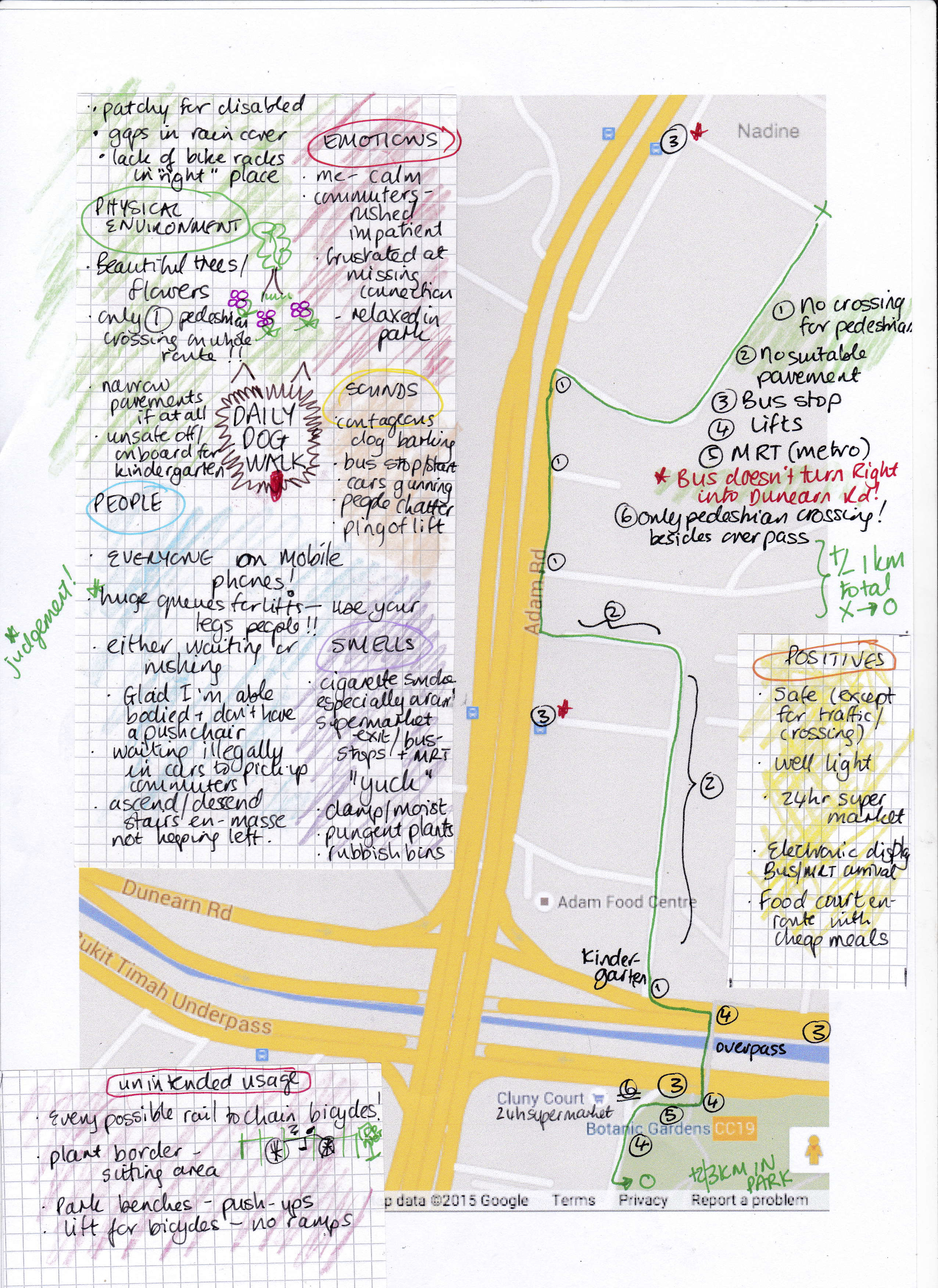
  • Making me DO things I’d otherwise shrug off as impossible (Bailey, 2015b)
  • Giving me a framework within which to analyse problems “wicked” and otherwise (Bailey, 2015a, 2015g; Buchanan, 1992; IDEO, 2014)
  • Grouping me with a set of people who are all approaching the course from a different context and set of experiences and knowledge
  • Creating a virtual (and at times physical) space for us to encounter each other and comment and share our learning – both formally and informally (“#INF536 – Twitter Search,” n.d.; McIntosh & CSU, n.d.)


It has be quite an experience, and, as someone once said – it’s not so much what you’ve learnt as what you remember. What has left a lasting impression is design thinking, the value of constraints and learning at the extremes.


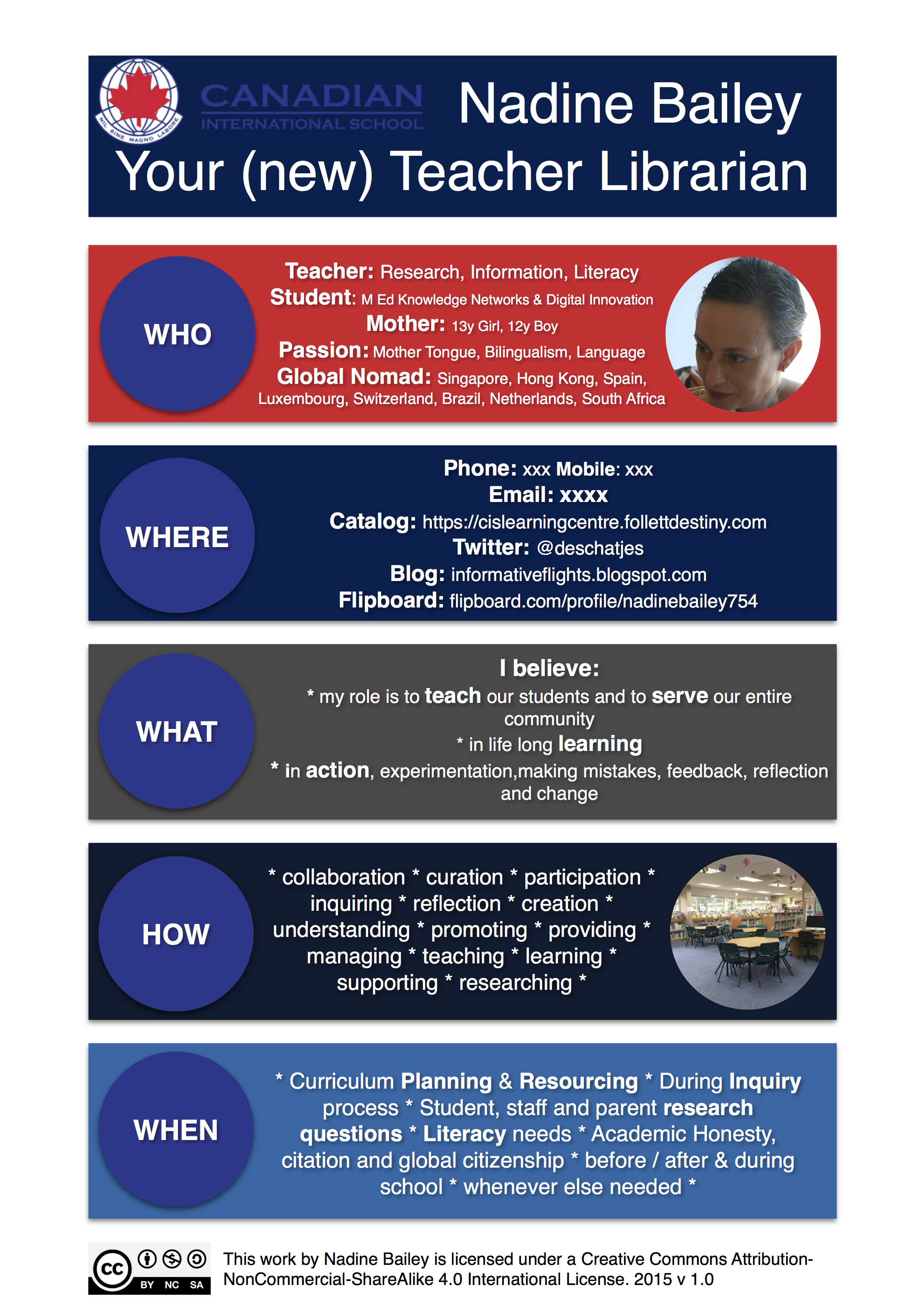
As someone new to the education field, new to librarianship, operating under all kinds of constraints, the design thinking concepts of inspiration, ideation and implementation (Brown, 2008; Brown & Katz, 2011; IDEO, 2014) fits perfectly with that other concept of living and teaching in constant beta (Schroeder, 2013). As a fairly grounded, not terribly artistically (of the drawing and painting type) creative person this is the aspect of “design” that appeals to me as it is achievable with observation, thought, logic and research. However it also demands that I embody the principle of risk-taking and not just pay lip service to it sprouting it to my PYP (IB primary year program) students at regular intervals. There is something very empowering in the process of observing, thinking, asking, making small or not so small changes, and failing or succeeding, learning and trying again without fear and knowing that every time again one is moving every so slightly forward and nudging one’s students in the same direction.


My most effective intervention resulting from a budgetary constraint


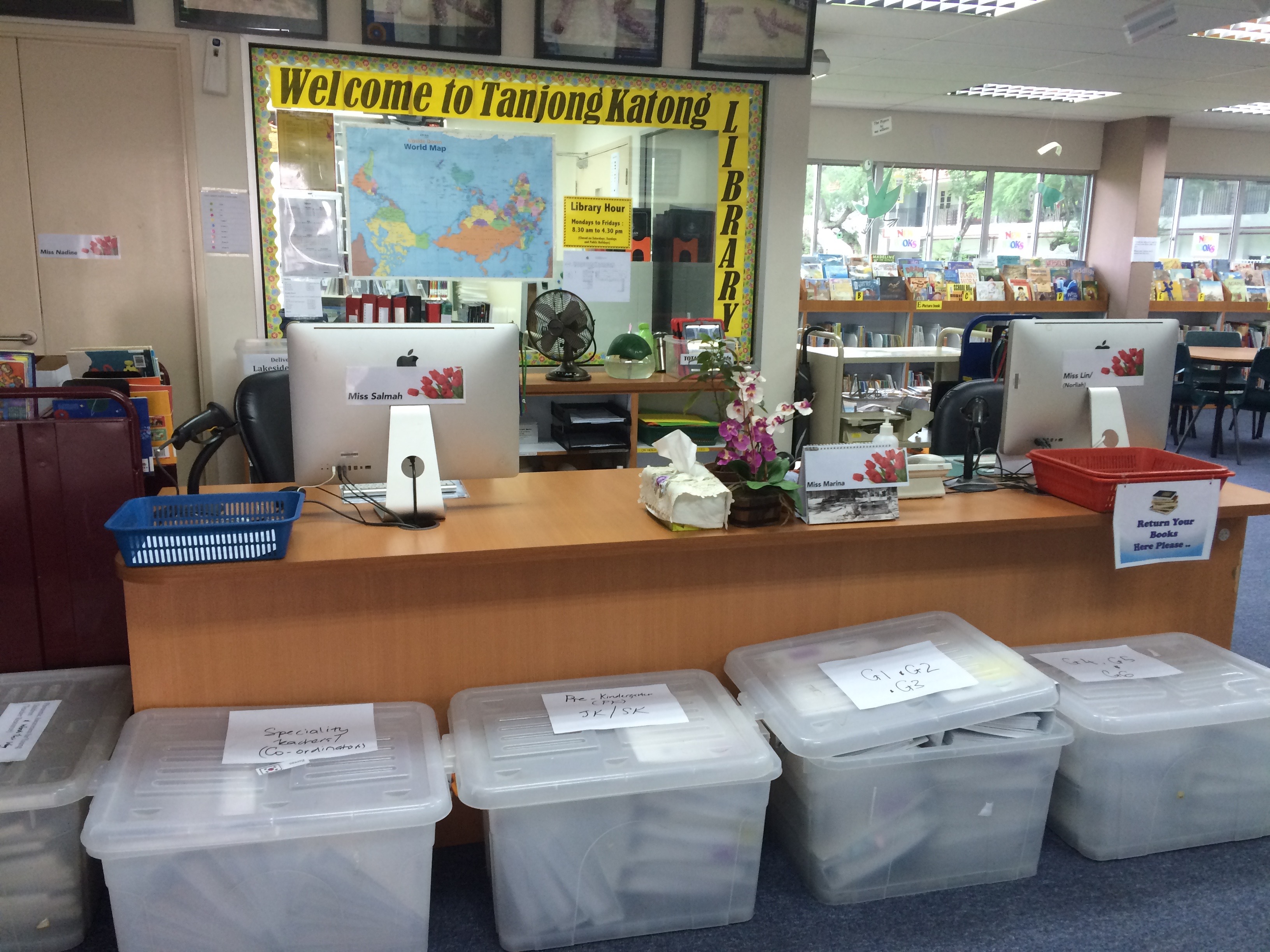
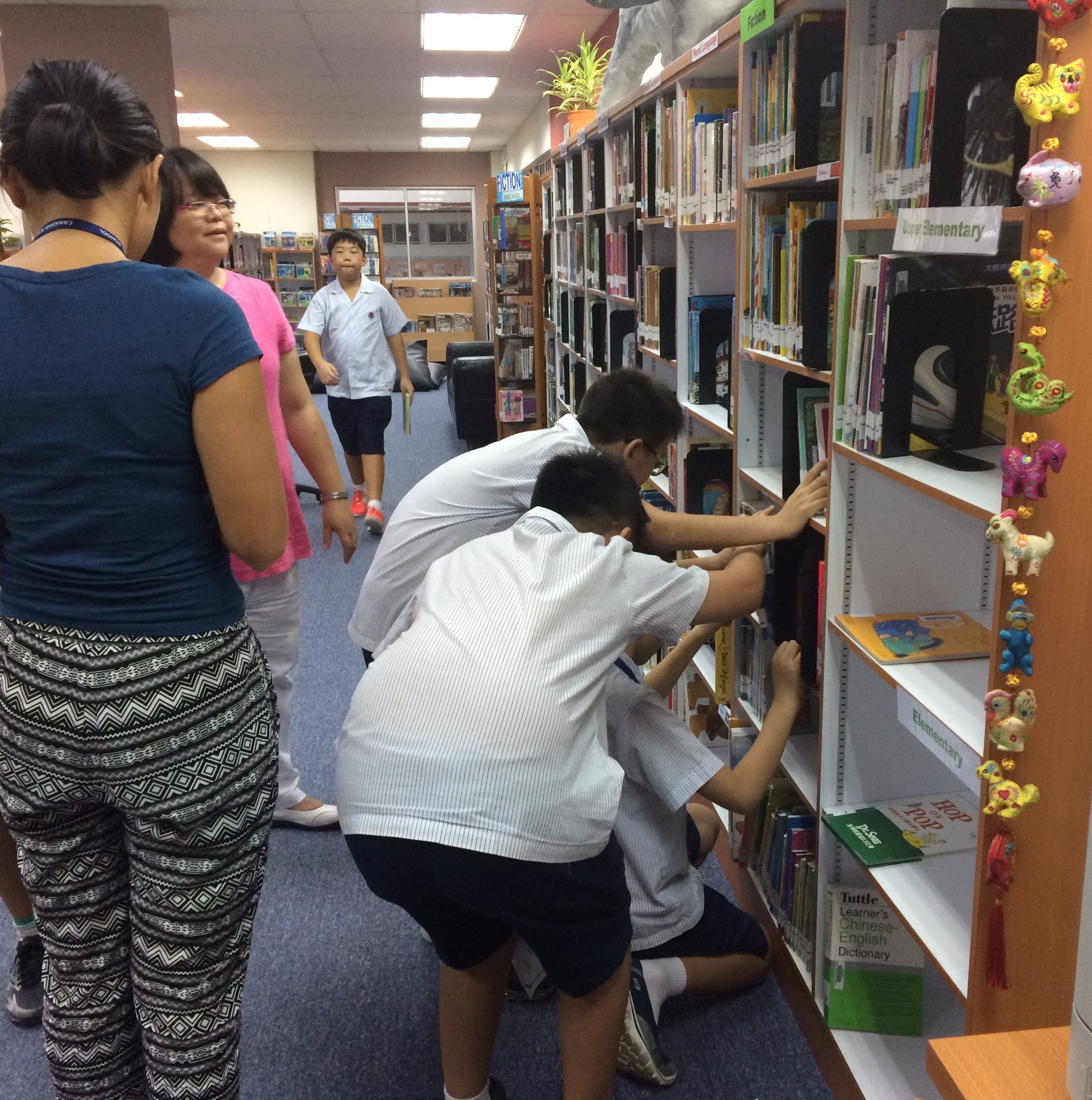
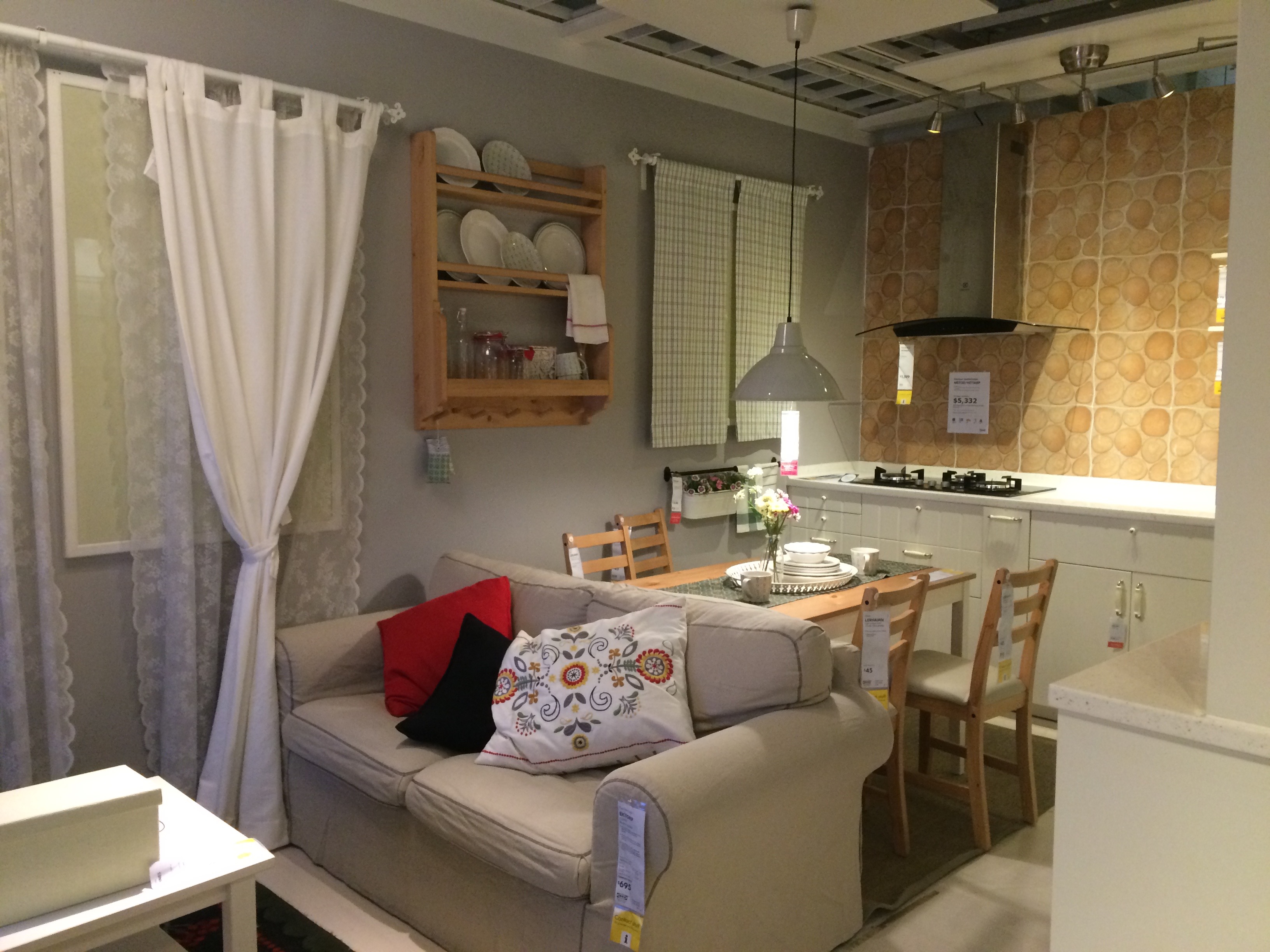
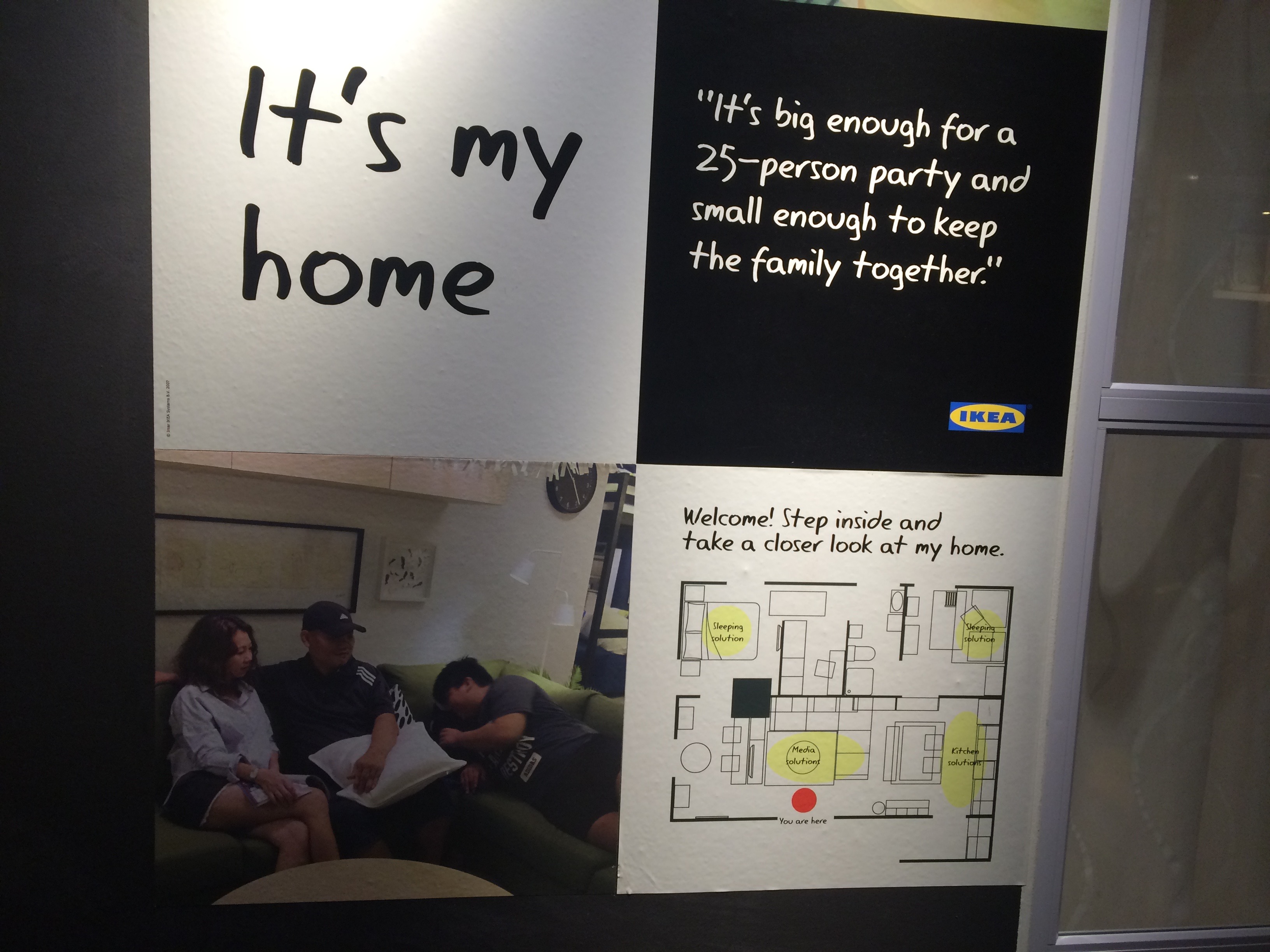
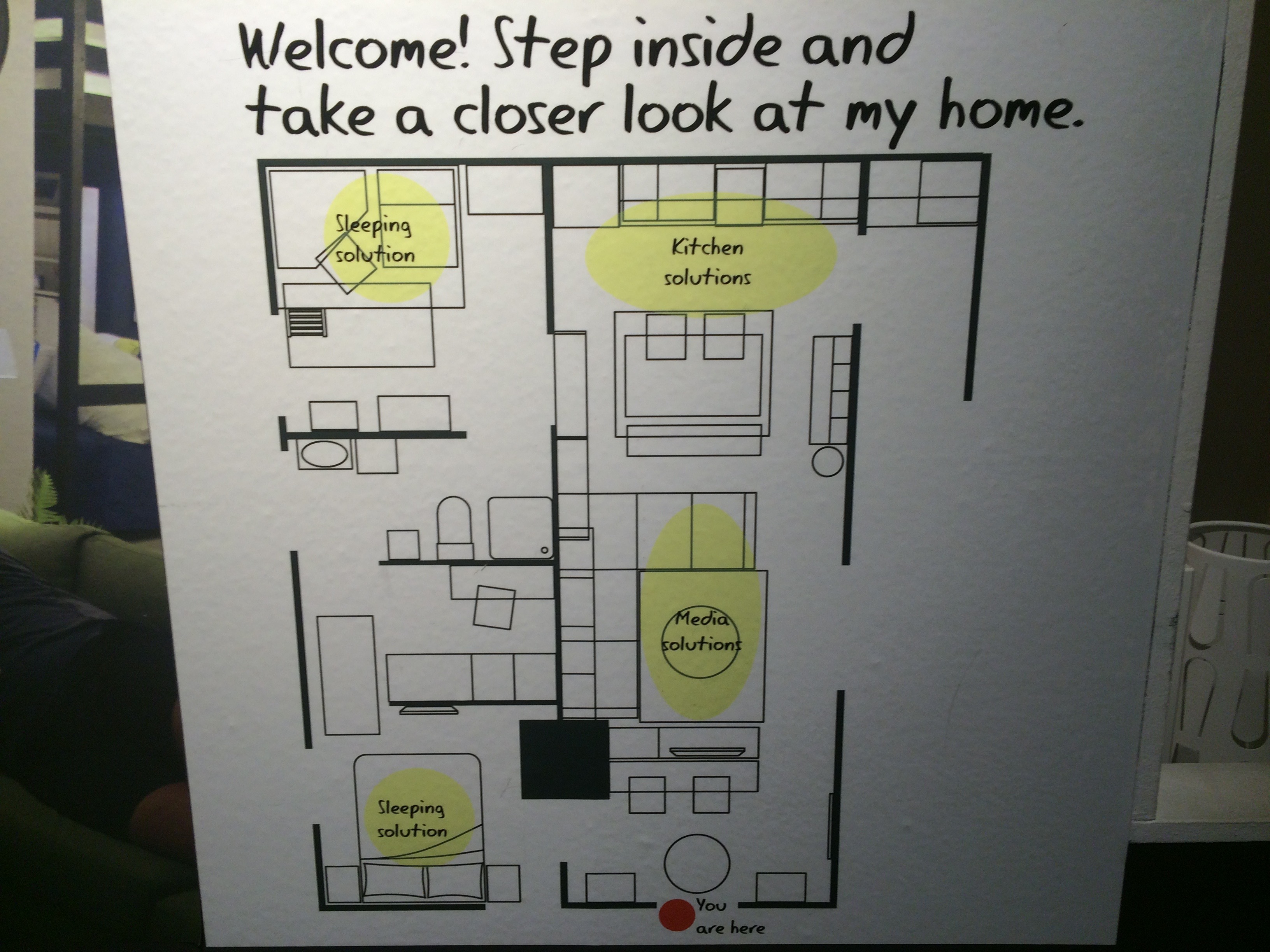
Constraints, rather than hampering us, force rethinking options, relooking at alternatives and collaborating, asking, connecting in a way that is not always necessary when one is overwhelmed by choice and abundance. As documented in my blog posts: design – space, thinking and time 1, 2, 3 & 4 (Bailey, 2015c, 2015d, 2015e, 2015f) operating within the constraints of limited time, no budget, a small and almost unalterable space can result in creative solutions that are as ad hoc as they are successful.


We can learn a lot about education and learning in extreme conditions (Chohan, 2011; Leadbeater & Wong, 2010). But more immediate and accessible are the extremes in our own communities the students at the challenging edges of all the continuums we create. The teachers and parents who don’t toe some invisible line.


The name of my series of blog posts also reflects my thoughts about designing learning spaces. It’s not just about the physical space, it’s about reconstructing how we think about time and what we do in it, and carving out a presence physically, virtually and even emotionally. No matter how beautifully our surroundings have been designed, how much money has been spent on the furnishings and fittings, how much time is built into the curriculum if our students do not feel safe and have a willing and open space in their hearts and minds for learning, nothing will make an impact.

16807472897

References:

Bailey, N. (2015a, July 23). On the box, off the box – INF536 Blog Post 1 [Web Log]. Retrieved October 11, 2015, from http://thinkspace.csu.edu.au/informativeflights/2015/07/23/on-the-box-off-the-box/

Bailey, N. (2015b, August 7). Blog 2: Observation – Dog Walk [Web Log]. Retrieved October 11, 2015, from http://thinkspace.csu.edu.au/informativeflights/2015/08/07/blog-2-observation-dog-walk/

Bailey, N. (2015c, August 23). Design – space, thinking and time (1) [Web Log]. Retrieved October 4, 2015, from http://thinkspace.csu.edu.au/informativeflights/2015/08/23/design-space-thinking-and-time-1/

Bailey, N. (2015d, September 6). Design – space thinking and time (2) [Web Log]. Retrieved October 4, 2015, from http://thinkspace.csu.edu.au/informativeflights/2015/09/06/design-space-thinking-and-time-2/

Bailey, N. (2015e, September 20). Design – space, thinking and time (3) [Web Log]. Retrieved October 4, 2015, from http://thinkspace.csu.edu.au/informativeflights/2015/09/20/design-space-thinking-and-time-3/

Bailey, N. (2015f, October 4). Design – space, thinking and time (4) [Web Log]. Retrieved October 11, 2015, from http://thinkspace.csu.edu.au/informativeflights/2015/10/04/design-space-thinking-and-time-4/

Bailey, N. (2015g, October 11). INF536: Assessment 4 – Part A: Applying spatial changes and design thinking to middle school reading – a three phase collaborative approach [Web Log]. Retrieved October 11, 2015, from http://thinkspace.csu.edu.au/informativeflights/2015/10/11/inf536-assessment-4-part-a-applying-spatial-changes-and-design-thinking-to-middle-school-reading-a-three-phase-collaborative-approach/

Brown, T. (2008). Design thinking. Harvard Business Review, 86(6), 84–92. Retrieved from http://ezproxy.csu.edu.au/login?url=http://search.ebscohost.com/login.aspx?direct=true&db=heh&AN=32108052&site=ehost-live

Brown, T., & Katz, B. (2011). Change by Design: Change by Design. Journal of Product Innovation Management, 28(3), 381–383. http://doi.org/10.1111/j.1540-5885.2011.00806.x

Buchanan, R. (1992). Wicked problems in design thinking. Design Issues, 8(2), 5–21. Retrieved from http://www.jstor.org/stable/1511637

Chohan, A. (2011, January 25). Learning without frontiers [Video file]. Retrieved October 11, 2015, from https://www.youtube.com/watch?v=EARTcJkNrDA

IDEO. (2014). Design thinking for libraries – a toolkit for patron-centered design (p. 121). IDEO, Bill & Melinda Gates Foundation. Retrieved from http://www.designthinkingforlibraries.com

#INF536 – Twitter Search. (n.d.). [Twitter]. Retrieved October 11, 2015, from https://twitter.com/search?q=%23INF536&src=typd

Leadbeater, C., & Wong, A. (2010). Learning from the extremes. CISCO. Retrieved September 2, 2015 from https://www.cisco.com/web/about/citizenship/socio-economic/docs/LearningfromExtremes_WhitePaper.pdf

McIntosh, E., & CSU. (n.d.). Discussion Board – S-INF536_201560_W_D @CSU [Discussion Forum]. Retrieved October 11, 2015, from https://interact2.csu.edu.au/webapps/discussionboard/do/conference?toggle_mode=read&action=list_forums&course_id=_6652_1&nav=discussion_board_entry&mode=view

Schroeder, M. (2013, November 6). Living in beta [Video file]. Retrieved October 6, 2015, from https://www.youtube.com/watch?v=0nnYI3ePrY8


INF536: Assessment 4 – Part A: Applying spatial changes and design thinking to middle school reading– a three phase collaborative approach

Introduction

There is a long history of research into the value of and elements contributing to the success of classroom libraries. They have an important role in ensuring accessibility of written works to promote fluency and skill in literacy and thereby contributing to academic achievement. But the literature appears to concentrate on elementary schools (Hopenwasser & Noel, 2014; James, 1923; Jones, 2006; Krarup, 1955; Powell, 1966; Sanacore & Palumbo, 2010; Todd, Gordon, & Lu, 2011; Worthy, 1996). Although partnership and collaboration with the school and/or public library and librarian is recommended, the literature often deals with the two spaces in isolation. Further, the problem of aliteracy in middle school – whereby students can read but don’t want to – is well documented (Kelley & Decker, 2009; Krashen, 2004; Lesesne, 1991; Sheldon & Davis, 2015; Worthy, 1996). This case report will show how the two environments library and classroom, can successfully be seen as extensions of each other through the principles of design and design thinking and explicit cooperation between the language humanities (Eng/Hum) teachers, literacy coach and school librarian in order to promote voluntary reading.

Case development

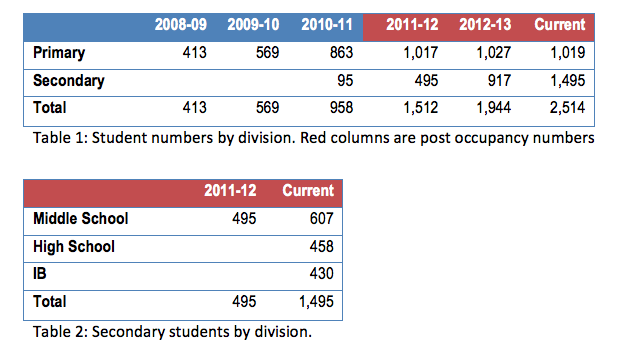
United World College South East Asia East (UWCSEA-East) is a K-12 international school located in Singapore. It commenced operations in 2008 and took occupancy of a purpose built campus in 2011. In this campus, the secondary school library initially served around 500 middle school students – see table 1. It now caters to three distinct communities, middle school, high school and the International Baccalaureate (IB) – see Table 2.

Screen Shot 2015-10-11 at 11.27.14 am

Despite consultation with the librarian in the planning phase, certain spaces of the library were designated different functions than agreed upon and furnished accordingly by the architect and building manager. One such area was upstairs overlooking the main school plaza with purpose built magazine racks. The idea was it would be a well-frequented showcase area for magazine reading. In reality a number of factors prevented this from being realised:

  • The furniture design didn’t accommodate its purpose as it was not deep or high enough and the storage area didn’t fit back copies
  • The zoning of the library post occupancy meant that materials affording quick casual reading such as graphic novels and periodicals were better located in the “noisier” and fast turnover area which allowed food and beverages, i.e. downstairs.
  • The trend in libraries is to move away from physical magazines and periodicals towards online providers including online databases and aggregators such as PressReader that provide the same product at a lower cost and without delays and issues with cataloguing and maintenance.


The question of what to do with the space was resolved by noticing that as the secondary school reached post occupancy capacity the lowest students in the pecking order i.e. middle school students were increasingly marginalised with students of higher sections taking over the prime library real estate (students are visually distinct due to different coloured polo shirts for their uniforms). In addition, middle school students no longer had library visits planned into their schedule. Furthermore, the large influx of new students and teachers meant that reading books in the classrooms were unevenly distributed both in terms of volume and quality without any structured form of classroom library, which the students had become accustomed to in the primary section. Finally, Eng/Hum teachers were noticing a decline in voluntary reading as students moved up through middle school.


These issues were addressed initially through collaboration between the librarian and Eng/Hum teachers and more recently by the new literacy coach over a period of three years as follows:

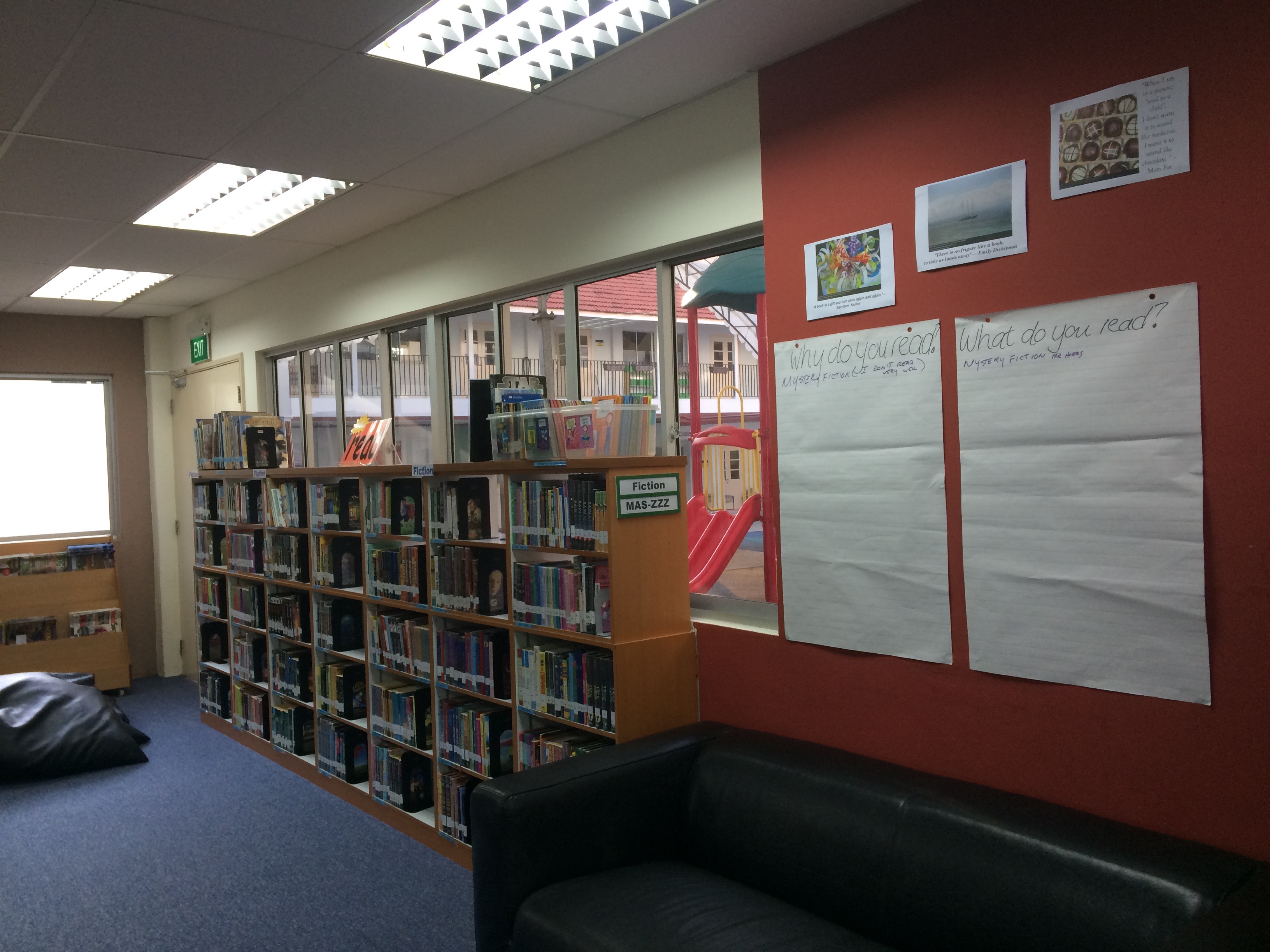
  • The conversion of the magazine area into a middle school reading zone
  • The establishing of a core library for each of the three middle school grades (Day, 2013b)
  • The creation of middle school classroom libraries in a formal and structured manner with materials integrated into the library catalogue (Day, 2015d)
  • The integration of informational / nonfiction texts into both areas

This is an on-going process and worth a critical analysis to examine the choice process, latent or existing attitudes and assumptions, exterior pressures and design constraints and collaboration and communication.

Critical analysis

Choice of process

The spatial change in the library was conceived and led by the teacher-librarian (TL) with the Eng/Hum teachers joining in the collaboration as the process evolved. Since the TL has experience in design thinking (Day, 2013a, 2015a, 2015c) the process followed the design thinking cycle of inspiration, ideation, iteration and getting to scale (Brown, 2008; IDEO, 2014).


This was achieved by:

  • Agreeing on a “core library” of 30 titles per grade for grades 6-8 which were prominently displayed
  • Adjusting shelving to accommodate front facing books
  • Relocating books of interest to this age group from the fiction collection
  • Using large posters to highlight the favourite books of middle school teachers in the library and class corridors and classroom walls
  • Ensuring multiple copies of books, by using class and literary circle sets
  • Adequate lighting, comfortable furniture and the creation of a private space


The above steps and final spatial design incorporated the elements that are recommended as enhancing school library spaces (Cha & Kim, 2015; Elliott-Burns, 2003; La Marca, 2008; A. McDonald, 2006; Serafini, 2011).


The design elements that contribute to successful classroom libraries are not dissimilar and include:

  • Sufficient space which is a focal area but partitioned and private
  • Comfortable furniture
  • Variety of material in range of complexity including different literary genres and informational texts
  • Category organisation and shelf labelling
  • Combination shelving allowing for quantity of books and display (front facing)
  • Advertising by means of posters and notices on whiteboards
  • Graphic organisation either thematic or by connections
  • Involvement of students in selection, organisation and maintenance (Fractor, Woodruff, Martinez, & Teale, 1993; Hopenwasser & Noel, 2014; Reutzel & Fawson, 2002, cited in Sanacore & Palumbo, 2010)

Discussion and research on the elements predominantly come from the elementary school environment, and the adoption to middle school requires some adjustments to account for the fact that students do not remain in one classroom, lessening the sense of ownership of a space on the part of students, and teachers needing to cater to multiple classes with different profiles and interests. Learning spaces are also typically smaller relative to the size of the students.


The creation of the library and classroom reading spaces and populating them with books is “necessary but not sufficient” (McGill-franzen, Allington, Yokoi, & Brooks, 1999). Other components of encouraging reading include training teachers to enhance their instructional routines to incorporate the material, and to ensure that teachers are familiar not only with their literary canon, but also the latest in good young adult fiction (Day, 2015b; McGill-franzen et al., 1999). The school has invested in training with Penny Kittle to assist in the instructional routines (Raisdana, 2015), while the librarian is working with the teachers on the latter.

Latent or existing attitudes and assumptions

An international school is blessed with diversity in cultures, languages and backgrounds both of their students and teachers. This results in a context of people coming from different systems with different attitudes, assumptions, beliefs and experiences around education, reading and libraries. In just the middle school, teachers come from Australia, United States, Philippines, Ireland, Canada and the United Kingdom, each with their own literary core. In addition, there are personal preferences and beliefs, for example around young adult literature (see Raisdana, 2014). Teachers may not be used to or have experience of collaboration with the TL, the benefits thereof, nor aware of the ways in which libraries have evolved (Gibbs, 2003; Montiel-Overall, 2006, 2008; Sullivan-Macdonald, 2015). And naturally there are assumptions around what constitutes an ideal learning or reading space and the balance between the two (Elliott-Burns, 2005). In a meta-review of access to print and educational outcomes, Lindsay (2010) concluded that limiting choices with a larger distribution interval led to more reading, particularly if it was accompanied by activities such as training and book talks. This is in contrast to the assumption that collections should be as large as possible. It also suggests that rotation of materials leads to better outcomes.

Exterior pressures and design constraints

The creation of the complementary spaces faced a number of constraints, design and otherwise. These included a small budget, limited time and variability in the reading level of students. In design thinking the presence of constraints is seen as a positive force that encourages creative solutions and exploring options that would not otherwise be considered, and this proved to be true in this case study (Brown & Katz, 2011; Hill, 1998; Ness, 2011).


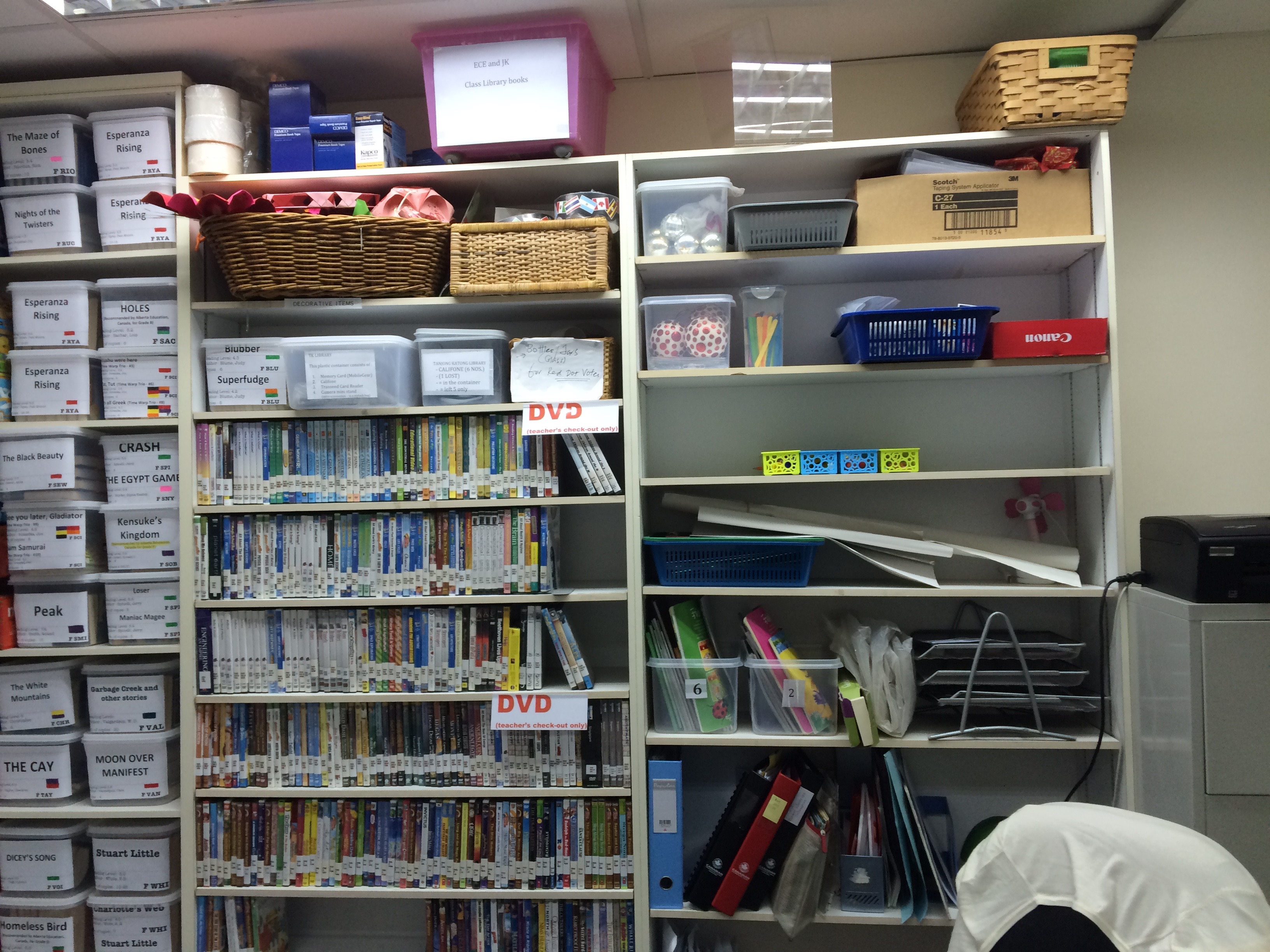
Naturally budget was an important constraint that shaped the way in which the space was converted and books and furniture was acquired or moved and repurposed. As discussed earlier, the librarian was involved in the “fuzzy front end” (Sanders & Stappers, 2008, p. 6), of the secondary library design and once the space was completed it was not possible to change the space, only to adapt its purpose. In the classrooms the availability of furniture in the room to hold the books and the available space for the classroom library vis-à-vis other learning spaces determined how many books could effectively by stored and displayed. In this respect creative design thinking was deployed, for example by taking the doors off built-in cupboard space both in the classrooms and in the library, creating additional shelving. Comfortable furniture was either acquired by donations from the community or purchased to ensure equity between the classrooms.


Although the library and classes each have a budget for the acquisition of books, both wanted to ensure that existing resources were not wasted – for example the books already owned in multiple copies. However their repurposing had to be examined within the constraints of the reading level of the students and the curriculum themes for each grade.

Collaboration and communication

Collaboration and communication between the TL and teachers has received a lot of attention as has the ways in which spatial design and design thinking can enhance collaboration (Avallon & Schneider, 2013; Ferer, 2012; Gibbs, 2003; Knapp, 2014; Montiel-Overall, 2006; Williamson, Archibald, & McGregor, 2010). Enhancing collaboration between the TL and the Eng/Hum department has occurred on a number of fronts, both physical and virtual – such as book chat mornings to book talk new books, encouraging teachers and students to be involved with the selection of books for the Red Dot Awards (ISLN, 2015), processing and cataloguing the books, and the creation of a virtual space for the books (Day, 2015b).


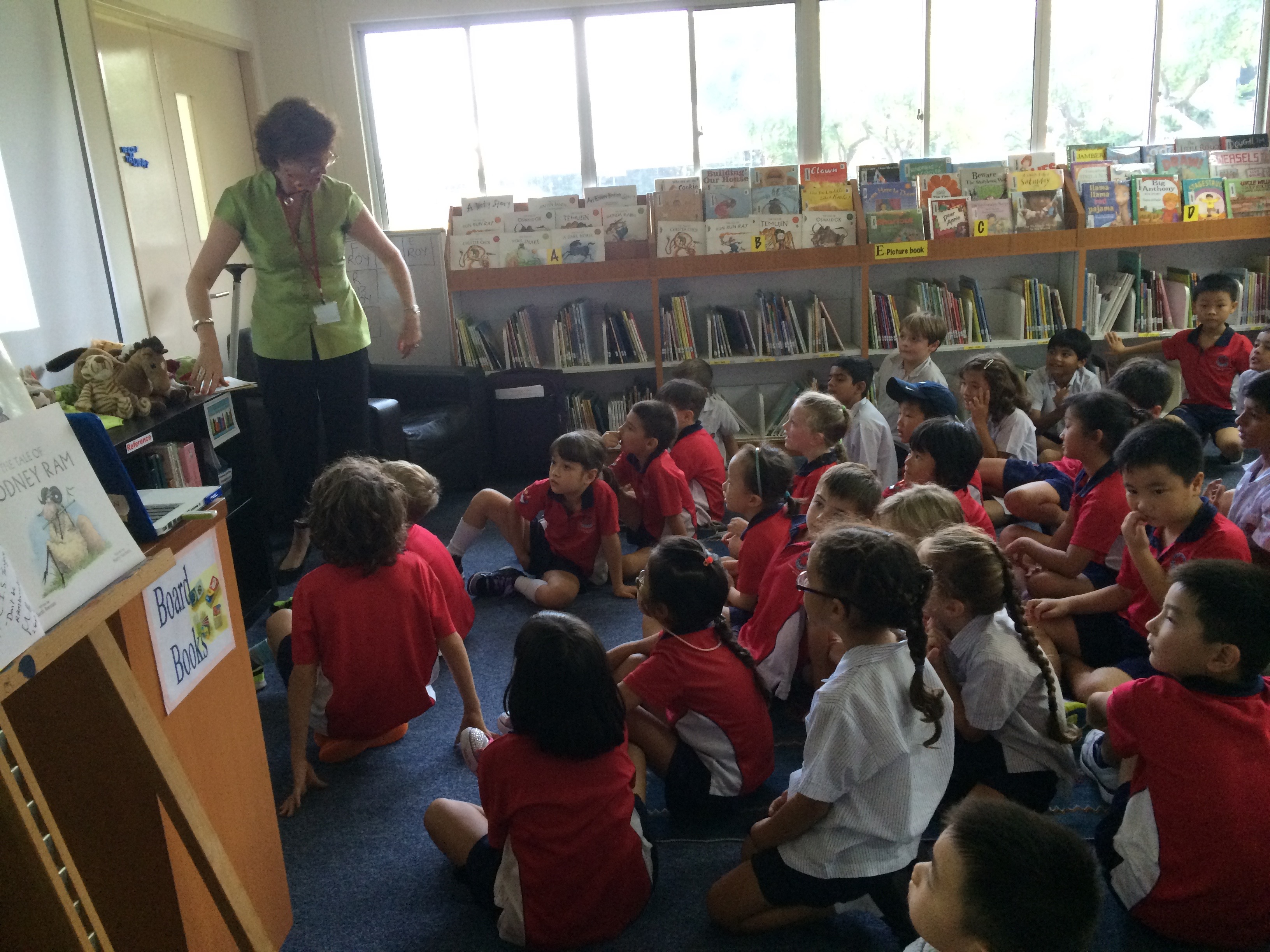
Given time constraints and curriculum pressures, additional moments for collaboration and communication have had to be designed into the process. For example teachers can book the reading zone space to conduct lessons, and invite the TL to book talk new or noteworthy books. In addition the library receives supervision assistance from teachers during lunch, recess times and after school. The Eng/Hum teachers have first priority in requesting this duty, creating the opportunity for the important “casual conversations” that result in informal learning and information exchange (Oblinger, 2006; Somerville & Brown-Sica, 2011).

Conclusion

The process can neither be criticized for its efficacy nor results. Teachers, students and the librarian have largely viewed the change positively. Due to making small iterative changes to the spaces, starting with a small budget and a limited number of books in the first year, and subsequently adapting the choice of books, the selection and weeding process based on experience and feedback, the combined library / class library spaces appear to have grown organically despite a lot of “behind the scenes” work on book processing, cataloguing and making books classroom / shelf ready.

There are five main recommendations arising from the analysis of this case study, all which can be tackled through employing design thinking rather than further changes to the current spatial design:

  • Balance the contradictory forces of novelty and familiarity through how books are selected, displayed and rotated
  • Focus efforts on the most efficacious element of encouraging reading – book talks
  • Expand the space to include the home environment, particularly in the case of bilingual students
  • Increase involvement of students in the spatial design and change process
  • Quantify the benefits of this spatial / design thinking collaboration through evidence based research.

These will be elaborated in the next section.

Recommendations

Balance novelty and familiarity

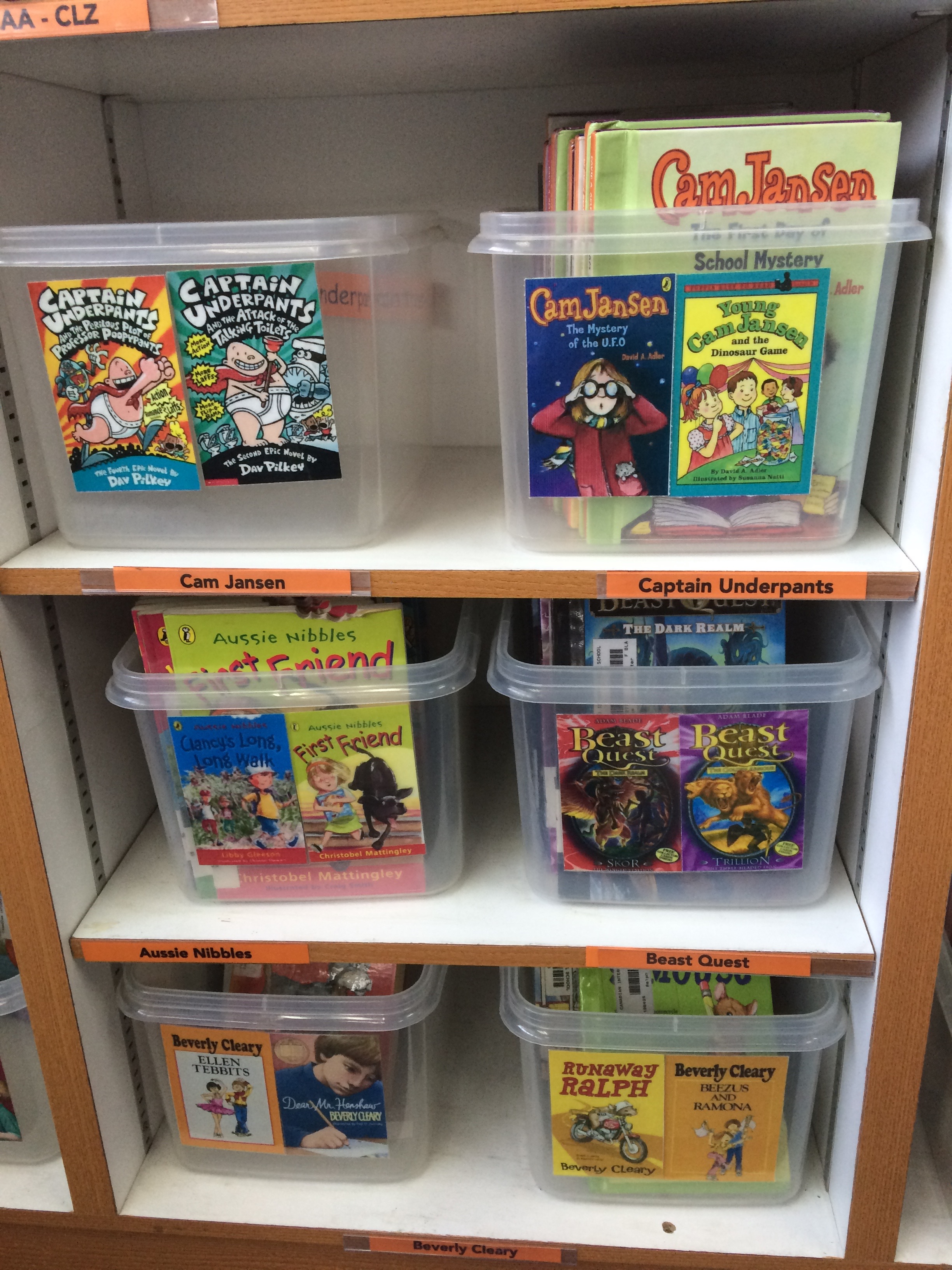
Students like and respond to novelty in display and a constant supply of “new” titles, they would also possibly benefit from choice limitation (Iyengar, 2011). This can be achieved by a rotation of titles between spine and front facing, and through a rotation between the books in the various classes (Lindsay, 2010). At present the core and class libraries are refreshed annually and the class libraries are not rotated between classes or teachers. It is recommended this be considered to prevent staleness. The class library placement of books in bins rather than shelves with a mixture of front and spine facing, allowing changes is display is not best practise, nor is having all books available simultaneously (Fractor et al., 1993; Lindsay, 2010; Sanacore, 2000; Sanacore & Palumbo, 2010).

Book talks

The importance of teachers’, librarians’, students’ and the community’s increasing exposure of diverse books in all genres by book talking can’t be overstated (Bentheim, 2013; Gallo, 2001; L. McDonald, 2013; Serafini, 2011). But, as examined in the analysis, a number of barriers stand in the way of regular book talks. In addition, requiring reading related tasks from students runs the risk of resulting in unfavourable associations with reading and further reluctance (Eriksson, 2002; Gallo, 2001; Miller, 2009).


Many practioners have described how digital innovation and the creation of virtual spaces can enhance and augment traditional book talks as well as expand transliteracy skills of students (Dreon, Kerper, & Landis, 2011; Gogan & Marcus, 2013; Gunter & Kenny, 2008; Ragan, 2012). It is recommended that students be given ownership of exploring the potentials of the digital realm in this respect as a guided design thinking exercise.

Mother tongue material and the home environment

Access to mother tongue materials continues to be a weakness in the library and even more so in the classroom library. There are logistical and financial constraints including the wide spread of languages, the undervaluation of low status languages, and misinformation and misunderstanding on the value of reading in the mother tongue amongst students and parents (Bailey, 2014a, 2014b, 2015; Boelens, Cherek, Tilke, & Bailey, 2015). This is an area that would benefit greatly from increased collaboration between the college and parent body where previously “unknowable” resources could be tapped into through utilizing the analytical and process skills of design thinking (IDEO, 2014; Landis, Umolu, & Mancha, 2010; McIntosh, 2015).

Student involvement

While literature indicates collaboration by all stakeholders is essential for acceptance, particularly in learning environments (Hamilton, 2013; Jones, 2006; Sanders & Stappers, 2008), this has largely been a librarian / teacher initiative with some student involvement in book selection. Moving forward, the virtual or digital sphere is an area where students can also be encouraged to carve out a presence and take ownership with teachers taking on an enabler role as use of all seven learning spaces are maximised (Grisham & Wolsey, 2006; McIntosh, 2010; Thornburg, 2007; Wilson & Randall, 2012).

Quantify the benefits

Despite numerous hurdles in providing data and making analysis founded on circulation figures or student attainment records, there is considerable value in documenting and providing evidence for practises – not the least that it supports budget requests.


Circulation records do not provide a complete record or necessarily correlate with reading because:

  • Books may be read in library / class without being checked out
  • In affluent multi-cultural communities, students may have access to large personal libraries, including books in their mother tongue
  • Students may be borrowing books from the public library

Despite this, circulation is still the best proxy for reading. The decentralised nature of the class libraries results in less control over book checkout. Even in the library, that has no exit barriers, at the end of 2014/5 academic year roughly 20% of returned books had not been checked out of the system. While this can be lauded as an indication of the high moral and ethical standards of the students, it does pose difficulties in creating any evidence based data on the actual impact of either separating part of the library or decentralising the collection to class libraries in terms of increases in circulation.


It is recommended that both current and longitudinal research be carried out to see if there is any correlation between increased access to text, the amount of reading / circulation and other objective measures of attainment such as the annual PISA or TIMS tests. This will take the initiative beyond transformative individual anecdotal stories to evidence based research. The CLEP (Classroom Literacy Environmental Profile) (McGill-franzen et al., 1999; Wolfersberger, Reutzel, Sudweeks, & Fawson, 2004) and more recently the TEX-IN3 (Hoffman, Sailors, Duffy, & Beretvas, 2004) tools have successfully been used in the evaluation of elementary school class libraries and could be adapted for the middle school environment.


The recent inclusion of informational (nonfiction) texts in both the middle school zone and the classroom libraries is also one worth further investigation. Whether the expansion of the collections has impacted on the space, the ability to choose, and the completion of summative assessments in the individual subjects can be investigated in the light of the existing literature on the matter (Hopenwasser & Noel, 2014; Ness, 2011; Sanacore & Palumbo, 2010; Young & Moss, 2006; Young, Moss, & Cornwell, 2007).

References

Avallon, J., & Schneider, A. (2013). Building collaboration into workspace design. Facility Management Journal, (September / October), 34–38. Retrieved from http://cdn.ifma.org/sfcdn/fmj-supporting-documents/building-collaboration-into-workspace-design-fmj-sep-oct-2013.pdf?sfvrsn=0

Bailey, N. (2014a, November 12). Building a LOTE collection at an international school [Web Log]. Retrieved October 4, 2015, from http://informativeflights.blogspot.sg/2014/11/building-lote-collection-at.html

Bailey, N. (2014b, November 12). Research summary on language [Web Log]. Retrieved November 12, 2014, from http://informativeflights.blogspot.sg/2014/11/research-summary-on-language.html

Bailey, N. (2015). Digital language learning ecology. Singapore: iBooks. Retrieved from https://itunes.apple.com/us/book/digital-language-learning/id1000588637?ls=1&mt=11

Bentheim, C. A. (2013). Continuing the transition work from traditional library to learning commons. Teacher Librarian, 41(2), 29–36. Retrieved from http://ezproxy.csu.edu.au/login?url=http://search.ebscohost.com/login.aspx?direct=true&db=ehh&AN=92991111&site=ehost-live

Boelens, H., Cherek, J., Tilke, A., & Bailey, N. (2015). Communicating across cultures: cultural identity issues and the role of the multicultural, multilingual school library within the school community. Presented at the “The school library rocks” IASL 2015, Maastricht, Netherlands.

Brown, T. (2008). Design thinking. Harvard Business Review, 86(6), 84–92. Retrieved from http://ezproxy.csu.edu.au/login?url=http://search.ebscohost.com/login.aspx?direct=true&db=heh&AN=32108052&site=ehost-live

Brown, T., & Katz, B. (2011). Change by Design: Change by Design. Journal of Product Innovation Management, 28(3), 381–383. http://doi.org/10.1111/j.1540-5885.2011.00806.x

Cha, S. H., & Kim, T. W. (2015). What matters for students’ use of physical library space? The Journal of Academic Librarianship, 41(3), 274–279. http://doi.org/10.1016/j.acalib.2015.03.014

Day, K. (2013a, January 14). Carol Kuhlthau meets Tim Brown: Guided Inquiry {Design} Thinking [Web Log]. Retrieved October 3, 2015, from http://www.thelibrarianedge.com/libedge/2013/01/carol-kuhlthau-meets-tim-brown-guided.html?rq=design%20thinking

Day, K. (2013b, November). Liberate your book cupboards and create a more true “bookstore” model in your school library [Web Log]. Retrieved August 2, 2015, from http://www.thelibrarianedge.com/libedge/2013/11/liberate-your-book-cupboards-and-create.html

Day, K. (2015a, August 30). Expert learning in the library…. and classroom [Web Log]. Retrieved October 3, 2015, from http://www.thelibrarianedge.com/libedge/2015/8/30/a-sociologist-who-loves-the-research-process?rq=

Day, K. (2015b, September 3). Professional learning for teachers who read books students might read [Library Guide]. Retrieved September 6, 2015, from http://research.uwcsea.edu.sg/eastlibsec/classlibs

Day, K. (2015c, September 5). Design thinking for the research process (e.g., the IBO Extended Essay) [Web Log]. Retrieved September 6, 2015, from http://www.thelibrarianedge.com/libedge/2015/8/30/design-thinking-for-the-research-process

Day, K. (2015d, September 28). Center and satellite collections: connections between classrooms and the library [Web Log]. Retrieved October 3, 2015, from http://www.thelibrarianedge.com/libedge/2015/9/26/middle-school-classroom-libraries-and-the-central-library

Dreon, O., Kerper, R. M., & Landis, J. (2011). Digital storytelling: A tool for teaching and learning in the YouTube generation. Middle School Journal, 42(5), 4–9.

Elliott-Burns, R. (2003). Space, place, design and the school library. Journal of the Australian School Library Association, 17(2).

Elliott-Burns, R. (2005). Designing spaces for learning and living in schools: perspectives of a flaneuse. Presented at the Australian Curriculum Studies Association Biennial Conference, Queensland, Australia: University of the Sunshine Coast. Retrieved from http://eprints.qut.edu.au/4345/1/4345.pdf

Eriksson, K. (2002). Booktalk dilemmas: Teachers’ organisation of pupils’ reading. Scandinavian Journal of Educational Research, 46(4), 391–408. http://doi.org/10.1080/0031383022000024570

Ferer, E. (2012). Working together: library and writing center collaboration. Reference Services Review, 40(4), 543–557. http://doi.org/10.1108/00907321211277350

Fractor, J. S., Woodruff, M. C., Martinez, M. G., & Teale, W. H. (1993). Let’s not miss opportunities to promote voluntary reading: Classroom libraries in the elementary school. The Reading Teacher, 46(6), 476–484. Retrieved from http://www.jstor.org/stable/20201114

Gallo, D. R. (2001). How classics create an aliterate society. The English Journal, 90(3), 33–39. Retrieved from http://moormangb.ced.appstate.edu/5730_f11_h/unit1/Gallo.pdf

Gibbs, R. (2003). Reframing the role of the teacher-librarian : the case for collaboration and flexibility. Scan, 22(3), 4–7. Retrieved from http://search.informit.com.au.ezproxy.csu.edu.au/fullText;dn=129538;res=AEIPT

Gogan, B., & Marcus, A. (2013). Lost in transliteracy – how to expand student learning across a variety of platforms. Knowledge Quest, 41(5), 40–45.

Grisham, D. L., & Wolsey, T. D. (2006). Recentering the middle school classroom as a vibrant learning community: Students, literacy, and technology intersect. Journal of Adolescent & Adult Literacy, 49(8), 648–660. http://doi.org/10.1598/JAAL.49.8.2

Gunter, G. A., & Kenny, R. F. (2008). Digital booktalk: Digital media for reluctant readers. Contemporary Issues in Technology and Teacher Education, 8(1), 84–99.

Hamilton, B. (2013, November 14). A visit to the Lovett School story studio: Redesigning learning spaces, rewriting narratives of learning [Web Log]. Retrieved August 8, 2015, from https://theunquietlibrarian.wordpress.com/2013/11/14/a-visit-to-the-lovett-school-story-studio-redesigning-learning-spaces-rewriting-narratives-of-learning/

Hill, A. M. (1998). Problem solving in real-life contexts: An alternative for design in technology education. International Journal of Technology and Design Education, 8, 203–220.

Hoffman, J., Sailors, M., Duffy, G., & Beretvas, S. N. (2004). The effective elementary classroom literacy environment: Examining the validity of the TEX-IN3 observation system. Journal of Literacy Research, 36(3), 303–334. http://doi.org/10.1207/s15548430jlr3603_3

Hopenwasser, C. B., & Noel, A. M. (2014). Tackling text complexity with your classroom library. Kappa Delta Pi Record, 50(2), 81–84. http://doi.org/10.1080/00228958.2014.900851

IDEO. (2014). Design thinking for libraries – a toolkit for patron-centered design (p. 121). IDEO, Bill & Melinda Gates Foundation. Retrieved from http://www.designthinkingforlibraries.com

ISLN. (2015). Red Dot Book Awards 2015-2016 [Google Site]. Retrieved October 8, 2015, from https://sites.google.com/site/reddotbookawards20152016/

Iyengar, S. (2011, November). How to make choosing easier [Video file]. Retrieved October 8, 2015, from https://www.ted.com/talks/sheena_iyengar_choosing_what_to_choose

James, M. E. (1923). Use of classroom libraries to stimulate interest and speed in reading. The Elementary School Journal, 23(8), 601–608. http://doi.org/10.2307/994550

Jones, J. A. (2006). Student-involved classroom libraries. The Reading Teacher, 59(6), 576–580. Retrieved from http://search.proquest.com/docview/203284680?accountid=10344

Kelley, M. J., & Decker, E. O. (2009). The Current State of Motivation to Read Among Middle School Students. Reading Psychology, 30(5), 466–485. http://doi.org/10.1080/02702710902733535

Knapp, J. (2014, May 1). Google Ventures: your design team needs a war room. Here’s how to set one up. Retrieved August 8, 2015, from http://www.fastcodesign.com/3028471/google-ventures-your-design-team-needs-a-war-room-heres-how-to-set-one-up

Krarup, A. (1955). Classroom libraries are not enough. The Reading Teacher, 8(4), 215–219. http://doi.org/10.2307/20196863

Krashen, S. D. (2004). The power of reading: insights from the research. Westport, Conn.; Portsmouth, N.H.: Libraries Unlimited ; Heinemann.

La Marca, S. (2008). Reading spaces (pp. 1–12). Presented at the 38th Annual Conference of the International Association of School Librarianship, Padua, Italy: International Association of School Librarianship. Retrieved from http://www.kzneducation.gov.za/Portals/0/ELITS%20website%20Homepage/IASL%202008/professional%20papers/lamarcaspacespp.pdf

Landis, D., Umolu, J., & Mancha, S. (2010). The power of language experience for cross-cultural reading and writing. The Reading Teacher, 63(7), 580–589. http://doi.org/10.1598/RT.63.7.5

Lesesne, T. S. (1991). Developing lifetime readers: Suggestions from fifty years of research. English Journal, 80(6), 61. Retrieved from http://search.proquest.com/docview/237285282?accountid=10344

Lindsay, J. (2010). Children’s access to print material and education-related outcomes: Findings from a meta-analytic review. Naperville, IL: Learning Point Associates. Retrieved from http://rif.org/documents/us/RIFandLearningPointMeta-FullReport.pdf

McDonald, A. (2006). The ten commandments revisited: the qualities of good library space. LIBER Quarterly, 16(2). Retrieved from http://liber.library.uu.nl/index.php/lq/article/view/7840/8010

McDonald, L. (2013). Literature for children and young adolescents. In A literature companion for teachers (pp. 1–7). Newtown, Australia: Primary English Teaching Association Australia (PETAA).

McGill-franzen, A., Allington, R. L., Yokoi, L., & Brooks, G. (1999). Putting books in the classroom seems necessary but not sufficient. The Journal of Educational Research, 93(2), 67–74. http://doi.org/10.1080/00220679909597631

McIntosh, E. (2010). Clicks & Bricks: When digital, learning and physical space meet. Educational Facility Planner, 45(1&2), 33–38. Retrieved from http://media.cefpi.org/efp/EFP45-1and2McIntosh.pdf

McIntosh, E. (2015, July). The unknown unknowns – test out your ideas [Web Log]. Retrieved July 19, 2015, from http://edu.blogs.com/edublogs/2015/07/the-unknown-unknowns-test-out-your-ideas.html

Miller, D. (2009). The book whisperer: awakening the inner reader in every child (1st ed). San Francisco, Calif: Jossey-Bass.

Montiel-Overall, P. (2006). Teacher and teacher-librarian collaboration: moving toward integration. Teacher Librarian, 34(2), 28–33. Retrieved from http://search.proquest.com/docview/224885770?accountid=10344

Montiel-Overall, P. (2008). Teacher and librarian collaboration: A qualitative study. Library & Information Science Research, 30(2), 145–155. http://doi.org/10.1016/j.lisr.2007.06.008

Ness, M. (2011). Teachers’ Use of and Attitudes Toward Informational Text in K-5 Classrooms. Reading Psychology, 32(1), 28–53. Retrieved from http://ezproxy.csu.edu.au/login?url=http://search.ebscohost.com/login.aspx?direct=true&db=pbh&AN=57420253&site=ehost-live

Oblinger, D. (2006). Learning spaces. Boulder, CO: EDUCAUSE.

Powell, W. R. (1966). Classroom libraries: their frequency of use. Elementary English, 43(4), 395–397. http://doi.org/10.2307/41387579

Ragan, M. (2012). Inspired technology, inspired readers – How book trailers foster a passion for reading. Access, March, 8–13.

Raisdana, J. (2014, March 10). Well-versed In books [Web Log]. Retrieved October 3, 2015, from http://www.jabizraisdana.com/blog/well-versed-in-books/

Raisdana, J. (2015, February 9). Leave with a suggestion [Web Log]. Retrieved October 3, 2015, from http://www.jabizraisdana.com/blog/leave-with-a-suggestion/

Sanacore, J. (2000). Promoting the lifetime reading habit in middle school students. The Clearing House, 73(3), 157–161. Retrieved from http://search.proquest.com/docview/196889420?accountid=10344

Sanacore, J., & Palumbo, A. (2010). Middle school students need more opportunities to read across the curriculum. The Clearing House, 83(5), 180–185. Retrieved from http://search.proquest.com/docview/744358835?accountid=10344

Sanders, E. B.-N., & Stappers, P. J. (2008). Co-creation and the new landscapes of design. CoDesign, 4(1), 5–18. http://doi.org/10.1080/15710880701875068

Serafini, F. (2011). Creating space for children’s literature. The Reading Teacher, 65(1), 30–34. http://doi.org/10.1598/RT.65.1.4

Sheldon, S., B., & Davis, M., H. (2015). “I wish everyone had a library like this” (The Baltimore Elementary and Middle School Library Project No. Year 2 Report). Baltimore, USA. Retrieved from http://baltimore-berc.org/wp-content/uploads/2015/06/ALibraryLikeThisJune2015.pdf

Somerville, M. M., & Brown-Sica, M. (2011). Library space planning: a participatory action research approach. The Electronic Library, 29(5), 669–681. http://doi.org/10.1108/02640471111177099

Sullivan-Macdonald, D. (2015, October 1). Teach more, librarian less, say SLJ leadership summit panelists [Web Log]. Retrieved October 3, 2015, from http://www.slj.com/2015/10/schools/teach-more-librarian-less-becoming-essential-panel-at-the-slj-leadership-summit/

Thornburg, D. (2007, October). Campfires in cyberspace: Primordial metaphors for learning in the 21st Century. TCPD. Retrieved from http://tcpd.org/Thornburg/Handouts/Campfires.pdf

Todd, R. J., Gordon, C. A., & Lu, Y.-L. (2011). One common goal: Student learning (Report of Findings and Recommendations of the New Jersey School Library Survey Phase 2). New Jersey, USA: New Jersey Association of School Librarians. Retrieved from http://www.njasl.info/wp-content/NJ_study/2011_Phase2Report.pdf

Williamson, K., Archibald, A., & McGregor, J. (2010). Shared vision: A key to successful collaboration? School Libraries Worldwide, 16(2), 16–30. Retrieved from http://ezproxy.csu.edu.au/login?url=http://search.ebscohost.com/login.aspx?direct=true&db=lih&AN=55415805&site=ehost-live

Wilson, G., & Randall, M. (2012). The implementation and evaluation of a new learning space: a pilot study. Research in Learning Technology, 20(2), 1–17. Retrieved from http://ezproxy.csu.edu.au/login?url=http://search.ebscohost.com/login.aspx?direct=true&db=ehh&AN=86214889&site=ehost-live

Wolfersberger, M., Reutzel, D. R., Sudweeks, R., & Fawson, P. (2004). Developing and validating the Classroom Literacy Environmental Profile (CLEP): A tool for examining the “print richness” of early childhood and elementary classrooms. Journal of Literacy Research, 36(2), 211–272. http://doi.org/10.1207/s15548430jlr3602_4

Worthy, J. (1996). Removing barriers to voluntary reading for reluctant readers: The role of school and classroom libraries. Language Arts, 73(7), 483–492. Retrieved from http://search.proquest.com/docview/196851690?accountid=10344

Young, T. A., & Moss, B. (2006). Nonfiction in the classroom library: A literacy necessity. Childhood Education, 82(4), 207–212. Retrieved from http://search.proquest.com/docview/210392168?accountid=10344

Young, T. A., Moss, B., & Cornwell, L. (2007). The classroom library: A place for nonfiction, nonfiction in its place. Reading Horizons, 48(1), 1–18. Retrieved from http://search.proquest.com/docview/236486012?accountid=10344


Design – Space, Thinking and Time (4)

September literally flew by, and I’m at the point of finishing up my final assessment for this course, and working on my critical reflection.  But first I wanted to critically reflect on where I was in my own library space.

I’m expanding the LibGuides to better resource our curriculum and to supplement the gaps in the curriculum.  Because only I know how to use them, the progress is slow and on a “just in time” basis populating them rather than a nice methodical roll-out, but the reception has been great from both the students and the teachers.  I’ve started showing it from Grade 3, and one of my Grade 5 pupils told me she’d spent an hour looking through the library Libguide before the lesson and “loved it”.

My next foray into the digital sphere for this learning environment has been to accost all the teachers to try and get them to download the Destiny App to access our catalog from their mobile phones and iPads.  The rollout to students will take a little longer as I have to apply to EdTech for permission to have apps loaded onto their iPads and that is reviewed and action taken only once a term.


I have to mention something about the value of constraints at this point.  Up to last Friday, more than 6 weeks into term, our library budget had not yet been approved and I had a bunch of kids whining that they were bored of the books and wanted new books.  I’d been fiddling around with the reporting tool of our OPAC trying to do a bit of a collection analysis and see what I had of which levels, what was popular etc. and I discovered that we had about 500 books that had never ever been circulated.

IMG_0765
One of my about 500 “neglected books”

What was the matter with them?  I got my staff to pull them all out.  I started with nonfiction – about 150 books and put them all on my table with books overflowing onto the floor and invited teachers to come and have a look and see if we could put it in a unit of inquiry resource list or if it would be useful for anything.  We whittled it down to about 20 books that are still homeless and unloved, but it was great as the books were “new to them” and hidden on the shelves.  The process was repeated for the picture books – but how to get young kids to identify the books and not have them lying on my desk or one of the few tables in the library – and that’s when I decided a little sad face paper clipped onto the book could do the trick.   And it did! You would have thought I’d put abandoned puppies free to a good home on display!  My staff and I started on a Monday morning and by Tuesday all the books had found a home.  So we continued with Junior Fiction and Fiction – with the same response, albeit a little more mature.  My older students gasped that award winning books hadn’t been borrowed.  They took up the challenge of taking a risk with a book or author they hadn’t tried yet.

These books haven’t flown off the shelves at quite such a fast pace, and there are more of them – particularly in the fiction section.  At that age students have become more selective and seem to be getting settled in their tastes.  Some have reported back that they’ve enjoyed the “new” books.  I’m working through some of the titles myself so I can book talk them as well.


So here are some captioned photos of how the space has evolved over the last two weeks and what we’ve been up to.

IMG_0794
A grade 1 class donates a finger counting poster they made

IMG_0777
Reverse psychology on teacher resources that hadn’t moved since I started – I don’t wait for them to come to me, I just look at the books and think who might like / need them for their class / self and check them out to them! So far a good response from all and no rejects returned yet…

IMG_0708
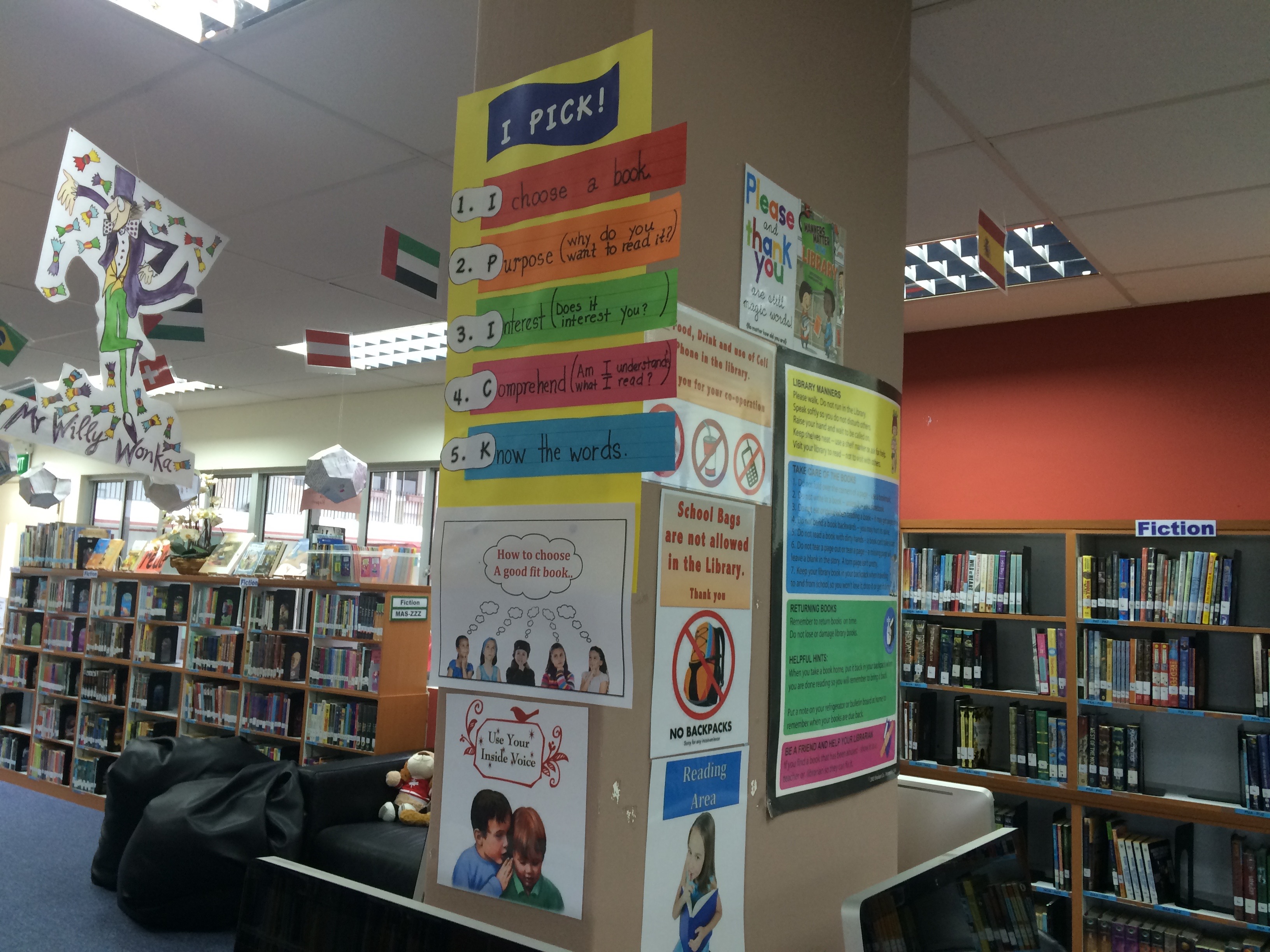
Notices everywhere to direct users to our online presence and virtual resources

IMG_0824
Stacks of books pulled out quickly as my G6 students did their 3 minute booktalk before their Information Literacy classes.

IMG_0666
The yellow post-its are the library “to do” list. As soon as something has been completed, it gets taken down and thrown away. When I think of something I write a note and put it up. Then if I or my staff has time, we tackle the next item that can be done …


Design – Space, thinking and time (3) …

A whole month has now passed and we’re still making slow progress. In addition to the pretty pictures this week I’d like to post a little bit about “time” as a space and virtual spaces.

We have 35 classes and 35 periods of 40 minutes which are potential useable in a week, so one would think that’s a perfect match. But it’s not. In elementary school every class does need to spend time in the library exchanging books, looking around and just “being”, but different classes have different needs of different intensity as far as the teacher-librarian time is concerned.  One of the things the outgoing librarian advised me to do, was to move from fixed 40 minute time-tabling for every class every week, to fixed 20 minute fixed timetables, which freed up 17x 40 minute blocks for booking sessions which were Information Literacy focused and needs-based. And also a space in case classes missed their library period due to field-trips, school events, public holidays (of which there have been PLENTY, this term). In the ramp up of a new year and and being a new TL and a being in new school, this time has been invaluable to me to get things sorted out and on the rails to ensure the role of TL is not just to read stories and help with readers advisory (not that those are not important tasks, they are), but also to be a co-teacher co-thinker and collaborator in literacy and information literacy.

Slowly but surely I’m getting requests for those bookable times.  I myself have been a little slow in inviting myself to grade curriculum planning meetings – mainly because I’ve just not been ready for them yet.  That will start this week.  I’m having to keep my foot lightly on the brake and not try too much at once and have it backfire.  Luckily my colleagues have been very admirable in helping slow me down in the nicest possible way.

My virtual space is also at last moving forward. After a 4 week battle with IT and firewalls, I finally have access to Libguides and have started with my first priorities – a library libguide and an Information Literacy libguide. I’ve also started promoting the Destiny Quest app amongst the teachers. Slow progress is also progress.

IMG_0667
Phase 1 of sorting the literacy circle books. Next stop to put the unused ones back into circulation and to ensure they’re all levelled.
IMG_0666
White board installed and post-its for “to-do”


IMG_0670
What to do with all those DVDs? But I do have more shelf space now.

IMG_0708
First step of venturing into the digital realm with the library … that has been an uphill battle of a month … but we’re getting there!

IMG_0707
My flexible space turned into a meeting place for Open Day

IMG_0714
Open Day treats … reminder to self – make sure they don’t just replace the shelving but also vacuum the food remnants – little people are very close to the ground.

IMG_0705
Removed one desktop to create space for display … it’s not yet there, but a first step. Need to remove the chair, put some bins underneath and I’m thinking gutter shelving for the top

IMG_0720
My review wall is exploding! Yay, also thanks to some pictures from my group after watching “The Dot” and drawing for me.


Assessment Item 3: Literature Critique


The challenges of the school library as an evolving learning space

Word Count: 2,628


Bibliographic details:

IDEO. (2014). Design thinking for libraries – a toolkit for patron-centered design (p. 121). IDEO, Bill & Melinda Gates Foundation. Retrieved from www.designthinkingforlibraries.com

Haycock, K. (2007). Collaboration: Critical success factors for student learning. School Libraries Worldwide, 13(1), 25–35.

La Marca, S. (2008). Reading spaces (pp. 1–12). Presented at the 38th Annual Conference of the International Association of School Librarianship, Padua, Italy: International Association of School Librarianship. Retrieved from http://www.kzneducation.gov.za/Portals/0/ELITS%20website%20Homepage/IASL%202008/professional%20papers/lamarcaspacespp.pdf

Lin, P., Chen, K., & Chang, S.-S. (2010). Before there was a place called library – Library space as an invisible factor affecting students’ learning. Libri: International Journal of Libraries & Information Services, 60(4), 339–351.

Oblinger, D., G. (2006). Learning how to see. In D. Oblinger G. (Ed.), Learning Spaces (pp. 14.1–14.11). Boulder, CO: Educause. Retrieved from http://www.educause.edu/learningspaces

Willis, J., Bland, D., Hughes, H., & Elliott-Burns, R. (2013). Reimagining school libraries: emerging teacher pedagogic practices. Presented at the International Conference of the Australian Association for Research in Education, Adelaide, South Australia. Retrieved from http://eprints.qut.edu.au/66925/7/66925.pdf


Outline

This essay will specifically focus on the libraries of educational institutions – in particular school libraries – their role in learning and the way in which design, design thinking and the design process can optimise student outcomes given the financial, physical and time constraints inherent to the school environment.


A critique of literature necessitates criterion from which to evaluate the material. One of the weaknesses in design literature in general and school library design in particular is the reliance on single story or anecdotal evidence to support decisions and change. The aforementioned six pieces of literature will be judged to see whether they incorporate an understanding and discussion of

  • how research-based educational discourse has influenced the design space,
  • the relationships between educational trends and physical and virtual spaces,
  • the incorporation of technical and physical standards of interoperability, usability and sustainability,
  • how collaboration can be enhanced through the design process, design thinking or physical, virtual or temporal spatial design

Educational Discourse

A number of themes characterise current educational discourse. Following a meta-analysis of evidence-based influences on student achievement, the conclusion was reached that major sources of variance in student’s achievement lie in the learners themselves (50%) and their teachers (30%) (Hattie, 2003, 2009). Claxton’s work on the qualities of successful learners and their underlying motivations – including responsibility, respect, real world application, choice, challenge and collaboration are of relevance to this discussion (McIntosh, 2011), as are any ways in which design thinking or changes to physical, virtual or temporal spaces can enhance the work of teachers in particular collaboration, co-planning and co-teaching with teacher librarians (Loertscher, 2014; Montiel-Overall, 2006, 2008; Todd, 2008).


Literature supports evidence that learner needs can be met by creating physical and virtual spaces, as well as using design thinking to allow learners greater autonomy (La Marca, 2008). Users should be involved in the design of learning spaces and programs (IDEO, 2014; Oblinger, 2006). Greater choice is provided by spaces that accommodate different learning styles, and promote informal learning while extending learner experience. Well-designed social spaces have a positive impact on motivation and the ability to learn by encouraging ‘conversations’ and interaction between faculty and students and intra-faculty collaboration (Haycock, 2007; IDEO, 2014; La Marca, 2008; Lin, Chen, & Chang, 2010; Oblinger, 2006; Willis, Bland, Hughes, & Elliott-Burns, 2013).

Educational Trends

The trends that have been identified that impact on the school library as a space include; learning no longer being limited by geography, time or physical spaces, the emergence of digital and virtual spaces (Joint, 2011; Kurvink, 2008; La Marca, 2008; Oblinger, 2006), a movement away from a fixed curriculum to inquiry based learning (Kuhlthau & Maniotes, 2010; Kuhlthau, Maniotes, & Caspari, 2012; Short, 2009), rapid globalisation with more multi-lingual/cultural learners in any learning environment, (Gee & Hayes, 2011; Kutner & Armstrong, 2012; Vega, 2014) learning no longer confined to educational institutions but becoming life-long and personalized (Gee & Hayes, 2011; McLoughlin & Lee, 2009) and learning is moving away from being individual, school bound and information based to being collaborative and interactive with an emphasis on analysis, thinking problem solving and knowledge building (Chau & Cheng, 2011; Ellis & Phillips, 2013; Sinclair, 2007; Vasiliou, Ioannou, & Zaphiris, 2014; Vaughan, Nickle, Silovs, & Zimmer, 2011). One of the merits of design thinking is that while it cannot always anticipate educational trends, it provides librarians and educators with the tools to respond to the challenges inherent in change (IDEO, 2014) – provided of course they are recognised on time. Oblinger (2006) also encourages experimentation, innovation and prototyping in educational spaces.


Education space is no longer defined by physical rooms and teaching but by learning and the means of providing access to shared specialist resources both physical and virtual that is flexible, responsive to individual needs, allows self-directed learning and opportunities for interaction and collaboration (La Marca, 2008; Oblinger, 2006; Willis et al., 2013). Instead of grades and diplomas “learning is the unit of success” (IDEO, 2014, p. 97), even when the outcome appears not to be favourable.

Technical and physical environment

The literature appears to agree on the importance of setting pedagogical, philosophical and social goals before planning learning spaces and evaluating these e against the mission and values of the organisation (La Marca, 2008; Lin et al., 2010; Oblinger, 2006; Willis et al., 2013). Discussions range from the social construction of space, and how this can catalyse encounters (Oblinger, 2006) and impact on functional areas, relationships and the service philosophy (Lin et al., 2010), power structures and the messaging of signage (Willis et al., 2013) to more practical issues around the importance of useable, interoperable, flexible and sustainable spaces with a discussion of physical elements, ambiance, lighting, colour, acoustics temperature, display and ‘agile’ furniture (La Marca, 2008; Willis et al., 2013).


Sustainability is an important theme due to the longevity of building structures relative to internal components such as hard/software and furnishings with an emphasis on the importance of continual flexibility and renewal to ensure the environment aligns with pedagogy, curricula, assumed practices and social factors (Hauke & Werner, 2012; Lin et al., 2010; Oblinger, 2006; Willis et al., 2013). The employment of design thinking allows for the rapid prototyping, mini-piloting and implementation responding to changes while working within constraints and involving all stakeholders in the space (IDEO, 2014).

Collaboration

A substantial body of research points to the value of teacher and librarian collaboration (Ferer, 2012; Gibbs, 2003; Haycock, 1998, 2007; Jones & Green, 2012; Kachel, 2013; Loertscher, 2014; Lonsdale, 2003; Montiel-Overall, 2006, 2008; Todd, 2008; Williamson, Archibald, & McGregor, 2010), yet little practical implementable advices is given on how libraries can change their physical, virtual or temporal spaces, or even implement design thinking in order to improve the likelihood of collaboration and integration.


Literature primarily focuses on the need to merge the academic and social dimensions of learning through flexible and adaptive spaces which cater for collaborative learning amongst users and patrons, recognising the communal character of knowledge and allowing for spontaneous user interactivity (Lin et al., 2010). A convincing argument is made for considering the way in which the new constructivist pedagogies of collaboration, interactive learning and analytic thinking have impacted design practices in order to situate physical and digital information geographically and symbolically into the social context of learning in order to advance and perpetuate knowledge (Lin et al., 2010). To meet these changes, library space design has evolved to favour ample ‘agile’ mobile spaces and flexible movable furnishings to facilitate the creation of a third space that offers resources and services above and beyond what the home, office or classroom is able to provide (La Marca, 2008; Willis et al., 2013) while flexible scheduling allows the “temporal space” within which collaboration has the time to occur (Gavigan, Pribesh, & Dickinson, 2010; Haycock, 1998, 2007).

Collaboration with users allows them to be acknowledged and heard, and the design thinking process offers some practical advices with a methodology which can be extended to enhancing collaboration within programs, services, spaces and systems (IDEO, 2014).


Analysis

One of the first hurdles in considering which practices translate best into practice is how to evaluate the success of an educational library space. While schools and teachers can be assessed on common standards, examination results, literacy and numeracy scores, the librarian is tasked with providing evidence for the more nebulous concepts of enhancing student and teacher learning, resourcing the curriculum, providing access to information and a pleasant physical environment (Gillespie & Hughes, 2014). Research attempting to quantify a link between achievement in the form of test scores and school libraries suggests the following characteristics of a successful school library:

  • Integration of information literacy skills in the curriculum
  • Adequate staffing, resourcing and funding
  • Collaborative planning between librarians and teachers
  • Extended library and staff hours
  • In-service training by librarians to teachers
  • Good quality, larger and newer collections
  • More student visits
  • Flexible scheduling (Kachel, 2013; Lonsdale, 2003).


However, academic achievement is just one aspect of the outcome indicators identified by the Victoria Department of Education in their evaluation of built learning spaces – others include engagement, interpersonal interactions, physical and psychological wellbeing and behavioural features – (Blackmore, Bateman, Loughlin, O’Mara, & Aranda, 2011). These features presume pre-conditions for learning receptiveness that learning spaces are burdened with assuming, and for which research indicates there is little empirical evidence.


Unfortunately this appears to also be the case with respect to the design considerations that most easily translate into practice, the “low hanging fruit” – often extolled by “library design” workshop participants (Hennah, n.d.-b) including an emphasis on ambiance, contemporising spaces, employing visual display and retailing techniques that probably all contribute to increased footfall and perhaps circulation, which however has no rigorous evidence based research that can link it with enhancing learning.


La Marca’s writing on Reading Spaces (2008) comes closest to looking at the links between library spaces and achievement attesting that giving an activity a space gives it value. Building on her own (La Marca, 2003) and other’s research (Elliott-Burns, 2003; Lackney, 2001) she identifies ambiance, access and ownership, flexibility, individuality, physical and student concerns as elements contributing to successful library reading space design, which, by implication, create successful readers with the resultant improvement in academic attainment. One could challenge this type of assumed causality as a case of post hoc fallacy.


Interestingly, none of the articles referred to above at any time indicate that any of the positive effects attributed to changes in design or placement of space may be a result of the “Hawthorne” or “novelty” effects, in which improvements may be a result of change in the environment and people’s interest in and response to the innovation or the feeling of being accorded attention when the spatial change is researched. In fact, school libraries may be doing themselves a disservice by following literature, research or anecdotes based on public libraries or perceived user needs. While innovation and novelty can increase footfall and circulation figures, (Bentheim, 2013; Hennah, n.d.-a) as Lippincott (2006) points out, after entry the library has to engage the patron in order to enhance learning and scholarship. In fact, research from museums seems to indicate that decreasing novelty could help create a non-distracting familiar environment where learning can take place (Kubota & Olstad, 1991). The need for novelty was experienced recently where, following a successful Valentine’s Day pink and red wrapped “book date” campaign (Eastlib, 2015a), the following month’s black covered “mystery book” campaign attracted little attention (Eastlib, 2015b).


Despite the importance of librarian / teacher collaboration on academic attainment, there is little mention of how physical and virtual space can enhance this – most articles focus exclusively on peer-to-peer or teacher-to-student collaboration. In an article on library staff spaces a wide range of issues is covered with only a brief mention of collaborative spaces and learning – that is focused on internal staff interaction (Felix, 2015). One has to look outside the discipline for suggestions as to how spaces can ‘manipulate and order engagement’ (Elliott-Burns, 2003, 2005; Willis et al., 2013) or ‘catalyze social encounters’ (Oblinger, 2006) – practices that have become the norm in business organisations such as Pixar, Apple and Google with their “braintrusts”, single staircases, war rooms and free meals allowing both for deliberate collaboration and ‘serendipitous interaction’ (Avallon & Schneider, 2013; Catmull, 2014; Knapp, 2014). Although Haycock (2007) includes environment, process and structure, communication and resources among the factors that positively influence collaboration, no mention is made of reconstruction of physical or virtual spaces or applying any type of design thinking to facilitate collaboration.

Conclusion

Peer-learning is a valuable but under-utilized method of engaging students, (Hattie & Yates, 2013), and could also assist the professional development of teachers and teacher-librarians. Communal learning spaces in libraries transformed to “learning commons” or “information commons” encourage peer-learning and collaboration between students of different ages, interests and values (Hay, 2006, 2010; Hay & Todd, 2010; Oblinger, 2006), however discussion of inter-collegial teacher / teacher librarian use of spaces is neglected. The ability to book spaces, librarians or other specialists online as well as the affordances of large flexible accommodating spaces impact how teachers learn, balancing equilibrium and disequilibrium, collaborative and individual space and enhancing shared beliefs (Willis et al., 2013).


Acoustics is mentioned with relative frequency in the literature, however discussion appears to be limited to the desirability of consideration of controlling noise levels or managing them according to the purpose of the space and acoustic standards (Blackmore et al., 2011; Cha & Kim, 2015; Elliott-Burns, 2005; Lackney, 2001; Lin et al., 2010; McDonald, 2010; Treasure, 2012). In practice, space, design or financial constraints may lead to sub-optimal acoustic environments which are difficult or expensive to remedy once a building is in use, standards change or when spaces are re-purposed (Hauke & Werner, 2012).


Much of the design literature and related research is “front-loaded” to the planning and design stages, with little literature and less evidence available on the implementation and transition phase; consolidation phase; and sustainability/re-evaluation phase with more emphasis on anecdote and design standards than educational practice and student outcomes (Blackmore et al., 2011). This may be due to the aforementioned “novelty effect” – once a new or renovated space is taken into operation, attention is on the new “next big thing” and few people are interested in measuring actual experience with design briefs or mock-up promises – this is unfortunate since significant learning is thereby neglected (Latimer, 2011). Spending time on post-occupancy evaluation (POE) literature is probably as worthwhile a pursuit as the emphasis on the design process and planning – including practical real life experiences, involving the voice and feedback of users who may not have been involved in the design process or may have had their comments and suggestions ignored (Baker, 2011; DeClercq & Cranz, 2014; Latimer, 2011).


Discussion on building and interior planning and design forms the bulk of discourse, in the chosen readings, but IDEO’s toolkit (2014) will possibly prove to be the most significant in practice. Design thinking is an empathic and intuitive process that assesses and responds to learner’s needs in as much as it is transformative and provides innovative solutions at the intersection of desirability, viability and feasibility (IDEO, 2014).


While not specifically geared to school libraries, it methodically takes the reader through the design thinking process of inspiration, ideation and iteration (Brown, 2008; Kimbell, 2011, 2012; Kuratko, Goldsby, & Hornsby, 2012) giving practical advice and concrete examples of implementation and results. Due to its public library focus however, it emphasizes meeting patron needs. It is suggested that school librarians would have to distance themselves somewhat from patron’s perceived and expressed needs and work towards applying these tools to the “wicked” (Buchanan, 1992) and “ill structured” (Simon, 1973) problems such as integration of information literacy into the curriculum, collaborative planning, extended hours, and flexible schedules, that, if solved, can best contribute to enhancing learning in the school community (Kachel, 2013; Lonsdale, 2003).


Haycock (2007) reminds us that educator / librarian collaboration is the single behaviour that most affects student achievement and that this behaviour models partnership, cooperative planning and teaching to students and other members of the community while integrating the library program into the curriculum and changing the role of the librarian from resourcer to learning facilitator. Design thinking interventions that have been observed include: giving language-arts teachers first opportunity to sign up for recess and lunch-time library supervision enhancing opportunity for deliberate and chance encounters with the librarian, as do booktalk pre-school “coffee mornings” (Day, 2015a); moving the library into the classroom through class libraries – for all subjects not just for language-arts classrooms (Day, 2013); and incorporating design thinking teaching into the research process (Day, 2015b). In practice, design thinking type interventions are likely to have lasting impact on teaching practice and enhanced student learning and merit more attention and research.

References:

Avallon, J., & Schneider, A. (2013). Building collaboration into workspace design. Facility Management Journal, September / October, 34–38. Retrieved from http://cdn.ifma.org/sfcdn/fmj-supporting-documents/building-collaboration-into-workspace-design-fmj-sep-oct-2013.pdf?sfvrsn=0

Baker, L. (2011). What school buildings can teach us: Post-Occupancy Evaluation surveys in K-12 learning environments (Master’s Thesis). UC Berkeley, California, USA. Retrieved from http://escholarship.org/uc/item/2kw2g6rs

Bentheim, C. A. (2013). Continuing the transition work from traditional library to learning commons. Teacher Librarian, 41(2), 29–36. Retrieved from http://ezproxy.csu.edu.au/login?url=http://search.ebscohost.com/login.aspx?direct=true&db=ehh&AN=92991111&site=ehost-live

Blackmore, J., Bateman, D., Loughlin, J., O’Mara, J., & Aranda, G. (2011). Research into the connection between built learning spaces and student outcomes (Literature review No. 22). Melbourne, Australia: Victoria Department of Education and Early Childhood Development. Retrieved from http://www.deakin.edu.au/__data/assets/pdf_file/0018/365202/built-learning-spaces.pdf

Brown, T. (2008). Design thinking. Harvard Business Review, 86(6), 84–92. Retrieved from http://ezproxy.csu.edu.au/login?url=http://search.ebscohost.com/login.aspx?direct=true&db=heh&AN=32108052&site=ehost-live

Buchanan, R. (1992). Wicked problems in design thinking. Design Issues, 8(2), 5–21. Retrieved from http://www.jstor.org/stable/1511637

Catmull, E. (2014, March 12). Inside the Pixar Braintrust. Retrieved August 8, 2015, from http://www.fastcompany.com/3027135/lessons-learned/inside-the-pixar-braintrust

Cha, S. H., & Kim, T. W. (2015). What matters for students’ use of physical library space? The Journal of Academic Librarianship, 41(3), 274–279. http://doi.org/10.1016/j.acalib.2015.03.014

Chau, J., & Cheng, G. (2011). A comparative study of using blogs and wikis for collaborative knowledge construction. International Journal of Instructional Media, 38(1), 71–78. Retrieved from http://go.galegroup.com/ps/i.do?id=GALE%7CA273786679&v=2.1&u=csu_au&it=r&p=EAIM&sw=w&asid=697a2b7ca89f45e1ef9b982cfe6ddf75

Day, K. (2013, November). Liberate your book cupboards and create a more true “bookstore” model in your school library? [Web Log]. Retrieved July 26, 2015, from http://www.thelibrarianedge.com/libedge/2013/11/liberate-your-book-cupboards-and-create.html

Day, K. (2015a, September 3). Professional learning for teachers who read books students might read [Library Guide]. Retrieved September 6, 2015, from http://research.uwcsea.edu.sg/eastlibsec/classlibs

Day, K. (2015b, September 5). Design thinking for the research process (e.g., the IBO Extended Essay) [Web Log]. Retrieved September 6, 2015, from http://www.thelibrarianedge.com/libedge/2015/8/30/design-thinking-for-the-research-process

DeClercq, C. P., & Cranz, G. (2014). Moving beyond seating-centered learning environments: Opportunities and challenges identified in a POE of a campus library. The Journal of Academic Librarianship, 40(6), 574–584. http://doi.org/10.1016/j.acalib.2014.08.005

Eastlib. (2015a, February 10). Pick up your blind date with a book in the… [Tumblr]. Retrieved September 6, 2015, from http://kmlib.tumblr.com/post/110669646836/pick-up-your-blind-date-with-a-book-in-the

Eastlib. (2015b, March 2). Last month’s Blind Date with a Book was so… [Tumblr]. Retrieved September 6, 2015, from http://kmlib.tumblr.com/post/112508706586/last-months-blind-date-with-a-book-was-so

Elliott-Burns, R. (2003). Space, place, design and the school library. Journal of the Australian School Library Association, 17(2).

Elliott-Burns, R. (2005). Designing spaces for learning and living in schools: perspectives of a flaneuse. Presented at the Australian Curriculum Studies Association Biennial Conference, Queensland, Australia: University of the Sunshine Coast. Retrieved from http://eprints.qut.edu.au/4345/1/4345.pdf

Ellis, J., & Phillips, A. (2013). Re-defining the service experience: forging collaboration between librarians and students. Library Management, 34(8/9), 603–618. http://doi.org/10.1108/LM-10-2012-0070

Felix, E. (2015). Rethink the staff workplace – Library by design. Library Journal, Spring, 7–9. Retrieved from http://lj.libraryjournal.com/2015/05/buildings/lbd/rethink-the-staff-workplace-library-by-design-spring-2015/

Ferer, E. (2012). Working together: library and writing center collaboration. Reference Services Review, 40(4), 543–557. http://doi.org/10.1108/00907321211277350

Gavigan, K., Pribesh, S., & Dickinson, G. (2010). Fixed or flexible schedule? Schedule impacts and school library circulation. Library & Information Science Research, 32(2), 131–137. http://doi.org/10.1016/j.lisr.2009.10.005

Gee, J. P., & Hayes, E. (2011). Language and learning in the digital age (1st ed). New York, NY: Routledge.

Gibbs, R. (2003). Reframing the role of the teacher-librarian : the case for collaboration and flexibility. Scan, 22(3), 4–7. Retrieved from http://search.informit.com.au.ezproxy.csu.edu.au/fullText;dn=129538;res=AEIPT

Gillespie, A., & Hughes, H. (2014). Snapshots of teacher librarians as evidence based practitioners. Access, (September), 26–40. Retrieved from http://www.researchgate.net/profile/Ann_Gillespie/publication/265786959_Snapshots_of_teacher_librarians_as_evidence-based_practitioners/links/541b93f80cf2218008c4b8c2.pdf

Hattie, J. (2003). Teachers Make a Difference: What is the research evidence? Camberwell: Australian Council for Educational Research. Retrieved from http://www.decd.sa.gov.au/limestonecoast/files/pages/new%20page/PLC/teachers_make_a_difference.pdf

Hattie, J. (2009). Visible learning: a synthesis of over 800 meta-analyses relating to achievement. London ; New York: Routledge.

Hattie, J., & Yates, G. (2013). Visible Learning and the Science of How We Learn. Milton Park, Abingdon, Oxon: Routledge. Retrieved from http://ezproxy.csu.edu.au/login?url=http://search.ebscohost.com/login.aspx?direct=true&db=nlebk&AN=649114&site=ehost-live

Hauke, P., & Werner, K. U. (2012). The second hand library building: Sustainable thinking through recycling old buildings into new libraries. IFLA Journal, 38(1), 60–67. http://doi.org/10.1177/0340035211435394

Haycock, K. (1998). What works: Collaborative cultures, team planning and flexible scheduling. Emergency Librarian, 25(5), 28. Retrieved from http://search.proquest.com/docview/224890121?accountid=10344

Haycock, K. (2007). Collaboration: Critical success factors for student learning. School Libraries Worldwide, 13(1), 25–35. Retrieved from http://ezproxy.csu.edu.au/login?url=http://search.ebscohost.com/login.aspx?direct=true&db=lih&AN=25545933&site=ehost-live

Hay, L. (2006). School libraries as flexible and dynamic learning laboratories … that’s what Aussie kids want. Scan, 25(2), 19–27. Retrieved from http://search.informit.com.au.ezproxy.csu.edu.au/fullText;dn=151835;res=AEIPT

Hay, L. (2010). Shift happens. It’s time to rethink, rebuild and rebrand. Access, 5–10.

Hay, L., & Todd, R. (2010). School libraries 21C: A school libraries futures project. New South Wales, Australia: School Libraries and Information Literacy Unit, Curriculum K–12 Directorate, NSW Department of Education and Training. Retrieved from http://www.curriculumsupport.education.nsw.gov.au/schoollibraries/

Hennah, K. (n.d.-a). Library experience [Website]. Retrieved August 30, 2015, from http://www.kevinhennah.com.au/libraries/library-experience/

Hennah, K. (n.d.-b). Testimonials – Kevin Hennah [Website]. Retrieved September 5, 2015, from http://www.kevinhennah.com.au/testimonials/

IDEO. (2014). Design thinking for libraries – a toolkit for patron-centered design (p. 121). IDEO, Bill & Melinda Gates Foundation. Retrieved from http://www.designthinkingforlibraries.com

Joint, N. (2011). If Google makes you stupid, what should librarians do about it? Library Review, 60(4), 269–278. http://doi.org/10.1108/00242531111127839

Jones, S. A., & Green, L. S. (2012). Transforming collaboration. Teacher Librarian, 40(2), 26–31. Retrieved from http://search.proquest.com/docview/1271626536?accountid=10344

Kachel, D. (2013). School library research summary (A graduate class project) (p. 16). Mansfield, PA: Mansfield University. Retrieved from http://sl-it.mansfield.edu/upload/MU-LibAdvoBklt2013.pdf

Kimbell, L. (2011). Rethinking design thinking: Part I. Design and Culture, 3(3), 285–306. http://doi.org/10.2752/175470811X13071166525216

Kimbell, L. (2012). Rethinking design thinking: Part II. Design and Culture, 4(2), 129–148. http://doi.org/10.2752/175470812X13281948975413

Knapp, J. (2014, May 1). Google Ventures: your design team needs a war room. Here’s how to set one up. Retrieved August 8, 2015, from http://www.fastcodesign.com/3028471/google-ventures-your-design-team-needs-a-war-room-heres-how-to-set-one-up

Kubota, C. A., & Olstad, R. G. (1991). Effects of novelty-reducing preparation on exploratory behavior and cognitive learning in a science museum setting. Journal of Research in Science Teaching, 28(3), 225–234.

Kuhlthau, C. C., & Maniotes, L. K. (2010). Building Guided Inquiry Teams for 21st-Century Learners. School Library Monthly, 26(5), 18.

Kuhlthau, C. C., Maniotes, L. K., & Caspari, A. K. (2012). The research behind the design. In Guided inquiry design: a framework for inquiry in your school (pp. 17–36). Santa Barbara, California: Libraries Unlimited.

Kuratko, D. F., Goldsby, M. G., & Hornsby, J. S. (2012). The design-thinking process. In Innovation acceleration: transforming organizational thinking (1st ed, pp. 103–123). Boston: Pearson.

Kurvink, W. (2008). A new paradigm for reference librarians in the on-line world: developing relationships around research and learning with library users. In Libraries / Changing Spaces, Virtual Places. Melbourne, Australia: VALA. Retrieved from http://www.valaconf.org.au/vala2008/papers2008/133_Kurvink_Final.pdf

Kutner, L., & Armstrong, A. (2012). Rethinking Information Literacy in a Globalized World. Communications in Information Literacy, 6(1), 24–33.

Lackney, J. (2001, updated: 2007). Thirty-three educational design principles for schools and community learning centers [Digital Document]. Retrieved from http://schoolstudio.typepad.com/school_design_studio/33-educational-design-pri.html

La Marca, S. (2003). The enabling adult: The role of the teacher-librarian in creating a reading environment (PhD Thesis). University of Melbourne, Melbourne, Australia.

La Marca, S. (2008). Reading spaces (pp. 1–12). Presented at the 38th Annual Conference of the International Association of School Librarianship, Padua, Italy: International Association of School Librarianship. Retrieved from http://www.kzneducation.gov.za/Portals/0/ELITS%20website%20Homepage/IASL%202008/professional%20papers/lamarcaspacespp.pdf

Latimer, K. (2011). Collections to connections: Changing spaces and new challenges in academic library buildings. Library Trends, 60(1), 112–133. Retrieved from http://search.proquest.com/docview/903206239?accountid=10344

Lin, P., Chen, K., & Chang, S.-S. (2010). Before there was a place called library – Library space as an invisible factor affecting students’ learning. Libri: International Journal of Libraries & Information Services, 60(4), 339–351. Retrieved from http://ezproxy.csu.edu.au/login?url=http://search.ebscohost.com/login.aspx?direct=true&db=a9h&AN=55774124&site=ehost-live

Lippincott, J. K. (2006). Linking the information commons to learning. In D. Oblinger (Ed.), Learning Spaces (pp. 7.1–7.18). Boulder, CO: EDUCAUSE.

Loertscher, D. V. (2014). Collaboration and coteaching: A new measure of impact. Teacher Librarian, 42(2), 8–19,71. Retrieved from http://search.proquest.com/docview/1637635976?accountid=10344

Lonsdale, M. (2003). Impact of school libraries on student achievement: a review of the research. Melbourne: Australian Council for Educational Research.

McDonald, A. (2010). Libraries as places: challenges for the future. In S. McKnight (Ed.), Envisioning future academic library services initiatives, ideas and challenges (pp. 31–54). London: Facet. Retrieved from http://search.ebscohost.com/login.aspx?direct=true&scope=site&db=nlebk&db=nlabk&AN=558450

McIntosh, E. (2011, November 29). Guy Claxton: What’s the point of school? [Web Log]. Retrieved September 6, 2015, from http://edu.blogs.com/edublogs/2011/11/guy-claxton-whats-the-point-of-school.html

McLoughlin, C., & Lee, M. J. W. (2009). Personalised learning spaces and self-regulated learning: Global examples of effective pedagogy. Presented at the ASCILITE, Auckland. Retrieved from http://bilby.unilinc.edu.au:1801/webclient/StreamGate?folder_id=0&dvs=1430638262238~769&usePid1=true&usePid2=true

Montiel-Overall, P. (2006). Teacher and teacher-librarian collaboration: moving toward integration. Teacher Librarian, 34(2), 28–33. Retrieved from http://search.proquest.com/docview/224885770?accountid=10344

Montiel-Overall, P. (2008). Teacher and librarian collaboration: A qualitative study. Library & Information Science Research, 30(2), 145–155. http://doi.org/10.1016/j.lisr.2007.06.008

Oblinger, D., G. (2006). Learning how to see. In D. Oblinger G. (Ed.), Learning Spaces (pp. 14.1–14.11). Boulder, CO: Educause. Retrieved from http://www.educause.edu/learningspaces

Short, K. (2009). Inquiry as a stance on curriculum. In S. Davidson & S. Carber (Eds.), Taking the PYP forward (pp. 11–26). Melton, Woodbridge U.K.: John Catt Educational Ltd.

Simon, H., A. (1973). The structure of ill structured problems. Artificial Intelligence, 4, 181–201.

Sinclair, B. (2007). Commons 2.0: Library spaces designed for collaborative learning. Educause Quarterly, 4, 4–6. Retrieved from http://er.educause.edu/~/media/files/article-downloads/eqm0740.pdf

Todd, R. J. (2008). The dynamics of classroom teacher and teacher librarian instructional collaborations. Scan, 27(2), 19–28.

Treasure, J. (2012, June). Why architects need to use their ears [Video file]. Retrieved August 8, 2015, from http://www.ted.com/talks/julian_treasure_why_architects_need_to_use_their_ears/transcript?language=en#t-30790

Vasiliou, C., Ioannou, A., & Zaphiris, P. (2014). Understanding collaborative learning activities in an information ecology: A distributed cognition account. Computers in Human Behavior, 41(0), 544–553. http://doi.org/10.1016/j.chb.2014.09.057

Vaughan, N., Nickle, T., Silovs, J., & Zimmer, J. (2011). Moving to their own beat: Exploring how students use Web 2.0 technologies to support group work outside of class time. Journal of Interactive Online Learning, 10(3), 113–127. Retrieved from http://ezproxy.csu.edu.au/login?url=http://search.ebscohost.com/login.aspx?direct=true&db=ehh&AN=69835261&site=ehost-live

Vega, V. (2014, April 21). Research supports global curriculum. Retrieved April 22, 2014, from http://www.edutopia.org/stw-global-competence-research?utm_source=facebook&utm_medium=post&utm_content=stw&utm_campaign=JSISresearch-repost#graph2

Williamson, K., Archibald, A., & McGregor, J. (2010). Shared vision: A key to successful collaboration? School Libraries Worldwide, 16(2), 16–30. Retrieved from http://ezproxy.csu.edu.au/login?url=http://search.ebscohost.com/login.aspx?direct=true&db=lih&AN=55415805&site=ehost-live

Willis, J., Bland, D., Hughes, H., & Elliott-Burns, R. (2013). Reimagining school libraries: emerging teacher pedagogic practices. Presented at the International Conference of the Australian Association for Research in Education, Adelaide, South Australia. Retrieved from http://eprints.qut.edu.au/66925/7/66925.pdf


Design – space thinking and time (2)

I can’t believe more than a week has flown by. As promised here is the next update …

IMG_0602
Thanks to a maintenance misunderstanding I get to see just how big my space is

IMG_0603
We can hold a party in here! Bring on the balloons!

I still haven’t managed to get to my whole “to do” list, but there has been some progress!  We’ve probably catalogued about 700 of the 1,000 chinese books that need to be catalogued – thanks to the fabulous collegial attitude of our chinese teachers who pop into the library during their free time and grab a pile and put the details in characters into a google spreadsheet that we can then copy and paste into Follett Destiny.  The end is in sight and the shelves are filling!

IMG_0650
Next stop – Chinese Signage!

IMG_0651
Still space for frontage … but perhaps not for long


IMG_0599
Whiteboard mounted and in use

IMG_0600
Pillars painted with database signs on them

IMG_0634
“E” picture books consolidated into one isle to create space for a “J” isle

IMG_0629
Junior fiction taken away from back shelving where boxes were on high shelves and hard to reach

IMG_0635
Creation of the new “J” isle – all the serials we have!

IMG_0657
Rearranging the deckchairs exposes how few “non-series” junior fiction books we have … oops!

IMG_0652
Senior fiction off revolving shelves into containers (formerly cluttering my room)

IMG_0479
Yay, I could give 2 of these bulky revolving bookcases and the magazine rack to a deserving classroom

IMG_0659
Junior Graphic Novels in Junior section

IMG_0638
“Older” students Graphic Novels and Picture books


And we get a new set of bookshelves to display poetry, plays and movement – letting in some more natural light.

IMG_0653

And to crown a rather busy week, the author Sarah Brennan kindly donated some lesson time to an animated reading from her latest book to our G2. Bilingual class!

IMG_0639 IMG_0648


Still way too much to do, but we’re getting their slowly.  My long-suffering staff have been absolute troopers about arranging and rearranging shelves as I try to puzzle everything out!

Design – space, thinking and time (1)

Time to make a quick reflection of the last 3 weeks before I forget it all in the blur of activity of the coming weeks.  When I started my job I inherited a library that is not very large, serves around 650 elementary school students ranging from Kindergarten (age 3) to Grade 6 (age 11/12).  The space is notionally flexible, in that the central bookcases are on wheels, but practically inflexible. As Woolner (2010) points out – flexibility in furnishing a learning space can be hampered by how easily and quickly furniture can be moved, the amount of space available to reconfigure furniture and who has ownership of the space.

Before I proceed, I do want to say quite explicitly that this is in no way a criticism of my predecessors who were wonderful people, great professionals who did good work and much loved by the entire community. If anything they suffered mainly from lack of time due to fixed scheduling which didn’t allow thinking time nor time to work on some of the things I’m mentioning below. The library also has a very very small budget and the school will be moving premises in the next two years so investment in space has ceased. I also have the enormous benefit of doing a course like INF536 which allows me to learn about and consider the impact of design and design thinking on learning and which also forces me to undertake tasks and assignments that I may not otherwise free up time to do.

As Yvonne Barrett discussed in her blogpost, before embarking on this course the first inclination one would have would be to start moving things around and try to make it all different. Instead, following our observation tasks, we met together and looked at the space and just philosophised about what would be possible and how the space was used. Instead, each day I make a few small changes based on observations of the previous day. Except as far as the signage and fake flowers were concerned.


Now, when one enters a space like a library, even if one ostensibly “owns” that space, there are some considerations of co-users that I think it’s important to bear in mind. The first week I was getting to know one of my library assistants, the second week she was joined by our permanent part time assistant and last week the second full time library assistant came back to work. These ladies have a wealth of knowledge about the library, how it functions, the teachers, the students, the families. I also wasn’t sure who was responsible for the fake flowers and signs, so I kind of tiptoed around the topic and then finally asked if anyone would feel insulted if I removed all the dangling things from the ceiling, the “no” signs from the walls and replaced the fake flowers with live plants. To my immense relief they all unanimously agreed and down came all the distracting bits.


Decor

IMG_0553
Dusty fake orchids

IMG_0586
Real plants and a shark made by students last year kindly on loan from the art department


Signage:

It was the signage that disturbed me most of all, a mixture of handwritten, printed out pictures, a lot of prohibitions. But who “owned them” and who may be upset if I took them down?

Handwritten signs high up and not very clear
Before: Handwritten signs high up and not very clear

Lots of prohibitions
Before: Lots of prohibitions

Images magnified by pixilated - kids always notice this!
Before: Images magnified but pixilated – kids always notice this!

"New Books" signs on every window - but the books were definitely not new - kids aren't stupid
Before: “New Books” signs on every window – but the books were definitely not new – kids aren’t stupid

IMG_0483
Before: Lots of things dangling from the ceiling

Inbetween: oh dear, blue tack makes a huge mess - we need maintenance to pay a visit
Inbetween: oh dear, blue tack makes a huge mess – we need maintenance to pay a visit

No more dangling bits. Moved small tables to in front of bookshelves for book display
After: No more dangling bits. Moved small tables to in front of bookshelves for book display. “New Books” sign removed from all windows, pillars repainted and empty

Added a few inspirational quotes on the wall and blank posters for students to write on - "why I read" and "what I read"
After: Added a few inspirational quotes on the wall and blank posters for students to write on – “why I read” and “what I read”

Working space / visibility

My office was (and still is to a certain extent) a mess. My view out, and by default other’s view in to me was blocked on both sides by a projector screen and signage of the front desk.  I decided to pick my battles, since I didn’t want to spend the year trying to train everyone to put the screen back up every-time they’d used it, so I politely asked my staff if they’ mind relocating some of the signs on their window to open things up a bit – luckily they were very accommodating and did so. I’ve put in a requisition for a white board to cover the other window.

IMG_0464
One window blocked by projector screen on the other-side and filing cabinet

I realised I shouldn't try to retrain everyone to put the screen back up again ...
I realised I shouldn’t try to retrain everyone to put the screen back up again …
IMG_0465
Other window blocked by signage at front desk – I feel like I’m in a dungeon


IMG_0466
Nice sign, and great map of the upside-down world but I asked if they’d mind moving them so I had more visibility

Display / Shelving

We have a relatively small space and A LOT of books. At the moment everything is looking particularly crammed as circulation is not yet in full swing.  Once we’ve cut down the books by a couple of 1000 in circulation I want to start decluttering the shelves. In the mean time, I’ve relocated the DVD collection into my office as only teachers were permitted to borrow them anyway, and moved the World languages into a more prominent space, moved the reference books down and created 6 shelves for display.

I’m planning to make it a UOI (unit of inquiry) visible learning space just as soon as kids start producing things in their classrooms.  For now we just have a few pictures and books on “Friendship” to start the year off on a good note.

Since I’ve been discussing book-care (with the little ones) and essential agreements in the library (see this great article) with the older students, I’d like to “borrow” and adapt the great signage I saw that Barb Reid had put outside the UWCSEA-East Primary library (see picture below).

Display board at entrance that never changes and shelf with: Reference books, Teacher Books; World languages stuck at bottom

Before: Other half of shelf. Poor World Languages and I’m wondering if teacher books can go to staff room and I empower them to do self checkout???

After: Live plants, 6 top shelves for display, world languages moved teacher's books still there, but I have a plan to reclaim the whole area for display
After: Live plants, 6 top shelves for display, world languages moved teacher’s books still there, but I have a plan to reclaim the whole area for display

Signage seen at UWCSEA-East primary library - I'm going to ask permission to repurpose and adapt this to our library
Signage seen at UWCSEA-East primary library – I’m going to ask permission to repurpose and adapt this to our library


The carpet/rug/mat

The carpet is missing

There is no picture of the carpet / rug / mat because the carpet disappeared over the summer – which made for great speculative discussion with each class about writing something about the “mystery of the missing library carpet” and we talked about how the shark may have eaten it, or if the previous librarian had used it as a magic carpet to fly back home.  But 35 classes have reminded me that the carpet looms large in their lives and we need a carpet in the library!

To do list:

  • My STEAM colleague has offered to get the kids to help me make some nice signs for areas of the collection that are a bit more natural.
  • My Chinese colleagues are going to help to ensure that our Chinese collection is levelled and that our signs are in Chinese (duh!)
  • Need to free up more display space – I’m considering putting the professional books into the staff room and training teachers to do self-checkout using the Follett mobile app.
  • My workspace is still terribly cluttered. Want to put up a whiteboard over the window that is always blocked by the projector screen and to reorganise the book boxes to free up some shelf space.
  • We need to tweak the schedule a bit more. I’ve been reading some great literature on fixed vs. flexible scheduling – we’ve moved from fixed scheduling to hybrid scheduling and I’ve just sent out a google form to everyone for comments and feedback.
  • Digital Visibility – although we’re subscribed to libguides, no-one has had time to populate any (hangover from fixed scheduling). Since my Grade 5 class has a very limited number of physical books for their current unit (“how we organise ourselves – YAY on design thinking!!) I’ve offered to help make a digital guide on this – which is probably more relevant.
  • Aligned to that, we have a long a complicated URL for our catalog, a very cluttered landing page and no nice website – Katie Day (Librarian Edge) pointed me to a great article by Aaron Tay about how libguides can help me fix that!
  • Library / librarian visibility – I created a “who I am” little poster, but then it got stuck while I wait to hear about the social media policy of the school (it has my twitter address etc. on it!). Besides that I need to invite myself to some planning meetings and make sure I understand what each teacher is looking for, and also sell what they don’t know they need.

We've added a lot of chinese books this year and space in the calendar for chinese reading and borrowing
We’ve added a lot of chinese books this year and space in the calendar for chinese reading and borrowing

Library Home screen - not very user friendly
Library Home screen – not very user friendly

Cluttered shelves
Cluttered shelves

Flyer for teachers - not yet deployed
Flyer for teachers – not yet deployed

I’m going to talk more about the “design thinking” and “design time” in the next post.

References:

Woolner, P. (2010). Rebuilding your school: can we transform learning through space and facilities? In The design of learning spaces (pp. 80–94). New York: Continuum International Pub. Group.

Extra observation – Ikea

Last Sunday afternoon I went to Ikea to have a look at the flow of people, and also to observe the design elements of a very successful store concept. In the end I didn’t use my observations for the official blog post, but rather it inspired me to think about my library space as “solution spaces” which I blogged about here.

Here are the images from my trip, and here is my observation map.

Ikea observation

Blog 2: Observation – Dog Walk

I undertook a dog walk observation exercise where I considered the first stage of the Luma Taxonomy of Innovation – looking (Luma Institute, 2014). My route from home to the Botanic Gardens is roughly 1km and it takes me past a fairly busy transport hub of bus stops and a MRT (mass rail transport) station. Other touch points are a busy food court (Adam Food Centre), a Kindergarten, a church, and a shopping centre with a 24-hour supermarket. As an able-bodied person I employed the technique of “user journey” and “adopting personas” (McNabola et al., 2013) in order to better understand the landscape. It is a route I also sometimes cycle with my children in order to reach the sports fields near the Botanic Gardens, so I considered that experience.


Dogwalk
Dogwalk route & observations

McNabola et al (2013) suggest that in mapping a system one considers the “touch points” between users and “the system”. The touch points I identified included:

  • Changing transport modes (e.g. bus to walking, walking to crossing a road, walking to bus, walking to MRT, public transport to private car, cycling to public transport, public transport or walking to taxi)
  • Changing intention (transportation to destination – e.g. driving to kindergarten and taking child in; driving to shopping centre and shopping; walking / taking transportation to Botanic Gardens and walking in garden)
  • Changing persona (able bodied; cyclist; disabled; with stroller; with dog; with young children)
  • Changing context (raining; peak hour; during the day)


dog walk - scenarios
Design techniques – user journey &personas

As can be seen above (full size photos available here), different contexts, personas changes in mode and intentions can come into conflict with each other, or result in unmet or poorly met needs. The Singapore Government is aware of this and has created an “Active Mobility Advisory Panel”.

IMG_0542 (1)


References:

Fai, L. K. (2015, July 30). LTA panel to pave the way for safer footpaths, cycling paths – Channel NewsAsia [Newspaper]. Retrieved August 7, 2015, from http://www.channelnewsasia.com/news/singapore/lta-panel-to-pave-the-way/2017806.html
Luma Institute. (2014). A Taxonomy of Innovation. Harvard Business Review, (January – February). Retrieved from https://hbr.org/2014/01/a-taxonomy-of-innovation/ar/1
McNabola, A., Moseley, J., Reed, B., Bisgaard, T., Jossiasen, A. D., Melander, C., … Schultz, O. (2013). Design for public good | Design Council (p. 100). London, UK: Design Council. Retrieved from http://www.designcouncil.org.uk/resources/report/design-public-good

Why can’t a library?

Be more like a store (with apologies to Frederick Loewe & Alan Jay Lerner)?

And if it were a store, what kind of store would it be? Please don’t say bookstore, because even though we apparently love them, they’re dying and going out of business. Except for those that evolve beyond books, earn the respect of customers, get into their communities, incorporate new ideas such as subscription services, “reading spas”, bibliotherapy, cafes, events and festivals with authors and celebrities (Butler, 2014).

The bookstore

Yet many libraries are adopting the bookstore model, by genre-fying their collection, ensuring that titles are front facing, having multiple copies of popular books (Day, 2013; Kindschy, 2015).

Even as many libraries have a huge online presence which they work hard at making visible to their clients through a wide variety of means including signage, display, print-outs, screens, bookmarks, social media etc. people like David Weinberger, are still implying that libraries are missing a trick while Gopnik laments “By atomizing our experience to the point of alienation—or, at best, by creating substitutes for common experience (“you might also like…” lists, Twitter exchanges instead of face-to-face conversations)—we lose the common thread of civil life” (Gopnik, 2015).

The fashion store

A few months ago, I had the most horrendous shopping experience – my son insisted that I accompanied him to an A&F store. Only after reading this article do I “get” why it was so awful.  The whole point of the loud music and low lights is to keep the wrinkly parentals OUT of the store, not to entice them in. There are those who lament that as libraries become more inclusive, more multifunctional hybrid spaces they are going the same way – keeping out the very people who have the need for scholarly quiet space (Miller, 2013; West, 2013).


On the other end of the spectrum, one has the Burberry model (Bath, 2014; Davis, 2014; Williams, 2014). Where there is seamless integration between the online and offline experience, which may go some of the way in addressing Weinberger’s concerns. What we are looking for is the omnichannel “an experience that takes consumers from their current channel of choice and seamlessly chaperones them within an uninterrupted brand experience through digital and physical worlds without the customer being consciously aware or concerned about where one channel started and the other finished” (Bath, 2014, para. 8).

The Grocery Store / kitchen

Joyce Valenza also uses a store metaphor “We need to stop thinking of the library as a grocery store a place to get stuff and start thinking of it as a kitchen a place to make stuff” (cited in Johnson, 2013). Further in the same article, referring to the mission of libraries, Johnson states “The library’s resources have changed, but not its mission: teaching people to effectively access information to meet their needs. The emphasis has shifted from teaching learners how to find and organize information to teaching them how to evaluate and use information” (2013, p. 85)
Strolling through Ikea yesterday on a mission to have a look at the design elements for a different assignment, I suddenly realised it had many elements and features that could be incorporated into a library.

Ikea

A couple of things work in the Ikea model:

  • It’s practically impossible to leave without buying something
  • Your route is determined by the store layout
  • Clear signage and explanations
  • The incorporation of demo-rooms and demo-apartments shows you how you can use what the store can offer – visualizing and envisaging
  • A price point where decision making is easy (Carlyle, 2015)
  • Few of the products are “ready to use” without customer engagement (assembly)
  • Trends of users and society are researched and analyzed (IKEA, 2012)
  • Extreme users can hack the basics and go beyond to create to meet their own needs – and share their experience / learning with others (IKEAHackers.net, 2014; Mars, 2014; McGauley, 2015).


One of the things that struck me yesterday was that in addition to the traditional layout idea of “bedroom, living room, kitchen, bathroom” the signage in the demo-apartments referred to “solutions” as in “kitchen solutions, media solutions and sleeping solutions”, which is somewhat contradictory to the trends identified in the report by IKEA, that indicated a move towards hybrid functional spaces defined more by whether people wanted solitude or company than by their traditional function (IKEA, 2012).


IMG_0438
Full demo-apartment

IMG_0432
Floor plan

IMG_0434
Solution spaces configuration 1

IMG_0433
Solution spaces configuration 2

IMG_0439
Clear signage and explanations

IMG_0457
Instructions for self-packaging

But I like the idea of “solution” spaces. Especially for a library. It fits in a bit with the “campfire / watering hole / cave” ideas of Thornburg (2007) but I don’t think that goes far enough in providing users solutions for their learning needs. Yes it does allow for a variation in pace and intensity and communal versus individual effort, and facilitates knowledge gathering through listening, collaboration or research but are these solution spaces? I’d argue they aren’t. That’s not to say we haven’t by accident or design created solution spaces in the library. Thinking to the user needs in the secondary library where I worked:

  • Finding books to read for pleasure at the right interest / ability level
  • Hanging out with friends in an air-conditioned space (we live in the tropics!)
  • Having a “third space” that wasn’t home or classroom
  • Playing games (on-line and physical)
  • Lounging around reading dip-in dip-out books such as comics, graphic novels and poetry
  • Mother tongue resources
  • Resources – physical and online for school units or assignments
  • Resources – physical and online for personal questions or interests
  • Information literacy / literacy assistance for completing assignments to a high standard including academic honesty and scholarly value added.
  • ? more that I’ve not thought of at the moment.


With respect to the library space, I think we met most of the needs in a satisficing way given the constraints of space, resources and person-power. But I’d argue that if we were to combine the concepts of the omnichannel with solution spaces after careful observation and involvement of our users we could go so much further. Perhaps our library guides should have “hacking your grade 7 middle ages assignment” or “hacking citations”? Perhaps we should have a research zone where online and offline is seamlessly integrated with signage and demo-products?


These thoughts are in their infancy for me, somewhat half-formed and not “quite there” and I’d appreciate further comments and ideas and examples of where you’ve done this.

 References:

Bath, O. (2014, May 16). The Burberry model: why blending online and offline boosts success [Web Log]. Retrieved August 2, 2015, from http://wallblog.co.uk/2014/05/16/the-burberry-model-why-blending-online-and-offline-boosts-success/

Butler, S. (2014, February 21). Independent bookshops in decline as buying habits change [Newspaper]. Retrieved July 26, 2015, from http://www.theguardian.com/books/2014/feb/21/independent-bookshops-campaign

Carlyle, R. (2015, May 1). The secret of Ikea’s success [Newspaper]. Retrieved August 2, 2015, from http://www.express.co.uk/life-style/life/560828/Ikea-history-Swedish-furniture-design

Davis, S. (2014, March 27). Burberry’s Blurred Lines: The Integrated Customer Experience [Newspaper]. Retrieved August 2, 2015, from http://www.forbes.com/sites/scottdavis/2014/03/27/burberrys-blurred-lines-the-integrated-customer-experience/

Day, K. (2013, November). Liberate your book cupboards and create a more true “bookstore” model in your school library? [Web Log]. Retrieved July 26, 2015, from http://www.thelibrarianedge.com/libedge/2013/11/liberate-your-book-cupboards-and-create.html

Gopnik, A. (2015, June 12). When a Bookstore Closes, an Argument Ends – The New Yorker [Newspaper]. Retrieved July 26, 2015, from http://www.newyorker.com/news/daily-comment/when-a-bookstore-closes-an-argument-ends

IKEA. (2012). What goes on behind closed doors – Life at home in the UK (p. 23). United Kingdom. Retrieved from http://www.ikea.com/ms/en_GB/img/site_images/about_ikea/PDF/What%20goes%20on%20behind%20closed%20doors_Report_Spreads.pdf
IKEAHackers.net. (2014). IKEA Hackers – Clever ideas and hacks for your IKEA. Retrieved August 2, 2015, from http://www.ikeahackers.net/

Johnson, D. (2013). Power Up! The New School Library. Educational Leadership, 71(2), 84–85. Retrieved from http://www.ascd.org/publications/educational-leadership/oct13/vol71/num02/The-New-School-Library.aspx

Kindschy, H. E. (2015, January 13). Time to Ditch Dewey? Shelving Systems that Make Sense to Students (Learning Commons Model, Part 4) [Web Log]. Retrieved July 26, 2015, from http://www.clcd.com/blog/?p=186

Mars, R. (2014, August 19). Hacking IKEA [Podcast]. Retrieved August 2, 2015, from http://99percentinvisible.org/episode/hacking-ikea/

McGauley, J. (2015, February 19). Easy IKEA Hacks For Your Apartment – Best DIY Projects [Web Log]. Retrieved August 2, 2015, from http://www.supercompressor.com/home/easy-ikea-hacks-for-your-apartment-best-diy-projects

Miller, L. (2013, January 31). Bring back shushing librarians [Newspaper]. Retrieved August 2, 2015, from http://www.salon.com/2013/01/31/bring_back_shushing_librarians/

Thornburg, D. (2007, October). Campfires in cyberspace: Primordial metaphors for learning in the 21st Century. TCPD. Retrieved from http://tcpd.org/Thornburg/Handouts/Campfires.pdf

West, P. (2013, November 20). Libraries: a plea from a silence seeker [Newspaper]. Retrieved August 2, 2015, from http://www.spiked-online.com/newsite/article/libraries_a_plea_from_a_silence_seeker/14317#.Vb2l6JOqqko

Williams, G. (2014, March 19). Why the online/offline split no longer matters [Newspaper]. Retrieved August 2, 2015, from http://www.wired.co.uk/magazine/archive/2014/03/features/ecommerce-is-history