I’m the type of reader, who reaches for a sweater when the protagonist in whatever book I’m reading is cold. I will be startled out of a street corner in Beirut or the journey of a post-apocalyptic robot and his human companion by an interruption and realise I’m actually still seated on my couch elsewhere. And be annoyed. I’m a librarian – I believe firmly in the power of literature to transform people and make them kinder and more empathetic. And yet, it is one thing to read about the lives and tribulations of others and another to experience them.
“That’s the thing about books. They let you travel without moving your feet.”
Jhumpa Lahiri
That’s one of the reasons that despite the upheaval of moving and living around the world – and moving is one of life’s major stressors – I’ve embraced that life. I can never again look at a news-headline or article about a place I’ve visited let alone lived in, in the same way. I have an understanding, albeit partial, depending on how long I’ve been there and how close I got to the politics and lives of the local people that will never leave me. Which complicates things – for one I can no longer be unilateral about events – call it cultural relativism or whatever you want – but my thoughts are endless shades of grey. And I don’t have enough hands for the “on one hand .. but on the other … and the other” discussions.
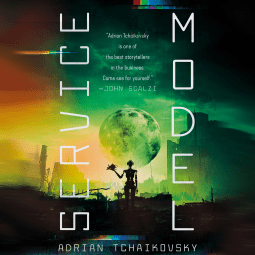
One of the things that is coming back to me while I’m kind of on vacation waiting to see what the next weeks and months will bring in the middle east, is that feeling of being in limbo. Then uncertainty and second guessing. I suppose that makes for very boring literature – the endless rumination about “if that then should I do x, y, z and if otherwise then a, b, c” you can see how that would crash any computer never mind the human mind. Speaking of which, as part of the AI course I was doing (highly recommended btw) I did a bit of vibe-coding and made a little app to download book covers to make book posters. And I really recommend Adrian Tchaikovsky’s Service Model if you’re looking for great satire on AI, programming, robotics etc.
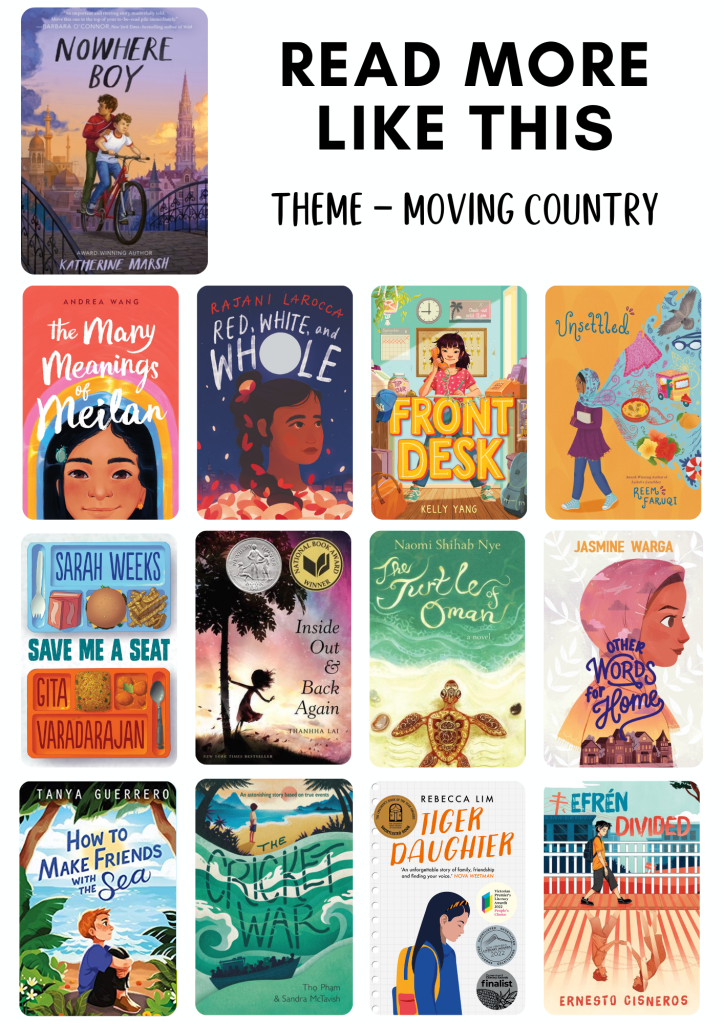
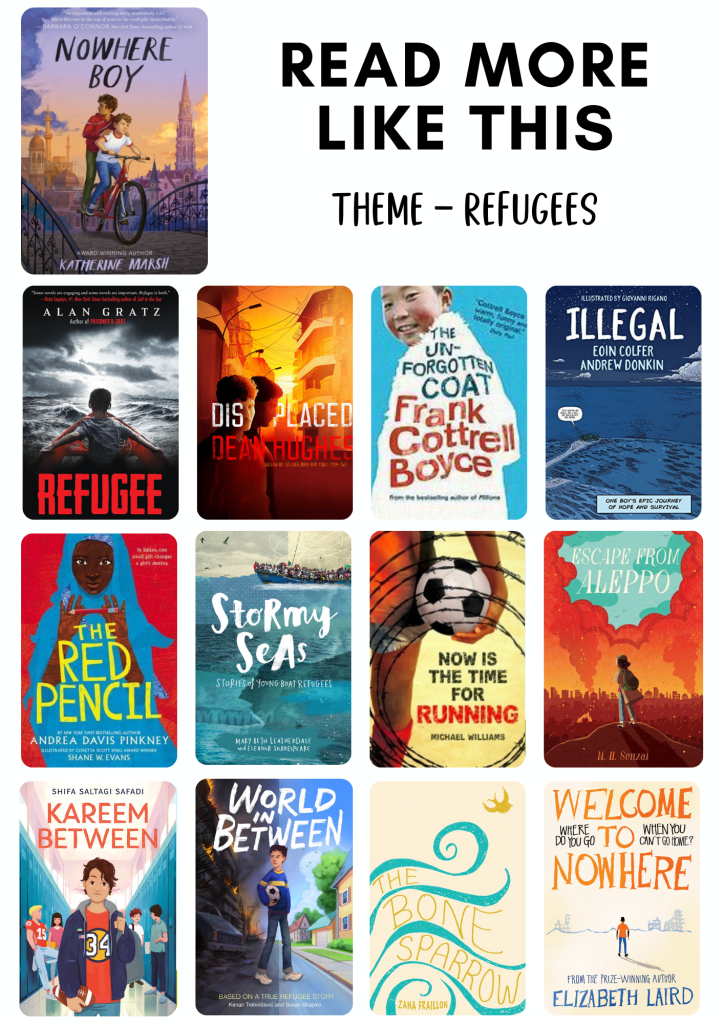
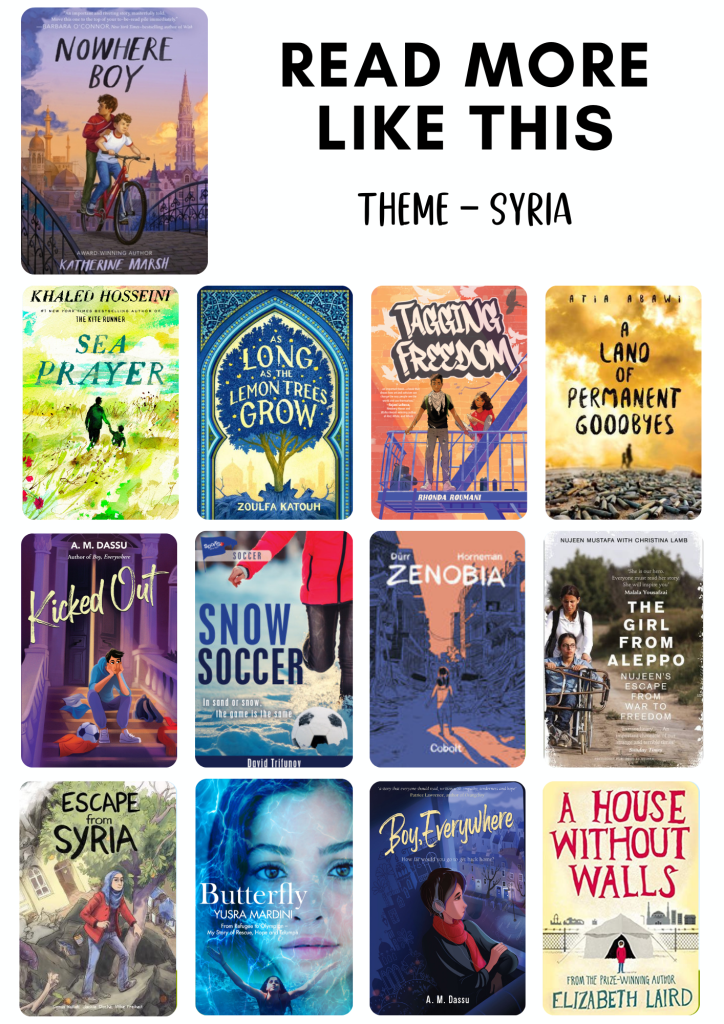
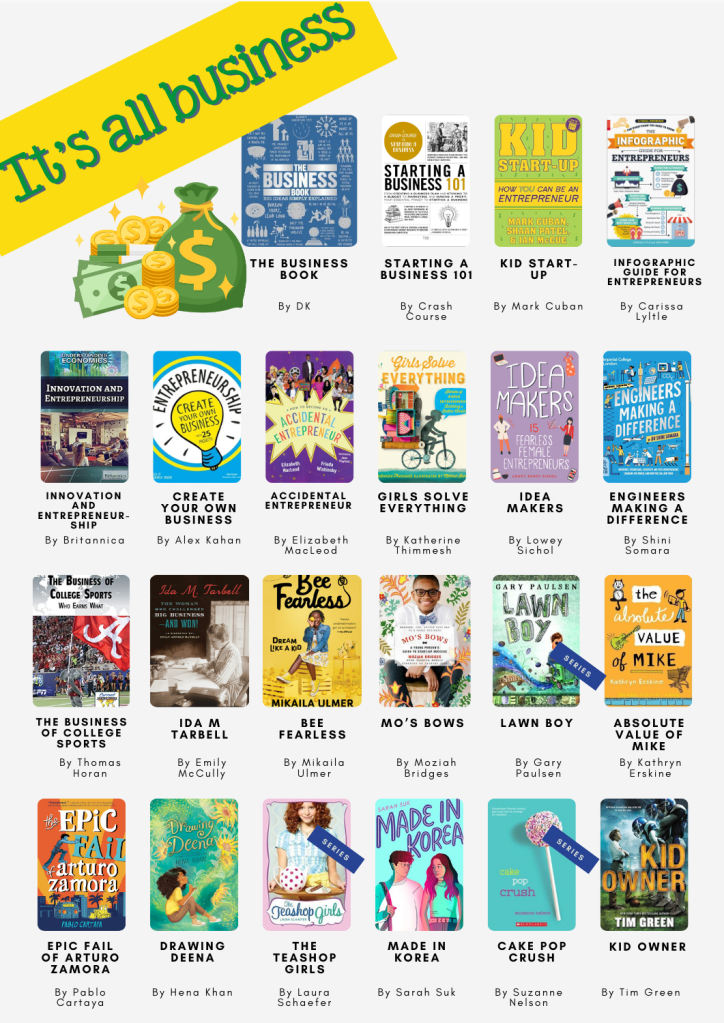
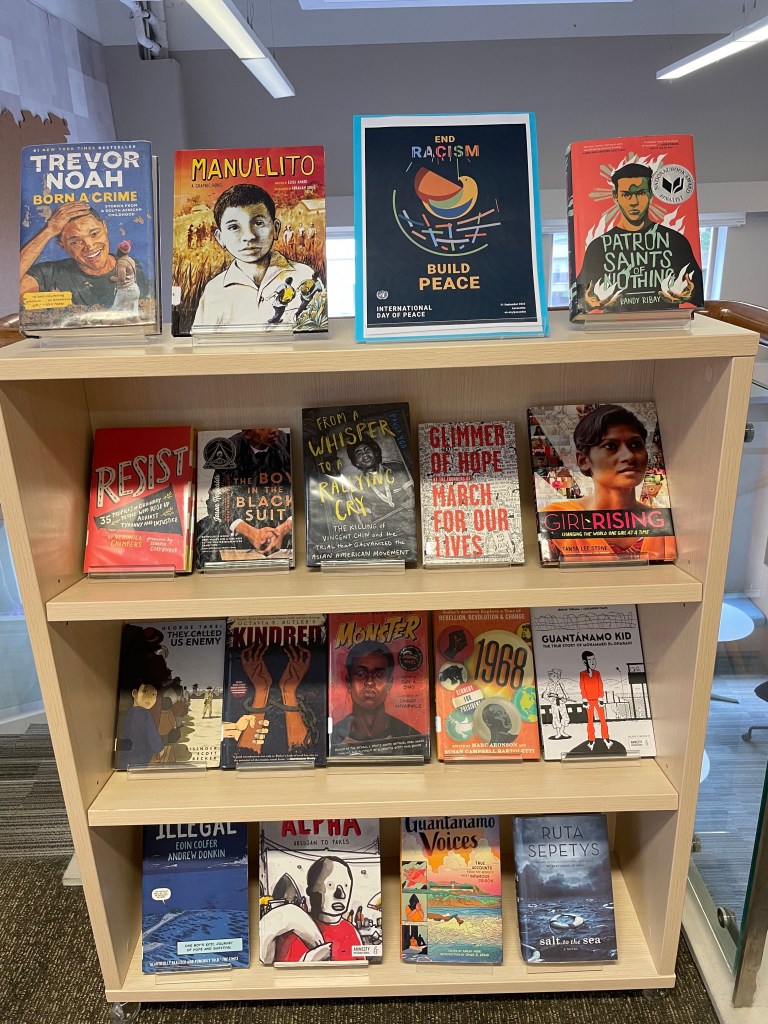
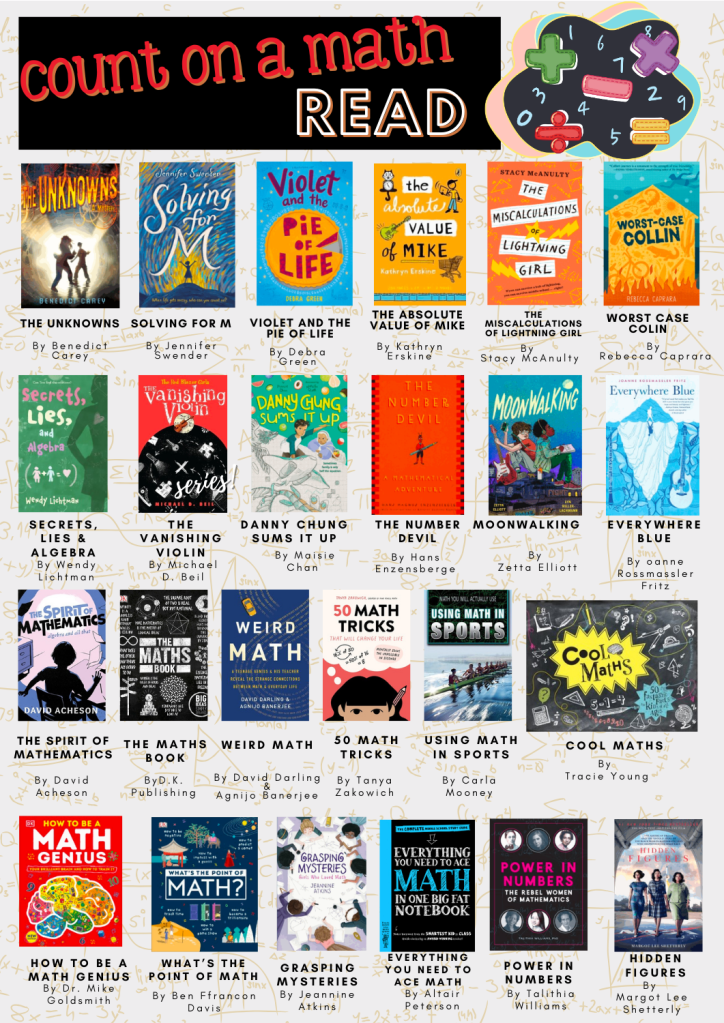
Here are a few of the posters I’d created when our G8 students were reading “Nowhere Boy” by Katherine Marsh to encourage them to “read around” the main themes of the book.
We are not refugees, nor are we really displaced. Right now officially we’re all on vacation. But I also see it as helping build my empathy for people who are refugees and displaced and cannot just walk into the local pharmacy and say “I left in a hurry and didn’t take my prescription with me here are my last few tablets, can you refill it on the virtue and credibility of my white face and ability to speak your language.”
I’m busy trying to decide what to do with very old blogposts as I was an avid blogger from 2003 to 2011 before I became a librarian. I literally have 1000s of posts that I’m not sure what to do with, so I’m going to selectively add posts that have to do with literature, language, librarianship, reading etc.
A DREAM OF MOUNTAINEERING At night, in my dream, I stoutly climbed a mountain, Going out alone with my staff of holly-wood. A thousand crags, a hundred hundred valleys– In my dream-journey none were unexplored And all the while my feet never grew tired And my step was as strong as in my young days. Can it be that when the mind travels backward The body also returns to its old state? And can it be, as between body and soul, That the body may languish, while the soul is still strong? Soul and body–both are vanities; Dreaming and waking–both alike unreal. In the day my feet are palsied and tottering; In the night my steps go striding over the hills. As day and night are divided in equal parts– Between the two, I get as much as I lose. Bai Juyi (772-846) Tr. Arthur Waley
As my daughter gets older our conversations are becoming more interesting. This evening we were discussing the interpretation and analysis of poetry. She’s been looking at Emily Bronte, Rossetti and Bai Juyi. The latter in translation. But they used the old Wade-Giles transliteration: Po Chü-i so initially she didn’t associate it as being Chinese, once she’d worked that out, of course she went to the original. And then our discussion was about how when you’re analysing something in translation and thinking of word choice, does one consider the choice of the translator or of the original. Naturally in an English class that is filled with English mono-linguals at Grade 7 level, the answer is yes, but how does that work out in a multi-lingual / cultural class where at least some of the students would be able to read the poem in the original? I was telling her how so many of the poets used homonyms to convey a hidden meaning in their poetry and prose, for example if they were criticising the emperor or local war lord or officials, and then one would have to know what stood for what. And in fact, if one reads the introduction and background here, it gives some very interesting context.
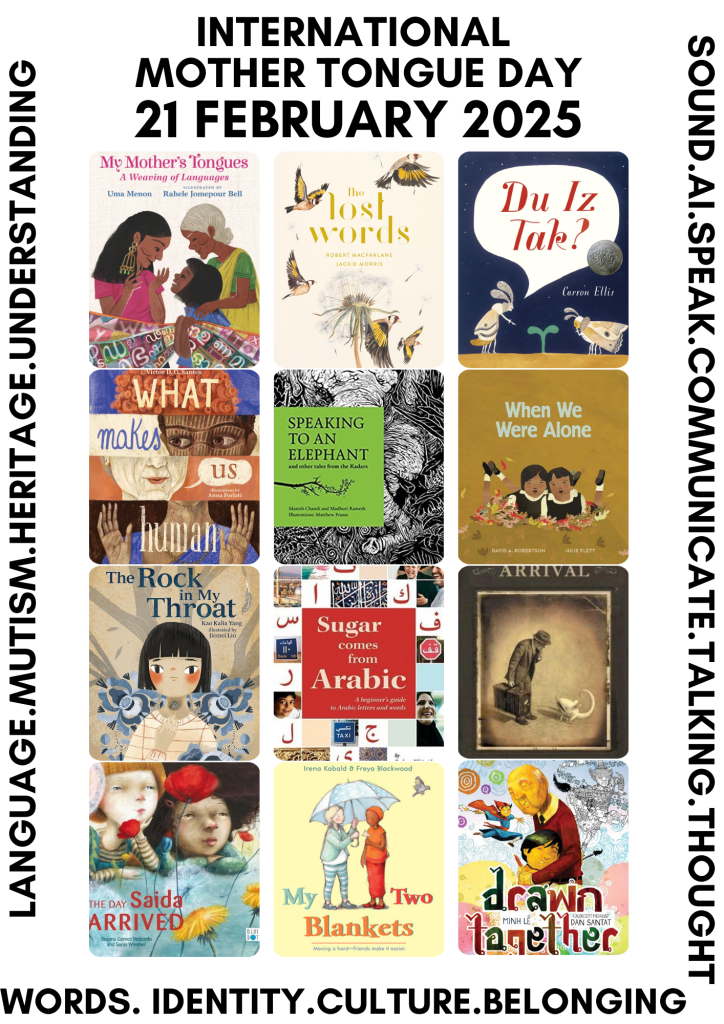
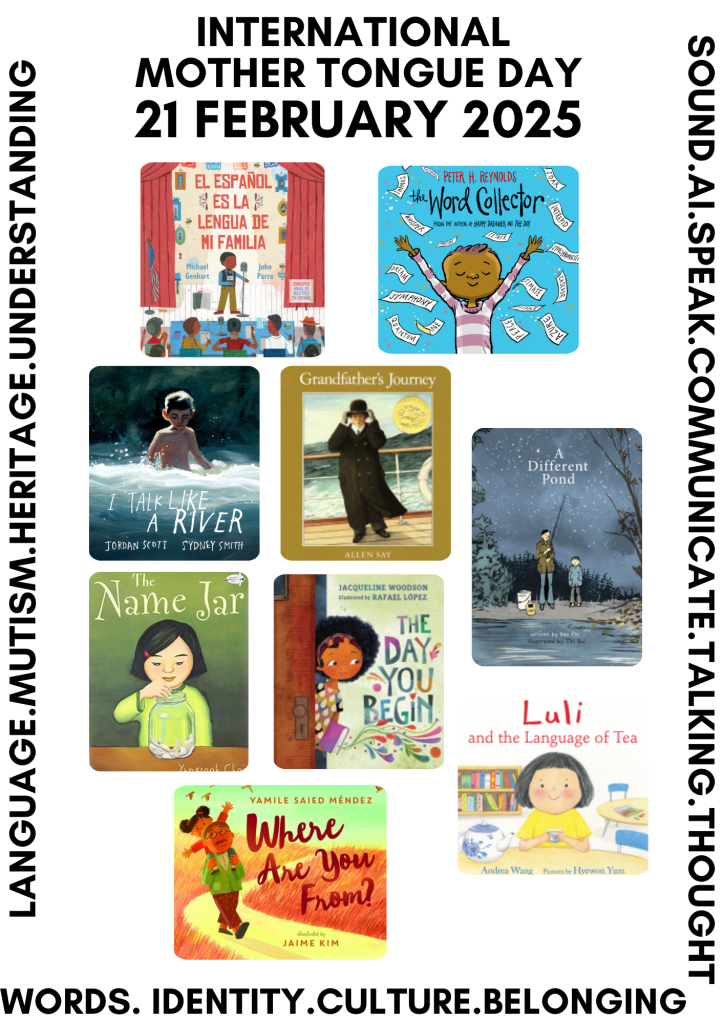
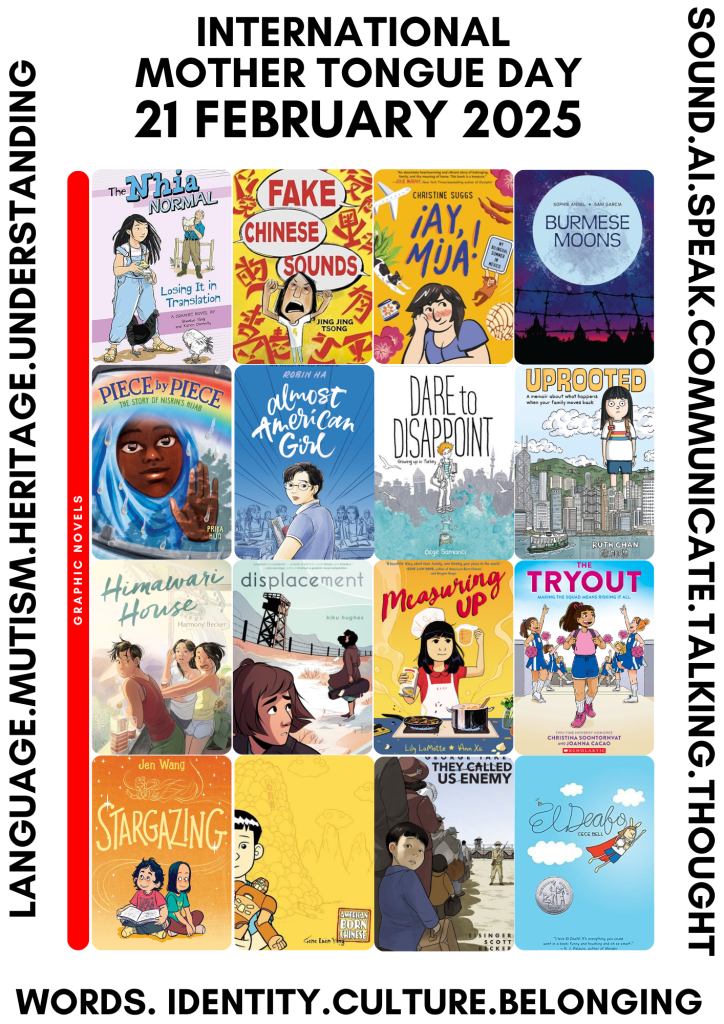
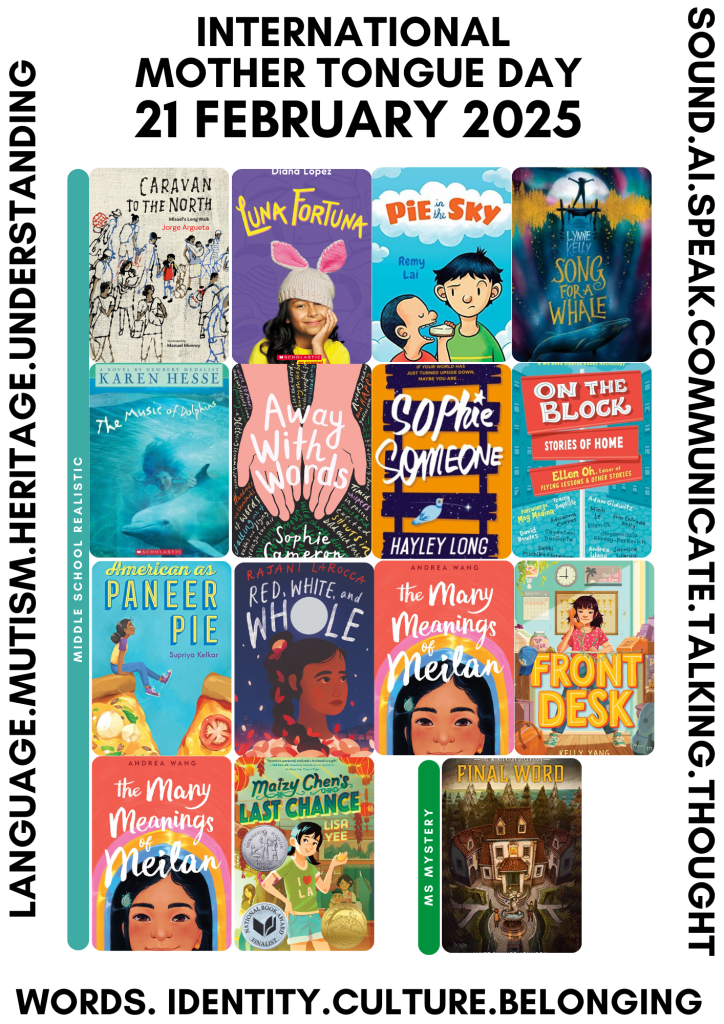
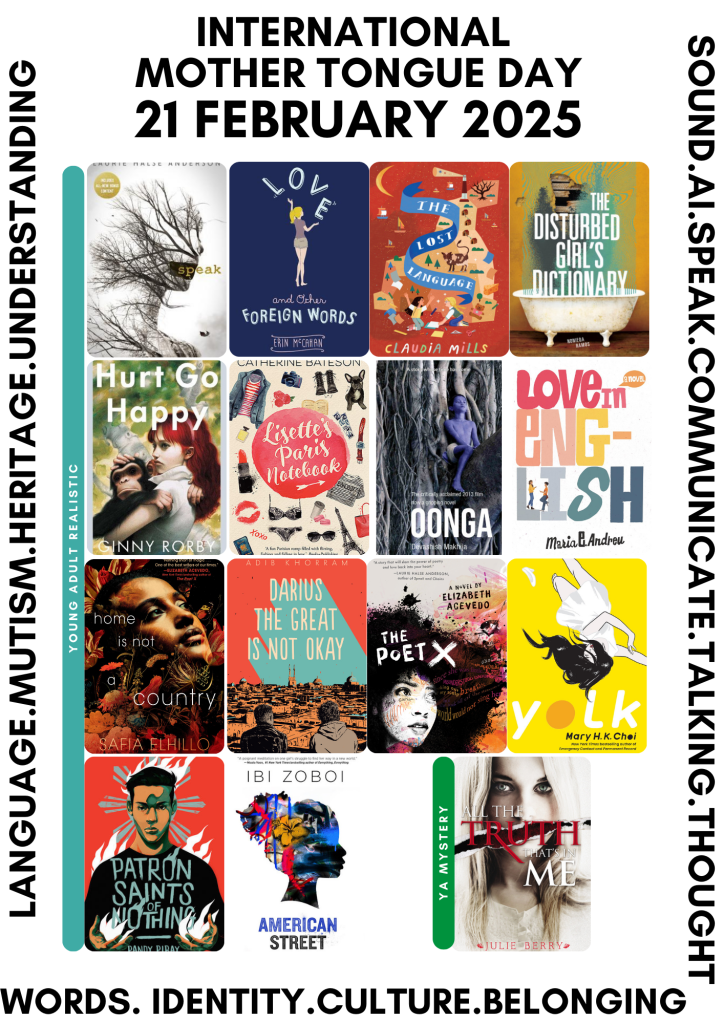
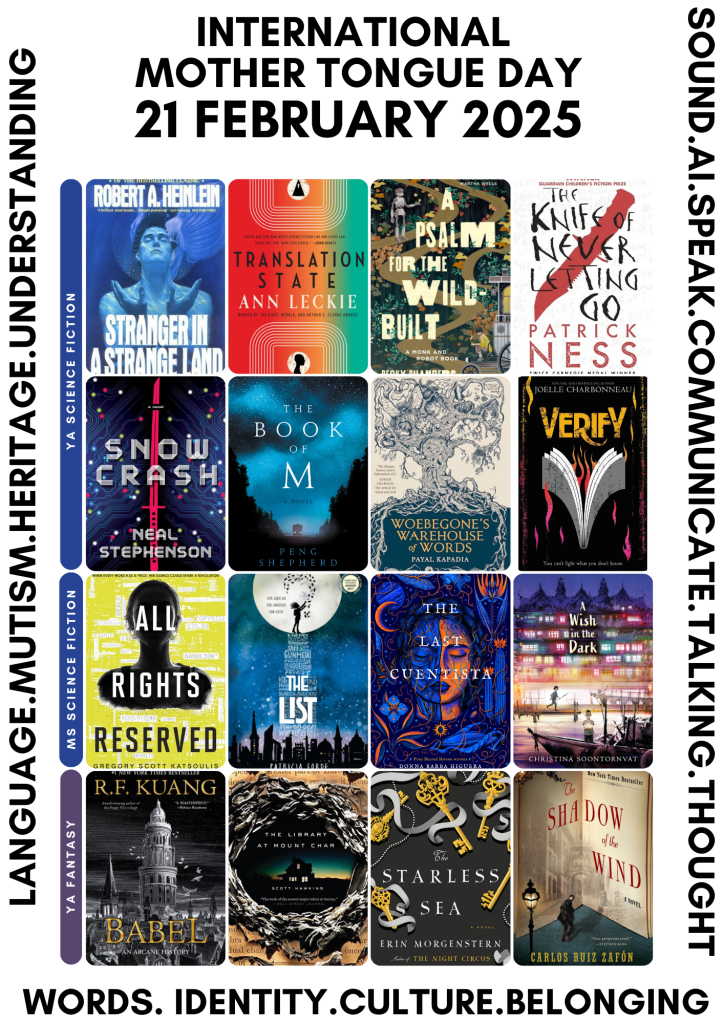
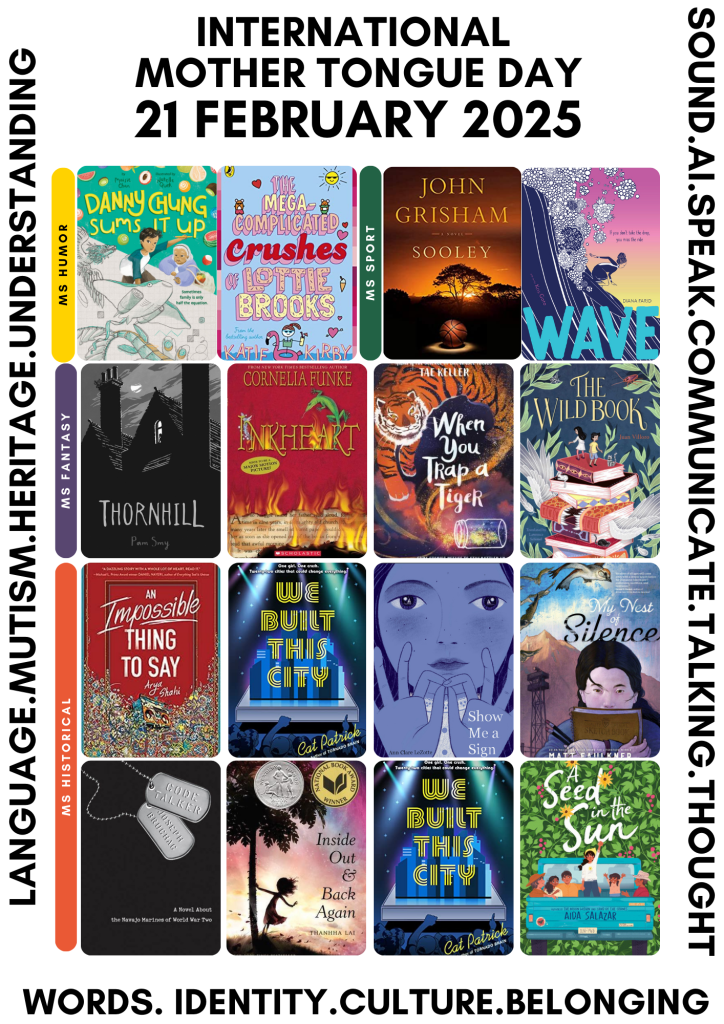
International Mother Tongue Day is next week Friday, but my students and I will be embarking on their annual Week Without Walls trip so I’m a week early with this post – hopefully it will be of some use to those of you planning on celebrating it in the library. I will be upfront about my objection to it being called Mother Tongue Day – as it denies all the families where the language of other significant family members are spoken at home. I prefer the term “home language”. This year is the silver jubilee of the event. Despite all efforts, languages are becoming extinct at an ever increasing rate, and unfortunately this doesn’t attract quite as much attention as pictures of cute or not so cute animal. Schools and other educational institutions are complicit in this – something I’ve been banging on about for years, the lack of multiple-lingual home and heritage language education I still see as a failure of imagination rather than a failure of resources in this day and age. Ok, off my soap box and back to the practical.
These lists started with a casual conversation with KD as to what I had planned for the day, as my passion for language is well known. Which led to a discussion on which books one would consider and then, as usual things got a little out of hand and now I have 9 pages of posters of books that feature language. Language in all its glorious and inglorious forms. Learning language, struggling with a language, speaking or not speaking. Sign language. Heritage language. Language and thought, language and power or control. Selective mutism. Denial of language, erasure and extinction of language.
As for what to do – if I were here, these are the things I would do.
Have big sheets of paper our where the community could write down the languages they speak / read / write. The languages they’re learning. The languages of their fathers, mothers, grandparents.
I’d have them make a language family tree. Have a poster with a QR code that led to this quirky test on Language.
As usual here is the link to the template / books used. In return I’d love some comments on the books you recognise and the link to language! And any displays or activities you’re planning. And of course if you have suggestions of books I’ve missed I’d appreciate you adding them in a comment.
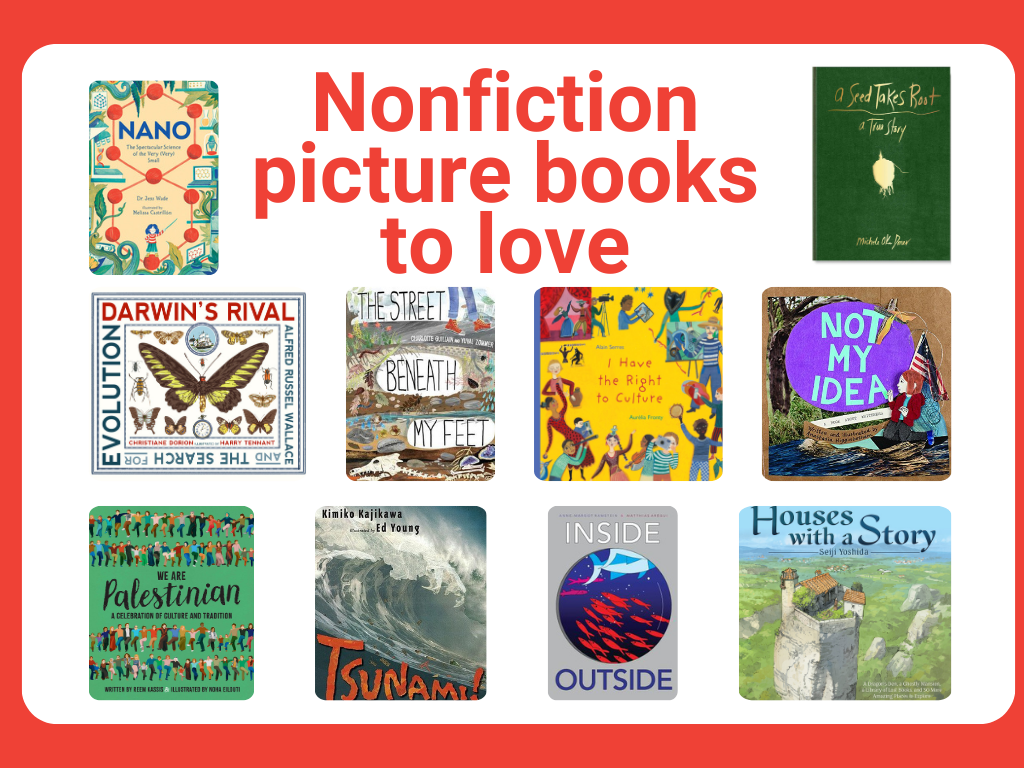
I was just passing our picture book shelf and decided the nonfiction picture books need a bit of love and attention. Here are a few I love for their amazing illustrations and beautiful messages written all within a couple of handfuls of pages.
Picture books are so like poetry – so much can be said with so few choice words. Which reminds me of a beautiful piece I read recently about poetry by Larson Langston
In English, we say: “I miss you.” But in poetry, we say: “I trace the shape of your absence in the spaces where your laughter used to linger, and let the echoes of you fill the hollow hours.”
In English, we say: “I don’t know how to let go.” But in poetry, we say: “I carry you in my chest like a stone— heavy, unyielding, and carved with the sharp edges of what once was.”
In English, we say: “I feel lost.” But in poetry, we say: “The compass of my heart spins wildly now, its needle drawn to places it can no longer call home.”
In English, we say: “I wish it were different.” But in poetry, we say: “I water the garden of could-have-beens with tears, waiting for flowers that refuse to bloom.”
In English, we say: “I hope you’re happy.” But in poetry, we say: “May the sun that warms your days be as kind to you as the first kiss of dew on the dawning light upon the leaves of the laurel that we once made love under”
In English, we say: “You hurt me.” But in poetry, we say: “You planted thorns in my chest with hands I once trusted, and now every breath feels like an apology I shouldn’t owe.”
In English, we say: “I wanted to stay.” But in poetry, we say: “I lingered at the edge of your world, a star burning quietly, unnoticed in your vast, indifferent sky.”
In English, we say: “I’m trying to move on.” But in poetry, we say: “I untangle your name from my veins each morning, only to find it woven into my dreams again at night.”
In English, we say: “I’ll be okay.” But in poetry, we say: “I gather the shattered pieces of myself like broken glass, knowing someday, even scars can catch the light.”
With poetry I write paths through gardens of grace with words in ways my body dare not go as a whole.
I am thinking a LOT about AI. My participation in thinking and reading as a factor of my actual usage would be something in the realm of 1 million to 1 at the moment. Save for some tedious bits and pieces like analysing surveys and the occasional laziness in making very short book summaries (which I then have to correct extensively anyway) I’m just not feeling the joy. Please do not construe in any way that I am therefore “feeling the fear”. No. I’m just spending a lot of time exploring and thinking about it. And what it means. And in particular what it means for the current generation of students / young people.
I started blogging in 2003, and blogged about losing my identity as a person while I spent time being a SAHM, holding the threads of my existence together through bringing up children internationally, nuturing bilingual and multi-cultural beings. I then deleted that blog as it had become too personal, too well known and I had become too identifiable and my children had become adolescents and had a right to their own privacy and thoughts and being. Then I started studying to become an educator and librarian and spent four years in academic pursuit, where for many of my courses, blogging was a course requirement. It was a really good thing to make reflections on learning via blogs a course requirement. At WAB (my previous school) elementary students also blogged and I think there can be nothing as wonderful as seeing the thoughts, words and intellectual development of young people developing and maturing and growing over time. Nothing makes better writers than doing a lot of writing. And through writing, one does tend to become a better writer and find your “writers voice”.
Last week our school shut Grammarly off for students. It’s a tool that has always personally irritated me, as I still grew up with the luxury of uninterrupted schooling where we went to school for our lessons, did all our sports and activities after school at school, had no internet, and government controlled TV that only came in after I turned 12. It was a plain vanilla, no frills government school and there wasn’t even enough money for an arts programme. Yes, huge deficits in my education but I did get grammar. The old fashioned way. Swings and roundabouts.
What did Grammarly do? Well, the new update allows students to highlight a paragraph and request Grammarly to rephrase or improve their writing three times a day for free using AI. And teachers were being given work that didn’t reflect the thoughts, intents, abilities or voice of their students. Teachers care. They care deeply that tools can be used to aid the students that need it the most. They also care that tools don’t get in the way of intellectual and skill development. Writing well takes a LOT of practice and also a LOT of reading and if there are any short cuts I’m not aware of them.
The word of the year in 2023 was “Enshittification“, a termed coined by Cory Doctrow and explains the process of platforms first being good for their users, then abusing the users so businesses can make money off the users, then abusing the businesses go get a piece of the pie and then dying. It is the first two parts of the equation that are of most interest to me viz a viz education and AI.
“Being good for their users” needs a modifier – “appearing to be good for their users”. In his long form article Andrew Nikiforuk touches on “whole foods are being replaced by ultra-processed stuff” which was exactly the analogy I was thinking of while reading NYTimes wellness challenge of this week – the article talking about “Are ultraprocessed foods really that delicious?” and asking readers to compare an ultraprocessed product to its natural equivalent. Unfortunately for many young people when they compare their complex pubescent self to what media is telling them is “the real thing” they feel like they come up short, not the artificial reality. One of the disturbing trends with young people is their anxiety and obsession with being perfect (and not just academic – look at the beauty / makeup thing – talk about a distraction) – some of which is parent / adult driven through a failure to understand or recognise that young people are not hatched with perfect writing, grammar, thought, and research skills. That is the whole point of being at school. We’re seeing a bunch of ultra-processed writing and assignments and research at the moment and I’m not sure that it’s leading to better learning.
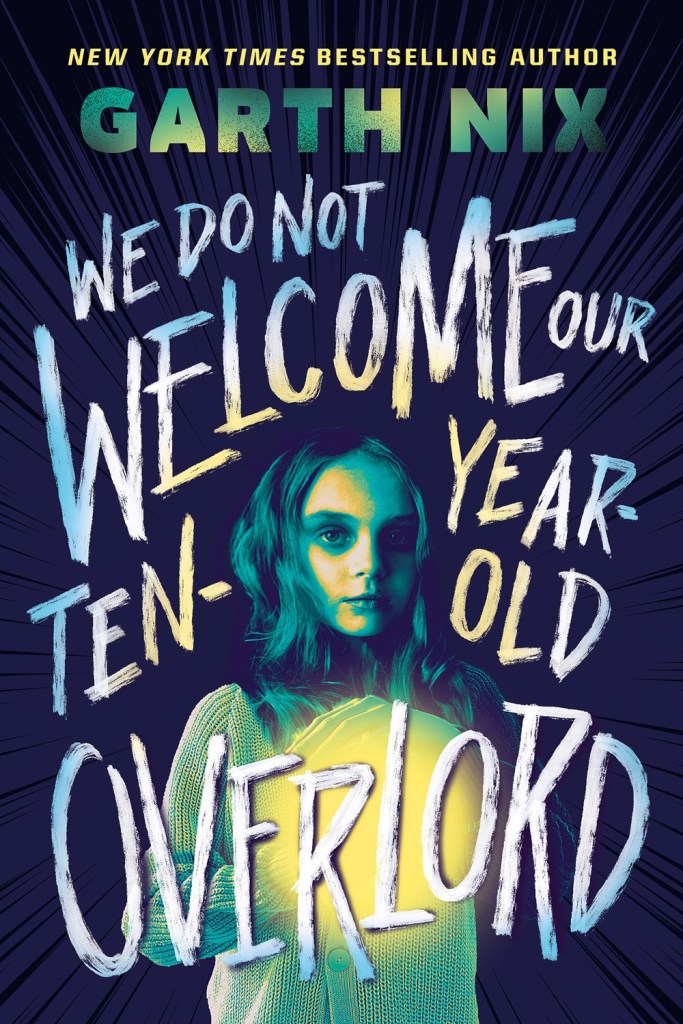
I’m currently reading “We do not welcome our 10-year-old Overlord by Garth Nix” – it’s a great middle grade version of this process of something external to humanity trying to take over under the auspices of “being good and doing good”. What I see, even with the most simple of all tools – a spelling check – is that students will type without any attention to spelling or capitalisation and expect the computer to mop up after them. And the next time the word / phrase is used they will continue to use it incorrectly and have auto-correct sort it out. The question then is whether there is any learning happening. And the meta question whether that learning needs to occur or not? Do we enter dangerous territory when we start deciding which students need to know things or not, develop skills in certain areas or not? We do not know what we don’t know and they definitely don’t. It would be way to easy to decide that perhaps some students don’t need to develop a writing voice and that it’s all so hard for them that it’s OK for AI or other tools to just take care of writing and editing what that tool thinks it is that the student is trying to express. Can you see where this is going? Because if we are not exposed to many ideas and thoughts and schools of thought and philosophies and histories how can we have enough information and knowledge under our belts to know what it is that we want to express? How can we know what OUR thoughts and feelings are when we’re in a feedback loop echo-chamber?
Back a little to the blogging thing – if students reflect on blogs that are open to the community it is so much easier to see what is normal and appropriate for each age group. Now we have writing that is largely hidden except to the teacher and their peers if they do comparative grading, and perhaps the adults in the lives of some of the students who will judge it by their adult standards AND whatever tools that are on student computers that again will transform the writing to some external adult standard. I’m also fascinated with, within the context of the apparent need for grading and scoring the work of students how granularity has decreased to the absurd point of students getting a score out of 4 for their efforts. Really? While packing up my life yet again for the move from China to Dubai I came across my old school reports. Everything was graded from 0-100 and there was plenty of room to improve from say a 69 to a 75 or an 89 to a 95 and no one ever ever ever got 100%. There was nuance. A lot of nuance. In the IB system scoring is to 8 and now in the American system it’s to 4. Talk about a blunt tool with which to sculpt learning!
I was just listening to Maggie Appleton (whose writings, as a cultural anthropologist turned Tech person on AI I really appreciate – particularly this one on the dark forest and generative AI) on the HanselMinutes podcast and I love her ideas about using AI for rubberducking – not just for IT debugging but for debugging your ideas and thoughts – although as she says it’s not really built for that as it’s more inclined to “yes AND” than to be a critical partner. I’m so long in the tooth that I remember when blogging was the medium for rubberducking your thoughts and every post got good handfuls of thoughtful comments by real people who would challenge or corroborate on your thinking. I made a lot of IRL friends off the back of blogging back in the day!
I’m fascinated about what other people think about student writing and student voice in writing as opposed to all that is being written about adult voice being taken over by AI – it is terrible, but how fortunate we have been to be allowed to develop a voice in the first place. Are we denying that to this generation of potential writers? Here is a link to one article in Writer’s Digest – of interest are all the other related articles at the bottom including some on maintaining voice as a comedian.
Mediating between curiosity and research, curriculum and pleasure By Nadine Bailey and Katie Day
In the summer of 2024 we asked International School Middle School librarians to tell us the story of nonfiction in their libraries. We wanted to know their ambitions, frustrations, organisation and display as well as their collection development and usage plans. All books recommended in this article can be found tagged in our LibraryThing Shelf (https://www.librarything.com/catalog/middleNF).
Curriculum and Research
Educators and librarians who have been around for a while know and recognise the pendulum of ideas and practice that upend things first in one direction and then another. Nonfiction is one of those things where some of the momentum is now moving back to the practice of reading subject matter in physical form. Many librarians responded that in a post-covid learning environment both they and the teachers they work with were moving back to giving information in print form – mainly books where they were available, but also printing out articles from online sites such as Britannica and Newsela in order to encourage deep reading, avoid distractions and teach nonfiction reading skills that could be later transferred to online reading.
Schools following the IBO (International Baccalaureate Organisation) programmes (PYP/MYP) had particular interest in “transdisciplinary” and cross curricula books that would offer broader perspectives on curriculum or unit themes. Many librarians were investing in books that would support inquiry into aspects of the United Nations SDGs (Sustainable Development Goals). There was also a keen interest to ensure that sufficient “local” (country where the school is located) and “diverse” (countries of students’ origins) content was available in the library.
Many librarians have quite heavily weeded their nonfiction sections and are now looking to re-stock them based on this renewed interest in physical books. But it appears that publishers are not necessarily aware of what is happening on the ground and are not always updating and bringing out new editions of popular texts.
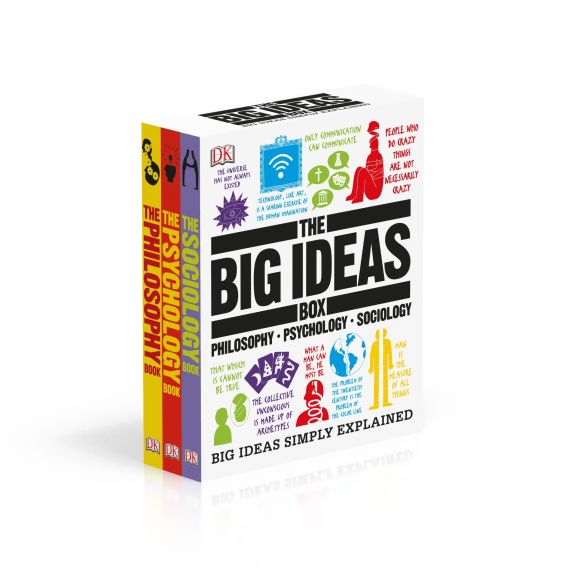
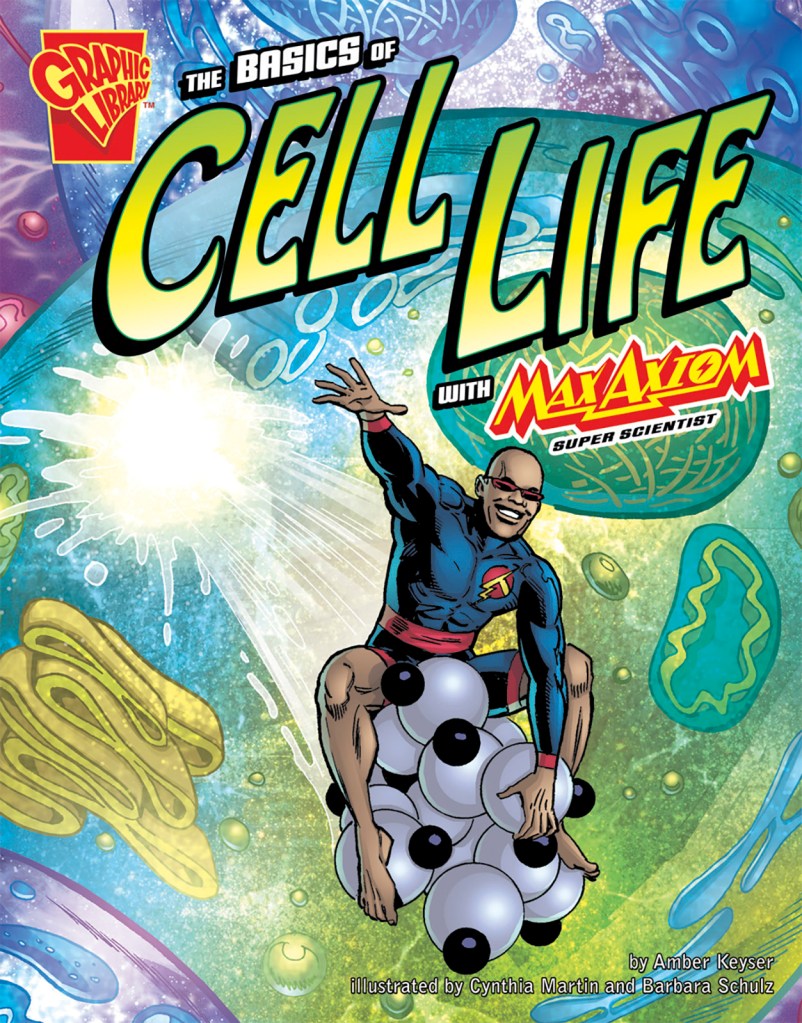
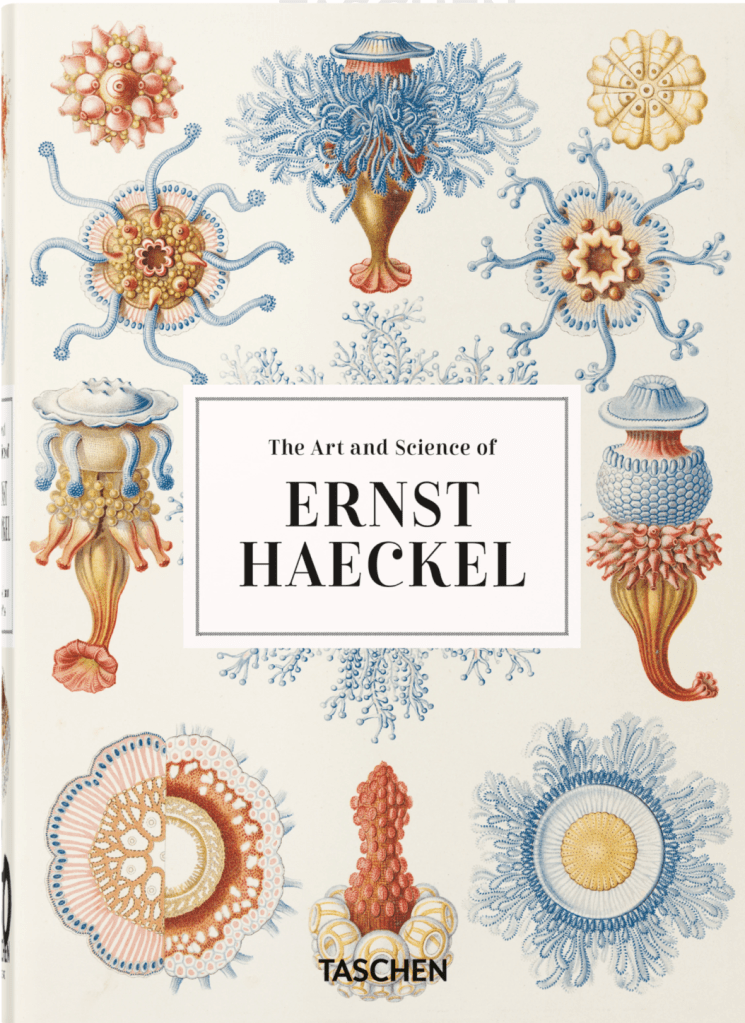
On the other hand, most respondents remarked on how much progress had been made in the last few years on the design, layout and illustrations in recent nonfiction texts. There was also a shoutout for the increase in different formats including “Oversize books” (see the books of “Big Picture Press – Welcome to the Museum”); Graphic and Manga imprints (series such HowToons; Cells at Work; and authors such as Don Brown and Jim Ottaviani); infographics (Infographic guides; ) Subject Summaries (The Big Fat Notebook series), Picture books (see this 2024 SLJ list) and Subject Overviews or introductions (DK Eyewitness, and DK Big Ideas).
Where curriculum and research is concerned, students can now often choose their favourite medium of access through a variety of formats.
Foster the flame of curiosity
Somewhere on the way to middle school, students amend their passions to fit in with their peers and ensure a sense of belonging. So out go the dinosaurs and big trucks to be replaced with their favourite sports personalities, music stars, books about their sports (soccer and basketball seem to be hits). Puberty hits this group hard and fast and strategic placement of sensitive materials can put paid to rumours and myths. It is also a time of self-absorption and worry about their physical and mental health – books on health and well being, relaxation, anxiety, meditation as well as psychology, are popular and an area of growth in most libraries.
Given the demographics of our schools, students of this age are already taking a keen interest in finance, aspects of wealth and investment as well as entrepreneurship. They’re also interested in personally exploring hobbies and activities they may see online such as cooking, sewing and knitting or other crafts.
History – particularly the world wars and more recent conflicts continue to fascinate and appal in equal measure – often mediated by historical fiction texts students may encounter in their literature studies or English classrooms and what they see on the news or social media.
Shelving, organisation and display
In order to make nonfiction appealing and accessible, quite a few of our respondents mentioned they either had or were in the process of rethinking the way that nonfiction was shelved, organised and displayed in their libraries. There is a continuum from pure DDC (Dewey Decimal Classification) to a range of Book Shop or genrified models. Librarians were more interested in getting books seen and read than in a hypothetical need for their audience to be able to navigate a university library later. One of our respondents coined the lovely phrase of “emotional accessibility” in this respect.
Of course most libraries have already taken the first step of putting “literature” or novels out of a straight Dewey 800 section into a fiction collection – genrified or or not. Other common “extractions” from the main Dewey structure include:
Taking Biographies, collective biographies and memoirs out of 910/920 and putting them in a separate section. Some libraries put collective biographies at the start of the section they pertain to (i.e. famous musicians go to 780).
Travel Books
Poetry
Drama and playscripts
Graphic Novels and Manga
Narrative nonfiction
Myths, Legends and Fairytales
Parenting
Well Being
Professional Development
Sports
Country specific collections
A specific nonfiction series that’s popular
Photo: American School of Dubai MSHS Sport Section
In the absence of permanently pulling out a section – many librarians make use of rotating “dynamic shelving” or temporary topical displays. The guideline here appears to be to follow the needs and interests of the community – teenagers want to be able to independently navigate the library without adult intervention that may be embarrassing.
Photo courtesy of Ashley SimmonsPhoto courtesy of Ashley Simmons
Related to that – signage and signposting was an area that nearly all librarians were investing in. Many mentioned significant weeding that had resulted in more space for forward facing displays and carving out sections of interest.
Recommendations
To support the discovery of nonfiction titles for middle school, we’ve curated a shelf of 389 (and growing) books on Librarything that we consider to be worth investing in. It’s an ongoing labour of love, so not every book has been tagged at this point yet.
Examples of Some of the tagging we’ve employed are (not an exhaustive list):
Narrative nonfiction
Manga
Graphic
Topic_
WW2
Women
Science
Mathematics
Religion
History
Climate
SDGxx
Activism
Wellbeing
War
Technology
Sustainability
Sports
Space
Social Media
Geo_
Southeast Asia
China
USA
Europe
UK
Australia
Edition
Young Reader
Since such lists can quickly go out of date, we’d also like to generalise with some series, authors, titles and publishers that we recommend.
Great AUTHORS
Marc Aronson
Don Brown
Marc Favreau
Candace Fleming
Russell Freedman
Yuval Noah Harari
Deborah Hopkinson
Tanya Lloyd Kyi (Canadian)
Randall Munroe
Jim Ottaviani
Elizabeth Partridge
Gillian Richardson
Steve Sheinkin
Cory Silverberg (Puberty)
Dashka Slater
Tanya Lee Stone
Pamela S. Turner
Great PUBLISHERS
Annick Press (Canada)
DK (Eyewitness; Big Ideas; Children’s Timelines; How Things Work; How Stuff Works)
First Second (MacMillan)
National Geographic for Kids
Usborne (UK)
Crabtree Publishing Company
Flying Eye Books
Great SERIES
DK Eyewitness
DK Big Ideas
DK Children’s Timelines
DK How Things Work / How Stuff Works
From Playground to Pitch
HowToons
Hazardous Tales (Nathan Hale)
Little Histories
World Citizen Comics
UN sustainable development goals
Great TITLES
There’s been a recent shift toward publishing a Young Adult version of popular nonfiction titles either simultaneously or shortly after the Adult version. These can be found by searching for “Young Readers” or “Young Reader’s edition” / “Young Reader’s Adaptation”.
Last but not least, pairing a nonfiction book with a novel can enhance both texts.
I initially started putting a fiction book on this libguide followed by suggestions of nonfiction, https://asdubai.libguides.com/ms/reading/nonfiction. I’ve now moved away from that somewhat and have started curating “Read Around the Curriculum” posters where either a curriculum topic is highlighted with fiction and nonfiction, or an “If you like / want to know more” poster is made of one of our book club fiction books with suggestions for finding out more about the context with other fiction/nonfiction books on the topic.
Katie Day and I would love to hear your suggestions for more nonfiction books, and perhaps we can expand the list to High School. Many of the books suggested in our list are suitable for High School and upper elementary as well.
Comments and suggestions much appreciated.
NOTE: Since the publication of this post we have been approached by commercial entities about using the list. While we cannot prevent the list from being used commercially this is our wish:
This list was created in order to freely help librarians all around the world. It was a labour of love which took a lot of our personal vacation time to create. If you are part of a commercial organization and you will be using the list commercially we would request that you attribute us and make a suitable donation in our names to “Biblioteca di Lampedusa” which serves refugees from around the world in their Silent Book initiative, https://www.facebook.com/BiblioLampedusa/ or the “IBBY Children in Crisis Fund”: https://www.ibby.org/awards-activities/ibby-children-in-crisis-fund. Thanks. Nadine & Katie
(Found this unpublished from 23 Jul 2022 – no idea why I didn’t publish it!)
Just as an aside – I’ve been having the most fantastic summer since I don’t know when – well definitely way before covid with reunification with my children after one and two years respectively as well as with so many friends from around the world that our home is nearly needing a booking calendar – such a wonderful thing! I’ve been trying to avoid my computer and work as much as possible, but I had to work on a questionnaire for possible participation on a possible book on “Innovative Marketing, Branding & Community Engagement Programmes Amongst Leading National, Public, and Academic Libraries Worldwide” so I decided it was time to round of this series of three posts on nonfiction (see parts one: “Waves of nonfiction” and two: “Nonfiction’s right to exist“)
If you build it will they come?
As discussed previously it takes considerable time, effort and resources to build and maintain a good nonfiction collection. But the existence thereof does not presuppose its use. Just as we cannot assume that the fact as our students have laptops they know how to use them (the digital native myth) so too we cannot assume that teachers and students know how to get the most out of a nonfiction collection just because they can read. In fact it’s something that I’ve had to learn as a teacher librarian and something I’m still consistently engaging in and learning more about.
I’m going to highlight a few things that have helped me in my learning.
Probably the most transformational book I read on helping students to scaffold their reading of nonfiction and be able to develop the critical skills they need to navigate today’s information society was Kylene Beers “Reading Nonfiction”. It’s not only helped my thinking about reading nonfiction but also the approach of every teacher who has allowed me to eulogise the approach and incorporate it into their teaching.
The signposts consist of five items to look out for in a text and how to recognise them and approaches to thinking about the texts. It goes beyond the usual acronyms for assessing the reliability and credibility of a text into some pretty good meta-cognition and thinking skills. The signposts are:
Contrasts and Contradictions
Absolute and Extreme Language
Numbers and Stats
Quoted Words
Word Gaps
The way I usually introduce them to students is through a workshop where I give them a Newsela article – my favourite is “How now digital cow” which I like as it includes all the elements and because it’s fun and from my motherland. Using a Newsela article allows me to also have the article available at a number of different levels so it can be accessed by all students no matter their reading / English level.
I print it out, explain the signposts briefly and students in groups of 5 each get a copy to read and a different coloured highlighters to highlight the text pertaining to the signpost they’re looking at. They read the text with a particular interest in “their” signpost. They can then defend their choice in their group and meet up with students in other groups with the same signpost to compare. An alternative is to have the signpost questions on posters and students read the article and then do a poster walk and write their findings after reading the article on the posters. I’m not going to link to any resources on TpT or other sites besides that of the publisher because unfortunately this is one of the most plagiarised and abused resource in the educational community. So I’d encourage you to purchase copies and read the book because it’s more than just a bunch of nice posters and bookmarks.
Elements of nonfiction
Now here is where a great many people are going to cry foul and say “not true”, but I’m afraid it is. Most students do no know the elements that comprise nonfiction, and even if given a list of the names of the elements cannot correctly identify them in a nonfiction book. There are 22 features that I identified and teach to students using the very simple technique of taking a nonfiction book and taking pictures of the elements and adding them to a google slide – see this
Once students understand the elements of nonfiction in print you can start relating those to their digital counterparts, making links between informational ecosystem – eBooks, physical books, videos, databases,
Here are some ideas on ways to promote your nonfiction collection from librarian Kerry O’Malley Cerra. Besides that I’ve found bringing some new and exciting books to any meeting or event – not just planning meetings but also coffee mornings, parent-teacher conferences, PD, etc along with a mobile scanner so people can check them out immediately works really well. This blog by Melissa Stewart is well worth subscribing to for great ideas and also thoughts about the relevance of nonfiction and it’s place in the lives of our students. The SLJ has a section called “nonfiction notions” that addresses new book reviews and how to use nonfiction.
This year I’ve managed to encourage many of my Grade 3-6 teachers to take part in the Global Read Aloud. I’ll save my comments on the good and bad of that for another post. This year for the first time, we’re also taking part in the postcard exchange. Basically you put your school / class name and address onto a spreadsheet and promise to send everyone else on the list a postcard in exchange for receiving postcards from them.
So far so simple. Except the logistics. Dashing off to the post office to queue up for 60 international postage stamps. Gosh, that’s pricy, there goes bits of my budget. Convincing teachers to let their kids use a huge chunk of their library lesson to write postcards. Dredging out a tutorial to remind myself how to do a mail merge from a google sheets list. Oh gosh, yes, the data on the excel sheet has to be redone so it’s the right format. Purchase labels in the right size. Fiddle around with printing. Convince one teacher to buy a bunch of postcards and convince marketing to give us the balance in school cards. That was all the backend stuff.
And then it was hilarious. Do you know that most 10 year olds have never written a postcard? Ever. Or received one. Do you know that most 10 year olds have never ever licked a stamp? Don’t know where to write the address / write the message. And if it wasn’t for the picture of where to put the stamp they’d not know where to put it. So who is buying postcards, and will they soon go the way of CD’s and DVD’s and all that physical stuff in our lives?
Reading, reading, reading. I know I should start trying to write, but I’m in a kind of simultaneous paralysis and activity. Each new reading I do, I discover a whole field of knowledge and information that I know way too little about. Today I discovered the LEA (language experience approach) to teaching reading and writing. And the relevant (for me) “cousin” D-LEA (i.e. with digital). I’m sure every single teacher in the world is totally familiar with this and today was the first time I’d encountered it – academically at least. I’m pretty sure it’s what they do at school and that my kids experienced it, I just didn’t know the name. Duh. So this has kicked off a new round of activity – frantically learning more about it and how it relates to my topic; and paralysis – not being able to start writing my assignment yet.
A little while back I did a review of Easybib as an assignment for one of my courses. It’s a tool we recommend to our students. For a while I was impressed by it’s notetaking tool and I’ve tried using it a few times because it kind of makes intuitive sense. But it just doesn’t work for me. And I’m beginning to realise why…. read more














 Informative Flights - Musings of a Teacher Librarian