I’m the type of reader, who reaches for a sweater when the protagonist in whatever book I’m reading is cold. I will be startled out of a street corner in Beirut or the journey of a post-apocalyptic robot and his human companion by an interruption and realise I’m actually still seated on my couch elsewhere. And be annoyed. I’m a librarian – I believe firmly in the power of literature to transform people and make them kinder and more empathetic. And yet, it is one thing to read about the lives and tribulations of others and another to experience them.
“That’s the thing about books. They let you travel without moving your feet.”
Jhumpa Lahiri
That’s one of the reasons that despite the upheaval of moving and living around the world – and moving is one of life’s major stressors – I’ve embraced that life. I can never again look at a news-headline or article about a place I’ve visited let alone lived in, in the same way. I have an understanding, albeit partial, depending on how long I’ve been there and how close I got to the politics and lives of the local people that will never leave me. Which complicates things – for one I can no longer be unilateral about events – call it cultural relativism or whatever you want – but my thoughts are endless shades of grey. And I don’t have enough hands for the “on one hand .. but on the other … and the other” discussions.
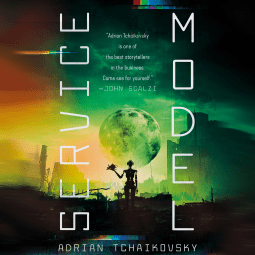
One of the things that is coming back to me while I’m kind of on vacation waiting to see what the next weeks and months will bring in the middle east, is that feeling of being in limbo. Then uncertainty and second guessing. I suppose that makes for very boring literature – the endless rumination about “if that then should I do x, y, z and if otherwise then a, b, c” you can see how that would crash any computer never mind the human mind. Speaking of which, as part of the AI course I was doing (highly recommended btw) I did a bit of vibe-coding and made a little app to download book covers to make book posters. And I really recommend Adrian Tchaikovsky’s Service Model if you’re looking for great satire on AI, programming, robotics etc.
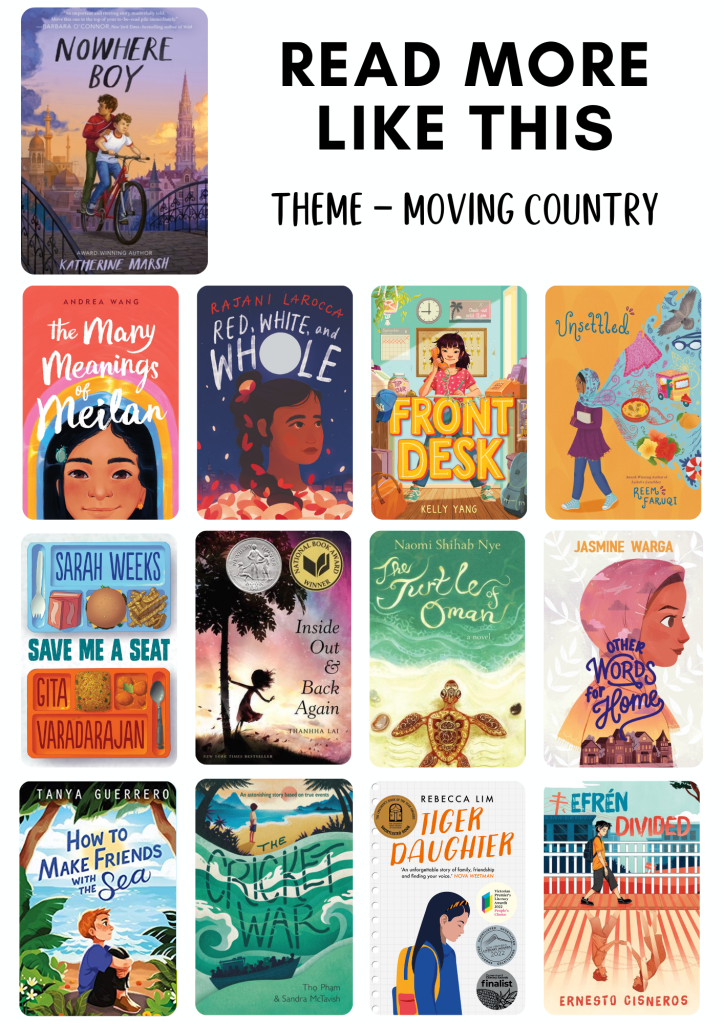
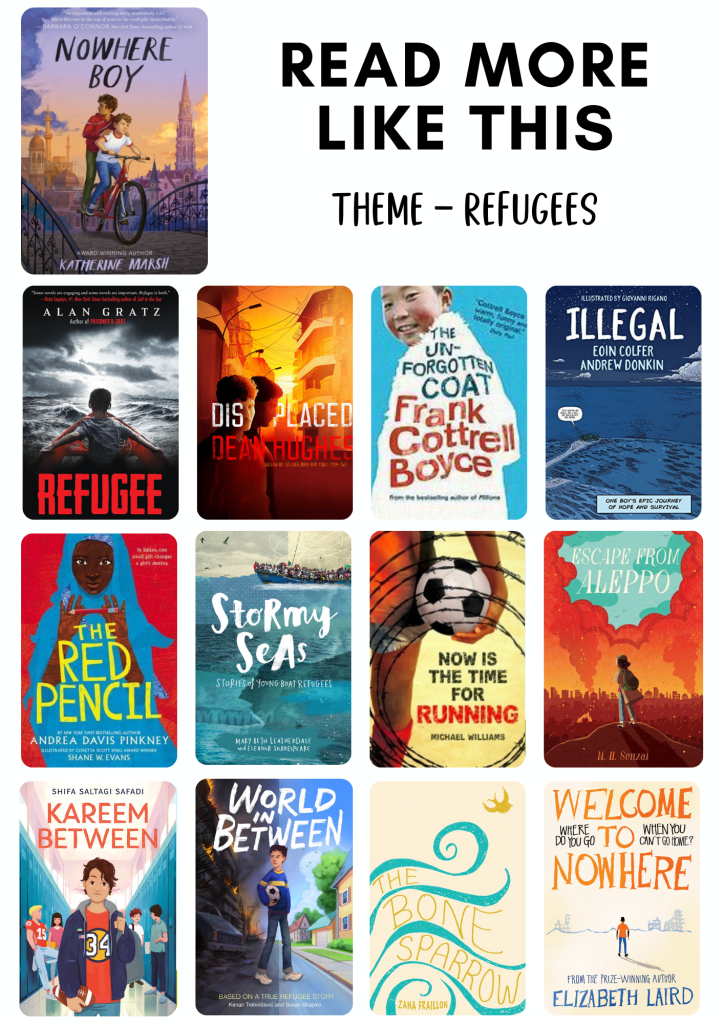
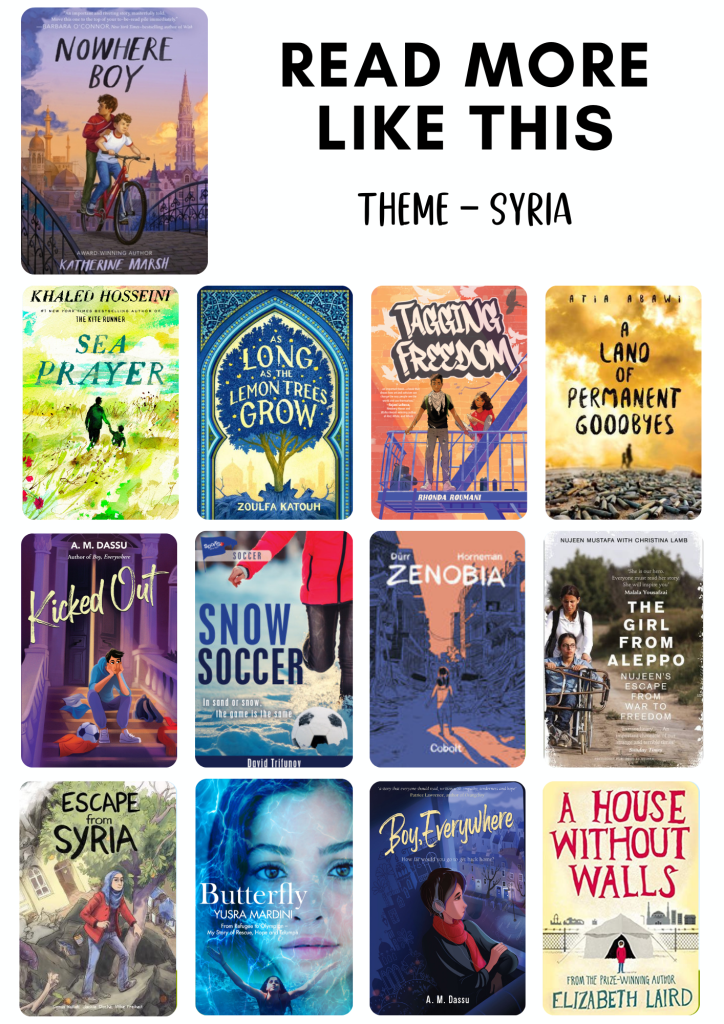
Here are a few of the posters I’d created when our G8 students were reading “Nowhere Boy” by Katherine Marsh to encourage them to “read around” the main themes of the book.
We are not refugees, nor are we really displaced. Right now officially we’re all on vacation. But I also see it as helping build my empathy for people who are refugees and displaced and cannot just walk into the local pharmacy and say “I left in a hurry and didn’t take my prescription with me here are my last few tablets, can you refill it on the virtue and credibility of my white face and ability to speak your language.”
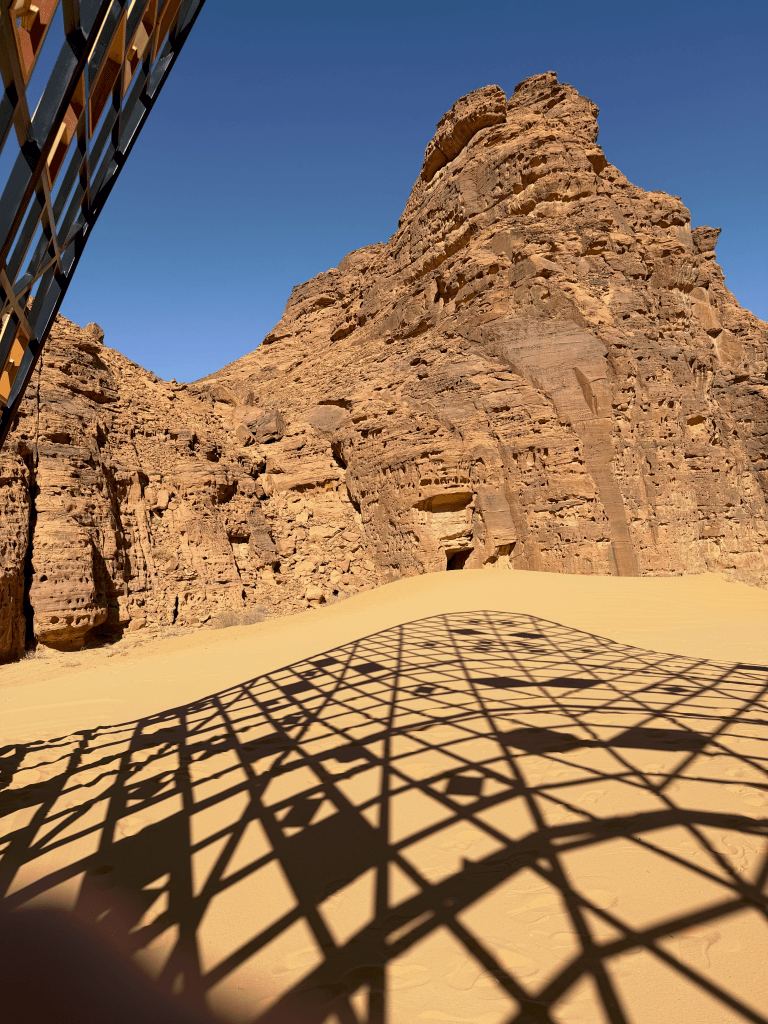
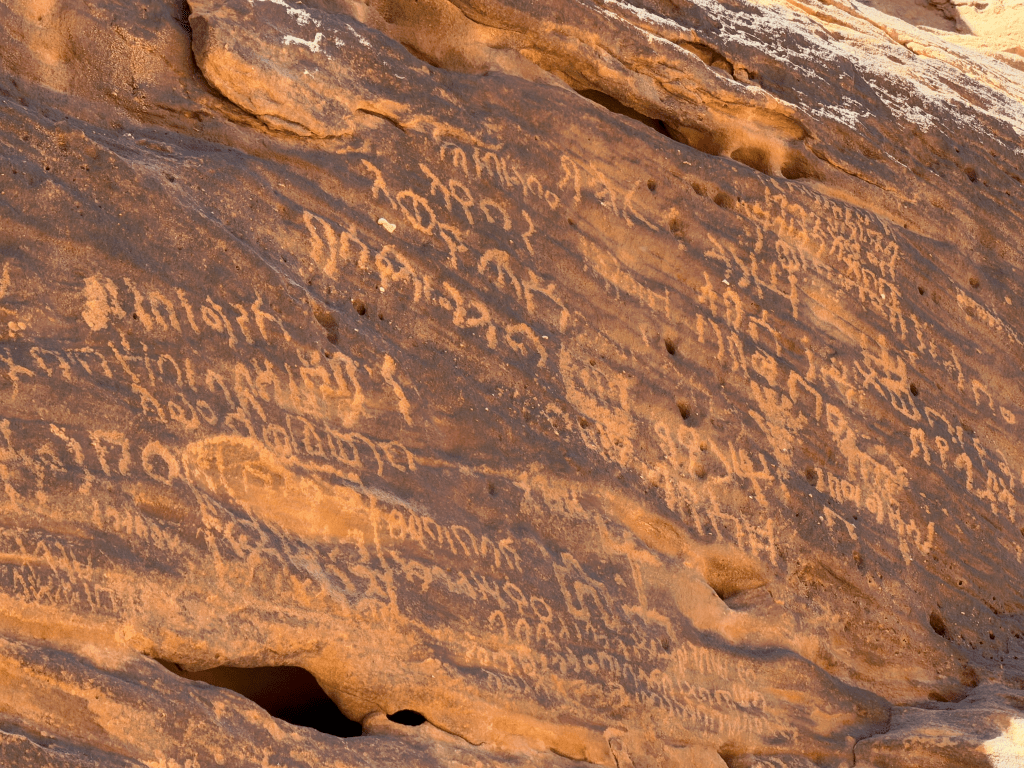
At the moment I’m living proof that stress does weird and bad things to your brain. A little less than 2 weeks ago, my husband and I boarded a flight from Dubai to the beautiful and magnificent AlUla in Saudi Arabia for a long weekend. Two days later the USA started a war with Iran and the UAE got caught in the firing range. And our flights home were cancelled. We rebooked our hotel and the flights were cancelled again, and we rebooked our hotel and the flights were cancelled again … and I got that “it’s just like covid” feeling. (The flight between AlUla and Dubai still hasn’t left).
A few photos from AlUla
Since my husband had meetings in the Netherlands and we could get a flight from Jeddah to Amsterdam, with the schools’ permission – as learning had moved online anyway, off we went. First an 8 hour taxi drive, another hotel and then the flight.
So far so good. Then we landed in Amsterdam to a phone call from our neighbour telling us that they thought we may have a water leak. That was the understatement of the year. Somehow the solar panels / water tanks had sprung a leak and disgorged between 400-800 litres of water from the third to the first floor ruining everything along the way. I won’t post pictures, suffice to say when I told this to my boss and then later sent some pictures she said she’d had no idea just how bad it was and thought I may be exaggerating, and apologized for that. Basically the place was uninhabitable and we sat around in a dripping mess for a few hours while the insurance and people with drying machines could jump into action. One just goes totally numb in those circumstances.
One of my friends, who, as a Ukrainian has been a victim of the war there, now in its fourth year was very empathetic, while alerting me to the following:
The Ukrainian phrase often used when a difficult situation is resolved, or a “debt” is paid in a monetary way, is: “Дякую, Боже, що взяв грошима” (pronounced: Dyakuyu, Bozhe, shcho vzyav hroshyma). It literally means “Thank you, God, that you took [it] in money,” implying the loss was just financial rather than something worse.
I keep reminding myself of that. We have insurance. It will take two months to completely gut and rebuild the house. We have lost furniture including some irreplaceable family heirlooms. But it is stuff. Just stuff. One of my husband’s closest university friends died yesterday after 18 months struggle with a brain tumor. Another of our friends is battling cancer.
Our problems are small potatoes. But it’s still hard to concentrate. Hard to focus on substantial work. I can neither be on holiday – our two week spring break was brought forward by a week, so officially I’m on holiday – nor can I do the work I “need” to do – prepare a presentation for an upcoming library conference, build some Libguides (ironically one on revolution), finalise some book orders, start reading books for my book award jury duty.
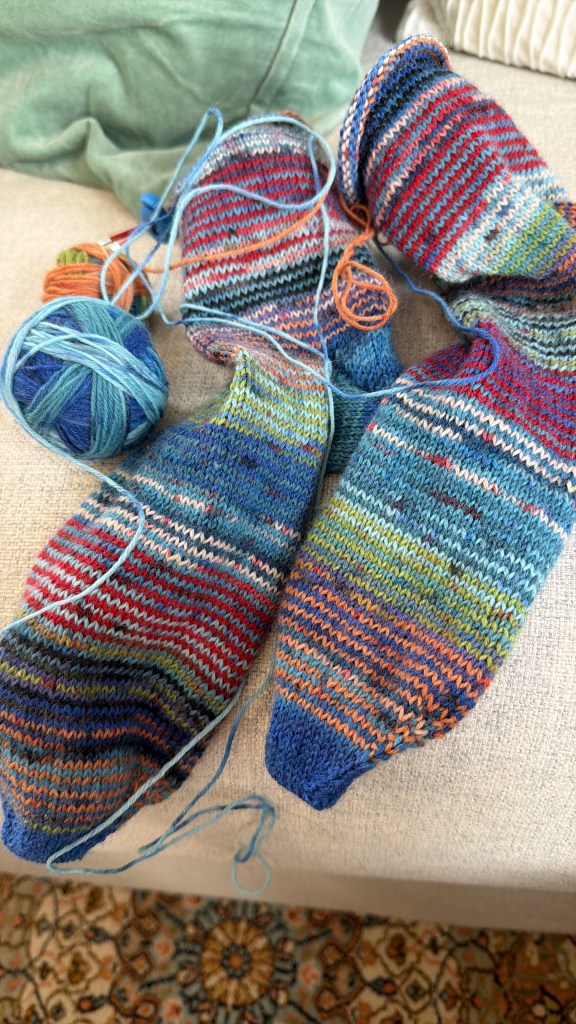
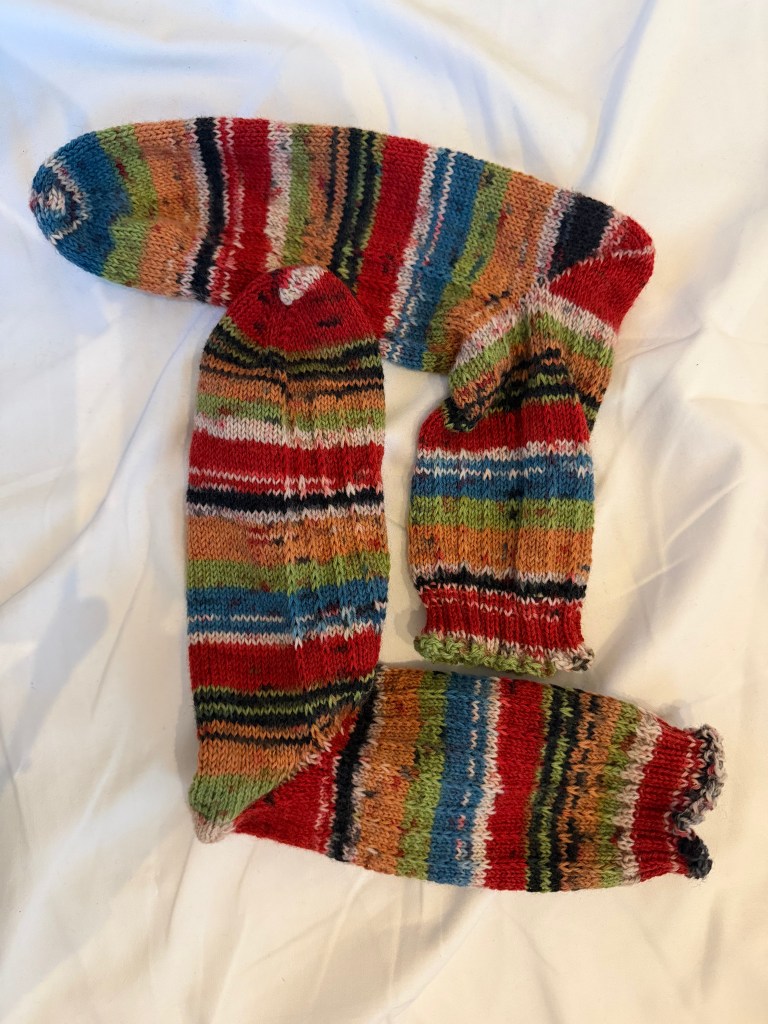
Instead I’ve been knitting socks and listening to audiobooks interspersed with some walks. I’m on my fourth and fifth pair since leaving Dubai (I usually knit at least two at a time. It’s mindlessly productive. I can highly recommend Arundhati Roy’s “Mother Mary Comes to Me”.
I want to cry but I can’t. I want to write, but this post has been open for nearly a week.
And so we move towards the end of week two. I didn’t get to hear the rockets and drones being intercepted. I wasn’t a worker who was killed as collateral damage. I’ve witnessed it through our compound and school WhatsApp messages and messages from my friends.
But I’m still feeling unsettled. Covid was one thing. War is something completely different.
We’ve been on summer break for just over a week now and I’m feeling sufficiently rested to sit down and write again.
Book returns
The end of the school year is always a busy time for librarians with the dual task of getting overdue books back and making sure that students have enough of the right books in their hands to entice them to do some reading over the summer. It really is a dichotomy – the students who most need to read more are the ones who have the hardest time keeping track of books – probably because they just borrow because they’re being told to do so and then promptly put the books somewhere never to be found again. And then of course when they become overdue it’s a fuss and bother and they are even less inclined to borrow.
Inventory
The big tasks include doing inventory – something we’ve turned more into a continual process so by the end of the year it’s more just following up on missing items – often they return – from students (or more often returned by nannies or parents) who consider going past the circulation desk as being optional. Unfortunately being in the middle east certain types of books also just disappear depending on the heat of current rhetoric – or in the case of this year actual bombing going on.
Core Collection
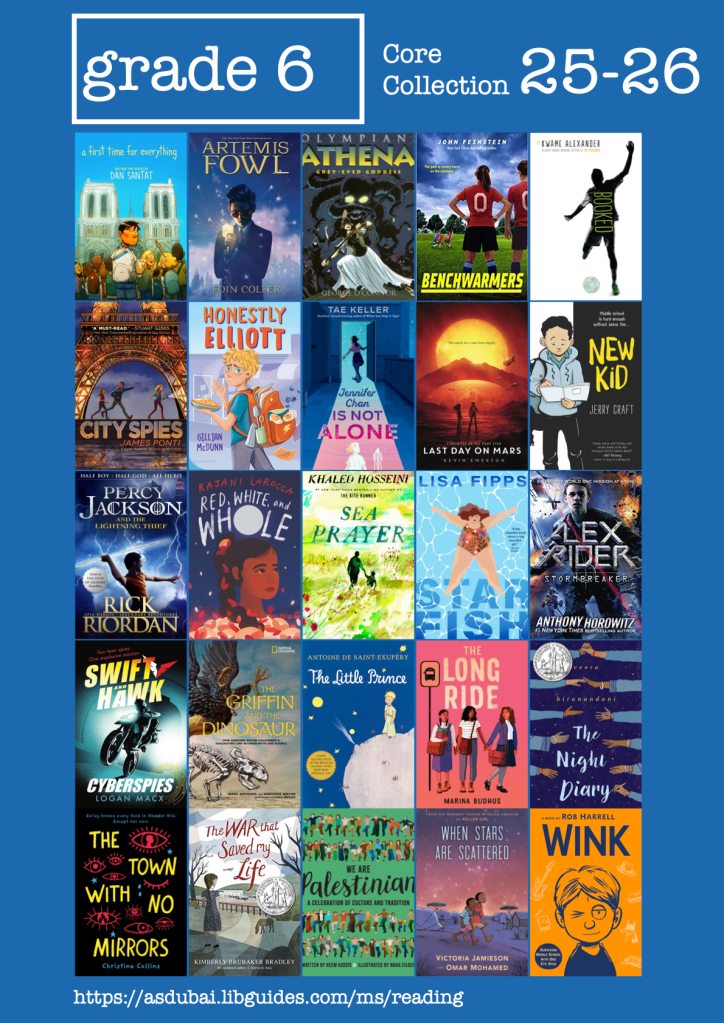
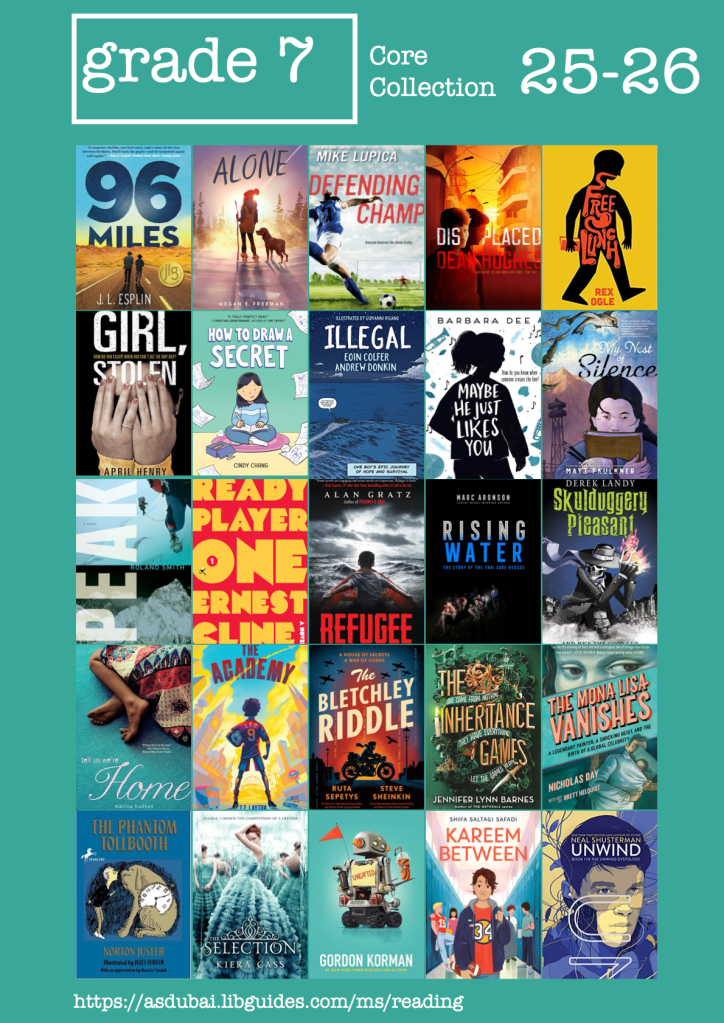
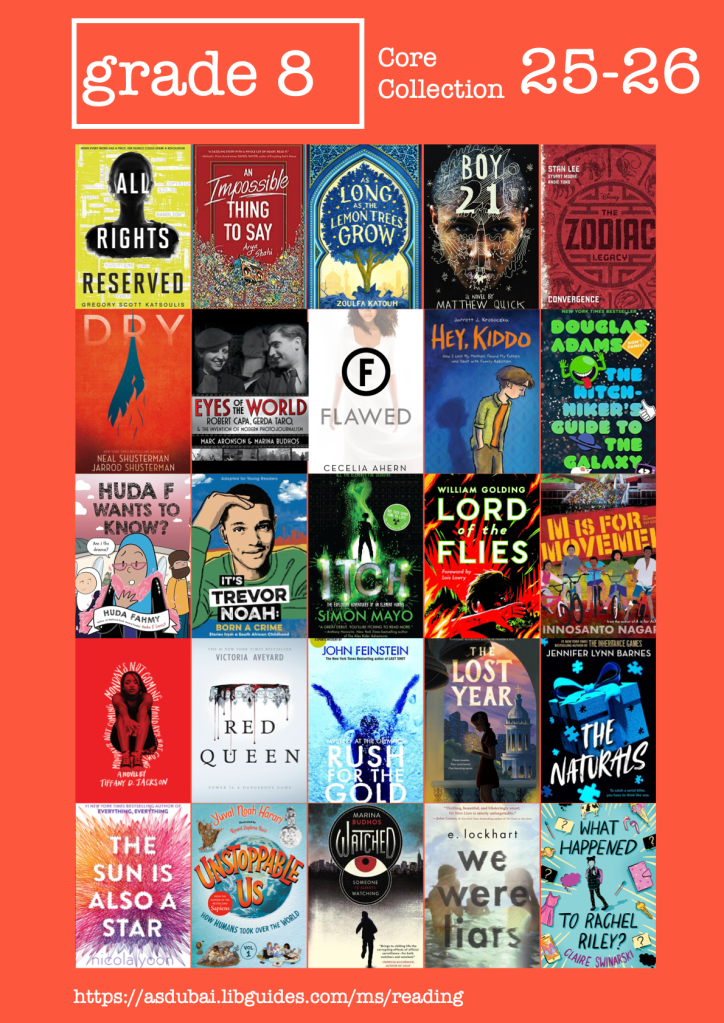
With our ELA (English Language Arts) department I’ve been very busy creating our new “Core Library Books” for the coming year (Grade 6; Grade 7; Grade 8)
And, continuing the tradition started last year, promoting them first with our middle school faculty. I’ll do a separate blog on the result of the core collection this year.
Summer reading
This also feeds into our Summer Reading Libguide which we try to promote as much as possible with students and parents. A few of the ELA classes had their students explore the guide and the various reading lists in detail and then make their own reading goals based on the lists and then email their parents with their reading plans and either borrow the books or request parents purchased them for the summer. I was also on hand with Sora Marketplace open to purchase the eBook or Audiobook for the students who wanted a digital copy. Our summer reading borrowing guideline is “as many books as you need and know you can take care of and return after the break“
Annual Report
The most arduous task at the end of the year, and one which it seems many international school librarians have more or less given up on, is creating the annual report. I can see why people stop doing this. With declining borrowing / reading it can be quite a depressing exercise. It’s also remarkably difficult to get good data our of our systems. Follett Destiny is a dreadful platform to get good data from – in contrast with other systems. I was reading Rutger Bregman’s “Moral Ambition” (see video below) around the same time, and came across the concept of vanity metrics – basically just putting together data that makes you look good. With that at the back of my mind, putting the report together (Annual Report 2024-25) became this exercise in trying to show both that the situation with reading is not great while trying to show that as librarians and teachers we’re doing our darnest to turn the tide and hopefully all is not lost. And even when we lose in reading perhaps we’re making inroads in research. Much as I hated studying business / accounting and was glad to escape being financial person it did put me in good stead for being able to work with data.
I’m planning on doing a bit more blogging this break, so keep coming back! Comment on any topics you’d like to see covered.
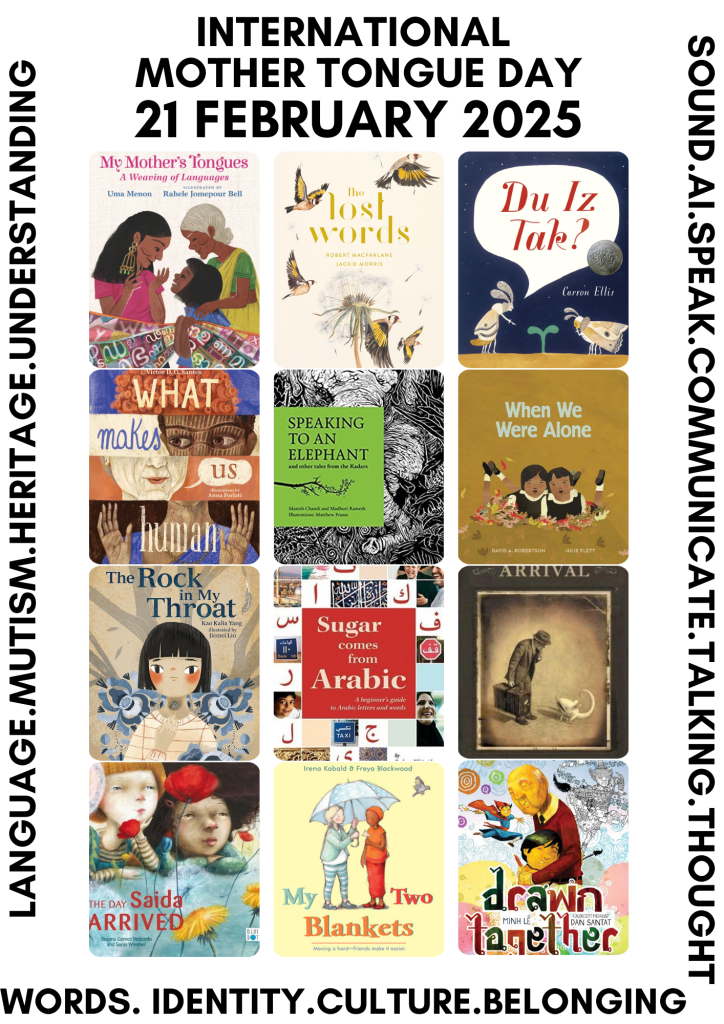
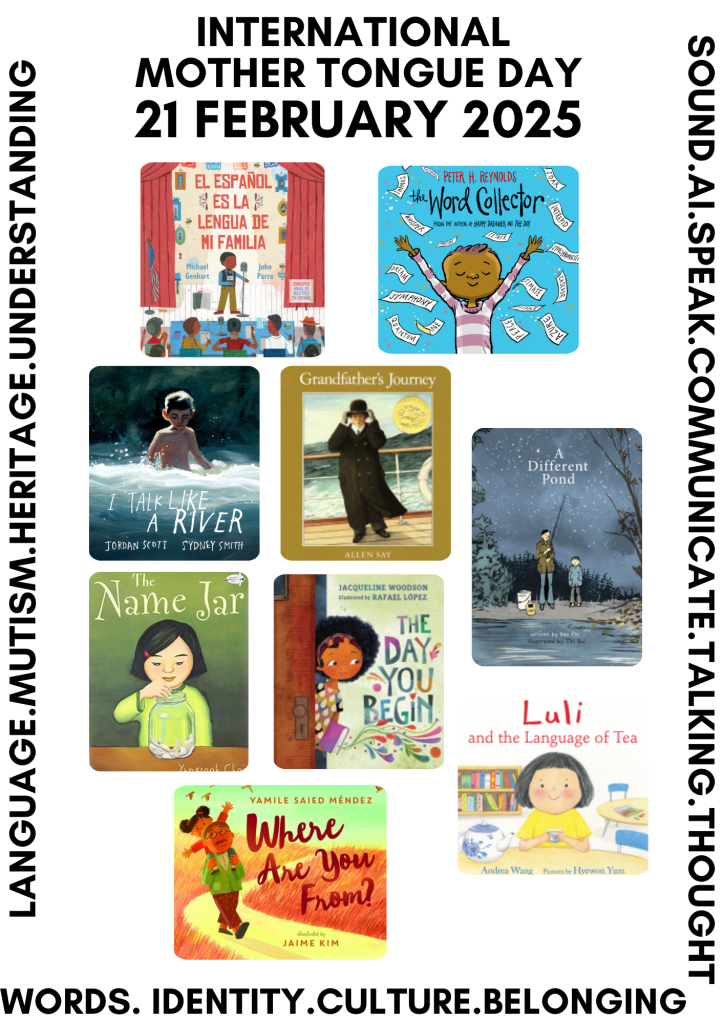
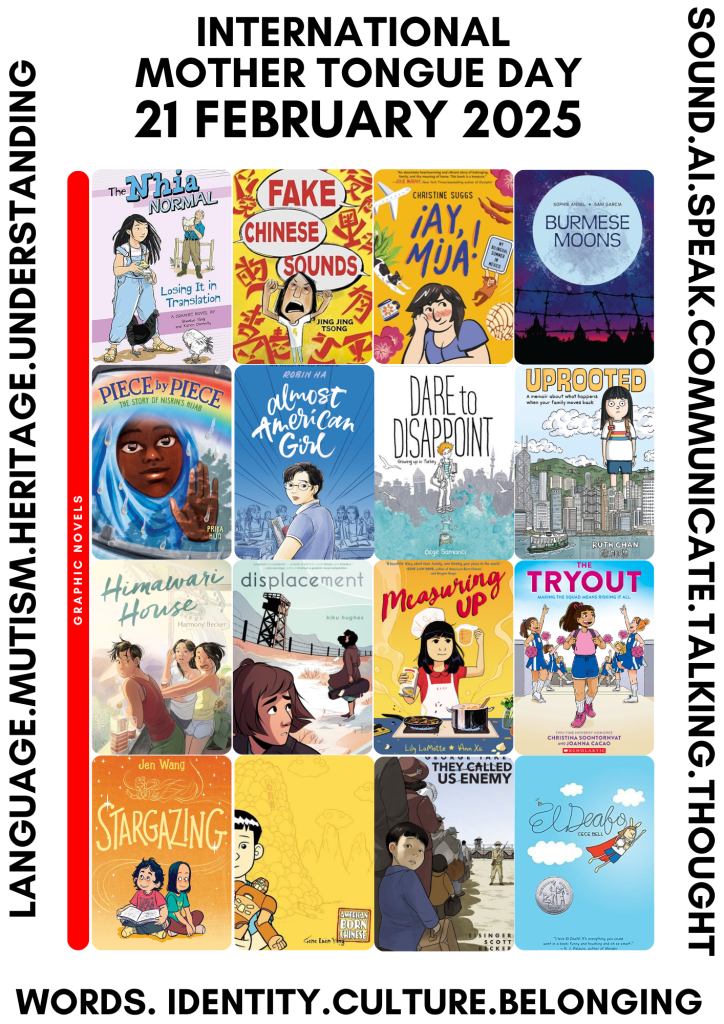
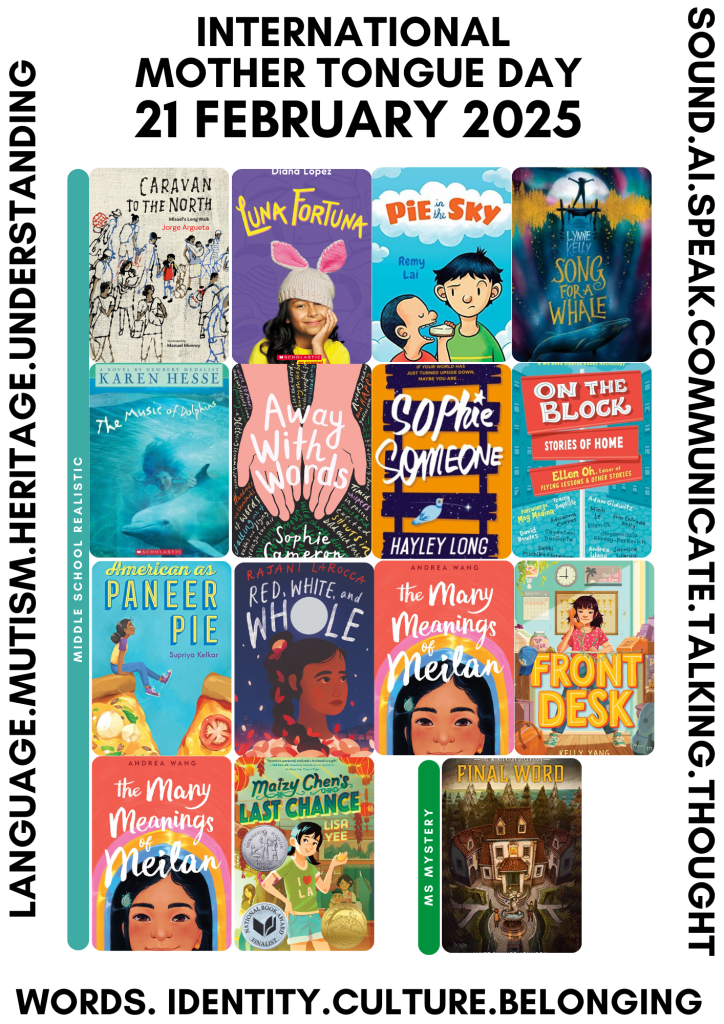
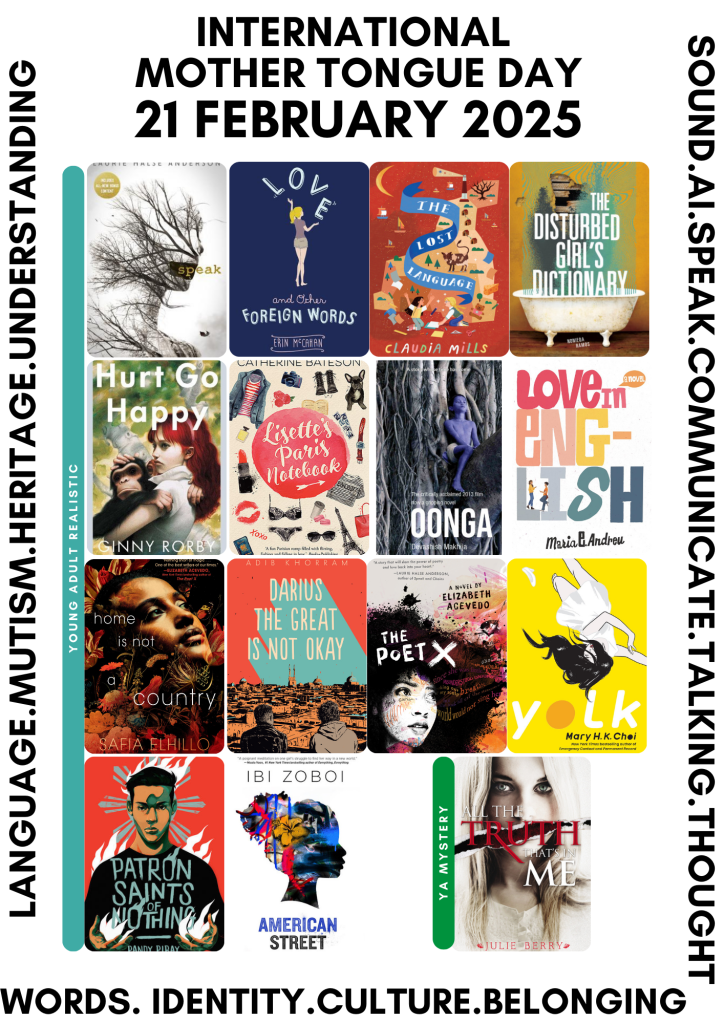
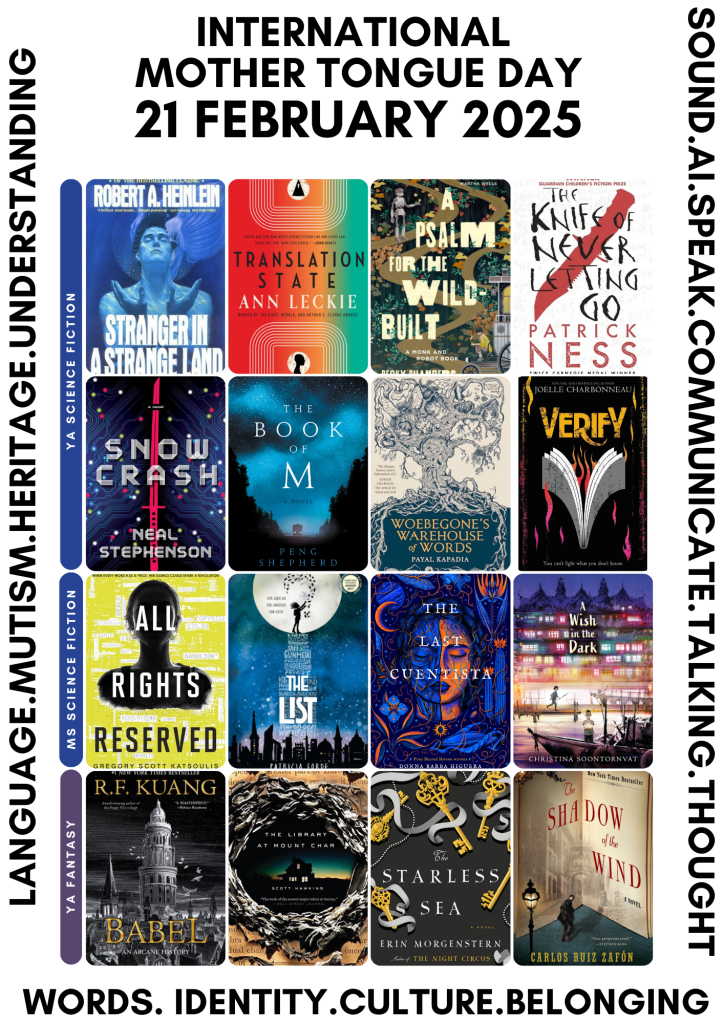
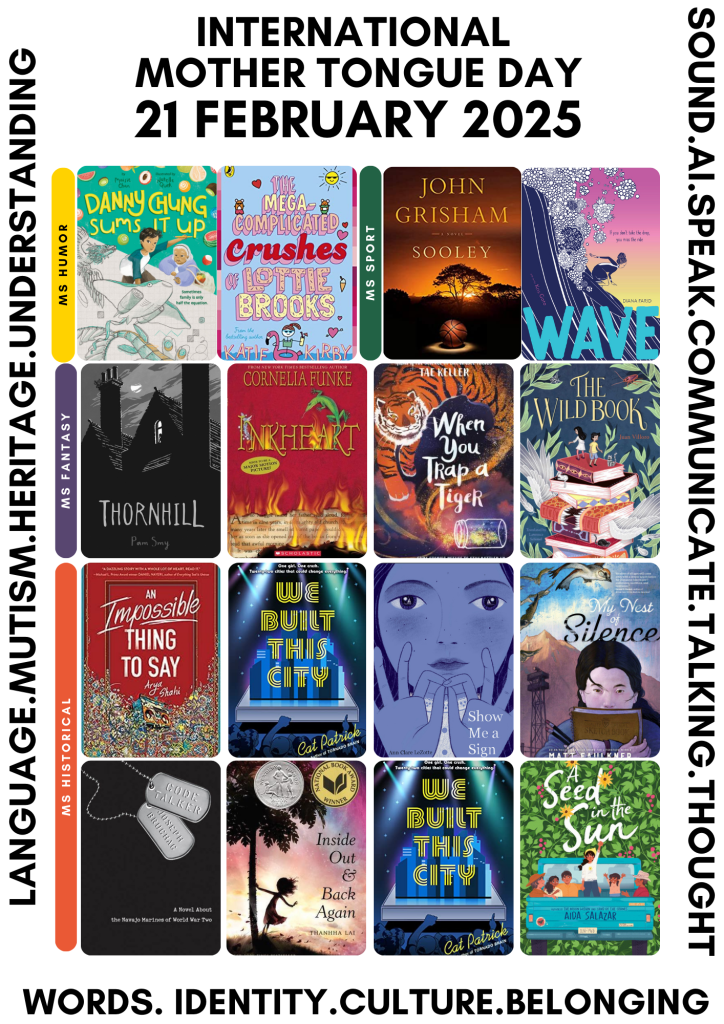
International Mother Tongue Day is next week Friday, but my students and I will be embarking on their annual Week Without Walls trip so I’m a week early with this post – hopefully it will be of some use to those of you planning on celebrating it in the library. I will be upfront about my objection to it being called Mother Tongue Day – as it denies all the families where the language of other significant family members are spoken at home. I prefer the term “home language”. This year is the silver jubilee of the event. Despite all efforts, languages are becoming extinct at an ever increasing rate, and unfortunately this doesn’t attract quite as much attention as pictures of cute or not so cute animal. Schools and other educational institutions are complicit in this – something I’ve been banging on about for years, the lack of multiple-lingual home and heritage language education I still see as a failure of imagination rather than a failure of resources in this day and age. Ok, off my soap box and back to the practical.
These lists started with a casual conversation with KD as to what I had planned for the day, as my passion for language is well known. Which led to a discussion on which books one would consider and then, as usual things got a little out of hand and now I have 9 pages of posters of books that feature language. Language in all its glorious and inglorious forms. Learning language, struggling with a language, speaking or not speaking. Sign language. Heritage language. Language and thought, language and power or control. Selective mutism. Denial of language, erasure and extinction of language.
As for what to do – if I were here, these are the things I would do.
Have big sheets of paper our where the community could write down the languages they speak / read / write. The languages they’re learning. The languages of their fathers, mothers, grandparents.
I’d have them make a language family tree. Have a poster with a QR code that led to this quirky test on Language.
As usual here is the link to the template / books used. In return I’d love some comments on the books you recognise and the link to language! And any displays or activities you’re planning. And of course if you have suggestions of books I’ve missed I’d appreciate you adding them in a comment.
At times people will write to me and ask about things in library-land where they assume that somehow I or the (highly regarded) school I’m at have managed to “get it right” and they, poor normal human shouldn’t be struggling as there is a magic formula or secret sauce that could help. Alas we’re all human and all schools are the same in having struggles, perhaps the only difference being in what they struggle with and how good their marketing and communications departments are in convincing that it is otherwise.
A couple of weeks ago someone asked me about implementing NoodleTools as a citation tool in a school and how to do it. I promised a blog article as I said it wasn’t a simple thing. Ironically just yesterday I had to sincerely offer my apologies to a colleague as I had put zeal in front of our relationship around just that topic. So this is as much a “how to” as a “proceed with caution.
In the information literacy landscape, citations are a sub-topic of academic integrity. Any student who has passed through my hands in the last in the last 10 years will tell you I use the “brushing teeth” analogy with citations. As in – “you don’t just brush your teeth before you go to the dentist” you need to brush them regularly / daily. And I tell them about when I was grading Masters’ students at university how many had an absolute crisis just before submission as they didn’t have a works cited list. Heck I’ve known adult PhD students in a similar situation (and even out of perhaps misplaced righteousness refused to be paid to do it for them). It’s a nice analogy – especially when you add the idea of decayed teeth! It’s also a nice analogy because citations are what Herzberg (1959) would refer to as “hygiene factors” – ie. related to ‘the need to avoid unpleasantness’.
Now to take this a step further – parents and caregivers generally start helping very young children brush their teeth before they even have teeth, with special rubber gadgets they put on their fingers, and it’s even suggested to start early visits to the dentist to acclimatise kids to the idea of having dental checkups. Bear with me. Citations are not just a sub-topic of academic integrity, they’re part of the threshold concept in information literacy of “scholarly discourse”. Now in many areas of life, we learn how to “do” before we learn or understand “why” we do. When my kids were in Chinese Bilingual school aged 6-8 years, they learnt the San Zi Jing (三字經) and some of the three hundred Tang dynasty poems by heart without any comprehension of what they really meant – occasionally to my horror when I saw the translations of filial and patriarchal piety. Not being the kind of person or parent who ever takes things for granted I spent a lot of time trying to understand the mechanisms and reasons for this “learning by heart” and the best I could conclude was just like the English “Grammar” stage of the “Trivium” the ideas is that memorisation is best done at an early age so that logic and rhetoric (analysis and synthesis) can happen later.
So to bring this back to citations – the idea is to initially use a citation tool with pre-selected types and qualities of resources, and the students learn the steps of citing correctly and at a certain point this is expanded to understand what how these resources were selected, what scholarly discourse means along with the other threshold concepts.
Our school has chosen NoodleTools as the citation tool – you can see a set of slides I made on “5 reasons why to use it) including the ability to create inboxes for teachers to follow the process and it’s pedagogical merits of guiding students to make sure they have all the bits and pieces of a good citation. Now do all teachers and students love using it. No. Definitely not. There are a lot of things in education that are absolutely no fun initially but still somehow need to occur. The “hygiene” stuff I’d posit we want to create friction around initially so that they avoid the “unpleasantness” later. Under that heading I’d place things like times-tables, handwriting, spelling, vocabulary, learning facts etc. Now a funny thing about these things is that students will always grumble and grouse about them, but when they master the skills they are so disproportionally happy and proud of it. I notice that in the corridor talk. When in G6 they first encounter citations and NoodleTools they’re all jokey and will call me “Ms NoodleTools” in the hallway. After a couple of times, if teachers consistently use it in their research projects and I’m in the lessons refining and reminding – or rather getting them to do that – they’ll stop me – particularly the boys – and say “Ms, I did it, right? I could tell everyone in the class how to put a book/video/ website into NoodleTools!”
Why is NoodleTools suboptimal so much for so many people? Well, it’s what I’d call an MS-DOS tool. The UX (user experience) is just not what our typical Generation Alpha students or Millennial teachers are used to (or deserve). 12 point font and having to find the right box to click and bits hidden behind drop down menus are not the rizz. PalmPilot back in the 90’s already knew that users didn’t want to have to click several times in order to get to where they wanted to go.
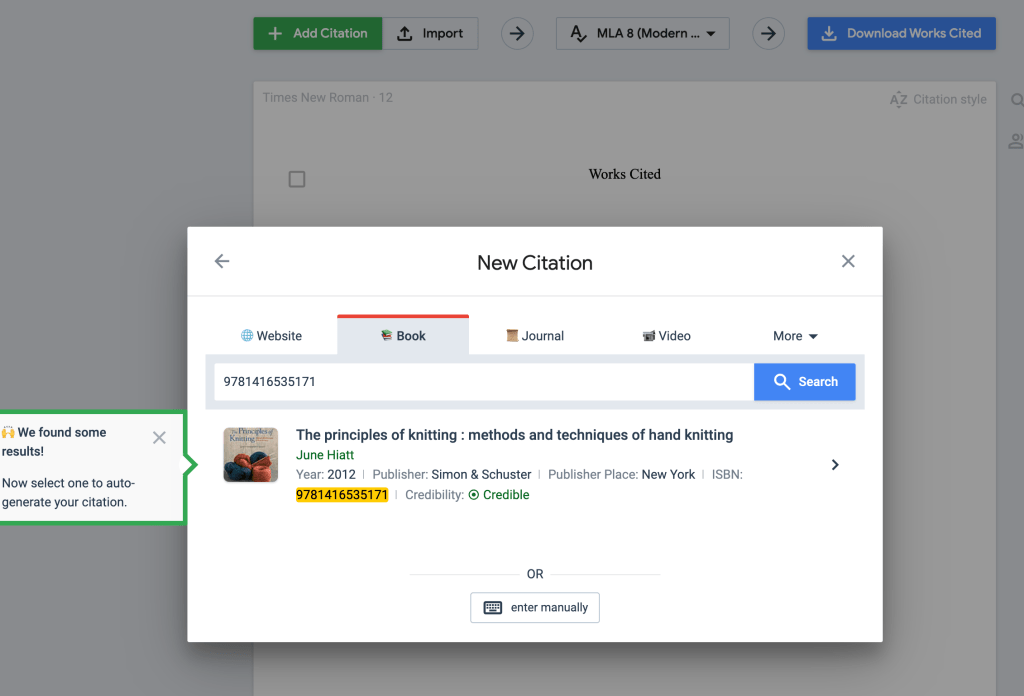
Compare MyBib.com interface and adding a book below – two steps, both visible:
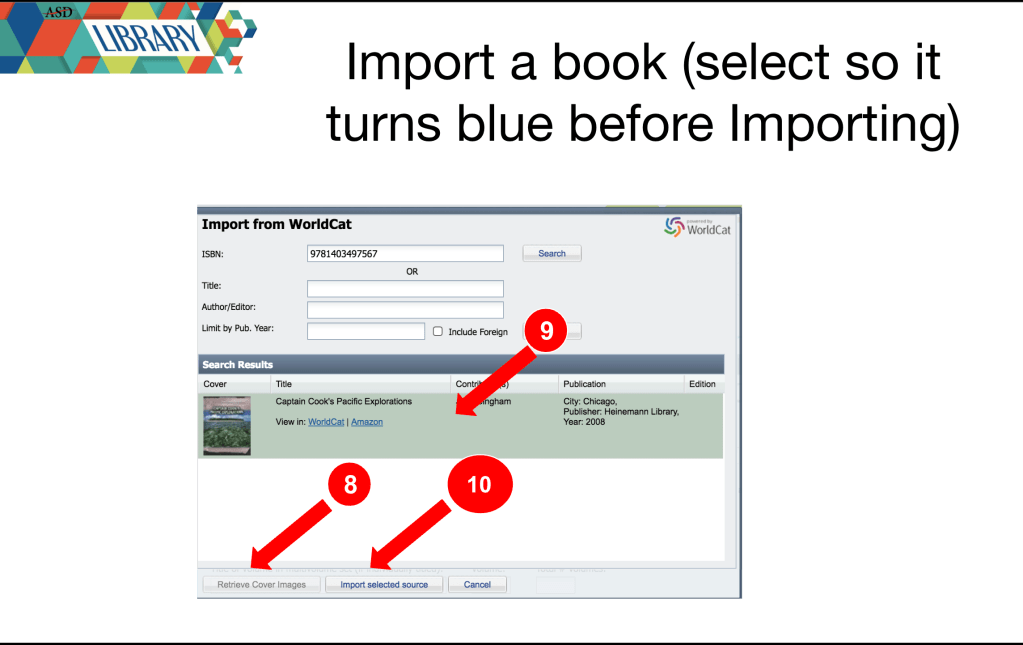
to NoodleTools – twelve steps in 7 consecutive screens (is it any wonder my kids are so proud of remembering it all and getting it right!) – see more here:
Of course there are a myriad of other citation tools, but these are the two more common ones in the secondary school landscape that are not predatory / try to sell you an essay along with your citations or steal your data / information?
So why not go for my.bib – and rather choose Noodletools IMHO? Well:
it’s not great with identify the Author and Date of sources – all these tools scrape the metadata from the sites you’re using and lazy webmasters and programmers won’t necessarily bother putting these in, or won’t identify them correctly with the correct tags.
It doesn’t play nice with databases, you need to export the citation in RIS or BibTex format and import it into your MyBib bibliography – where as NoodleTools have managed to integrate themselves into most of the common databases we use, including Credo, Gale, Infobase, JSTOR etc.
It doesn’t have the same level of pedagogical step-by-step guidance and error identification (for example capitalisation which is very easy to get wrong)
Teachers can’t follow the research process through a shared “inbox” (and the great thing is in trans-disciplinary assignments the same project can be shared with two different teachers with different class groupings.
It doesn’t have a notecard / outline function
It doesn’t have the collaborative features of NoodleTools where you can also see exactly which student contributed which citations / notecards to a project – a great feature when it comes to the “not fair” arguments on work division
It doesn’t have the “history” feature which allows teachers to see the unfolding of the research and the instances of “immaculate conception” of perfect research papers and notecards
Although my.bib is free, NoodleTools is only a couple of hundred dollars for nearly 1,000 students i.e incredibly cheap for the extra features
You actually WANT to create friction in the research process – a source needs to be relevant and credible to merit inclusion in the research and if there are speed-bumps in putting the source in students may be less inclined to go down the WWW (world wild web) route of random googling and more inclined to use our databases and sources in our Libguides.
So how to implement / “sell” the system
Basically it’s a push-me pull-you gig. It helps to have it as part of your information literacy scope and sequence as “the only tool recognised”. If we are student centred it is important that adults set aside some of their preferences and independence so that one system is used and students can become competent and not be confused.
Some of it is persuading departments to adopt it for the above-mentioned reasons, despite it’s ugly UX and multi-step process. Offering to set up inboxes for teachers for research projects helps. As does creating project templates with outlines and tailored notecard headings.
Students need to be taught step by step how to use the tool, and it has to be re-iterated for each assignment and the librarian needs to be prepared to be on hand to help out as there is a very long tail of students becoming competent in its use. And simultaneous to the “doing” skill, the work in the “understanding” has to begin. Why does it matter if something has n.d (no date) or n.a (no author)? How does that correlate to credibility and reliability?
So there was the very long answer to what may have seemed like a simple question. It’s great for Grade 5 to Grade 12. And what do I use personally? Well, if I’m doing an academic paper or helping an adult (or Extended Essay student) sort out their research life I still go for Zotero. I pay for the extra storage even now I’m not a student anymore and I love the integration of in-text citations and Bibliography/Works Cited in Word and GoogleDocs.
I’m super late in sharing this presentation I gave the the L2L (Librarian to Librarian) workshop that I co-organised in Dubai in 2023.
Having worked in the Middle East for the first time, and with a predominantly muslim demographic meant I needed to get up to speed on what ensuring our collection mirrored our students would mean. Here are some suggestions – I’m no expert and have suggested links to people who are and whose guidance in this area was invaluable.
Here is the slideshow with some suggestions of books to add to a collection.
When my kids were very little, we lived in Spain, and since there wasn’t a local kindergarten, we’d drive about 30 minutes to the closest (Spanish) kindergarten and during that drive I’d have them listen to the wonderful Naxos collections. Besides learning about famous composers, great scientists and a bunch of other stories like Professor Branestawm who they could never get enough of, they also got a diet of Fairytales from Grimm, Andersen and Myths and Legends including Greek, Norse and Heroes and Heroines from Classic Tales. Neither of them remember much about living in Spain, and my daughter swears high and low she can’t speak a word of Spanish (despite 2 years immersion in it) but they remember the stories. And I still have the CDs. Perhaps as we continued to play them in the car on holidays and in Hong Kong and Singapore.
Today I’ve been making a poster of fractured fairytales in the fantasy genre. In a multi-cultural environment you can’t take for granted that students would have been exposed to some or even any of the tales that their educators grew up on, and I also did a bit of research on the types of (Western) fairytale collectors, editors and scribes and found this great little blog on some I was not aware of, or vaguely knew. When you look at the poster you can see the prolific Jacob & Wilhelm Grimm feature a lot (with over 200 tales and 10 children’s legends) as well as Hans Cristian Andersen’s 156 stories and Charles Perrault with his 8 Mother Goose tales punches above his weight in terms of retellings (thanks to Disney).
One of the most fantastic retellings ever of Little Red Riding Hood has to be the book “Picture this by Molly Bang” where she explains elements of Design using the tale. It’s one of the first books I buy in every library I work, if it’s not already on the shelves. Even if you ignore every other book in this post – that’s one to make sure you have in your collection!
As a parting note, as I was saying these are definitely a “western” view of fairy tales, when I was working at UWCSEA East with Katie Day and Maya Thiagarajan one of the amazing things they worked on was helping students recognise the “foundational texts” of their cultures. These are the texts that shape the culture and literature of that culture and that if you’ve not had the opportunity to access that text you may find it hard to read other works from that region because you’re not aware of the references, directly or indirectly. So for Western European culture it would be Aesop, Grimm and Anderson’s fairy tales, the Bible, Shakespeare, Austin etc. In India it would be the The Mahabharata, The Ramayana, in China it would be Romance of the Three Kingdoms and Journey to the West. Students were tasked with researching their cultural legacies and this is the libguide (thanks to webarchive) that was co-created with their IB literature class. But that’s a poster and discussion for another time.
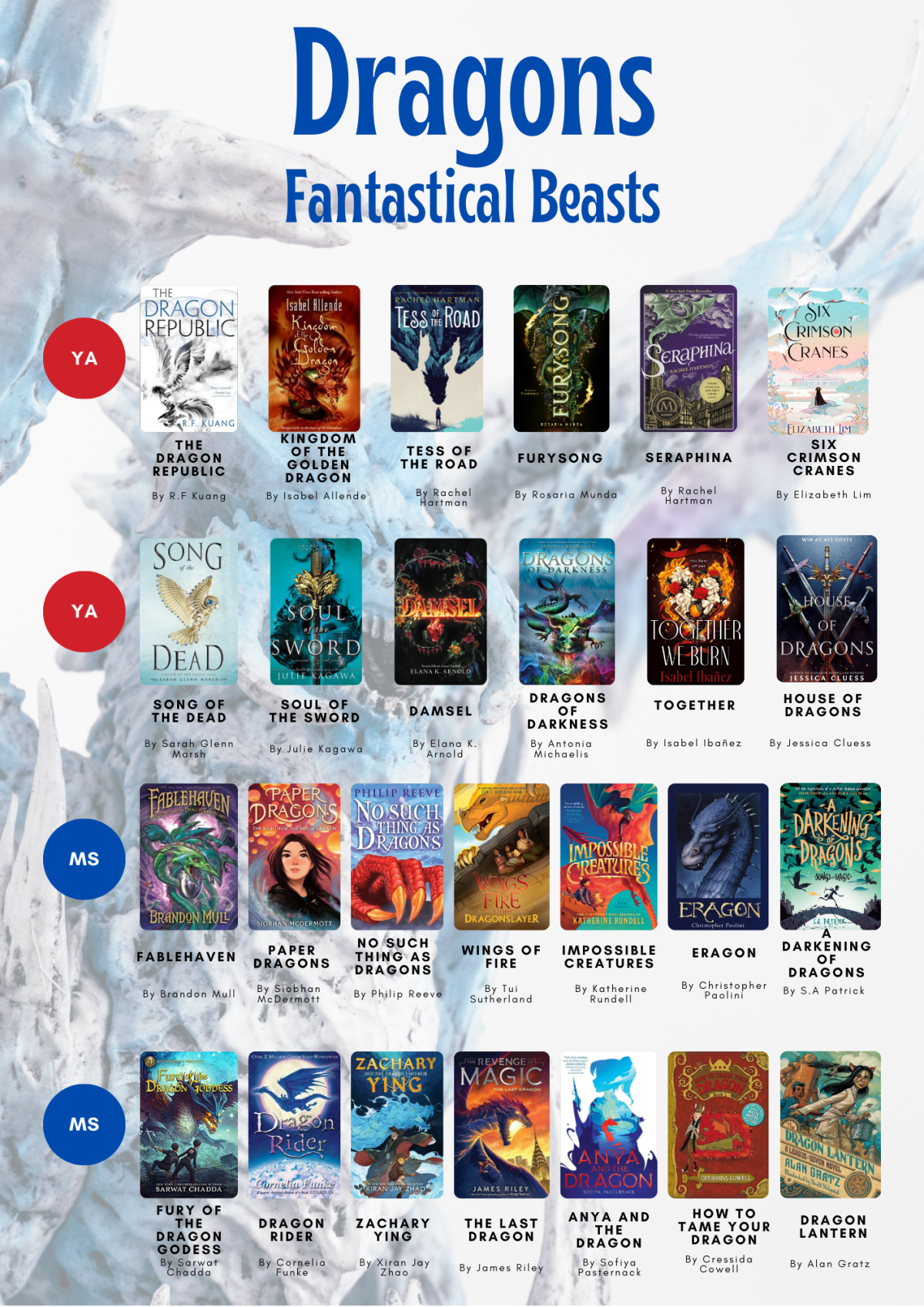
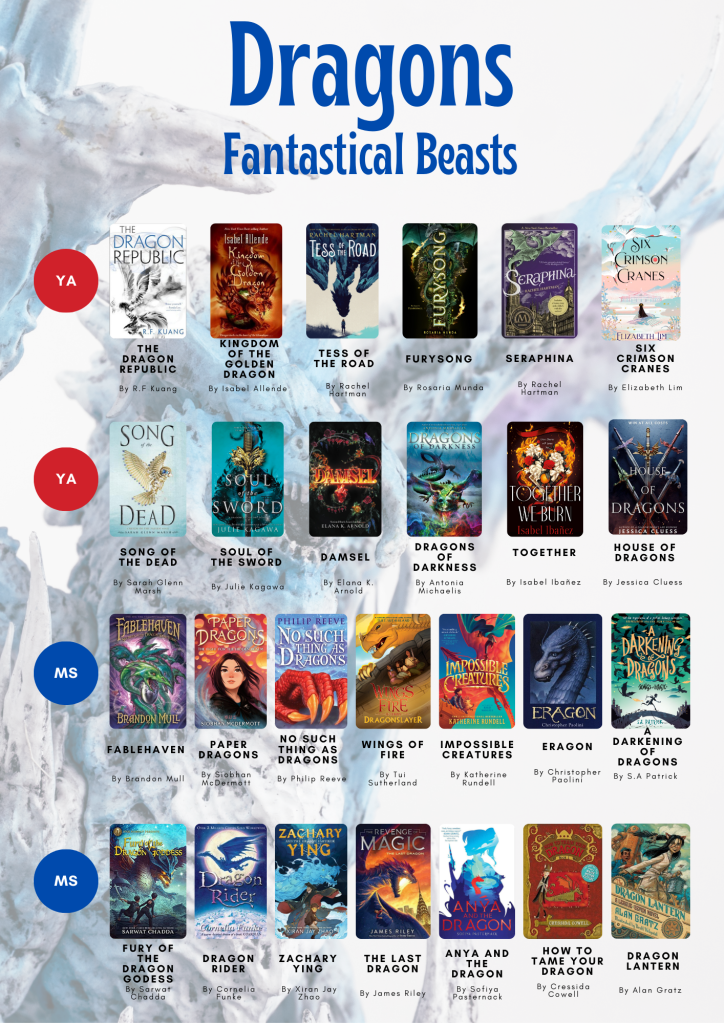
Like most school libraries I have a bunch of students who really like fantasy. But that’s a bit like saying they like chocolate. Chocolate is a blanket term that can mean different things to different people and tastes they do vary. Like my poster series for Dystopian fiction – I’m embarking slowly on a number of side projects to demystify other genres in the library so students can find the sub-genre they like most. These things take an enormous amount of time and thought and originally I wanted to present a “fait accompli” in my blog but decided as it would mean I wouldn’t be posting anything for just about forever, to do it page by page.
So the path I’m taking is, as usual being guided by my students and what they’re reading and asking for – which is why I started with “Fantastical Beasts – Dragons” because that’s what someone wanted today. Once I have a bunch of posters I’ll try and find a way to link them in some kind of flowchart / decision tree.
I’ve distinguished between YA and Middle Grade, as things can get quite spicy in the fantasy / romantasy etc realm – (you’ll notice my list doesn’t include the Fourth Wing (The Empyrean, #1) by Rebecca Yarros – yet). Usually I indicate whether a book is part of a series in my posters – however one of the great things about fantasy is that nearly all books are part of a series (I’ve generally chosen either the first in the series for my image or the most dragony title). Books is a series is the library equivalent of “all you can eat buffet” as with a little bit of luck the minute they’ve had a taste of the first book they just keep going.
So far, based on my collection and student interest I’ve identified the following areas, romantasy, dystopian, high/low fantasy, magic realism, paranormal, fracture fairytales, mythology, alt. history, animals / fantastical beasts, schools of magic.
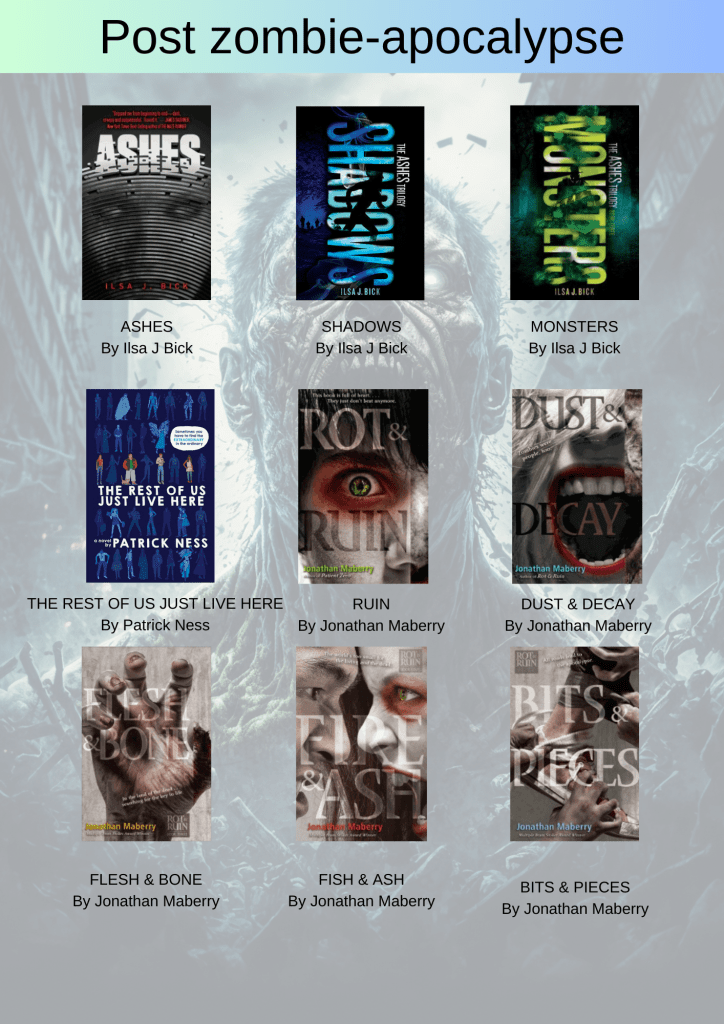
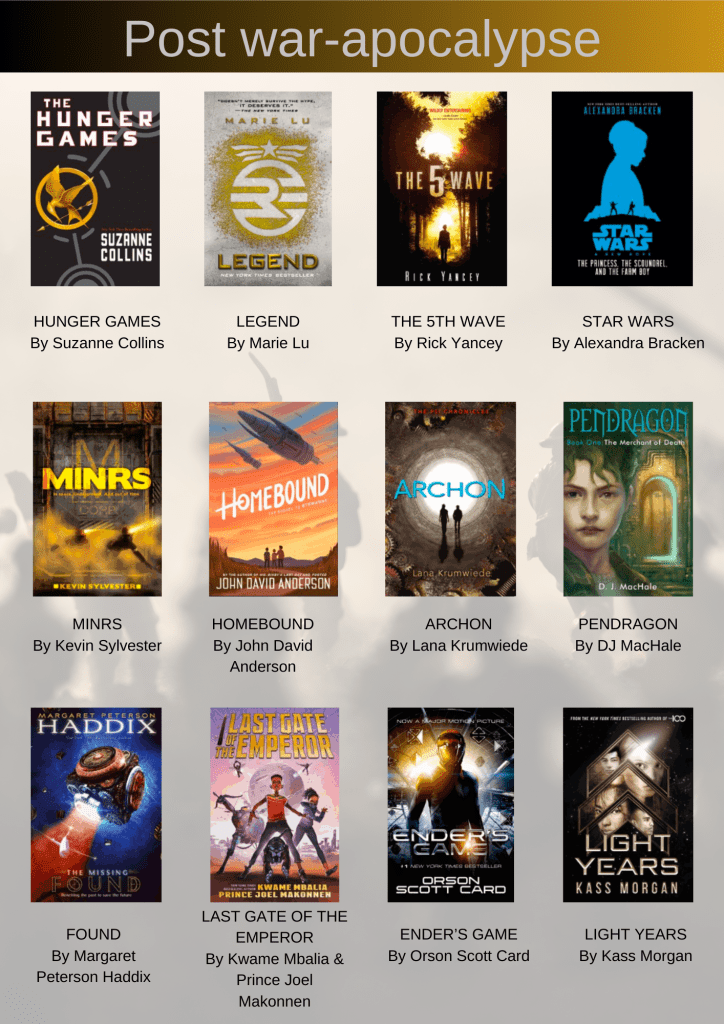
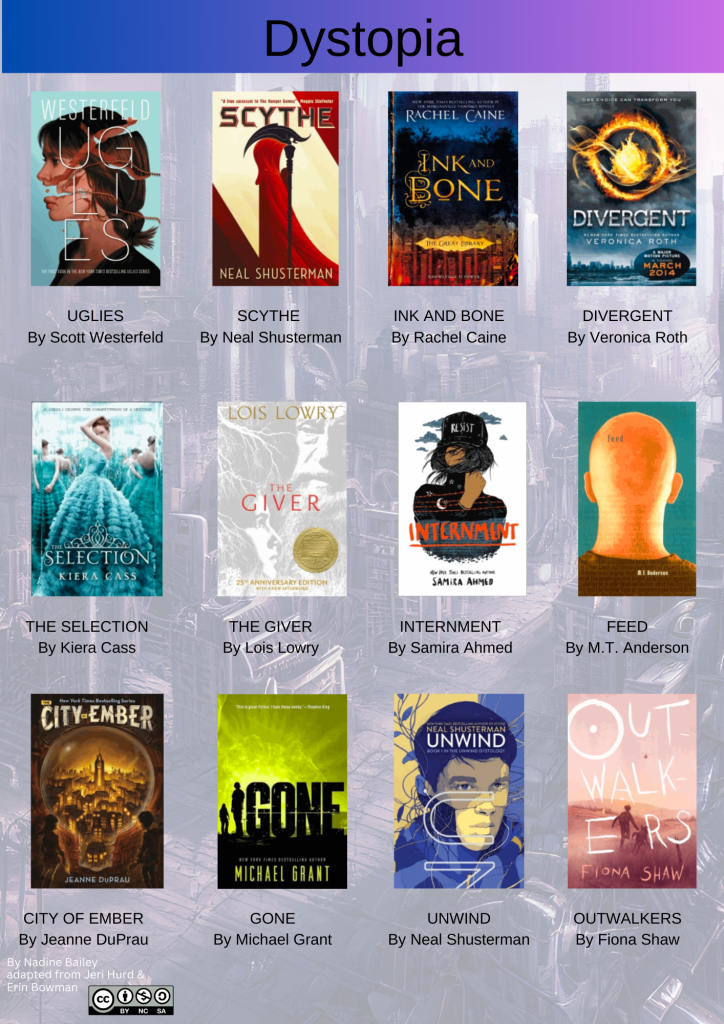
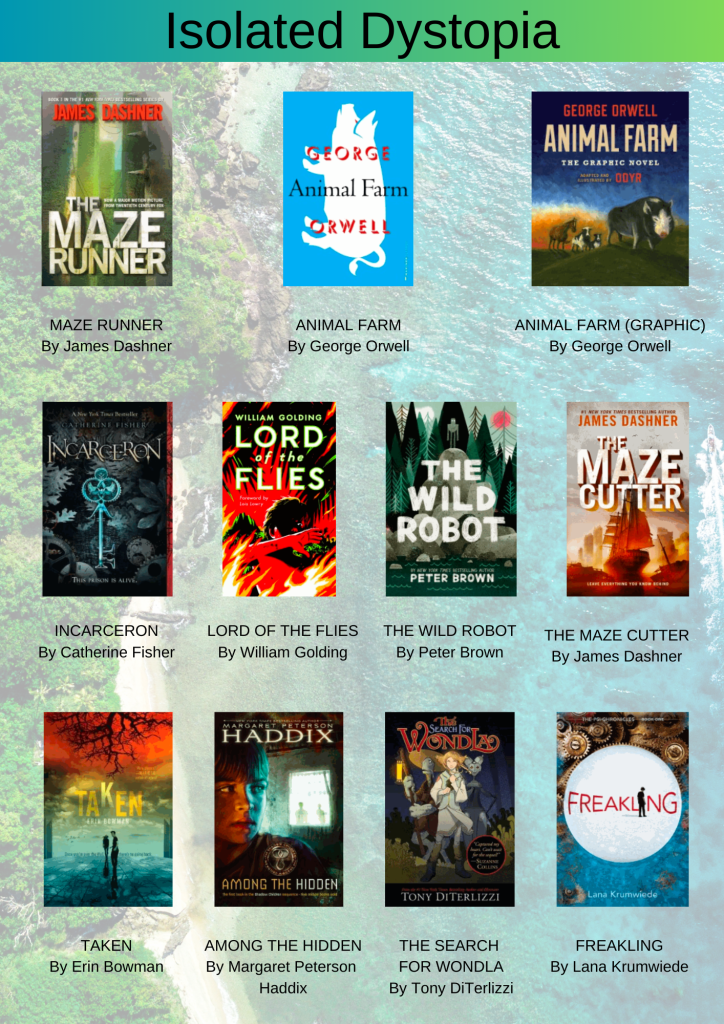
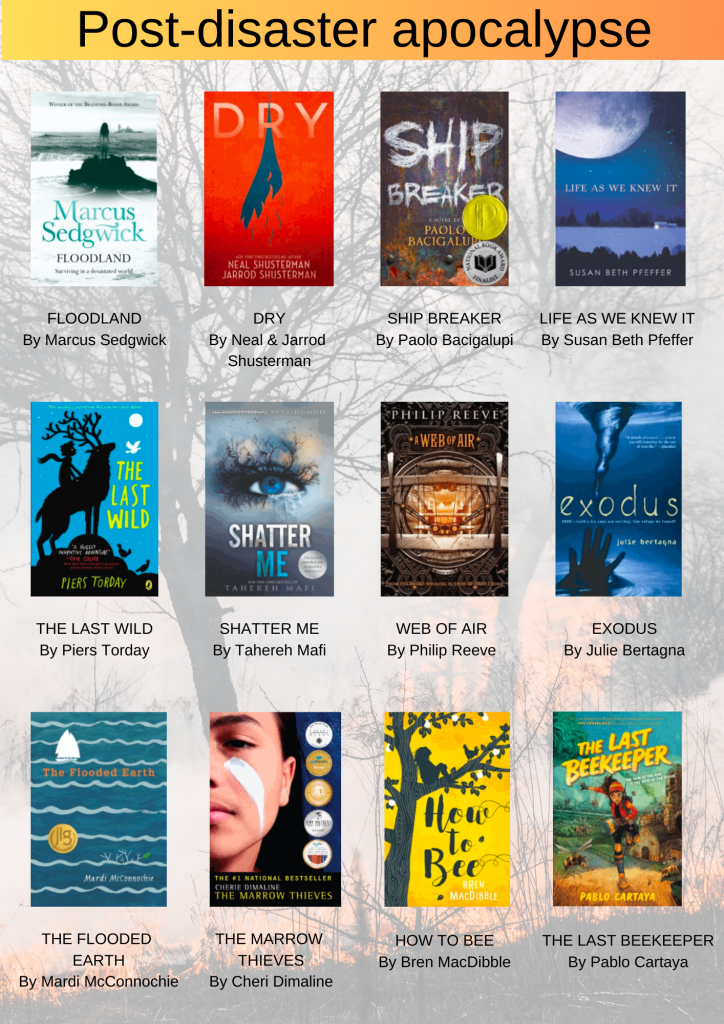
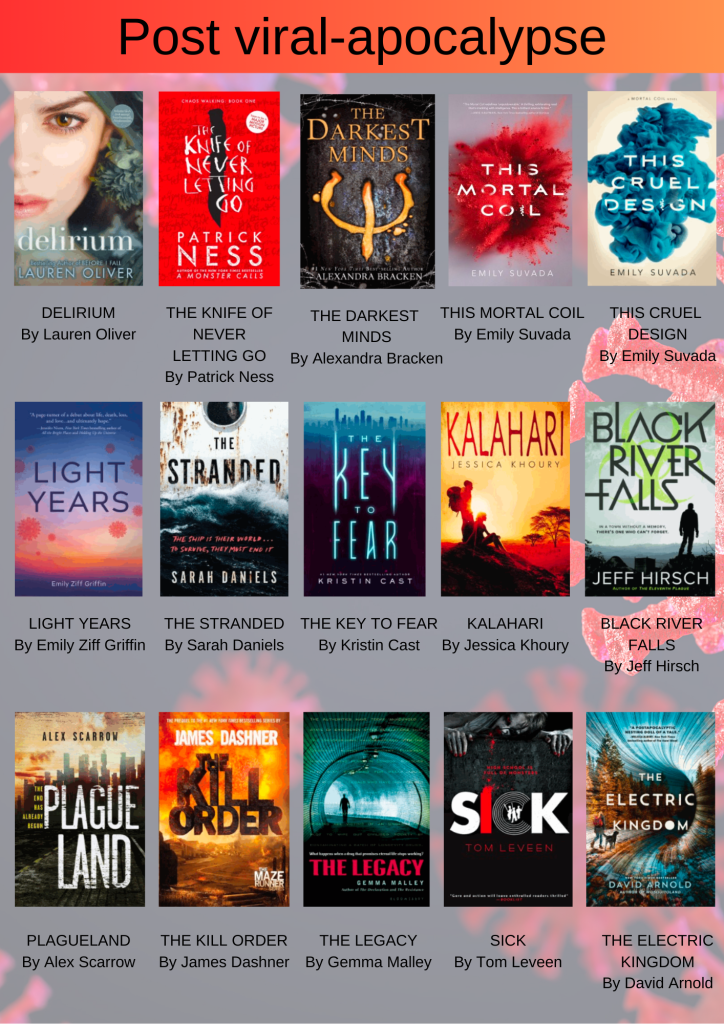
Our Grade 7 students do a dystopian unit in their English Language Arts (ELA) class, and I came across this nifty categorisation in a poster by Jeri Hurd (sans the sub-pages / images). Since I find our students are increasingly stimulated by imagery, rather than just text, I adapted the poster to include 7 sub-posters combining the books in our collection to the suggestions.
It’s not always easy to find middle grade appropriate science fiction, so this collection includes some YA works – particularly in the “Zombie apocalypse” section.
During a recent library visit after the students had completed their bookclubs with their chosen books, we had tables set out with the posters and the related books so they could further explore the various sub-sets of the genre.
If you are really interested in Utopian / dystopian literature and have quite a few hours to spare (like in the upcoming Spring break) I’d highly recommend Pamela Bedore’s “Great Utopian and Dystopian Works of Literature” from The Great Courses.
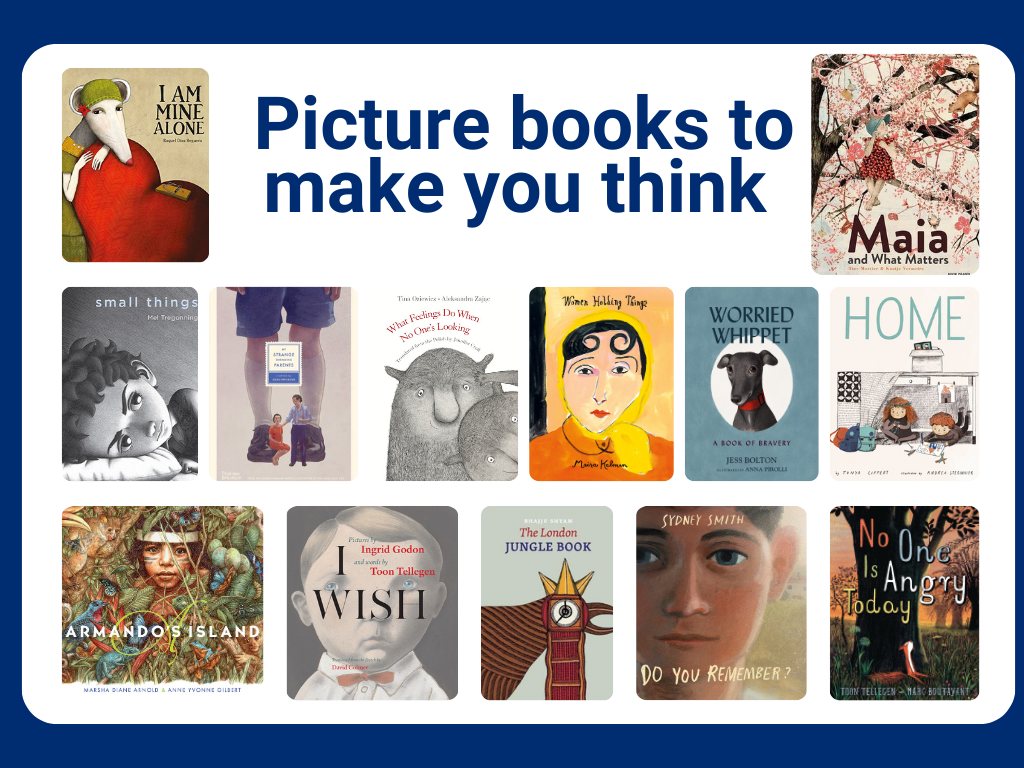
The cliche is totally true – a picture is worth a thousand words – but picture books with a few words – well they allow all the thoughts and emotions and sometimes the words to flow. Even in older students – perhaps especially in older students.
I’ve spent a lot of time and effort in curating and expanding our picture book collection in the middle/high school and I’m happy to say we now have over 500 books in that section. Today’s poster is picture books to make you think, and some of them still bring me to tears when I read them.



















 Informative Flights - Musings of a Teacher Librarian