#sensemaking Demystifying mystery

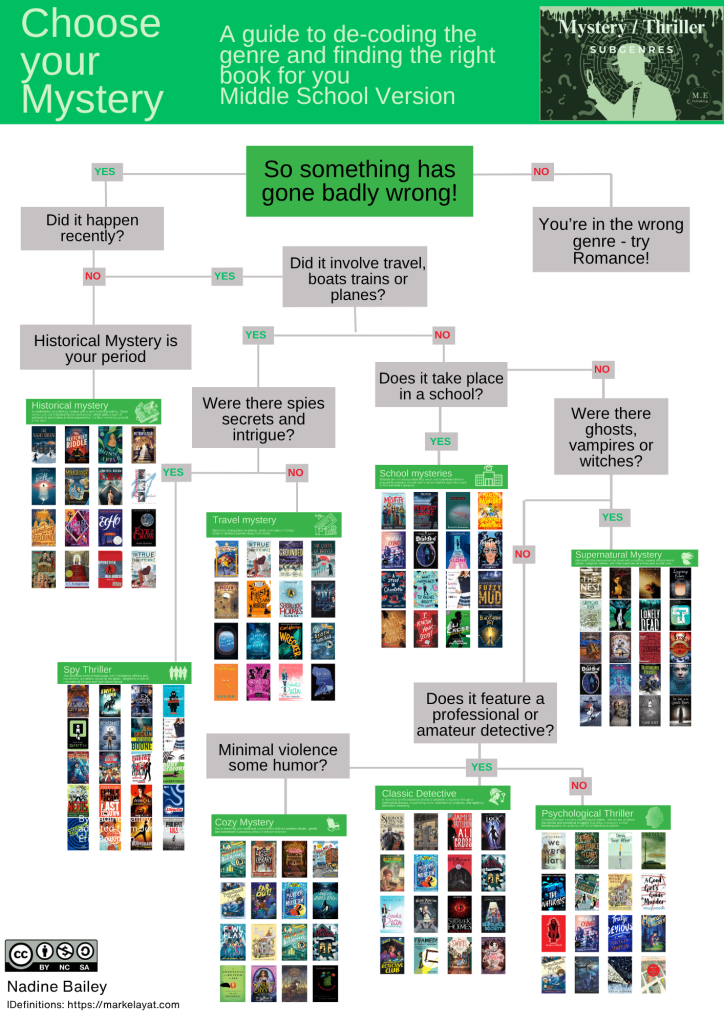
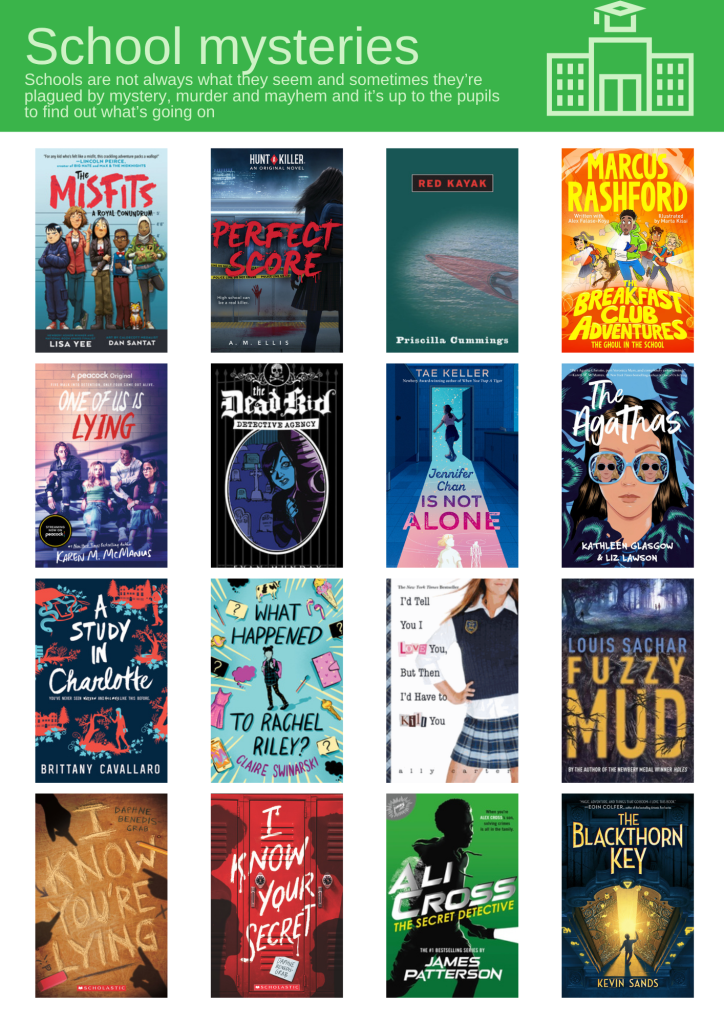
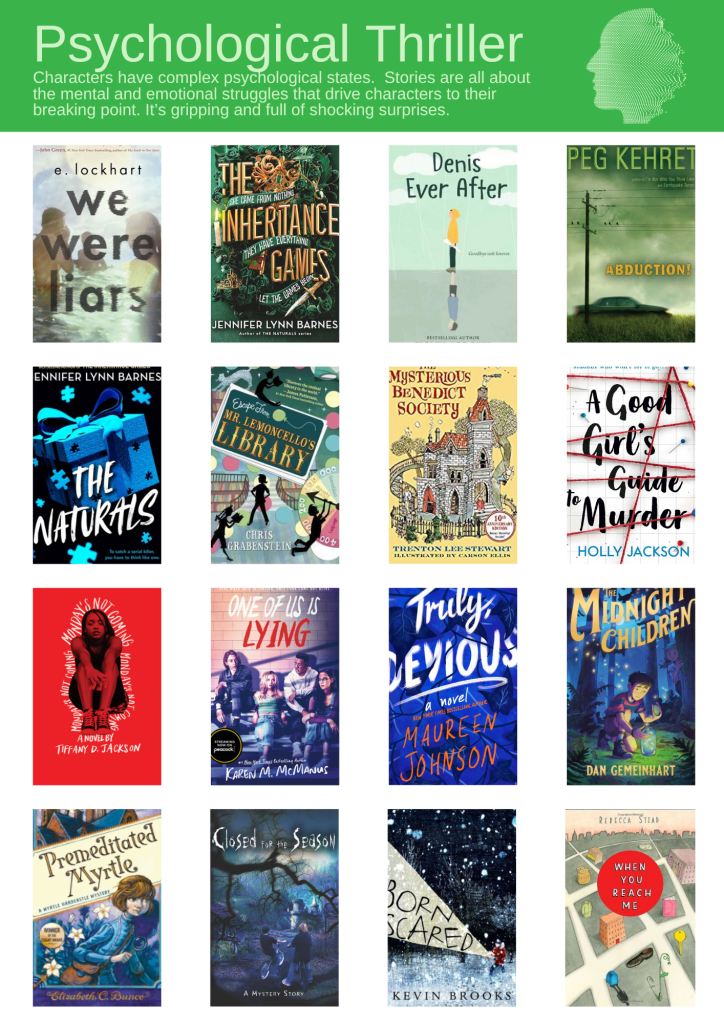
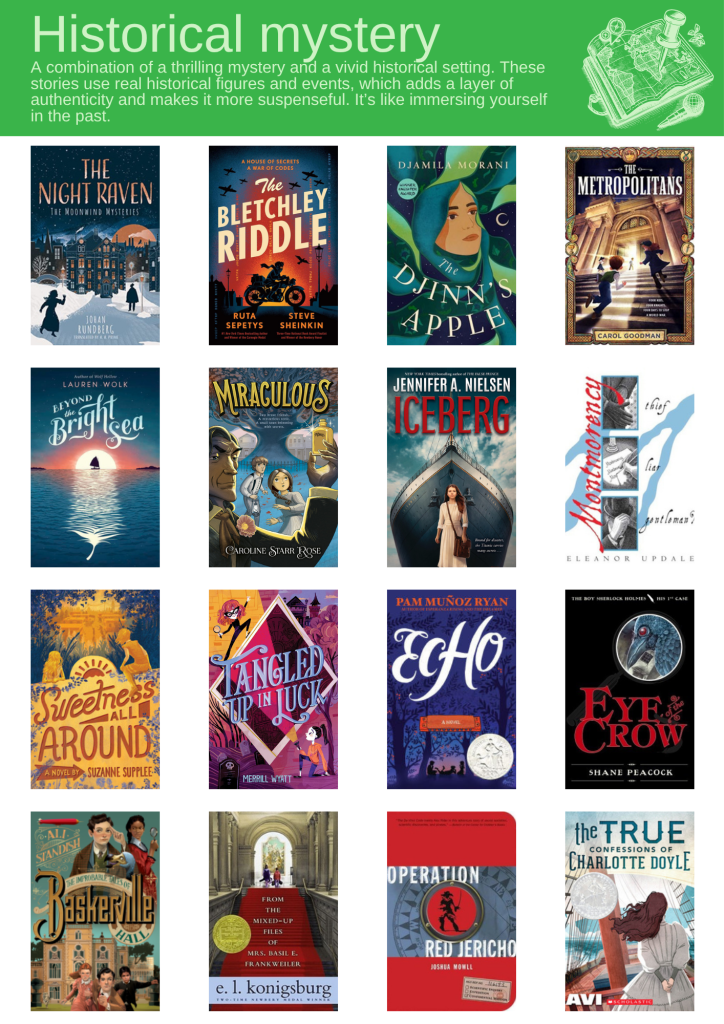
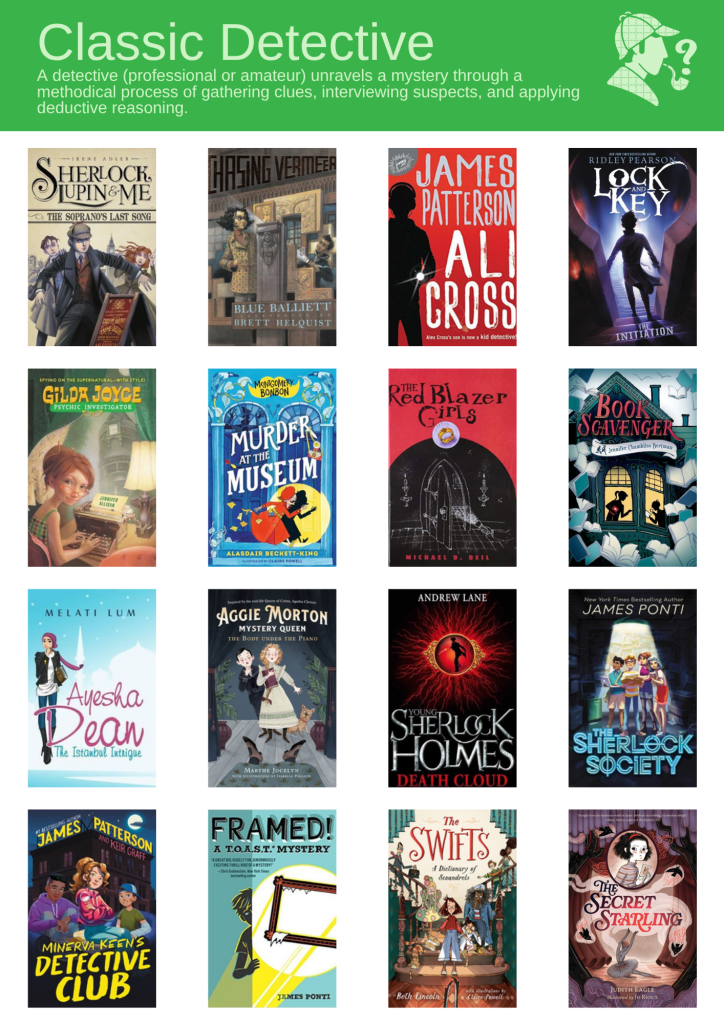
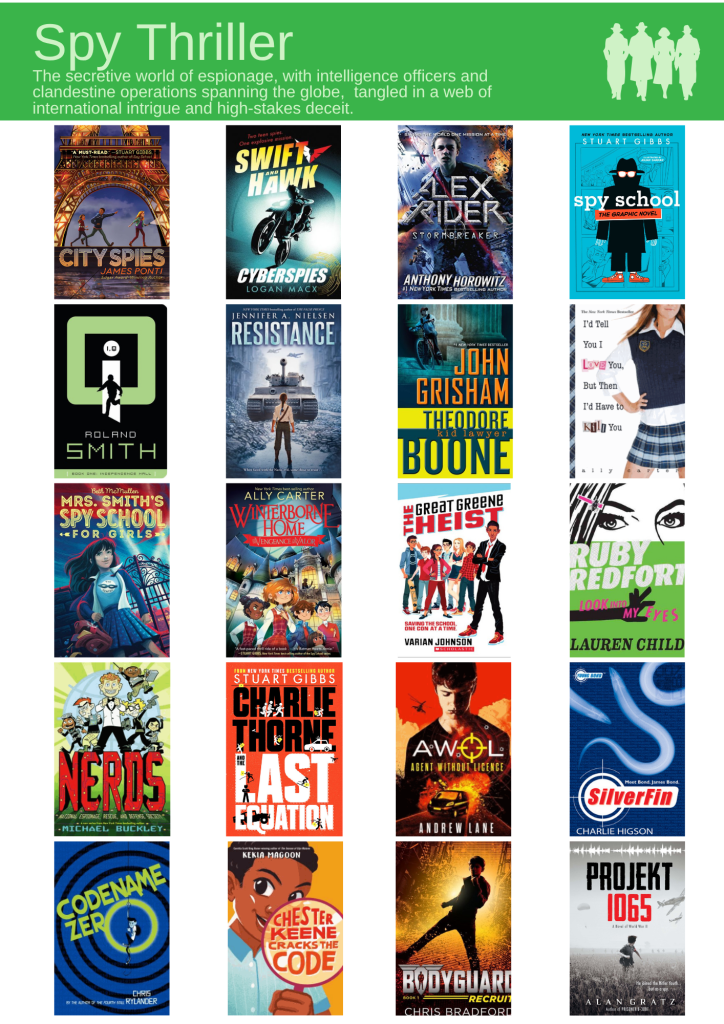
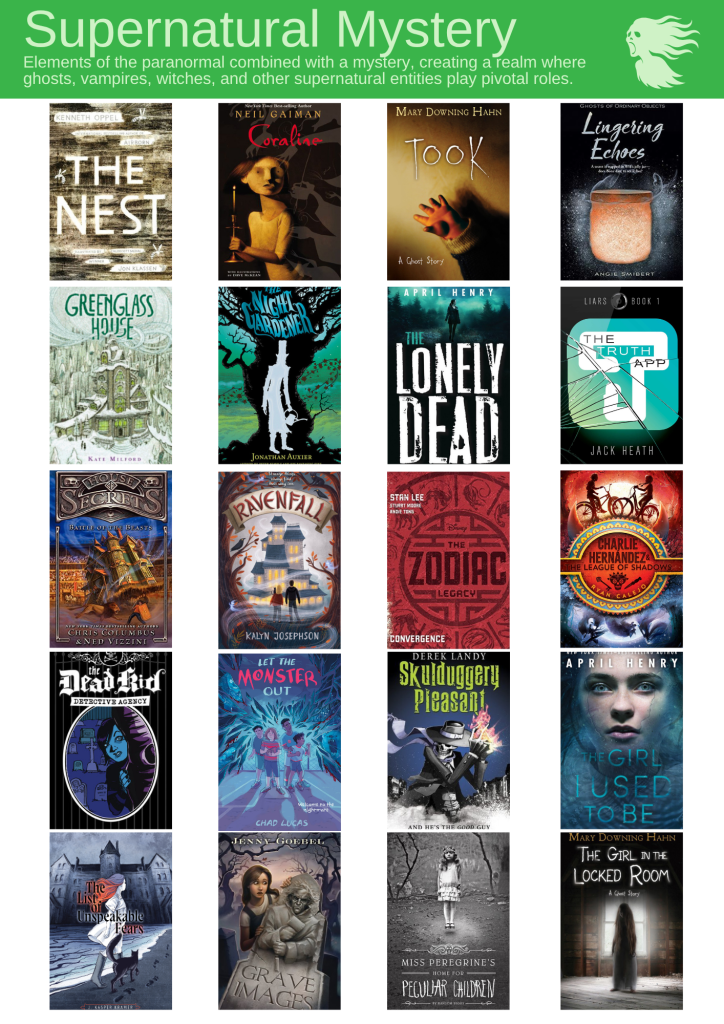
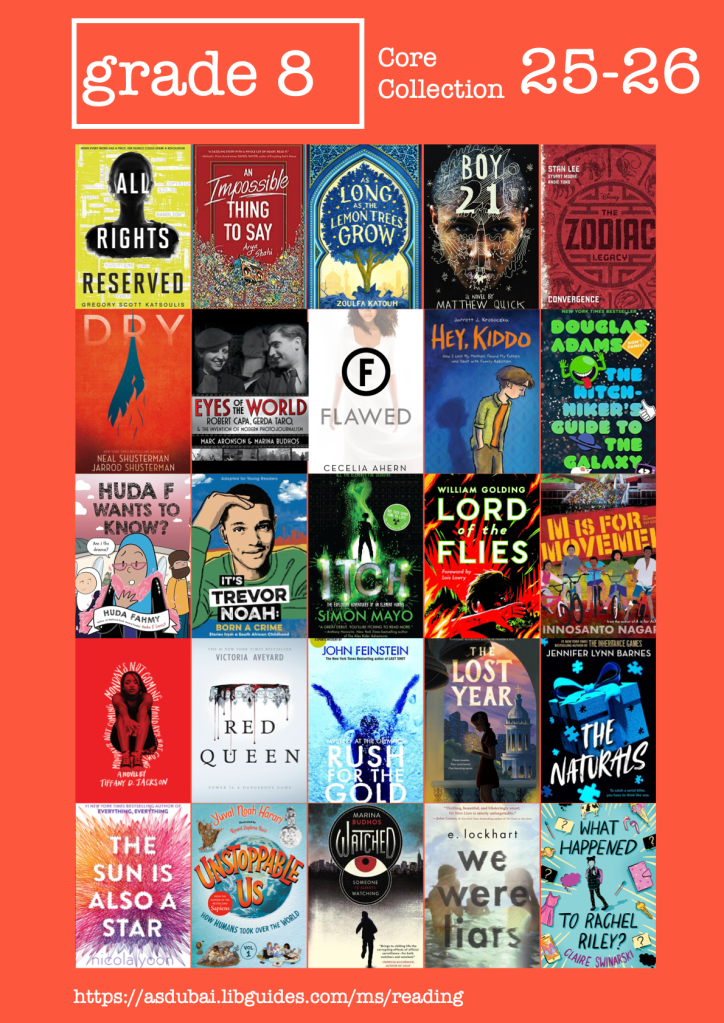
At the moment the Mystery genre is getting a lot of love from everyone from middle school to adult and a lot of great books are being released. Since we’re in a middle/high school library I wanted to showcase the mystery books that are not too spicy / intense. In our G8 core library we have “We were liars” and “The Naturals” which is probably at the upper level particularly in the later books in the series.

Along the lines of the work I did a couple of years back on Dystopian Fiction, I started to work on doing the same for sub-genres of Mystery. This time around I didn’t have some flowchart work others had already prepared to riff-off and I wanted to focus particularly on books suitable for middle school. I’ve relied on the excellent sub-genre descriptions of Mark Eleyat (who also has great pages on other genres and subgenres) and tried to make some kind of a flow to it. Somehow so many other things have intervened so it’s taken months to get to this point. I would love some feedback / suggestions for improvement on the flowchart.

And I’ve created these Middle School posters. The Canva Template is available for you to adapt to your situation – one day I hope to be able to expand it for YA and even adult, as I’m personally a big mystery/thriller. If you create anything based on this for YA or adult please feel free to share in a comment.

Nonfiction plus time and emotion

The following slides are part of a presentation Katie Day and I made for the 2025 ISLE librarian conference in London. (Note: Although I am the one “publishing” or “blogging” this discussion the credit equally goes to Katie Day as this all originates in our many discussions on reading, nonfiction, librarianship and more. )

As we prepare for our presentation at the wonderful NEEV Children’s literature Festival in Bangalore I was prompted to put some of the thoughts we had back in March onto this blog.

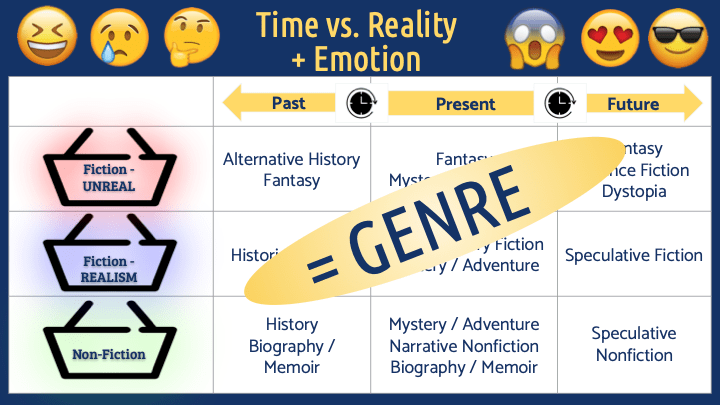
The slides are pretty self-explanatory. The main idea being that we tend to lump nonfiction into one big pile, perhaps separated by the five types recognised by Melissa Stewart. In this part of the presentation we argued that nonfiction could be categorised along the dimensions of “reality” “time” and “emotion”. In doing so one can more easily appeal to students who are more used to the fictional genres and sub-genres and perhaps find some nonfiction appealing to their fictional reading preferences.

This is the typical way of looking at the continuum between fiction and nonfiction. Note we talk about nonfiction as being “informational” rather than “factual” and try to nudge students into thinking of it in the same way.

The next dimension we add to the equation is that of time. In this instance we are focused on the bottom line of the time dimensions of nonfiction.

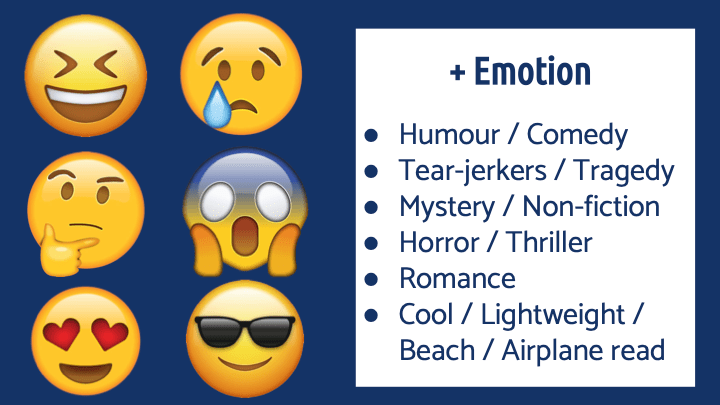
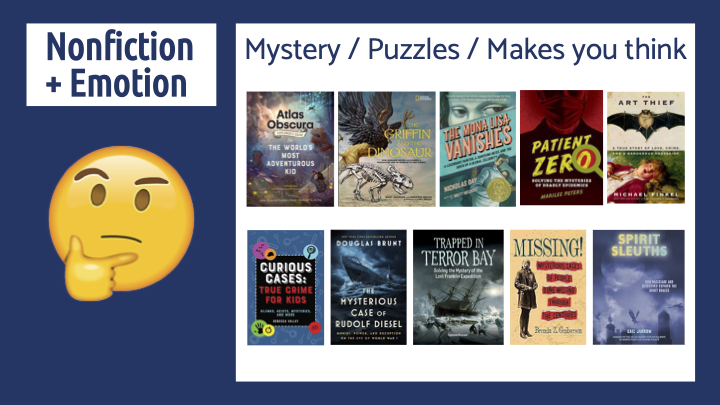
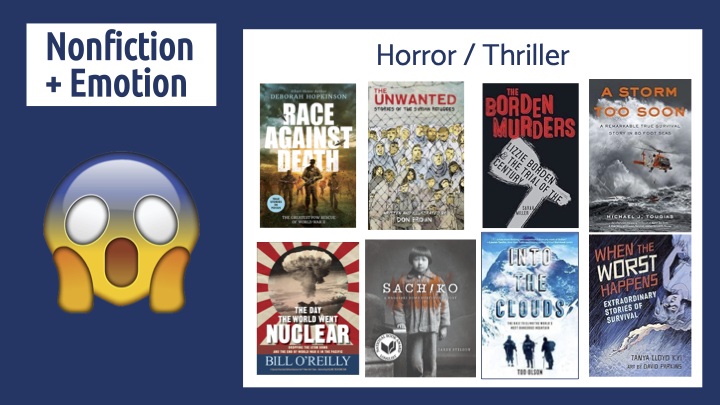
We then further elaborate with the dimension of emotion. And this is where we allow our students to feel they are in the more familiar territories of “genre”

The next couple of slides give examples of the 6 “emotional tones” and related books.

Have fun exploring and discussing the categorisations with your students.

塞翁失馬 The Lost Horse

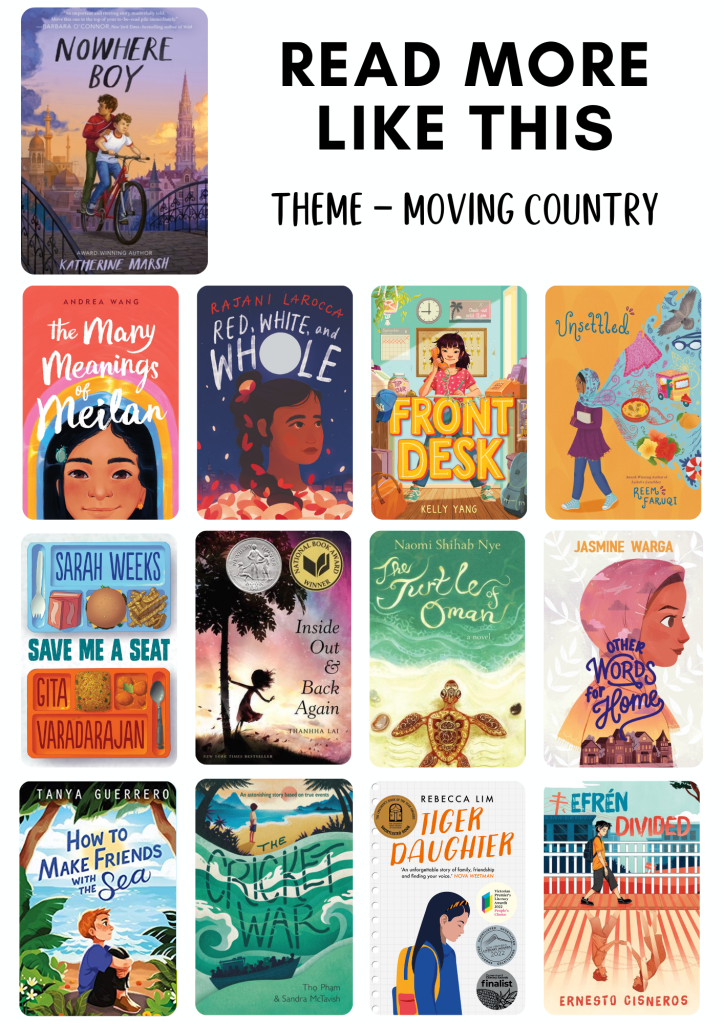
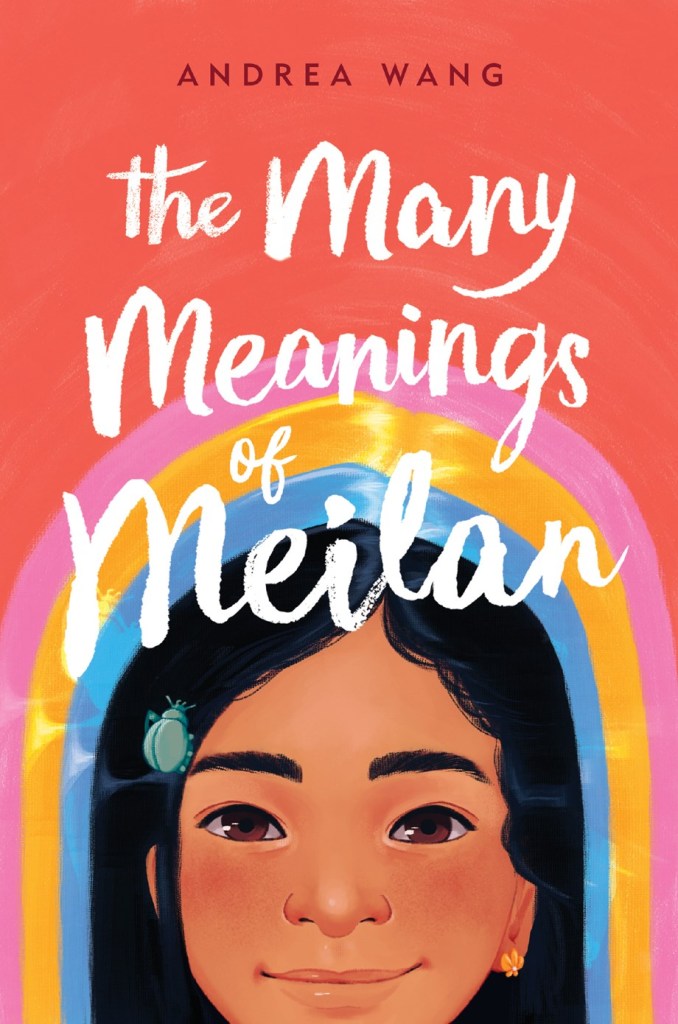
I’ve just finished reading the really well written “The Many Meanings of Meilan” by Andrea Wang. Having spent 16 of the last 20 years in Hong Kong, Singapore and China it was a reminder of so much of my time there and the discoveries of the language, literature, poetry and idiom.

There’s a lot happening in this book, but what I enjoyed most is the idea of naming and meaning and the ambiguity of sound and meaning in the homonyms of the Chinese language. I loved how she wrapped herself in the different meanings of “Lan” depending on the character, so as to adjust herself to the interpretations of herself of others around her, while discovering who she really was and claiming herself.

It also reminded me of the first time I came across the 塞翁失馬 (sai weng shi ma) chengyu – enjoy.

From November 2009

Today a story. Here is the famous story which is commonly interpreted as saying that “every cloud has a silver lining” This is the version from YellowBridge. Certainly in my own life in the long run this parable has proven to be true. But as impulsive as I am emotionally I don’t always recognise it at the time!

“A man who lived on the northern frontier of China was skilled in interpreting events. One day for no reason, his horse ran away to the nomads across the border. Everyone tried to console him, but his father said, “What makes you so sure this isn’t a blessing?” Some months later his horse returned, bringing a splendid nomad stallion. Everyone congratulated him, but his father said, “What makes you so sure this isn’t a disaster?” Their household was richer by a fine horse, which the son loved to ride. One day he fell and broke his hip. Everyone tried to console him, but his father said, “What makes you so sure this isn’t a blessing?”

A year later the nomads came in force across the border, and every able-bodied man took his bow and went into battle. The Chinese frontiersmen lost nine of every ten men. Only because the son was lame did father and son survive to take care of each other. Truly, blessing turns to disaster, and disaster to blessing: the changes have no end, nor can the mystery be fathomed.

塞翁失馬 (sai weng shi ma), the title of this story, is actually a commonly used Chinese idiom or chengyu . It literally translates as “Old Sai loses a horse”. Old Sai is the wise man in the fable. The expression is used to remind others to take life in stride because things aren’t really as good (or bad) as they seem. Certainly seems like a wise advice for a society that lives only for the present.”
Ed Young has written this into a children’s book.  We’ve got some compilations of Chinese stories, but kids somehow like having one story per book and to have that story lavishly illustrated.

Poetry Analysis

I’m busy trying to decide what to do with very old blogposts as I was an avid blogger from 2003 to 2011 before I became a librarian. I literally have 1000s of posts that I’m not sure what to do with, so I’m going to selectively add posts that have to do with literature, language, librarianship, reading etc.

From November 2014

夜梦上嵩山,独携藜杖出。
千岩与万壑,游览皆周毕。
梦中足不病,健似少年日。
既悟神返初,依然旧形质。
始知形神内,形病神无疾。
形神两是幻,梦寤俱非实。
昼行虽蹇涩,夜步颇安逸。
昼夜既平分,其间何得失?

A DREAM OF MOUNTAINEERING
At night, in my dream, I stoutly climbed a mountain,
Going out alone with my staff of holly-wood.
A thousand crags, a hundred hundred valleys–
In my dream-journey none were unexplored
And all the while my feet never grew tired
And my step was as strong as in my young days.
Can it be that when the mind travels backward
The body also returns to its old state?
And can it be, as between body and soul,
That the body may languish, while the soul is still strong?
Soul and body–both are vanities;
Dreaming and waking–both alike unreal.
In the day my feet are palsied and tottering;
In the night my steps go striding over the hills.
As day and night are divided in equal parts– Between the two, I get as much as I  lose.
Bai Juyi (772-846) Tr. Arthur Waley

As my daughter gets older our conversations are becoming more interesting. This evening we were discussing the interpretation and analysis of poetry. She’s been looking at Emily Bronte, Rossetti and Bai Juyi. The latter in translation.  But they used the old Wade-Giles transliteration: Po Chü-i so initially she didn’t associate it as being Chinese, once she’d worked that out, of course she went to the original. And then our discussion was about how when you’re analysing something in translation and thinking of word choice, does one consider the choice of the translator or of the original. Naturally in an English class that is filled with English mono-linguals at Grade 7 level, the answer is yes, but how does that work out in a multi-lingual / cultural class where at least some of the students would be able to read the poem in the original?
I was telling her how so many of the poets used homonyms to convey a hidden meaning in their poetry and prose, for example if they were criticising the emperor or local war lord or officials, and then one would have to know what stood for what.  And in fact, if one reads the introduction and background here, it gives some very interesting context.

Core Collection & teacher champions

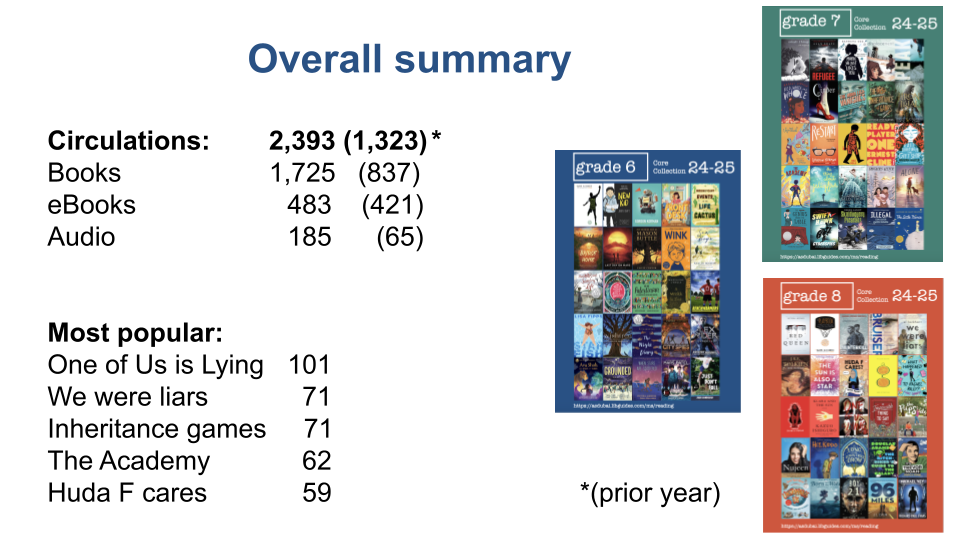
Last year I wrote about my initiative with our core collection and engaging our middle school teachers in “adopting” a book and helping to promote it. During the analytics for our annual report and to justify repeating the exercise in one of our last staff meetings this year, I put together some stats on the results.
Core Collection Summary

Given the dire state of the nation on reading overall for middle school with each grade reading less than in previous years, this is one small light at the end of the tunnel for me – showing that perhaps we need to narrow rather than continue to broaden our collection and focus on many copies of the most popular books?

Another amazing side effect has been the number of our faculty who are now fans of middle school / young adult literature and who have kept on coming back to finish series (I think it’s really important to have book 1 of as many enticing series as possible in the list). It really matters when not only the ELA teacher but also the PHE/Sports coaches and Drama and Science teachers are reading and recommending books.

Another interesting aspect has been that it seems we’ve arrived at a sort of tipping point of students accessing eBooks and AudioBooks in greater numbers than I’ve previously seen. Since we tend to only buy 3 or 4 of each of the core books (plus whatever ELA has a budget for to put in their class libraries) the most popular books tend to be out all the time, resulting in students then using the digital equivalent. I like AudioBooks as it means I can listen (often at 1.5-2x speed) and do my knitting, and I often have to persuade students that listening to audiobooks is also reading. In a culture where very few students are read to, I think it’s also important for them to hear stories – not the least to avoid embarrassing incidents with the pronunciation of words and names!

Of course I know that borrowing doesn’t always translate to reading (see the amazing way the great Nathan Pyle illustrates this below), but on the other hand I’m also comforted by the fact that our ELA classroom libraries have also stocked up on many of the core books and their circulations are not counted in my stats.

Image by Nathan W Pyle – buy his amazing books!

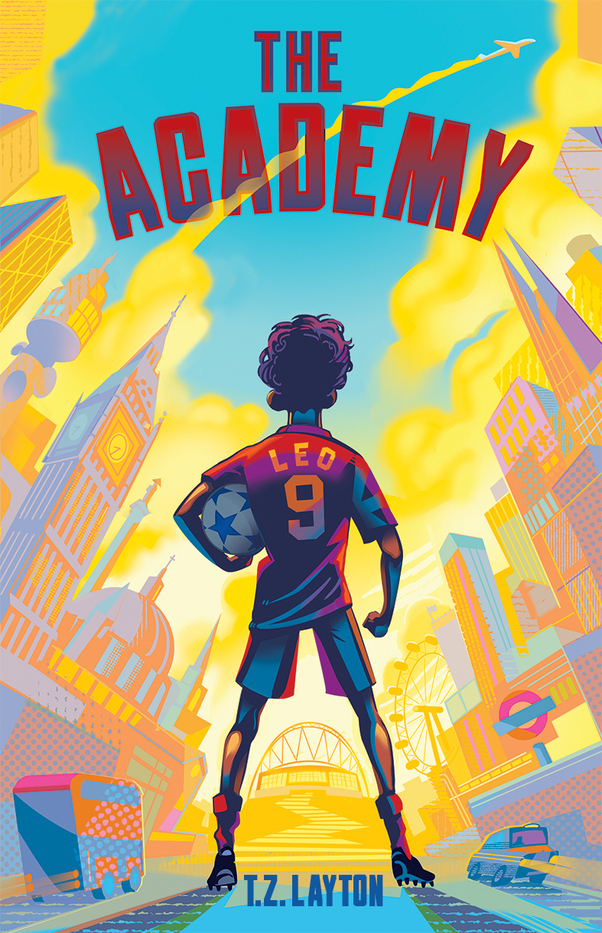
One of the runaway success books I’d like to highlight is “The Academy” by TZ Layton. In common I think with most 10-14 year olds, most of the young soccer players at our school are convinced it’s only a matter of time before they’re scouted into one of the youth leagues and this series feeds their dreams.

Actions & Activities

The actions and activities around the core books this year include:

  • Culling of the least popular (and some of the most popular*) books from the previous year
  • Book overviews on the middle school TV displays
  • Core list on Advisory Slides
  • “Core Wall” in library
  • ELA & MS teacher promotion
  • House points for book reviews
  • On libguide / recommended to parents during parent conferences
  • Weekly Kahoot quiz January – May (inter-house competition)
  • Battle of the Core live quiz assembly – 8 May (moved from January to increase exposure)

* while some of the books were taken out because they just didn’t fly for one reason or another (usually because I’d been misled by a good review without having been able to read the book first, or I misjudged the audience), some have been given wings and are flying on their own without the need to be on a list, or have been adopted by the ELA department as one of their book club books. Of course there is always great irony in choices. After not being able to successfully sell “The thing about jellyfish” by Ali Benjamin all year long, I took it off the list for next year and of COURSE then some young booktokker started recommending it and now everyone wants to read it!

Another side effect has been more faculty coming to me for recommendations for their own reading of for books for their younger kids or nieces / nephews – there is nothing more flattering, no greater gift you can give a librarian than ask for recommendations!

there is nothing more flattering, no greater gift you can give a librarian than ask for recommendations!

In conclusion I’d say if you’re in any doubt about the value of having a core collection, go ahead and try it out. It doesn’t have to be 25 books but it does help to have at least one representative of each genre. Including the first book in a series is always a good idea and I also try to have books that are fairly recent, include books from visiting authors if we have any and to try and tap into the zeitgeist.

School Year end 2025

We’ve been on summer break for just over a week now and I’m feeling sufficiently rested to sit down and write again.

Book returns

The end of the school year is always a busy time for librarians with the dual task of getting overdue books back and making sure that students have enough of the right books in their hands to entice them to do some reading over the summer. It really is a dichotomy – the students who most need to read more are the ones who have the hardest time keeping track of books – probably because they just borrow because they’re being told to do so and then promptly put the books somewhere never to be found again. And then of course when they become overdue it’s a fuss and bother and they are even less inclined to borrow.

Inventory

The big tasks include doing inventory – something we’ve turned more into a continual process so by the end of the year it’s more just following up on missing items – often they return – from students (or more often returned by nannies or parents) who consider going past the circulation desk as being optional. Unfortunately being in the middle east certain types of books also just disappear depending on the heat of current rhetoric – or in the case of this year actual bombing going on.

Core Collection

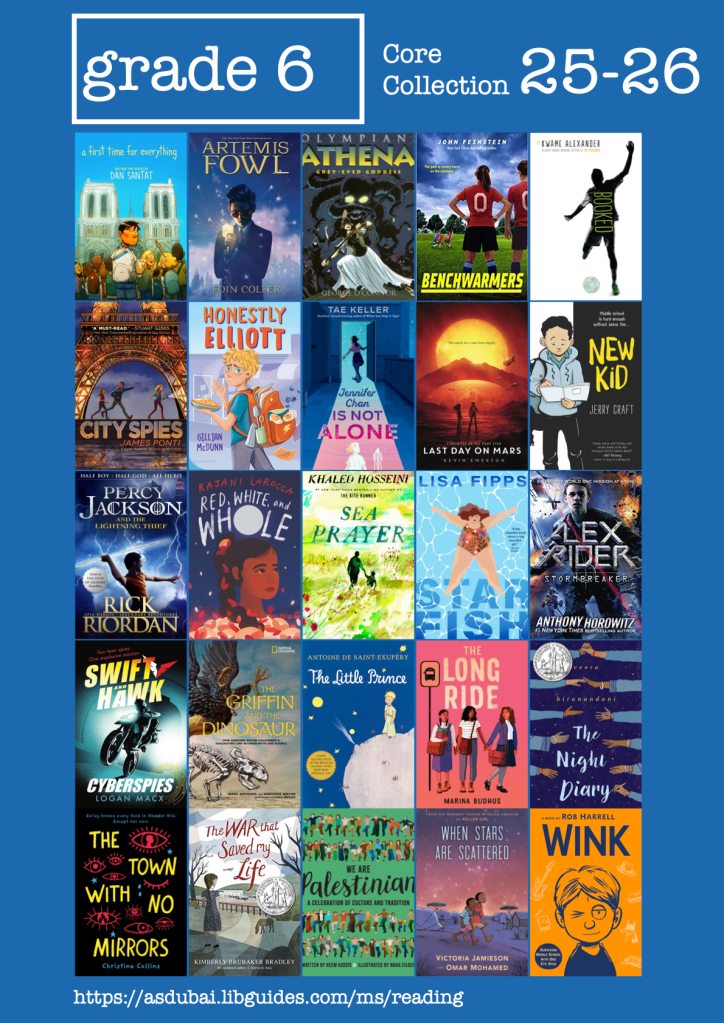
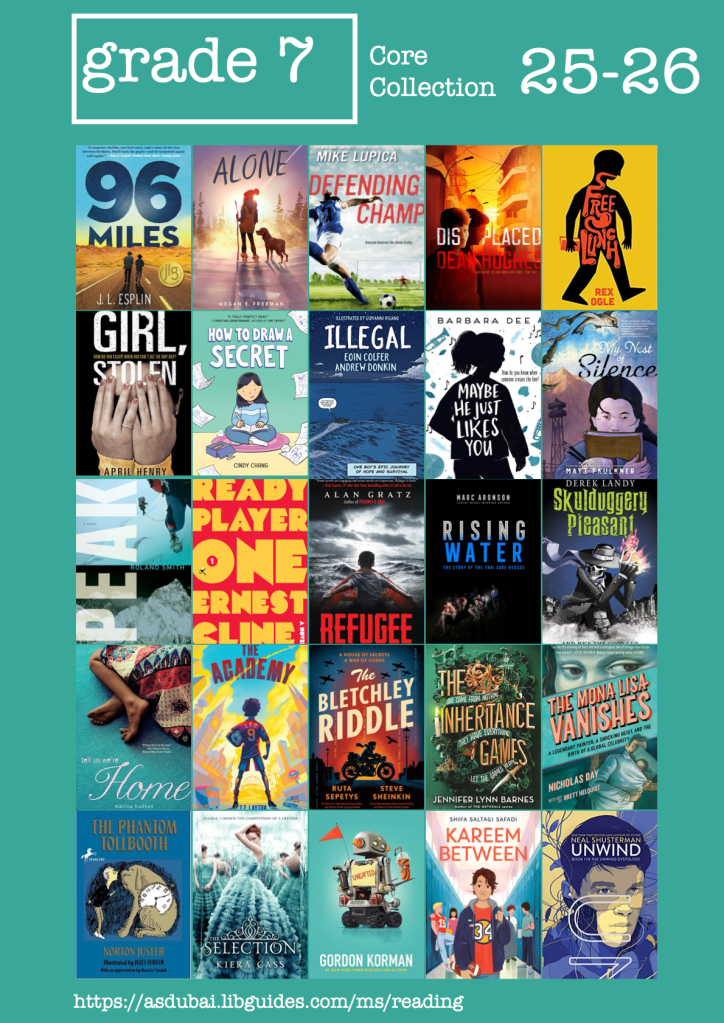
With our ELA (English Language Arts) department I’ve been very busy creating our new “Core Library Books” for the coming year (Grade 6; Grade 7; Grade 8)

And, continuing the tradition started last year, promoting them first with our middle school faculty. I’ll do a separate blog on the result of the core collection this year.

Summer reading

This also feeds into our Summer Reading Libguide which we try to promote as much as possible with students and parents. A few of the ELA classes had their students explore the guide and the various reading lists in detail and then make their own reading goals based on the lists and then email their parents with their reading plans and either borrow the books or request parents purchased them for the summer. I was also on hand with Sora Marketplace open to purchase the eBook or Audiobook for the students who wanted a digital copy. Our summer reading borrowing guideline is “as many books as you need and know you can take care of and return after the break

Annual Report

The most arduous task at the end of the year, and one which it seems many international school librarians have more or less given up on, is creating the annual report. I can see why people stop doing this. With declining borrowing / reading it can be quite a depressing exercise. It’s also remarkably difficult to get good data our of our systems. Follett Destiny is a dreadful platform to get good data from – in contrast with other systems. I was reading Rutger Bregman’s “Moral Ambition” (see video below) around the same time, and came across the concept of vanity metrics – basically just putting together data that makes you look good. With that at the back of my mind, putting the report together (Annual Report 2024-25) became this exercise in trying to show both that the situation with reading is not great while trying to show that as librarians and teachers we’re doing our darnest to turn the tide and hopefully all is not lost. And even when we lose in reading perhaps we’re making inroads in research. Much as I hated studying business / accounting and was glad to escape being financial person it did put me in good stead for being able to work with data.

I’m planning on doing a bit more blogging this break, so keep coming back! Comment on any topics you’d like to see covered.

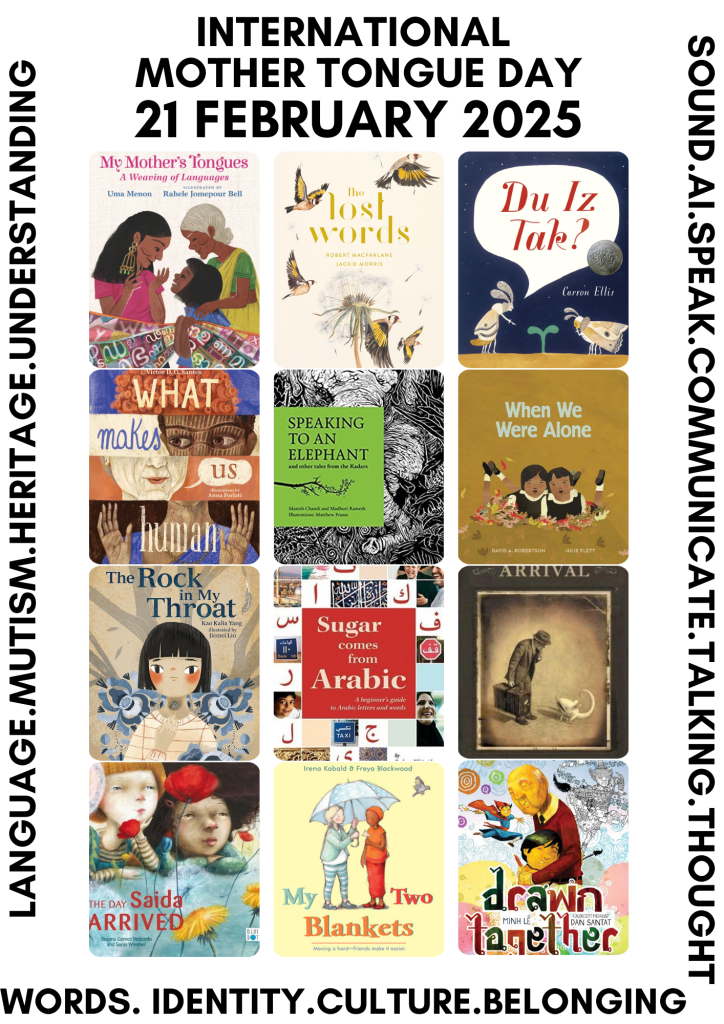
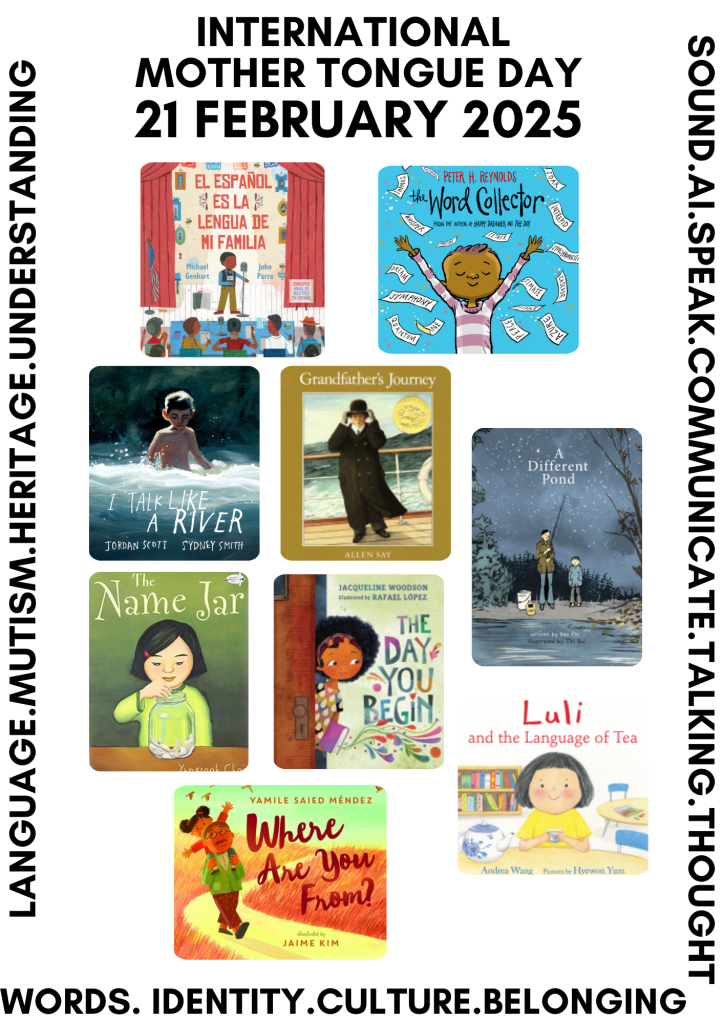
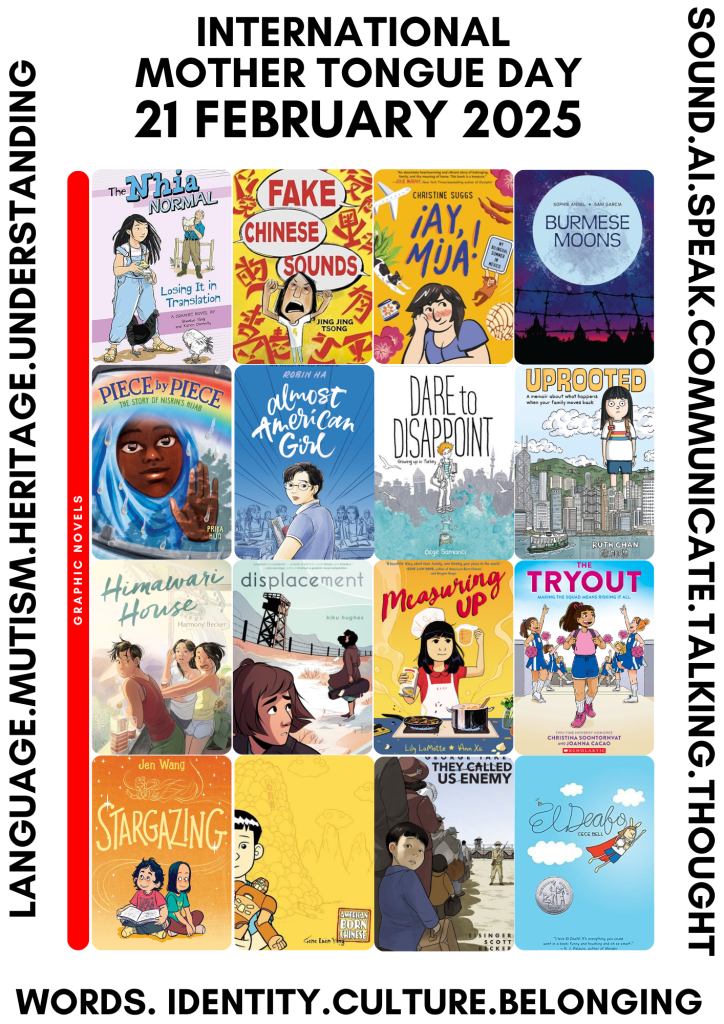
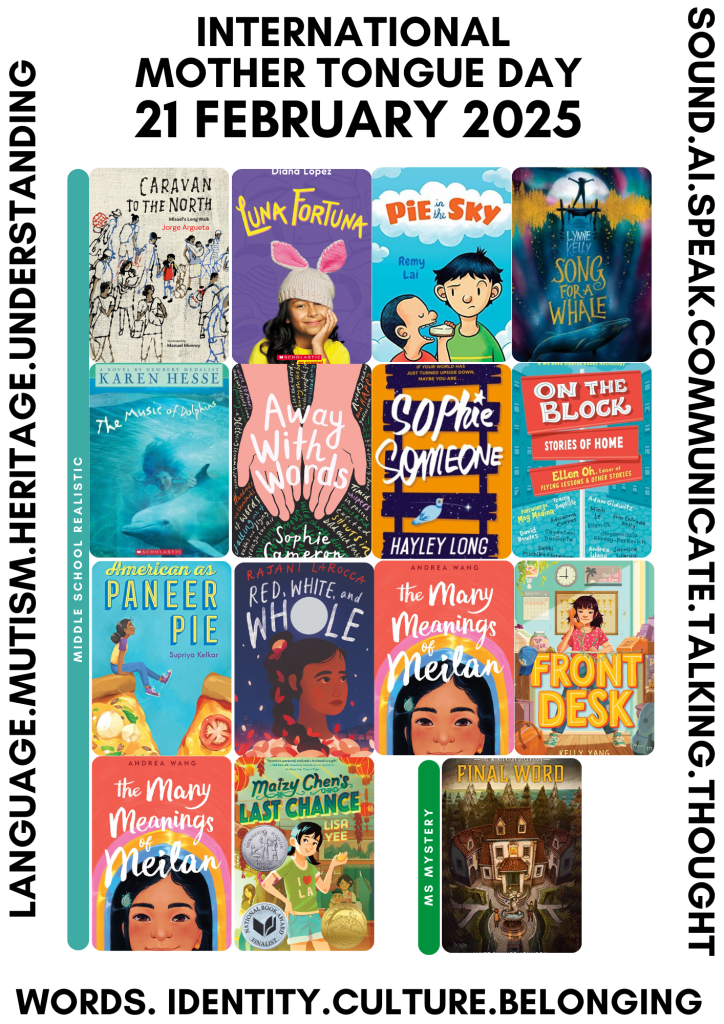
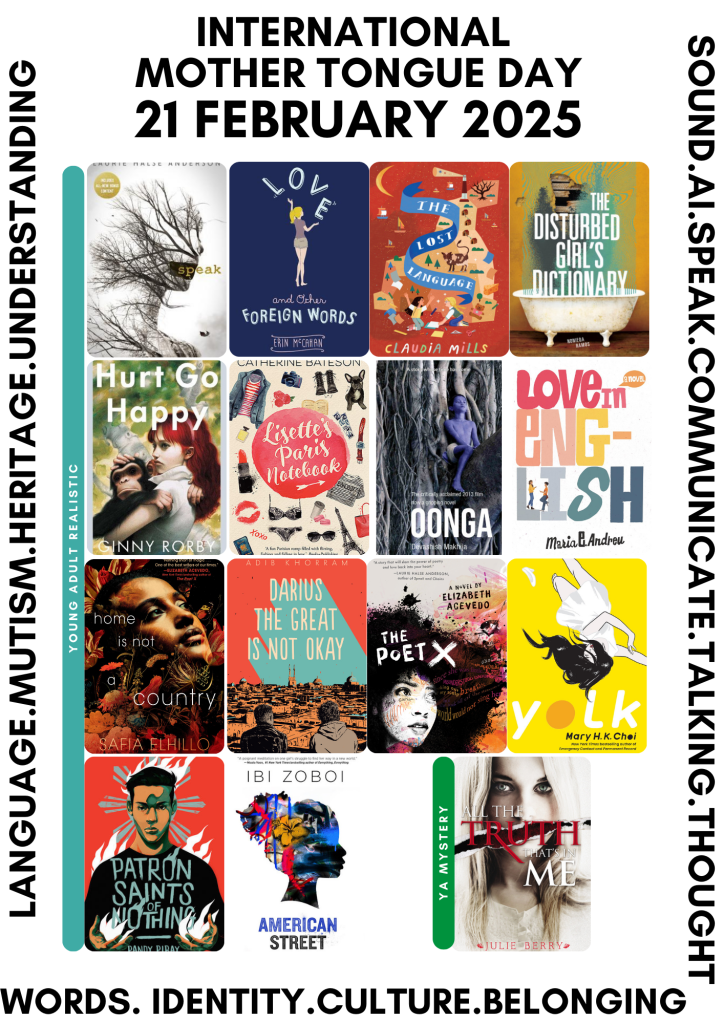
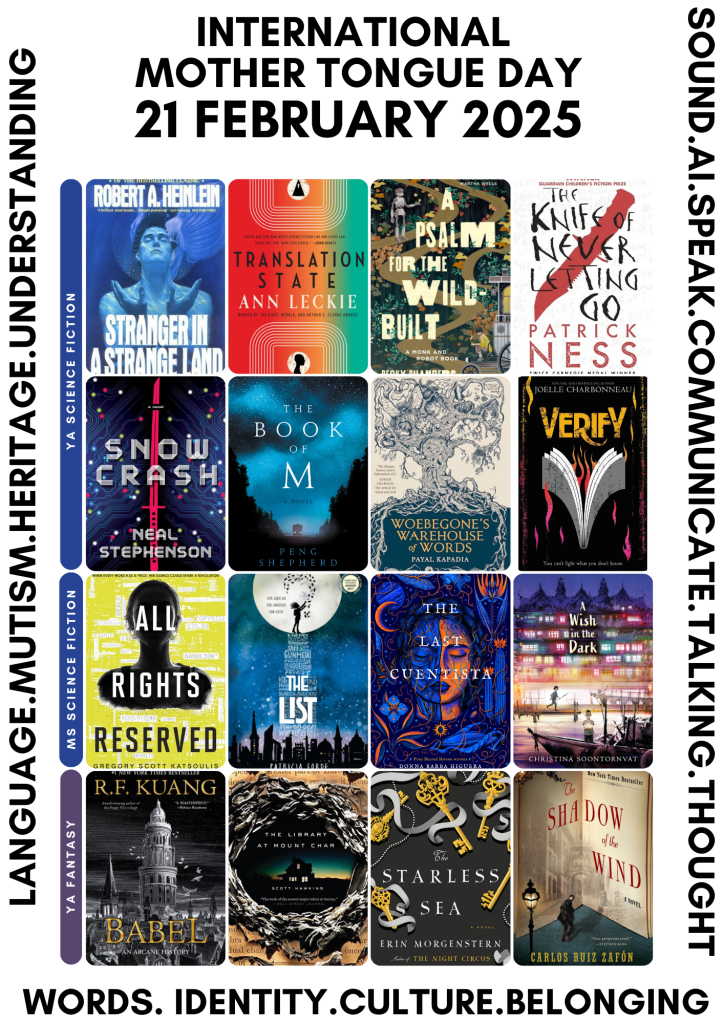
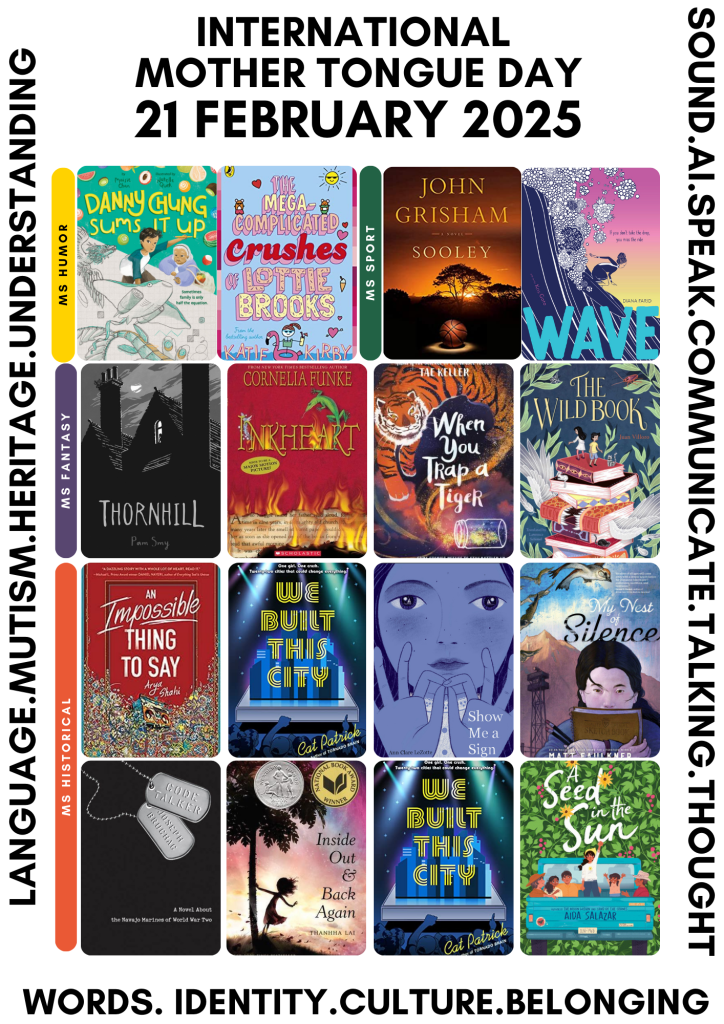
#Language – IMTD 21 February

International Mother Tongue Day is next week Friday, but my students and I will be embarking on their annual Week Without Walls trip so I’m a week early with this post – hopefully it will be of some use to those of you planning on celebrating it in the library. I will be upfront about my objection to it being called Mother Tongue Day – as it denies all the families where the language of other significant family members are spoken at home. I prefer the term “home language”. This year is the silver jubilee of the event. Despite all efforts, languages are becoming extinct at an ever increasing rate, and unfortunately this doesn’t attract quite as much attention as pictures of cute or not so cute animal. Schools and other educational institutions are complicit in this – something I’ve been banging on about for years, the lack of multiple-lingual home and heritage language education I still see as a failure of imagination rather than a failure of resources in this day and age. Ok, off my soap box and back to the practical.

These lists started with a casual conversation with KD as to what I had planned for the day, as my passion for language is well known. Which led to a discussion on which books one would consider and then, as usual things got a little out of hand and now I have 9 pages of posters of books that feature language. Language in all its glorious and inglorious forms. Learning language, struggling with a language, speaking or not speaking. Sign language. Heritage language. Language and thought, language and power or control. Selective mutism. Denial of language, erasure and extinction of language.

As for what to do – if I were here, these are the things I would do.

Have big sheets of paper our where the community could write down the languages they speak / read / write. The languages they’re learning. The languages of their fathers, mothers, grandparents.

I’d have them make a language family tree. Have a poster with a QR code that led to this quirky test on Language.

There are some more ideas on this site (annoying pop-ups for an app though).

As usual here is the link to the template / books used. In return I’d love some comments on the books you recognise and the link to language! And any displays or activities you’re planning. And of course if you have suggestions of books I’ve missed I’d appreciate you adding them in a comment.

#Sensemaking Fantasy – Fractured fairytales

When my kids were very little, we lived in Spain, and since there wasn’t a local kindergarten, we’d drive about 30 minutes to the closest (Spanish) kindergarten and during that drive I’d have them listen to the wonderful Naxos collections. Besides learning about famous composers, great scientists and a bunch of other stories like Professor Branestawm who they could never get enough of, they also got a diet of Fairytales from Grimm, Andersen and Myths and Legends including Greek, Norse and Heroes and Heroines from Classic Tales. Neither of them remember much about living in Spain, and my daughter swears high and low she can’t speak a word of Spanish (despite 2 years immersion in it) but they remember the stories. And I still have the CDs. Perhaps as we continued to play them in the car on holidays and in Hong Kong and Singapore.

Today I’ve been making a poster of fractured fairytales in the fantasy genre. In a multi-cultural environment you can’t take for granted that students would have been exposed to some or even any of the tales that their educators grew up on, and I also did a bit of research on the types of (Western) fairytale collectors, editors and scribes and found this great little blog on some I was not aware of, or vaguely knew. When you look at the poster you can see the prolific Jacob & Wilhelm Grimm feature a lot (with over 200 tales and 10 children’s legends) as well as Hans Cristian Andersen’s 156 stories and Charles Perrault with his 8 Mother Goose tales punches above his weight in terms of retellings (thanks to Disney).

One of the most fantastic retellings ever of Little Red Riding Hood has to be the book “Picture this by Molly Bang” where she explains elements of Design using the tale. It’s one of the first books I buy in every library I work, if it’s not already on the shelves. Even if you ignore every other book in this post – that’s one to make sure you have in your collection!

As a parting note, as I was saying these are definitely a “western” view of fairy tales, when I was working at UWCSEA East with Katie Day and Maya Thiagarajan one of the amazing things they worked on was helping students recognise the “foundational texts” of their cultures. These are the texts that shape the culture and literature of that culture and that if you’ve not had the opportunity to access that text you may find it hard to read other works from that region because you’re not aware of the references, directly or indirectly. So for Western European culture it would be Aesop, Grimm and Anderson’s fairy tales, the Bible, Shakespeare, Austin etc. In India it would be the The Mahabharata, The Ramayana, in China it would be Romance of the Three Kingdoms and Journey to the West. Students were tasked with researching their cultural legacies and this is the libguide (thanks to webarchive) that was co-created with their IB literature class. But that’s a poster and discussion for another time.

#Sensemaking – Fantasy

Like most school libraries I have a bunch of students who really like fantasy. But that’s a bit like saying they like chocolate. Chocolate is a blanket term that can mean different things to different people and tastes they do vary. Like my poster series for Dystopian fiction – I’m embarking slowly on a number of side projects to demystify other genres in the library so students can find the sub-genre they like most. These things take an enormous amount of time and thought and originally I wanted to present a “fait accompli” in my blog but decided as it would mean I wouldn’t be posting anything for just about forever, to do it page by page.

So far my research into fantasy sub-genres has led to the lists like “A Complete Overview of 18 Fantasy Subgenres“; this article claiming there were more than 50 subgenres, and the rather complex (and adult oriented) NPR Fantasy vs SciFi poster below:

So the path I’m taking is, as usual being guided by my students and what they’re reading and asking for – which is why I started with “Fantastical Beasts – Dragons” because that’s what someone wanted today. Once I have a bunch of posters I’ll try and find a way to link them in some kind of flowchart / decision tree.

I’ve distinguished between YA and Middle Grade, as things can get quite spicy in the fantasy / romantasy etc realm – (you’ll notice my list doesn’t include the Fourth Wing (The Empyrean, #1) by Rebecca Yarros – yet). Usually I indicate whether a book is part of a series in my posters – however one of the great things about fantasy is that nearly all books are part of a series (I’ve generally chosen either the first in the series for my image or the most dragony title). Books is a series is the library equivalent of “all you can eat buffet” as with a little bit of luck the minute they’ve had a taste of the first book they just keep going.

So far, based on my collection and student interest I’ve identified the following areas, romantasy, dystopian, high/low fantasy, magic realism, paranormal, fracture fairytales, mythology, alt. history, animals / fantastical beasts, schools of magic.

What am I missing?

#AI – Will they find their voice? Will we hear it?

I am thinking a LOT about AI. My participation in thinking and reading as a factor of my actual usage would be something in the realm of 1 million to 1 at the moment. Save for some tedious bits and pieces like analysing surveys and the occasional laziness in making very short book summaries (which I then have to correct extensively anyway) I’m just not feeling the joy. Please do not construe in any way that I am therefore “feeling the fear”. No. I’m just spending a lot of time exploring and thinking about it. And what it means. And in particular what it means for the current generation of students / young people.

I started blogging in 2003, and blogged about losing my identity as a person while I spent time being a SAHM, holding the threads of my existence together through bringing up children internationally, nuturing bilingual and multi-cultural beings. I then deleted that blog as it had become too personal, too well known and I had become too identifiable and my children had become adolescents and had a right to their own privacy and thoughts and being. Then I started studying to become an educator and librarian and spent four years in academic pursuit, where for many of my courses, blogging was a course requirement. It was a really good thing to make reflections on learning via blogs a course requirement. At WAB (my previous school) elementary students also blogged and I think there can be nothing as wonderful as seeing the thoughts, words and intellectual development of young people developing and maturing and growing over time. Nothing makes better writers than doing a lot of writing. And through writing, one does tend to become a better writer and find your “writers voice”.

Last week our school shut Grammarly off for students. It’s a tool that has always personally irritated me, as I still grew up with the luxury of uninterrupted schooling where we went to school for our lessons, did all our sports and activities after school at school, had no internet, and government controlled TV that only came in after I turned 12. It was a plain vanilla, no frills government school and there wasn’t even enough money for an arts programme. Yes, huge deficits in my education but I did get grammar. The old fashioned way. Swings and roundabouts.

What did Grammarly do? Well, the new update allows students to highlight a paragraph and request Grammarly to rephrase or improve their writing three times a day for free using AI. And teachers were being given work that didn’t reflect the thoughts, intents, abilities or voice of their students. Teachers care. They care deeply that tools can be used to aid the students that need it the most. They also care that tools don’t get in the way of intellectual and skill development. Writing well takes a LOT of practice and also a LOT of reading and if there are any short cuts I’m not aware of them.

The word of the year in 2023 was “Enshittification“, a termed coined by Cory Doctrow and explains the process of platforms first being good for their users, then abusing the users so businesses can make money off the users, then abusing the businesses go get a piece of the pie and then dying. It is the first two parts of the equation that are of most interest to me viz a viz education and AI.

Being good for their users” needs a modifier – “appearing to be good for their users”. In his long form article Andrew Nikiforuk touches on “whole foods are being replaced by ultra-processed stuff” which was exactly the analogy I was thinking of while reading NYTimes wellness challenge of this week – the article talking about “Are ultraprocessed foods really that delicious?” and asking readers to compare an ultraprocessed product to its natural equivalent. Unfortunately for many young people when they compare their complex pubescent self to what media is telling them is “the real thing” they feel like they come up short, not the artificial reality. One of the disturbing trends with young people is their anxiety and obsession with being perfect (and not just academic – look at the beauty / makeup thing – talk about a distraction) – some of which is parent / adult driven through a failure to understand or recognise that young people are not hatched with perfect writing, grammar, thought, and research skills. That is the whole point of being at school. We’re seeing a bunch of ultra-processed writing and assignments and research at the moment and I’m not sure that it’s leading to better learning.

I’m currently reading “We do not welcome our 10-year-old Overlord by Garth Nix” – it’s a great middle grade version of this process of something external to humanity trying to take over under the auspices of “being good and doing good”. What I see, even with the most simple of all tools – a spelling check – is that students will type without any attention to spelling or capitalisation and expect the computer to mop up after them. And the next time the word / phrase is used they will continue to use it incorrectly and have auto-correct sort it out. The question then is whether there is any learning happening. And the meta question whether that learning needs to occur or not? Do we enter dangerous territory when we start deciding which students need to know things or not, develop skills in certain areas or not? We do not know what we don’t know and they definitely don’t. It would be way to easy to decide that perhaps some students don’t need to develop a writing voice and that it’s all so hard for them that it’s OK for AI or other tools to just take care of writing and editing what that tool thinks it is that the student is trying to express. Can you see where this is going? Because if we are not exposed to many ideas and thoughts and schools of thought and philosophies and histories how can we have enough information and knowledge under our belts to know what it is that we want to express? How can we know what OUR thoughts and feelings are when we’re in a feedback loop echo-chamber?

Back a little to the blogging thing – if students reflect on blogs that are open to the community it is so much easier to see what is normal and appropriate for each age group. Now we have writing that is largely hidden except to the teacher and their peers if they do comparative grading, and perhaps the adults in the lives of some of the students who will judge it by their adult standards AND whatever tools that are on student computers that again will transform the writing to some external adult standard. I’m also fascinated with, within the context of the apparent need for grading and scoring the work of students how granularity has decreased to the absurd point of students getting a score out of 4 for their efforts. Really? While packing up my life yet again for the move from China to Dubai I came across my old school reports. Everything was graded from 0-100 and there was plenty of room to improve from say a 69 to a 75 or an 89 to a 95 and no one ever ever ever got 100%. There was nuance. A lot of nuance. In the IB system scoring is to 8 and now in the American system it’s to 4. Talk about a blunt tool with which to sculpt learning!

I was just listening to Maggie Appleton (whose writings, as a cultural anthropologist turned Tech person on AI I really appreciate – particularly this one on the dark forest and generative AI) on the HanselMinutes podcast and I love her ideas about using AI for rubberducking – not just for IT debugging but for debugging your ideas and thoughts – although as she says it’s not really built for that as it’s more inclined to “yes AND” than to be a critical partner. I’m so long in the tooth that I remember when blogging was the medium for rubberducking your thoughts and every post got good handfuls of thoughtful comments by real people who would challenge or corroborate on your thinking. I made a lot of IRL friends off the back of blogging back in the day!

I’m fascinated about what other people think about student writing and student voice in writing as opposed to all that is being written about adult voice being taken over by AI – it is terrible, but how fortunate we have been to be allowed to develop a voice in the first place. Are we denying that to this generation of potential writers? Here is a link to one article in Writer’s Digest – of interest are all the other related articles at the bottom including some on maintaining voice as a comedian.