90% there …

Well we’re getting close to completion (all the yellow stickers are things the contractor needs to work on and the pink ones, things we need to do!) on our library project  (more links to the history here, here and here) and I’m feeling a little more relaxed. And even in the mood to discuss what has gone well (and what didn’t go so well / what I would have done differently will be the next post).

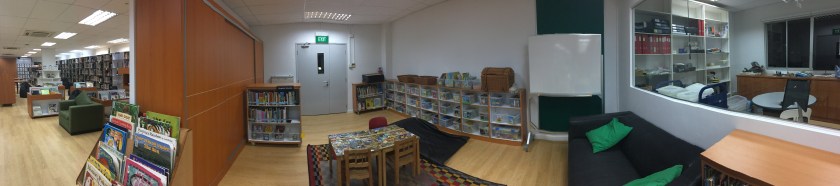
I’ve added 3 pano photos, from the front and back of the library and from our new “classroom” space.

img_4508
View from front
img_4509
View from back
img_4513
New Classroom

Let me start and devote this blog post with what I’m happy with – a comment from one of my Facebook groups prompted me to start with this, because I’m beginning to realise I’m way too much of a glass 1/2 empty kind of person, and if I have anything in the way of resolutions this year it is to be more positive! I’ll put some before / during and after shots in so you can see the difference!

I’m loving:

That I was fully part of the design process – in fact I was the designer and I only have myself (or maybe budget constraints or misinterpretations) to blame for what didn’t work out.  Plus my principal was immensely supportive all along the way, pretty much gave me free reign and was there when I needed her as a sounding board or to confirm a decision.

The wooden floors  

Oh I hated our old carpeting. Despite the fact that it was only about 2 years old it was pretty dirty and yucky – we get a lot of kids through the library each week and kids ain’t (and shouldn’t be) clean beasts. And because they were floor tiles, they could replace them, which meant colour differences, and that picky kid fingers could lift them up so they had to be re-glued regularly.

The extra display space

We librarians love to display and show case our collections. Whether it’s for a special event or to highlight new books, kindness week, a particular theme, whatever. I had no display space except for that which I’d artificially created by leaving shelves empty, and removing a computer from the dreaded pillar!  In the new configuration I’ve been able to convert the pillar to a wonderful wrap around display space.  I’ve also copied an idea from UWCSEA-East primary and added book ledges at the front door (they’re not perfect yet – too big and heavy on themselves but that’s another story).


Teaching spaces

I don’t have great pictures of before, or actually of after, so I’ll have to add these later. Basically my teaching space was a couch and a pulldown screen and a heavy very low flipboard I could drag out of my office when I needed to write anything, but couldn’t leave anywhere because there was no space for it!  Now there is not just one, but two teaching spaces as we knocked down the wall between the library and the staff room and the staff room was divided into a classroom and workroom.  Each has a projector with apple TV and each has a whiteboard space – the classroom a portable whiteboard and the main library will have two writeable glass sliding doors on either side of the projector screen on which to write. As a bonus, they’ve put blinds in front of all the windows that we can pull down so that the audience can also see what’s on the screen after 2pm!

Front Desk

I have very conscientious and neat staff, but open cupboards and a lack of space and no book drop meant that the front desk always looked messy even if it was actually pretty organised.  We went for a curved desk, for the show. I wasn’t 100% happy with that but it looks pretty good. I really like the design and the work surface (the top drawers are actually pull out work spaces) extra cupboard space and the fact that the cupboards have doors. I’ve very worried that the seating space is going to be very tight for three staff members, even if they’re all very petite. The compromise was I wanted the desk to be open on both sides because when (not if) there’s a “situation” on the library floor staff needs to be able to get to it very quickly.

White walls

Did I ever mention how much I hated the babypoop and maroon colour combination? Initially all I really really wanted was a paint-job and different seating furniture – but I got spoilt and got a whole new library!  Having white walls and light floor makes the whole space so much lighter – even though we’ve blocked off the windows on one side.

Collection flow

As the school has grown, so too had the collection. And choices I made last year on where to put what helped some parts of the collection (Fiction and Junior fiction) at a cost to others – nonfiction – where I split 000-399 and 400-999.  Now each part of my collection has it’s own section and I have an entire wall of nonfiction 000-999. It’s impressive even if I say so myself. And it’s “overzichtelijk” a wonderful word for which the English translation is apparently “clear” but what it really means is that you can take everything in in one glance.

There is also enough space on each shelf that books are not crammed together and we can put out front facing book(s) at the end.

I also ordered signage from Merchandising Libraries, both for A-Z for each fiction collection and with words and pictures for the nonfiction section and “shelf talkers” for various sections.

Another good thing is behind the teaching space / projector sliding doors we can now put in all the “kit” boxes – the multiple copies for literature circles and communal reading. Our school is in an old building so we don’t have grade pods or communal areas so all these books are stored in the library, and were stored in my office. I didn’t like this because it meant they were out of sight and mind of teachers and students and the door was a bit of a barrier (especially in the beginning when they didn’t know me) for them to come and browse the books. Now the office space can be used for sorting UOI books (so they won’t be on the floor in front of the main desk anymore), and the books will be easily accessed by everyone.

Teachers’ resources are also all together at adult height!

That’s all I have time for today. I’ll talk furniture and what could have gone better in the next post.

Library redesign – current issues

As librarians we often make it our life and vacation’s mission to visit other libraries and drool over what they have (or haven’t got), how they’re organised things, what their displays look like – how the signage works out etc etc. and then we come home and try and adapt our current situation to optimise our own assets and spaces into something even more user friendly, accessible, with better book visibility etc. etc.

It’s not often we have a chance to go back to the drawing board and redo it. And then, suddenly you get what you wish for!  For the last year I’ve been tweaking and rearranging and moving things (documented here – see all 4 posts for the progression). Now finally we’ve had the funding approved to break through a wall and expand the library and to reconfigure it so that it better fits the needs of (must I say it?) 21C learning. Of course we’re still waiting for Government approval – so I better not count my chickens …

Ok, let’s say that in normal terms.  I’ve got a lovely library. It’s a bit cosy and run down, and a lot of things are improvised, but I love it, and (most) my students love it. It does have several rather important detracting factors though:

Instructional space

I have 35 classes a week, ranging from 20 to 40 minutes or sometimes longer depending on teacher needs. During that time, I typically give a micro-lesson (5 minutes) involving storytelling, a provocation, a video clip, booktalk by students or myself, or a slightly longer lesson that can involve explanation followed by a task, right up to a full 40 minute information literacy session that includes teaching and skill development.

But I don’t have an instructional space. I have a beat up, heavy black leather couch, next to a pull down projector screen (which is permanently down), next to a window without any blinds, behind glaring florescent lighting that has to be switched off. And nothing to write on, unless I drag a heavy flipboard in front of the screen and crouch down to write on it, as it’s not on adult human height.   My students sit on the mat on the carpet, or on too high chairs with legs that jut out and trip people up as they walk past, and write on too high tables.  And it’s OK. We do just fine.  But it could be a lot better.

Communal space

I just love the fact that the library is (my own quote) “the centre of the universe” in our school. But the disadvantage is that it gets used a lot for all sorts of other things. It doesn’t help that our school hall is enormous and acoustically dysfunctional, so any smaller gatherings get diverted to the library.

Fortunately, a far sighted predecessor made sure all the bookshelves were on wheels, so the library can relatively quickly be transformed into a biggish but comfortable open space. Unfortunately, that often occurs when actually, one of my classes has a library lesson, so they end up missing the lesson or having to reschedule. Rescheduling is a real issue when my calendar is pretty filled to the brim!

Display space

Short answer now – there isn’t really any. I’ve cleared a few shelves in the bookcase at the entrance, and eliminated a computer at the OPAC pillar, but it’s not enough, it’s not nice, it’s not visible and students don’t gravitate to it. I have a notice board at the entrance, but it’s not really in the line of sight, and only one wall is not covered with bookshelves.

Seating

We have the aforementioned awful leg-sticking-out chairs, a big heavy black leather couch, with a matching big heavy armchair, 6 little Ikea pool chairs, 2 long floor cushions, 2 little Ikea wooden tables and chairs.  Funnily enough, everytime I put down a floor rug (hand-me-downs from home) a new “reading / lounging” zone is created.

Shelving

Nice that it’s on wheels. Not always fit for purpose in that some of the kindergarten and junior elementary shelving is just too high for the students who are supposed to be using it. Further the dimensions are such that a lot of space is wasted when I put my series “boxes” in, as only two fit per shelf rather than three.

Returns / Circulation / Processing

IMG_0466Returns are plonked into two little red baskets – which overflow in the shortest possible time.

Not enough space around the front desk to form multiple check-out lines without blocking access to library entrance / rest of library.

Not enough space on front desk to even process check-in and check-out – especially when multiple copies are being processed – like the check-in/out of UOI resources.

Not enough space for book processing (cataloguing, stickering, stamping, etc.)

Cupboards behind desk inadequate in size and no doors, so look untidy when they’re not.

Back Office

I’ll be the first to admit that I’m not the tidiest person on the planet, but what-a-mess! It’s an office, a dump, a store-room, a place for our literature kits and DVDs, a place for processing, for meetings, for privacy and tears (yes teachers sometimes need to cry, as do students and my office has tissues and sympathy/empathy).

Issues that were, and still remain – no visibility over library when in office, no space at desk to be out of office! No working space in office, too much junk. Not enough planning / writing space.

Meeting table / chair takes up too much space as chairs can’t be tucked underneath. Need space for “pending books” – the one’s I’m reading / reviewing / about to use in lessons. Don’t need big fat filing cabinet.

Conclusion

I’m happy I’ve had a year to be in the space, make the changes I could make, observe how the library is used, consider the problems and what does work before having to consider how I’d like it differently.

Next blog – the design process ….

(here is the completed series of posts:

https://informativeflights.wordpress.com/2016/10/30/library-redesign-current-issues/

https://informativeflights.wordpress.com/2016/10/30/library-redesign-checklist/

https://informativeflights.wordpress.com/2016/11/19/make-over-update/

https://informativeflights.wordpress.com/2017/01/08/90-there/

https://informativeflights.wordpress.com/2017/01/21/reduce-reuse-recycle-and-repurpose/

Design – Space, Thinking and Time (4)

September literally flew by, and I’m at the point of finishing up my final assessment for this course, and working on my critical reflection.  But first I wanted to critically reflect on where I was in my own library space.

I’m expanding the LibGuides to better resource our curriculum and to supplement the gaps in the curriculum.  Because only I know how to use them, the progress is slow and on a “just in time” basis populating them rather than a nice methodical roll-out, but the reception has been great from both the students and the teachers.  I’ve started showing it from Grade 3, and one of my Grade 5 pupils told me she’d spent an hour looking through the library Libguide before the lesson and “loved it”.

My next foray into the digital sphere for this learning environment has been to accost all the teachers to try and get them to download the Destiny App to access our catalog from their mobile phones and iPads.  The rollout to students will take a little longer as I have to apply to EdTech for permission to have apps loaded onto their iPads and that is reviewed and action taken only once a term.


I have to mention something about the value of constraints at this point.  Up to last Friday, more than 6 weeks into term, our library budget had not yet been approved and I had a bunch of kids whining that they were bored of the books and wanted new books.  I’d been fiddling around with the reporting tool of our OPAC trying to do a bit of a collection analysis and see what I had of which levels, what was popular etc. and I discovered that we had about 500 books that had never ever been circulated.

IMG_0765
One of my about 500 “neglected books”

What was the matter with them?  I got my staff to pull them all out.  I started with nonfiction – about 150 books and put them all on my table with books overflowing onto the floor and invited teachers to come and have a look and see if we could put it in a unit of inquiry resource list or if it would be useful for anything.  We whittled it down to about 20 books that are still homeless and unloved, but it was great as the books were “new to them” and hidden on the shelves.  The process was repeated for the picture books – but how to get young kids to identify the books and not have them lying on my desk or one of the few tables in the library – and that’s when I decided a little sad face paper clipped onto the book could do the trick.   And it did! You would have thought I’d put abandoned puppies free to a good home on display!  My staff and I started on a Monday morning and by Tuesday all the books had found a home.  So we continued with Junior Fiction and Fiction – with the same response, albeit a little more mature.  My older students gasped that award winning books hadn’t been borrowed.  They took up the challenge of taking a risk with a book or author they hadn’t tried yet.

These books haven’t flown off the shelves at quite such a fast pace, and there are more of them – particularly in the fiction section.  At that age students have become more selective and seem to be getting settled in their tastes.  Some have reported back that they’ve enjoyed the “new” books.  I’m working through some of the titles myself so I can book talk them as well.


So here are some captioned photos of how the space has evolved over the last two weeks and what we’ve been up to.

IMG_0794
A grade 1 class donates a finger counting poster they made

IMG_0777
Reverse psychology on teacher resources that hadn’t moved since I started – I don’t wait for them to come to me, I just look at the books and think who might like / need them for their class / self and check them out to them! So far a good response from all and no rejects returned yet…

IMG_0708
Notices everywhere to direct users to our online presence and virtual resources

IMG_0824
Stacks of books pulled out quickly as my G6 students did their 3 minute booktalk before their Information Literacy classes.

IMG_0666
The yellow post-its are the library “to do” list. As soon as something has been completed, it gets taken down and thrown away. When I think of something I write a note and put it up. Then if I or my staff has time, we tackle the next item that can be done …


Design – Space, thinking and time (3) …

A whole month has now passed and we’re still making slow progress. In addition to the pretty pictures this week I’d like to post a little bit about “time” as a space and virtual spaces.

We have 35 classes and 35 periods of 40 minutes which are potential useable in a week, so one would think that’s a perfect match. But it’s not. In elementary school every class does need to spend time in the library exchanging books, looking around and just “being”, but different classes have different needs of different intensity as far as the teacher-librarian time is concerned.  One of the things the outgoing librarian advised me to do, was to move from fixed 40 minute time-tabling for every class every week, to fixed 20 minute fixed timetables, which freed up 17x 40 minute blocks for booking sessions which were Information Literacy focused and needs-based. And also a space in case classes missed their library period due to field-trips, school events, public holidays (of which there have been PLENTY, this term). In the ramp up of a new year and and being a new TL and a being in new school, this time has been invaluable to me to get things sorted out and on the rails to ensure the role of TL is not just to read stories and help with readers advisory (not that those are not important tasks, they are), but also to be a co-teacher co-thinker and collaborator in literacy and information literacy.

Slowly but surely I’m getting requests for those bookable times.  I myself have been a little slow in inviting myself to grade curriculum planning meetings – mainly because I’ve just not been ready for them yet.  That will start this week.  I’m having to keep my foot lightly on the brake and not try too much at once and have it backfire.  Luckily my colleagues have been very admirable in helping slow me down in the nicest possible way.

My virtual space is also at last moving forward. After a 4 week battle with IT and firewalls, I finally have access to Libguides and have started with my first priorities – a library libguide and an Information Literacy libguide. I’ve also started promoting the Destiny Quest app amongst the teachers. Slow progress is also progress.

IMG_0667
Phase 1 of sorting the literacy circle books. Next stop to put the unused ones back into circulation and to ensure they’re all levelled.
IMG_0666
White board installed and post-its for “to-do”


IMG_0670
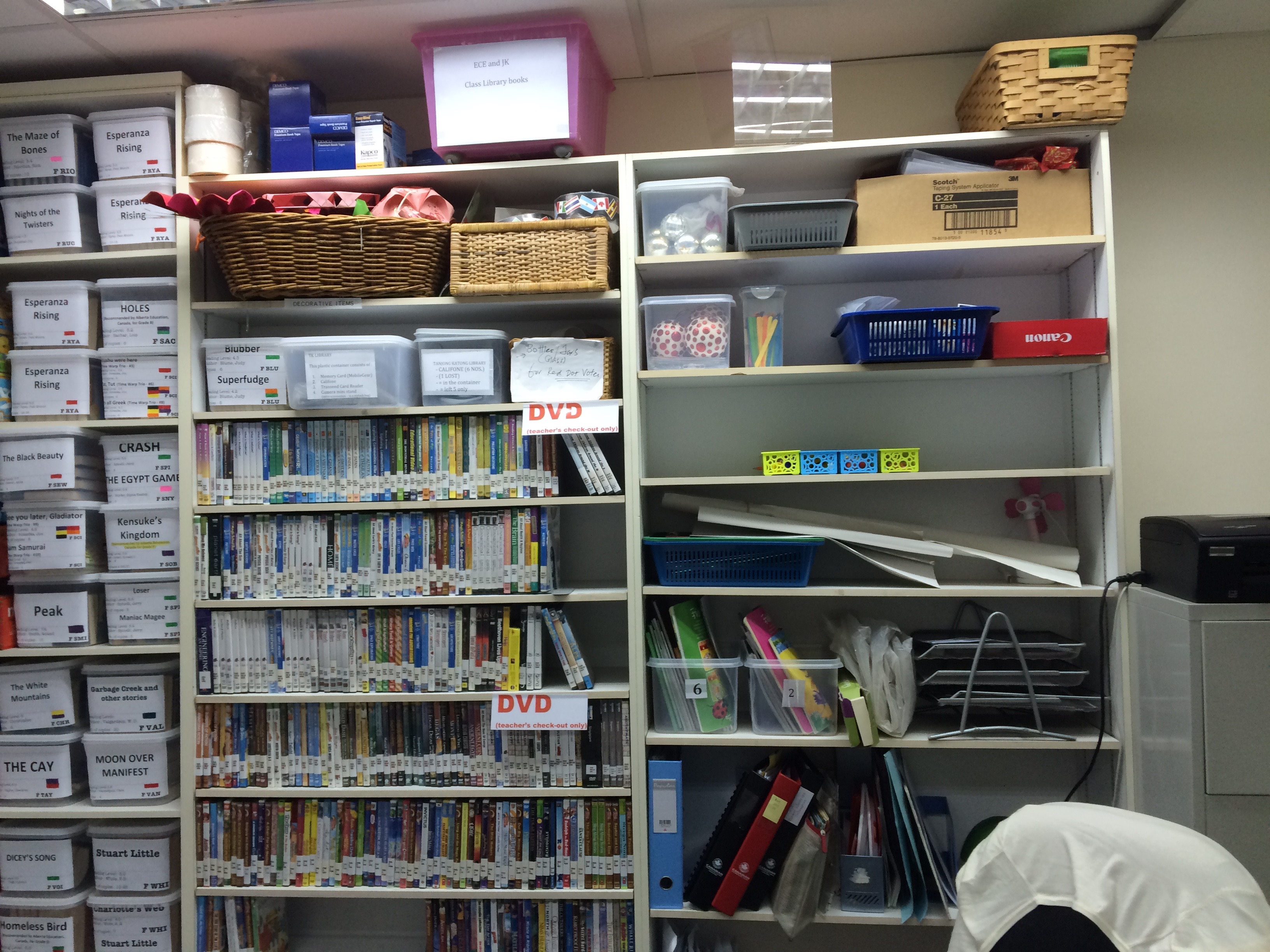
What to do with all those DVDs? But I do have more shelf space now.

IMG_0708
First step of venturing into the digital realm with the library … that has been an uphill battle of a month … but we’re getting there!

IMG_0707
My flexible space turned into a meeting place for Open Day

IMG_0714
Open Day treats … reminder to self – make sure they don’t just replace the shelving but also vacuum the food remnants – little people are very close to the ground.

IMG_0705
Removed one desktop to create space for display … it’s not yet there, but a first step. Need to remove the chair, put some bins underneath and I’m thinking gutter shelving for the top

IMG_0720
My review wall is exploding! Yay, also thanks to some pictures from my group after watching “The Dot” and drawing for me.


Why can’t a library?

Be more like a store (with apologies to Frederick Loewe & Alan Jay Lerner)?

And if it were a store, what kind of store would it be? Please don’t say bookstore, because even though we apparently love them, they’re dying and going out of business. Except for those that evolve beyond books, earn the respect of customers, get into their communities, incorporate new ideas such as subscription services, “reading spas”, bibliotherapy, cafes, events and festivals with authors and celebrities (Butler, 2014).

The bookstore

Yet many libraries are adopting the bookstore model, by genre-fying their collection, ensuring that titles are front facing, having multiple copies of popular books (Day, 2013; Kindschy, 2015).

Even as many libraries have a huge online presence which they work hard at making visible to their clients through a wide variety of means including signage, display, print-outs, screens, bookmarks, social media etc. people like David Weinberger, are still implying that libraries are missing a trick while Gopnik laments “By atomizing our experience to the point of alienation—or, at best, by creating substitutes for common experience (“you might also like…” lists, Twitter exchanges instead of face-to-face conversations)—we lose the common thread of civil life” (Gopnik, 2015).

The fashion store

A few months ago, I had the most horrendous shopping experience – my son insisted that I accompanied him to an A&F store. Only after reading this article do I “get” why it was so awful.  The whole point of the loud music and low lights is to keep the wrinkly parentals OUT of the store, not to entice them in. There are those who lament that as libraries become more inclusive, more multifunctional hybrid spaces they are going the same way – keeping out the very people who have the need for scholarly quiet space (Miller, 2013; West, 2013).


On the other end of the spectrum, one has the Burberry model (Bath, 2014; Davis, 2014; Williams, 2014). Where there is seamless integration between the online and offline experience, which may go some of the way in addressing Weinberger’s concerns. What we are looking for is the omnichannel “an experience that takes consumers from their current channel of choice and seamlessly chaperones them within an uninterrupted brand experience through digital and physical worlds without the customer being consciously aware or concerned about where one channel started and the other finished” (Bath, 2014, para. 8).

The Grocery Store / kitchen

Joyce Valenza also uses a store metaphor “We need to stop thinking of the library as a grocery store a place to get stuff and start thinking of it as a kitchen a place to make stuff” (cited in Johnson, 2013). Further in the same article, referring to the mission of libraries, Johnson states “The library’s resources have changed, but not its mission: teaching people to effectively access information to meet their needs. The emphasis has shifted from teaching learners how to find and organize information to teaching them how to evaluate and use information” (2013, p. 85)
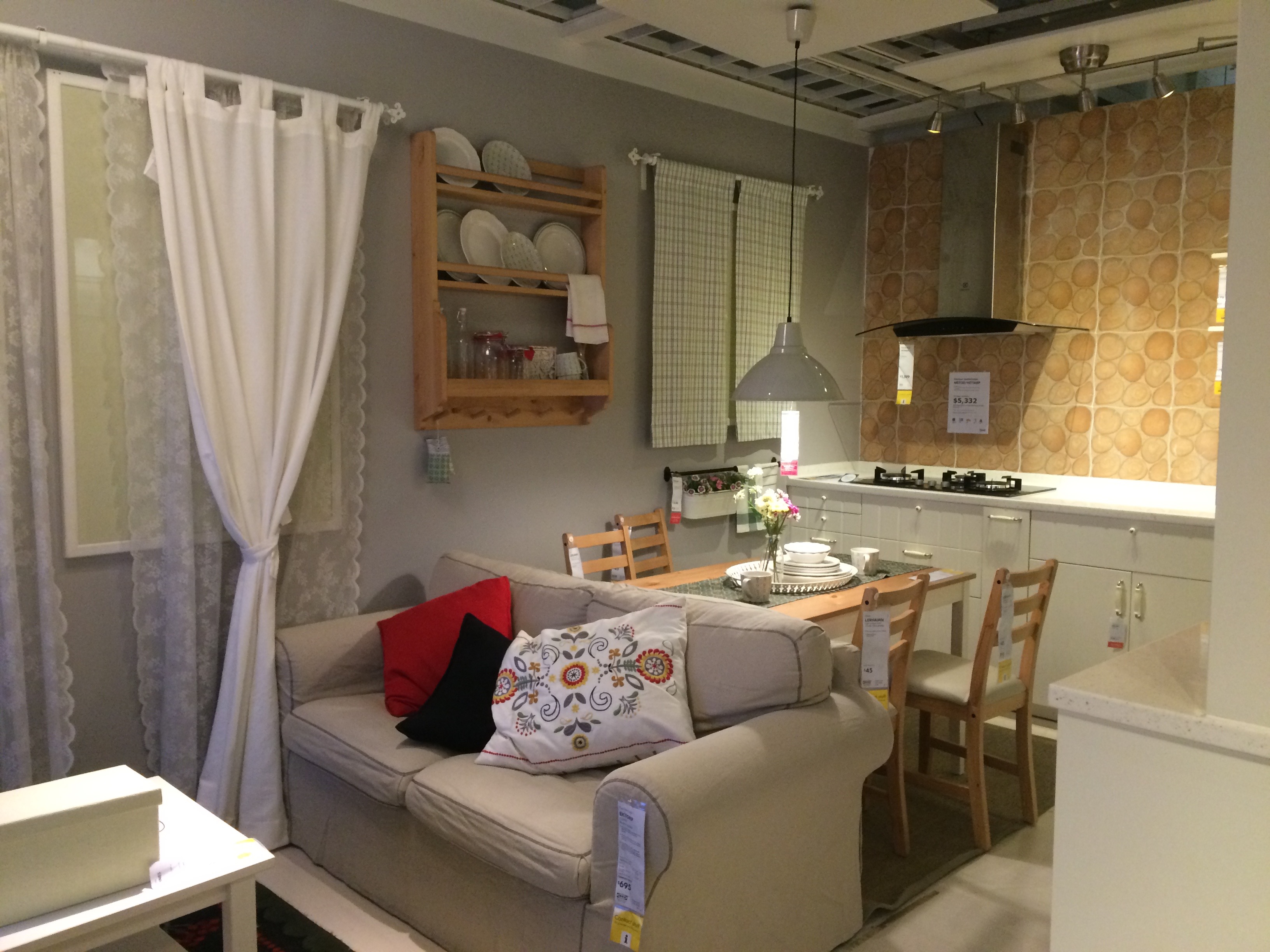
Strolling through Ikea yesterday on a mission to have a look at the design elements for a different assignment, I suddenly realised it had many elements and features that could be incorporated into a library.

Ikea

A couple of things work in the Ikea model:

  • It’s practically impossible to leave without buying something
  • Your route is determined by the store layout
  • Clear signage and explanations
  • The incorporation of demo-rooms and demo-apartments shows you how you can use what the store can offer – visualizing and envisaging
  • A price point where decision making is easy (Carlyle, 2015)
  • Few of the products are “ready to use” without customer engagement (assembly)
  • Trends of users and society are researched and analyzed (IKEA, 2012)
  • Extreme users can hack the basics and go beyond to create to meet their own needs – and share their experience / learning with others (IKEAHackers.net, 2014; Mars, 2014; McGauley, 2015).


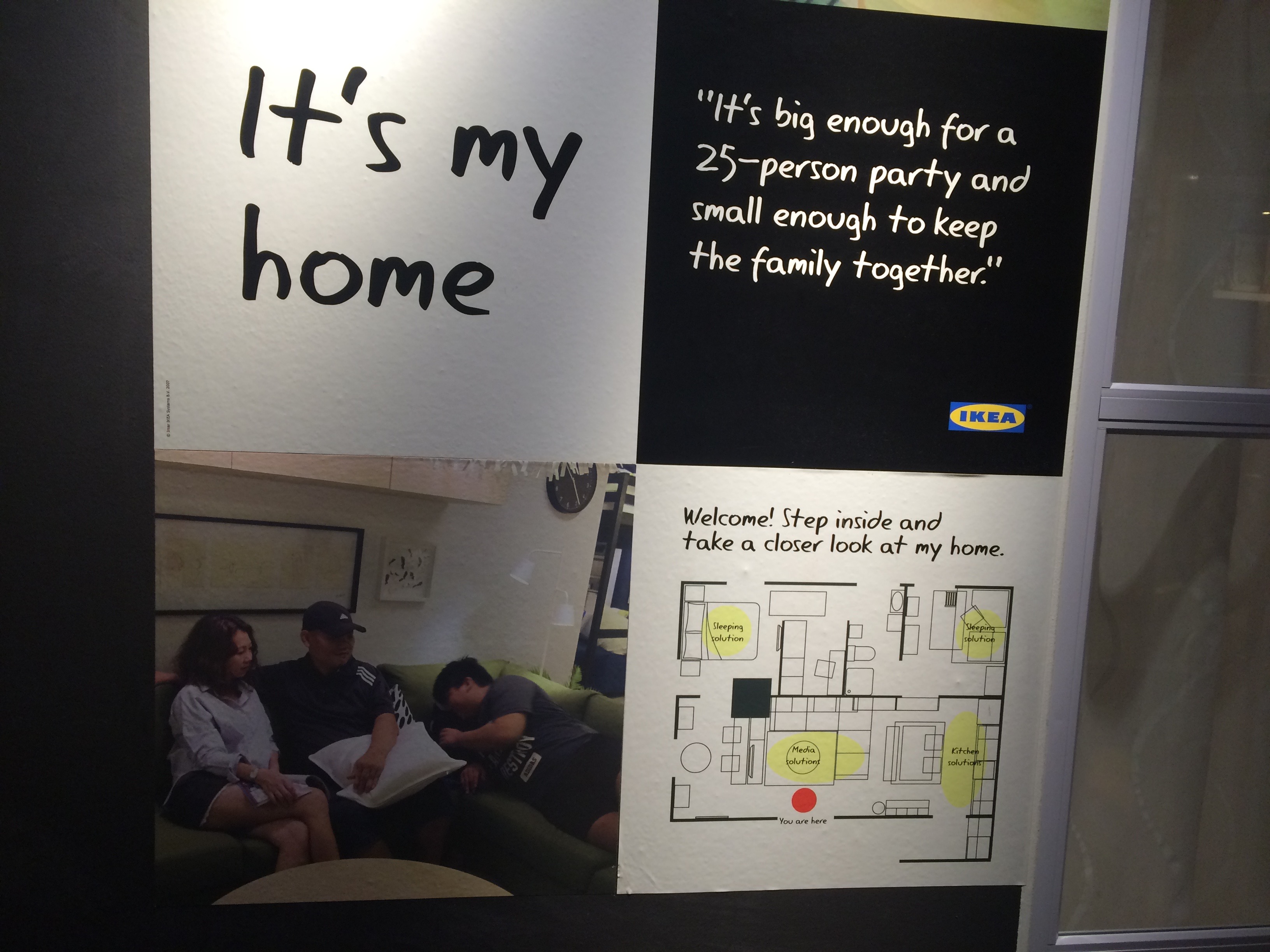
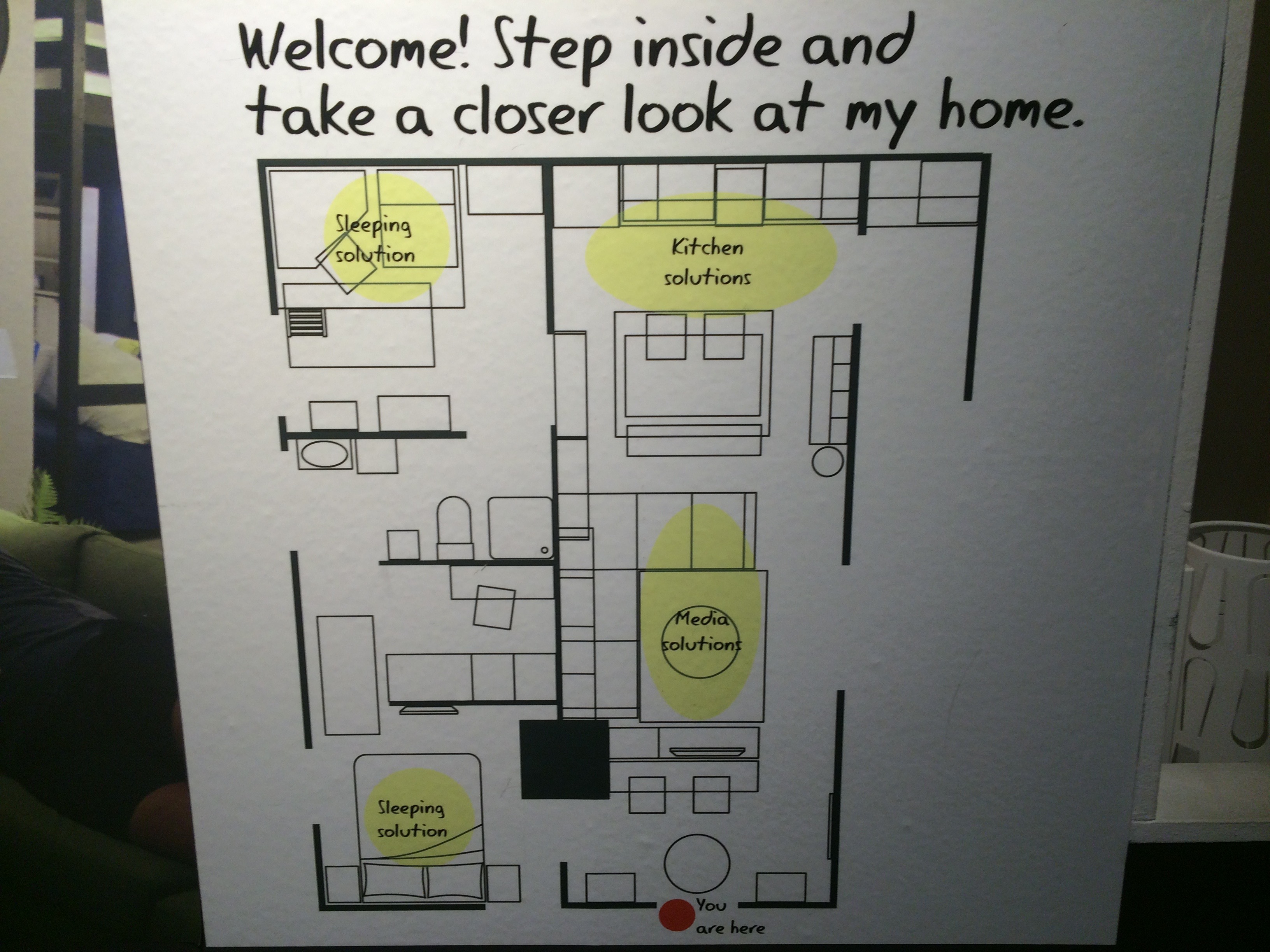
One of the things that struck me yesterday was that in addition to the traditional layout idea of “bedroom, living room, kitchen, bathroom” the signage in the demo-apartments referred to “solutions” as in “kitchen solutions, media solutions and sleeping solutions”, which is somewhat contradictory to the trends identified in the report by IKEA, that indicated a move towards hybrid functional spaces defined more by whether people wanted solitude or company than by their traditional function (IKEA, 2012).


IMG_0438
Full demo-apartment

IMG_0432
Floor plan

IMG_0434
Solution spaces configuration 1

IMG_0433
Solution spaces configuration 2

IMG_0439
Clear signage and explanations

IMG_0457
Instructions for self-packaging

But I like the idea of “solution” spaces. Especially for a library. It fits in a bit with the “campfire / watering hole / cave” ideas of Thornburg (2007) but I don’t think that goes far enough in providing users solutions for their learning needs. Yes it does allow for a variation in pace and intensity and communal versus individual effort, and facilitates knowledge gathering through listening, collaboration or research but are these solution spaces? I’d argue they aren’t. That’s not to say we haven’t by accident or design created solution spaces in the library. Thinking to the user needs in the secondary library where I worked:

  • Finding books to read for pleasure at the right interest / ability level
  • Hanging out with friends in an air-conditioned space (we live in the tropics!)
  • Having a “third space” that wasn’t home or classroom
  • Playing games (on-line and physical)
  • Lounging around reading dip-in dip-out books such as comics, graphic novels and poetry
  • Mother tongue resources
  • Resources – physical and online for school units or assignments
  • Resources – physical and online for personal questions or interests
  • Information literacy / literacy assistance for completing assignments to a high standard including academic honesty and scholarly value added.
  • ? more that I’ve not thought of at the moment.


With respect to the library space, I think we met most of the needs in a satisficing way given the constraints of space, resources and person-power. But I’d argue that if we were to combine the concepts of the omnichannel with solution spaces after careful observation and involvement of our users we could go so much further. Perhaps our library guides should have “hacking your grade 7 middle ages assignment” or “hacking citations”? Perhaps we should have a research zone where online and offline is seamlessly integrated with signage and demo-products?


These thoughts are in their infancy for me, somewhat half-formed and not “quite there” and I’d appreciate further comments and ideas and examples of where you’ve done this.

 References:

Bath, O. (2014, May 16). The Burberry model: why blending online and offline boosts success [Web Log]. Retrieved August 2, 2015, from http://wallblog.co.uk/2014/05/16/the-burberry-model-why-blending-online-and-offline-boosts-success/

Butler, S. (2014, February 21). Independent bookshops in decline as buying habits change [Newspaper]. Retrieved July 26, 2015, from http://www.theguardian.com/books/2014/feb/21/independent-bookshops-campaign

Carlyle, R. (2015, May 1). The secret of Ikea’s success [Newspaper]. Retrieved August 2, 2015, from http://www.express.co.uk/life-style/life/560828/Ikea-history-Swedish-furniture-design

Davis, S. (2014, March 27). Burberry’s Blurred Lines: The Integrated Customer Experience [Newspaper]. Retrieved August 2, 2015, from http://www.forbes.com/sites/scottdavis/2014/03/27/burberrys-blurred-lines-the-integrated-customer-experience/

Day, K. (2013, November). Liberate your book cupboards and create a more true “bookstore” model in your school library? [Web Log]. Retrieved July 26, 2015, from http://www.thelibrarianedge.com/libedge/2013/11/liberate-your-book-cupboards-and-create.html

Gopnik, A. (2015, June 12). When a Bookstore Closes, an Argument Ends – The New Yorker [Newspaper]. Retrieved July 26, 2015, from http://www.newyorker.com/news/daily-comment/when-a-bookstore-closes-an-argument-ends

IKEA. (2012). What goes on behind closed doors – Life at home in the UK (p. 23). United Kingdom. Retrieved from http://www.ikea.com/ms/en_GB/img/site_images/about_ikea/PDF/What%20goes%20on%20behind%20closed%20doors_Report_Spreads.pdf

IKEAHackers.net. (2014). IKEA Hackers – Clever ideas and hacks for your IKEA. Retrieved August 2, 2015, from http://www.ikeahackers.net/

Johnson, D. (2013). Power Up! The New School Library. Educational Leadership, 71(2), 84–85. Retrieved from http://www.ascd.org/publications/educational-leadership/oct13/vol71/num02/The-New-School-Library.aspx

Kindschy, H. E. (2015, January 13). Time to Ditch Dewey? Shelving Systems that Make Sense to Students (Learning Commons Model, Part 4) [Web Log]. Retrieved July 26, 2015, from http://www.clcd.com/blog/?p=186

Mars, R. (2014, August 19). Hacking IKEA [Podcast]. Retrieved August 2, 2015, from http://99percentinvisible.org/episode/hacking-ikea/

McGauley, J. (2015, February 19). Easy IKEA Hacks For Your Apartment – Best DIY Projects [Web Log]. Retrieved August 2, 2015, from http://www.supercompressor.com/home/easy-ikea-hacks-for-your-apartment-best-diy-projects

Miller, L. (2013, January 31). Bring back shushing librarians [Newspaper]. Retrieved August 2, 2015, from http://www.salon.com/2013/01/31/bring_back_shushing_librarians/

Thornburg, D. (2007, October). Campfires in cyberspace: Primordial metaphors for learning in the 21st Century. TCPD. Retrieved from http://tcpd.org/Thornburg/Handouts/Campfires.pdf

West, P. (2013, November 20). Libraries: a plea from a silence seeker [Newspaper]. Retrieved August 2, 2015, from http://www.spiked-online.com/newsite/article/libraries_a_plea_from_a_silence_seeker/14317#.Vb2l6JOqqko

Williams, G. (2014, March 19). Why the online/offline split no longer matters [Newspaper]. Retrieved August 2, 2015, from http://www.wired.co.uk/magazine/archive/2014/03/features/ecommerce-is-history