New library adventures!

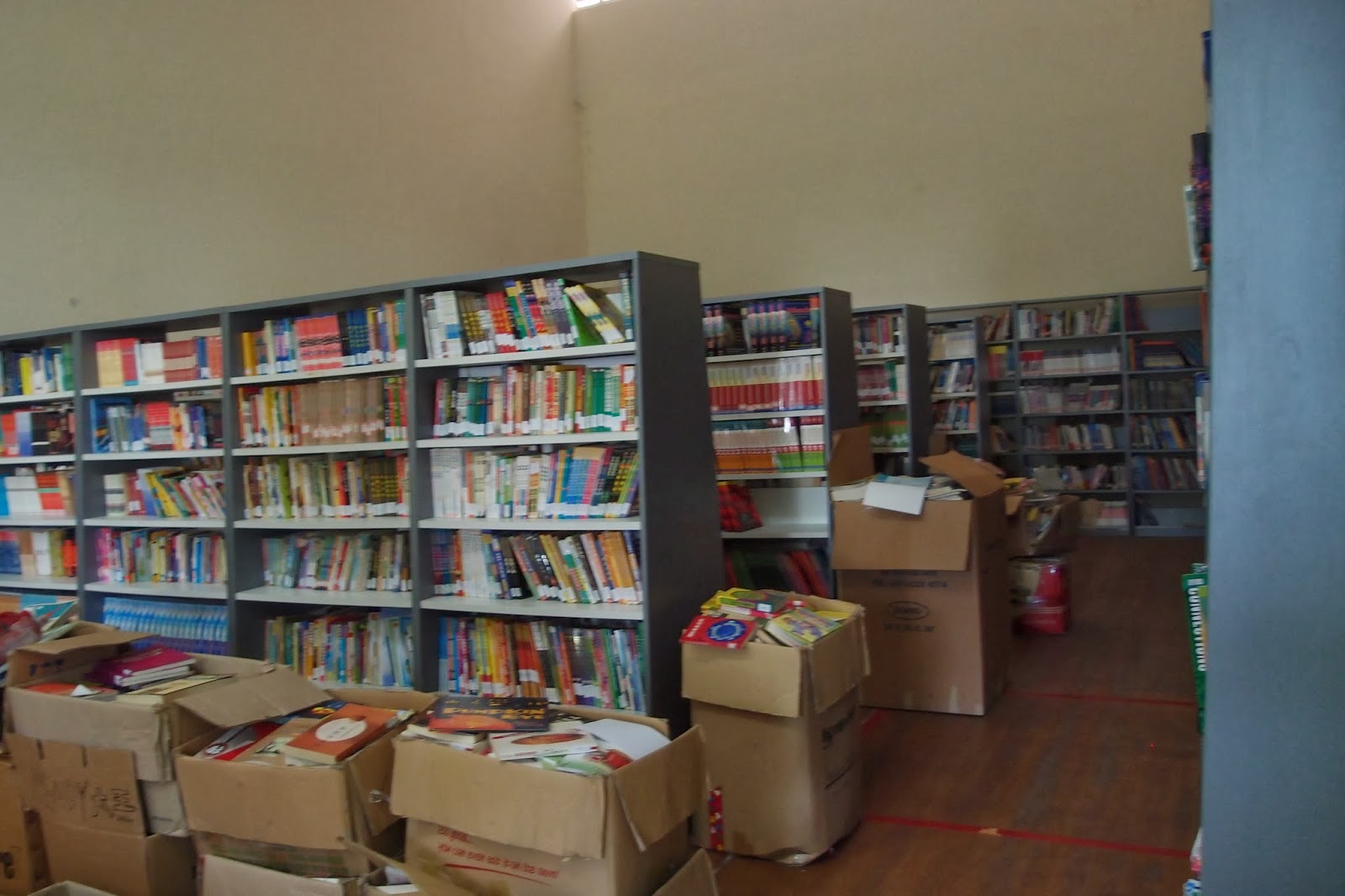
Books for secondary – old books stacked in boxes on floor

In order to get some work experience I’ve agreed to volunteer a day a week at a bilingual international school here in Singapore.  The school has around 500 pupils, 250 each in primary and secondary and teaches in English and Chinese.

The library situation is a little dire, which is why I was asked to help out.  I was quite intimidated at first as I have a little bit of theoretical knowledge based on the courses I’ve done (and passed so far), and a little bit of practical knowledge based on volunteering at the library at my kids school – and managing my own over stuffed bookshelves at home, and a little bit of experiencing knowledge based on visiting libraries all my life and the intensive library tour from my course which is documented earlier.

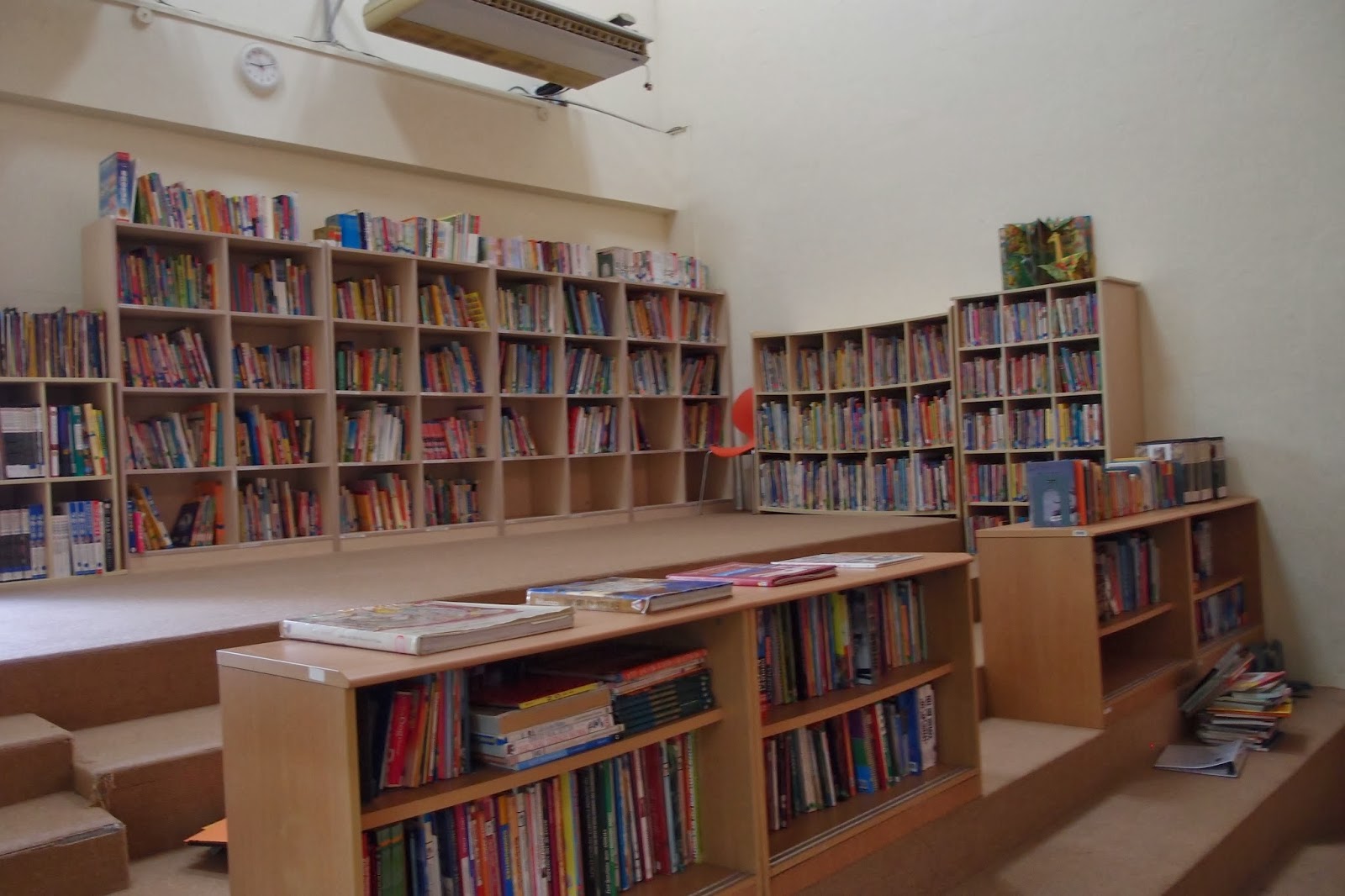
Junior school section. Non-fiction in shelves on stairs

I made it quite clear that I was no guru – but luckily I’m being very capably mentored by Ms. Katie, the uber-wonderful librarian at my kid’s school.  And I’m also very lucky to have Ms. Sheryl, who is the new school de-facto librarian at the school, despite the fact that she has had not training or experience in the librarian field – but makes up for that with enthusiasm and a “can do” attitude.

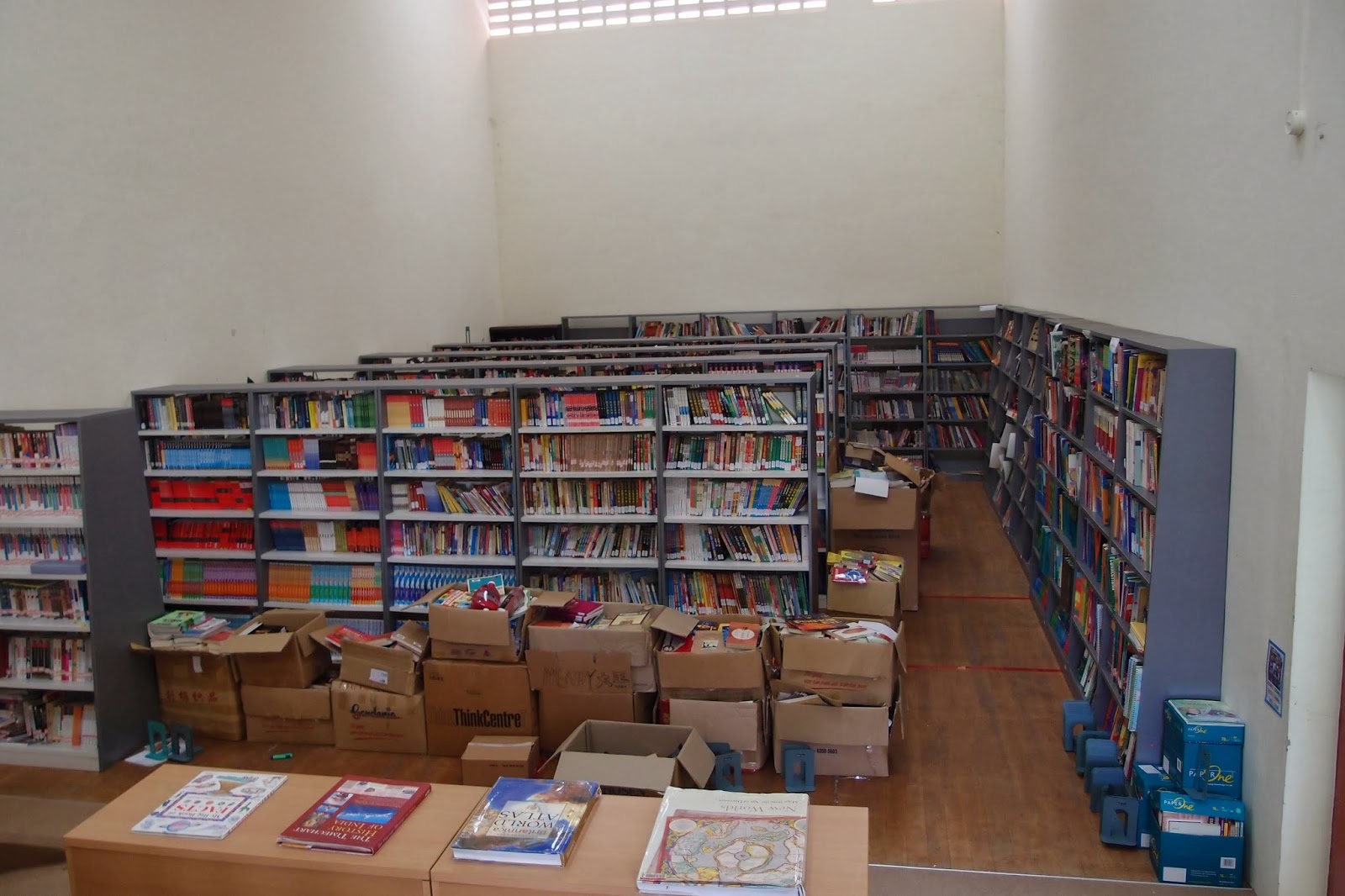
Due to the paucity of the library’s collection, it was decided to consolidate the books from junior and senior school in an old squash court and to work from there.  The first visit revealed that the junior books had been placed on the stairs, and the secondary on the court.  The collection consisted mainly of Chinese books and textbooks.  There was no discernable order to the collection, the catalogue was “lost” and there were classes of eager young students coming in looking for books, and teachers needing resources for their units of enquiry.

textbooks and teacher resources

“wall” of books, no labeling, lots of text books
“stuff” to be sorted on floor
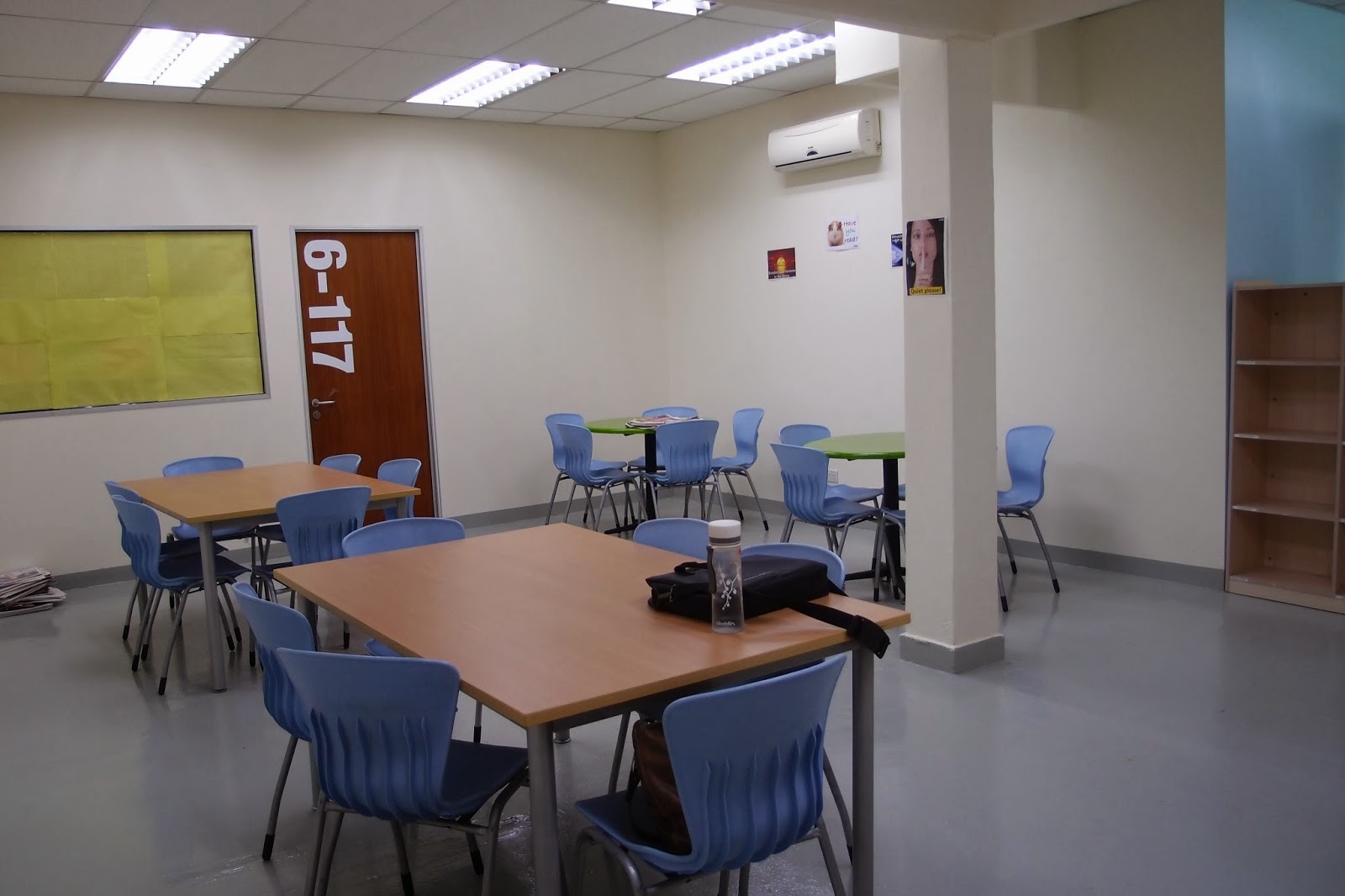
Nice study area, newly renovated

study area with tables and chairs

International Experience Portfolio

The entries below constitute the International experience Portfolio.   First a summary of each organisation is presented through the Study Visit report, and then the aspects I wish to highlight are presented.
 

Although I’m living as an expatriate in Singapore, which is its own cultural experience, one realizes you can experience culture on a number of levels.  Each organisation we visited had their own unique culture and identity.  

 
In the libraries this was expressed through the design of the various spaces, the emphasis of the collection and the staffing choices.  At each organisation what was very striking was the way in which employees expressed their identity through the organisation of their desks.  At Singapore Press Holdings for example the open plan office was filled to the brim with hundreds of indoor plants of all descriptions.  There was even an aquarium on one desk.  At Singapore Polytechnic, employees had used the desk lamps to hang a myriad of little figurines and toys and all attempts to create a truly open plan office were being thwarted by staff needs for privacy and their own space. 
 
Libraries where the head librarian was ‘politically’ well connected or where the organisation head was vested in a thriving information community were better staffed, better resourced and had more vibrant, innovative and enthusiastic feel to them.  That’s not to say that other libraries didn’t do an excellent job of managing their resources and putting library users first.
 
Instead of writing this chronologically, I’ve divided the experience into the areas that I found most interesting in the visit and where there were noticable differences between the libraries:
 
* Collection
* Reference Services
* Promotion
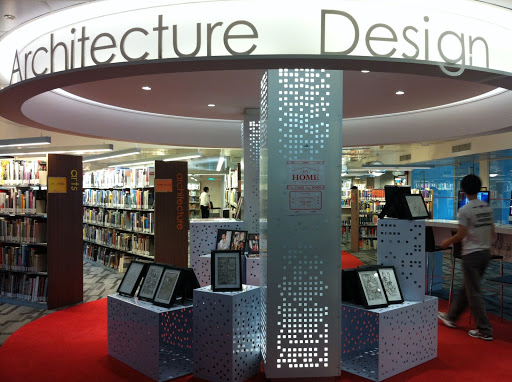
* Physical Environment

In conclusion the trip was extremely valuable both from a librarianship and a cultural point of view. 

Study Visit report

STUDY VISIT REPORT
SINGAPORE STUDY VISIT
24TH – 27TH SEPTEMBER 2013
Name: Nadine Bailey
Student Number: 11510358                        Subject: INF407
INSTRUCTIONS
You are required, as part of your subject assessment, to complete the attached Study Visit report. You need to submit the report within 7 days of the end of the study visit via EASTS as directed in your subject outline.
Please use ONLY the space provided. You have been given spaces to assist you to be concise and to analyse each visit and not merely describe the contents.
Your report will be read by the study visit leader, and will be assessed as Satisfactory or Unsatisfactory. Your report will be returned within three weeks of the due date of your report. If your Report is unsatisfactory, you will be asked to complete a second Report.
Reflection Guidelines
This Reflection section should be a concise summation of your reflections on the visits made during your study visit. For each visit, in the space allocated, you should comment on the value of the visit to you i.e. what you learned from the visit and how this added to your knowledge of libraries in general or of this particular type of library. This should be written in a narrative style. You can write in first person and you are not required to provide references.
Evaluation Guidelines
Please write some notes on each visit you made during the study visit, indicating what you thought the strengths of the visit were and highlighting any weaknesses. Also, please rate the facility from 1 to 5, with 5 being the highest rating. This evaluation will be used by staff to judge the value of each visit and whether that library should be visited again in future study visits. Your notes can be presented in point form.


Monday: Tanglin Trust School
Reflection
The libraries are extremely well resourced both in personnel and in materials.  It clearly shows the advantages when the head of the library is seen as a partner in information and knowledge rather than just someone who manages online and offline resources. What struck me most was when the head librarian mentioned that she’d been consulted on the design and layout of the library prior to construction and also that she counted (in power terms) as a head of faculty and was present in all meetings and part of the school’s decision making process. This explains a lot why and how the library came to be so well resourced, staffed and laid out.
In the senior library It was interesting to see how the library constructed and managed the balance between interactive (busy / noisy) and reflective (study / quiet) zones.  The virtual space (http://libguides.tts.edu.sg/) was equally well resourced.  The primary and infant libraries were very welcoming spaces where one can assume children will feel at home and foster an early appreciation and love for reading.
Evaluation                                                                                                                              Rating 5_/5
A very interesting visit.  In our course we have had quite a few forum discussions on the potential of libraries and library officers that often end with what appears to be bureaucratic issues and powerless non-networked library personnel.  This is an excellent example how someone who is not only extremely competent in what she does can succeed in “her” world in the library space but can also be seen as a powerful member of the decision making and resource allocating team.   I would be interested to see if this translates into better results academically for the school.
Monday:       Ngee Ann Polytechnic – Lien Ying Chow Library
Reflection
Once again Ngee Ann Polytechnic showed how a competent library team paired with abundant resources and a supportive principal can result in a very welcoming and well functioning space.  Research has often indicated that students in the vocational sector may be reluctant users of libraries.  Their choice in making the entry area the  “lifestyle” part of the library with an integrated café / bookstore concept and plenty of interactive opportunities (TV / interactive table / game zone / Exhibition space) seems to have translated in good visitation and loan statistics. 
The library team seemed justifiably proud of the many “firsts” they had booked.   I was struck by the enthusiasm of the staff, and was also impressed by the number of staff training days (12 x 5 day training per year).
Good thought has gone into integrating Information Literacy into the curriculum with a combination of library and lecturer involvement.   I liked the fact that it involved not only classroom learning but also experiential learning such as the knowledge hunt activity, some online learning and mobile learning.
Evaluation                                                                                                                Rating 5/5
Enthusiastic staff is contagious!  If as visitors we had a good feeling about the library I’m sure that also translates to how students feel about their library.  Well worth a visit, given the debates in the library world about the café / bookstore concept versus the academic library sec.

Monday: Singapore Polytechnic Library
Reflection
The library had been extensively renovated in parts and it was clear that considerable thought had gone into the design aspects within the library and it was really nice to see how the various schools had contributed to the hardware and software of the library.  The elephant in the room is their physical location; the library suffers from being an early structure in an old and expanding institution.  One has to wonder what the status is of the library and the librarians on campus. The campus is also undergoing considerable renovation – but the whole concept of what a library is and where it should be has not been challenged.  Definitely a contrast with Ngee Ann and Tanglin.
This has implications for its footfall and the emphasis that needs to be put on promoting the library.  It is making use of mobile technology (BYOM sessions) which makes sense given the physical constraints the library faces. In my opinion the library could be far more radical in its outreach with satellite library and satellite librarians and self-checkout or mobile checkout. 
Evaluation                                                                                                                    Rating 3/5
The way in which the library was making extensive use of its students abilities and knowledge, was good.
Tuesday: Singapore Management University
Reflection
I was interested to hear they had a “compulsory” but non-credit bearing orientation, as the tour leader explained this was definitely a cultural aspect of Singaporean students being compliant and not questioning the enforcement of a policy.
While quite a few of the other libraries were using social media as a promotion / academic information platform, SMU libraries used Facebook, 4square and twitter purely for social interaction with students. This is an interesting choice and I assume requires some discipline not to “interfere” by including academic or promotional information.
Despite SMU and its library being relatively new they had encountered problems with physical preservation related to the Singapore climate, something that was a theme again later in the trip at the Institute of South East Asian Studies.   Mould is contagious to other books and materials and also creates health and safety problems. 
Elimination of mould is costly, and the “obvious” answer of digitisation of those parts of the collection have copyright and ownership issues. I had to consider that some problems don’t have a simple in-house solution that is cost-effective.
Evaluation                                                                                                                  Rating 2/5
While SMU definitely gets the prize for the best roof top view of “old” Singapore I’m not sure the visit had much added value to the tour. Although they did teach me how to use Google scholar with links to CSU library which was really valuable.


Tuesday:    National Library Board – Reference & Public Library
Reflection
As the NLB is a government run organisation I was struck by just how innovative and artistic they were in their displays and particularly the design and conception of the children’s library as a “green” space.   It appears that the government places a lot of emphasis on the availability and accessibility of books to the population by the employment of the hub and spoke method – with 3 large regional libraries and 25 local libraries, some of which (10) are located in shopping centres (following their opening hours).
The reference section was very impressive but also very imposing, as was the exhibition space. As a Singaporean resident I had actually never ventured up to this part of the library which made me think about the role of a library in inviting people into its sanctuary.  Large spaces with high ceilings are aesthetically striking, but studies in airport design for example have shown that people feel less comfortable in them – this is used deliberately in airports, but one would assume that libraries would want the opposite.  The children’s library is a contrast with its cocooning space with low and lowered ceilings.
Evaluation                                                                                                                Rating 4/5
Interesting library, very enthusiastic staff. Nice to see how a government can be behind information and learning and put its money where its mouth is.
Tuesday: National Library Board – Chinatown Library
Reflection
We had an interesting discussion on how there never were enough newspapers for the senior citizens visiting the library.  It led me to wonder about how a society goes about meeting the information needs of its elderly.  I have noticed in Hong Kong queues of 100s of pensioners in the early morning in order to get one of the free daily newspapers.   Here one has a physically beautiful library which is well resourced with a special collection and the issue is newspapers which don’t even cost that much.  There is a philosophical question behind this that seems to be a silver thread through libraries throughout the ages which is whether one gives patrons what they want, what they can’t access or afford themselves or what you think they should have.  The UWCSEA visit later in the week added the dimension of giving them what you feel embodies your identity and purpose.  
Evaluation                                                                                                                    Rating 4/5
Of course the fact it’s a volunteer run library is noteworthy as are the logistics involved. It was nice to see one of the shopping mall libraries and also a special collection and how that was managed.


Wednesday:    Temasek Polytechnic
Reflection
According to the library about 70% of students use the library and they monitor unique visitors through a patron tracking system, I’d not heard of this before and I thought it a worthwhile exercise in order to make choices both on the promotion side i.e. do you want this number to be bigger, or is it appropriate, and also to ensure there is congruence between the users and the collection.
I liked the fact they used Pinterest for book displays and was generally impressed by their (student designed) signage and interactive booth.  It was clear they didn’t have the level of budget of the other polytechnics, but were doing a good job with what they had.
Evaluation                                                                                                                    Rating 2/5
The added value was as a contrast /foil to the other 2 polytechnics that had been renovated more recently and were better (and privately topped up) resourced. I’d rather have spent more time at UWCSEA or the library supply centre.
Wednesday: United World College of SE Asia – EAST
Reflection
The presentation focused on the philosophy of library / spatial design and building community identity through a collection. 
Since the library was purpose built for a new campus of a school with an existing ideology and value system, the librarian could incorporate both the latest thinking about library design and have a chance to build a collection from scratch.  This was a unique opportunity to see how such thinking translated to very practical aspects such as having classes of 22 pupils throughout the school resulted in tables, rooms and chairs seating exactly 22 people right down to applying the theories of Thornburg on learning spaces to the physical space.
As far as collection development was concerned, the school mission, educational goals and multi-cultural diverse community were used in guiding the acquisition of materials and the consideration of their format in a very idealistic way with careful consideration particularly to the concepts of culture.  I found it made me think a lot about how identity of an organisation is expressed – in contrast – the Tanglin Trust Schools very clearly identify themselves as “the British” school in Singapore.
Evaluation                                                                                                                     Rating 5/5
Would have liked to spend more time at UWCSEA for more esoteric and philosophical discussion.


Wednesday:   National Library Board Supply Centre
Reflection
The informative talk raised a number of ideas and discussion of the current trends around the way in which material is catalogued, tagged and linked to other information.  The contrast between the “think tank” nature of the office doing the acquisition and describing and the back-end “industrial machine” of the physical processing, distribution and storage system was fascinating. 
Evaluation                                                                                                                    Rating 3/5
Visit was a little rushed.
Wednesday: Singapore Press Holdings
Reflection
SPH had a couple of aspects that differed from other libraries, including the need to be open and available for longer hours, participation in the editorial meetings, a very proactive approach to the information needs of their ‘clients’ and the merging of the English and Chinese libraries.
I personally have difficulty in tagging, storing and finding material in my limited family video footage, so I could identify with the issues of Razor TV where they add 40 terabytes of footage every 3 weeks and need to cut around 70% of it and tag and store the rest using a new content management system.  I felt there was a little bit of disjoint between the questions I had on information retrieval – particularly from the visual and audio-visual side and the presentation which was more focussed on traditional print and picture media.
Evaluation                                                                                                                                 Rating 4/5
Interesting to see a corporate library after the other academic /public libraries.


Thursday:  Nanyang Technological University – Lee Wee Nam Library
Reflection
I was surprised at the library response to the topic / question of Open Access, it appears to be an area that none of the libraries are prepared to take a strong stand on, either morally or conceptually – I’m not sure who drives the debate in Singapore, the academic institution, its libraries or the central government. 
It is interesting they had a special promotion / outreach program and I was impressed by their personalisation of approach to the students and the good response it received. Each library we visited seems to have spent a lot of time and effort into ensuring that the libraries are accessible and welcoming to the students.  They also made it very clear that their focus was on the students and not faculty, something I’ve not heard verbalised so strongly in other university libraries.
In terms of reference librarians there was a strong presence of subject specialists, which I can imagine is well received by students particularly the technical areas. Since I’m doing INF406 Information Sources and Services I found learning about the ways in which they were creating subject guides by the subject librarians, the assistance with metadata, taxonomy and website and blog design very worthwhile.
Evaluation                                                                                                                    Rating 3/5
It was good to include a university academic rather than vocational library. I’d include it over Temasek for a more balanced visit.


Thursday:  Institute of South East Asian Studies
Reflection
One has to question the continued existence of this type of niche library that appears to duplicate the collection of other institutions and struggle both with preservation of its materials and its own identity.  It will take a very strong and politically and academically connected individual to make something of the potential of this library. Browsing the shelves one could see that a huge weeding exercise would have to be undertaken – for example having the encyclopaedia Britannica and various yearbooks is very questionable for such a specialised collection on a very limited budget.
Evaluation                                                                                                                    Rating 3/5
Interesting from the preservation – physical collection and existence – aspect.
Summary Reflection (What you learned overall)
I wish I had done this tour before I started my course as I learnt so much.  On the other hand, having completed a couple of courses, it made all the subjects I’ve been doing in abstract fall into place and make me even more enthusiastic about my career change.
The most interesting “take away” for me was the idea of organisation identity and philosophy and how that translates into collection development, space design and the staffing of the library.  While most of the libraries had many things in common – quiet spaces, communal space, collections of print and digital material, it is fascinating how each differentiated themselves and carved a niche in the organisation of which they were part, and collectively as a part of the Singaporean society as a whole.

Collection

Each library we visited went about creating, updating and weeding their collection in different ways.  On the one hand we had UWCSEA-East, where the librarian could build up a collection of 30,000 items from scratch, and had the luxury of being able to carefully consider the philosophy behind the collection.  On the other, we had the Institute of South East Asian Studies, with a 45 year history of receiving donations and making acquisitions and doing a stocktake and serious consideration of its collection for the first time this year.

Common themes were the shift from print to digital.  Each library had found their own balance between providing patrons with books and journals and enabling access to digital information.  Along with the shift to digital media came the responsibility of teaching information literacy (IL).  We were exposed to some innovative and very fun ways of teaching IL across the board where the emphasis was on making students comfortable with interacting with the librarians in the library setting, as well as being able to help themselves on line and in the book stacks.

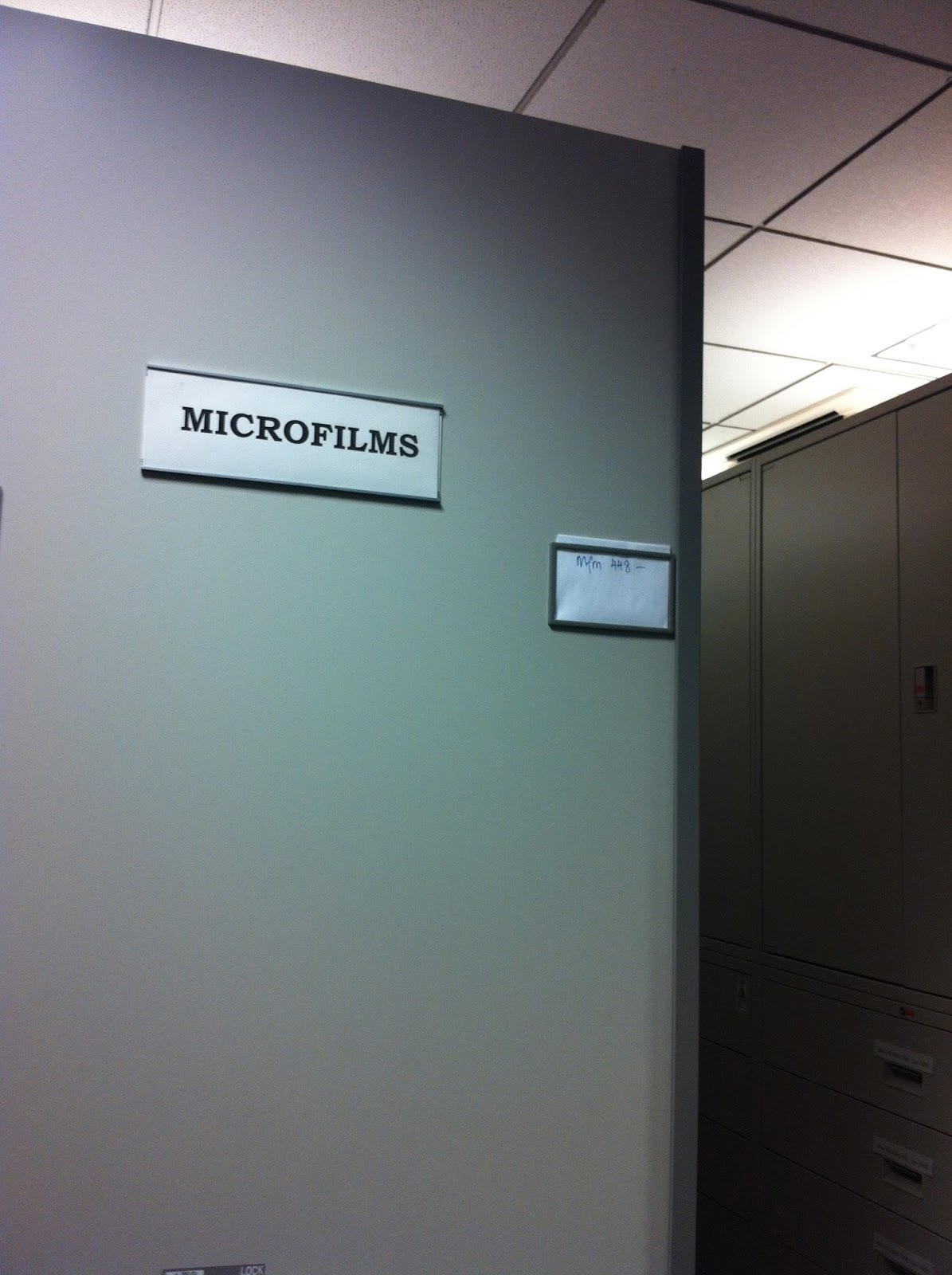
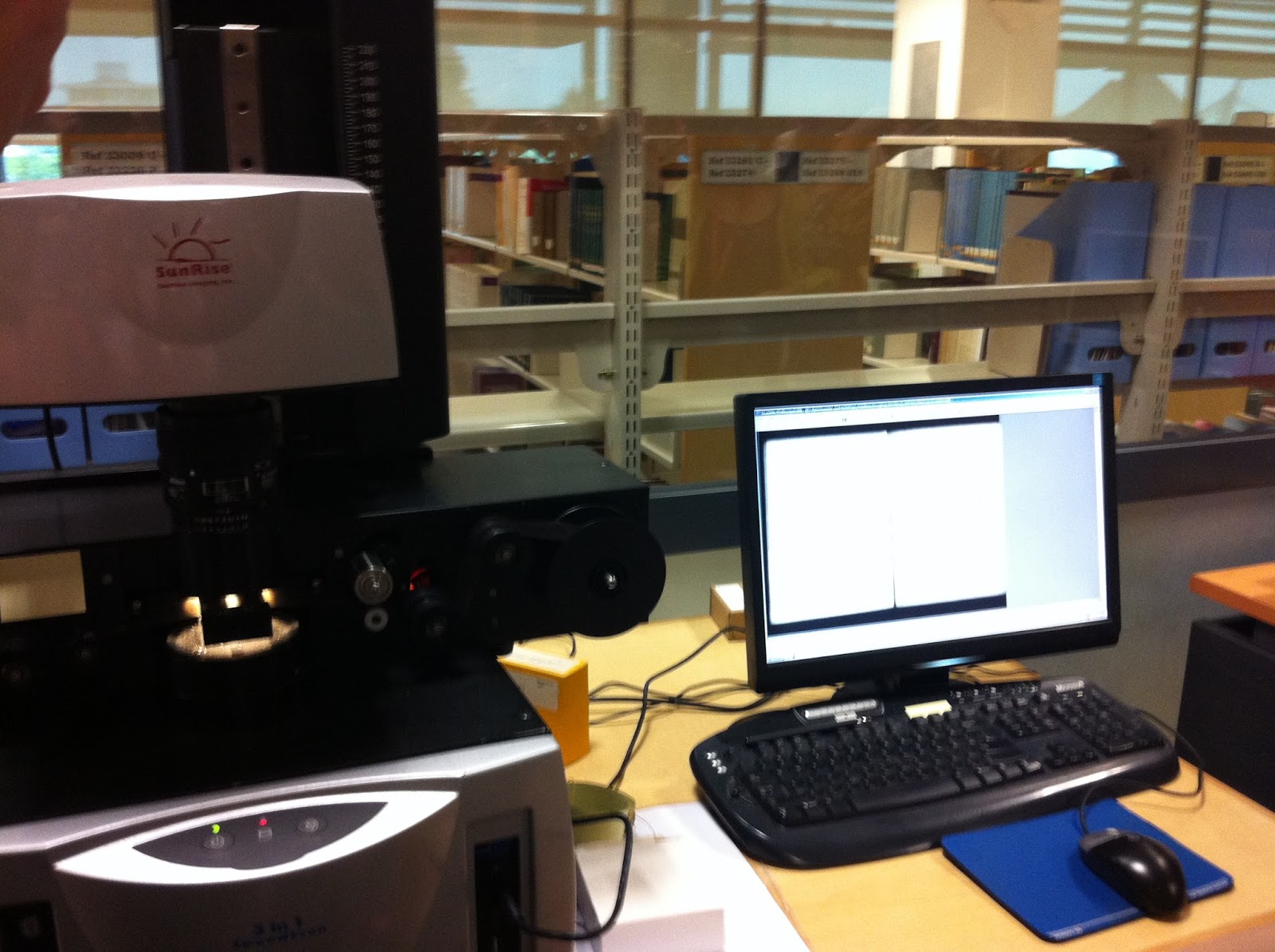
Preservation of collection was an important issue given the hot and humid climate of Singapore and the expense of air conditioning.  Books got infected by mold, mold is both contagious to other books, and a health and safety issue for employees and users.  It’s very expensive to treat.  Microfilm deteriorated, particularly the technologies prior to 1980.  Damp affect photos and films.  Digitization was expensive and time consuming and could result in the library running foul of copyright laws.  All this indicated that libraries needed to be extremely disciplined in their acquisition and weeding with some good co-ordination and networking to ensure that sufficient copies of valuable materials were available and preserved but without unnecessary duplication.

It was interesting to see how the different libraries managed their life style collection.  For some, like Ngee Ann Polytechnic, it was a drawcard for their students, located on the first floor with a very welcoming interactive bookstore / cafe type concept.  For Temasek, it was on a higher level, and less well patronized – in fact the librarian mentioned that sometimes students came there as it was quieter than the quiet / academic parts of the library.

Weeding policies differed by institution from a strict “anything older than 12 years gets thrown” to “we’ve never weeded”. SMU had a sophisticated set of RUF (relative use factor) statistics which it used for purchasing profiling its collection and weeding.
 How does a library deal with it’s unwanted books?  UWCSEA-East had created a read-and-recycle program outside the library, where the school community was welcome to take books and pass them on.  NLB had a bookcross and book sale scheme to get books out into the Singaporean community.

Most libraries were shifting towards an on-demand as opposed to “just in case”  collection development policy.  Collections were added to on recommendation from lecturers and students who were also invited to attend book fairs held by trade and public suppliers.  

Reference services and Information Literacy

A desk with “help” for primary pupils
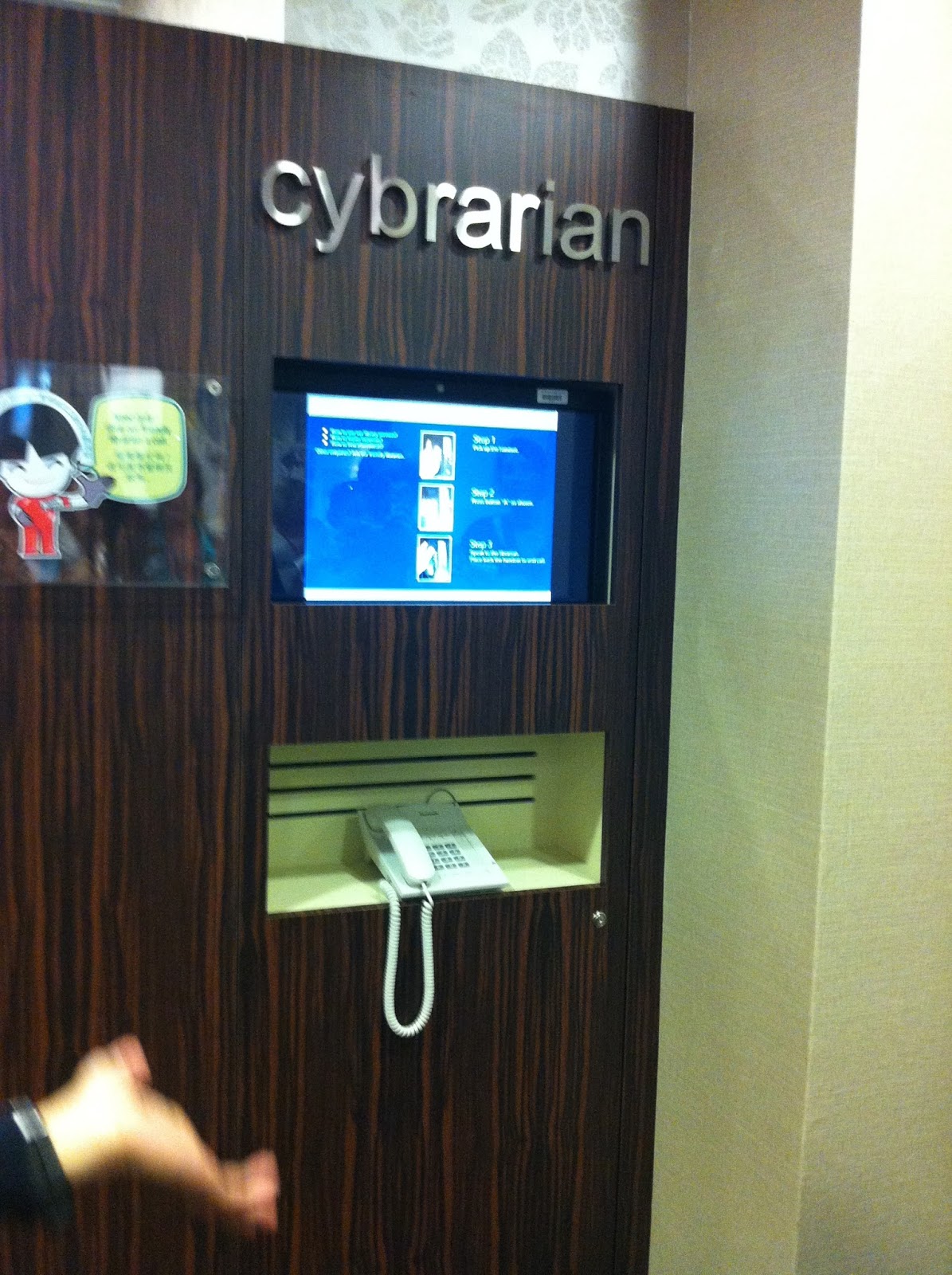
Chinatown library has no librarian only a phone

When visiting a library it is always interesting to see where the reference services are located and how they are manned.  In terms of design, rounded desks or structures were a common theme.  Naming varied between “help” for the infants and juniors, to “information” or “reference” at they poly’s / universities.  The public library in Chinatown had a “cybrarian” as it is a volunteer run library without permanent staff.  Should users have a research or other question, they can phone through to a reference librarian at the central library who is able to assist them with their request.

A few of the libraries employed the “roving” reference librarian model, or a combination of roving librarian and desk located.  One library had the reference librarians located in an office with the possibility of appointments for patrons.  NTU had specialist librarians who had a degree in the subject they were covering.  SMU dedicated a librarian to each school who is responsible for the collection, reference services and database.
An impressive structure in the reference section of NLB

In addition to the reference services, Information literacy (IL) was an important theme.  

Different libraries had different approaches.  Some had integrated IL into the curriculum, some had it as a separate compulsory topic and others offered it on a voluntary basis.  At Ngee Ann, a combination approach was employed.  First year students completed an online library orientation at the start of the school year.  Later, the librarian was invited as a guest lecturer into the classroom.  In further years the library worked in conjunction with lecturer request for more specialized or specific IL or citation or information retrieval needs.

SMU had a “compulsory” information literacy course.  When questioned on how this was enforced and whether it was credit bearing, they admitted that it was an administrative detail that students had to have attended to in order to graduate, like paying their fees and settling outstanding fines!  This was an interesting cultural insight as they explained that Singaporean students would generally not question the fact that something was compulsory, and would merely comply with the requirements. In fact they had a compliance rate of around 97%.

We also learnt about how SMU was using Wiki’s in order to teach IL.  Law students for example had to research a particular aspect of Singaporean law and create a wiki on that.  In the process they learnt about research, searching, citation and the credibility (or not) of sources.  Their own posts were then exposed to scrutiny and the authority rating process.

Most of the libraries created some kind of a game or quest, particularly for their orientation programmes.  Some were on paper, and some made the use of mobile devices.  In the case of mobile devices, often the specifications had been set out by the librarians and the programming or design was done by students at their institution.

NTU has an instructional services arm which helps with creating awareness of the library, tutorials, literature reviews, tools, citation analysis and scholarly communication.  Each librarian is expected to be a teacher.  The take-away for me here is that IL does not stop with first or second years, but can also be vital for people further up the feeding chain as they find out how to market themselves and their research in an increasingly digital academic world. I was very impressed with their services in combining their technical and digital and library knowhow to the needs of lecturers and professors. They also have a youtube channel for self-education.

A little bit of fun on roving reference librarians:

Physical Environment

big, moveable signage

One thing our visit demonstrated wonderfully is that design has become a huge factor in libraries.  In its presentation, UWCSEA in fact focused on design aspects, as it had two new, purpose built libraries.  Careful thought had also gone into the design of the Tanglin Trust libraries, in particular the new senior library.

Libraries had given careful thought about the balance between creating welcoming spaces that would have a low entry barrier for patrons, and allowing for quiet space where study could take place without interruption.  Most libraries had quiet zones and quiet rooms, usually behind sound-proof glass.

Everything on wheels

These days libraries are not only used to collect and store print collections, but also provide digital services which need to be accessed either on site or through links provided by the library.  Libraries are designed to function as communal spaces where presentations, talks, concerts, exhibitions, book clubs and other events can be used.  For this reason furniture should easily be moved in those areas.  At UWCSEA-East for example, all furniture including bookshelves, tables, chairs and booths are on wheels.

Through bright signage, libraries designate different areas, for example check-out, reference / information areas, quiet areas, computer areas, study rooms, audio visual areas, and special collections.

Clear identification of areas

Separating out of parts of collection for easy retrieval
pods for multi-media perusal

With the shift to more digital material, space has been created for the viewing of films, listening to podcasts or music, recording presentations, making movies and other digital activities which users need to partake in.

Cosiness and intimacy for Primary library

In their design libraries clearly differentiated between themselves with view to their user groups.  For example the infant and primary libraries were very cosy and friendly, with low and soft furniture, and bright colors.  The life-style areas of libraries were interactive and accessible with clear and funky signage and furniture, a non-adherence to tradition Dewey Decimal cataloguing and permission to talk and interact with fellow users without a “shushing” librarian.

Friendly atmosphere for infants

Special collections were separated for their users. For example at Tanglin Trust school the materials for IB students was organised by subject.  In the Ngee Ann library a special area was made for “wealth creation” including related books, a large exhibition on the life of the person donating the funds for the library, Bloomberg screens and space for presentations of famous local businessmen and entrepreneurs.

Innovative use of materials and recycling

The children’s library at the Singapore Central library had made a special effort to be an ecological library with careful choice of materials used in creating the library and also in its collection – 30% of the collection relates to environmental and natural themes.

And finally, as this video below shows – accessibility to the library and its services is paramount.

Promotion

Student designed periodical stand
Lifestyle section organised like a bookstore 

The survival of both the physical entity and concept of “the library” depends on it being well utilized.  All libraries visited were extremely proactive in their promotion efforts.  Most began during the orientation week with activities to get students into the library.  These ranged from library orientation programs in the form of games, exhibitions and events.  At NTU, each new student gets a letter from his/her “personal librarian” inviting them to tea!

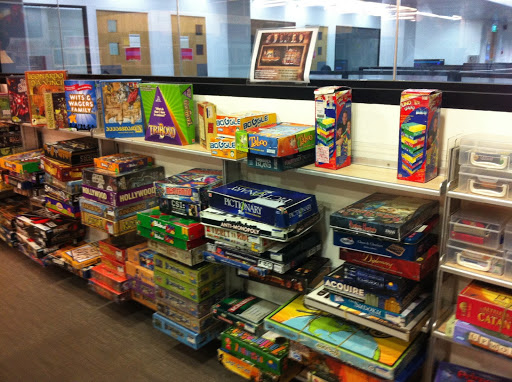
Ngee Ann Polytechnic use their interactive space for presentations and lectures, outside visitors and have created a very inviting “lifestyle” area based on a bookstore / cafe concept.  They were the first academic library here with a life-style area and took their ideas from shopping centres and bookstores and cafes and ventured out of the library to see where their students hung out.  As a result they created a board game zone which is a popular cafe concept in Singapore.  They have an extensive collection of both common and unique board games.  Having a Board game rooms was a theme we saw duplicated in nearly every library here.

Ngee Ann – a collection on wealth creation situated next to the Bloomberg monitors and a presentation area where speakers are invited on finance / entrepreneurial / business matters.

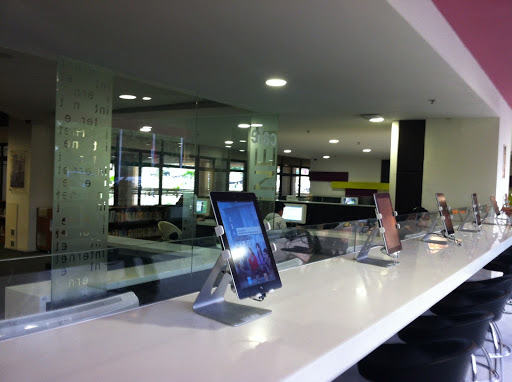
Cafe with bar stools and ipads in Lifestyle area
Interactive desk top with games and quizes

Student designed lighting

Singapore Polytechnic differentiates different areas of the library by colors and has invited students and lecturers to play an important role in the design of the library and the library furniture and hardware.  This has resulted in students feeling a sense of “ownership” of the space, as well as very aesthetically pleasing areas.  Details such as display, lightening, notice boards, magazine cabinets etc, had been designed and created on campus.

Innovative flexible signage

The library was also exploring having makerspaces with 3D printers, lego mindstorms and creative space where students were challenged to create something with materials provided.

interactive booth

Almost all the libraries provided some kind of an e-newsletter or alert service to subscribers.  Most had some presence on social media, the most common being Facebook.  In some instances the Facebook presence was as a marketing or information tool on services or newbooks or event advertising (Temasek, Singapore Poly, Ngee Ann, NTU, NLB, ), in the case of SMU they explicitly chose to use it purely for social interaction and to use other mediums for promotion.  Temasek had an interactive booth at its entrance with various features including an auto-photo link to Facebook.

Libraries also created posters to share around campus advertising new books, events or other services.  A particularly cool idea was that of the off-site or on-site book fair.  In the case of Ngee Ann, as they are affiliated with the Ngee Ann shopping centre, they hold a big book fair in the shopping centre, where vendors put books on display for sale.  Students can then go and browse and “purchase” a book, if it is not already in the library catalogue, it is then purchased by the poly, processed and immediately loaned to the student.

Some of the libraries (UWCSEA, Ngee Ann, NLB) had a bookcrossing / read and recycle programme which both helped promote the library and literacy, but also helped with the recycling of weeded library materials.  The NLB has a huge public booksale each year which is very well received by the public.

Since libraries are moving towards more digital material, they also needed to make the digital collections visible through signage or links on their websites, in the facebook or other social media pages or other posters.

display “tree”

Thematic display

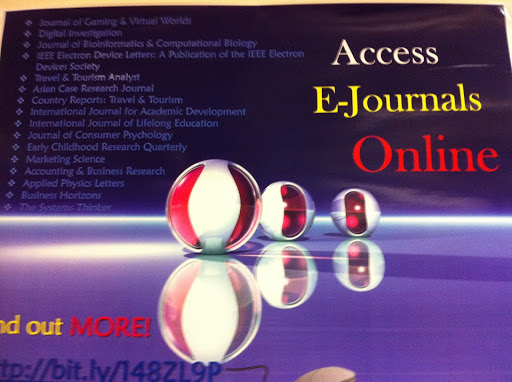
Promoting digital through posters

Promoting digital chinese dialect material

Database information

E-journal promotion

Most of the libraries had a promotional video, a selection of which have been posted below.


SMULibrary promotional video on YouTube

National Library promotional video on YouTube

Pre-departure Entry

Thoughts about your learning in this module:

I’m thinking that students are a lot more prepared for venturing into other cultures and that there is a lot more information available and disseminated. I also like that there is an awareness of your own cultural bias and less thought that “our way is the right way” – much more sensitivity.

What you are thinking about prior to your departure:

Very confused about the expectations for the two modules INF407 and EEB310. Very frustrated at the fact that the information is not well or properly laid out in the module areas of Interact, that the Subject Overview is unclear and incomplete. Worried that I’ll miss something or leave something out.

Any concerns or anxieties that you might have:

How I’m going to manage to take in all the information and ensure that all the questions for the module are addressed both on the intercultural side of things and on the study visit side of things. That I finish all the expected parts of both courses and deliver correctly and on time.

Some thoughts on what you might experience:

Librarians may resent insensitive questions or find the questions very basic and not worth spending time on. It may be difficult to phrase comparative questions based on what we’ve learnt in such a way that it doesn’t appear to be an attack or criticism of the way in which they do things.

How you might respond:

When I feel uncertain I usually clam up and don’t ask the questions I’d need to ask. Or if other people do ask the questions I get very nervo

us if I see by the body language that the person who is answering is feeling upset or defensive.

What you might do if you face an uncertain or unfamiliar situation:

Since Singapore is English speaking it would be fairly easy to ask for advice or help.

This is an interesting article on common mistakes foreigners make in Singapore and things to be aware of.

Here is a link to explain the Singapore education system which is useful background reading as we are mainly visiting educational institutions.

Cultural Exercises

These are the cultural exercises we were required to consider prior to the trip.  I found both the readings and the exercises quite challenging – not in the difficulty sense, but in the sense of confronting your own views and culture.
The chapter that the exercises were taken from is : What is Culture? from  “Culture and Education” which is now on my list of books to read.

==================================================

Exercise 1.1 – You are what you buy.

In a table like the one below, list 10 items that you see as essential to your day-to-day life. Then, for each item, provide the reasons why you bought it and list the effects (as many as you can think of) it has on your identity.
Item
Purpose for buying
How does this shape who you are?
Mobile phone
Communicating – I need it to talk to my friends – they all have one
I’m part of the group and not left out. I’ve got the latest ringtones so I’m pretty up-to-date.
Adapted from Wadham, B. A., Pudsey, J., & Boyd, R. M. (2007). Culture and education. Frenchs Forest, N.S.W.: Pearson Education Australia (p. 3).

Exercise 1.6 – Evaluating Values

Make a table like the one below and list all the values you think you hold. These might be ethical values, but they also might be ‘things’, such as family or education. Then list where you think you go them from and you you engage in these values on a day-to-day level.
Values
Where you go this from
How you ‘practise’ it
Freedom
Authority
Justice
Equality
Education
Your parents
Go to university
Adapted from Wadham, B. A., Pudsey, J., & Boyd, R. M. (2007). Culture and education. Frenchs Forest, N.S.W.: Pearson Education Australia (p. 10).

Exercise 1.7 – My Family Culture
In a table like the one below, insert elements from your own family’s activities to get a sense of the culture of your family.
Elements of Culture
My family’s examples
Symbols and signs
My dad wearing a kilt to Sunday lunches at Grandma’s house.
Language
Values
Beliefs
Norms
Rituals
Sunday lunch with Grandma; attendance at school 5 days a week, for around 12 years
Material objects
Adapted from Wadham, B. A., Pudsey, J., & Boyd, R. M. (2007). Culture and education. Frenchs Forest, N.S.W.: Pearson Education Australia (p. 12).

Exercise 1.10 – The ‘Who am I?’ test

Write down here the first 20 statements you think of about what makes you the person you are. You might want to think about how the context of doing this exercise is shaping your choice of identity markers about yourself.
Who am I? Statements about what makes me, me.
1.
2.
3.
4.
5.
6.
7.
8.
9.
10.
11.
12.
13.
14.
15.
16.
17.
18.
19.
20.
Adapted from Wadham, B. A., Pudsey, J., & Boyd, R. M. (2007). Culture and education. Frenchs Forest, N.S.W.: Pearson Education Australia (p. 14).

Pre-departure Activities

Activity 1
Thinking back over the past week or month, consider your experiences and identify an experience that made you have unusually strong feelings or reactions. Try to keep your focus on an incident related to your studies or professional life rather than personal experiences. However, if you can’t think of a critical incident from your studies or professional life, it is okay to choose one from your personal life.
Once you have identified a critical incident, take five or ten minutes to write it down and describe it in as much detail as you can remember. Remember to include the who, when, where, what, and how of the incident. (Don’t do the “why” at this point – we’ll get to that later!)


Activity 2
Using the critical incident that you identified and described above, work through the critical incident analysis process and develop an entry for a critical incident log that demonstrates your process of examining your experience. As you work through this process, consider how it feels to work through the process and take note of how long it can take as well.


Activity 3
Quick response ? write down all the words you can think of that answer the question ?What is culture?? You could do this as a mind map or just a list ? up to you.


Activity 4
Write down some of your ideas about how you might live in and understand a community that has knowledge and ways of knowing different to your own. Now, consider the international experience that you are going to participate in: what differences might you find there and how might you work with these?

Activity 5
Read McIntosh’s article White Privilege: Unpacking the Invisible Knapsack. As you read through, keep your upcoming international experience in mind and what factors might affect what you understand and how you see incidents in your experience.
After you have read the article, respond to the following questions that are designed to guide your reading and encourage you to reflect more deeply on some of the concepts in the article.
  • How do you describe your nationality, ethnicity and race. What do you think are the differences between these descriptors?
  • How many of the items on the checklist (pp. 10-11) can you relate to? Choose three of them and reflect on how the point is relevant to you and why. Give an example to illustrate your thinking.
  • On page 11, McIntosh talks about white privilege really being about white dominance. How does the education system in Australia inadvertently or inexplicitly teach us to exercise white privilege or dominance over others. Think specifically about what is taken for granted or the ‘hidden’ aspects of curriculum, or policy or teaching practice.
  • What might be in your cultural knapsack when you go on your international experience later this year?
  • develop your cultural self-awareness,
  • develop your cultural knowledge of the international context you are visiting, and
  • develop your interaction skills.

Record your responses to these questions in your International Experience Log so that you can come back to them after you have finished your international experience.
Task
Identify and complete at least one thing that you could do for each of the following: 
  • develop your cultural self-awareness,
  • develop your cultural knowledge of the international context you are visiting, and
  • develop your interaction skills.
You might like to keep a track of these in your International Experience Portfolio as part of your predeparture activities.