International Experience Portfolio

The entries below constitute the International experience Portfolio.   First a summary of each organisation is presented through the Study Visit report, and then the aspects I wish to highlight are presented.
 

Although I’m living as an expatriate in Singapore, which is its own cultural experience, one realizes you can experience culture on a number of levels.  Each organisation we visited had their own unique culture and identity.  

 
In the libraries this was expressed through the design of the various spaces, the emphasis of the collection and the staffing choices.  At each organisation what was very striking was the way in which employees expressed their identity through the organisation of their desks.  At Singapore Press Holdings for example the open plan office was filled to the brim with hundreds of indoor plants of all descriptions.  There was even an aquarium on one desk.  At Singapore Polytechnic, employees had used the desk lamps to hang a myriad of little figurines and toys and all attempts to create a truly open plan office were being thwarted by staff needs for privacy and their own space. 
 
Libraries where the head librarian was ‘politically’ well connected or where the organisation head was vested in a thriving information community were better staffed, better resourced and had more vibrant, innovative and enthusiastic feel to them.  That’s not to say that other libraries didn’t do an excellent job of managing their resources and putting library users first.
 
Instead of writing this chronologically, I’ve divided the experience into the areas that I found most interesting in the visit and where there were noticable differences between the libraries:
 
* Collection
* Reference Services
* Promotion
* Physical Environment

In conclusion the trip was extremely valuable both from a librarianship and a cultural point of view. 

Reference services and Information Literacy

A desk with “help” for primary pupils
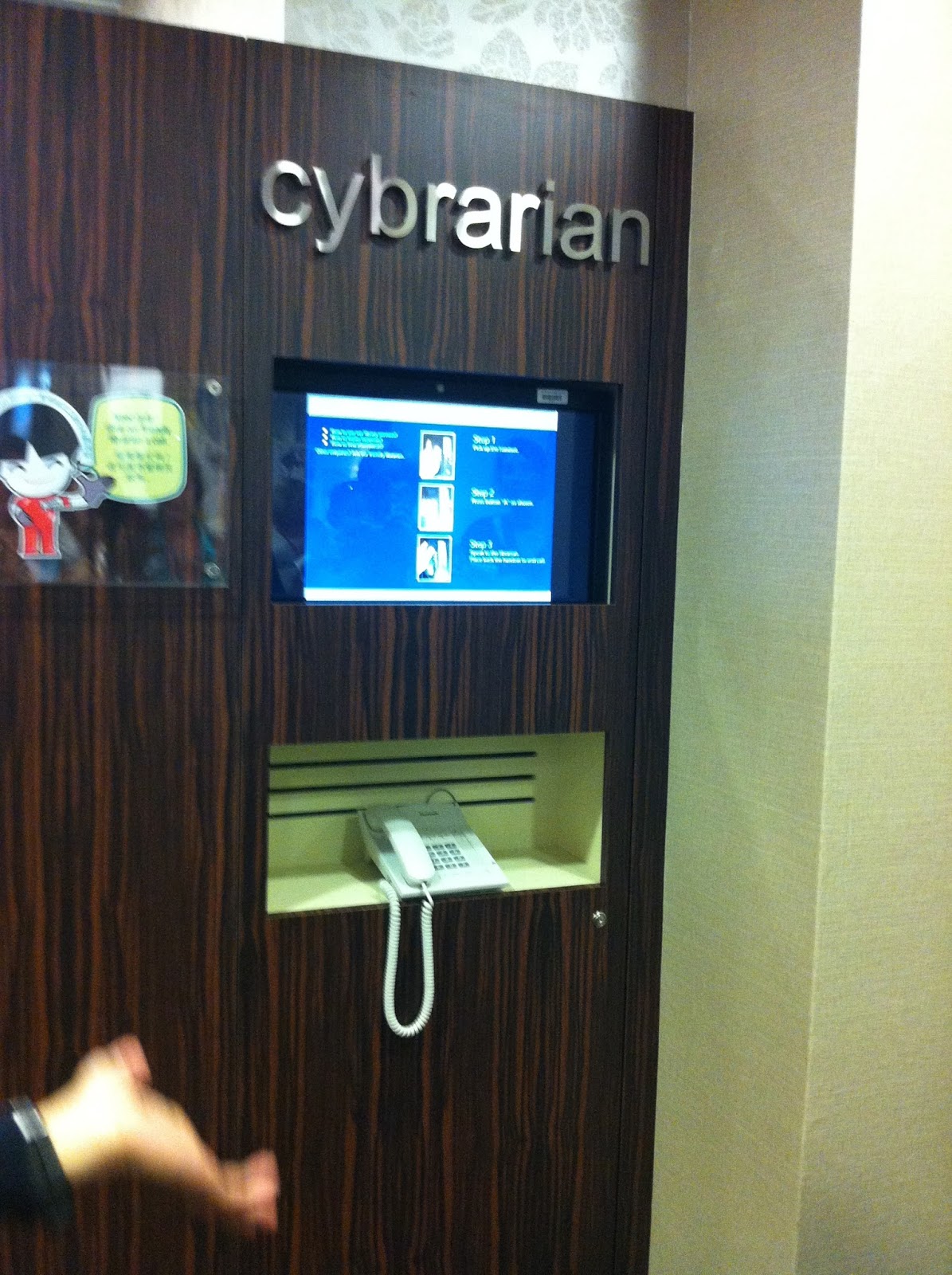
Chinatown library has no librarian only a phone

When visiting a library it is always interesting to see where the reference services are located and how they are manned.  In terms of design, rounded desks or structures were a common theme.  Naming varied between “help” for the infants and juniors, to “information” or “reference” at they poly’s / universities.  The public library in Chinatown had a “cybrarian” as it is a volunteer run library without permanent staff.  Should users have a research or other question, they can phone through to a reference librarian at the central library who is able to assist them with their request.

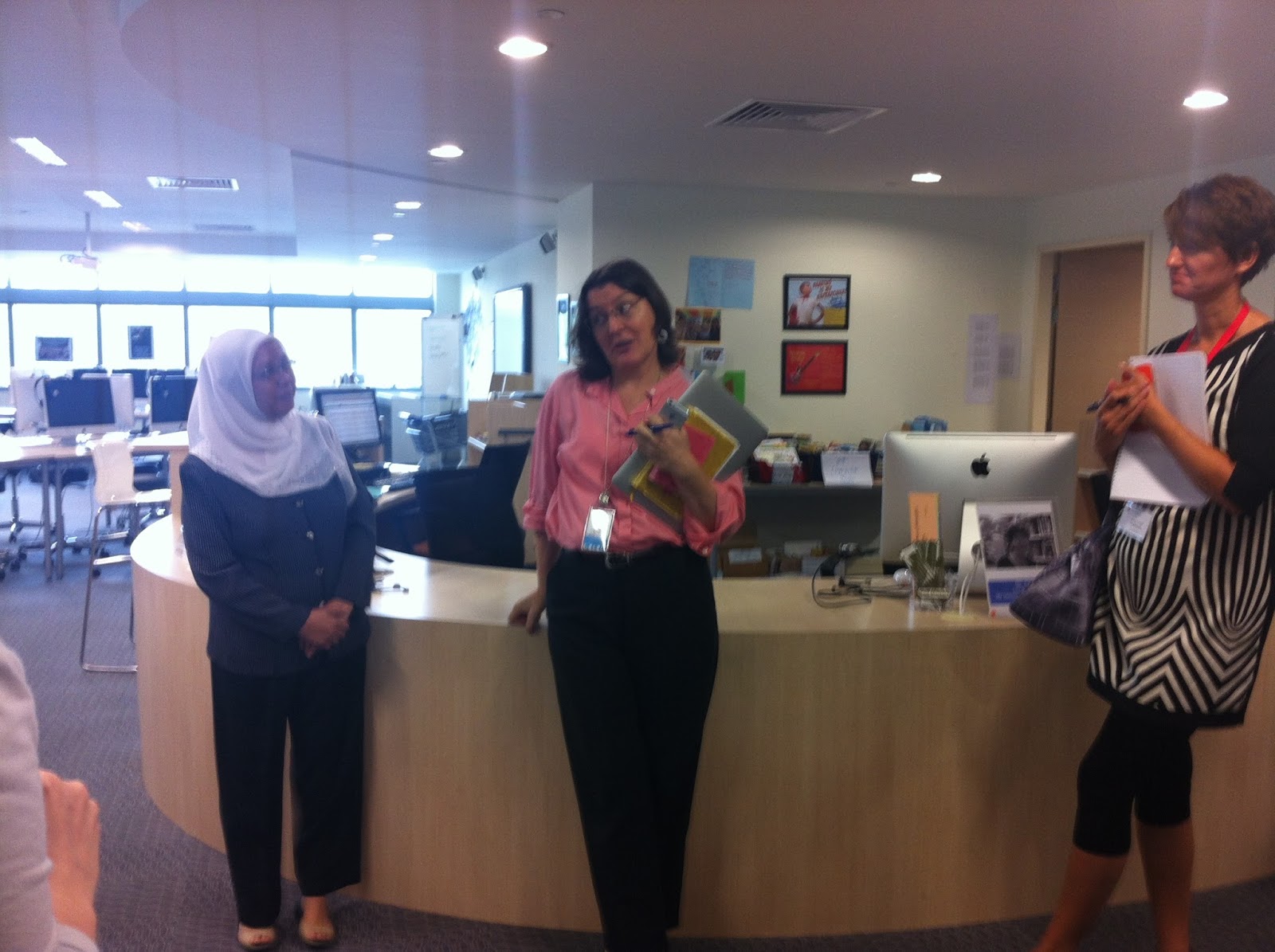
A few of the libraries employed the “roving” reference librarian model, or a combination of roving librarian and desk located.  One library had the reference librarians located in an office with the possibility of appointments for patrons.  NTU had specialist librarians who had a degree in the subject they were covering.  SMU dedicated a librarian to each school who is responsible for the collection, reference services and database.
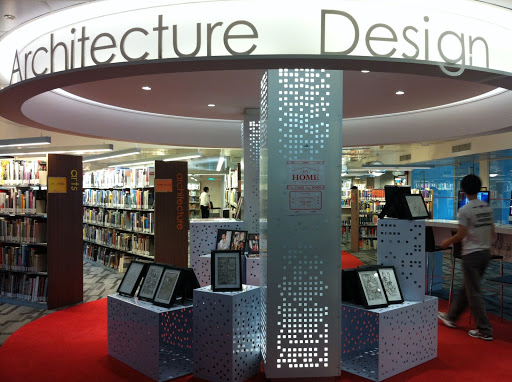
An impressive structure in the reference section of NLB

In addition to the reference services, Information literacy (IL) was an important theme.  

Different libraries had different approaches.  Some had integrated IL into the curriculum, some had it as a separate compulsory topic and others offered it on a voluntary basis.  At Ngee Ann, a combination approach was employed.  First year students completed an online library orientation at the start of the school year.  Later, the librarian was invited as a guest lecturer into the classroom.  In further years the library worked in conjunction with lecturer request for more specialized or specific IL or citation or information retrieval needs.

SMU had a “compulsory” information literacy course.  When questioned on how this was enforced and whether it was credit bearing, they admitted that it was an administrative detail that students had to have attended to in order to graduate, like paying their fees and settling outstanding fines!  This was an interesting cultural insight as they explained that Singaporean students would generally not question the fact that something was compulsory, and would merely comply with the requirements. In fact they had a compliance rate of around 97%.

We also learnt about how SMU was using Wiki’s in order to teach IL.  Law students for example had to research a particular aspect of Singaporean law and create a wiki on that.  In the process they learnt about research, searching, citation and the credibility (or not) of sources.  Their own posts were then exposed to scrutiny and the authority rating process.

Most of the libraries created some kind of a game or quest, particularly for their orientation programmes.  Some were on paper, and some made the use of mobile devices.  In the case of mobile devices, often the specifications had been set out by the librarians and the programming or design was done by students at their institution.

NTU has an instructional services arm which helps with creating awareness of the library, tutorials, literature reviews, tools, citation analysis and scholarly communication.  Each librarian is expected to be a teacher.  The take-away for me here is that IL does not stop with first or second years, but can also be vital for people further up the feeding chain as they find out how to market themselves and their research in an increasingly digital academic world. I was very impressed with their services in combining their technical and digital and library knowhow to the needs of lecturers and professors. They also have a youtube channel for self-education.

A little bit of fun on roving reference librarians:

Physical Environment

big, moveable signage

One thing our visit demonstrated wonderfully is that design has become a huge factor in libraries.  In its presentation, UWCSEA in fact focused on design aspects, as it had two new, purpose built libraries.  Careful thought had also gone into the design of the Tanglin Trust libraries, in particular the new senior library.

Libraries had given careful thought about the balance between creating welcoming spaces that would have a low entry barrier for patrons, and allowing for quiet space where study could take place without interruption.  Most libraries had quiet zones and quiet rooms, usually behind sound-proof glass.

Everything on wheels

These days libraries are not only used to collect and store print collections, but also provide digital services which need to be accessed either on site or through links provided by the library.  Libraries are designed to function as communal spaces where presentations, talks, concerts, exhibitions, book clubs and other events can be used.  For this reason furniture should easily be moved in those areas.  At UWCSEA-East for example, all furniture including bookshelves, tables, chairs and booths are on wheels.

Through bright signage, libraries designate different areas, for example check-out, reference / information areas, quiet areas, computer areas, study rooms, audio visual areas, and special collections.

Clear identification of areas

Separating out of parts of collection for easy retrieval
pods for multi-media perusal

With the shift to more digital material, space has been created for the viewing of films, listening to podcasts or music, recording presentations, making movies and other digital activities which users need to partake in.

Cosiness and intimacy for Primary library

In their design libraries clearly differentiated between themselves with view to their user groups.  For example the infant and primary libraries were very cosy and friendly, with low and soft furniture, and bright colors.  The life-style areas of libraries were interactive and accessible with clear and funky signage and furniture, a non-adherence to tradition Dewey Decimal cataloguing and permission to talk and interact with fellow users without a “shushing” librarian.

Friendly atmosphere for infants

Special collections were separated for their users. For example at Tanglin Trust school the materials for IB students was organised by subject.  In the Ngee Ann library a special area was made for “wealth creation” including related books, a large exhibition on the life of the person donating the funds for the library, Bloomberg screens and space for presentations of famous local businessmen and entrepreneurs.

Innovative use of materials and recycling

The children’s library at the Singapore Central library had made a special effort to be an ecological library with careful choice of materials used in creating the library and also in its collection – 30% of the collection relates to environmental and natural themes.

And finally, as this video below shows – accessibility to the library and its services is paramount.

Promotion

Student designed periodical stand
Lifestyle section organised like a bookstore 

The survival of both the physical entity and concept of “the library” depends on it being well utilized.  All libraries visited were extremely proactive in their promotion efforts.  Most began during the orientation week with activities to get students into the library.  These ranged from library orientation programs in the form of games, exhibitions and events.  At NTU, each new student gets a letter from his/her “personal librarian” inviting them to tea!

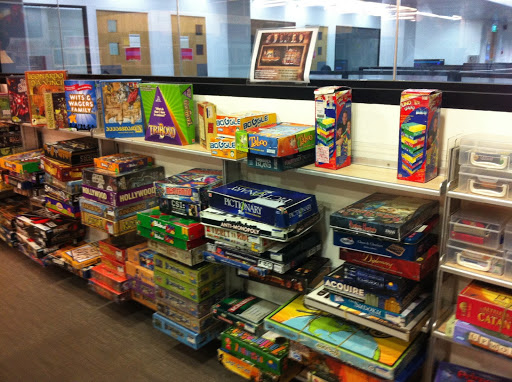
Ngee Ann Polytechnic use their interactive space for presentations and lectures, outside visitors and have created a very inviting “lifestyle” area based on a bookstore / cafe concept.  They were the first academic library here with a life-style area and took their ideas from shopping centres and bookstores and cafes and ventured out of the library to see where their students hung out.  As a result they created a board game zone which is a popular cafe concept in Singapore.  They have an extensive collection of both common and unique board games.  Having a Board game rooms was a theme we saw duplicated in nearly every library here.

Ngee Ann – a collection on wealth creation situated next to the Bloomberg monitors and a presentation area where speakers are invited on finance / entrepreneurial / business matters.

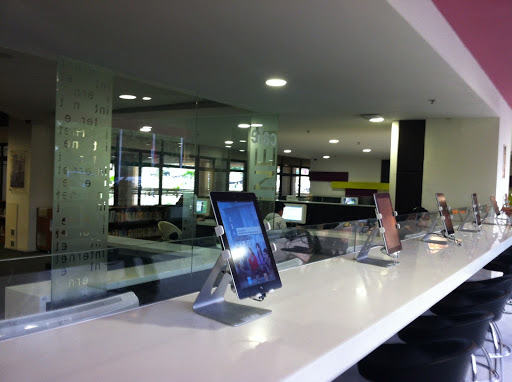
Cafe with bar stools and ipads in Lifestyle area
Interactive desk top with games and quizes

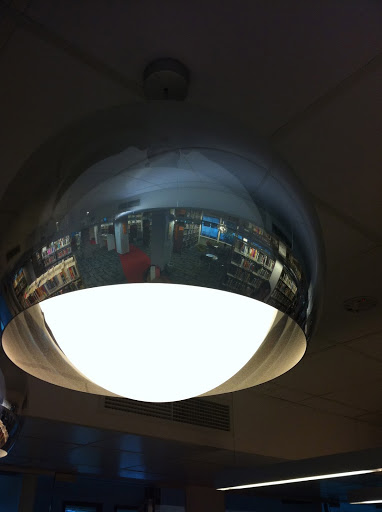
Student designed lighting

Singapore Polytechnic differentiates different areas of the library by colors and has invited students and lecturers to play an important role in the design of the library and the library furniture and hardware.  This has resulted in students feeling a sense of “ownership” of the space, as well as very aesthetically pleasing areas.  Details such as display, lightening, notice boards, magazine cabinets etc, had been designed and created on campus.

Innovative flexible signage

The library was also exploring having makerspaces with 3D printers, lego mindstorms and creative space where students were challenged to create something with materials provided.

interactive booth

Almost all the libraries provided some kind of an e-newsletter or alert service to subscribers.  Most had some presence on social media, the most common being Facebook.  In some instances the Facebook presence was as a marketing or information tool on services or newbooks or event advertising (Temasek, Singapore Poly, Ngee Ann, NTU, NLB, ), in the case of SMU they explicitly chose to use it purely for social interaction and to use other mediums for promotion.  Temasek had an interactive booth at its entrance with various features including an auto-photo link to Facebook.

Libraries also created posters to share around campus advertising new books, events or other services.  A particularly cool idea was that of the off-site or on-site book fair.  In the case of Ngee Ann, as they are affiliated with the Ngee Ann shopping centre, they hold a big book fair in the shopping centre, where vendors put books on display for sale.  Students can then go and browse and “purchase” a book, if it is not already in the library catalogue, it is then purchased by the poly, processed and immediately loaned to the student.

Some of the libraries (UWCSEA, Ngee Ann, NLB) had a bookcrossing / read and recycle programme which both helped promote the library and literacy, but also helped with the recycling of weeded library materials.  The NLB has a huge public booksale each year which is very well received by the public.

Since libraries are moving towards more digital material, they also needed to make the digital collections visible through signage or links on their websites, in the facebook or other social media pages or other posters.

display “tree”

Thematic display

Promoting digital through posters

Promoting digital chinese dialect material

Database information

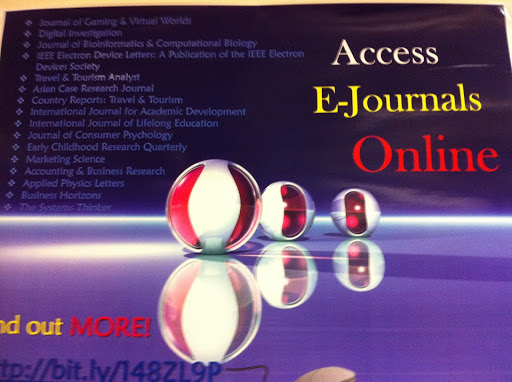
E-journal promotion

Most of the libraries had a promotional video, a selection of which have been posted below.


SMULibrary promotional video on YouTube

National Library promotional video on YouTube

International Experience Portfolio Background

 International Experience Portfolio
As part of your participation in an international experience program through CSU, you will need to maintain an International Experience Portfolio that includes reflections, actions, photos, images, thoughts, critical incident logs, and so on. The portfolio is NOT A DIARY of events, but rather a critical record of your experiences, thoughts, critical incidents, reflections, and so on. The International Experience Portfolio can be prepared in various ways, e.g. in a book, in a word-processed document, in a PowerPoint, as digital media (e.g. a blog), or however you work best. Keep in mind that not all international experiences will have Internet connections or stable electricity supplies, so if you are planning to do it on a laptop, then you might wish to consider bringing a backup book or place to write your entries.

Study Visit Checklist

Study Visit Checklist for Students 
Goals and users 
What are the purposes for which the library exists? 
What is the nature of the community/organisation served? 
What are the information needs of that community/organisation? 
What role does the community/organisation play in determining, directing and contributing to the library’s services? 
The collection 
What is the focus of the collection? What subject areas does it cover? 
Is there a collection development policy? 
What media are held, e.g. print, audio visual, CD-ROM, online? 
Which are the predominant media and why? 
Has information technology brought about major changes in the way in which information is stored and disseminated? 
How are materials selected? 
Is the collection weeded? For what purpose? 
What strategies are in place to ensure the physical preservation of the collection (including electronic sources)? 
Staff 
What professional, technical and support staff does the library have? What roles do they play in fulfilling the purposes of the library? 
What professional development is provided for, or expected of, staff? 
What flexibility is allowed in staffing to better meet the needs of staff and users? 
Reference services 
What reference services are provided for users? How are these services provided? 
What user education is provided? 
What use is made of the Internet in reference work?
Network infrastructure 
Which integrated library management system is used? Why is this system in use? 
What electronic networks operate between the library and its user group? 
To what extent does the library depend on network access and availability? 
Does the library provide information and services through a web page or pages to users? What information and services are provided? Has this access significantly extended its user group? 
Does the library have an information technology plan? 
Technical services 
What is the perceived function of the catalogue? 
What standards and services are employed in cataloguing? 
What access is provided to materials which are not catalogued? 
Does the library develop and maintain any indexes, classification schemes or subject heading lists of its own? 
Are metadata standards being used in the cataloguing of online resources? 
Budget 
What are the library’s sources of funding? 
What is the level of funding (if not confidential)? 
How are these funds committed? 
To what extent do users pay directly for services which they use? 
Promotion 
How does the library promote and market its services to its potential users? 
Physical environment 

How suitable are the library’s location, accessibility, size, layout and physical facilities to the fulfilling of its purposes?

Singapore Study Visit – Overview

Library 2.0 or the operation of public services?

Introduction:
An understanding of the Digital Environment and how it is related to libraries is undertaken in the critiquing of three articles each offering different perspectives.  In the first, Anderson (2007a) attempts to find an academic framework within which to analyze “Web 2.0” and “Library 2.0”.  Missingham (2009) describes the Australian experience in encouraging participation in the digital economy and digital citizenship through a national initiative – the Electronic Resources Australia (ERA) and finally the State Government of Victoria (2012) takes the question to a local level in asking what the role of its libraries will be in this digital future. 
Summaries:
Anderson, P. (2007a). ‘All That Glisters Is Not Gold’ — Web 2.0 And The Librarian. Journal of Librarianship and Information Science, 39(4), 195–198.
In his article Anderson (2007a) examines the concept of Web 2.0 and how this relates to the librarian.  He begins with a history and some definitions of Web 2.0.  He then proposes a three-part framework within which to scaffold discussions around how Web 2.0 impacts the library.  These can roughly be summarized as services / applications, the “six big ideas” and technologies / standards. 
Services / applications include software and social networking.  The “Six Big Ideas” are the principles underpinning the Internet in its current form as outlined by O’Reilly (2005): “individual production and user generated content; harnessing the power of the crowd; data on an epic scale; the architecture of participation; network effects and openness”. (Anderson 2007a, p.196). The final aspect is the technology and accepted standards that underlie the services and applications.  In his article “What is Web 2.0“, Anderson, (2007b) further elaborates on this framework in general with specific focus on implications for libraries from page 36.
Missingham, R. (2009). Encouraging the digital economy and digital citizenship. Special issue on the ALIA Public Libraries Summit 2009, 58(4), 386.
In her article, Missingham (2009) describes the history and status of Australian use of technology with comparative statistics to the UK and Canada.  She gives a background to the creation of ERA and justifies the need of Australians for access to the types of information purchased by the ERA consortium in order to participate in the “digital economy”.  This view has a foundation in the four benefits to narrowing the digital divide in a society: economic equality, social mobility, democracy and economic growth (Internet World Stats,2012).
The final part of her article examines the role of libraries in supporting access to digital resources, not only as subscribers to the ERA, but also in helping the community develop (digital) literacy skills.  She concludes by touching on issues relating to the digital divide in Australia, including connectivity, content issues and the capability of users.  The primary problems highlighted by her concern the gap between rural and metropolitan areas, affordability of services and literacy levels.
Ministerial Advisory Council on Public Libraries. (2012). Tomorrow’s Library: DiscussionPaper. State Government of Victoria.
This discussion paper initiates the first part of a review of the role and function of public libraries in the State of Victoria, Australia in order to determine future strategic directions.  In the document four dimensions of libraries are covered: Collections, resources and programs; Library buildings; Technology; and Service delivery. In each, the topic is introduced with challenges they pose now and in the future and feedback in the form of answers to questions is requested of stakeholders.

Critique:
Anderson’s framework is very useful when reading articles concerning Web 2.0 and Library 2.0.  One can quickly put an article or research in context.  For example Xu, Ouyang and Chu (2009) in “The Academic Library Meets Web 2.0” focuses mainly on the first part of the framework in surveying the websites of 81 academic libraries in the State of New York and neglects any discussion of “big ideas” or technologies and standards.  On the other hand in “ComingTogether around Library 2.0” Miller (2006) concentrates more on the impact of the “big ideas” quoting Ian Davis who said “Web 2.0 an attitude, not a technology” and makes a plea for integrating “library stuff” into normal workflows of library users.
However, no matter how useful a framework may be, unless other researchers adopt it as some kind of standard, its relevance may be questioned.  In reviewing the literature on Web 2.0 and Library 2.0 it appears that after a flurry of research and articles in the years 2005-2007 academic interest in that aspect of the topic seems to have waned.  Perhaps research was overtaken by the practicalities of implementing the new technologies, the specifics of integrating systems and licensing matters and dealing with their day-to-day issues.  It can be argued that the framework would have relevance at some point in doing a meta-analysis and literature review of the Web / Library 2.0 literature in the early 21st century.
Anderson opens the point of entry for a discussion of the other two papers when he says: “much of the discussion can often be seen in the context of the wider public debate concerning the operation of public services in a modern, technology-rich environment in which user expectations have rapidly changed (Crawford, 2006), rather than Web 2.0 per se.”  (Anderson, 2007b, p. 36)
We now move to the provision of public services in the form of the establishment of the ERA, (Missingham, 2009) and the specific instance of Victoria Public Libraries. Underlying Missingham’s paper are references to the “digital divide”. The term “digital divide” is very broad and she only touches on aspects of it in a rather unstructured manner, with consideration of “access” in between a “content” discussion, (p. 389) and “literacy” in between the examination of the importance of “access” (p. 395) and little reference to local research such as that of Black and Atkinson (2007) who cover the arguments and literature surrounding the digital divide in Australia very well.  For a better framework to this concept, Warschauer (2003) uses the rubrics of: Physical Resources (computers and connectivity); Digital Resources (content and language); Human Resources (literacy and education) and Social Resources (communities and institutions).  Framing her discussion in this way would have led to a more coherent argument.  Further, her evidence of the divide is anecdotal in the form of selective quotations from submissions to a Senate enquiry (pages 389-390).  Her argument could have been better served by reference to data such as that generated by Ewing and Thomas (2010), for example, “home access by income” and “use by location”, illustrated in the graphs below.
(Ewing and Thomas, 2010, The Internet in Australia. ARC Centre of Excellence for Creative Industries and Innovation, p.10)

(Ewing and Thomas, 2010, The Internet in Australia. ARC Centre of Excellence for Creative Industries and Innovation, p.3)
A shortcoming in the traditional writings on digital divide is the neglect of the concept of “digital natives” versus “digital immigrants”.  Reading the essays collected in “The digital Divide” (Bauerlein, 2011), one has to conclude that all the above papers’ authors are “digital immigrants”  – a term coined by Marc Prensky in 2001.   This is further exposed when one contrasts what is being said and done on the Internet versus in the libraries and written about in academic literature.  For example Harradine (2012) reports on the introduction of eBooks into the Western Australia Public library system.  Her article echoes the earlier experiences in the USA with initial slow take-up by patrons and friction between the publishing companies and libraries (Zickuhr,Rainie, Purcell, Madden, & Brenner, 2012).  Australian reporting on eResources could benefit by looking at worldwide trends in more technical savvy countries.  In contrast, when browsing forums concerning eBooks in Australia, it would appear that patrons step boldly where libraries fear to tread, with early adopters paying to join libraries in the USA and Singapore in order to borrow eBooks that are not available in their local libraries.  These are potentially lost patrons who would not even appear on the radar of the librarians who are complaining about the lack of interest in digital services.
Neither Missingham nor the discussion paper consider the potential “leapfrogging” of terminals and desktop computer ubiquity and use as a result of the uptake in mobile devices such as tablets and smart phones.   Carlucci Thomas (2012) writes about the need for libraries to follow patrons in providing new mobile services.  She posits that adoption of mobile devices is driving the interest in eBooks in the USA where, since May 2011, eBooks outsold print books for the first time on Amazon.  Another digital native librarian – self-described “Edupunk”  – Travis (2012) demonstrates in her blog that cost need not be an obstacle in providing services and Greenhill (2012) echoes this sentiment for the Australian market, highlighting extra-legal “free and easy” aspects to obtaining digital information which librarians need to be aware of.

The Year Book Australia, (2012) in launching its National Year of Reading makes some very astute statements about the changing roles of libraries from being simple repositories of reading materials to being the point of contact for the acquisition of information for all community members “with a focus on the most disadvantaged”. Emphasis is given in this initiative to a wide range of materials both in print and online gleamed from a range of collaborative partnerships.
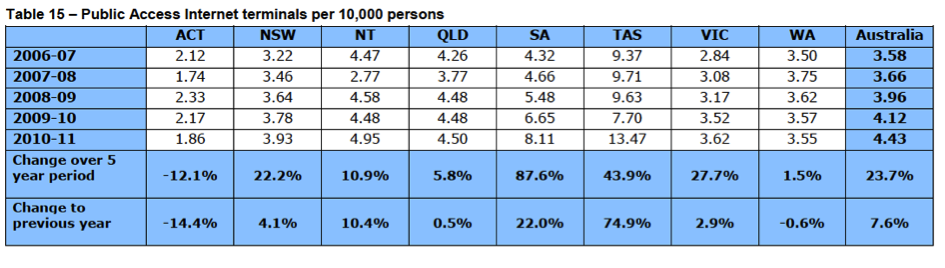
If one reads the State Government of Victoria discussion paper in conjunction with the Australian Public Library Statistics(2010-2011), it seems to be a rather shameful exercise in the selective use of statistics and quotations.  For example in the discussion on technology, they state  “78.6% of libraries provide a computer lab / Internet area.”  The more relevant statistic would be that Victoria only has 3.62 public access Internet terminals per 10,000 persons, which is one of the lowest in Australia and lags the National average of 4.43, and other states such as South Australia (8.11) (Australian Public Library Statistics, 2012, p.20).
(Public & Indigenous Library Services State Library of Queensland. (2012). Australian Public Libraries Statistical Report 2010-2011. p.20) 
This is not surprising when you dig further and see that there was no spending on electronic resources in libraries at all in the years 2007 to 2010 (ibid. p.19) for the State of Victoria, with a huge catch up spend in 2010-11.
(Public & Indigenous Library Services State Library of Queensland. (2012). Australian Public Libraries Statistical Report 2010-2011. p.18) 
The report is very inwardly focused and does not even make reference to what is happening in the rest of Australia, not to speak of internationally, and could quite possibly be an exercise in reinventing the wheel. Their internal focus is astounding, referring to a “borderless library” and in the same breath speaking of “across the state (of Victoria)” rather than referring to the rest of the country or the world.
A visit to the website of Victoria State Library shows it doesn’t even mention eResources on their home page and one has to dig four levels down to find them.  In contrast the National Library has a well developed website for eResources and the State Library of Western Australia appears to have a more developed policy and methodology for the loaning of eBooks.  Unlike their counterparts nationally and in other states there is no friendly “how to” video or tutorial on the use of eResources. 
In the discussion on Library buildings, it is important to learn from the experience of libraries further along the eResources curve, who find that some patrons visit the library less and access more remotely and that the location, nature and use of libraries has changed substantially (Zickuhr etal, 2012).  In the report, service delivery, including workforce is dealt with separately to technology, although one of the challenges lies in an ageing public library workforce, whom, one may assume are not digital natives.
Conclusion:

All three authors seem to suffer somewhat from the mindset of  “build it, and they will come”. Anderson has a useful framework that doesn’t appear to have been widely adopted.  Missingham discusses the ERA that in conjunction with the National broadband Network (NBN), will provide the physical and electronic resources for the digital economy, but doesn’t address how the human and social resources aspects will be adapted to optimize their use. The State Government of Victoria is embarking on an old fashioned and potentially extensive, expensive and long term exercise, with the risk that it is redundant before it’s finished.  This is in complete contrast to one of the key “big ideas” of Web 2.0, which is living life in a perpetual state of Beta.  Finally one has to resort to the most important question, which is whether any of these articles contribute to enhancing the operation of public services.


Reference List and Bibliography:
Anderson, P. (2007a). ‘All ThatGlisters Is Not Gold’ — Web 2.0 And The Librarian. Journal of Librarianship and Information Science, 39(4), 195–198.
Anderson, P. (2007b). What is Web 2.0? Ideas, technologies and implications for education. JISC Technology and Standards Watch, February 2007.
Australian Bureau of Statistics. (2012). 1301.0 – Year Book Australia, 2012. The National Year of Reading: Libraries Helping to make Australia a Nation of Readers. 
Black, R., & Atkinson, J. (2007). Addressing the Digital Divide in Rural Australia. Presented at the Australian World Wide Web (AusWeb) Conference, Lismore, Australia: Southern Cross University Printery.
Burke, J. J. (2009). Neal-Schuman Library Technology Companion (Third Edition.). Neal-Schuman Publishers, Inc.
Carlucci Thomas, L. (2010). Gone mobile? (Mobile Libraries Survey 2010). Library Journal.
Carlucci Thomas, L. (2012). The State of Mobile in Libraries 2012 – The Digital Shift. 
Digital Divide – ICT Information Communications Technology – 50×15 Initiative. (2012). Internet World Stats.
Dudley, E. (2009). Editorial: Lines of Communication. Journal of Librarianship and Information Science, 41(3), 131–134.
EBook Library (EBL): State Library of Western Australia. (2012). 
Greenhill, K. (2012). No library required: the free and easy backwaters of online content sharing. In VALA2012 CONCURRENT SESSION 11: Digitisation. Presented at the VALA2012, Melbourne, Australia.
Harradine, N. (2012). Libraries begin lending e-books to members – ABC News (Australian Broadcasting Corporation).
Leonard, C. (2007). Competing in a Google world. Connections. 
Miller, P. (2005). Web 2.0: Building the New Library. Ariadne: Web Magazine for Information Professionals, (45).
Miller, P. (2006). Coming Together around Library 2.0. D-Lib Magazine, 12(4).
Ministerial Advisory Council on Public Libraries. (2012). Tomorrow’s Library: Discussion Paper. State Government of Victoria.
Missingham, R. (2009). Encouragingthe digital economy and digital citizenship. Special issue on the ALIA Public Libraries Summit 2009, 58(4), 386.
Needleman, M. (2007). Web 2.0/Lib2.0—What Is It? (If It’s Anything at All). ScienceDirect.com – Serials Review, 33(3), 202–203.
Palmer, C. (2012). NBN pricing critical as digital divide deepens. The Conversation. 
Patty, A. (2010). City-rural divide hits computer literacy. The Sydney Morning Herald. 
Prensky, M. (2001). Digital Natives, Digital Immigrants. On the Horizon (MCB University Press), 9(5).  
Public & Indigenous Library Services State Library of Queensland. (2012). Australian Public Libraries Statistical Report 2010-2011
Richtel, M. (2012). New “Digital Divide” Seen in Wasting Time Online – NYTimes.com. 
Ewing, S. & Thomas, J. (2010). The Internet in Australia. ARC Centre of Excellence for Creative Industries and Innovation. 
Travis, T. (2011). Edupunk goes mobile: Mobile library sites with zero budget « Tiffinianne’s Blog. 
Xu, C., Ouyang, F., & Chu, H. (2009). The Academic Library Meets Web 2.0: Applications and Implications. The Journal of Academic Librarianship, 35(4), 324–331. doi:10.1016/j.acalib.2009.04.003
Zickuhr, K., Rainie, L., Purcell, K., Madden, M., & Brenner, J. (2012). Libraries, patrons, and e-books. Pew Research Center’s Internet & American Life Project.