Livin’ and learnin’

Now that I’ve started breathing again I can start to think about the iBooks experience and what I’ve learnt from it.

I found out today that there are no iBooks in Singapore where I’m living and where I wrote / produced / cobbled together my first iBook. Nope, none. Something I didn’t really actually realise. I mean I’d tried to buy Dave Caleb’s excellent photography iBook and couldn’t do it here, but I didn’t twig that I couldn’t buy ANY iBook here… and you know what’s really weird? I can’t find out why anywhere. Is is because “singapore” or is it because “apple”? I notice my home country has a similar problem. Who decides? Who’s the boss.  And who would care anyway, especially for a free home-made stitched together effort? I need to know these things.  I’m sure my curiosity and sense of fairness will get me into trouble some time.


Screen Shot 2015-06-02 at 5.04.15 pm

What would I advice people coming after me? Play with it in your spare time, NOT when you have an assignment deadline. Make something simple, low barrier, low stakes and iron out all the learning and mistakes before you use it for a major assignment. Or maybe better still – get a class of 11 year olds to do it for you!

If you do use it for an assignment – be ready at least 48 hours before the due date. It takes 24 hours more or less from the time you hit the “submit” button to when it’s live, and then you get a nasty little surprise that things that may have worked in iBooks author and on your previews, suddenly don’t work so well in the published book. I suspect that it has something to do with the fact that the widgets for feeding in video, twitter etc. are handled by Bookry.com and I probably overloaded it with too many requests one after the other – the weird thing is both the display AND the functionality was fine in author … and then when I pressed “play” in iBooks 3 of the videos just reverted to the last loaded video… oops.  So I corrected that and then reloaded it, and it will take another 24 hours before it’s working…

Oh, and another thing with Bookry – well it seems you can publish directly there, BUT if you try and download the app on your mac it doesn’t like it one bit …
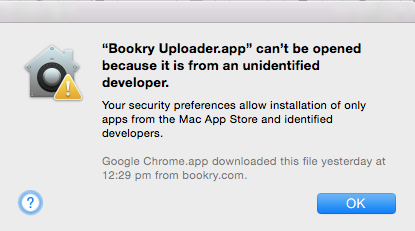
Screen Shot 2015-06-01 at 7.22.24 pm


I’m 100% sure this is not an insurmountable problem and with enough time and patience I could get it to work. But both time and patience were in rather short supply yesterday afternoon / evening.


Screen Shot 2015-06-02 at 5.50.07 pm


It also helps to ask around a lot. One of my friends when she heard I was going to use iBooks author said “oh no, I hear that’s really difficult. Our tech guy at school suggests that our kids use Book Creator for iPad instead. Unfortunately I was about 80% finished by the time she said that … although the 80:20 rule definitely applied at that point – I thought I was at 80%

And if you export it to pdf, note that the pdf can be a maximum of 10MB for this wordpress platform … mine was 20MB after the correct videos were updated, so can’t fly here … maybe I can publish it to the web (thinking aloud) …

I’d also like to say it is wonderful having a cohort of selfless fellow students around you who make encouraging noises about the things that do work publicly and kindly point out this kind of snafu to you privately. lol you know who you are!

Another lesson – never do this type of thing over a long-holiday weekend. You may think it’s a good idea, but then you can’t access all the tech guru’s in your life because, well, they’re having a life with their families and #notfair to disturb them.

1 ibooks author intro from UWC South East Asia on Vimeo.

Of course the whole irony of this learning stuff is that we don’t do it unless we “have” to do it, and when we “have” to do it, it’s kind of high stakes if you get it wrong, so then you’d rather play safe and go with something you’re sure will work. I can see how this FOMM (fear of making mistakes) and FOF (fear of failure) can inhibit personal, academic, learning and technical progress.

What else did I want to do if I had endless time – or what I’d like to do some time? Well, really to get the whole “get started” thing going on how to implement a program.  I’d also love to write a Inklestudios book based on the stories of our students and their families and the many and varied choices and options on language, and put that into it … I’d also LOVE to have a designer and producer and team of creative people around me who can make a much better job on the design side – I mean I know something great when I see it, but just can’t seem to make it myself!  Has everyone see the Guardian’s latest interactive book on the digital language divide. Gosh they are so wonderful.  Maybe I can get a research job with them…  I’d like to interview some parents and put it on a video and add that… there is so much.

My new quote and drive on this whole language thing comes from this clickbait collection:

“Never doubt that a small group of thoughtful committed citizens can change the world. Indeed, it is the only thing that ever has.” — Margaret Mead, cultural anthropologist

Mad rush to the finish line

Well it’s done! Well it’s kind of done. The digital essay part is done and I’ve got all the little interactive bits and pieces and I hope they work in real life and not just in preview.

Thanks to Sharon who has also been experimenting with iBooks author and was the crucial hour or so ahead of me to warn me of the pitfalls (only published within 24 hours of submission – YIKES) and the work-arounds – export to pdf.

Of course I was overly ambitious – this is not just a digital essay but I want it to be so much more. I want to expand it as a guide to the implementation of a digital language learning ecology at a school. So I do have blank chapters and LOTS of ideas. Of course this can be added to over time.

INF530 Digital Essay

This is the pdf which will have to do for now, because the iBooks file is WAY to big for what thinkspace will allow me …

Some reflections on the essay process:

I should have just written the essay first. But I was jumping between experimenting with the new tool for me that is iBooks author and writing. Maybe the affordances of iBooks informed my writing, maybe it just fuzzed it.

I’ve been meaning to play with iBooks for a long time and I keep on quitting – I can see why now. It’s not the most intuitive of tools and can be darn frustrating. It’s not drag and drop and thank heavens for bookry.com (and google / youtube for all the “how to”). The thing I most resent right now is the inability to drag and drop html code into an interactive box. Yes it can be done but it involved downloading programming apps and way too much effort and concentration for what I’m capable of doing right now.

Other things that I missed that I would have liked – there is interaction, but it’s limited (or I’m useless) – like in my resources section I would have loved to add a form where people could submit their own resources, hashtags, blogs, information etc. but that doesn’t seem to be easy.

Also the quiz feature is a little primitive – I wanted to add my “do your own language audit” but then more snazzy – where you answer the questions and then get rated out of 10 whether you’re going to be able to maintain your L1 at home. Nope. Wasn’t going to happen – or at least not easily.

Then other frustrations that are totally related to time and not knowing all my tools as well as I should – I use Pages a LOT at work as my “go to” graphics design thing. I’ve become pretty comfortable with it now, which means I’ve gone and remade a lot of graphics I’d made in the past for other presentations and essays that I thought would be of interest here. But there is only an “export to pdf” function. So if I want a PNG or a JPG I have to either make a screen shot or export to pdf, open the pdf into preview and then save it as a png. TIME SUCK!  Like I say, I’m probably using the wrong tool and need to get a bit more sophisticated in my design tool, but if you have a hammer ….

It also really makes me appreciate SpringShare’s Libguides so much more! That’s really intuitive and easy to use, but wouldn’t really work for this as it’s non-linear.

Not sure what I’m going to do for my submission now – all I can say is YAY for Visek (Buddhas’ birthday) day, since that meant I didn’t have to go to work AND my husband took my “busy needs attention” kid away for a few days.

Here’s a pretty picture to end it off – my new ideas on what constitutes a “good language learner” in the digital language learning ecology.

Good language learning in DLLE


Transformation and Autonomy with a twist: from information to learning – Critical Reflection INF530

It’s been quite a ride this INF530, and as they say “it ain’t over until it’s over”, I have yet to complete my digital essay and enter that huge time warp black hole of combining words with media and images in such a way that it enhances rather than distracts, compels rather than confuses.


INF530 key wordsLooking back on the topic headings I decided to make a wordle, to see things with a little visual perspective. What jumped out was “information” and “learning” and I had to think back to previous courses where the nuances of data, information, knowledge, wisdom were picked over in meticulous detail (Barrett, Cappleman, Shoib, & Walsham, 2004; Hecker, 2012; Pantzar, 2000; UNESCO, 2005) or the role of the teacher or school or librarian is discussed, particularly in the light of information literacy (Eisenberg, 2008; Mihailidis, 2012; O’Connell, 2008; Sheng & Sun, 2007; Wallis, 2003). Yes these are all part of the picture, but the words that I’d like to contribute and focus on are not there, because they are implicit and essential rather than explicit. Integral to information and learning are transformation and autonomy.


Firstly transformation, it’s synonyms (conversion, metamorphosis, renewal, revolution, shift, alteration) and its’ derivatives:

  • the doing – to transform,
  • the process – transformation,
  • the subject and the state – transformed, and
  • the agent – transformer.

And the twist, because in education we are simultaneously the agent and the subject, the initiator, the process and the end state. We cannot “do” without “being”. And that is the value of plunging into a distance-learning course that takes one beyond the mundane and everyday into personally being transformed and feeling the simultaneous discomfort and thrill of not always being in control of the process or the outcome. Sometimes the truth is found in the antonym – stagnation and sameness. The resistance to change that saps energy rather than re-energises as transformation does.


Conole (2013, p. 61) stated “We have to accept that it is impossible to keep up with all the changes, so we need to develop coping strategies which enable individuals to create their own personal digital environment of supporting tools and networks to facilitate access to and use of relevant information for their needs.” That is part of the solution, the other is finding one’s place in digital and physical learning ecologies (O’Connell, 2014; Vasiliou, Ioannou, & Zaphiris, 2014; Wang, Guo, Yang, Chen, & Zhang, 2015). Yes ecologies, because we are, and our students and children will be “shape shifting portfolio people” (Gee & Hayes, 2011) whether we want to acknowledge and embrace the fact or not.


Which brings me to the second of “my” take-away words. Autonomy. It is autonomy with a difference – autonomy within communities and networks of our own and others’ making. As Downes (2012, bk. Connectivism and Connective Knowledge) puts it “knowledge is distributed across a network of connections, … learning consists of the ability to construct and traverse those networks”.


However without the aforementioned transformation we can’t have the autonomy. It is an autonomy hard won, through dint of our own efforts, the pushing and pulling and attraction of our teachers, mentors, peers and heroes. Autonomy feeds off motivation and self-regulatory control (Kormos & Csizér, 2014). The latter including commitment, meta-cognitive, satiation, emotion and environmental control (Tseng, Dörnyei, & Schmitt, 2006). Ironically we need others to attain autonomy. Autonomy is not independence but interdependence, not being on your own, but being part of a larger community of learners all together on individual journeys. It’s the forums, blogs, comments, feedback and Facebook posts. The emojis, irrelevant and irreverent tweets; words of encouragement and critique, ideas and suggestions that propel us forward and backward and around in circles – but ever expanding circles and cycles of improvement and transformation.


Thank-you to my peers, my course co-ordinator Judy, those who went before us and those who will come after us may we transform and be transformed, gain autonomy and enable others do so too in this journey of life-long learning.

What you are speaks so loud I can not hear what you say - Original Quote by Emerson
What you are speaks so loud I can not hear what you say – Original Quote by Emerson

References

Barrett, M., Cappleman, S., Shoib, G., & Walsham, G. (2004). Learning in knowledge communities. European Management Journal, 22(1), 1–11. http://doi.org/10.1016/j.emj.2003.11.019

Conole, G. (2013). Open, social and participatory media. In Designing for learning in an open world (pp. 47–63). New York ; Heidelberg: Springer.

Downes, S. (2012). My eBooks [Web Log]. Retrieved April 19, 2015, from http://www.downes.ca/me/mybooks.htm

Eisenberg, M. B. (2008). Information literacy: Essential skills for the information age. DESIDOC Journal of Library & Information Technology, 28(2), 39–47. Retrieved from http://ezproxy.csu.edu.au/login?url=http://search.ebscohost.com/login.aspx?direct=true&db=lih&AN=51198131&site=ehost-live

Gee, J. P., & Hayes, E. (2011). Language and learning in the digital age (1st ed). New York, NY: Routledge.

Hecker, A. (2012). Knowledge beyond the individual? Making sense of a notion of collective knowledge in organization theory. Organization Studies, 33(3), 423–445. http://doi.org/10.1177/0170840611433995

Kormos, J., & Csizér, K. (2014). The interaction of motivation, self-regulatory strategies, and autonomous learning behavior in different learner groups. TESOL Quarterly, 48(2), 275–299. http://doi.org/10.1002/tesq.129

Mihailidis, P. (2012). Media literacy and learning commons in the digital age: Toward a knowledge model for successful integration into the 21st century school library. The Journal of Research on Libraries and Young Adults, 2. Retrieved from http://www.yalsa.ala.org/jrlya/2012/04/media-literacy-and-learning-commons-in-the-digital-age-toward-a-knowledge-model-for-successful-integration-into-the-21st-century-school-library/

O’Connell, J. (2008). School library 2.0 : new skills, new knowledge, new futures. In P. Godwin & J. Parker (Eds.), Information literacy meets Library 2.0 (pp. 51–62). London: Facet.

O’Connell, J. (2014, July 19). Information ecology at the heart of knowledge [Web Log]. Retrieved March 28, 2015, from http://judyoconnell.com/2014/07/19/information-ecology-at-the-heart-of-knowledge/

Pantzar, E. (2000). Knowledge and wisdom in the information society. Foresight, 2(2), 230–236.

Sheng, X., & Sun, L. (2007). Developing knowledge innovation culture of libraries. Library Management, 28(1/2), 36–52. http://doi.org/10.1108/01435120710723536

Tseng, W.-T., Dörnyei, Z., & Schmitt, N. (2006). A new approach to assessing strategic learning: The case of self-regulation in vocabulary acquisition. Applied Linguistics, 27(1), 78–102. http://doi.org/10.1093/applin/ami046

UNESCO. (2005). Towards knowledge societies. Retrieved fromhttp://unesdoc.unesco.org/images/0014/001418/141843e.pdf

Vasiliou, C., Ioannou, A., & Zaphiris, P. (2014). Understanding collaborative learning activities in an information ecology: A distributed cognition account. Computers in Human Behavior, 41(0), 544–553. http://doi.org/10.1016/j.chb.2014.09.057

Wallis, J. (2003). Information-saturated yet ignorant: information mediation as social empowerment in the knowledge economy. Library Review, 52(8), 369–372. http://doi.org/10.1108/00242530310493770

Wang, X., Guo, Y., Yang, M., Chen, Y., & Zhang, W. (2015). Information ecology research: past, present, and future. Information Technology and Management, 1–13. http://doi.org/10.1007/s10799-015-0219-3

Activity and Paralysis

Reading, reading, reading. I know I should start trying to write, but I’m in a kind of simultaneous paralysis and activity. Each new reading I do, I discover a whole field of knowledge and information that I know way too little about. Today I discovered the LEA (language experience approach) to teaching reading and writing. And the relevant (for me) “cousin” D-LEA (i.e. with digital). I’m sure every single teacher in the world is totally familiar with this and today was the first time I’d encountered it – academically at least. I’m pretty sure it’s what they do at school and that my kids experienced it, I just didn’t know the name. Duh. So this has kicked off a new round of activity – frantically learning more about it and how it relates to my topic; and paralysis – not being able to start writing my assignment yet.

Slow progress is still progress

I guess that will have to be my mantra for now. I spent from  Friday to Sunday at the UWCSEA Multilingual Conference (#mlconf2015 if you want to follow the tweets – although not many people tweeting besides yours truly and a few others). Besides the fact that I was giving two sharing sessions, as you know it’s both a topic close to my heart and close to my digital essay theme!

After working all day yesterday it’s back to reality today, and since Mindmeister kindly reminded me that one of my old Mindmaps created with some colleagues was “trending” I thought I’d try and map my readings and knowledge up to now in Mindmeister. It’s not the perfect tool, but it sure beats pen and paper and having to scratch things out and NEVER having a piece of paper big enough. I also don’t really have a space of my own that’s uninterrupted and not shared by multiple family members or bits of digital debris, (plus it’s so darn hot here, so the fan is on full blast scattering paper everywhere) so using lots of little post it notes like the TED talk below wasn’t really an option.

https://embed-ssl.ted.com/talks/tom_wujec_got_a_wicked_problem_first_tell_me_how_you_make_toast.html

Anyway, as of now, this is the status from 3 of the readings I’ve summarised. I have about 47 to go, but I’m already seeing the same themes repeated (yay, fill up that reference list – woah did I just say that?)

https://www.mindmeister.com/maps/public_map_shell/543060246/language-learning-in-a-digital-information-ecology?width=600&height=400&z=auto

And I missed yesterday’s deadline for blog post 4 … not to mention several other things I was supposed to attend to in my personal and professional life…. slipping up.

Does academic equity even exist?

I’ve just finished reading through Yvette Slaughter’s PhD thesis: The study of Asian languages in two Australian states: considerations for language-in-education policy and planning and what an eye-opener it was. And not for the reasons I thought it would be.

I’m really interested in language-learning ecology/(ies) and since hers mentioned this, I decided to take the plunge and wade through the 372 pages. And what I found was rather interesting. Aside from all the detailed analysis, the most interesting chapter was on  “Is Asian Language Study Equitable” – she has written a paper on it, which unfortunately doesn’t seem to be easily accessible (i). (Just tried to find her on twitter to see where I can get a copy…)…. read more


Deep research Diving

I’m going to either become very quiet or very noisy in the next few weeks as I dive into my next research topic for my last (yikes, how fast did that go) assignment for INF530.

This is my research proposal:

===============================================

1. Proposal Topic
Language learning and the new digital information ecology
2. Proposed digital tools and/or spaces to be used
iBooks
This is a tool I’ve wanted to experiment with for a while, and I think it can be used to encompass all the multi-media affordances required for this essay. Eventually I’d like to expand on it and turn it into a resource for our students, educators and families.
3. Rationale
Previous research has indicated that successful language acquisition is the result of the combination of optimising factors relating to the child (student), family, school and community. These can be considered to operate in inter-relationships in a knowledge ecology.
The affordances of digital technology in education combined with global connectedness allow unprecendented opportunities to leverage the connected learning principles of
  • production centered
  • openly networked
  • shared purpose
within language learning, however the current structures of education may ignore or limit these opportunities due to institutional (or familial) fear, ignorance or perceived loss of control.
This essay will look at the work of Seely, Hatie, Bawden, Ng, Siemans, Downes, Ford, Perrault etal. to examine learning design and the information environment and discuss how the learning systems and constituents allow for zones of intervention within the language learning ecology to leverage learning – sychronous and asynchronous, local and global and allow students and their families a greater locus of control over language learning.
A particular focus will be mother tongue learning, an area often neglected by schools, who state they unable to justify supporting a large number of minority languages formally. I will argue this may be the result a failure of imagination and the application of digital technology and collaborative learning rather than a lack of resources.
===================================


Read more: …..

Unfair advantage

Following the release of the results of our first assignment, there has been some soul searching and discussion on how better results can be attained and what went wrong etc. I’ve seen this on various Facebook groups I’m a member of too. I’ve referred earlier to the whole privilege thing, and I’ll say it again.  No one mentioned it, but of course some of us (myself included) had an unfair advantage. When I write “the whole privilege thing” and then so easily reference the exact article, it’s because I’ve read it, and stored it on Evernote, and can easily access it.

Sichuan peppers at dinner in Chengdu last night

Let me ‘fess up on where my starting line was when this course started. I’m not doing this to brag, but to give courage. I started at ground zero in August 2012 and I too had the shock of getting back grades from assignments and not only beginning to understand where I’d gone wrong.  My starting line this time around:

* A collection of 3,350 academic, professional and lay articles on Evernote, to which I’ve added 269 articles since I started this course in this course’s notebook.  I can only find 5 articles for my first course (in electronic form), because then I was still printing it all out.  And I threw out all the printouts in my last house move. I don’t even have the course overview or modules. That’s how bad it all was.  In fact it’s even worse. I naively thought that Interact was forever so I didn’t even save my marked assignments! So I don’t even have a hard copy of that. I cringe when I thought how stupid I was. How little I knew, how I bumbled through the first year. How scared I was to ask for help. How I didn’t even know who to ask for help.

* A Zotero library of 1,697 references to articles I’ve read (the difference with Evernote above is I only put articles in that I’ve used in assignments, and Evernote has a lot of my “life” in it, not just academic life). Most (but not all) of those references are “clean” i.e. I’ve sorted out the metadata and added the fields I need to make my referencing better.  I also have the email of people at Zotero  if I find it behaving strangely and not doing things the ‘correct’ APA way.

* I’ve passed 14 subjects at CSU. If I wasn’t starting to get the hang of things by now I’d have dropped out a while ago.

* I’ve discovered the APA blog, and experienced first hand their 24 hour or less (sometimes less than an hour) response time to queries if you can’t find the answer you need. I’m a regular at OWL Purdue (I even know what OWL means!). I also have just been through an exercise at work whereby I’ve been making reference posters for our students. There I had to make 6 posters each for APA, MLA and Chicago, which are the referencing styles we use. That sure was an education on referencing!  Even after weeks of tweaking things and getting it ‘right’ after we put it out in the open (this link is the first version – so not all correct! first link is the latest version), we kept getting comments and corrections from people with more knowledge and experience – talk about crowd-sourcing!

* I’d been blogging privately since 2006 and had written 1,931 blog posts with nearly 200,000 page views by the time I stopped in 2013. When I started this course I’d done about 100 blog posts professionally. I also re-started blogging reluctantly, and totally intimidated by those older and wiser and more experienced than myself and then was forced to by my courses, and now find it a way of releasing pent up thoughts and organising my jumbled thoughts on what I’m reading and experiencing. The community is not the same as 9 years ago, I’m not getting the steady stream of comments and encouragement that I had in the past – so it is less motivating if one speaks of external motivation. But it is still a learning tool for me, and the more I write, the more I can write and the easier it becomes.

* I work with a terrific person. Katie Day  (googleplus link) is the best boss a starting out TL could wish to have. She pushes me when I want to hold back, she challenges my naive and unformed and uniformed thoughts. She throws articles and books and websites and blogs and names at me when I get stuck. She takes me out of my comfort zone and encourages me and supports me when I have self-doubt. And most importantly she knows her S***. Whether it’s on the literature front, the technical front, the digital front, the teaching front, the working with teachers and students front.

* My family is supportive. We’ve just come back from a weekend in Chengdu – but we haven’t had many weekends off in the last 2.5 years, where I’ve not been tied to my laptop or iPad reading articles or writing assignments. And to be completely honest, the fact that I wasn’t this weekend is only because the wifi was so unbearably slow it was better to just give up and quit trying to study than to keep battling it.  My 12 year old daughter reads through my assignments and picks out bad grammar and discusses where things don’t make sense. My husband reads through my assignments and tells me if I’m becoming too academic.   Neither of them always know what on earth I’m writing about, but they do make me a better writer, since if I can’t write well enough for them to at least understand the gist of what I’m saying, I’m doing something  wrong.My 11 year old son gives me hugs and moral support. And reminds me that everyone learns in their own way and at their own pace.

Of course my privilege didn’t start there. As Gee would point out, I had parents who spoke to me and read to me. I grew up in a bilingual environment. English is my mother tongue. I had a tertiary education. I am surrounded by intelligent people who read and write and discuss things.

While writing this I’m just humbled by what a long journey this learning thing is, and if anything each of us should have a handicap that we start with, like golf, to make it a little fairer and more equitable.  But on the other hand, looking back I can say there is hope and it does get better. A lot better and a lot easier.  I also both care a lot more and a lot less. That may sound strange. On the one hand I’ve become very passionate about learning (care more) but on the other I’m a lot less scared of making mistakes and putting myself out there (care less).  All these processes take time. A lot of time. And while I may be a few metres past the starting line compared to some, I’m nowhere near others, and I can’t even see the finishing line. And that is life. And that is fine.

Open, social and Participatory Media in Education

In this week’s module we were posed the following questions:

  • How would curriculum change if our priority approach was on critical, creative, and collaborative thinking?
  • What does the reality of the modern age of information– this age of Google –suggest that we “teach”?
  • Can we simply “update” things as we go, or is it time for rethinking of our collective practice?

I was forwarded this very provocative article from the Atlantic by my boss this week = “The deconstruction of the K-12 teacher” It ties in quite nicely with the theme of this module, but it also turns the questions on their heads.

  • how would the curriculum change if they were in the hands of learners and not educators?
  • What does the reality of the modern age of information suggest as to who should be teaching?
  • Will “updating things as we go” enhance or delay the obsolescence of the current collective practice?

Or at least these could be the questions IF and only IF all the glory day assumptions on technology and education were true. As so many of my cohort have pointed out, the reality on the ground is very different from the theory and assumptions made up in ivory or silicon towers.  There are brilliant teachers who don’t touch technology and will never need to and their students are not any the poorer for it.  There are physical tools that are just as effective or more so than technological tools (see this great blog by Buffy Hamilton on writeable tables). There are pathetic teachers who wow and woo with their technical powess, and there are self-absorbed  #SoMe educators who p*** the hell out of their colleagues and students. There are teachers who are genuinely passionate and engaged with their students AND technology and how the combination can optimise learning and reach students in ways that traditional teaching may not be able to. There are those who have experimented and been rewarded and feel empowered to continue and those who have tried and failed or tried had had their fingers smacked by threatened superiors or administrators or frightened parents.

There are children who are naturally curious and respond to any and every stimulus be it text or video, paper or screen and dive right into everything and those who hang back, those who are scared of failing. Those who’ve seen it all, can do it all and more and those that need a lot of help.  A LOT OF HELP. Will technology be the panacea?

I’m not sure that education has ever moved forward by revolution (and it is usually at the behest of entrenched power structures that it does so). Rather it seems to have fits and starts and intermittant warfare (remember the reading/phonics wars?)

The question I think is really, in whose interest is it that education changes, and do they have the power and control to institute those changes?  And this is where it gets interesting. Coming back to the Atlantic article – it would appear to make economic sense to only have “super teachers” and to gain economies of scale, so that would benefit local / state governments wanting to save money. It may even be attractive to those wanting to pay less tax. It’s certainly interesting for commercial educational interests (Pearson etal. the most hated kid on the block it seems) to support this.

Who is driving this bus? I get the feeling that many educators are feeling like passengers, some willingly paid for the ride, some were forced to embark, some think they’re the conductor or the ticket collector,  But who has set the itinerary, and is there a driver or is it a unmanned ground or cloud vehicle?

I see the changes benefiting students as they can delve deeper and go further than the curriculum would allow. Go beyond the geographical and age limitations set by traditional classrooms.  I also see some of them them drowning in content without being able to absorb, internalise or think about it before moving on. I see them learning to use fabulous tools and I see them being sucked into a time-blackhole where the tool and the look of the product becomes more important than the content, the analysis, the thinking or the learning.

I don’t have answers, I just have observations and thoughts and questions right now.