Reflecting on reflection

There are problems with reflection. Seeped in the IB tradition, first through my children and now as an educator, I know that no matter how well it’s disguised or re-engineered most students do not like reflection. In my own children, the response to me asking them about the reflection process resulted in one saying, “it’s over, let’s move on and what difference will the reflection make anyway?” and the other saying “I do my own reflection and it’s deeply personal so I’m definitely not going to share that with a teacher, let alone my class, so I just tell them what I know they’ll want to hear”.   And with the adults in my life so far I think most fall somewhere on that continuum, with the rare exception of those prepared to be/risk being truly vulnerable.

This blog is my exercise in reflection, and heaven knows I screw up often enough, but how much of that is reflected in this? I’m afraid probably not enough. Because as a teacher one is also a public persona and unless your blog is private – in which case, why would you blog if not to receive feedback – you run the risk of incurring the ire or approbation of someone, somewhere in the organisation. Because to reflect in a way that it is meaningful one has to be open to change – either internally or in the environment – and change is one of those very hard things. Changing the self is difficult enough even if you ostensibly / presumably have control over self (I’ve just finished reading Homo Deus, where these philosophical questions were even better and more extremely expressed). As Harari wrote of power  “The entire contract can be summarised in a single phrase: humans agree to give up meaning in exchange for power.” I think we give up more than just meaning for power. And I suspect one of the reasons reflection avoidance seems to hardwired from they youngest age, is that reluctance to show our soft underbellies, because for sure, the power-hungry will pounce.

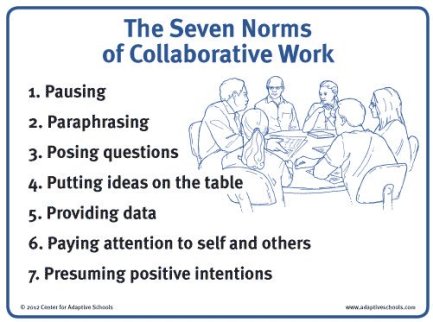
Another part of reflection is the existence of pathways and an environment allowing for honesty without it being labelled as negativity. And that is a two way street that needs a rare combination of humility, excellent communication skills, acceptance skills and the intellectual rigour to have emotional detachment from ideas and practices.  7 norms

Adaptive schools / cognitive coaching and the 7 Norms of collaboration go a long way towards bridging these human fallibilities. But there are many enemies (besides power) to the process including time pressure, face, and the very human difficulty in accepting sunk costs.

So who can reflect honestly?  The very very young, the naive, the elders – provided they are still allowed to be seen as relevant, the very wealthy and perhaps the court jesters / devil’s advocates.   The rest of us I fear go so far and no further. Or tell people what they want to hear.

In finding the middle way

Robinson, W. Heath (William Heath), 1872-1944 (illustrator). Black and white illustration in Hans Andersen's fairy tales (1913) London: Constable. - in public domain
Robinson, W. Heath (William Heath), 1872-1944 (illustrator). Black and white illustration in Hans Andersen’s fairy tales (1913) London: Constable. – in public domain

I recently read a beautifully illustrated version of “The Emperor’s new Clothes” with my Grade 2 classes during their library period. I can’t but help feeling like that little boy all the time, first astonished and puzzled whether I’m the only one to notice that there are no clothes, then worried that my vision is inadequate to see, and then when I shout out “the emperor has no clothes” my cry is not caught up and echoed, but rather people turn or face down in embarrassment as if it were I caught naked in a public place. And so I began this course with a niggling sense of frustration in being an education professional and learner in a digital environment.

In my life-long learner / doing a distance education degree I’m frustrated by how ‘same old same old’ it is – what is given on the one hand – the convenience, the asynchronicity, the ‘flat world’, the connectivity, the access, is taken away on the other – the lack of intimacy, the limited discussions, the moving along at a clip, the lack of storming and norming and emphasis on performing (Carabajal, LaPointe, & Gunawardena, 2003). But I realize that it is the same as what Churchill said about democracy in 1947 “it is the worst form … except for all those other forms that have been tried from time to time”

I have to stay positive, must stay open to ideas and alternatives. I have to look to people who are chipping away and making a difference, like our colloquia guests – Pip Cleaves, Annabel Astbury, Simon Welsh and Rebecca Vivian. I must remember that Rome was not built in a day, that this life is lived in beta. And things that annoyed me in this course (like the late introduction of VoiceThread) are in fact things that I am now trying to introduce to my school, in this case during the Global Read-Aloud, and I’m being met with the same skepticism that I gave myself – the irony.

The case study has allowed me to become more knowledgeable and versed in a topic that I had a superficial understanding of. And again that frustration, that when initiating the topic – I did not know what I did not know – the anosognosic’s dilemma (Morris, 2010). As a result I perhaps did not ask the “right” questions, use the “right” survey, the “right” analysis. In the process I increased my knowledge, but the purpose was not to summarize what I now know, which is the beginning point of any expert in the field. It was to further knowledge by examining something through the case study method. I think I am now understanding how reading reluctance can be seen through a variety of lenses. I’m understanding the profound effect of unconditional fun on enjoyment, motivation and the desire to improve – and my wariness of data-analysis has been vindicated to a certain quantifiable extent.

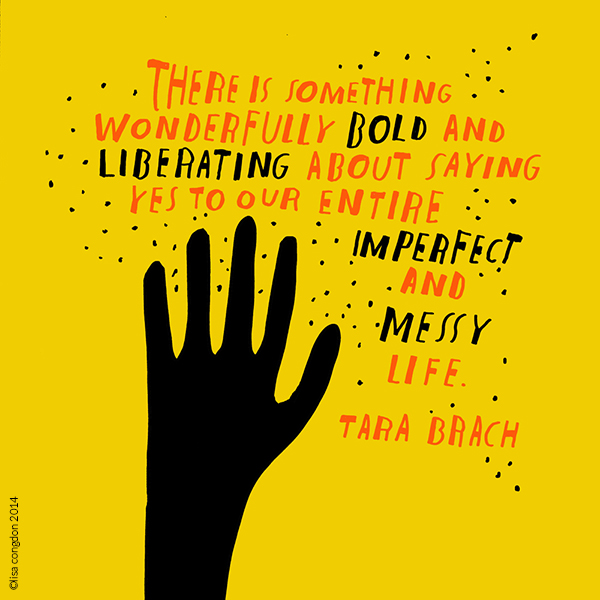
My wish for myself for the future is that I can both relax and be vigilant. Accept imperfection as I strive to be the best version of myself as an educator and to bring that out in my students, but in a joyful fun way. The middle way.

Image from: http://lisacongdon.com/blog/wp-content/uploads/2014/11/brave_quote45_lowres1.jpg

References

Carabajal, K., LaPointe, D., & Gunawardena, C. (2003). Group development in online learning communities. In M. G. Moore & W. G. Anderson (Eds.), Handbook of distance education (pp. 217–234). Mahwah, N.J: L. Erlbaum Associates.

Morris, E. (2010, June 20). The anosognosic’s dilemma: Something’s wrong but you’ll never know what it is (Part 1). Retrieved 4 February 2014, from http://opinionator.blogs.nytimes.com/2010/06/20/the-anosognosics-dilemma-1/?_php=true&_type=blogs&_php=true&_type=blogs&_r=1

State of School Librarianship – Selected Asian Countries

Four of the speakers at the International Conference on School Librarianship of Asian Countries spoke about the “State of School Librarianship” in their relevant areas:

Since you are all perfectly capable of reading the presentations I am not going to repeat what was said, but rather to say what my key take-aways were in general.

Firstly I was super happy that I chose to come to this conference (at my own cost, although the conference itself was free …) instead of going to the EARCOS workshop in November at Taipei American School. “Tech-Integrated Libraries: Building the Future One Service at a Time”. The reason is that the longer I am in the field of teacher librarianship, the more I feel that we are operating in a number of little echo chambers where we keep on encountering the same people with the same things to share.  This view probably doesn’t make me very popular amongst my peers, however I do think that it has contributed greatly to the current state of school librarianship. Of course this conference was also an echo chamber, but it wasn’t one which I usually find myself in (mine is the “international school librarian” one).   And I think for all of us participating, we got to at least hear (if not share due to the time restrictions and presentation format) about what is going on elsewhere. And that is always incredibly interesting.

Next – it was comforting but disheartening to hear that school librarians everywhere suffer from the same “needed outsider” status.   In all the presentations we heard that the existence of the school library and its staffing by a tiered levels / qualifications of librarian almost always needed an act of legislation  at least in the public sector.   (In the private sector it is up to the budget of the individual school, and part of a long legacy personal and cultural, but that’s a whole other story).   Within the legislated necessity of a school library, there is a huge variation in the requirements – in Australia this is determined by state-by-state for example.

It seems that generally it is much easier to find funding for library buildings and the initial “hardware” – the problems arise with the ongoing budgeting for staffing by properly trained teacher-librarians who can make a difference in both the literacy and information literacy of the students. But those effects are hard to measure – it is easier to come up with statistics concerning collection size and ratios of materials to pupils – the quantitative data is more readily found, and definitions are more robust than the qualitative data. That is one of the “academic / research” criticisms I’d have of some of the presentations – a lot of data but what about the “so what” and “why” and “what now” – particularly when comparing one country to another.

Even Australia – who has long been seen as one of the bastions of school-teacher-librarianship -appears to be in decline due to all sorts of (mainly) political and funding issues. And there’s the rub. School-librarians just don’t seem to be political animals – up to now I have only ever met one Head of Libraries who has a seat-at-the-table by which I mean is considered part of the senior management team of a school.  The rest seem to dabble around the edges, cajoling, convincing, offering, pleading, giving, trying, quietly adding value as and when possible on an invitation basis, if not plain forgotten.

There is a distinct difference also between where school librarians are seen as partners for information literacy instruction versus their role in encouraging reading – or alphabetic literacy. The distinction is very important, because it can be argued (and is argued) that a librarian can provide the former, so it is not necessary to have a teacher-librarian. In fact, a passionate library technician with a love of books and reading would even suffice (sadly to say, a love of reading is not on the ‘necessary qualities” in the job descriptions of most library staff that I’ve encountered – nor, may I add of teachers.). It was interesting to see that the contribution from Singapore was an extremely excellent presentation on “Interactive Reading Activities” but since public schools here generally don’t have libraries or teacher librarians there was no-one to present on the “state of the nation” in this regard. It begs the question what this otherwise progressive nation-state is doing to raise the standards of information literacy in its schools.

At this point, for a bit of light relief, I want to put in one of those corny “what xx think I do” pictures

(sorry no citation – it was on Pinterest and the original link was dead)

What I really wish was I could say is “these guys are really getting it right – that’s the way to go and here’s the proof”. In reality all I can say is that it seems that we all share the same struggles and issues and that’s why I worry so very much about our librarian echo chambers.  Because we all agree with each other, and we all have similar stories to share – stories of triumph and success, of making a difference in the lives of individual students and in (school) communities as a whole – the second afternoon where teacher librarians from 3 schools presented the fantastic work they’d been doing in Taiwan – particularly in the field of inquiry learning was very inspirational.

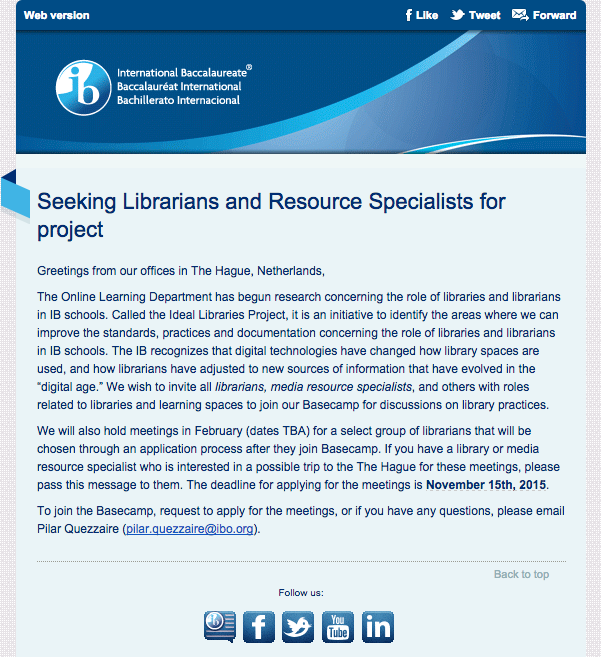
But how do we get out of this loop and spiral upwards?  I’m one of the 407 librarians participating in the “Ideal Libraries Project” of the IBO. Even in that (private) organisation nothing is mandated or agreed around teacher-librarians. Yes there are recommendations, but judging by the responses from the cohort the interpretations are wide.

I have meandered far I fear. But to my colleagues in Asian countries I would say, fear not, you are not alone, we too struggle with ratios of 1:1,500 (TL:Students), even in private schools. We too would like to feel our voices are heard and that literacies are integrated into the curriculum.  But I think there is hope, if we can just get out of this quick-sand – perhaps when the hype around EdTech and Makerspaces is over we will have our turn – or perhaps it is time to rise up and take a seat at the table, because it is not about us. It’s about sending literate people out into the world, and we can’t faff around the edges and not send fully multi-literate students out into the world.

INF536: Critical Assessment

Looking back on this last semester, I can only sum it up by saying that change, beauty and progress in thought and learning is not only wrought by avalanche and volcano but also by the constant erosion by drops of water and bits of sand.  That combined with space and time.

9616353114

In the same way, this course has offered me space and time for learning by:

  • Forcing me to carve time out of a schedule that would otherwise be occupied by busyness
  • Exposing me to a variety of ideas, research, thoughts and concepts that I wouldn’t otherwise naturally encounter in my day-to-day professional or personal life
  • Making me DO things I’d otherwise shrug off as impossible (Bailey, 2015b)
  • Giving me a framework within which to analyse problems “wicked” and otherwise (Bailey, 2015a, 2015g; Buchanan, 1992; IDEO, 2014)
  • Grouping me with a set of people who are all approaching the course from a different context and set of experiences and knowledge
  • Creating a virtual (and at times physical) space for us to encounter each other and comment and share our learning – both formally and informally (“#INF536 – Twitter Search,” n.d.; McIntosh & CSU, n.d.)


It has be quite an experience, and, as someone once said – it’s not so much what you’ve learnt as what you remember. What has left a lasting impression is design thinking, the value of constraints and learning at the extremes.


As someone new to the education field, new to librarianship, operating under all kinds of constraints, the design thinking concepts of inspiration, ideation and implementation (Brown, 2008; Brown & Katz, 2011; IDEO, 2014) fits perfectly with that other concept of living and teaching in constant beta (Schroeder, 2013). As a fairly grounded, not terribly artistically (of the drawing and painting type) creative person this is the aspect of “design” that appeals to me as it is achievable with observation, thought, logic and research. However it also demands that I embody the principle of risk-taking and not just pay lip service to it sprouting it to my PYP (IB primary year program) students at regular intervals. There is something very empowering in the process of observing, thinking, asking, making small or not so small changes, and failing or succeeding, learning and trying again without fear and knowing that every time again one is moving every so slightly forward and nudging one’s students in the same direction.


My most effective intervention resulting from a budgetary constraint


Constraints, rather than hampering us, force rethinking options, relooking at alternatives and collaborating, asking, connecting in a way that is not always necessary when one is overwhelmed by choice and abundance. As documented in my blog posts: design – space, thinking and time 1, 2, 3 & 4 (Bailey, 2015c, 2015d, 2015e, 2015f) operating within the constraints of limited time, no budget, a small and almost unalterable space can result in creative solutions that are as ad hoc as they are successful.


We can learn a lot about education and learning in extreme conditions (Chohan, 2011; Leadbeater & Wong, 2010). But more immediate and accessible are the extremes in our own communities the students at the challenging edges of all the continuums we create. The teachers and parents who don’t toe some invisible line.


The name of my series of blog posts also reflects my thoughts about designing learning spaces. It’s not just about the physical space, it’s about reconstructing how we think about time and what we do in it, and carving out a presence physically, virtually and even emotionally. No matter how beautifully our surroundings have been designed, how much money has been spent on the furnishings and fittings, how much time is built into the curriculum if our students do not feel safe and have a willing and open space in their hearts and minds for learning, nothing will make an impact.

16807472897

References:

Bailey, N. (2015a, July 23). On the box, off the box – INF536 Blog Post 1 [Web Log]. Retrieved October 11, 2015, from http://thinkspace.csu.edu.au/informativeflights/2015/07/23/on-the-box-off-the-box/

Bailey, N. (2015b, August 7). Blog 2: Observation – Dog Walk [Web Log]. Retrieved October 11, 2015, from http://thinkspace.csu.edu.au/informativeflights/2015/08/07/blog-2-observation-dog-walk/

Bailey, N. (2015c, August 23). Design – space, thinking and time (1) [Web Log]. Retrieved October 4, 2015, from http://thinkspace.csu.edu.au/informativeflights/2015/08/23/design-space-thinking-and-time-1/

Bailey, N. (2015d, September 6). Design – space thinking and time (2) [Web Log]. Retrieved October 4, 2015, from http://thinkspace.csu.edu.au/informativeflights/2015/09/06/design-space-thinking-and-time-2/

Bailey, N. (2015e, September 20). Design – space, thinking and time (3) [Web Log]. Retrieved October 4, 2015, from http://thinkspace.csu.edu.au/informativeflights/2015/09/20/design-space-thinking-and-time-3/

Bailey, N. (2015f, October 4). Design – space, thinking and time (4) [Web Log]. Retrieved October 11, 2015, from http://thinkspace.csu.edu.au/informativeflights/2015/10/04/design-space-thinking-and-time-4/

Bailey, N. (2015g, October 11). INF536: Assessment 4 – Part A: Applying spatial changes and design thinking to middle school reading – a three phase collaborative approach [Web Log]. Retrieved October 11, 2015, from http://thinkspace.csu.edu.au/informativeflights/2015/10/11/inf536-assessment-4-part-a-applying-spatial-changes-and-design-thinking-to-middle-school-reading-a-three-phase-collaborative-approach/

Brown, T. (2008). Design thinking. Harvard Business Review, 86(6), 84–92. Retrieved from http://ezproxy.csu.edu.au/login?url=http://search.ebscohost.com/login.aspx?direct=true&db=heh&AN=32108052&site=ehost-live

Brown, T., & Katz, B. (2011). Change by Design: Change by Design. Journal of Product Innovation Management, 28(3), 381–383. http://doi.org/10.1111/j.1540-5885.2011.00806.x

Buchanan, R. (1992). Wicked problems in design thinking. Design Issues, 8(2), 5–21. Retrieved from http://www.jstor.org/stable/1511637

Chohan, A. (2011, January 25). Learning without frontiers [Video file]. Retrieved October 11, 2015, from https://www.youtube.com/watch?v=EARTcJkNrDA

IDEO. (2014). Design thinking for libraries – a toolkit for patron-centered design (p. 121). IDEO, Bill & Melinda Gates Foundation. Retrieved from http://www.designthinkingforlibraries.com

#INF536 – Twitter Search. (n.d.). [Twitter]. Retrieved October 11, 2015, from https://twitter.com/search?q=%23INF536&src=typd

Leadbeater, C., & Wong, A. (2010). Learning from the extremes. CISCO. Retrieved September 2, 2015 from https://www.cisco.com/web/about/citizenship/socio-economic/docs/LearningfromExtremes_WhitePaper.pdf

McIntosh, E., & CSU. (n.d.). Discussion Board – S-INF536_201560_W_D @CSU [Discussion Forum]. Retrieved October 11, 2015, from https://interact2.csu.edu.au/webapps/discussionboard/do/conference?toggle_mode=read&action=list_forums&course_id=_6652_1&nav=discussion_board_entry&mode=view

Schroeder, M. (2013, November 6). Living in beta [Video file]. Retrieved October 6, 2015, from https://www.youtube.com/watch?v=0nnYI3ePrY8


Design – Space, Thinking and Time (4)

September literally flew by, and I’m at the point of finishing up my final assessment for this course, and working on my critical reflection.  But first I wanted to critically reflect on where I was in my own library space.

I’m expanding the LibGuides to better resource our curriculum and to supplement the gaps in the curriculum.  Because only I know how to use them, the progress is slow and on a “just in time” basis populating them rather than a nice methodical roll-out, but the reception has been great from both the students and the teachers.  I’ve started showing it from Grade 3, and one of my Grade 5 pupils told me she’d spent an hour looking through the library Libguide before the lesson and “loved it”.

My next foray into the digital sphere for this learning environment has been to accost all the teachers to try and get them to download the Destiny App to access our catalog from their mobile phones and iPads.  The rollout to students will take a little longer as I have to apply to EdTech for permission to have apps loaded onto their iPads and that is reviewed and action taken only once a term.


I have to mention something about the value of constraints at this point.  Up to last Friday, more than 6 weeks into term, our library budget had not yet been approved and I had a bunch of kids whining that they were bored of the books and wanted new books.  I’d been fiddling around with the reporting tool of our OPAC trying to do a bit of a collection analysis and see what I had of which levels, what was popular etc. and I discovered that we had about 500 books that had never ever been circulated.

IMG_0765
One of my about 500 “neglected books”

What was the matter with them?  I got my staff to pull them all out.  I started with nonfiction – about 150 books and put them all on my table with books overflowing onto the floor and invited teachers to come and have a look and see if we could put it in a unit of inquiry resource list or if it would be useful for anything.  We whittled it down to about 20 books that are still homeless and unloved, but it was great as the books were “new to them” and hidden on the shelves.  The process was repeated for the picture books – but how to get young kids to identify the books and not have them lying on my desk or one of the few tables in the library – and that’s when I decided a little sad face paper clipped onto the book could do the trick.   And it did! You would have thought I’d put abandoned puppies free to a good home on display!  My staff and I started on a Monday morning and by Tuesday all the books had found a home.  So we continued with Junior Fiction and Fiction – with the same response, albeit a little more mature.  My older students gasped that award winning books hadn’t been borrowed.  They took up the challenge of taking a risk with a book or author they hadn’t tried yet.

These books haven’t flown off the shelves at quite such a fast pace, and there are more of them – particularly in the fiction section.  At that age students have become more selective and seem to be getting settled in their tastes.  Some have reported back that they’ve enjoyed the “new” books.  I’m working through some of the titles myself so I can book talk them as well.


So here are some captioned photos of how the space has evolved over the last two weeks and what we’ve been up to.

IMG_0794
A grade 1 class donates a finger counting poster they made

IMG_0777
Reverse psychology on teacher resources that hadn’t moved since I started – I don’t wait for them to come to me, I just look at the books and think who might like / need them for their class / self and check them out to them! So far a good response from all and no rejects returned yet…

IMG_0708
Notices everywhere to direct users to our online presence and virtual resources

IMG_0824
Stacks of books pulled out quickly as my G6 students did their 3 minute booktalk before their Information Literacy classes.

IMG_0666
The yellow post-its are the library “to do” list. As soon as something has been completed, it gets taken down and thrown away. When I think of something I write a note and put it up. Then if I or my staff has time, we tackle the next item that can be done …


Critical Reflection ETL401

In this course, what I have learnt in the library and information sphere is now placed in the context of the school library, which is where I hope to further my career. In doing so it has clarified and added detail to concepts such as the role of the teacher librarian (TL) and information literacy (IL), while making me aware of what I don’t know much about – particularly in the area of curriculum and learning theories. As such, I am in a slightly stronger position meta-cognitively in ‘knowing what I don’t know’ (Morris, 2010). The comments of my fellow students and the course co-ordinator in the online fora, who come from a teaching background have been invaluable in this respect.


The role of the teacher librarian is complex, multi-faceted and dependent on the school context – which I explored in my first blog post (Bailey, 2014). As I work in a large K-12 international school means that some of the roles are assumed by or shared with the literacy and digital literacy coaches, leading to the need for constant collaboration and partnership not only with classroom teachers, school leadership and administrators but also these coaches.


Evidence and accountability in our role is something I would like to explore further in my work, particularly as we start up new initiatives such as classroom libraries and continue existing work in creating library pathfinders and co-teaching in some humanities models. In this way we can ensure that we are strategic in our time and resource planning to optimise our efficacy.


One of the main themes of this course has been information literacy, where we were introduced to the main thought leaders in this area, including Kuhlthau (2010; 2012a, 2012b, 2012c), Herring (2011; Herring, Tarter, & Naylor, 2002), and Eisenberg (2008; Wolf, Brush, & Saye, 2003). While many of the models of information literacy focus on the scaffolding of skills, information literacy can be seen as having four dimensions: cognitive (skill based); meta-cognitive (reflective); affective (positive and negative emotions); and the socio-cultural, including digital citizenship and ethical use of information (Kong & Li, 2009; Kuhlthau, 2013; Waters, 2012). This, and the question of transferability is something I explored in my blog discussing why information literacy is more than a set of skills (Bailey, 2015b). Literacy convergence and the 21st Century learner are valid realities that rethink the ambit of literacy in an information society that doesn’t only rely on text, and has expectations for learners that go beyond the personal consumption of information to contributing to using knowledge for personal or social transformation (Bailey, 2015a). However they can also be used as buzz words that can obfuscate the essence of information literacy irrespective of the medium used for access and dissemination of information (Crockett, 2013).


Learning naturally goes on outside the (virtual) classroom, and I have learnt a considerable amount through attending TL conferences, work shares, knowledge exchange workshops and conversations with my peers and more experienced TLs. One such conversation led to me investigating the fascinating concept of Threshold Concepts, particularly as it relates to information literacy (Hofer, Townsend, & Brunetti, 2012; Tucker, Weedman, Bruce, & Edwards, 2014). Although most research is currently in tertiary education (Flanagan,2015) I would like to explore which concepts would be relevant for our students and at what level we could introduce them and the most effective activities to do so. I’d also like to investigate assessment tools to aid us in pinpointing the problematic concepts in new students who have not come through the Guided Inquiry process of the school.


Our collaboration is not just with students, teachers and administrators but also parents who are often the ones picking up the slack and tasked with helping frustrated children with assignments or homework (Hoover‐Dempsey et al., 2005; Kong & Li, 2009). I have started doing some outreach to parents through co-ordinating our parent volunteer program, and marketing our online resources but realise I can do far more in educating parents in IL concepts and how best to continue scaffolding these concepts at home and making them aware of how our resources can aid them in this process.


One of the most valuable parts of this course was gaining an understanding of my own learning including cognitive and affective processes in the past two years and reflecting on my attempts to go through this process effectively unscaffolded, relying on instinct and common sense! Perhaps my learning would have been more efficient and effective if I’d known this all at the start, but certainly now I will be better at passing on the knowledge and experience to my students and children.


References:

Bailey, N. (2014, December 7). ETL401 Blog Task 1: The role of the TL in schools [Web Log]. Retrieved January 24, 2015, from http://thinkspace.csu.edu.au/informativeflights/2014/12/07/etl401-blog-task-1-the-role-of-the-tl-in-schools/

Bailey, N. (2015a, January 4). The role of the TL in practise with regard to the convergence of literacies in the 21st Century [Web Log]. Retrieved January 24, 2015, from http://thinkspace.csu.edu.au/informativeflights/2015/01/04/the-role-of-the-tl-in-practise-with-regard-to-the-convergence-of-literacies-in-the-21st-century/

Bailey, N. (2015b, January 18). Blog task 3: Information Literacy is more than a set of skills [Web Log]. Retrieved January 24, 2015, from http://thinkspace.csu.edu.au/informativeflights/2015/01/18/blog-task-3-information-literacy-is-more-than-a-set-of-skills/

Crockett, L. (2013, February 28). Literacy is NOT Enough: 21st Century Fluencies for the Digital Age [Streaming Video]. Retrieved January 4, 2015, from https://www.youtube.com/watch?v=N8DEeR1sraA

Eisenberg, M. B. (2008). Information Literacy: Essential Skills for the Information Age. DESIDOC Journal of Library & Information Technology, 28(2), 39–47.

Flanagan, M. (2015, January 21). Threshold Concepts: Undergraduate Teaching, Postgraduate Training and Professional Development. A short introduction and bibliography [Website]. Retrieved January 25, 2015, from http://www.ee.ucl.ac.uk/~mflanaga/thresholds.html

Herring, J. E. (2011). Assumptions, Information Literacy and Transfer in High Schools. Teacher Librarian, 38(3), 32–36.

Herring, J. E., Tarter, A.-M., & Naylor, S. (2002). An evaluation of the use of the PLUS model to develop pupils’ information skills in a secondary school. School Libraries Worldwide, 8(1), 1.

Hofer, A. R., Townsend, L., & Brunetti, K. (2012). Troublesome Concepts and Information Literacy: Investigating Threshold Concepts for IL Instruction. Portal: Libraries and the Academy, 12(4), 387–405. doi:10.1353/pla.2012.0039

Hoover‐Dempsey, K. V., Walker, J. M. T., Sandler, H. M., Whetsel, D., Green, C. L., Wilkins, A. S., & Closson, K. (2005). Why Do Parents Become Involved? Research Findings and Implications. The Elementary School Journal, 106(2), 105–130. doi:10.1086/499194

Kong, S. C., & Li, K. M. (2009). Collaboration between school and parents to foster information literacy: Learning in the information society. Computers & Education, 52(2), 275–282. doi:10.1016/j.compedu.2008.08.004

Kuhlthau, C. C. (2013, October). Information Search Process [Website]. Retrieved from http://comminfo.rutgers.edu/~kuhlthau/information_search_process.htm

Kuhlthau, C. C., & Maniotes, L. K. (2010). Building Guided Inquiry Teams for 21st-Century Learners. School Library Monthly, 26(5), 18.

Kuhlthau, C. C., Maniotes, L. K., & Caspari, A. K. (2012a). Assessment in guided inquiry. In Guided inquiry design: a framework for inquiry in your school (pp. 111–131). Santa Barbara, California: Libraries Unlimited.

Kuhlthau, C. C., Maniotes, L. K., & Caspari, A. K. (2012b). Guided inquiry design: a framework for inquiry in your school. Santa Barbara, California: Libraries Unlimited.

Kuhlthau, C. C., Maniotes, L. K., & Caspari, A. K. (2012c). The research behind the design. In Guided inquiry design: a framework for inquiry in your school (pp. 17–36). Santa Barbara, California: Libraries Unlimited.

Morris, E. (2010, June 20). The Anosognosic’s Dilemma: Something’s Wrong but You’ll Never Know What It Is (Part 1). Retrieved February 4, 2014, from http://opinionator.blogs.nytimes.com/2010/06/20/the-anosognosics-dilemma-1/?_php=true&_type=blogs&_php=true&_type=blogs&_r=1

Tucker, V. M., Weedman, J., Bruce, C. S., & Edwards, S. L. (2014). Learning Portals: Analyzing Threshold Concept Theory for LIS Education. Journal of Education for Library and Information Science, 55(2), 150–165.

Waters, J. K. (2012, September 4). Turning Students into Good Digital Citizens. Retrieved January 2, 2015, from http://thejournal.com/Articles/2012/04/09/Rethinking-digital-citizenship.aspx

Wolf, S., Brush, T., & Saye, J. (2003). The Big Six Information Skills As a Metacognitive Scaffold: A Case Study. School Library Media Research, 6, 1–24. Retrieved from http://www.ala.org/aasl/sites/ala.org.aasl/files/content/aaslpubsandjournals/slr/vol6/SLMR_BigSixInfoSkills_V6.pdf

 

Assignment 3: Evaluative Report

Part 1: Online Learning Journal

A separate tab for the Online Learning Journal (OLJ) was created on my blog: Informative Flights where readings and learning activities were documented throughout the session from 30 October 2013 to 26 January 2014. 

Part 2: Evaluative Report

During the semester many of the learning activities were interesting and eye-opening.  Prior to commencing INF506 I had considered myself to be reasonably experienced in social media personally and considered the library I was working in as similarly “with the times”.  I must admit to easily being “wowed” by the newest and latest online tools and gadgets and had previously too easily adopted and (over)-used (Facebook) or dismissed tools (Twitter, Google+).

a) Evaluative Statement:

The three experiences that are highlighted are; Building academic library 2.0Web 2.0 tools in the library and Information Policy: identity, privacy and trust.
In Building the academic library 2.0 the talk of Farkas (2007) made me consider a number of points regarding Web 2.0 in the library.  One of the things I followed up on subsequently was the notion that students use their parents as a first port of call when they need to do research.  Since Farkas is speaking from a tertiary education viewpoint, this is probably even more applicable to secondary schools, which is the environment I work in.  Hoover-Dempsey et al (2005) concluded that schools both enhance and influence parental involvement.   Although the “themes of empowerment” they referred to did not mention the library or research, this is an area where positive reinforcement of involvement in a constructive way could occur, something which is echoed by DePlanty, Coulter-Kern and Duchane (2007) and Hay (2010) who suggest schools align parental participation with what matters to academic success using workshops, brochures and pamphlets and talks with parents. The library is ideally situated to do this, and in fact needs to if parents are expected to “help educators address the information literacy initiative” as Valenza (2003) highlights in her “Letter to Parents about the Internet
Web 2.0 tools in the library allowed me to critically evaluate the Web 2.0 tools of ASU through the lens of the 4 C’s : collaboration, conversation, community and content creation (Mishra, 2009).  Initially I was under the impression of how much they were doing, their consistency and the scope of the tools they were using (Youtube, Facebook, Blog, Twitter, chat etc.).   My conclusion was that they were putting a lot of time and effort into social media, but I wasn’t sure of the pay-off.  There was not much two-way communication on any of the tools they were using and no evidence of collaboration, conversation or community.   An argument can be made that various social media channels were being used in order to reach the greatest number of users and that information and marketing was the objective, however Harpointer (2012) and Freud (2010) warn against engaging in social media without understanding the nature of social media and allow dialogue and user-generated content to occur.
The final posting I’d like to evaluate was Information Policy, and that coincided with a media furore about a social media posting here in Singapore.  Unravelling the incident under the rubrics of identity, privacy, security and trust, it became apparent that the concepts of privacy and trust were illusions in the world of social media.  Everything you post “can and will be used against you“. In addition postings “live forever” even though one tries to delete them.  The concept of personal identity online versus in person is a very interesting one.   In essence the ideal would be to have congruence between the two identities, the problem comes when one is “a dog” (Pearson, 2009).  In person the less positive attributes are limited to a smaller audience than on social media and personal contact with your “friends” (Young, 2013).  In the workplace, an abrasive personality may be compensated for by limited customer interface or good performance in profitability – on the Internet these compensating factors are eliminated at the less positive aspects highlighted.  Although companies are encouraged to have social media policies governing their employees  (Lasica, n.d.), what employees do in their private capacity on “private” social media can impact organisations adversely.  For this reason Lauby (2009) argues, “employers need to be upfront with employees that they have no right to privacy with respect to social networking”.  
Within the school sphere, studies such as Keipi and Oksanen (2012) point to the problems around anonymity and social identity which leads to less social accountability, particularly in the sphere of cyber bullying, aggression and harassment.  These are issues that schools would need to address in their policies, particularly with the movement to one-laptop-per-student and the increased use of smart-phones and other mobile devices. 

b) Reflective Statement

Looking back on the beginning of this semester, my use and experimentation of social media could probably be categorised as random.  As an early adopter of computers and the Internet, I’d grown tired of the “flavour of the month” in social media and was trying out new media without spending the necessary time to understand how to use it properly.  Enrolling in the course coincided with starting work with a very media-savvy librarian, who encouraged me to try out new tools and assisted in shortening the learning curve, which, together with the guidance and instruction offered in INF506 kept me stimulated and experimental. 

One of the most interesting aspects of the course was examining social media under an “academic” lens and thinking about matters such as identity or participation in online groups from a sociological or psychological viewpoint, or personal learning networks from a knowledge management perspective always reflecting back what it means for the library and information sciences (Burkhardt, 2009; Casey and Stephens, 2009) and the individual librarian (Utecht, 2008).

https://flipboard.com/profile/nadinebailey754

Looking back in my module notes, on numerous occasions I’ve scribbled “out of date” or “links no longer working” even though the resources were no more than three years old.  The core learning in such a rapidly evolving field is the ability to differentiate between concepts and ideas, and the materials or tools that they are embodied in at a moment in time <!–[if supportFields]> ADDIN ZOTERO_ITEM CSL_CITATION {“citationID”:”rXUfU1rg”,”properties”:{“formattedCitation”:”(Shariatmadari, 2013)”,”plainCitation”:”(Shariatmadari, 2013)”},”citationItems”:[{“id”:852,”uris”:[“http://zotero.org/users/1210720/items/GTCPV9DD”%5D,”uri&#8221;:[“http://zotero.org/users/1210720/items/GTCPV9DD”%5D,”itemData&#8221;:{“id”:852,”type”:”webpage”,”title”:”Writing on the Wall: Social Media – The First 2000 Years by Tom Standage – book review”,”container-title”:”The Guardian”,”URL”:”http://www.theguardian.com/books/2013/oct/11/writing-wall-social-media-standage-review&#8221;,”author”:[{“family”:”Shariatmadari”,”given”:”David”}],”issued”:{“date-parts”:[[“2013″,10,11]]},”accessed”:{“date-parts”:[[“2014″,1,30]],”season”:”13:22:11″}}}],”schema”:”https://github.com/citation-style-language/schema/raw/master/csl-citation.json&#8221;} <![endif]–>(Standage, 2013 reviewed by Shariatmadari, 2013)<!–[if supportFields]><![endif]–>.

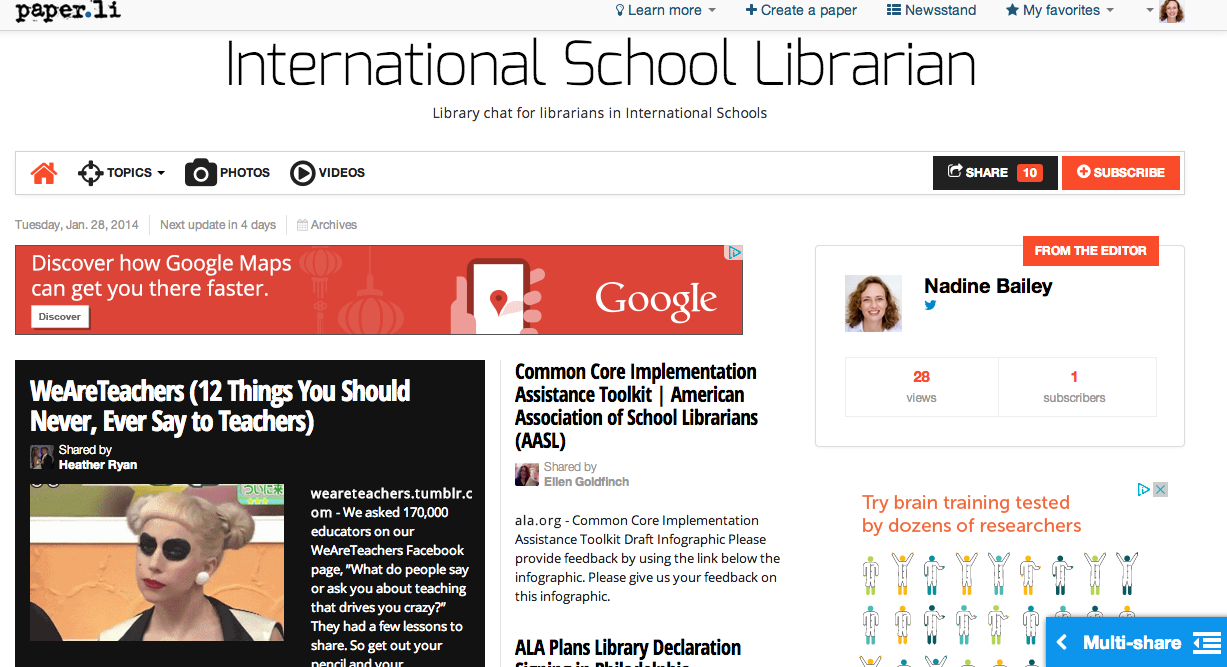
http://paper.li/deschatjes/1387886085

        My research project “Comparative analysis of social networking tools and technologies for International School Librarians in Asia” prompted me to evolve further as a social networker in my professional sphere.  Many librarians had responded on the benefits of Twitter and Google+, necessitating professional exploration into the ways in which these tools could be incorporated in my learning network through aggregators such as Paper.li and Flipboard.  Becoming active in both these tools and curating material for librarians and students has been very satisfying as more people access and use these resources.  

However, despite these useful tools, there is still a frustration shared by the librarians canvassed in my research.  On the one hand there are graphically interesting, dynamic, current but ephemeral resources  (Twitter, Google+, Facebook, Paperli) which are constantly refreshed without reference to what is useful in an ongoing manner. On the other hand there are the static collaborative wikis (Wikispaces) which had their hey-day in professional networks around 2006,  but are suffering from neglect and time shortage on the part of their initiators.  There are attempts at social bookmaking using folksonomies (Vander Wal, 2007) with less graphically enticing but practical tools (Delicious, Diigo).  Forums and listservs as social media didn’t receive a lot of attention in the course although these appear to be the dominant mode of interaction for many of the professionals surveyed. As a professional and as a researcher I have become more and more interested in knowledge management and how the world of the online social network can be carved out by organisations and individuals to meet their information and learning needs and this is something I would like to explore further.

The concepts of online identity are fascinating and manifold.  Reading around issues relating to identity, trust, privacy and security in social media made me re-examine both my use of social media and that of my family using various tools suggested in the modules.  Professionally the most important take-away for me has been the value of building up your online professional identity as a librarian using your own name as a “brand”.

Practically I’ve learnt much which can be directly beneficial to my work, whether in terms of Website design (Lazaris, 2009; Mathews, 2009) or marketing (Brown, 2009) or how to approach teaching students about the use (and abuse) of Social Media (Valenza, 2009; Stephens, 2011; Lorenzo, 2007) and the creation of a social media policy (Dearnley and Feather, 2001; Lauby, 2009) and strategy (Kagan, 2010).

Finally, the best part of the course was to be afforded the time to systematically explore the world of online social media in all its aspects, to play around with the tools, using and keeping or discarding them according to their relevance or usefulness while still earning academic credit!

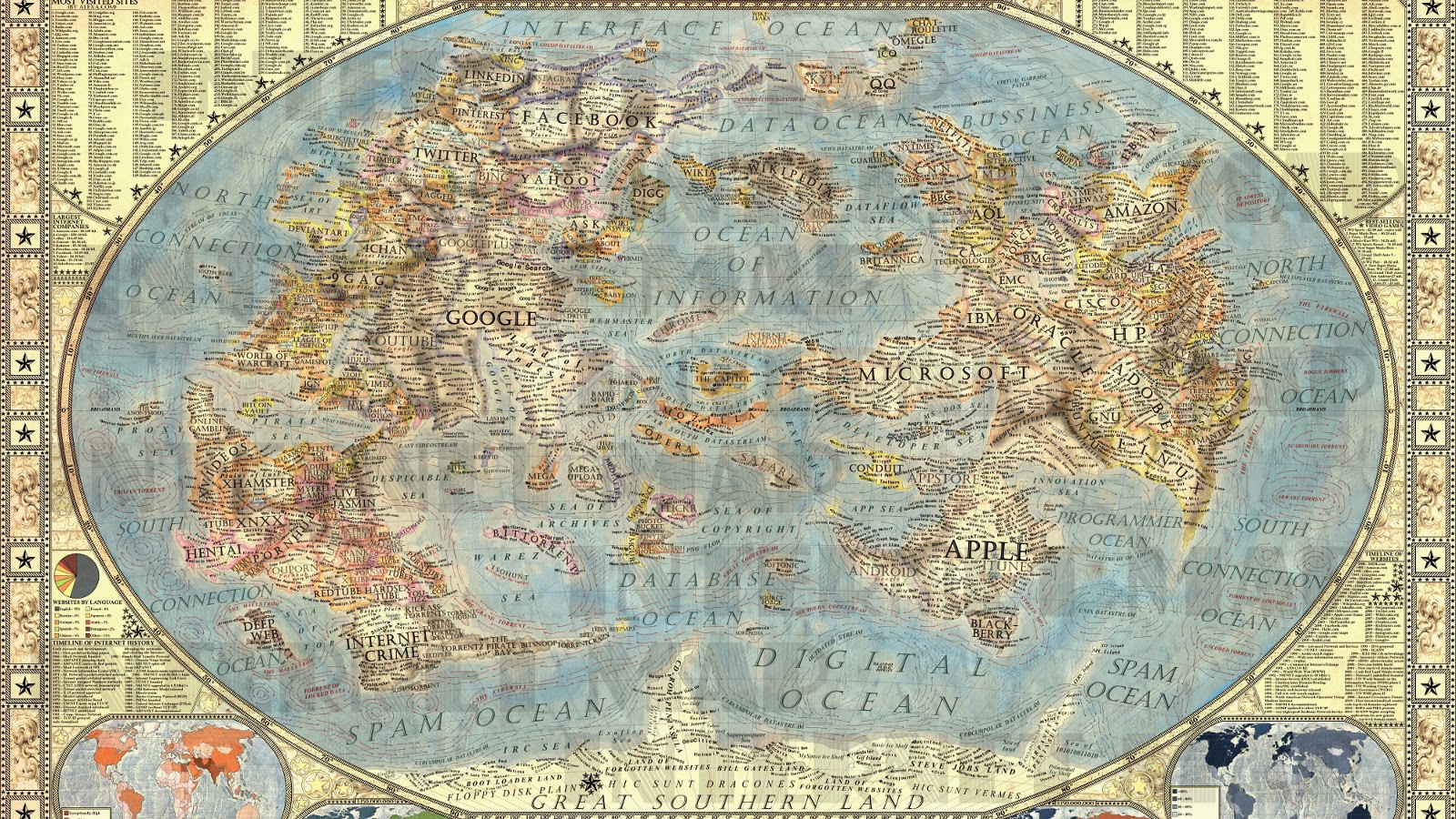
I’ll end this reflection with the latest Facebook meme – the wonderful “Map of the Internet 1.0” created by Jay Jason Simons – a graphic glimpse of the state of the Internet world in 2014. 

Map of the Internet by Jay Jason Simons @ deviantart.com

References:
Brown, A. (2009). Developing an Effective Social Media Marketing Strategy. Examiner.com. Retrieved January 19, 2014, from http://www.examiner.com/article/developing-an-effective-social-media-marketing-strategy
Burkhardt, A. (2009, August 25). Four Reasons Libraries Should be on Social Media. Information Tyrannosaur. Retrieved January 30, 2014, from http://andyburkhardt.com/2009/08/25/four-reasons-libraries-should-be-on-social-media/
Casey, M., & Stephens, M. (2009). You can’t afford not to do these things. Library Journal. Retrieved from http://tametheweb.com/2009/03/15/you-cant-afford-not-to-do-these-things/
DePlanty, J., Coulter-Kern, R., & Duchane, K. A. (2007). Perceptions of Parent Involvement in Academic Achievement. Journal Of Educational Research, 100(6), 361–368.
Dearnley, J., & Feather, J. (2001). Information policy. In The wired world: An introduction to the theory and practice of the information society (pp. 60–93). London: Library Association. Retrieved from http://unilinc20.unilinc.edu.au/F/? func=direct&doc_number=001664190&local_base=L25RESERVES
Farkas, M. (2007). Building Academic Library 2.0 [YouTube]. Retrieved January 30, 2014, from http://www.youtube.com/watch?v=q_uOKFhoznI
Freud, A. (2010). Brand Success and Failures in Social Media [YouTube]. Retrieved January 19, 2014, from https://www.youtube.com/watch?v=9G_CblR8jSQ
Harpointer, T. (2012). 10 Killer Social Media Pitfalls Businesses Must Avoid. AIS Media. Retrieved January 19, 2014, from http://www.aismedia.com/press/10-killer-social-media-pitfalls-businesses-must-avoid/
Hay, L. (2010). Developing an Information Paradigm Approach to Build and Support the Home-School Nexus [online]. In Mal Lee & Glenn Finger (Eds.), Developing a Networked School Community: A Guide to Realising the Vision (pp. 143–158). Camberwell, Vic.: ACER Press. Retrieved from http://search.informit.com.au.ezproxy.csu.edu.au/documentSummary;dn=324432590971664;res=IELHSS
HooverDempsey, K. V., Walker, J. M. T., Sandler, H. M., Whetsel, D., Green, C. L., Wilkins, A. S., & Closson, K. (2005). Why Do Parents Become Involved? Research Findings and Implications. The Elementary School Journal, 106(2), 105–130. doi:10.1086/499194
Kagan, M. (2010, July 13). What is social media NOW? Slideshare. Retrieved January 30, 2014, from http://www.slideshare.net/mzkagan/what-is-social-media-now-4747765
Keipi, T., & Oksanen, A. (2012). Youth Online: Anonymity, peer interaction and linked subjectivity in Social Media (pp. 16–27). Presented at the To be Young! Youth and the Future, Turku, Finland. Retrieved from https://www.utu.fi/fi/yksikot/ffrc/julkaisut/e-tutu/Documents/eBook_2013-8.pdf#page=16
Lasica, J. (n.d.). Best practices for developing a social media policy. Socialmedia.biz. Retrieved January 30, 2014, from http://socialmedia.biz/social-media-policies/best-practices-for-developing-a-social-media-policy/
Lauby, S. (2009, April 27). Should Your Company Have a Social Media Policy? Retrieved January 30, 2014, from http://mashable.com/2009/04/27/social-media-policy/
Lazaris, L. (2009, November 27). Designing Websites for Kids: Trends and Best Practices. Smashing Magazine. Retrieved January 30, 2014, from http://www.smashingmagazine.com/2009/11/27/designing-websites-for-kids-trends-and-best-practices/
Lorenzo, G. (2007). Catalysts for Change: Information Fluency. Clarence Center, NY: Lorenzo Associates, Inc. Retrieved from http://www.edpath.com/images/IFReport2.pdf
Mathews, B. (2009). Web design matters: ten essentials for any library site. Library Journal, 134(3), 24. Retrieved from http://go.galegroup.com/ps/i.do?id=GALE%7CA199461903&v=2.1&u=csu_au&it=r&p=EAIM&sw=w&asid=772bd6e5bac5518cf7d8b35c4be2c212
Mishra, G. (2009, May 11). Digital Activism: the 4Cs Social Media Framework. Global Voices Advocacy. Retrieved January 30, 2014, from http://advocacy.globalvoicesonline.org/2009/05/11/digital-activism-the-4cs-social-media-framework/
Pearson, J. (2009). Life as a Dog [online]. Meanjin, 68(2), 67–77.
Shariatmadari, D. (2013, October 11). Writing on the Wall: Social Media – The First 2000 Years by Tom Standage – book review. The Guardian. Retrieved January 30, 2014, from http://www.theguardian.com/books/2013/oct/11/writing-wall-social-media-standage-review
Simons, J. J. (n.d.). Map of the Internet 1.0. deviantART. Retrieved January 30, 2014, from http://the9988.deviantart.com/art/Map-of-the-Internet-1-0-427143215
Stephens, M. (2011, September 30). Exploring the impact of Learning 2.0. http://www.InfoToday.eu. Retrieved January 30, 2014, from http://www.infotoday.eu/Articles/Editorial/Featured-Articles/Exploring-the-impact-of-Learning-2.0-78002.aspx
Thomas, L. C. (2011). Google+ and the Commodification of Cool. Journal of Web Librarianship, 5(4), 322–326. doi:10.1080/19322909.2011.623535
Utecht, J. (2008, April 3). Stages of PLN adoption [Blog]. The Thinking Stick. Retrieved January 30, 2014, from http://www.thethinkingstick.com/stages-of-pln-adoption/
Valenza, J. (2003). A letter to parents about the Internet. Library Media Connection, 22(3), 30–31.
Valenza, J. (2009, September 27). 14 Ways K–12 Librarians Can Teach Social Media. Tech Learning. Retrieved January 30, 2014, from http://www.techlearning.com/copyright/0031/14-ways-k%E2%80%9312-librarians-can-teach-social-media-by-joyce-valenza/46329
Vander Wal, T. (2007, February 2). Folksonomy. vanderwal.net. Retrieved January 30, 2014, from http://www.vanderwal.net/folksonomy.html
Young, K. (2013). Managing online identity and diverse social networks on Facebook. Webology, 10(2). Retrieved from http://www.webology.org/2013/v10n2/a109.pdf