The cliche is totally true – a picture is worth a thousand words – but picture books with a few words – well they allow all the thoughts and emotions and sometimes the words to flow. Even in older students – perhaps especially in older students.
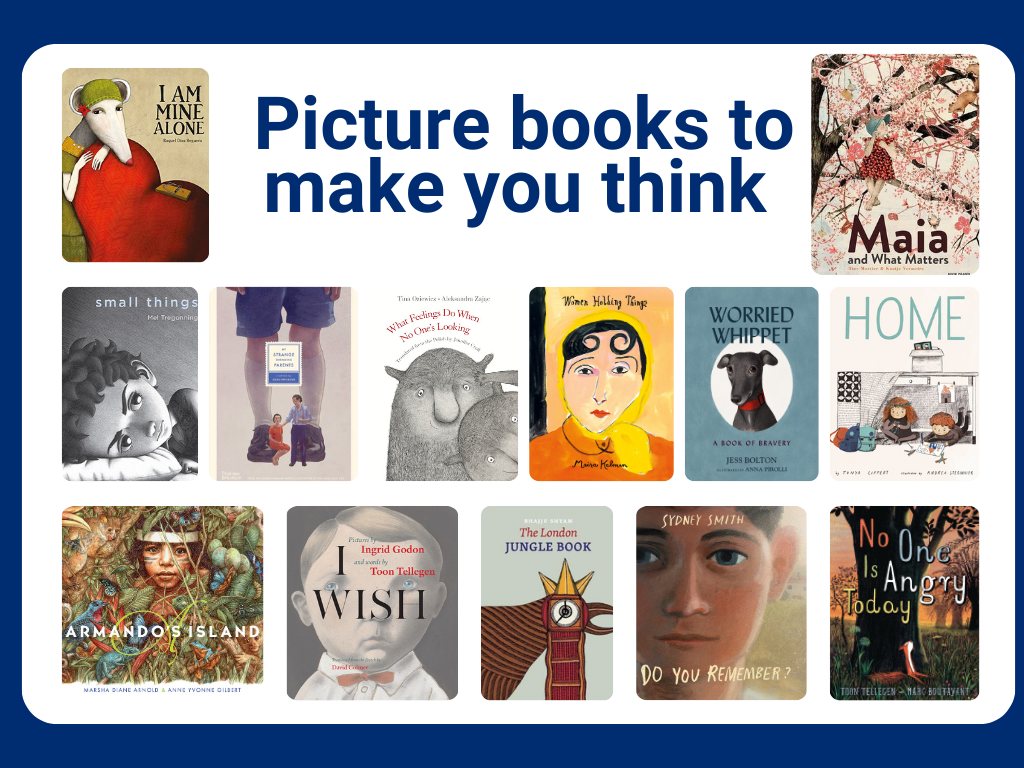
I’ve spent a lot of time and effort in curating and expanding our picture book collection in the middle/high school and I’m happy to say we now have over 500 books in that section. Today’s poster is picture books to make you think, and some of them still bring me to tears when I read them.
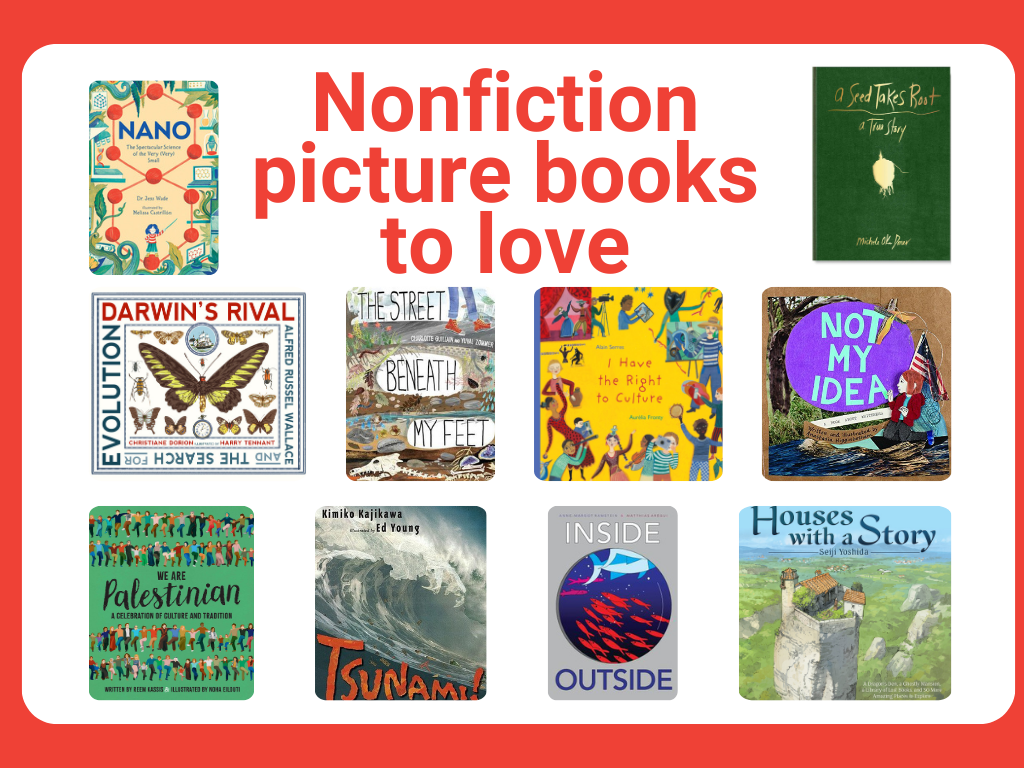
I was just passing our picture book shelf and decided the nonfiction picture books need a bit of love and attention. Here are a few I love for their amazing illustrations and beautiful messages written all within a couple of handfuls of pages.
Picture books are so like poetry – so much can be said with so few choice words. Which reminds me of a beautiful piece I read recently about poetry by Larson Langston
In English, we say: “I miss you.” But in poetry, we say: “I trace the shape of your absence in the spaces where your laughter used to linger, and let the echoes of you fill the hollow hours.”
In English, we say: “I don’t know how to let go.” But in poetry, we say: “I carry you in my chest like a stone— heavy, unyielding, and carved with the sharp edges of what once was.”
In English, we say: “I feel lost.” But in poetry, we say: “The compass of my heart spins wildly now, its needle drawn to places it can no longer call home.”
In English, we say: “I wish it were different.” But in poetry, we say: “I water the garden of could-have-beens with tears, waiting for flowers that refuse to bloom.”
In English, we say: “I hope you’re happy.” But in poetry, we say: “May the sun that warms your days be as kind to you as the first kiss of dew on the dawning light upon the leaves of the laurel that we once made love under”
In English, we say: “You hurt me.” But in poetry, we say: “You planted thorns in my chest with hands I once trusted, and now every breath feels like an apology I shouldn’t owe.”
In English, we say: “I wanted to stay.” But in poetry, we say: “I lingered at the edge of your world, a star burning quietly, unnoticed in your vast, indifferent sky.”
In English, we say: “I’m trying to move on.” But in poetry, we say: “I untangle your name from my veins each morning, only to find it woven into my dreams again at night.”
In English, we say: “I’ll be okay.” But in poetry, we say: “I gather the shattered pieces of myself like broken glass, knowing someday, even scars can catch the light.”
With poetry I write paths through gardens of grace with words in ways my body dare not go as a whole.
One regularly hears phrases bandied around schools such as “Every teacher is a language teacher”; or “Every class should start with 10 minutes of reading” and you’d be hard pressed to find a teacher who doesn’t agree in theory, that reading is a good thing. But then there is the “reality” of supposed too little time, too much pressure, too much content to cover and the theory of reading becomes such an abstract notion that there isn’t even a consideration of how it could be implemented.
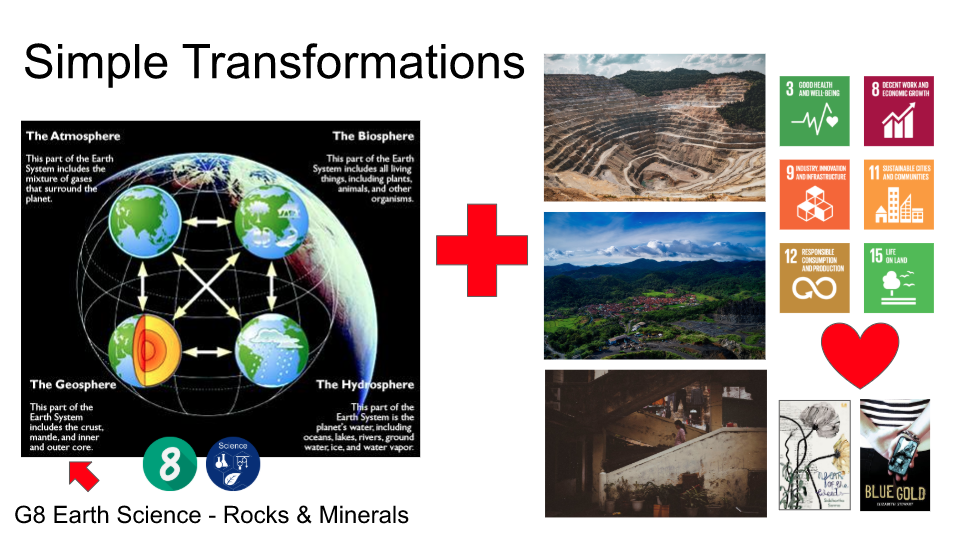
We’re on break now, and when we get back I was asked to present to our HODs for a few minutes on integrating reading into units in the middle school. I’ll probably just show this one slide:
I’d call it “content plus” – it’s from a G8 Earth Science unit that the Science team and I put together at the end of last year and they’re teaching now.
The idea is that you still have the science content as core to the unit – in this case Earth Science and learning about Sedimentary, igneous and metamorphic rocks and the minerals they contain and mining and the products of mining. But to that you add the environmental and human impact, and the lens of the SDGs (Sustainable Development Goals). And in order to help build empathy and understanding, add some literature.
Katie also had the brilliant idea, that she’s implemented in her school (and I’m going to be following quickly behind!), of getting good, relevant articles, stripping off the advertising etc (she uses Safari Reader View; I use Mercury Reader) putting them in binders and making them available in the library and classrooms – see slides 42-47).
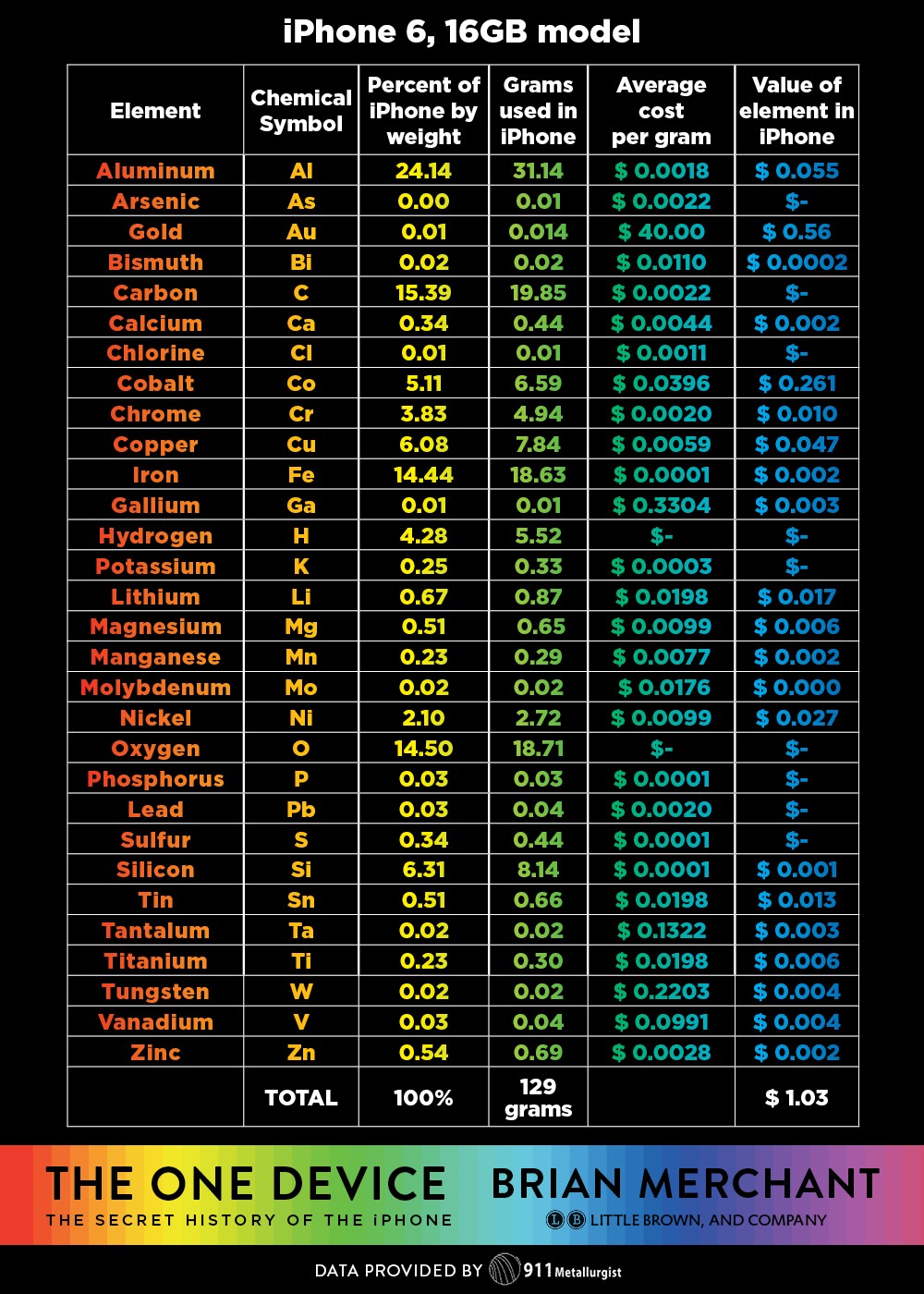
You can of course choose any minerals, but in this case to make it relevant to G8, we focused on the primary elements of an iPhone.
iPhone ingredients
Ideally, and this takes time, some of the science and or math units would be linked to Language & Literature or Individuals & Societies units allowing more time to explore literature.
In the mean time, one of the wonderful ways of adding literature into units is through picture books. In the guide we created for the Neev Festival, we made suggestions around groupings of the SDGs of the Neev shortlisted picture books plus lots of other books. It’s still a work in progress, but over time I’m hoping that for each and every global goal I have 10-20 picture books, (as well as 10-20 fiction books and 10-20 really good nonfiction books) that can easily and quickly be introduced to a class, thereby adding a very special element to learning, and truly making “every teacher a language teacher” and every teacher able to devote a tiny slice of their class to reading.
I had the privilege of attending a presentation by Dr. Myra Bacsal of the NIE at Tanglin Trust School last night about how picture books can be used to promote SEL (social and emotional learning) and the work she is doing to bring both the “hardware” and “software” into the Singaporean school system. I’m totally in awe of the scale of this project, and suspect the slick presentation she and her co-researchers gave is but a tip of the iceberg of what it must have taken to get to this point.
First there is the creation of a framework – as any librarian, or tech person or well, anyone who is capable of hierarchical thinking knows, it really helps to be able to have large conceptual boxes to throw things into. And making it up in an adhoc fashion as you go along (looking at my resource lists I have a distinct sinking feeling that’s what I’ve been engaged in) actually just doesn’t really cut it.
Then there is the curation. Yes I have lists. I have lots of kindness books. And friendship lists, and bullying and emotion books. But “a lot of” is sometimes too much of. Instead of 100 books, one perhaps needs multiple copies of the two or three books that really make a difference and that really touch kids (and their adults).
And the dissemination. Not just presenting to groups of librarians who know some or most of the books you’re introducing, but actually integrating it into the practice of teachers who may or may not be readers, may or may not have a library / teacher librarian on hand! That I think is harder than it seems. Like most things in education (and life), a lot depends on the goodwill of the people around you. On their openness and receptiveness. This morning I was lucky enough to bump into our school counsellor and mention to him that I’d been to the presentation. He got it immediately and we quickly went into my office to discuss how best we could create resource lists together, pool our budgets to ensure that copies of the most relevant books were both in his counselling room and in the library and then, once the infrastructure was in place, start rolling out the reading and introduction of the books in a pre-emptive manner.
I’ve had an ongoing challenge to find and introduce books outside of the BANA (British, Australian, North American) realm, and have been delighted with the books that I ordered from the USBBY 2016 list – as gratifyingly have my students (double win). Dr. Bacsal pointed out that the White Raven list was also worth looking at – particularly for International schools that could justify having excellent picture books in different languages. The European selections usually push the envelope (and a lot of buttons along the way) and as this article on the translation of Elena Ferrante’s Beach at Night show. Of course a sub-optimal translation is a by-product of a generally mono-lingual (mass) reading market needing a translation in the first place. She showed a short extract of an animated movie of the book Sinna Mann (Norway) that left us gasping.
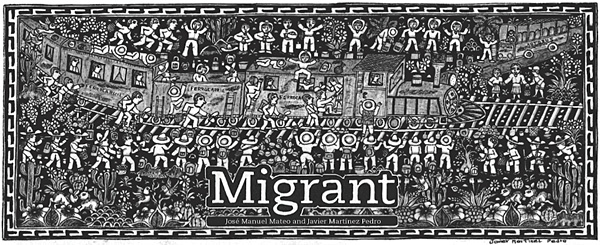
Another special book was “Migrant” by José Manuel Mateo and Javier Martínez Pedro a concertina style bilingual “codex”
Another very special thing was the interview Dr. Bacsal did with the author of Aristotle and Dante Discover the Secrets of the Universe – Benjamin Alire Sàenz – (see the details of it on her blog) – I’m so glad she’s said she wants to publish a transcript – it was one of those things where you kept thinking “what a wonderful quote” but I was too entranced watching and listening to actually take notes.
Well, my work is cut out for the next few weeks! Checking what I have, what will work in our context, what I need to put on my next book shopping list.

 Informative Flights - Musings of a Teacher Librarian