Advocacy is not enough we need power

Librarians are big on advocacy. Big on helping their peers when they’re not being heard in their communities or schools to build their “advocacy toolkit”. Most librarian courses include at least one module in one course on advocacy. Some academic librarians have built their careers on advocacy. But I’d like to cry foul. This has been going on for long enough.

Looking at advocacy it has a couple of tenants:

“Five Advocacy Tips
At the basic level advocacy is building relationships. The goal is to become a valuable resource for policymakers. No matter who the audience is, you should keep in mind the following:
1. Be confident.
2. Frame your message to answer the question, “So what?”
3. Plan and practice your message.
4. Present a clear and compelling message; less is more.
5. Offer yourself as an expert resource and provide examples from your community; stories are more compelling than statistics” (Advocacy toolkit).

I’d like to posit that the whole concept of advocacy is wrong. It is not advocacy that we need but a seat at the table. But the problem is that no one is going to shift over and make a place for people who are nicely, confidently giving compelling messages from experts. If anything after all these years of advocacy the situation has become worse rather than better. This is global, in all the countries that used to be bastions of (school / public) libraries and librarianship: the UK ; USA; Australia, and Canada.

I’d like to suggest that the decline in school libraries and school librarians is inversely correlated with the rise in EdTech or Digital Tech or Digital Literacy teams and resources. Those same UK schools claiming poverty when it comes to libraries have 900m to spend on edtech? And what I’m noticing is that the heads of these subsections do have a seat at the table, a link on the webpages and a say at every conceivable moment.  And I’m wondering, not saying this is a fact, just wondering out loud, whether it has anything to do with the fact that so many of those leading this corner of the education landscape are male as are most of the leadership in schools?  And while I’m a huge prosumer of tech and use it extensively in my teaching and learning, I’m suspecting it’s not really helping our students’ literacy – even their digital literacy ($129b pound investment by 2020 for students to have “basic” digital literacy and no one’s saying the numbers don’t add up?).

There have been two little discussions on the various librarian network groups I’m on that relate to these questions.

The first was about the merits of becoming Google Educator certified. It’s a push at most schools and apparently something sought after by  recruiters. I’m flabbergasted. Google is so frigging smart. And we’re being conned. And no one is crying foul. I grew up with computers as they burst into the scene in the early 80’s. I could use every iteration of word processing, presentation and spreadsheet tools from the very first most basic google librarytypes. When I say I can use, I REALLY can use. I know how to use templates, make an index, do auto-intext citation, add captions, make data tables, pivot tables, look ups, statistical analysis, import addresses into labels etc etc. And what I don’t know I know how to find out how to do, either online or because I know people who know their S*** around this type of stuff. People of my generation and younger. I also have an Education masters in knowledge networks and digital innovation and follow all sorts of trends and tools and try everything at least once.  I can use basic HTML and CSS and find out how to do anything if I get stuck. I know how to learn and where to learn anything I need to know and I’m prepared to put in the time to do so. This is in a “just-in- time-and-immediate-application-and-use-basis”, rather than a “just-in-case – and-I’ll-forget it-tomorrow-and-probably-never-use-it-basis”. So can you tell my why I would bother wasting my time and money becoming GAFE (or anything else) diploma’ed when the equivalent is for me to go from driving a high powered sports car to getting a tricycle license? I feel the same way about this as I feel about people saying you don’t need libraries now you have google. Well actually I feel stronger about it. It seems like every single for profit educational technology app or company is now convincing educators that the way for them to be taken seriously is to “certify” themselves on their tools, something that involves a couple of hours of mind-numbingly boring and simple video tutorials and/or multiple choice tests with or without a cheapish fee and then to add a row of downloadable certs into their email signatures like so many degree mill qualifications on a quack’s wall. And then these are held in higher regard (it seems) than the double masters degrees it takes to be a librarian??  Not a game I’m prepared to be playing.

Then next question was about an upcoming education conference – I’m not going to name names but it’s a biggie, and  one of my fellow (male) librarians managed to convince the organisers to include a library strand. Bravo for him – he’s obviously got a voice that’s being heard and this is a huge step forward. BUT, as he and I discussed off-line, privately, when I mentioned the word “echo-chamber” we’ll all be sitting at the wrong table. A nice table. An interesting table, a stimulating table, a worthwhile, practical, intelligent table with some wonderful people (librarians really are super people, I wish I’d discovered them a lot earlier), but the wrong table. And even if our “strand” is open to others, we’re in direct timetable competition with some pretty heavy hitters who are in other very enticing and compelling strands that just beg to be explored. Strands that I as a librarian with an M.Ed have covered in my degree with some of these hard hitting thought shapers. But I’ll not be at those tables, because I’ll be in the librarian strand, where we all agree, and where I can guarantee there will be some mutual hand wringing on budgets, staffing, literacy and advocacy issues. And I can almost certainly also guarantee that none of the librarian strand events will be attended by a single education powerbroker who is not a librarian (please prove me wrong – someone – anyone?).

So I’d say we don’t need advocacy we need power. And to get power we need to be political. And librarians, like language teachers are not very good at politics. We don’t like being unpopular, we want to be accepted and needed, but I would argue we no longer can ethically rely on advocacy, children’s literate lives are at stake, we have to enter the fray.

(I’ll add a personal disclaimer here, I work on a campus where my (female) leadership team is incredibly supportive of the library, invites me to leadership meetings and where I do have a seat on (some) tables. I also was highly flattered when one of the teachers rose up to bat for me last week on a visibility issue. But I’m aware that I’m probably in a minority, which is why I wrote this post).

Whole new generation – Postcards

This year I’ve managed to encourage many of my Grade 3-6 teachers to take part in the Global Read Aloud. I’ll save my comments on the good and bad of that for another post. This year for the first time, we’re also taking part in the postcard exchange.  Basically you put your school / class name and address onto a spreadsheet and promise to send everyone else on the list a postcard in exchange for receiving postcards from them.

So far so simple. Except the logistics. Dashing off to the post office to queue up for 60 international postage stamps. Gosh, that’s pricy, there goes bits of my budget. Convincing teachers to let their kids use a huge chunk of their library lesson to write postcards. Dredging out a tutorial to remind myself how to do a mail merge from a google sheets list. Oh gosh, yes, the data on the excel sheet has to be redone so it’s the right format. Purchase labels in the right size. Fiddle around with printing. Convince one teacher to buy a bunch of postcards and convince marketing to give us the balance in school cards. That was all the backend stuff.

And then it was hilarious. Do you know that most 10 year olds have never written a postcard? Ever. Or received one. Do you know that most 10 year olds have never ever licked a stamp? Don’t know where to write the address / write the message. And if it wasn’t for the picture of where to put the stamp they’d not know where to put it.  So who is buying postcards, and will they soon go the way of CD’s and DVD’s and all that physical stuff in our lives?


The Indian Books

Hopefully this scrolling widget will work – here are the books I purchased (plus a few we already had in our collection), if not you can see them in my catalog here or on my library guide here (look for the Indian Flag).


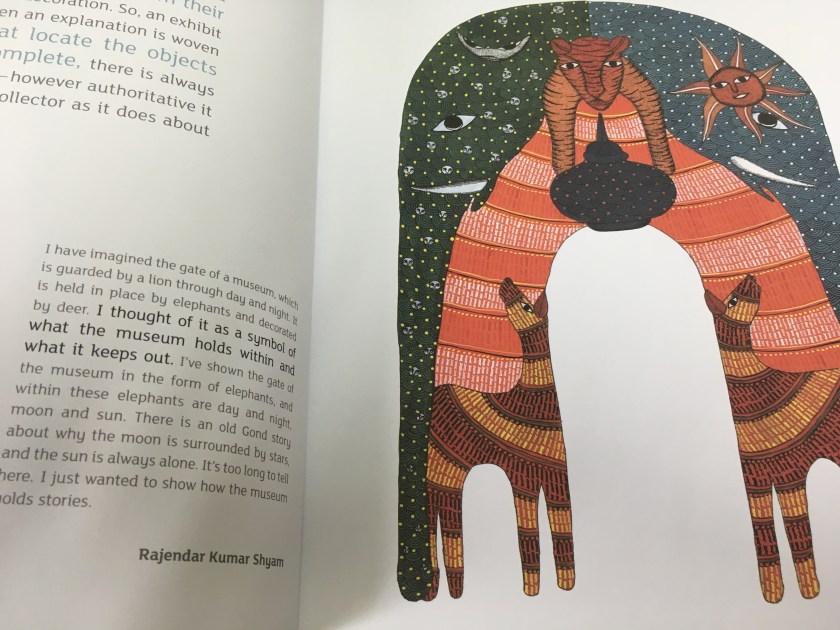
Of all the wonderful books I bought, I’d particularly like to highlight: “between MEMORY and MUSEUMIMG_6373IMG_6374” – a dialogue with folk and tribal artists, edited by Arun and Gita Wolf. Anyone teaching PYP, TOK or just anything about anything should get this book for the wonderful analysis and illustration of what museum and tradition and symbols mean.

Celebrating the joy of reading

Last weekend I had the privilege of being invited to join the first children’s literature festival in India, hosted by Neev Academy in Bangalore.  What a fabulous weekend it was.

IMG_6326

One of my constant concerns as a librarian here in Singapore in an international school is that I don’t feel that my collection reflects the many rich and varied cultures and identities that my students have. So I must admit (selfishly) one of the first things that crossed my mind when I was invited was YAY, I don’t have to wait until ECISlibrary2018 to go on an Indian book buying spree for my library!

When I arrived on Thursday evening, I met up with Maya Thiagarajan, author of “Beyond the Tiger Mom“, friend, ex-colleague and fabulous once-a-month book-club member. Getting together is always so exciting as we have a million-and-one things to chat about, and her move to Chennai has created a huge gap for me, but is a wonderful thing for India as she can share her knowledge, experience and expertise with schools there. We brainstormed together for a presentation we were doing for parents and the public on “grow to read and read to grow” and then she gave me her perspectives as a classroom teacher on my workshop for teachers and administrators on Classroom libraries. Then we decided to do the workshop together instead of separately as it would add a multi-perspective to it!

On Friday, the first thing that struck me as I entered the school, besides the warm welcome, was the wonderful posters and signage and set up.

The Friday was set aside for celebrating storytelling, books and literature with children. I must say I was really happy to see the emphasis on storytelling, since it is the basis of everything. In fact, when I was asked to run a workshop for 5 year olds, that’s the first thing I thought of – using a wordless book as a prompt to encourage students to tell a story.

My session used the wordless books “Chalk” and “The Typewriter” by Bill Thomson to introduce the basic elements of a story – build up to a problem and a solution. First I told them they’d been tricked and I wasn’t going to read a story to them, but they were going to read to me (groans all around) and then they proceeded to do so, with “Chalk” lured by the images! We then spoke a little about the problem and solution and I said I had another book where something similar was going on and they could read it to me as well. I then projected “The Typewriter” (as I didn’t have a hardcopy) and we went through the same procedure, adding more prediction in this time.  Then they went off to tables we’d set up with plain black goodie bags and cut out gold moons and stars to make their own “magic chalk” bag. They came back to the carpet and were told they were going to make their own story without words with magic chalk. We brainstormed some ideas of what kind of problems could happen and what their solutions would be. Such wonderful ideas, ranging from torrential rainstorms and flooding, to a meteorite crashing into earth, sharks attacking a mermaid, ghosts coming into the a house and scaring people etc.! We also chatted about how you would (in the case of the ghost story) show that time had passed and the ghost left and they came up with having a moon in some of the pictures with the ghost and a sun when the ghost fled. What was great was that some then said they wanted to do it in “teams”.  Off they then went, armed with A1 black paper, folded into 6 panels and unfolded to de-mark scenes and lots of coloured chalk.  As they were drawing I wandered the class with their teachers talking to them about the stories as they unfolded.  90 minutes without a break was barely enough to have everything finished and they proudly left with their magic bags and story creations.

The rest of the day flew by, popping in and out of classes and storytelling sessions, followed by the teacher workshop on classroom libraries.  I’d somehow misheard that it was for 15/16 teachers… actually it was for 50-60 teachers – their whole staff!  Maya and I had already (luckily, as that’s our philosophy) decided to take the tack that the existence or not of a classroom library was merely one part of creating a culture and eco-system of reading in a school. The session was lively and interactive.  That’s  one of the things I grew to really appreciate about what is going on a Neev academy – the vision of creating an alternative to traditional teaching and learning in their school, using the frameworks of the IB system and the encouragement of pleasure reading.  As a non-international school they shine out as a beacon for local students.

Saturday’s sessions were opened to the wider community and public with a rousing speech by visionary Neev Academy founder Kavita Gupta Sabharwal. 

Maya had the honour of being on a panel with Dr. Shyam Bhat and Sudha Murty and all three spoke of the importance of reading and storytelling, emotionally, from a neuro-science and educational point of view.  My panel on “trends vs. traditions” co-hosted with Jane DeSouza with Ankit Chadha;  Timeri Murari; Sohini Mitra and Reena Puri looked at the threats and potential of globalisation and the digital era on traditional storytelling, publishing and writing.

Then in-between another book buying spree at Lightroom Bookstore (who had a pop-up store at the festival). What a fabulous bookseller – I really really love independent bookstores with knowledgeable founders and staff who delight in the books as much as I do. Ones where you just have to start describing the book whose name you’ve forgotten and it’s suddenly in your hands! I had chance to meet up with the lovely librarians at both Neev Academy and Stonehill International School and we did what librarians do best – geek out on what our favourite resources were, what our websites included, how we resource our respective curricula and darn, there just wasn’t enough time so we have to continue our conversations online and through librarian facebook groups.

I then caught the tail end of  a lively discussion “Should we fear the Dark?” that explored dark themes in children’s literature – luckily I shared a taxi with Paro Anand afterwards so we could continue the conversation together afterwards. I love fearless authors!

Maya and I shared the closing session of the day, focusing on how to hook children on reading and keep them reading with some great audience participation, and before we knew it, it was all over!

A great weekend, incredibly well organised and curated, buzzing with ideas and thought stimulation, discovering new books and authors. My biggest regret was the inability to clone myself so that I could join all the sessions simultaneously. Well done to Neev Academy and Kavita.

(PS Here is a selection of the book loot – invited our Singapore librarian network librarians around to have a look last week!


No excuses: Syndetics

It must be an age thing – but as I’m getting further into my 50’s I’m becoming less tolerant of fancy sounding reasons and explanations that are actually just excuses for staving off change. This is the first of a series of posts on things that really annoy me as an international librarian, with a smattering of understanding of technology and a desire to serve ALL students, teachers, parents and administrators in my community as best I can. I have an overdeveloped sense of fairness and justice and I sometimes feel that librarians as a group are just too nice and suck up way too many things.

brazen

I’ll also admit to being emboldened by a FABULOUS new biography on women called “Brazen” (coming out in English next year – thank you Netgalley for the preview copy) You can preorder your copy now – suitable for High School 13+. And in fact this book just highlights what I’m going to write about today. This book originated in French. I’m currently totally inspired by the Guardian’s World library list and wanted to replicate it, adapted for primary school, particularly with a view to Uniting Nations day coming up in November.

bangladeshNow I work really hard at trying to transform my library into one that is representative of my students. I love the fact that my one Bangladeshi student asks me every week if I have any new books about or set in Bangladesh. And that at the beginning of term she came to proudly tell me that she was no longer the one and only but had been joined by another family. And when I showed her our new book about Bangladesh she took time out of her library browsing time to show me all the things the book depicted that were special to her.

I also work hard on my libguides to make sure that my books are showcased graphically and visually to make perusing them interesting for primary level students. So this is when I get really annoyed that Syndetics, the one interface for front covers that just about every system, from OPAC to libguides to LibraryThingsforLibraries uses does NOT seem to recognise that there is a publishing industry outside of the BANA (Britain, Australia, North America) countries – in fact they even struggle with Australia most the time. And don’t let me even consider China – well they cheat a bit – a lot actually – thinking that one ISBN number should suffice for a whole series of books – even if there are 57 books in the series.

This means that my libguide with my books from and about other countries, my catalog and my destiny discover new books respectively looks like this:


Spot the problem? And Syndetics actually prides itself in the fact that the covers of the coverless books are now colourful with title and author. NOT GOOD ENOUGH! For my catalog, my library assistants spend hours manually inserting the covers, and for the much touted, over promised under-delivered Destiny discover it’s just a blue boring nothing. So 5 of my 8 most recently purchased books are just blue blobs. So if you’re a librarian trying to diversify AND to make your new purchases appealing the cards are stacked against you.

Before I started writing this post I thought I’d do a bit of research into Syndetics, and the whole cover image thing. And then I thought no damnit. I won’t.  I don’t really care what the reason or excuse is. They’re selling an expensive service. They’re complicit in not improving the marketing of diversity of literature and I’m just going to put it out there and they can do the explaining, and hopefully a bit of soul searching on how they can make this better. What BIG things, what IMPORTANT and sea-change things they, as a big corporation as opposed to me as a little librarian in a little library serving 650 students from 40 nations can achieve.


Scheduling – priorities and dissonance

New year, new chances, old problems. The perennial one of scheduling library time. I kind of started commenting on people’s posts and questions on FaceBook and then decided it merited a blog post on its own. There is also a whole discussion on libraries and librarians going at the IBO level where priorities, recognition, roles, responsibilities etc. are also being hashed out. But coming from a corporate background and not an educational one, I sometimes can’t help seeing things a bit differently.

One of the most useful courses I followed during my librarian studies was “Designing spaces for learning”. And spaces weren’t just physical spaces, or even physical and online spaces, it includes temporal space – as I wrote about here  and design thinking. The thing is that time is the great leveller. We all have 24 hours of it a day, but what we choose to do with it is telling, because it will determine who we are as librarians and display our priorities more strongly than just about anything else we do.  I could even put money on the fact that if you walked into a school where there was a troubling relationship between the librarian and staff / admin and you asked to see the library timetable it could be used as both a diagnostic tool and a cure.

So I’ll begin this post by giving a shout-out to my principal who gives me the autonomy necessary to both think all this out and then to discuss it with her and implement it. She also gives me the support I need when things are not working optimally, if I’m reasonable in my requests and it supports student learning.  My PYP coordinators who are allowing me to be their educational partners also makes things a lot easier. And the school I’m at that generously allows for 3 support staff members in the library in their HR budget to open up time for me to be doing higher order teacher-librarian things rather than processing and circulating books. Now apologies for a barrage of management-type speak and jargon, please bear with me.

In library scheduling there are two main schools of thought, primarily defined as fixed scheduling (you set up a schedule each year / term, and every class gets their time to go to the library at that designated time) and flexible scheduling (the librarian’s time is bookable, on demand). Each have their benefits and drawbacks – with fixed you get to see everyone regularly, but in a large school you have no time left, or go on a two / three week schedule. With flexible you run the risk of never ever seeing some kids depending on the teacher’s ideas of the library, priorities etc. Most larger schools where the ratio of librarian to students is low (e.g. 1 librarian to 1500 students) opt for a flexible schedule. Our ratio is 1:630 with 34 classes so theoretically a fixed schedule can work, and I’ve tried to build some flex into it otherwise I’d never do the things that differentiate me from what a teacher or library assistant can do.

Priorities

The first part of the process is to decide what your priorities are. Now in education this is way harder than in corporate life, since often many of your priorities are set for you. It also took me a little while to get the experience and confidence to actually realise what my priorities should be and to advocate for them.  And also to decide what my priorities shouldn’t be and to draw a line in the sand.  Part of your priorities are governed by your school’s mission and value statement. Part is about your integrity to yourself as a professional (teacher) librarian and part is about the resources physical and financial your school has.

My personal priority statement is “I am about literacy“. So everything that has to do with any of the literacies (alphabetic, informational, numerical, multi-lingual and to a certain extent digital) I will prioritise.  I steer clear of discussions on makerspaces for that reason, partly because we have a dedicated STEAM department, and partly because if it has nothing to do with creating some form of reading, writing or research I consider it outside of my ambit. OK, shoot me, but you have to draw the line somewhere or you’ll have to compromise on something else, or just never stop working 24 hours a day.

The next thing is to think about how you are going to integrate yourself into teaching and learning in a collaborative way. There are two frequent laments heard in this regard “I don’t have time for meetings” and “I don’t get invited to meetings” – and here is where a supportive principal comes in. The very first thing that went into my timetable this year were the days and times for co-planning for each grade. It’s taken 2 years to get to this point and I only need / want to go to the meetings once a unit – usually a week or so before the unit starts so I’m involved in hearing where the team wants to go with the unit, what digital and physical resources they need and how I can meaningfully integrate information literacy or other ATL skills into the unit. I also only need to be there for about 10-20 minutes depending on whether it’s an old or new unit. So what about the other 4/5 weeks? Well I’m using the time to DO what the team needs. And if I’m teaching in that time, I can’t be doing. Doing includes making library guides (that’s how I have time for them), curating resources, ordering new resources, weeding old resources. Although I am not considered a HOD, my principal also kindly invites me to the weekly lead meetings so I know what is going on and coming up, and can involve the library in any way that is meaningful.

Then comes the fixed part, which fulfils my literacy priority. Since I do have a manageable ratio / number of students / classes, I have a fixed part of my schedule whereby each student gets to come to the library once a week. How has this been engineered? By chunking time and students. 40 lesson periods and 34 classes would mean no time for co-planning, co-teaching, own planning let alone the library facility management stuff. So, based on the advice of my predecessor and in the face of intense resistance from teachers, the timetable was split into 20 minute library times from G4 and under and kept at 40 minute sessions for G5 & 6. The compromise for lower level teachers is they can pair up with another teacher in the same grade had have 40 minutes with 2 classes. It’s not my preference, but they may choose this.  I do this because I want to see every single child every single week and make sure that I am helping them with free voluntary reading.  In Krashen’s (2004) words ” evidence from several areas continues to show that those who do more recreational reading show better development in reading, writing, grammar and vocabulary, These results hold for first and second language acquisition, and for children and adults. ”  I am an unabashed book pusher. I do everything I can to put books in the hands of children that they want to read. And to do that I need to see them and I need to know them. Especially the ones that will only come to the library that once a week.

Yes you can do a library lesson in 20 minutes, if you have staff who can do the check-in / check-out and shelving while you’re doing the reading, the mini-lesson and the reader-advisory, and if your teachers are in the library helping. Yes I do get that much support from my school and I’m very grateful for it.

Another small note on this section – switching costs nearly killed me in my first year. I was doing a G1 class then a G6 class then a G3 class then Kindergarten jumping around day in and day out. So I asked teachers to try and schedule in the library so that all the classes in a grade (or 2 grades, depending on number of classes) were on the same day. It worked last year and we kept it up this year – it was actually easier timetabling that way – constraints work. There were only 2 exceptions where the larger school timetable and teacher preps meant that I’m taking a class to help them out on a day different to the rest of the grade. That’s not bad going.

My next priority is multi-lingual literacy. Actually part of it comes in the fixed part. We are a bilingual English/Chinese school. I am the parent of two bilingual children. A child is NOT bilingual unless they are bi-literate. I will not compromise on that. I faced fierce opposition from parents complaining via teachers when I insisted that every child in the bilingual program had to take home a book in each of the languages irrespective of their ability to read in that language at that point*. I am very uncompromising on some things and this is one of them. At home, I have two bilingual teenagers, one in Chinese, one in Dutch who are still doing their languages as a first language only because I am uncompromising on the fact bilingual has to be bi-literate otherwise you are fooling yourself. And bi-literate means reading and writing. The classes that have “first dibs” on the library timetable are the bilingual teachers. One of my library assistants has to be fluent in Chinese and able to read aloud to my students and help me curate chinese resources.

So those are the bilingual classes. We also have ELL (English Language Learners) and students doing French as a second language. Their teachers also have (and take) the opportunity to bring their students into the library (or the library classroom where my world language resides) with their students every week. Language can just not be taught in isolation from books and reading.

The learning eco-system priority. Teaching and learning does not occur in a vacuum. Children are part of a family, a linguistic community, a social community, a cultural community. At the primary level, besides teachers,  parents are my best allies in my literacy goals for my students. So they get two periods once a week for library information sessions, for time to drop in for some reader advisory, for meetings the school needs to hold in my space for them.  I am a neutral zone. I am there to help them realise their goals for their family.

Then there is my co-teaching / information literacy teaching priority. I’m listing this last just because it’s last in the process, not because it’s last in priority. Doing all the above, specifically the 20 minute slots with the younger kids gives me 8 x 40 minute periods where I can make myself available for whatever lessons my teachers would like me to teach in the library or in the classroom. These are not used every week, but now that we’re integrated the research ATL into units they will be used far more.

My library facility priority, means I’ve blocked off 2 periods for inter-campus meetings, either by google-hangout or face2face with my fellow librarians and with my own staff.

These are my priorities and how I’ve structured my temporal space to accommodate them (see below). I’m in primary school – people in MS or HS may have other priorities and concerns. People in larger or smaller schools will have other issues. But the bottom line is your priorities need to be worked out (it’s taken me 2 years to get here and to articulate them), and reflected in your timetable. And you need to articulate them well so that if necessary you can argue your case with whoever is getting in the way of allowing you to reflect them in your timetable.  Things may and probably will change, but that’s it for now.

library timetable 2017:8

As a closing note – another part of the IBO library/librarian discussion was about the “super-librarian” archetype. I don’t want to be a super librarian. I want to be a great librarian. When Clark Kent is busy being superman, he neglects being Clark Kent. We cannot afford to be super-librarians because super librarians can and do burn out. And while everyone around this type of librarian says how super-librarianish they are, I don’t think they get the recognition they really deserve as librarians. And their successors have big shoes to fill, but not necessarily the right shoes to fill.


* Why do I insist on this? Often they can’t read the book, sometimes/ often their parents can’t read the book. Because they can’t read the book YET. Just like my kindergarten and pre-kindergarten children take home books they can’t read, so too my English / French / Dutch speaking kids take home Chinese books because the assumption has to be that they WILL be able to read those books. Otherwise get out of the bilingual program. Seriously. What do we do with mono-lingual kids who can’t read? We read to them. What if we can’t read? We sit and page through the books with them and we ask them to explain the pictures to us.  We ask them to point out the words they do recognise. We ask them to point out the letters they recognise.


Junior fiction – what’s hot and what’s not

It’s a public holiday today, so instead of doing what I should be doing (making questions for the Readers’ Cup), I’ve been ordering replacement FollettBound books – for the ones that have fallen apart and are now out of print.  Easier said than done. There’s a reason (some) books go out of print. And junior fiction is a very special and dare I say, very fickle, niche in children’s books.

I started looking through our lists of what’s circulating and what’s not and it was rather fascinating how tastes, and perhaps even reading ability is changing over the years. Our Junior section caters for the Grade 1 to 3 crowds (6-8 year olds). Or to be more accurate, those who have gone past the early readers and are not quite ready for more substantial chapter books yet.

[Have I ever moaned about Follett Destiny before? If not, just a little aside about how difficult it is to get the kind of reports you’d like to have easily. So for this exercise I ran a “Shelf List” by call number, grouping call numbers together, and requested circulations for the last 2 years and publication date (price is the other alternative – economically useless because for my purposes cost is sunk cost, the only relevant piece of information here would be publication date and acquisition date – since newer books have had less time to circulate… are there any real current or former librarians actually working at Follett one has to wonder?). ]

Looking mainly at series – because this is so the age of reading series, what’s happening amongst my elite little bunch of international kids in Singapore?

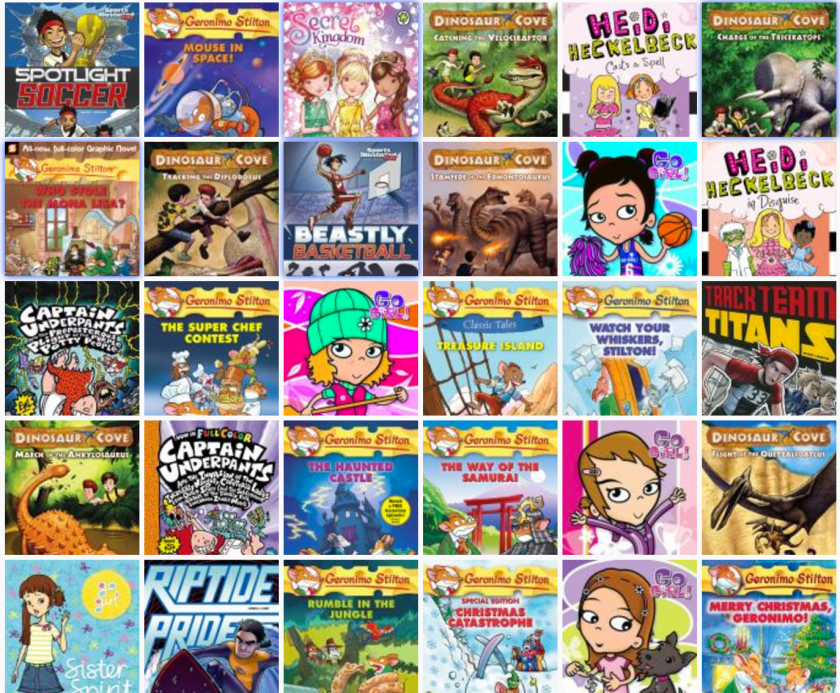
What’s Hot 

Screen Shot 2017-05-10 at 15.03.32

  • Geronimo and Thea Stilton (may I admit I’m not rushing to replace these as they die a natural death through over-circulation?)
  • Billie B Brown
  • Star Wars
  • Heidi Hecklebeck
  • Go Girl
  • Captain Underpants
  • Jake Maddox
  • Sports Illustrated Kids / Jake Maddox
  • Dinosaur Cove (and oldie, still hanging in there)
  • Minecraft adventures / Zombies (I don’t think they’re actually reading these as the level is too high for them – need to replace them with something easier)
  • Secret Kingdom
  • Danger Dan (yay for local authors visiting who make a difference)
  • Jill Tomlinson (yay for teachers who champion good authors)
  • Red Dot Books (anything on the current and prior year’s list)

What’s gaining Traction

  • Scholastic Branches series – especially Princess Pink & Owl Diaries
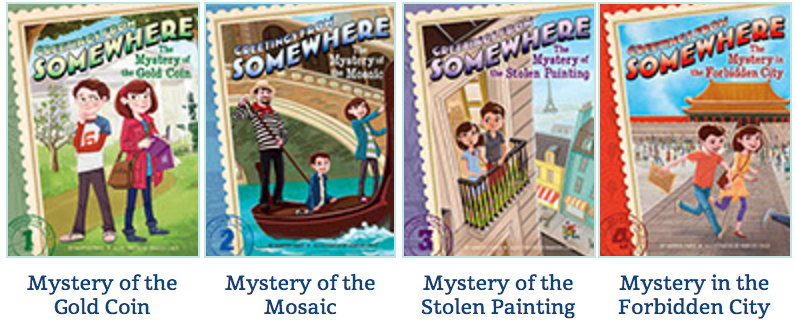
  • Greetings from Somewhere
  • Galaxy Zack
  • Dragonbreath
  • Kingdom of Wrenly
  • Dory Fantasmagory

What’s Surviving

These titles are circulating regularly but not spectacularly – but not badly enough to be culled. And some may have merit imho so I probably need to push some of them more

Screen Shot 2017-05-10 at 14.50.50

  • Zac Power
  • EJ12
  • My Weird School
  • Judy Moody
  • Magic Treehouse
  • A-Z mysteries
  • Clementine (I personally love this, so need to push it as a read-aloud)
  • Roald Dahl (the older books do better than the early books)
  • Ready Freddy
  • Cam Jansen
  • Horrid Henry – but not Horrible Harry (both I think are awful)
  • Rainbow Magic (although some titles are not going so may be time to cull a box of these)

What’s Not

  • Marvin Redpost
  • Nancy Drew Notebooks
  • Tashi
  • Bailey School Kids
  • Box Car Children
  • Owen Foote

Find out more about what our students like by visiting our “top 10” lists of Fiction, Junior Fiction, Picture Books and Graphic Novels.

It’s not (just) the book

This is a post I’ve been meaning to write for a while. A long while. I’m a member of quite a few librarian and school librarian groups and invariably, at least once a month, a question will pop up asking for a “killer” book. Either one that is perfect for reluctant readers, or one that will entice students to read, or the perfect book for boys, for grade 2, 3, 6, middle grade. There is an assumption out there that there’s a quick fix. That one book that will transform lives, transform non-readers to readers. It’s that one dose of the right drug that will make of our students little reading addicts. Firmly entrenched in the Judaeo-Christian culture of the “road to Damascus”. There is a similar culture amongst dieters and sports people. The one tablet, the one food, the one diet, the one coach.

The truth I’m afraid is more nuanced. Yes there are books that capture and imagination and hearts and minds. Just as the “Kid magician” captured that of my BWB (Blokes with Books) last year. But I think once the flame is kindled with a book, the fire needs to be continually fed in order to keep burning.

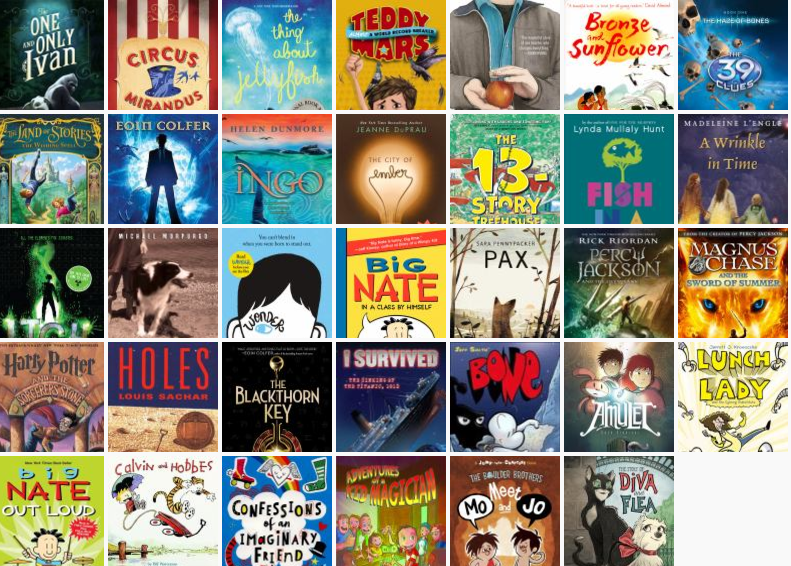
Since I’m giving a session at the AFCC I was asked to provide a book list so that the books could be available after the session for parents and students to purchase. So on Friday I asked my blokes to write down the top 3 books that they’ve read in the last few months. When they’d done that some grumbled that 3 wasn’t enough, so I let them also add “the ones that got away”.  I’ve just gotten around to analysing the list. Now a list is a list prima facie, unless you have a very good feel for what is going on in the school and the environment it would be very easy to misinterpret this list and think that there was something special about the books.  Yes, each of the books selected by the 21 boys have merit, but there is more.

  1. The top books are books with “cult status“.  I deliberately said they couldn’t choose “Wimpy kid” because it’s already at the top of my “top 10 fiction” lists each month. It’s also the book that everyone always mentions as a panacea to reluctant readers. We know that, let’s move on. So in our top books we find the series of “Storey Treehouse” (Andy Griffiths and Terry Denton). Then comes Harry Potter (JK Rowling) – who is still making his mark, followed by Amulet (Kazu Kibuishi) and Conspiracy 365 (Gabrielle Lord).
  2. The next set of books are very special. Mainly because I KNOW they were teacher read-alouds to various classes. This I think is very important. Yes they are great books, I know because I recommended them to the various teachers. But they aren’t always the easiest books to read independently. These include Because of Mr. Terupt, Pax, Wonder and City of Ember. I cannot over emphasize the importance of teachers reading books aloud to their classes. Particularly “first in the series” books.
  3. The following set shows the power of carefully selected books for national or regional book awards. In this instance the “Red Dot Book Awards” run by the ISLN. Of the selection for 2016/7: Secrets of Singapore; Confessions of an Imaginary Friend; The Thing about Jelly Fish; Blackthorn Key; Bronze and Sunflower; and Circus Mirandus; made the lists. Once again, these are books that students probably wouldn’t naturally gravitate towards, but which have received a lot of publicity in the school, we have at least 6 copies of each which means they’re more widely available and read and talked about.
  4. The power of author visits. During the past year we’ve had the authors of these titles, and it’s shown clearly in their popularity: Sherlock Sam, Secrets of Singapore / Danger Dan.
  5. The rest. What is so interesting about the list is that 21 boys selected 36 different titles in their top 3 lists and a further 10 titles in their “ones that got away”. I really like that. It shows an increasing maturity in reading and a diversity in taste and choice.

The complete list can be found here:

BWB favourites


Books I wish would be published

I’ve been asked to be on a panel at the AFCC to chat about “Books Teachers Wish Authors Would Write” from a teacher / librarian perspective. So I put the question out on one of my teacher-librarian networks (an international one) and these were the responses I received:
  • World war 2 in Asia- novel for 8-10 year olds (NF / NNF)
  • big shortage of narrative nonfiction that is NOT about the holocaust, slavery, the American great depression or US civil rights. Also shortage of intra-Asia migration stories not Asia to Europe / north America (NF / NNF)
  • Third culture kids as main characters (CD)
  • More stories about our present/ early future stories that include digital tools and behaviour (D)
  • I’m looking for things like “lego ideas / lego play” but in small manageable books that kids can take out without breaking their backs / the book
  • nonfiction – updated human rights / millennial goals / NGOs / Poverty etc. for G4 level (9 year old) mixed format, good graphic design, mix of narrative and fact (NF)
  • Middle school nonfiction – life in different economic / political systems – communist, socialist, social democracy etc. with a world wide unbiased view of positives and negatives with personal stories and data (NNF)
  • Books on gaming or from the creators of games like Minecraft, Roblox, etc. (D)
  • Conflicts over resources around the world – case studies that are elementary friendly (NF)
  • The next “The Outsiders.” Something to appeal to the teens who fall in love with it in class, and are looking for something like it.
  • Decent Biographies that are at elementary aged level & middle school level without being dumbed down – with more Asian protagonists! (CD / NF)
  • Books purposely written for upper ES that has appropriate content and reading “level” (ELL)
  • More ES novels featuring multicultural characters that are not related to war or historical events (CD)
  • Books about world topics that are appropriate for kinder/g2 (NF)
  • Modern urban indigenous stories – universal experiences in all first nations people. (CD)
  • Easy read stories that are well written & not dumbed down for teens. – yes! especially for our ELL students! And that don’t portray just the…..dark side of life? I feel like when I was purchasing for xxx, the high interest/low level books all were about gang members/drug dealers in the US. (ELL)
  • Science fiction for Elementary kids. (SF)
  • Middle Grade fiction with a Korean protagonist (My Name Was Keoko style) (CD)
  • Books with culturally diverse characters. I still remember teaching a boy could Yousef who threw the book down in disgust and said ‘Why can’t they give them normal names?’……the character was called Joseph. Which really isn’t that out there, unless you’re an Arab boy. Then it’s just weird. (CD)
  • LGBT books for tweens (G)
  • Definitely more emigration/immigration stories that are intra-Asia. There are so many diaspora stories to be told that have nothing to do with Europe or North America. (NF / NNF)
  • Does anyone want war stories set in Asia – like Japanese invasion/ Korean War / American or Vietnam war with perspective from the non-western side – or is that too sensitive? (NF / NNF)
  • My teachers want more World War 1 fiction for grades 6-8 and social justice books for middle schoolers.(NF / NFF)
  • My middle school girls want more heroes that are NOT princesses. (G)
  • My boys want fiction that has video game elements like Minecraft stories.(D)
  • All of my high schoolers want “classics” with better covers.
  • what about this: teachers, school, parents do not compare my score with others, do not give me homework, I want to play. (C)

I’ve tried to code the answers as follows:

  • NF / NNF: narrative nonfiction – 10x
  • CD: cultural diversity – 6x
  • D: digital / gaming element – 3x
  • G: Gender related – 2x
  • ELL: hi lo / books for English Language Learners – 2x
  • SF: Science fiction – 1x
  • C: cultural issue – 1x

Looking at these I think that the theme is a general frustration with a lack of books with an Asian context.  Particularly historical fiction / narrative nonfiction and culturally diverse characters. We all know that the USA dominates publishing, followed by the UK. Australia has some good stuff out but limits itself by its steep pricing, expensive shipping costs and insular publishing industry. China is a late entrant into children’s books and is making great inroads – but mainly in translation into Chinese. What is particularly commendable is that they are not just translating the (North) American staples but many of the brilliant and wonderful European offerings.

Then I did a similar exercise with the BWB (Blokes with Books) yesterday. I asked them to go in groups of 2-4 students and tell me what kind of book they were missing in their lives. Books they wish authors would write.   They were amazing – a couple of groups even started writing the books they wish were written (a nice outcome given the fact that teachers are now complaining that we’ve got them reading but their writing is still poor).

Their suggestions could also be broadly grouped:

  • Two groups wanted Harry Potter extensions or back stories – one wanted the parallel books that focused on the other houses, not just Gryffindor Tower. Another group was fascinated by the horcruxes and wanted a book on that.
  • One group wanted an elaborate Pokemon book that inverted some of the characters with unexpected twists.
  • One group combined the ideas of the three group members into a fantasy / reality mixture involving video games and rugby with a wimpy gaming protagonist being forced to play rugby by an over-zealous parent and learning tricks and manouvers in video games that led him to dominate on the real life rugby pitch.
  • One group wanted (and started outlining the chapters) of a Roblox user manual.
  • Quite a few of them agreed they’d like fiction books with colour pictures inside

I’d like to add a note to the above list – the students are not yet familiar with fan fiction, and I’m not sure they’ve looked into the Harry Potter wikis. In a sense that makes me happy that they’re still at that wonderful age where this type of magical immersive reading stuff is to be found in books rather than online. They are aware that there are user forums on these games and chat rooms etc. BUT THEY WANT TO READ ABOUT IT IN A BOOK. This is a GOOD thing. Whenever they ask for books about Minecraft and Roblox and video games and I tell them we have some of the storybook series, the Minecraft “how to” and “surely you can just ask online” they say “but we want a book”.  There are few Roblox books and they all seem to be eBook editions (publishing haste?). The Minecraft adventure books are not what they’re looking for – remember the colour pictures comment? They want more graphics! I think also as adults we see their online/offline selves as separate, whereas they don’t, and they want to see that new normal reflected in what they read. They’re all avid fantasy readers, and that I think is partially meeting their need for that online/offline fantasy/reality integration.

A caveat to all the comments (and a personal gripe) – above all children want a well written story. They don’t want to be preached to. They’re sophisticated and well- and globally read. And they can spot the fakes. As a teacher-librarian I get immensely frustrated by wanna-be and self-published authors who keep trying to foist their wares on me when it’s immediately apparent that they’re poorly written, even more badly illustrated, not edited and horribly and cheaply published. Writers need to read. They need to read a lot, they need to read widely. They need to research not just their topic but also who else has written about it, tangentially to it, similarly to it. If you want to self-publish, unless you’re a designer, pay someone to do your design for you. Unless you’re an author-illustrator find the best illustrator you can afford. And everyone, join a writing / critique group (like SCWBI) – honestly, other authors are not out to steal your ideas – they’re too busy working on their own passions. And when you think you’re done, get a good and critical editor. All authors need good editors, even great authors. Do yourself a favour and look at the interactive TS Eliot “The Wasteland” and see all the handwritten edits by Ezra Pound.

To come back to the forum and the original question that started all this:

“Creators can step into the shoes of a teacher for one hour and learn what makes a book a treasured find. From beautiful illustrations to didactic language, speakers discuss their views on relevant and useful books children need and love.”

What a huge question. Relevant is not always pedagogically useful. Useful for whom? Relevant to what?  I’d like to end with the most relevant and useful and just plain wonderful book I’ve encountered this year – Stormy seas: stories of young boat refugees. 

31213610 Well done Annick Press (that does a lot of amazing things – particularly in nonfiction) It has become the new gold standard to which I will hold all nonfiction. The elements that make it so special:
  • Great graphics – combination of good design elements with original primary source photos
  • Easy to navigate blocks of text
  • Personal stories
  • Historical facts
  • Timelines
  • Maps

It is not out yet (April 2017) and I got a preview copy through Netgalley (sign up if you’re a teacher / librarian), I showed it to a couple of classes from G3-G6 and all were clamouring for a copy afterwards – something unusual for nonfiction. And when I couldn’t give them I copy I managed to “sell” some of my otherwise untouched narrative nonfiction / historic fiction books on WW2 etc.

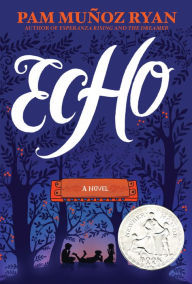
Another surprising (but not really because it’s so absolutely wonderful) hit has been Echo. It’s a huge book but every child and adult whose hand I’ve put 22749539it into  has just loved it – depite the fact that it takes a while to get through. Why – I suspect that the range and diversity of the characters and settings is satisfying to my international audience. But it is also great storytelling. And then they go on to read all the other Pam Muñoz Ryan books, which is also an excellent outcome.


What would you like to see more of that is “relevant and useful”?

But I was born here!

One of my favourite UOI (Units of inquiry) has started for my G3 students – in our library lesson last week I introduced the theme through reference to (a somewhat dated, but still very clear) video

Now one thing you can be certain about with students is that their responses will not be predictable. So too this time – what happened? They were cheering every-time their own flag appeared – irrespective whether it was to say that their nation was in the “top” for migration to or from – the subtlety of the relative positions totally escaped them.

At the point of the video where there is talk about how visa systems let people in or exclude them, I paused the video and mentioned the fact that actually all of them sitting there were migrants. Shocked silence for a few seconds followed by indignant cries of “but I’ve lived here all my life” or “but I was born here” or “my parents have lived here for 12 years”. I then asked how many of them were Singapore passport holders. In the 4 classes I had that afternoon, none. Yet they were all insistent on their rights not to be called migrants. I suspect they think of migrants as migrant workers in the sense of their helpers or construction workers.  When we got to the “push” and “pull” factors I said perhaps they should go home and ask their parents what were the push and pull reasons for being in Singapore.

How protected a life our students lead. A large number of leaving parents have come to me at the end of last year to have their library records cleared and signed off and told tales of the employment pass holder being made redundant and a home leave Christmas holiday being turned into a “packing up in a hurry and going home to an uncertain future” holiday. Those children leave and the ones left behind have no idea of the realities, are shielded from the realities.  I remember how few children could relate to Eve Buntings “Yard Sale” during the Global Read Aloud last year. They could only tell tales of moving to ever larger houses and getting more possessions rather than scaling down. The offspring of the 1%.

How much should our children know? How much should these sad, difficult and terrible things be made real and relevant to them instead of being images on screen or stories in books?  And if we make it more real, do we build empathy or fear?  I remember my daughter having weeks of nightmares after first learning about 9/11, combined with a trip to the coastal defense museum in HK and jets flying at the level of our apartment in HK. 5 year olds are not good with historical time perspective. Perhaps 8 year olds are not good with financial and living condition perspectives. Tough questions. Is this the right unit for Grade 3s?

You can find my research guide for the unit here, but I’d like to highlight some resources I find particular effective include:

Virtual reality

Clouds over Sidra

//player.with.in/embed/index.html?id=21

Interactive documentary

Refugee republic

Dynamic flow map

Also only until 2010, but a brilliant piece of interactive mapping of migrant flows too and from countries.

As educators we are expected to present information in a neutral fashion. I can only hope that some of our students are able to take what we present and link the past to the present and the future given the current changes in global politics – particularly with relation to human migration.