Our G6 students are currently studying Ancient Greece and will soon be embarking on a week long “week without walls” trip around Greece. Besides our nonfiction books on the City States and other aspects of Ancient Greece here are some more titles the “riff on the theme”.
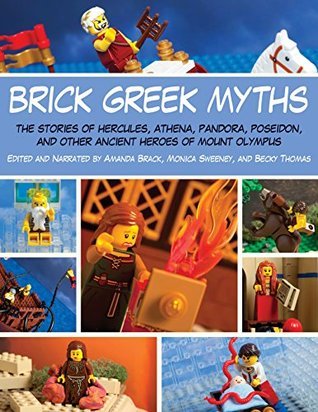
Of course an easy hit are those around the Greek Myths, and yesterday and today I went to the social studies classes and with a trolley full of Greek Myth books, in particular the multiple copies we have of the 12 George O’Connor Olympians series and each student could check a book out. Not depicted on the poster but one of my absolute favourites series are the “Brick Books” where various classic tales are depicted with Lego Bricks. Unfortunately many of the series are now out of print, but in previous libraries I’ve had the full set of Shakespeare plays, fairy tales etc.
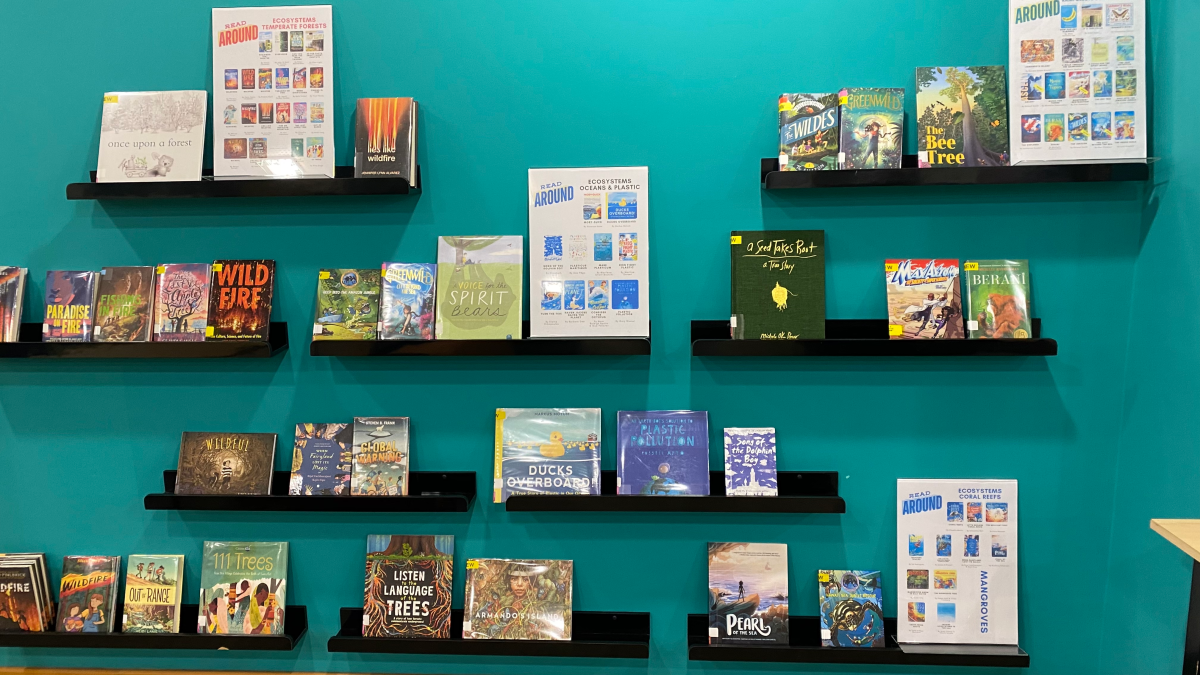
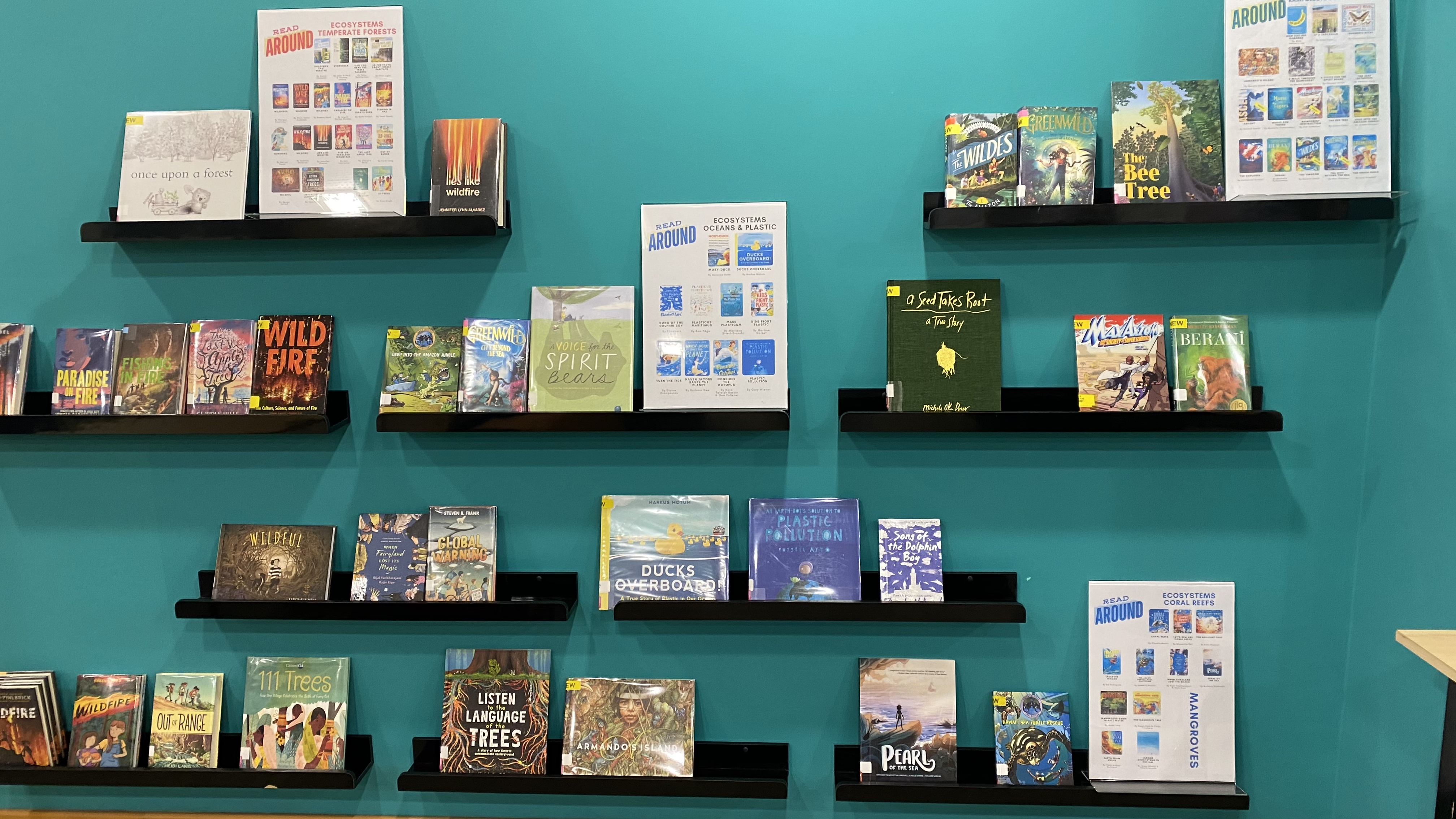
When I wrote the series of blogs in December for GLLI many people asked about displays so I remembered to take a picture of a couple of our displays of last week. We have two main spaces downstairs for display, one as you walk into the library and one against the wall. So one was dedicated to ancient Greece and the other to our Ecosystems projects.
The entries below constitute the International experience Portfolio. First a summary of each organisation is presented through the Study Visit report, and then the aspects I wish to highlight are presented.
Although I’m living as an expatriate in Singapore, which is its own cultural experience, one realizes you can experience culture on a number of levels. Each organisation we visited had their own unique culture and identity.
In the libraries this was expressed through the design of the various spaces, the emphasis of the collection and the staffing choices. At each organisation what was very striking was the way in which employees expressed their identity through the organisation of their desks. At Singapore Press Holdings for example the open plan office was filled to the brim with hundreds of indoor plants of all descriptions. There was even an aquarium on one desk. At Singapore Polytechnic, employees had used the desk lamps to hang a myriad of little figurines and toys and all attempts to create a truly open plan office were being thwarted by staff needs for privacy and their own space.
Libraries where the head librarian was ‘politically’ well connected or where the organisation head was vested in a thriving information community were better staffed, better resourced and had more vibrant, innovative and enthusiastic feel to them. That’s not to say that other libraries didn’t do an excellent job of managing their resources and putting library users first.
Instead of writing this chronologically, I’ve divided the experience into the areas that I found most interesting in the visit and where there were noticable differences between the libraries:
* Collection
* Reference Services
* Promotion
* Physical Environment In conclusion the trip was extremely valuable both from a librarianship and a cultural point of view.
The survival of both the physical entity and concept of “the library” depends on it being well utilized. All libraries visited were extremely proactive in their promotion efforts. Most began during the orientation week with activities to get students into the library. These ranged from library orientation programs in the form of games, exhibitions and events. At NTU, each new student gets a letter from his/her “personal librarian” inviting them to tea!
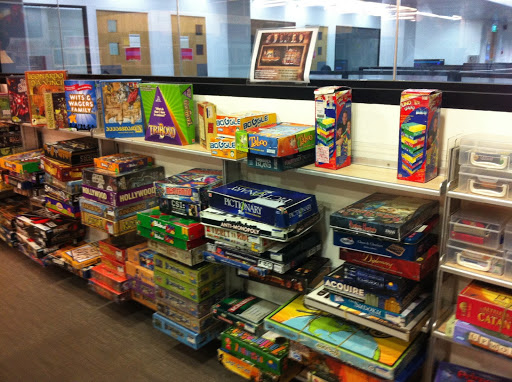
Ngee Ann Polytechnic use their interactive space for presentations and lectures, outside visitors and have created a very inviting “lifestyle” area based on a bookstore / cafe concept. They were the first academic library here with a life-style area and took their ideas from shopping centres and bookstores and cafes and ventured out of the library to see where their students hung out. As a result they created a board game zone which is a popular cafe concept in Singapore. They have an extensive collection of both common and unique board games. Having a Board game rooms was a theme we saw duplicated in nearly every library here.
Ngee Ann – a collection on wealth creation situated next to the Bloomberg monitors and a presentation area where speakers are invited on finance / entrepreneurial / business matters.
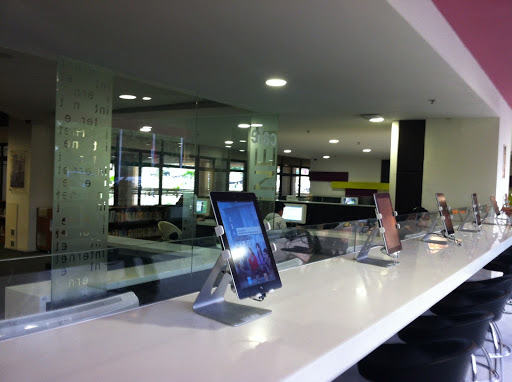
Cafe with bar stools and ipads in Lifestyle area
Interactive desk top with games and quizes
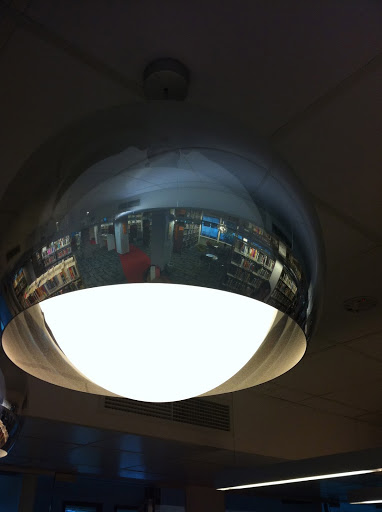
Student designed lighting
Singapore Polytechnic differentiates different areas of the library by colors and has invited students and lecturers to play an important role in the design of the library and the library furniture and hardware. This has resulted in students feeling a sense of “ownership” of the space, as well as very aesthetically pleasing areas. Details such as display, lightening, notice boards, magazine cabinets etc, had been designed and created on campus.
Innovative flexible signage
The library was also exploring having makerspaces with 3D printers, lego mindstorms and creative space where students were challenged to create something with materials provided.
interactive booth
Almost all the libraries provided some kind of an e-newsletter or alert service to subscribers. Most had some presence on social media, the most common being Facebook. In some instances the Facebook presence was as a marketing or information tool on services or newbooks or event advertising (Temasek, Singapore Poly, Ngee Ann, NTU, NLB, ), in the case of SMU they explicitly chose to use it purely for social interaction and to use other mediums for promotion. Temasek had an interactive booth at its entrance with various features including an auto-photo link to Facebook.
Libraries also created posters to share around campus advertising new books, events or other services. A particularly cool idea was that of the off-site or on-site book fair. In the case of Ngee Ann, as they are affiliated with the Ngee Ann shopping centre, they hold a big book fair in the shopping centre, where vendors put books on display for sale. Students can then go and browse and “purchase” a book, if it is not already in the library catalogue, it is then purchased by the poly, processed and immediately loaned to the student.
Some of the libraries (UWCSEA, Ngee Ann, NLB) had a bookcrossing / read and recycle programme which both helped promote the library and literacy, but also helped with the recycling of weeded library materials. The NLB has a huge public booksale each year which is very well received by the public.
Since libraries are moving towards more digital material, they also needed to make the digital collections visible through signage or links on their websites, in the facebook or other social media pages or other posters.
display “tree”
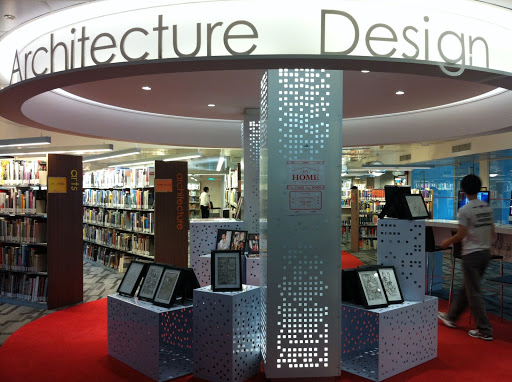
Thematic display
Promoting digital through posters
Promoting digital chinese dialect material
Database information
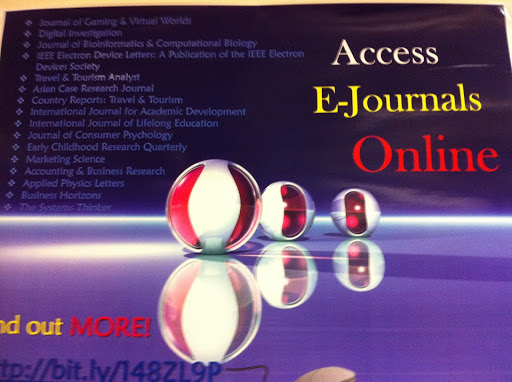
E-journal promotion
Most of the libraries had a promotional video, a selection of which have been posted below.









 Informative Flights - Musings of a Teacher Librarian
