Maths and beyond

A few weeks ago one Friday, just before our WEIRD (WAB Extended Independent Reading Day) there was a sudden surge in interest in maths books from our G8 students. Unfortunately a little further questioning revealed that it wasn’t so much math books on demand as some kind of math text very specifically on quadratic equations as the students had a test in the next block but couldn’t spend the WEIRD block cramming / practising spreadsheets but had to in fact borrow and read a book.

The only book that really sufficed unfortunately was Everything you need to Ace Maths. While this type of book is a necessary part of a middle school library collection (we are after all there to meet the needs of our students), it got me thinking about the other wonderful books we have in our collection that were summarily rejected by the students.

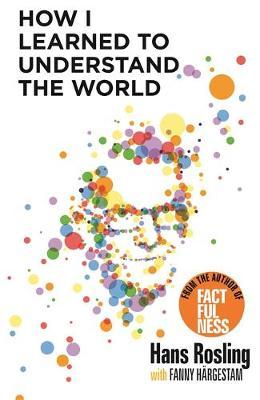
For a while one of my favourite has been Giorgia Lupi and Stefanie Posavec’s “Dear Data“. While not considered to be a traditional “Math” book it can help both teachers and students to change their pre-conceived ideas of how data can be represented. A book like this is particularly valuable in encouraging students who see themselves as more artistic and creative to seeing that one of the important parts of numbers is making the information contained in them visible visually. A point well made by Hans Rosling in his memoir “How I learned to understand the world” – a very enjoyable read by the late author of “Factfulness”.

Recently a most wonderful book landed on my desk. Actually the book that motivated me to write this post at all. Power in Numbers by Talithia Williams – it was an order from before the winter break that I’d made to expand the biographies available for our Grade 6 Unlikely Hero unit. Until now “Hidden Figures” (mainly as a result of the movie by the same name) was the main exposure our students had to the idea of women mathematicians. This type of combined biography is so exciting because it finally gives these women the exposure they deserve. And what I mean by deserve is in a big well designed hardcover glossy full colour book. It’s a trend started by “Goodnight stories for rebel girls” but goes far beyond both in form and content. The women are put in context both of the age within which they lived and the mathematics that they pursued. It’s a book that I was reluctant to let go of to be catalogued and one that I had to immediately share with the math teacher who shares my passion for books! For more from the author see her TED talk below.

Asian parents set a very high stake by their children’s abilities in maths. Our students at all ages are often exposed to acceleration in their arithmetic and math skills whether by Kumon or Abacus or other means. As my colleague is at pains to keep explaining, speed and the ability to use equations and “tricks” don’t always equate to true longevity in maths. One series of mystery books I enjoy exposing this age group to is “Red Blazer Girls” – where the boarding school based heroines use maths to solve mysteries. Often the kids with the so called “math smarts” struggle applying their skills to word / problem / real life based situations.

A few other books that I’ve added to our collection recently include “The Wonder Book of Geometry” , “How not to be Wrong” by Jordan Ellenberg, “Maths in Bite Sized Chunks” , “How to Bake PI“. Continuing in the line of trying to encourage creativity in Maths, there is the Mathematical Origami book and for historical context “Great Breakthroughs in Mathematics” and “17 Equations that changed the World” . Finally something for the sports mad – the Full STEAM in sports series such as “Full STEAM Basketball”

One of the Maths Teacher resource books that have been a hit recently is Peter Liljedah‘s “Building Thinking Classrooms in Mathematics. One of the benefits of social media includes being able to reach out to and engage with the authors of these books.

To end up this post, here is our Mathematics resource Library guide – happy to get more ideas of resources and the Maths books recommendations on a great website I was just introduced to today – Fivebooks.com! Worth some exploration as experts share their favourite top five books in various aspects of mathematics.

(Header Photo by Roman Mager on Unsplash)

Free voluntary (math) homework

I engaged in an act of (semi) academic dishonesty again last night.  It was a case of more of the “busy work” type math homework that resulted in repetitive plotting of co-ordinates on an x-y plane and then only on the positive parts of the plane in order to end up with a snoopy dog that then could be coloured. I’m not a cut and paste and colour type of mother. I also hate board games, Monopoly being my worst, so I don’t play them (and it turns out I’m right about that type of board games – great graphic by the way). So after my child had done the first 50 or so of the points, I told him to go and have a shower and get to bed to read his FVR (free voluntary reading) book. And I finished off the last 10 points and coloured it in.

I then tipped out the schoolbag and its assorted jumble of loose bits of paper. Yes ditch the textbook(s) (great blog by the way) but the result is a godawful bunch of loose bits of paper torn and tattered at the bottom of a schoolbag – if they make their way home at all ever. Scratching through my archeological dig of the last 2 weeks since term commenced yielded two interesting pieces.  The first was a reflection on a test.  The question “How could you have performed better?”  The answer “Make less careless mistakes and reduce stress as I was stressed out” (sic).  The response: “less” corrected to “fewer” and “you should refer to the work you did not your feelings”

Ah, learning and stress. Despite what the rats did or didn’t do in their maze, I can attest for the fact that when it comes to mathematics and stress, a certain young human in my life tends to shut down all cortical matter in order to be able to just breathe. So yes, his observation was right on the point, and the teacher was either naive or misguided or both. Small moment of positive affirmation that stress did not enhance the output during a test and that we needed to work on the emotional control as much as the preparation of the work to be assessed.

Next piece of paper, a “check-up” on co-ordinate planes. Except for the first quadrant, things didn’t bode well for the understanding, particularly when it progressed to manipulating co-ordinates (i.e. plot a triangle and then move it 5 spaces on the y axis and -3 spaces on the x axis type of thing).  Why the freakingflowers were we drawing snoopy for 30 minutes when there was more interesting stuff at stake?

All this detail goes to my thought now on math homework. Actually it’s thought that’s long time coming starting when a certain child was failing miserably in a Chinese school and we had all this homework to do that kept us incredibly busy but never got us one step closer to helping him learn what he needed to learn to be able to participate at all. I think the academic term is “self paced learning”  but I wouldn’t go so far, since I don’t think that’s really necessary anymore. And the self-paced thing is more geared to adult learning anyway.

I’d advocate for FV(M)H (free voluntary (math) homework). Within the context of a certain topic or module, there should be the option to do homework (or not) according to your needs and difficulties, rather than whatever has been set.  We are on one end of the continuum on math, and I know enough kids on the other end of the continuum.  But math is a wonderful thing that way – within any topic there is a huge variation and potential of what someone could spend 30 minutes working on!  (By the way, has anyone been following this discussion – it’s absolutely wonderful – the comments being as excellent as the post itself). So this evening that is what we did.  We actually took 2 steps back, since before co-ordinates was substitution, and substitution was still a rather confused mess.  We spent more than 30 minutes on it, and I wrote a note to that effect. I hope it will be positively received…
Small steps.  I’m wondering how far one can take ownership and control over learning in the school setting despite all the talk of differentiation etc. before the system feels threatened gets mad at you.

I’m still thinking a partnership is possible, that triangle of child, teacher and parent/tutor. My husband did say – “Isn’t that what Kahn academy is for”, but I think not. Kahn can help once you know what you don’t know. There is a meta-cognitive step necessary, a diagnosis, either through self-insight or observation. Who assumes that role?

360 degree whiteboards

Reflecting back on the past week, I actually had an abundance of opportunities for professional development beyond the “daily grind” of my studies.  It’s not really a daily grind, by my polymath brain does need a bit of light, or not so light or at least completely diverse and out of the box relief from the straight and narrow – (which isn’t really that straight and narrow I’m fortunate to say) of librarianship and teacher-librarianship.

Anyway, on Wednesday I stumbled on some PD on 360 degrees Math, thanks to my librarian edge boss who had chosen this as one of the topics to follow.

I’ll be upfront – of course I had a hidden agenda in attending.  I have a child who is struggling in math. Or let me put it otherwise, he alternates between coping really well and enjoying, nay loving the subject and his teacher, and failing every test or assessment placed in front of him. Between independently doing the homework assigned and falling way behind.  Basically I suspect he just does not “get” numbers. Something my more creative and design and interesting friends with well established creative careers tell me is totally acceptable and fine. Were it not for the coming 6 years of schooling he has to do math in.  So any tricks or wizardry or clues as how to make this process a little more palatable to the both of us is much appreciated.

The concept of 360 degree math was apparently launched by Sean Kavanaugh as a way to engage students. By having the students stand and solve problems at white-boards that surround the classroom, teachers see “evidence of the students’ thought processes as they unfold”.  In the old model of students hunched over their workbooks, “mistakes are usually caught long after they’re made and instructors may have trouble pinpointing where a student first went off the rails.”
The five steps of the structure includes:
  • “The Exchange: As each student enters the classroom, they’re personally greeted by the teacher—a sign of respect and welcome.
  • The Rewind: Students solve three relatively simple problems at the whiteboard to build their confidence.
  • The Micro-Lecture: The teacher gives a short lecture that’s kept between eight to 10 minutes in order to go over new concepts. 
  • The Practice: Students return to the whiteboard, where they spend the bulk of the class, to solve more challenging problems, facilitated by group discussions and collaboration.
  • The Proof: Work is done individually on the boards and reviewed by the teacher to help her plan the next lesson and understand where each student is in his or her mastery of skills.  ” (Antoniades, 2013, para. 10)
First we were the guinea pigs – trying to solve a range of problems pinned up on the board. Then we heard a little about the background to the idea of 360 degree math, and it’s variations – like writing problems or solutions on windows and then putting down the window blinds and gradually opening them to reveal the answers.   We considered the positive elements – having children stand and walk around rather than sit glued to their desks all day, the possibility of erasing mistakes and false logic easily and without leaving a trace or marks in a school notebook, the idea of making thought visible and mapped and seeing the process and strategy evolve.  The luxury of an expanse of whiteboard rather than a few lines in a book.   A few of the cons were the fact there wasn’t a permanent record unless the solutions and workings were copied down.  The chance that some students would copy answers rather than collaborate or work on the problem themselves.
As a mixed bunch of educators ranging from Maths and Science, to English and second language and of course the library we were immediately enthused with ideas as to how this could be translated to our environments.  
For the library, we are already using one table with a writeable surface, and have noticed that students use it a lot for collaborative learning, funnily enough, particularly in math, and the small portable whiteboard in the office behind the main desk gets a regular workout when we brainstorm as a library team.  If the library is to continue in its function as a collaborative learning space, designed as much for consumption as creation of information, of course we should be encouraging writing on the walls and windows. 
And I went home, cleared my son’s desk and took it out of his room, measured the walls where his desk had been and ordered a large whiteboard. I also cleared all the surfaces in his room, took out all the boxes of lego and blocks and bricks that he hadn’t been using for a while and put them into the storeroom.  It’s amazing the difference that less clutter makes. He wasn’t using the desk anyway – it was far to full of clutter, and he can never sit still at the table to do his homework anyway, so the loss of a chair doesn’t matter.  I put a tiny little table against one wall which he can use for his assignment if necessary.  It’s now Christmas break, so we’ll be using this method for revision of the  content areas that he failed his most recent tests on, and then use it for “real” once term starts again.  I’m feeling strangely hopeful.  We’ll see how it goes.

References:


360 Degree Math – Home. (n.d.). Retrieved December 14, 2014, from http://www.360degreemath.com/

Antoniades, A. (2013, October 1). Get Up, Stand Up! 360 Degree Math Revolutionizes Classrooms. Retrieved December 14, 2014, from http://www.takepart.com/article/2013/10/01/math-is-fun-360-degree-math

Teach (2013) 360 Math Whiteboards and Khan Academy Excerpt. (n.d.). [You Tube]. Retrieved December 14, 2014, from https://www.youtube.com/watch?v=7FQlXN9YZAI