塞翁失馬 The Lost Horse

I’ve just finished reading the really well written “The Many Meanings of Meilan” by Andrea Wang. Having spent 16 of the last 20 years in Hong Kong, Singapore and China it was a reminder of so much of my time there and the discoveries of the language, literature, poetry and idiom.

There’s a lot happening in this book, but what I enjoyed most is the idea of naming and meaning and the ambiguity of sound and meaning in the homonyms of the Chinese language. I loved how she wrapped herself in the different meanings of “Lan” depending on the character, so as to adjust herself to the interpretations of herself of others around her, while discovering who she really was and claiming herself.

It also reminded me of the first time I came across the 塞翁失馬 (sai weng shi ma) chengyu – enjoy.

From November 2009

Today a story. Here is the famous story which is commonly interpreted as saying that “every cloud has a silver lining” This is the version from YellowBridge. Certainly in my own life in the long run this parable has proven to be true. But as impulsive as I am emotionally I don’t always recognise it at the time!

“A man who lived on the northern frontier of China was skilled in interpreting events. One day for no reason, his horse ran away to the nomads across the border. Everyone tried to console him, but his father said, “What makes you so sure this isn’t a blessing?” Some months later his horse returned, bringing a splendid nomad stallion. Everyone congratulated him, but his father said, “What makes you so sure this isn’t a disaster?” Their household was richer by a fine horse, which the son loved to ride. One day he fell and broke his hip. Everyone tried to console him, but his father said, “What makes you so sure this isn’t a blessing?”

A year later the nomads came in force across the border, and every able-bodied man took his bow and went into battle. The Chinese frontiersmen lost nine of every ten men. Only because the son was lame did father and son survive to take care of each other. Truly, blessing turns to disaster, and disaster to blessing: the changes have no end, nor can the mystery be fathomed.

塞翁失馬 (sai weng shi ma), the title of this story, is actually a commonly used Chinese idiom or chengyu . It literally translates as “Old Sai loses a horse”. Old Sai is the wise man in the fable. The expression is used to remind others to take life in stride because things aren’t really as good (or bad) as they seem. Certainly seems like a wise advice for a society that lives only for the present.”

Ed Young has written this into a children’s book.  We’ve got some compilations of Chinese stories, but kids somehow like having one story per book and to have that story lavishly illustrated.

#Collection Development – Muslim “own voice”

I’m super late in sharing this presentation I gave the the L2L (Librarian to Librarian) workshop that I co-organised in Dubai in 2023.

Having worked in the Middle East for the first time, and with a predominantly muslim demographic meant I needed to get up to speed on what ensuring our collection mirrored our students would mean. Here are some suggestions – I’m no expert and have suggested links to people who are and whose guidance in this area was invaluable.

Here is the slideshow with some suggestions of books to add to a collection.

By what are we known?

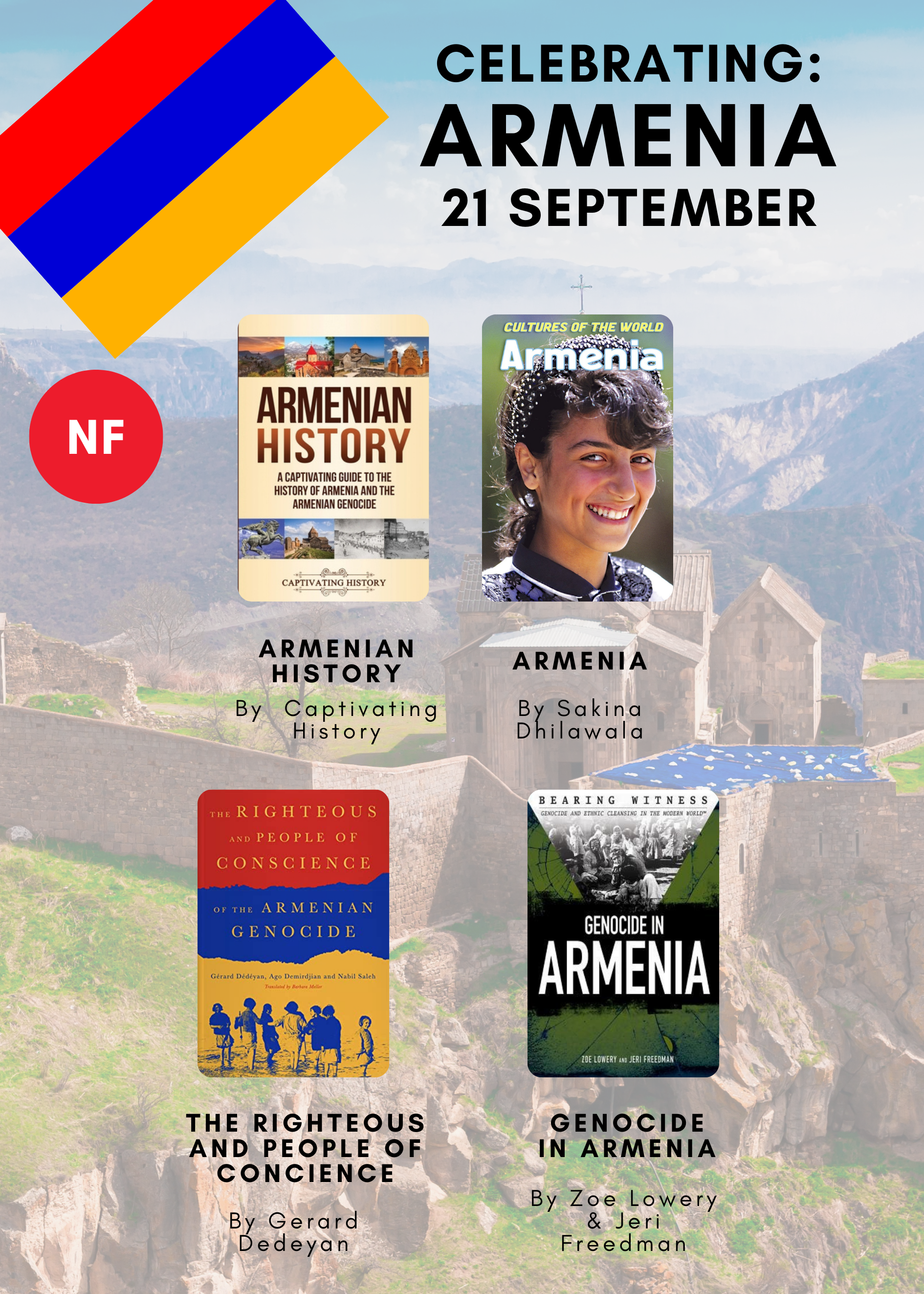
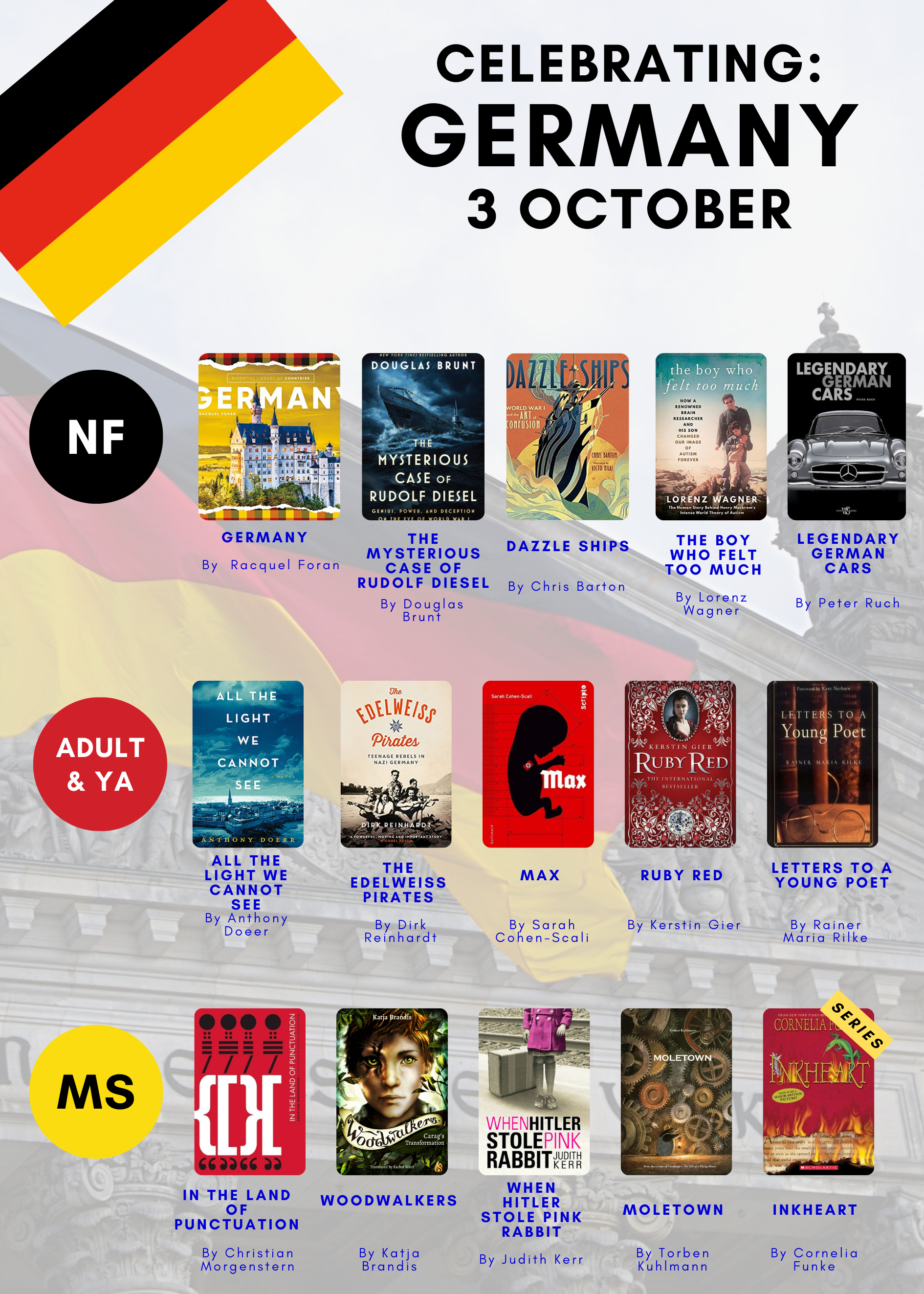
For a while now I’ve been wanting to highlight the curation of books related to the countries and cultures of our students, and finally this year I got around to creating posters “Celebrating xxx” which I post to our school bulletins for students and adults respectively. It’s been a bit of a chicken and egg project – knowing how many students we have from each country / culture – which in itself is truly not as simple a task as it may appear. We use the proxy of first, second and third passports, but as anyone who lives internationally knows, life is a tangle of multiple strands with immigration, migration, expatriation, languages, refugees, fleeing and arriving, births and marriages and transferences and identities. So in the last two years, using this list I’ve been scouring book lists, book catalogues, recommendations, book prizes to where we finally have, for most of the countries with more than 2 students, at least a couple of books besides a travel guide.

A couple of books. How easy that rolls of the tongue. But anyone with a conscience and an iota of empathy will know that that is another potential landmine. I have carried shame for my country of birth, South Africa, for decades, and still often have trouble admitting to its citizenship since I still feel the personal burden of all the wrongs committed by people of my race. It is right that a representative sampling of literature of my country includes reference, analysis and depictions of the pain and despair that apartheid has wrought. But that is not all we are as a nation and people.

I have not yet made the list for South Africa. But that was the dilemma I faced when curating the poster for Germany. A country with a 1000 years of literature beginning with the Nibelungenlied. Whose literature I studied in translation at UCT while ignoring my true passions suppressed doing a commerce degree. Yet looking at the books we have in the library, it appears that the war years, in particular the second world war, and specifically the war atrocities, is the primary lens through which our students form their Germanic world view. Again, it is right and proper that authors, beginning with people like Günter Grass, who, in his time was vilified for daring to address the near past, should shine a light on a terrible past. But that is not all by which they should be known. And more than anything students need to become aware of nuance. By the realisation that it is possible to hold two opposing views in one’s mind simultaneously. And if not through literature, how will they learn that? How sad is it too, that all the books we have about Armenia are about the genocide?

So far I have received nothing but gratitude from our community for both curating / purchasing these books and highlighting them as their national days come by. It is I who is filled with doubt and desire to be able to offer more. And despair that in many cases there isn’t more as countries are ravaged by war and poverty – at times literally with bombs and other times with the devastation of censorship, cultural and monetary poverty and lack of access to publishing and translation of the words that need to be heard by their people, its diaspora and the rest of the worlds children and young adults / adults. We deserve more than the “lonely planet” and “countries of the world” as nice as it is to at least have that.

This is a sample of a few of the posters. Feel free to copy and use / adapt these posters for use in your own libraries. As the year goes on I add to the posters on their national days based on what we have in our library.

Stop the pearl clutching and bring out the smelling salts

Yet again an article despairing how kids are not reading “For Too Many Kids, Books Are Uncool and Unread” with all sorts of “reasons” and little in the way of solutions. So here are a few people / places / organisations who are trying to do something and a little on the work I was doing recently.

Engage everyone

While language arts / language and literature teachers and particularly librarians are often called upon or take it upon themselves to play a role in turning out literate students who hopefully also enjoy reading – it is a mistake to pigeonhole the efforts onto a few people. Just like I spend quite a few hours of my week engaged in coaching students in sport I like to think that my colleagues in other subject areas – including Physical Education etc. could spend a bit of time encouraging students to read. Particularly PHE teachers – since as my now young adult son (previously reluctant reader middle school son) told me “give up mom, middle schoolers don’t listen to anyone except maybe their PHE teachers and sports coaches”.

Last year I started having a core collection (an idea initially started in the UK by CLPE, and carried on internationally by Katie Day) of 25 books per grade for our middle school. We invested in at least 3 copies of most of the books and the books were promoted in the ELA (English Language Arts) classes and the library. Having a narrower selection of books to focus on meant that as a group we could try and read as many of these as possible and “sell” them to students. The news crew of our “Falcon Flyer” also helped with promotion by featuring the books, and they were also displayed on our internal TV screens in the library and MS corridor. A weekly quiz via google forms and the “Battle of Core” assembly were less successful than I’d have liked – but let’s say it was something to build on. However when I analysed the circulations from these 75 books I was positively surprised and just how many had circulated. As can be seen – kids still prefer print, and audio is their least preferred medium.

In my discussion with the ELA department about declining reading there was a strong feeling that promoting the books shouldn’t just be on them – and I took that thought to heart and just before the summer in our last staff meeting with the support of our admin launched the “staff summer reading challenge”

This involved quite a bit of preparation work, starting about 6 weeks before the end of term, including updating the lists for the new year, taking out books that weren’t popular or didn’t resonate with students, getting suggestions from our most avid readers (and asking them to pre-read where I wasn’t sure which book would be better) and making sure we had coverage of genres, levels of difficulty and format (verse novel, graphic novel, nonfiction, memoir, fiction) and our books were reflective of our community – each grade having at least one book with a muslim perspective as we’re in the UAE. Our new list can be found on our reading libguide. Next up was making sure all the books were ordered so that they were available before the meeting and then making new posters, shelf-signs with a summary, badges and a “mini-book”.

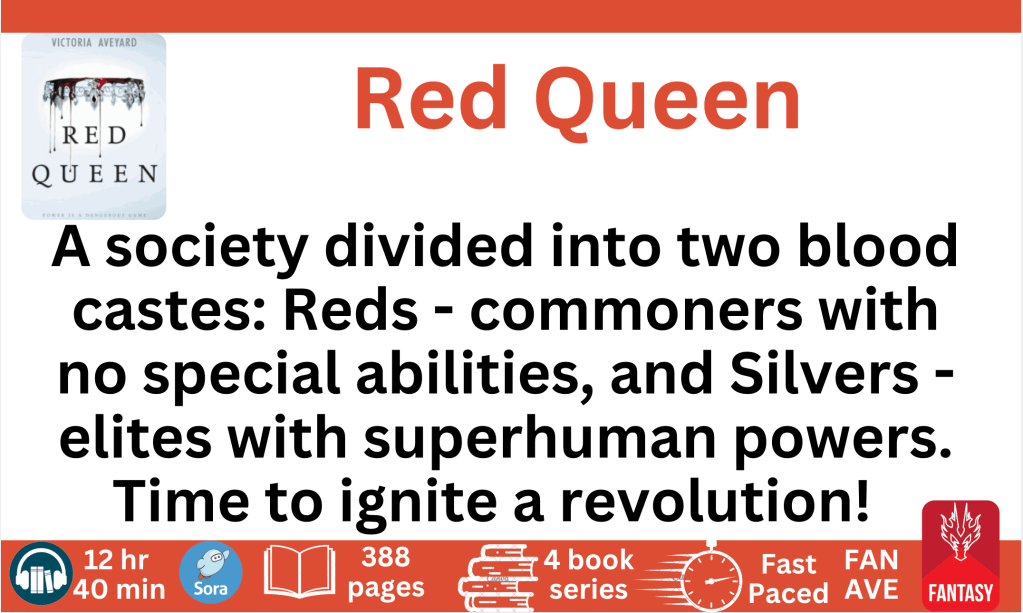
The shelf talker signs were based on inspiration from Kelsey Bogan but I wanted them to convey a little more information that I thought would be relevant in the “selling” process – first to our staff and then to our students, so I amended them a bit – the colouring corresponds to the grade, I added the book image and the genre image. Kept the blurb to 20-25 words (combination of publisher blurbs, Magic School AI summary powers and my knowledge of the book – AI can really get things badly wrong with what trigger words would encourage readers and be very repetitive with some phrasing!); I also added whether we had the eBook or Audiobook and the duration of the audio; pages of the book; whether it was part of a series, and the pacing.

Here are the canva files for our Grade 6; Grade 7 and Grade 8 lists – feel free to use or adjust as necessary.

The badges were made thanks to the loan of a badge maker by our design department and the “mini books” are images of the books on a piece of foam that the teachers can stick on their classroom door.

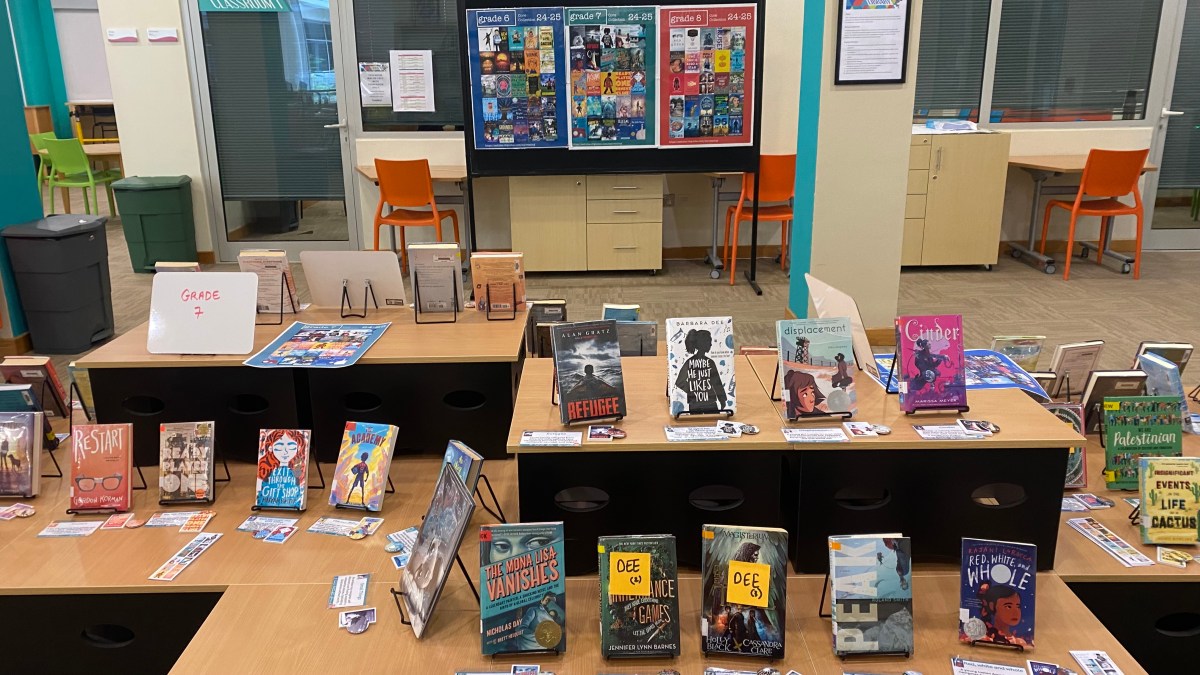
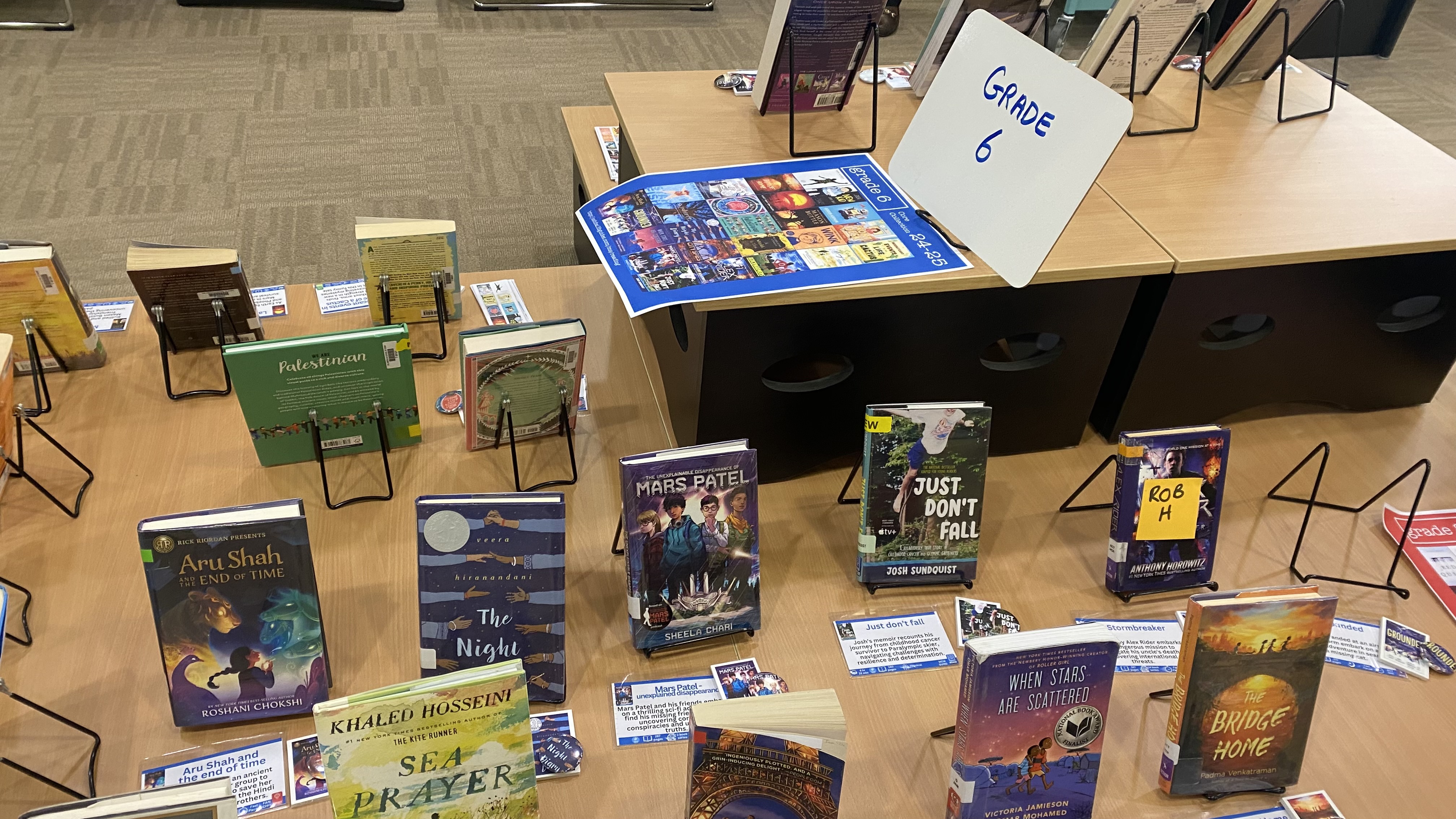
For the meeting, I put all the books on display with their paraphernalia, and the teachers were invited to select a book to borrow for the summer, commit to reading it and to help be the books “key account manager” for the coming year and promote it to students in the coming year. Our communications department helped by taking pictures of teachers with their chosen books (hiding the face) so we can use that for a little promotion guessing game in the new year); teachers borrowed the book and could put the badge on their lanyards. They “claimed” the book by putting a sticky note with their name on the poster. In the end, only 6 out of 52 staff members declined. Several teachers selected more than one book and our drama teacher selected 5 (and sent me a very enthusiastic voice mail last week to say she’d read them all and enjoyed them so much she’d also read all of the rest of the books in the various series, coming to a total of 17 books!).

So, watch this space and we’ll see if this has more of an impact in the coming year.

Other people / organisations making a big difference

Although not always realistic, I am a secret admirer of the “go big or go bust” approach to things. I suspect some times we are actually underestimating the abilities of our students by setting very low goals for them. There is a balance however between something being too daunting versus to infantile. Generally I suggest students should try and read a book a week – something quite manageable if one is truly spending 20-30 minutes a day in focused reading, perhaps combined with audiobooks and some manga / graphic novels. Also, our top readers (ironically – or not – none of whom have mobile phones) manage 2-3x that.

The Neev Reading challenge 2024 of 30 books over 3 months for grades 4-6 combined with author interactions, and a live quiz during the literature festival is a great example of setting a stretch goal, having competitive and noncompetitive tracks and a great starting point to select books. I just love how ideas grow and evolve. When I moved to Beijing in 2018, I was part of the 50 books Reader’s Challenge which I think the librarians at ISB started. In my role of juror for the Neev Children’s Book award, I was chatting to Neev about the challenge, and what worked and didn’t work quite as well – and they grabbed the ball, ran with it and now it’s this amazing thing!

I’ve blogged about the Global ReadAloud before, and still think this is a phenomenal way to involve students and teachers with books and connections with other readers and most importantly the “smelling salts” of reading aloud to them. Here are the selections for 2024. I particularly love “As long as the lemon trees grow” a book that’s on our core list and a fantastic read for older students.

At the end of the school year we have 6 library sessions involving our “upcoming” grade 5 into 6 students to introduce them to the Secondary School library. This year as an exit ticket I asked them to write down their favourite book / author / series. As I roamed around talking to them while they were doing this, I’d say that at least 75% of the books they said they loved the most were books that had been read to them by a teacher, parent, grandparent etc. Reading aloud matter.

Besides her work on the GRA – Pernille Ripp also has some great posters (and books) on encouraging a reading culture, such as the one on “Helping Home adults support adolescent readers”

That’s all I have time for today – if you’d like to have your initiative featured, please let me know!

780-789 Music

Initially I thought of perhaps going through the DDC systematically from 000 to 999 and writing about some of the books I’ve loved / used / displayed, but then I spent the day yesterday re-reading Zen by Shabnam Minwalla and decided randomness, chaos and interest was infinitely preferable to order and sensibility.

There’s something amazing about books that manage to evoke a sense of time and place both through words and cultural references to music, poetry, quotes etc. And the books I’ve been reading and promoting for our middle school have been great at this. How many others sit with a book in one hand (or audio in one ear) and youtube open in the other to look up the songs you don’t know or listen to old favourites while reading?

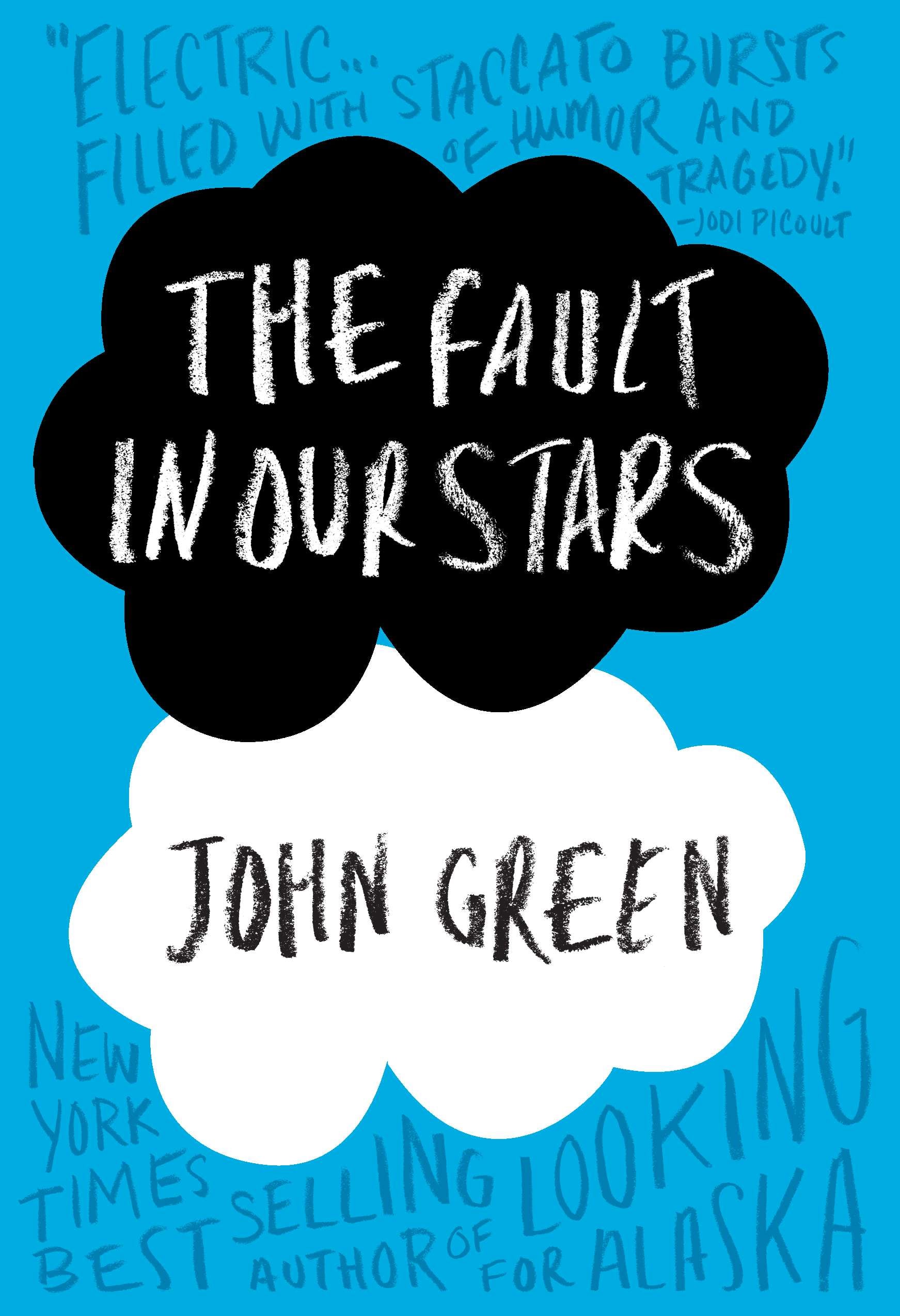
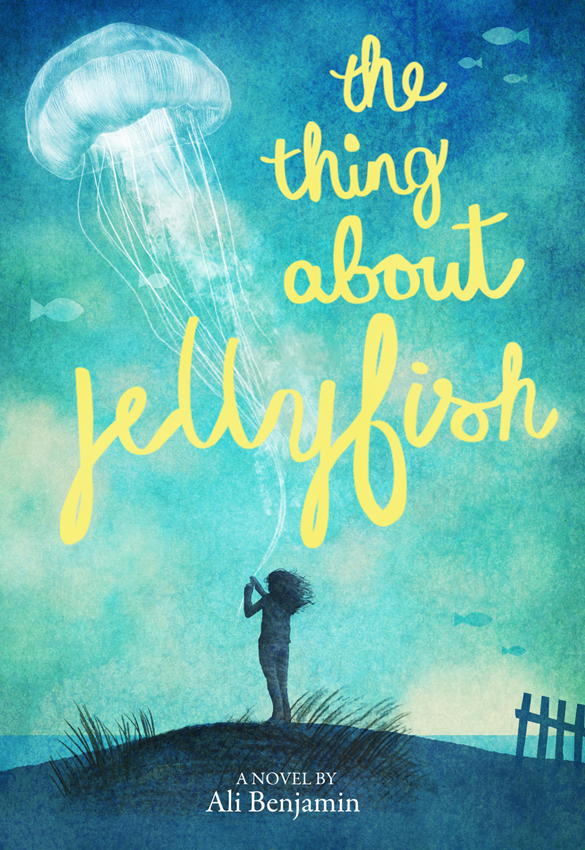
I remember back when I first started out as an intern under KD at UWCSEA East making a libguide page (see “other interesting stuff” in the tabbed box) to support John Green’s amazing “The Fault in our Stars“. (cringe moment at how bad I was at that time in making good looking libguides!). When I introduce books with musical elements now to my students, I like to have some music playing in the background when they enter. Some more great ones include Ready player one, Red White and Whole, The thing about Jellyfish and Wink .

And here is a list of more from “Middle Grade Carousel” many of which ended up in one of the displays this year. Another display that worked really well for my “Swifties” was to match the song names in her latest album to other “related” titles (in the broadest sense of the word). There were chocolates on offer!

nonfiction music

Getting back to the nonfiction side of things – besides my all time favourites ever (Musicophilia by Oliver Sacks, To Learn with Love by William and Constance Starr, The Art of Possibility by Roasmund and Benjamin Zander, Pablo Cassals by Robert Baldock and The Art of Cello Playing by Louis Potter Jr) here are a few newer titles in our collection:

And that’s all for today. Please reply with your favourite fiction or nonfiction books on music!

PS

Two things I meant to put in and then forgot about:

uplifting music

According to a study conducted by cognitive neuroscientist Jacob Jolij of the University of Groningen, Don’t Stop Me Now’ by Queen is the most encouraging track in the world.

The research analyzed various factors, including the beats per minute, the key, and the chords of the song. Here are the top 10 songs that put you in a good mood (and the youtube versions):

  • Queen, “Don’t Stop Me Now”
  • ABBA, “Dancing Queen”
  • Beach Boys, “Good Vibrations”
  • Billy Joel, “Uptown Girl”
  • Survivor, “Eye of the Tiger”
  • The Monkees, “I’m a Believer”
  • Cyndi Lauper, “Girls Just Wanna Have Fun”
  • Bon Jovi, “Livin’ on a Prayer”
  • Gloria Gaynor, “I Will Survive”
  • Katrina & the Waves, “Walking on Sunshine”

seismic music

Something that combines a bit of geoscience and music – according to seismologists at the British Geological Survey (BGS) earthquake activity was clocked during the Taylor Swift Eras Tour in Edinburgh and the most seismic activity was caused by the song “… Ready for It?” .

Enough windows – where are the mirrors?

I was prompted to think about this again with the publication of the White Ravens 2019 list at the Frankfurt Book Fair. The issue of increasing diversity in an international school setting is a complex one, and something I’ve written about at length in the past.

In English

There’s the linguistic diversity bit – collections of books in “Languages other than English” (LOTE) (that post is getting a bit long in the tooth and probably needs updating) a more up to date article featuring Jeremy Willette can be found here.  Though I do object to the phrase “mother tongue” the reality of many of our dual language students is that the language other than English medium at school could be that of either parent, but is often that of the father. So I prefer to refer to “home language”. In 2014/15 I went through somewhat an obsession on language, researching it to death, you can find some of the posts on that here. The one thing I would definitely add to this conversation is that unless the LOTE collection is updated regularly and championed by teachers and parents or a language based club, they often don’t earn back the investment in purchasing and the real-estate they occupy. So if you want to invest in a linguistically diverse collection you also have to invest in a mindset of pride in home language and a sense of ownership over the collection and its maintenance within that linguistic community.

The hardest part internationally is that issue ofnot our diversity . If you have a moment, please read that post. Students who are in international education often defy the traditional (North American) definitions of diversity. They are not poor, black, hispanic, urban, immigrants. That is not to say that it’s unimportant for our students to be exposed to stories of all these groups of people and more. In fact their privilege demands that they access poverty, racism, immigration and need through the windows of literature. But those versions of diversity are not mirrors for them. With a great budget we have no shortage of windows. It’s the mirrors we lack.

And again, when we have these diverse books, we still need teachers and librarians and students and parents who will read them and champion them. Students who will dare to take a book with a cover of someone who doesn’t look like them and read it. Families and languages

The thing with international students is their lack of homogeneity – something I encountered when looking at linguistic diversity. This table (from my 2015 research) speaks to some of the many variations. (Yes, in those days I also referred to MT /Mother Tongue). So one of the most important sources of mirrors for our students often is books in translation. Particularly for the “globetrotter” subsection of our students. Looking at the White Ravens list above doesn’t give me that much comfort I’m afraid.  The issue I have is that most of the books in 2019 are BANA originated (Britain, Australia/NZ & North America) with the exception of one from the Philippines and one from India.  2018 was a bit better (one from Romania, India, Ghana and Korea). The list is unwieldy, you can’t search by age group. And you can’t get a print out.

Some more sources of inspiration include the various IBBY organisations. Including USBBY – even though the criteria for inclusion on the list is includes:  Books that help American children see the world from other points of view; Books that provide a perspective or address a topic otherwise missing from children’s literature in the U.S; and Books that are accessible to American readers (where accessible can mean a multitude of things). Again, painfully it’s hard to get a simple list to down load – no I don’t want a pptx, or a bookmark, I just want a list to print out to buy from.  And IBBY UK. Their latest publication: Children’s Literature in a Multiliterate World looks to be particularly interesting. One lives in hope.

One of the many things that concerns me with all of this, is the emphasis on picture books. Don’t get me wrong, I’m a HUGE fan of picture books. But the over-reliance on translating picture books? It just adds a PB to the five F’s (food, fashion, festivals, folklore, and flags) of pretending we’re oh-so-international and inclusive.

The Global Literature in Libraries Initiative is more cause for hope. Particularly as they reach out and co-opt people in-situ to aid with their uncovering of local treasures.

In this diversity quest, one is often more of a sleuth than anything else. For example needing to have a look at awards like the Astrid Lindgren Memorial Award and then looking at names of authors and illustrators and seeing if any of their works are translated and available. And how sad it is that many of those authors and illustrators don’t even have a web presence? Isn’t that one way in which IBBY could assist them? Just like publishers have a page on their site for each of their authors couldn’t these nominated people each have some kind of a presence. And many of the links don’t even work.

The “and available” thing. Holy hannah publishers. Get with the global world please. Honestly it’s hard enough just getting to know about Australian and New Zealand and Canadian books, not even to mention anything that is not from USA or Britain. What ever happened to the whole “print on demand” movement. I could possibly understand why it’s hard to find picture books, but middle grade / young adult / junior fiction? Surely that’s not an issue?

How are the rest of you doing with your diversity collection? What “sells” to your students what do you need to work on promoting? Do your teachers gravitate to them / read them or do they need to be pushed?


Meting out diversity

The whole diversity thing bothers me. Has for some time. We seem to love the optics of diversity, but not so much the reality.  And so we mete out our diversity in acceptable chunks at acceptable moments. And in doing so we can fool ourselves – most of the time. We also mete out our encounters with diversity such that they don’t necessarily have to touch us in ways that are meaningful. We thereby send clear messages to all our students, diverse and – well what is the word not for diverse – dominant? Oh, begin to define dominant in an international school and don’t bother looking at the nationalities of the students, or pictures of them. You

meteprobably need only to look at a handful of people. Those in leadership. And chances are they’ll all be white male of a certain age, background and education, with a judicious sprinkling of women.


Before anyone gets excited about that, think about the following reported encounter by prospective parents in an ethnically mixed marriage. The primary school I’m at is wonderfully diverse in the composition of the teacher body. On entering a classroom with a caucasian teacher, one of the parents exclaimed “at last, a proper English teacher” (for the record, she wasn’t English, but obviously appearance counts). When at the Neev festival in Bangalore, I remarked to my friend how gorgeous and natural she looked in her salwar kameez and asked her why I hadn’t seen her wearing one at school in Singapore while working for a big name, self-proclaimed “diverse” school. She looked at me aghast and said there was no way it would have been possible outside of the UN celebrations and that all staff was expected to dress professionally and adopt the school values and world view irrespective of their personal beliefs or experience. Now this is a school that prides itself on the fact that they have a uniform but don’t police the interpretation of its manifestation. Where I attended a lecture today, and saw every possible variation in student “teen dress expression” but not so in the teaching body.

DiversityInChildrensBooks2015_f

So we get to the mundane part of throwing some books in the library that reflect the culture, language and backgrounds of our students. Can we even do that without breaking through the cultural myopia? I still have to keep thinking back to this experience when I realised that truly we are up against so much, and putting books in the library is a bandaid on the wound of an amputee. If we struggle even conceptually with putting textbooks from different countries whose educational philosophy we “disagree” with (how dare we?), what happens with literature, that is so much more subversive?


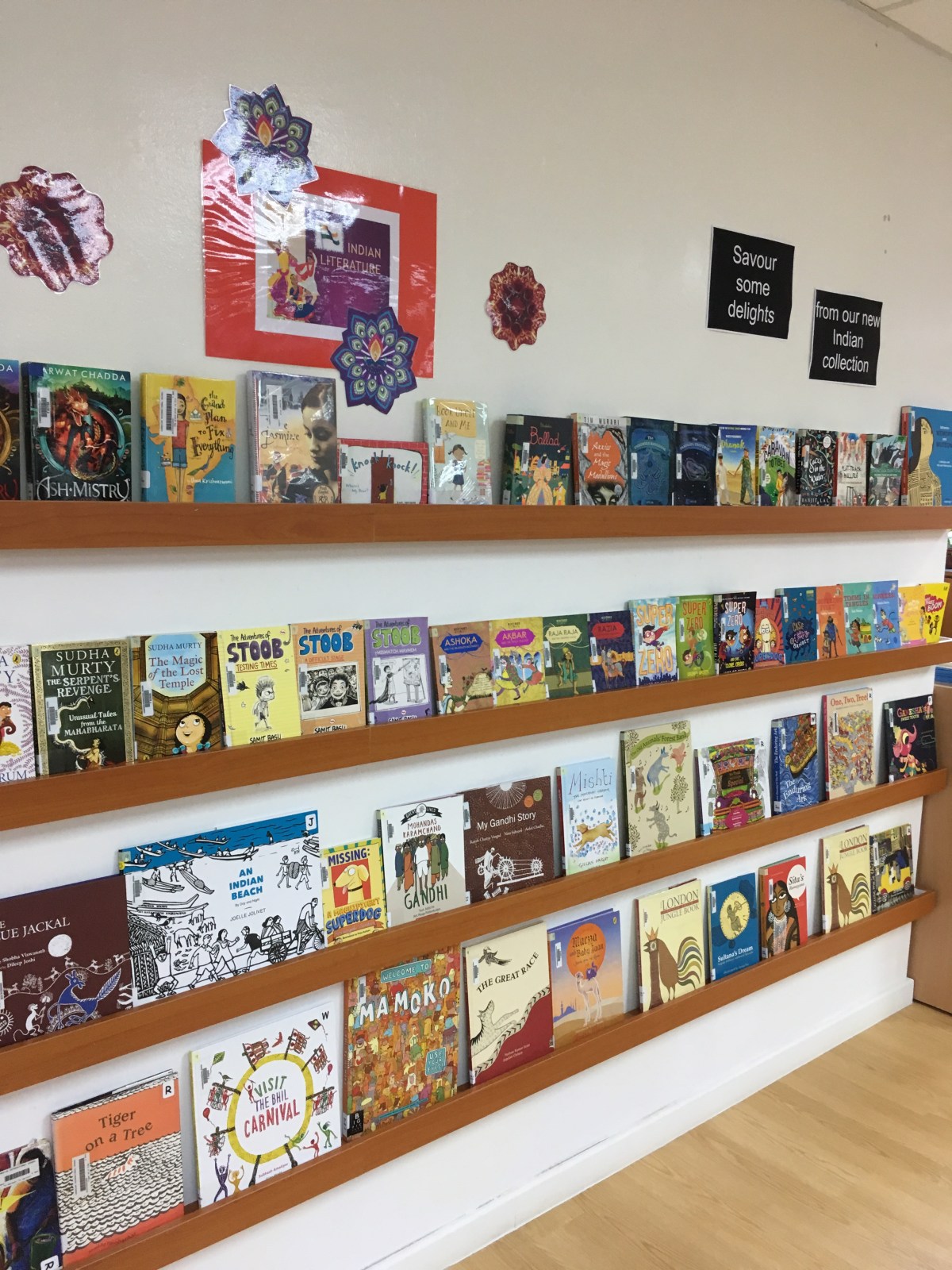
I recently purchased around 100 books written and/or illustrated by Indian authors. It was hard work “selling them” to my students. Even the Indian students. Especially the Indian students. I used the above infographic to explain to students how skewed their world view is.  And the worst of it all, is this in itself is a North American view. Let’s not even talk about the fact that most of the 73.3% white characters and 12.5% animal, truck etc. characters are male. By the end of the week, after discussions about being open-minded and balanced and being a risk-taker, most of my books were borrowed.

A few of my students exclaimed they “loved” one or another of the authors. Some parents expressed surprise that I had so many books, and amazement that I’d used my 30kg luggage allowance to lug back books. Now Indian books are possibly one of the lowest barrier “diverse” books an international school could add to their collection. Quite simply because English is a common language. No translation is required. There is a thriving publishing industry. A huge diaspora. Many schools have 25-30% of their student body from the Indian subcontinent. And yet, until a month ago I probably had fewer than 10 “Indian” books in my collection. Most of them picture books from Tara Books.  Little to nothing in Junior fiction and a few Ash Mistry books in fiction. And now? I have the books. Students have borrowed them once. Will they go back into the shelves along with the Diwali books only to make a reappearance next year this time when it’s acceptable to celebrate and embrace Indian culture?

Any literature on language and culture will quickly point to dominant / aspirational and socio-economic preferred language and culture. As a South African who spent most of her life mired in shame, unable and unwilling to admit to my heritage, I truly “get” the ambivalence (while remaining astounded by continued British bluster – particularly here in Asia).

And that is the problem with every article ever written about diversity. We lament the absence of the optic. We gloss over some of the “hardware” issues (authors, illustrators, translators), we may even get to structural problems (publishing houses, editors, market sizes). But we neglect to think about how the structure of our education and schools will support those tender shoots, will allow our communities to claim not just their heritage, but current philosophies. We close down libraries, we limit budgets, we operate in echo chambers, we fail to make library education affordable and accessible to local staff. We concentrate our online efforts to gadgets and gizmos instead of access, community and understanding.

What do I do in our library / school?

Of course the five f’s: food, fashion, famous people, festivals, and flags. Mea culpa here. I have books about (just about) every nation in our school, and scramble each year to make sure there’s at least one book by the time Uniting Nations comes around.

I buy all the books suitable for my elementary school from the USBBY list – cognisant of the fact that it is the US – i.e. pre-digested for USA sensibilities.

I follow blogs of avid supporters of diverse literature such as Dr. Myra Bacsal’s “Gathering Books” and Rachel Hildebrandt ‘s Global Literature in Libraries (seriously, I’m one of only 200 odd people following this AWESOME Blog??  – they also have a facebook page btw if that’s more your thing).  Who give exposure to people like Avery Fischer Udagawa with her new list for 2017 of 100 more works translated for kids, following Marcia Lynx Qualey’s 2016 100 Great Translated Children’s Books from Around the World.

Following what’s being published via the Bologna book fair. Reading reports such as those created by Wischenbart.

And then I devote part of my budget to buy the books, and make sure they’re slotted into resource lists for our units of inquiry, and read them aloud, and “sell” them to teachers and my PYP coordinators.

Put out google alerts for diverse books, join FB groups of librarians around the world. Ask, ask, ask, in the community, parents, librarians, teachers, students.

Write about it. Write about it again, and again.

What more can we do?

Hard stuff. Advocacy. Fostering a sense of national / cultural pride in all our students – not just those from the dominant / desirable communities. Conversations with teachers and administrators. Looking at what our students are writing about – who are the characters in their writing? Ignoring the deluge of books from BANA countries. Being tireless. Fighting even with institutions doing brilliant work like “Global Readaloud” about the choice of their books that are NOT global. Even when all of this is very very tiring and makes you seem like a harpy.
Books I wish would be published

I’ve been asked to be on a panel at the AFCC to chat about “Books Teachers Wish Authors Would Write” from a teacher / librarian perspective. So I put the question out on one of my teacher-librarian networks (an international one) and these were the responses I received:
  • World war 2 in Asia- novel for 8-10 year olds (NF / NNF)
  • big shortage of narrative nonfiction that is NOT about the holocaust, slavery, the American great depression or US civil rights. Also shortage of intra-Asia migration stories not Asia to Europe / north America (NF / NNF)
  • Third culture kids as main characters (CD)
  • More stories about our present/ early future stories that include digital tools and behaviour (D)
  • I’m looking for things like “lego ideas / lego play” but in small manageable books that kids can take out without breaking their backs / the book
  • nonfiction – updated human rights / millennial goals / NGOs / Poverty etc. for G4 level (9 year old) mixed format, good graphic design, mix of narrative and fact (NF)
  • Middle school nonfiction – life in different economic / political systems – communist, socialist, social democracy etc. with a world wide unbiased view of positives and negatives with personal stories and data (NNF)
  • Books on gaming or from the creators of games like Minecraft, Roblox, etc. (D)
  • Conflicts over resources around the world – case studies that are elementary friendly (NF)
  • The next “The Outsiders.” Something to appeal to the teens who fall in love with it in class, and are looking for something like it.
  • Decent Biographies that are at elementary aged level & middle school level without being dumbed down – with more Asian protagonists! (CD / NF)
  • Books purposely written for upper ES that has appropriate content and reading “level” (ELL)
  • More ES novels featuring multicultural characters that are not related to war or historical events (CD)
  • Books about world topics that are appropriate for kinder/g2 (NF)
  • Modern urban indigenous stories – universal experiences in all first nations people. (CD)
  • Easy read stories that are well written & not dumbed down for teens. – yes! especially for our ELL students! And that don’t portray just the…..dark side of life? I feel like when I was purchasing for xxx, the high interest/low level books all were about gang members/drug dealers in the US. (ELL)
  • Science fiction for Elementary kids. (SF)
  • Middle Grade fiction with a Korean protagonist (My Name Was Keoko style) (CD)
  • Books with culturally diverse characters. I still remember teaching a boy could Yousef who threw the book down in disgust and said ‘Why can’t they give them normal names?’……the character was called Joseph. Which really isn’t that out there, unless you’re an Arab boy. Then it’s just weird. (CD)

  • LGBT books for tweens (G)
  • Definitely more emigration/immigration stories that are intra-Asia. There are so many diaspora stories to be told that have nothing to do with Europe or North America. (NF / NNF)
  • Does anyone want war stories set in Asia – like Japanese invasion/ Korean War / American or Vietnam war with perspective from the non-western side – or is that too sensitive? (NF / NNF)
  • My teachers want more World War 1 fiction for grades 6-8 and social justice books for middle schoolers.(NF / NFF)
  • My middle school girls want more heroes that are NOT princesses. (G)
  • My boys want fiction that has video game elements like Minecraft stories.(D)
  • All of my high schoolers want “classics” with better covers.
  • what about this: teachers, school, parents do not compare my score with others, do not give me homework, I want to play. (C)

I’ve tried to code the answers as follows:

  • NF / NNF: narrative nonfiction – 10x
  • CD: cultural diversity – 6x
  • D: digital / gaming element – 3x
  • G: Gender related – 2x
  • ELL: hi lo / books for English Language Learners – 2x
  • SF: Science fiction – 1x
  • C: cultural issue – 1x

Looking at these I think that the theme is a general frustration with a lack of books with an Asian context.  Particularly historical fiction / narrative nonfiction and culturally diverse characters. We all know that the USA dominates publishing, followed by the UK. Australia has some good stuff out but limits itself by its steep pricing, expensive shipping costs and insular publishing industry. China is a late entrant into children’s books and is making great inroads – but mainly in translation into Chinese. What is particularly commendable is that they are not just translating the (North) American staples but many of the brilliant and wonderful European offerings.

Then I did a similar exercise with the BWB (Blokes with Books) yesterday. I asked them to go in groups of 2-4 students and tell me what kind of book they were missing in their lives. Books they wish authors would write.   They were amazing – a couple of groups even started writing the books they wish were written (a nice outcome given the fact that teachers are now complaining that we’ve got them reading but their writing is still poor).

Their suggestions could also be broadly grouped:

  • Two groups wanted Harry Potter extensions or back stories – one wanted the parallel books that focused on the other houses, not just Gryffindor Tower. Another group was fascinated by the horcruxes and wanted a book on that.
  • One group wanted an elaborate Pokemon book that inverted some of the characters with unexpected twists.
  • One group combined the ideas of the three group members into a fantasy / reality mixture involving video games and rugby with a wimpy gaming protagonist being forced to play rugby by an over-zealous parent and learning tricks and manouvers in video games that led him to dominate on the real life rugby pitch.
  • One group wanted (and started outlining the chapters) of a Roblox user manual.
  • Quite a few of them agreed they’d like fiction books with colour pictures inside

I’d like to add a note to the above list – the students are not yet familiar with fan fiction, and I’m not sure they’ve looked into the Harry Potter wikis. In a sense that makes me happy that they’re still at that wonderful age where this type of magical immersive reading stuff is to be found in books rather than online. They are aware that there are user forums on these games and chat rooms etc. BUT THEY WANT TO READ ABOUT IT IN A BOOK. This is a GOOD thing. Whenever they ask for books about Minecraft and Roblox and video games and I tell them we have some of the storybook series, the Minecraft “how to” and “surely you can just ask online” they say “but we want a book”.  There are few Roblox books and they all seem to be eBook editions (publishing haste?). The Minecraft adventure books are not what they’re looking for – remember the colour pictures comment? They want more graphics! I think also as adults we see their online/offline selves as separate, whereas they don’t, and they want to see that new normal reflected in what they read. They’re all avid fantasy readers, and that I think is partially meeting their need for that online/offline fantasy/reality integration.

A caveat to all the comments (and a personal gripe) – above all children want a well written story. They don’t want to be preached to. They’re sophisticated and well- and globally read. And they can spot the fakes. As a teacher-librarian I get immensely frustrated by wanna-be and self-published authors who keep trying to foist their wares on me when it’s immediately apparent that they’re poorly written, even more badly illustrated, not edited and horribly and cheaply published. Writers need to read. They need to read a lot, they need to read widely. They need to research not just their topic but also who else has written about it, tangentially to it, similarly to it. If you want to self-publish, unless you’re a designer, pay someone to do your design for you. Unless you’re an author-illustrator find the best illustrator you can afford. And everyone, join a writing / critique group (like SCWBI) – honestly, other authors are not out to steal your ideas – they’re too busy working on their own passions. And when you think you’re done, get a good and critical editor. All authors need good editors, even great authors. Do yourself a favour and look at the interactive TS Eliot “The Wasteland” and see all the handwritten edits by Ezra Pound.

To come back to the forum and the original question that started all this:

“Creators can step into the shoes of a teacher for one hour and learn what makes a book a treasured find. From beautiful illustrations to didactic language, speakers discuss their views on relevant and useful books children need and love.”

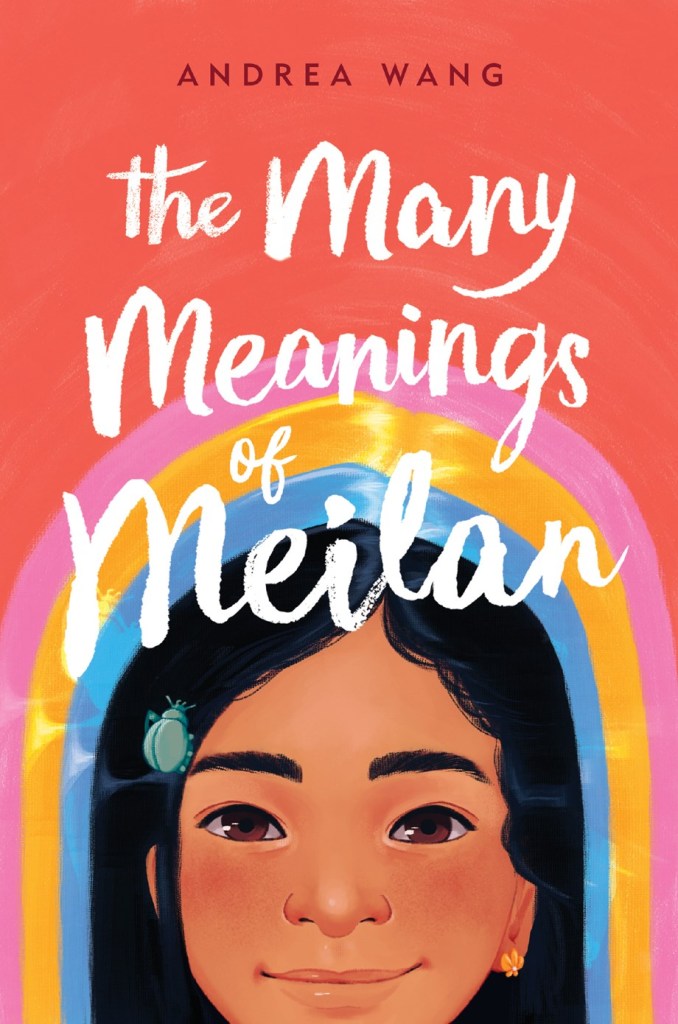
What a huge question. Relevant is not always pedagogically useful. Useful for whom? Relevant to what?  I’d like to end with the most relevant and useful and just plain wonderful book I’ve encountered this year – Stormy seas: stories of young boat refugees. 

31213610 Well done Annick Press (that does a lot of amazing things – particularly in nonfiction) It has become the new gold standard to which I will hold all nonfiction. The elements that make it so special:
  • Great graphics – combination of good design elements with original primary source photos
  • Easy to navigate blocks of text
  • Personal stories
  • Historical facts
  • Timelines
  • Maps

It is not out yet (April 2017) and I got a preview copy through Netgalley (sign up if you’re a teacher / librarian), I showed it to a couple of classes from G3-G6 and all were clamouring for a copy afterwards – something unusual for nonfiction. And when I couldn’t give them I copy I managed to “sell” some of my otherwise untouched narrative nonfiction / historic fiction books on WW2 etc.

Another surprising (but not really because it’s so absolutely wonderful) hit has been Echo. It’s a huge book but every child and adult whose hand I’ve put 22749539it into  has just loved it – depite the fact that it takes a while to get through. Why – I suspect that the range and diversity of the characters and settings is satisfying to my international audience. But it is also great storytelling. And then they go on to read all the other Pam Muñoz Ryan books, which is also an excellent outcome.


What would you like to see more of that is “relevant and useful”?

ETL402 Critical Reflection

Reading Haven (2007) was a great way to set the scene for this course. Even if we were not all literature “converts” before starting the course, understanding the research behind the power of stories would make us so. Of all the themes I think the second module – concerning diversity – was the one that engaged me most passionately and emotionally. Smolen and Oswalds’ (2011) book was instrumental in expanding my knowledge on this topic.


Reviewing my blog posts The Best of Times, the Worst of Times; if you name it will it come; Conversations and thoughts about diversity in literature; It can’t get any worse … can it? and The right to write as well as my first assessment The Power and Potential of Multicultural Diverse Literature I realise they all concerned themselves with this topic. In practise, despite best intentions and efforts, large international communities of practise, the so called “global librarian networks” it is still difficult to source and purchase diverse literature of the quality and quantity necessary.


Looking at the collection, the teacher librarian (TL) walks several tightropes simultaneously – balancing curriculum needs with literacy needs with pleasure “fast food” reading needs as well as parental and societal expectations and biases makes for interesting tension. All while ensuring that literature can fulfil its destiny without losing a generation of potential readers. Personal observations reinforced the need for positive role models and personal – particularly peer –recommendations (Marcoux & Loertscher, 2009). Attempts to transform a physical library space were documented in a number of blog posts summarised here. Both Travers and Travers (2008) and Elizabeth and Selman (2012) cast an important biopsychosocial developmental lens on the subject of literature in schools.


With respect to the digital experience, as a colleague remarked to me “we are the first generation of teacher librarians and parents dealing with the internet, and we don’t know what we’re doing or what the long term effects will be”. Of course there are more than enough naysayers (Carr, 2013; Mangen, Walgermo, & Brønnick, 2013) and cheerleaders (Cornis-Pope & Woodlief, 2000) to balance each other out and the jury is out on the matter. At the end of the day it is important to meet the students where they are – whether that is in the land of text, live or digital and embrace the benefits of interaction, self-directed learning with creative opportunities (Anstey & Bull, 2006).


Finally, as they say – the proof of the pudding is in the eating – or in this instance, the proof of the learning is in how it can be applied in the teaching and promotion of literature in schools. Changing the culture in any learning environment is a slow process, where one has to learn to trust one’s instincts and trust the students, alternate between catching one’s breath in horror and outrage at the utterances of some teachers and parents while being in awe of the skill and depth of understanding and good practice of others, all moments from each other. It’s quite a ride.


References:

Anstey, M., & Bull, G. (2006). Defining multiliteracies. In Teaching and learning multiliteracies : changing times, changing literacies (pp. 19–55). Newark, Del: International Reading Association.

Carr, N. (2013, January 5). Don’t burn your books—print Is here to stay [WSJ.com]. Retrieved 22 May 2014, from http://online.wsj.com/news/articles/SB10001424127887323874204578219563353697002

Cornis-Pope, M., & Woodlief, A. (2000, Fall). The rereading/rewriting process: Theory and collaborative, on-line pedagogy. Retrieved 17 January 2016, from http://www.vcu.edu/engweb/ReReadingTheorychapter.htm

Elizabeth, T., & Selman, R. L. (2012). The role of social development in elementary school curricula: Past, present, and future. Saperstein Associates. Retrieved from http://www.sapersteinassociates.com/downloads/2012_Elizabeth_and_Selman_SD_Whitepaper.pdf

Haven, K. F. (2007). Story proof: the science behind the startling power of story. Westport, Conn: Libraries Unlimited. Retrieved from EBook Library

Mangen, A., Walgermo, B. R., & Brønnick, K. (2013). Reading linear texts on paper versus computer screen: Effects on reading comprehension. International Journal of Educational Research, 58, 61–68. http://doi.org/10.1016/j.ijer.2012.12.002

Marcoux, E., & Loertscher, D. V. (2009). The role of a school library in a school’s reading program. Teacher Librarian, 37(1), 8–14,84.

Smolen, L. A., & Oswald, R. A. (Eds.). (2011). Multicultural literature and response: Affirming diverse voices. Santa Barbara, California: Libraries Unlimited. Retrieved from EBook Library

Travers, B. E., & Travers, J. F. (2008). Children, literature and development: Interactions and insights. In Children’s literature: a developmental perspective (pp. 2–17). Hoboken, NJ: John Wiley & Sons.

The right to write

One of the most difficult aspects of my last assignment on multicultural and diverse literature (MCD) was coming to grips with the extent to which all literature, including MCD literature is dominated by white and/or western based authors.  When I have more headspace I’d like to write an article on what kind of criteria one could apply to assess the legitimacy of authors to tackle MCD themes – aka “the right to write”. It would be a set of guidelines that librarians and even teachers and students could use to critically look at existing literature and to use when deciding what books should be purchased and/or included in curricula activities.

My thoughts so far are around:

  • origin of author or illustrator – birth and residency
  • whether they are cultural / religious insider by residency / descent / marriage
  • time spent living in the region / culture
  • language – I think this is HUGE – language=culture – as a parent of a child who we put in chinese language immersion school at a young age her access to the language = access to the culture and she is no longer as western culturally assimilated as she was before. I’m thinking of Pearl Buck now as well – she is revered in China as someone with a “chinese soul” whereas I don’t think that is given to many other ‘touristic’ writers.
  • Role as gatekeeper or guide – I do think that authors could spend more time in nurturing talent and “passing the baton” rather than blocking the way – there is the balance between accessibility for the western sensibilities – it can’t be too unfamiliar, uncomfortable (I’m even thinking of how my students found Bleakboy “weird” and that’s just Aussie vs. their usual diet of UK / USA – but fortunately they didn’t reject it) but it needs to be authentic – particularly the inner dialogue – we can’t impose western sensibilities about gender rights, individual rights on a collectivist society – my Chinese / Asian friends do not rebel against the fact that their parents chose their study direction, university and career (and sometimes husband) for them, because the assumption is that the parent knows best and has their best interest at heart – not all the stuff we project onto the situation.

Yes, there are the gaps and I agree without the filling by Deborah Ellis etal, our students wouldn’t have the awareness at all – but we’re 10-20-30-60 years on in the case of some issues and STILL the middle class white people are writing and being published. Why? And whose lives are richer / poorer as a result of these works.

Just my random thoughts this morning.  Any comments?