OLJ INF506

Starting a new course soon: INF506 – Social Networking for Information Professionals 

Part of the assessment criteria is to create an online learning journal – so a new tab/page on this blog in order to accommodate the needs of this course.
Our first questions are:
(a) define what social networking is (in your own words);
(b) list what social networking technologies and sites you already use (for personal, work and
study purposes); and

(c) describe what you expect to learn from completing INF506

Progress!

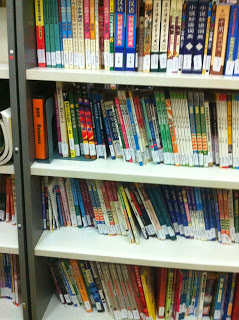
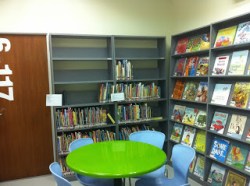
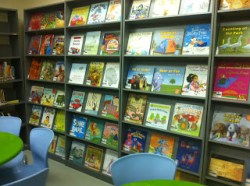
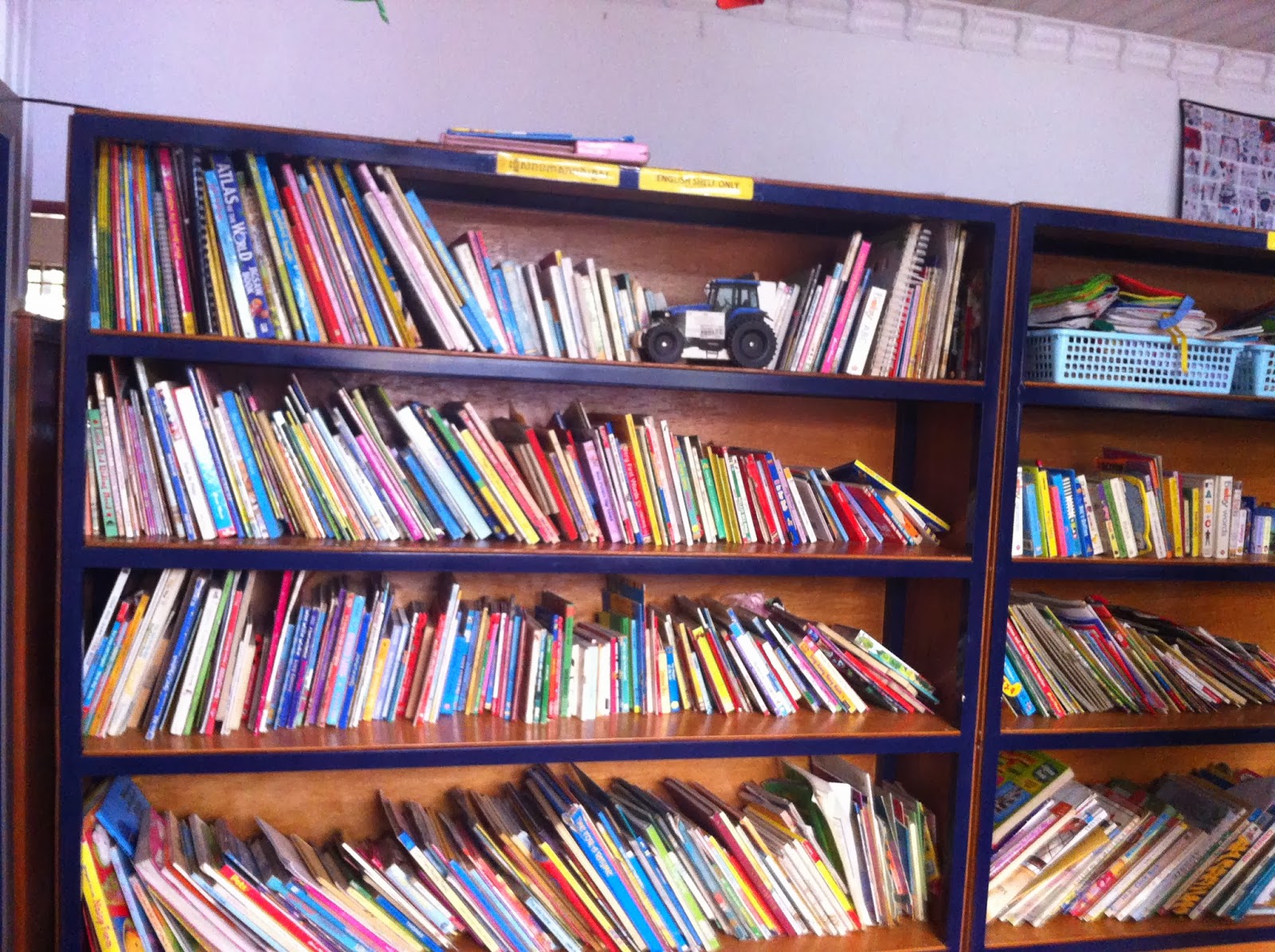
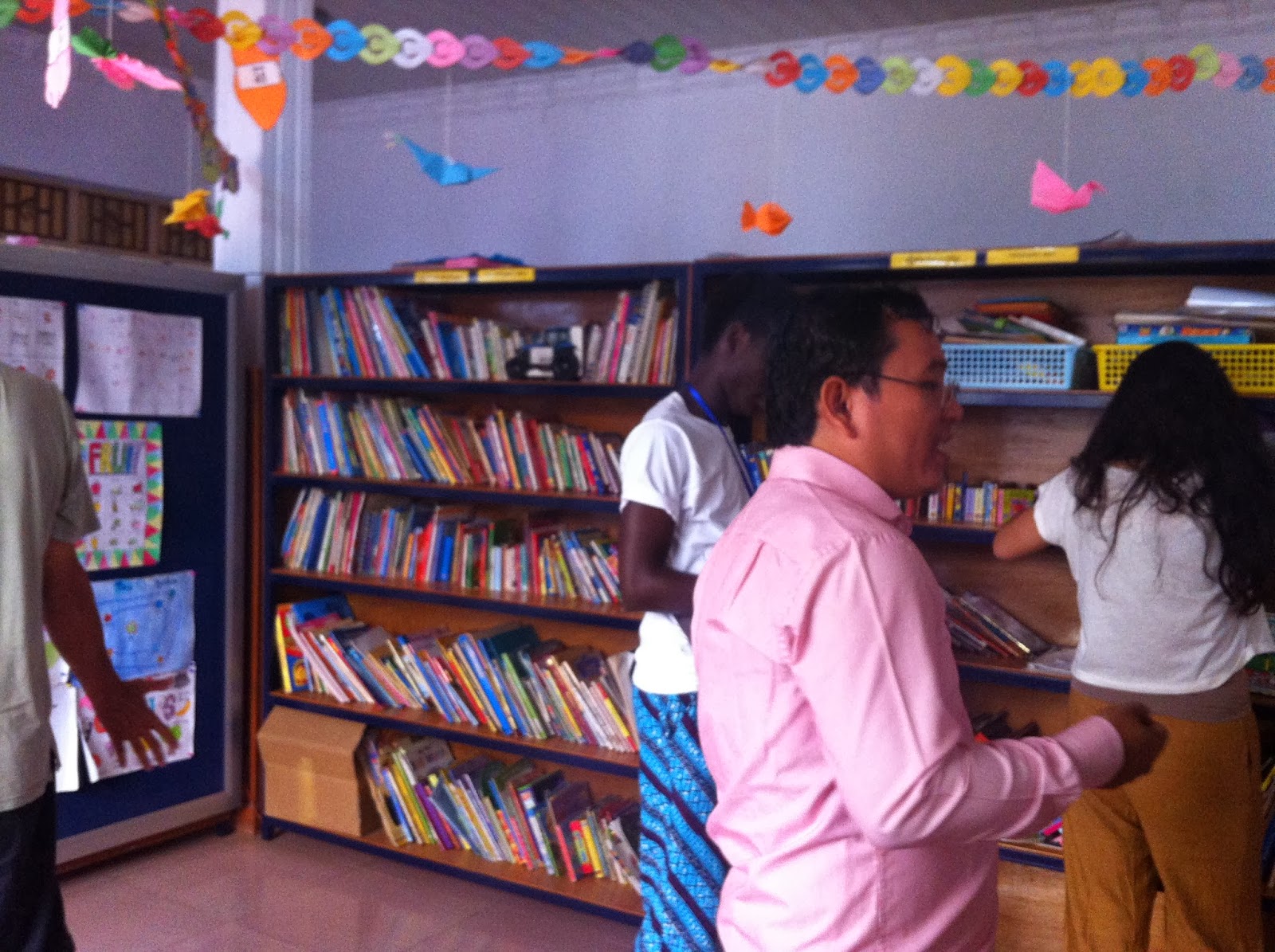
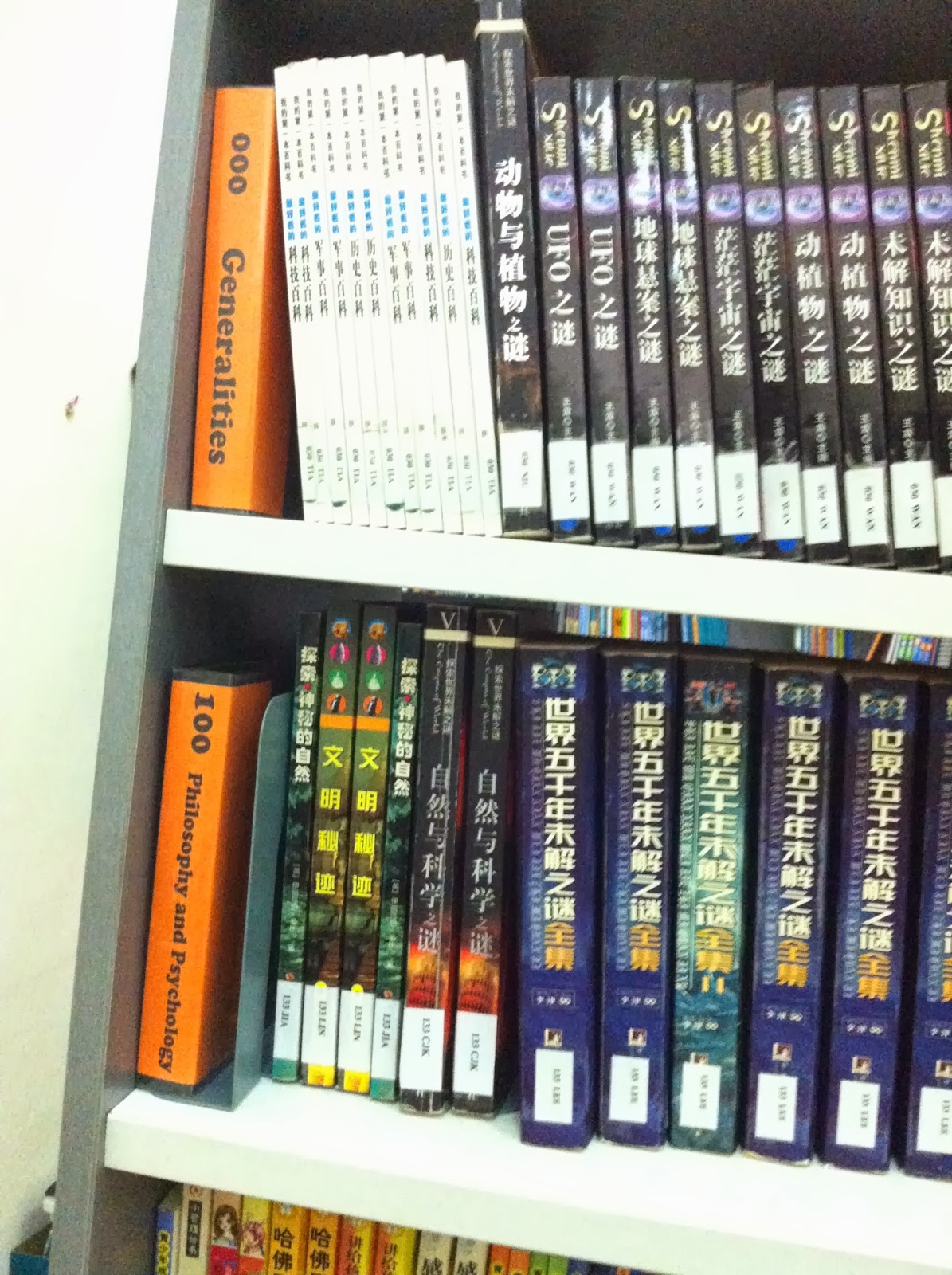
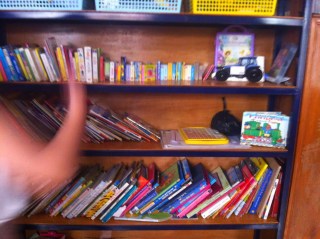
The great thing about being away on vacation is that sometimes (at least when you have great staff) you come back and amazing things have been achieved.  Here are some pictures from the library yesterday. Books are in a logical order, most shelves are labeled, the NLB books have arrived and been checked and scanned into Delicious Monster.   AND … big bonus … the ladies from kindergarten and the head were around to have a good look at the “store” room and “cupboards” where all sorts of stuff was being stored in not related to the library and BINGO – they’ve agreed to move them upstairs to the kindergarten area.  As that was one of my “nice to have” items on my transformation plan it feels even better.

Also, we met up with the IT / Systems guy to have a look at the catalogue.  That’s a hmmm.  They’ve got a sort of home made database that they’ve managed to populate with the library book list from about a year ago.  The potential fields they have are:
* Book ID (automatically generated)
* ISBN
* Title
* Category
* Loan type
* Loan status
* Location
* Ownership

Of which only the Book ID and Title is filled in!  Eek!  After being used to working with Follett Dynasty and another systems as a user, it’s rather lean.  I then have to take a step back and ask myself what is really really needed and why.  Our task is going to be to scan all the books in that can be scanned in (seems only English at this point), and then do some kind of export to excel and field match and discard the ones that are missing and add the ones that are new.  Joy.  And tell them what additional fields we’d like to see – like “author” may come in handy.

Ms. Katie forwarded me an email from LibraryWorld who is offering a month’s free trail for their online system. It’s certainly not terribly expensive, but of course it’s more than an in-house home made system.  I tried to export the 2000 odd books we’d scanned into Delicious and immediately ran into the age old library barrier of MARC.  It only reads MARC … so I contacted them, sure they could convert – for $300 – now that ain’t gonna happen I can tell you now.  Second problem I ran into is that it didn’t recognise the ISBN of our Chinese or Korean Books and third was I couldn’t find a logical spot to distinguish between NLB and own books.    May I make a comment as a “not yet quite librarian” – really you need to make things simpler and more intuitive and exchangeable.  I know I know I know about MARC and spent a whole semester getting intimately acquainted with him and his mates Z39.50 etc.  But to tell me in your manual there is no get around having to pay you to convert my data, when it’s a simple database matching exercise …  nope.  If contact software can covert from one to another with ease this isn’t all that much more difficult – especially since all you really really need is the ISBN number to get going.

Anyway, let’s keep positive, and here are some very pretty pictures!

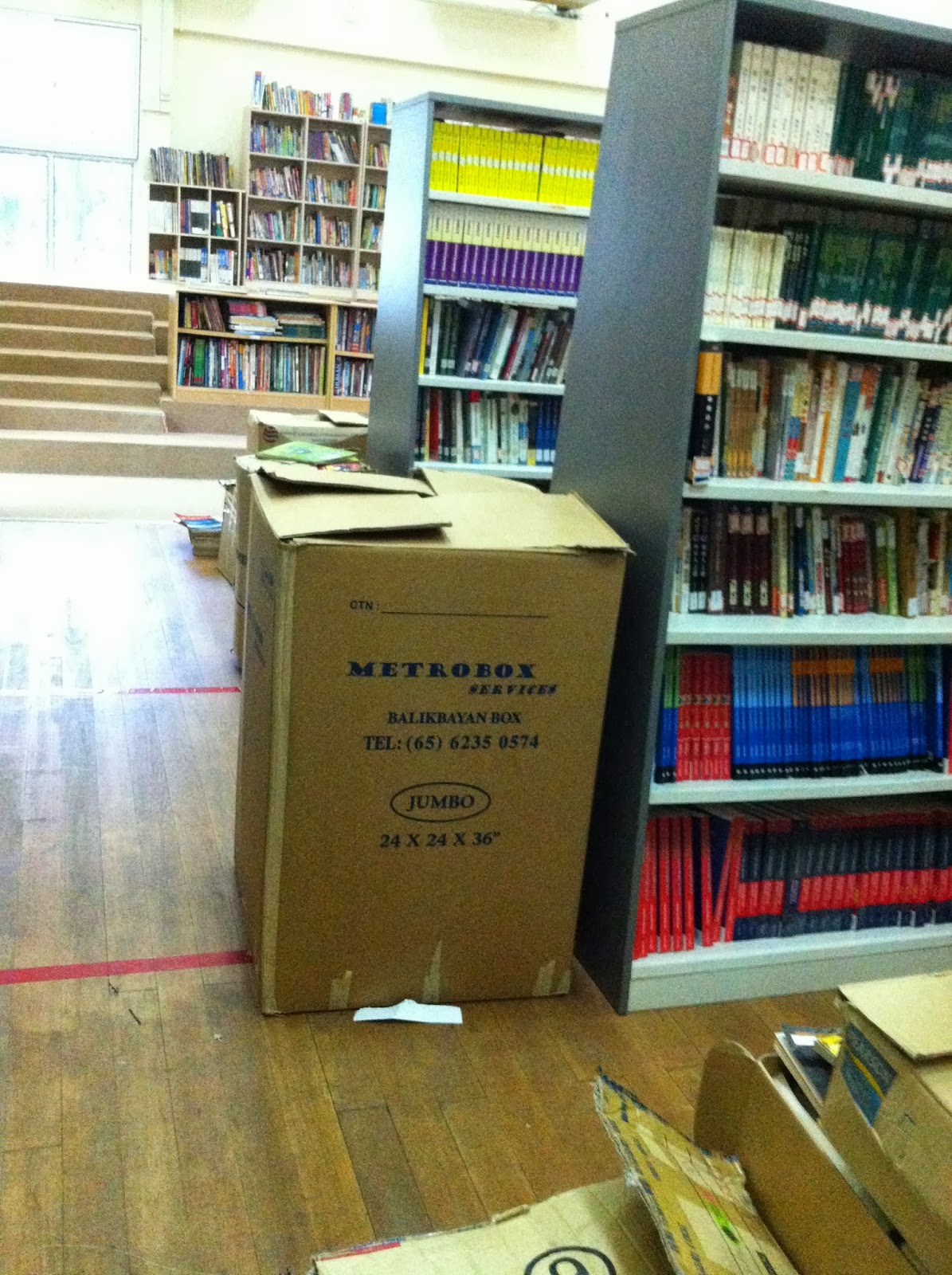
NLB boxes – 3 of those our old books!
Ordering our PYP books
Primary books getting in shape

2ndary books all sorted by call number
Shelves moved passage either side
NLB books on shelf
Hardcovers on display

Haves or have nots?

Library at Kuma Cambodia – no borrowing only reading onsite

I’ve just spent 8 days in Cambodia on an extremely interesting services trip run by UWCSEA-East. During the time we were exposed to 5 of the Global Concerns that the school supports through its service program commencing in the infant school with Kuma Cambodia, Green Umbrella (grade 3), Epic Arts (grade 5) up to ISF (grade 6).

The focus of the trip was on exposing parents and students to the various organisations and to allow us to “get our hands dirty” – literally – we took part in a variety of activities ranging from playing football – where the most important attribute seemed to be a very muddy field, to arts and crafts, dancing, cycling, teaching English, making paper planes, and some back breaking work on building 2 houses for indigent families.

 Although the focus was not libraries, I couldn’t help taking a keen interest in what, if any books and in what type of storage or lending format these were presented.

Unfortunately my camera died early in the proceedings, and so I only have some iphone shots from later in the tour, so I’ll just have to describe.

The first organisation we visited, fresh off the plane after a 4am start was ISF and I was a little shocked to see a couple of shelves and a nice sign made of christmas tree glitter saying “library”  I admit to thinking “oh no, that’s it?”  As the day progressed and we went to the squatter camps where the children lived and saw the extreme poverty and deprivation that they were coming from, the existence of even one shelf of books would have put those kids into the category of “haves” rather than “have nots”.  Doubly so as they had books both in English and Khmer.

Books divided between English & Khmer

Donations are a double edged sword as many commentators have spoken of in the past.  In one sense, to have books, any books, is a wonderful thing.  There are caveats though.  One of these is that by bringing good into a country one stifles or overwhelms a local industry.  Another is the very important aspect of cultural relevancy – I had to laugh at the puzzled faces in an English class I was teaching as one of the kids in my team tried to explain “white” by reference to “snow”.
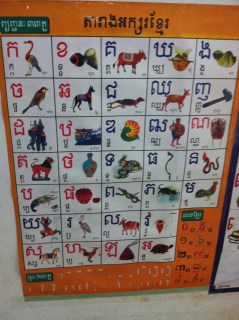
33 consonants and 23 vowels to deal with

However, I think the most important thing is that children are allowed to learn literacy in their mother tongue and that this is supported by sufficient books in that language AT ALL LEVELS – starting with simple picture books, to the graded readers, chapter books, young adult novels etc.  And of course the absolutely critical “hi lo” books with high interest level at a low reading requirement for children who have slipped behind or have the possibility of education at a later age.  This site provides some fantastic strategies for struggling readers, aside from true disability, it is rather ironic that the “developed” world camps with “reluctant” readers, while the “developing” has children desperate to learn and enthusiastic learners without the resources that could take them where they need to be.

When I started researching this to write this blog post I found there is plenty happening in this area – it’s probably more a question of gathering the information together, sifting through it and deciding what is the nice to have, need to have, affordable, practical and any other criteria that an organisation can use to judge where their literacy spend goes.
In no particular order, here are some of the things I found:

Bookshelf @ Green Umbrella
Worldreader: operates mainly in Africa and Since we started our efforts to eradicate illiteracy, Worldreader has been committed to gauging our impact through extensive monitoring and evaluation activities, which measure the number of books read before and after deployment, students’ reading ability, as well as own ability to provide delivery and support. We’ve been research focused since day one and have a long term track record of examining what works and what doesn’t when it comes to eradicating illiteracy. – See more at: http://www.worldreader.org/what-we-do/#sthash.JXXgifyJ.dpuf”


Books treated with great respect
 Room to read, with their publishing arm: “One of the greatest challenges to early adoption of the habit of reading in developing countries is a lack of high-quality, age-appropriate children’s books in the local language. Often, the few books that are available are either second-hand books in foreign languages or low-quality, black and white books for more mature readers. Room to Read responded to this need by going into the publishing business. Our Book Publishing program is committed to providing children with materials that will inspire them to read, expand their minds, and develop a lifelong love for reading and learning.”

Sipar is a charity which “For over 20 years, has helped Cambodia fight illiteracy and develop school and public reading. An enrichment to this program has been the establishment of a publishing branch for books in khmer ten years ago.  What has been accomplished to date ?
  • 230 school libraries opened containing 2000 books each.
  • 2000 school librarians trained. 
  • 8 mobile libraries set in service and circulate in the poorer areas of Phnom Penh in order to introduce book-based activities. 
  • 26 public Reading Centers established as meeting places for exchange of ideas and knowledge for all ages.
  • 10 projects of communal educational services development set up in 2 provinces 
  • 95 titles for children and young people published in the khmer language, adding up to a grand total of 1 001 500 copies, thus reviving reading and writing in Cambodia.
  • 86 000 books donated to Teacher’s Training College.”
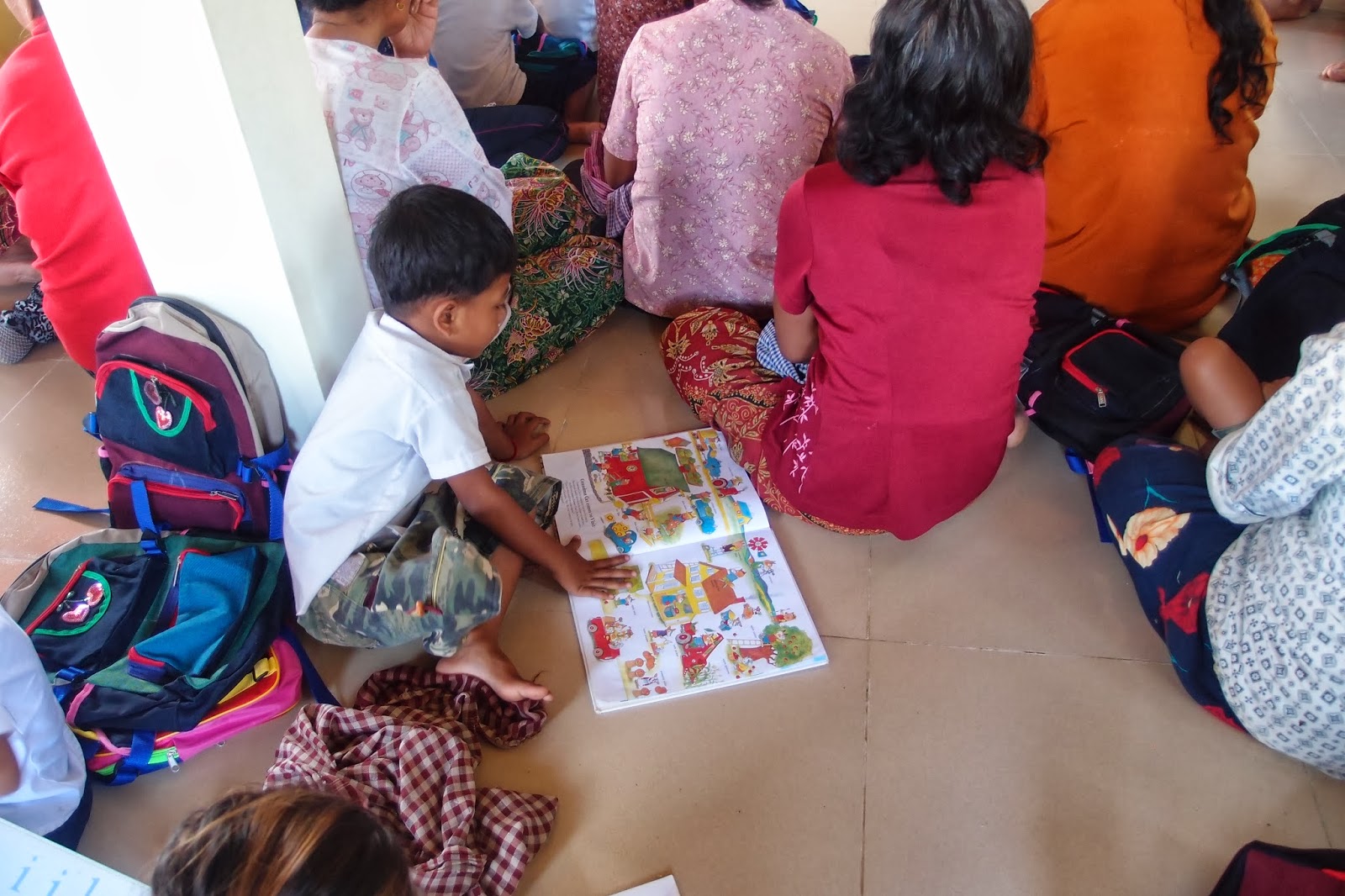
Richard Scarry a hit – pictures say it all

Lists are always good – here is one by Playing by the Book – of various literacy charities around the world. Most probably not completely relevant to this article, but good for borrowing and adaptation of ideas.
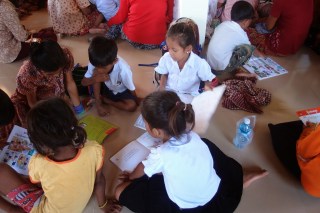
Children delighting in books –
even if some were upside down and being read back to front

 There is no harm in being critical, nor in asking for evidence of success in intervention.  This article by “GiveWell” provides some research on various aspects of developing-world education.  And I admit some bias as it quotes my favourite development economist – Esther Duflo.

 It is easy for me to maintain my book and library bias in all of this, but I guess there are hard questions to ask.  If I have a dollar, do I spend it on a book, on deworming a student, on a school uniform, on improving a teachers salary, on feeding a child?  Here’s a great video from Esther Duflo giving a TED talk …

Look carefully at the choice of word for this
alphabet poster – what were they thinking?
And no, it doesn’t make sense in Khmer either,
I checked.
I guess my visit resulted in more questions than answers. And especially me questioning my “developed world” assumptions.

My first LibGuide

I’ve managed to make my first LibGuide, otherwise known as a pathfinder or guide.  It was a requirement for my current course INF406 “Information Sources and Services”, which to be honest I enjoyed so much that I’ve decided to change the way I’m going on this degree from “youth and adult services” to a more digital and reference librarian bias.

Once I got my assignment I asked at school if there was anyone who wanted / needed a pathfinder and the Economics head asked for one on Development Economics.   I have to admit that Economics was never my favourite subject, neither in my undergraduate degree nor in my MBA.  Well, I liked and was terribly interested in the concepts and case studies, but hated the graphs and so called “academic rigour” that was applied to something that I found totally behavioural and that didn’t follow any of the supposed “rules” or “theories”.   Luckily things have moved on somewhat and it was quite a fascinating process deciding what to include and leave out of the pathfinder.

I was terribly (and luckily) constrained by the demands of the assignment that it was kept to 20-25 information sources, included at least 5 journal articles and 2 books and a limit of 2500 words. Otherwise it would have grown like topsy – speaking of which, Topsy.com is a rather nice new social media tool where you can agglomerate what’s happened on the web within a specified time frame… cool for some time wasting if you’re not busy researching anything else (try “chinese” and “homework” for some fun).

Anyway, here is my “official” libguide, which was submitted and the “unofficial” one, or rather the one the school will use which is much more extensive.  There are some pretty cool videos – and I’ve found a new favourite economist – Esther Duflo! Check her out.

I’ve learnt a TON by doing this. After I’d submitted a fellow student and experienced reference librarian who is a LibGuide ace – and taught me how to use it, showed me hers – I have a way to go yet, baby steps!

Moving the deck chairs – well at least the shelves

Old VCR boxes as flexible shelf labeling

A huge amount of progress has been made by Ms. Sheryl who has managed to get rid of the boxes cluttering up the floors and to start sorting those books which have any type of DDC number on the spine into DDC number order.  But there still are piles and piles of orphan textbooks that no-one appears to particularly want to use.  We’ve been lugging them from shelf to shelf it seems each time trying to find a logical space while we sort out the rest of the library, when actually the only logical place for them is ANYWHERE but the library…. which is why I titled this moving the deck chairs…

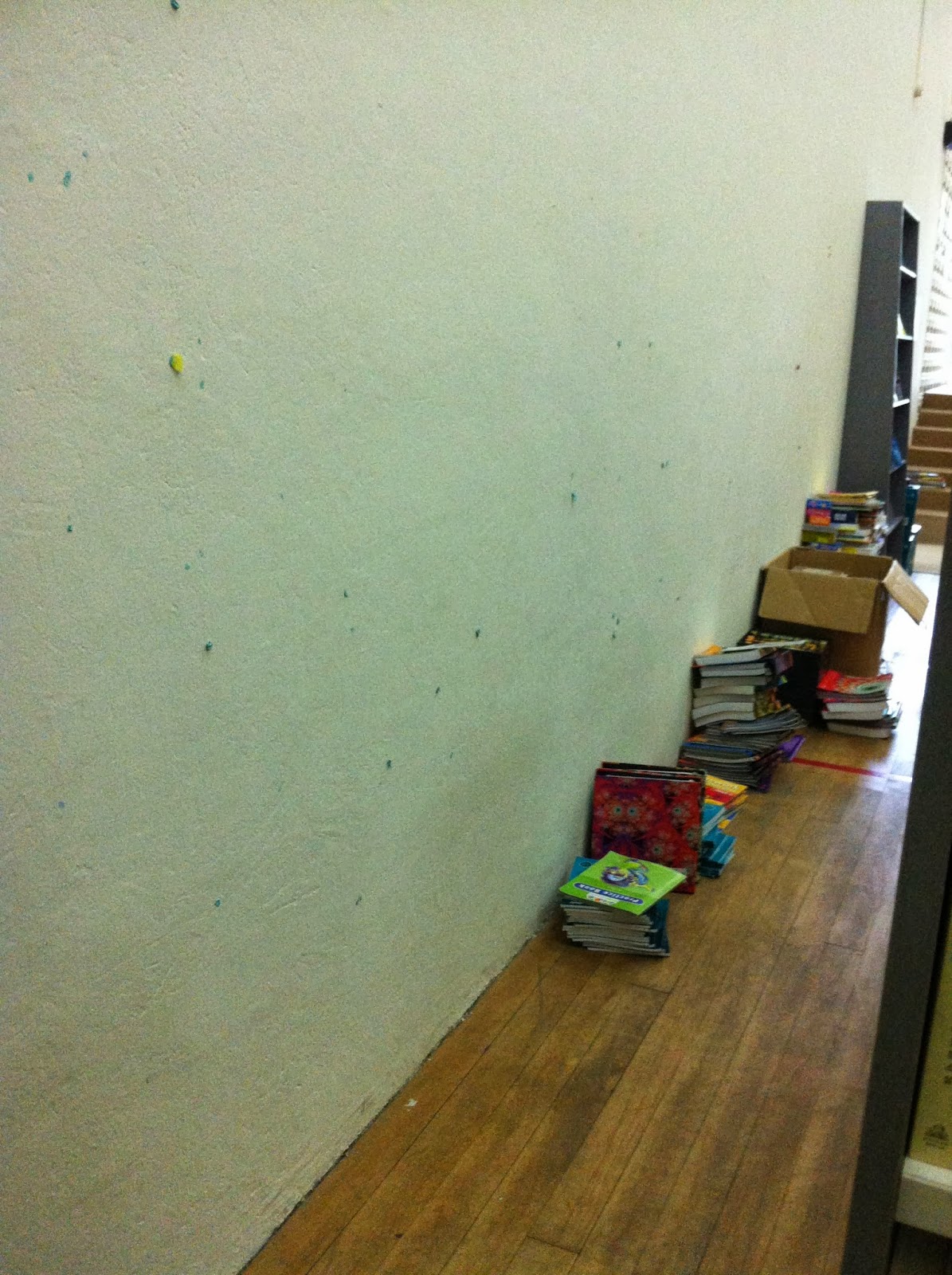
Yay an empty wall

In order to make the library shelves a bit more accessible physically we decided to move the magazine shelves out. Another factor was that due to the humidity, anything displayed on them started to have curling corners.  Since we wanted it done sooner rather than later, we just rolled up our sleeves and played moving ladies ourselves.  As you can see from the photo it’s looking good – albeit empty. These are the shelves where the NLB books which arrive next Thursday (whoopee) will be located so they don’t get all mixed up with our own collection.

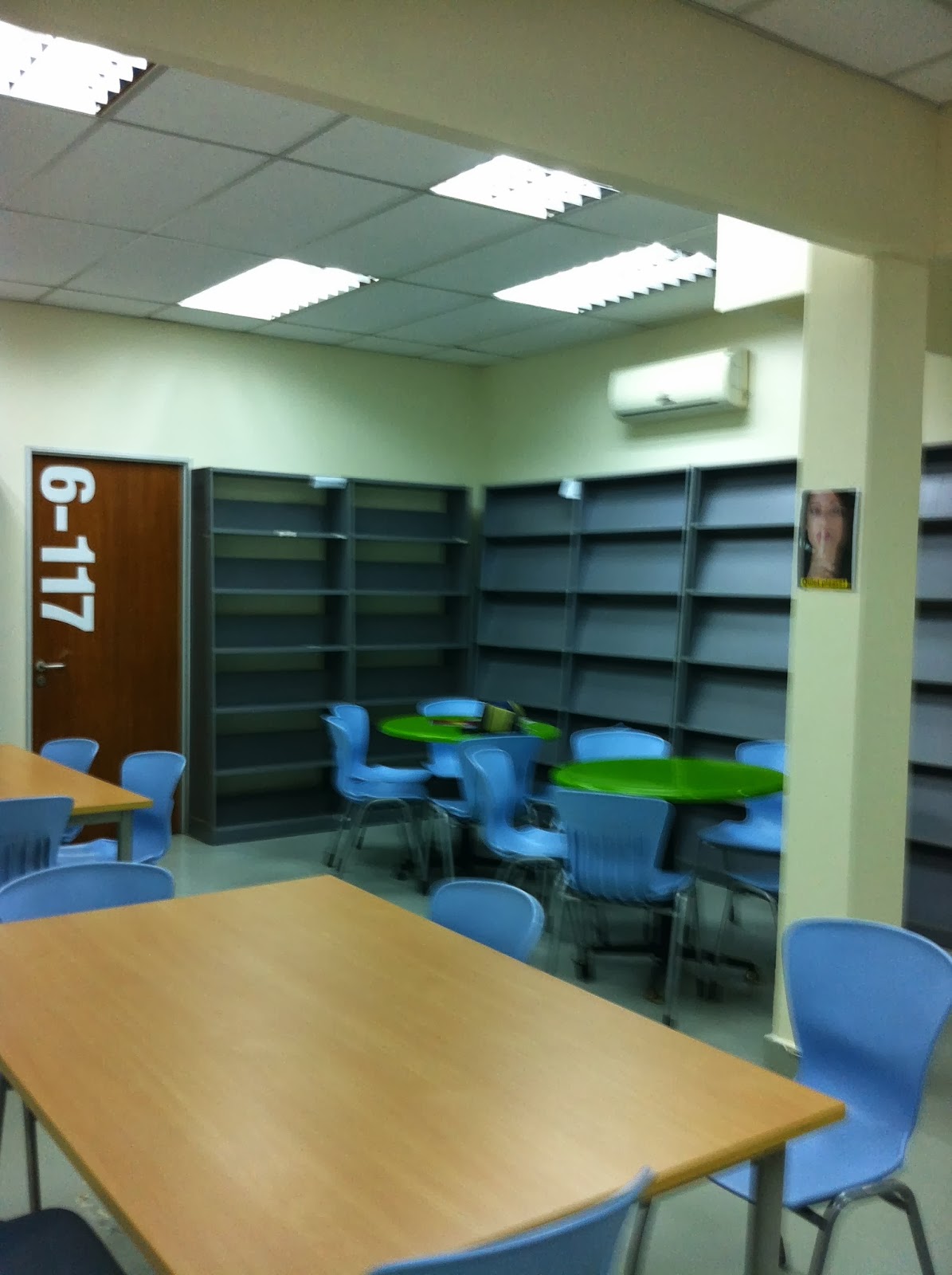
Shelves ready and waiting for NLB delivery

We managed to finish sorting and shelving the 000-300 DDC sections using the old VCR covers kindly donated by Ms. Katie.  It’s looking like a real library – at least on those six shelves!  Did I mention that the library is really quite dusty and everything has to be cleaned and wiped down as we go?

Progress:100-300 in Chinese sorted and shelved
delicious Monster 3.0 as a temporary solution

 The biggest issue right now is the arrival of the NLB books next week and we still haven’t managed to locate the old catalogue, nor the cataloguing system, nor does it look like anything will be in place on time.  That called for a quick meeting with the HOS to talk about a plan B.   Which had to be quick and easy and cheap.  I brought along my laptop with my home system – yes ironically at this point, my home books and CDs and DVDs are better catalogued than the schools.  I’ve been using Delicious Monster 2.0 and quickly upgrade to 3.0 in order to show the potential for doing something, that would be better than handwritten lists and checking.  At $25 it was somewhat a no-brainer, but it had to happen and be confirmed. I also broached the question of cleaning … (captive audience) and got permission to exchange some of the duplicate Korean and Chinese books with Ms. Katie for some of her surplus donated books that were needed, particularly in the primary section.  At this rate of shelf and book and box of book moving I’m going to be able to cancel my subscription to the gym!

Hurry up and wait

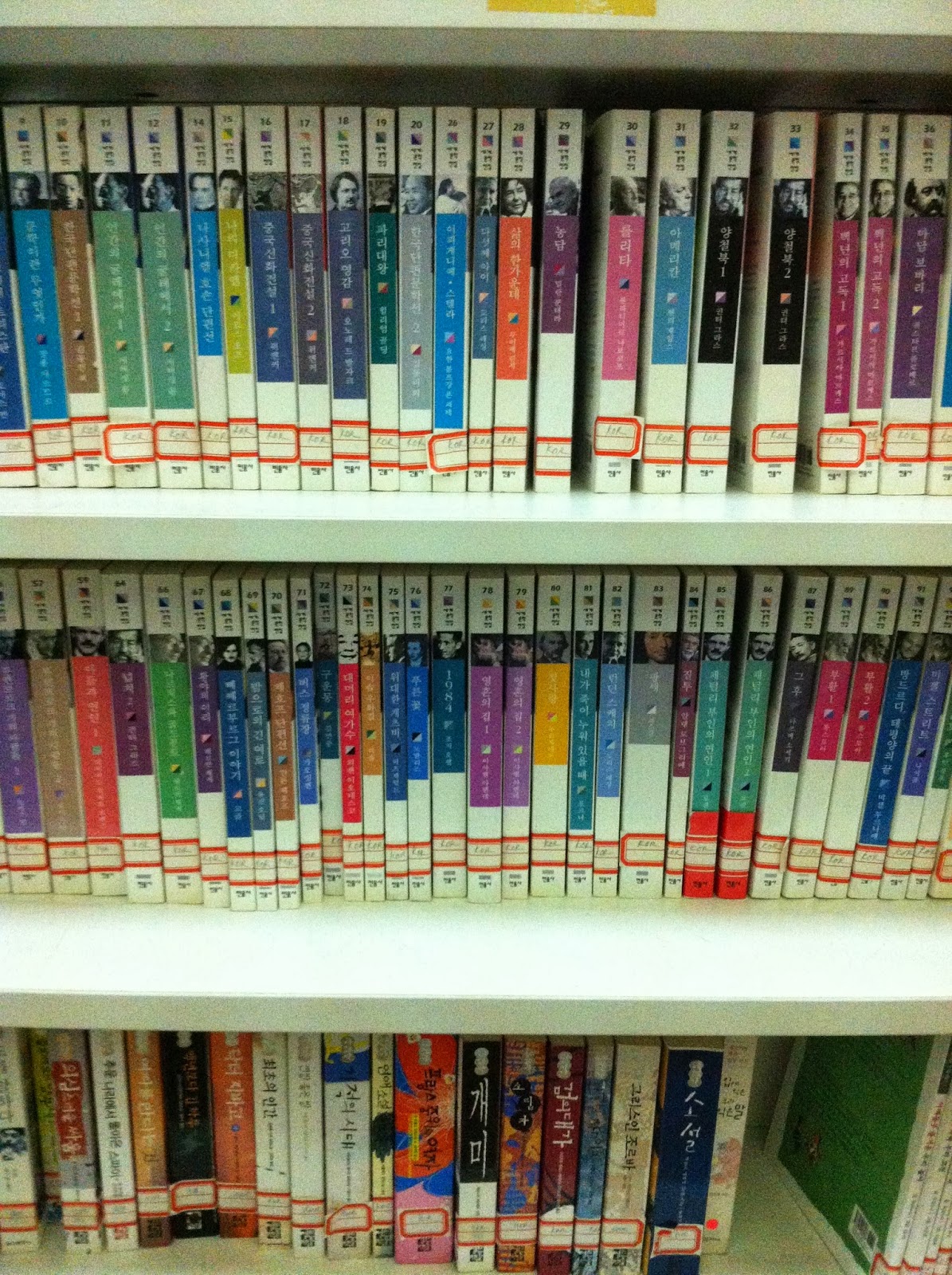
Lots and lots of Korean books

Today I get to the library to meet a rather frustrated Ms. Sheryl.  There has been progress, but she’s rather frustrated at the pace.  The boxes of old books that we want to swop in the Book Cross scheme still haven’t been claimed and it looks like the process will take longer than first thought – so an intermediate storage space has been found for them, but not a strong person who’s able and willing and has time to move them.  I can see those boxes really annoy her.  Luckily I only have to see them once a week, and hopefully they’ll be gone before my next visit.

Oh No! The boxes are still here …

The first shelf has a huge collection of Korean books.  She’s asked the Korean students what they are and why and it seems they’re mainly Korean fiction from a time that some students were studying Korean.  I snap a picture and send to Ms. Katie with the question of whether her IB Korean students / teachers would be interested.  Yes they would.  Another “swop” opportunity. So we need to clear it with the HOS and Korean community to see what is needed and what can be missed.  In the mean time, the books are relocated to a less prominent position.

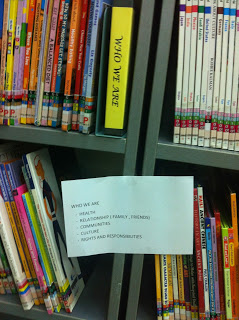
 Ms. Sheryl asks if I’d mind reading to a P2 class who’s about to come in.  Oops, how am I going to find a book that’s appropriate?  What unit were they doing again?  It’s “who we are”and the teacher is talking about feelings and emotions in the classroom.  I have a quick look through the picture books – luckily Ms. Sheryl has sorted them between Nursery to P2 and P3-6, so I can hit the right shelves.  No catalogue means no quick look up, and no shelf labeling or organisation means taking the books out a pile at a time and manually looking through them.  I find a nice little book about Anger and another about a boy who can’t sit still in class and put them aside.  Then I go back to my library exploration tour and find a pile of PYP books hidden in the back.   Sort those out to put them on the front (ex-Korean) shelf.   But in walk the kids – oops there goes my sorting and lots of little hands grope the piles with “can I have this one, what’s this …” the teacher quickly gets into action and announces that they’re going to get a story and I start with the “can’t sit still one” which works a treat for getting them seated and listening.  The Angry book gets lots of (solicited) information about tiresome younger and older siblings and how they manage feeling mad.  

Yippie! Some of the teachers want some of the text books
Then they’re let loose to borrow some books, which they then have to write down on a borrowing list.  Yup, we’re very manual for the time being.

As soon as they leave, I comb through all the junior books for early readers and reading schemes and find a mish-mash of Oxford Reading Tree, “I can read” PYP readers, ladybird books and anything and everything else.  I put these aside for the next request.  But the shelf I’ve just emptied is filthy, there have been some issues with the cleaners – another of Ms. Sheryl’s frustrations that needs to be sorted out.  She gets me a bowl of water and a cloth and soap and I set about wiping down the shelf.  Little by little we’ll get the place spick and span and then the maintenance won’t be so hard.
Meanwhile Ms. Sheryl does a little bit of networking around the classrooms to find some candidates for some of the many text-books clogging up the shelves.  In a few weeks we’ll have 2000 books arriving that are relevant and needed, so there is not much space for all those text books.  She finds takers for the Science and English textbooks and workbooks.  Luckily – that saves about 2 or 3 shelves.  
I attack the magazine rack – not a good option in this climate.  The books and magazines on display are looking rather sad with curled up corners.  Some of the magazines have been there since 2004 – I find a box for items to be binned and in they go.  The books get reshelved and the rack is slowly cleared.  It will probably be put outside the library for some “lifestyle” items.
Then we get a nice surprise – someone comes to collect the ‘claimed’ text books, they’re off the floor now, and we get a delivery of old VCR boxes that Ms. Katie used to use for her moveable bookshelf labeling!  Ms. Sheryl gets to work making labels.  We decide at this point the DDC is a remote dream, and we’ll start by labeling the primary section by unit of enquiry.  The secondary can get the DDC.  
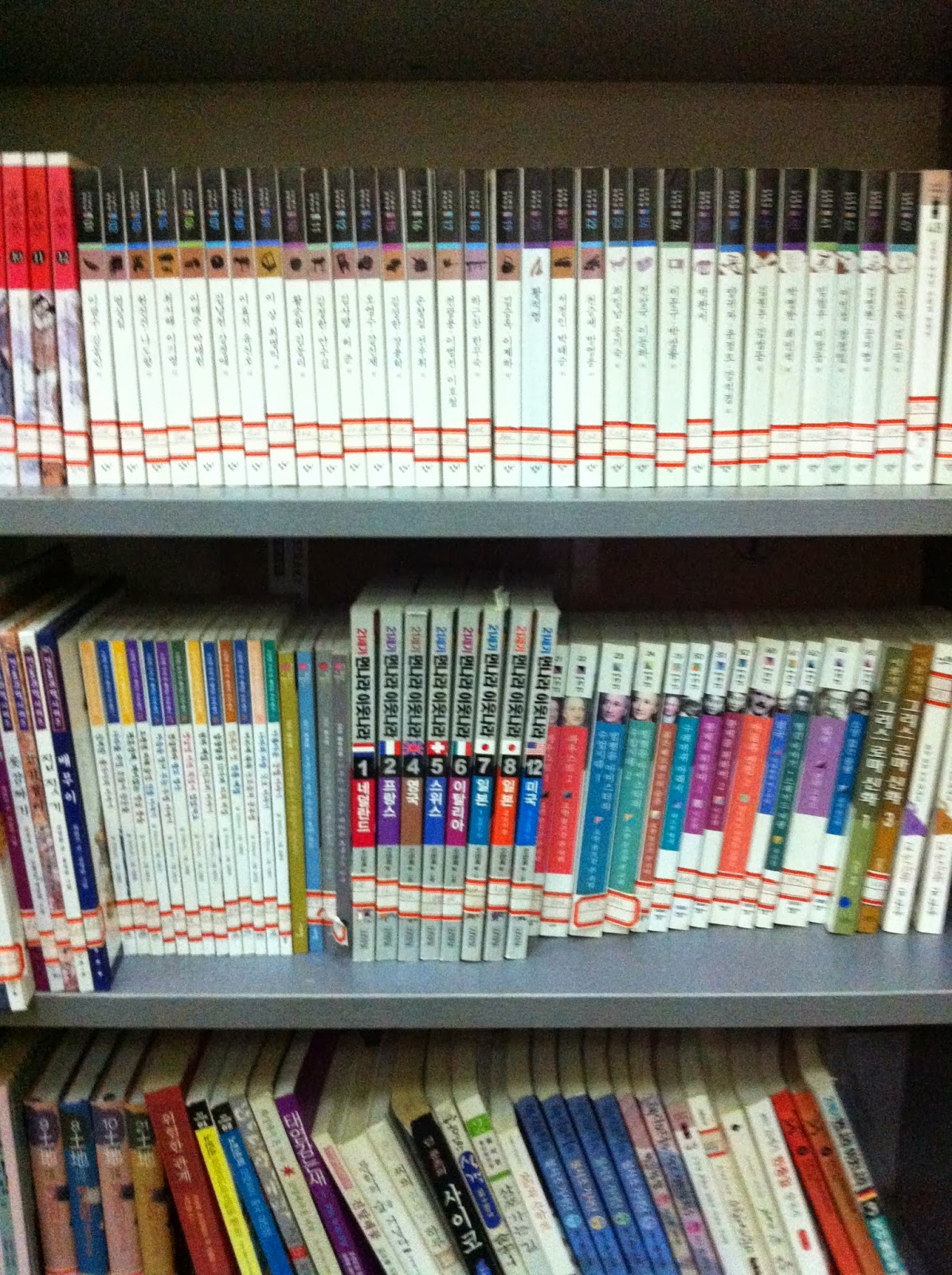
They’re everywhere, they’re everywhere!  Just as I want to leave, I find another 6 shelves full of Korean books – Ms. Sheryl agrees that it would be a good idea to weed the collection and replace it with books that are in shorter supply at the school.  We have a new mission!  


Just before I leave I find even more Korean books

 The teacher approaches me for some easy phonic based reading books in English for a new Chinese student who is learning to read in English – oh dear, we have to do the sort through piles thing again to find something.

Booky day

My day started early with a visit to the Geylang branch of the NLB.  There we met with the person in charge of the DEAR books and went through our needs.

We decided to concentrate on the first two units of enquiry for the PYP and MYP programmes, as we were not sure how long it would take for delivery.

The first units are as follows:

Nursery-K1 & P2-P4 & P6:  Who we Are
K2 & P5: Where we Are in Place and Time
P1: How we organise ourselves

Starting in Nursery, and getting more complex as the children move up through the school, the “who we are” units focus on the self, friendships, beliefs, rights and responsibilities, and cultural values.

On the other hand “How we organise ourselves” has to do with structures and procedures and “Where we are in Place and Time” looks at evolution of things through history, for the K2’s that involves toys and games, and for the P4 students taking a look at past civilizations, systems and technologies.

The second units involve the following:

Nursery: How we express ourselves
K1: How the world works
K2, P1&P5: Who We Are
P2-4 & P6: Where we Are in Place and Time

The nursery students look at how feelings are expressed, while K1 is busy with the weather and how it shapes the lives of people.
The groups looking at “who we are” are covering a wide range of age-appropriate topics starting with health and taking care of your body, relationships with other people, and attitudes and choices.  While “where we are” examines family histories, exploration, tools and migration.

Quite a wide range of very diverse topics!  The challenge is to match the topics with the Dewey Decimal Classification system so you know where to look for what you need.  Some things are obvious – like looking in the 930’s for ancient civilizations.  Others are a little less obvious – for example cultural aspects are spread between geography, history, art, music etc.

After I’m finished, I go off to do some volunteer work at a second hand shop.  There I find piles of books about to be dumped.   Before you get all upset about the dumping thing – as you may have read previously books in a sad state of humidity and mold are both a health hazard and a hazard to other “healthy” books.  So one has to be cruel to be kind.
So I quickly snap a shot and sms Ms. Katie – is she interested?  Yes definitely as some books are fashion and culture related to the 60’s and she has some IB EE (International Baccalaureate, Extended Essay) students who would love to access them.  Others will be a useful addition to the school collection and still others, which are in really bad condition will be cut up by the design and technology and art students for their projects.

When I finish my shift, I load up the books and am greeted by some very enthusiastic IB students who “ooh” and “aah” over my cache.

Presentation of the plan

Today was the day to present the plan!  But first we spent some time going around the school meeting teachers and heads of department and finding out the scheduling of the various units of enquiry, which units were to be studied and what the information needs would be.  Our first concrete action was going to be getting a selection of books from the NLB through their DEAR scheme.

The DEAR scheme is a bulk lending programme, whereby:

    “The NLB welcomes schools and learning centres, social, welfare, and community organisations which are embarking on the promotion of reading initiatives to borrow books in bulk for their members’ use. This service, called DEAR@Schools and DEAR@Community, is provided free of charge and subjected for renewal on a yearly basis.

    All DEAR@Schools and DEAR@Community members are entitled to borrow up to a maximum of 2,000 books for a loan period of 84 days (12 weeks).”

For a school on a limited budget and limited resources (physical and staffing) this is a great way to get resources up and running in a short time frame. 

Then the meeting with the Head of School (HOS) to see if we had support for our ambitious plans!   Luckily we did, however, not everything could be achieved at once, so we needed to work step-by-step.
The first priority was ordering the books the teachers needed for delivery as soon as possible.  We’d arranged a slot with the NLB to do that tomorrow.  Then while we are waiting for the book delivery we have to work hard to make sure we have the physical space and the logistics in place for receiving, storing, disbursing, returning and sending the books back to the NLB.

Library make-over plan

My visit had me so excited, that instead of doing my coursework, I decided to make a little power-point presentation of what could be done.  I can’t take credit for all of this, as a lot of people had already been involved in the project.  With things the school head and former school librarian had already arranged (book-cross and DEAR borrowing) and ideas from Ms. Sheryl and Ms. Katie.  I’ve copied and pasted it below – but obviously the plan is a work in progress and subject to change – I’ll be interested to see what the final product will be.