Firmware (& Software)

Planning for a library expansion and renovation involves considerable time, thought and work on the “hardware” of the physical building. Including last week’s work of packing up the books and getting them put into storage. I’d blogged a little about how just prior to that we’d done a lot of weeding, and sorting out patron data on our system, as somehow the physical sorting out led to a drive for digital sort out and housekeeping.

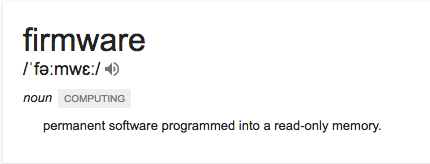
I’ve been promising for a while that I’ll talk a little about the “digital” side of the library, but first I’d like to talk about what I’d refer to as “Firmware”
screen-shot-2016-12-04-at-9-58-00-am

A characteristic of most international schools is the transience of its students, and often teaching staff. Naturally this includes the library.  In my current position I’m aware of the fact that I’m just one in a long line of librarians who have come and gone. I’m also extremely grateful to our permanent library staff, who keep things ticking over as teacher librarians come and go, each trying to put their mark on the physical and teaching environment.  They have institutional knowledge. They know what has been tried and worked or failed, and a pretty good idea of why.  I admire their unrelenting politeness and helpfulness as they cope with the latest “new broom” .

When you speak to other librarians, inevitably the conversation will come around to the fact that they’d like their staff to take more initiative, or upgrade their skills beyond shelving and circulation and basic queries.  But that is harder to realise than one would think. There appears to be a reluctance that sometimes is hard to fathom.  Some librarians have taken great initiatives in this direction – like the KL librarians under Robert George with their JAWs (Job Alike Workshop), and more recently the similar sessions initiated by Barb Reid in Singapore.  The problem with any professional development at any level is that there needs to be a compelling reason to take the learning and put it into action as soon as possible. But invariably the day-to-day tasks take over and there just isn’t enough space between relentless shelving and picking books for the next (18) Units to get the practise …

However in the last month, we’ve had to challenge the “read-only” part of the definition to its limits, with one staff member on maternity leave and the other on hospitalisation leave, and as a result, that once in a blue moon occurrence – a “firmware update” has become the new norm. So suddenly business as usual hasn’t been usual, and everyone has had to do everything all the time, with a lot of compromise and cobbling things together as we go along.  We haven’t had the luxury of designated tasks and roles, and suddenly we are all cataloguers, and weeders, and resource list creators.

I’d set aside a week for packing up the library. But I’d not calculated on the energy and enthusiasm of my staff and the maintenance staff, and the help of our Grade 5 students who made a “book train” from the library upstairs, so by the end of Tuesday we were pretty much done (and not dusted – boy oh boy, did we discover dirt and dust…). So I declared Wednesday to be systems and PD day, kept back 3 tables and chairs and we sat down and I taught everyone how to use Libguides.   We probably only spent about two hours on learning the basics, and that’s really all that is needed, because with everything it’s not about the theory it’s about using it.   Then back to some more boring stuff, getting images onto books in the collection.

And then more important, but still a little bit tedious – especially if you’re using Follett – checking through resource lists and updating visual search for all the UOIs.   Oh gosh, I’m embarrassed to say how many links were old or incorrect.

Next up was making resource lists for all the books related to all the countries our students came from. For Uniting Nations day I had made a cursory start by grouping books into continents as it was a “quick and dirty” way of getting lists out there for our “read around the world” challenge.  Now I wanted to dig deeper, so I took the list of all the student nationalities and we divided it up and started searching and added. We quickly saw the countries that were under-represented, or not even represented at all – books from / about Bulgaria anyone?

I also spent the better part of a day sorting out and adding books related to Social and Emotional Learning  based on the handout of Dr. Myra Bacsal after her talk. It also entailed adding nearly US$2,000 worth of books to a “to purchase” list, as I realised that while we did have many of the books recommended, we were also lacking in a few – and particularly in more diverse and more recent books.

Our final day in the library, around rapidly diminishing furniture – including at one point our desks, was spent putting the libguide PD into practice, as the 3 of us sat with a list of all units, all guides made and guides to be made and started putting libguides together!

screen-shot-2016-12-04-at-10-36-11-am

The previous day while my staff was helping their colleagues at our other campus, I’d been sitting with the librarians, helping them extend their knowledge of libguides, and us brainstorming ways of presenting physical and digital resources in the guides in such a way that it was easy to navigate and would ensure that students could benefit from knowing what books we had and also how to access other QUALITY resources (i.e. not just google) that we were paying for but were perhaps not being well utilized.

We decided on

  • having the central idea at the top in a floating box
  • on the left – having a scrolling bookshelf of our unit books – using the Library Thing for Libraries book display unit. That way teachers and students could see all available books in a unit, even if they were distributed in a different classroom – and clicking on the link would take them to the book in the catalog – AND if they looked at the subject headings under Explore! would hopefully have a Webpath Express link to click on.
  • Putting some videos in the middle for our more visual / video liking students – also very handy for our ELL students with the paired speaking / images.
  • On the right having a tabbed box that could alternate between Brainpop (a staple in primary), Epic Books (easy to access and great free selection of nonfiction books for easy projection & assignment in class), Britannica (because Encyclopedia) and other links.

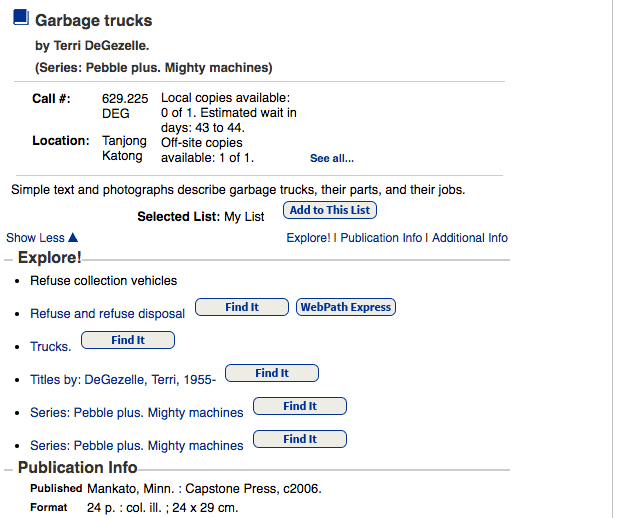
screen-shot-2016-12-04-at-10-40-52-am

screen-shot-2016-12-04-at-10-48-31-am

Of course nothing is simple – and even now as I look over the units, I see that some units have the UOI books around the central idea and inquiry in them and some have that plus what-ever literacy / math connection is being made (so more than half of the books are poetry for example). In the medium term all that needs to be straightened out and sorted out as well.

Also before you can add a scrolling list of books, you need a list of books … and to know how to get the books into Library things, and then into a book display widget – so I made a little screencast on how to do that!

The wonderful thing about all of this is the obvious enjoyment and pride that my staff got out of researching units and finding resources and adding them to a guide – they kept on saying “this is so interesting”, and “this is so creative”.  Of course it is not a “quick” thing, I’d say on average a very basic guide at primary level that is reasonably complete will take around 3 to 4 hours. And then one just has to hope that the units don’t change every year!

All in all, and incredibly productive week, and also my staff finally “gets” the fact that my drive for automating student update and photo import etc. etc. is not to put them out of a job, but to free them up to do more interesting and meaningful work.  After we talked about that, one staff member said “and now to automate the shelving!” amen to that!


The unmentionables

Reading “Small Things” and discussing it with colleagues and friends, combined with the Sinna Man video has set me off on a train of thought of what the “unmentionables” in children’s literature – or more specific, picture books are. Yes, some Europeans are doing some things, but it doesn’t yet seem to be in the mainstream BANA literature.

Is it merely a question of time? Certainly since I was a teenager, middle school and YA literature has taken leaps into sexuality, gender issues, rape, abuse, addiction etc. But what makes us think that there is this sudden flick of a switch in the teen years? Why do we think younger children are so innocent or naive or not ready?  Is it psychologically sound to deny them this glimpse into the expression of these forms of reality, or is it a form of misguided protection?

As a teacher librarian I see young children sitting masturbating while listening to stories. Teachers come to me and ask me about books about it, or at least ones that help children set boundaries, or stop it in public. Parents have varying views from horror and denial to acceptance and insistence on normality and ‘leave them be’.  I’ve tried googling it, but that may brand me as a paedophile on the look out for smutty images… what I want is the book form of the sex-ed my kids received in Grade 1, which was comparing your body to your home and explaining how you had levels of who  you let into various areas of your home (or in the front door at all), and so to it was with your body. Setting boundaries. Knowing what was public and private.  In thought word and deed.  Anyone know of anything?

Death and dying is sensitively dealt with an a couple of books – literally a handful, most recentl300961y in Ghosts (really for middle school but it’s very popular with my elementary age students from about 8 years old), childhood anxiety and depression? Not many that I’m aware of besides “Small things” and Michael Rosen’s Sad Book.

The books on learning difficulties like ADHD, Autism, Dyslexia etc. are often (badly) written and illustrated and self-published by interest groups or desperate parents, and it shows.  Step up to plate authors!

Similarly abuse. There are enough books for middle school and YA, but many children grow up in families where there is physical, verbal or emotional abuse. That becomes their normal and you see it in the way they behave to others out of the home. There is substance abuse and addiction. How about bullying? Have the picture books you’ve read ever really helped portray the agony with out a flippant resolution? The Invisible Boy is one of the lovely books in this respect. But often the protagonists have some hidden talent … what if they don’t? What if they really are fat or ugly, or dress funny, or poor, or can’t keep up in class?

Are these the unmentionables? What would you add? I know these are probably not going to be best sellers, run away hits. But they deserve the light of day. A good light of day by excellent authors and illustrators. Who children will read because they trust and believe in those people to be their voice and their eyes and ears.

MLA8 and Chinese …

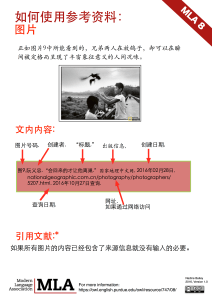
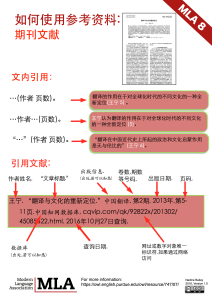
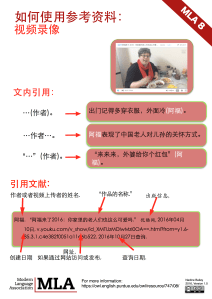
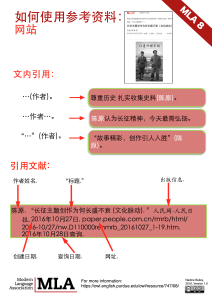
A fellow librarian in Shanghai and I have been working on creating some new MLA8 posters in Chinese for her bilingual school / library.  It’s been an interesting process to put it mildly.

We started off with the MLA posters I created with Katie Day about 2 years ago, and which she updated recently to reflect the MLA8 changes. Now translation is as much an art as a science, and, with the help of a Chinese library assistant we made some rather silly mistakes along the way which in retrospect are obvious. Each round was accompanied by the refrain of my Chinese speaking daughter of “but they just don’t have that /do that in Chinese”

Round 1 – we just translated the English posters into Chinese – well duh, why on earth would you take an English book / video etc. and cite it in Chinese?

Round 2 – finding suitable Chinese originated materials in each basic format and creating citations for them. It may sound easy, but it’s actually harder than you’d think. I worked on the newspaper one with my daughter, and it took a whole evening! Then there was a great NatGeo chinese video, but it was way too complicated as it was a documentary with a director quoting from an interviewee – yes a nice challenge for advanced citations but not suitable for a beginner “basic” poster to get the main ideas across.

Round 3 – punctuation. I’m not entirely sure we’ve nailed this one completely. We ended up making an executive decision on making the in-text punctuation follow the Chinese punctuation – particularly for the full-stop / period “。” and the English punctuation in the “works cited” section. What we didn’t do, and my daughter insists we should have done, is to put the titles of the book in the chinese brackets instead of the inverted commas, i.e. 《。。。  》instead of “…”

Round 4 – italics. MLA8 asks for italics, and initially I spent a lot of time trying to italicise in IOS10, which an afternoon of searching will tell you is not possible.  Along the way I found out some truly fascinating things about Chinese fonts and typography, which you’re welcome to read up on – it really is very interesting. I learnt a new word – glyphs, and the fact that you need around 20,000 of them for a Chinese font! (I also coincidently found out how to add phonetic marks above characters in Pages – never know when you’ll need that!)

Two things cinched it, a comment on a CJK font forum (Chinese, Japanese Korean) ”

“I’m not solving your problem, but to remind you that this kind of “programmatic italic font” has really bad readability.
For CJK text, the right way to express emphasize (or quote) is to use another font (usually serif font). Especially for Simplified Chinese, use Songti, Fangsong, or Kaiti instead of italic font if your text font is Heiti (iOS default). I know it’s a little bit complicated, but this is really how we do italic.”

and secondly from the MLA itself (which is where I really should have started, but sometimes you go off on a tangent without really thinking properly).

Q: Do I italicize Cyrillic book titles in the list of works cited?

In the past, titles and terms in the Cyrillic alphabet were not italicized, partly because it is based on the Greek alphabet, which traditionally is not italicized (on this point, see Chicago Manual of Style, 16th ed., sec. 11.131). Letterspacing instead of italics was traditionally used to emphasize a word or phrase.

Today, Cyrillic cursive (the term italics is usually not used in this context) for titles and for emphasis seems to be used often in publications, including scholarly publications, perhaps because of progress in digital typesetting or because of a global trend toward standardization.

Note that there are many languages in the world that do not have an italic font—Japanese, Chinese, Korean, Armenian, for example. Arabic sometimes uses a typeface that slants to the left instead of to the right.

Given the complexity and specificity of historical, cultural, linguistic, and printing practices throughout the world, a writer should not use italics when a book title is in a foreign language that is not written in the Latin alphabet. If a work is being prepared for publication, let the author pass that buck to the publisher.

Round 5 – checking and checking actually we just finished this now – with adding the last missing closing bracket – and voila, the posters may see the light of day.

mla8-referencing-image-ib-version-chinese mla8-referencing-image-chinese mla8-referencing-article-journal-chinese mla8-referencing-video-chinese mla8-referencing-newspaper-chinese mla8-referencing-book-chinese mla8-referencing-website-chinese

And now, I nervously exhibit them for comment and criticism and correction by my peers! All posters are creative commons with attribution please. My next post will be what I refer to as “MLA8 Lite” – the posters I’ve made for my G6 PYP exhibition students. Just the works cited, without the in-text citation, with explanations in the form of the MLA8 Elements.


It’s so beautiful I want to cry …

It’s been a tough few weeks, and this morning I was reminded just what it’s all about. I was reading “All the lost things” by Kelly Canby to a Grade 2 class, and at the end, one little girl said “It’s so beautiful I want to cry” at which point I also wanted to plink a tear. Because it is beautiful. And what is even more beautiful is when a 7 year old recognises and empathises with beauty in a book.

lost-things

From an instructional point – it also has great links to the string of Lauren Castillo books we’ve been reading as part of the Global Read aloud  so we could refer back to “Nana in the City” and “Yard Sale”.

The other moment of sad beauty this morning was reading “Small Things” by Mel Tregonning. It was the third or fourth time I’ve started reading this, and each time I had to stop after a few pages since it’s not something you can just read in a hurry. It’s something that needs you to slow down and take your time. You also both need to not know the back story before reading it, and then to read the back story and then read it again.  Many young children suffer from stress and anxiety. The fact this is a wordless book makes it even more powerful. Look at the demons following him and eating away at his existence.

I’m almost at a loss at what to do with this. I can see parents being terrified by this, and yet we need to acknowledge the range of feelings and emotions our children endure. It would be a powerful book for use with bibliotherapy, but one almost doesn’t want it used wrongly.

Make-over update

When I tell people we’re getting to renovate and extend our library their first reaction is “wow, that’s amazing, you’re so lucky!”. And yes, prima facie it is so. But right now it’s feeling rather overwhelming. And ironically most of that is not so much to do with the change as the amount of preparation that needs to be done. Speaking of change – you HAVE to get “Bug in a Vacuum”

I am a veteran of moving. 10 countries in 24 years plus countless internal moves in those countries and 3 moves in the last 5 years. I know it pays to be prepared and to clean and clear before the move. And as I remarked in my last post, a lot of that cleaning and clearing happens behind the scene.  Things are slightly more complicated as well due to well, life. Unforeseen circumstances. Like one staff member on maternity and another on hospitalisation leave. And part of my gratitude thoughts each day are for my remaining staff member who is picking up a lot of the slack and the temporary staff member who is happy to learn the ropes and keep things ticking over. And the other temp who has been coming in and the occasional parent or volunteer for their kindness.  But it does slow things down as we adapt and learn.

So, significant but time consuming things that have been done this week – including taking up time in my weekends – those weekends that I thought would be computer and work free now that I’ve finished my M.Ed!

  • Putting patron photos into FollettDestiny  – easy in theory but quite a lot of preparation work – including learning all sorts of new Excel tricks on how to add things before and after text in cells!  And of course 90% goes well, but the 10% that bombs out, takes 90% of your time to trace why an upload didn’t work, what went wrong and how to remedy it.
  • Cleaning up patron data.  After the last patron update I found about nine pages of patron data that just wasn’t right. Parents marked as students or staff, students who had left years ago, staff who had left, incorrect emails etc.  Now bear in mind, when I prepare these lists, I then go into school with a full teaching schedule and it literally took 2 people 2 days to clear it all up in-between their regular tasks of circulation, shelving and THE PREP
  • Yes, the PREP. we have 9 different grades from Pre-Kindergarten to Grade 6, and each of those have 4 (Kindergarten) -6 (the rest) UOIs. The library has to be vacated by next Friday. Most UOI’s are changing over on Monday coming. Many UOIs have changed this year. So that means checking the central idea etc. checking previous year’s lists, quickly checking with the lead that my understanding of where the topic /theme / concept is going is the same as theirs, making new lists and then packing up 18 boxes of books and DVDs – 9 for the coming week when we’ll have over 1000 books returned from the last units and 9 for the first weeks of January 2017 – just in case. Because of course our handover of an empty library to the designers / constructors is 1 December and of course their hand-back to us is 1 January. But I am of little faith that things are flawless. So I err on the side of caution.  And bear in mind, we’re still having our 35 classes a week, plus all sorts of meetings that are using the library so we’re configuring and reconfiguring the space and arranging catchup classes…
  • The new books. And the wrongly processed books. I still hold vestiges of anger on our last big book order with Follett that went horribly wrong in every which way it could have gone wrong. They didn’t deliver on time or as arranged, they catalogued incorrectly, spine labels were wrong etc. So we’re still sorting out that mess. And then I put in a couple of other smaller orders, but our cataloguer is off on hospitalisation leave so we’re cataloging on the fly.  Now this is a GOOD thing I keep on telling myself. I’m all for final responsibility for tasks and work flow, but I’m also all for everyone pitching in and helping and knowing all aspects of the process. It’s been a little peeve of mine in the library world that there is so much segregation of duties and these past weeks have just proven that given the chance people can do way more than they or anyone else may have thought. But it is extra work – did I mention what else was going on?
  • The weeding. Saying goodbye is so hard to do!  I must admit having absolutely no problems ditching the disney fairy series that no-one was looking at or borrowing. But then there are other books – Michael Rosen’s “Sad”. I’m sad that no-one seems to have ever borrowed that. And I feel bad that I’ve not marketed it, or allowed it to see the light of day and be nurtured and treasured. Perhaps if I pair it with Bug in a Vacuum?  Weeding is sweet sorrow. It highlights our failings as book pushers. I feel like a neglectful parent when a book that’s been bought doesn’t get the attention it needs. I spend time with each of them and ponder whether putting them on a resource list would help. (No jokes about “will this bring me or someone else joy) Or perhaps asking students and teachers to ponder their fate. And I do both, and some survive for another day.
  • Acquisition plan – my kids ask me “if we’re getting a new library does that mean we’re getting new books?” This is the double edged sword of money and budget. I was talking to some fellow librarians last week – their budgets are double mine. Sometimes less is more. Our students and our teachers probably only have capacity for perhaps one really good reading book a week. Each. What should that book be? And for research / nonfiction? It’s so hard. I try so hard, but this week it has been stingrays and grasshoppers. Boats and jet planes. Last week it was fast cars and how to make your own vegetable garden (try getting one of those for an equatorial climate, suitable for G2 level), dinosaurs are totally out of favour. They want tornados and not hurricanes.  And “Miss where are your Indian books?”  and “there’s nothing on Bangladesh” I’m trying to diversify. They deserve Indian books, and overseas Chinese but not ABC (American born Chinese) books, and Korean protagonists and Japanese heroes. The triplet sister of acquisition and weeding is discoverability. I need to crack that nut in the new library. Does that mean genrefying, through label or location? Does it mean more work on resource lists or libguides or other pathfinders?

The problem with grappling with all these things is that they take up a lot of brainspace and thought space and discussion space. All of which is being take up by doing. I’m looking forward to the library being boxed up and having time to be more strategic, having time to go into classrooms and observe and understand.


What lies beneath

what-librarians-do

Just a quick post here, based on a bunch of letters I got from my G1 students asking what the “roles and responsibilities of a librarian were” – I had to very quickly cobble it together in about 3 minutes I had between classes, so I’m sure I’ve forgotten tons. What I wanted to bring across is that what you see is just a fraction of what you get with a teacher-librarian. And even so, it’s just so frustrating that whenever I’m doing one thing, it means I’m not doing something else that I probably should / could / have to / ought to/ be doing.

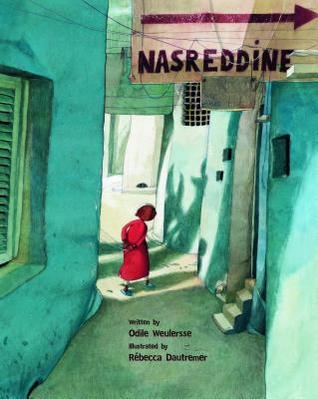
Fortunately I’d just been reading Nasreddine that morning – I’ve taken to reading a couple of picture books while I have my breakfast to set my day off, and it was the perfect antidote to that feeling of hopelessness.


L1 and the role of the school

I received an email last night from someone who had read my blog on Building a LOTE collection in an international school and she quite rightly pointed out that it’s a relatively easy thing for a librarian thing to do.  Here is her question:

I am a school librarian in an IB candidate school. We are trying to find strategies to promote mother tongues within the school. As far as the library is concerned, I can develop LOTE collections as you call them, but I was wondering would you know of strategies that would help teachers develop their foreign students’ mother tongues.
Thank you very much for your help.

Now fortunately for me (since I’m chest deep in pre-library renovation stuff I’d just run a PYP connect workshop on the very matter 2 weeks ago, and that question prompted me to put this out! So I’m going to embed the presentation here for everyone to see my (sometimes controversial) views.  And I’ll explain my philosophy and “ingredients” a little.

Ingredients for a successful L1 program in any school

  1. A champion. A committed champion
  2. A supportive and imaginative leadership
  3. Knowledge and information & the dissemination thereof
  4. A committed language group

1. Committed champion

I think the cartoon below will explain this. Although the metaphor I always use is that one cannot be a little bit pregnant. Asking a mono-lingual to be your language champion is probably not the way to go.

agile-safari-pig-and-chicken-part1

The champion does not have to be a teacher or in admin – at my last school I did it as a passionate parent working part time in the library. I’d like to think that, in conjunction with our mother-tongue coordinator we made a huge difference. But I ruffled a lot of (mono-lingual leadership) feathers and perhaps I could only do what I did do, because my job was not at stake. But that’s another story.   This point sounds very easy but it’s not easy being a language champion, even in an international school. I’d even dare to say especially in an international school. Because unfortunately most of them are run by an ‘elite’ corps of white anglo-saxon middle aged monolingual men who are exceptional in paying lip service to language and particularly bad in putting their money (or even support) where their mouths are. There are exceptions. But usually the person is not mono-lingual. The champion needs to be exceptionally knowledgeable, very thick-skinned, very imaginative, networked, and not willing to see problems but only possibilities.

2. A supportive and imaginative leadership

As said before, leadership is the elephant in the room of L1 support. Scratch the surface of almost any international school’s language policy (outside of non-British Europe, since they “get” language) and you will find immense resistance to the language factor unless it serves marketing and certification requirements. Similarly you will see that very seldom do former language teachers rise to power, and existing language teachers are often not power-mongers (research bears this out, but don’t have time to find the citation).

I keep telling leadership at my schools that the lack of a L1* program is a failure of imagination rather than a lack of resources.  I think every 50-something year old knows people who learnt English through bootlegged Beatles cassettes or French learners through chansons. I find it incredible that we think it is so hard now when it’s never been easier to access resources and people at our fingertips.

3. Knowledge and information and the dissemination thereof

We need to make sure our language champion is “powered up” with what works, and what doesn’t and what the potential issues and pitfalls are. We similarly need to educate our educators, from the top down and our parents. Way too little time is spent on this. Instead we send our leadership to leadership PD, our math teachers to math PD, our teachers to “making the PYP happen” countless times in 100s of variations and our language teachers to language PD.  And we never talk to our parents about language except when they’re struggling as ELL (English Language learner) students. As Virginia Rojas always says “Every teacher is a language teacher”.  I have railed countless times against our echo-chambers in education!

In my experience over the last 5 years, if you just bother telling and explaining the whole language thing to parents on time – i.e. when the students are still in primary you get a moment when suddenly you see the cogs in the minds of your audience ticking in over-drive. They totally get it. And the most important messages you need to give them are things that are glaringly obvious to any high-school language teacher but NOT on the radar of a parent concerned about bed-wetting or why Johnny didn’t get invited to Sven’s birthday party:

  • You need 2 languages for IB (I cannot tell you how many early primary or even late primary parents don’t know this.  Yup, it sounds ridiculous, but it’s true)
  • One of those languages COULD be your L1, either school-or self-taught
  • BUT Language takes time – 5-7 years for CALP (i.e the level you need for IB) and YOU (not the school) needs to make sure your child is functionally literate, by the end of primary (i.e. reading and writing at or near native level) because
  • THERE IS LITTLE OR NO TIME even with the best will in the world by the time they get to middle school to catch up. Plus, your influence over them and how they spend their time will diminish rapidly the older they get so you must make sure they have the necessary autonomy and mastery by then.

4.  A Committed language group

Ok, so after your meeting or session with parents it will quickly become apparent who cares. In my experience over the last few years, I can make a guess at who will generally step forward. Usually it’s the French, Japanese, Koreans and Chinese. Sometimes the Dutch and Scandinavians (depending how long they’ve been abroad). And we do a huge disservice to these communities by not making it easier for them to get to full native literacy by the end of primary.

We force them into one of the school languages, (in my children’s personal instance it was Spanish, Chinese or French). Then we teach it as a “fun” and “cultural” experience – something that frustrates both the teachers and the committed students. We teach it as an initio course nearly year after year – ground hog day. So we don’t get the mastery, our students don’t see any purpose. And worst of all, we don’t cater for the ‘natives’ in that language so they either give up and learn a 3rd or 4th language rather than endure the frustration and boredom of their L1.

But there are possibilities. There are schools with “one room school-houses” with different students learning different languages at the same time in small groups.

It can be expensive – personally our family has paid the equivalent of an extra term’s school fees in private tuition for one-on-one Dutch classes to get my son up to speed on his Dutch. It takes time, time that kids would otherwise be playing around, doing sport, watching TV, hanging out.  Commitment is hard. But it pays off. Speak to any IB student doing self-taught L1 and you will see their pride and accomplishment.

How to create commitment – I have just one question that usually decides that matter

What about your grandchildren?

When I ask that suddenly parents decide which side of the fence they’re on. Because that really is the bottom line. Kill your language with neglect and the chances are your grandchildren will have neither your language nor your identity. Some people are totally fine with that. They’re not committed and probably never will be. Don’t waste your time with them. Some care very very deeply and they will be the sparks that will ignite your L1 program. Use them, work with them, allow them to help you talk about and frame your L1 program.

Amazing things can happen from small beginnings.

* I prefer L1 to mother-tongue as my household speaks the father-tongue as well as the mother-tongue


Beyond “delight and inform”

I had the privilege of attending a presentation by Dr. Myra Bacsal of the NIE at Tanglin Trust School last night about how picture books can be used to promote SEL (social and emotional learning) and the work she is doing to bring both the “hardware” and “software” into the Singaporean school system. I’m totally in awe of the scale of this project, and suspect the slick presentation she and her co-researchers gave is but a tip of the iceberg of what it must have taken to get to this point.

First there is the creation of a framework – as any librarian, or tech person or well, anyone who is capable of hierarchical thinking knows, it really helps to be able to have large conceptual boxes to throw things into. And making it up in an adhoc fashion as you go along (looking at my resource lists I have a distinct sinking feeling that’s what I’ve been engaged in) actually just doesn’t really cut it.

Then there is the curation.  Yes I have lists. I have lots of kindness books. And friendship lists, and bullying and emotion books. But “a lot of” is sometimes too much of. Instead of 100 books, one perhaps needs multiple copies of the two or three books that really make a difference and that really touch kids (and their adults).

And the dissemination. Not just presenting to groups of librarians who know some or most of the books you’re introducing, but actually integrating it into the practice of teachers who may or may not be readers, may or may not have a library / teacher librarian on hand! That I think is harder than it seems.  Like most things in education (and life), a lot depends on the goodwill of the people around you. On their openness and receptiveness.  This morning I was lucky enough to bump into our school counsellor and mention to him that I’d been to the presentation. He got it immediately and we quickly went into my office to discuss how best we could create resource lists together, pool our budgets to ensure that copies of the most relevant books were both in his counselling room and in the library and then, once the infrastructure was in place, start rolling out the reading and introduction of the books in a pre-emptive manner.

I’ve had an ongoing challenge to find and introduce books outside of the BANA (British, Australian, North American) realm, and have been delighted with the books that I ordered from the USBBY 2016 list – as gratifyingly have my students (double win). Dr. Bacsal pointed out that the White Raven list was also worth looking at – particularly for International schools that could justify having excellent picture books in different languages. The European selections usually push the envelope (and a lot of buttons along the way) and as this article on the translation of Elena Ferrante’s Beach at Night  show. Of course a sub-optimal translation is a by-product of a generally mono-lingual (mass) reading market needing a translation in the first place. She showed a short extract of an animated movie of the book Sinna Mann (Norway) that left us gasping.

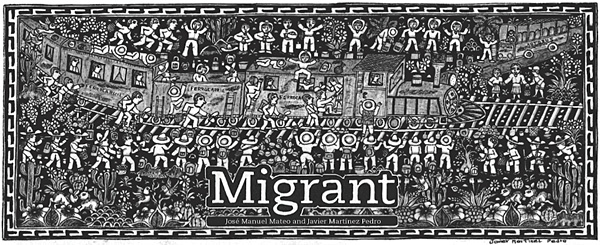
Another special book was “Migrant” by José Manuel Mateo and Javier Martínez Pedro a concertina style bilingual “codex”

Another very special thing was the interview Dr. Bacsal did with the author of Aristotle and Dante Discover the Secrets of the Universe – Benjamin Alire Sàenz – (see the details of it on her blog) – I’m so glad she’s said she wants to publish a transcript – it was one of those things where you kept thinking “what a wonderful quote” but I was too entranced watching and listening to actually take notes.

Well, my work is cut out for the next few weeks! Checking what I have, what will work in our context, what I need to put on my next book shopping list.


Library redesign – checklist

One of the librarians on a FB group I’m in asked me if I had a check-list for our library redesign.  Which made me realise that no, I didn’t. I’ve more or less had a running checklist in my mind all year, and particularly since I did INF536 – Designing Spaces for Learning (you can see more posts under category INF536). But I think it’s probably time to get all that stuff out of the swirling mind space and onto paper – and please – if I’ve missed anything feel free to add in some comments below.

(and please read this article – it’s gold! : Schlipf, F. (2011). The dark side of library architecture: The persistence of dysfunctional designs. Library Trends, 60(1), 227–255. Retrieved from http://search.proquest.com/docview/903205684?accountid=10344; another ‘must read’ is “design thinking for libraries“)

Pre-design

  1. Know your current space
  2. Know your usage / pathways
  3. Know your collection

Communication

  1. Write it down
  2. Take photos (of what you have and what you want)
  3. Take videos (time lapse)
  4. Walk people through it
  5. Invite them to spend time in the space
  6. Have a shared (google) document / folder
  7. Involve everyone who uses the space in the process

Design iteration

  1. Make sure everything is as flexible / moveable as possible
  2. For the immovable / inflexible bits keep asking for second / third / fourth / 99th opinions – you don’t want to get that wrong
  3. Keep on finding and showing them pictures of what’s in your head – make it really concrete, so that you can go back and say “not like that, like this”
  4. Don’t be scared to ask for changes now – before it’s too late
  5. Be careful you don’t create book/people ghettos if you have multiple physical spaces
  6. Don’t forget the furniture
  7. Involve the marketing department and admissions – the library is a showcase and they’re going to want to have a say in the look and feel
  8. Involve your staff – often they’ve been around longer than you have!
  9. Involve students and parents – it’s their space too

Elements – Space

In my previous post I wrote at length about the space we have and the issues it has.

One of the things that we will have in the enlarged space is one wall will be knocked down, but another wall is structural, so that’s going to create a classroom space. The designers put bookshelves on both of the side walls, but that created the problem of which part of my collection I’d actually put into that space (see my comment about creating a book / person ghetto.

As a result I went back and had a relook at my collections.  This involved me looking at all parts of my collection,

  1.  Itemising how many physical books there were in that part of the collection (i.e. for us that was board books, picture books; junior fiction; junior series; fiction; fiction series; world language; nonfiction; literacy circle kits; graphic novels; reference; teacher resources; “too hot to loan” read in the library books; picture books for older students; wordless books; Chinese collection; poetry; fairy tales and legends; etc )- now is your time to genrify or to group or extract parts of the collection as you’d desire.
  2. Working out how much shelf space (length, breadth, height) each part of the collection needs typically (bearing in mind how much of the collection is in circulation at any time). Height is particularly relevant for the picture books and junior books. Accessibility is always an issue. Also think about having enough space for front facing books at the end of each shelf section, how much space boxes take up for your series so you can adjust your requested shelf length (I have wasted space here).  In the first design iteration, the designers gave me 49m2 of shelf space, and we calculated we had 72m2 of space in use… Don’t assume they’re going to measure and calculate – check! Even after the third lot of design drawings I was chasing them to put shelf heights in the drawings.
  3. Think about how you want to group bits of your collection. Besides the obvious zone of Kindergarten /  lower elementary / upper elementary and nonfiction, I want to keep my board books “fun to read in the library” books like graphic novels, “too hot”, poetry, wordless and picture books for older students books together. And ensure the latter are near a seating zone.
  4. Weed, weed, weed. I still need to do more of this, and the deadline is looming. I need to get rid of all the “just in case” books, all the ugly discoloured no-one wants to borrow books. All the books about baseball (no one ever borrows anything where baseball is a main feature). All the books that are great for a North American environment but fail to find an audience here – even amongst our North American students.

That’s left me with the question what to put in the “classroom” shelves – and that also affects the type of shelving. Then at the 11th hour, the principal decided that all the “learning to read” PM readers; all 350 boxes of them, also had to come into the library. Well, that solved the problem of what to put in that space, but also meant that those shelves would need (sliding) doors so they weren’t an eye-sore of file boxes.  It also meant we needed more shelving in the main part of the library to make up our needed M2 of shelving.

Elements – furniture

If I hadfliptable no money for anything else, and the whole thing fell apart, the one thing I would still try to do is to get better (non-shelving) furniture in the library. I get the feeling we’ve been a bit of the “hand-me-down” zone, and the furniture is just not appropriate. My checklist for furniture would be:

  1. Light – little people need to be able to move it around
  2. Moveable and stackable – chairs should be stackable and tables should be able to be locked vertically
  3. Size-appropriate – all our tables and chairs are adult size, since we cater for 3-13 year olds, we’ll need to hit around the 9-10 year mark (the littlies usually don’t use the tables and chairs)
  4. Safe – no bits sticking out, everything must be tucked in under the tables, nothing to trip over. The first 3-D images showed big bean-bag chairs and my first thought was –  they’ll be used as slides and launching pads to jump off of! Think like a 6 year old when reviewing this.
  5. Clusterable – communal reading is a big thing in our library. Very few students sit down and read on their own (and most who do will go into the swivel chair and swing it to face the wall).

Elements – flow

This really has three parts

  1. the flow in the library – entry and exit (especially if one class is trying to check-out / line-up / exit at the same time as another class is trying to enter / check-in / sit down.
  2. The work process flow – circulation, shelving, curating books for UOIs / classrooms / processing new books
  3. The flow during recess / break-time and after or before school. (I have videos, but my wordpress free plan won’t let me upload them!)

Elements – Signage and discoverability

As I write this, I realise that we haven’t paid nearly enough attention to this in the design phase. At the back of my mind I have the idea that this can be an “add-on” at least for the physical bits. In a sense you create discoverability by ensuring your “pathways” are logical and you group elements of your collection together.  But discoverability is a never-ending issue in all libraries.  Our current signage is terrible. I particularly like how HKA has done their signage – big and yellow and unmissable.

Elements – lighting

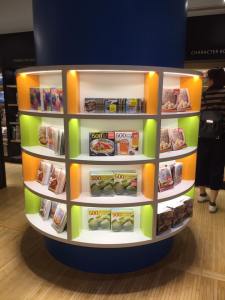
display-with-lighting
Page one Hong Kong (picture by Dianne Mackenzie)

This is really big, and I really don’t know enough about it all, and that’s worrying me. Schlipf (2011) writes about it at length in his article. On the one hand I’m glad it’s not that complicated in our case, in the other … how to set right what’s pretty bad. We have florescent downlighting, light from windows on three sides (one of which will be blocked by shelving).

One really has to spend time in stores, particularly book stores to see the ones who get it right. I keep on telling my designers “I’m selling books, treat me like a retailer”!

I’m going to go back and re-read the library design-thinking handbook to see if I’ve missed anything.

PLEASE comment! I’m so terribly scared I’m missing anything and I’ll get it all wrong!

(here is the completed series of posts:

https://informativeflights.wordpress.com/2016/10/30/library-redesign-current-issues/

https://informativeflights.wordpress.com/2016/10/30/library-redesign-checklist/

https://informativeflights.wordpress.com/2016/11/19/make-over-update/

https://informativeflights.wordpress.com/2017/01/08/90-there/

https://informativeflights.wordpress.com/2017/01/21/reduce-reuse-recycle-and-repurpose/

Library redesign – current issues

As librarians we often make it our life and vacation’s mission to visit other libraries and drool over what they have (or haven’t got), how they’re organised things, what their displays look like – how the signage works out etc etc. and then we come home and try and adapt our current situation to optimise our own assets and spaces into something even more user friendly, accessible, with better book visibility etc. etc.

It’s not often we have a chance to go back to the drawing board and redo it. And then, suddenly you get what you wish for!  For the last year I’ve been tweaking and rearranging and moving things (documented here – see all 4 posts for the progression). Now finally we’ve had the funding approved to break through a wall and expand the library and to reconfigure it so that it better fits the needs of (must I say it?) 21C learning. Of course we’re still waiting for Government approval – so I better not count my chickens …

Ok, let’s say that in normal terms.  I’ve got a lovely library. It’s a bit cosy and run down, and a lot of things are improvised, but I love it, and (most) my students love it. It does have several rather important detracting factors though:

Instructional space

I have 35 classes a week, ranging from 20 to 40 minutes or sometimes longer depending on teacher needs. During that time, I typically give a micro-lesson (5 minutes) involving storytelling, a provocation, a video clip, booktalk by students or myself, or a slightly longer lesson that can involve explanation followed by a task, right up to a full 40 minute information literacy session that includes teaching and skill development.

But I don’t have an instructional space. I have a beat up, heavy black leather couch, next to a pull down projector screen (which is permanently down), next to a window without any blinds, behind glaring florescent lighting that has to be switched off. And nothing to write on, unless I drag a heavy flipboard in front of the screen and crouch down to write on it, as it’s not on adult human height.   My students sit on the mat on the carpet, or on too high chairs with legs that jut out and trip people up as they walk past, and write on too high tables.  And it’s OK. We do just fine.  But it could be a lot better.

Communal space

I just love the fact that the library is (my own quote) “the centre of the universe” in our school. But the disadvantage is that it gets used a lot for all sorts of other things. It doesn’t help that our school hall is enormous and acoustically dysfunctional, so any smaller gatherings get diverted to the library.

Fortunately, a far sighted predecessor made sure all the bookshelves were on wheels, so the library can relatively quickly be transformed into a biggish but comfortable open space. Unfortunately, that often occurs when actually, one of my classes has a library lesson, so they end up missing the lesson or having to reschedule. Rescheduling is a real issue when my calendar is pretty filled to the brim!

Display space

Short answer now – there isn’t really any. I’ve cleared a few shelves in the bookcase at the entrance, and eliminated a computer at the OPAC pillar, but it’s not enough, it’s not nice, it’s not visible and students don’t gravitate to it. I have a notice board at the entrance, but it’s not really in the line of sight, and only one wall is not covered with bookshelves.

Seating

We have the aforementioned awful leg-sticking-out chairs, a big heavy black leather couch, with a matching big heavy armchair, 6 little Ikea pool chairs, 2 long floor cushions, 2 little Ikea wooden tables and chairs.  Funnily enough, everytime I put down a floor rug (hand-me-downs from home) a new “reading / lounging” zone is created.

Shelving

Nice that it’s on wheels. Not always fit for purpose in that some of the kindergarten and junior elementary shelving is just too high for the students who are supposed to be using it. Further the dimensions are such that a lot of space is wasted when I put my series “boxes” in, as only two fit per shelf rather than three.

Returns / Circulation / Processing

IMG_0466Returns are plonked into two little red baskets – which overflow in the shortest possible time.

Not enough space around the front desk to form multiple check-out lines without blocking access to library entrance / rest of library.

Not enough space on front desk to even process check-in and check-out – especially when multiple copies are being processed – like the check-in/out of UOI resources.

Not enough space for book processing (cataloguing, stickering, stamping, etc.)

Cupboards behind desk inadequate in size and no doors, so look untidy when they’re not.

Back Office

I’ll be the first to admit that I’m not the tidiest person on the planet, but what-a-mess! It’s an office, a dump, a store-room, a place for our literature kits and DVDs, a place for processing, for meetings, for privacy and tears (yes teachers sometimes need to cry, as do students and my office has tissues and sympathy/empathy).

Issues that were, and still remain – no visibility over library when in office, no space at desk to be out of office! No working space in office, too much junk. Not enough planning / writing space.

Meeting table / chair takes up too much space as chairs can’t be tucked underneath. Need space for “pending books” – the one’s I’m reading / reviewing / about to use in lessons. Don’t need big fat filing cabinet.

Conclusion

I’m happy I’ve had a year to be in the space, make the changes I could make, observe how the library is used, consider the problems and what does work before having to consider how I’d like it differently.

Next blog – the design process ….

(here is the completed series of posts:

https://informativeflights.wordpress.com/2016/10/30/library-redesign-current-issues/

https://informativeflights.wordpress.com/2016/10/30/library-redesign-checklist/

https://informativeflights.wordpress.com/2016/11/19/make-over-update/

https://informativeflights.wordpress.com/2017/01/08/90-there/

https://informativeflights.wordpress.com/2017/01/21/reduce-reuse-recycle-and-repurpose/