Promotion

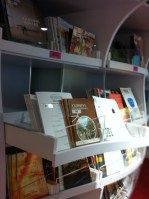
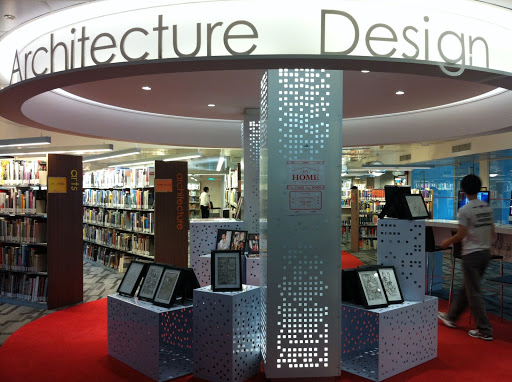
Student designed periodical stand
Lifestyle section organised like a bookstore 

The survival of both the physical entity and concept of “the library” depends on it being well utilized.  All libraries visited were extremely proactive in their promotion efforts.  Most began during the orientation week with activities to get students into the library.  These ranged from library orientation programs in the form of games, exhibitions and events.  At NTU, each new student gets a letter from his/her “personal librarian” inviting them to tea!

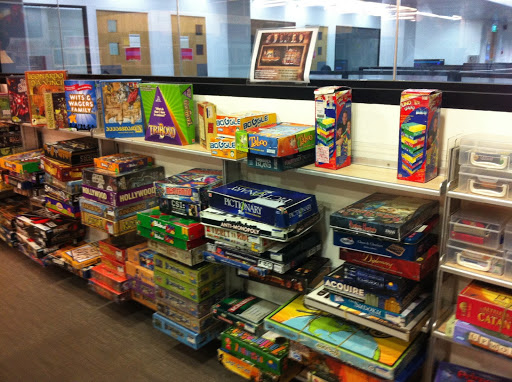
Ngee Ann Polytechnic use their interactive space for presentations and lectures, outside visitors and have created a very inviting “lifestyle” area based on a bookstore / cafe concept.  They were the first academic library here with a life-style area and took their ideas from shopping centres and bookstores and cafes and ventured out of the library to see where their students hung out.  As a result they created a board game zone which is a popular cafe concept in Singapore.  They have an extensive collection of both common and unique board games.  Having a Board game rooms was a theme we saw duplicated in nearly every library here.

Ngee Ann – a collection on wealth creation situated next to the Bloomberg monitors and a presentation area where speakers are invited on finance / entrepreneurial / business matters.

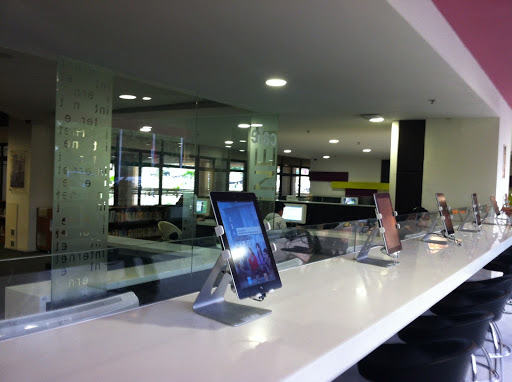
Cafe with bar stools and ipads in Lifestyle area
Interactive desk top with games and quizes

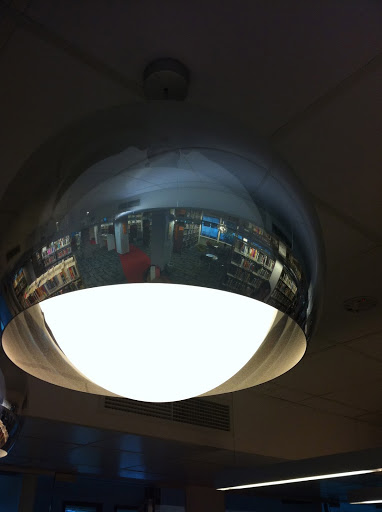
Student designed lighting

Singapore Polytechnic differentiates different areas of the library by colors and has invited students and lecturers to play an important role in the design of the library and the library furniture and hardware.  This has resulted in students feeling a sense of “ownership” of the space, as well as very aesthetically pleasing areas.  Details such as display, lightening, notice boards, magazine cabinets etc, had been designed and created on campus.

Innovative flexible signage

The library was also exploring having makerspaces with 3D printers, lego mindstorms and creative space where students were challenged to create something with materials provided.

interactive booth

Almost all the libraries provided some kind of an e-newsletter or alert service to subscribers.  Most had some presence on social media, the most common being Facebook.  In some instances the Facebook presence was as a marketing or information tool on services or newbooks or event advertising (Temasek, Singapore Poly, Ngee Ann, NTU, NLB, ), in the case of SMU they explicitly chose to use it purely for social interaction and to use other mediums for promotion.  Temasek had an interactive booth at its entrance with various features including an auto-photo link to Facebook.

Libraries also created posters to share around campus advertising new books, events or other services.  A particularly cool idea was that of the off-site or on-site book fair.  In the case of Ngee Ann, as they are affiliated with the Ngee Ann shopping centre, they hold a big book fair in the shopping centre, where vendors put books on display for sale.  Students can then go and browse and “purchase” a book, if it is not already in the library catalogue, it is then purchased by the poly, processed and immediately loaned to the student.

Some of the libraries (UWCSEA, Ngee Ann, NLB) had a bookcrossing / read and recycle programme which both helped promote the library and literacy, but also helped with the recycling of weeded library materials.  The NLB has a huge public booksale each year which is very well received by the public.

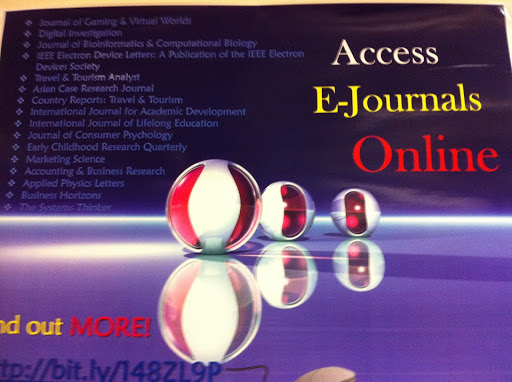
Since libraries are moving towards more digital material, they also needed to make the digital collections visible through signage or links on their websites, in the facebook or other social media pages or other posters.

display “tree”

Thematic display

Promoting digital through posters

Promoting digital chinese dialect material

Database information

E-journal promotion

Most of the libraries had a promotional video, a selection of which have been posted below.


SMULibrary promotional video on YouTube

National Library promotional video on YouTube

Pre-departure Entry

Thoughts about your learning in this module:

I’m thinking that students are a lot more prepared for venturing into other cultures and that there is a lot more information available and disseminated. I also like that there is an awareness of your own cultural bias and less thought that “our way is the right way” – much more sensitivity.

What you are thinking about prior to your departure:

Very confused about the expectations for the two modules INF407 and EEB310. Very frustrated at the fact that the information is not well or properly laid out in the module areas of Interact, that the Subject Overview is unclear and incomplete. Worried that I’ll miss something or leave something out.

Any concerns or anxieties that you might have:

How I’m going to manage to take in all the information and ensure that all the questions for the module are addressed both on the intercultural side of things and on the study visit side of things. That I finish all the expected parts of both courses and deliver correctly and on time.

Some thoughts on what you might experience:

Librarians may resent insensitive questions or find the questions very basic and not worth spending time on. It may be difficult to phrase comparative questions based on what we’ve learnt in such a way that it doesn’t appear to be an attack or criticism of the way in which they do things.

How you might respond:

When I feel uncertain I usually clam up and don’t ask the questions I’d need to ask. Or if other people do ask the questions I get very nervo

us if I see by the body language that the person who is answering is feeling upset or defensive.

What you might do if you face an uncertain or unfamiliar situation:

Since Singapore is English speaking it would be fairly easy to ask for advice or help.

This is an interesting article on common mistakes foreigners make in Singapore and things to be aware of.

Here is a link to explain the Singapore education system which is useful background reading as we are mainly visiting educational institutions.

Study Visit Checklist

Study Visit Checklist for Students 
Goals and users 
What are the purposes for which the library exists? 
What is the nature of the community/organisation served? 
What are the information needs of that community/organisation? 
What role does the community/organisation play in determining, directing and contributing to the library’s services? 
The collection 
What is the focus of the collection? What subject areas does it cover? 
Is there a collection development policy? 
What media are held, e.g. print, audio visual, CD-ROM, online? 
Which are the predominant media and why? 
Has information technology brought about major changes in the way in which information is stored and disseminated? 
How are materials selected? 
Is the collection weeded? For what purpose? 
What strategies are in place to ensure the physical preservation of the collection (including electronic sources)? 
Staff 
What professional, technical and support staff does the library have? What roles do they play in fulfilling the purposes of the library? 
What professional development is provided for, or expected of, staff? 
What flexibility is allowed in staffing to better meet the needs of staff and users? 
Reference services 
What reference services are provided for users? How are these services provided? 
What user education is provided? 
What use is made of the Internet in reference work?
Network infrastructure 
Which integrated library management system is used? Why is this system in use? 
What electronic networks operate between the library and its user group? 
To what extent does the library depend on network access and availability? 
Does the library provide information and services through a web page or pages to users? What information and services are provided? Has this access significantly extended its user group? 
Does the library have an information technology plan? 
Technical services 
What is the perceived function of the catalogue? 
What standards and services are employed in cataloguing? 
What access is provided to materials which are not catalogued? 
Does the library develop and maintain any indexes, classification schemes or subject heading lists of its own? 
Are metadata standards being used in the cataloguing of online resources? 
Budget 
What are the library’s sources of funding? 
What is the level of funding (if not confidential)? 
How are these funds committed? 
To what extent do users pay directly for services which they use? 
Promotion 
How does the library promote and market its services to its potential users? 
Physical environment 

How suitable are the library’s location, accessibility, size, layout and physical facilities to the fulfilling of its purposes?