Panda Madness

As we move into Week 5 of online learning I had a yearning to return to my librarian roots. I was prompted by our librarian network sending out a notice for the voting for the annual Panda Book Awards. Despite the closures the voting will continue. In my previous incarnation as a PYP librarian in Singapore I found it a lot easier to promote the Red Dot Book awards – you have a weekly captured audience in primary, plus we had our after school reading club geared towards preparing for the annual Readers’ Cup.

Things change in Middle School – puberty seems to affect the reading muscle as much as it does every other aspect of being. Also in China we have the “Kids Read” competition for middle schoolers, which is considerably more daunting – 100 books in teams of four.

Another aspect of online learning is that it is really hard for everyone to stay motivated. Our daily entry point each day is the Mentor discussion forum on Moodle. As much as Moodle is extremely robust, it’s also very old fashioned and clunky, so driving traffic there is a chore.

I’d been seeing a lot on my twitter feed on US librarians setting up for “March Madness” and that inspired me to get a “Panda Madness” going for March. Besides the voting I also wanted to put in some challenges for points with a couple of aims:

  • getting students onto our online reading platform Sora
  • getting students reading online generally
  • getting students reading the Panda Books
  • getting students to promote books through FlipGrid and book reviews on Oliver
  • making the daily sign-in to their mentor groups a bit more motivating and of course
  • having some fun

First off was selecting the books – in MS we’re literally in the middle of the reading spectrum so I could select from both the “middle” and “older” reader lists. I selected 16 of the books, leaving out a couple of picture books and trying to use books that were available on Sora so they could still be read.
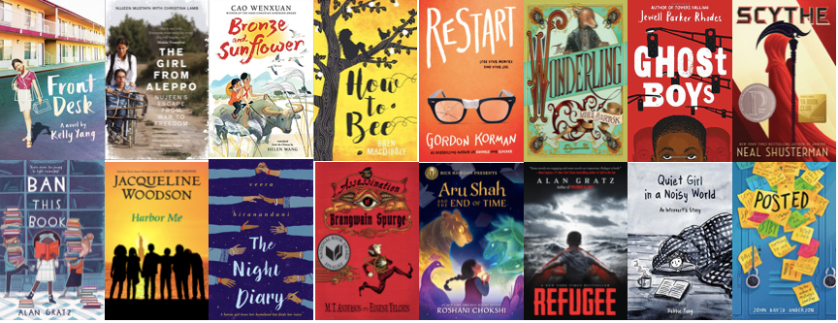
Panda Knockout covers The complication in China is that not only do books have to be available with rights in China, they also have to be approved by an agency for use.  So the hurdles we climb (besides expensive platform fees and expensive digital rights that disappear after 12/24/26 months or 26 checkouts are:

  • lack of a digital version,
  • georights, or
  • publisher preferences. For example, the publisher Hachette Livre (one of the “Big Five”), don’t sell their ebooks to schools or libraries outside of the US.

Then there’s weird stuff, like “Front Desk” is available as an audiobook but not an eBook … usually it’s the other way around, books are available as an eBook but not audiobook (which kind of makes sense as there are extra costs and efforts involved recording an audiobook). I’ve reached out to Kelly Yang and she’s looking into it (love authors who are invested in helping one out!)

In the Older list we’re missing “How to Bee” and “The Assassination of Brangwain Spurge” I’ve reached out on Twitter to both sets of authors but not heard anything back yet. In the Middle list we’re covered, although it would be nice to have “Front Desk” as an eBook – there’s a hierarchy of how students like to read

  1. Not at all (lol)
  2. Physical Copy
  3. eBook
  4. Audiobook

Next step was making the knockout lists. That was a tough one. Which books to pair against each other to make it a little bit exciting – I must admit to have spent way too much time on overthinking this one.


Then I didn’t want to start the voting straight away, so for Friday (we have virtual WEIRD every Friday where I lead the Mentor discussion) I started with the motivation and getting ready bit. In order to do that I needed to set up a point system*, Libguide, Flipgrid and Microsoft Team, plus all the graphics. Needless to say that consumed all of Thursday in-between the usual Tech troubleshooting.

Moodle Message

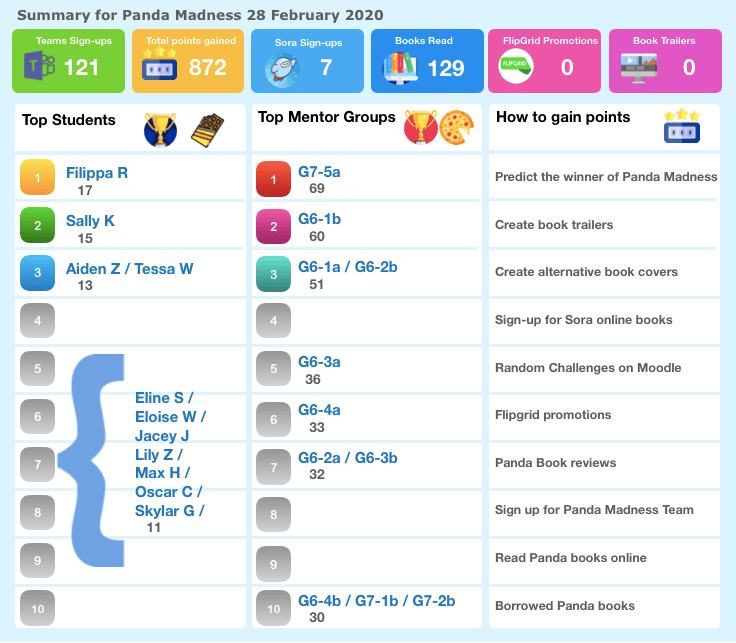
And then it was a case of waiting with baited breath as to the response – luckily it was extremely positive – by the time I woke up at 6am European time, my “copilot” on the MSTeam had approved 83 students and by the end of the day we had 121 students and teachers signed up (over 1/3 of our student population).

IMG_6210

Yesterday I wanted to sort out the leaderboard and the scoring … that was another full day task – mainly because there is so much to set up – a current and reliable student/mentor group spreadsheet (yes, we’ve had a few poor souls who joined the school just prior to, or during the closure period), getting all the data of who had signed up to Sora – with proof, and then the most time consuming – going through the library records of each of the 16 books to award points to the consistent readers who’ve been reading the books since the start of the school year in August! A very manual procedure.

Another thing one would expect would be easy but wasn’t is extracting a list of “members” from a MS team! There’s no way to export that – so I had to copy and past from the list into excel and then sort it out and match to my master sheet.

Another thing that I spent way too much time on of course was creating the graphic of the leaderboard.  I must admit to having found one I quite liked and then adapting it. On the first day students had gained 872 points and we had a history of the books being read 129 times. A lot of students / groups tied as it was the first day.
Panda Madness Leaderboard 280220

Then rubrics / criteria for the Book Trailers and alternative book covers were created. Luckily I only had to adapt these from the ISLN Readers’ Cup that I was heavily involved in during my time there, and Barb Reid kindly sent me the latest versions.

The last thing was to create a Form for students to predict the winner and to post the updated status to the Moodle announcement for Monday.

Hopefully the rest will just be maintaining the scoresheet each week and monitoring the Flipgrid; student book reviews on Oliver; and entries for the book cover competition and book trailers… The first knockout vote will be on Friday.

Let’s see how this goes and if we can achieve our aims!  Already the teams who have teachers involved (they can take part with their group) are the leading teams… says something!  Happy to share everything created with other schools affected by the closure – just flip me an email or PM on twitter with your email. Everything is on Pages and can easily be adapted / changed for different books.

==========================

*Points for now – I’ll add to this as we go on

  • 5 points for taking part
  • 5 points per Flipgrid promotion of a book (multiple promotions possible – but you must have read the book)
  • 5 points for a one paragraph review of a Panda book on Oliver
  • 2 points for every Panda book you borrowed before school closed
  • 2 points for signing into Sora (upload a screenshot to Moodle to gain the point)
  • 5 points for borrowing and reading a Panda eBook on Sora (screenshot and summary to gain the points)
  • 5 points for borrowing and listening to a Panda AudioBook on Sora (screenshot and summary to gain the points)
  • 10 points for predicting the winner
  • 5 points for predicting one of the 1/2 finalists
  • 2 points for predicting one of the 1/4 finalists
  • 1 point for predicting one of the 1/8 finalists
  • 5 points per good quality book trailer following criteria
  • 5 points per good quality alternative book cover following criteria
  • Each week new random bonus points will be awarded based on new challenges

Books I wish would be published

I’ve been asked to be on a panel at the AFCC to chat about “Books Teachers Wish Authors Would Write” from a teacher / librarian perspective. So I put the question out on one of my teacher-librarian networks (an international one) and these were the responses I received:
  • World war 2 in Asia- novel for 8-10 year olds (NF / NNF)
  • big shortage of narrative nonfiction that is NOT about the holocaust, slavery, the American great depression or US civil rights. Also shortage of intra-Asia migration stories not Asia to Europe / north America (NF / NNF)
  • Third culture kids as main characters (CD)
  • More stories about our present/ early future stories that include digital tools and behaviour (D)
  • I’m looking for things like “lego ideas / lego play” but in small manageable books that kids can take out without breaking their backs / the book
  • nonfiction – updated human rights / millennial goals / NGOs / Poverty etc. for G4 level (9 year old) mixed format, good graphic design, mix of narrative and fact (NF)
  • Middle school nonfiction – life in different economic / political systems – communist, socialist, social democracy etc. with a world wide unbiased view of positives and negatives with personal stories and data (NNF)
  • Books on gaming or from the creators of games like Minecraft, Roblox, etc. (D)
  • Conflicts over resources around the world – case studies that are elementary friendly (NF)
  • The next “The Outsiders.” Something to appeal to the teens who fall in love with it in class, and are looking for something like it.
  • Decent Biographies that are at elementary aged level & middle school level without being dumbed down – with more Asian protagonists! (CD / NF)
  • Books purposely written for upper ES that has appropriate content and reading “level” (ELL)
  • More ES novels featuring multicultural characters that are not related to war or historical events (CD)
  • Books about world topics that are appropriate for kinder/g2 (NF)
  • Modern urban indigenous stories – universal experiences in all first nations people. (CD)
  • Easy read stories that are well written & not dumbed down for teens. – yes! especially for our ELL students! And that don’t portray just the…..dark side of life? I feel like when I was purchasing for xxx, the high interest/low level books all were about gang members/drug dealers in the US. (ELL)
  • Science fiction for Elementary kids. (SF)
  • Middle Grade fiction with a Korean protagonist (My Name Was Keoko style) (CD)
  • Books with culturally diverse characters. I still remember teaching a boy could Yousef who threw the book down in disgust and said ‘Why can’t they give them normal names?’……the character was called Joseph. Which really isn’t that out there, unless you’re an Arab boy. Then it’s just weird. (CD)
  • LGBT books for tweens (G)
  • Definitely more emigration/immigration stories that are intra-Asia. There are so many diaspora stories to be told that have nothing to do with Europe or North America. (NF / NNF)
  • Does anyone want war stories set in Asia – like Japanese invasion/ Korean War / American or Vietnam war with perspective from the non-western side – or is that too sensitive? (NF / NNF)
  • My teachers want more World War 1 fiction for grades 6-8 and social justice books for middle schoolers.(NF / NFF)
  • My middle school girls want more heroes that are NOT princesses. (G)
  • My boys want fiction that has video game elements like Minecraft stories.(D)
  • All of my high schoolers want “classics” with better covers.
  • what about this: teachers, school, parents do not compare my score with others, do not give me homework, I want to play. (C)

I’ve tried to code the answers as follows:

  • NF / NNF: narrative nonfiction – 10x
  • CD: cultural diversity – 6x
  • D: digital / gaming element – 3x
  • G: Gender related – 2x
  • ELL: hi lo / books for English Language Learners – 2x
  • SF: Science fiction – 1x
  • C: cultural issue – 1x

Looking at these I think that the theme is a general frustration with a lack of books with an Asian context.  Particularly historical fiction / narrative nonfiction and culturally diverse characters. We all know that the USA dominates publishing, followed by the UK. Australia has some good stuff out but limits itself by its steep pricing, expensive shipping costs and insular publishing industry. China is a late entrant into children’s books and is making great inroads – but mainly in translation into Chinese. What is particularly commendable is that they are not just translating the (North) American staples but many of the brilliant and wonderful European offerings.

Then I did a similar exercise with the BWB (Blokes with Books) yesterday. I asked them to go in groups of 2-4 students and tell me what kind of book they were missing in their lives. Books they wish authors would write.   They were amazing – a couple of groups even started writing the books they wish were written (a nice outcome given the fact that teachers are now complaining that we’ve got them reading but their writing is still poor).

Their suggestions could also be broadly grouped:

  • Two groups wanted Harry Potter extensions or back stories – one wanted the parallel books that focused on the other houses, not just Gryffindor Tower. Another group was fascinated by the horcruxes and wanted a book on that.
  • One group wanted an elaborate Pokemon book that inverted some of the characters with unexpected twists.
  • One group combined the ideas of the three group members into a fantasy / reality mixture involving video games and rugby with a wimpy gaming protagonist being forced to play rugby by an over-zealous parent and learning tricks and manouvers in video games that led him to dominate on the real life rugby pitch.
  • One group wanted (and started outlining the chapters) of a Roblox user manual.
  • Quite a few of them agreed they’d like fiction books with colour pictures inside

I’d like to add a note to the above list – the students are not yet familiar with fan fiction, and I’m not sure they’ve looked into the Harry Potter wikis. In a sense that makes me happy that they’re still at that wonderful age where this type of magical immersive reading stuff is to be found in books rather than online. They are aware that there are user forums on these games and chat rooms etc. BUT THEY WANT TO READ ABOUT IT IN A BOOK. This is a GOOD thing. Whenever they ask for books about Minecraft and Roblox and video games and I tell them we have some of the storybook series, the Minecraft “how to” and “surely you can just ask online” they say “but we want a book”.  There are few Roblox books and they all seem to be eBook editions (publishing haste?). The Minecraft adventure books are not what they’re looking for – remember the colour pictures comment? They want more graphics! I think also as adults we see their online/offline selves as separate, whereas they don’t, and they want to see that new normal reflected in what they read. They’re all avid fantasy readers, and that I think is partially meeting their need for that online/offline fantasy/reality integration.

A caveat to all the comments (and a personal gripe) – above all children want a well written story. They don’t want to be preached to. They’re sophisticated and well- and globally read. And they can spot the fakes. As a teacher-librarian I get immensely frustrated by wanna-be and self-published authors who keep trying to foist their wares on me when it’s immediately apparent that they’re poorly written, even more badly illustrated, not edited and horribly and cheaply published. Writers need to read. They need to read a lot, they need to read widely. They need to research not just their topic but also who else has written about it, tangentially to it, similarly to it. If you want to self-publish, unless you’re a designer, pay someone to do your design for you. Unless you’re an author-illustrator find the best illustrator you can afford. And everyone, join a writing / critique group (like SCWBI) – honestly, other authors are not out to steal your ideas – they’re too busy working on their own passions. And when you think you’re done, get a good and critical editor. All authors need good editors, even great authors. Do yourself a favour and look at the interactive TS Eliot “The Wasteland” and see all the handwritten edits by Ezra Pound.

To come back to the forum and the original question that started all this:

“Creators can step into the shoes of a teacher for one hour and learn what makes a book a treasured find. From beautiful illustrations to didactic language, speakers discuss their views on relevant and useful books children need and love.”

What a huge question. Relevant is not always pedagogically useful. Useful for whom? Relevant to what?  I’d like to end with the most relevant and useful and just plain wonderful book I’ve encountered this year – Stormy seas: stories of young boat refugees. 

31213610 Well done Annick Press (that does a lot of amazing things – particularly in nonfiction) It has become the new gold standard to which I will hold all nonfiction. The elements that make it so special:
  • Great graphics – combination of good design elements with original primary source photos
  • Easy to navigate blocks of text
  • Personal stories
  • Historical facts
  • Timelines
  • Maps

It is not out yet (April 2017) and I got a preview copy through Netgalley (sign up if you’re a teacher / librarian), I showed it to a couple of classes from G3-G6 and all were clamouring for a copy afterwards – something unusual for nonfiction. And when I couldn’t give them I copy I managed to “sell” some of my otherwise untouched narrative nonfiction / historic fiction books on WW2 etc.

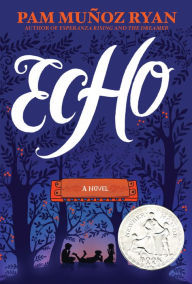
Another surprising (but not really because it’s so absolutely wonderful) hit has been Echo. It’s a huge book but every child and adult whose hand I’ve put 22749539it into  has just loved it – depite the fact that it takes a while to get through. Why – I suspect that the range and diversity of the characters and settings is satisfying to my international audience. But it is also great storytelling. And then they go on to read all the other Pam Muñoz Ryan books, which is also an excellent outcome.


What would you like to see more of that is “relevant and useful”?