
Mediating between curiosity and research, curriculum and pleasure By Nadine Bailey and Katie Day
In the summer of 2024 we asked International School Middle School librarians to tell us the story of nonfiction in their libraries. We wanted to know their ambitions, frustrations, organisation and display as well as their collection development and usage plans. All books recommended in this article can be found tagged in our LibraryThing Shelf (https://www.librarything.com/catalog/middleNF).
Curriculum and Research
Educators and librarians who have been around for a while know and recognise the pendulum of ideas and practice that upend things first in one direction and then another. Nonfiction is one of those things where some of the momentum is now moving back to the practice of reading subject matter in physical form. Many librarians responded that in a post-covid learning environment both they and the teachers they work with were moving back to giving information in print form – mainly books where they were available, but also printing out articles from online sites such as Britannica and Newsela in order to encourage deep reading, avoid distractions and teach nonfiction reading skills that could be later transferred to online reading.
Schools following the IBO (International Baccalaureate Organisation) programmes (PYP/MYP) had particular interest in “transdisciplinary” and cross curricula books that would offer broader perspectives on curriculum or unit themes. Many librarians were investing in books that would support inquiry into aspects of the United Nations SDGs (Sustainable Development Goals). There was also a keen interest to ensure that sufficient “local” (country where the school is located) and “diverse” (countries of students’ origins) content was available in the library.
Many librarians have quite heavily weeded their nonfiction sections and are now looking to re-stock them based on this renewed interest in physical books. But it appears that publishers are not necessarily aware of what is happening on the ground and are not always updating and bringing out new editions of popular texts.
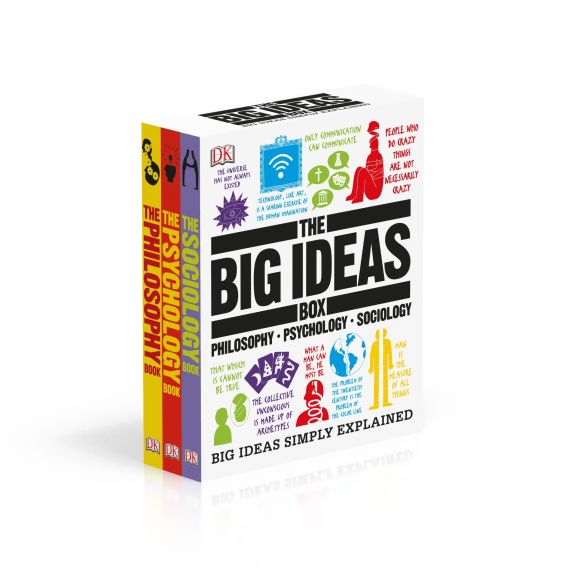
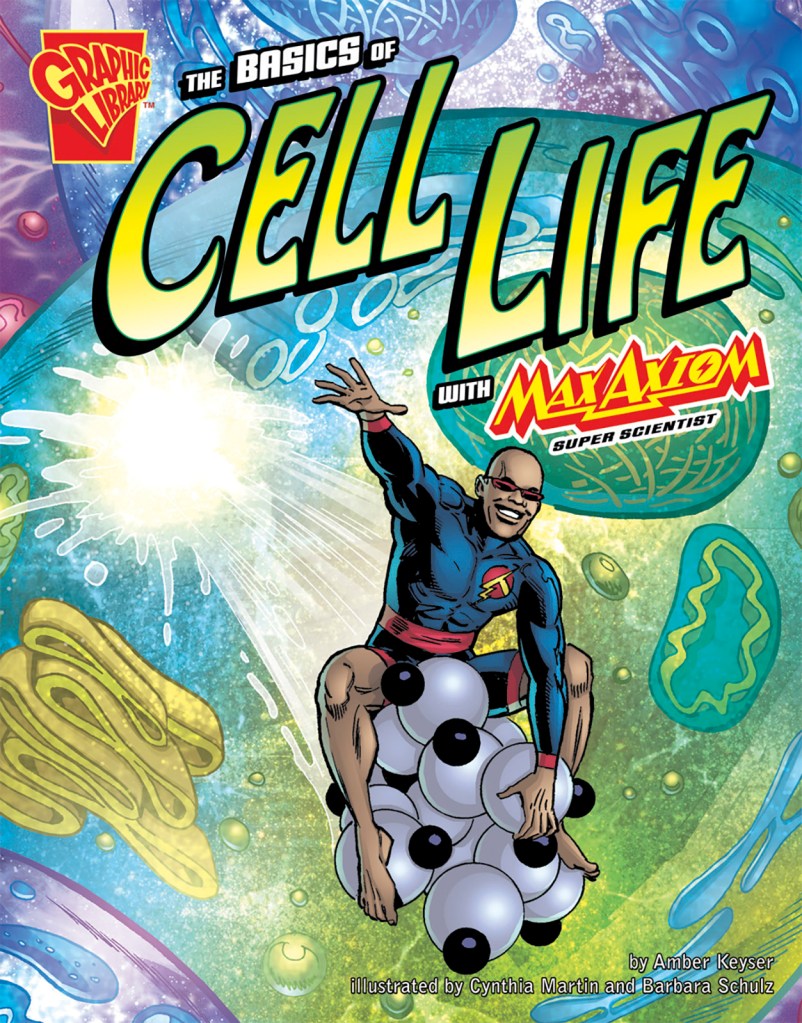
On the other hand, most respondents remarked on how much progress had been made in the last few years on the design, layout and illustrations in recent nonfiction texts. There was also a shoutout for the increase in different formats including “Oversize books” (see the books of “Big Picture Press – Welcome to the Museum”); Graphic and Manga imprints (series such HowToons; Cells at Work; and authors such as Don Brown and Jim Ottaviani); infographics (Infographic guides; ) Subject Summaries (The Big Fat Notebook series), Picture books (see this 2024 SLJ list) and Subject Overviews or introductions (DK Eyewitness, and DK Big Ideas).
Where curriculum and research is concerned, students can now often choose their favourite medium of access through a variety of formats.


Foster the flame of curiosity
Somewhere on the way to middle school, students amend their passions to fit in with their peers and ensure a sense of belonging. So out go the dinosaurs and big trucks to be replaced with their favourite sports personalities, music stars, books about their sports (soccer and basketball seem to be hits). Puberty hits this group hard and fast and strategic placement of sensitive materials can put paid to rumours and myths. It is also a time of self-absorption and worry about their physical and mental health – books on health and well being, relaxation, anxiety, meditation as well as psychology, are popular and an area of growth in most libraries.
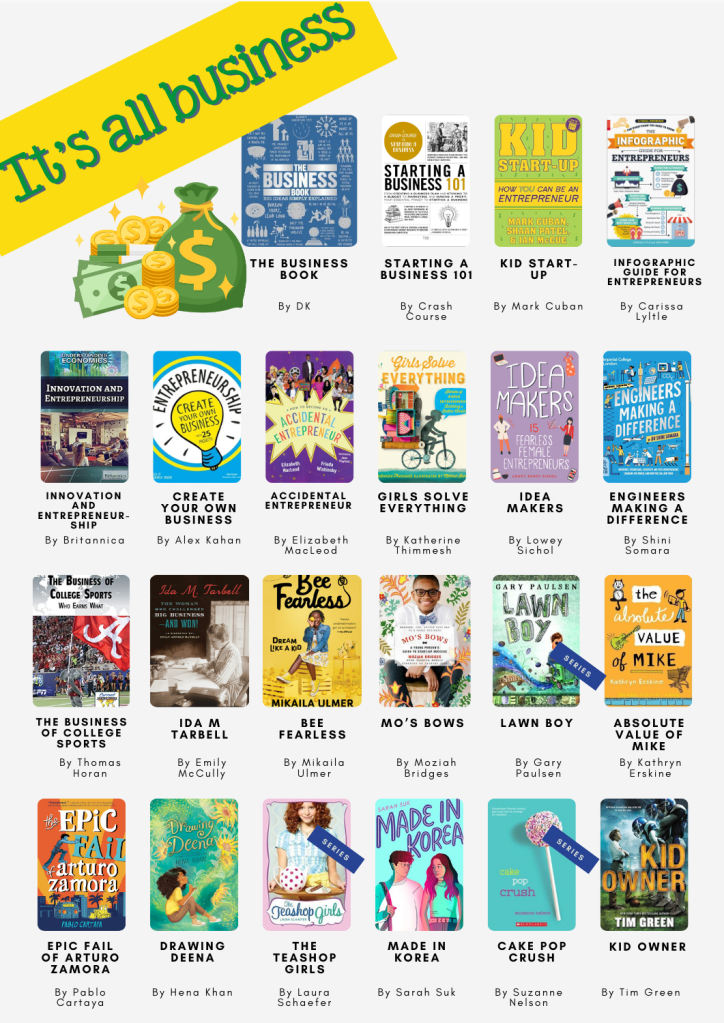
Given the demographics of our schools, students of this age are already taking a keen interest in finance, aspects of wealth and investment as well as entrepreneurship. They’re also interested in personally exploring hobbies and activities they may see online such as cooking, sewing and knitting or other crafts.

History – particularly the world wars and more recent conflicts continue to fascinate and appal in equal measure – often mediated by historical fiction texts students may encounter in their literature studies or English classrooms and what they see on the news or social media.

Shelving, organisation and display
In order to make nonfiction appealing and accessible, quite a few of our respondents mentioned they either had or were in the process of rethinking the way that nonfiction was shelved, organised and displayed in their libraries. There is a continuum from pure DDC (Dewey Decimal Classification) to a range of Book Shop or genrified models. Librarians were more interested in getting books seen and read than in a hypothetical need for their audience to be able to navigate a university library later. One of our respondents coined the lovely phrase of “emotional accessibility” in this respect.
Of course most libraries have already taken the first step of putting “literature” or novels out of a straight Dewey 800 section into a fiction collection – genrified or or not. Other common “extractions” from the main Dewey structure include:
- Taking Biographies, collective biographies and memoirs out of 910/920 and putting them in a separate section. Some libraries put collective biographies at the start of the section they pertain to (i.e. famous musicians go to 780).
- Travel Books
- Poetry
- Drama and playscripts
- Graphic Novels and Manga
- Narrative nonfiction
- Myths, Legends and Fairytales
- Parenting
- Well Being
- Professional Development
- Sports
- Country specific collections
- A specific nonfiction series that’s popular

In the absence of permanently pulling out a section – many librarians make use of rotating “dynamic shelving” or temporary topical displays. The guideline here appears to be to follow the needs and interests of the community – teenagers want to be able to independently navigate the library without adult intervention that may be embarrassing.

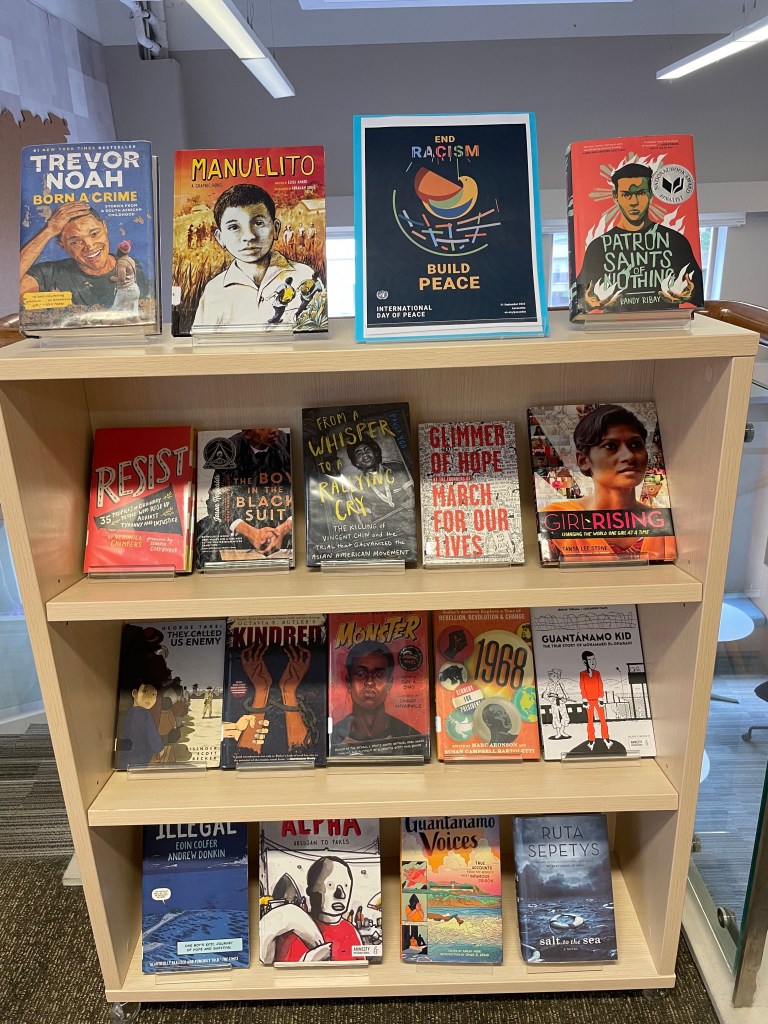
Related to that – signage and signposting was an area that nearly all librarians were investing in. Many mentioned significant weeding that had resulted in more space for forward facing displays and carving out sections of interest.
Recommendations
To support the discovery of nonfiction titles for middle school, we’ve curated a shelf of 389 (and growing) books on Librarything that we consider to be worth investing in. It’s an ongoing labour of love, so not every book has been tagged at this point yet.
Examples of Some of the tagging we’ve employed are (not an exhaustive list):
- Narrative nonfiction
- Manga
- Graphic
- Topic_
- WW2
- Women
- Science
- Mathematics
- Religion
- History
- Climate
- SDGxx
- Activism
- Wellbeing
- War
- Technology
- Sustainability
- Sports
- Space
- Social Media
- Geo_
- Southeast Asia
- China
- USA
- Europe
- UK
- Australia
- Edition
- Young Reader
Since such lists can quickly go out of date, we’d also like to generalise with some series, authors, titles and publishers that we recommend.
Great AUTHORS
- Marc Aronson
- Don Brown
- Marc Favreau
- Candace Fleming
- Russell Freedman
- Yuval Noah Harari
- Deborah Hopkinson
- Tanya Lloyd Kyi (Canadian)
- Randall Munroe
- Jim Ottaviani
- Elizabeth Partridge
- Gillian Richardson
- Steve Sheinkin
- Cory Silverberg (Puberty)
- Dashka Slater
- Tanya Lee Stone
- Pamela S. Turner
Great PUBLISHERS
- Annick Press (Canada)
- DK (Eyewitness; Big Ideas; Children’s Timelines; How Things Work; How Stuff Works)
- First Second (MacMillan)
- National Geographic for Kids
- Usborne (UK)
- Crabtree Publishing Company
- Flying Eye Books
Great SERIES
- DK Eyewitness
- DK Big Ideas
- DK Children’s Timelines
- DK How Things Work / How Stuff Works
- From Playground to Pitch
- HowToons
- Hazardous Tales (Nathan Hale)
- Little Histories
- World Citizen Comics
- UN sustainable development goals
Great TITLES
There’s been a recent shift toward publishing a Young Adult version of popular nonfiction titles either simultaneously or shortly after the Adult version. These can be found by searching for “Young Readers” or “Young Reader’s edition” / “Young Reader’s Adaptation”.
Blogs and nonfiction websites
- #NonfictionNovember
- Melissa Stewart – Celebrate Science
- School Library Journal – Nonfiction Notions
- Reedy library
- NY City School library system
- Don’t Shush me
- GLLI Blog posts edited by Katie Day related to books around the SDGs
- NonFiction Detectives blog (on hiatus from April 2024)
Nonfiction Book Awards
- AAAS/Subaru Prizes for Excellence in Science Books (American Association for the Advancement of Science)
- ALA Robert F. Sibert Informational Book Award (American Library Association)
- Book Trust Blue Peter Award (UK)
- Boston Globe Horn Book Nonfiction award (Boston USA)
- British Book Awards – Nibbie (UK – includes nonfiction category)
- Children’s Africana Book Award (CABA) (Topic Africa fiction / nonfiction but must be published or republished in the USA)
- Children’s Book Council of Australia (CBCA) Eve Pownall Award (Australia)
- Children’s Literature Roundtables of Canada Information Book Award (Canada)
- Cook Prize for STEM Picture Book (Bank Street College of Education New York)
- Cooperative Children’s Book Center Choices List (University of Wisconsin)
- CRA Eureka! Nonfiction Children’s Book Award (California)
- Cybils Nonfiction Awards (focus on diverse books )
- Edward Stanford Travel Writing Awards (UK – includes Children’s Travel Book of the Year)
- Elsie Locke Award for Non-Fiction (New Zealand)
- English Association The Margaret Mallett Award for Children’s Non-Fiction (UK)
- EU-Read a variety of awards including nonfiction from various countries in the EU
- Golden Kite Award – Society of Children’s Book Writers and Illustrators (Nonfiction Text for Younger Readers and Nonfiction Text for Older Readers)
- NCSS Notable Social Studies Trade Books for Young People (based in Maryland)
- NCTE Orbis Pictus Award for Outstanding Nonfiction for Children (National Council of Teachers of English – USA)
- Neev Book Award (India – can include narrative nonfiction)
- Norma Fleck Award for Canadian Children’s Non-Fiction (Canada)
- NSTA-CBC Outstanding Science Trade Books for Students K-12 (National Science Teachers Association – USA)
- Red Cedar Book Awards (British Columbia – Canada)
- Royal Society The Young People’s Book Prize (UK STEM books for under-14s)
- SA Book Awards (South Africa – the children section is fiction / nonfiction)
- School Library Association Information Book Award (UK)
- Thea Beckmann (Netherlands – historical fiction but must be true to events)
- YALSA Award for Excellence in Nonfiction for Young Adults (American Library Association)
- Yellow Cedar Awards (Canada – nonfiction books for readers in Grades 4-8)
Pairing Nonfiction and Fiction
Last but not least, pairing a nonfiction book with a novel can enhance both texts.
I initially started putting a fiction book on this libguide followed by suggestions of nonfiction, https://asdubai.libguides.com/ms/reading/nonfiction. I’ve now moved away from that somewhat and have started curating “Read Around the Curriculum” posters where either a curriculum topic is highlighted with fiction and nonfiction, or an “If you like / want to know more” poster is made of one of our book club fiction books with suggestions for finding out more about the context with other fiction/nonfiction books on the topic.


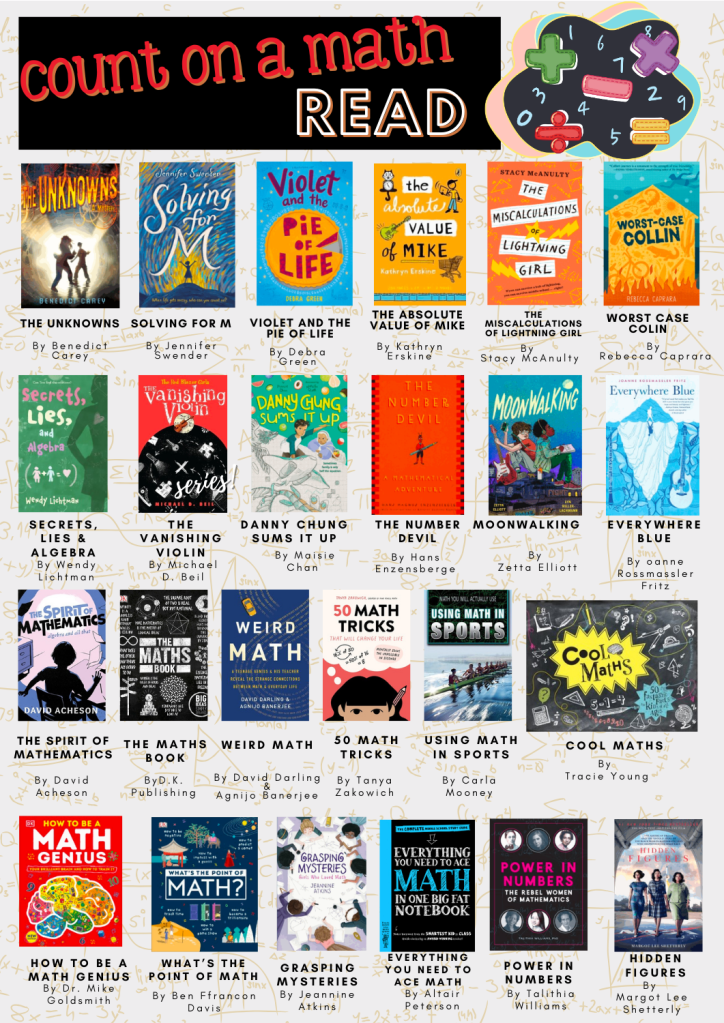
Katie Day and I would love to hear your suggestions for more nonfiction books, and perhaps we can expand the list to High School. Many of the books suggested in our list are suitable for High School and upper elementary as well.
Comments and suggestions much appreciated.
NOTE: Since the publication of this post we have been approached by commercial entities about using the list. While we cannot prevent the list from being used commercially this is our wish:
This list was created in order to freely help librarians all around the world. It was a labour of love which took a lot of our personal vacation time to create. If you are part of a commercial organization and you will be using the list commercially we would request that you attribute us and make a suitable donation in our names to “Biblioteca di Lampedusa” which serves refugees from around the world in their Silent Book initiative, https://www.facebook.com/BiblioLampedusa/ or the “IBBY Children in Crisis Fund”: https://www.ibby.org/awards-activities/ibby-children-in-crisis-fund.
Thanks. Nadine & Katie
 Informative Flights - Musings of a Teacher Librarian