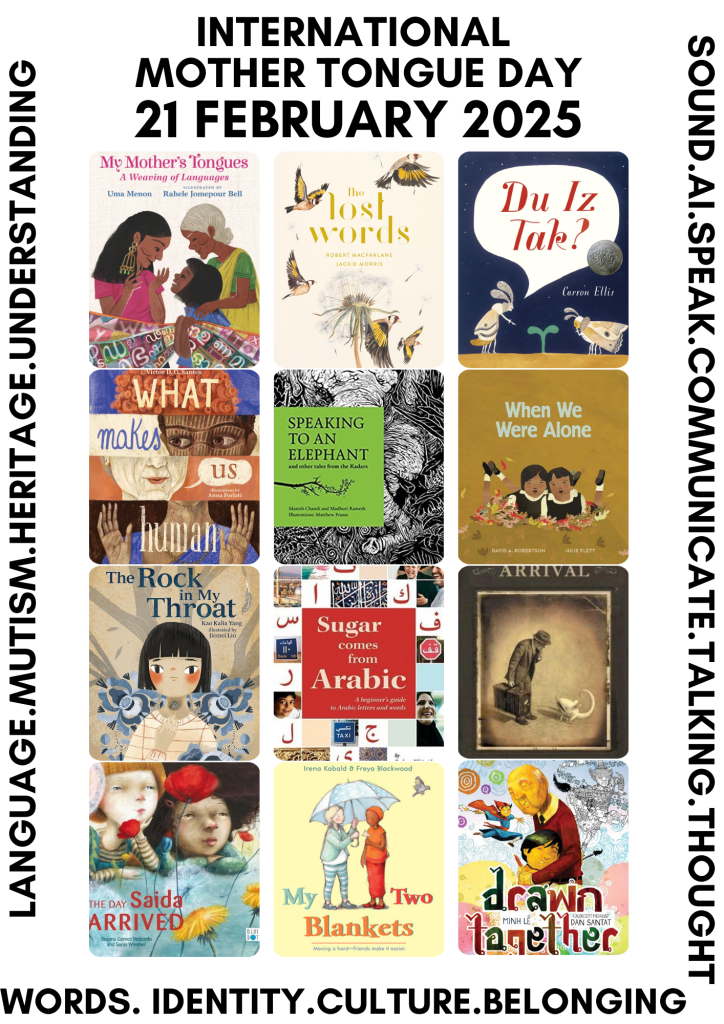
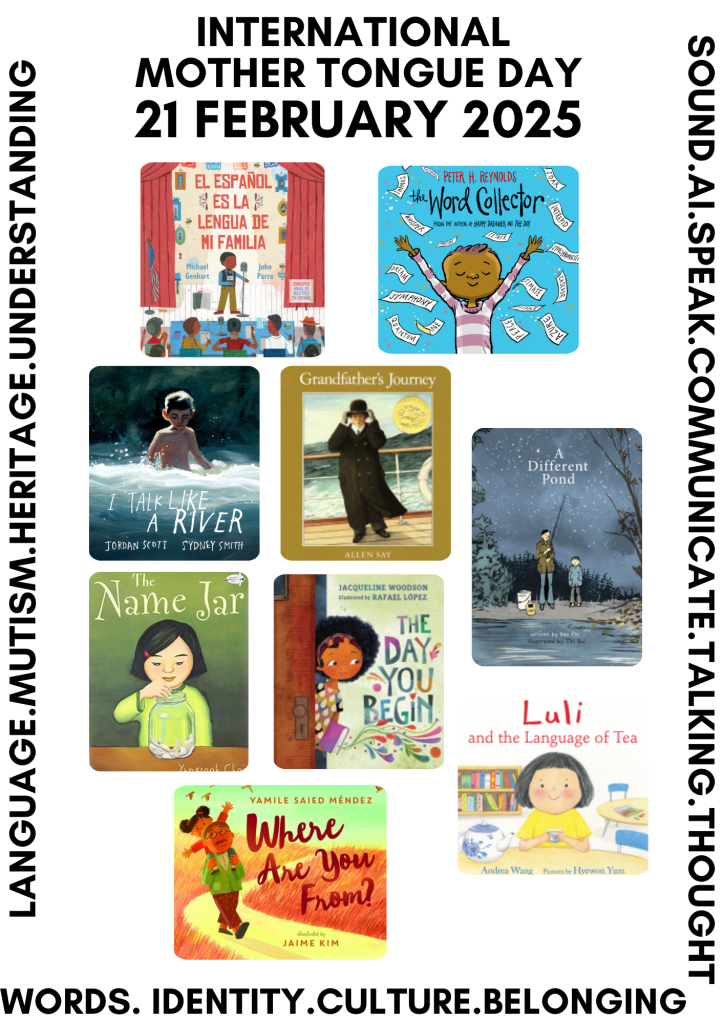
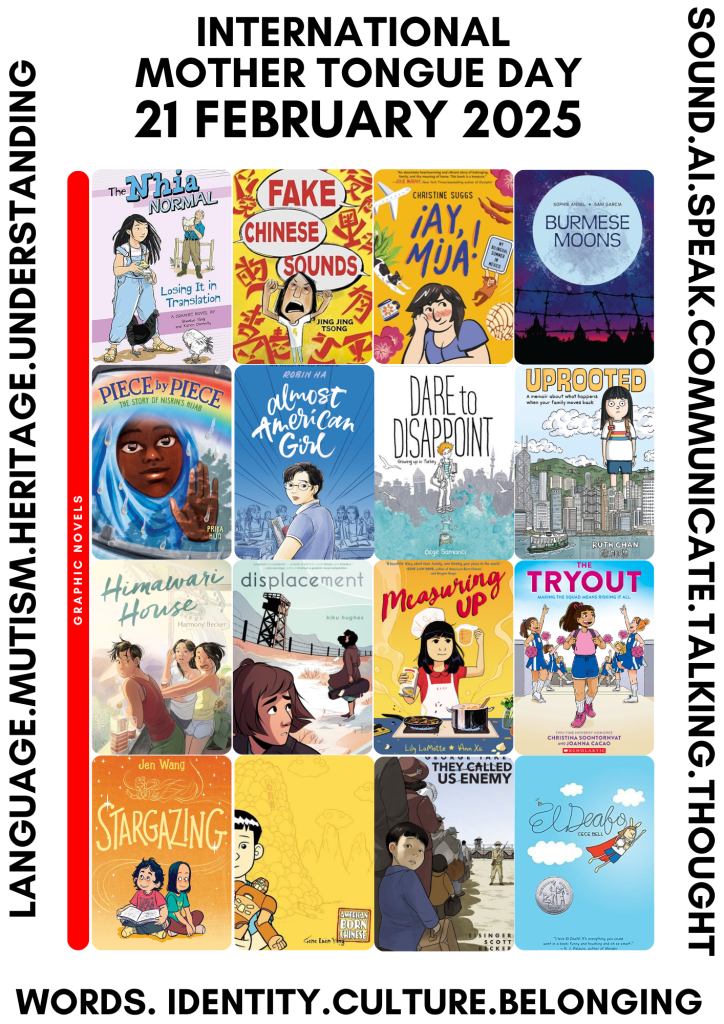
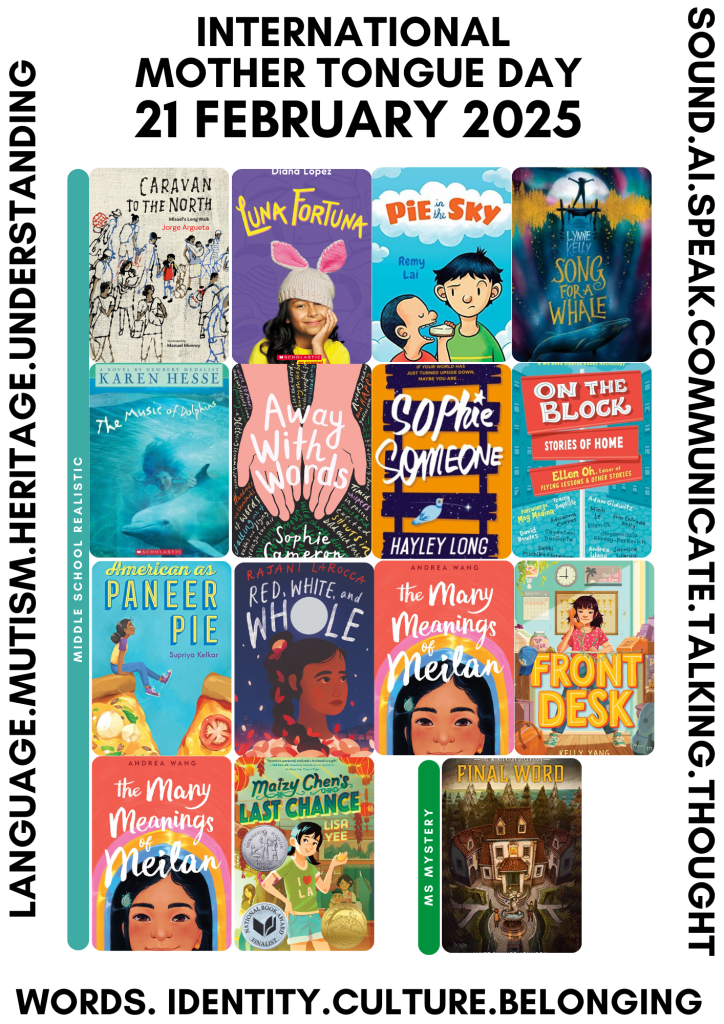
International Mother Tongue Day is next week Friday, but my students and I will be embarking on their annual Week Without Walls trip so I’m a week early with this post – hopefully it will be of some use to those of you planning on celebrating it in the library. I will be upfront about my objection to it being called Mother Tongue Day – as it denies all the families where the language of other significant family members are spoken at home. I prefer the term “home language”. This year is the silver jubilee of the event. Despite all efforts, languages are becoming extinct at an ever increasing rate, and unfortunately this doesn’t attract quite as much attention as pictures of cute or not so cute animal. Schools and other educational institutions are complicit in this – something I’ve been banging on about for years, the lack of multiple-lingual home and heritage language education I still see as a failure of imagination rather than a failure of resources in this day and age. Ok, off my soap box and back to the practical.
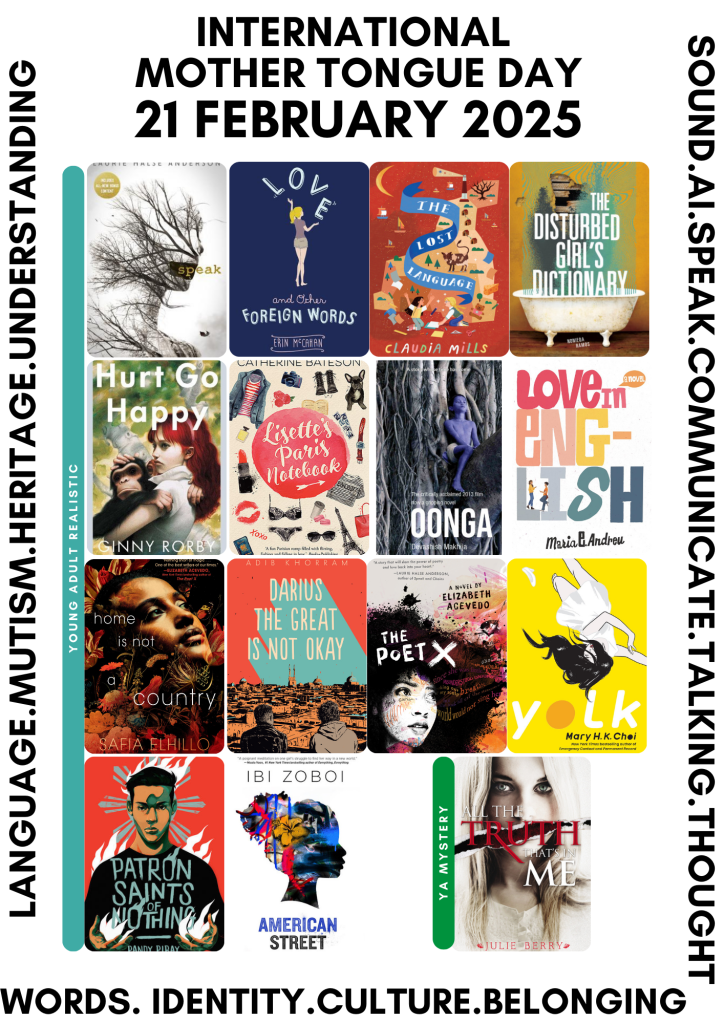
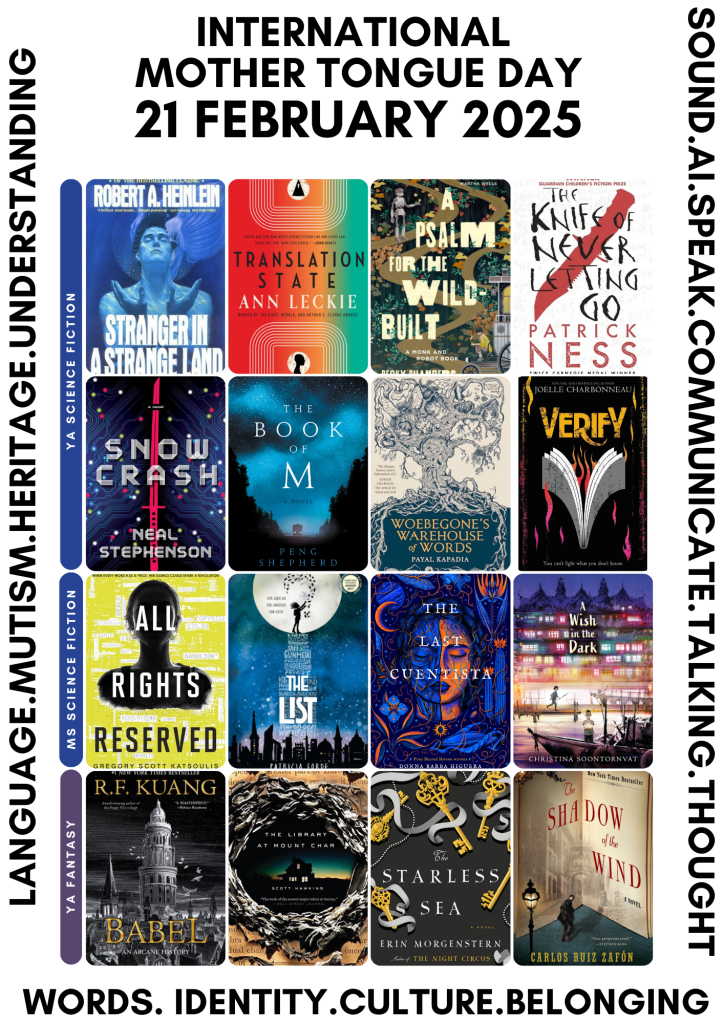
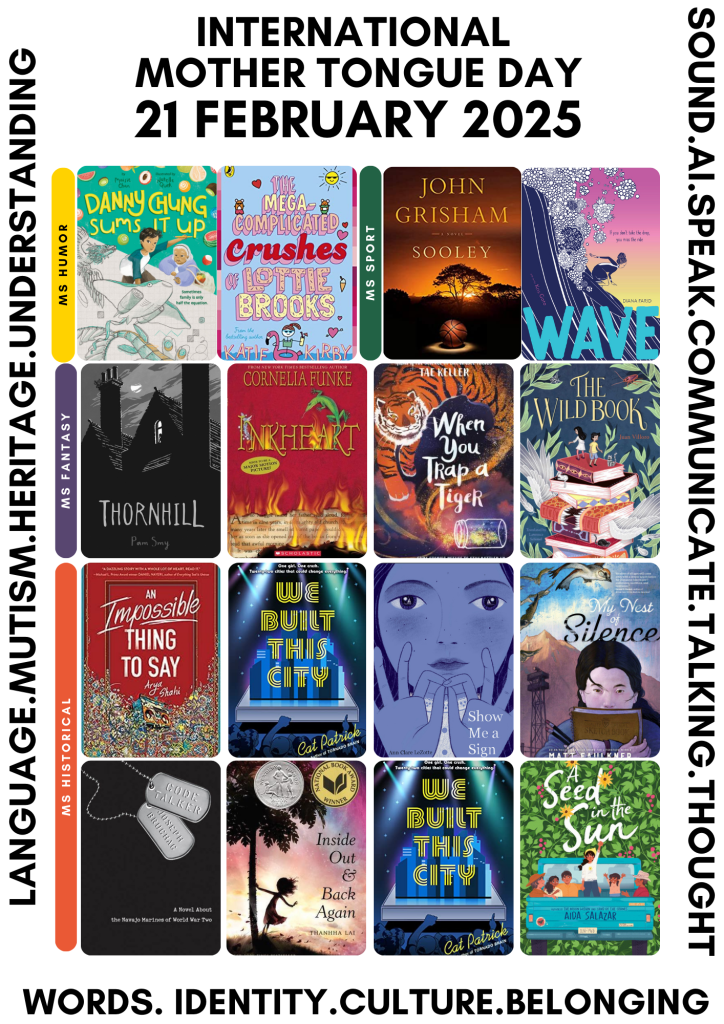
These lists started with a casual conversation with KD as to what I had planned for the day, as my passion for language is well known. Which led to a discussion on which books one would consider and then, as usual things got a little out of hand and now I have 9 pages of posters of books that feature language. Language in all its glorious and inglorious forms. Learning language, struggling with a language, speaking or not speaking. Sign language. Heritage language. Language and thought, language and power or control. Selective mutism. Denial of language, erasure and extinction of language.
As for what to do – if I were here, these are the things I would do.
Have big sheets of paper our where the community could write down the languages they speak / read / write. The languages they’re learning. The languages of their fathers, mothers, grandparents.
I’d have them make a language family tree. Have a poster with a QR code that led to this quirky test on Language.
As usual here is the link to the template / books used. In return I’d love some comments on the books you recognise and the link to language! And any displays or activities you’re planning. And of course if you have suggestions of books I’ve missed I’d appreciate you adding them in a comment.
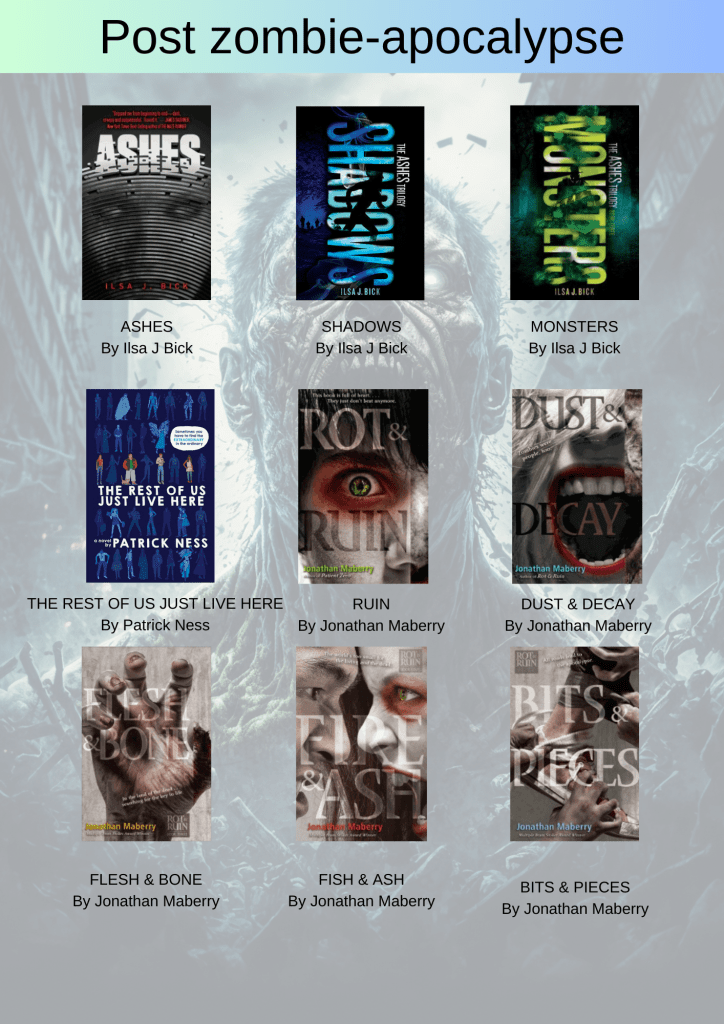
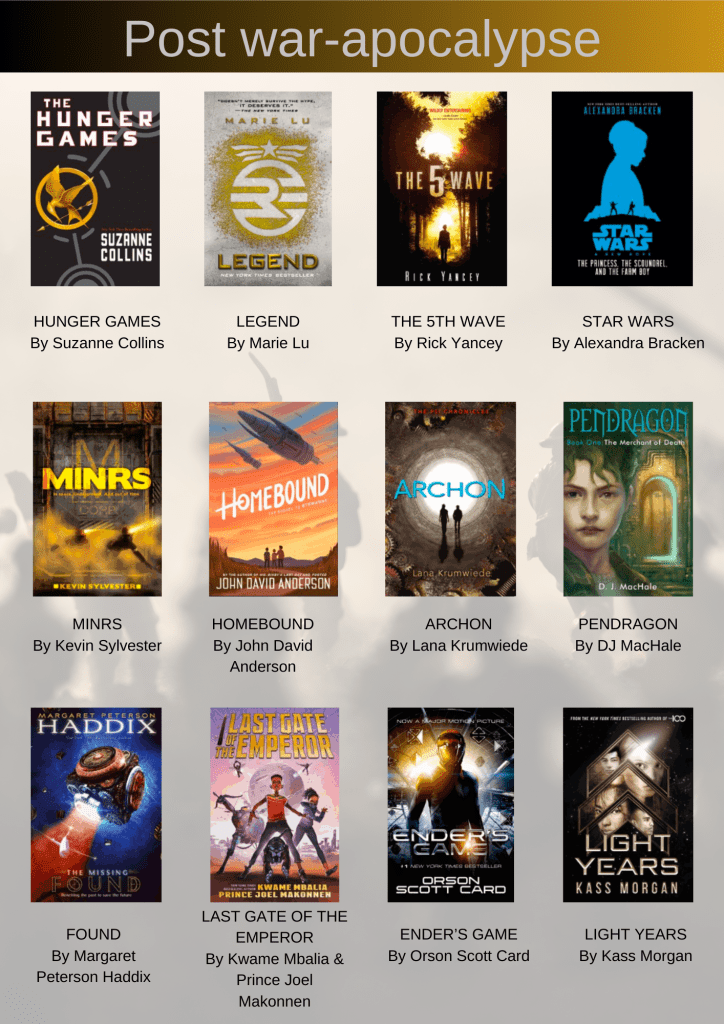
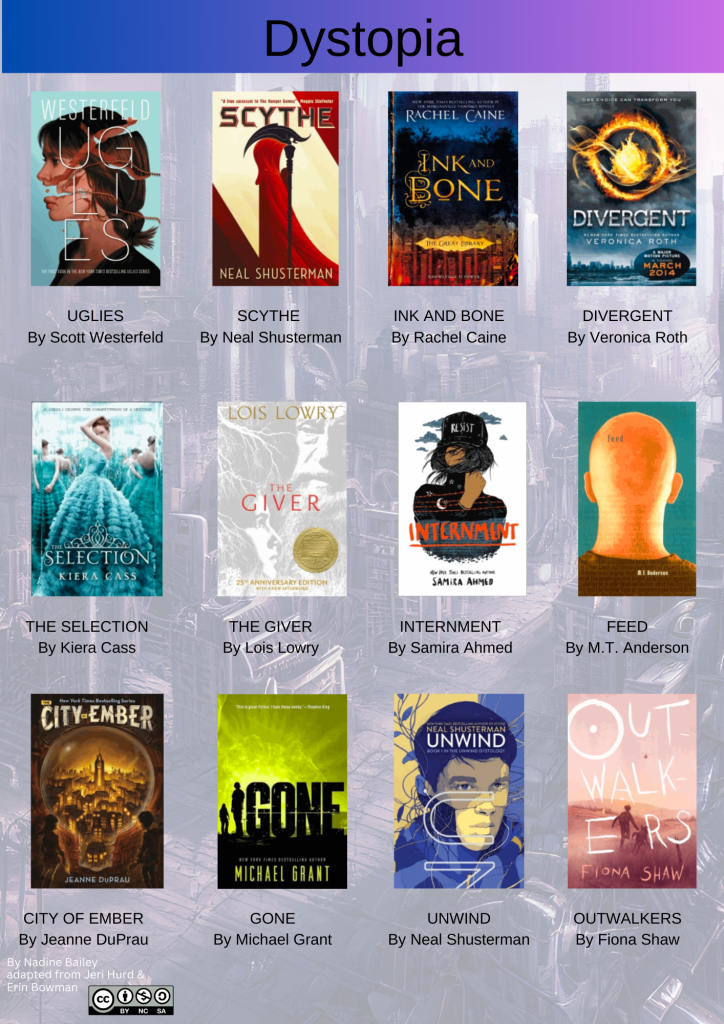
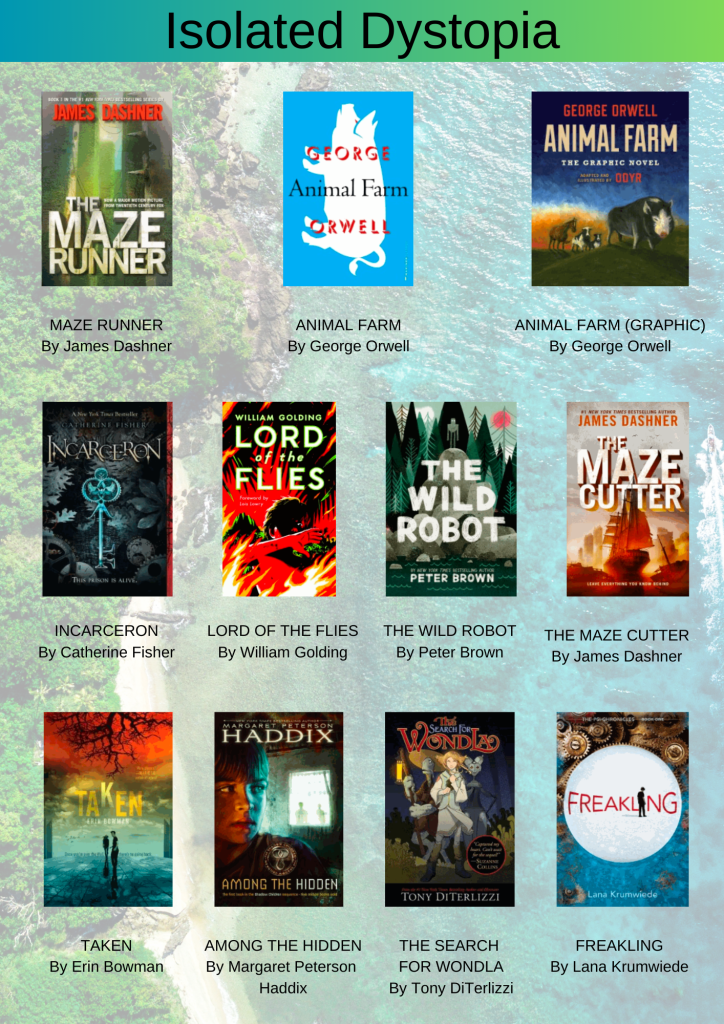
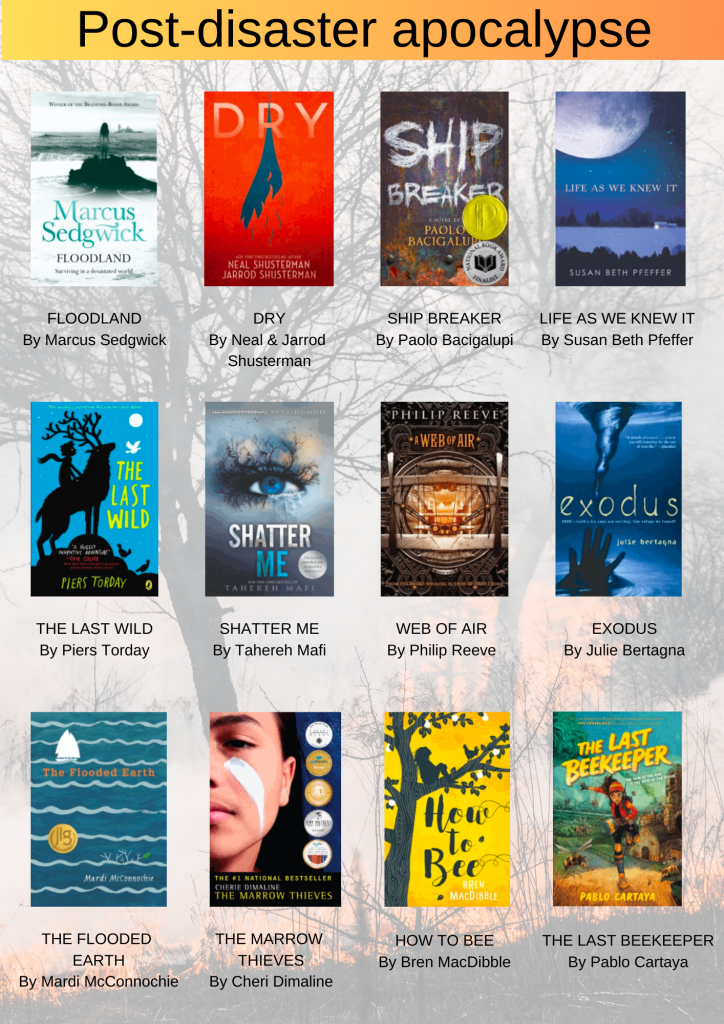
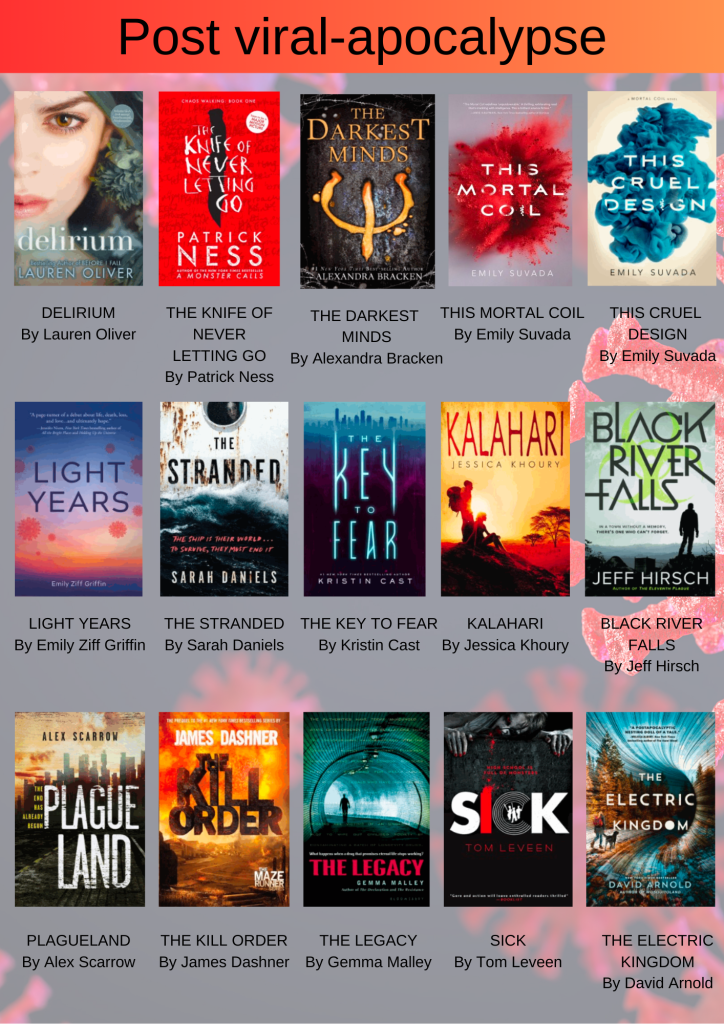
Our Grade 7 students do a dystopian unit in their English Language Arts (ELA) class, and I came across this nifty categorisation in a poster by Jeri Hurd (sans the sub-pages / images). Since I find our students are increasingly stimulated by imagery, rather than just text, I adapted the poster to include 7 sub-posters combining the books in our collection to the suggestions.
It’s not always easy to find middle grade appropriate science fiction, so this collection includes some YA works – particularly in the “Zombie apocalypse” section.
During a recent library visit after the students had completed their bookclubs with their chosen books, we had tables set out with the posters and the related books so they could further explore the various sub-sets of the genre.
If you are really interested in Utopian / dystopian literature and have quite a few hours to spare (like in the upcoming Spring break) I’d highly recommend Pamela Bedore’s “Great Utopian and Dystopian Works of Literature” from The Great Courses.
Our G6 students are currently studying Ancient Greece and will soon be embarking on a week long “week without walls” trip around Greece. Besides our nonfiction books on the City States and other aspects of Ancient Greece here are some more titles the “riff on the theme”.
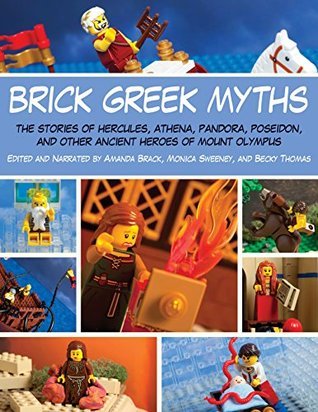
Of course an easy hit are those around the Greek Myths, and yesterday and today I went to the social studies classes and with a trolley full of Greek Myth books, in particular the multiple copies we have of the 12 George O’Connor Olympians series and each student could check a book out. Not depicted on the poster but one of my absolute favourites series are the “Brick Books” where various classic tales are depicted with Lego Bricks. Unfortunately many of the series are now out of print, but in previous libraries I’ve had the full set of Shakespeare plays, fairy tales etc.
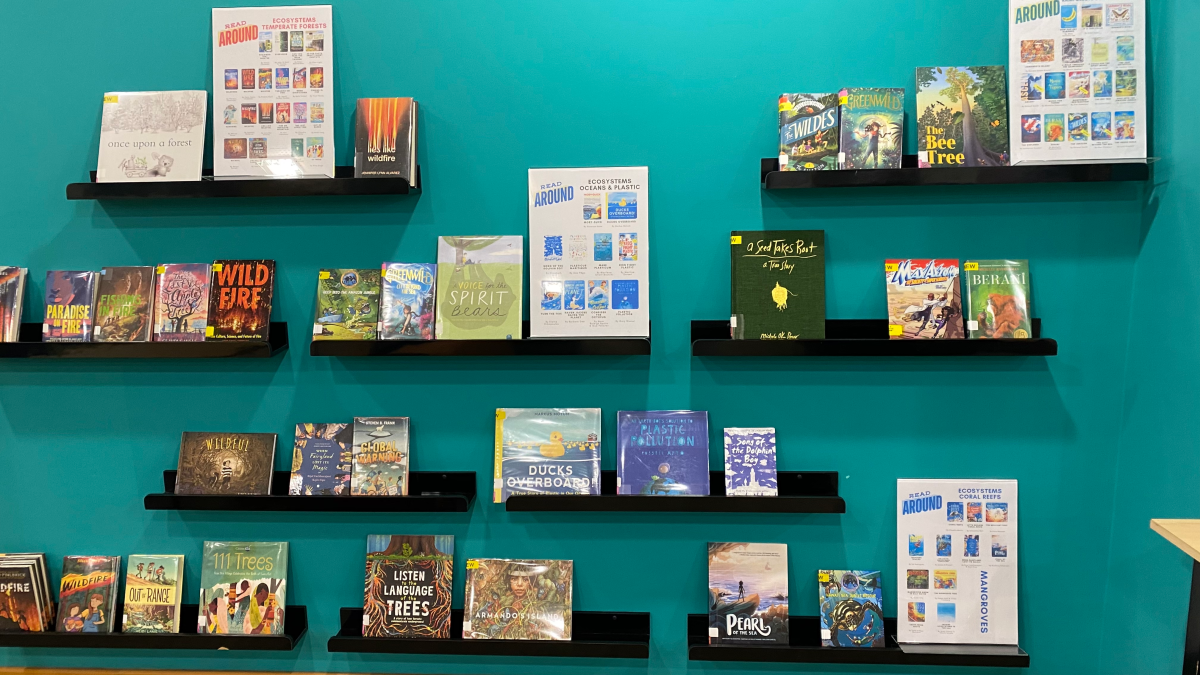
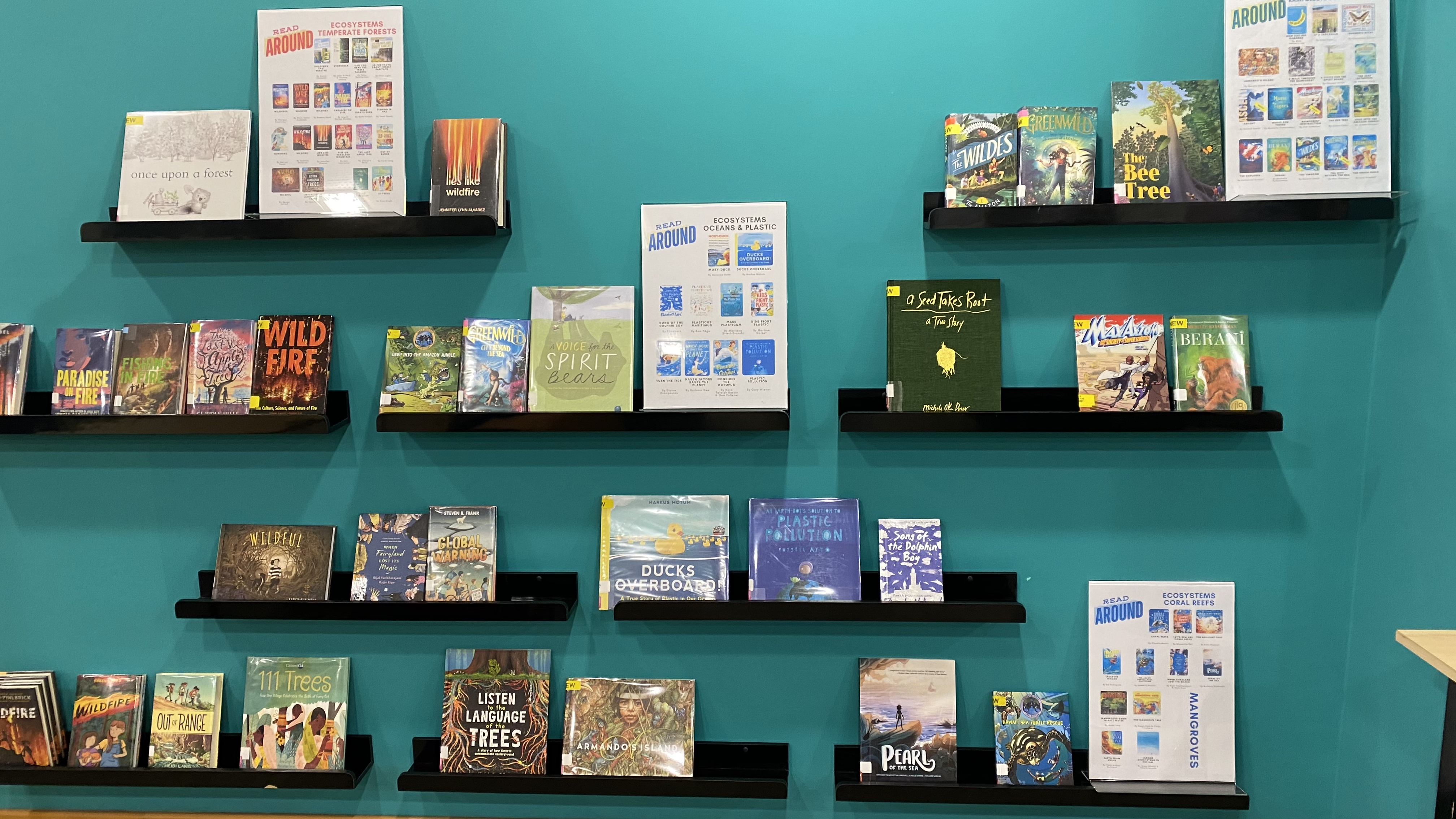
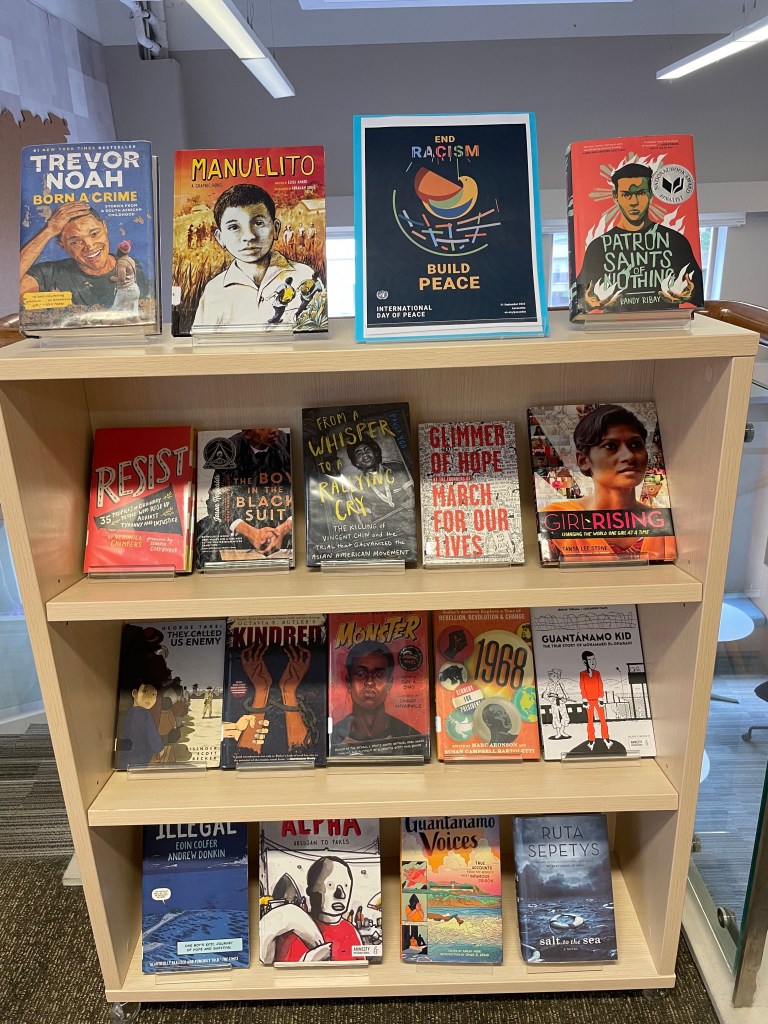
When I wrote the series of blogs in December for GLLI many people asked about displays so I remembered to take a picture of a couple of our displays of last week. We have two main spaces downstairs for display, one as you walk into the library and one against the wall. So one was dedicated to ancient Greece and the other to our Ecosystems projects.
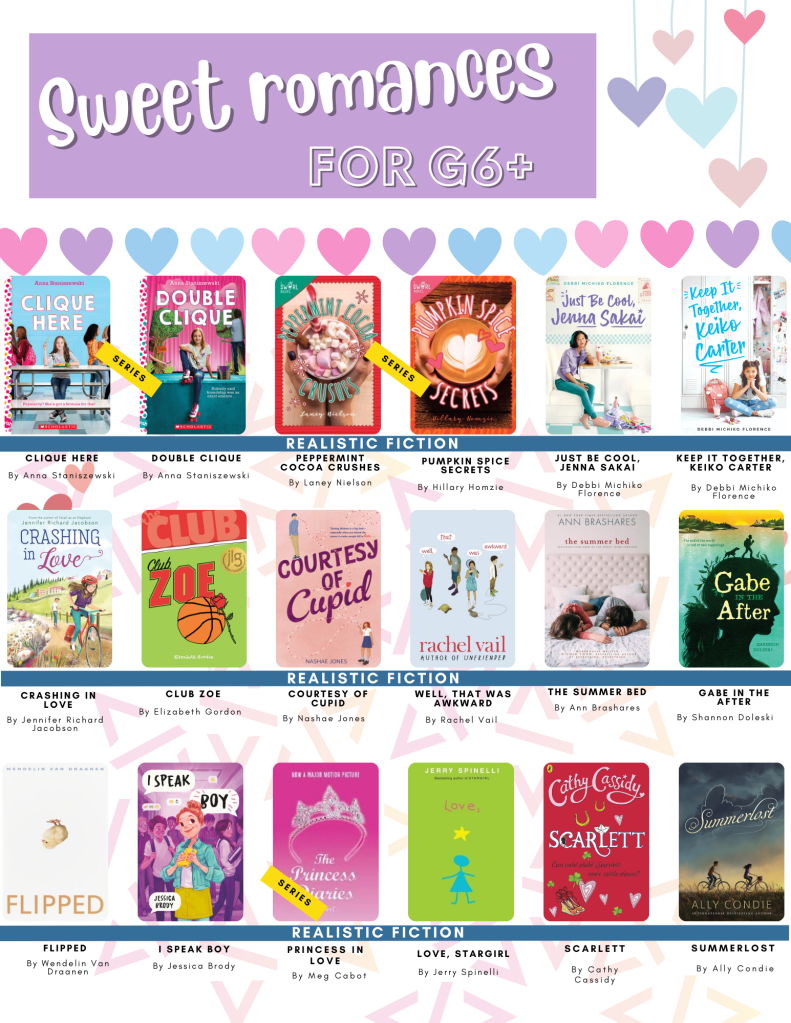
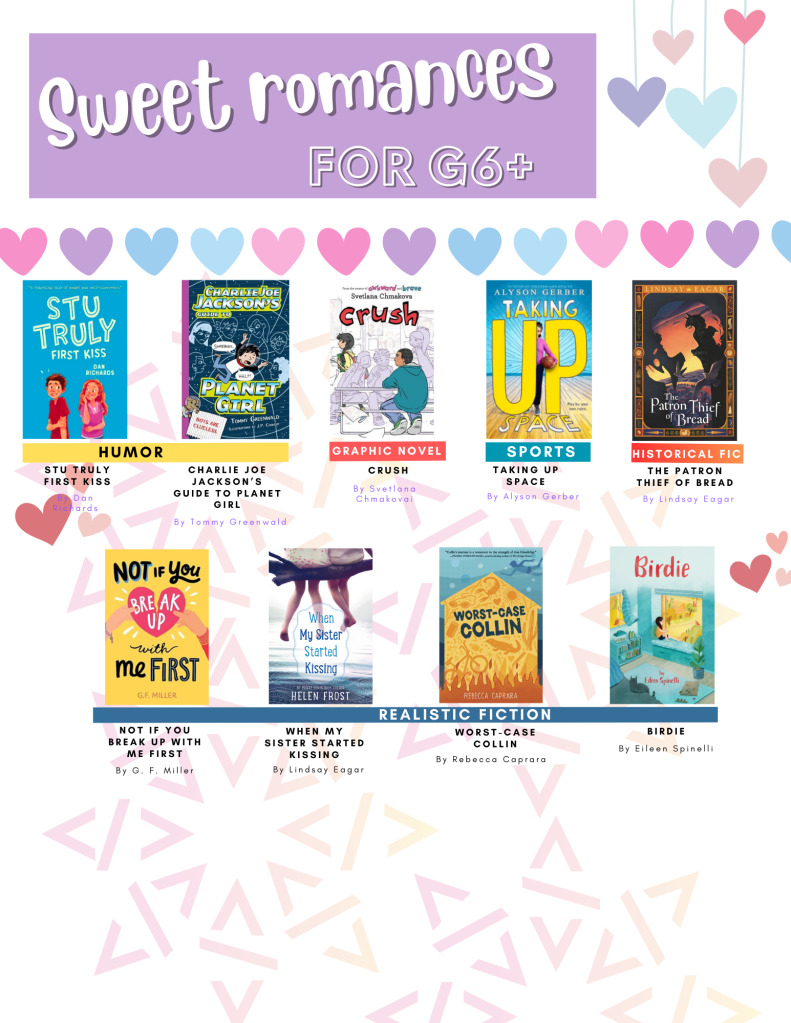
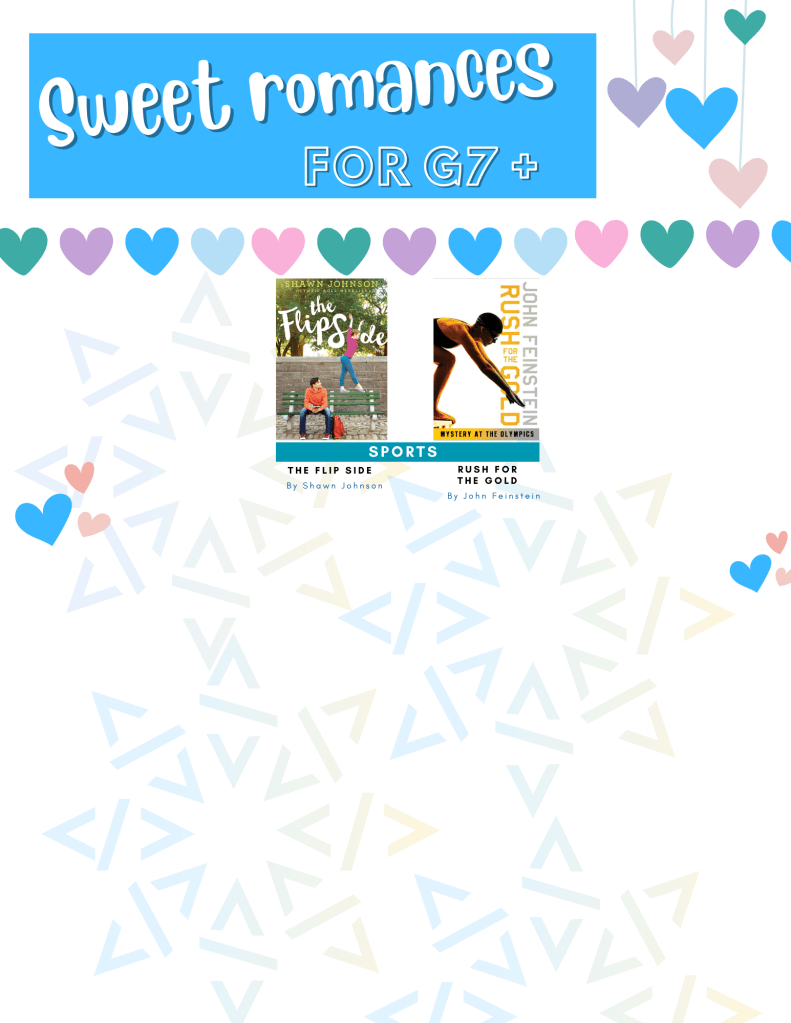
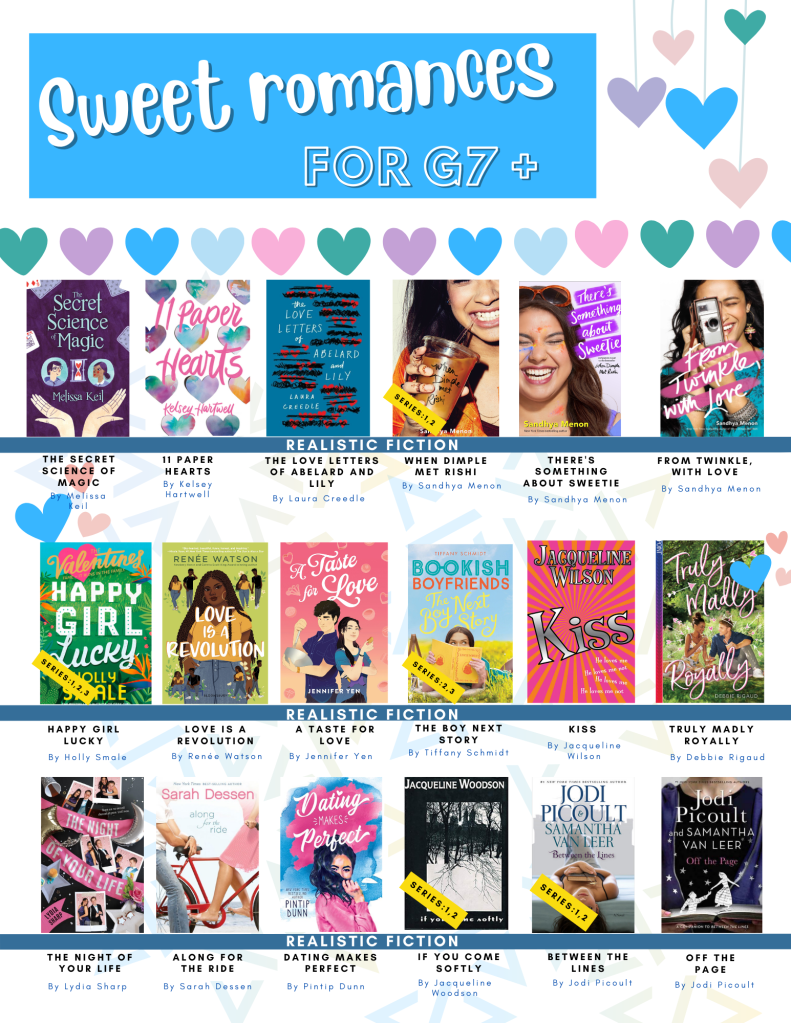
How easy it is to slip back into slothfulness – after a month of posting over at GLLI, today’s the first time I have had both the mindspace and timespace to do something on my own blog. Reading through various FB librarian spaces it seems that Romance is still doing the rounds and people are still looking for good, age appropriate romance novels that the parent-police / rabid-anti-readers / censors whatever are not going to object to, so I spent a few hours this week trying to find as many romance books as possible on Mackin.com that are rated respectively Grade 6+, Grade 7+ and Grade 8+. Now for all of you non-educators, non ex-parents of teenagers, non-working with teens people the distinction may appear ridiculous. But believe me, a 10/11 year old Grade 6 child is developmentally and emotionally ready for something quite different to a 13/14 year old. Or at least some of them / their parents and others that try to police their thoughts and reading.
I say this as an adult who has recently read “The Memory Police” by Yōko Ogawa and translated by Stephen Snyder and as a GenXer whose reading was not policed, except perhaps for “The Godfather” which my parents considered too violent, and therefor like every teen in my school read the whole sordid “Flowers in the Attic by V.C. Andrews series” before we really fully understood what incest was all about (an aside – read this Atlantic Article about just how prevalent it was / is).
I am also living in a region where even a mention of kissing could be construed as scandalous, but with students from all sorts of parenting, cultural, religious, regional, national and linguistic backgrounds. So tightrope, people. Tightrope. While doing my research I really had to wonder what exactly was the criteria to distinguish between suitability of the various age / grade boundaries. And I’m still wondering. There is a lot of talk about the age of the protagonists and whether or not there is kissing, hand holding, other touching, sexual encounters that are graphic or non-graphic or just hinted at but nada on where the lines are.
Back to library-land – why Mackin.com – well, unlike Follett which has very broad categorisation = Grades 3-6 / 5-8, 7-10 and YA, they are a little more granular so I poured over lists and lists of romance books and came up with the posters below. Also bear in mind these are inasmuch as I am aware all heterosexual in nature, again due to where I am living and trying to breathe and exist.
In another time and space I hope to have a far more inclusive list. And read my disclaimers below on this post. There is some nice cross-over in genres as well, getting into sport / fantasy / historical fiction with a brushing of romance – very important for our male-type patrons who are more likely to entertain the thought of romance in the context of anything but realistic fiction.
Disclaimer:The views, opinions, and thoughts expressed in this blog post are solely my own and do not reflect the positions, policies, or opinions of any current or former employer. Any references or examples provided are intended for informational purposes only and should not be construed as endorsements or official statements from any organization I have been associated with.
Mediating between curiosity and research, curriculum and pleasure By Nadine Bailey and Katie Day
In the summer of 2024 we asked International School Middle School librarians to tell us the story of nonfiction in their libraries. We wanted to know their ambitions, frustrations, organisation and display as well as their collection development and usage plans. All books recommended in this article can be found tagged in our LibraryThing Shelf (https://www.librarything.com/catalog/middleNF).
Curriculum and Research
Educators and librarians who have been around for a while know and recognise the pendulum of ideas and practice that upend things first in one direction and then another. Nonfiction is one of those things where some of the momentum is now moving back to the practice of reading subject matter in physical form. Many librarians responded that in a post-covid learning environment both they and the teachers they work with were moving back to giving information in print form – mainly books where they were available, but also printing out articles from online sites such as Britannica and Newsela in order to encourage deep reading, avoid distractions and teach nonfiction reading skills that could be later transferred to online reading.
Schools following the IBO (International Baccalaureate Organisation) programmes (PYP/MYP) had particular interest in “transdisciplinary” and cross curricula books that would offer broader perspectives on curriculum or unit themes. Many librarians were investing in books that would support inquiry into aspects of the United Nations SDGs (Sustainable Development Goals). There was also a keen interest to ensure that sufficient “local” (country where the school is located) and “diverse” (countries of students’ origins) content was available in the library.
Many librarians have quite heavily weeded their nonfiction sections and are now looking to re-stock them based on this renewed interest in physical books. But it appears that publishers are not necessarily aware of what is happening on the ground and are not always updating and bringing out new editions of popular texts.
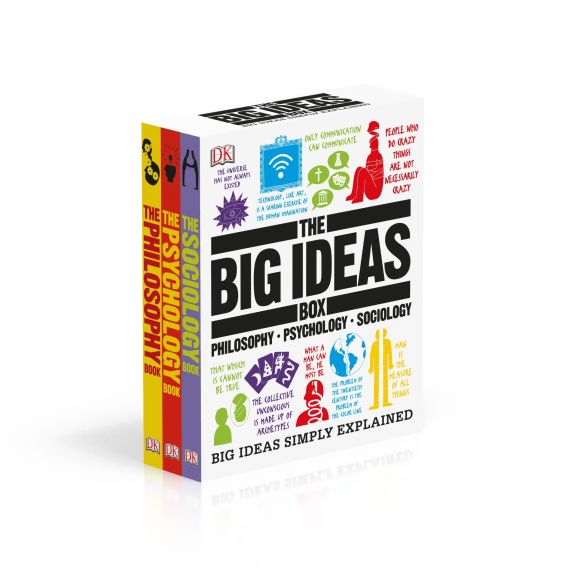
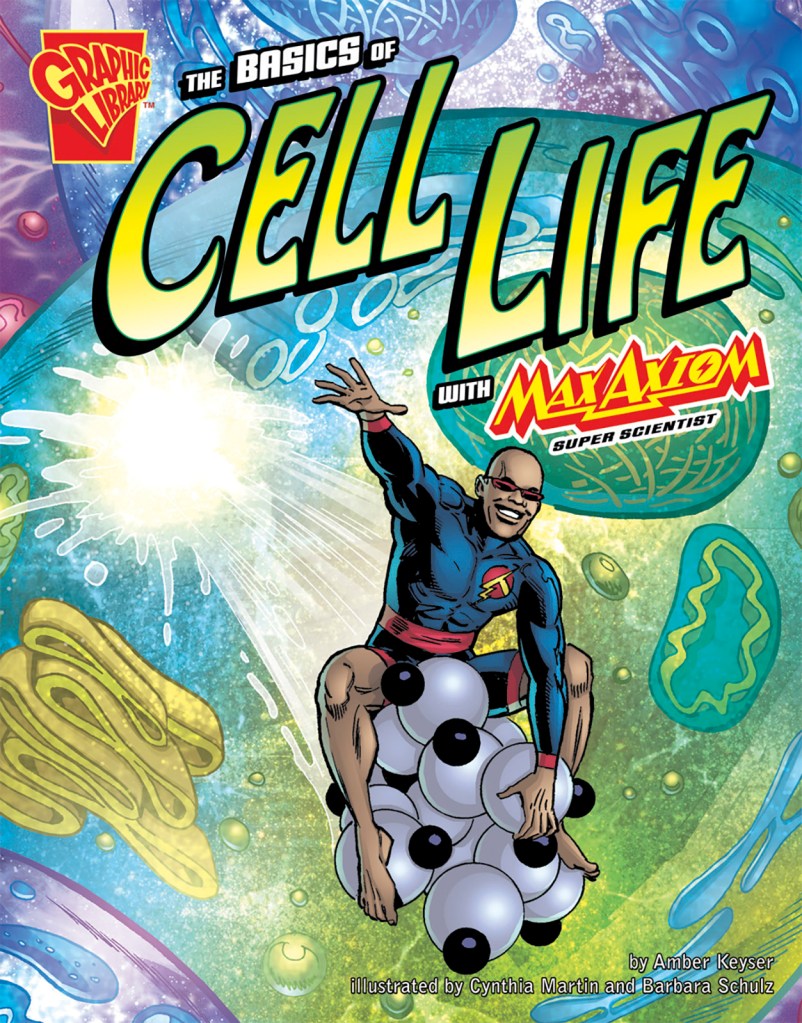
On the other hand, most respondents remarked on how much progress had been made in the last few years on the design, layout and illustrations in recent nonfiction texts. There was also a shoutout for the increase in different formats including “Oversize books” (see the books of “Big Picture Press – Welcome to the Museum”); Graphic and Manga imprints (series such HowToons; Cells at Work; and authors such as Don Brown and Jim Ottaviani); infographics (Infographic guides; ) Subject Summaries (The Big Fat Notebook series), Picture books (see this 2024 SLJ list) and Subject Overviews or introductions (DK Eyewitness, and DK Big Ideas).
Where curriculum and research is concerned, students can now often choose their favourite medium of access through a variety of formats.
Foster the flame of curiosity
Somewhere on the way to middle school, students amend their passions to fit in with their peers and ensure a sense of belonging. So out go the dinosaurs and big trucks to be replaced with their favourite sports personalities, music stars, books about their sports (soccer and basketball seem to be hits). Puberty hits this group hard and fast and strategic placement of sensitive materials can put paid to rumours and myths. It is also a time of self-absorption and worry about their physical and mental health – books on health and well being, relaxation, anxiety, meditation as well as psychology, are popular and an area of growth in most libraries.
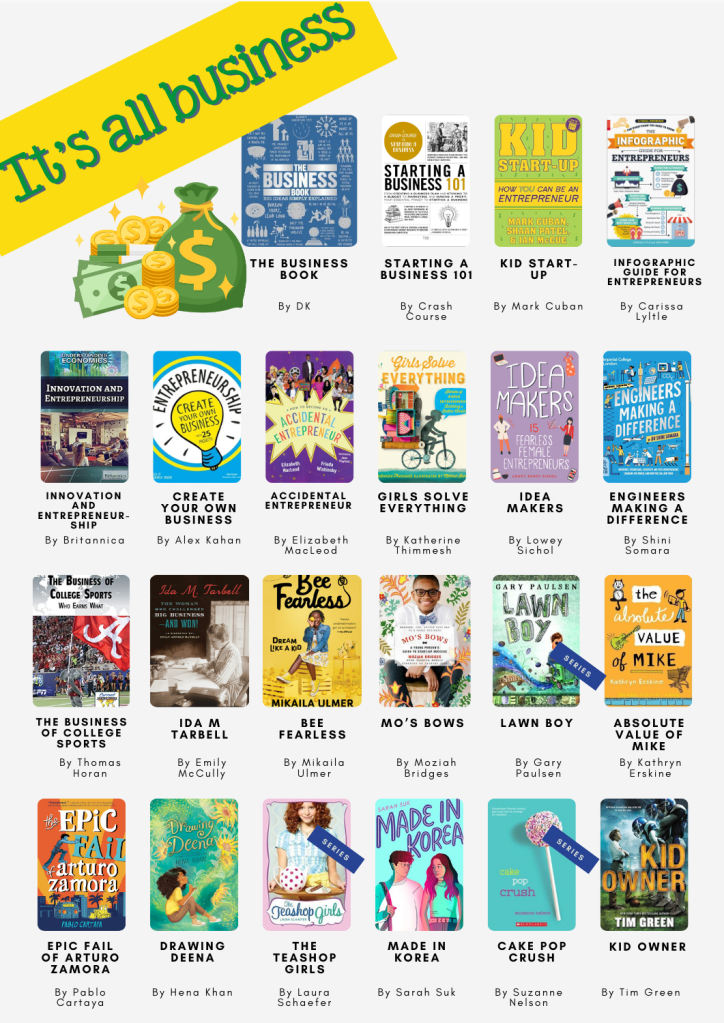
Given the demographics of our schools, students of this age are already taking a keen interest in finance, aspects of wealth and investment as well as entrepreneurship. They’re also interested in personally exploring hobbies and activities they may see online such as cooking, sewing and knitting or other crafts.
History – particularly the world wars and more recent conflicts continue to fascinate and appal in equal measure – often mediated by historical fiction texts students may encounter in their literature studies or English classrooms and what they see on the news or social media.
Shelving, organisation and display
In order to make nonfiction appealing and accessible, quite a few of our respondents mentioned they either had or were in the process of rethinking the way that nonfiction was shelved, organised and displayed in their libraries. There is a continuum from pure DDC (Dewey Decimal Classification) to a range of Book Shop or genrified models. Librarians were more interested in getting books seen and read than in a hypothetical need for their audience to be able to navigate a university library later. One of our respondents coined the lovely phrase of “emotional accessibility” in this respect.
Of course most libraries have already taken the first step of putting “literature” or novels out of a straight Dewey 800 section into a fiction collection – genrified or or not. Other common “extractions” from the main Dewey structure include:
Taking Biographies, collective biographies and memoirs out of 910/920 and putting them in a separate section. Some libraries put collective biographies at the start of the section they pertain to (i.e. famous musicians go to 780).
Travel Books
Poetry
Drama and playscripts
Graphic Novels and Manga
Narrative nonfiction
Myths, Legends and Fairytales
Parenting
Well Being
Professional Development
Sports
Country specific collections
A specific nonfiction series that’s popular
Photo: American School of Dubai MSHS Sport Section
In the absence of permanently pulling out a section – many librarians make use of rotating “dynamic shelving” or temporary topical displays. The guideline here appears to be to follow the needs and interests of the community – teenagers want to be able to independently navigate the library without adult intervention that may be embarrassing.
Photo courtesy of Ashley SimmonsPhoto courtesy of Ashley Simmons
Related to that – signage and signposting was an area that nearly all librarians were investing in. Many mentioned significant weeding that had resulted in more space for forward facing displays and carving out sections of interest.
Recommendations
To support the discovery of nonfiction titles for middle school, we’ve curated a shelf of 389 (and growing) books on Librarything that we consider to be worth investing in. It’s an ongoing labour of love, so not every book has been tagged at this point yet.
Examples of Some of the tagging we’ve employed are (not an exhaustive list):
Narrative nonfiction
Manga
Graphic
Topic_
WW2
Women
Science
Mathematics
Religion
History
Climate
SDGxx
Activism
Wellbeing
War
Technology
Sustainability
Sports
Space
Social Media
Geo_
Southeast Asia
China
USA
Europe
UK
Australia
Edition
Young Reader
Since such lists can quickly go out of date, we’d also like to generalise with some series, authors, titles and publishers that we recommend.
Great AUTHORS
Marc Aronson
Don Brown
Marc Favreau
Candace Fleming
Russell Freedman
Yuval Noah Harari
Deborah Hopkinson
Tanya Lloyd Kyi (Canadian)
Randall Munroe
Jim Ottaviani
Elizabeth Partridge
Gillian Richardson
Steve Sheinkin
Cory Silverberg (Puberty)
Dashka Slater
Tanya Lee Stone
Pamela S. Turner
Great PUBLISHERS
Annick Press (Canada)
DK (Eyewitness; Big Ideas; Children’s Timelines; How Things Work; How Stuff Works)
First Second (MacMillan)
National Geographic for Kids
Usborne (UK)
Crabtree Publishing Company
Flying Eye Books
Great SERIES
DK Eyewitness
DK Big Ideas
DK Children’s Timelines
DK How Things Work / How Stuff Works
From Playground to Pitch
HowToons
Hazardous Tales (Nathan Hale)
Little Histories
World Citizen Comics
UN sustainable development goals
Great TITLES
There’s been a recent shift toward publishing a Young Adult version of popular nonfiction titles either simultaneously or shortly after the Adult version. These can be found by searching for “Young Readers” or “Young Reader’s edition” / “Young Reader’s Adaptation”.
Last but not least, pairing a nonfiction book with a novel can enhance both texts.
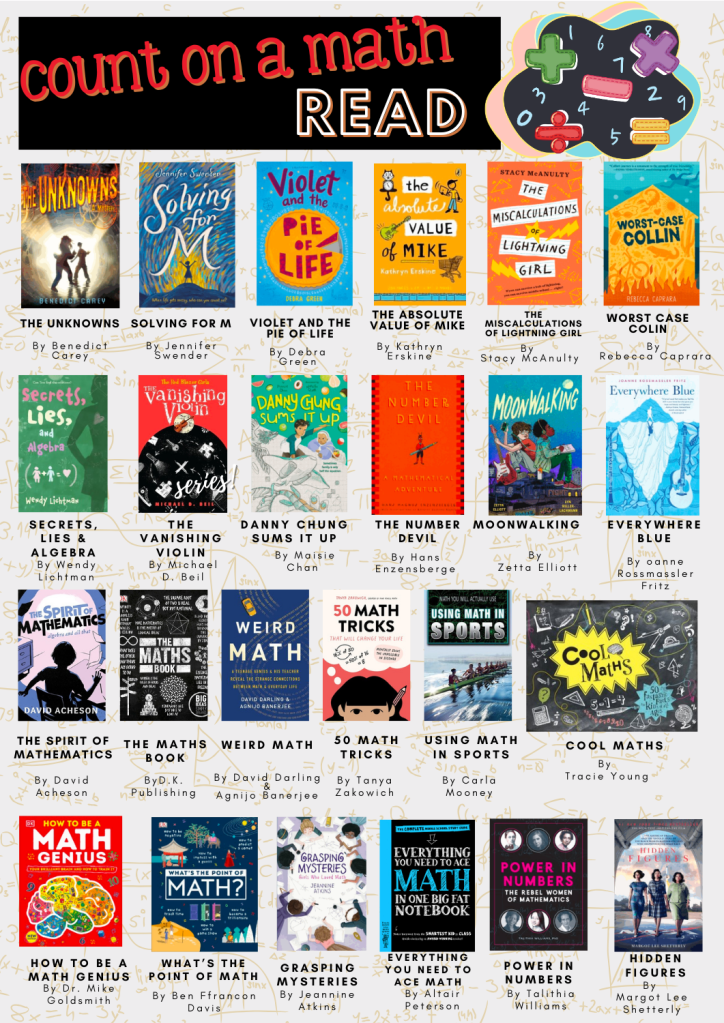
I initially started putting a fiction book on this libguide followed by suggestions of nonfiction, https://asdubai.libguides.com/ms/reading/nonfiction. I’ve now moved away from that somewhat and have started curating “Read Around the Curriculum” posters where either a curriculum topic is highlighted with fiction and nonfiction, or an “If you like / want to know more” poster is made of one of our book club fiction books with suggestions for finding out more about the context with other fiction/nonfiction books on the topic.
Katie Day and I would love to hear your suggestions for more nonfiction books, and perhaps we can expand the list to High School. Many of the books suggested in our list are suitable for High School and upper elementary as well.
Comments and suggestions much appreciated.
NOTE: Since the publication of this post we have been approached by commercial entities about using the list. While we cannot prevent the list from being used commercially this is our wish:
This list was created in order to freely help librarians all around the world. It was a labour of love which took a lot of our personal vacation time to create. If you are part of a commercial organization and you will be using the list commercially we would request that you attribute us and make a suitable donation in our names to “Biblioteca di Lampedusa” which serves refugees from around the world in their Silent Book initiative, https://www.facebook.com/BiblioLampedusa/ or the “IBBY Children in Crisis Fund”: https://www.ibby.org/awards-activities/ibby-children-in-crisis-fund. Thanks. Nadine & Katie




















 Informative Flights - Musings of a Teacher Librarian