And it’s not the usual stuff about being poor misunderstood under-utilized bits of the school / community. No, the frustration goes much much further. It’s about how information, knowledge, books, data, well just about anything is NOT being tagged and catalogued and made generally searchable, available.
What prompted this? Well my inbox. I subscribe to a few blog sites that are, well let’s say prolific is an understatement. One is the NerdyBookClub and the other is Global Literature in Libraries Initiative and the last is Gathering Books. And do you know what is terribly frustrating – I get behind on the reading. Terribly behind. And I know there are all sorts of ways of IFTTTing your inbox, but what I’d prefer is that theses consortia of writers (because no one human can be so prolific, so usually the blogs are written by teams) would just tag their posts, and make the tags obvious at the TOP of the blog, so that I know whether to read it now or leave it for later or just delete it.
Let’s take some examples that I’ve been reading today in a desperate attempt to tame my inbox:
GLLI: French Graphic Novels in translation – not categorised and no tags. If I’d been writing that post it would have had the tags of: French, Translation, Graphic Novels, Middle Grade at the very least. Then I’d immediately know that it’s worth a read, because I need to increase the diversity of my collection, so some French books in translation are relevant. My students love GN’s so that would have caught my interest but NOT if the tag included YA, since right now I’m in K-6
NBC:A look at expository literature: again, the only tag is the author and their twitter tag. Not enough. I needed to know that they were talking about: picture books, nonfiction, mentor texts,and that it included a booklist.
Gathering Books:Fears etc. again a fabulous site with resources, but the layout and curation makes my head spin and spin and spin. It’s really hard to find stuff, there are so much great reviews going on, but then sometimes it’s poetry, sometimes it’s other stuff. The posts are allocated to categories, but don’t seem to be tagged, so if I wanted to see all the book reviews on grief, or death, or migration for example I wouldn’t be able to do so.
And then the HUGE question of where all this goes? And it’s a really big question. Because we all know the problems of finding great and diverse literature. Of finding authors with a unique voice who are new and interesting and not part of the publishing machinery. Ones that aren’t institutionalised onto the same old same old top 10 lists.But why do we keep going back to those lists? Because it’s so easy.
Where are all these fabulous blogs curating their book lists? Where are the catalogues? Are they on Goodreads with a proliferation of shelves or on LibraryThings with 100s of tags and collections? Where are the links and the connections and the overlaps? Even the ones working together (like NBC) seem to be working on their own.Their site has a store selling mugs for heavens’ sake. The list on the side is a list of their bloggers, not of the books / categories / shelves. Even the Nerdies – their awards page, is an unlinked list of books that is not tagged or categories in any way… where are the librarians? This is not a criticism of what they’re doing – they’re doing some fabulous things – it’s about how they’re doing it, and how much easier it could be for their readers / followers!
After a flurry of research and completing my final paper for my M. Ed, one may think that it’s all over with the inquiry into reluctant readers, boys reading etc. etc. But it’s not. Far from it in fact. I’ve been a little distracted with the library renovation, a series of unfortunate events with library assistants having close encounters with pregnancy and injuries leading to somewhat more of a day to day burden on my shoulders etc. etc (it’s called “life” I keep reminding myself). But anyway, we carry on unabated with our BWB club (Blokes with Books) and you can come and hear me at the AFCC if you’d like to find out more!
Tim, the teacher leading the club and I had some conversations at the end of last year about how we needed to take things up a notch and really go deeper into the whole reading thing. The question of course is how do you make sure it’s still fun, that they still are committed, while deepening and expanding what they’re reading? We’re talking about 11/12 year old boys after all, and while my dry academic papers sound all unemotional and cool the truth is far from it. We have spats and have to have firm words about “it’s just a game” and “if you don’t quit fighting about the chairs / beanbags / who got the book first, you will have to stop coming for a while” etc. etc.
But something special has been happening in the two weeks since we’ve been back. Sometimes you just get so caught unawares that you’re not recording or documenting and now I feel I need to document it. Last week our counsellor (who’s joined our team) was sharing how he’d seen an interview with Jamie Oliver about the fact that he’d read his first book at age 38. The boys were actually incredulous. And then a couple started spontaneously sharing how before BWB club they’d never finished a book either, or if they did it was just a quick and easy book and how much more they’re reading now and how it takes practice and perseverance. Note – it also takes courage for a boy this age to come out and say these things to his peers.
This week we reflected on Obama’s reading list and how he’d said it helped calm and focus him in times of stress. And again, a couple of boys put their hands up and said how reading helped them calm down, when they were angry or upset.
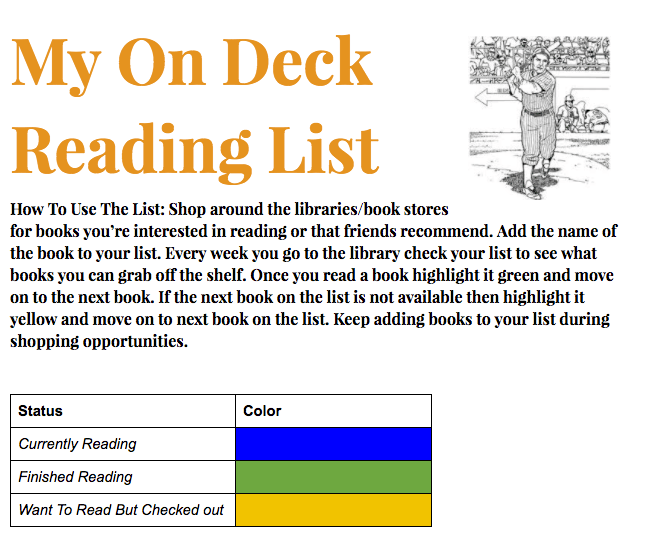
So, what’s new. Right now I’m trying to drill into every student at school the necessity of having a “what’s next” list – either a mental list or a physical list or a pile of books that are the “books in waiting”. And the great thing about a club like this is that we can try things out on them and see how effective they are.
This week we used Leigh Collazo’s Genre Personality test which you can purchase from TPT (a $5 well spent). My assistants and I spend quite a bit of time this week updating the bookmarks in order to make the book suggestions specific to our library. The boys did the quiz during the BWB session on Friday and they really enjoyed doing it. It was fun and light-hearted and we kept emphasizing that there was no right or wrong answer and it wasn’t scientific. After they’d tallied up I made a spreadsheet of the top 3 categories of each boy, and as we read out the descriptions there were cries of “yes, that’s exactly how I am” and “I agree” and “yes!” With their permission we then displayed the results. Most were evenly spread between A, (questioner); B (Escapist) and C (Innovator) with surprisingly few G’s (class clown) which is what I would have expected. Since that took up most of the hour we have with them – we didn’t get around to sharing the bookmarks, and
only introduced the “on deck” spreadsheet to help them keep track of their “what’s next” list – that’s next week’s work.
Planning for a library expansion and renovation involves considerable time, thought and work on the “hardware” of the physical building. Including last week’s work of packing up the books and getting them put into storage. I’d blogged a little about how just prior to that we’d done a lot of weeding, and sorting out patron data on our system, as somehow the physical sorting out led to a drive for digital sort out and housekeeping.
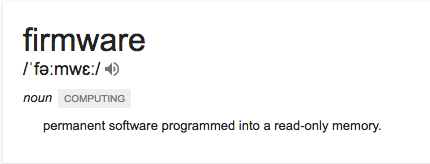
I’ve been promising for a while that I’ll talk a little about the “digital” side of the library, but first I’d like to talk about what I’d refer to as “Firmware”
A characteristic of most international schools is the transience of its students, and often teaching staff. Naturally this includes the library. In my current position I’m aware of the fact that I’m just one in a long line of librarians who have come and gone. I’m also extremely grateful to our permanent library staff, who keep things ticking over as teacher librarians come and go, each trying to put their mark on the physical and teaching environment. They have institutional knowledge. They know what has been tried and worked or failed, and a pretty good idea of why. I admire their unrelenting politeness and helpfulness as they cope with the latest “new broom” .
When you speak to other librarians, inevitably the conversation will come around to the fact that they’d like their staff to take more initiative, or upgrade their skills beyond shelving and circulation and basic queries. But that is harder to realise than one would think. There appears to be a reluctance that sometimes is hard to fathom. Some librarians have taken great initiatives in this direction – like the KL librarians under Robert George with their JAWs (Job Alike Workshop), and more recently the similar sessions initiated by Barb Reid in Singapore. The problem with any professional development at any level is that there needs to be a compelling reason to take the learning and put it into action as soon as possible. But invariably the day-to-day tasks take over and there just isn’t enough space between relentless shelving and picking books for the next (18) Units to get the practise …
However in the last month, we’ve had to challenge the “read-only” part of the definition to its limits, with one staff member on maternity leave and the other on hospitalisation leave, and as a result, that once in a blue moon occurrence – a “firmware update” has become the new norm. So suddenly business as usual hasn’t been usual, and everyone has had to do everything all the time, with a lot of compromise and cobbling things together as we go along. We haven’t had the luxury of designated tasks and roles, and suddenly we are all cataloguers, and weeders, and resource list creators.
I’d set aside a week for packing up the library. But I’d not calculated on the energy and enthusiasm of my staff and the maintenance staff, and the help of our Grade 5 students who made a “book train” from the library upstairs, so by the end of Tuesday we were pretty much done (and not dusted – boy oh boy, did we discover dirt and dust…). So I declared Wednesday to be systems and PD day, kept back 3 tables and chairs and we sat down and I taught everyone how to use Libguides. We probably only spent about two hours on learning the basics, and that’s really all that is needed, because with everything it’s not about the theory it’s about using it. Then back to some more boring stuff, getting images onto books in the collection.
And then more important, but still a little bit tedious – especially if you’re using Follett – checking through resource lists and updating visual search for all the UOIs. Oh gosh, I’m embarrassed to say how many links were old or incorrect.
Next up was making resource lists for all the books related to all the countries our students came from. For Uniting Nations day I had made a cursory start by grouping books into continents as it was a “quick and dirty” way of getting lists out there for our “read around the world” challenge. Now I wanted to dig deeper, so I took the list of all the student nationalities and we divided it up and started searching and added. We quickly saw the countries that were under-represented, or not even represented at all – books from / about Bulgaria anyone?
I also spent the better part of a day sorting out and adding books related to Social and Emotional Learning based on the handout of Dr. Myra Bacsal after her talk. It also entailed adding nearly US$2,000 worth of books to a “to purchase” list, as I realised that while we did have many of the books recommended, we were also lacking in a few – and particularly in more diverse and more recent books.
Our final day in the library, around rapidly diminishing furniture – including at one point our desks, was spent putting the libguide PD into practice, as the 3 of us sat with a list of all units, all guides made and guides to be made and started putting libguides together!
The previous day while my staff was helping their colleagues at our other campus, I’d been sitting with the librarians, helping them extend their knowledge of libguides, and us brainstorming ways of presenting physical and digital resources in the guides in such a way that it was easy to navigate and would ensure that students could benefit from knowing what books we had and also how to access other QUALITY resources (i.e. not just google) that we were paying for but were perhaps not being well utilized.
We decided on
having the central idea at the top in a floating box
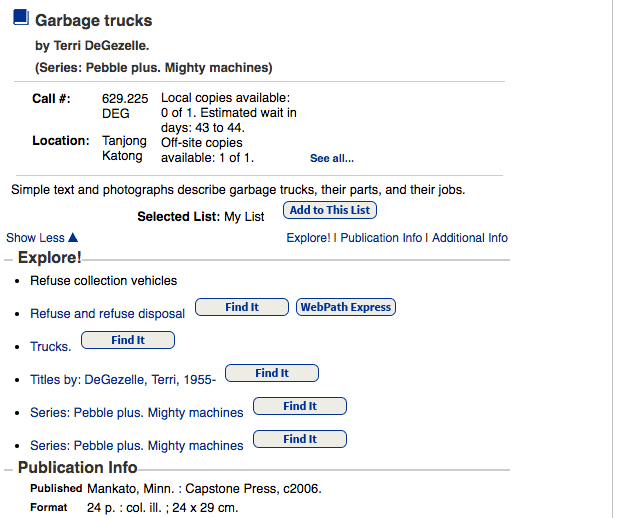
on the left – having a scrolling bookshelf of our unit books – using the Library Thing for Libraries book display unit. That way teachers and students could see all available books in a unit, even if they were distributed in a different classroom – and clicking on the link would take them to the book in the catalog – AND if they looked at the subject headings under Explore! would hopefully have a Webpath Express link to click on.
Putting some videos in the middle for our more visual / video liking students – also very handy for our ELL students with the paired speaking / images.
On the right having a tabbed box that could alternate between Brainpop (a staple in primary), Epic Books (easy to access and great free selection of nonfiction books for easy projection & assignment in class), Britannica (because Encyclopedia) and other links.
Of course nothing is simple – and even now as I look over the units, I see that some units have the UOI books around the central idea and inquiry in them and some have that plus what-ever literacy / math connection is being made (so more than half of the books are poetry for example). In the medium term all that needs to be straightened out and sorted out as well.
Also before you can add a scrolling list of books, you need a list of books … and to know how to get the books into Library things, and then into a book display widget – so I made a little screencast on how to do that!
The wonderful thing about all of this is the obvious enjoyment and pride that my staff got out of researching units and finding resources and adding them to a guide – they kept on saying “this is so interesting”, and “this is so creative”. Of course it is not a “quick” thing, I’d say on average a very basic guide at primary level that is reasonably complete will take around 3 to 4 hours. And then one just has to hope that the units don’t change every year!
All in all, and incredibly productive week, and also my staff finally “gets” the fact that my drive for automating student update and photo import etc. etc. is not to put them out of a job, but to free them up to do more interesting and meaningful work. After we talked about that, one staff member said “and now to automate the shelving!” amen to that!
 at’s new. Right now I’m trying to drill into every student at school the necessity of having a “what’s next” list – either a mental list or a physical list or a pile of books that are the “books in waiting”. And the great thing about a club like this is that we can try things out on them and see how effective they are.
 3 categories of each boy, and as we read out the descriptions there were cries of “yes, that’s exactly how I am” and “I agree” and “yes!” With their permission we then displayed the results. Most were evenly spread between A, (


 Informative Flights - Musings of a Teacher Librarian