State of School Librarianship – Selected Asian Countries

Four of the speakers at the International Conference on School Librarianship of Asian Countries spoke about the “State of School Librarianship” in their relevant areas:

Since you are all perfectly capable of reading the presentations I am not going to repeat what was said, but rather to say what my key take-aways were in general.

Firstly I was super happy that I chose to come to this conference (at my own cost, although the conference itself was free …) instead of going to the EARCOS workshop in November at Taipei American School. “Tech-Integrated Libraries: Building the Future One Service at a Time”. The reason is that the longer I am in the field of teacher librarianship, the more I feel that we are operating in a number of little echo chambers where we keep on encountering the same people with the same things to share.  This view probably doesn’t make me very popular amongst my peers, however I do think that it has contributed greatly to the current state of school librarianship. Of course this conference was also an echo chamber, but it wasn’t one which I usually find myself in (mine is the “international school librarian” one).   And I think for all of us participating, we got to at least hear (if not share due to the time restrictions and presentation format) about what is going on elsewhere. And that is always incredibly interesting.

Next – it was comforting but disheartening to hear that school librarians everywhere suffer from the same “needed outsider” status.   In all the presentations we heard that the existence of the school library and its staffing by a tiered levels / qualifications of librarian almost always needed an act of legislation  at least in the public sector.   (In the private sector it is up to the budget of the individual school, and part of a long legacy personal and cultural, but that’s a whole other story).   Within the legislated necessity of a school library, there is a huge variation in the requirements – in Australia this is determined by state-by-state for example.

It seems that generally it is much easier to find funding for library buildings and the initial “hardware” – the problems arise with the ongoing budgeting for staffing by properly trained teacher-librarians who can make a difference in both the literacy and information literacy of the students. But those effects are hard to measure – it is easier to come up with statistics concerning collection size and ratios of materials to pupils – the quantitative data is more readily found, and definitions are more robust than the qualitative data. That is one of the “academic / research” criticisms I’d have of some of the presentations – a lot of data but what about the “so what” and “why” and “what now” – particularly when comparing one country to another.

Even Australia – who has long been seen as one of the bastions of school-teacher-librarianship -appears to be in decline due to all sorts of (mainly) political and funding issues. And there’s the rub. School-librarians just don’t seem to be political animals – up to now I have only ever met one Head of Libraries who has a seat-at-the-table by which I mean is considered part of the senior management team of a school.  The rest seem to dabble around the edges, cajoling, convincing, offering, pleading, giving, trying, quietly adding value as and when possible on an invitation basis, if not plain forgotten.

There is a distinct difference also between where school librarians are seen as partners for information literacy instruction versus their role in encouraging reading – or alphabetic literacy. The distinction is very important, because it can be argued (and is argued) that a librarian can provide the former, so it is not necessary to have a teacher-librarian. In fact, a passionate library technician with a love of books and reading would even suffice (sadly to say, a love of reading is not on the ‘necessary qualities” in the job descriptions of most library staff that I’ve encountered – nor, may I add of teachers.). It was interesting to see that the contribution from Singapore was an extremely excellent presentation on “Interactive Reading Activities” but since public schools here generally don’t have libraries or teacher librarians there was no-one to present on the “state of the nation” in this regard. It begs the question what this otherwise progressive nation-state is doing to raise the standards of information literacy in its schools.

At this point, for a bit of light relief, I want to put in one of those corny “what xx think I do” pictures

(sorry no citation – it was on Pinterest and the original link was dead)

What I really wish was I could say is “these guys are really getting it right – that’s the way to go and here’s the proof”. In reality all I can say is that it seems that we all share the same struggles and issues and that’s why I worry so very much about our librarian echo chambers.  Because we all agree with each other, and we all have similar stories to share – stories of triumph and success, of making a difference in the lives of individual students and in (school) communities as a whole – the second afternoon where teacher librarians from 3 schools presented the fantastic work they’d been doing in Taiwan – particularly in the field of inquiry learning was very inspirational.

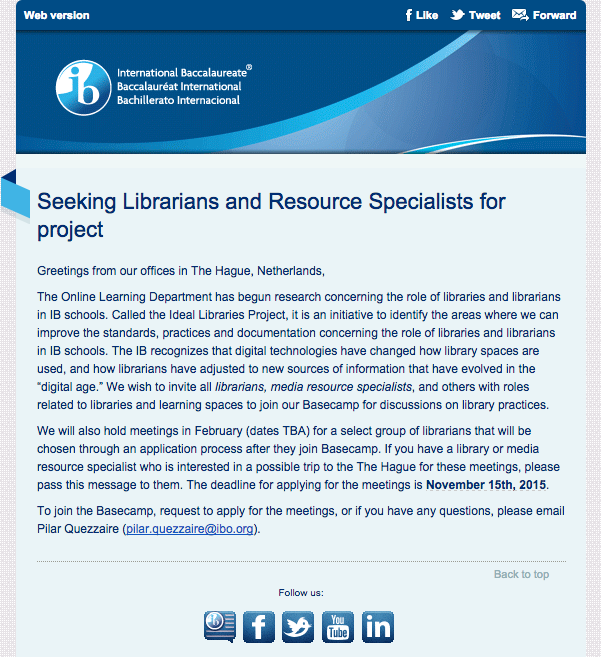
But how do we get out of this loop and spiral upwards?  I’m one of the 407 librarians participating in the “Ideal Libraries Project” of the IBO. Even in that (private) organisation nothing is mandated or agreed around teacher-librarians. Yes there are recommendations, but judging by the responses from the cohort the interpretations are wide.
I have meandered far I fear. But to my colleagues in Asian countries I would say, fear not, you are not alone, we too struggle with ratios of 1:1,500 (TL:Students), even in private schools. We too would like to feel our voices are heard and that literacies are integrated into the curriculum.  But I think there is hope, if we can just get out of this quick-sand – perhaps when the hype around EdTech and Makerspaces is over we will have our turn – or perhaps it is time to rise up and take a seat at the table, because it is not about us. It’s about sending literate people out into the world, and we can’t faff around the edges and not send fully multi-literate students out into the world.
Why can’t a library?

Be more like a store (with apologies to Frederick Loewe & Alan Jay Lerner)?

And if it were a store, what kind of store would it be? Please don’t say bookstore, because even though we apparently love them, they’re dying and going out of business. Except for those that evolve beyond books, earn the respect of customers, get into their communities, incorporate new ideas such as subscription services, “reading spas”, bibliotherapy, cafes, events and festivals with authors and celebrities (Butler, 2014).

The bookstore

Yet many libraries are adopting the bookstore model, by genre-fying their collection, ensuring that titles are front facing, having multiple copies of popular books (Day, 2013; Kindschy, 2015).

Even as many libraries have a huge online presence which they work hard at making visible to their clients through a wide variety of means including signage, display, print-outs, screens, bookmarks, social media etc. people like David Weinberger, are still implying that libraries are missing a trick while Gopnik laments “By atomizing our experience to the point of alienation—or, at best, by creating substitutes for common experience (“you might also like…” lists, Twitter exchanges instead of face-to-face conversations)—we lose the common thread of civil life” (Gopnik, 2015).

The fashion store

A few months ago, I had the most horrendous shopping experience – my son insisted that I accompanied him to an A&F store. Only after reading this article do I “get” why it was so awful.  The whole point of the loud music and low lights is to keep the wrinkly parentals OUT of the store, not to entice them in. There are those who lament that as libraries become more inclusive, more multifunctional hybrid spaces they are going the same way – keeping out the very people who have the need for scholarly quiet space (Miller, 2013; West, 2013).


On the other end of the spectrum, one has the Burberry model (Bath, 2014; Davis, 2014; Williams, 2014). Where there is seamless integration between the online and offline experience, which may go some of the way in addressing Weinberger’s concerns. What we are looking for is the omnichannel “an experience that takes consumers from their current channel of choice and seamlessly chaperones them within an uninterrupted brand experience through digital and physical worlds without the customer being consciously aware or concerned about where one channel started and the other finished” (Bath, 2014, para. 8).

The Grocery Store / kitchen

Joyce Valenza also uses a store metaphor “We need to stop thinking of the library as a grocery store a place to get stuff and start thinking of it as a kitchen a place to make stuff” (cited in Johnson, 2013). Further in the same article, referring to the mission of libraries, Johnson states “The library’s resources have changed, but not its mission: teaching people to effectively access information to meet their needs. The emphasis has shifted from teaching learners how to find and organize information to teaching them how to evaluate and use information” (2013, p. 85)
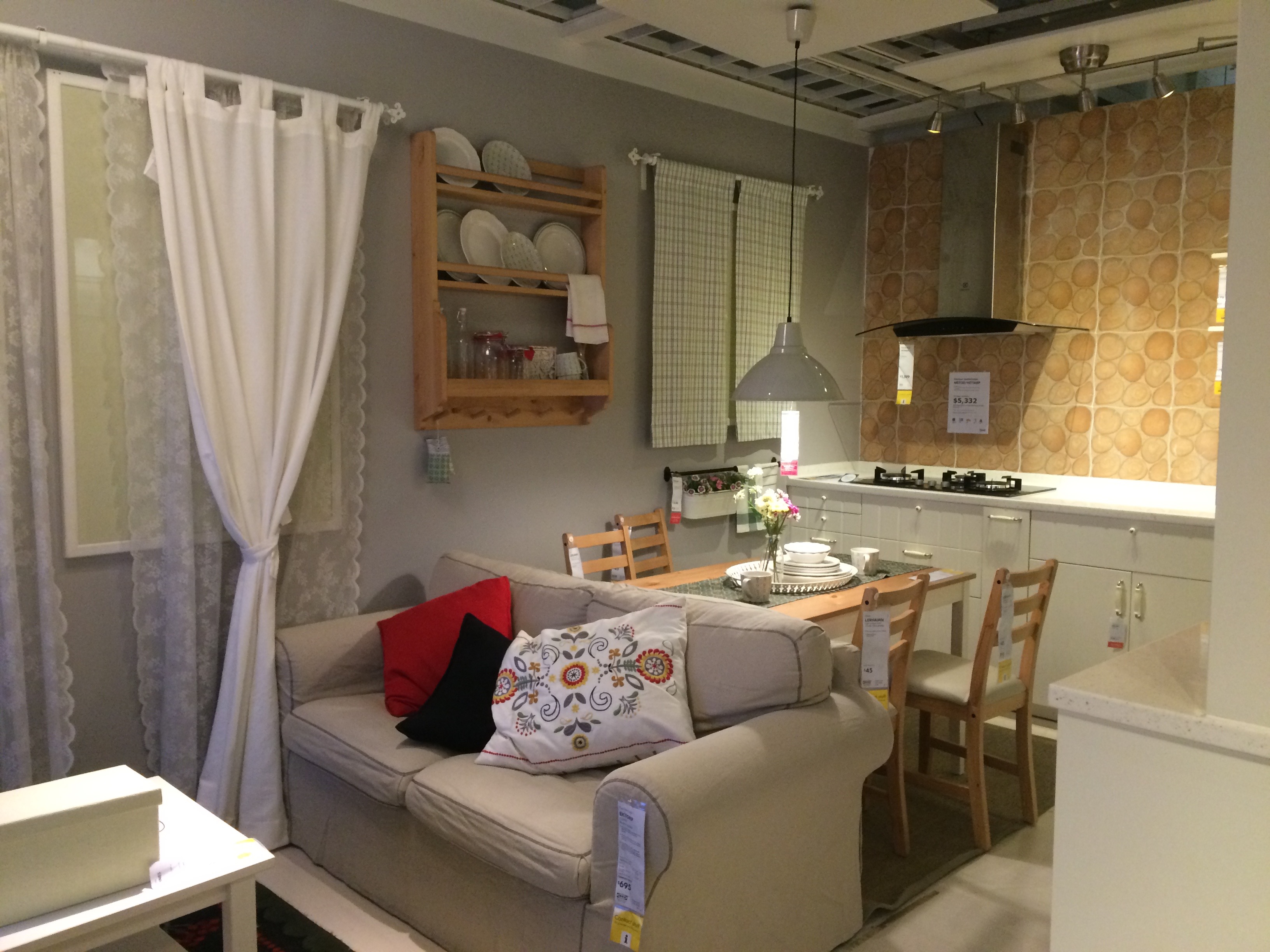
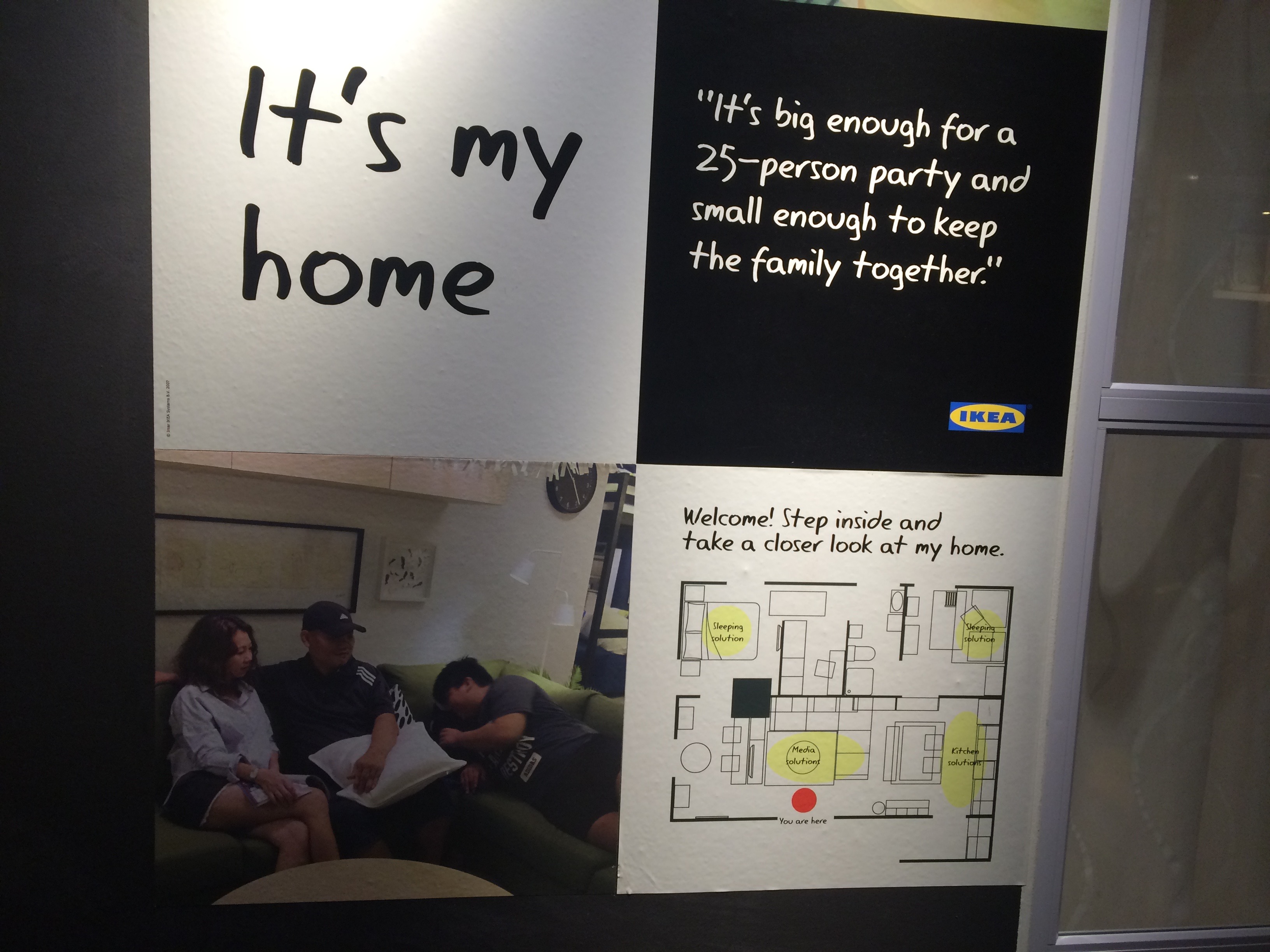
Strolling through Ikea yesterday on a mission to have a look at the design elements for a different assignment, I suddenly realised it had many elements and features that could be incorporated into a library.

Ikea

A couple of things work in the Ikea model:

  • It’s practically impossible to leave without buying something
  • Your route is determined by the store layout
  • Clear signage and explanations
  • The incorporation of demo-rooms and demo-apartments shows you how you can use what the store can offer – visualizing and envisaging
  • A price point where decision making is easy (Carlyle, 2015)
  • Few of the products are “ready to use” without customer engagement (assembly)
  • Trends of users and society are researched and analyzed (IKEA, 2012)
  • Extreme users can hack the basics and go beyond to create to meet their own needs – and share their experience / learning with others (IKEAHackers.net, 2014; Mars, 2014; McGauley, 2015).


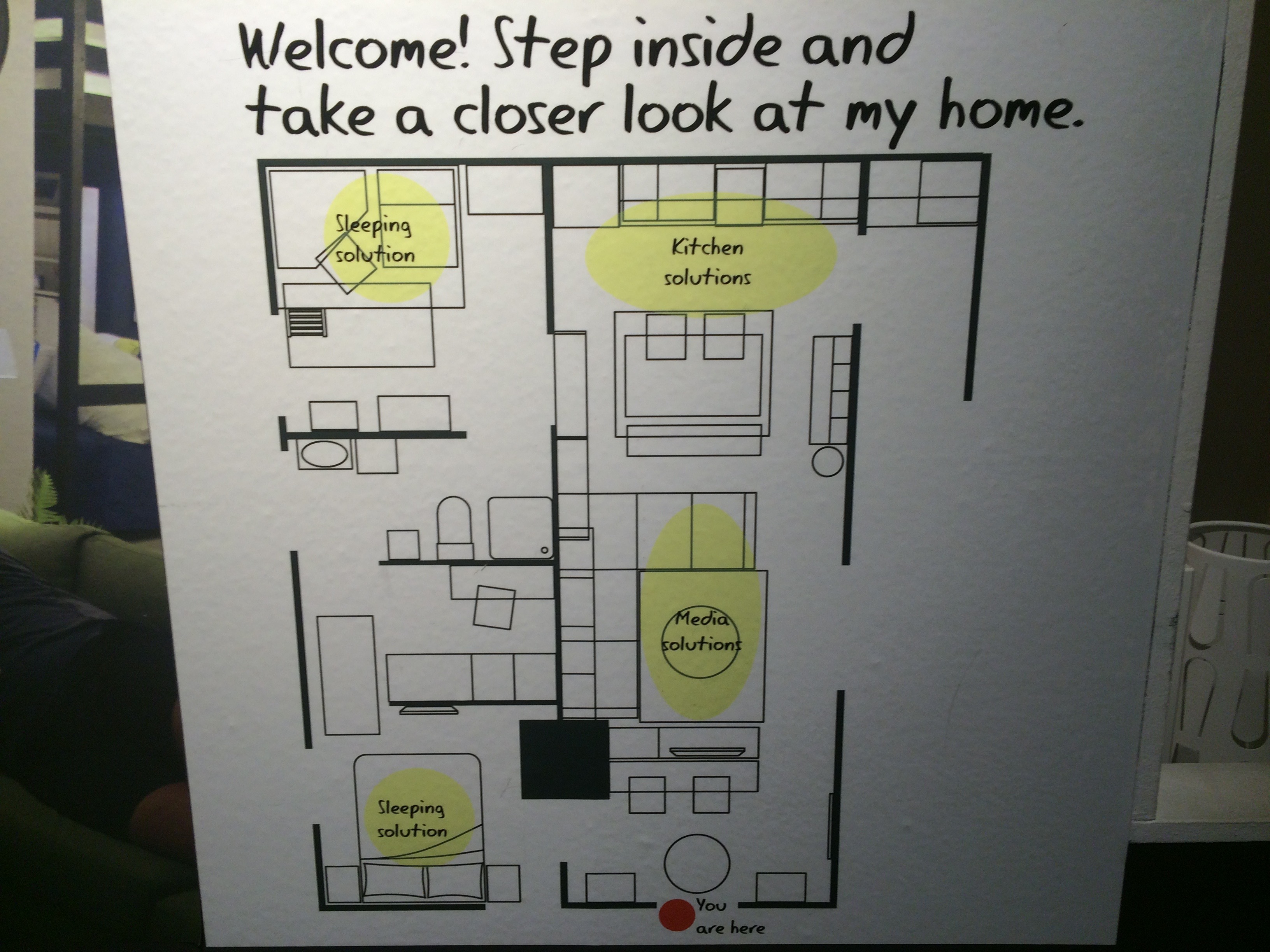
One of the things that struck me yesterday was that in addition to the traditional layout idea of “bedroom, living room, kitchen, bathroom” the signage in the demo-apartments referred to “solutions” as in “kitchen solutions, media solutions and sleeping solutions”, which is somewhat contradictory to the trends identified in the report by IKEA, that indicated a move towards hybrid functional spaces defined more by whether people wanted solitude or company than by their traditional function (IKEA, 2012).


IMG_0438
Full demo-apartment

IMG_0432
Floor plan

IMG_0434
Solution spaces configuration 1

IMG_0433
Solution spaces configuration 2

IMG_0439
Clear signage and explanations

IMG_0457
Instructions for self-packaging

But I like the idea of “solution” spaces. Especially for a library. It fits in a bit with the “campfire / watering hole / cave” ideas of Thornburg (2007) but I don’t think that goes far enough in providing users solutions for their learning needs. Yes it does allow for a variation in pace and intensity and communal versus individual effort, and facilitates knowledge gathering through listening, collaboration or research but are these solution spaces? I’d argue they aren’t. That’s not to say we haven’t by accident or design created solution spaces in the library. Thinking to the user needs in the secondary library where I worked:

  • Finding books to read for pleasure at the right interest / ability level
  • Hanging out with friends in an air-conditioned space (we live in the tropics!)
  • Having a “third space” that wasn’t home or classroom
  • Playing games (on-line and physical)
  • Lounging around reading dip-in dip-out books such as comics, graphic novels and poetry
  • Mother tongue resources
  • Resources – physical and online for school units or assignments
  • Resources – physical and online for personal questions or interests
  • Information literacy / literacy assistance for completing assignments to a high standard including academic honesty and scholarly value added.
  • ? more that I’ve not thought of at the moment.


With respect to the library space, I think we met most of the needs in a satisficing way given the constraints of space, resources and person-power. But I’d argue that if we were to combine the concepts of the omnichannel with solution spaces after careful observation and involvement of our users we could go so much further. Perhaps our library guides should have “hacking your grade 7 middle ages assignment” or “hacking citations”? Perhaps we should have a research zone where online and offline is seamlessly integrated with signage and demo-products?


These thoughts are in their infancy for me, somewhat half-formed and not “quite there” and I’d appreciate further comments and ideas and examples of where you’ve done this.

 References:

Bath, O. (2014, May 16). The Burberry model: why blending online and offline boosts success [Web Log]. Retrieved August 2, 2015, from http://wallblog.co.uk/2014/05/16/the-burberry-model-why-blending-online-and-offline-boosts-success/

Butler, S. (2014, February 21). Independent bookshops in decline as buying habits change [Newspaper]. Retrieved July 26, 2015, from http://www.theguardian.com/books/2014/feb/21/independent-bookshops-campaign

Carlyle, R. (2015, May 1). The secret of Ikea’s success [Newspaper]. Retrieved August 2, 2015, from http://www.express.co.uk/life-style/life/560828/Ikea-history-Swedish-furniture-design

Davis, S. (2014, March 27). Burberry’s Blurred Lines: The Integrated Customer Experience [Newspaper]. Retrieved August 2, 2015, from http://www.forbes.com/sites/scottdavis/2014/03/27/burberrys-blurred-lines-the-integrated-customer-experience/

Day, K. (2013, November). Liberate your book cupboards and create a more true “bookstore” model in your school library? [Web Log]. Retrieved July 26, 2015, from http://www.thelibrarianedge.com/libedge/2013/11/liberate-your-book-cupboards-and-create.html

Gopnik, A. (2015, June 12). When a Bookstore Closes, an Argument Ends – The New Yorker [Newspaper]. Retrieved July 26, 2015, from http://www.newyorker.com/news/daily-comment/when-a-bookstore-closes-an-argument-ends

IKEA. (2012). What goes on behind closed doors – Life at home in the UK (p. 23). United Kingdom. Retrieved from http://www.ikea.com/ms/en_GB/img/site_images/about_ikea/PDF/What%20goes%20on%20behind%20closed%20doors_Report_Spreads.pdf

IKEAHackers.net. (2014). IKEA Hackers – Clever ideas and hacks for your IKEA. Retrieved August 2, 2015, from http://www.ikeahackers.net/

Johnson, D. (2013). Power Up! The New School Library. Educational Leadership, 71(2), 84–85. Retrieved from http://www.ascd.org/publications/educational-leadership/oct13/vol71/num02/The-New-School-Library.aspx

Kindschy, H. E. (2015, January 13). Time to Ditch Dewey? Shelving Systems that Make Sense to Students (Learning Commons Model, Part 4) [Web Log]. Retrieved July 26, 2015, from http://www.clcd.com/blog/?p=186

Mars, R. (2014, August 19). Hacking IKEA [Podcast]. Retrieved August 2, 2015, from http://99percentinvisible.org/episode/hacking-ikea/

McGauley, J. (2015, February 19). Easy IKEA Hacks For Your Apartment – Best DIY Projects [Web Log]. Retrieved August 2, 2015, from http://www.supercompressor.com/home/easy-ikea-hacks-for-your-apartment-best-diy-projects

Miller, L. (2013, January 31). Bring back shushing librarians [Newspaper]. Retrieved August 2, 2015, from http://www.salon.com/2013/01/31/bring_back_shushing_librarians/

Thornburg, D. (2007, October). Campfires in cyberspace: Primordial metaphors for learning in the 21st Century. TCPD. Retrieved from http://tcpd.org/Thornburg/Handouts/Campfires.pdf

West, P. (2013, November 20). Libraries: a plea from a silence seeker [Newspaper]. Retrieved August 2, 2015, from http://www.spiked-online.com/newsite/article/libraries_a_plea_from_a_silence_seeker/14317#.Vb2l6JOqqko

Williams, G. (2014, March 19). Why the online/offline split no longer matters [Newspaper]. Retrieved August 2, 2015, from http://www.wired.co.uk/magazine/archive/2014/03/features/ecommerce-is-history

Critical Reflection ETL401

In this course, what I have learnt in the library and information sphere is now placed in the context of the school library, which is where I hope to further my career. In doing so it has clarified and added detail to concepts such as the role of the teacher librarian (TL) and information literacy (IL), while making me aware of what I don’t know much about – particularly in the area of curriculum and learning theories. As such, I am in a slightly stronger position meta-cognitively in ‘knowing what I don’t know’ (Morris, 2010). The comments of my fellow students and the course co-ordinator in the online fora, who come from a teaching background have been invaluable in this respect.


The role of the teacher librarian is complex, multi-faceted and dependent on the school context – which I explored in my first blog post (Bailey, 2014). As I work in a large K-12 international school means that some of the roles are assumed by or shared with the literacy and digital literacy coaches, leading to the need for constant collaboration and partnership not only with classroom teachers, school leadership and administrators but also these coaches.


Evidence and accountability in our role is something I would like to explore further in my work, particularly as we start up new initiatives such as classroom libraries and continue existing work in creating library pathfinders and co-teaching in some humanities models. In this way we can ensure that we are strategic in our time and resource planning to optimise our efficacy.


One of the main themes of this course has been information literacy, where we were introduced to the main thought leaders in this area, including Kuhlthau (2010; 2012a, 2012b, 2012c), Herring (2011; Herring, Tarter, & Naylor, 2002), and Eisenberg (2008; Wolf, Brush, & Saye, 2003). While many of the models of information literacy focus on the scaffolding of skills, information literacy can be seen as having four dimensions: cognitive (skill based); meta-cognitive (reflective); affective (positive and negative emotions); and the socio-cultural, including digital citizenship and ethical use of information (Kong & Li, 2009; Kuhlthau, 2013; Waters, 2012). This, and the question of transferability is something I explored in my blog discussing why information literacy is more than a set of skills (Bailey, 2015b). Literacy convergence and the 21st Century learner are valid realities that rethink the ambit of literacy in an information society that doesn’t only rely on text, and has expectations for learners that go beyond the personal consumption of information to contributing to using knowledge for personal or social transformation (Bailey, 2015a). However they can also be used as buzz words that can obfuscate the essence of information literacy irrespective of the medium used for access and dissemination of information (Crockett, 2013).


Learning naturally goes on outside the (virtual) classroom, and I have learnt a considerable amount through attending TL conferences, work shares, knowledge exchange workshops and conversations with my peers and more experienced TLs. One such conversation led to me investigating the fascinating concept of Threshold Concepts, particularly as it relates to information literacy (Hofer, Townsend, & Brunetti, 2012; Tucker, Weedman, Bruce, & Edwards, 2014). Although most research is currently in tertiary education (Flanagan,2015) I would like to explore which concepts would be relevant for our students and at what level we could introduce them and the most effective activities to do so. I’d also like to investigate assessment tools to aid us in pinpointing the problematic concepts in new students who have not come through the Guided Inquiry process of the school.


Our collaboration is not just with students, teachers and administrators but also parents who are often the ones picking up the slack and tasked with helping frustrated children with assignments or homework (Hoover‐Dempsey et al., 2005; Kong & Li, 2009). I have started doing some outreach to parents through co-ordinating our parent volunteer program, and marketing our online resources but realise I can do far more in educating parents in IL concepts and how best to continue scaffolding these concepts at home and making them aware of how our resources can aid them in this process.


One of the most valuable parts of this course was gaining an understanding of my own learning including cognitive and affective processes in the past two years and reflecting on my attempts to go through this process effectively unscaffolded, relying on instinct and common sense! Perhaps my learning would have been more efficient and effective if I’d known this all at the start, but certainly now I will be better at passing on the knowledge and experience to my students and children.


References:

Bailey, N. (2014, December 7). ETL401 Blog Task 1: The role of the TL in schools [Web Log]. Retrieved January 24, 2015, from http://thinkspace.csu.edu.au/informativeflights/2014/12/07/etl401-blog-task-1-the-role-of-the-tl-in-schools/

Bailey, N. (2015a, January 4). The role of the TL in practise with regard to the convergence of literacies in the 21st Century [Web Log]. Retrieved January 24, 2015, from http://thinkspace.csu.edu.au/informativeflights/2015/01/04/the-role-of-the-tl-in-practise-with-regard-to-the-convergence-of-literacies-in-the-21st-century/

Bailey, N. (2015b, January 18). Blog task 3: Information Literacy is more than a set of skills [Web Log]. Retrieved January 24, 2015, from http://thinkspace.csu.edu.au/informativeflights/2015/01/18/blog-task-3-information-literacy-is-more-than-a-set-of-skills/

Crockett, L. (2013, February 28). Literacy is NOT Enough: 21st Century Fluencies for the Digital Age [Streaming Video]. Retrieved January 4, 2015, from https://www.youtube.com/watch?v=N8DEeR1sraA

Eisenberg, M. B. (2008). Information Literacy: Essential Skills for the Information Age. DESIDOC Journal of Library & Information Technology, 28(2), 39–47.

Flanagan, M. (2015, January 21). Threshold Concepts: Undergraduate Teaching, Postgraduate Training and Professional Development. A short introduction and bibliography [Website]. Retrieved January 25, 2015, from http://www.ee.ucl.ac.uk/~mflanaga/thresholds.html

Herring, J. E. (2011). Assumptions, Information Literacy and Transfer in High Schools. Teacher Librarian, 38(3), 32–36.

Herring, J. E., Tarter, A.-M., & Naylor, S. (2002). An evaluation of the use of the PLUS model to develop pupils’ information skills in a secondary school. School Libraries Worldwide, 8(1), 1.

Hofer, A. R., Townsend, L., & Brunetti, K. (2012). Troublesome Concepts and Information Literacy: Investigating Threshold Concepts for IL Instruction. Portal: Libraries and the Academy, 12(4), 387–405. doi:10.1353/pla.2012.0039

Hoover‐Dempsey, K. V., Walker, J. M. T., Sandler, H. M., Whetsel, D., Green, C. L., Wilkins, A. S., & Closson, K. (2005). Why Do Parents Become Involved? Research Findings and Implications. The Elementary School Journal, 106(2), 105–130. doi:10.1086/499194

Kong, S. C., & Li, K. M. (2009). Collaboration between school and parents to foster information literacy: Learning in the information society. Computers & Education, 52(2), 275–282. doi:10.1016/j.compedu.2008.08.004

Kuhlthau, C. C. (2013, October). Information Search Process [Website]. Retrieved from http://comminfo.rutgers.edu/~kuhlthau/information_search_process.htm

Kuhlthau, C. C., & Maniotes, L. K. (2010). Building Guided Inquiry Teams for 21st-Century Learners. School Library Monthly, 26(5), 18.

Kuhlthau, C. C., Maniotes, L. K., & Caspari, A. K. (2012a). Assessment in guided inquiry. In Guided inquiry design: a framework for inquiry in your school (pp. 111–131). Santa Barbara, California: Libraries Unlimited.

Kuhlthau, C. C., Maniotes, L. K., & Caspari, A. K. (2012b). Guided inquiry design: a framework for inquiry in your school. Santa Barbara, California: Libraries Unlimited.

Kuhlthau, C. C., Maniotes, L. K., & Caspari, A. K. (2012c). The research behind the design. In Guided inquiry design: a framework for inquiry in your school (pp. 17–36). Santa Barbara, California: Libraries Unlimited.

Morris, E. (2010, June 20). The Anosognosic’s Dilemma: Something’s Wrong but You’ll Never Know What It Is (Part 1). Retrieved February 4, 2014, from http://opinionator.blogs.nytimes.com/2010/06/20/the-anosognosics-dilemma-1/?_php=true&_type=blogs&_php=true&_type=blogs&_r=1

Tucker, V. M., Weedman, J., Bruce, C. S., & Edwards, S. L. (2014). Learning Portals: Analyzing Threshold Concept Theory for LIS Education. Journal of Education for Library and Information Science, 55(2), 150–165.

Waters, J. K. (2012, September 4). Turning Students into Good Digital Citizens. Retrieved January 2, 2015, from http://thejournal.com/Articles/2012/04/09/Rethinking-digital-citizenship.aspx

Wolf, S., Brush, T., & Saye, J. (2003). The Big Six Information Skills As a Metacognitive Scaffold: A Case Study. School Library Media Research, 6, 1–24. Retrieved from http://www.ala.org/aasl/sites/ala.org.aasl/files/content/aaslpubsandjournals/slr/vol6/SLMR_BigSixInfoSkills_V6.pdf


The Teacher Librarian and multi-lingual environments – an opportunity

 One trend in education that has received limited attention in teacher librarian (TL) literature is the demographic shift in schools to more students with cultural and linguistic diversity. Statistics from the USA, Canada and Australia indicate around one in five students do not speak English – the language of school instruction at home (Australian Bureau of Statistics, 2013; “Canadian Demographics at a Glance: Some facts about the demographic and ethnocultural composition of the population,” n.d.; Center for Public Education, 2012). Data from Sydney University indicates that a national average of 21% disguises local figures at some (particularly state) schools with a range of 50-90% (Ho, 2011). International schools catering to an expatriate population are particularly diverse environments.

Practitioner literature generally concerns itself with cultural diversity in materials and the building of a world literature collection in response to student diversity or as part of a language / humanities curriculum (Garrison, Forest, & Kimmel, 2014). Some international or bilingual schools, build a “Languages other than English” (LOTE) collection.  Schools may try to recruit bilingual or minority TLs, or provide training in competencies in multicultural education (Colbert-Lewis & Colbert-Lewis, 2013; Everhart, Mardis, & Johnston, 2010; Mestre, 2009).

Within a school, the main educational and social issues are to ensure students acquire the language of instruction (English) as quickly as possible and adapt to the new learning environment without loss of educational momentum, while maintaining and developing their mother tongue (Kim & Mizuishi, 2014). Even though there is evidence that support and maintenance of mother tongue is the most effective way of scaffolding such students, schools place most of their effort and resources on English acquisition (Carder, 2007; Cummins, 2001, 2003).

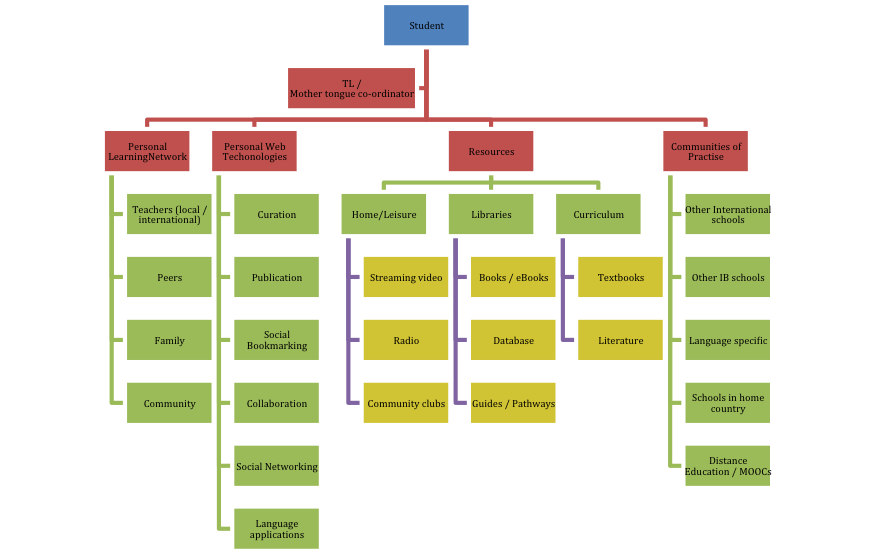
TLs in their own professional development are familiar with the use of geographically dispersed personal learning networks (PLNs) in order to create a personal learning environment (PLE) using a variety technological tools (McElvaney & Berge, 2009; O’Connell, 2014). They also have extensive networks both locally and internationally that can be tapped into. This provides TLs with an ideal opportunity of working with a group of students and teachers in creating their own PLE with a variety of resources, networks and personal web technologies (PWT) both in their mother tongue and the language of instruction.

Figure 1: PLE of an IB self-taught language student

The International Baccalaureate (IB) program allows mother tongue students the option of guided self-study if the school doesn’t offer the language.  Tapping into the experiences and communities of practise (COP) of distance education, massive open online courses (MOOCs), PLNs and PLEs could ameliorate the logistical, resourcing, teaching and learning difficulties of this option unbound by time and geography. A successful pilot scheme with one language group could be rolled out to other groups. Not only will this enhance the reputation of the TL in the school but will also contribute to the schools goals of equity in teaching and resources and ensure support and involvement by the whole school community.

References:

Australian Bureau of Statistics. (2013). Australian Social Trends, April 2013. Retrieved December
14, 2014, from http://www.abs.gov.au/AUSSTATS/abs@.nsf/Lookup/4102.0Main+Features
30April+2013

Canadian Demographics at a Glance: Some facts about the demographic and ethnocultural
composition of the population. (n.d.). Retrieved December 14, 2014, from
http://www.statcan.gc.ca/pub/91-003-x/2007001/4129904-eng.htm

Carder, M. (2007). Bilingualism in international schools: a model for enriching language education.
Clevedon; Buffalo: Multilingual Matters.

Center for Public Education. (2012, May). The United States of education: The changing
demographics of the United States and their schools. Retrieved December 14, 2014, from
http://www.centerforpubliceducation.org/You-May-Also-Be-Interested-In-landing-page-
level/Organizing-a-School-YMABI/The-United-States-of-education-The-changing-
demographics-of-the-United-States-and-their-schools.html

Colbert-Lewis, D., & Colbert-Lewis, S. (2013). The Role of Teacher-Librarians in Encouraging
Library Use by Multicultural Patrons. In C. Smallwood & K. Becnel (Eds.), Library services for
multicultural patrons: strategies to encourage library use
(pp. 73–81). Lanham: The Scarecrow
Press, Inc.

Cummins, J. (2001). Bilingual Children’s Mother Tongue: Why Is It Important for Education?
Retrieved May 27, 2014, from http://iteachilearn.org/cummins/mother.htm

Cummins, J. (2003). Putting Language Proficiency in Its Place: Responding to Critiques of the
Conversational – Academic Language Distinction. Retrieved May 27, 2014, from
http://iteachilearn.org/cummins/converacademlangdisti.html

Everhart, N., Mardis, M. A., & Johnston, M. P. (2010). Diversity Challenge Resilience: School
Libraries in Action. In Proceedings of the 12th Biennial School Library Association of
Queensland
. Brisbane, Australia: IASL.

Garrison, K. L., Forest, D. E., & Kimmel, S. C. (2014). Curation in Translation: Promoting Global
Citizenship through Literature. School Libraries Worldwide, 20(1), 70–96.

Ho, C. (2011). “My School” and others: Segregation and white flight. Australian Review of Public
Affairs
, 10(1). Retrieved from http://www.australianreview.net/digest/2011/05/ho.html

Kim, M., & Mizuishi, K. (2014, December 10). Language and Cultural Differences and Barriers in
an International School Setting – Personal Experiences and Reflections
[Presentation].
UWCSEA-East.

McElvaney, J., & Berge, Z. (2009). Weaving a Personal Web: Using online technologies to create
customized, connected, and dynamic learning environments. Canadian Journal of Learning and
Technology
, 35(2). Retrieved from http://www.cjlt.ca/index.php/cjlt/article/viewArticle/524/257

Mestre, L. (2009). Culturally responsive instruction for teacher-librarians. Teacher Librarian, 36(3),
8–12.

O’Connell, J. (2014). Researcher’s Perspective: Is Teacher Librarianship in Crisis in Digital
Environments? An Australian Perspective. School Libraries Worldwide, 20(1), 1–19.