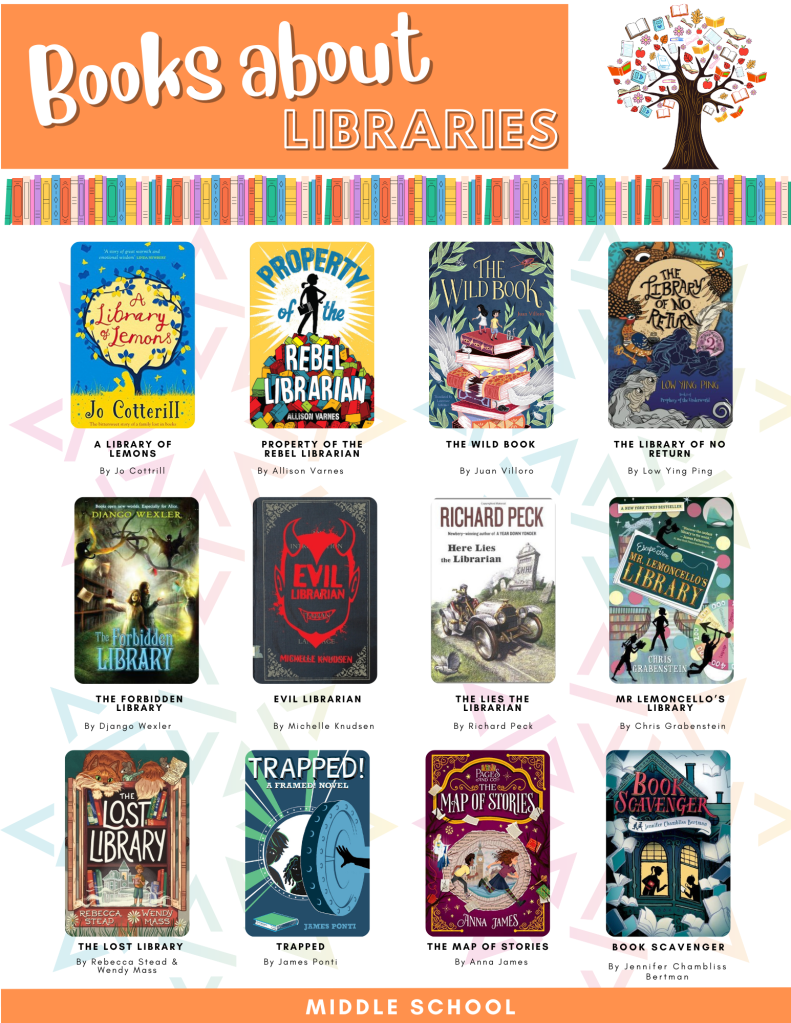
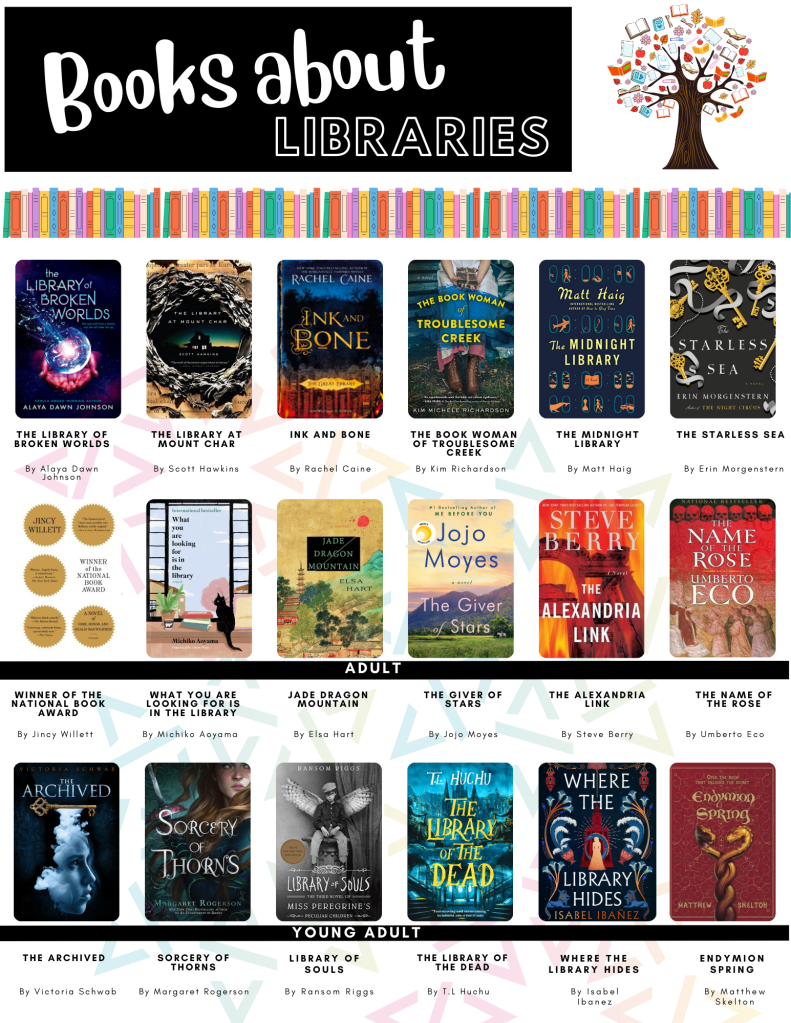
A week ago I walked past a book with “library” in its title and thought – that’s what I need – some books about libraries and librarians, and so I came up with these that are in our collection. Enjoy and let me know what others should be added.
Of course I also always like a Tom Gauld – his “revenge of the librarians” is a go-to gift to give to special people in my library life …
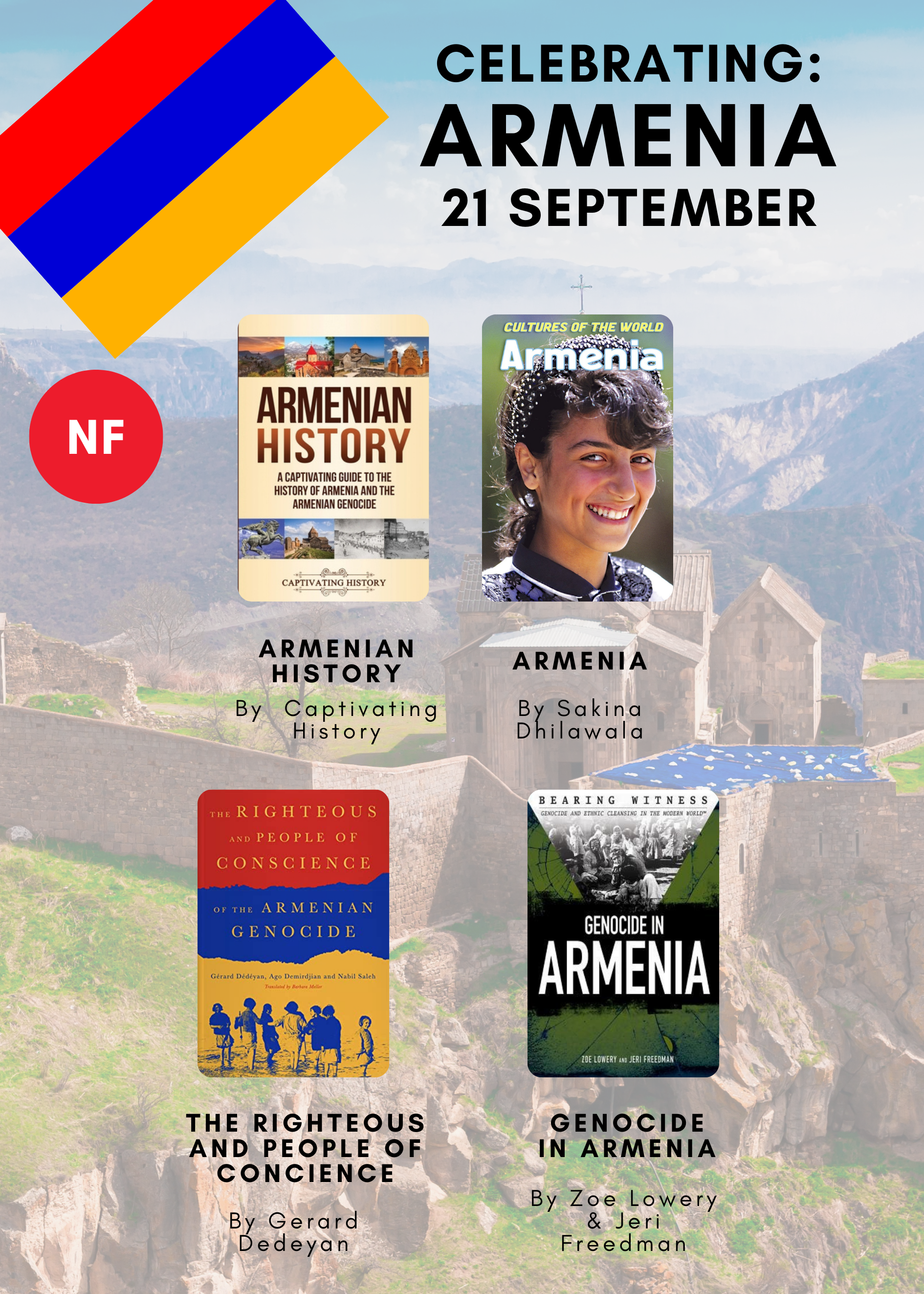
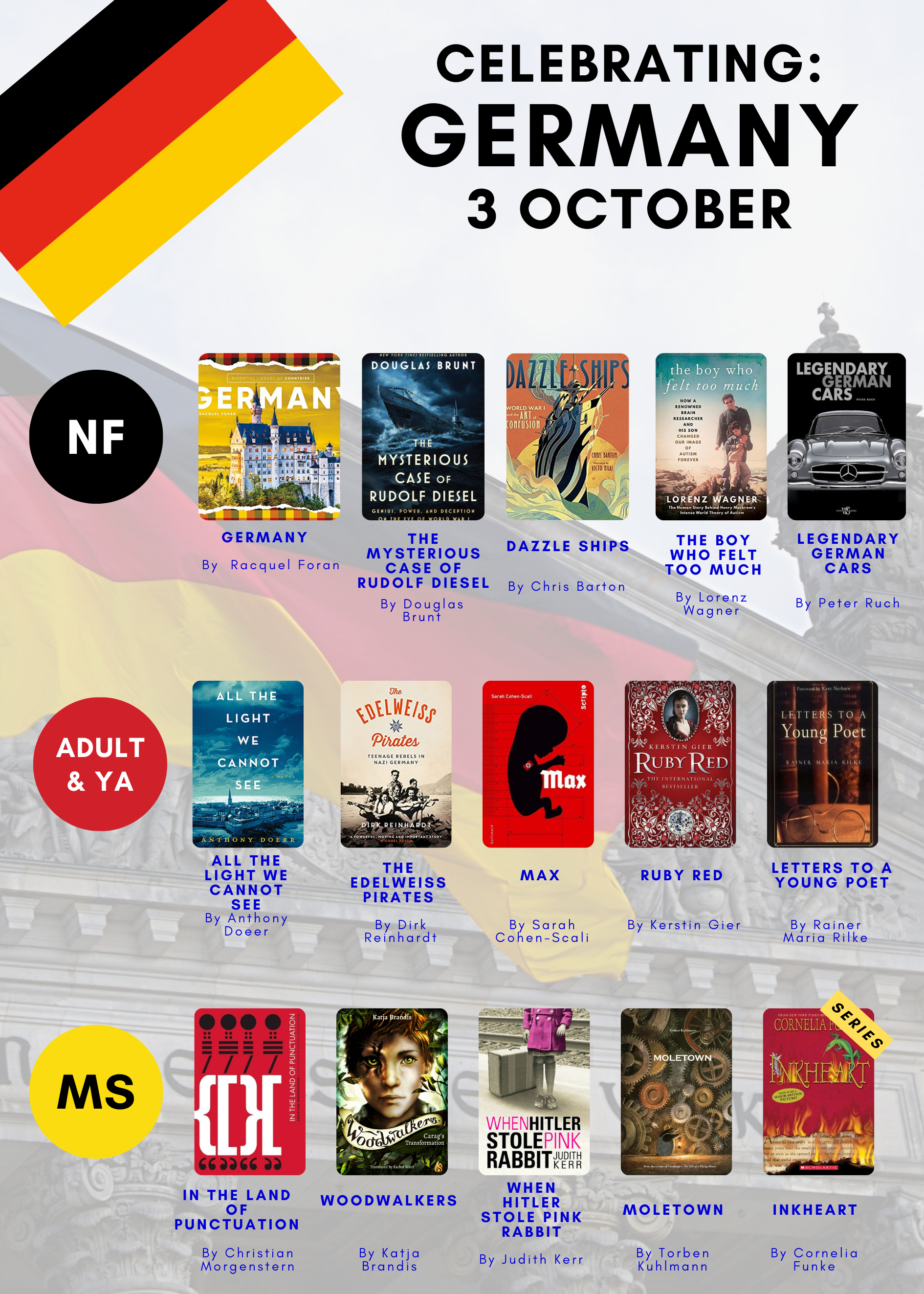
For a while now I’ve been wanting to highlight the curation of books related to the countries and cultures of our students, and finally this year I got around to creating posters “Celebrating xxx” which I post to our school bulletins for students and adults respectively. It’s been a bit of a chicken and egg project – knowing how many students we have from each country / culture – which in itself is truly not as simple a task as it may appear. We use the proxy of first, second and third passports, but as anyone who lives internationally knows, life is a tangle of multiple strands with immigration, migration, expatriation, languages, refugees, fleeing and arriving, births and marriages and transferences and identities. So in the last two years, using this list I’ve been scouring book lists, book catalogues, recommendations, book prizes to where we finally have, for most of the countries with more than 2 students, at least a couple of books besides a travel guide.
A couple of books. How easy that rolls of the tongue. But anyone with a conscience and an iota of empathy will know that that is another potential landmine. I have carried shame for my country of birth, South Africa, for decades, and still often have trouble admitting to its citizenship since I still feel the personal burden of all the wrongs committed by people of my race. It is right that a representative sampling of literature of my country includes reference, analysis and depictions of the pain and despair that apartheid has wrought. But that is not all we are as a nation and people.
I have not yet made the list for South Africa. But that was the dilemma I faced when curating the poster for Germany. A country with a 1000 years of literature beginning with the Nibelungenlied. Whose literature I studied in translation at UCT while ignoring my true passions suppressed doing a commerce degree. Yet looking at the books we have in the library, it appears that the war years, in particular the second world war, and specifically the war atrocities, is the primary lens through which our students form their Germanic world view. Again, it is right and proper that authors, beginning with people like Günter Grass, who, in his time was vilified for daring to address the near past, should shine a light on a terrible past. But that is not all by which they should be known. And more than anything students need to become aware of nuance. By the realisation that it is possible to hold two opposing views in one’s mind simultaneously. And if not through literature, how will they learn that? How sad is it too, that all the books we have about Armenia are about the genocide?
So far I have received nothing but gratitude from our community for both curating / purchasing these books and highlighting them as their national days come by. It is I who is filled with doubt and desire to be able to offer more. And despair that in many cases there isn’t more as countries are ravaged by war and poverty – at times literally with bombs and other times with the devastation of censorship, cultural and monetary poverty and lack of access to publishing and translation of the words that need to be heard by their people, its diaspora and the rest of the worlds children and young adults / adults. We deserve more than the “lonely planet” and “countries of the world” as nice as it is to at least have that.
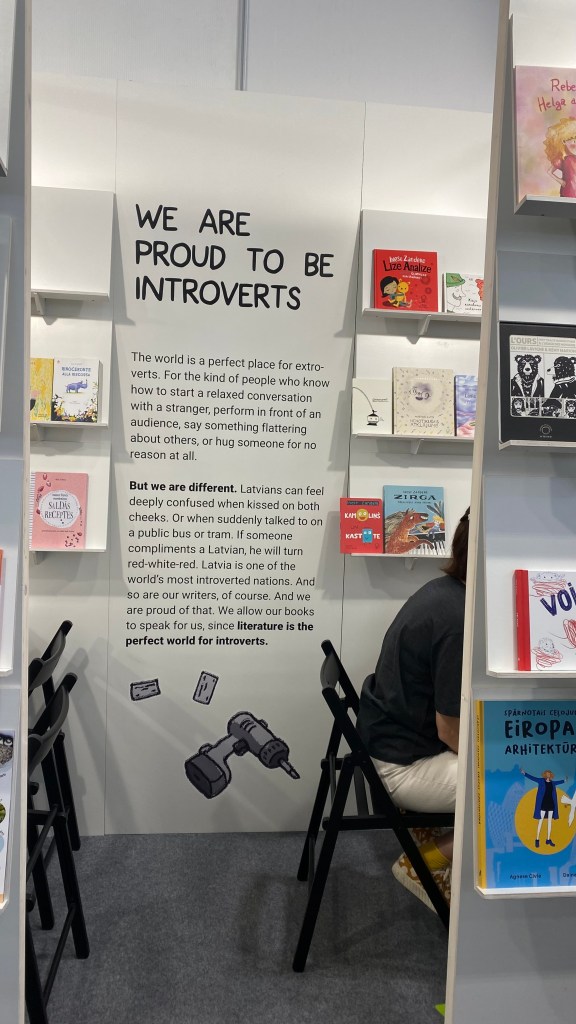
One of my book related highlights this year was being able to attend the Bologna Children’s Book Fair in April 2024. It’s been on my radar for years and the fact it took place during our school vacation and I could join a bunch of fellow librarians who were similarly disposed made it less of a “thing” to attend. For I am not fond of very large crowds in overwhelmingly big exhibition spaces (thank heavens for the Latvians who are proud to be introverts and celebrated that in their stand!) . Below are a few of my thoughts on the event.
The place of librarians
I’m not sure how to say this politely, but, like any other system, the publishing world for children is its very own special little ecosystem – this being the European version – I guess a kind of sub-species of the dominant USA version, where of course all the neighbours and relatives were free to join. Don’t get me wrong, I’m happy where-ever books and reading are celebrated, but I was quite fiercely put in my place during one of the sessions “PISA IN BOLOGNA. HOW TO FIGHT LOW READING SKILLS”. After the session – not during (I would not have dared) I asked the moderator Daan Beeke, Network Manager EURead, Stichting Lezen, how it could be that libraries and librarians were not mentioned once during the whole panel session and I was rebuked for thinking that this event was for anyone but publishers and marketers for the sales of books. Bam. And there I was thinking that us librarians were at the forefront of encouraging reading and fighting low reading skills. Or maybe could it be that there is a correlation between low reading skills and lack of support and funding for public and school libraries? Just maybe?
The place of the environment
I was extremely happy to see that “the environment” was featured prominently both in the exhibition spaces and on the event programme.
The events: “READING FOR A HEALTHY PLANET: INSPIRING CHILDREN’S BOOKS TO HELP ACHIEVE A SUSTAINABLE FUTURE” organised by the United Nations, and “UTILIZING STORYTELLING IN PRODUCT, MEDIA, PUBLISHING AND CONTENT TO CATALYSE SOCIAL AND ENVIRONMENTAL CHANGE” moderated by Helena Mansell-Stopher of Products of Change, and “SEA OF STORIES”
For 2024 the Special Category for the “BolognaRagazzi Award” was THE SEA. WINNER: Gianumberto Accinelli, Giulia Zaffaroni, Giù nel blu – Dalla superficie agli abissi: viaggio sottomarino sfogliabile. Nomos Edizioni, Italy, 2021 SPECIAL MENTIONS Antoine Guilloppé, Pleine Mer. Gautier-Languereau, France, 2018 Masakatsu Shimoda, 死んだかいぞく (The Dead Pirate). Poplar Publishing, Japan, 2020
One thing that super saddened me was that the whole event didn’t have the environment at the forefront as plastic bottles abounded and I didn’t notice any water fountains or water filling facilities – we brought our own bottles and of course the tap water from the bathrooms is 100% fine, but it would have been wonderful to see the events – in particular the ones on sustainability featuring reusable rather than plastic bottles.
The fair had two events around this topic: “ORIGINS: INDIGENOUS VOICES IN CHILDREN’S BOOKS” Moderator Dolores Prades, Founder, Director and editor, Istituto Emília, Brazil Panel Nat Cardozo, author and illustrator, Uruguay; Adolfo Córdova, author, Mexico; Jason Low, publisher and Co-owner, Lee & Low Books, USA; Aviaq Johnston, Inuk author, Canada; Victor D.O. Santos, linguist and children’s books author, Brazil/USA; David Unger, author and translator, Guatemala/USA; Eboni Waitere, Director, Huia Publishers, New Zealand.
The representative of The Indigenous Literacy Foundation (ILF) of Australia who won the prestigious Astrid Lindgren Memorial Award (ALMA) and is the 2024 ALMA Laureate, is a late inclusion on the panel and her discussion at 45.06 of the video below about the work they do, is worth listening to.
and “THE MOST PRECIOUS THING: VICTOR D.O. SANTOS IN CONVERSATION WITH VERA GHENO” – I wish the English publishers had retained “the most precious thing” as a title instead of “what makes us human” – just a personal quibble.
The place of dissent
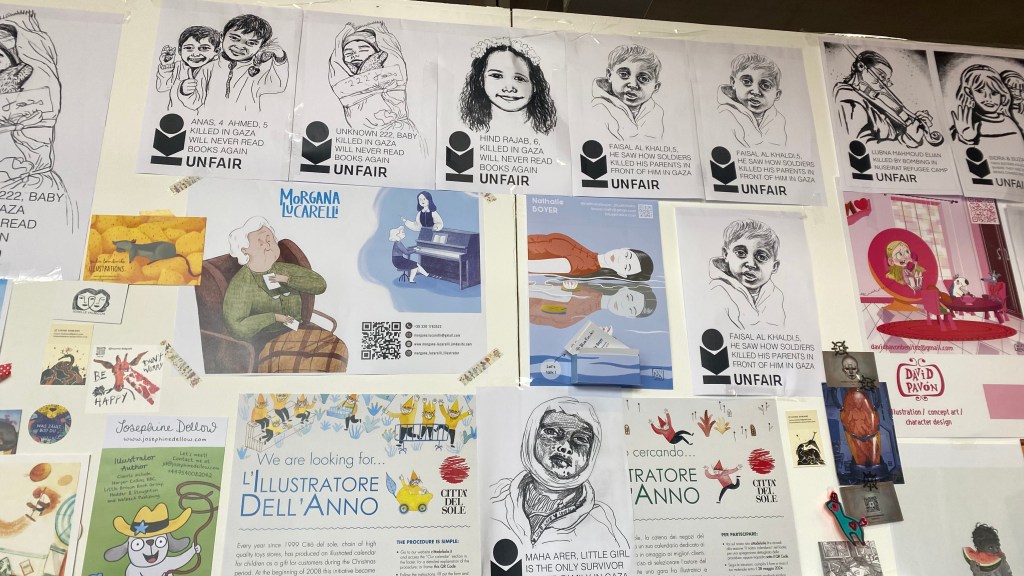
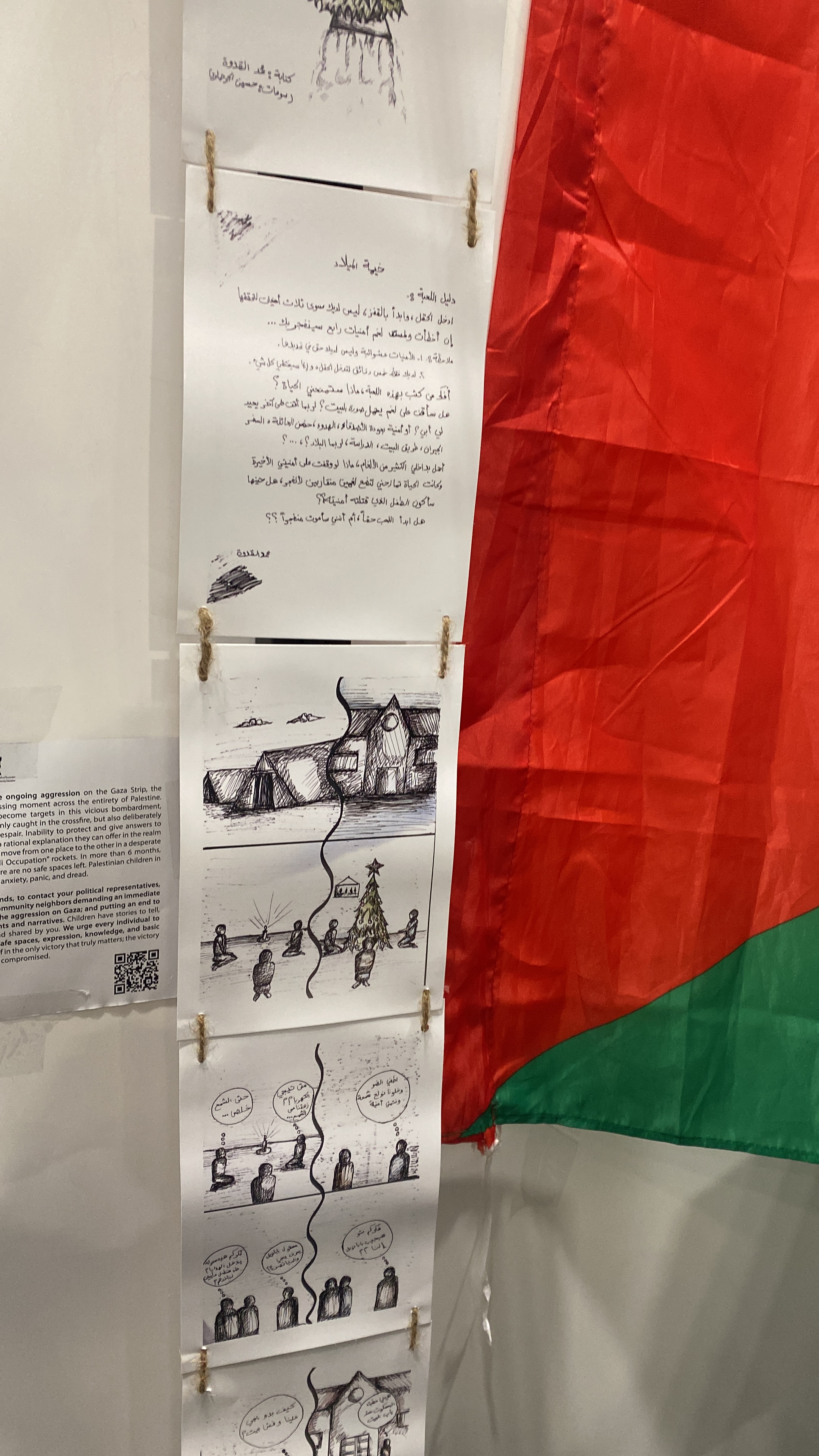
Following the issues around the 2023 LiBeraturpreis which was to be awarded to Adania Shibli, at the Frankfurt book fair last year, I was interested to see how and if dissent and awareness of geo-political issues would be handled in Bologna. There appeared to be a guerilla type of image bombing in the illustrator walls, some of which seemed to appear and disappear. Both Isreal and Palestine had representation.
It saddens me that while children are expected to live and die through wars, they have very little representation and “place” in children’s literature – yet – and what there is still focuses very heavily on the second world war experiences.
I find this type of header in the NYTimes to be quite disturbing “Teaching Young Children About War Without Frightening Them – Four new picture books tackle the subject in sensitive, reassuring ways.” I literally have no words about how insensitive that heading is.
I’ll write a whole separate blog on this some time – in the meantime please have a look at the lists created by Dr. Myra Bacsal on her Gathering Books Blog.
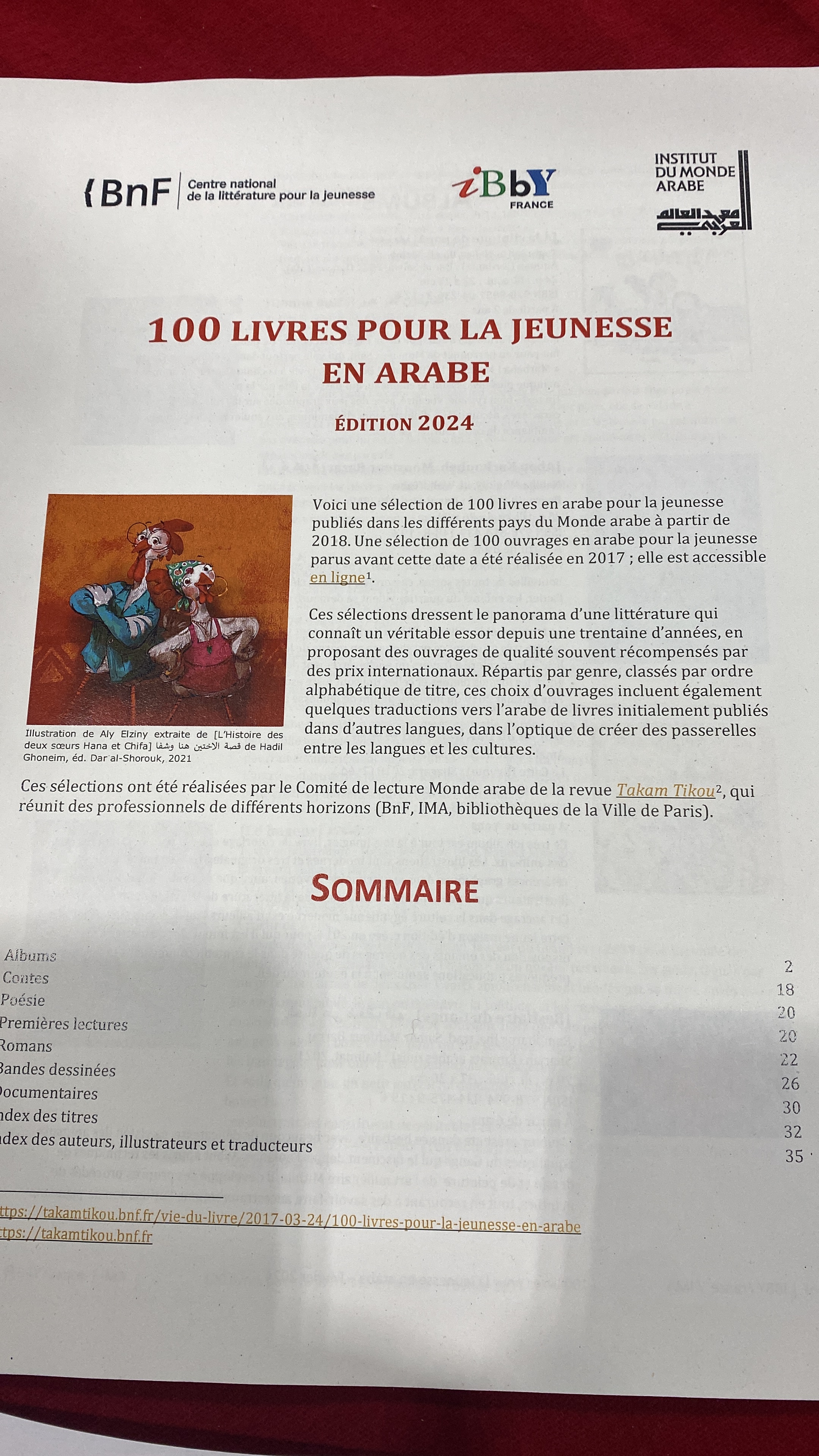
Given my own geo-location at the moment, I was interested to see that IBBY France has created a list of 100 books for young people in Arabic – here’s the link for the English version.
The place for silence
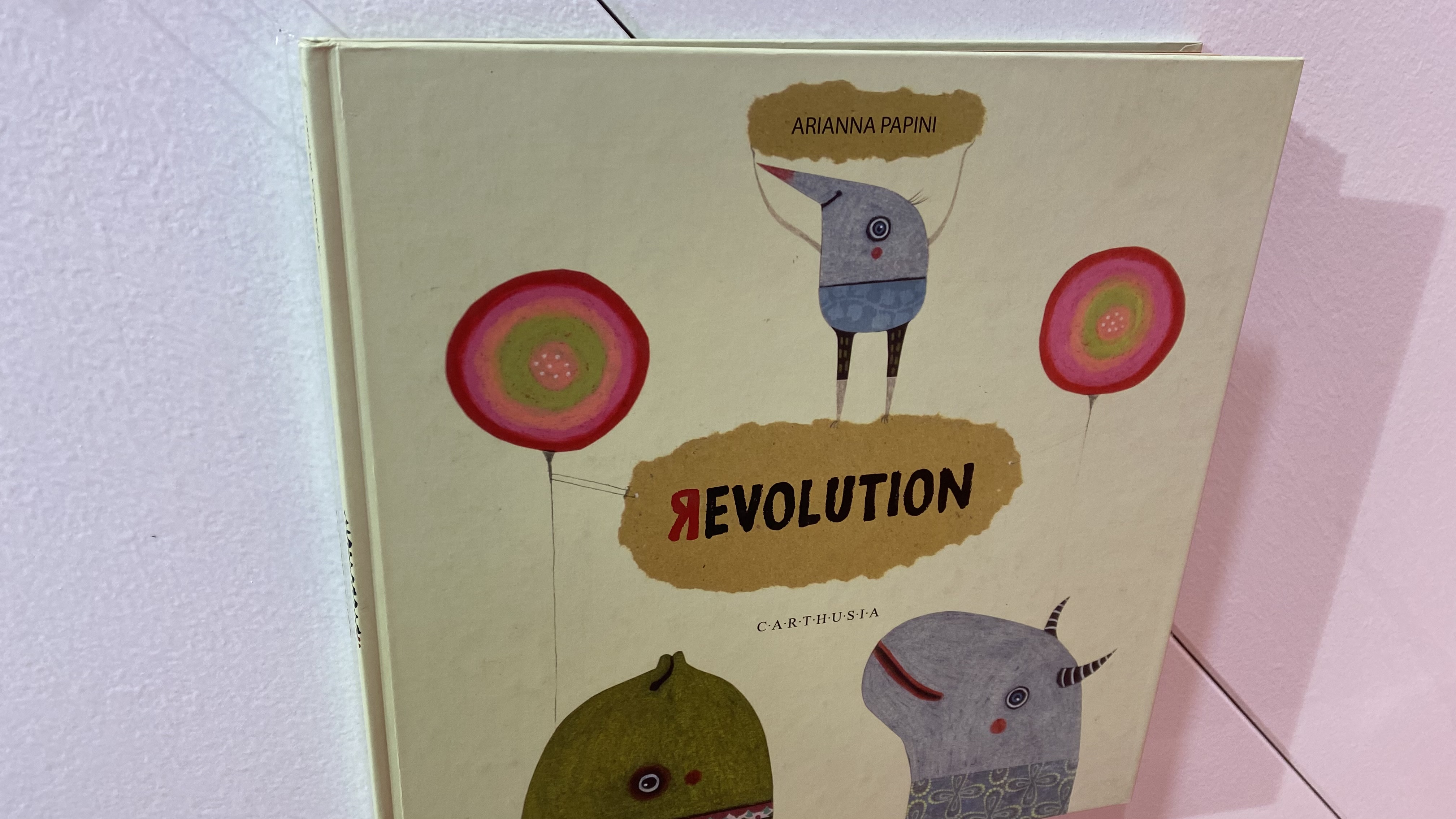
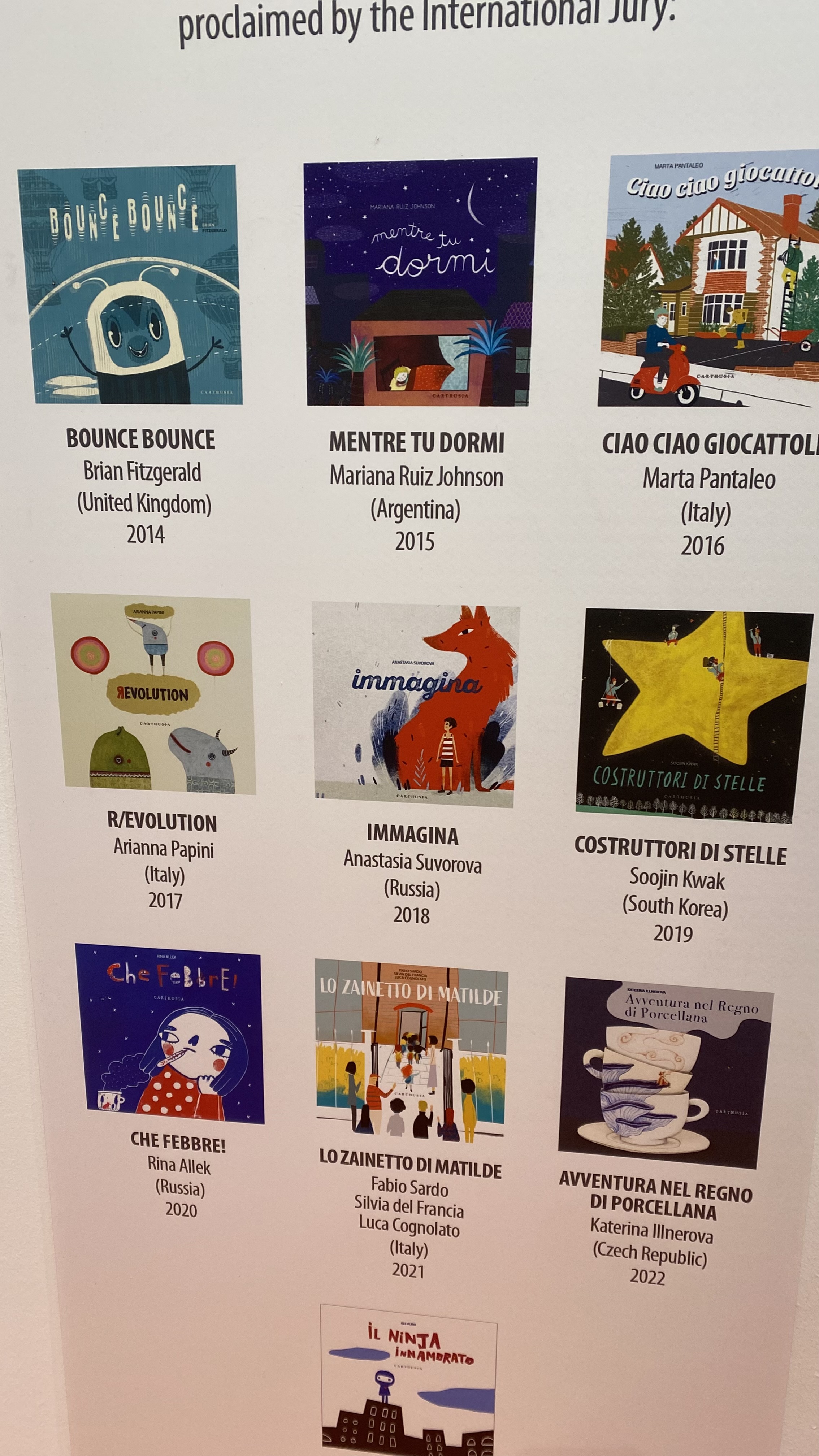
There is a special place in my heart and every library I’ve had the pleasure of working in for “wordless” or “silent” books, and the fair didn’t disappoint in that regard. Of course the highlight is the Silent Book Contest – Gianni De Conno Award and the exhibitions of the artwork around the award, as well as the previous years award winners. These are just the best books to have in your library for accessibility, thought provoking conversations and writing prompts.
Now that you have explored some examples of how libraries and the media make use of RSS to deliver updated information and the applications that can tailor and aggregate feeds for specific users, find two (2) additional examples of ‘RSS in action’, and develop a 350 word post to your OLJ on how RSS can enhance a library or information service’s ability to meet the information needs of its users.
In the library I currently work in we have a number of uses for the RSS feeds. Particularly these are used to link the “physical” world to the “virtual” world.
In the first instance, we have created a number of LibGuides for the International Baccalaureate students who are about to commence research for their Extended Essays. Each guide has a number of sections, including books, journals, online resources etc. The books section, makes reference to our physical shelf collection. Then on our shelves we have created subject specific areas, clearly demarcated with shelf-signage, and on the signage is a QR code which leads back to the LibGuide of that specific subject. Here is a picture of the Development Economics section which leads back to the Development Economics LibGuide.
The second area where QR codes are used is to lead students from either a poster or a place-holder on the library shelf back to the library catalogue. The picture shown is a large (i.e. 1m x 2m) poster which shows some books recommended for Grade 6 reading. The poster may be in the library or in the classroom or the grade corridor. The QR codes will take the student back to the library catalogue where they can see whether the book is on-hand or out and make a reservation if necessary. The books on the poster are also place in a separate shelf in the library, where the behind the multiple copies, the same picture and QR code appears, so if the books are all check-out, students can place a hold. There are other uses as well, for example we have posters of books which have been turned into movies, and the QR code with a picture of the movie poster, will lead to the movie trailer on the one hand, and on the picture of the book to the library catalogue on the other.
Library at Kuma Cambodia – no borrowing only reading onsite
I’ve just spent 8 days in Cambodia on an extremely interesting services trip run by UWCSEA-East. During the time we were exposed to 5 of the Global Concerns that the school supports through its service program commencing in the infant school with Kuma Cambodia, Green Umbrella (grade 3), Epic Arts (grade 5) up to ISF (grade 6).
The focus of the trip was on exposing parents and students to the various organisations and to allow us to “get our hands dirty” – literally – we took part in a variety of activities ranging from playing football – where the most important attribute seemed to be a very muddy field, to arts and crafts, dancing, cycling, teaching English, making paper planes, and some back breaking work on building 2 houses for indigent families.
Although the focus was not libraries, I couldn’t help taking a keen interest in what, if any books and in what type of storage or lending format these were presented.
Unfortunately my camera died early in the proceedings, and so I only have some iphone shots from later in the tour, so I’ll just have to describe.
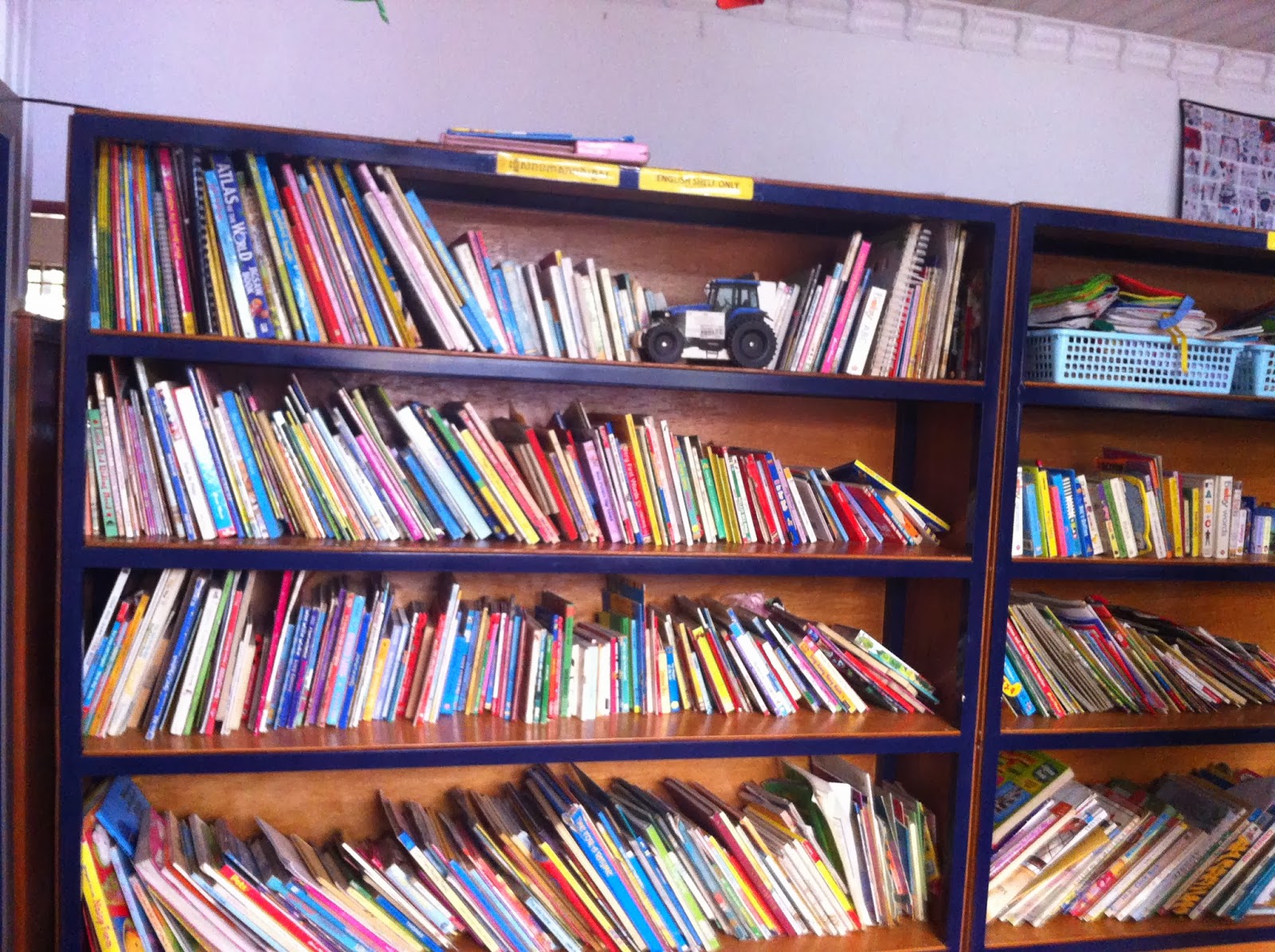
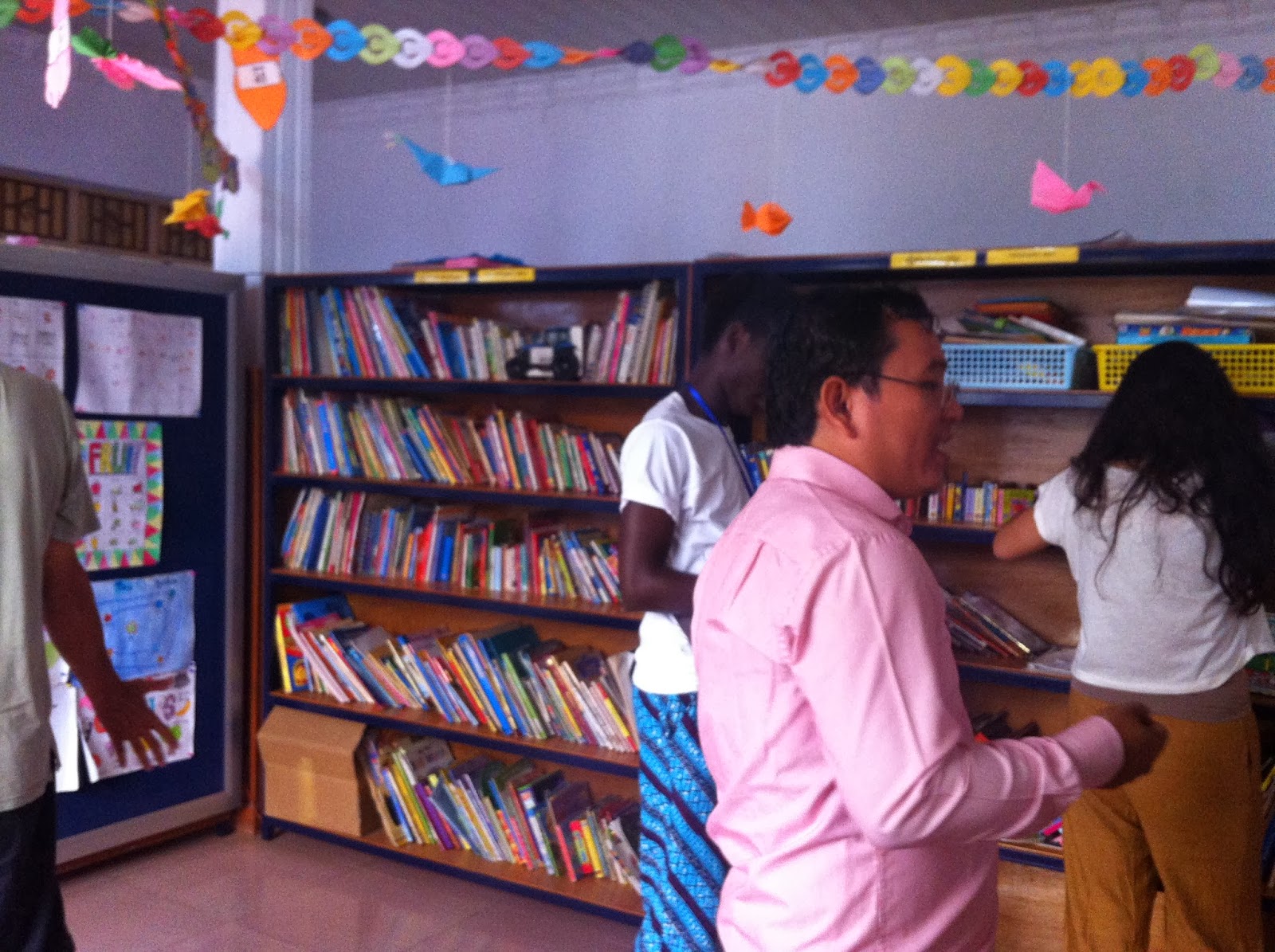
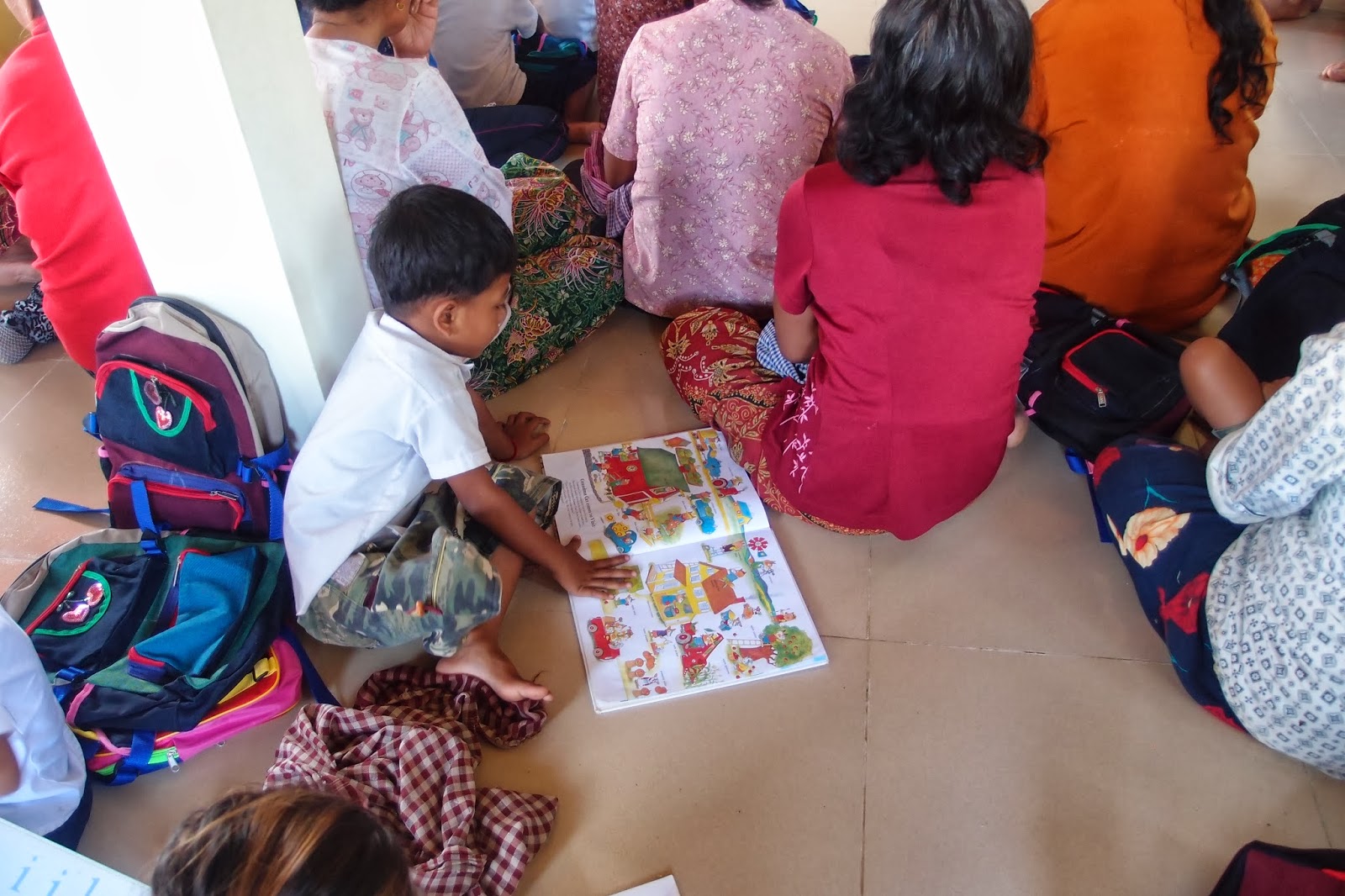
The first organisation we visited, fresh off the plane after a 4am start was ISF and I was a little shocked to see a couple of shelves and a nice sign made of christmas tree glitter saying “library” I admit to thinking “oh no, that’s it?” As the day progressed and we went to the squatter camps where the children lived and saw the extreme poverty and deprivation that they were coming from, the existence of even one shelf of books would have put those kids into the category of “haves” rather than “have nots”. Doubly so as they had books both in English and Khmer.
Books divided between English & Khmer
Donations are a double edged sword as many commentators have spoken of in the past. In one sense, to have books, any books, is a wonderful thing. There are caveats though. One of these is that by bringing good into a country one stifles or overwhelms a local industry. Another is the very important aspect of cultural relevancy – I had to laugh at the puzzled faces in an English class I was teaching as one of the kids in my team tried to explain “white” by reference to “snow”.
33 consonants and 23 vowels to deal with
However, I think the most important thing is that children are allowed to learn literacy in their mother tongue and that this is supported by sufficient books in that language AT ALL LEVELS – starting with simple picture books, to the graded readers, chapter books, young adult novels etc. And of course the absolutely critical “hi lo” books with high interest level at a low reading requirement for children who have slipped behind or have the possibility of education at a later age. This site provides some fantastic strategies for struggling readers, aside from true disability, it is rather ironic that the “developed” world camps with “reluctant” readers, while the “developing” has children desperate to learn and enthusiastic learners without the resources that could take them where they need to be.
When I started researching this to write this blog post I found there is plenty happening in this area – it’s probably more a question of gathering the information together, sifting through it and deciding what is the nice to have, need to have, affordable, practical and any other criteria that an organisation can use to judge where their literacy spend goes. In no particular order, here are some of the things I found:
Bookshelf @ Green Umbrella
Worldreader: operates mainly in Africa and “Since we started our efforts to eradicate illiteracy, Worldreader has been committed to gauging our impact through extensive monitoring and evaluation activities, which measure the number of books read before and after deployment, students’ reading ability, as well as own ability to provide delivery and support. We’ve been research focused since day one and have a long term track record of examining what works and what doesn’t when it comes to eradicating illiteracy. – See more at: http://www.worldreader.org/what-we-do/#sthash.JXXgifyJ.dpuf”
Books treated with great respect
Room to read, with their publishing arm: “One of the greatest challenges to early adoption of the habit of reading in developing countries is a lack of high-quality, age-appropriate children’s books in the local language. Often, the few books that are available are either second-hand books in foreign languages or low-quality, black and white books for more mature readers. Room to Read responded to this need by going into the publishing business. Our Book Publishing program is committed to providing children with materials that will inspire them to read, expand their minds, and develop a lifelong love for reading and learning.”
Sipar is a charity which “For over 20 years, has helped Cambodia fight illiteracy and develop school and public reading. An enrichment to this program has been the establishment of a publishing branch for books in khmer ten years ago. What has been accomplished to date ?
8 mobile libraries set in service and circulate in the poorer areas of Phnom Penh in order to introduce book-based activities.
26 public Reading Centers established as meeting places for exchange of ideas and knowledge for all ages.
10 projects of communal educational services development set up in 2 provinces.
95 titles for children and young people published in the khmer language, adding up to a grand total of 1 001 500 copies, thus reviving reading and writing in Cambodia.
86 000 books donated to Teacher’s Training College.”
Richard Scarry a hit – pictures say it all
Lists are always good – here is one by Playing by the Book – of various literacy charities around the world. Most probably not completely relevant to this article, but good for borrowing and adaptation of ideas.
Children delighting in books – even if some were upside down and being read back to front
There is no harm in being critical, nor in asking for evidence of success in intervention. This article by “GiveWell” provides some research on various aspects of developing-world education. And I admit some bias as it quotes my favourite development economist – Esther Duflo.
It is easy for me to maintain my book and library bias in all of this, but I guess there are hard questions to ask. If I have a dollar, do I spend it on a book, on deworming a student, on a school uniform, on improving a teachers salary, on feeding a child? Here’s a great video from Esther Duflo giving a TED talk …
















 Informative Flights - Musings of a Teacher Librarian