I’ve just finished reading the really well written “The Many Meanings of Meilan” by Andrea Wang. Having spent 16 of the last 20 years in Hong Kong, Singapore and China it was a reminder of so much of my time there and the discoveries of the language, literature, poetry and idiom.
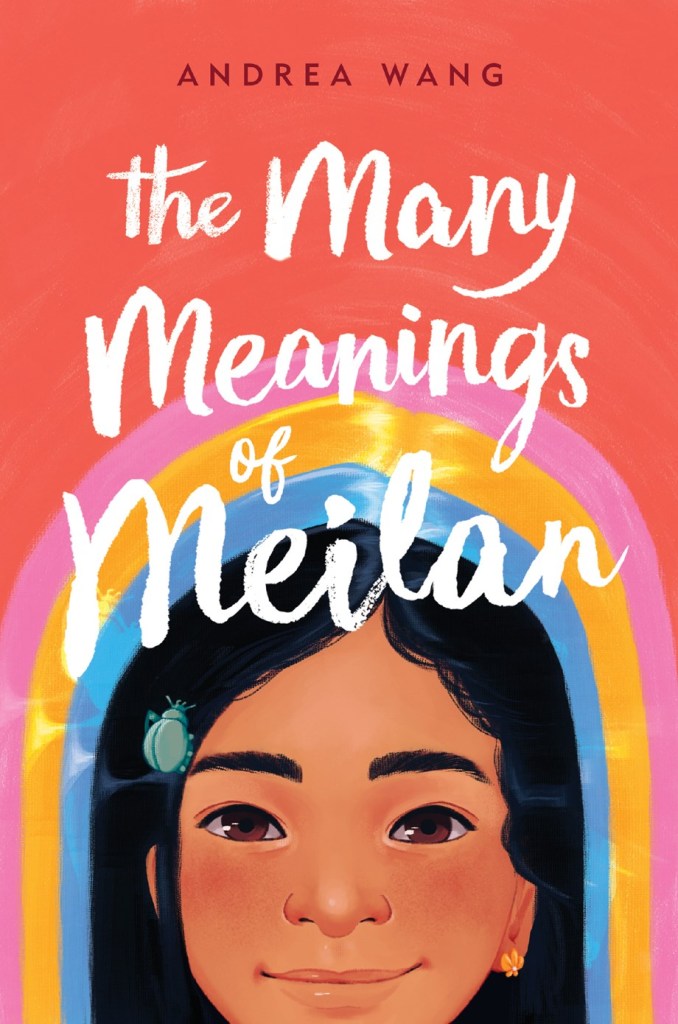
There’s a lot happening in this book, but what I enjoyed most is the idea of naming and meaning and the ambiguity of sound and meaning in the homonyms of the Chinese language. I loved how she wrapped herself in the different meanings of “Lan” depending on the character, so as to adjust herself to the interpretations of herself of others around her, while discovering who she really was and claiming herself.
It also reminded me of the first time I came across the 塞翁失馬 (sai weng shi ma) chengyu – enjoy.
From November 2009
Today a story. Here is the famous story which is commonly interpreted as saying that “every cloud has a silver lining” This is the version from YellowBridge. Certainly in my own life in the long run this parable has proven to be true. But as impulsive as I am emotionally I don’t always recognise it at the time!
“A man who lived on the northern frontier of China was skilled in interpreting events. One day for no reason, his horse ran away to the nomads across the border. Everyone tried to console him, but his father said, “What makes you so sure this isn’t a blessing?” Some months later his horse returned, bringing a splendid nomad stallion. Everyone congratulated him, but his father said, “What makes you so sure this isn’t a disaster?” Their household was richer by a fine horse, which the son loved to ride. One day he fell and broke his hip. Everyone tried to console him, but his father said, “What makes you so sure this isn’t a blessing?”
A year later the nomads came in force across the border, and every able-bodied man took his bow and went into battle. The Chinese frontiersmen lost nine of every ten men. Only because the son was lame did father and son survive to take care of each other. Truly, blessing turns to disaster, and disaster to blessing: the changes have no end, nor can the mystery be fathomed.

塞翁失馬 (sai weng shi ma), the title of this story, is actually a commonly used Chinese idiom or chengyu . It literally translates as “Old Sai loses a horse”. Old Sai is the wise man in the fable. The expression is used to remind others to take life in stride because things aren’t really as good (or bad) as they seem. Certainly seems like a wise advice for a society that lives only for the present.”
Ed Young has written this into a children’s book. We’ve got some compilations of Chinese stories, but kids somehow like having one story per book and to have that story lavishly illustrated.

 Informative Flights - Musings of a Teacher Librarian