My good intentions to blog more have come to naught, but here’s some of the stuff I’ve been busy thinking about / learning / pondering / contemplating.
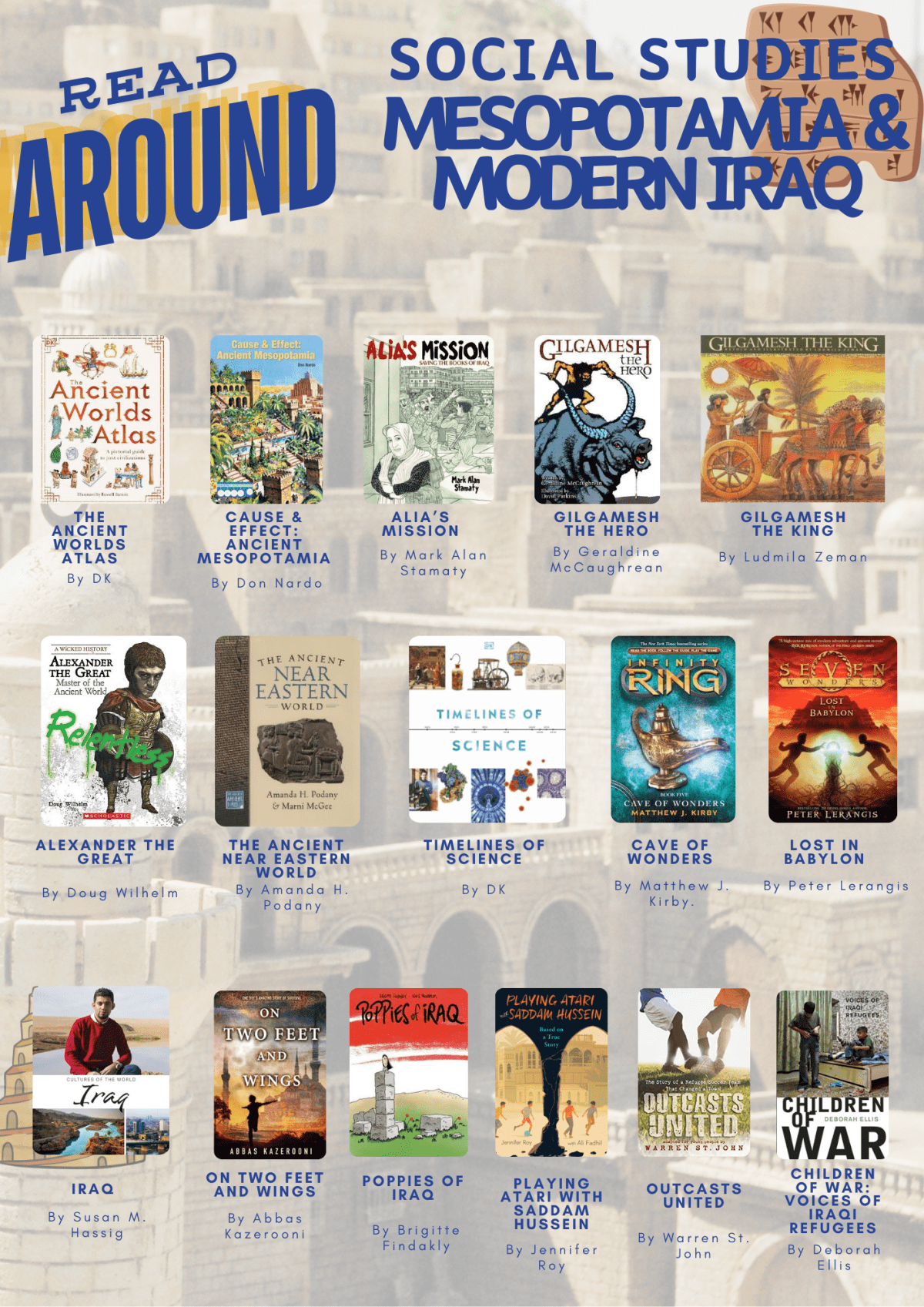
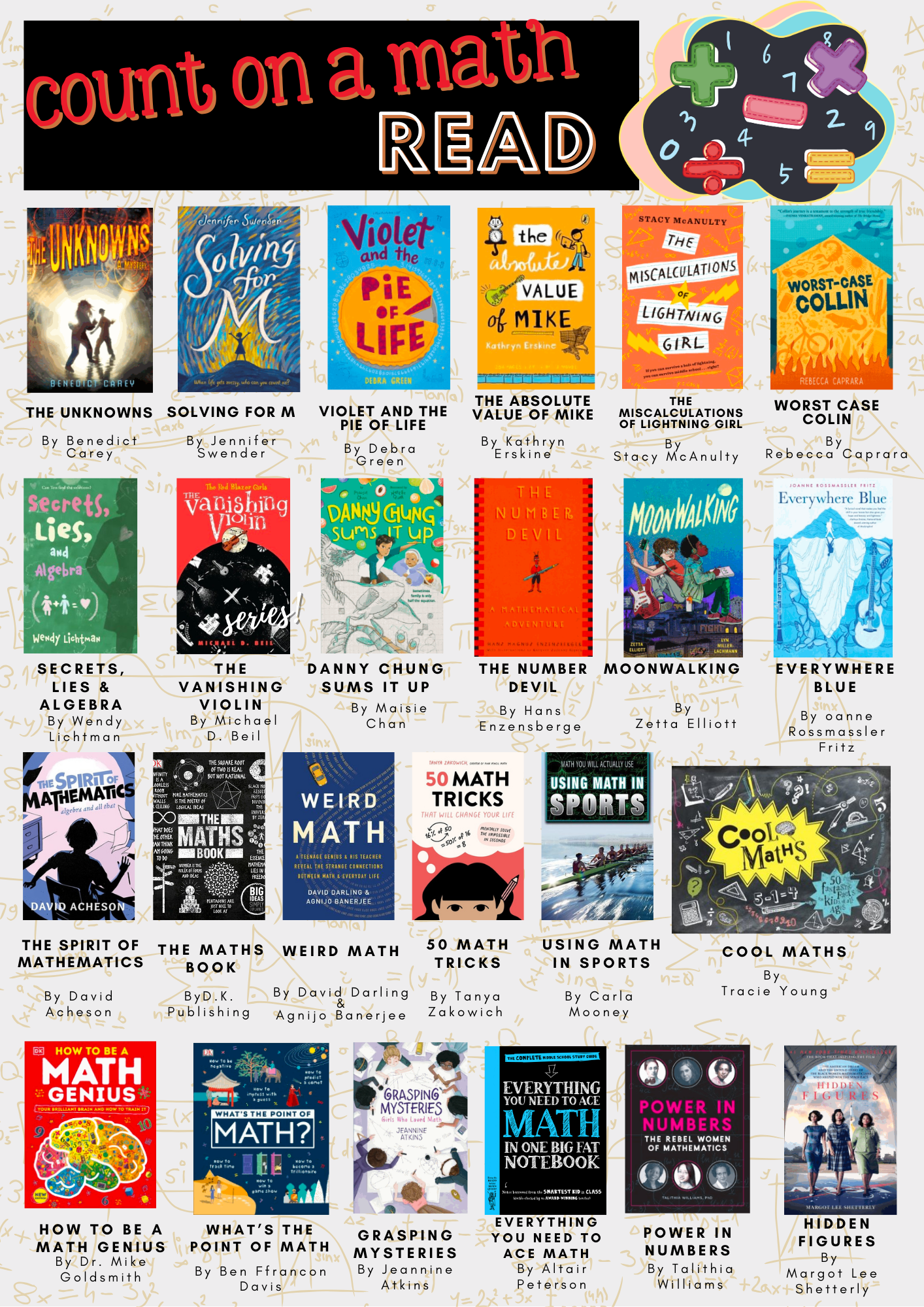
Read Around:
One of the things I’ve noticed moving from PYP / elementary librarian to Middle School is the apparent lack of curiosity in the students coming into the library. I’m sure there are many developmental and sociological reasons for this – not the least the necessity to belong and be cool. This combined with my drive to help “sense-making” in the library for our students – where a plethora of books is wonderful from a curation point of view but hopeless from a choice POV (POV is a very important thing in middle school parlance at the moment) means I’m spending a lot of my spare time (haha, not much of that unfortunately) making “read around” posters that go into look books that are a non-digital physical way of signposting books and hopefully stimulating curiosity and interest beyond what’s going on in the curriculum.
It’s still in a pretty messy form, so I’m not quite yet ready to share my Canva templates, but here are a few examples.



Kind of related to that Katie Day and I are busy creating the “Essential Middle School Nonfiction book list” – a “best of” in our opinion of the books now available for Middle School Students – and tagging the books along a bunch of dimensions of format, topic, geo-location etc. That should be ready soonish.
Learning and AI
Again, with my partner-in-learning, Katie, we’re preparing a talk for educators and parents for the Neev Literature Festival (if you’re anywhere near Bangalore India, that’s the place to be next week – an amazing line up of authors and speakers).
I became somewhat interested in AI, Blockchain and learning and matters related in the summer of 2018 thanks mainly to an article by Jeremy Howard on learning Chinese since at that point I was still in China and actively learning Chinese and I’m always fascinated and very fond (in an intellectual sense) of people who were climbing that mountain with me – this is a more recent podcast featuring him on the subject. I’ve since moved on to learning French and German using Duolingo – which I’m still somewhat deeply sceptical about, but more or less sucked into a learning streak which I suspect is more algorithmically behaviourally induced than true learning. I remember moments learning chinese when I literally was feeling my brain creaking – something Duolingo hasn’t managed to re-create.
Where am I now? Well, AI has progressed a lot faster than my interest in it, if I am completely honest. I’m not sure if it’s a result of a fundamental distrust of whatever the “latest thing” is, or I’m joining Socrates and Plato on a distrust of a new technology – their view being “writing is a fundamentally representational activity. The act of writing only records ideas; it cannot generate them” and I’m with the AI camp saying “AI is a fundamentally regenerational activity; it can only regenerate ideas; it cannot generate them”. Actually I must say I disagree that writing only records ideas – through the process of writing and researching in order to write I do think I generate ideas … maybe not world-changing ones, but ideas nonetheless.
A few things I’ve been watching / reading that I think are of use have been:
- Benjamin Riley’s “Resist the AI guidance you are being given” – it’s the AI equivalent of the very good Cult of Pedagogy podcast episode of “Is your lesson a Grecian Urn” and boy there are still a lot of Grecian Urn lessons going on nearly 10 years later!
- Rory Sutherland’s “Are we too impatient to be intelligent” two quotes I particularly liked were “…a problem, I think, which bedevils many technologies and many behaviours. It starts as an option, then it becomes an obligation. We welcome the technology at first because it presents us with a choice. But then everybody else has to adopt the technology, and we suddenly realize we’re worse off than we were when we started.” and “there are things in life where the value is precisely in the inefficiency, in the time spent, in the pain endured, in the effort you have to invest.” – thinking about what he is saying resulted in the title of this blog.
- Jay Caspian Kang’s “Does A.I. Really Encourage Cheating in Schools?” with this message “school isn’t about creating new scholarship or answering questions correctly—it’s about teaching proper work habits. A young person who takes the time to go into a library is more likely to develop the types of work habits that will allow him to find accompanying bits of information that might be useful in creating a novel, an algorithm, or a convincing argument. Setting aside the obvious offense of dishonesty, the problem with cheating isn’t so much that the student skips over the process of explaining what they learned—it’s that they deprive themselves of the time-consuming labor of actually having read the book, type out the sentences, and think through the prompt.”
- Joshua Rothman’s “What Does It Really Mean to Learn?” – I really loved this article about Leslie Valiant’s book “The Importance of Being Educable” – our ability to learn over the long term. I started reading the book but think the article actually covers the most important points very well.
- And then my favourite so far (and imminently practical) Dr. Barbara Oakley: Using Generative AI to strengthen and speed learning. As a side note I loved her books “Mindshift” and “Evil Genes” and this talk reminded me to read more of her.
I’ve also been reading around various academic papers in search of some kind of a framework within which to think about how to teach critical information literacy towards AI. There are a lot of very interesting “click-bait” titles, but so far not very much in the way of substance – so watch this space.
Slow learning
Finally when I don’t have much time left – the whole point of me writing today – you know how we’ve had the Slow Eating / Food Movement and Slow Travel / Tourism and Slow Fashion etc etc. There is apparently a slow education movement which seems to have had it’s hey-day around 2012-2014.
I’m wondering if it’s time for a renaissance. At least in the conversations I’m having with some educators we’re moving back to using nonfiction books for research, printing out articles from databases, using fewer resources more intensively and other such retro ideas. Faced with 22 students aged 10-12 learning about inventions in Mesopotamia I am resisting using the phrase “skim and scan” before they can actually read a paragraph, a page, a chapter and be able to tell what the main idea is and how that relates to what they already know and what they think they still need to find out.
It’s been a little while – but I’m going to direct you all to what I consider to be one of the best series of articles the NY Times has brought out – Errol Morris’ “The Anosognosic’s Dilemma: Something’s Wrong but You’ll Never Know What It Is” about the Dunning-Kruger effect “When people are incompetent in the strategies they adopt to achieve success and satisfaction, they suffer a dual burden: Not only do they reach erroneous conclusions and make unfortunate choices, but their incompetence robs them of the ability to realize it.” besides American (and other) politics, there are few places where this is more rampant than in middle school. It’s not our role as educators to point this out to our students, but rather to bring them to the point where we create the environment where they are nudged into making the right choices – at the very least around learning and to commence that journey of being able to glimpse the horizons of knowing what they don’t know.

 Informative Flights - Musings of a Teacher Librarian