The following slides are part of a presentation Katie Day and I made for the 2025 ISLE librarian conference in London. (Note: Although I am the one “publishing” or “blogging” this discussion the credit equally goes to Katie Day as this all originates in our many discussions on reading, nonfiction, librarianship and more. )
As we prepare for our presentation at the wonderful NEEV Children’s literature Festival in Bangalore I was prompted to put some of the thoughts we had back in March onto this blog.
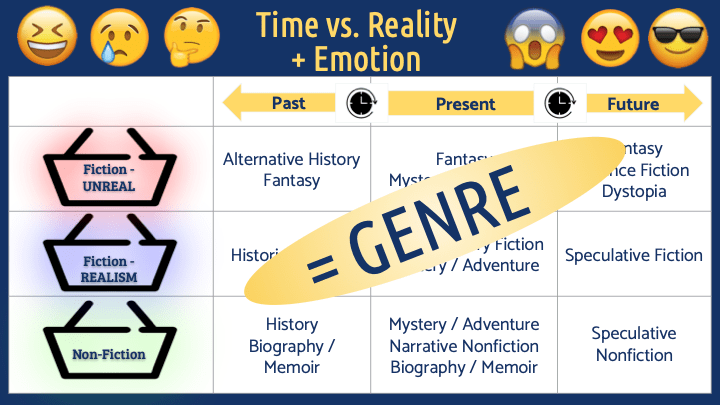
The slides are pretty self-explanatory. The main idea being that we tend to lump nonfiction into one big pile, perhaps separated by the five types recognised by Melissa Stewart. In this part of the presentation we argued that nonfiction could be categorised along the dimensions of “reality” “time” and “emotion”. In doing so one can more easily appeal to students who are more used to the fictional genres and sub-genres and perhaps find some nonfiction appealing to their fictional reading preferences.
This is the typical way of looking at the continuum between fiction and nonfiction. Note we talk about nonfiction as being “informational” rather than “factual” and try to nudge students into thinking of it in the same way.

The next dimension we add to the equation is that of time. In this instance we are focused on the bottom line of the time dimensions of nonfiction.

We then further elaborate with the dimension of emotion. And this is where we allow our students to feel they are in the more familiar territories of “genre”
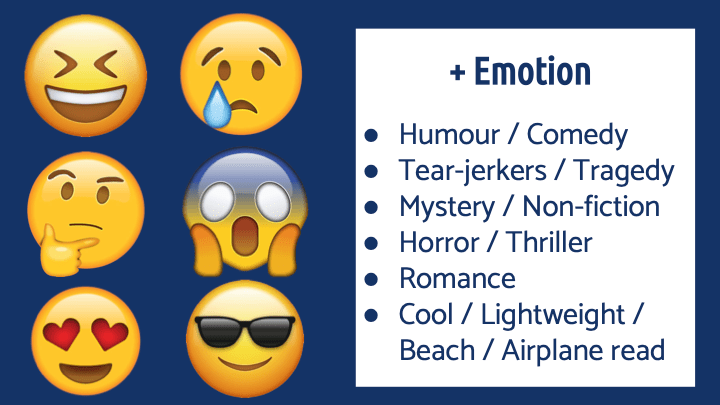
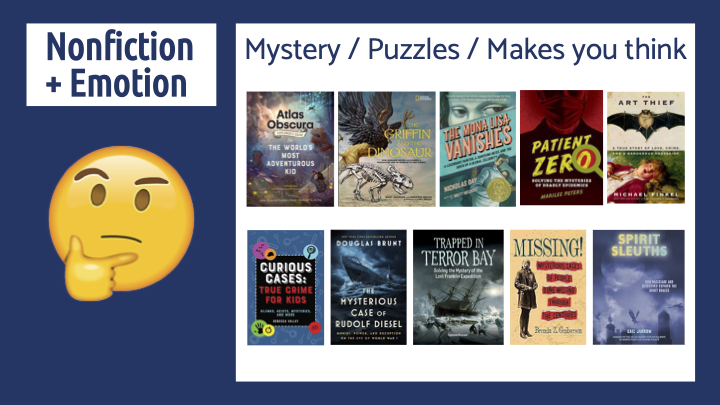
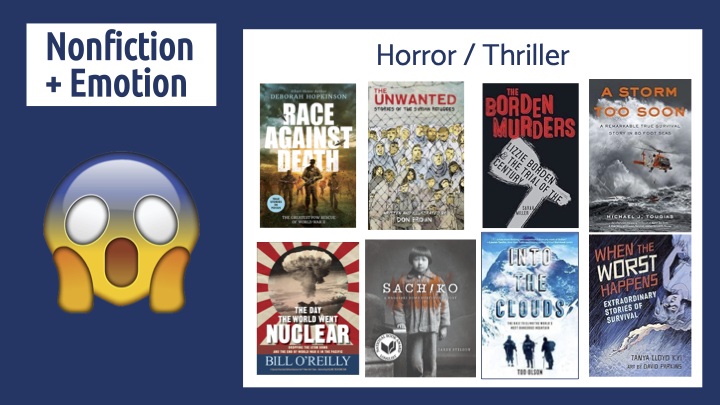
The next couple of slides give examples of the 6 “emotional tones” and related books.
Have fun exploring and discussing the categorisations with your students.




 Informative Flights - Musings of a Teacher Librarian