
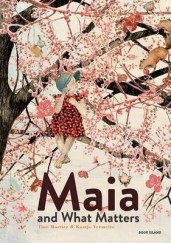
 I’ve always been a huge fan of picture books. I’m the librarian that will read “Maia and what Matters” to a group of Middle School teachers and struggle to continue through tears. I spend a reasonable chunk of my budget on picture books (or as some librarians like to refer to the “sophisticated picture books (SPB)” I’ve never see a book deal with anxiety with as much compassion and understanding as Mel Tregonning’s “Small Things”. I maintain a libguide for Social Emotional Learning (SEL) that relies heavily on the work of Dr. Myra Bacsal and her SEL booklists.
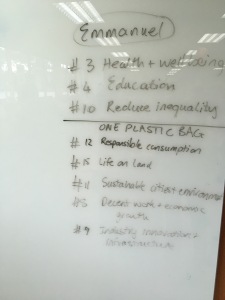
So what is the problem? I’m worried that publishers are becoming complacent about plugging the gaps in information / knowledge / awareness of really big and worrisome things by having a picture book in that space. A case in point is my (and most librarians) quest to curate books related to the Sustainable Development Goals. And I’m afraid even the UN with it’s SDG book club plays into this.
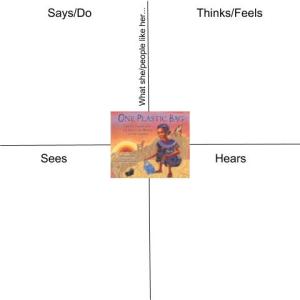
It is easy enough to find a picture book about Wangari Maathai, about the plastic bags of Gambia. It is way harder to get a good (recent) nonfiction book geared at 11-14 year olds on deforestation or plastic bags for example. It seems the nonfiction publishing cycle is around 8-10 years (I found plenty from 2009-2011) between updates whereas the actual issues are accelerating faster.

As mentioned in my previous blog – a big change has occurred in the presentation and design of nonfiction books, so it is important not only from an “up to date facts” point of view that we have these books, but also from an “enticing to read” point of view. When new books exist in a space (trees in this instance) they are truly fantastic. Like “Can you Hear the Trees Talking” by Peter Wohlleben – the young reader version of “The Hidden Life of Trees”. But that’s not really about deforestation, just a very positive reminder of why trees are so awesome and special and worth saving. Or Annick Press (one of my favourites) with Kevin Sylvester’s “Follow your Stuff” an exceptional book for the humanities tracing common items including T-shirts; Medications; Technology; books through geography, production, labour and economics.
The last thing I was looking for included something on sustainable cities and homes. The books in my collection were from 2007 and sorely needed updating. As is the case when a book is older than the students reading it. It’s a fascinating area. It’s something that most major cities in the world are pouring money and resources in. But you can find lofty tomes, heavy text books, coffee-table photo books and very little else. A fellow librarian pointed me to “No small Plans” which looks amazing, but very specific to Chicago, and not so easy to get to China.
Rebecca Sjonger has written a new series of books around the UN Sustainable Development Goals which combines goals and is an overview. I’d argue that’s a good beginning, but actually each goal merits a well researched, curated and presented book for each of the different levels of education. Our world in Crisis is another recent series that covers pollution, poverty, health & disease, civil war & genocide, immigration and terrorism in an age appropriate but informative way.

So there is a huge amount of hope and great steps in the right direction. But if we want to keep middle graders curious and inquiring beyond the hook of picture books, we need to keep feeding them nonfiction of this high calibre in all and any direction they want to research further.
I want it to be that the picture books are the appetiser and a couple of Youtube videos are the amuse bouche but that excellent nonfiction books are the main course, supplemented by databases (for context) and news (for the latest updated information).
What are your favourite books to support understanding the SDGs in Middle School?




 Informative Flights - Musings of a Teacher Librarian