
It’s been a tough few weeks, and this morning I was reminded just what it’s all about. I was reading “All the lost things” by Kelly Canby to a Grade 2 class, and at the end, one little girl said “It’s so beautiful I want to cry” at which point I also wanted to plink a tear. Because it is beautiful. And what is even more beautiful is when a 7 year old recognises and empathises with beauty in a book.
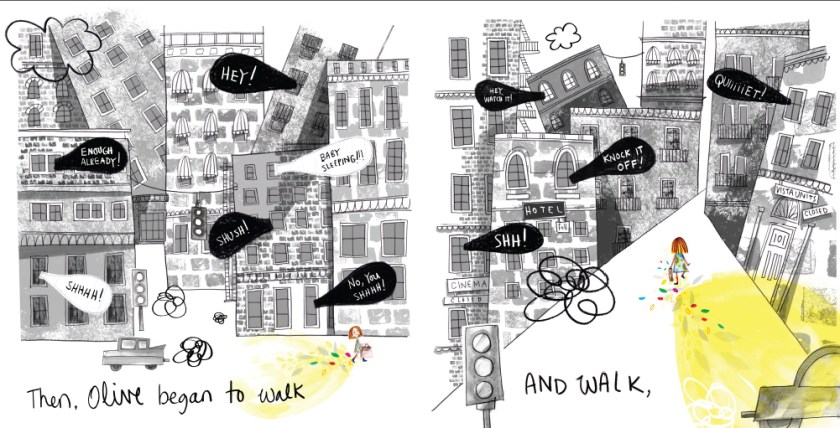
From an instructional point – it also has great links to the string of Lauren Castillo books we’ve been reading as part of the Global Read aloud so we could refer back to “Nana in the City” and “Yard Sale”.
The other moment of sad beauty this morning was reading “Small Things” by Mel Tregonning. It was the third or fourth time I’ve started reading this, and each time I had to stop after a few pages since it’s not something you can just read in a hurry. It’s something that needs you to slow down and take your time. You also both need to not know the back story before reading it, and then to read the back story and then read it again. Many young children suffer from stress and anxiety. The fact this is a wordless book makes it even more powerful. Look at the demons following him and eating away at his existence.


I’m almost at a loss at what to do with this. I can see parents being terrified by this, and yet we need to acknowledge the range of feelings and emotions our children endure. It would be a powerful book for use with bibliotherapy, but one almost doesn’t want it used wrongly.
 Informative Flights - Musings of a Teacher Librarian