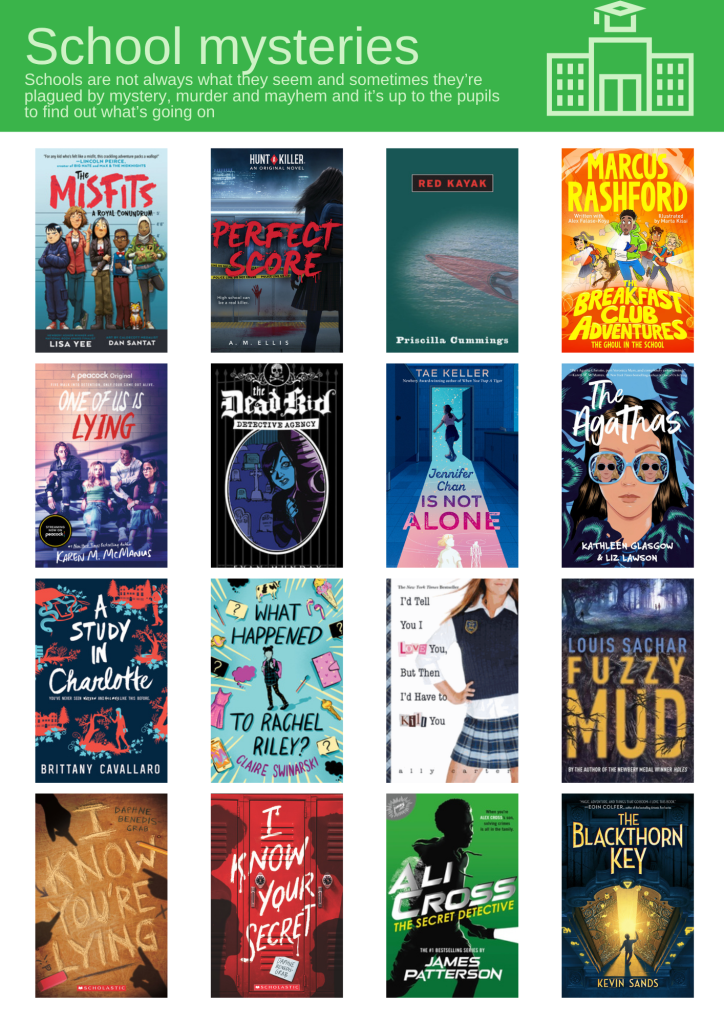
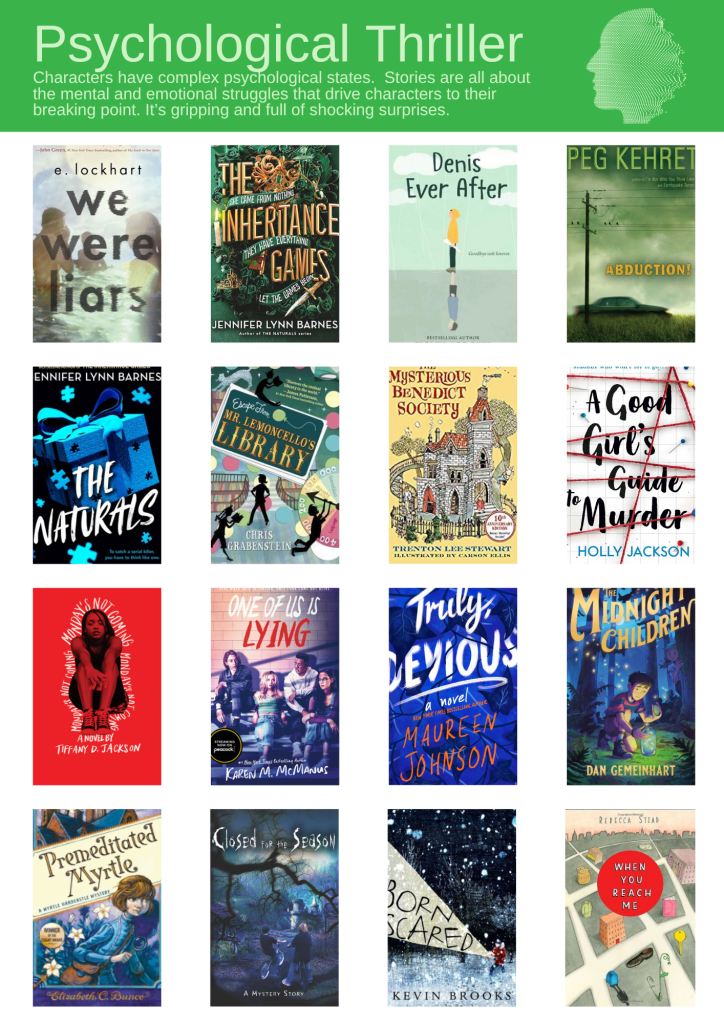
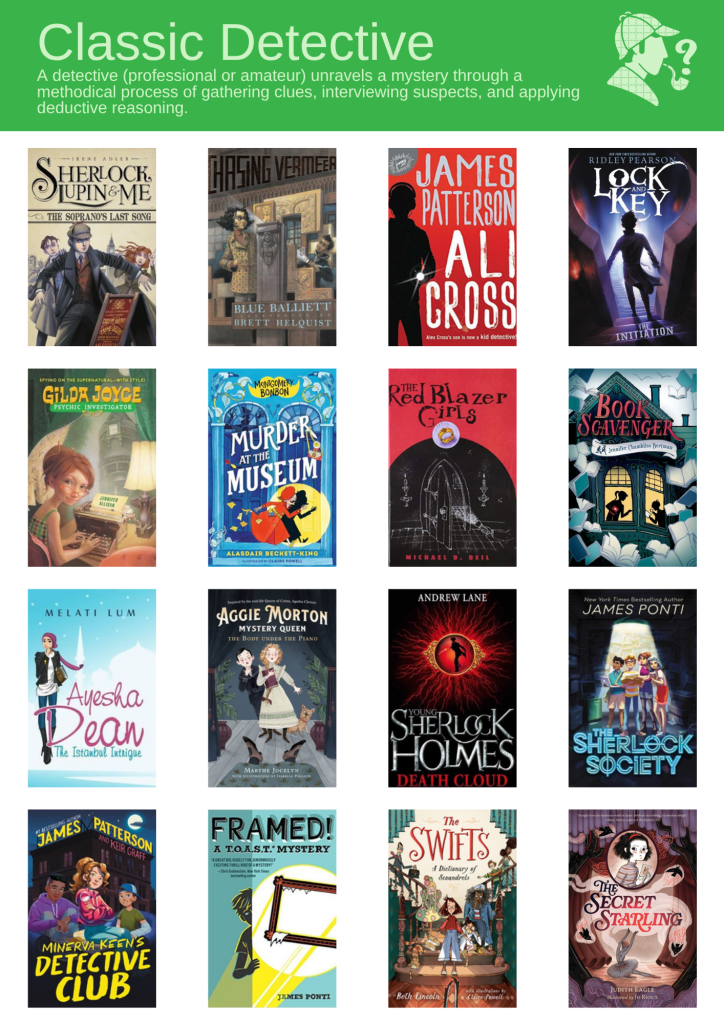
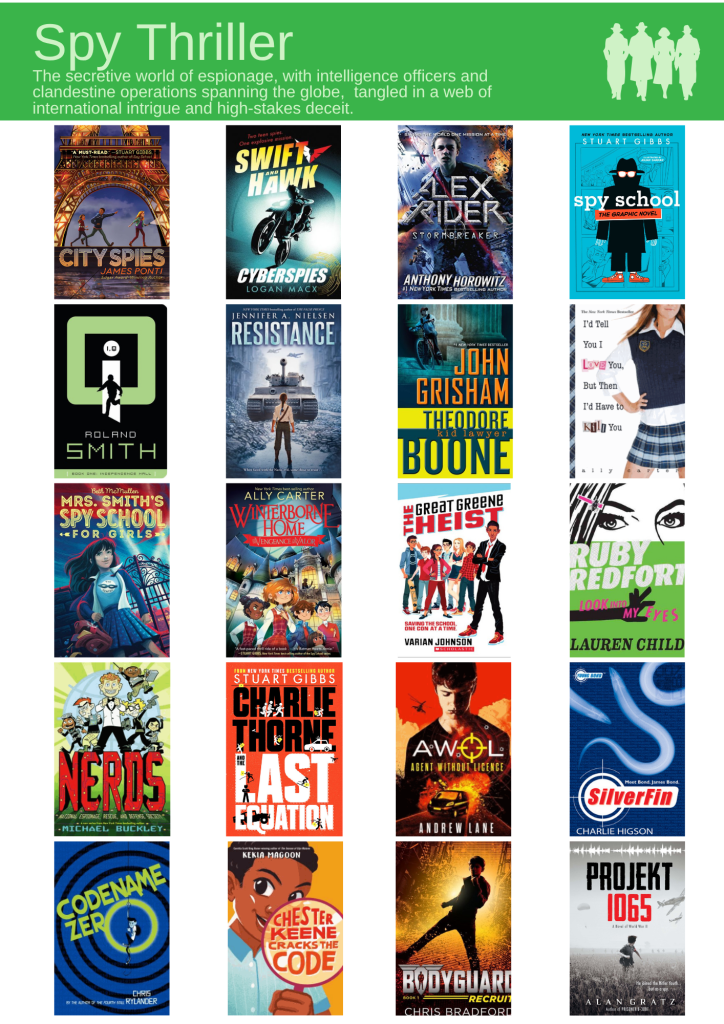
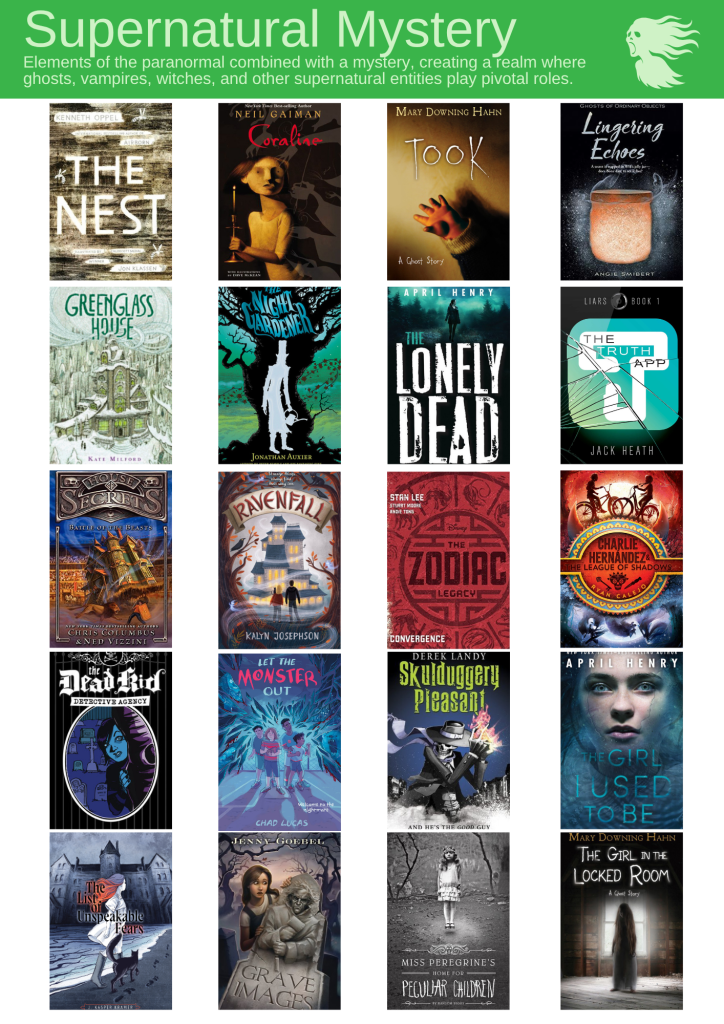
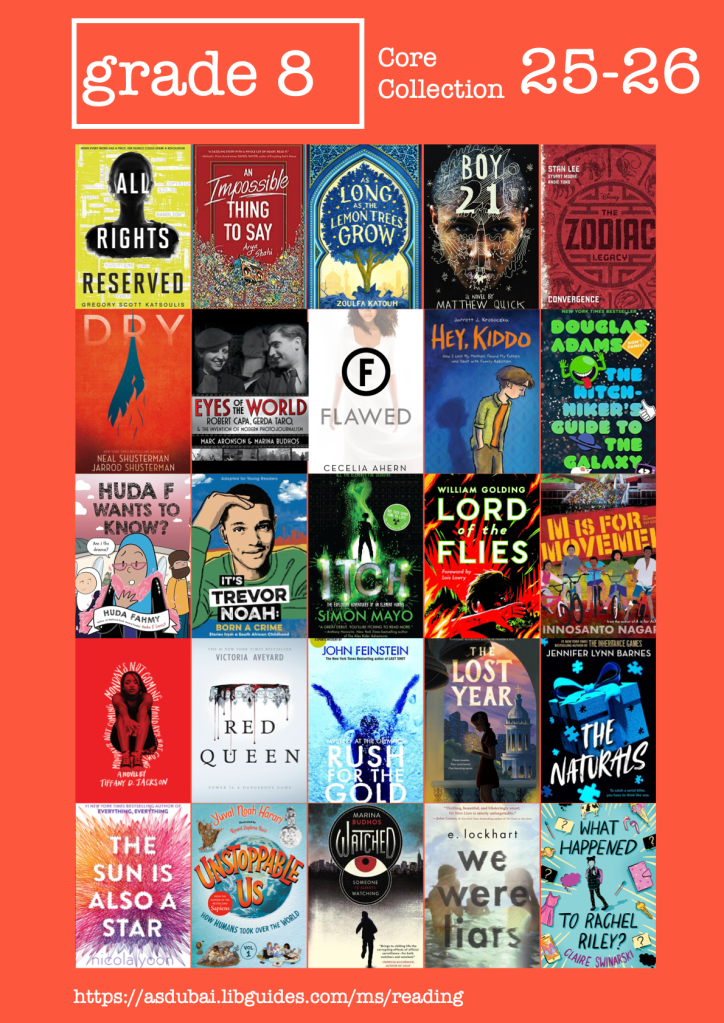
At the moment the Mystery genre is getting a lot of love from everyone from middle school to adult and a lot of great books are being released. Since we’re in a middle/high school library I wanted to showcase the mystery books that are not too spicy / intense. In our G8 core library we have “We were liars” and “The Naturals” which is probably at the upper level particularly in the later books in the series.
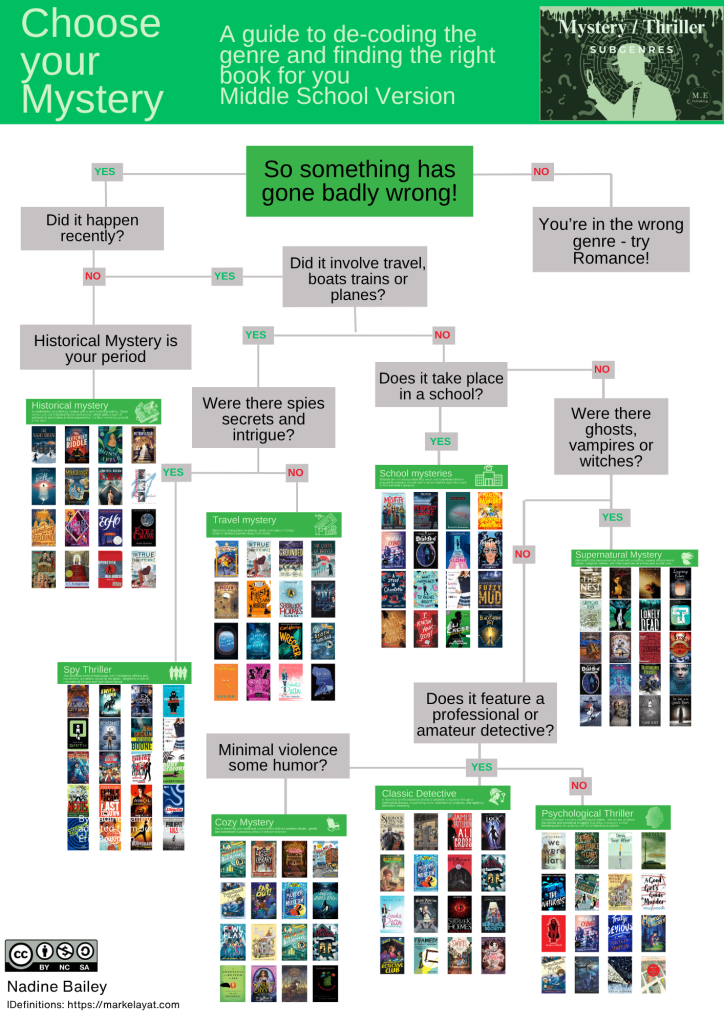
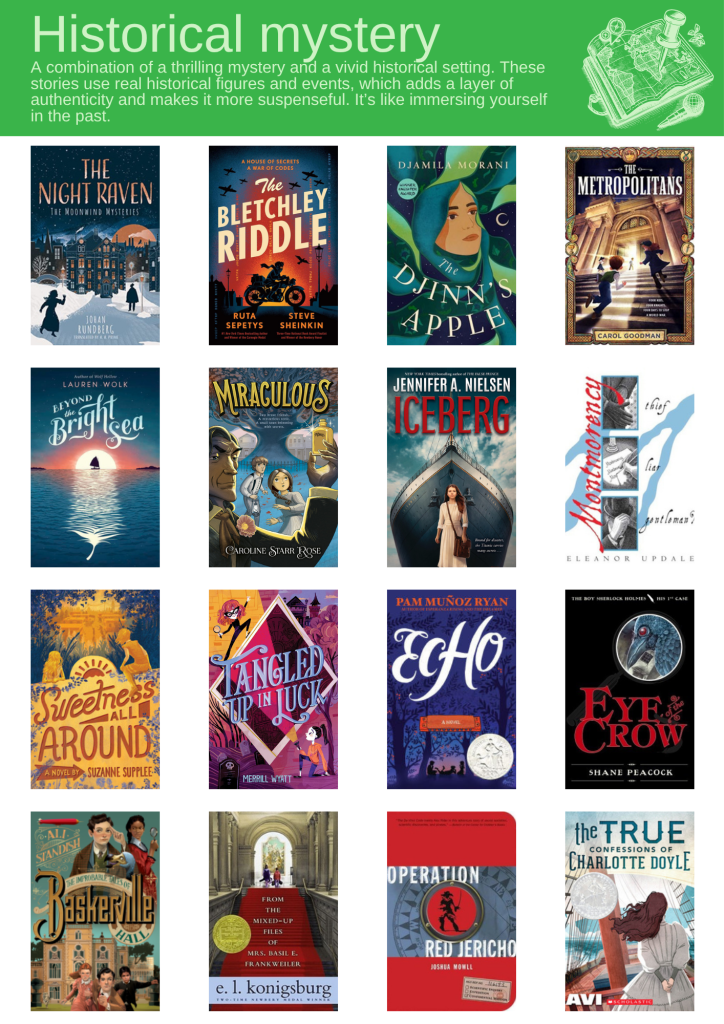
Along the lines of the work I did a couple of years back on Dystopian Fiction, I started to work on doing the same for sub-genres of Mystery. This time around I didn’t have some flowchart work others had already prepared to riff-off and I wanted to focus particularly on books suitable for middle school. I’ve relied on the excellent sub-genre descriptions of Mark Eleyat (who also has great pages on other genres and subgenres) and tried to make some kind of a flow to it. Somehow so many other things have intervened so it’s taken months to get to this point. I would love some feedback / suggestions for improvement on the flowchart.
And I’ve created these Middle School posters. The Canva Template is available for you to adapt to your situation – one day I hope to be able to expand it for YA and even adult, as I’m personally a big mystery/thriller. If you create anything based on this for YA or adult please feel free to share in a comment.
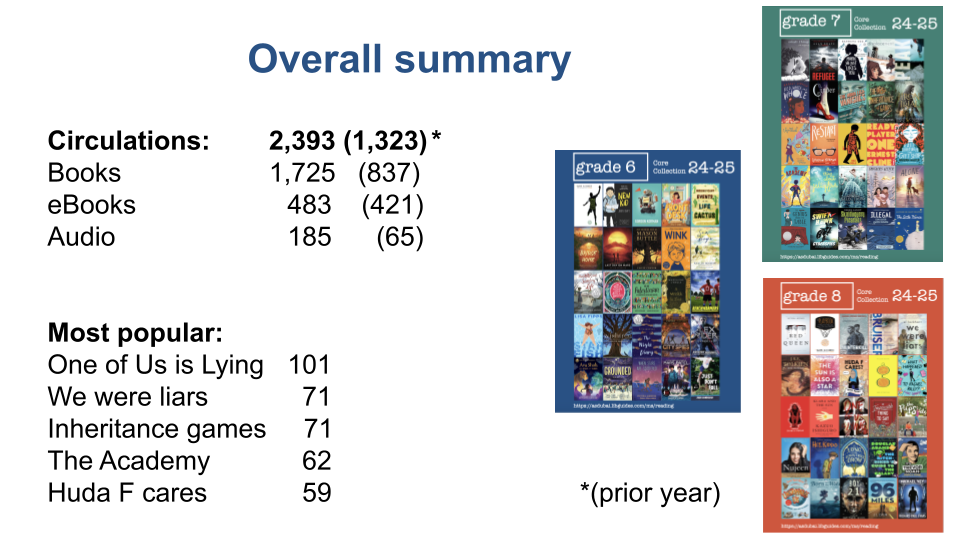
Given the dire state of the nation on reading overall for middle school with each grade reading less than in previous years, this is one small light at the end of the tunnel for me – showing that perhaps we need to narrow rather than continue to broaden our collection and focus on many copies of the most popular books?
Another amazing side effect has been the number of our faculty who are now fans of middle school / young adult literature and who have kept on coming back to finish series (I think it’s really important to have book 1 of as many enticing series as possible in the list). It really matters when not only the ELA teacher but also the PHE/Sports coaches and Drama and Science teachers are reading and recommending books.
Another interesting aspect has been that it seems we’ve arrived at a sort of tipping point of students accessing eBooks and AudioBooks in greater numbers than I’ve previously seen. Since we tend to only buy 3 or 4 of each of the core books (plus whatever ELA has a budget for to put in their class libraries) the most popular books tend to be out all the time, resulting in students then using the digital equivalent. I like AudioBooks as it means I can listen (often at 1.5-2x speed) and do my knitting, and I often have to persuade students that listening to audiobooks is also reading. In a culture where very few students are read to, I think it’s also important for them to hear stories – not the least to avoid embarrassing incidents with the pronunciation of words and names!
Of course I know that borrowing doesn’t always translate to reading (see the amazing way the great Nathan Pyle illustrates this below), but on the other hand I’m also comforted by the fact that our ELA classroom libraries have also stocked up on many of the core books and their circulations are not counted in my stats.
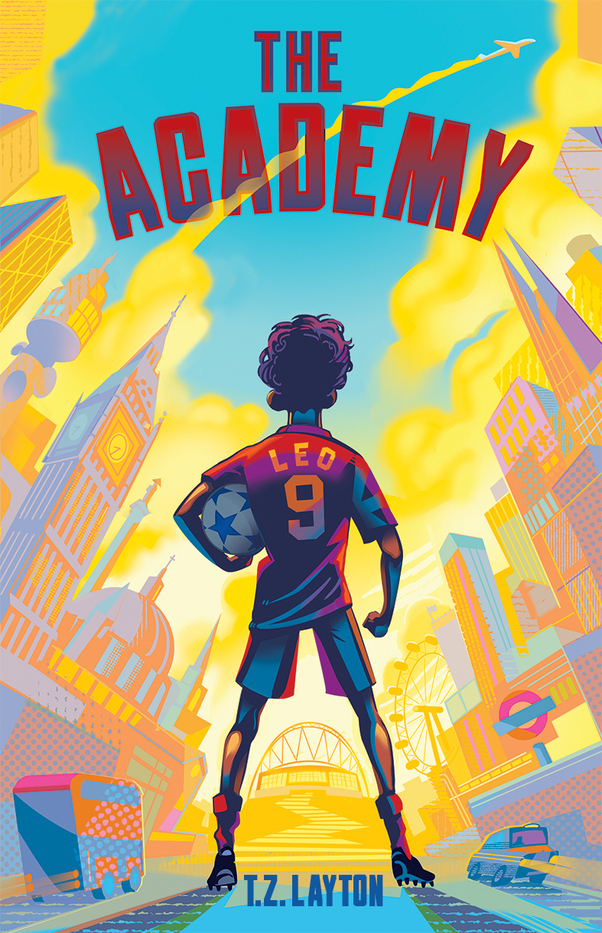
One of the runaway success books I’d like to highlight is “The Academy” by TZ Layton. In common I think with most 10-14 year olds, most of the young soccer players at our school are convinced it’s only a matter of time before they’re scouted into one of the youth leagues and this series feeds their dreams.
Actions & Activities
The actions and activities around the core books this year include:
Culling of the least popular (and some of the most popular*) books from the previous year
Book overviews on the middle school TV displays
Core list on Advisory Slides
“Core Wall” in library
ELA & MS teacher promotion
House points for book reviews
On libguide / recommended to parents during parent conferences
Weekly Kahoot quiz January – May (inter-house competition)
Battle of the Core live quiz assembly – 8 May (moved from January to increase exposure)
* while some of the books were taken out because they just didn’t fly for one reason or another (usually because I’d been misled by a good review without having been able to read the book first, or I misjudged the audience), some have been given wings and are flying on their own without the need to be on a list, or have been adopted by the ELA department as one of their book club books. Of course there is always great irony in choices. After not being able to successfully sell “The thing about jellyfish” by Ali Benjamin all year long, I took it off the list for next year and of COURSE then some young booktokker started recommending it and now everyone wants to read it!
Another side effect has been more faculty coming to me for recommendations for their own reading of for books for their younger kids or nieces / nephews – there is nothing more flattering, no greater gift you can give a librarian than ask for recommendations!
there is nothing more flattering, no greater gift you can give a librarian than ask for recommendations!
In conclusion I’d say if you’re in any doubt about the value of having a core collection, go ahead and try it out. It doesn’t have to be 25 books but it does help to have at least one representative of each genre. Including the first book in a series is always a good idea and I also try to have books that are fairly recent, include books from visiting authors if we have any and to try and tap into the zeitgeist.
We’ve been on summer break for just over a week now and I’m feeling sufficiently rested to sit down and write again.
Book returns
The end of the school year is always a busy time for librarians with the dual task of getting overdue books back and making sure that students have enough of the right books in their hands to entice them to do some reading over the summer. It really is a dichotomy – the students who most need to read more are the ones who have the hardest time keeping track of books – probably because they just borrow because they’re being told to do so and then promptly put the books somewhere never to be found again. And then of course when they become overdue it’s a fuss and bother and they are even less inclined to borrow.
Inventory
The big tasks include doing inventory – something we’ve turned more into a continual process so by the end of the year it’s more just following up on missing items – often they return – from students (or more often returned by nannies or parents) who consider going past the circulation desk as being optional. Unfortunately being in the middle east certain types of books also just disappear depending on the heat of current rhetoric – or in the case of this year actual bombing going on.
Core Collection
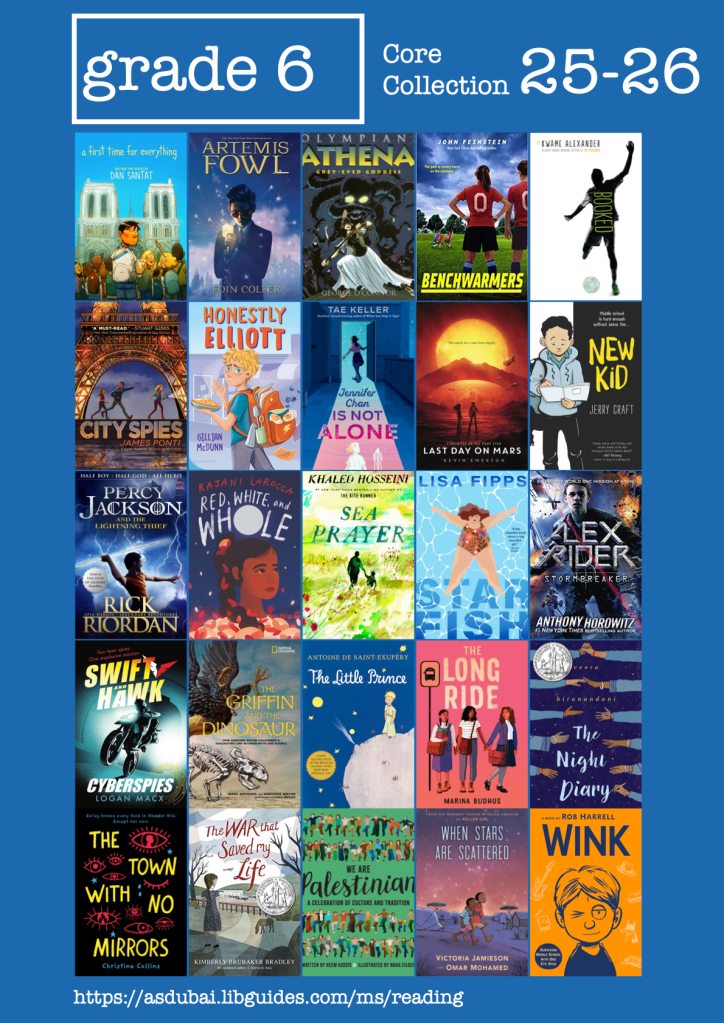
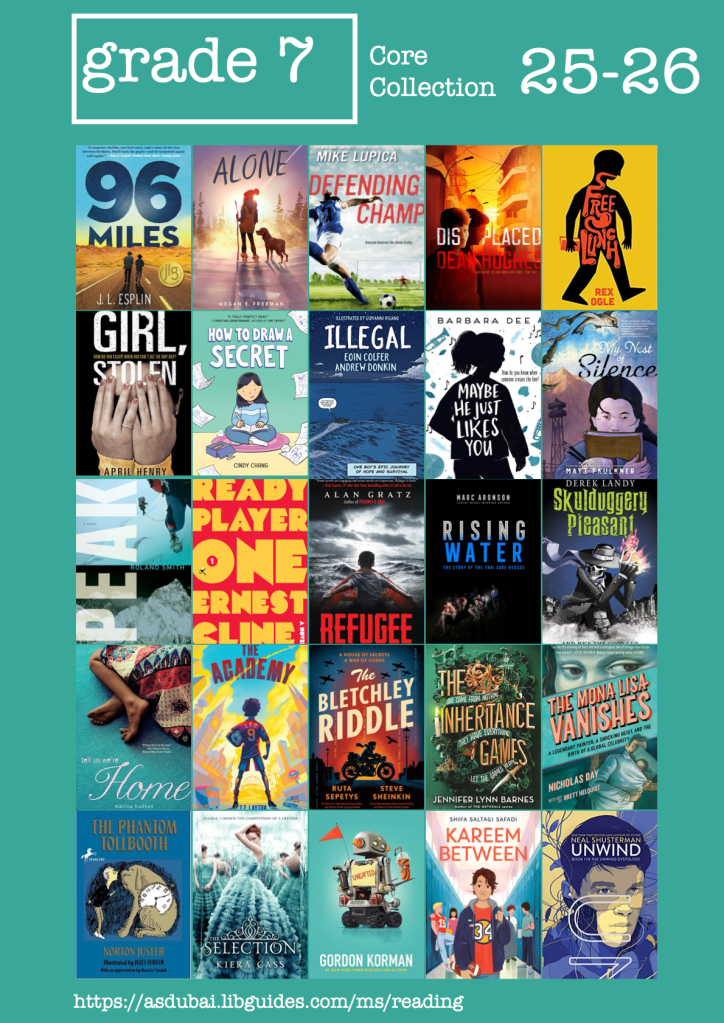
With our ELA (English Language Arts) department I’ve been very busy creating our new “Core Library Books” for the coming year (Grade 6; Grade 7; Grade 8)
And, continuing the tradition started last year, promoting them first with our middle school faculty. I’ll do a separate blog on the result of the core collection this year.
Summer reading
This also feeds into our Summer Reading Libguide which we try to promote as much as possible with students and parents. A few of the ELA classes had their students explore the guide and the various reading lists in detail and then make their own reading goals based on the lists and then email their parents with their reading plans and either borrow the books or request parents purchased them for the summer. I was also on hand with Sora Marketplace open to purchase the eBook or Audiobook for the students who wanted a digital copy. Our summer reading borrowing guideline is “as many books as you need and know you can take care of and return after the break“
Annual Report
The most arduous task at the end of the year, and one which it seems many international school librarians have more or less given up on, is creating the annual report. I can see why people stop doing this. With declining borrowing / reading it can be quite a depressing exercise. It’s also remarkably difficult to get good data our of our systems. Follett Destiny is a dreadful platform to get good data from – in contrast with other systems. I was reading Rutger Bregman’s “Moral Ambition” (see video below) around the same time, and came across the concept of vanity metrics – basically just putting together data that makes you look good. With that at the back of my mind, putting the report together (Annual Report 2024-25) became this exercise in trying to show both that the situation with reading is not great while trying to show that as librarians and teachers we’re doing our darnest to turn the tide and hopefully all is not lost. And even when we lose in reading perhaps we’re making inroads in research. Much as I hated studying business / accounting and was glad to escape being financial person it did put me in good stead for being able to work with data.
I’m planning on doing a bit more blogging this break, so keep coming back! Comment on any topics you’d like to see covered.
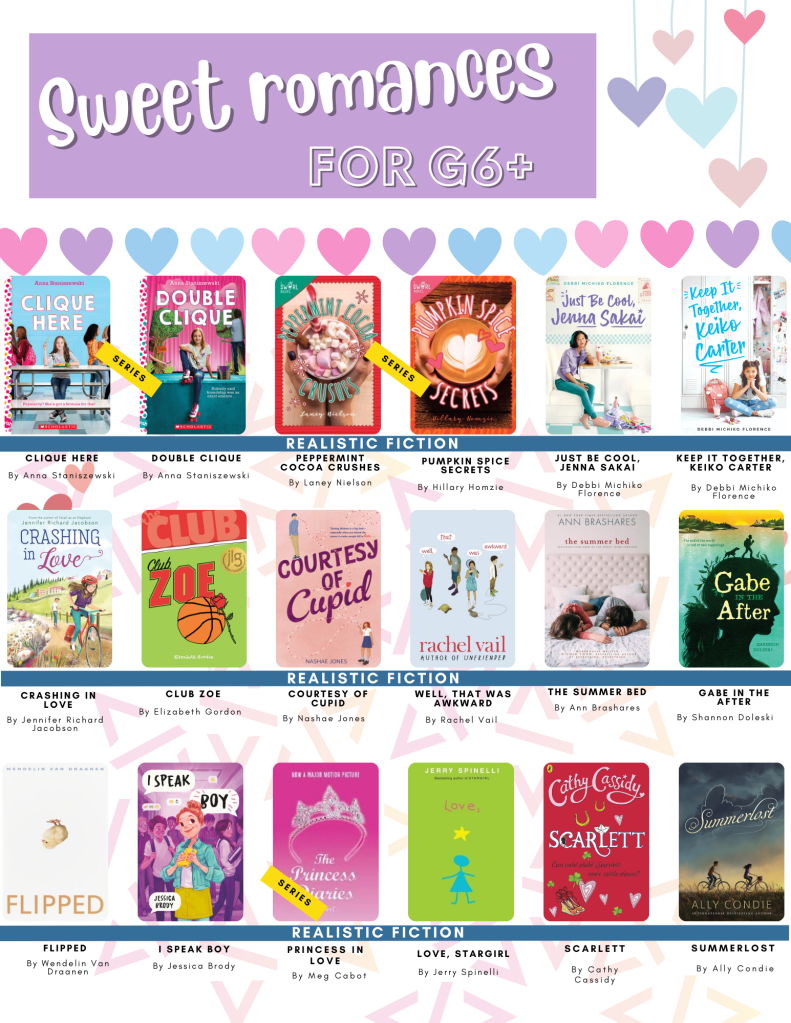
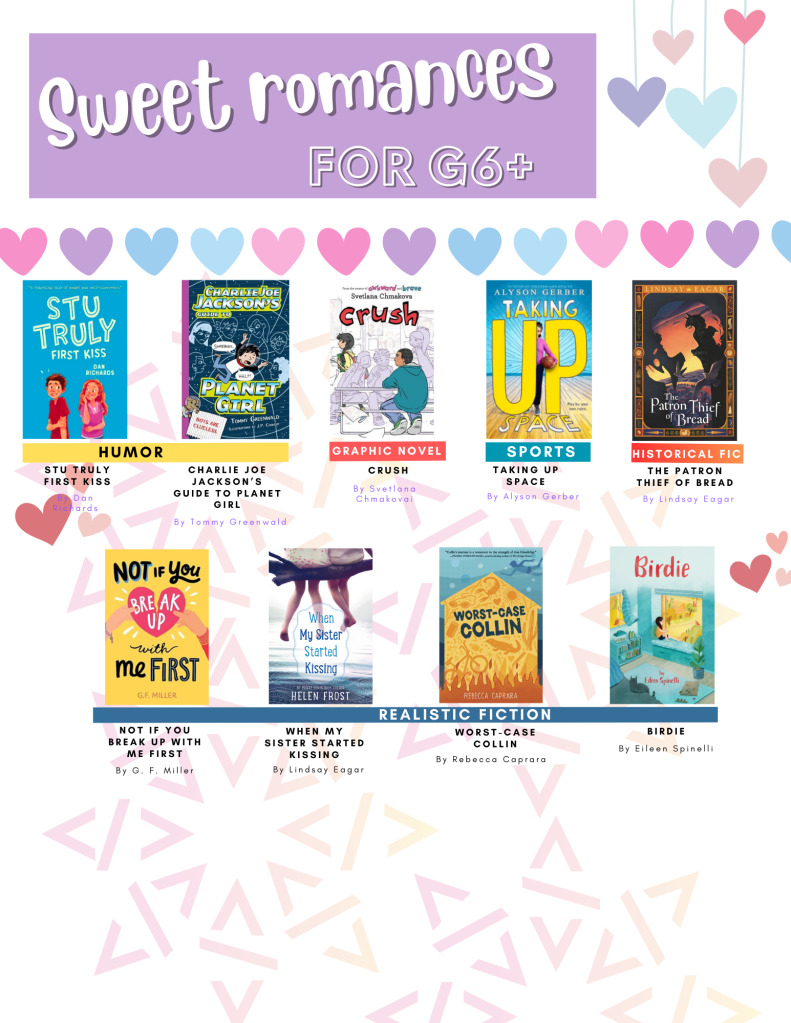
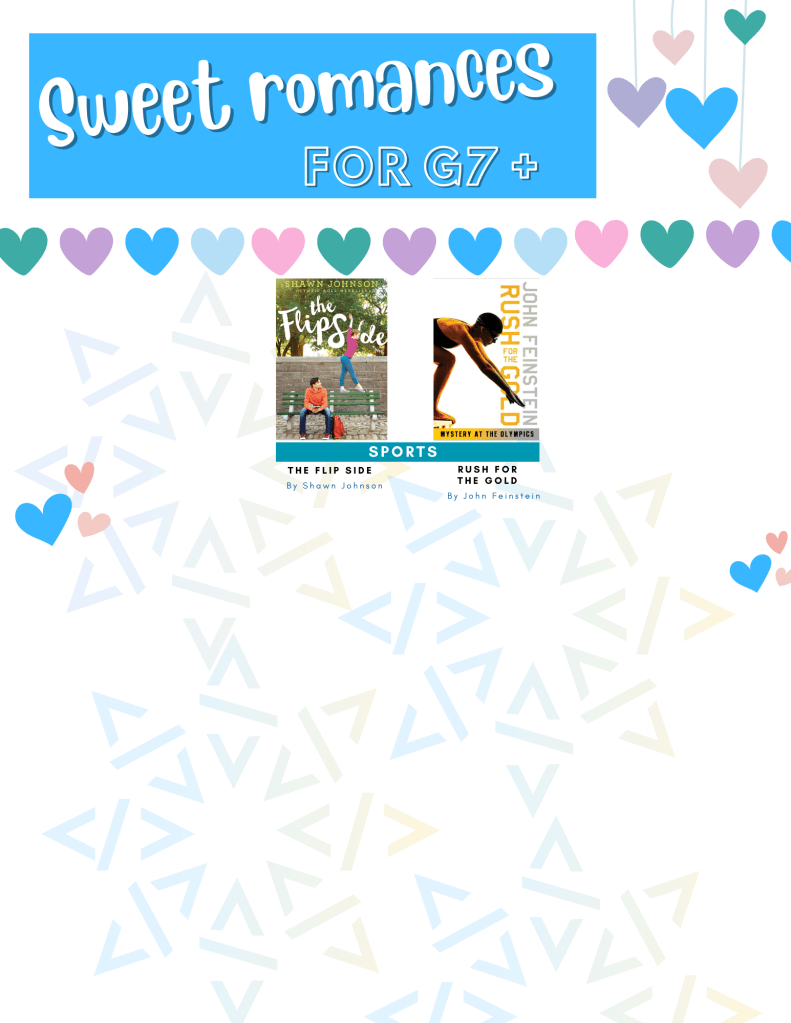
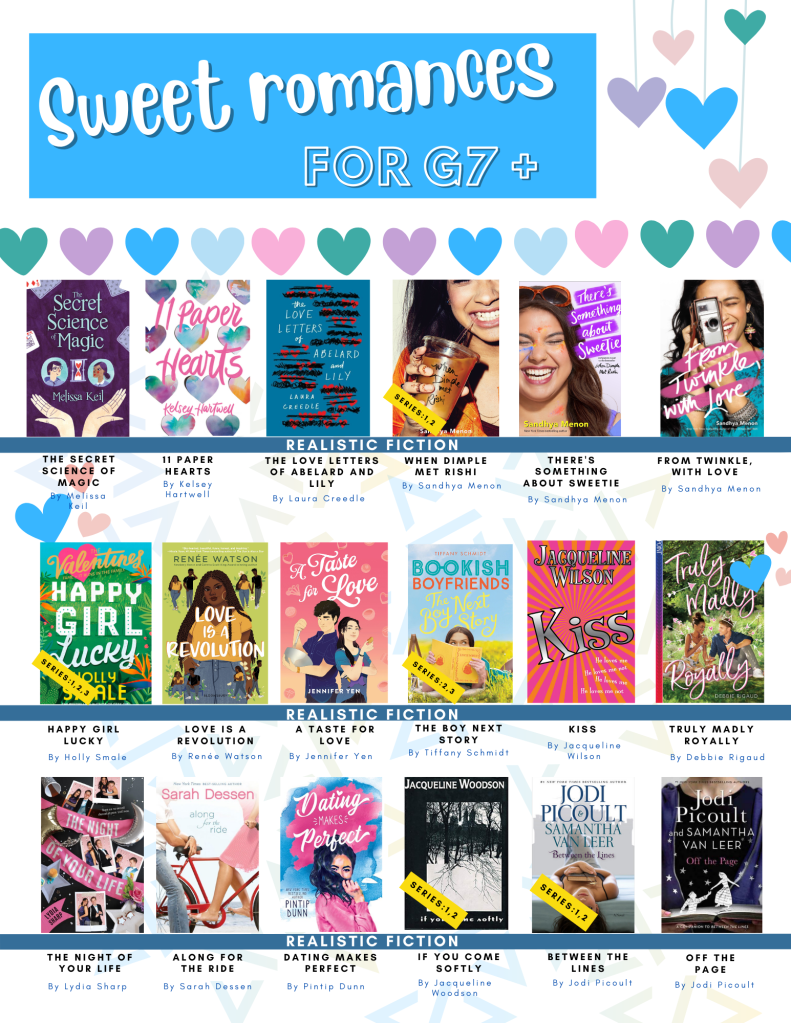
How easy it is to slip back into slothfulness – after a month of posting over at GLLI, today’s the first time I have had both the mindspace and timespace to do something on my own blog. Reading through various FB librarian spaces it seems that Romance is still doing the rounds and people are still looking for good, age appropriate romance novels that the parent-police / rabid-anti-readers / censors whatever are not going to object to, so I spent a few hours this week trying to find as many romance books as possible on Mackin.com that are rated respectively Grade 6+, Grade 7+ and Grade 8+. Now for all of you non-educators, non ex-parents of teenagers, non-working with teens people the distinction may appear ridiculous. But believe me, a 10/11 year old Grade 6 child is developmentally and emotionally ready for something quite different to a 13/14 year old. Or at least some of them / their parents and others that try to police their thoughts and reading.
I say this as an adult who has recently read “The Memory Police” by Yōko Ogawa and translated by Stephen Snyder and as a GenXer whose reading was not policed, except perhaps for “The Godfather” which my parents considered too violent, and therefor like every teen in my school read the whole sordid “Flowers in the Attic by V.C. Andrews series” before we really fully understood what incest was all about (an aside – read this Atlantic Article about just how prevalent it was / is).
I am also living in a region where even a mention of kissing could be construed as scandalous, but with students from all sorts of parenting, cultural, religious, regional, national and linguistic backgrounds. So tightrope, people. Tightrope. While doing my research I really had to wonder what exactly was the criteria to distinguish between suitability of the various age / grade boundaries. And I’m still wondering. There is a lot of talk about the age of the protagonists and whether or not there is kissing, hand holding, other touching, sexual encounters that are graphic or non-graphic or just hinted at but nada on where the lines are.
Back to library-land – why Mackin.com – well, unlike Follett which has very broad categorisation = Grades 3-6 / 5-8, 7-10 and YA, they are a little more granular so I poured over lists and lists of romance books and came up with the posters below. Also bear in mind these are inasmuch as I am aware all heterosexual in nature, again due to where I am living and trying to breathe and exist.
In another time and space I hope to have a far more inclusive list. And read my disclaimers below on this post. There is some nice cross-over in genres as well, getting into sport / fantasy / historical fiction with a brushing of romance – very important for our male-type patrons who are more likely to entertain the thought of romance in the context of anything but realistic fiction.
Disclaimer:The views, opinions, and thoughts expressed in this blog post are solely my own and do not reflect the positions, policies, or opinions of any current or former employer. Any references or examples provided are intended for informational purposes only and should not be construed as endorsements or official statements from any organization I have been associated with.










 Informative Flights - Musings of a Teacher Librarian