Core Collection & teacher champions

Last year I wrote about my initiative with our core collection and engaging our middle school teachers in “adopting” a book and helping to promote it. During the analytics for our annual report and to justify repeating the exercise in one of our last staff meetings this year, I put together some stats on the results.

Core Collection Summary
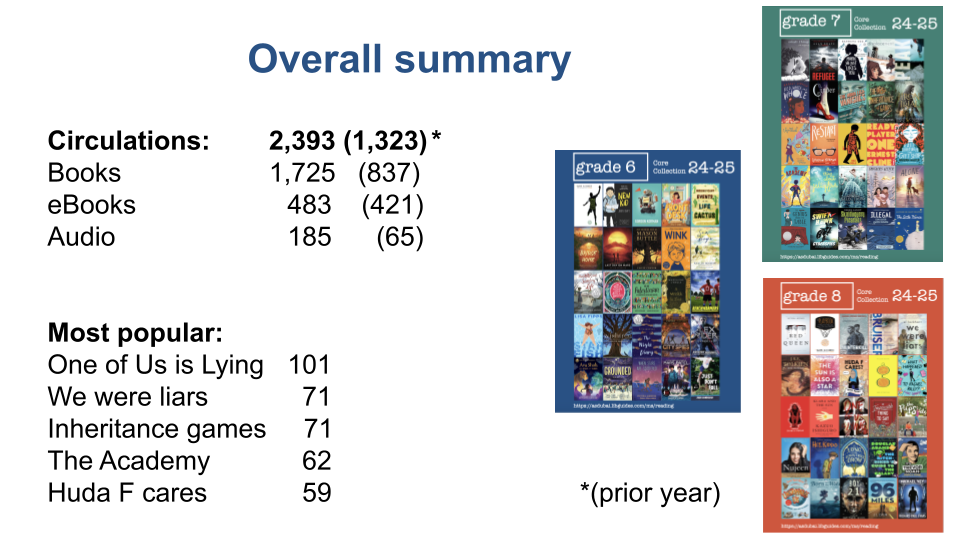
Given the dire state of the nation on reading overall for middle school with each grade reading less than in previous years, this is one small light at the end of the tunnel for me – showing that perhaps we need to narrow rather than continue to broaden our collection and focus on many copies of the most popular books?

Another amazing side effect has been the number of our faculty who are now fans of middle school / young adult literature and who have kept on coming back to finish series (I think it’s really important to have book 1 of as many enticing series as possible in the list). It really matters when not only the ELA teacher but also the PHE/Sports coaches and Drama and Science teachers are reading and recommending books.

Another interesting aspect has been that it seems we’ve arrived at a sort of tipping point of students accessing eBooks and AudioBooks in greater numbers than I’ve previously seen. Since we tend to only buy 3 or 4 of each of the core books (plus whatever ELA has a budget for to put in their class libraries) the most popular books tend to be out all the time, resulting in students then using the digital equivalent. I like AudioBooks as it means I can listen (often at 1.5-2x speed) and do my knitting, and I often have to persuade students that listening to audiobooks is also reading. In a culture where very few students are read to, I think it’s also important for them to hear stories – not the least to avoid embarrassing incidents with the pronunciation of words and names!

Of course I know that borrowing doesn’t always translate to reading (see the amazing way the great Nathan Pyle illustrates this below), but on the other hand I’m also comforted by the fact that our ELA classroom libraries have also stocked up on many of the core books and their circulations are not counted in my stats.

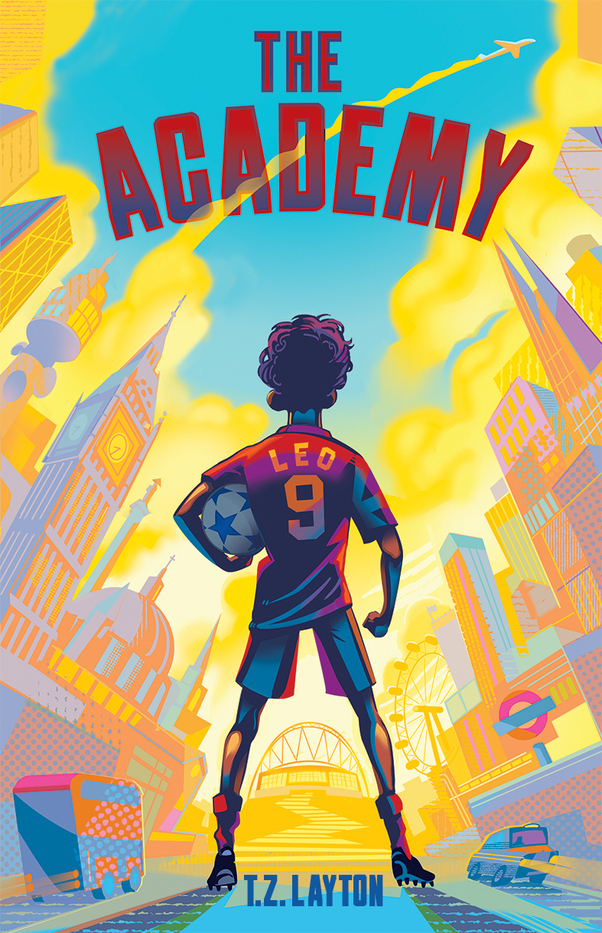
Image by Nathan W Pyle – buy his amazing books!

One of the runaway success books I’d like to highlight is “The Academy” by TZ Layton. In common I think with most 10-14 year olds, most of the young soccer players at our school are convinced it’s only a matter of time before they’re scouted into one of the youth leagues and this series feeds their dreams.

Actions & Activities

The actions and activities around the core books this year include:

  • Culling of the least popular (and some of the most popular*) books from the previous year
  • Book overviews on the middle school TV displays
  • Core list on Advisory Slides
  • “Core Wall” in library
  • ELA & MS teacher promotion
  • House points for book reviews
  • On libguide / recommended to parents during parent conferences
  • Weekly Kahoot quiz January – May (inter-house competition)
  • Battle of the Core live quiz assembly – 8 May (moved from January to increase exposure)

* while some of the books were taken out because they just didn’t fly for one reason or another (usually because I’d been misled by a good review without having been able to read the book first, or I misjudged the audience), some have been given wings and are flying on their own without the need to be on a list, or have been adopted by the ELA department as one of their book club books. Of course there is always great irony in choices. After not being able to successfully sell “The thing about jellyfish” by Ali Benjamin all year long, I took it off the list for next year and of COURSE then some young booktokker started recommending it and now everyone wants to read it!

Another side effect has been more faculty coming to me for recommendations for their own reading of for books for their younger kids or nieces / nephews – there is nothing more flattering, no greater gift you can give a librarian than ask for recommendations!

there is nothing more flattering, no greater gift you can give a librarian than ask for recommendations!

In conclusion I’d say if you’re in any doubt about the value of having a core collection, go ahead and try it out. It doesn’t have to be 25 books but it does help to have at least one representative of each genre. Including the first book in a series is always a good idea and I also try to have books that are fairly recent, include books from visiting authors if we have any and to try and tap into the zeitgeist.
BWB where are we at?

After a flurry of research and completing my final paper for my M. Ed, one may think that it’s all over with the inquiry into reluctant readers, boys reading etc. etc.  But it’s not. Far from it in fact. I’ve been a little distracted with the library renovation, a series of unfortunate events with library assistants having close encounters with pregnancy and injuries leading to somewhat more of a day to day burden on my shoulders etc. etc (it’s called “life” I keep reminding myself). But anyway, we carry on unabated with our BWB club (Blokes with Books) and you can come and hear me at the AFCC if you’d like to find out more!

Tim, the teacher leading the club and I had some conversations at the end of last year about how we needed to take things up a notch and really go deeper into the whole reading thing. The question of course is how do you make sure it’s still fun, that they still are committed, while deepening and expanding what they’re reading? We’re talking about 11/12 year old boys after all, and while my dry academic papers sound all unemotional and cool the truth is far from it.  We have spats and have to have firm words about “it’s just a game” and “if you don’t quit fighting about the chairs / beanbags / who got the book first, you will have to stop coming for a while” etc. etc.

But something special has been happening in the two weeks since we’ve been back. Sometimes you just get so caught unawares that you’re not recording or documenting and now I feel I need to document it. Last week our counsellor (who’s joined our team) was sharing how he’d seen an interview with Jamie Oliver about the fact that he’d read his first book at age 38. The boys were actually incredulous. And then a couple started spontaneously sharing how before BWB club they’d never finished a book either, or if they did it was just a quick and easy book and how much more they’re reading now and how it takes practice and perseverance. Note – it also takes courage for a boy this age to come out and say these things to his peers.

This week we reflected on Obama’s reading list and how he’d said it helped calm and focus him in times of stress. And again, a couple of boys put their hands up and said how reading helped them calm down, when they were angry or upset.

So, whscreen-shot-2017-01-21-at-1-47-36-pmat’s new.  Right now I’m trying to drill into every student at school the necessity of having a “what’s next” list – either a mental list or a  physical list or a pile of books that are the “books in waiting”.  And the great thing about a club like this is that we can try things out on them and see how effective they are.
This week we used Leigh Collazo’s Genre Personality test which you can purchase from TPT (a $5 well spent). My assistants and I spend quite a bit of time this week updating the bookmarks in order to make the book suggestions specific to our library.  The boys did the quiz during the BWB session on Friday and they really enjoyed doing it. It was fun and light-hearted and we kept emphasizing that there was no right or wrong answer and it wasn’t scientific. After they’d tallied up I made a spreadsheet of the topscreen-shot-2017-01-21-at-1-48-01-pm 3 categories of each boy, and as we read out the descriptions there were cries of “yes, that’s exactly how I am” and “I agree” and “yes!”  With their permission we then displayed the results. Most were evenly spread between A, (questioner); B (Escapist) and C (Innovator) with surprisingly few G’s (class clown) which is what I would have expected. Since that took up most of the hour we have with them – we didn’t get around to sharing the bookmarks, and
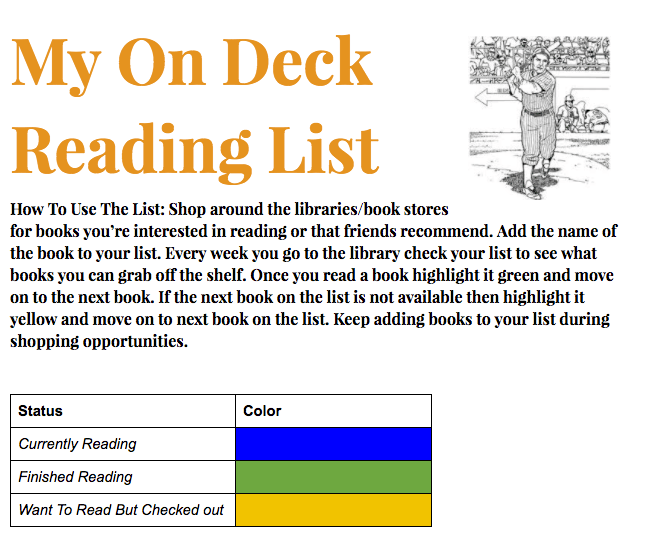
only introduced the “on deck” spreadsheet to help them keep track of their “what’s next” list – that’s next week’s work.


English Language Learner (ELL) resources

One of the wonderful things about the school I’m teaching at, is that they accept ELLs up to Grade 6 at any level of English.  It is also one of the challenging things.  It impacts me slightly as I try to help them with making choices for reading books each week, somewhat more when I’m teaching a unit for example Information literacy to prepare G6 students for their PYP exhibition and I see that a few students in each class just cannot engage with the lesson as it is moving too fast and at a too high level for their comprehension. It impacts our teacher a LOT all the time.  And out of all the challenges and considerations that keep my brain buzzing overtime, this is one that concerns me the most.

Free resource from: http://www.clipartpanda.com/categories/english-language-learning

I’m looking to order some books for classroom libraries and the main school library, so I reached out to my networks asking for books for pleasure that would be suitable for our ELL students. I also did internet searches for ELL suitable books, books for reluctant readers (even though they often are NOT reluctant readers).

I would very much like to distinguish between reading to learn to read and reading for pleasure, because I believe (and research appears to back me up) but it is the pleasure and interest reading that will take my students both into the next level of reading and also help them to create, maintain and sustain a love of reading. Yes I know there is a plethora of resources for teaching reading to ELL students and that English as a language is richly blessed with a wide variety of graded readers. But that’s not what I’m looking for. I want books that they will WANT to read for the sake of the content or story or character. Not because it’s level D or 14 or 2.7. (Here is a great article with good resources on motivating ELL student readers).

It would also be very nice when all the students are reading literature circle books that there are also books available to ELL students to read.  Of course if you have two or three ELL students who share a language, there’s no reason why they shouldn’t read a book at the appropriate level in that language – however it does lead to some complications for teachers interacting with them if the book isn’t also available in English.

Here are a few of the suggestions / ideas:

With thanks and gratitude to the iSkoodle library folks and to Asia School Library Connection:

A few of the books in my catalog that I and our ELL department recommend to parents and teachers including wordless books.  Here are some suggestions for using wordless books. They are also useful for the interlingual classroom as Eithne Gallagher suggests.

Graphic novels and comics are a great bridge for ELL students, although this article deals with use in High School, the principles can be transferred to Primary (see “great comics for early readers” above).

And don’t forget AudioBooks – some great resources have just been released including a very good infographic on using listening by the Audio Publishers Association. I attribute my childrens’ large vocabulary and working knowledge and love of the classics, including poetry to Naxos’ Spoken Word library and CDs.

Accessing lessons and other material

Up to now, all I’ve been doing is ensuring that the Information Literacy classes I do are also on my libguides with all videos and links so that students can access them in their own time and go through them at their own pace at home or revisit them as and when needed. It would be helpful to have resources in multiple languages – UNESCO has such a guide with resources in many languages. The challenge would be to access and use these as appropriate in our environment.
Any comments or suggestions?  When I have time I’d like to try and “level” this list but I need to start reading some course work for my next M Ed. study unit.