#Sensemaking – Fantasy

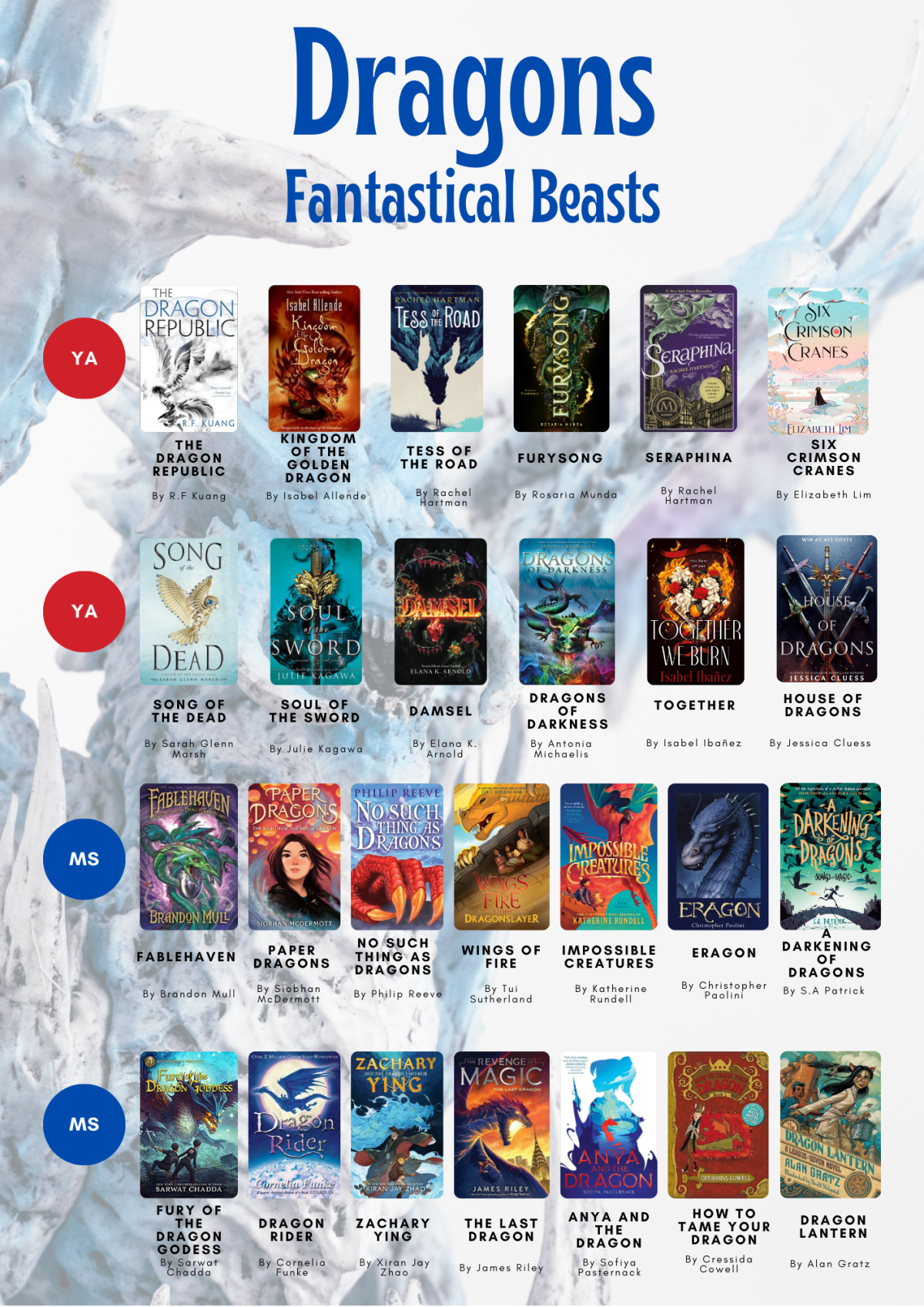
Like most school libraries I have a bunch of students who really like fantasy. But that’s a bit like saying they like chocolate. Chocolate is a blanket term that can mean different things to different people and tastes they do vary. Like my poster series for Dystopian fiction – I’m embarking slowly on a number of side projects to demystify other genres in the library so students can find the sub-genre they like most. These things take an enormous amount of time and thought and originally I wanted to present a “fait accompli” in my blog but decided as it would mean I wouldn’t be posting anything for just about forever, to do it page by page.

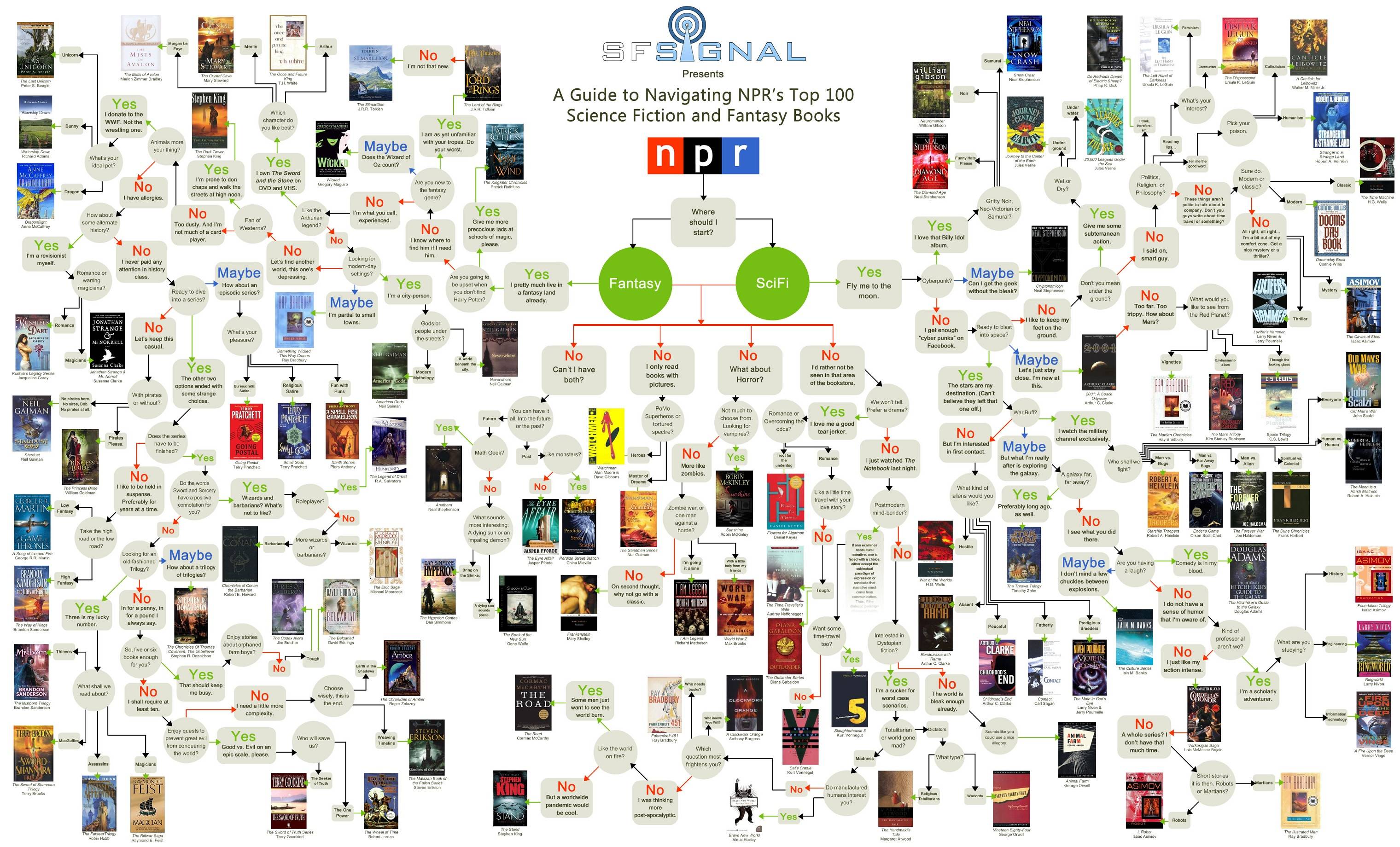
So far my research into fantasy sub-genres has led to the lists like “A Complete Overview of 18 Fantasy Subgenres“; this article claiming there were more than 50 subgenres, and the rather complex (and adult oriented) NPR Fantasy vs SciFi poster below:
So the path I’m taking is, as usual being guided by my students and what they’re reading and asking for – which is why I started with “Fantastical Beasts – Dragons” because that’s what someone wanted today. Once I have a bunch of posters I’ll try and find a way to link them in some kind of flowchart / decision tree.

I’ve distinguished between YA and Middle Grade, as things can get quite spicy in the fantasy / romantasy etc realm – (you’ll notice my list doesn’t include the Fourth Wing (The Empyrean, #1) by Rebecca Yarros – yet). Usually I indicate whether a book is part of a series in my posters – however one of the great things about fantasy is that nearly all books are part of a series (I’ve generally chosen either the first in the series for my image or the most dragony title). Books is a series is the library equivalent of “all you can eat buffet” as with a little bit of luck the minute they’ve had a taste of the first book they just keep going.
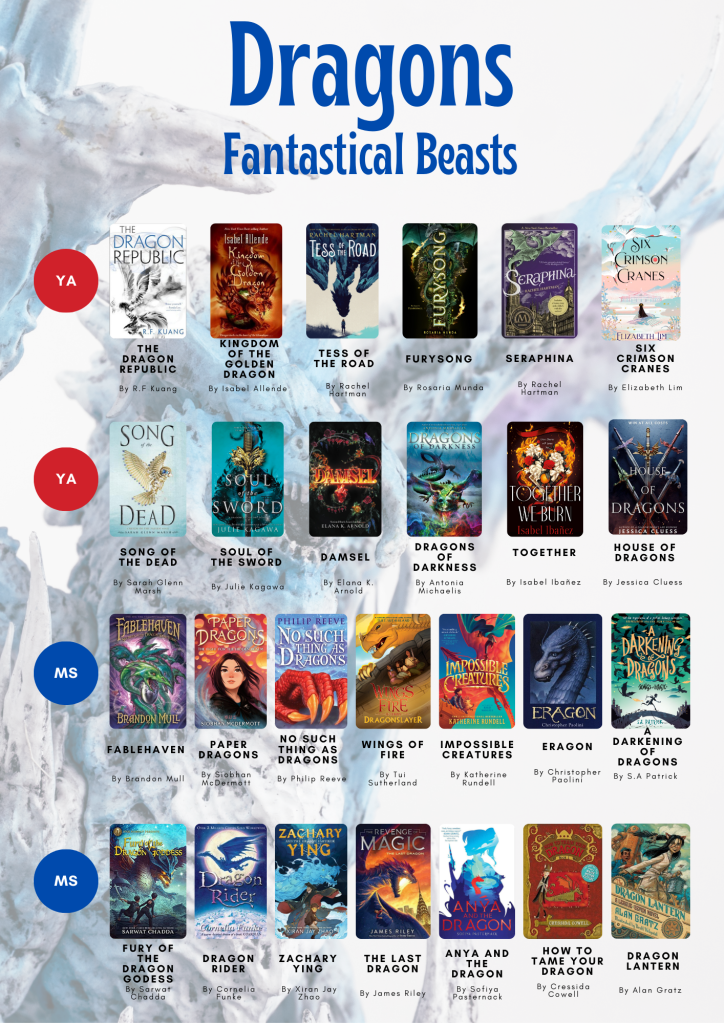
So far, based on my collection and student interest I’ve identified the following areas, romantasy, dystopian, high/low fantasy, magic realism, paranormal, fracture fairytales, mythology, alt. history, animals / fantastical beasts, schools of magic.

What am I missing?
#Displays & #Posters: Read around Ancient Greece

Our G6 students are currently studying Ancient Greece and will soon be embarking on a week long “week without walls” trip around Greece. Besides our nonfiction books on the City States and other aspects of Ancient Greece here are some more titles the “riff on the theme”.

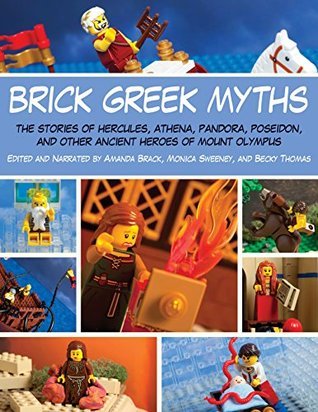
Of course an easy hit are those around the Greek Myths, and yesterday and today I went to the social studies classes and with a trolley full of Greek Myth books, in particular the multiple copies we have of the 12 George O’Connor Olympians series and each student could check a book out. Not depicted on the poster but one of my absolute favourites series are the “Brick Books” where various classic tales are depicted with Lego Bricks. Unfortunately many of the series are now out of print, but in previous libraries I’ve had the full set of Shakespeare plays, fairy tales etc.

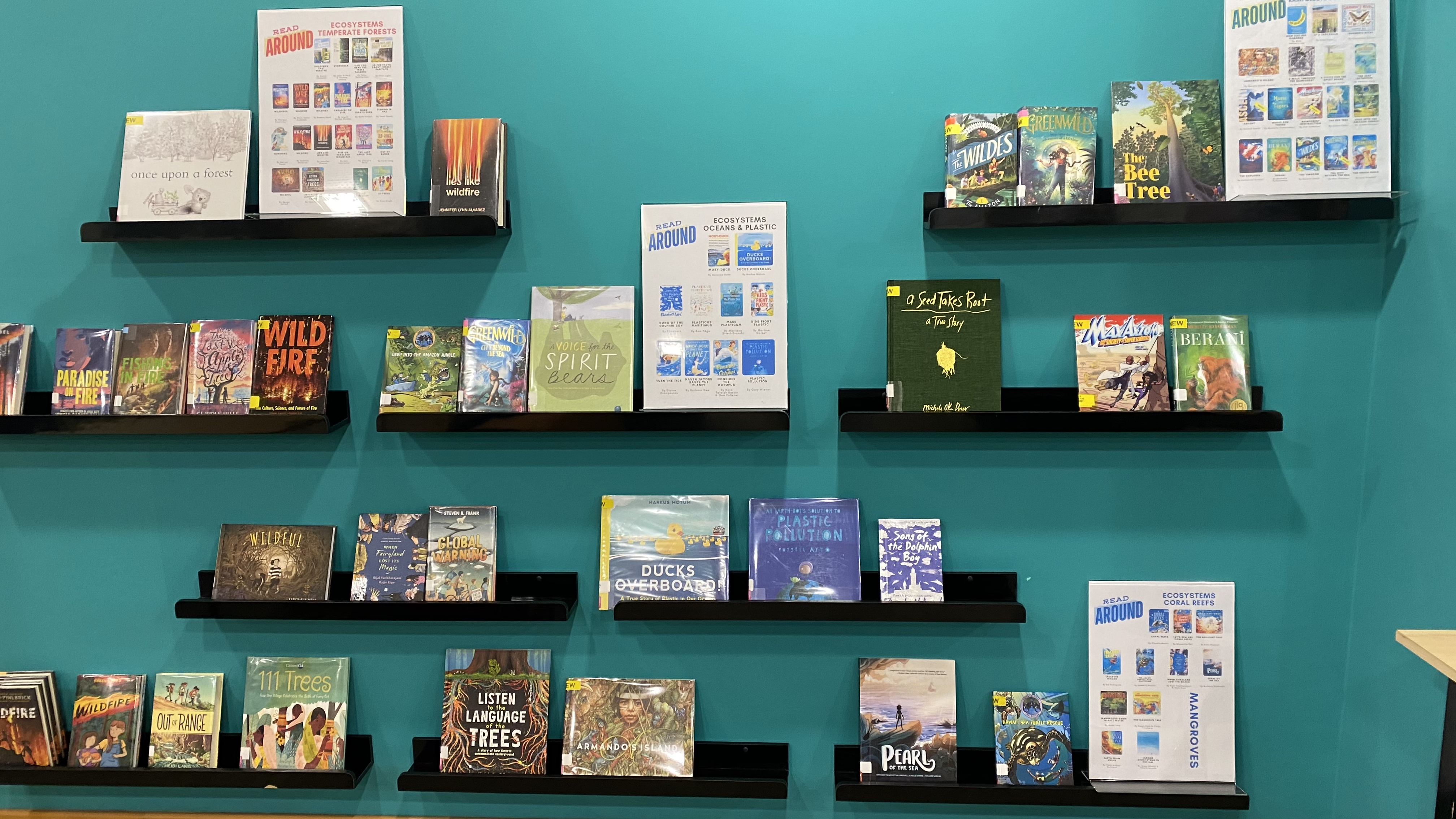
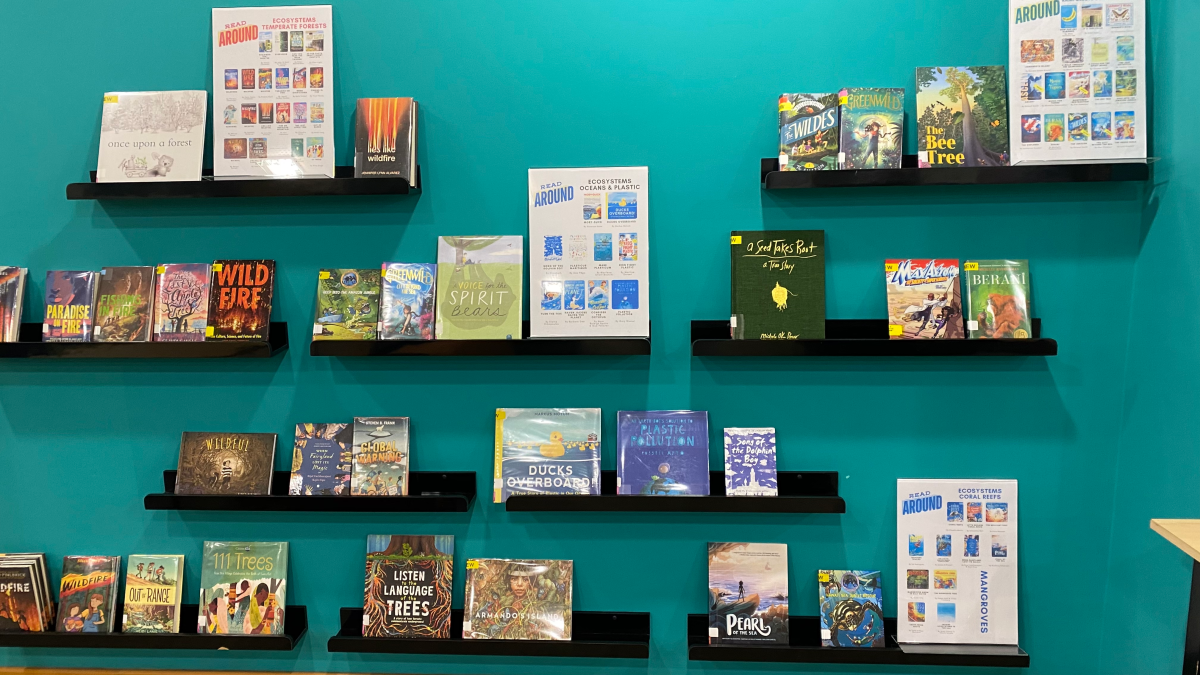
When I wrote the series of blogs in December for GLLI many people asked about displays so I remembered to take a picture of a couple of our displays of last week. We have two main spaces downstairs for display, one as you walk into the library and one against the wall. So one was dedicated to ancient Greece and the other to our Ecosystems projects.

Romance update

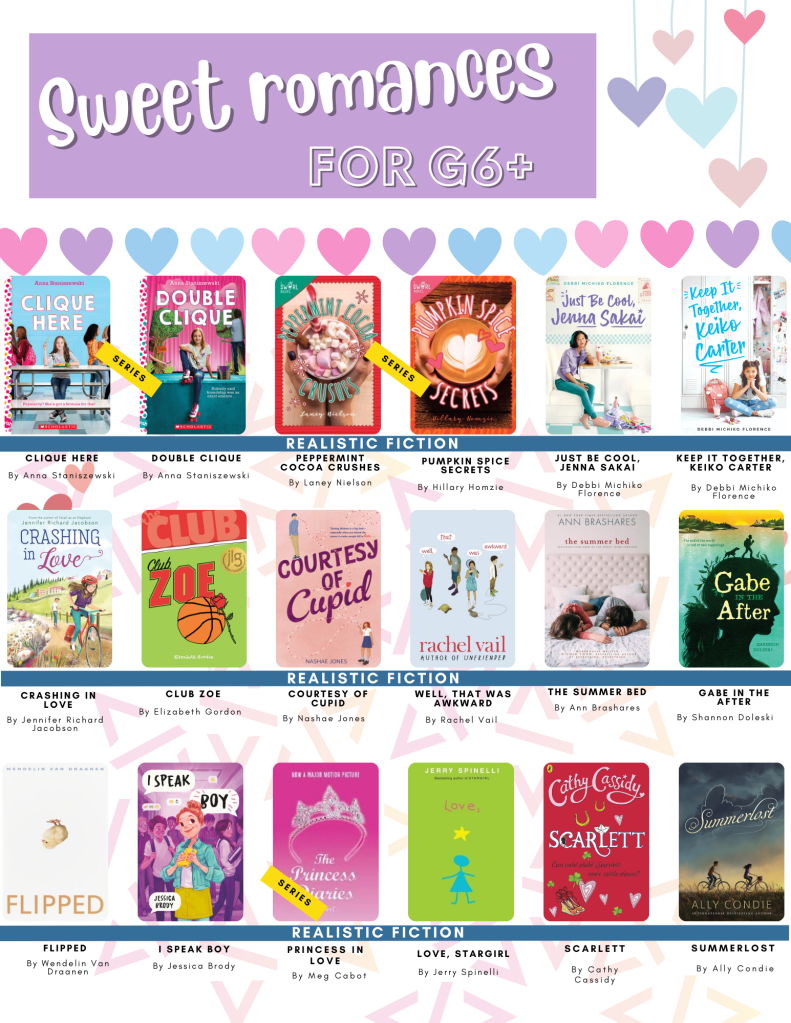
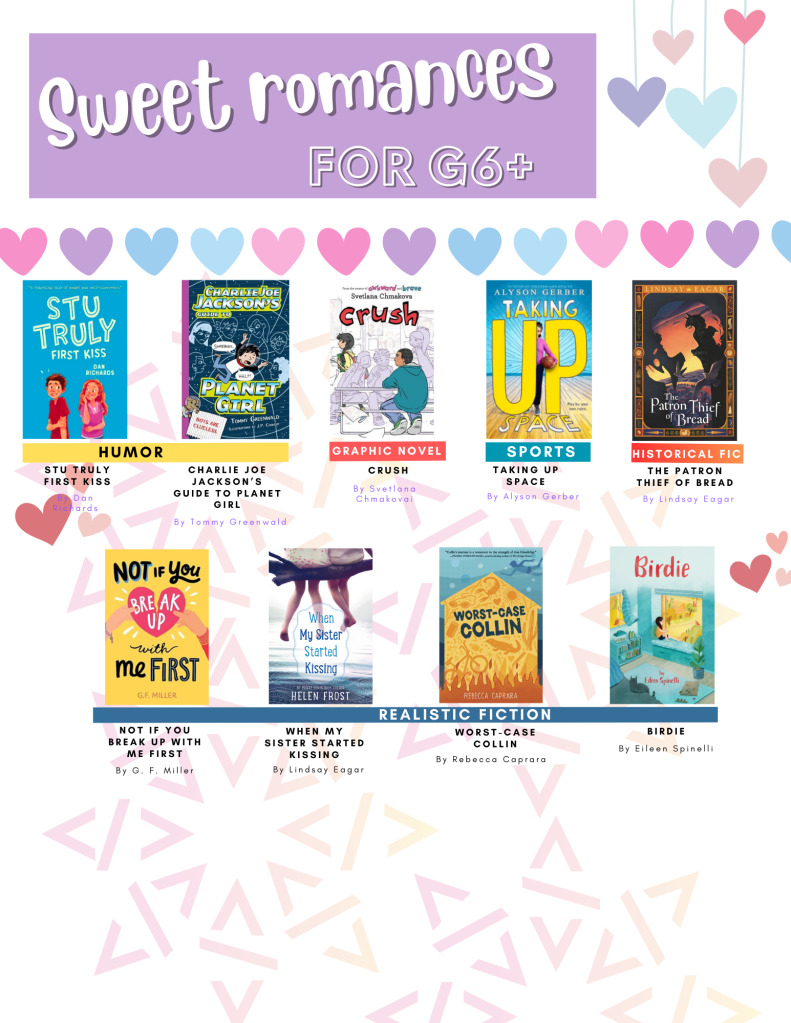
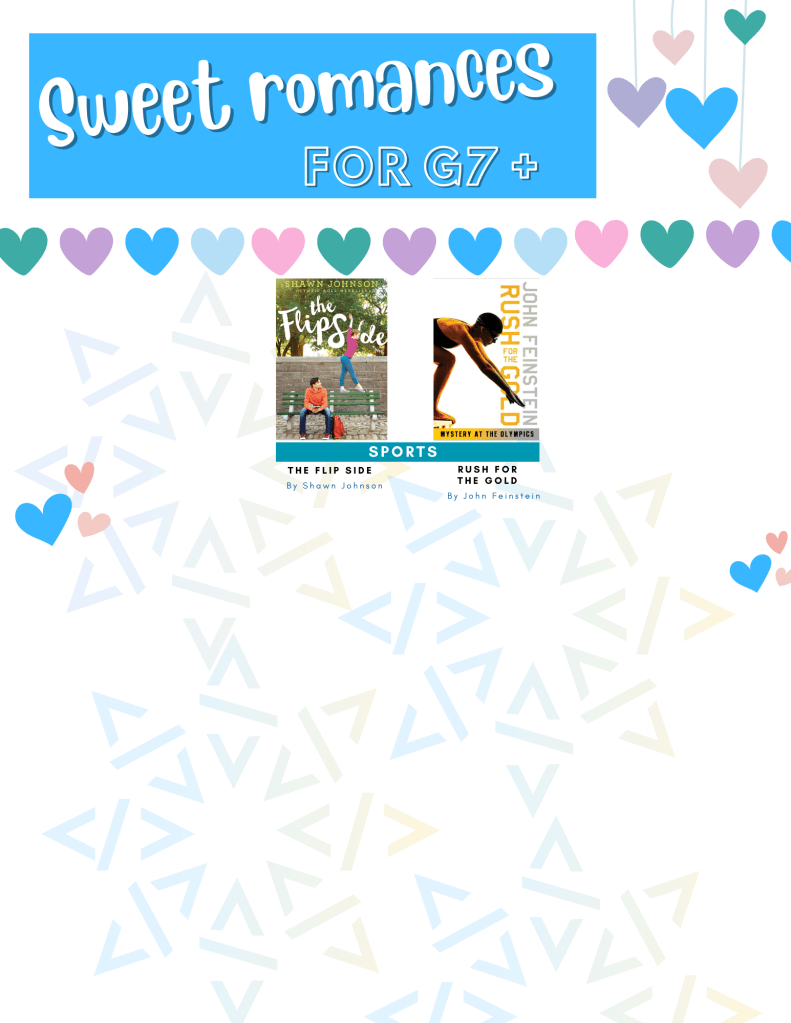
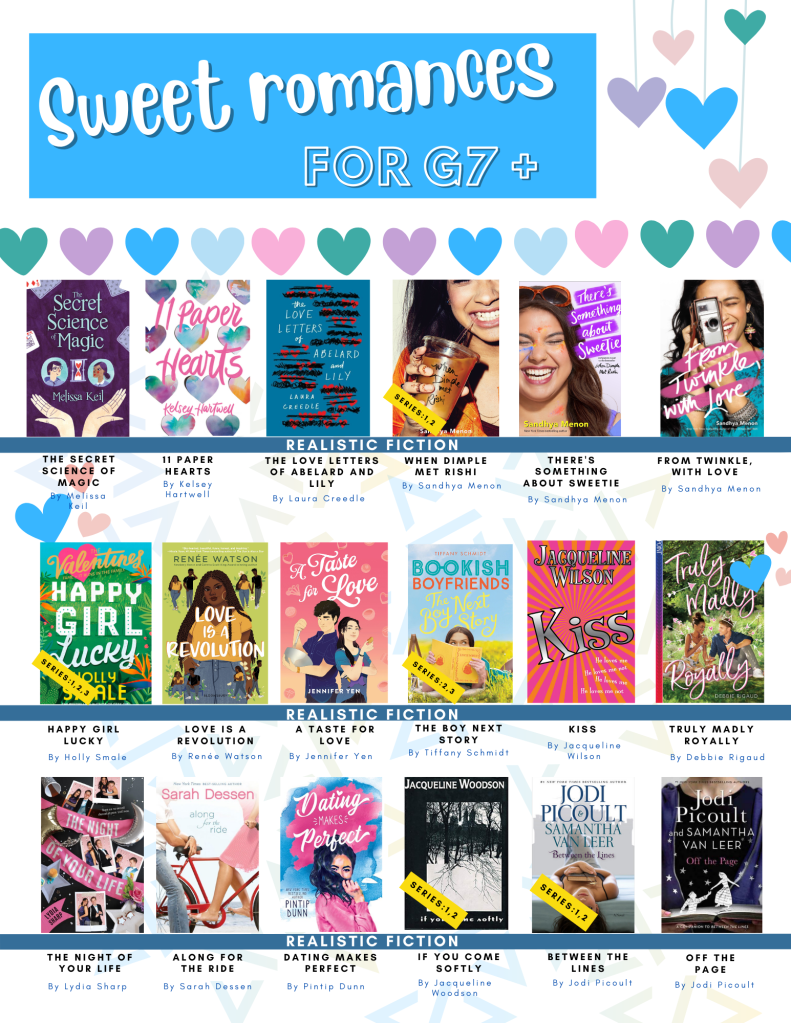
How easy it is to slip back into slothfulness – after a month of posting over at GLLI, today’s the first time I have had both the mindspace and timespace to do something on my own blog. Reading through various FB librarian spaces it seems that Romance is still doing the rounds and people are still looking for good, age appropriate romance novels that the parent-police / rabid-anti-readers / censors whatever are not going to object to, so I spent a few hours this week trying to find as many romance books as possible on Mackin.com that are rated respectively Grade 6+, Grade 7+ and Grade 8+. Now for all of you non-educators, non ex-parents of teenagers, non-working with teens people the distinction may appear ridiculous. But believe me, a 10/11 year old Grade 6 child is developmentally and emotionally ready for something quite different to a 13/14 year old. Or at least some of them / their parents and others that try to police their thoughts and reading.

I say this as an adult who has recently read “The Memory Police” by Yōko Ogawa and translated by Stephen Snyder and as a GenXer whose reading was not policed, except perhaps for “The Godfather” which my parents considered too violent, and therefor like every teen in my school read the whole sordid “Flowers in the Attic by V.C. Andrews series” before we really fully understood what incest was all about (an aside – read this Atlantic Article about just how prevalent it was / is).

I am also living in a region where even a mention of kissing could be construed as scandalous, but with students from all sorts of parenting, cultural, religious, regional, national and linguistic backgrounds. So tightrope, people. Tightrope. While doing my research I really had to wonder what exactly was the criteria to distinguish between suitability of the various age / grade boundaries. And I’m still wondering. There is a lot of talk about the age of the protagonists and whether or not there is kissing, hand holding, other touching, sexual encounters that are graphic or non-graphic or just hinted at but nada on where the lines are.

Back to library-land – why Mackin.com – well, unlike Follett which has very broad categorisation = Grades 3-6 / 5-8, 7-10 and YA, they are a little more granular so I poured over lists and lists of romance books and came up with the posters below. Also bear in mind these are inasmuch as I am aware all heterosexual in nature, again due to where I am living and trying to breathe and exist.

In another time and space I hope to have a far more inclusive list. And read my disclaimers below on this post. There is some nice cross-over in genres as well, getting into sport / fantasy / historical fiction with a brushing of romance – very important for our male-type patrons who are more likely to entertain the thought of romance in the context of anything but realistic fiction.

If you’d like to make a copy of these templates and expand / change for your context, here is the link. Feel free to comment with an image or link to any more inclusive posters you make.


Disclaimer: The views, opinions, and thoughts expressed in this blog post are solely my own and do not reflect the positions, policies, or opinions of any current or former employer. Any references or examples provided are intended for informational purposes only and should not be construed as endorsements or official statements from any organization I have been associated with.