
For a while now I’ve been wanting to highlight the curation of books related to the countries and cultures of our students, and finally this year I got around to creating posters “Celebrating xxx” which I post to our school bulletins for students and adults respectively. It’s been a bit of a chicken and egg project – knowing how many students we have from each country / culture – which in itself is truly not as simple a task as it may appear. We use the proxy of first, second and third passports, but as anyone who lives internationally knows, life is a tangle of multiple strands with immigration, migration, expatriation, languages, refugees, fleeing and arriving, births and marriages and transferences and identities. So in the last two years, using this list I’ve been scouring book lists, book catalogues, recommendations, book prizes to where we finally have, for most of the countries with more than 2 students, at least a couple of books besides a travel guide.
A couple of books. How easy that rolls of the tongue. But anyone with a conscience and an iota of empathy will know that that is another potential landmine. I have carried shame for my country of birth, South Africa, for decades, and still often have trouble admitting to its citizenship since I still feel the personal burden of all the wrongs committed by people of my race. It is right that a representative sampling of literature of my country includes reference, analysis and depictions of the pain and despair that apartheid has wrought. But that is not all we are as a nation and people.
I have not yet made the list for South Africa. But that was the dilemma I faced when curating the poster for Germany. A country with a 1000 years of literature beginning with the Nibelungenlied. Whose literature I studied in translation at UCT while ignoring my true passions suppressed doing a commerce degree. Yet looking at the books we have in the library, it appears that the war years, in particular the second world war, and specifically the war atrocities, is the primary lens through which our students form their Germanic world view. Again, it is right and proper that authors, beginning with people like Günter Grass, who, in his time was vilified for daring to address the near past, should shine a light on a terrible past. But that is not all by which they should be known. And more than anything students need to become aware of nuance. By the realisation that it is possible to hold two opposing views in one’s mind simultaneously. And if not through literature, how will they learn that? How sad is it too, that all the books we have about Armenia are about the genocide?
So far I have received nothing but gratitude from our community for both curating / purchasing these books and highlighting them as their national days come by. It is I who is filled with doubt and desire to be able to offer more. And despair that in many cases there isn’t more as countries are ravaged by war and poverty – at times literally with bombs and other times with the devastation of censorship, cultural and monetary poverty and lack of access to publishing and translation of the words that need to be heard by their people, its diaspora and the rest of the worlds children and young adults / adults. We deserve more than the “lonely planet” and “countries of the world” as nice as it is to at least have that.
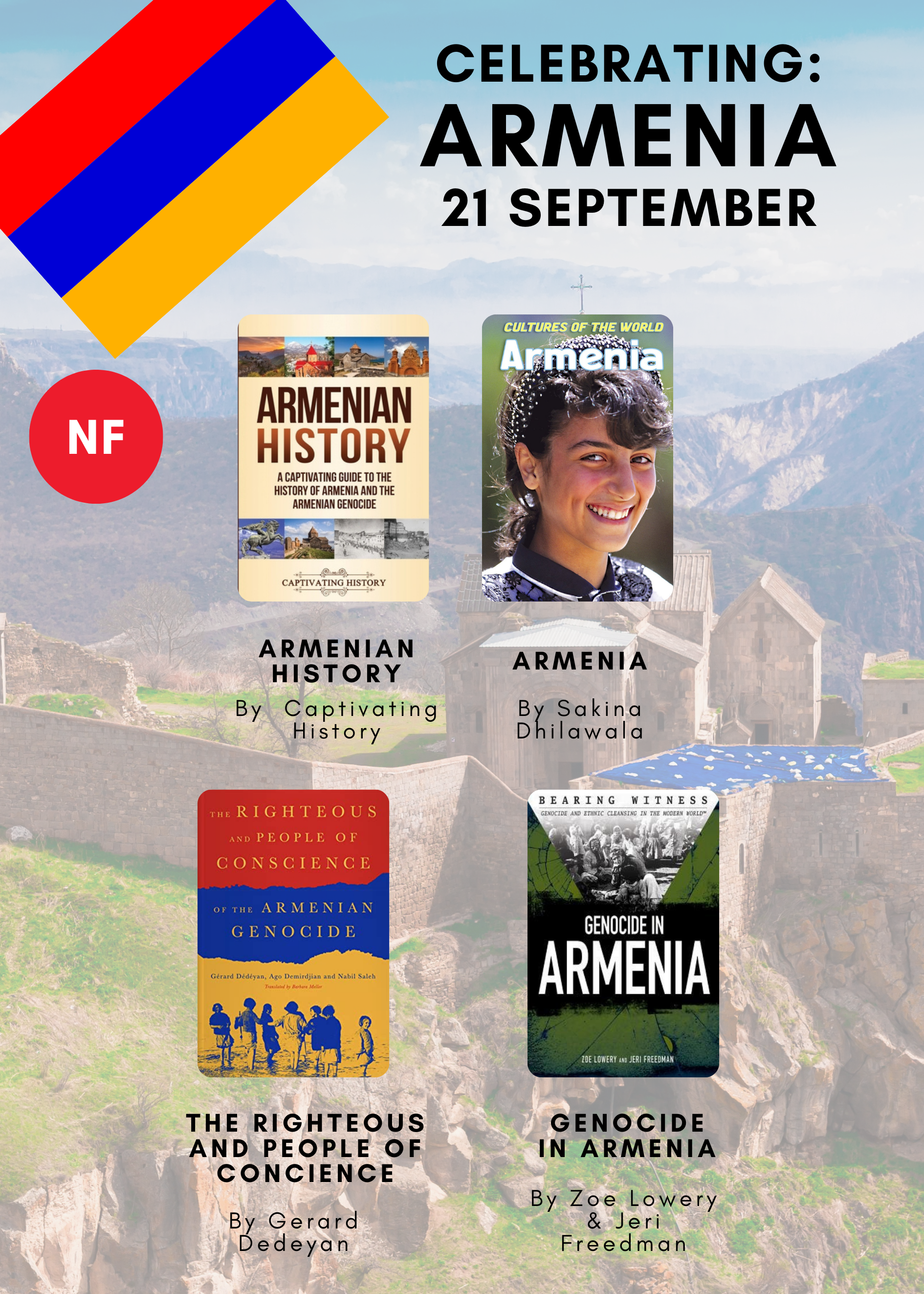
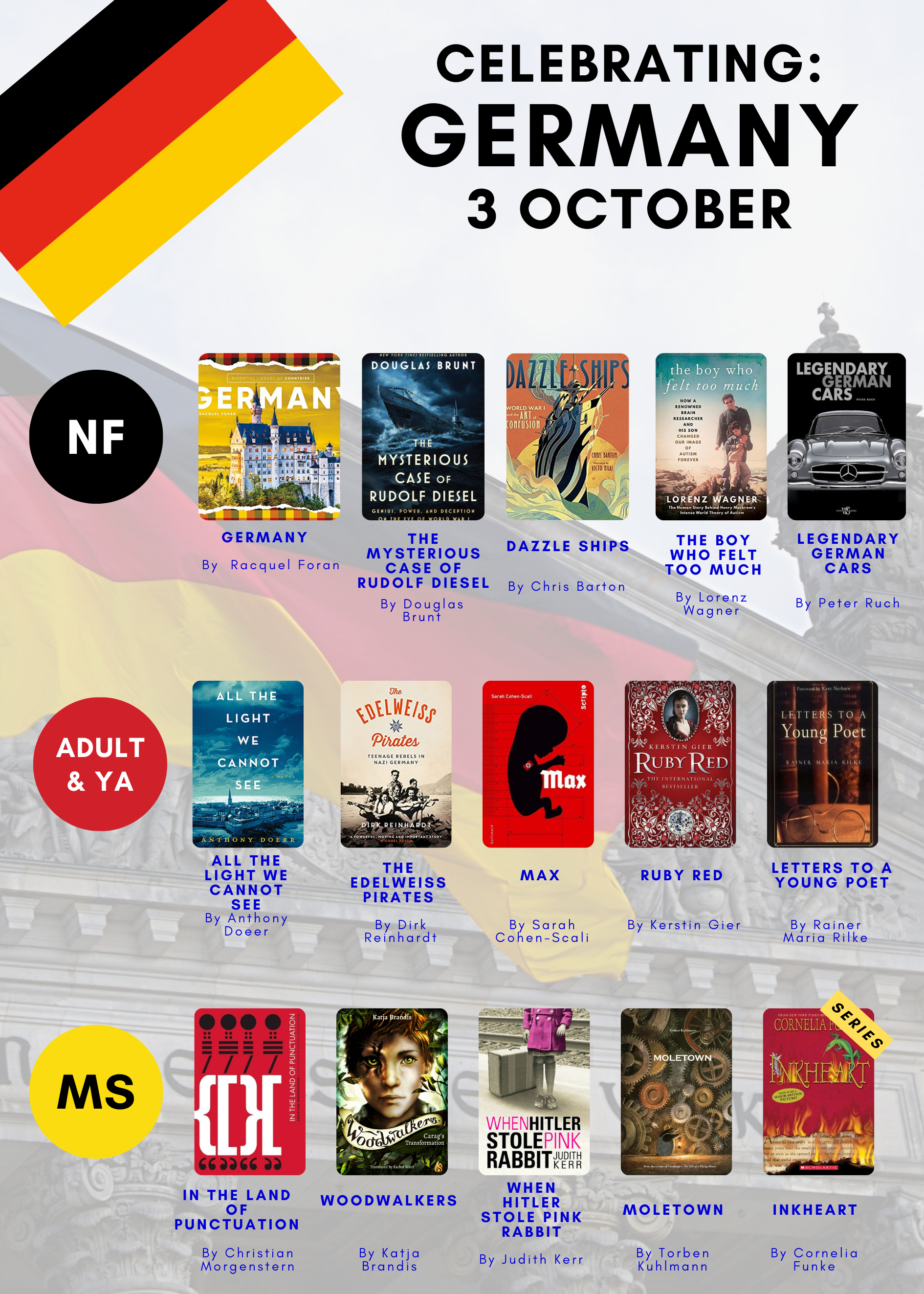


This is a sample of a few of the posters. Feel free to copy and use / adapt these posters for use in your own libraries. As the year goes on I add to the posters on their national days based on what we have in our library.
 Informative Flights - Musings of a Teacher Librarian