 |
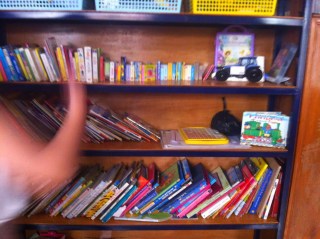
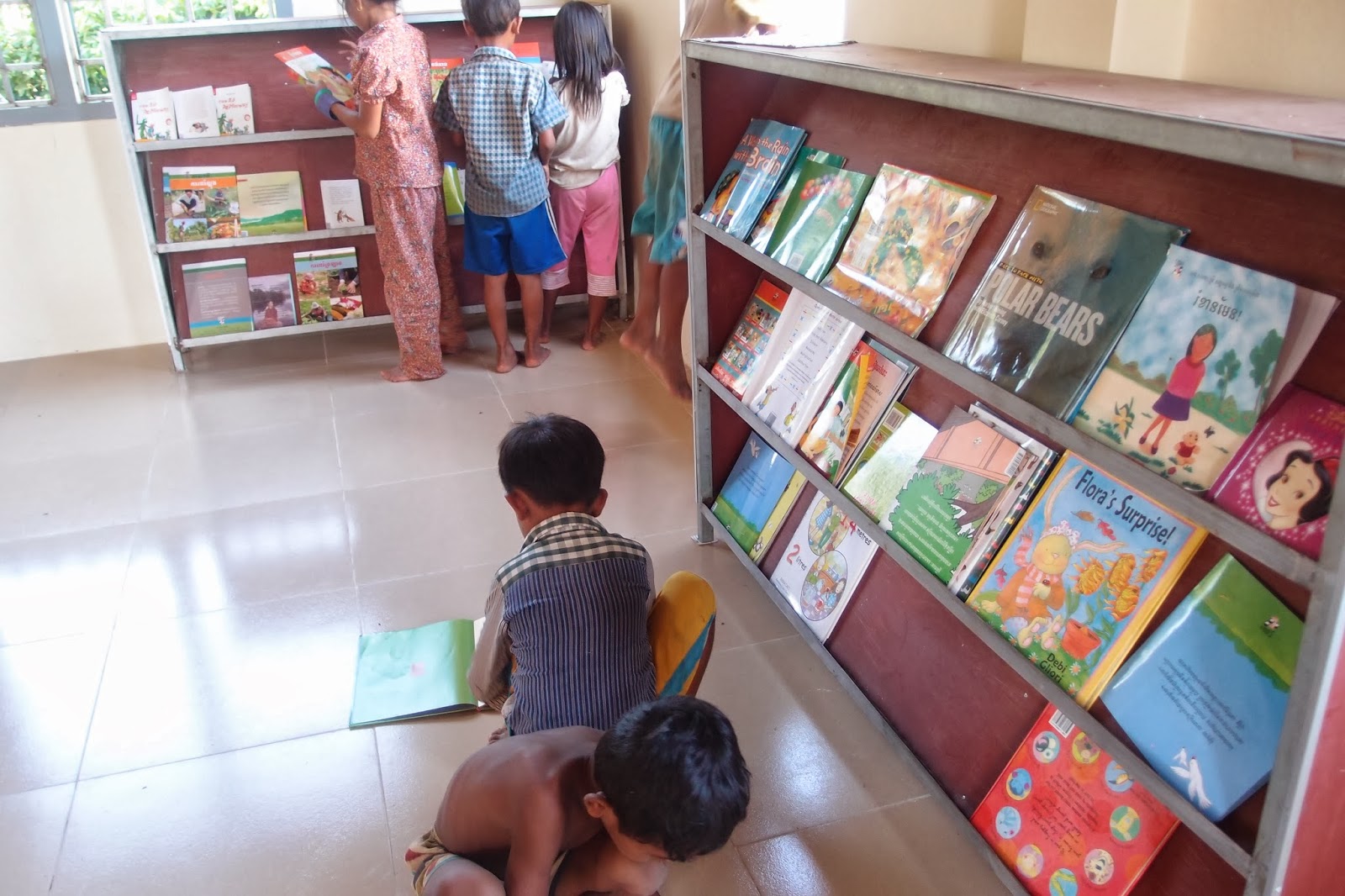
| Library at Kuma Cambodia – no borrowing only reading onsite |
I’ve just spent 8 days in Cambodia on an extremely interesting services trip run by UWCSEA-East. During the time we were exposed to 5 of the Global Concerns that the school supports through its service program commencing in the infant school with Kuma Cambodia, Green Umbrella (grade 3), Epic Arts (grade 5) up to ISF (grade 6).
The focus of the trip was on exposing parents and students to the various organisations and to allow us to “get our hands dirty” – literally – we took part in a variety of activities ranging from playing football – where the most important attribute seemed to be a very muddy field, to arts and crafts, dancing, cycling, teaching English, making paper planes, and some back breaking work on building 2 houses for indigent families.
Although the focus was not libraries, I couldn’t help taking a keen interest in what, if any books and in what type of storage or lending format these were presented.
Unfortunately my camera died early in the proceedings, and so I only have some iphone shots from later in the tour, so I’ll just have to describe.
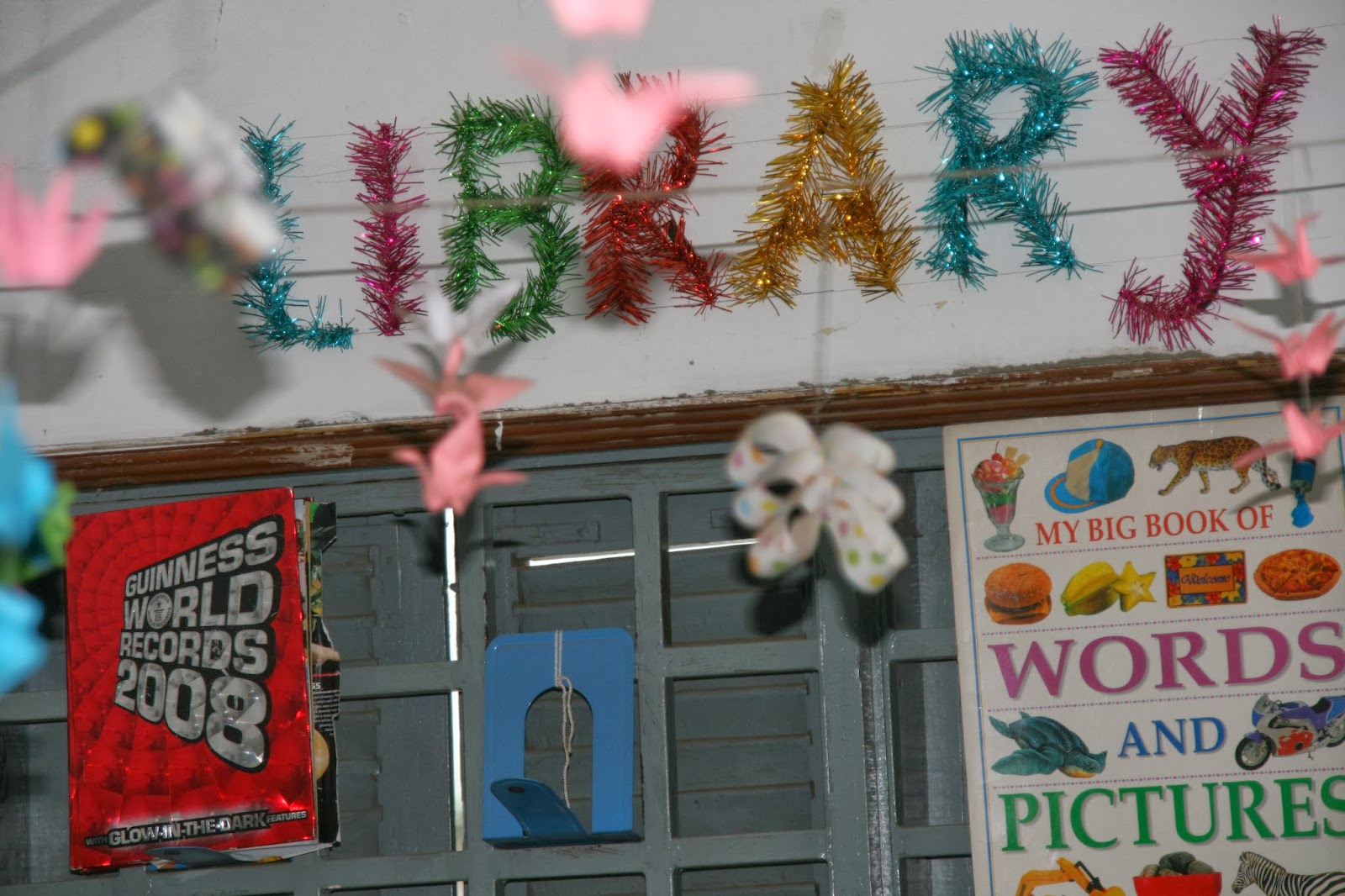
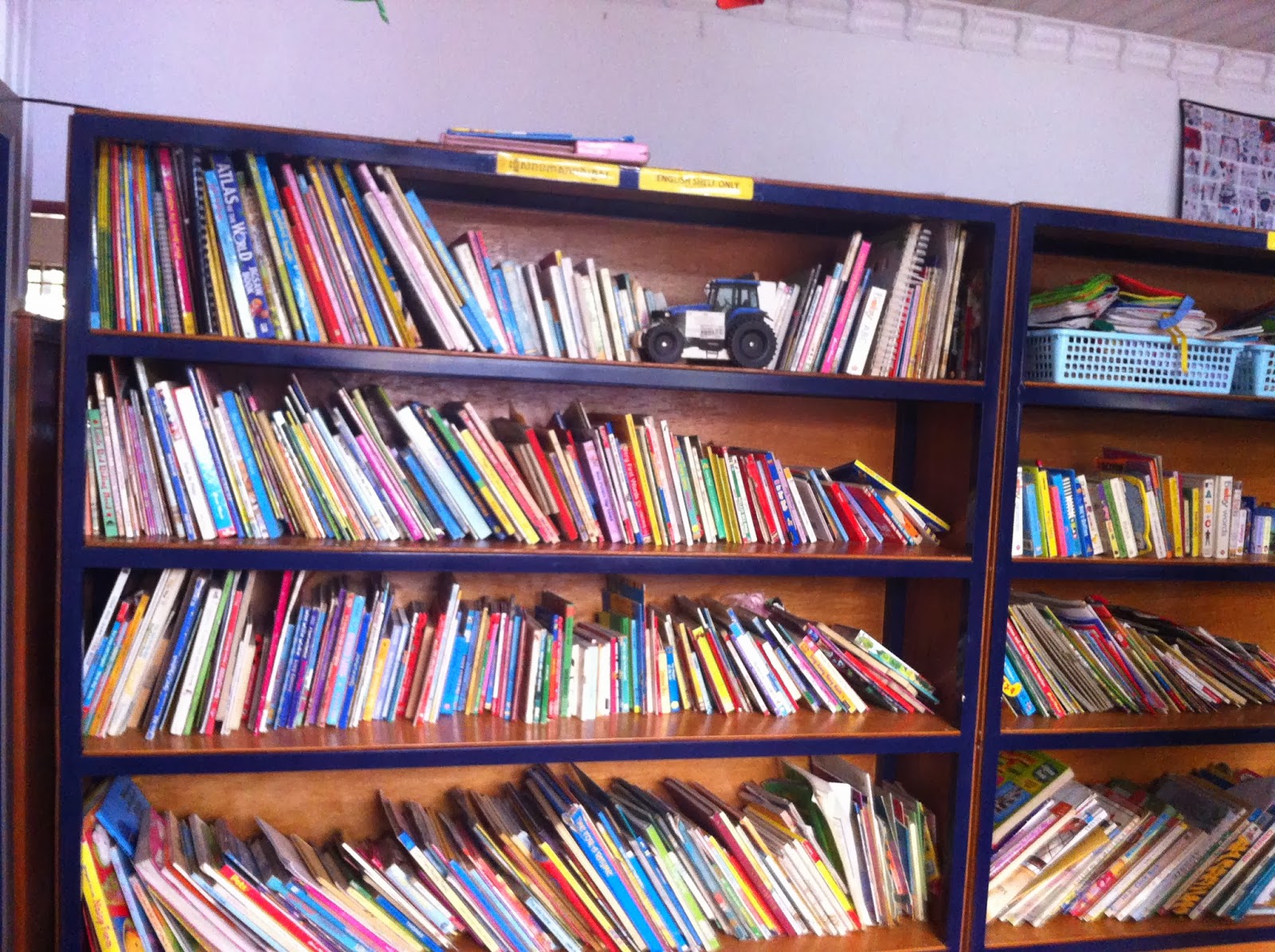
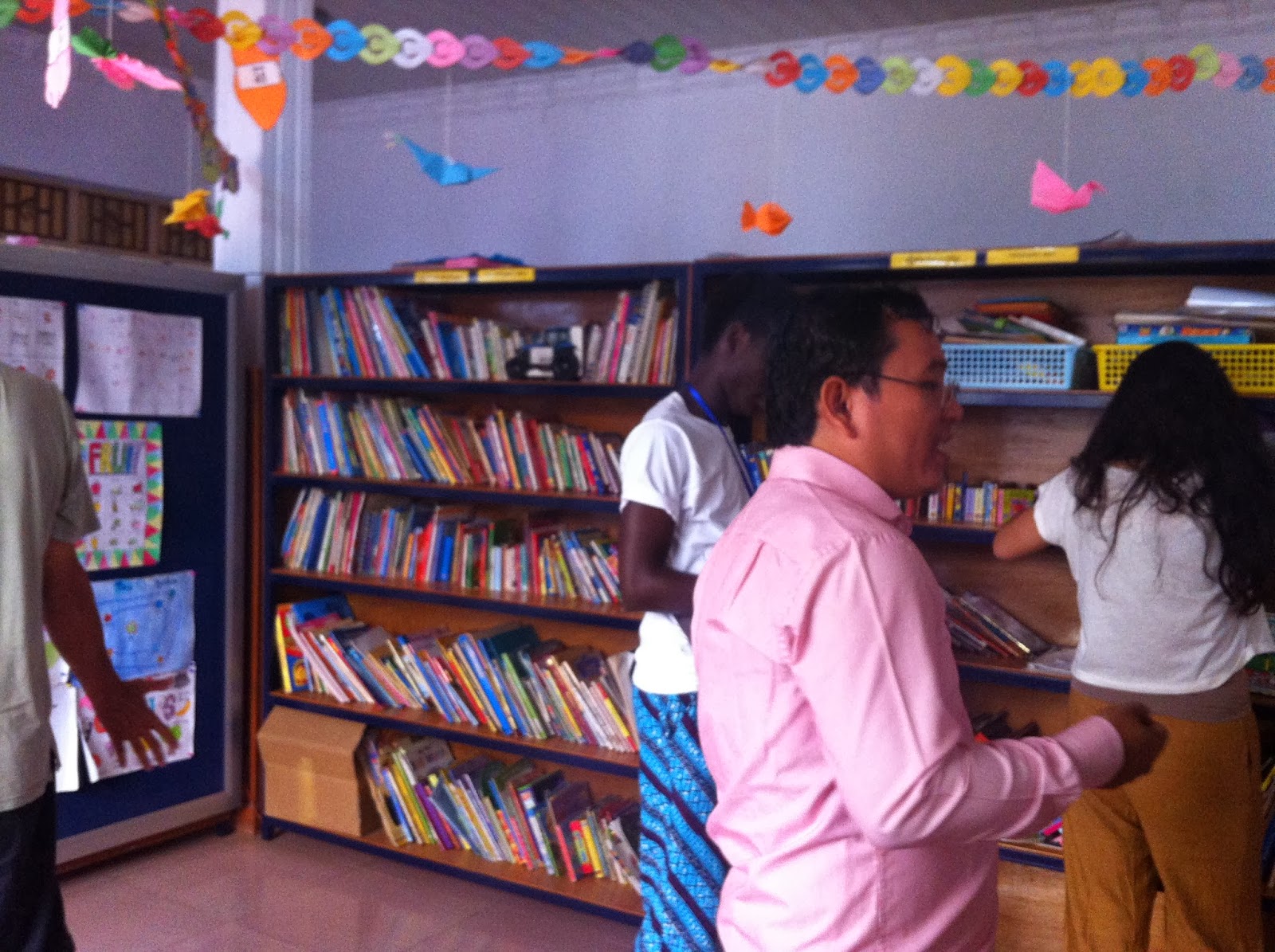
The first organisation we visited, fresh off the plane after a 4am start was ISF and I was a little shocked to see a couple of shelves and a nice sign made of christmas tree glitter saying “library” I admit to thinking “oh no, that’s it?” As the day progressed and we went to the squatter camps where the children lived and saw the extreme poverty and deprivation that they were coming from, the existence of even one shelf of books would have put those kids into the category of “haves” rather than “have nots”. Doubly so as they had books both in English and Khmer.
 |
| Books divided between English & Khmer |
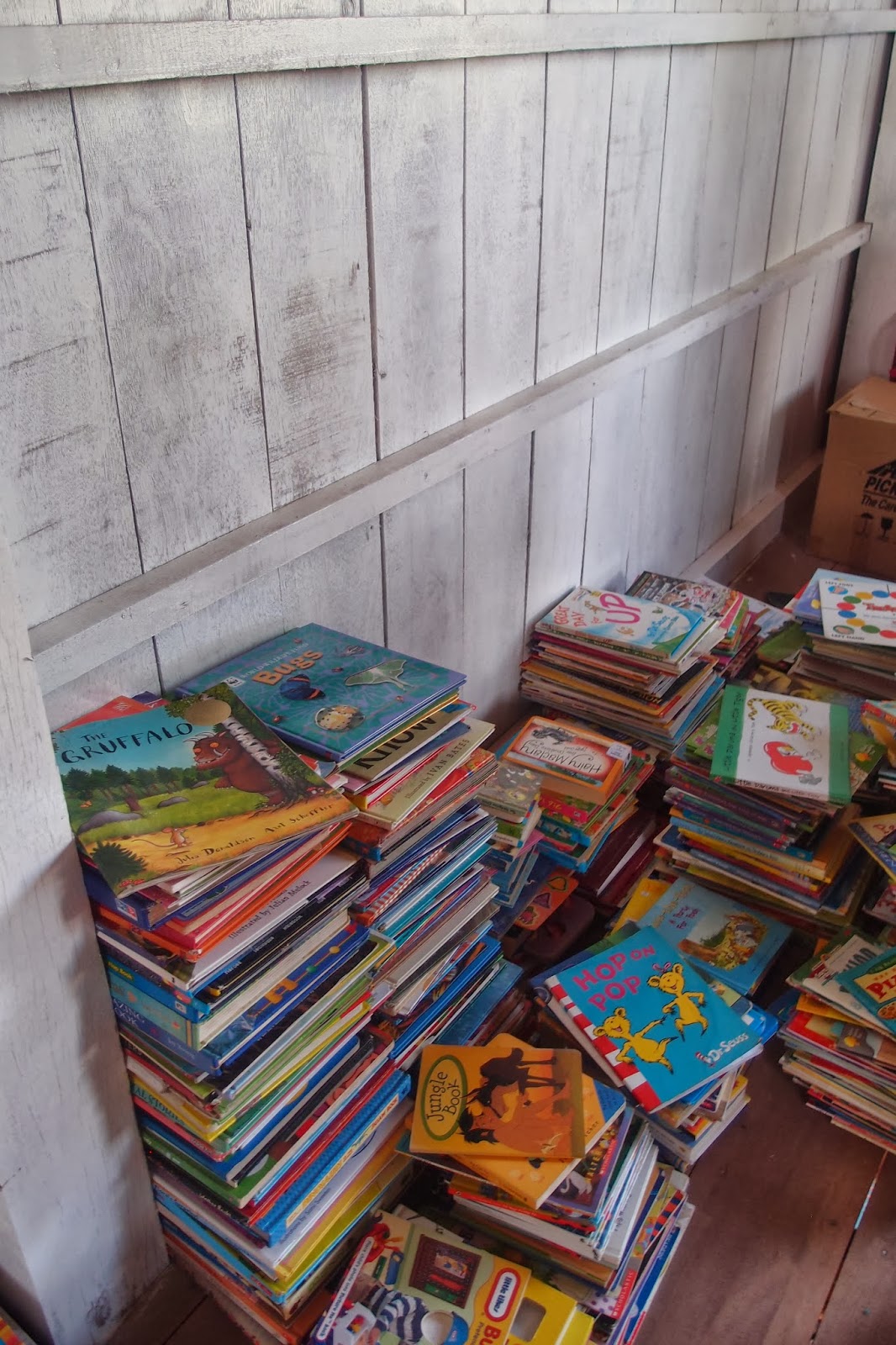
Donations are a double edged sword as many commentators have spoken of in the past. In one sense, to have books, any books, is a wonderful thing. There are caveats though. One of these is that by bringing good into a country one stifles or overwhelms a local industry. Another is the very important aspect of cultural relevancy – I had to laugh at the puzzled faces in an English class I was teaching as one of the kids in my team tried to explain “white” by reference to “snow”.
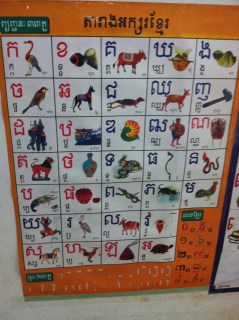 |
| 33 consonants and 23 vowels to deal with |
However, I think the most important thing is that children are allowed to learn literacy in their mother tongue and that this is supported by sufficient books in that language AT ALL LEVELS – starting with simple picture books, to the graded readers, chapter books, young adult novels etc. And of course the absolutely critical “hi lo” books with high interest level at a low reading requirement for children who have slipped behind or have the possibility of education at a later age. This site provides some fantastic strategies for struggling readers, aside from true disability, it is rather ironic that the “developed” world camps with “reluctant” readers, while the “developing” has children desperate to learn and enthusiastic learners without the resources that could take them where they need to be.
When I started researching this to write this blog post I found there is plenty happening in this area – it’s probably more a question of gathering the information together, sifting through it and deciding what is the nice to have, need to have, affordable, practical and any other criteria that an organisation can use to judge where their literacy spend goes.
In no particular order, here are some of the things I found:
 |
| Bookshelf @ Green Umbrella |
Worldreader: operates mainly in Africa and
“Since we started our efforts to eradicate illiteracy, Worldreader has been committed to gauging our impact through extensive monitoring and evaluation activities, which measure the number of books read before and after deployment, students’ reading ability, as well as own ability to provide delivery and support. We’ve been research focused since day one and have a long term track record of examining what works and what doesn’t when it comes to eradicating illiteracy. – See more at: http://www.worldreader.org/what-we-do/#sthash.JXXgifyJ.dpuf”
 |
| Books treated with great respect |
Room to read, with their publishing arm: “
One of the greatest challenges to early adoption of the habit of reading in developing countries is a lack of high-quality, age-appropriate children’s books in the local language. Often, the few books that are available are either second-hand books in foreign languages or low-quality, black and white books for more mature readers. Room to Read responded to this need by going into the publishing business. Our Book Publishing program is committed to providing children with materials that will inspire them to read, expand their minds, and develop a lifelong love for reading and learning.”
Sipar is a charity which
“For over 20 years, has helped Cambodia fight illiteracy and develop school and public reading. An enrichment to this program has been the establishment of a publishing branch for books in khmer ten years ago. What has been accomplished to date ?
- 230 school libraries opened containing 2000 books each.
- 2000 school librarians trained.
- 8 mobile libraries set in service and circulate in the poorer areas of Phnom Penh in order to introduce book-based activities.
- 26 public Reading Centers established as meeting places for exchange of ideas and knowledge for all ages.
- 10 projects of communal educational services development set up in 2 provinces.
- 95 titles for children and young people published in the khmer language, adding up to a grand total of 1 001 500 copies, thus reviving reading and writing in Cambodia.
- 86 000 books donated to Teacher’s Training College.”
 |
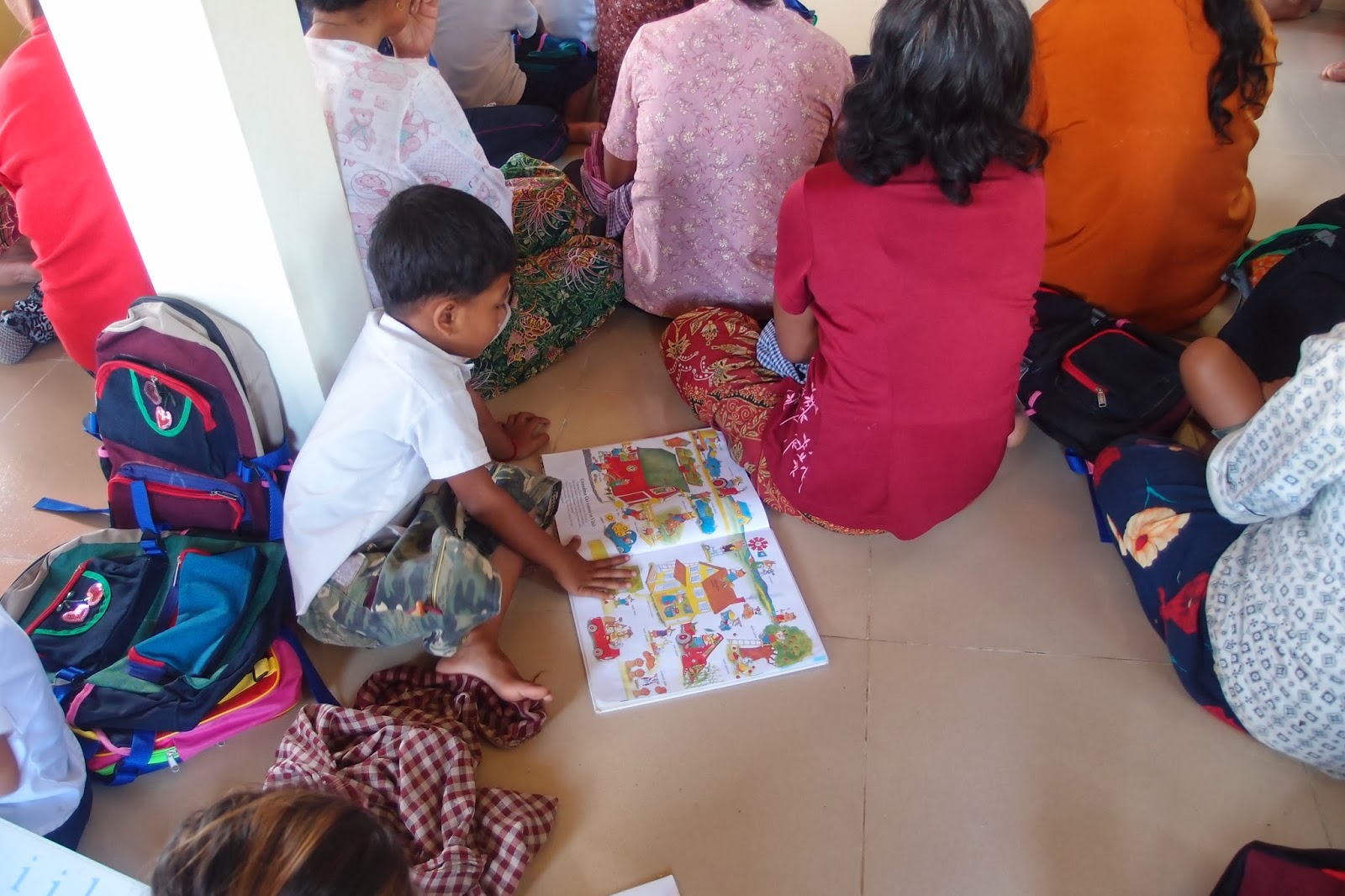
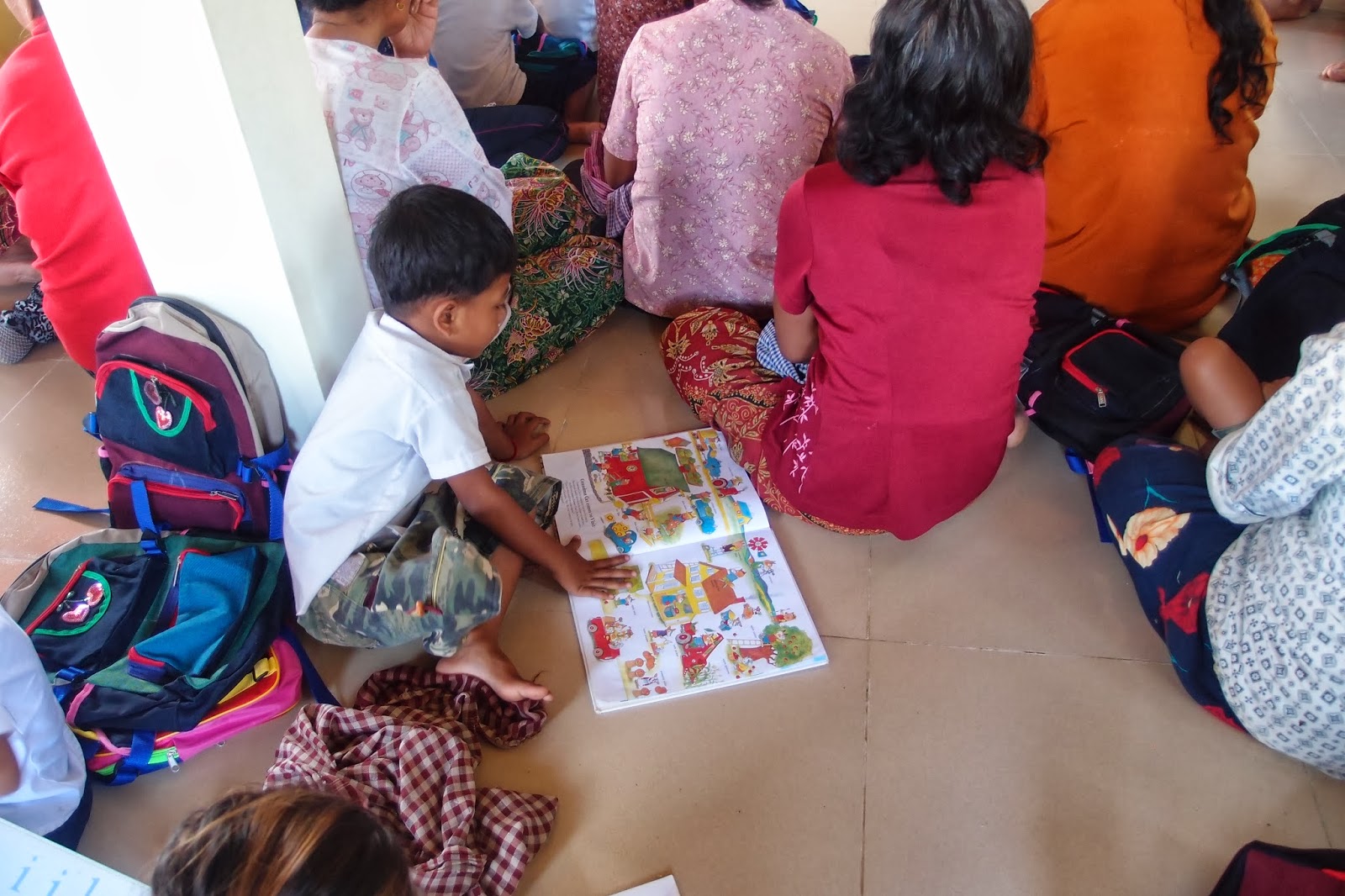
| Richard Scarry a hit – pictures say it all |
Lists are always good – here is one by Playing by the Book – of various literacy charities around the world. Most probably not completely relevant to this article, but good for borrowing and adaptation of ideas.
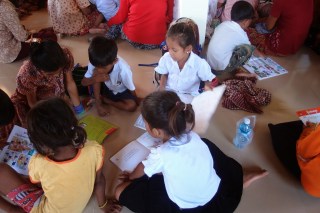 |
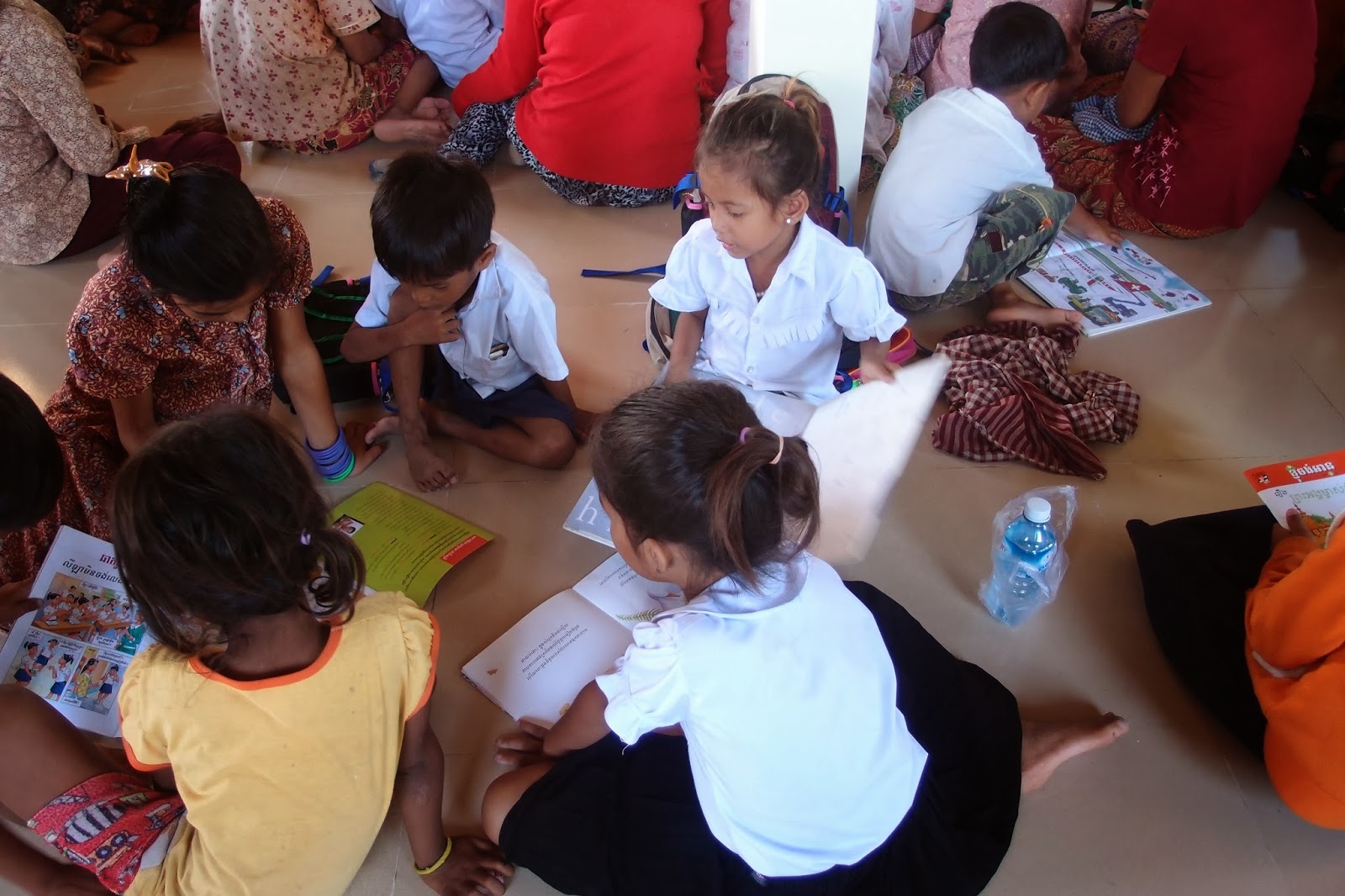
Children delighting in books –
even if some were upside down and being read back to front |
There is no harm in being critical, nor in asking for evidence of success in intervention. This article by “GiveWell” provides some research on various aspects of developing-world education. And I admit some bias as it quotes my favourite development economist – Esther Duflo.
It is easy for me to maintain my book and library bias in all of this, but I guess there are hard questions to ask. If I have a dollar, do I spend it on a book, on deworming a student, on a school uniform, on improving a teachers salary, on feeding a child? Here’s a great video from Esther Duflo giving a TED talk …
 |
Look carefully at the choice of word for this
alphabet poster – what were they thinking?
And no, it doesn’t make sense in Khmer either,
I checked. |
I guess my visit resulted in more questions than answers. And especially me questioning my “developed world” assumptions.













 Informative Flights - Musings of a Teacher Librarian