
Yet again an article despairing how kids are not reading “For Too Many Kids, Books Are Uncool and Unread” with all sorts of “reasons” and little in the way of solutions. So here are a few people / places / organisations who are trying to do something and a little on the work I was doing recently.
Engage everyone
While language arts / language and literature teachers and particularly librarians are often called upon or take it upon themselves to play a role in turning out literate students who hopefully also enjoy reading – it is a mistake to pigeonhole the efforts onto a few people. Just like I spend quite a few hours of my week engaged in coaching students in sport I like to think that my colleagues in other subject areas – including Physical Education etc. could spend a bit of time encouraging students to read. Particularly PHE teachers – since as my now young adult son (previously reluctant reader middle school son) told me “give up mom, middle schoolers don’t listen to anyone except maybe their PHE teachers and sports coaches”.
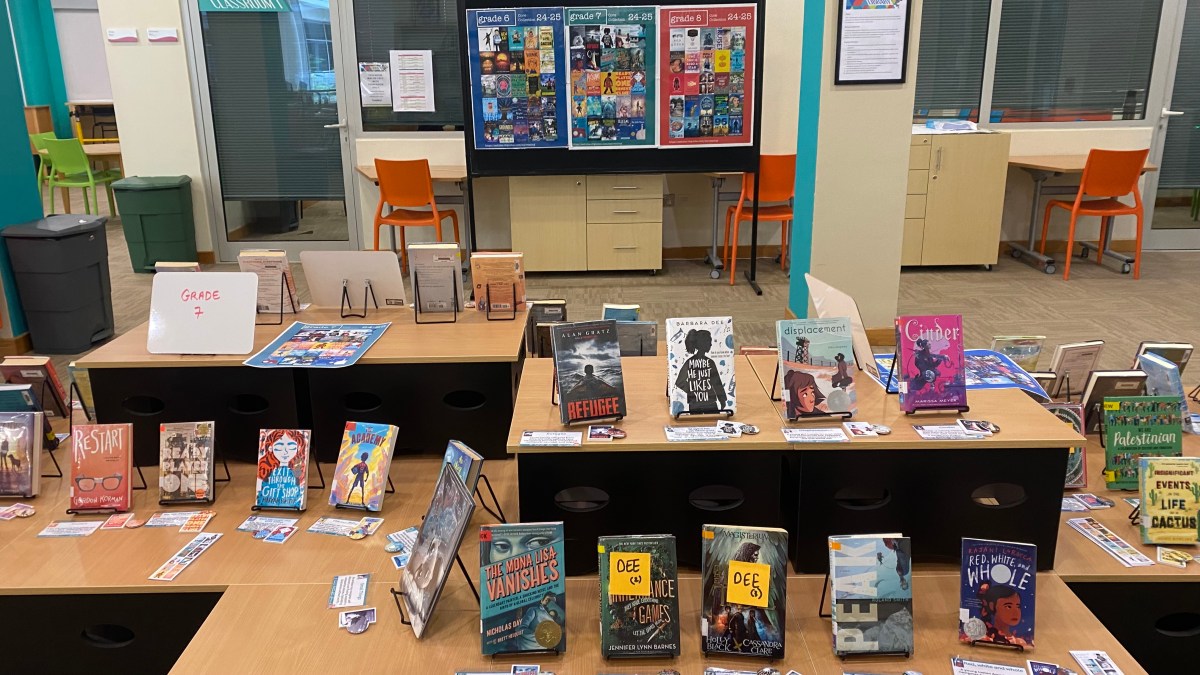
Last year I started having a core collection (an idea initially started in the UK by CLPE, and carried on internationally by Katie Day) of 25 books per grade for our middle school. We invested in at least 3 copies of most of the books and the books were promoted in the ELA (English Language Arts) classes and the library. Having a narrower selection of books to focus on meant that as a group we could try and read as many of these as possible and “sell” them to students. The news crew of our “Falcon Flyer” also helped with promotion by featuring the books, and they were also displayed on our internal TV screens in the library and MS corridor. A weekly quiz via google forms and the “Battle of Core” assembly were less successful than I’d have liked – but let’s say it was something to build on. However when I analysed the circulations from these 75 books I was positively surprised and just how many had circulated. As can be seen – kids still prefer print, and audio is their least preferred medium.

In my discussion with the ELA department about declining reading there was a strong feeling that promoting the books shouldn’t just be on them – and I took that thought to heart and just before the summer in our last staff meeting with the support of our admin launched the “staff summer reading challenge”
This involved quite a bit of preparation work, starting about 6 weeks before the end of term, including updating the lists for the new year, taking out books that weren’t popular or didn’t resonate with students, getting suggestions from our most avid readers (and asking them to pre-read where I wasn’t sure which book would be better) and making sure we had coverage of genres, levels of difficulty and format (verse novel, graphic novel, nonfiction, memoir, fiction) and our books were reflective of our community – each grade having at least one book with a muslim perspective as we’re in the UAE. Our new list can be found on our reading libguide. Next up was making sure all the books were ordered so that they were available before the meeting and then making new posters, shelf-signs with a summary, badges and a “mini-book”.
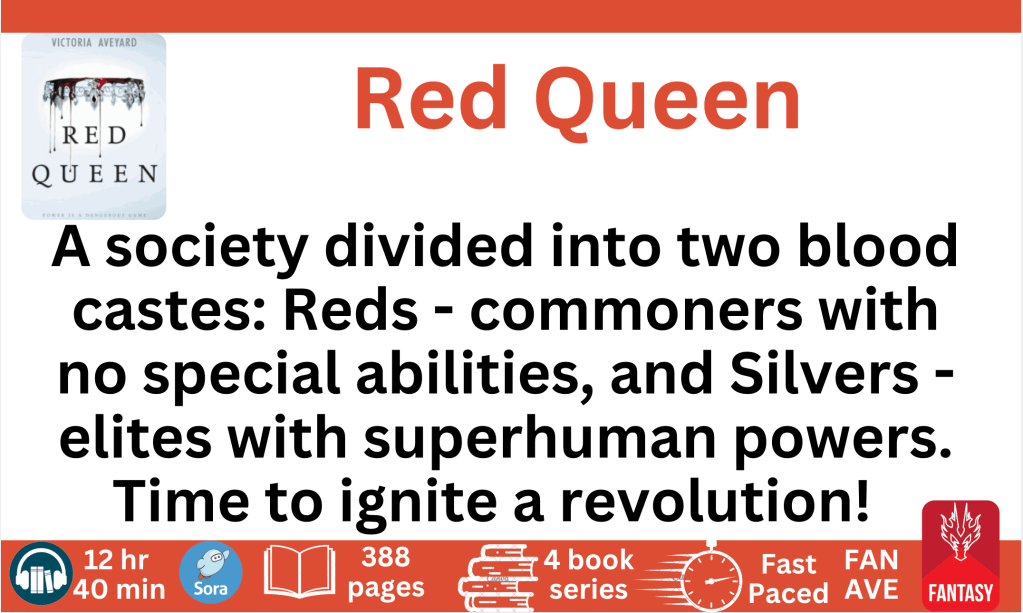
The shelf talker signs were based on inspiration from Kelsey Bogan but I wanted them to convey a little more information that I thought would be relevant in the “selling” process – first to our staff and then to our students, so I amended them a bit – the colouring corresponds to the grade, I added the book image and the genre image. Kept the blurb to 20-25 words (combination of publisher blurbs, Magic School AI summary powers and my knowledge of the book – AI can really get things badly wrong with what trigger words would encourage readers and be very repetitive with some phrasing!); I also added whether we had the eBook or Audiobook and the duration of the audio; pages of the book; whether it was part of a series, and the pacing.
Here are the canva files for our Grade 6; Grade 7 and Grade 8 lists – feel free to use or adjust as necessary.


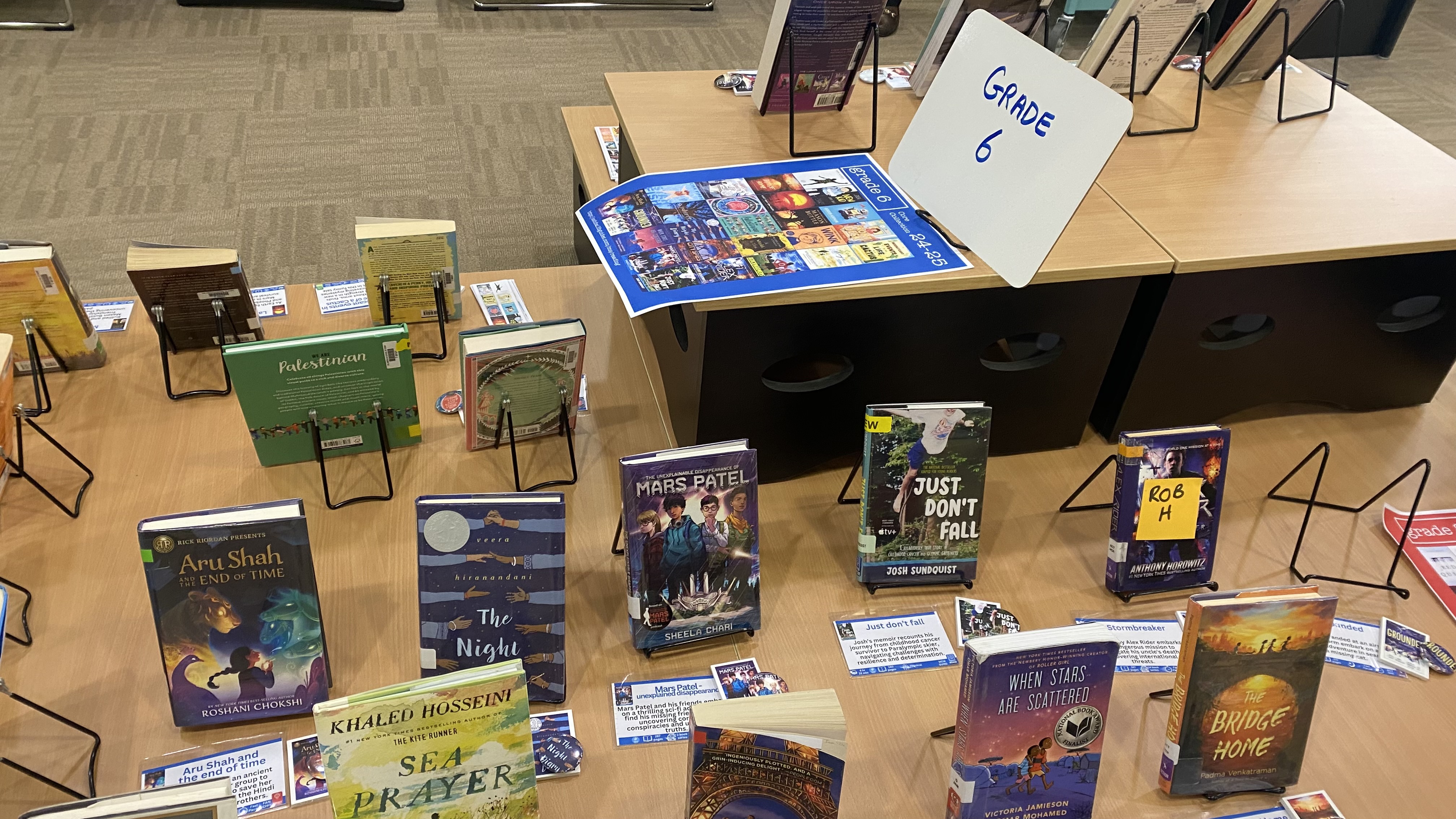
The badges were made thanks to the loan of a badge maker by our design department and the “mini books” are images of the books on a piece of foam that the teachers can stick on their classroom door.
For the meeting, I put all the books on display with their paraphernalia, and the teachers were invited to select a book to borrow for the summer, commit to reading it and to help be the books “key account manager” for the coming year and promote it to students in the coming year. Our communications department helped by taking pictures of teachers with their chosen books (hiding the face) so we can use that for a little promotion guessing game in the new year); teachers borrowed the book and could put the badge on their lanyards. They “claimed” the book by putting a sticky note with their name on the poster. In the end, only 6 out of 52 staff members declined. Several teachers selected more than one book and our drama teacher selected 5 (and sent me a very enthusiastic voice mail last week to say she’d read them all and enjoyed them so much she’d also read all of the rest of the books in the various series, coming to a total of 17 books!).


So, watch this space and we’ll see if this has more of an impact in the coming year.
Other people / organisations making a big difference
Although not always realistic, I am a secret admirer of the “go big or go bust” approach to things. I suspect some times we are actually underestimating the abilities of our students by setting very low goals for them. There is a balance however between something being too daunting versus to infantile. Generally I suggest students should try and read a book a week – something quite manageable if one is truly spending 20-30 minutes a day in focused reading, perhaps combined with audiobooks and some manga / graphic novels. Also, our top readers (ironically – or not – none of whom have mobile phones) manage 2-3x that.
The Neev Reading challenge 2024 of 30 books over 3 months for grades 4-6 combined with author interactions, and a live quiz during the literature festival is a great example of setting a stretch goal, having competitive and noncompetitive tracks and a great starting point to select books. I just love how ideas grow and evolve. When I moved to Beijing in 2018, I was part of the 50 books Reader’s Challenge which I think the librarians at ISB started. In my role of juror for the Neev Children’s Book award, I was chatting to Neev about the challenge, and what worked and didn’t work quite as well – and they grabbed the ball, ran with it and now it’s this amazing thing!

I’ve blogged about the Global ReadAloud before, and still think this is a phenomenal way to involve students and teachers with books and connections with other readers and most importantly the “smelling salts” of reading aloud to them. Here are the selections for 2024. I particularly love “As long as the lemon trees grow” a book that’s on our core list and a fantastic read for older students.

At the end of the school year we have 6 library sessions involving our “upcoming” grade 5 into 6 students to introduce them to the Secondary School library. This year as an exit ticket I asked them to write down their favourite book / author / series. As I roamed around talking to them while they were doing this, I’d say that at least 75% of the books they said they loved the most were books that had been read to them by a teacher, parent, grandparent etc. Reading aloud matter.

Besides her work on the GRA – Pernille Ripp also has some great posters (and books) on encouraging a reading culture, such as the one on “Helping Home adults support adolescent readers”
That’s all I have time for today – if you’d like to have your initiative featured, please let me know!

 Informative Flights - Musings of a Teacher Librarian
3 thoughts on “Stop the pearl clutching and bring out the smelling salts”